1. The “Effervescence” of Ritual Experience and Silken Thread Diagnosis
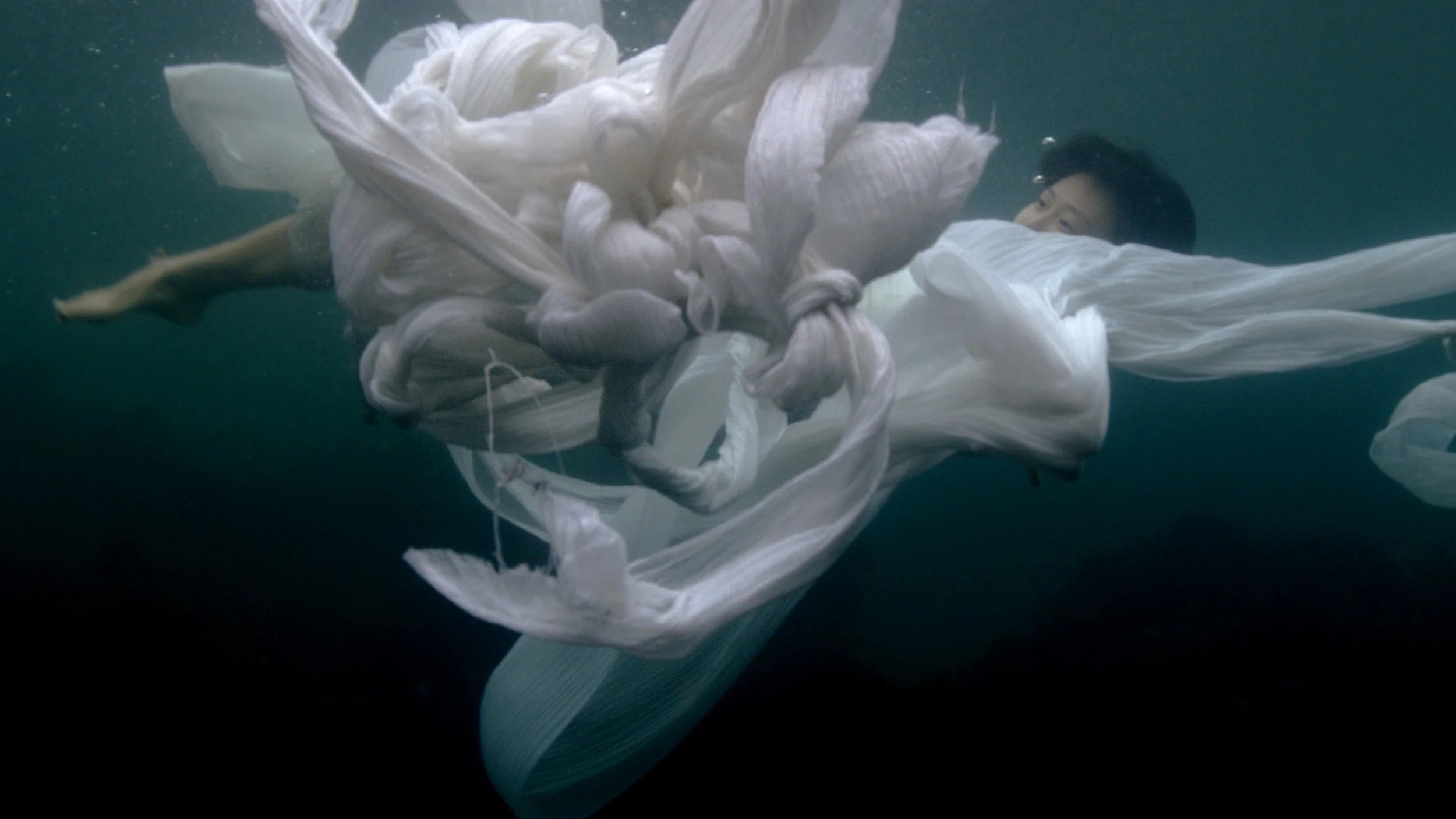
A knot moves as if alive. It dances.
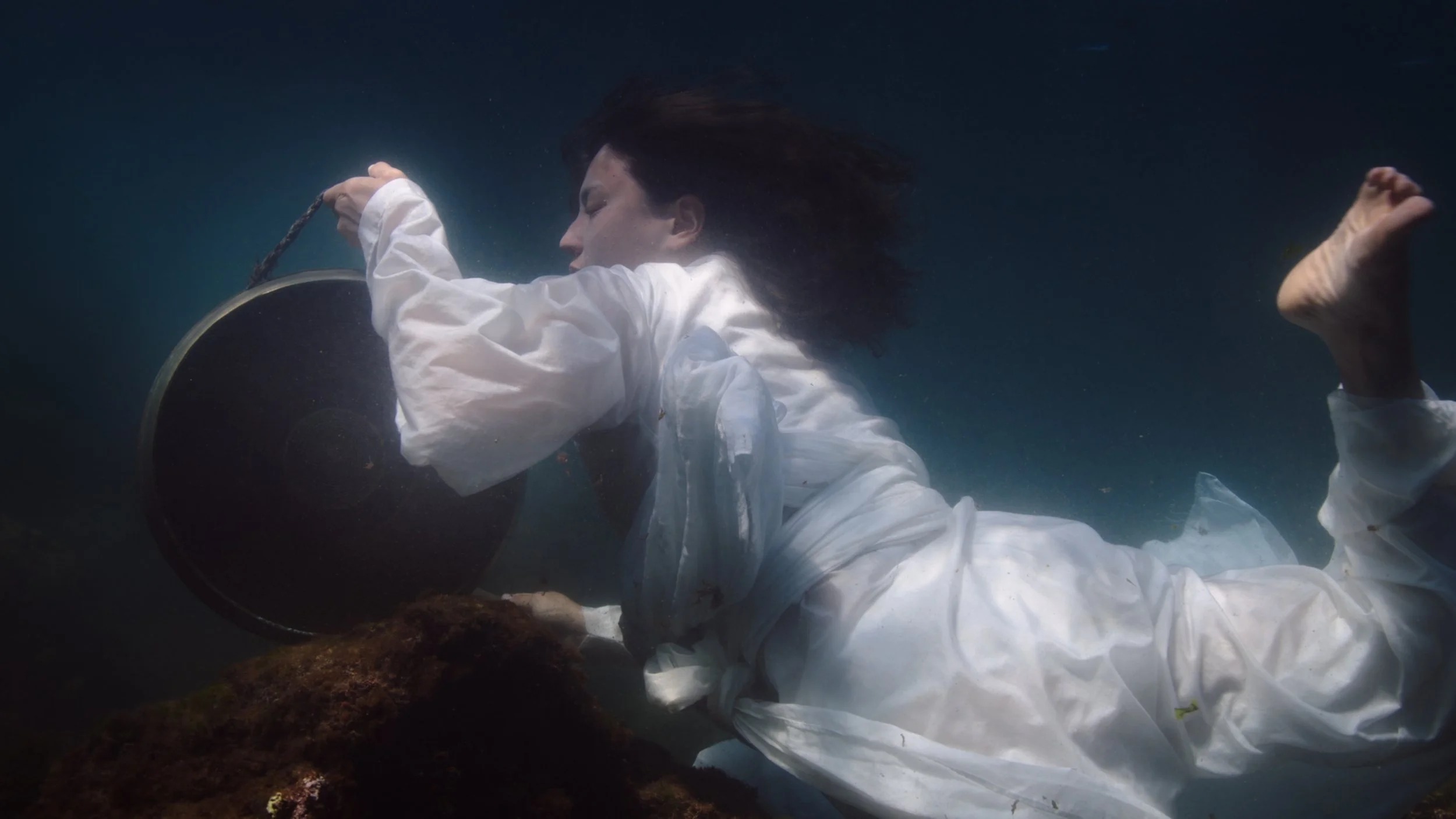
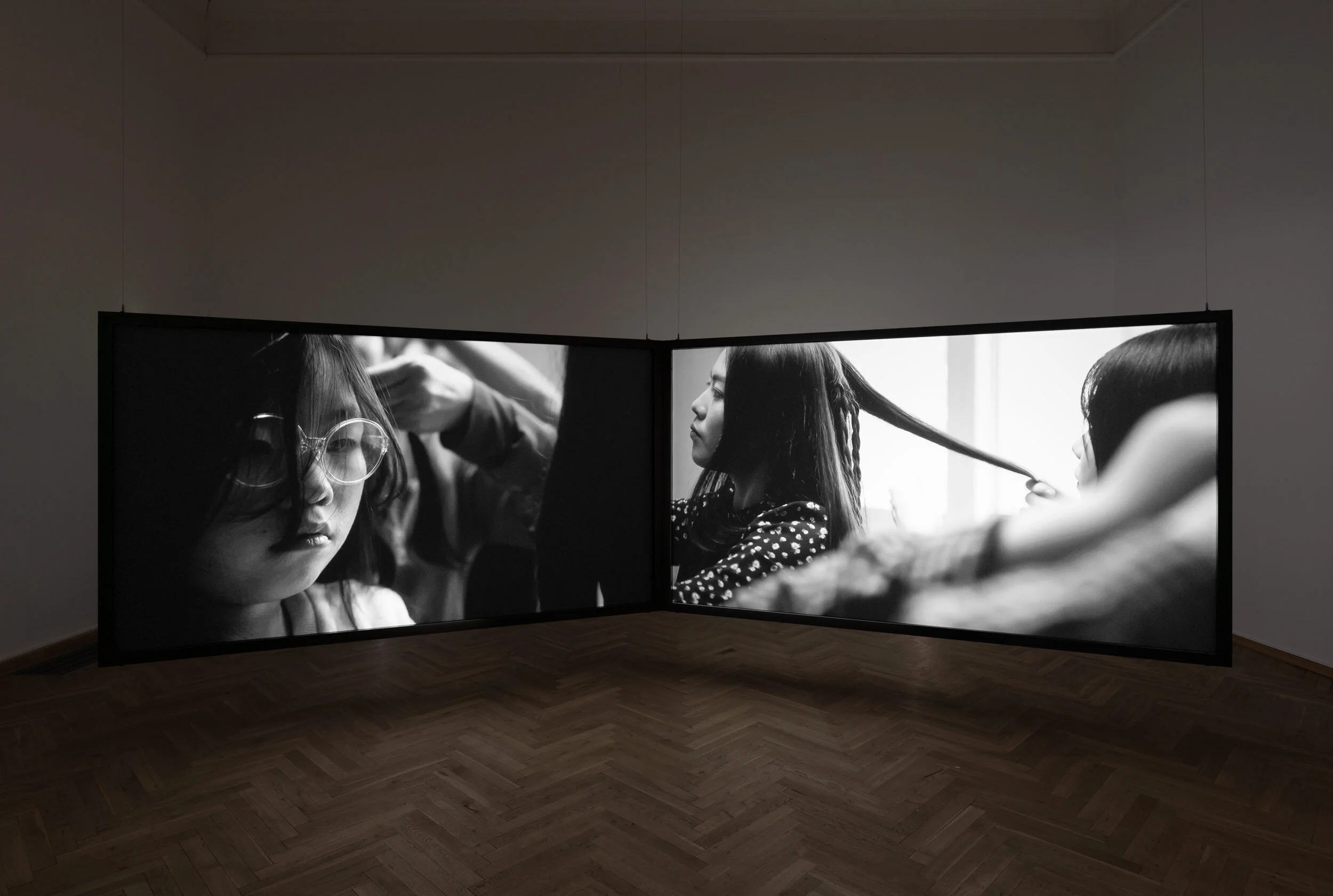
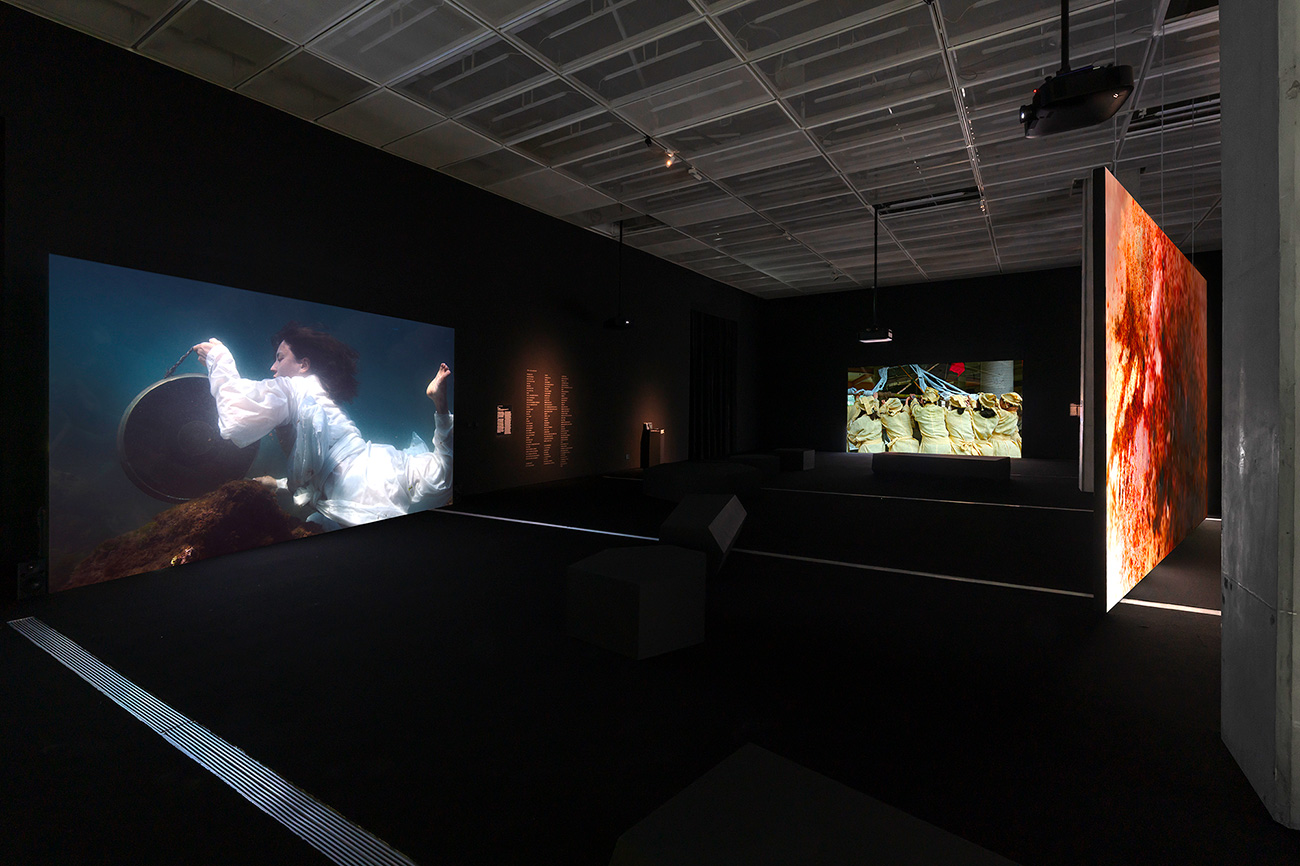
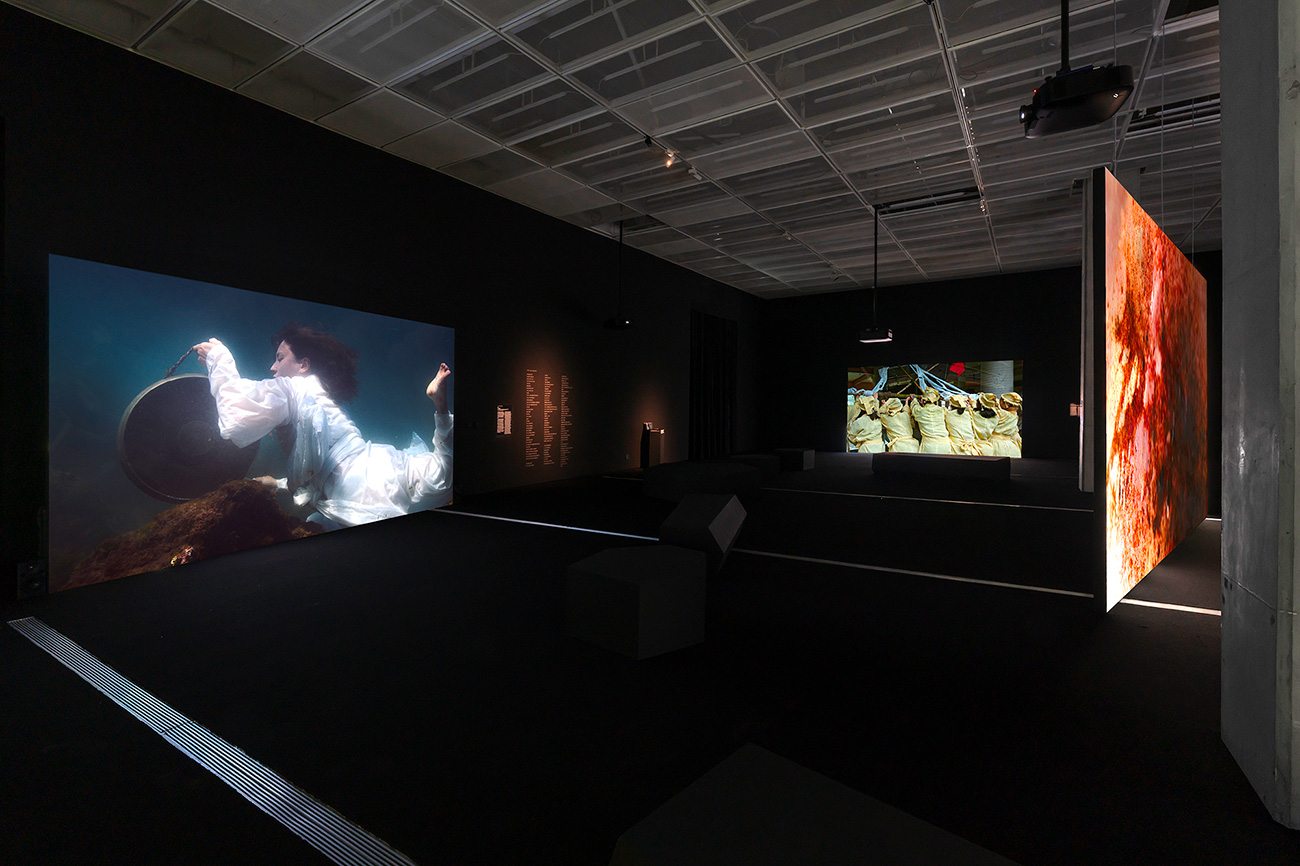
Billowing white robes, black hair
Plunging, swimming
A swirling dance beneath the waves
Untying as if loosening a knot,
Both releasing and binding
A dance of knots. Twisting like seaweed.
Yet, the will of human-beings remains unknown,
Its direction, movements—all precarious.
Up to this point, the sochang knots moved like the loosened myeongsil (threads wishing for longevity), as if performing.
The “effervescence,” captures a ritual experience.
Creating bubbles
Shivering the seaweed
A radiant song of existence
Foam, whispers of drops, floating debris
Inhalation and exhalation
Women who are able to linger long beneath the water’s surface
Yet, there is the cry of one woman.
The lament of other women dressed in white follows. The subliminal door opens. “Ecstatic Possession works as an index. The dramatic expressions accompanying phenomena of possession, such as the change in voice and gestures that reveal the presence of spirits, sweating and bleeding, ecstasy, paralysis, or spiritual illness.” It draws the boundary between radical experiences and immersive experiences. Conversion—one’s heart turns.
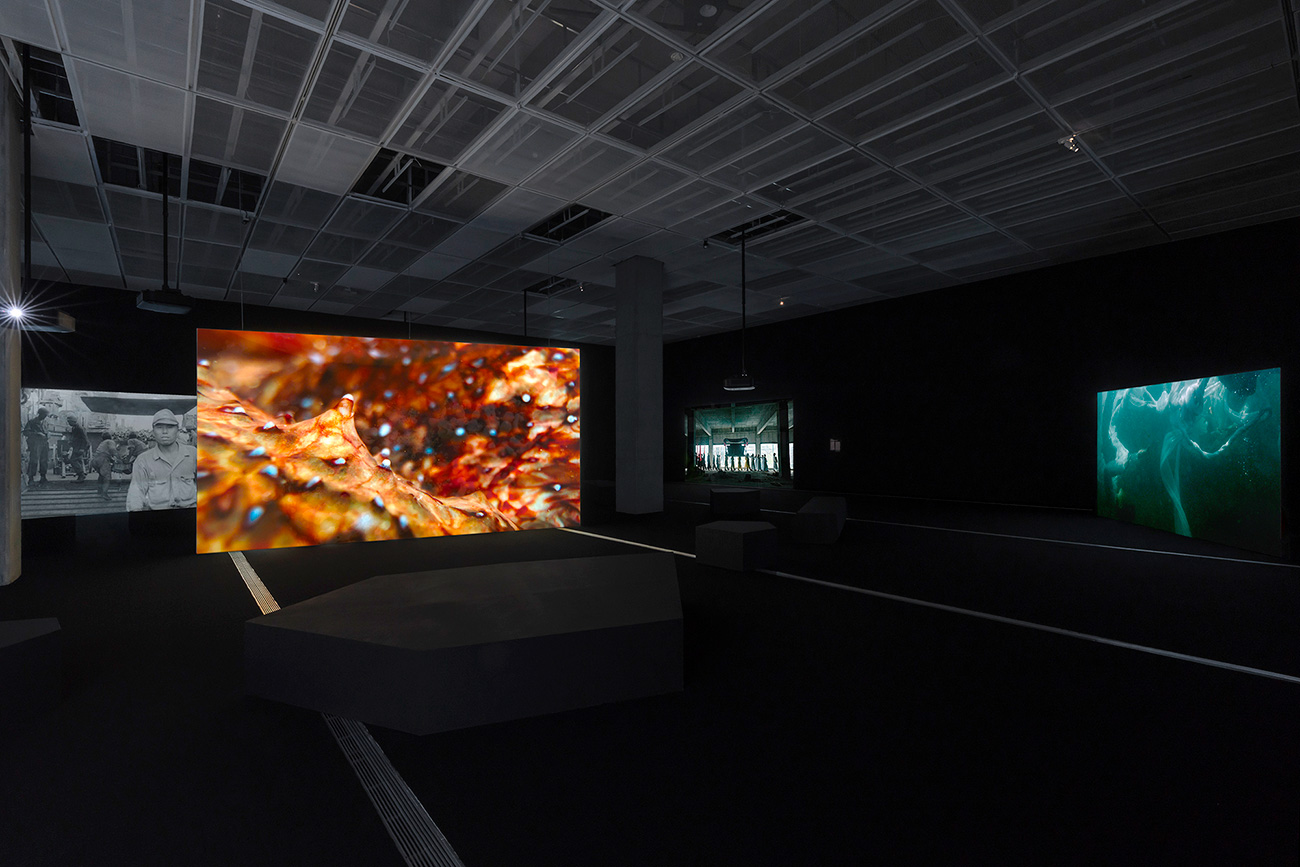
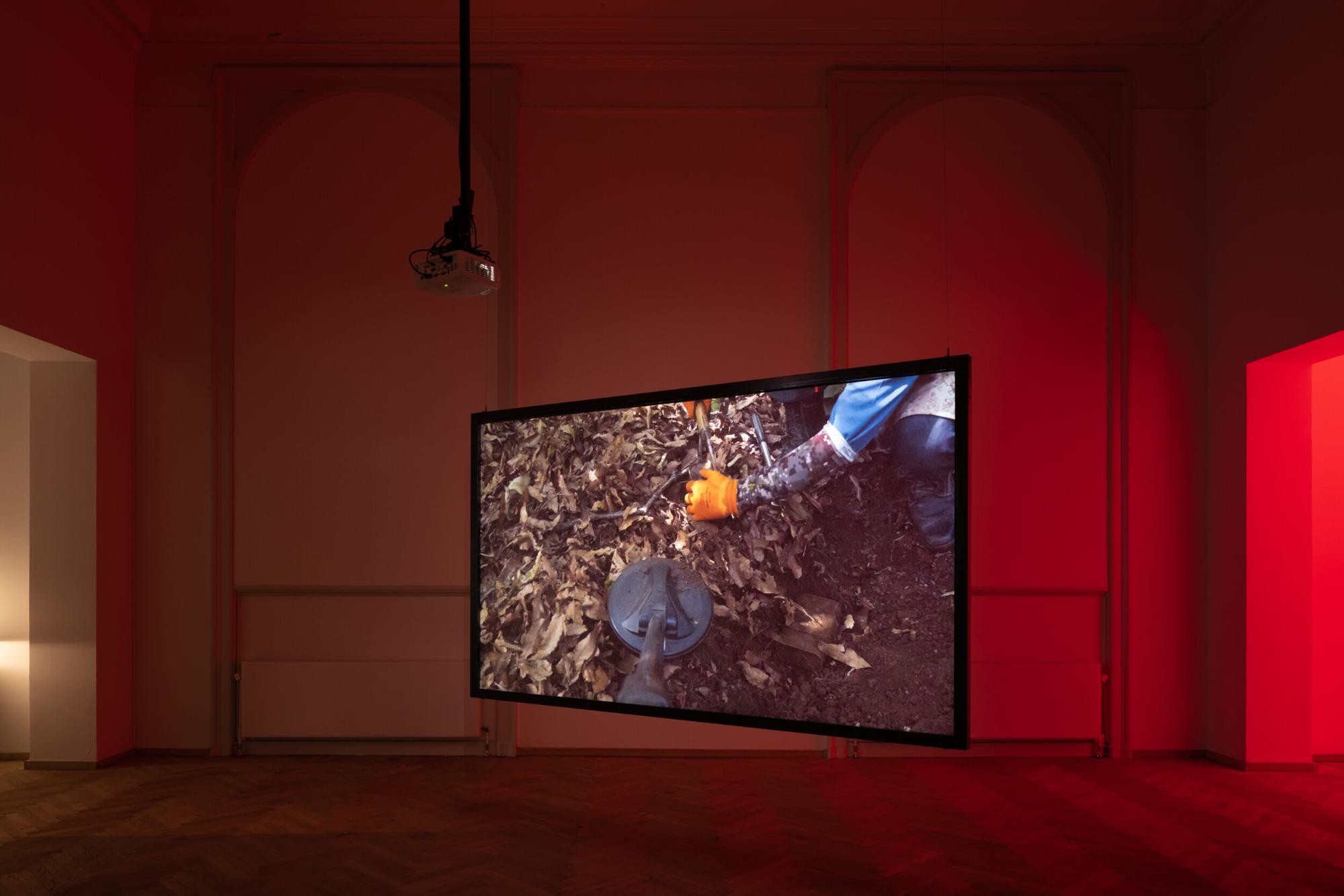
For 12 minutes, the knots are tied, twisted, and untangled, as humans and seaweed, water and knots, engage in an affective dance of push and pull. The knots and tangles intertwine as the reddish hue of the seaweed bleeds into the white sochang fabric. As the knot touches the seaweed, the term sajin might be invoked. Through this process, the pulse of the thread traces and diagnoses the unfolding history of Jeju in the ‘Ieodo (Island Beyond the Sea)’ (2022–2024) series. In Wreckage (2024), for instance, we see weapons buried beneath the sea.
Cultural anthropologist Kim Seongnae explains the history of Jeju Island this way: “Jeju Island is known as the Island of Lamentation, the Island of 18,000 Shrines, or the Island of Heroic Legends. In short, it is often described with an atmosphere of sorrow and tragedy. The spiritual power of the Jeju shamans, called simbang, depends on how well they can evoke this atmosphere. This mood is rooted in historical facts. In the past, Jeju was the southernmost frontier, politically exiled and militarily isolated, facing Japan and China across distant seas.
Politically, it was a place of exile for political figures or rebels. In modern times, people of Jeju endured 200 years of restrictions on leaving the island, a form of political and cultural oppression. Toward the end of the Joseon Dynasty, the island saw frequent uprisings, leading to intense conflict between the authorities and the people.
More recently, the shadow of the Jeju 4.3 Massacre, which began on April 3rd, 1948, and continued through the Korean War, devastated the island, leaving a toll of lives lost and entire villages destroyed. The legacy of the massacre still lingers. Jeju muga (shamanic songs) and Shamanic epics recount the history of the island’s violent past, offering mythological texts that remember and critique these acts of violence (…)”
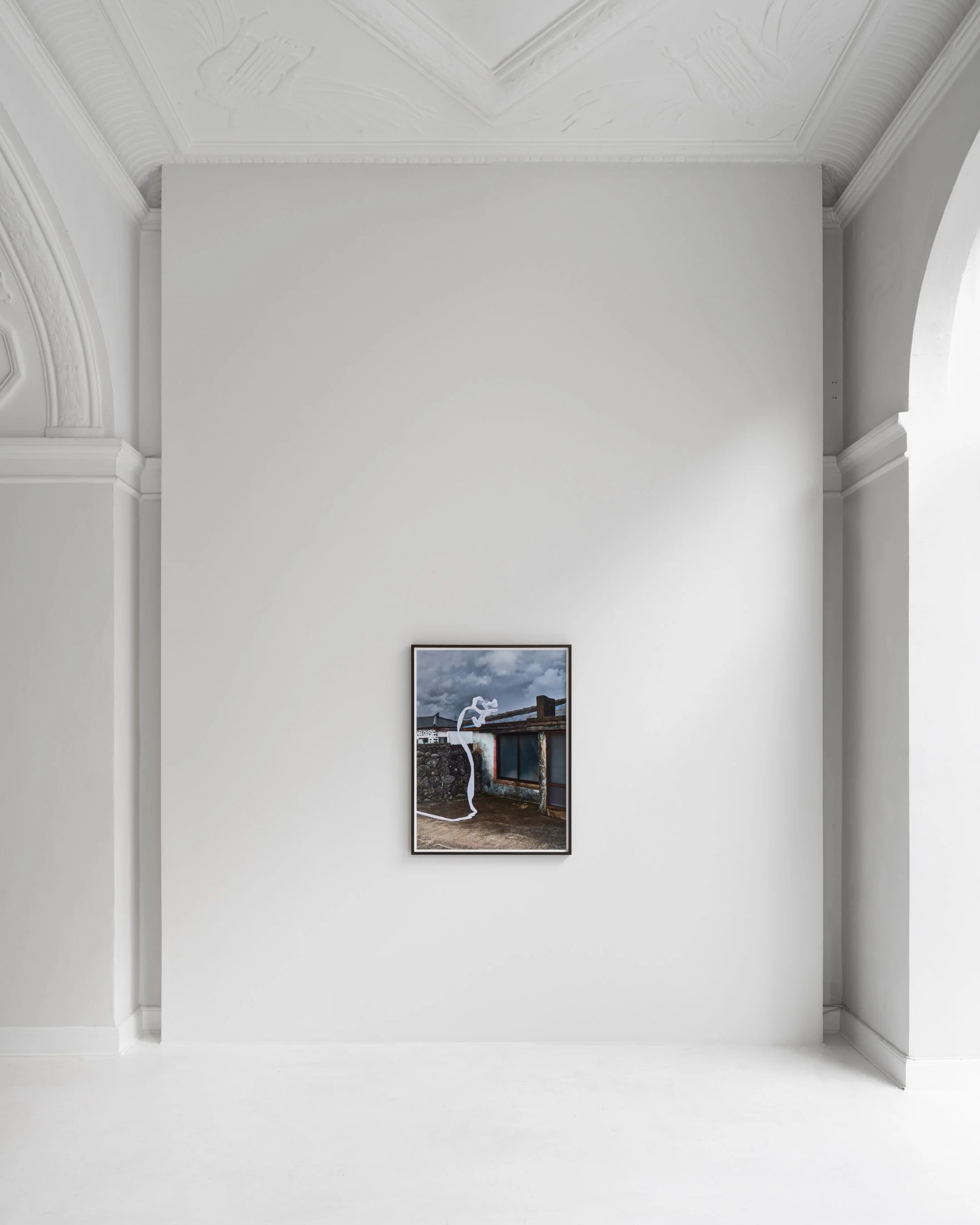
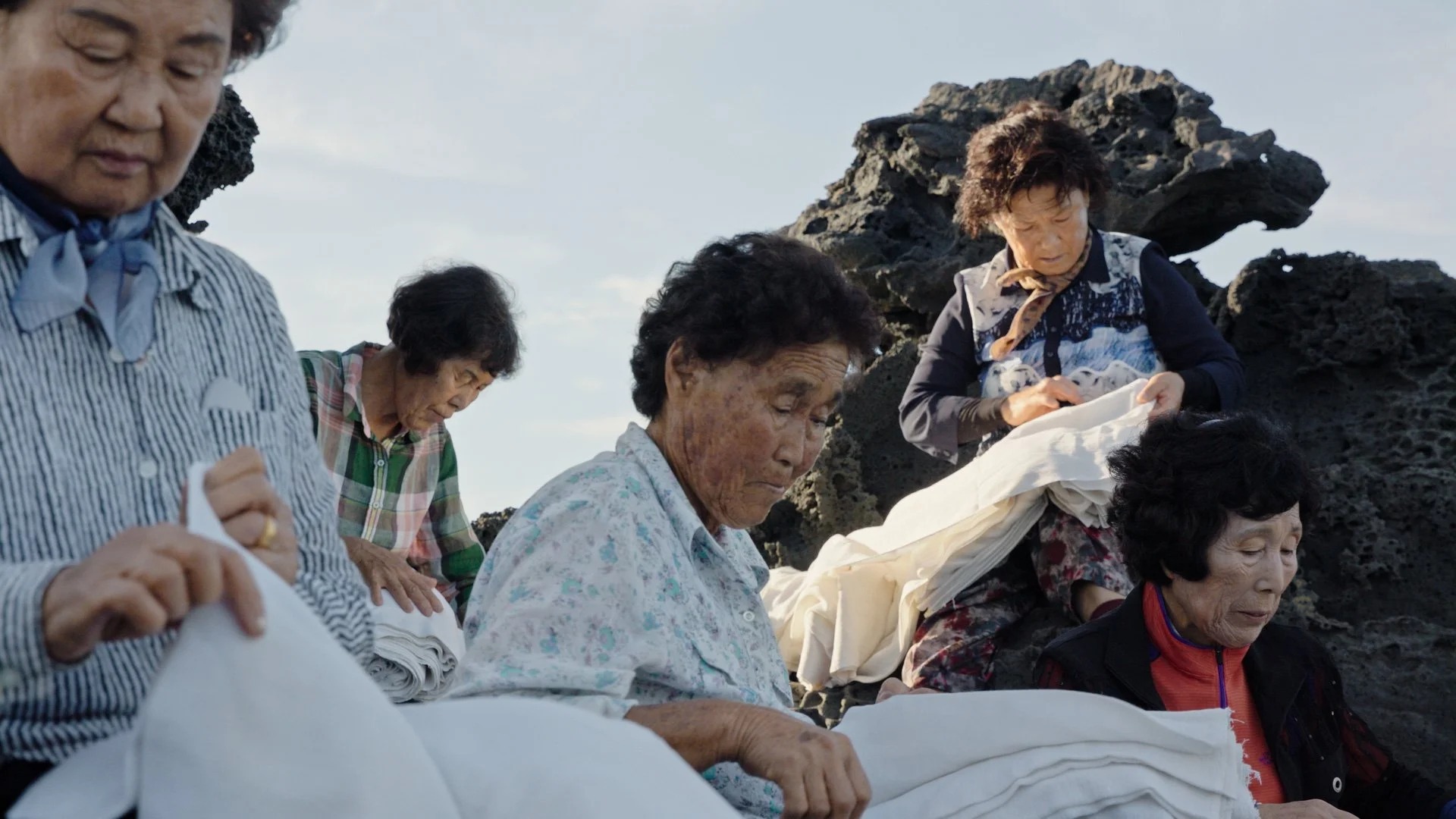
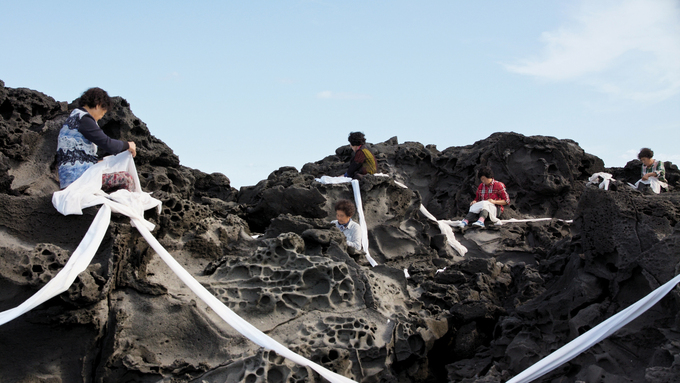
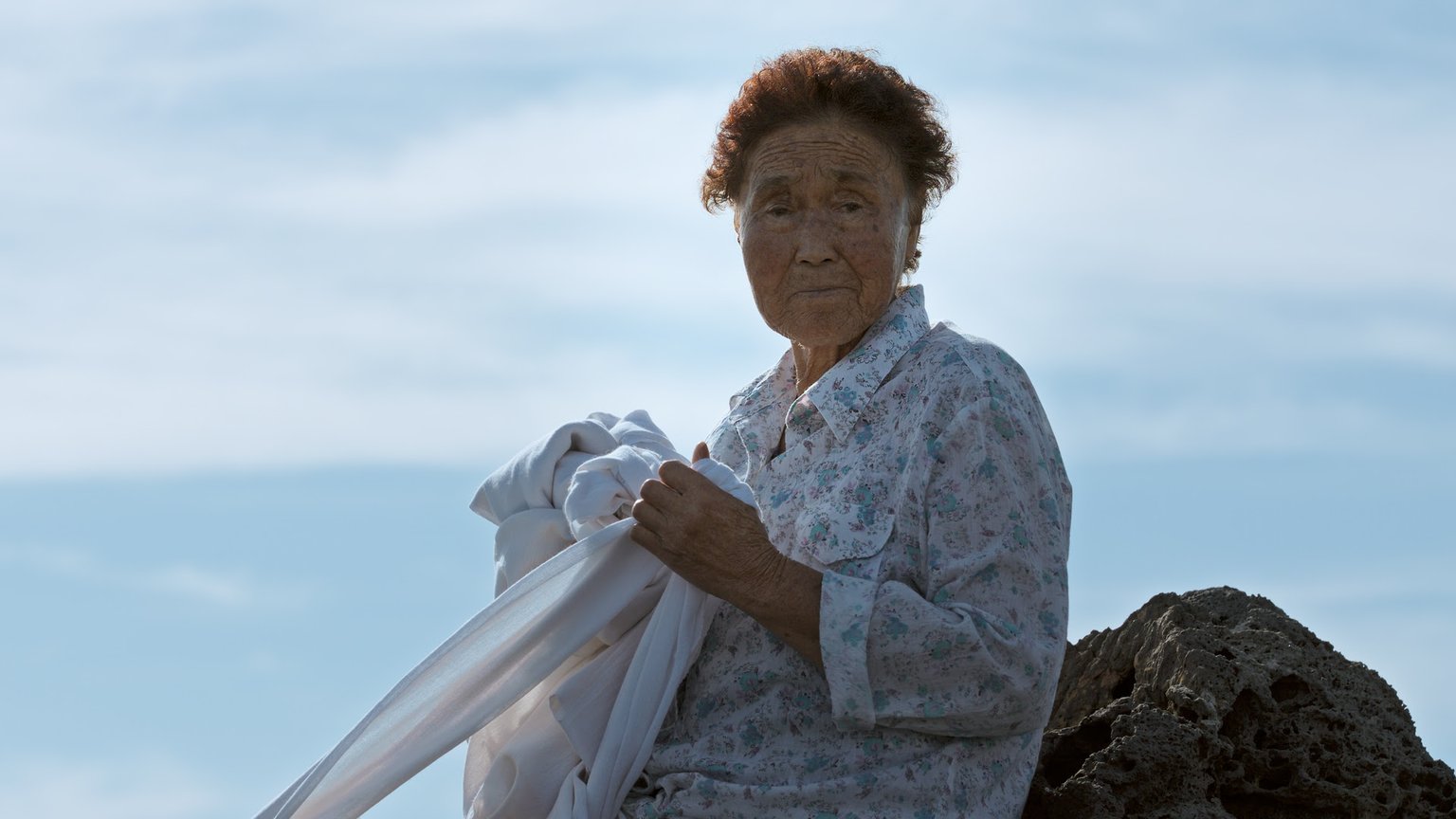
In the aftermath of the 4.3 massacre, some of simbang were unable to recover their sons’ bodies or give them proper funerals. In the mournful muga of these simbang, the sajin of Wreckage is enacted. The knots, swaying in the water, reveal the ones of state violence and the scars of Jeju. The knots are woven by Halmang (2023), the ancestral figure, and they are intertwined with the war weapons shown in the archive footage of Wreckage.
Symbolically bound in knots, these weapons are cast into the sea—a ritual act illuminated by the description above. Where the sea has become a place of dark history, the movements of the haenyeo (female divers), their flowing, whipping hair, and the knots tossed about in the water embody the rituals of remembrance.
Floating debris in the water
Passion expressed in bubbles
Ecstasy, divine energy, spiritual possession
What is being offered?
What is it that the Jeju Sea rightfully deserves as an offering?
In rituals, descent often signifies hardship, downfall, or death.
However, if this descent takes place not between heaven and earth
But beneath the sea, underwater, it might suggest an entirely new symbolic realm.
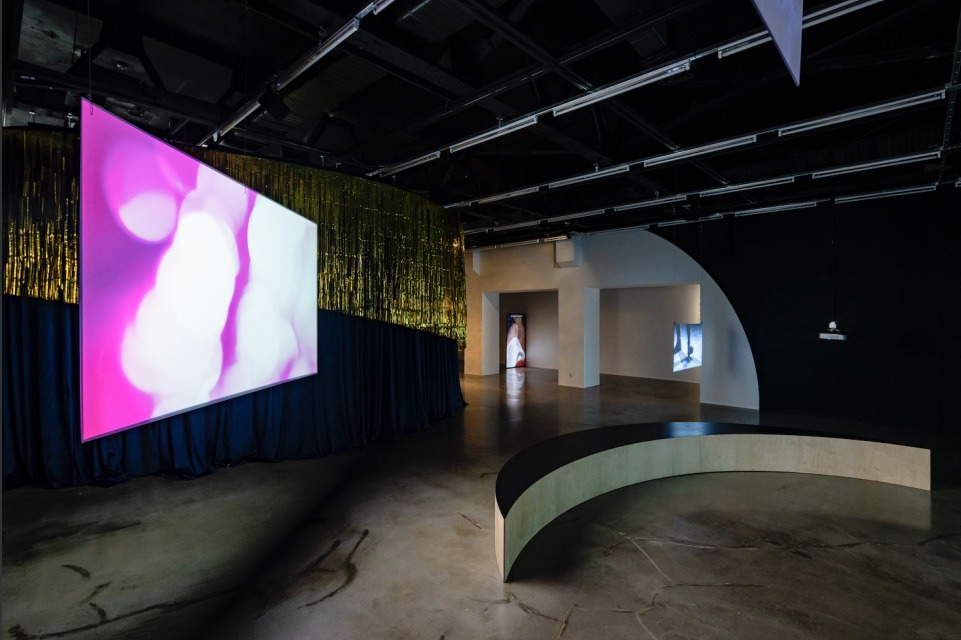
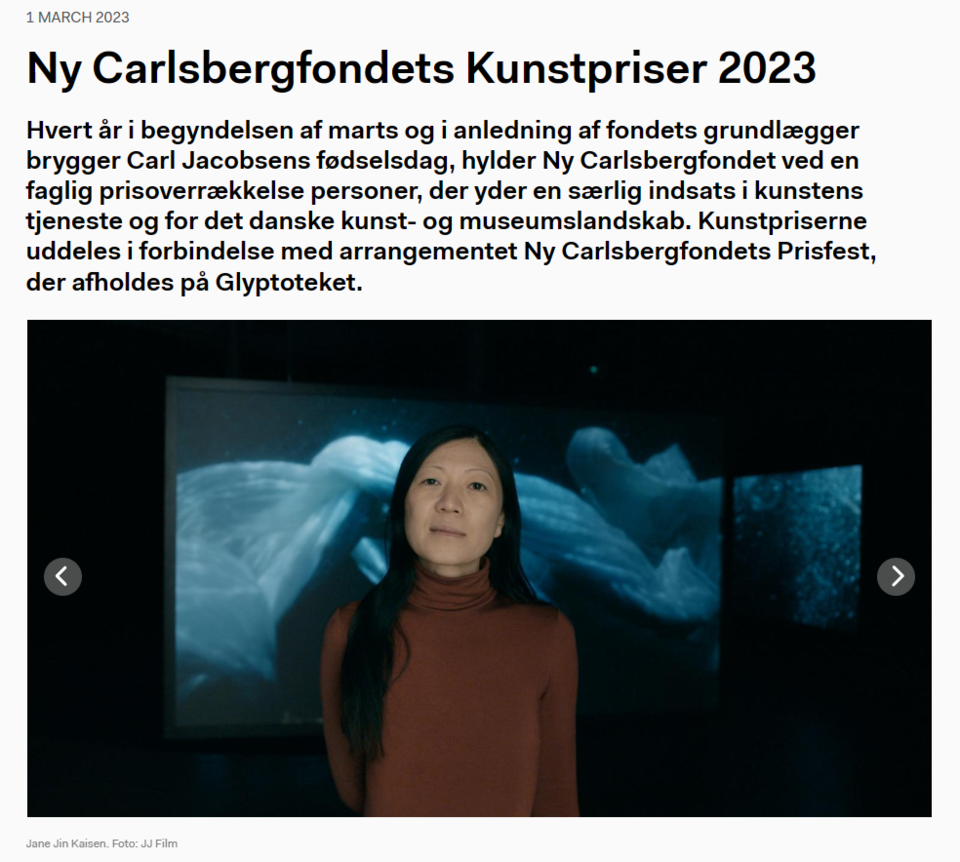
Jane Jin Kaisen’s work moves the stage beneath the ocean accompanied by camera apparatuses, equipment for underwater filming. The theory of the cinematic derived from Plato’s cave do not fully grasp the underwater world. There are few concepts addressing the moving images that occur beneath the sea. This kind of practice or performance is perhaps termed “eco/echography.”
This work of eco/echography signifies moving images that contain ecology, an ecological diagnosis similar to sajin, and the resonances (echoes) that this work may invoke. The technosphere—a network of cameras, lights, and underwater apparatus—is temporarily constructed within the sea and the ritual is arranged where the life forms of the ocean thrive.
The practices of the haenyeo at times reflect a state of mourning, distinct from the sense of rapture that divers may experience. In this eco/echography, natural light and artificial light interfere with one another. Through this interference and diffraction of light, the mise-en-scène of unusual underwater scenes is created in the resonance of eco/echography.
Back to Offering (2023)
A woman swims, entangled in knots of seaweed.
The knots of sochang, seaweed, bubbles, and other materials resemble the movements of a shaman’s ritual dance.
The sea feels like a peculiar sensory space wherever-moving materials overlap with immaterial sonorous energy; a sea of sensations like in the following.
“The initial movements at the first critical moment are usually linear. The body moves back and forth or side to side. As power is added to the movements and the tempo quickens, circles begin to form. The entire body spins around, drawing circles. These circles gradually shrink until the spinning at the center of the circle becomes a whirlpool.”
These spinning, swirling, circular dance movements, characteristic of a shaman’s ritual dance, are emphasized by the flow of the sea, even in the absence of an actual shaman. People, knots, seaweed, and marine life create a boundary between radical experience and immersion. As the ritual and puli (unraveling, releasing) unfold underwater through the participation of the ecologically active haenyeo, a new distinction emerges between this and traditional rituals.
Rituals typically have a traditional and canonical form, but Offering, Burial of This Order (2022), and Wreckage maintain the aura and mode of ritual while simultaneously passing through a process of de-ritualization, producing a tension. They break free from the matrix of signs, attempt to de-sign, devise new symbols, and return to the matrix with gestures of revolt, a renewed engagement with language, and the beginning of a new chapter.
Thus, the familiar and the unknown constantly exchange places, unfolding in a continuous process that is both challenging and complex. The collaboration between the Jeju community and the artist throughout the production is a crucial aspect of this effort.
In her previous work, The Community of Parting (2019), Kaisen situates her mode of address and narrative voice within and beyond the myth of Princess Bari. “The woman who crosses the river of death, endlessly moving between the here and the beyond” is none other than Princess Bari. For Kaisen, who reframes this mythological narrative, one of the first chapters of her own personal one is adoption.
Having been adopted from Korea into a Danish family, and now living in Denmark, Kaisen has returned to Jeju Island to conduct research and long-term collaborations. Her interdisciplinary practices, based on performance and translation theory, encompass experimental narrative film, photographic installations, performance, and text-based media.
Her media installation work, often involving multi-channel and single-channel projects, mobilizes a technology for unraveling the folds of history, offering a prism through which fragmented stories are revealed.
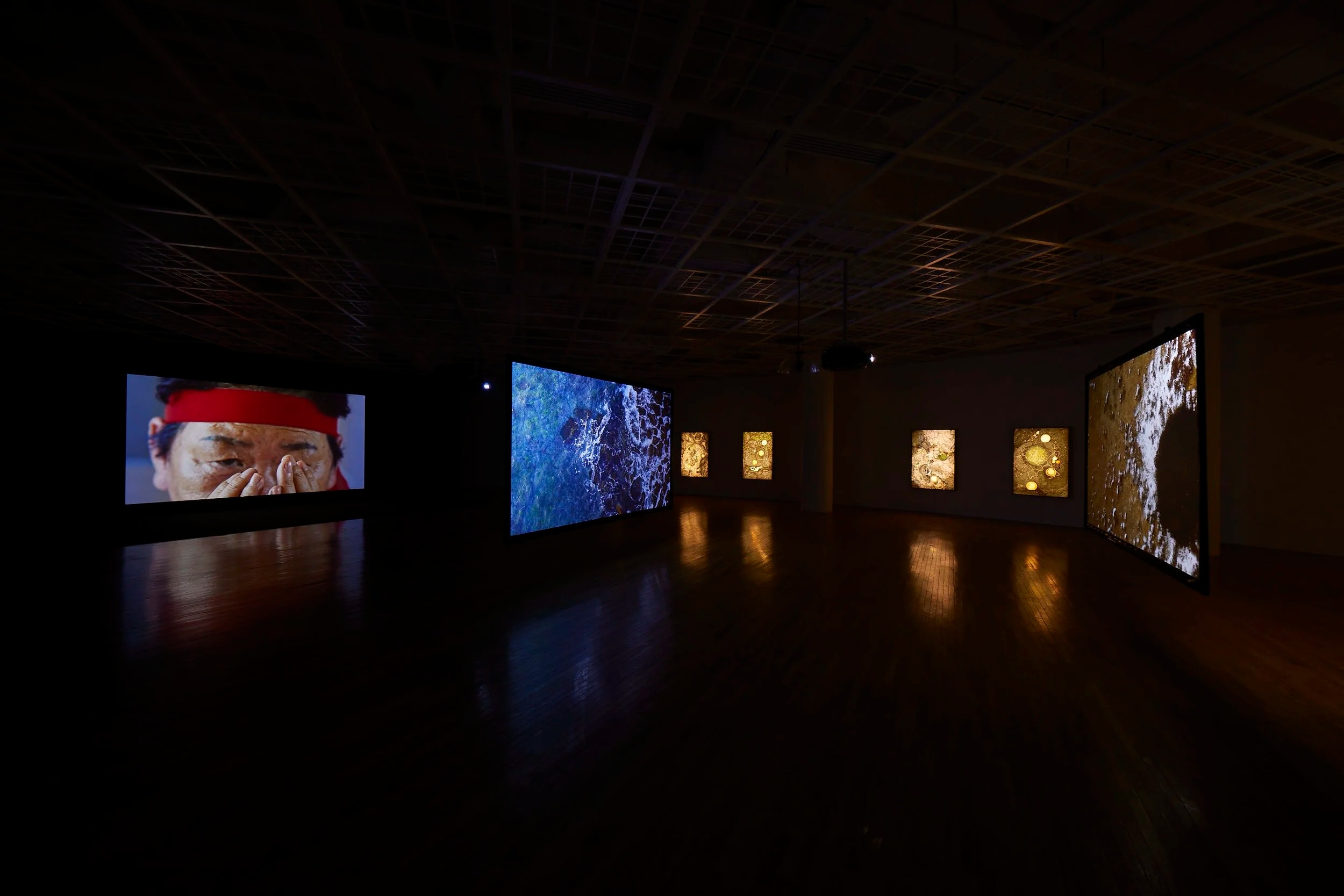
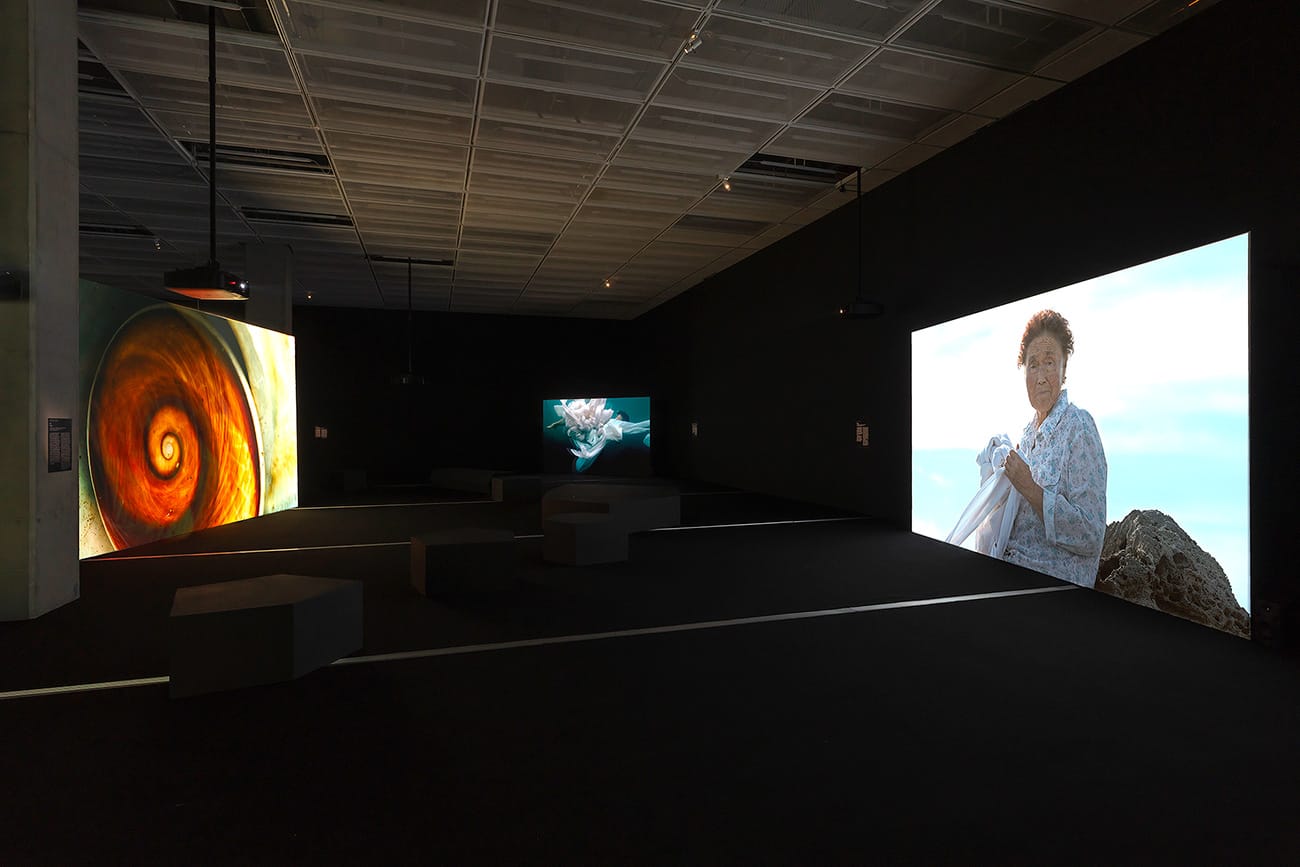
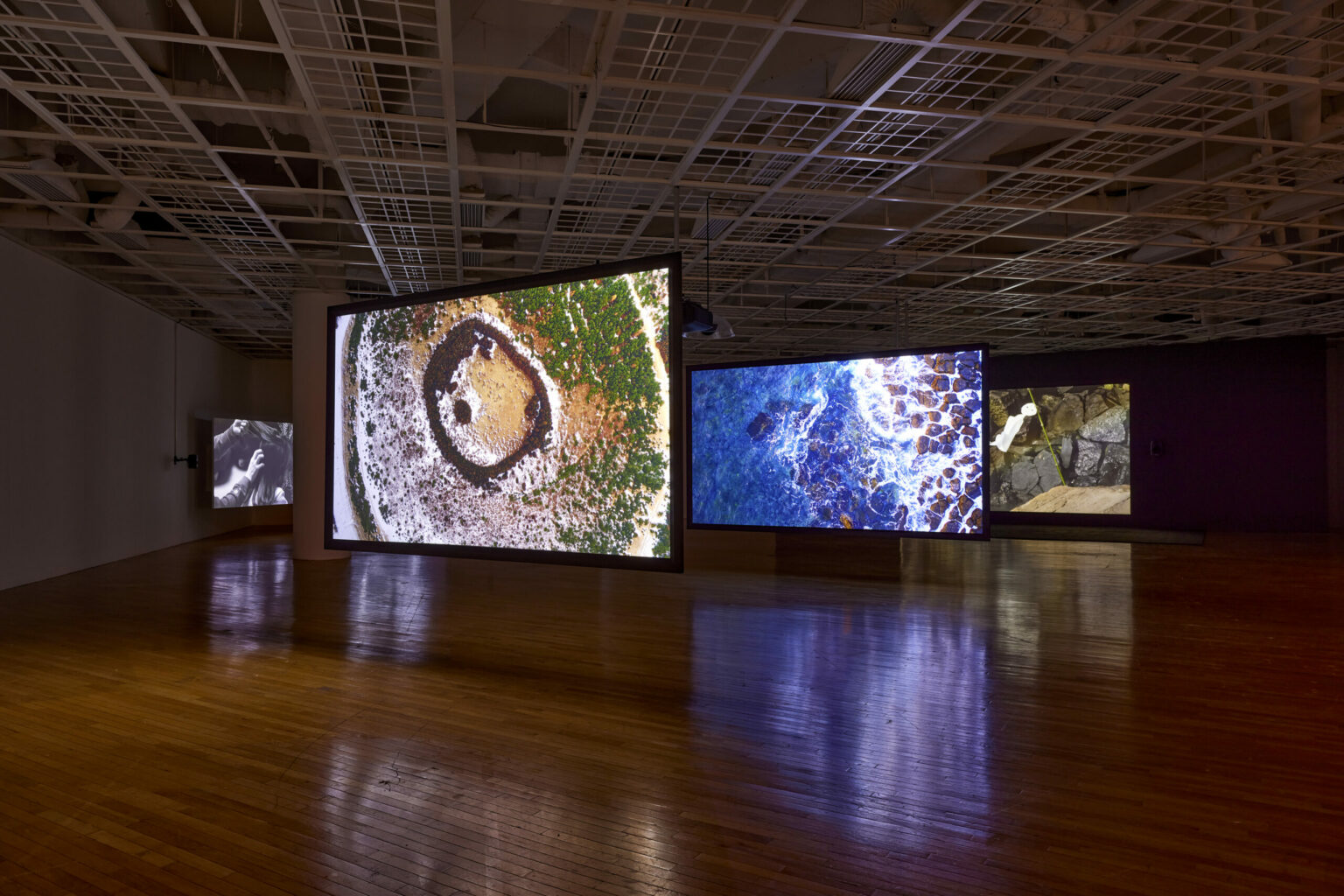
In ‘Ieodo (Island Beyond the Sea)’, figures such as halmang (grandmothers in Jeju), haenyeo , simbang, activists, children, along with materials like seaweed, crustaceans, and mollusks, create a virtuous cycle within and beyond works such as Wreckage, Offering, Burial of This Order, Halmang, Guardians (2024), Portal (2024), and Core (2024).
2. Dongti, Triggered and Fabulated
It is true that early artworks originated in the service of magical or religious rituals, and the aura of art has never been entirely separated from its ritualistic function. The unique value of an “authentic” artwork remains rooted in the ritual from which it originally derived its use value. From this perspective, Kaisen’s ‘Ieodo (Island Beyond the Sea)’ series, which spans politics, history, and ecology, stands out for transcending the mere translation of “primitive forms of religious life” into audiovisual incantation.
The way ‘Ieodo (Island Beyond the Sea)’ initiates rituals is by unflinchingly subverting the working of dongti (a curse incurred from disturbing forbidden things) into a fabulation of it. Traditionally, dongti refers to the misfortune brought upon by touching something that should not be disturbed. However, “dongti fabulation goes further by promoting the belief that the alienated and non-communicative relationship between humans and nature must be transformed into a harmonious, communicative one.”
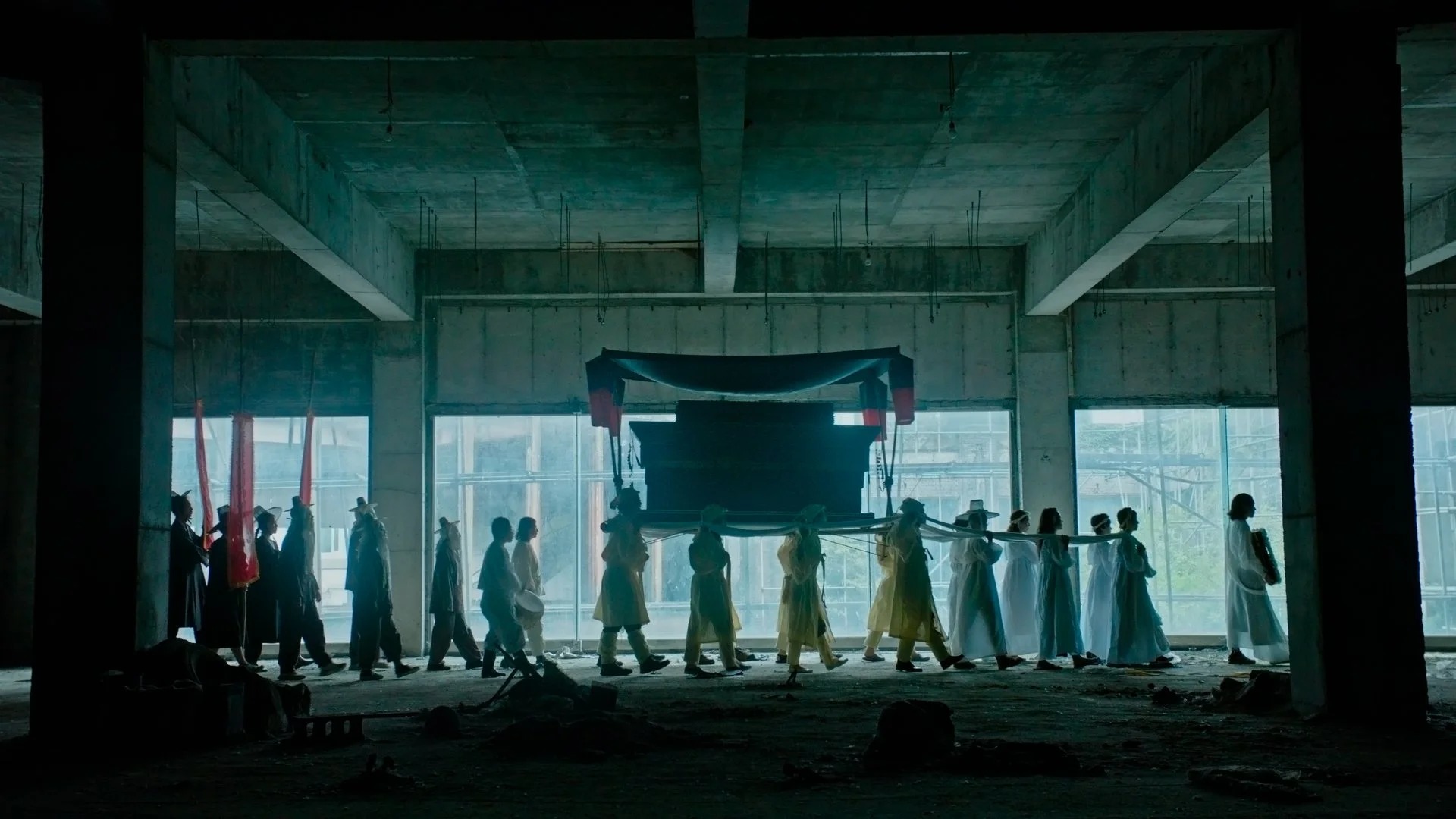
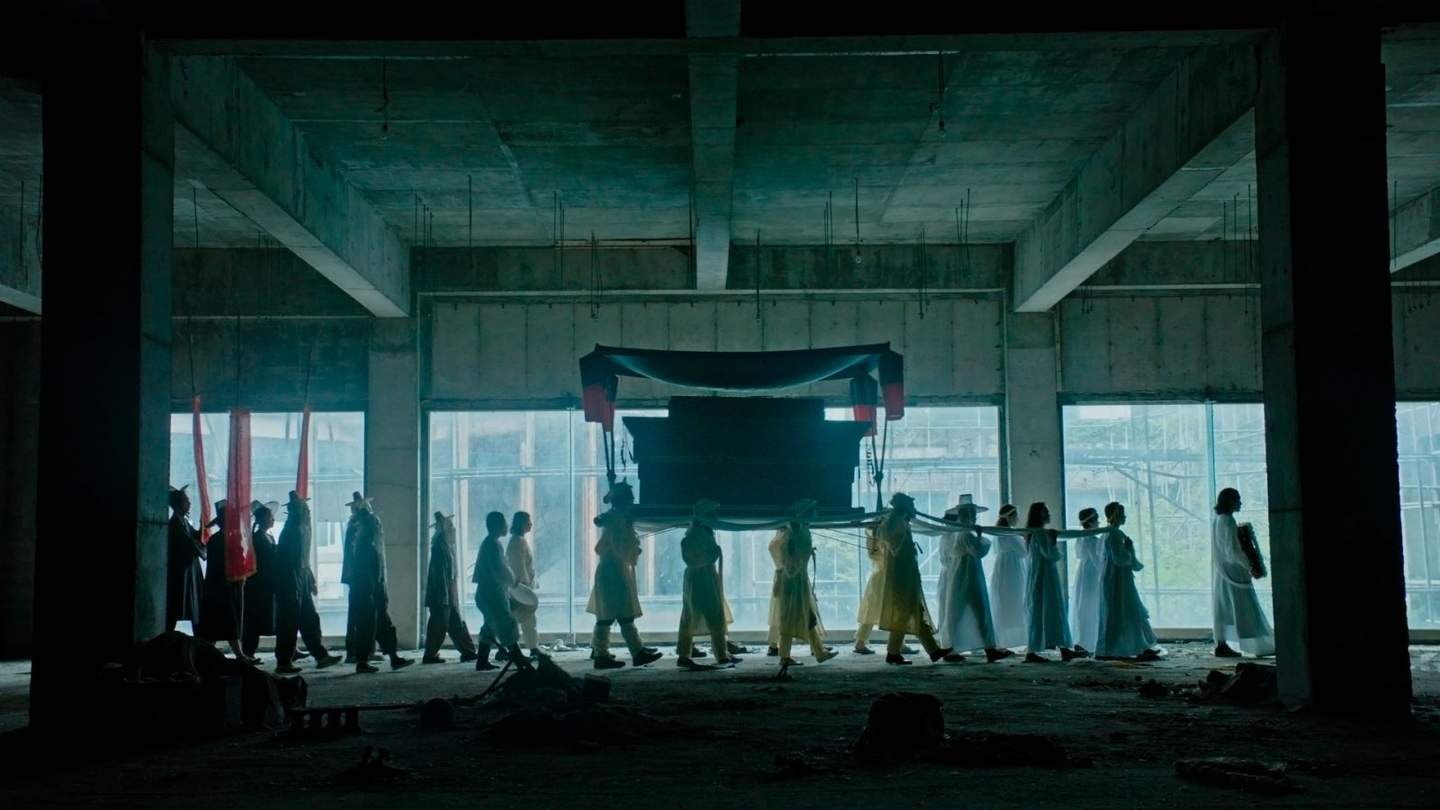
By transforming “dongti” into “dongti fabulation,” Burial of This Order reconfigures the traditionally male-exclusive role of the guardian of the casket into a role performed by environmental activists, artists, members of the diaspora, queers, and trans performers, across generations and social classes. The traditional portraits or memorial images are replaced by black mirrors.
Through this fabulation, which overturns the hierarchical and gendered discourses of fear surrounding dongti, the film creates socially significant moving images that “revolt” against these power structures. Burial of This Order evokes the legacy of 1980s people’s art and street protests, while simultaneously subverting and reconfiguring gender roles in funeral rites and carnivalesque performances to forge a new social space.
Dongti fabulation is created through the repetition of ceremonial acts that intricately reenact ritual forms, self-referential sign-making, and performative processes.
In Korean ritual culture, the casket bearing in funerals, which is the most significant ritual, refers to transporting the coffin to the burial site (or cremation site) after the departure ritual. In Burial of This Order, dokkaebi (deities, goblins) appear between the casket-bearing and the burial ceremony.
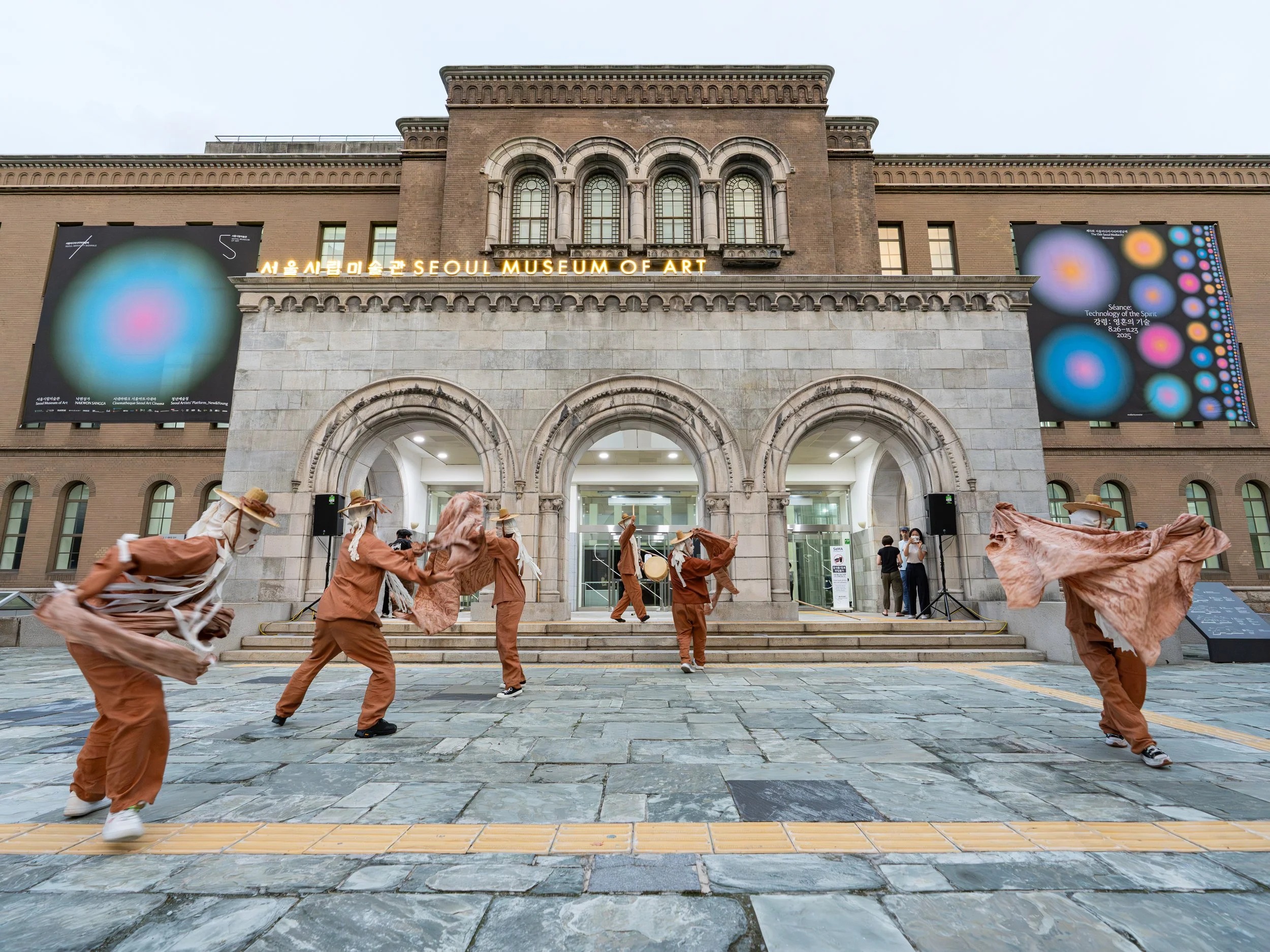
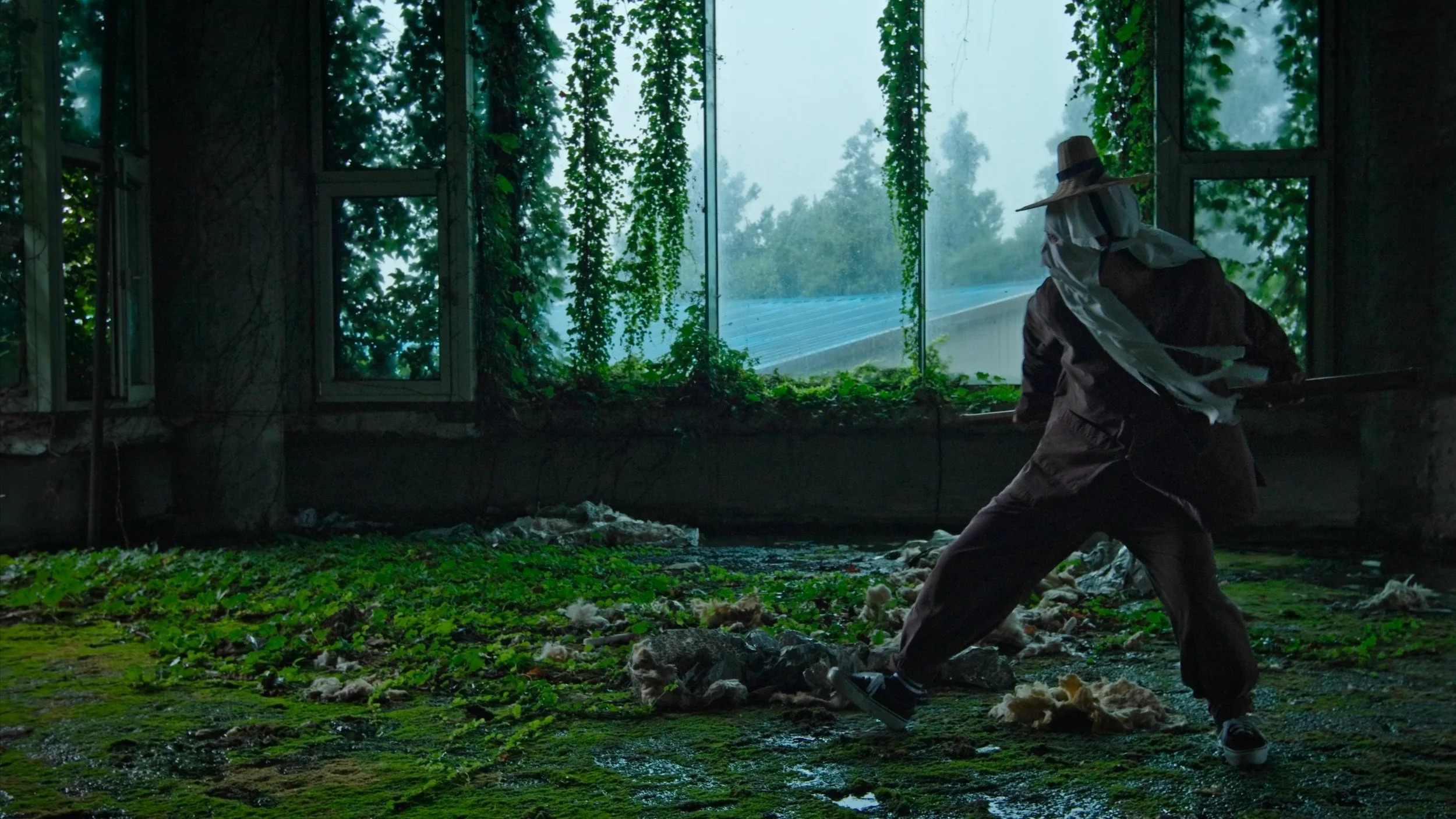
These dokkaebi are notorious mischief-makers, but they also bring chaos to the ritual, enabling the inversion of established order. They encounter the pallbearers, obstruct them, and roam around the abandoned resort’s rooms and other locations, sometimes tapping with long staffs.
“Du-du-eul (豆豆乙), Du-du-ri. Dudeul (to knock) relate to the dokkaebi, whose knocking is not only their nature but also their specialty: Money, come out, come out, knock knock! Rice, come out, come out, crash bang!”
Three forces are at play here: the chaotic knocking of the dokkaebi, the funeral in Burial of This Order, and the conventional funeral order with mourning garments and pall-bearing tools. These three forces—power and counter-authority—shape the mise-en-scène, generating movement and disruption.”
Without much ado, Instead of lowering the coffin into the grave, they hurl it down into the ruins. Leading up to this moment, the air is filled with chants and shouts of revolt, defiance, and rejection. After a sequence that feels as though the black waters have swallowed everything, we see the shattered coffin. The mourners, having shed their mourning clothes for everyday attire, now weave knots instead of bearing the coffin.
The sochang knots in ‘Ieodo (Island Beyond the Sea)’ pointing to the cyclical nature of history and the natural world, as well as the entanglement and unraveling of wounds and internal struggles. These knots connect the external and internal while also delineating the boundary between them, an index of “the exteriority within” phenomenon.
In the digital age, threads, sochang, and knots might find resonance with programming “threads” as well. The liquidity of the ritual filming underwater, naturally dramatized, fits Nadia Bozak’s definition of ecology: “It is impossible to say where nature stops and culture begins, or vice versa.”
3. Eco/Echography and Knots
The knots in ‘Ieodo (Island Beyond the Sea)’, contrasting with the liquidity of the sea, are a central material touching on topics from psychology to shamanistic studies. In his book Knots, R. D. Laing explores the complexities of human relationships and psychology, using metaphors like knots, tangles, fankles, impasses, disjunctions, whirligigs, and binds to describe psychological phenomena in a poetic way.
These terms illustrate how psychological intricacies can be condensed as knots. In the structure of feelings of Korea, knots are understood in this way. “Resentment and its resolution are often expressed through metaphors involving strings, threads, and ties. In the Korean dictionary, a knot is defined as ‘something tied in a loop, such as a ribbon, that is difficult to untangle.’
The knot goes beyond being a metaphor for resentment and becomes a metaphor for life itself.” In this way, the knots woven by Halmang discern and diagnose Jeju and the Jeju Sea in Offering and Wreckage, much like the process of feeling a pulse through threads (sajin). Jeju is both a condensed symptom of Korea’s modern and contemporary history and an ecosystem. It brings forth discussions of state violence, dark tourism, and the destruction of the marine ecosystem by the Gangjeong military base.
In this context, the knots become powerful material that might embody the ghostly entanglements of new materialism and hauntology. Here, the knots are a peculiar material that traverses between ritualistic practices, including shamanism, and the ghostly entanglements of new materialism, touching on hauntology. As previously mentioned, when knots operate underwater, the sea makes the temporary boundaries they create ripple, amplifying their liquidity. In this cosmic flow of knots, haenyeo who perform Offering behaving like a certain medium beneath the water.
The term “maechae” (媒體), which translates as “media,” is composed of two Chinese characters: “媒” (matchmaker) and “體” (body or substance). While the Sino-Korean term maechae and the word media overlap to some extent, maechae can also refer to non-electronic, physical, and material mediums.
Interestingly, the radical of “媒” is “女” (woman), linking the term to words like maepa (媒婆, matchmaker) and yeongmae (靈媒, spiritual medium, shaman). This suggests that maechae (media), in this sense, serves as for the intangible, evoking the image of the shaman as an intermediary between the physical and metaphysical worlds.
Following this thread, Kaisen’s ‘Ieodo (Island Beyond the Sea)’ layers Félix Guattari’s three ecologies of mental, social, and environmental into her work, circulating and intertwining them within the space of shamanistic rituals. Here, ecology is defined not just as an environmental but also as a framework that includes social relationships and human subjectivity.
Guattari argues that the ecological crisis threatening the planet is a direct result of the new forms of capitalism and stresses the need for eco-sophy that pays an attention to the differences between all life systems. In these three ecologies, ‘Ieodo (Island Beyond the Sea)’ unfolds the process of “space-time-materialization” in the works like Portal and Core.
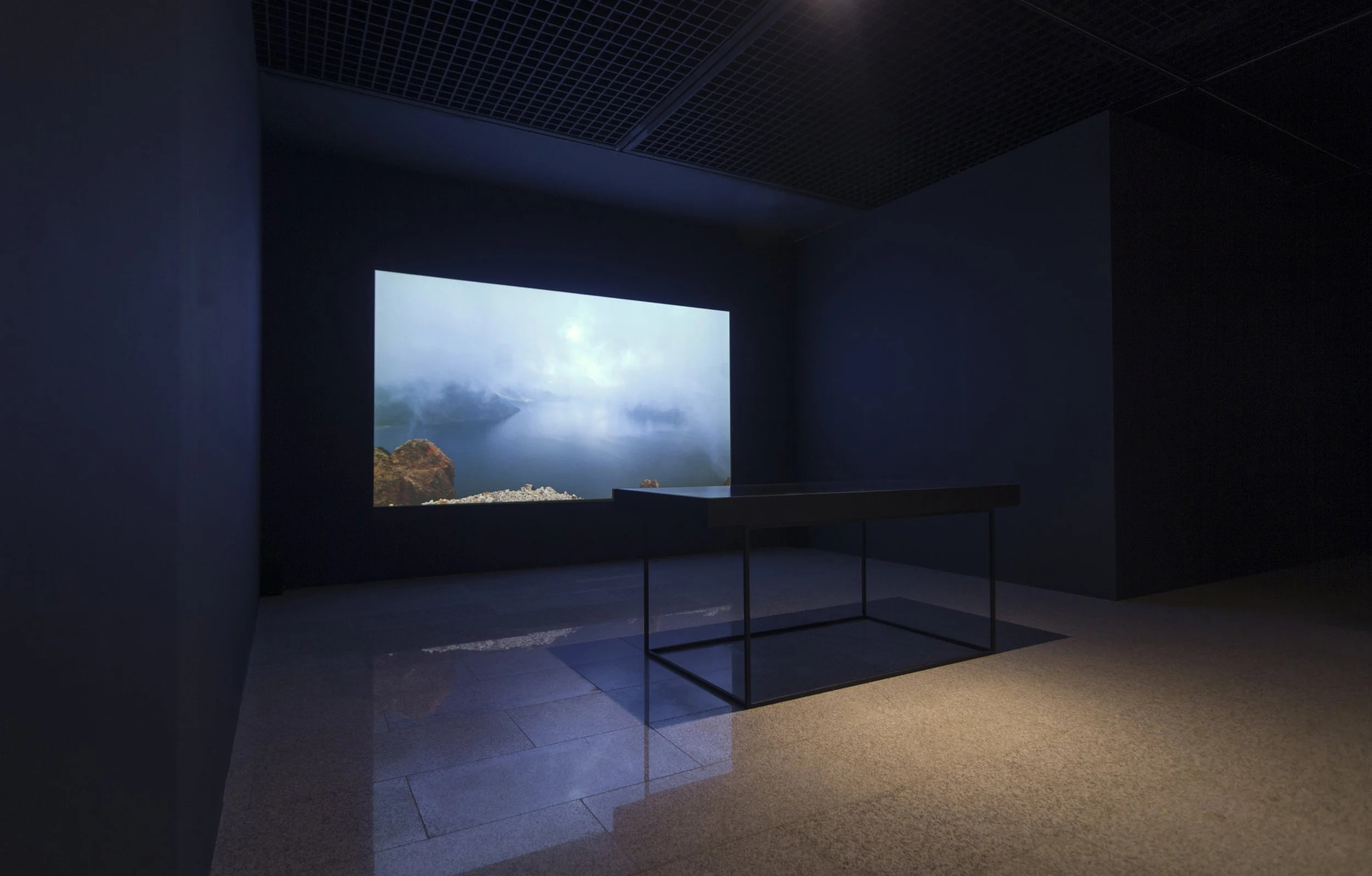
They create a usual and sublime landscape through ancient crustacean fossils and porous lava rock. Their immense presence combined with the steady beat of rocks produces a deep sense of awakening. In these two works, the legend of “the virgin offered as a sacrifice and the curse bestowed upon the magistrate who saved her” transforms into a shamanistic myth of Jeju’s great goddess, Seolmundae Halmang who breathes life into and sets the universe in motion.
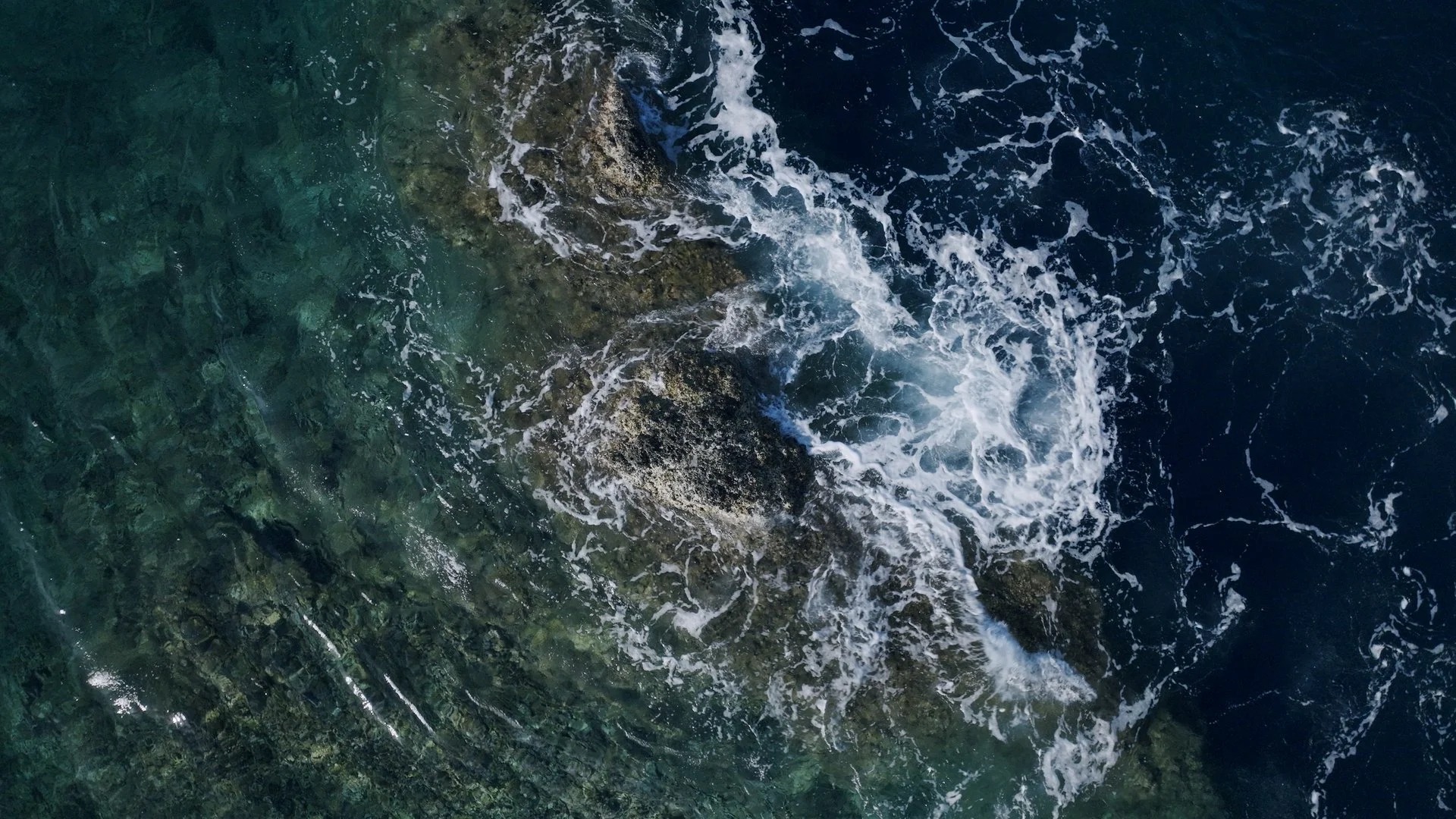
Moreover, the locations re-invoked as Portal and Core are closely tied to the scenes in Wreckage, where the sea is disturbingly treated as a dumping ground for large quantities of weapons, much like a landfill. These scenes provoke reflection on the concept of “resilience.” C. S. Holling views small-scale revolt and remembrance as the key capabilities of ecological recovery.
In Wreckage, Core, Portal, and Offering, thoughts and senses around small-scale change and remembrance are triggered, and the resilience of the villages and seas of Jeju, where nature and history are enmeshed, becomes evident. These places, marked by dark blue-black formations of rough basalt whose cracks lead to a portal entering the inner world of seashells, connect to the resilience of Jeju’s seas and villages.
Through the ‘Ieodo (Island Beyond the Sea)’ series, the change and memory involved in nature’s and history’s counter-movements are captured, expressed as an art of memory (mnemotechnologie). This manifests and resonates through the eco/echography of sajin (the diagnostic silken threads).
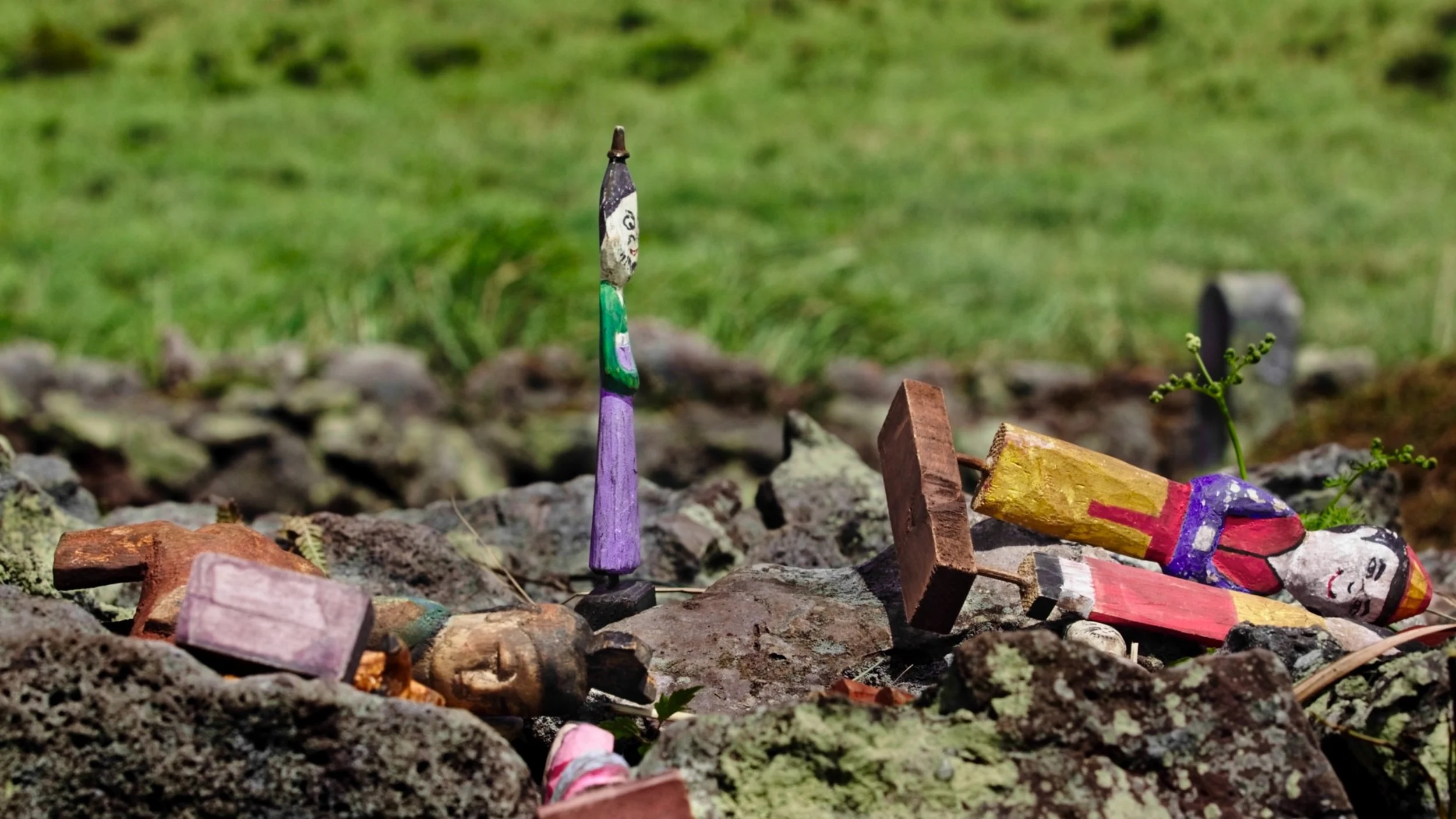
In Guardians, the kokdu (wooden figurines traditionally used to guide the dead in funerals) are no longer standing at the pinnacle of the casket to watch over the deceased, but are instead held in the hands of children, circling in the ganggangsullae (circle dance). In this fleeting moment, the kokdu stand as guardians of both death’s finality and the deceased’s passage, while their gaze stretches beyond—toward life, the afterlife, and the sphere of possibility and future. It is this vibrant futurity that ‘Ieodo (Island Beyond the Sea)’ holds in promise.”