Regrettably, anxiety, depression, frustration, and hatred still remain indispensable terms for defining contemporary society and the people who inhabit it. What is curious, however, is that both the causes of anxiety and the means proposed to resolve it are often located in forms of “instability” found in social structures, public policy, or human relationships.

Housing and stock markets, employment rates, and generational conflict are among the most familiar examples. But if the phenomena treated as problems and causes were resolved, would human anxiety and depression disappear altogether? If the structure of society were fundamentally reformed, would the well-being and happiness of the individuals living within it steadily increase?

Contemporary society seems to proceed as though this were the case, continually intensifying existing policies or devising new measures. Moreover, the rapid expansion of the artificial intelligence industry has further intensified a cynical attitude toward what is human, or toward humanity itself. The depressed individual of contemporary society becomes an object in need of treatment, existing merely as a benchmark and stepping stone for the production of a supposedly better human being.

Perhaps it is only natural that, in an era when human beings are increasingly alienated and humanity itself is denied, we are once again called upon to reflect on what it means to be human. Thought that takes the human being as its end must begin not with the by-products of human creation, but with the human being itself.

Søren Kierkegaard’s proposition, born of his profound reflection on what it means to exist as an individual—“At every moment, the individual is both himself and the human race”—provides a crucial point of departure for this exhibition. It should not be misunderstood as a simple assertion that every subjective thought is valuable or that each individual experience is inherently justified.

Rather, it describes a state, a contradiction insofar as it is also a task given to us, and a historical movement insofar as it constitutes an orientation and a goal. Above all, the compelling mechanism in Kierkegaard’s thought is that not every individual is immediately identical with humanity; there must first be a process of becoming oneself.

Through this process, the individual participates in the whole—in humanity—at the same time as reaching fulfillment within the self. What, then, does the “completion” of the self mean? It is not a state of finality, but a “processual condition”: the spirit that synthesizes an individual who is inevitably divided, or, more precisely, the very act of “relating.”

Yet this process of forming relations is always accompanied by anxiety. Anxiety is the infinite possibility experienced by existence before an empty nothingness—the condition of freedom itself. For this reason, we fear anxiety and love it at the same time. For Kierkegaard, anxiety resembles the awakening of the dreaming spirit; it is akin to truly entering the world. Human fulfillment, then, may be understood as the synthesis of division and as the synthesizing relation itself.

《Toward My Humanity》, a moving-image exhibition featuring six contemporary artists working primarily with media—Kwang-Ju Son, Bokyung Jun, Seo Young Chang, Ham Hyekyung, Soomin Shon, and Khym Sangha—examines the forms of relationship created by human beings who exist alongside and within the present age.

Above all, these figures exist through anxiety, frustration, and doubt, attempting to synthesize their divided selves through relationships with others that extend outward from the self. The exhibition’s narrative begins with the human interior and the mind, and proceeds toward the various ways in which the individual forms relationships with the communities and societies that surround them.


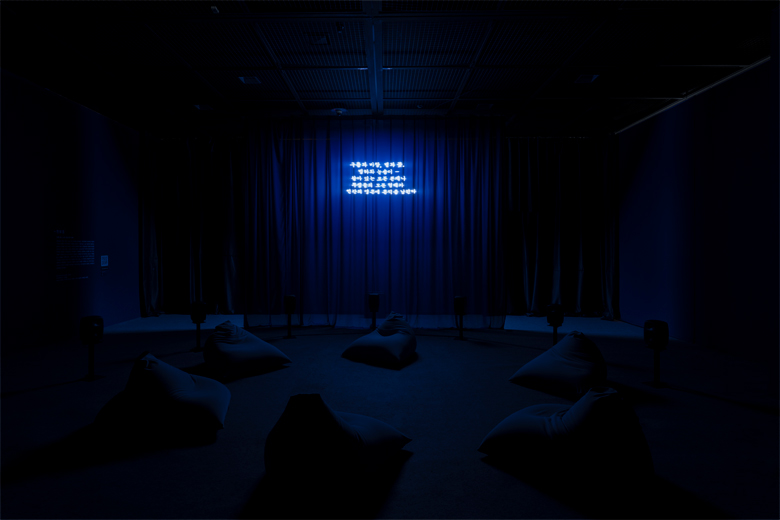
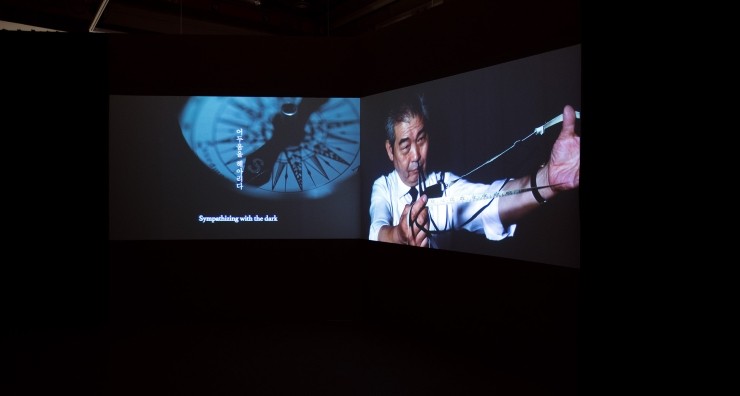
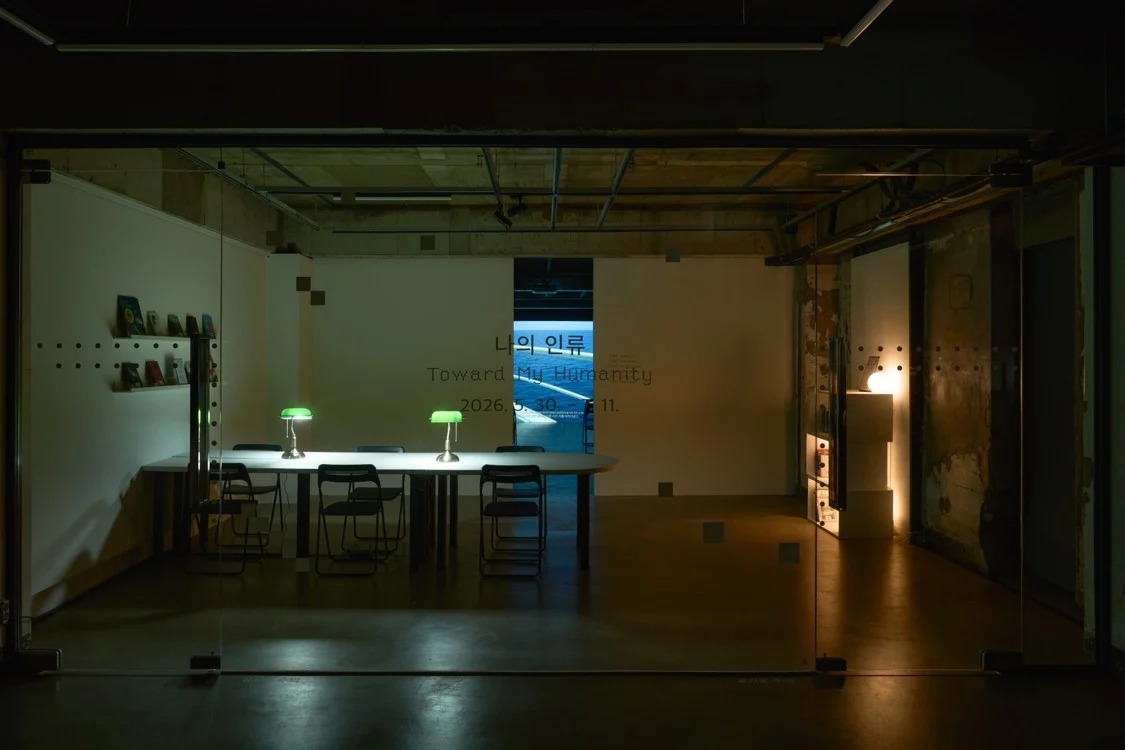
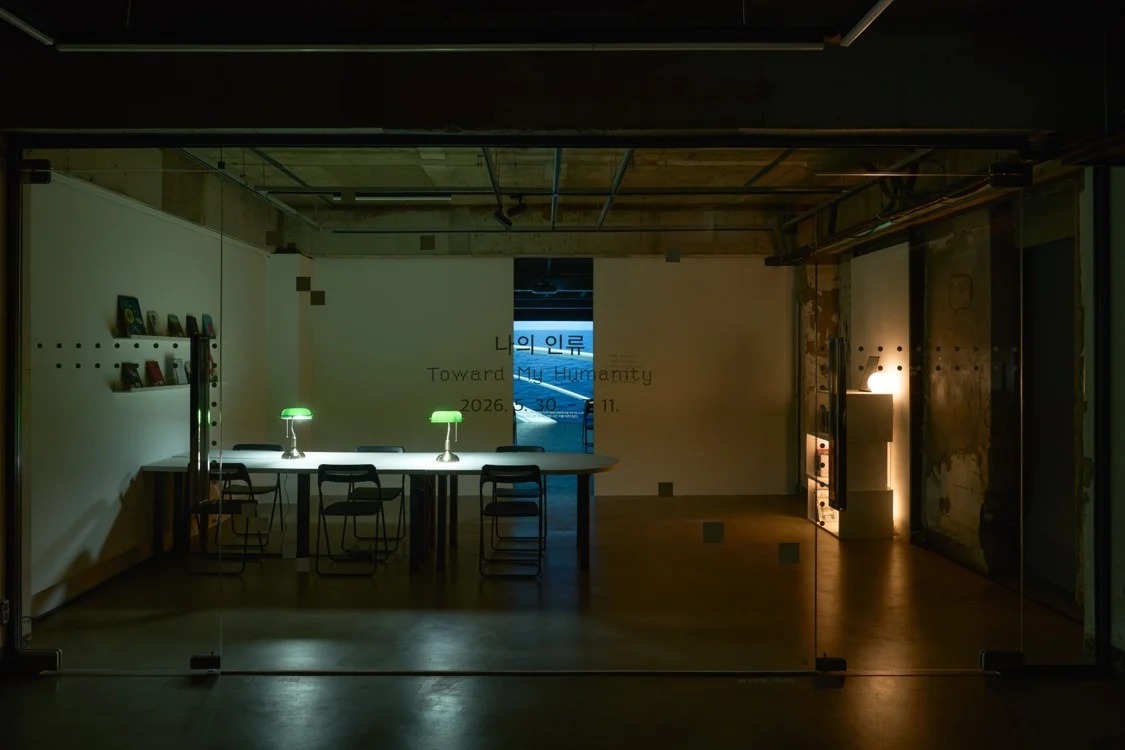
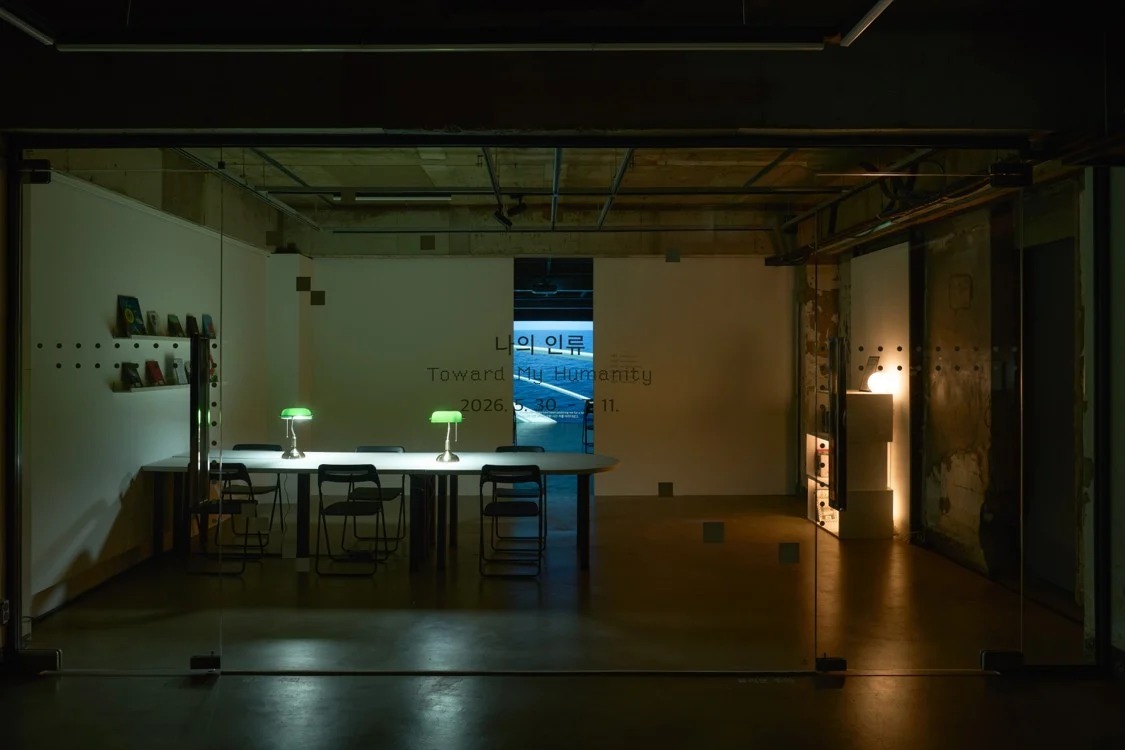
Installation view of 《Toward My Humanity》 © Art Centre Art Moment

Ham Hyekyung’s narrative begins deep within the interior of the individual, yet gives voice from the ambiguous boundary between subject and other. It is impossible to determine whose story it is, or whether it is truth or fiction. The individual’s transformation into an other becomes an active attempt to understand the world surrounding them.

Here, different points of thought intersect, become embedded within one another, and form overlapping zones grounded in empathy. In Man on a Boat (2024), the vast expanse of the open sea and the sweeping landscape unfold like an incomprehensible life precisely because they cannot be grasped in their entirety.

Anxiety that suddenly intrudes upon everyday life draws to the surface, like an event, all the accumulated traces of time and relationships within the individual. When does personal growth come to an end, and where is salvation to be found? This may be someone else’s life, but it is also my own story as one who coexists with them. Light at the End of the Tunnel (2017) calmly pours forth emotions that are difficult to articulate.

To confront, rather than evade, the mass of despair and helplessness faced by the individual, and to endure pain as it is, is presented as a process of finding oneself. Moving between continuity and rupture, the artist’s narratives resemble fragmentary essays and point to the incompleteness of the individual; yet even amid recurring anxiety, these figures embrace themselves and the world given to them by refusing to relinquish their desire to remain connected to it.

Questions of existence—of what holds an individual together amid the beginning and end of a human life and its continually changing moments—recur throughout Seo Young Chang’s work. In A Story of a Bear, Who Drowns Forever, Over and Over (2013), the artist presents anxiety emerging from innocence as a fundamental condition of human existence.

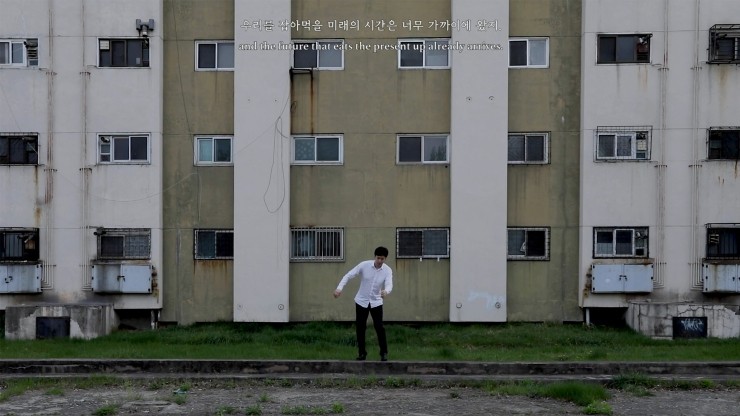
The individual, existing in confusion between resignation and questioning, compliance and refusal, can overcome this condition only by continuing once again to live, and to survive. The self-portrait of the fragmented contemporary individual becomes more concrete in Fix or Repair Daily (2025). A figure wanders aimlessly through an inverted, chaotic space-time that extends seemingly without end.

Although a clearly traceable “line” is given, recovery somehow remains elusive. Disassembled according to the grammar of the efficient systems of modern industry, the individual wanders without direction toward synthesis, attempting to stitch the self back together. Time, never granted in its fullness, is hastily brought to closure through provisional replacement.

Chang’s moving images reveal the identity of an existential subject cast into a world undergoing minute but continuous fragmentation, raising the question of whether it is possible to understand the individual as a whole and complete being.


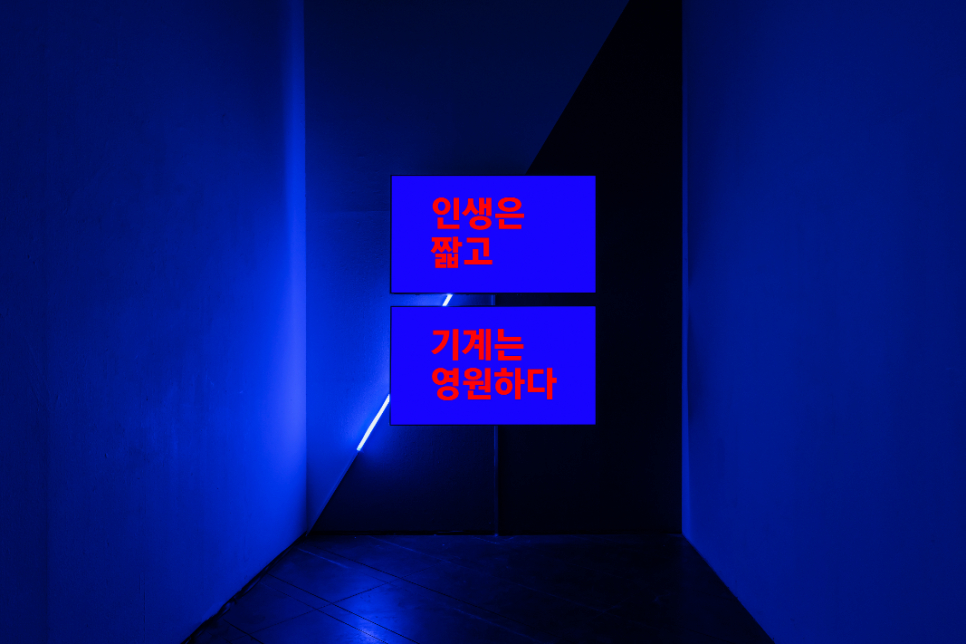
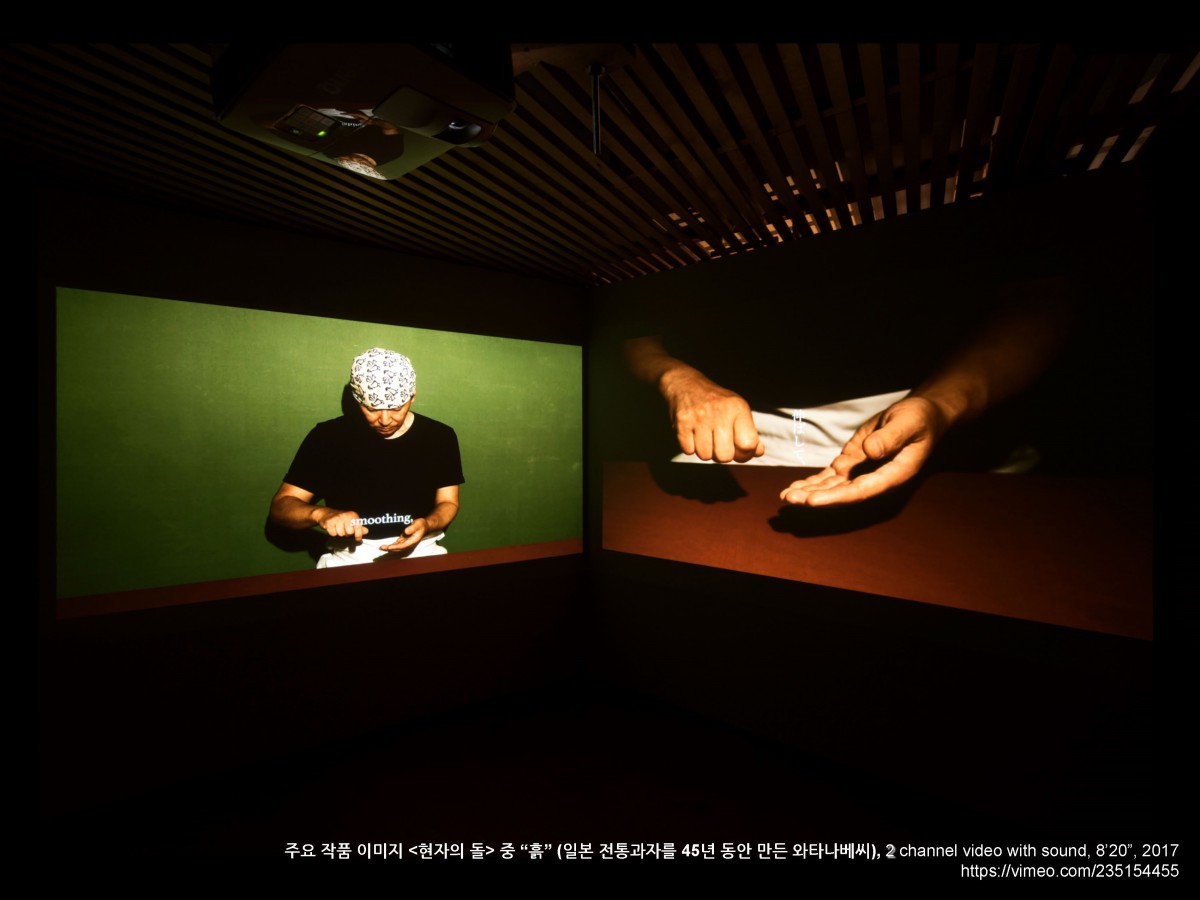
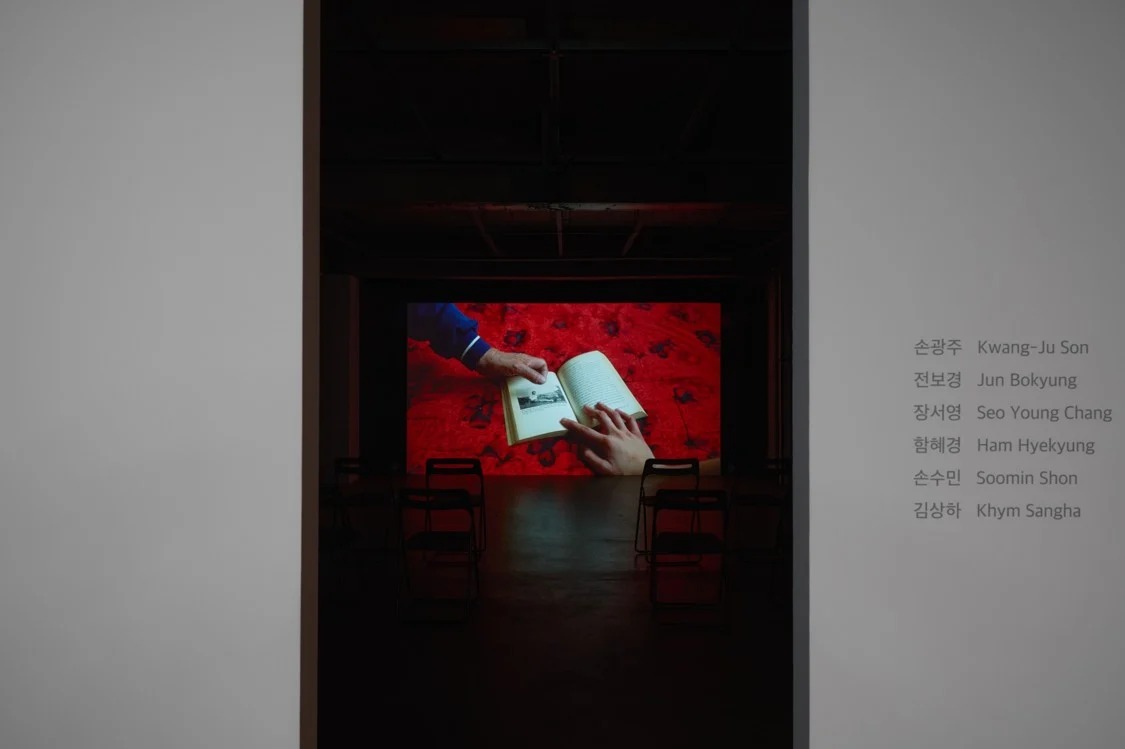
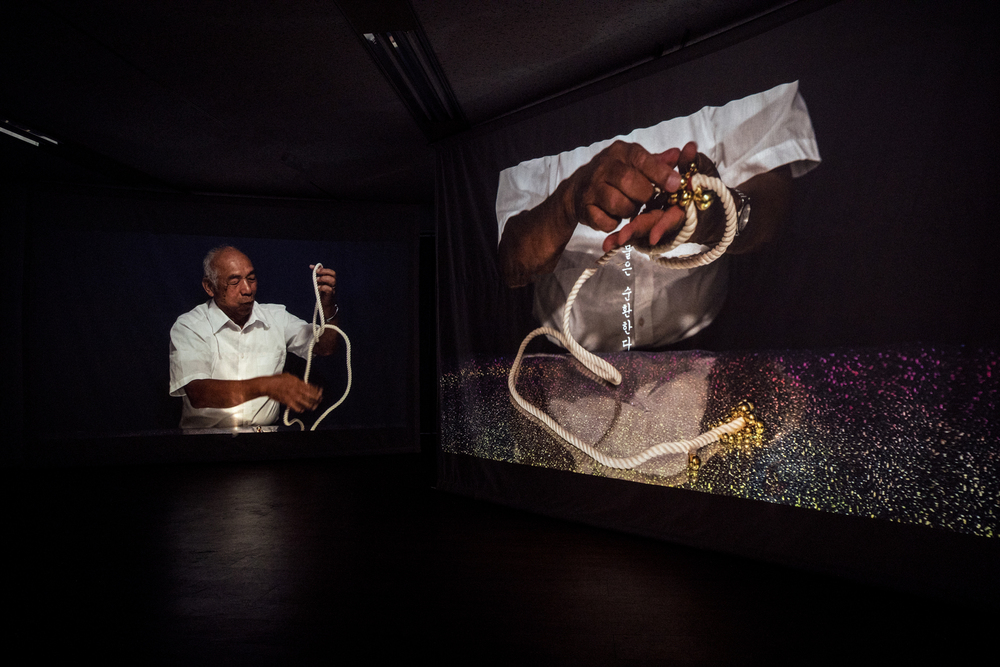
Installation view of 《Toward My Humanity》 © Art Centre Art Moment

Kwang-Ju Son’s gaze casts both himself and all of us into the currents of time and history. His identity as an artist is formed together with the context of the era to which he belongs. At the foundation of his practice, therefore, lies a concern with what must be seen at the present moment and how one should speak about it, accompanied above all by reflection on both himself and his time. Exilandscape (2025) presents landscapes of places of exile on the Korean Peninsula.

Across tranquil contemporary images, the gaze of a failed revolutionary from centuries ago is superimposed. The artist’s questions surrounding a “failed revolution” lead toward a sense that a time and space severed from everything else may become the beginning of another form of generation.

The act of making art, too, consists of continual moments of decision and attempt, and is the product of resistance that persists despite repeated failure. APPARITION (2007) casts the shadow of a gondola across an endlessly unfolding landscape. Without any pronounced composition or manipulation of viewpoint, the image appears at first peaceful and serene.

The rounded form of the gondola may even resemble a comfortable shelter. Yet with the occasional roar that breaks the quiet, its form repeatedly changes in response to transformations in the surrounding environment. This may be read as the possibility of innumerable states of being produced through attunement to the given world. These uninterrupted, continuously unfolding scenes become a space for contemplating where the force that compels us to keep moving forward nevertheless comes from.

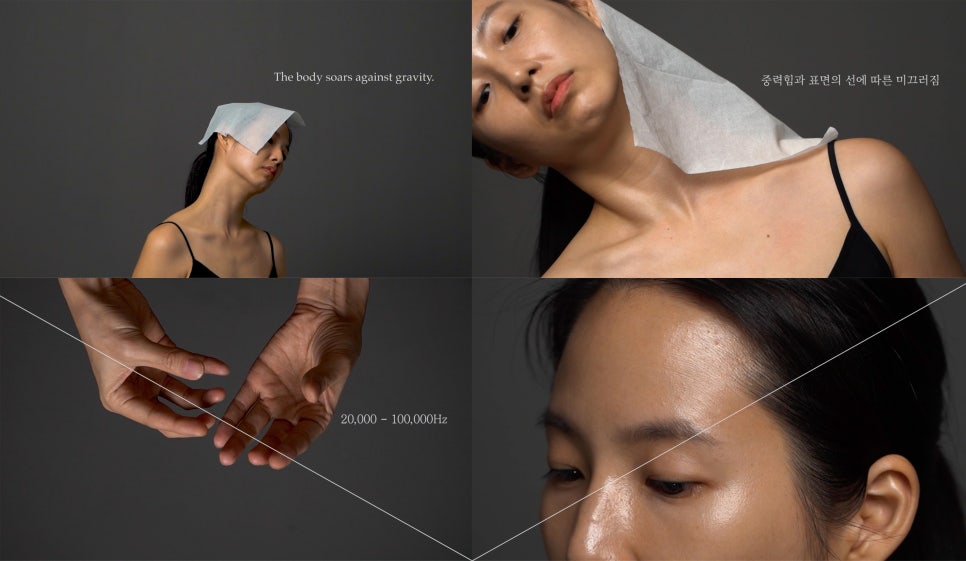
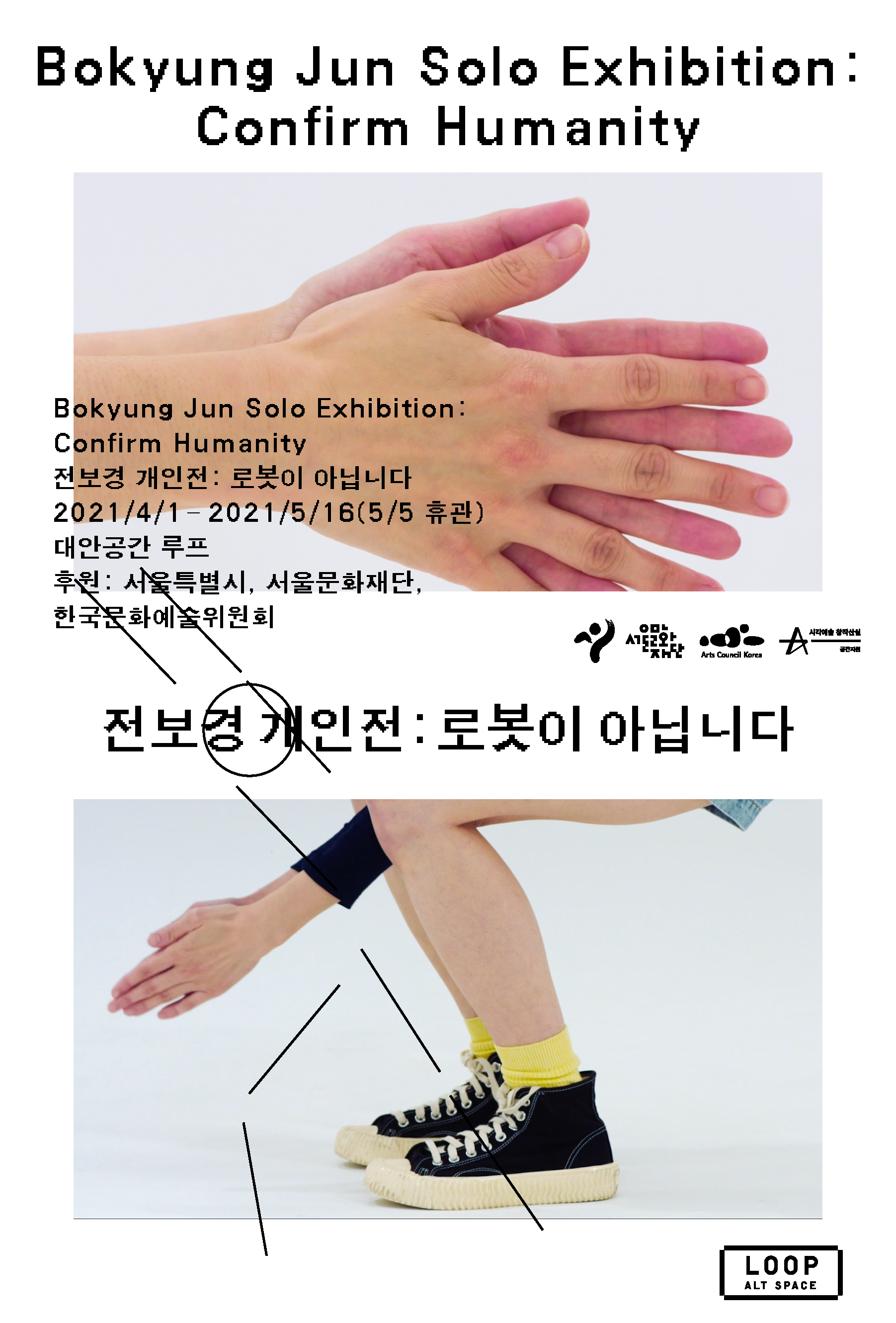
For Bokyung Jun, the body, the senses, and gesture serve both as the first threshold through which the world is perceived and as a means of expressing it. Her moving images are filled with nonverbal movements such as dance and performance. At their center lies the question of whether conditions unique to the human can still be established.

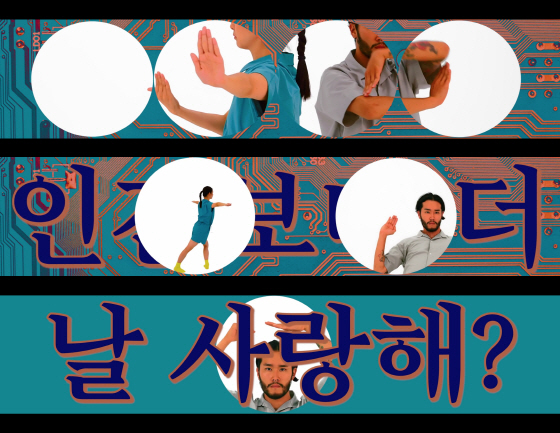
The practice of understanding the world by defining and classifying concepts is deliberately set aside in her work. Her inquiry focuses in particular on contemporary environments saturated with machines, systems, and artificial intelligence that now permeate everyday life. In Machine Learning (Do You Love Me?) (2021), Jun has dancers reenact the movements of machines modeled on human motion.

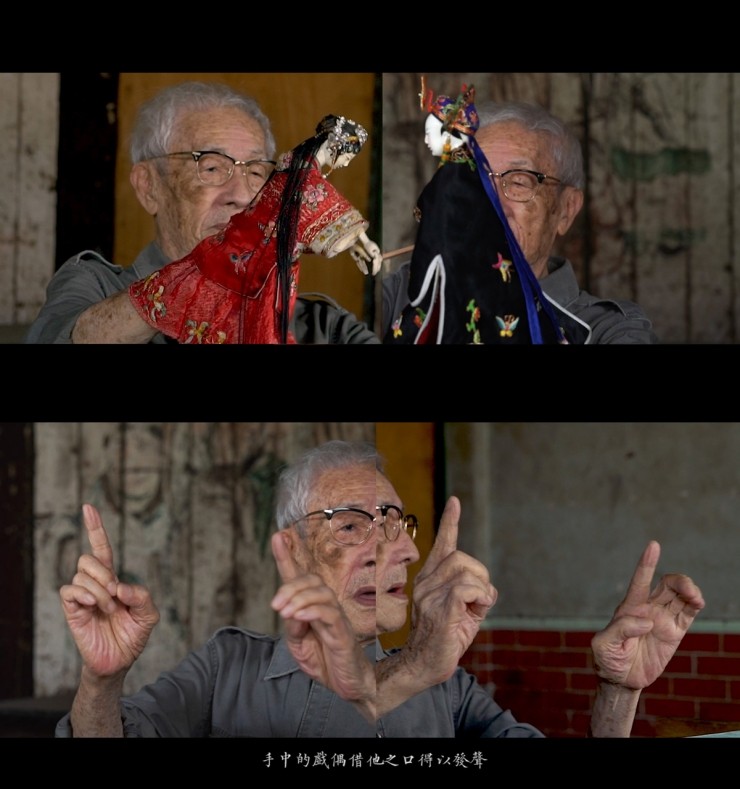
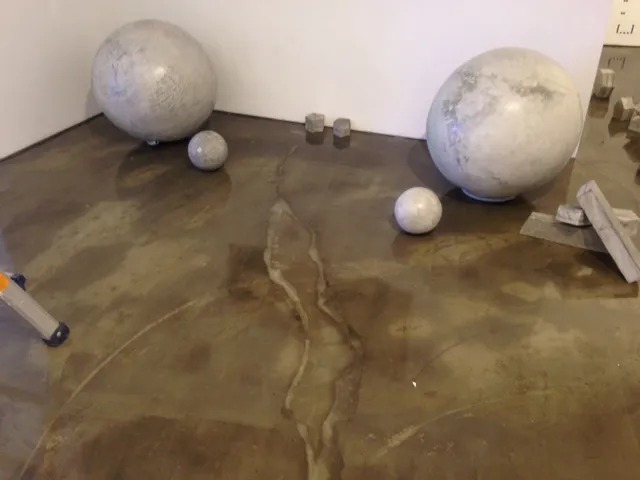
Oscillating between the machine as a symbol of productivity and the artistic gesture of the body, the work remains open to our interpretation. Is art still valid as something exclusively human, an attribute unique to humanity? In murmur (2022), the artist juxtaposes human-made objects, natural forms, and sign language—a bodily language rather than explicit verbal speech—to construct a hybrid visual field.
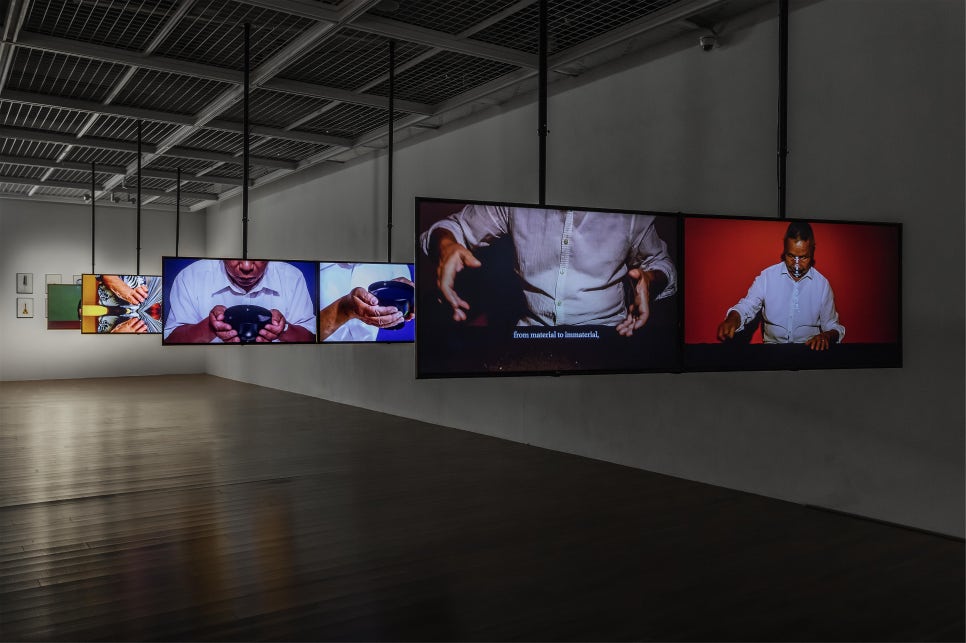
The gap that resists immediate recognition or interpretation draws out the full range of nonverbal human sensation. By presenting us as sensory forms, Jun enables an encounter with the self as it may be experienced beyond reason, concepts, and ideology.

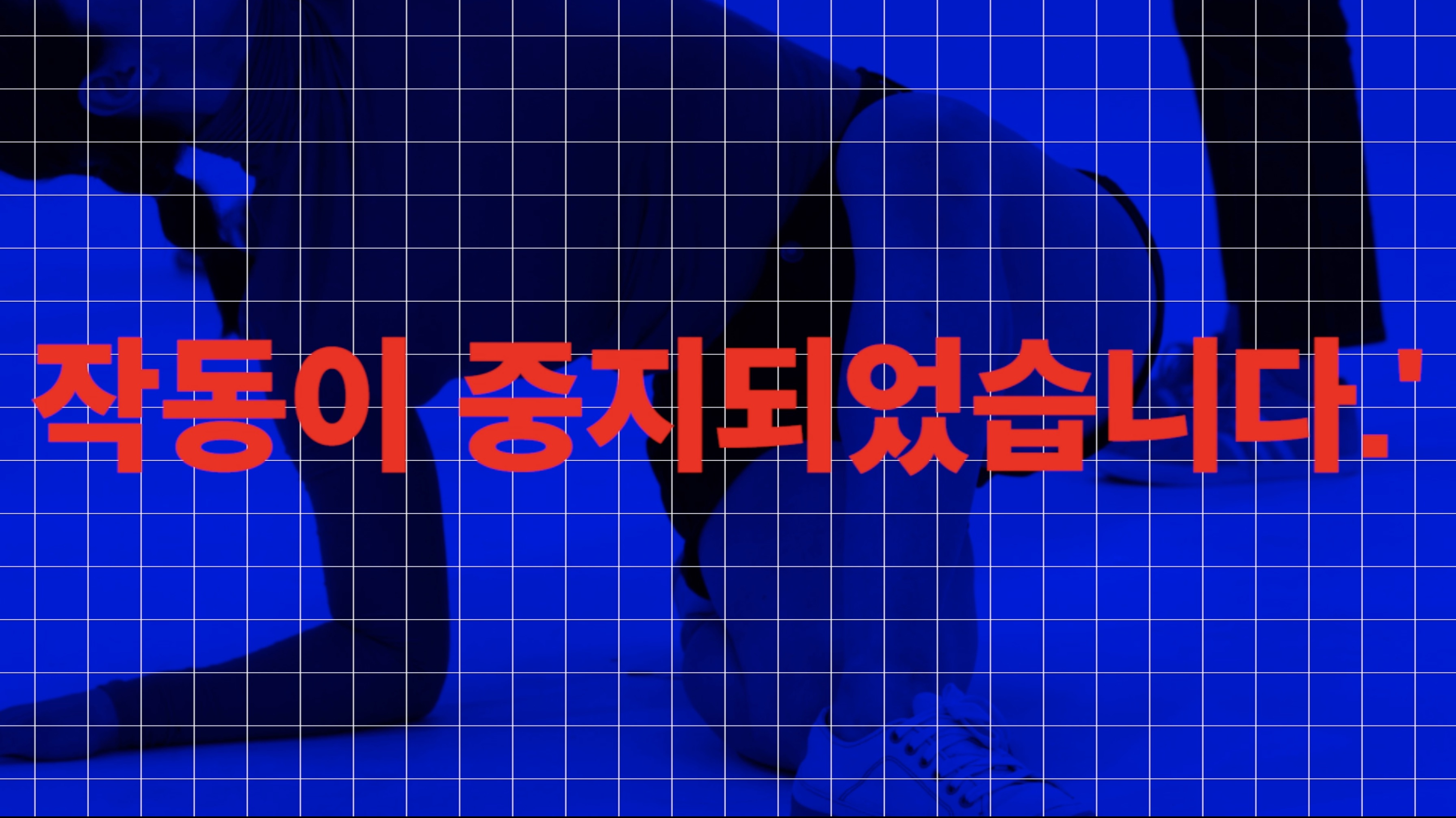
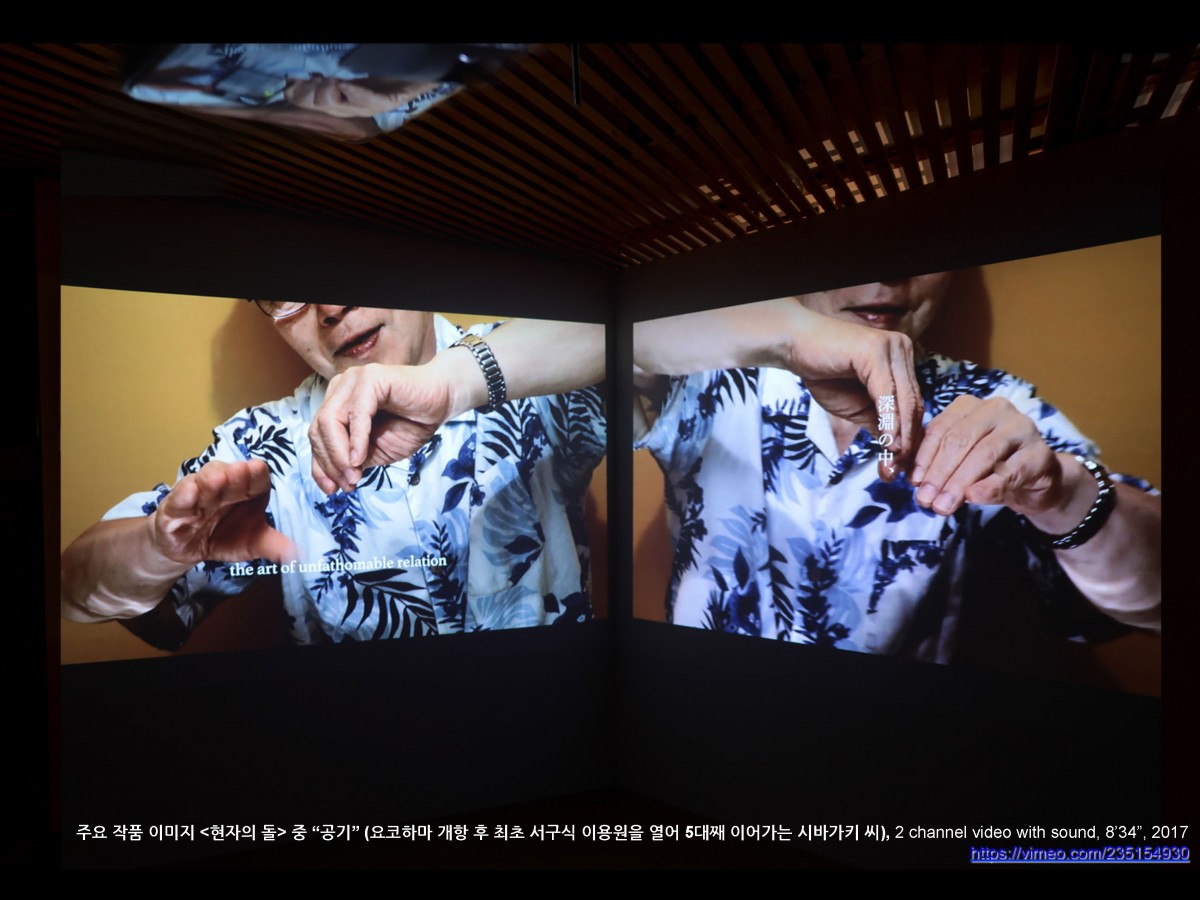
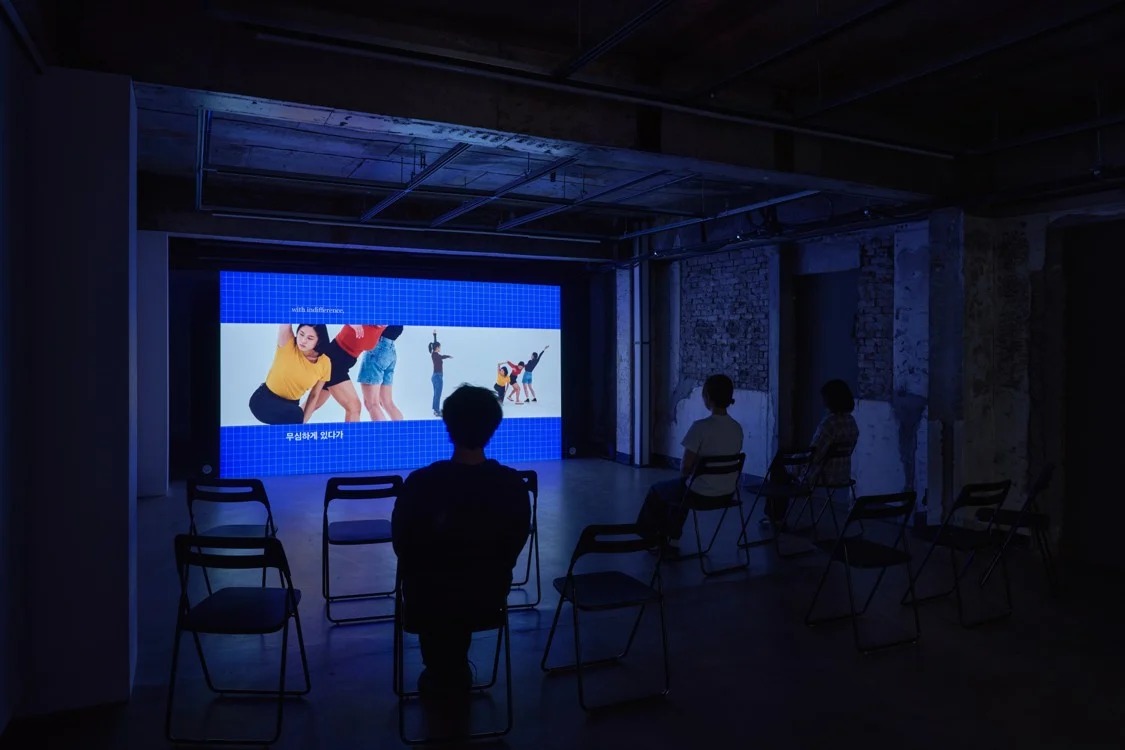
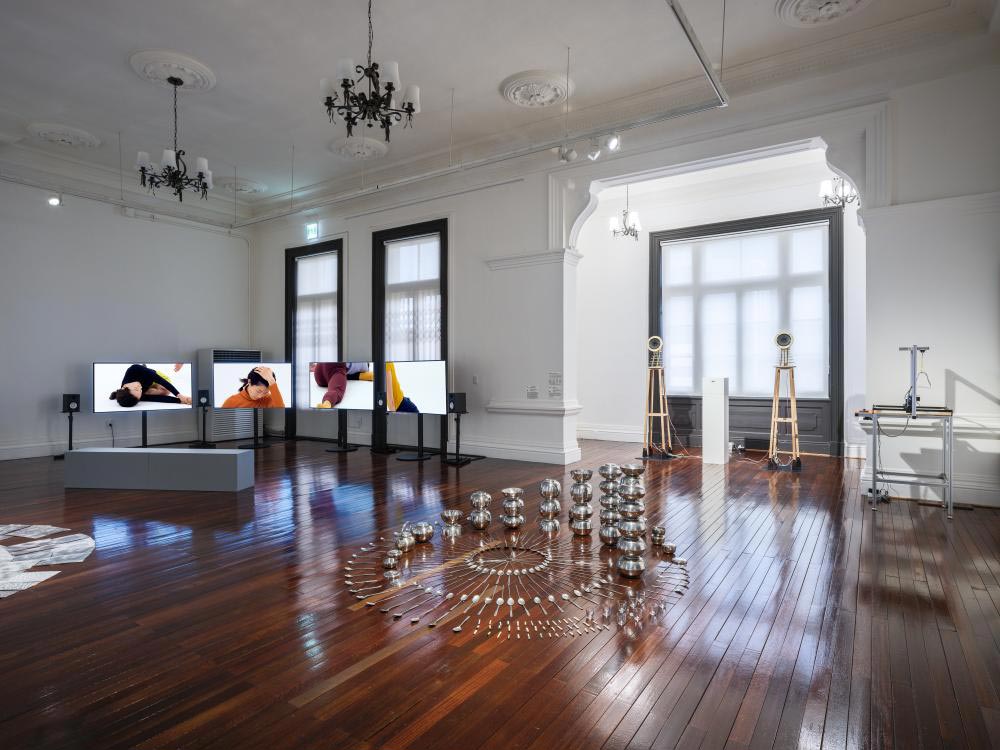
Installation view of 《Toward My Humanity》 © Art Centre Art Moment

Soomin Shon’s perspective focuses on the systems and structures that constitute the world, revealing the microscopic networks of relations that exist within them. Her gaze begins with a particular moment or event and proceeds by reorganizing fragments of the social and structural layers that surrounded it. Her works therefore capture cross-sections of a specific era or world.

Through the individual’s connections to others and to structures such as communities, subcultures, and systems of capital, they reveal states of existential being. In God We Trust (2023) addresses the individual within capitalism, arguably the most powerful force of the present moment. Capital has long since taken the place once occupied by God, and the artist presents fragments from 2008, when this seemingly absolute mythology collapsed.

When belief turns into illusion and only an empty absence remains, the work asks where our gaze might turn next. In 3 Smartphones, 24 Phone Chargers and 4 Powercords (2024), Shon presents, through performative reenactment, a scene in which migrants gathered around portable power outlets to charge their smartphones. Unfolding outside the vast structure of the nation-state, the scene reminds us that connection with others is itself an indispensable condition of existence. The interconnections of relationship, community, and identity extend outward from the individual.

The hazy, mist-filled images of Khym Sangha function like metaphors for blurred memory. For the artist, the act of locating the present—the here and now—begins with fragments of the past that constitute it. In order to illuminate things that are gradually being forgotten, the artist collects memories and archival materials from those who once shared them.

Her interest is directed toward things erased or removed within particular historical contexts, such as Bamseom, which appears in GATHER (2026). For Khym, determining the factual truth or falsity of what defines an object is not of primary importance. Her practice is closer to seeking ways of understanding and accepting the present. Her works therefore exist as though initiating a conversation.
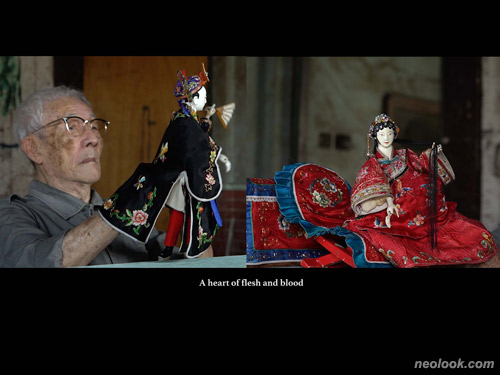
At the center of To Kill or Follow the Shadow (2025) is the original print of the film Arirang (1926), which survives only as an intangible rumor. Through oral accounts and fragmentary materials that remain like traces, the artist constructs one facet of collective memory. Her practice begins by posing questions to a past that has quietly settled beneath the surface. She completes the narrative in the hope that these questions may return to the present and lead toward connections among those who coexist here and now.
Forming relationships is akin to a task given to us. Failure in this task gives rise to despair. We fall into despair at every moment, but what matters is that, at each moment, we recognize ourselves as being in despair. We are often preoccupied with avoiding or concealing it. Yet “the only way to become free from despair is (…) to pass through despair and emerge from it. In this sense, human beings must also learn how to despair.”

This exhibition offers a shared time in which to confront inner anxiety and depression, hold onto relationships often dismissed as secondary, and once again explore the memories of communities and collectives. It does so in the hope that these acts may become connections through which we can think about the present within the currents of time and history.

The relationships we encounter invite us to contemplate a possible synthesis of selves divided between infinity and finitude, time and eternity, freedom and necessity. Ultimately, they may lead us to discover the many “selves” who exist alongside us in the present, each at once “oneself” and “humanity.”

Dazzlingly beautiful landscapes, overwhelming resonance, and buoyant, almost dance-inducing sounds form a paradoxical harmony with the weighty existential questions placed before us. Thus, even if what we encounter in this exhibition appears to be so-called negative states, covered in pain and anguish, it is hoped that they may remain with us as moments in which we recognize them as signals of the freedom uniquely given to human beings.

References