Soh Boram (b. 1984) has explored audiovisual methodologies that reflect on the relationship between marginalized human lives and her own experiences amid urbanization and redevelopment, while also revealing the often-overlooked sacrifices of nonhuman beings throughout human history and their relationship to humanity.


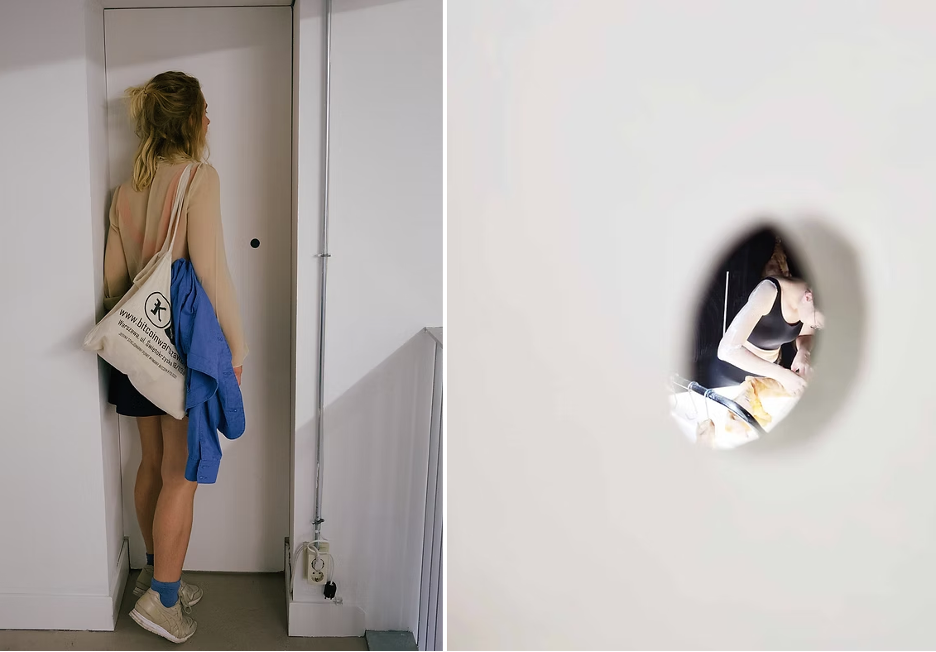
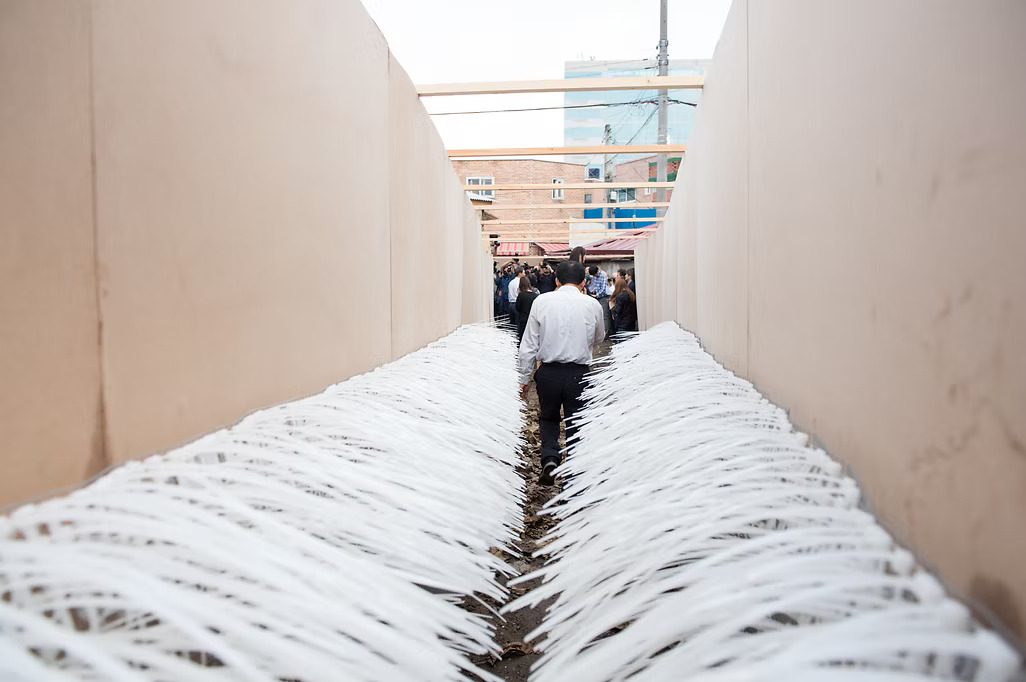
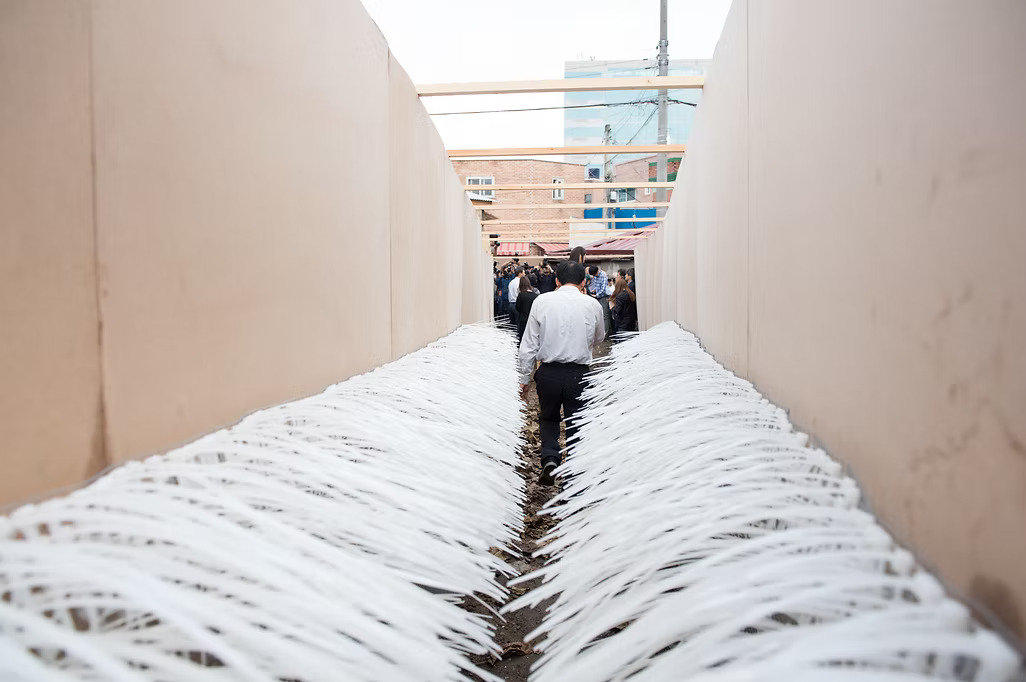
Soh Boram, Seen Through the Width of a Pupil, 2016, Jeonju-si, Jeollabuk-do © Soh Boram

Soh Boram began her artistic practice with a project (2016–2020) that examined the power structures embedded in place and the violence of the gaze in Sunmichon, a former red-light district in Jeonju.
 
Her first work of this project, Seen Through the Width of a Pupil (2016), began with a synthetic eyelash she happened to find on the street in Sunmichon. The work reflects on the unexpectedly narrowed distance between the artist and the place, as well as between the artist and the women who worked there, prompted by this chance encounter with an object once belonging to another person.
 
Soh expanded the multiple, curved forms of the synthetic eyelash into a monumental spatial structure that envelops and constrains the human body. What was originally a tiny object, approximately the width of a pupil, becomes a long passage through which visitors are required to move.
 
Its entrance takes the form of a low, narrow doorway resembling the entrance to a pimp’s room, while its exit leads into an abandoned private home. Through this spatial transformation, Soh evokes the long history of oppression and control imposed upon women.


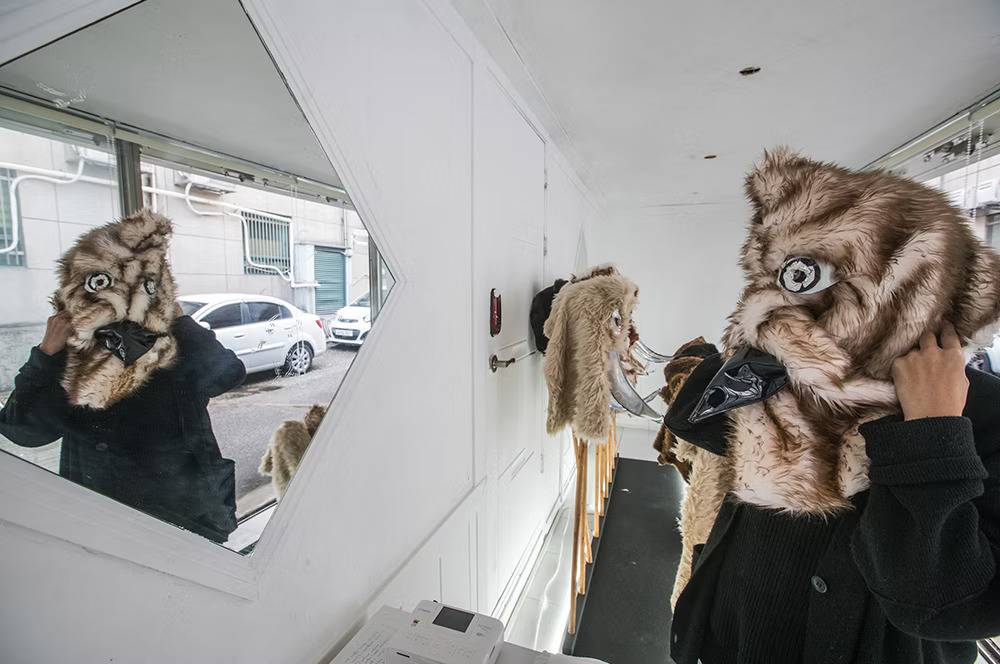
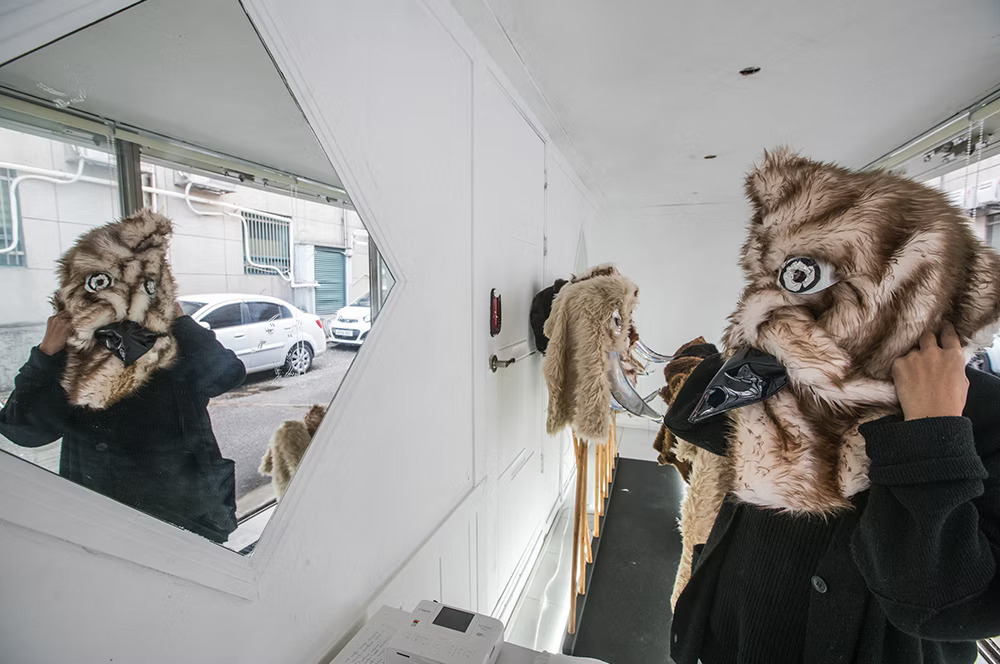
Soh Boram, Mask Rental Service, 2017, 96, Seonosong-dong, Wansan-gu, Jeonju-si, Jeollabuk-do © Soh Boram

The second project, Mask Rental Service (2017), presented the following year, was a participatory project that used masks to visually conceal individual identities while simultaneously revealing the distance between the self and others produced by the violence of the gaze. The project was prompted by Soh Boram’s experience of being mistaken for a sex worker while walking through Sunmichon in broad daylight.
 
Soh opened a mask rental service in Sunmichon, inviting visitors to imagine what kinds of relationships they might form with others if they concealed identities such as that of a “young woman” behind masks modeled after animal faces and wandered the streets in broad daylight.


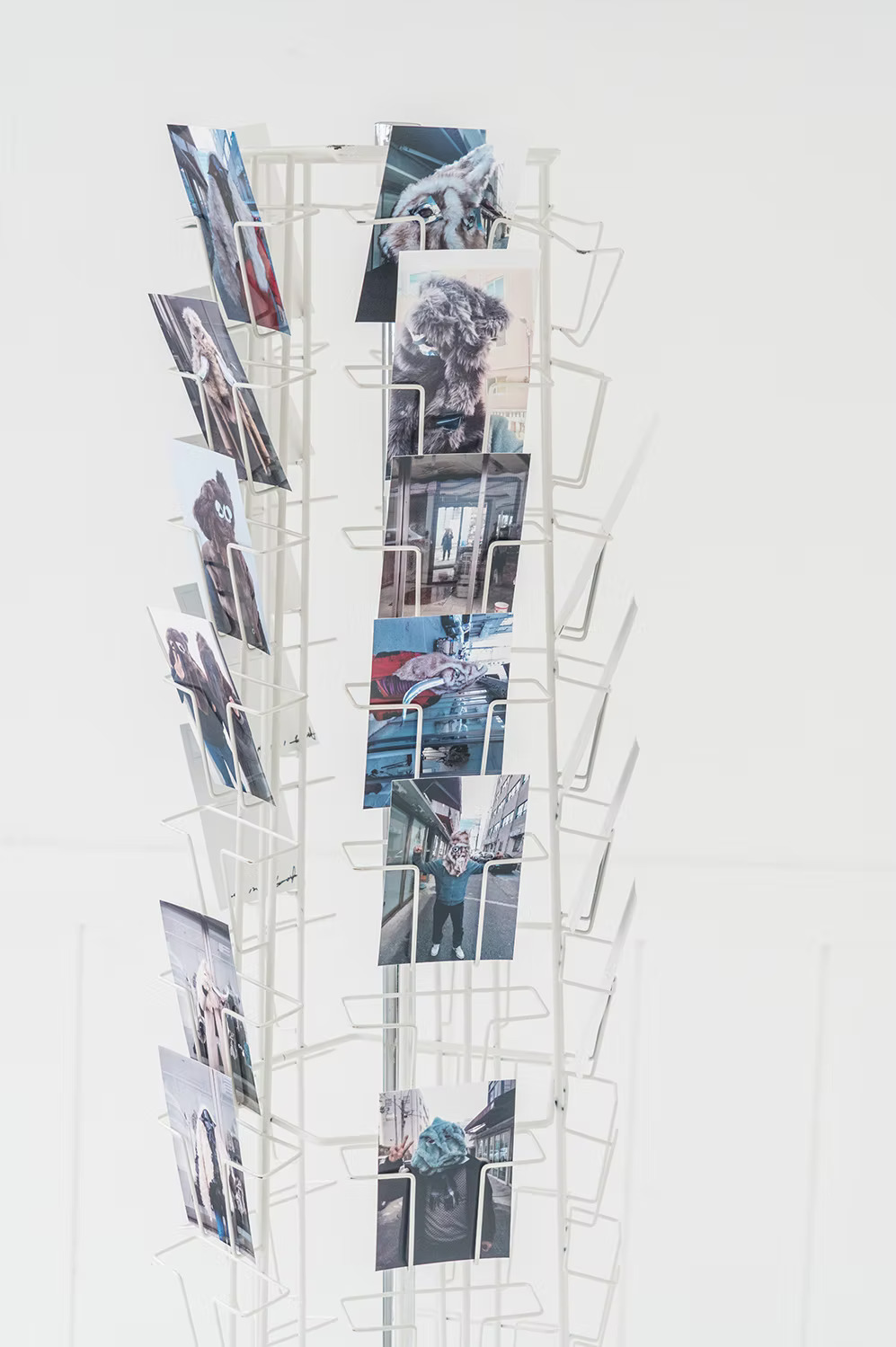
Soh Boram, Mask Rental Service, 2017, Postcards © Soh Boram

During the operation of Mask Rental Service, Soh remained on site as the host, lending animal masks to visitors and asking each participant to take a selfie with their phone and bring it back to her. She printed the photographs as postcards and displayed them as part of the project, creating a psychological experience that explored the relationships between looking, the object of the gaze, and the act of exhibiting what had been seen through the mediation of the mask.
 
Over the approximately ten-day duration of the project, several men again mistook Soh for someone involved in the sex industry. In response, she invited them to put on masks and play together, at times attempting to initiate physical contact.


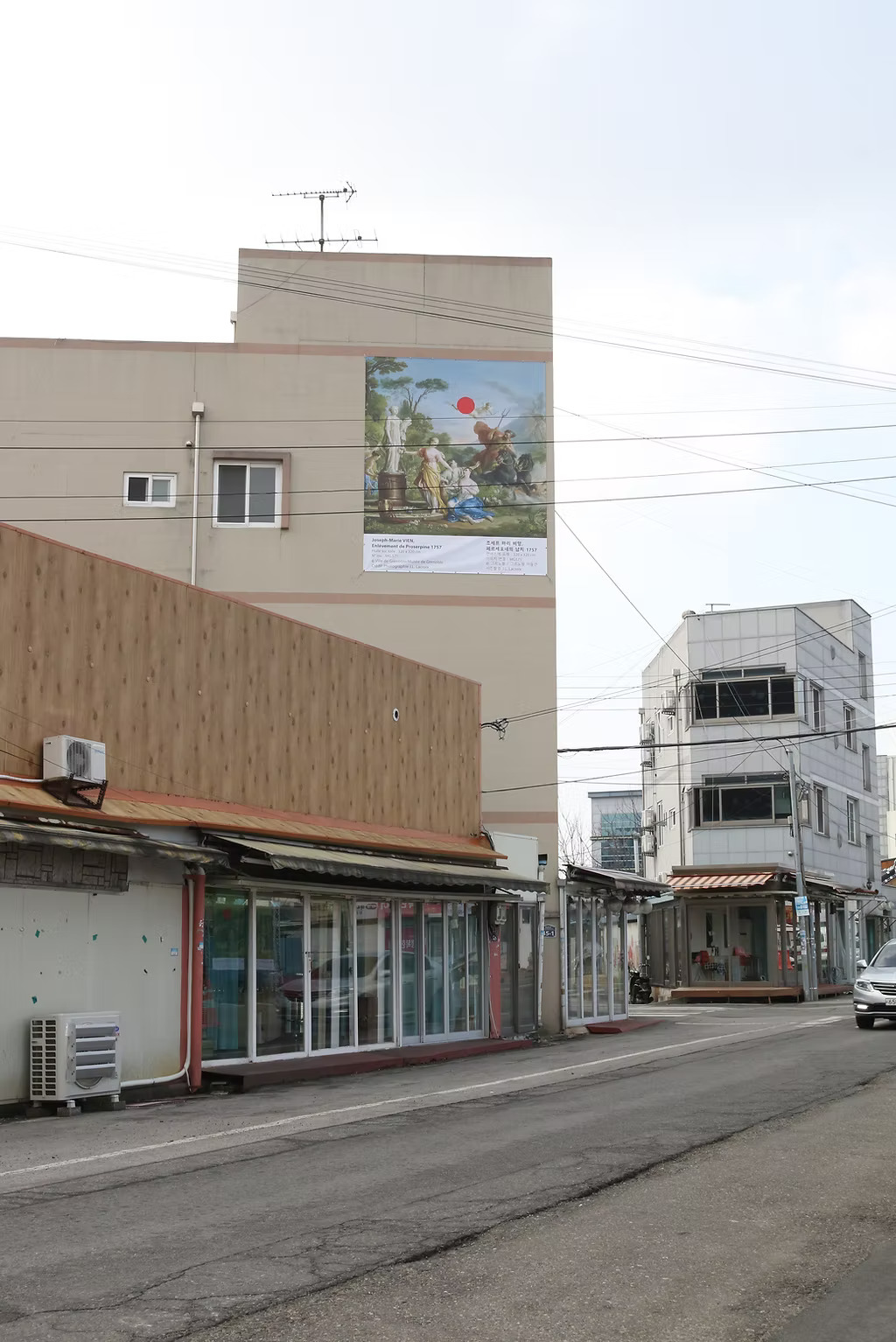
Soh Boram, Searching for Witness, 2020, The rapt of Proserpina (1767) by Joseph-Marie Vien, Musée de Grenoble, Installation view at 698-9 Seonosong-dong, Jeonju (February 21 - March 06, 2020). Photo: Minkyung Choi. © Soh Boram

Since 2016, Soh Boram has undertaken a series of projects in Sunmichon, observing the power structures and desires operating at the intersection of the district’s closure, urban redevelopment, and the art world.
 
Positioning herself as both an artist actively implicated in and a witness to these processes, Soh addressed the political and economic power relations surrounding Sunmichon in her third project, Searching for Witness (2020). For the project, she presented five paintings produced in Europe between the eighteenth and nineteenth centuries, using their recurring compositions to reflect on structures of violence, power, and desire.
 
The five paintings date from the late eighteenth to the mid-nineteenth century. Soh suggests that the composition of Joseph-Marie Vien’s The Rape of Proserpina (1767) may have directly or indirectly influenced works that followed. In the painting, a dynamically posed figure on the right appears to anticipate the violence about to be inflicted upon the figure positioned diagonally opposite. This compositional arrangement is repeated and sustained, in varying forms, across the other four paintings.


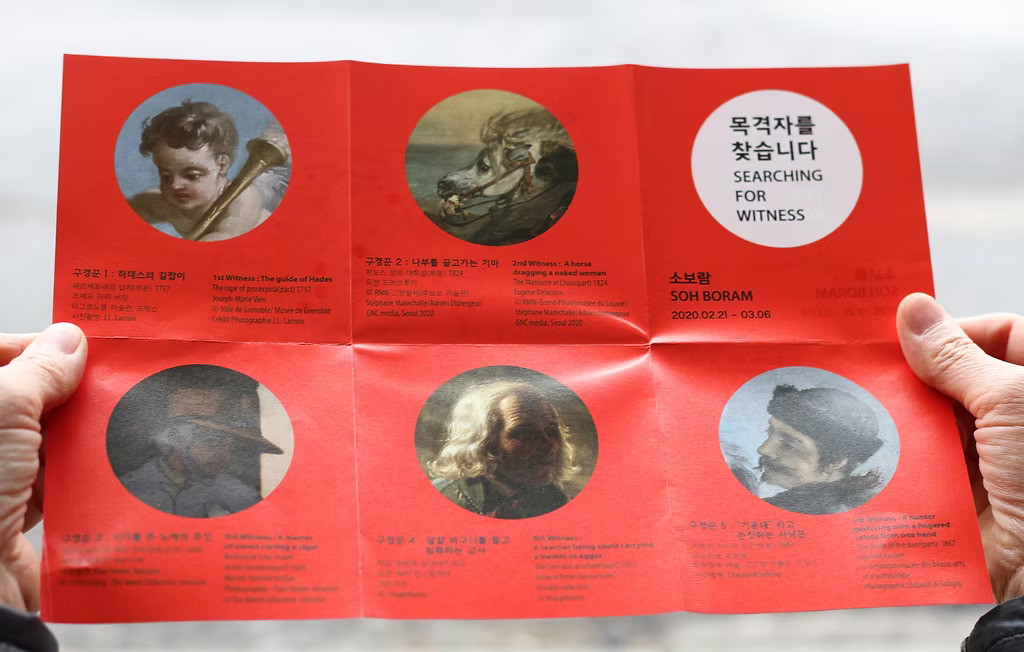
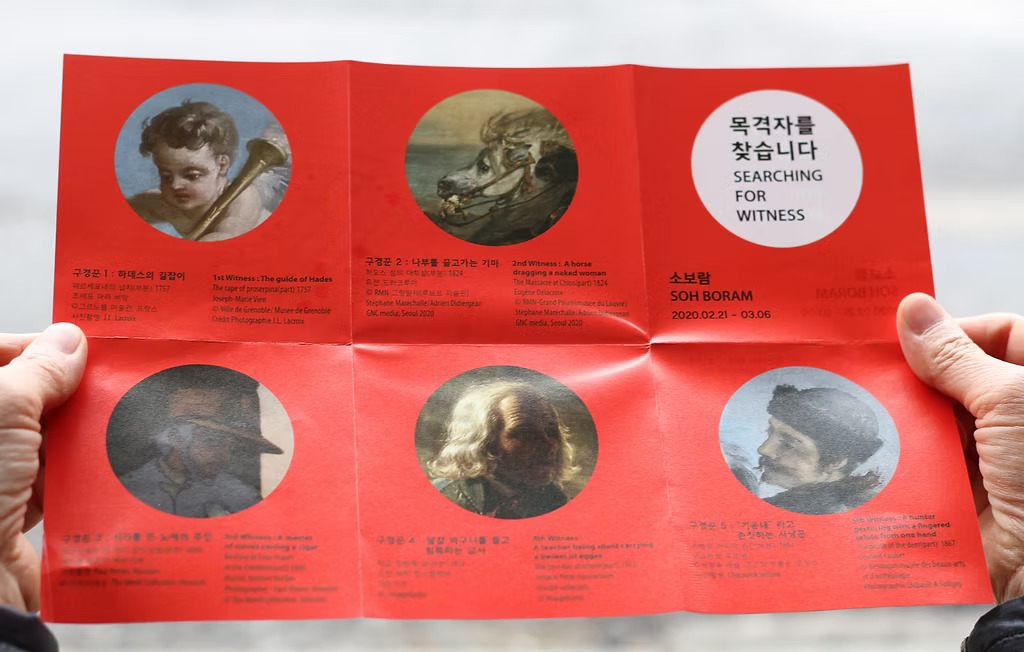
Soh Boram, Searching for Witness, 2020, Booklet © Soh Boram

The recurring composition not only makes visible the power dynamics between men and women, conquerors and immigrants, Black and white subjects, humans and animals, and adults and children, but also positions the spectators who passively observe violence in a similar manner. The onlookers within the paintings—figures who do nothing beyond witnessing the events—are identified with the artist herself as a witness to the political and economic structures surrounding Sunmichon.
 
The five paintings thus function as revelations of power structures as perceived by an artist acting as a contemporary witness. Soh removed the figures occupying the position of the spectator from each painting and recontextualized their compositions within the specific conditions and power structures surrounding Sunmichon.
 
She also cut out only the figures depicted as onlookers in each painting and used them to create a booklet indicating the project site. The booklet invited a third-party viewer to move through the site in search of witnesses, or to assume the position of a witness themselves.
 
Through this process, Soh examines the artist’s dual position as both spectator and witness—one imposed upon the artist by institutional conventions that seek to aestheticize or sanitize a place, and one that the artist may also consciously assume. The project ultimately explores the position of Sunmichon and art within the political and economic power structures of the present.


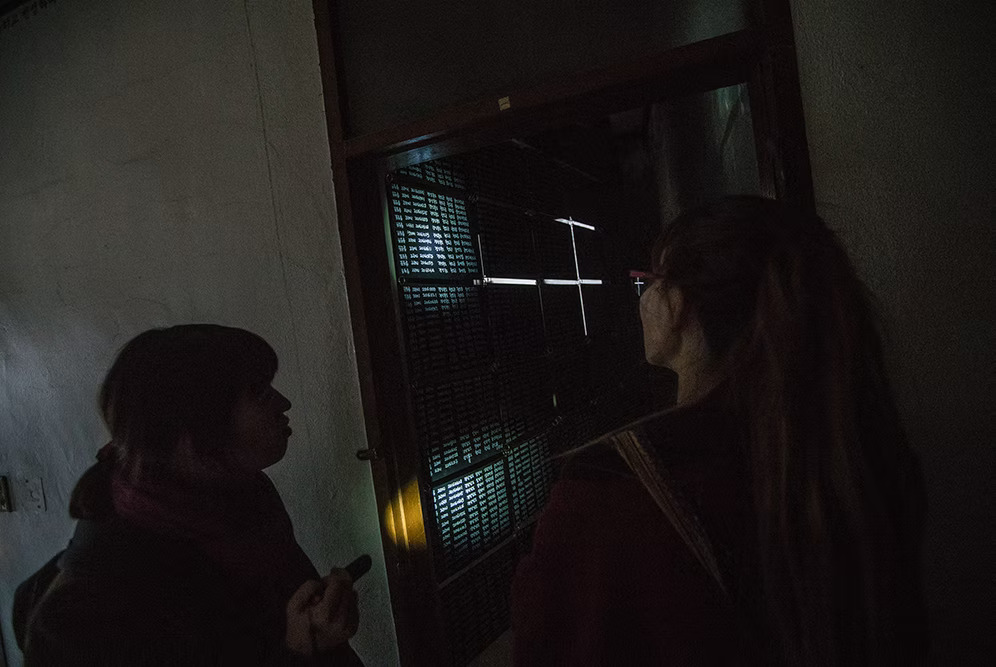
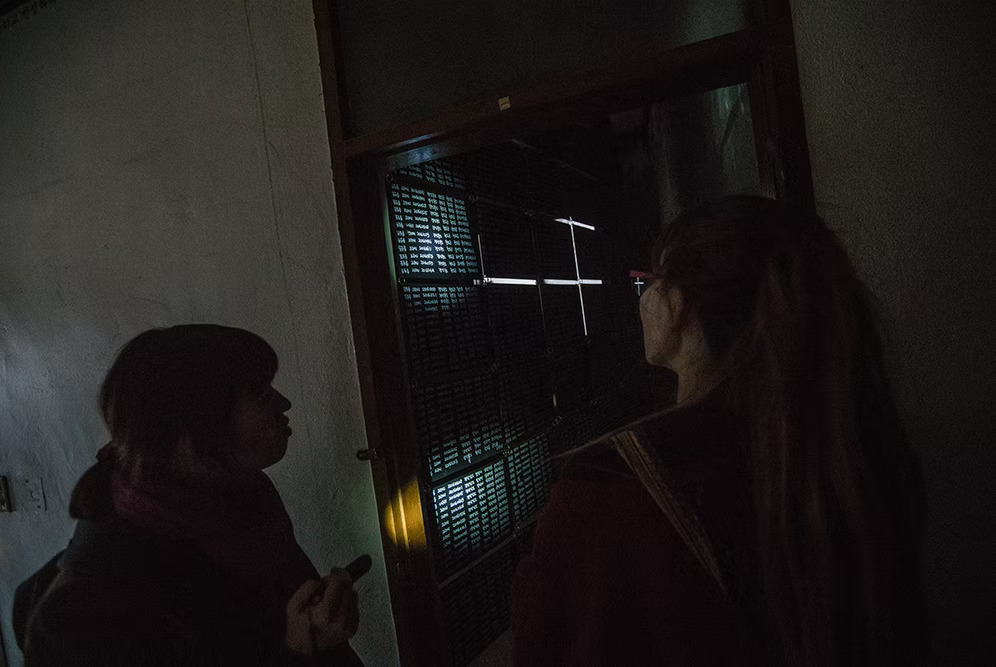
Installation view of 《He vs. It》 (Myoung-san Inn, 2017) © Soh Boram

Soh Boram has continued to address the complex power structures surrounding Sunmichon, Jeonju’s former red-light district, and the forms of violence they have produced, while also turning her attention to nonhuman beings marginalized or sacrificed by human desires.
 
Her 2017 solo exhibition 《He vs. It》 began with an encounter with the eyes of a deer killed in a road accident. The exhibition explored the relationship between animal death and the self, as well as the hierarchies through which different forms of death are perceived and valued.
 
Soh incorporated the architecture and environment of the exhibition space—which consisted of a narrow, elongated corridor, six rooms, and an approximately 26-square-meter outdoor area—into the work itself.
 
In the first room, visitors borrowed flashlights to explore epitaphs installed throughout the dark corridor and rooms. The flashlight functioned both as a light illuminating records of roadkill and as a metaphor for a car’s headlights.
 
Biblical passages placed throughout the space traced historical ways in which humans have named and represented animals, while animal masks positioned at the exit invited visitors to imagine and temporarily embody the perspective of a nonhuman being.


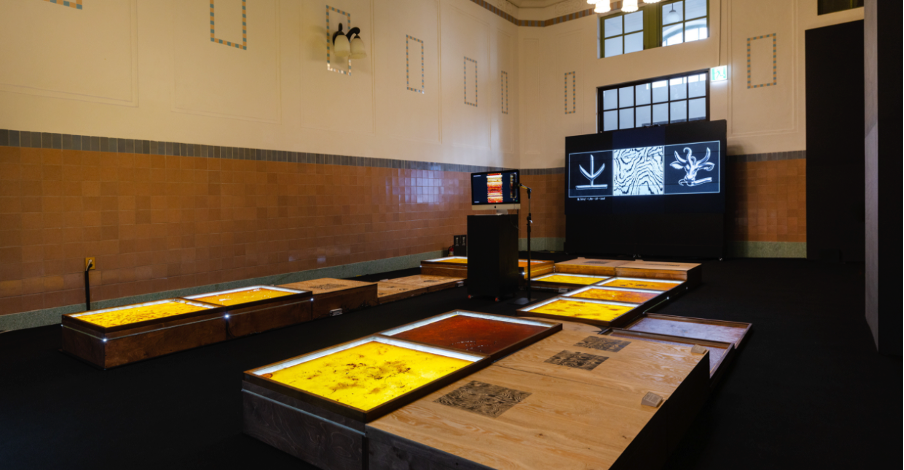
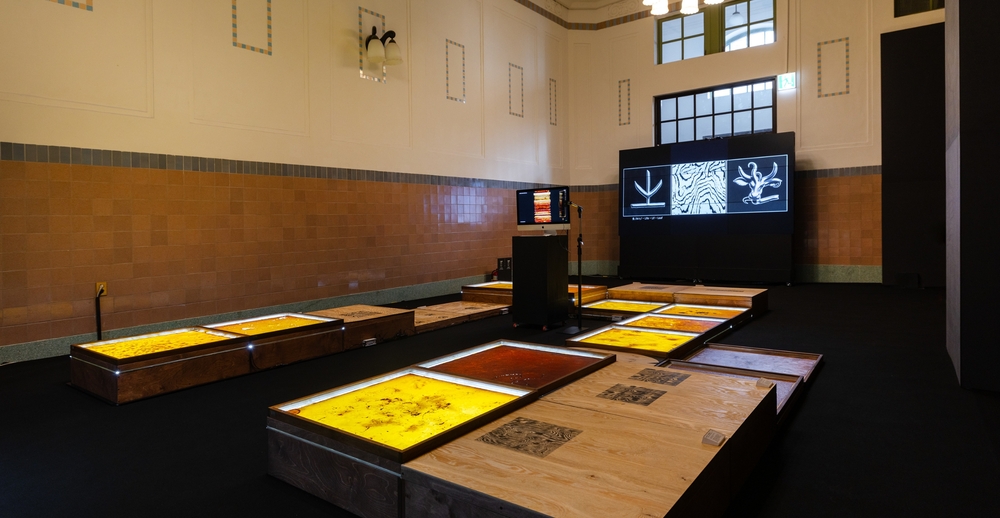
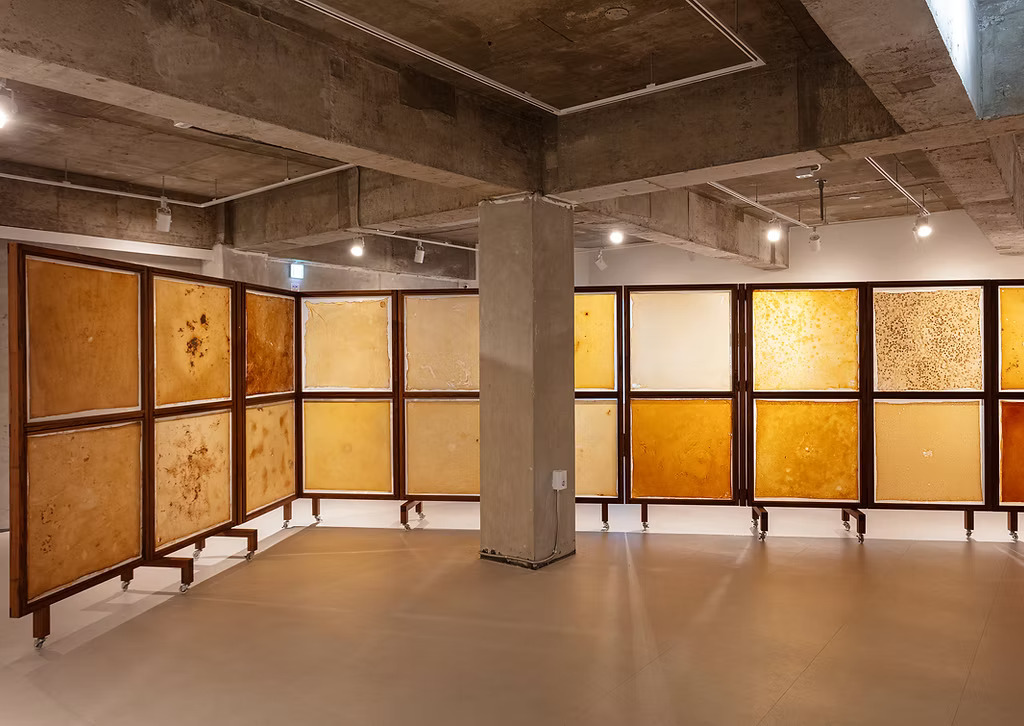
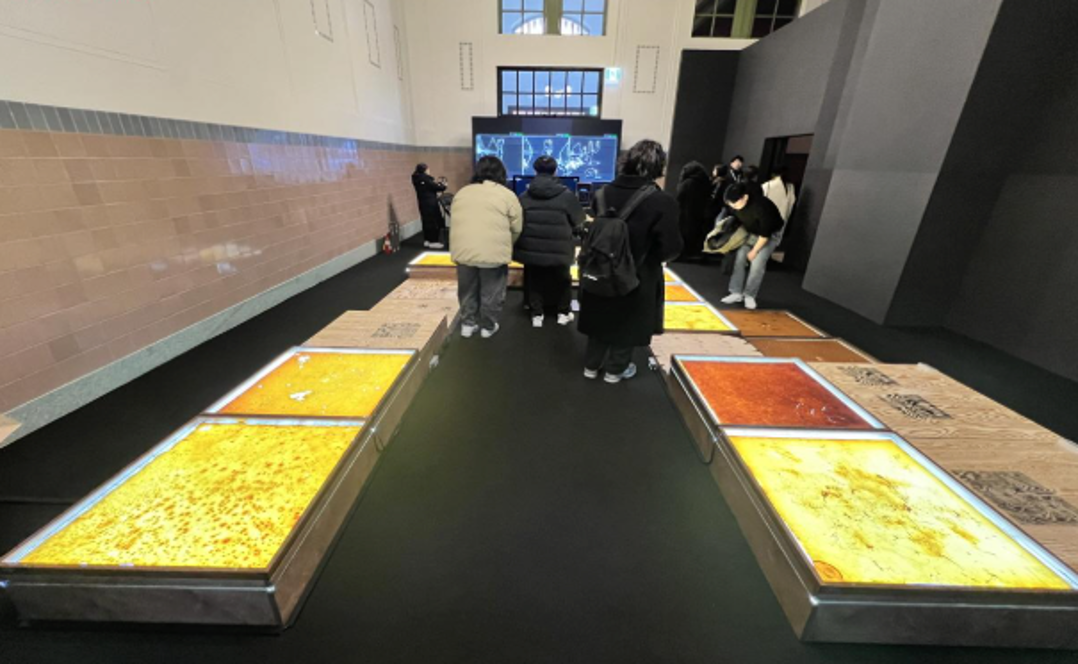
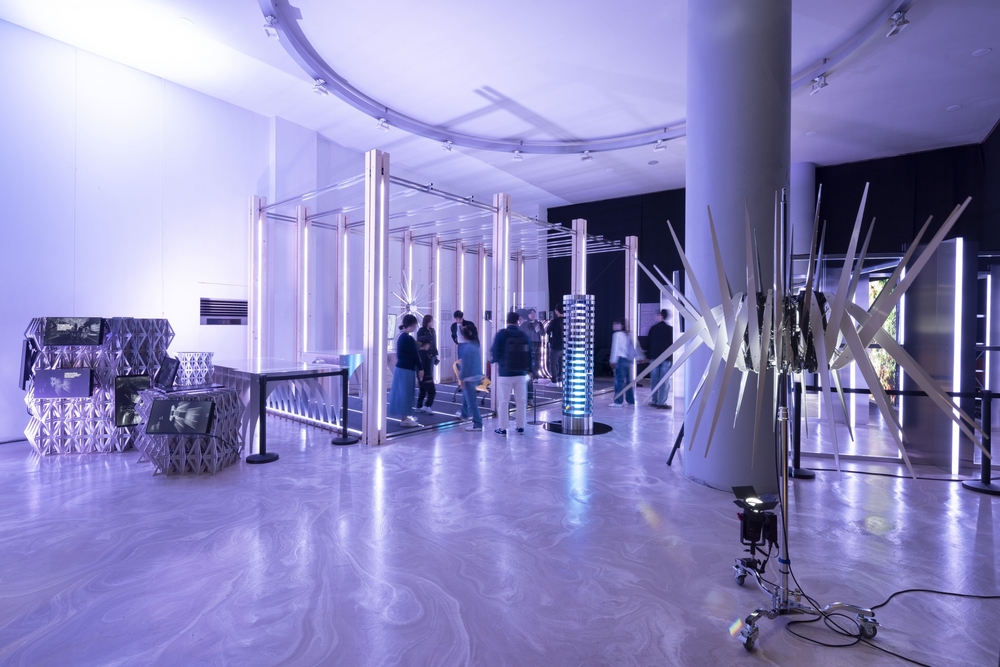
Soh Boram, Sky, Wind, Stars and Poetry, 2025, Installation, plant-based microbial cultured leather, plywood, LED light panels, and mixed media, Dimensions variable, Installation view of Unfold X 2025 《Let Things Go》 (Culture Station Seoul 284, 2025) © Unfold X

Soh Boram has increasingly focused on the interactions between plants, animals, and microorganisms, exploring how their ecological relationships and symbolic meanings reflect human life and culture. Microorganisms, in particular, have emerged as important subjects in her practice, embodying the ambivalence of invisible forces, shifting boundaries, cycles and transformations, as well as threat and coexistence.
 
Using microorganisms as a point of departure, Soh connects the abstract operations of dominant power structures to broader concepts such as the city, place, and the Earth, examining the relationships between power and life as they unfold across society and space.
 
Through this process, she reveals the multilayered networks formed through the entanglement of ecological and social orders, while inviting us to reconsider the position of humans within these complex relations.


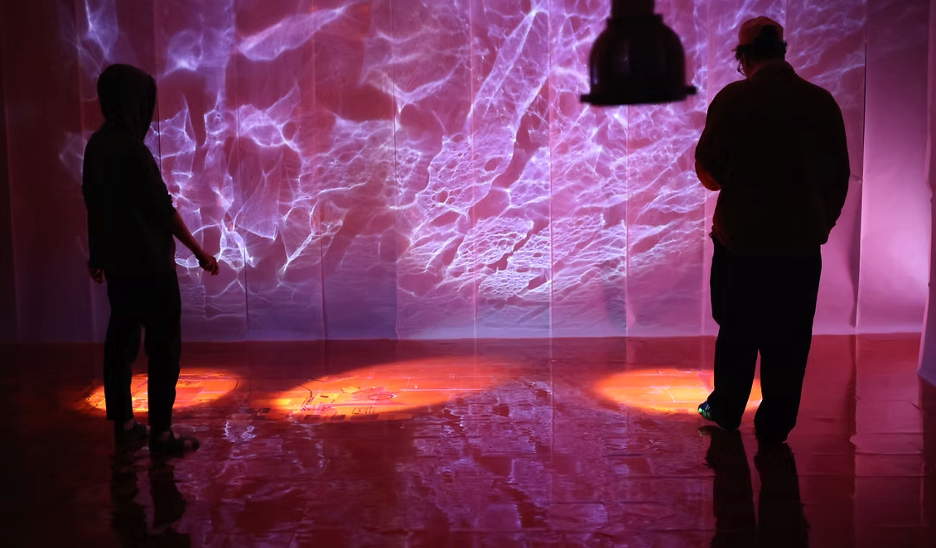
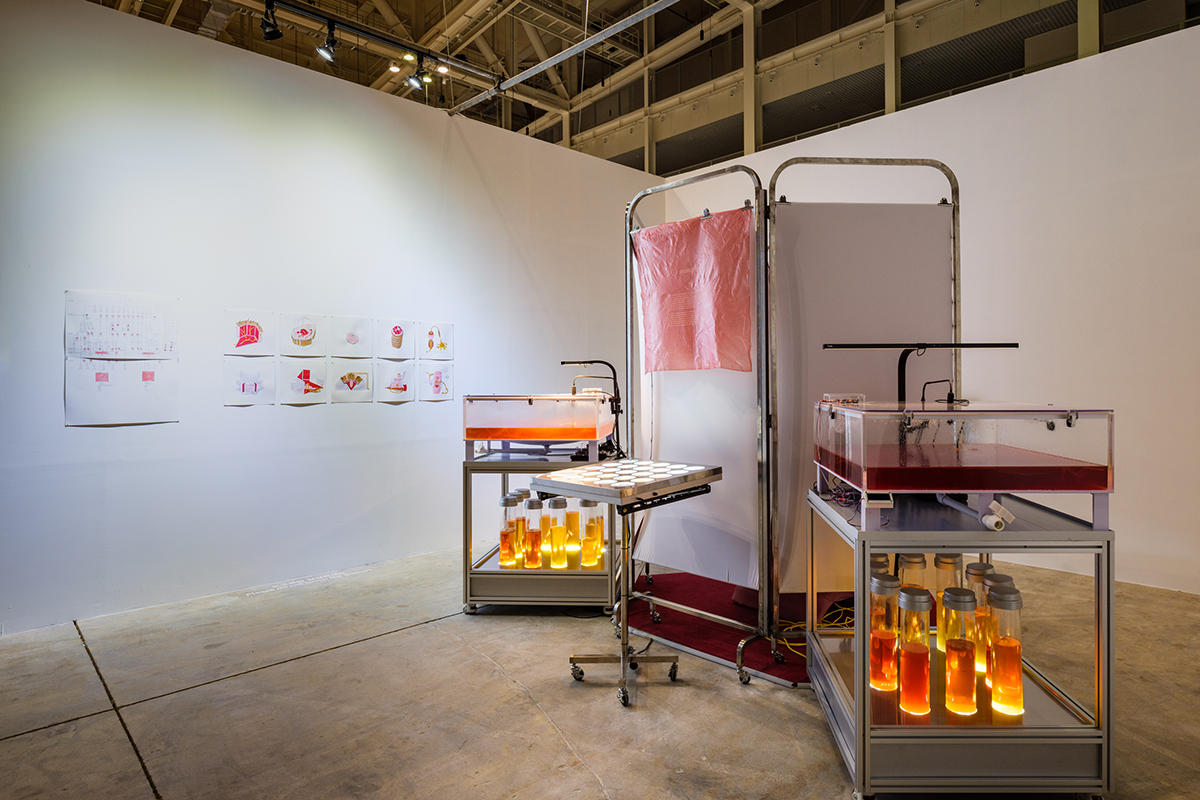
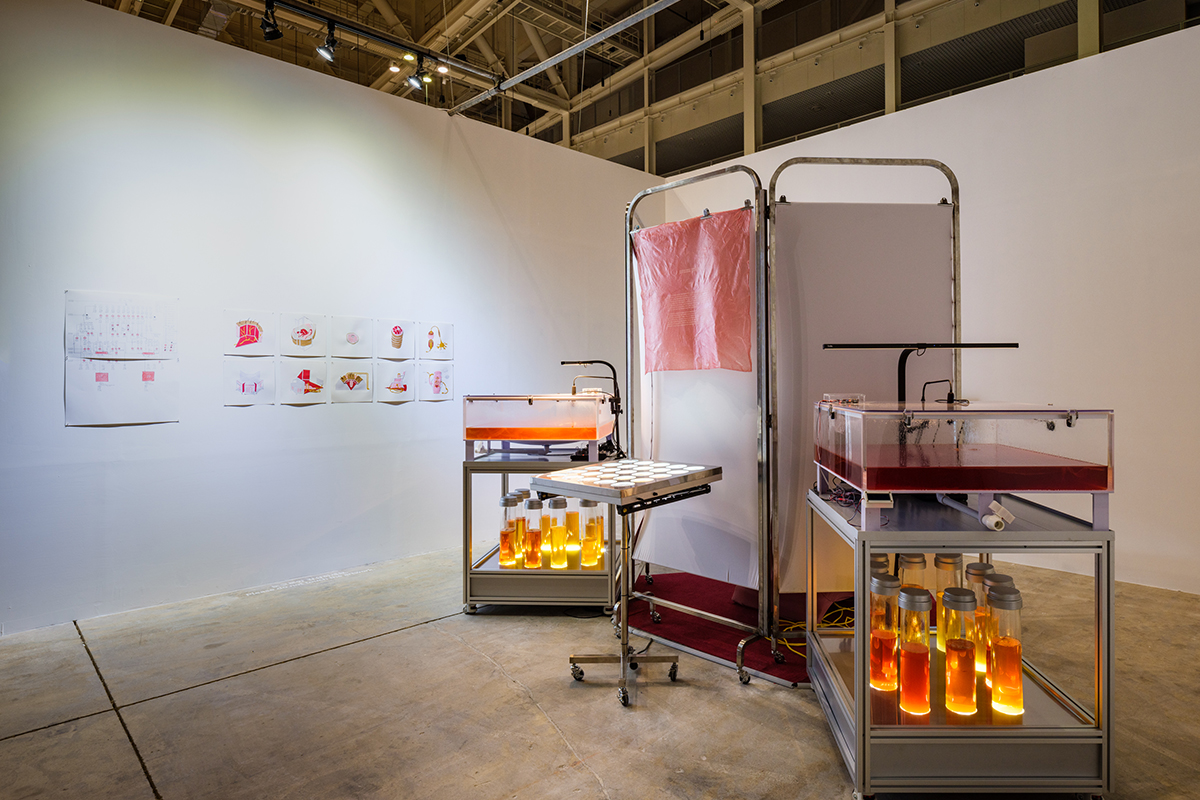
Soh Boram, The Porous Material Conversion: C-Flex Incubator, 2022, Water tank, armchair, and mixed media, Dimensions variable © Soh Boram

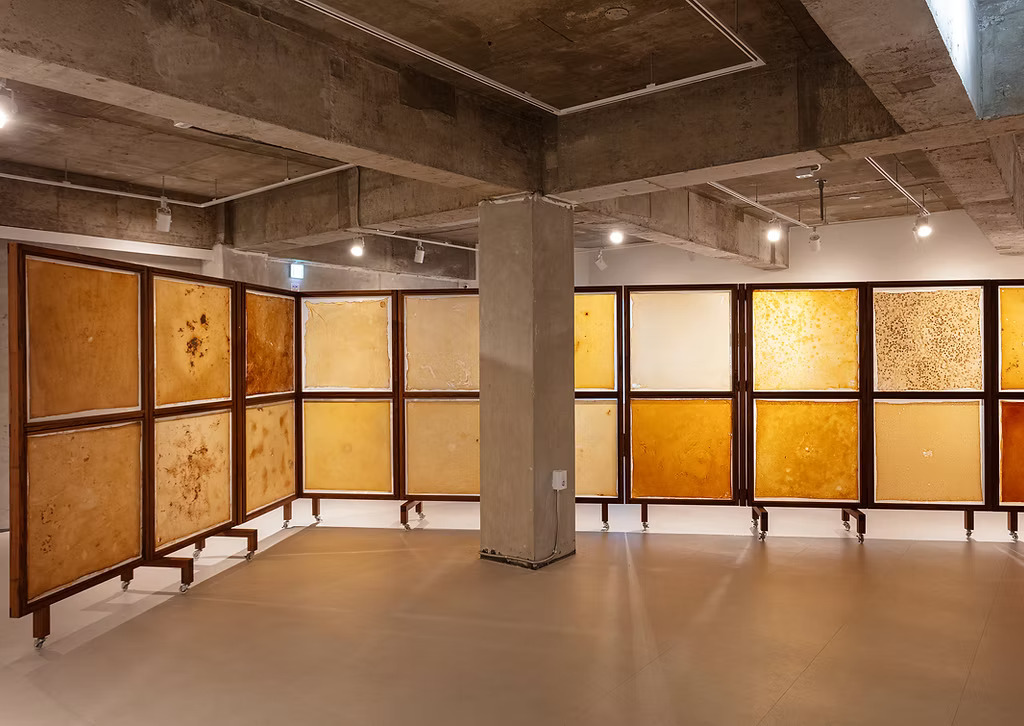
For example, in the 2022 work The Porous Material Conversion: C-Flex Incubator, Soh Boram explores the processes through which biodegradable plant-based leather is produced, weathered, and preserved through experiments with black tea fermentation, connecting these processes to their relationship with the human body.
 
The work evokes an unnamed bacterium that emerged approximately 3.5 billion years ago on the oxygen-deprived early Earth and became one of the first organisms to be extinguished by the rise of oxygen produced by cyanobacteria.
 
Soh asks whether this ancient bacterium might have been a common ancestor of all life on Earth, and reflects on the processes of chemical evolution and extinction through the sounds, smells, forms, textures, and colors that emerge during fermentation.
 
The title “C-Flex,” derived from Carbonii dioxidum Flexioni, meaning “the refraction of carbon dioxide,” expresses the artist’s belief and hope that life may emerge once again even on a future Earth where oxygen levels have been diminished by carbon emissions.


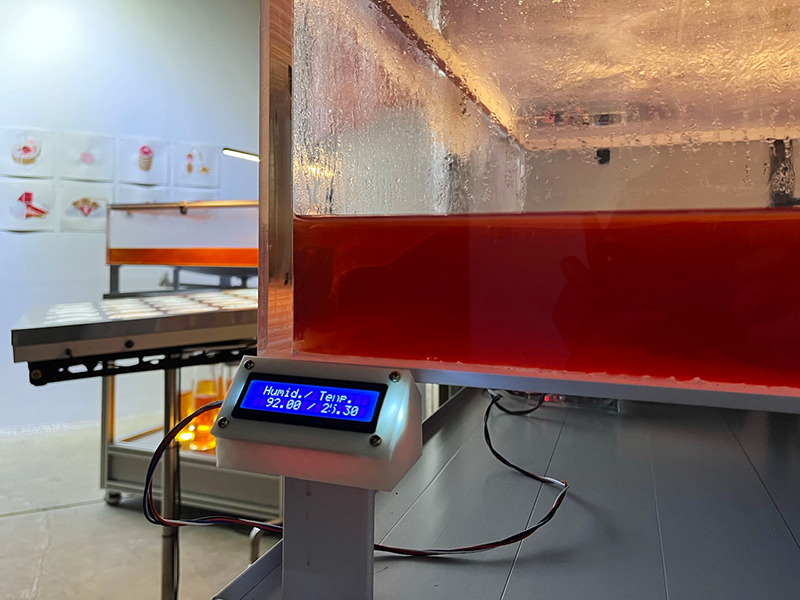
Soh Boram, The Porous Material Conversion: C-Flex Incubator, 2022, Water tank, armchair, and mixed media, Dimensions variable © Soh Boram

The water-tank apparatus used in the work was inspired by a medical incubator designed to support the growth of infants. It functions both as an experimental device for measuring changes in oxygen, carbon dioxide, methane, temperature, and humidity throughout the bacterial life cycle, and as a miniature world that symbolizes a changing planetary environment.
 
Building on the artist’s ongoing investigations into extinct deer and the leather trade, the work revisits the question of animal bodies transformed into commodities. Here, this inquiry is reconfigured through the growth and processing of a plant-based body generated within the tank.
 
A recording device attached to the tank and a microscope connected to a screen allow viewers to observe the transformation from the bacterial stage into flesh, skin, and an expanded body, offering a temporary experience of breathing alongside C-Flex as it grows.


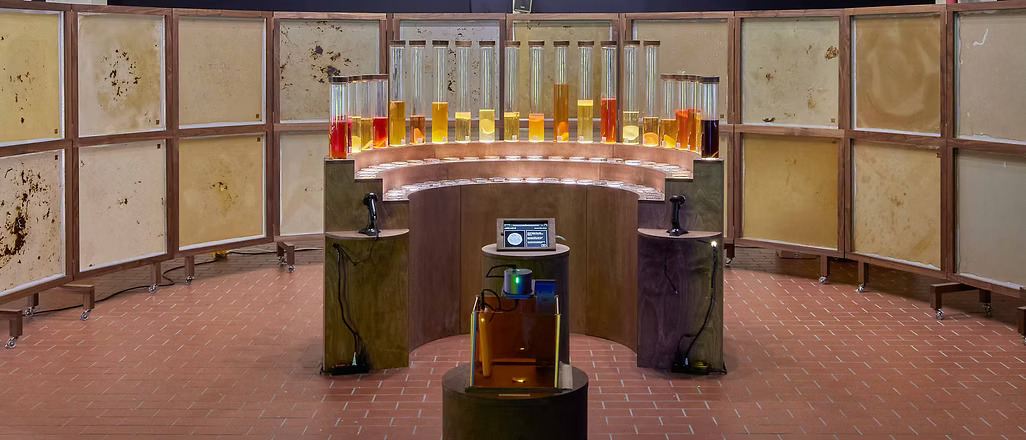
Soh Boram, Smart Skin Farm, 2023, Fermented Plant Material & Mixed Media, Dimension Variable © ZER01NE

The artist’s interest in animal bodies transformed into commodities continues in the 2023 work Smart Skin Farm. We rarely question where or how the meat and leather of animals are processed before being presented to us; in other words, we tend to overlook the process through which nonhuman bodies are transformed into resources.
 
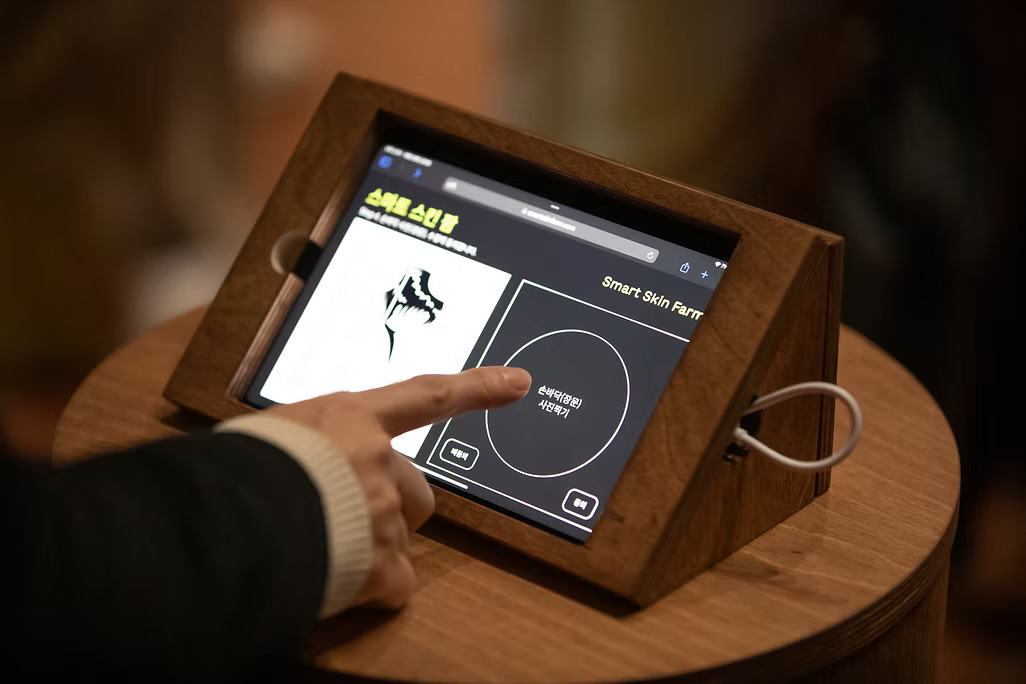
Then how do we perceive the phenomenon in which our own personal information is converted into capital? Just as we handle animals’ bodies without asking for their consent, large online platforms collect and sell personal information without us noticing.


Soh Boram, Smart Skin Farm, 2023, Fermented Plant Material & Mixed Media, Dimension Variable © ZER01NE

Smart Skin Farm thus raises questions about the unequal processes of production and exchange within capitalism, which operates on the premise of exploitation. As a virtual skin factory and store, Smart Skin Farm ferments tea containing individualized human information to cultivate microorganisms, which are then grown into skin and processed into customized leather.
 
The exchange between this leather and personal information demonstrates how the human body itself can be reduced to an object of collection and exchange, while simultaneously recalling the sacrifice of nonhuman beings that have been reduced to “things” such as meat and leather.
 
Furthermore, the work reflects on the ambivalent position of humans: having endlessly exploited nature within the Earth’s environment, humans themselves become objects of exploitation within the structure of the capitalist system. In doing so, the work suggests that there is ultimately no such thing as a fair exchange in the relationship between humans and nonhuman beings.


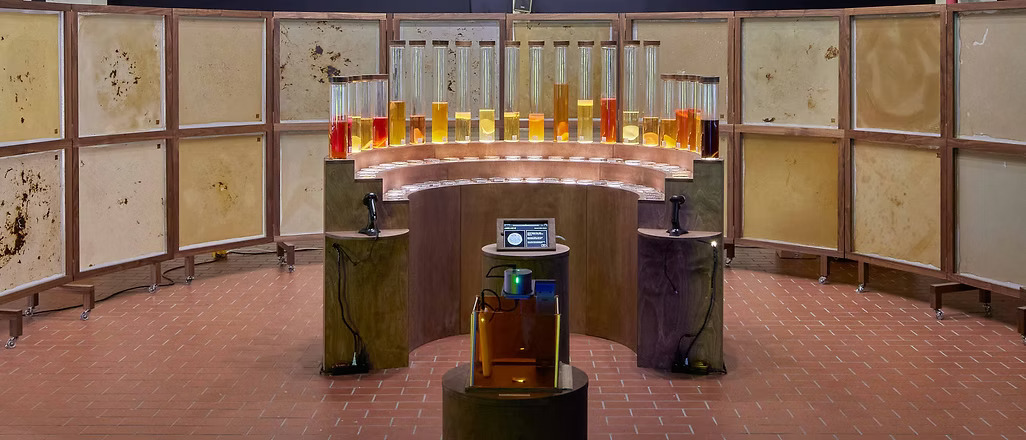
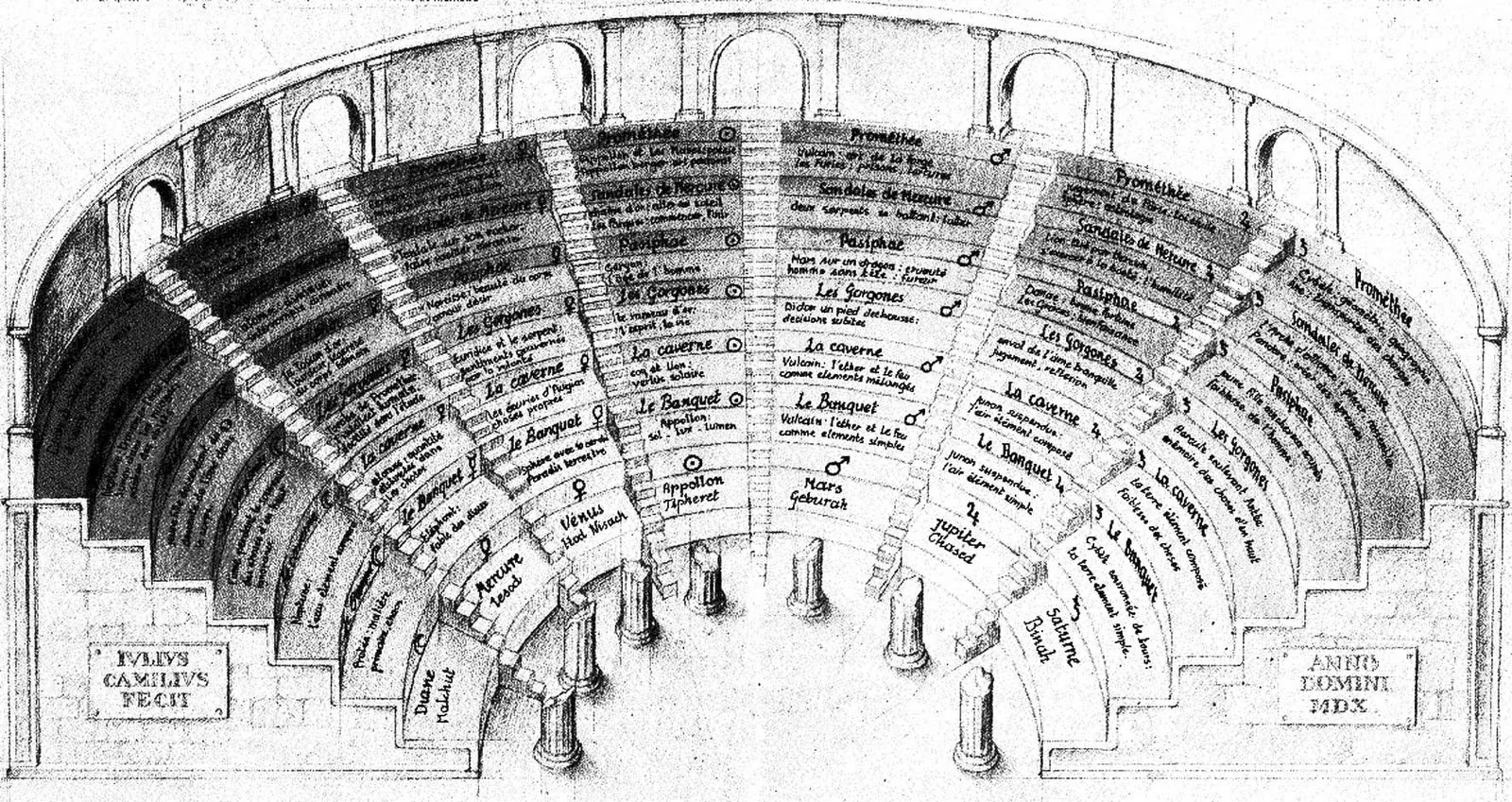
Giulio Camillo’s Memory Theater © AAD

Beginning in 2024, the project ‘Memory Theater’ draws on the Memory Theater of Giulio Camillo, an Italian Renaissance philosopher and humanist, to imagine a subjective cosmos. Camillo conceived his Memory Theater as a vast project that went beyond a mere mnemonic device, seeking to connect human intellect with the order of the universe.
 
In order to visualize the network of relationships among the world, creation, humanity, and art, Camillo primarily drew upon the symbolic systems of Greek and Roman mythology, structuring knowledge and the cosmic order through mythological images and figures. He envisioned the Memory Theater not simply as a tool for memorization, but as a model of the cosmos in miniature and an archive for preserving and exploring knowledge.
 
Unlike a conventional theater, Camillo’s Memory Theater was designed as a semicircular structure in which the viewer stood at the center of the stage and looked outward. Divided into 49 sections along seven vertical and seven horizontal axes, it organized a system of knowledge in a hierarchical progression, ranging from nature and human life to astrology and mysticism, and ultimately to Greek and Roman mythology and heroic narratives.


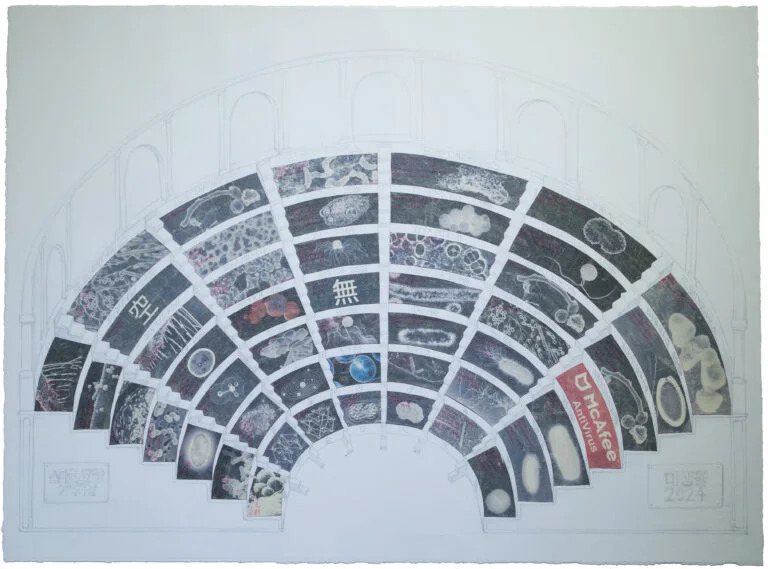
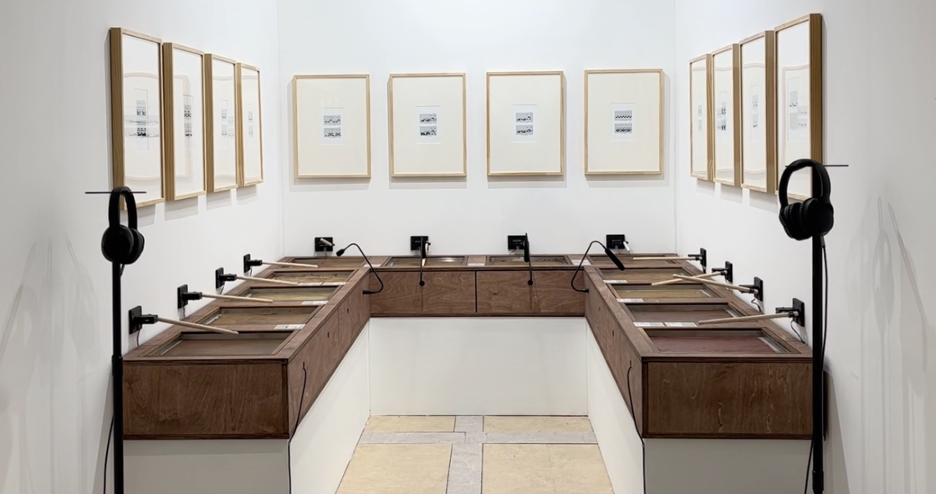
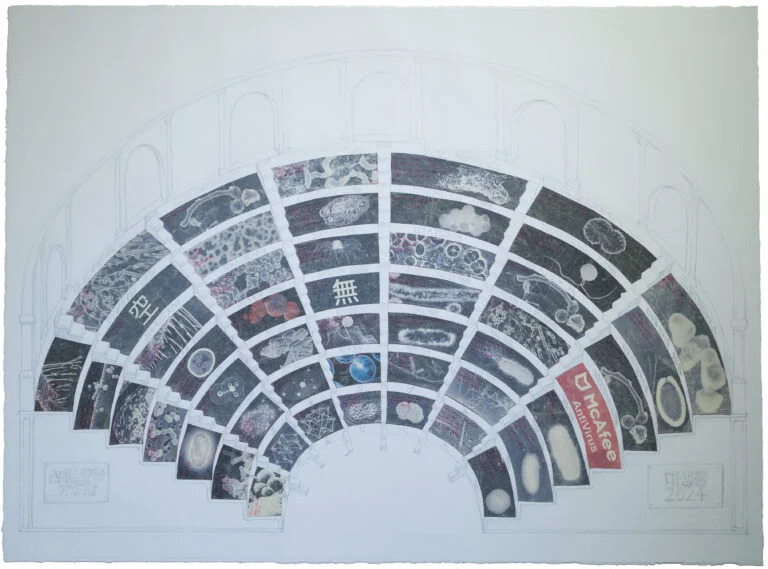
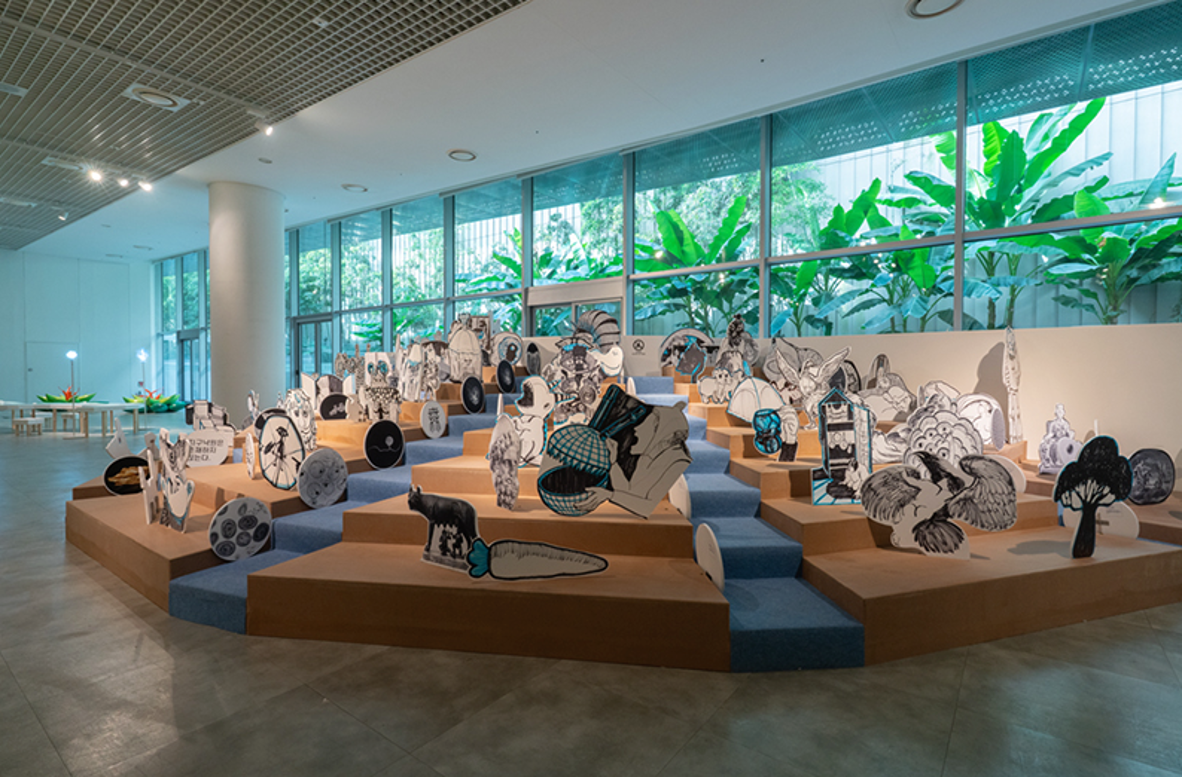
Soh Boram, Memory theater: Microorganisms, 2024, Pencil on paper, image collage, 80x60cm © AAD

Drawing on the diagram of the Memory Theater, Soh Boram developed Memory Theater: Microorganisms, a project that pairs mythological figures with microorganisms on a one-to-one basis, expanding a human-centered system of knowledge into the realm of nonhuman life.
 
This correspondence begins with the fact that figures and concepts from Greek and Roman mythology are often incorporated into the scientific names of microorganisms. The artist creates new relationships by connecting the environments in which microorganisms are found, their ecological characteristics, and the etymology of their scientific names with mythological symbols.
 
For example, “Vulcanisaeta,” which grows in extremely high-temperature environments, is associated with Vulcanus, the Roman god of fire. The anthrax bacterium, corresponding to Prometheus, is linked to the mythology of fire as well as to its species name, “anthracis,” which derives from the Greek word “anthrakis,” meaning “coal” or “charcoal.”
 
Meanwhile, the plastisphere—a microbial community that forms on plastic marine debris—is paired with Mercury’s winged sandals, which symbolize travel and movement.


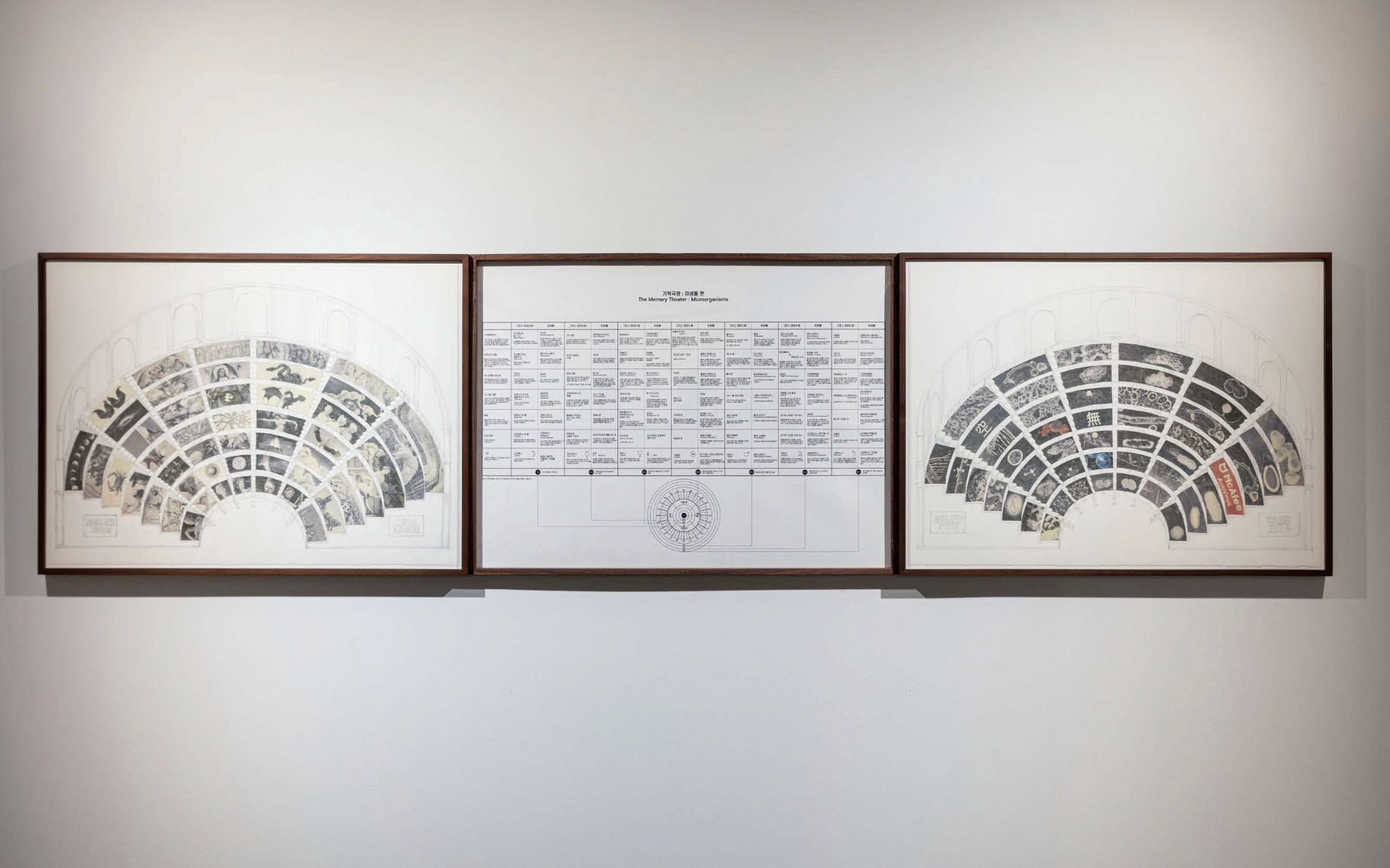
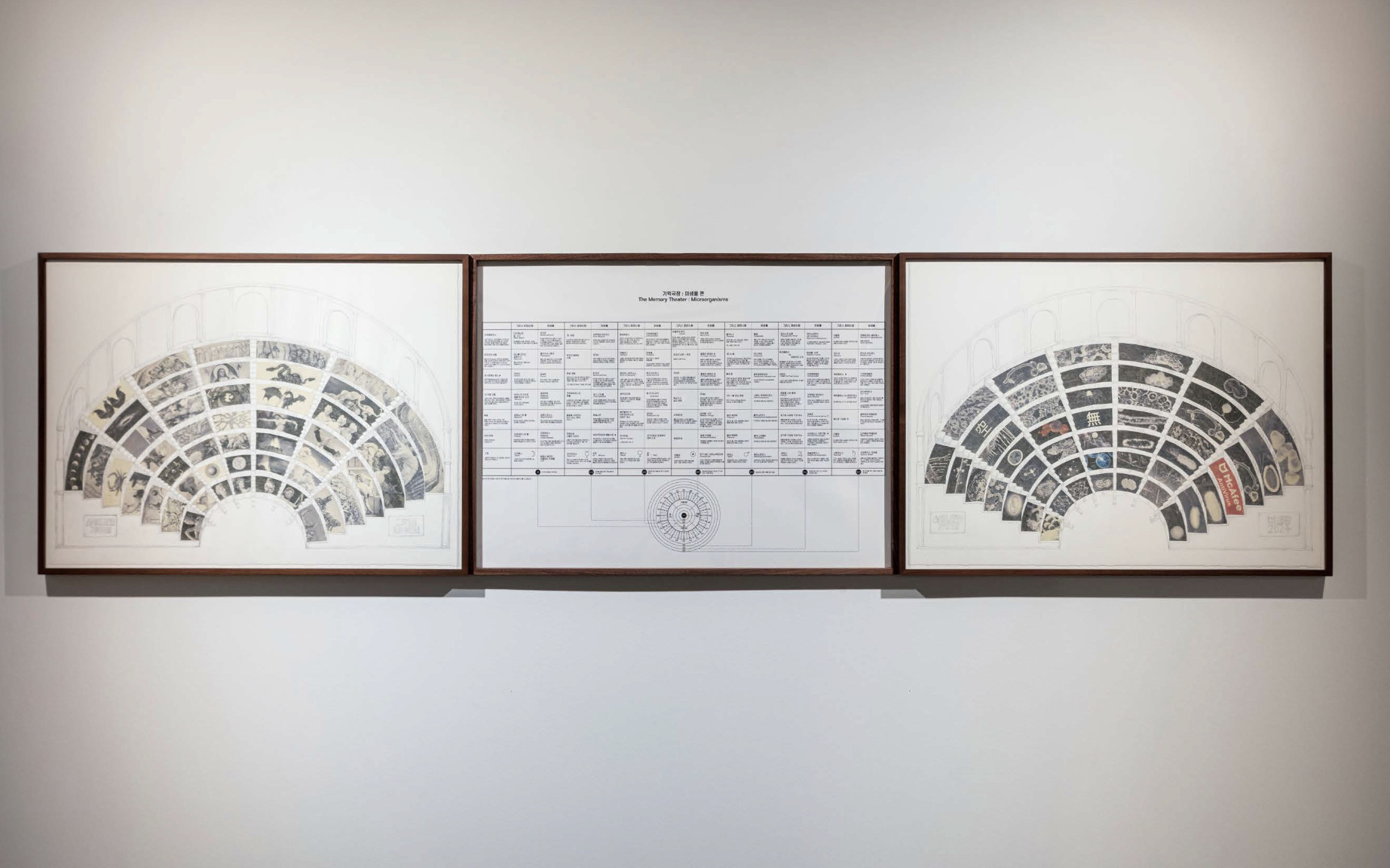
Soh Boram, Memory theater: Microorganisms & Greek and Roman Mythology, 2024, Pencil on paper, image collage, 80x60cm (x3) © Soh Boram

The artist first rearranges scenes from Hong Eun-young’s Greek and Roman Mythology as a Comic according to the structure of the Memory Theater, then invites viewers to imagine microorganisms corresponding to each mythological figure.
 
Next to Saturn, the god of agriculture, is “Ophiotuter tarae,” a microorganism found in soil associated with agriculture and named after Ops, Saturn’s wife. Beside Diana, the goddess associated with the moon and the wild, the artist places an unnamed microorganism imagined to exist in the unknown environment of the moon.
 
In this way, Memory Theater: Microorganisms juxtaposes mythology and science, and human and nonhuman knowledge within a single structure. By doing so, it invites us to view the human-centered order of knowledge from an unfamiliar perspective and to imagine new relationships and possibilities of life that exist beyond it.


Installation view of 《He vs. It》 (Art these days, 2024) © Soh Boram

Through this series of works, Soh Boram sensorially summons the histories of beings that have been marginalized, excluded, or sacrificed under anthropocentric systems, inviting us to reconsider humanity’s past, present, and future in relation to these beings.
 
Presented across diverse media, Soh Boram’s works engage the viewer’s body and senses while activating their individual experiences and memories. In doing so, they create new networks of relationships with beings that have been forgotten, disappearing, or rendered as “others.”

”The act of naming is a privilege granted only to humans, and one of the primary ways we establish relationships with the world before us. But does the human who names an animal stand above it? After witnessing animals killed by road accidents and looking directly into the eyes of those who died, I began to question my relationship to their deaths, and the hierarchy that structures how death is recognized.” (Soh Boram, Artist’s Note)


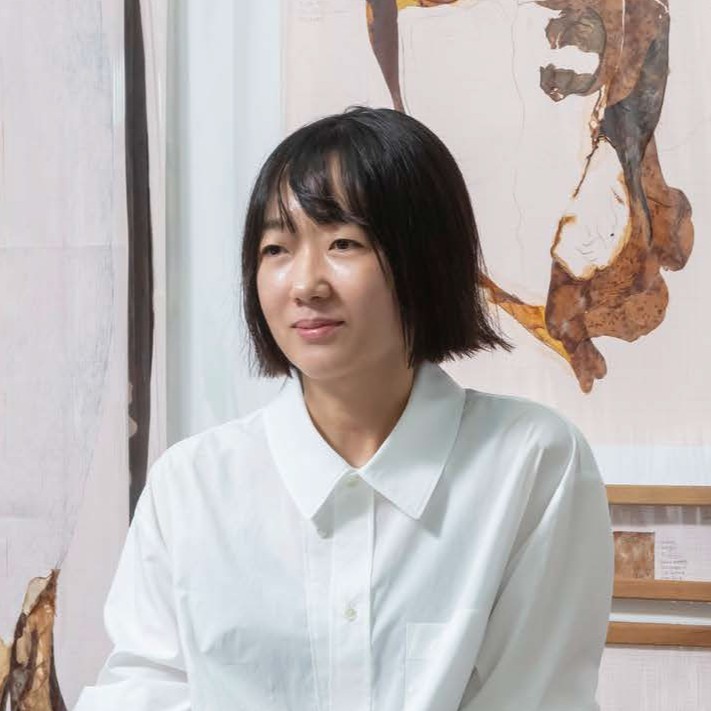
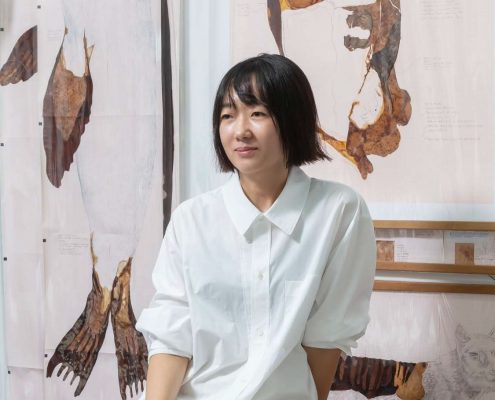
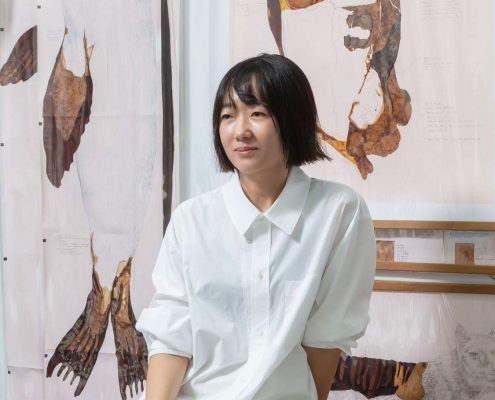
Artist Soh Boram. Photo: Park Hongsoon. © Monthly Art

Soh Boram graduated from the Department of Fine Arts at the Korea National University of Arts and the École Nationale Supérieure des Beaux-Arts (ENSBA) in Paris. Her solo exhibitions include 《He vs. It》 (Art These Days, Seoul, 2024) and 《He vs. It》 (Myeongsan Inn, Jeonju, 2017).
 
She has also participated in numerous group exhibitions, including 《Fantasy Inventory》 (National Asian Culture Center, Gwangju, 2025), Unfold X 2025 《Let Things Go》 (Culture Station Seoul 284, Seoul, 2025), 《B-Class Jokes》 (Jeonbuk Museum of Art, Jeonju, 2025), 《A day made by hundred of pockets》 (Geumnarae Gallery, Seoul, 2024), 《ZER01NE DAY 01: Habitat》 (S Factory, Seoul, 2023), and KFA22 Kunstenfestival (Netherlands, 2022).
 
Soh Boram has participated in residency programs including the ACC Residency (2022), La Becque résidence d'artistes (2022), the Jan van Eyck Academie Residency (2020–2021), and the Kuandu Museum of Fine Arts (2017). In 2022, she received the Special Jury Prize in the Experimental Short Film Competition at the 26th Ji.hlava International Documentary Film Festival.

References