I. Of linear and Westernized time
In 1884, the International Meridian Conference was convened in
Washington, DC, to fix “upon a meridian proper to be employed as a common zero
of longitude and standard of time-reckoning throughout the globe.” By
establishing a prime meridian, a fixed reference point, the conference
participated in enforcing a universal time standard. In other words, a system
of organization and control was established, which would regulate the lives and
structure of thinking in the rest of the world. It is this “Westernized time
construct”, as coined by art collective Black Quantum Futurism, which has now
reigned supreme for one hundred and fourty years.
Standing in stark contrast against this congruous landscape,
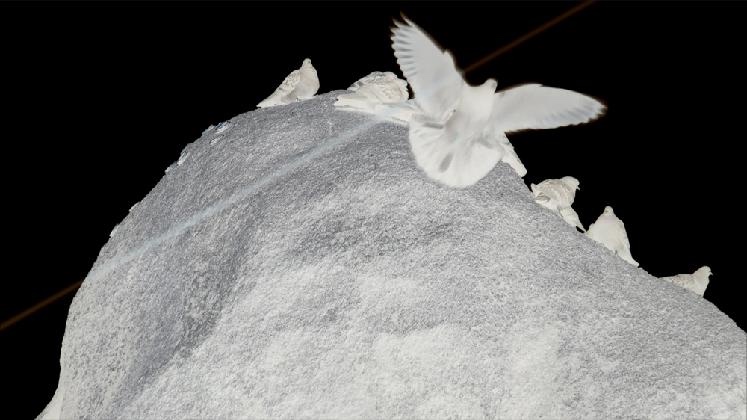
Sojung Jun’s new video, Syncope (2023),
foregrounds the toll hegemonic time standards have taken on bodies and souls,
proposing a new approach to experiencing reality. By manipulating and
collapsing space-time into a non-linear, thirty-minute-long video, the artist
brings about more desirable, possible futures. The montage, a blend of footage
filmed by the artist in Seoul, Yogyakarta, Paris, and Tokyo, as well as clips
generated with the Mobile Terrarium application, follows the mechanical
movements of the Trans-Siberian train, as it zips along across continents,
compressing the cities’ spaces and times.
Following the curvilinear journey of the train, spanning a length
of over 9,289km, Syncope’s premiere at the National
Museum of Modern and Contemporary Art in Korea, is resonant. To Koreans living
in a divided country, the longest railway line in the world remains a highly
symbolic endeavor. Devised to rapidly connect Moscow to the Pacific port of
Vladivostok and expand trade between Russia and East Asia, the train represents
a missed opportunity for Korea and Europe to come closer.
Operating an aesthetic, cultural, and conceptual shift, Syncope
converts the Transsib into a hypothetical Ginga Tetsudō Surī
Nain (Galaxy Express 999) — a steam train running through the stars.
Directly referencing the Japanese manga series by Leiji Matsumoto, Sojung Jun’s
work embraces spacefaring. The narrative of her video conflates the temporality
of a Russian expansion into Manchuria and Korea, which the building of the
Transsib underpinned, and the fictional time of Galaxy Express 999,
wherein humans have learned how to transfer their minds into mechanical bodies
achieving immortality. It reminds viewers how Westernized time constructs and
connects nation-state building with space-time and speed management. At the
crux of Syncope, the Transsib allows Sojung Jun to
pinpoint to the railroad construction fanning flames that later led to the
Russo-Japanese War (1904-04), initiating a process which would end, much later
on, with the partition of Korea in 1955. The train is also conjured as
emblematic of our accelerationist times, its speed and linear path aptly
subverted by the artist. But maybe most importantly, the Trans-Siberian impacts
the film’s structure. To quote the artist, it acts as “a medium” for the video,
be that in the very first scene, in which small lights slowly enter the frame
from the bottom left and exit through the top right, or in the very last, which
emulates Star Wars unforgettable opening crawl. Within a black sky
featuring a scattering of stars, the generic text recedes toward a higher
point, as if it was disappearing in the distance; the way trees do, when stared
at from the inside of a running train. Throughout, the train’s windows operate
as screens, or as a framing device, delimitating our field of vision and
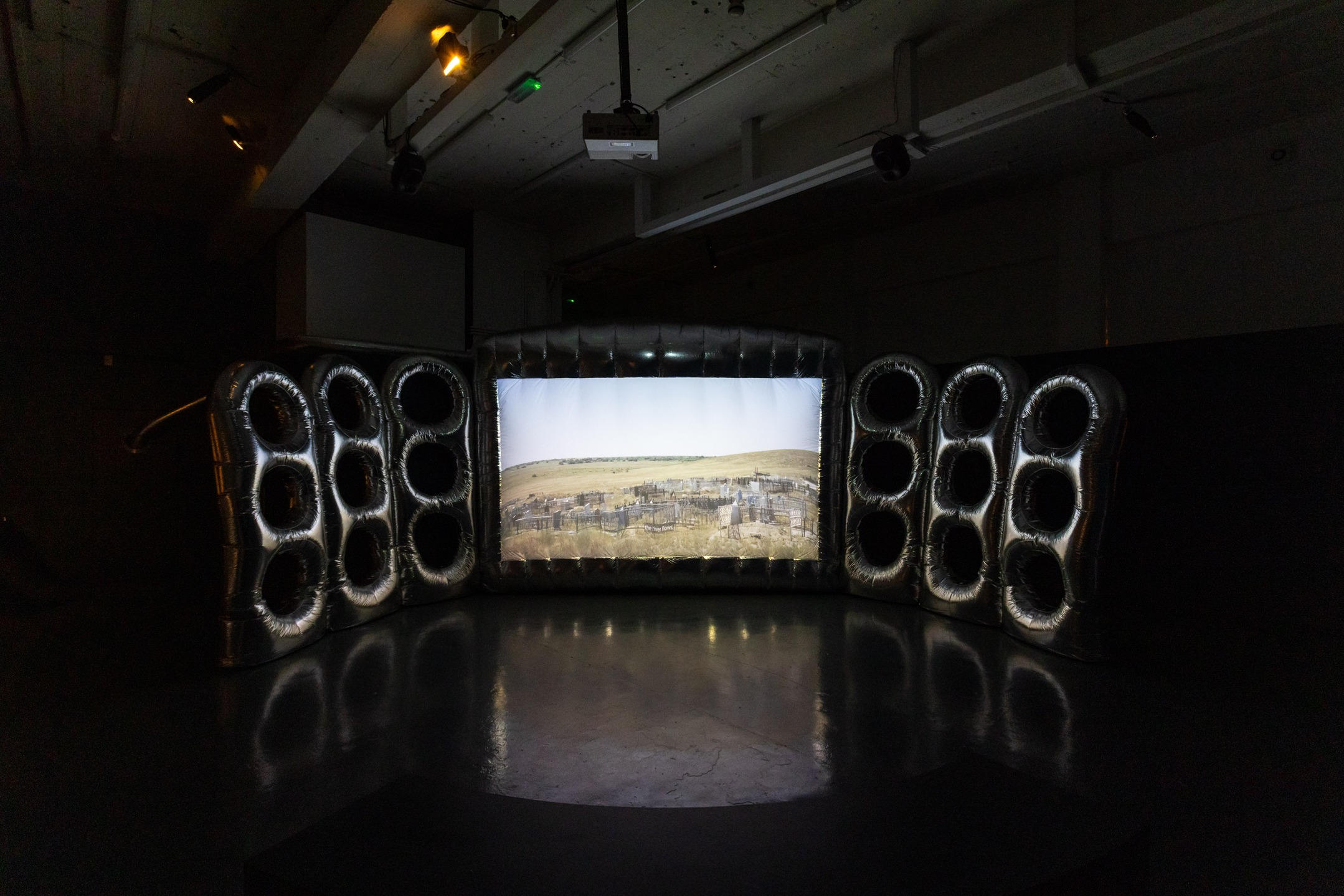
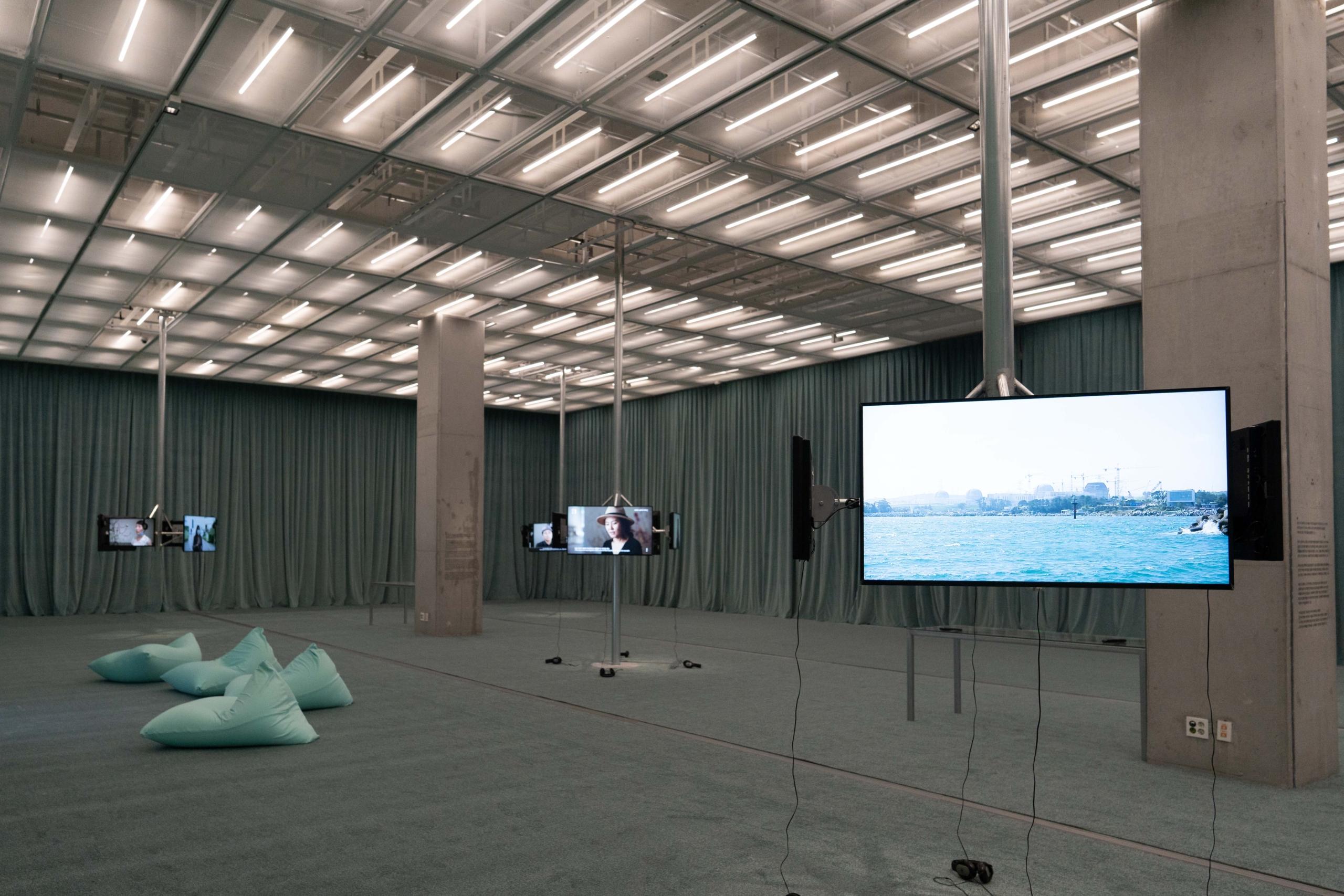
conditioning perspective. A temporary wall emulates this idea in the museum’s
installation, both revealing and obfuscating Syncope.
Suddenly, the horn resounds at a Korean train station. It’s time for the film,
and this text, to transition to their second chapters.
II. Bifurcations & labyrinths
In mathematics, the Bifurcation theory is
the study of changes in the topological structure of a given
family of curves.
It provides a strategy for investigating the bifurcations that occur within a
family.
In common language, though, a bifurcation is a fork in the road;
a break in the line. The train’s derailment…
Reinforcing its structural syncopation, Syncope forks
between two main characters, each of them a musician, each of them having
experienced their own derailment in life. “Maybe this is the beginning of the
second part of my life”, says Celia Huet, as she describes to the filmmaker her
move from France to Yogyakarta, Indonesia.
Celia is the character we first encounter, in the starting sequence of the
film, but she appears for a mere instant, before a scenic clap, her
introduction into the work itself a syncopated entry. Adopted into a French
family from South Korea, she had already featured in Sojung Jun’s earlier
video, titled Interval. Recess. Pause1 (2017).
Her diasporic journey is at the core of Syncope, Indonesia serving as the
background for, and at times as the beating heart of, the film. It is in this
new home that she started practicing the Gamelan, a traditional ensemble music
of the Javanese, Sundanese, and Balinese peoples of Indonesia, made up
predominantly of percussive instruments. In one of the crucial scenes of the
film, Celia explains having experienced a deja-vu or
a deja-entendu (already heard) when she first heard the music during
Indonesia’s annual Sekaten. Reflexively looping the work back onto itself, the
Gamelan, too, reemerges throughout the shots. The instruments’ sounds percolate
to the point at which it is hard to distinguish them from the soundtrack of the
work. In interviews, Celia highlights the sensory dimension of memory and
sound’s potential to bridge individual and collective experiences. This may
explain why, in Syncope, her recollections are often
carried over through sound rather than sight. Afterall, isn’t a syncope
synonymous to a memory lapse?
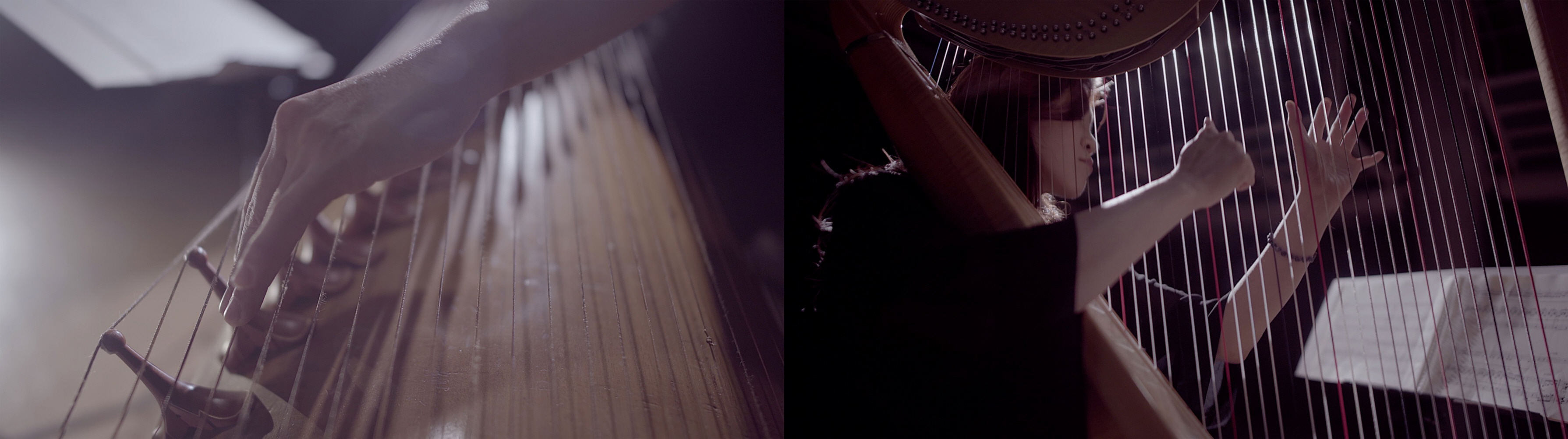
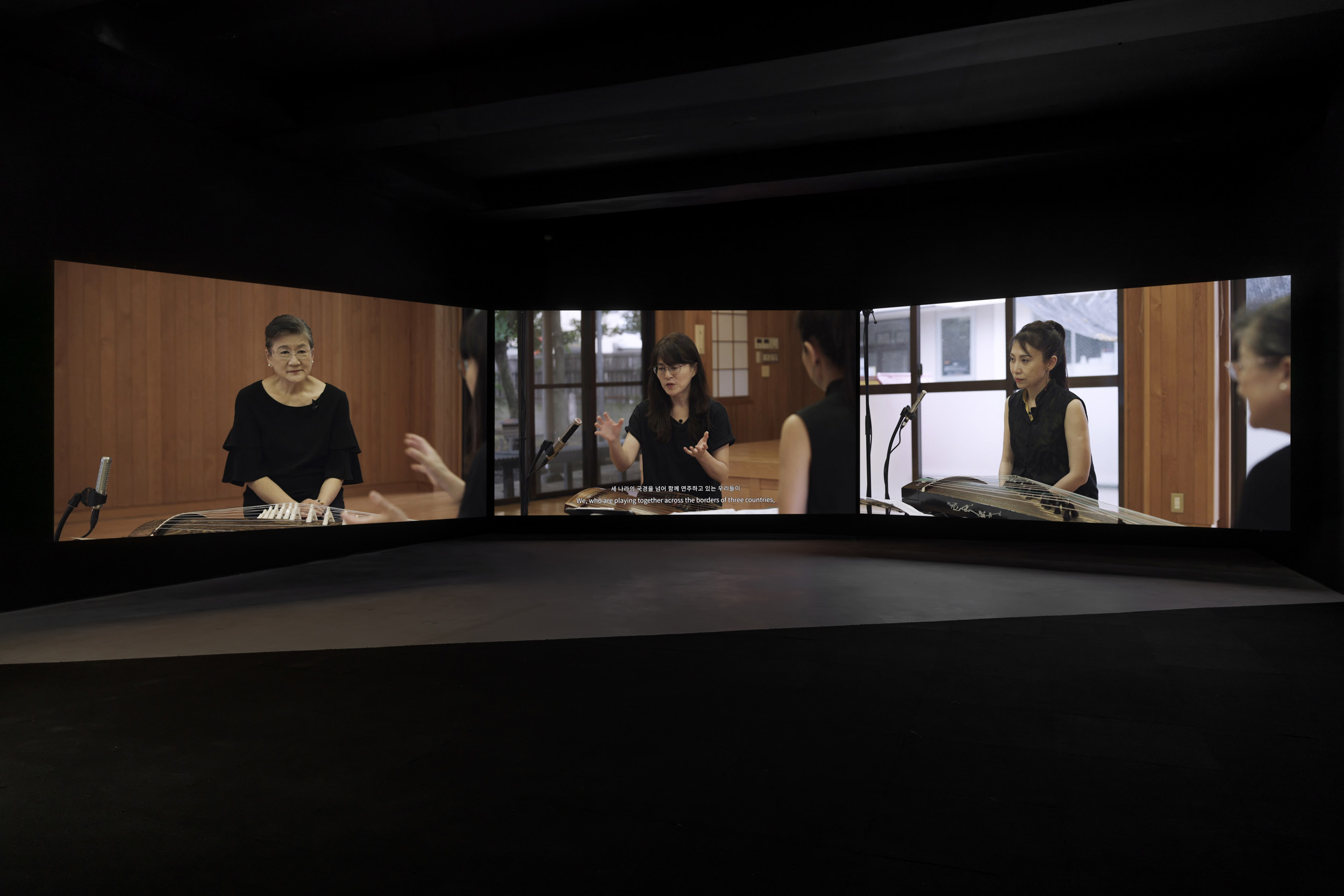
The second individual journey we learn from is that of Soon A Park, who also
featured in one of Sojung Jun’s Eclipse (2020),
and is the focus of the fourth chapter of Syncope. A
North Korean gayageum player, Park is from the third-generation of Koreans born
in Japan. Her parents moved to the country before Korea was divided, and
transited through to what is now North Korea where she studied gayageum before
settling in Seoul. As a player of a traditional Korean plucked zither, she
crisscrosses the cultures of Pyongyang, North Korea and South Korea in Japan.
Both Soon A Park and Celia Huet make manifest the bifurcations of
diasporic journeys, a space of inbetweenness that Sojung Jun favors. Discussing
her own relationship to the in-between spaces, the artist explained: “I’m
interested in liminal spaces – the things that happen on borders and their
ambiguity. (…) I put my passion into re-writing stories, time, and landscapes
of individuals who have been left behind by the speed of the city.” Throughout
her practice, concepts of translations and transliterations reappear, as
in The Ship of Fools (2016), in which she features
with three other characters, all taking part in an exercise of live
translation. By word of mouth, a sentence is chiseled and transmuted from one
language to the next, and the next, and the following. Syncope is
haunted by those images of roads intersecting, sometimes symbolically, like in
this Indonesian graffiti of a woman with pigtails which is no other than Celia,
crossing borders. I am reminded of Vietnamese poet Vi Khi Nao writing about her
own family’s exile: “In the exodus mayhem, shrapnel and shards of glass sliced
a chaotic cartography of scars on my grandmother’s body, creating bifurcated
roads of the war I could use later as map and compass to find my roots.”
The mythological figures of half-demigods Karna and Bari are similar
invocations. Both represent nomadic identities hovering between life and death.
They act as secret amulets, protecting the wanderers during their diasporic
journeys. While Karna is described as the secret son to an unmarried
Kunti, who, fearing outrage from society over her premarital pregnancy,
abandoned her newly born in a basket over the Ganges, hoping he would find
foster parents, Bari guides the souls on their way to the land of the departed.
I am reminded of the spirit of Èṣù-Ẹlẹ́gbára, the Trickster God of
Crossroads; of Beginnings and Opportunities, who provides second chances… All
are liminal deities. But what I liked about Èṣù-Ẹlẹ́gbára is that it is said to have control over the past, present,
and future. Often, the spirit is depicted holding a set of keys. As a
trickster, it plays time. Bypassing linear constructs, modernist like
accelerationist, it derails…
In common language, though, a bifurcation is a fork in the road; a
break in the line.
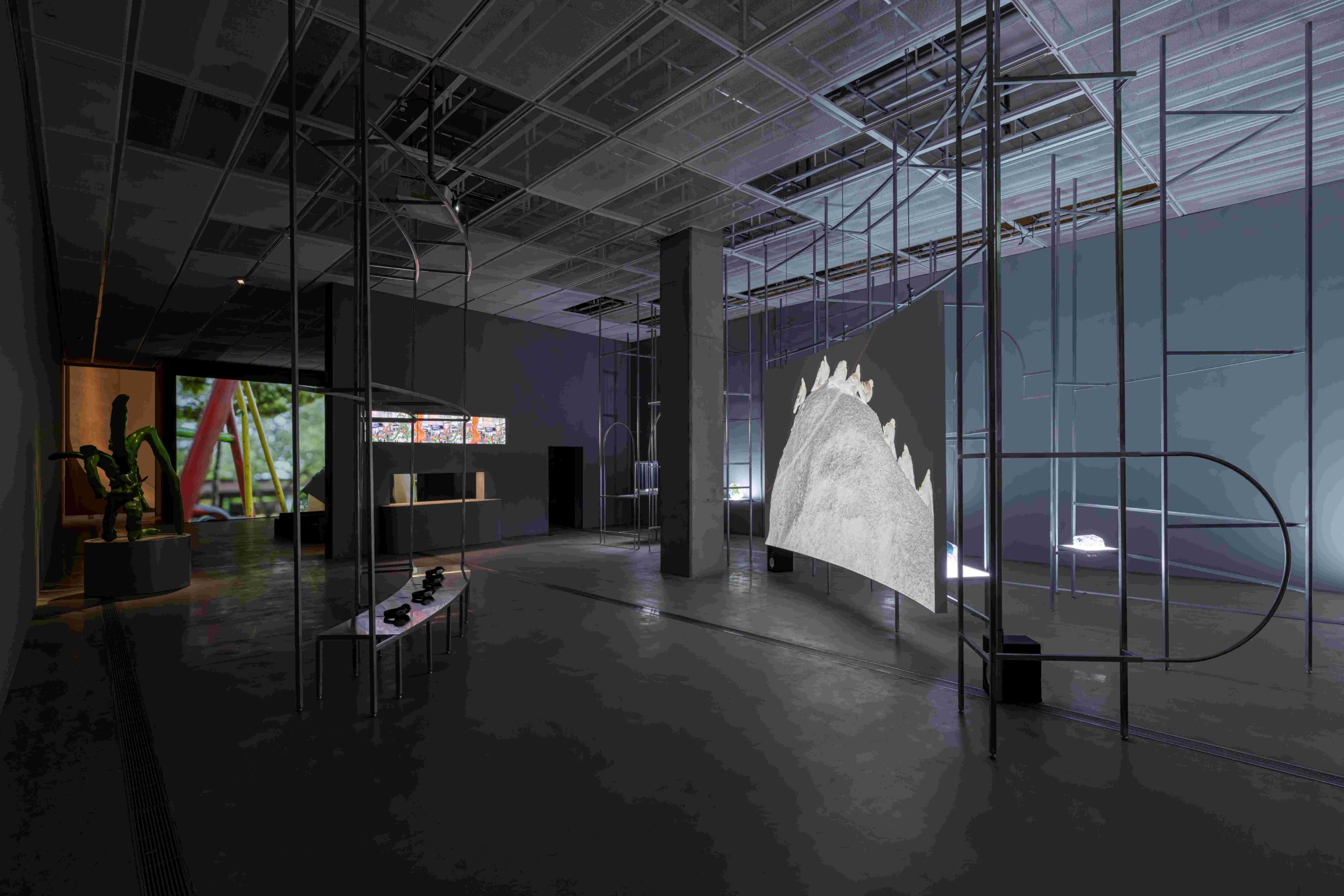
Sojung Jun’s exhibition evokes a labyrinth. It invites visitors to
transit through a series of installations before reaching the newest of her
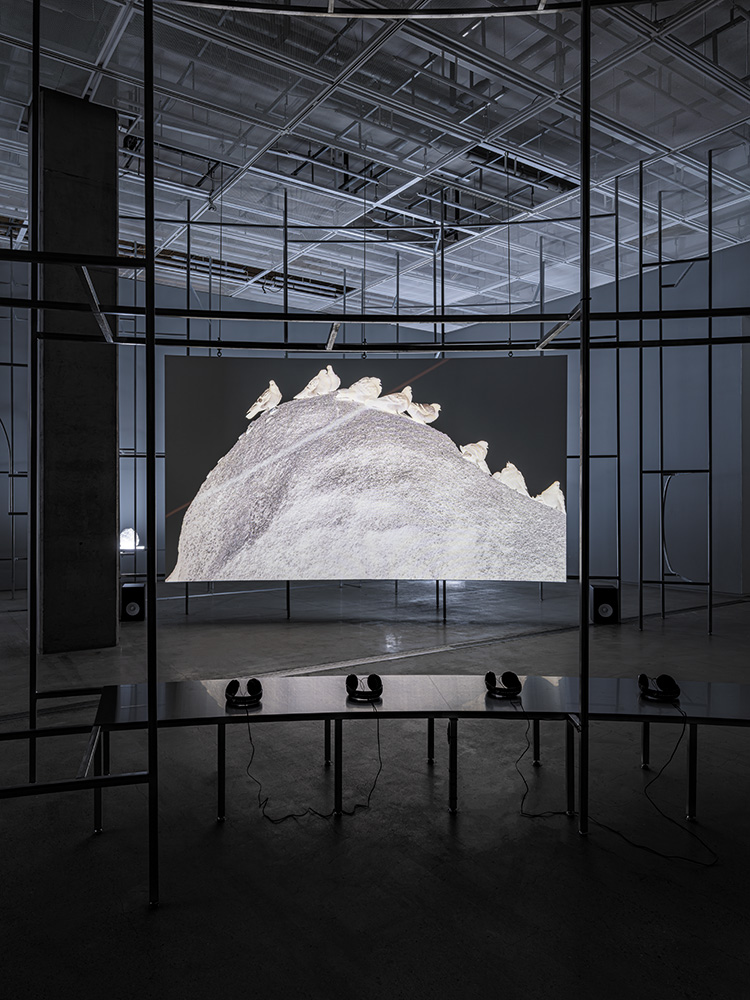
works, created for the presentation. One of the first they encounter is Despair
to be reborn (2020), a maze-like sculpture of metal, which
organizes a video and a set of sculptures in a runway of curvilinear bars
reminiscent of department stores. The video refers to an early poem by Yi Sang,
born Kim Hae-Gyeong (1910-1937), one of Korea’s most renowned modernist poets,
intersecting contemporary and modern Korea. In this text, titled Au
Magasin de Nouveautes, the author questioned the concept of the
“modern”, problematizing its connection with capitalist economy. Curator Ahn
Soyeon2 who first exhibited Sojung Jun’s video highlighted the
poem’s enigmatic quality: it combines “a French title” with “Japanese,
classical Chinese characters, Chinese and English.” Kim Hae-Gyeong, like Celia
Huet in Syncope, inhabit a language I call diasporic
—the space of roads that bifurcate.
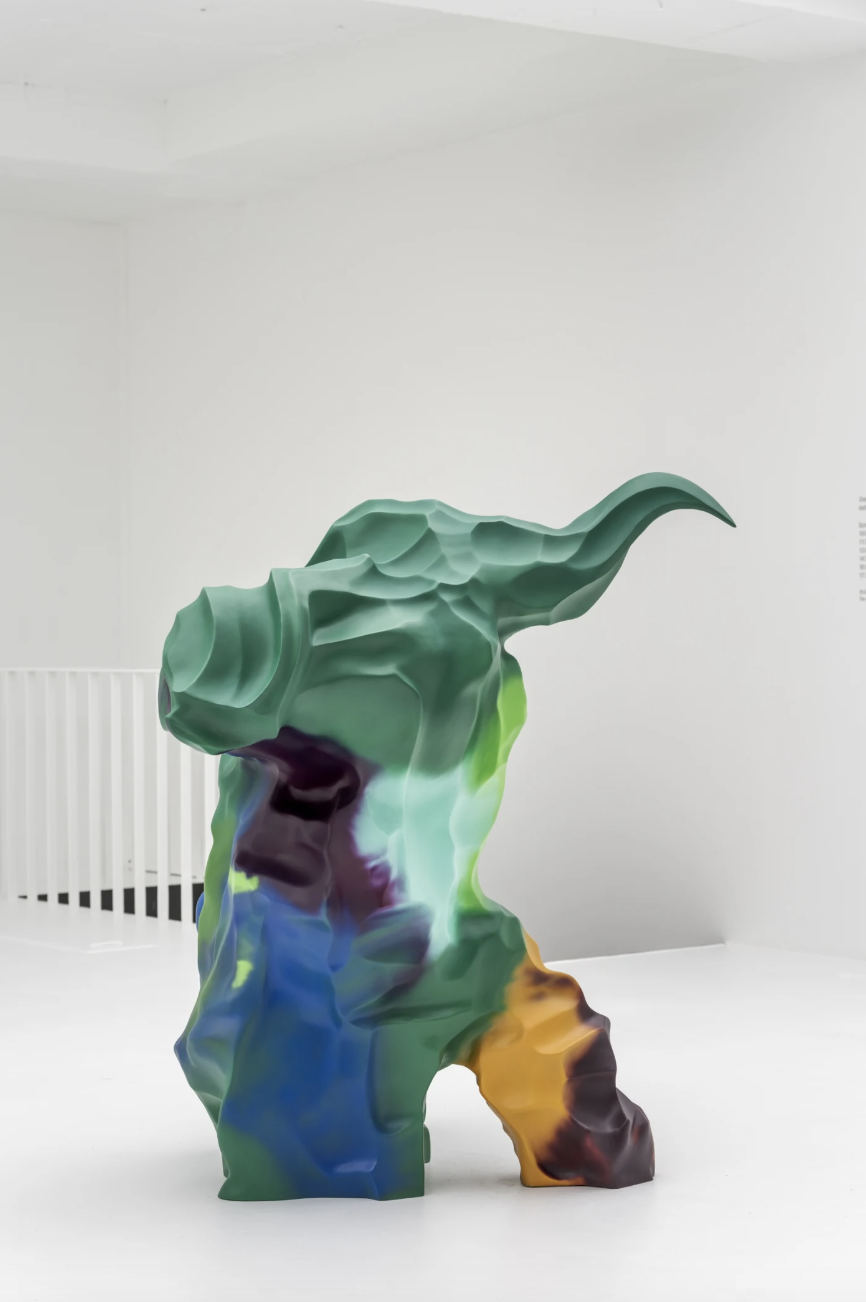
The installation Despair to be reborn problematizes
some of these diasporic questions. Despite its futuristic look, the maze hints
at the design of 19th century Wardian glass houses, oscillating like the video
between the future and the past. A product of British imperial pursuits, these
terrariums were invented by medical doctor Nathaniel Bagshaw Ward’s to
transpose foreign plants into his own geography and time. In 1842, in his
essay “On the Growth of Plants in Closely Glazed Cases,” he elaborated on the
experiments he started in 1833, explaining how he shipped two glazed cases
filled with British ferns all the way to Sydney. One can read that after a
voyage of several months, the plants arrived in good condition. Reading about
it though, I wondered how many other plants had died as a result of his
colonial quest for botanic knowledge… Sojung Jun studied Bagshaw Ward’s cases,
and transposed them into the digital world, creating 3D animated sculptures in
an application called Mobile Terrarium. These “escaped garden plants,” as she
calls them, spread from seeds of the epiphyllum plant, a tropical succulent
species that also appears in Syncope. Shown in the
video, and accessible to all via the app, the plant-sculptures can be carried
into a new setting. Like humans, they may “live here” and still “desire another
place”3, like Celia, who in the fifth chapter
of Syncope mentions her difficulty to “adjust” to life in France.
Epiphyllums are ‘queens of the night’; they bloom only at night and close themselves
again before the sun rises. As alien plants, they are “not here to stay”4.
Not unlike Youssouf, 4 years old, and Yunus, 2 years old, who sailed from
Turkey to Greece, raided by waves, and whose journey is mentioned in Sojung
Jun’s work The Ship of Fools, a little further in the
exhibition5.
“Lastly, in the field of mathematics, the Bifurcation theory is
the study of changes in the topological structure of a given family of curves.” This
came back to my mind as I first sat through Syncope. In
the video, each chapter is introduced by a drawn-out curve; each a specific
wave pattern. As it reaches its end, almost beyond the generics, all the curves
reappear, like a series of bifurcated paths gathered together again…
III. A sudden drop in oxygen supply
In 1993, discussing the theoretical, historical and social
framework he called the Black Atlantic, sociologist Paul Gilroy6 explained
the effects of “syncopated time” as both counter-culture and constitutive of
modernity. The following year, historian James Clifford published his
article Diasporas7, which further emphasized
the productive possibilities of syncopated time, wherein “effaced stories are
recovered” and “different futures imagined.” It is helpful to keep those in
mind as one journeys through Syncope.
The title of Sojung Jun’s work hints at a medical context: the
short-term cognitive trouble caused by a sudden drop in blood oxygen supply in
the brain with, at times, slowing down or interruption of the pulse. While the
return to consciousness is most often spontaneous, syncopes bear an intimate
relationship to death. They represent the body’s most ultimate loss of control;
an interruption in the beat; a disruption in both music and narrative. One of
these regular interferences is the artist’s microphone, which reappears in
various scenes: at a railway crossing; when the story of Karna is told. It
grabs our attention, disrupting our disbelief’s suspension, interrupting a
flow, and ultimately reminding us of the filmmaker’s existence.
However, it’s in the editing that the syncopation operates at its
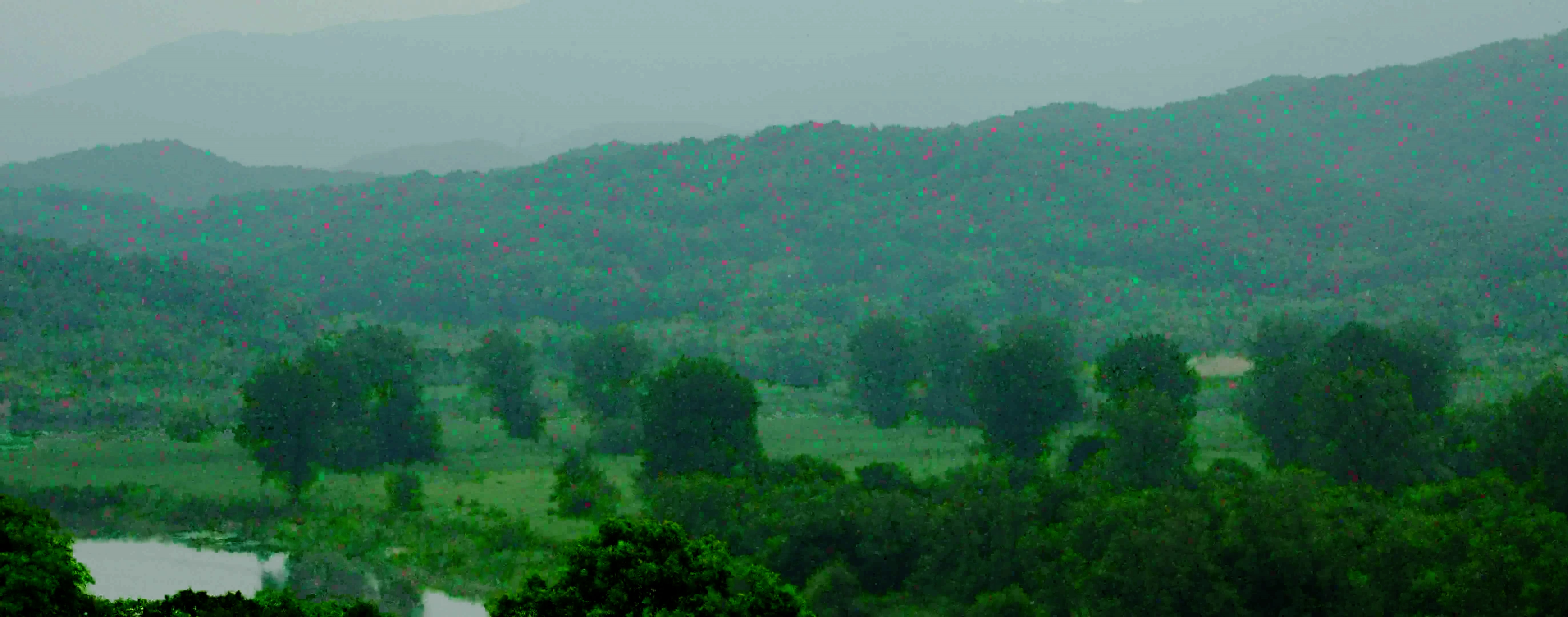
best. In various scenes, the screen splits into three vertical windows, the
video’s landscape segwaying into fragmented views. While the middle section
remains sharp, as if filmed by the phone of a camera, the background image,
which appears to the left and right of the central vertical window, lays out
enlarged and pixelated sights. It repeats, with a variant, what appears in the
center of the frame, making us lose a bit of perspective. Amidst a sea of
pixels, Sojung Jun deliberately creates a central path for our eyes to journey
on. As author Catherine Clément puts it: “the syncope will always make a fuss:
it cannot be discreet, it demands to be seen […] It shows off, exposes itself,
smashes, breaks, interrupts the daily course of other people’s lives, people at
whom the raptus is aimed.”8
As the film progresses, the rhythmic elements of the video
conflict further and further with its tempo and measure, as if the narrator was
travelling to the speed of light, à contretemps. It’s at that moment that
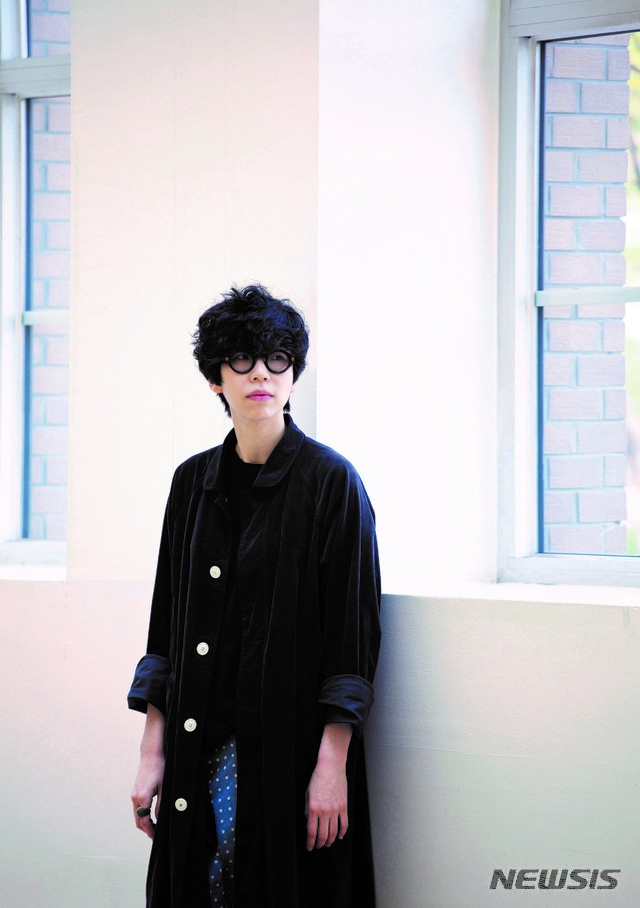
South Korean musician and DJ, Lee Sowall, takes center stage. Set against a
blurry background, she is filmed finger-drumming, but her body and table seem
to escape the frame, deriving beyond gravity. The image against which she
stands turns into a decelerated image of central Seoul, pictured from a train,
but slowed down to the point of staggering. And suddenly the train derails. A
leap out of the space-time continuum. “In the end, we all move at different
speeds,” says Sowall. “We live in the gaps.”
I remember asking myself what lived in the intervals when I first
saw Himali Singh Soin’s video The Particle and the Wave (2015),
in which the artist studies the rhythmical pattern of Virginia Woolf’s The
Waves. Working through the author’s novel, Singh Soin erased the
words to only leave the semicolons behind as hinges to help us measure time.
What lives between the beats, the words, the times? Are there plants, mycelium,
that spreads and grows surreptitiously like Sojung Jun’s epiphyllum? What lives
in the off-key sounds of the Gamelan?
In one of my last emails to Sojung Jun, I asked her to tell me more about the
concept of Nonghyun, central to the gayageum’s left-hand technique
mastered by character Soon A Park. She responded: “nonghyun is an
unwritten sound,” “a void,” “the margins of sound that goes outside the
notation.” Funnily, in one of my obsessive digs about the work and Lee Sowall,
I read an interview in which the journalist inquired about the precision of her
beats. Asked how she managed to remain so precisely on beat without an obvious
click track, Sowall too praised the interstice: “I’m obsessed with tempo,
which can work for you or against you. It comes naturally to me to lock in to
the beat. But when I’m finger drumming, I try to forget what I cared about when
I played the drums.” “I’m a little bit more free.” “Finger drumming has been a
getaway to escape.” How does one operate from a counter beat perspective, that
very “counter beat” which Paul Gilroy called upon in his book, Black
Atlantic. The Gamelan, whose actual name comes from the Javanese word
gamel, which refers to the act of striking with a mallet, in other words the
beat. But what makes it unusual, and connected to the gayageum, is that it
relies on an ensemble working on scales that are not standardized. Within one
set, each instrument is deliberately tuned off so that resonance occurs only
when all are struck simultaneously. Dissonant to the point of harmony…
In the text accompanying her eponymous show9, art historian Daria
Khan wrote: “a syncope is a multi-format ‘tender interval’ which can be
described in music as an unstressed ‘empty’ beat; in linguistics as the
suspension of a syllable, or a letter; in medicine as a partial or complete
loss of consciousness. In this exhibition, syncope acts as a metaphor for
rapture, delay, lacunae, and displacement.” As she would, I ask: can the
syncope create an additional, unstressed beat, in the interstice, for a
different time-space continuum? Phonologists and linguists came up with a
concept for this idea: they call it the helping vowel. It refers to a rule of
pronunciation that inserts a “brief” vowel as a vocalic release to help us
pronounce a word with more ease. A surplus sound, if you will. The very last
scene of Syncope occupies the very space of that interval. After the train has
reached the speed of light. At its climax, the video takes on a most
experimental quality, suggestive of avant-garde cinema, with its showing of
sprocket holes, splice marks, and flickering. As Sowall finishes her set,
afterimages of her body appear in a staccato of slow-mo, like a comet’s tail
lingering in the sky, glitching.
Right as I reached the last line of this text, I received a
mysterious PDF document titled “Clues.” In it, Sojung Jun
revealed: “nonghyun is the most characteristic and important
technique in Gayageum. It produces various decorative sounds in addition to the
original note. As it is not notated; it is both objective and subjective;
resolute, like a big wave.”