Ye-eun Min (b. 1986) has developed a practice that reconfigures the symbolic and material qualities of the home, visualizing ambiguous spaces and nonlinear temporalities that emerge through the interplay between interior and exterior, and between materiality and thought.
 
Collecting objects previously used by others, the artist arranges them within carefully constructed frameworks, creating layered spatial and temporal experiences through the changing properties of materials, the narratives embedded within them, and the active participation of viewers.


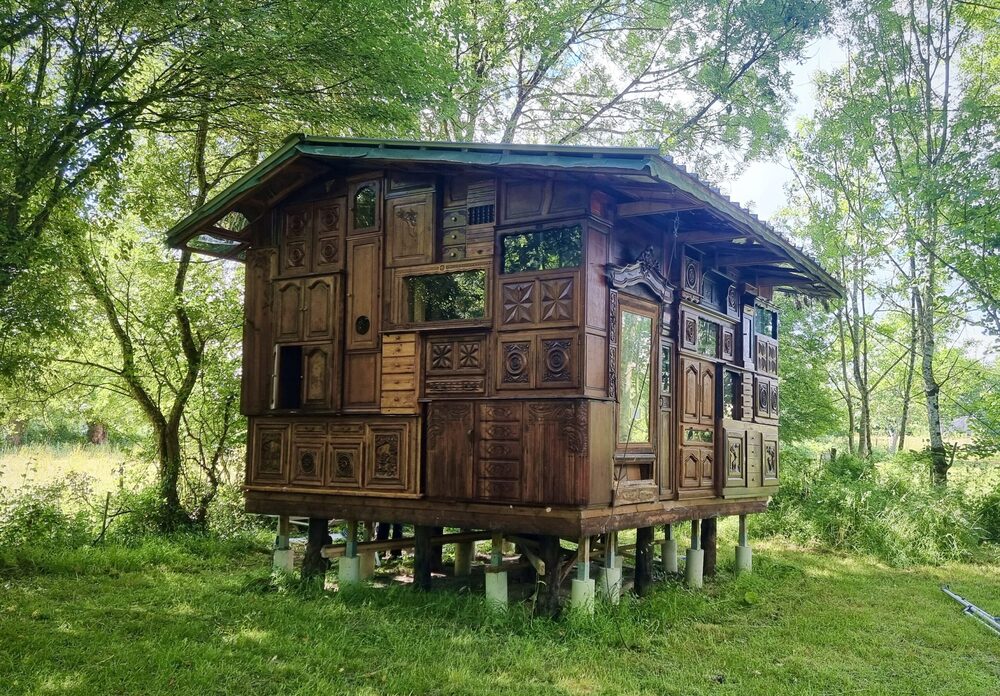
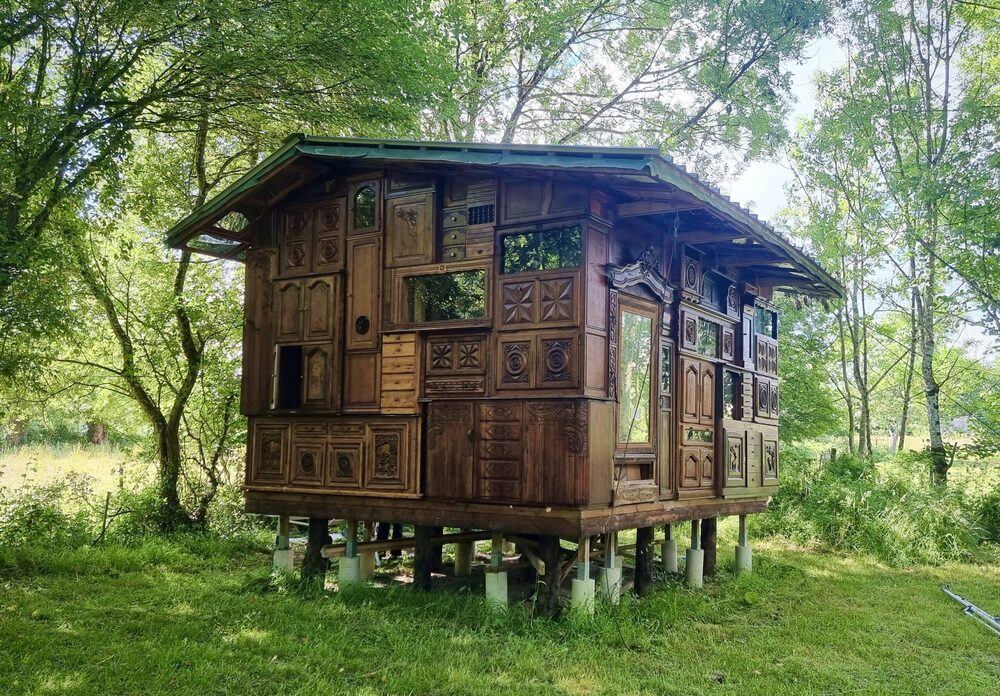
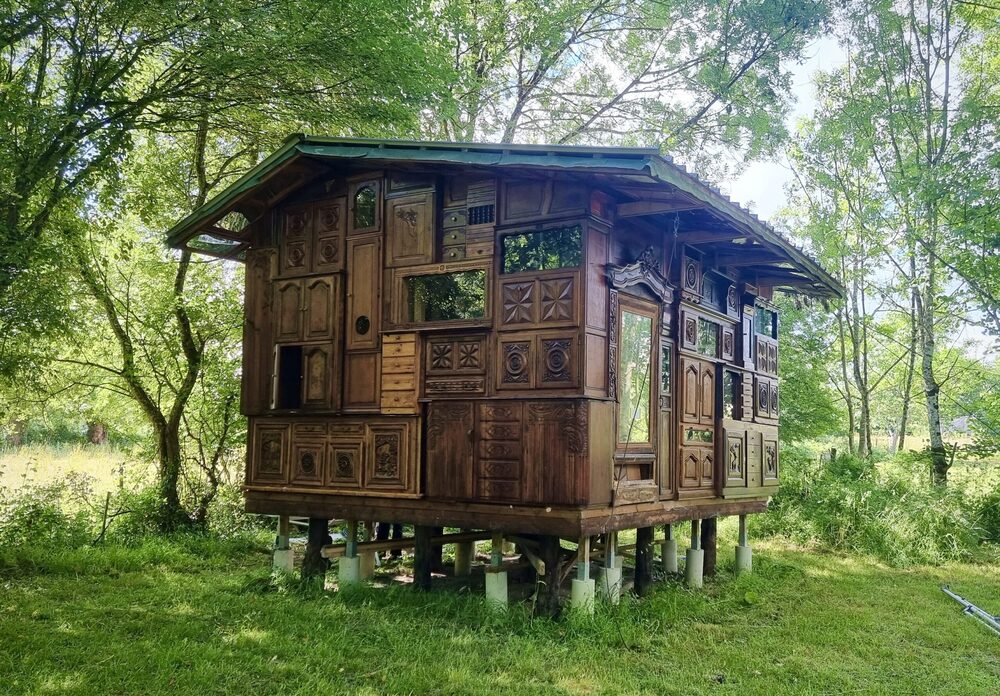
Ye-eun Min, Furniture House, 2013-, Mixed media, 380x500x400cm © Ye-eun Min

Ye-eun Min's practice is rooted in her personal experience of growing up in Korea during adolescence before moving to France at the age of nineteen, where she has since lived and developed her artistic practice. This bicultural background has informed a hybrid methodology that combines diverse media and visual languages, forming a central foundation of her work.
 
While paying attention to the interconnected flows of capital, information, people, and commodities in the contemporary globalized world, the artist also explores the meaning of the home as a place where personal time and memory accumulate.
 
Decorations, furniture, everyday objects, and interior spaces function as indicators of lived experience and identity, while also serving as material devices that define the boundary between self and other. Min takes these symbolic and material qualities of domestic space as the point of departure for her work.


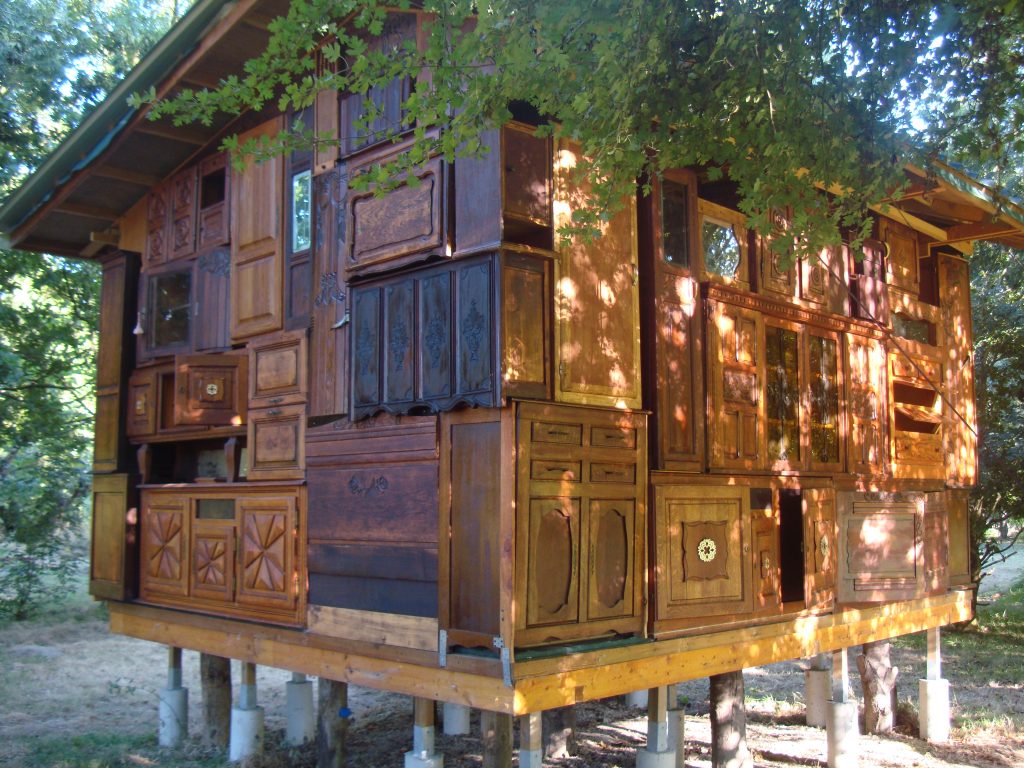
Ye-eun Min, Furniture House, 2013-, Mixed media, 380x500x400cm © Ye-eun Min

Min's sustained exploration of the home began with Furniture House (2013–), a full-scale inhabitable structure, and has since evolved through experiments with reduction, fragmentation, and other formal transformations.
 
First conceived in 2013 in the Bretagne region of northwestern France, Furniture House was built on flood-prone land where conventional architecture could not be constructed, providing a space that could nevertheless be inhabited.
 
The artist assembled the structure by turning pieces of indoor furniture outward to form its walls, reversing the conventional relationship between interior and exterior: what lies outside the hut becomes its interior, while the inside of the building becomes exterior space. Built on land where a permanent house cannot exist, the hut creates an ambiguous space that simultaneously belongs everywhere and nowhere.
 
The structure is composed entirely of secondhand furniture previously used by others. The forms of the furniture—both whole and fragmented—carry traces of different periods and of their former users, inviting viewers to imagine the unseen stories embedded within these everyday objects.


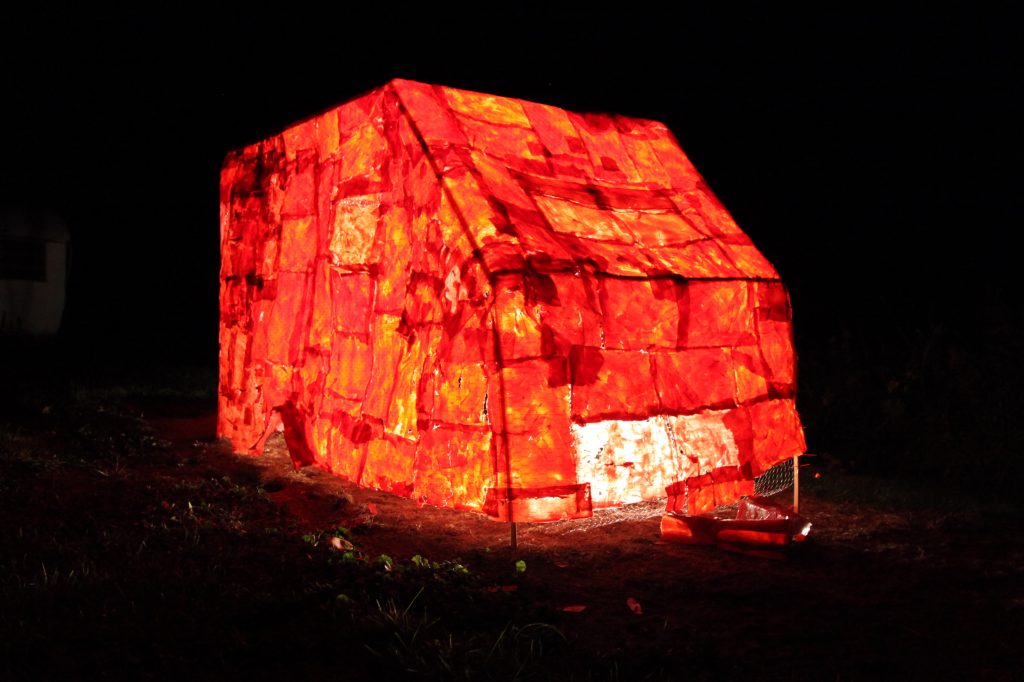
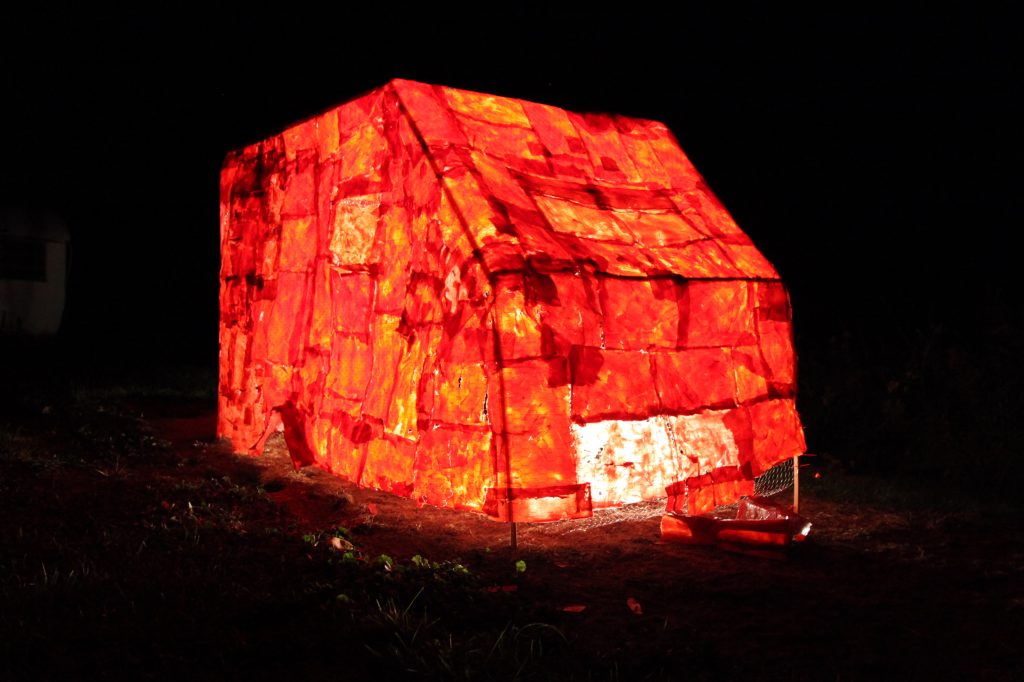
Ye-eun Min, Caravan, 2015, Wax, chicken wire, wood, 260x150x180cm © Ye-eun Min

Meanwhile, Caravan (2015) presents a minimized form of the home. The work is based on the artist’s experience of staying in a caravan while participating in the Triangle Artists’ Workshop in New York.
 
After the caravan used as accommodation was moved away, Min traced the tire marks left on the ground and installed a second, simplified version of the caravan in the same location using materials such as wax, wood, and wire mesh.
 
Composed of multiple panels made by applying thin layers of melted wax like brushstrokes and allowing them to harden, Caravan gradually changed its original form depending on the temperature and sunlight of the day.
 
Through this process of transformation in response to its surroundings, Min’s Caravan challenges the conventional perception of the home as a stable and permanent structure. At the same time, it invites a reflection on personal identity as something that shifts and is continuously reconstructed through changing conditions of time and space.


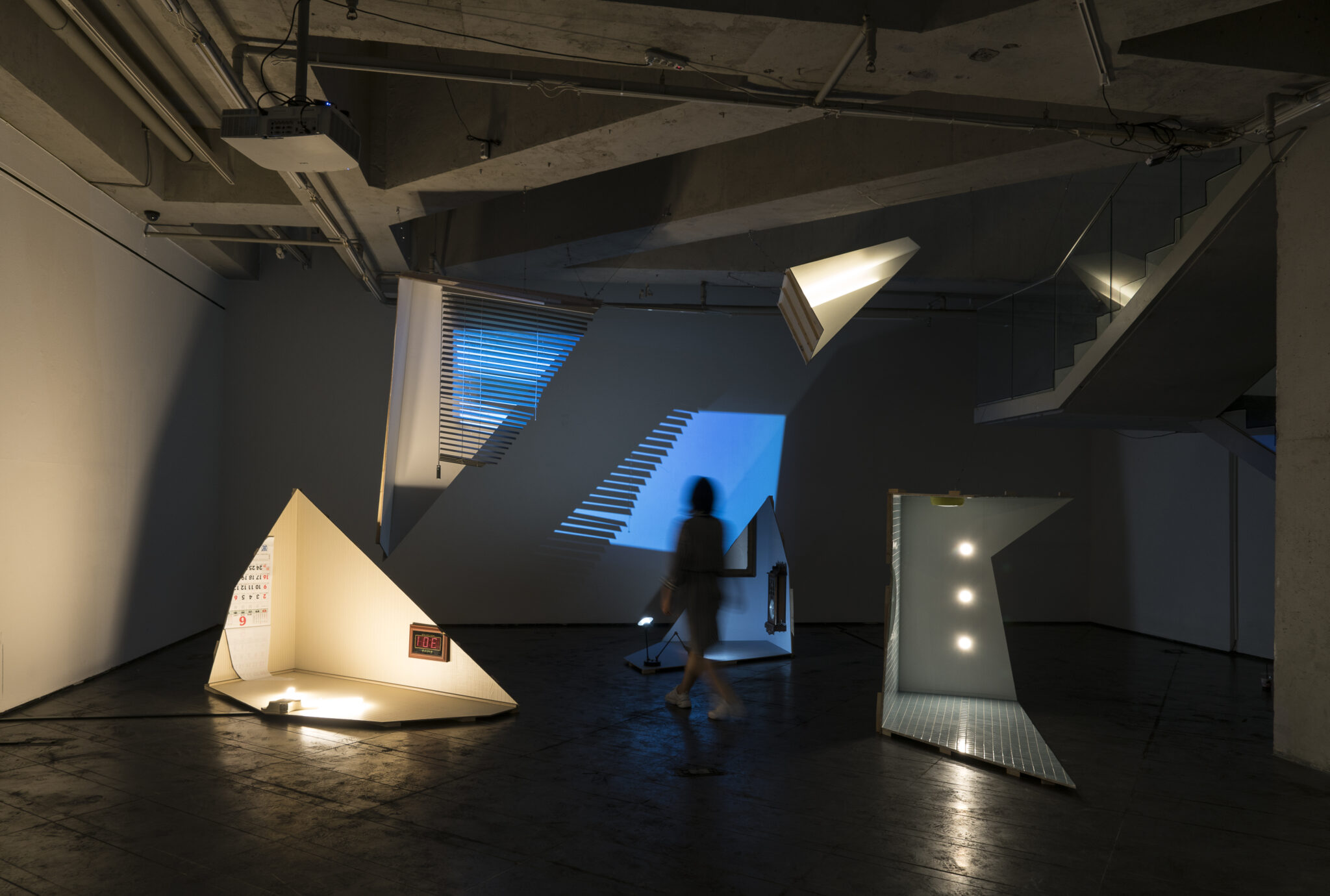
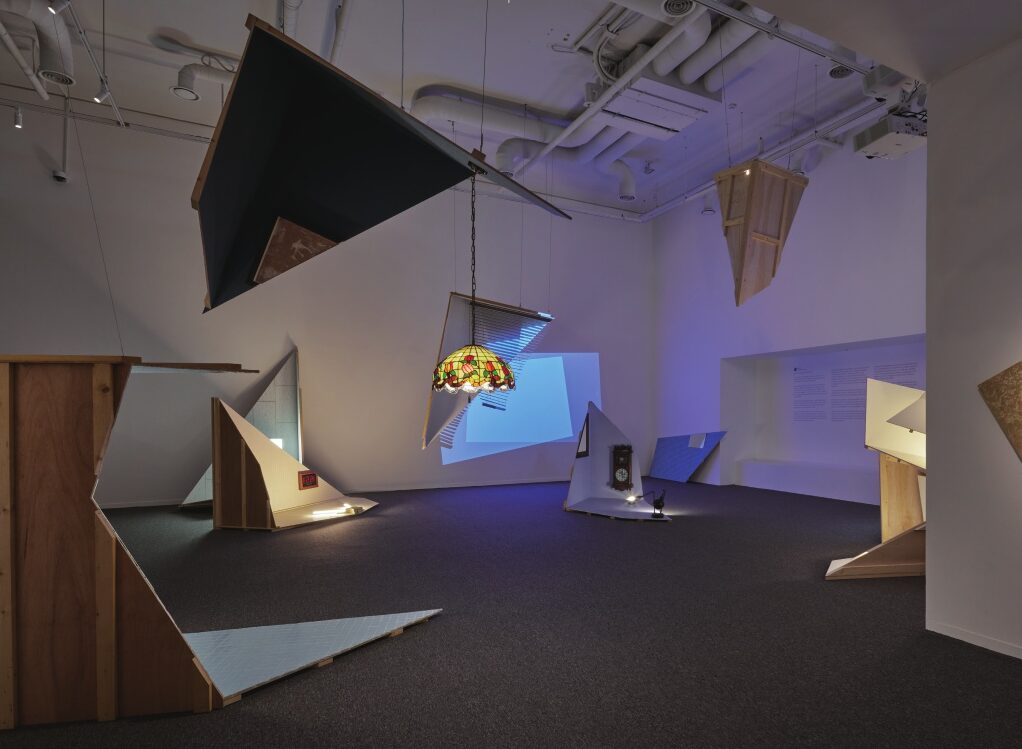
Ye-eun Min, Lavihamahamahyunchuchuhappyj33atomausepponssugizetteblackbyungddoungkkeong…, 2019, Mixed media, Dimensions variable, Installation view of 《Unpredictable invisibility》 (Alternative Space LOOP, 2019) © Ye-eun Min

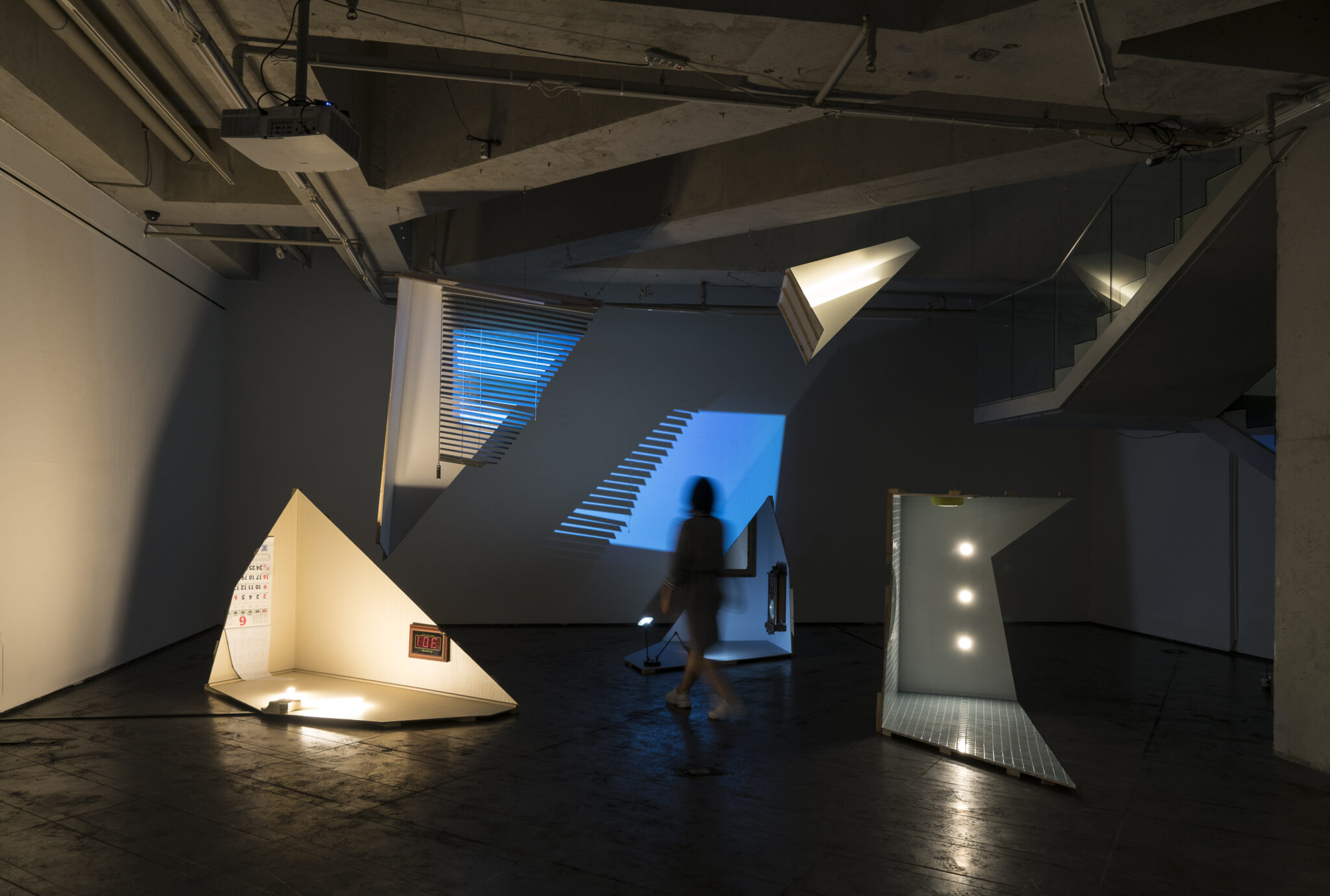
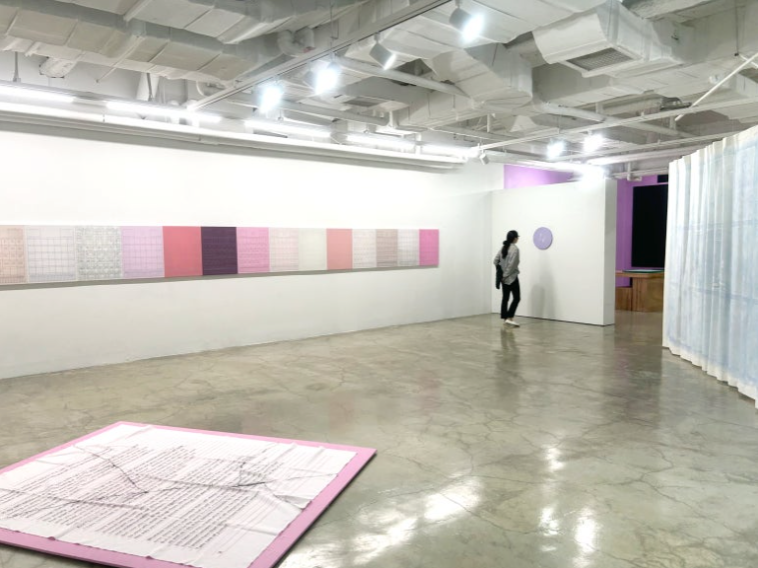
Beginning in 2019, Min has explored new forms of the “home” reconstructed through fragments and remnants of domestic space. In her solo exhibition 《Unpredictable Invisibility》 at Alternative Space LOOP in 2019, the artist presented Lavihamahamahyunchuchuhappyj33atomausepponssugizetteblackbyungddoungkkeong… (2019), a work that expands the concept of the home as a living space and transforms it into a four-dimensional relationship.
 
The artist first dismantled a rectangular structure measuring 150 × 240 × 150 cm by cutting it into six irregular sections. These fragments, composed only of a ceiling without walls or a floor, were repositioned on the ceiling of the exhibition space. Wallpaper and lighting elements suggesting a domestic ceiling were attached to the fragments, while their interiors were filled with collected objects.
 
The work’s seemingly cryptic title is a combination of internet usernames used by the owners of these objects within online communities. The shared space, reconstructed not from an individual experience but from the accumulated experiences of anonymous others, becomes a hybrid environment in which lights are turned on and off by visitors, allowing multiple experiences and memories to intersect.


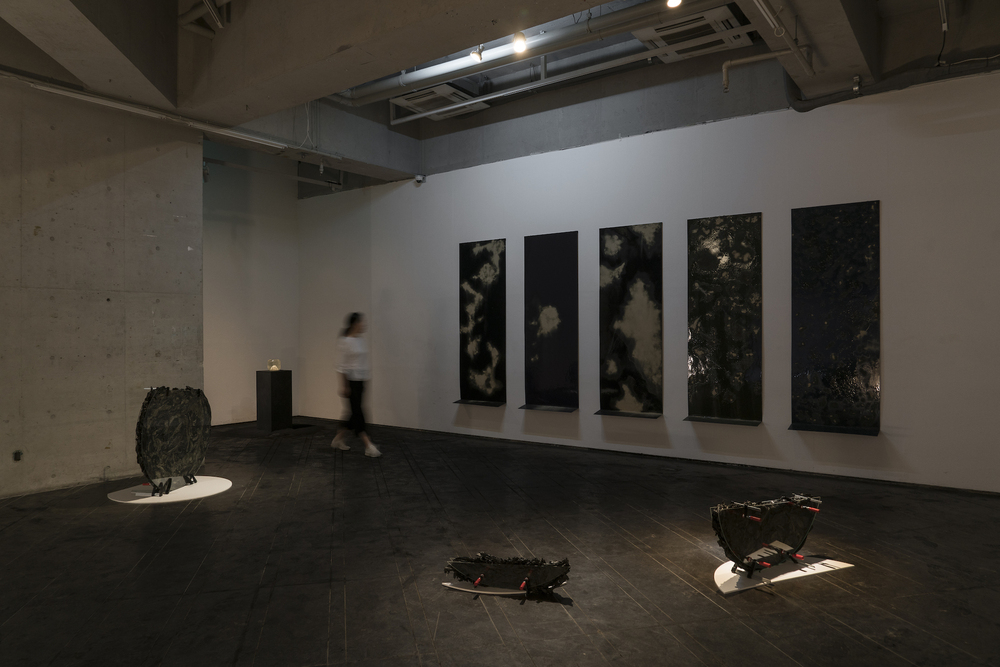
Installation view of 《Unpredictable invisibility》 (Alternative Space LOOP, 2019) © Alternative Space LOOP

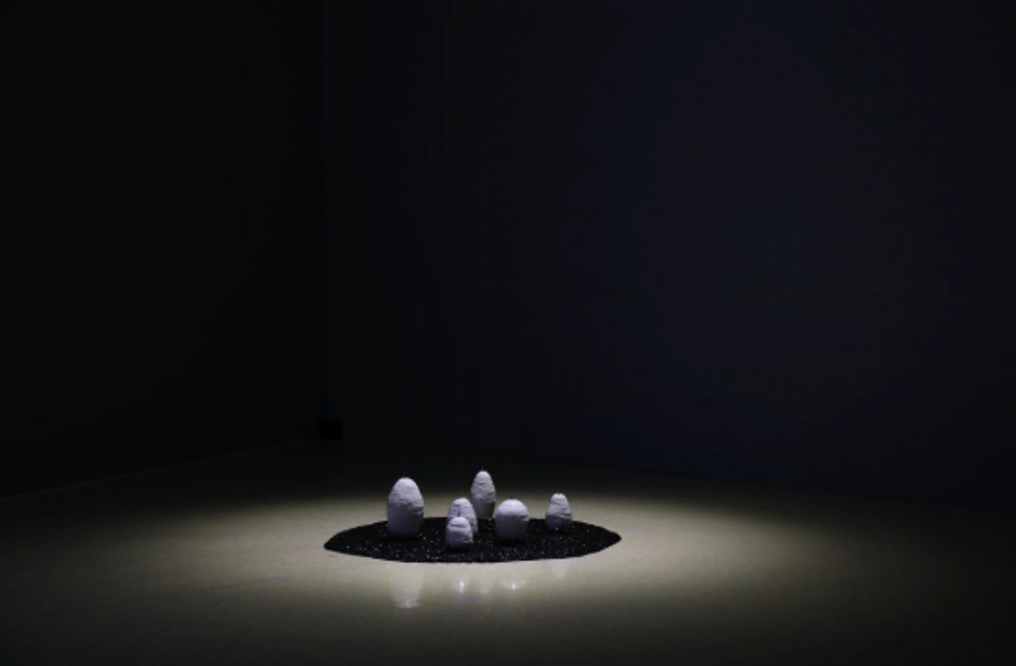
The installation Sahk (lunar conjunction), presented as part of the exhibition, visually explores the flow of time through the relationship between the Earth, the Moon, and the Sun. “Sahk,” referring to the moment when the Moon aligns between the Sun and the Earth, is not a phenomenon determined by physical scale but one that emerges through relational positioning.
 
The artist recreated the temporarily observed form of the Moon during this alignment using compressed vinyl. The four Sahk forms, appearing as if on the verge of bursting, speak of interactions between relationships through a metaphorical calculation rather than the measurement of time, distance, or space.
 
Alongside this work, Min has constructed unregulated and imagined spaces through diverse materials, including Trans-migration, which paradoxically records narratives of life, death, and mourning revealed through urns, and Single Slit, which captures the moment when dust produced from grinding furniture disperses into space.
 
In the exhibition 《Unpredictable Invisibility》, these works demonstrate how each materially existing entity is fragmented and reproduced to form unforeseen relationships. The resulting hybrid space, where elements intermingle without fixed rules or obligations, remains blurred and ambiguous, yet converges as a meaningful cultural point of exchange transformed through the language of art.


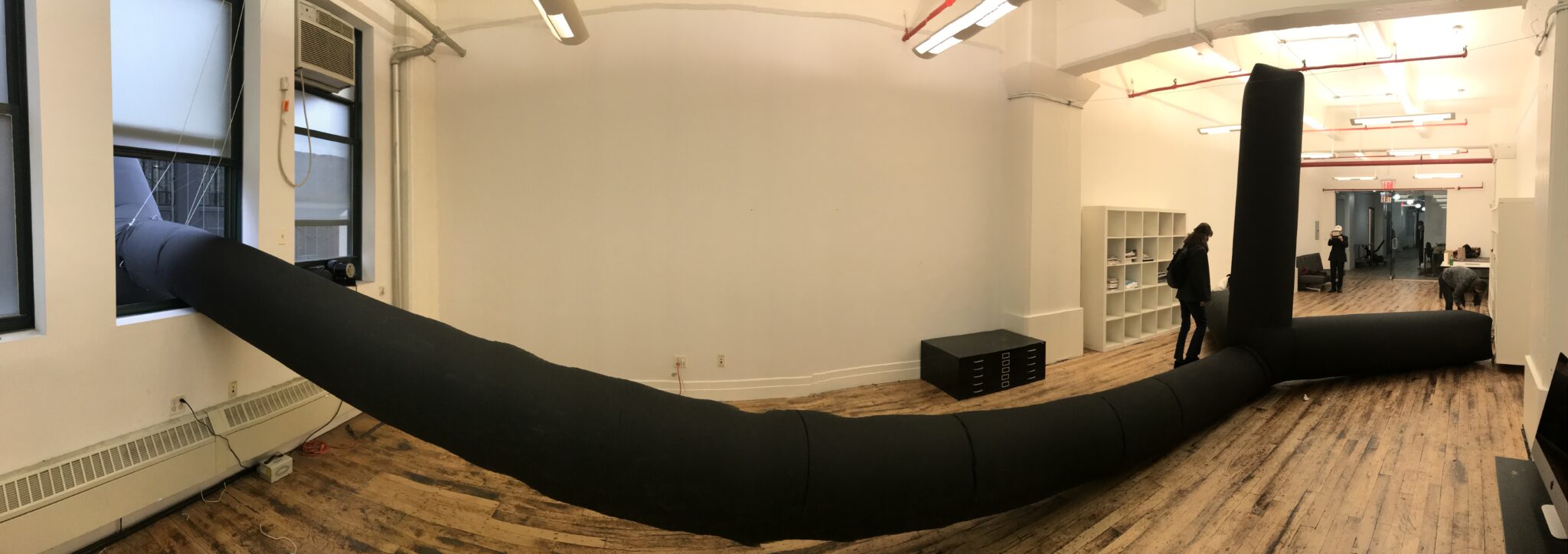
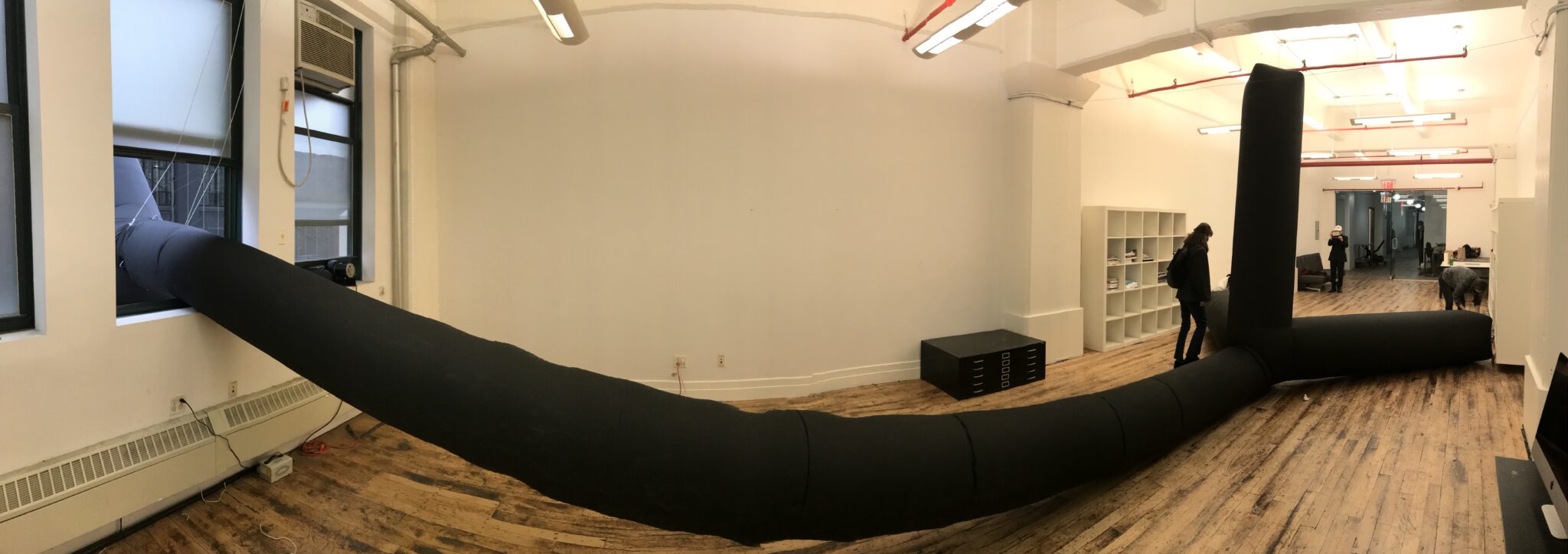
Ye-eun Min, Because Not Everything Is Apparent, 2020, Clothes, black ink, motor, air, 250x1200x350cm © Ye-eun Min

Extending her exploration of the blurred boundaries between interior and exterior, private and public, and place and non-place, Min’s 2020 installation Because Not Everything Is Apparent constructs another layer of reality upon existing physical space using basic units such as points, lines, and planes.
 
The approximately 14-meter-long work was installed across the interior and exterior of the exhibition space. At both ends, identical corner-shaped structures measuring around 3 meters were positioned to establish new spatial reference points. Connecting two separate locations through a single line, the work allowed people to encounter a form identical to the one inside the exhibition space even when the gallery was closed.
 
Suspended approximately five stories above the ground, the corner structure could neither be touched nor closely examined. Its material and method of installation remained unknown, leaving viewers to perceive it only through its visible form and to imagine its hidden conditions.
 
The linear form extending from this corner passed through a window and continued into the interior space, where another identical corner was placed at its endpoint. A corner measuring 3 meters on each side could not be fully perceived within the limited dimensions of the indoor space. Viewers could only imagine the unseen parts of the structure through the external corner that remained visible yet inaccessible.


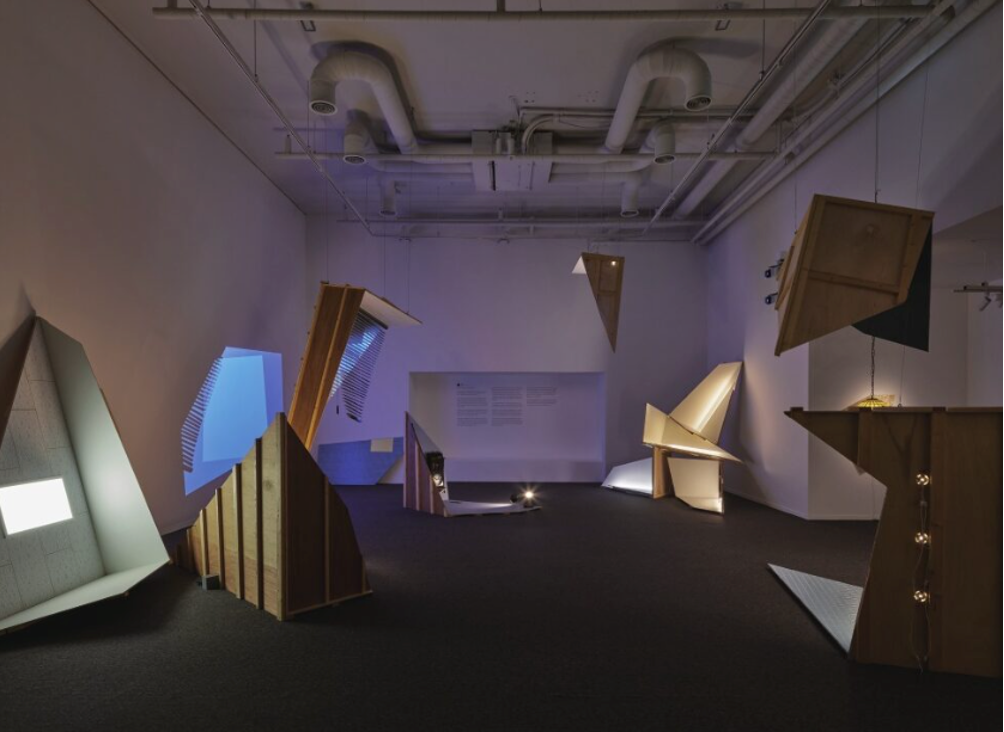
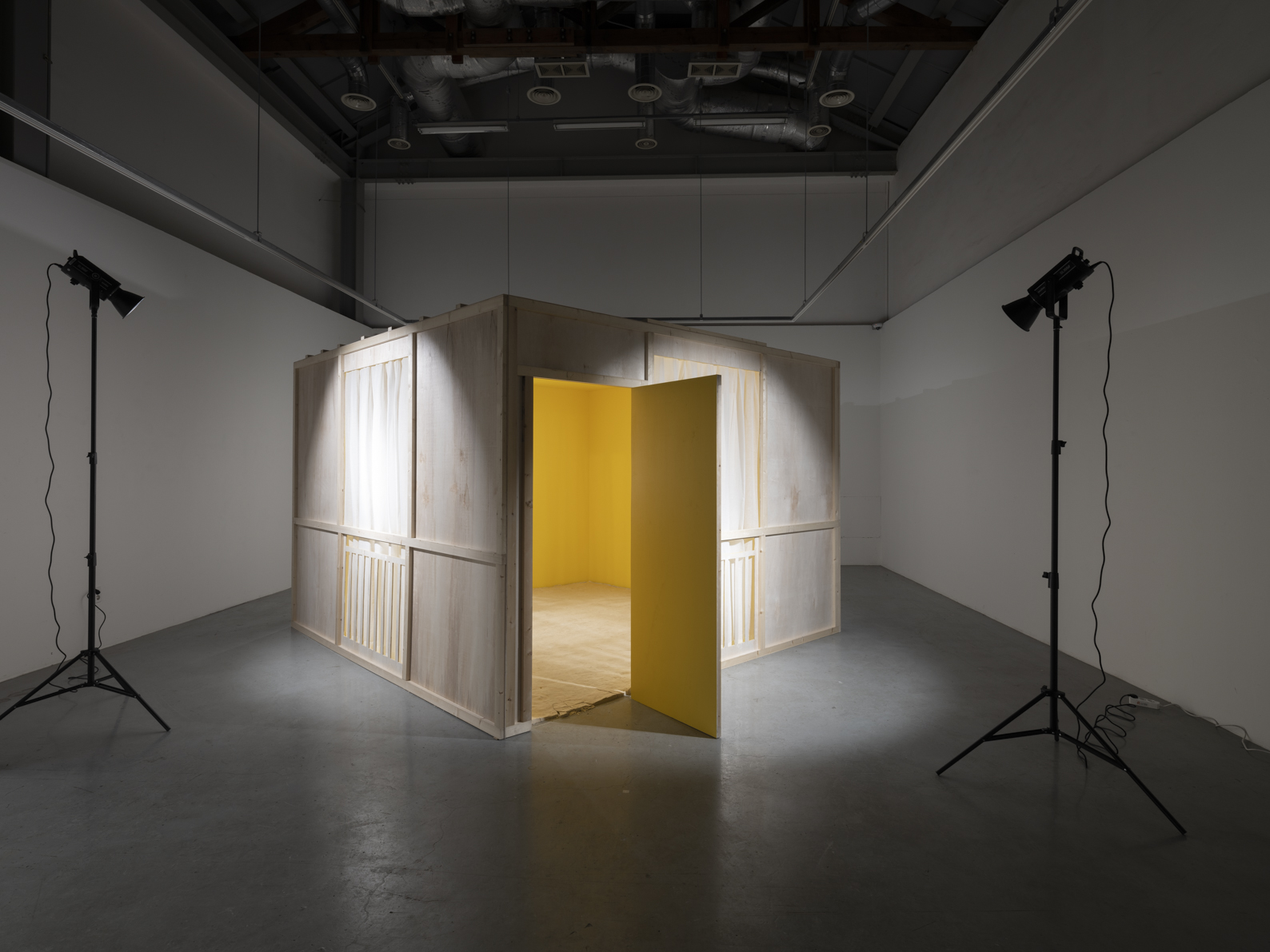
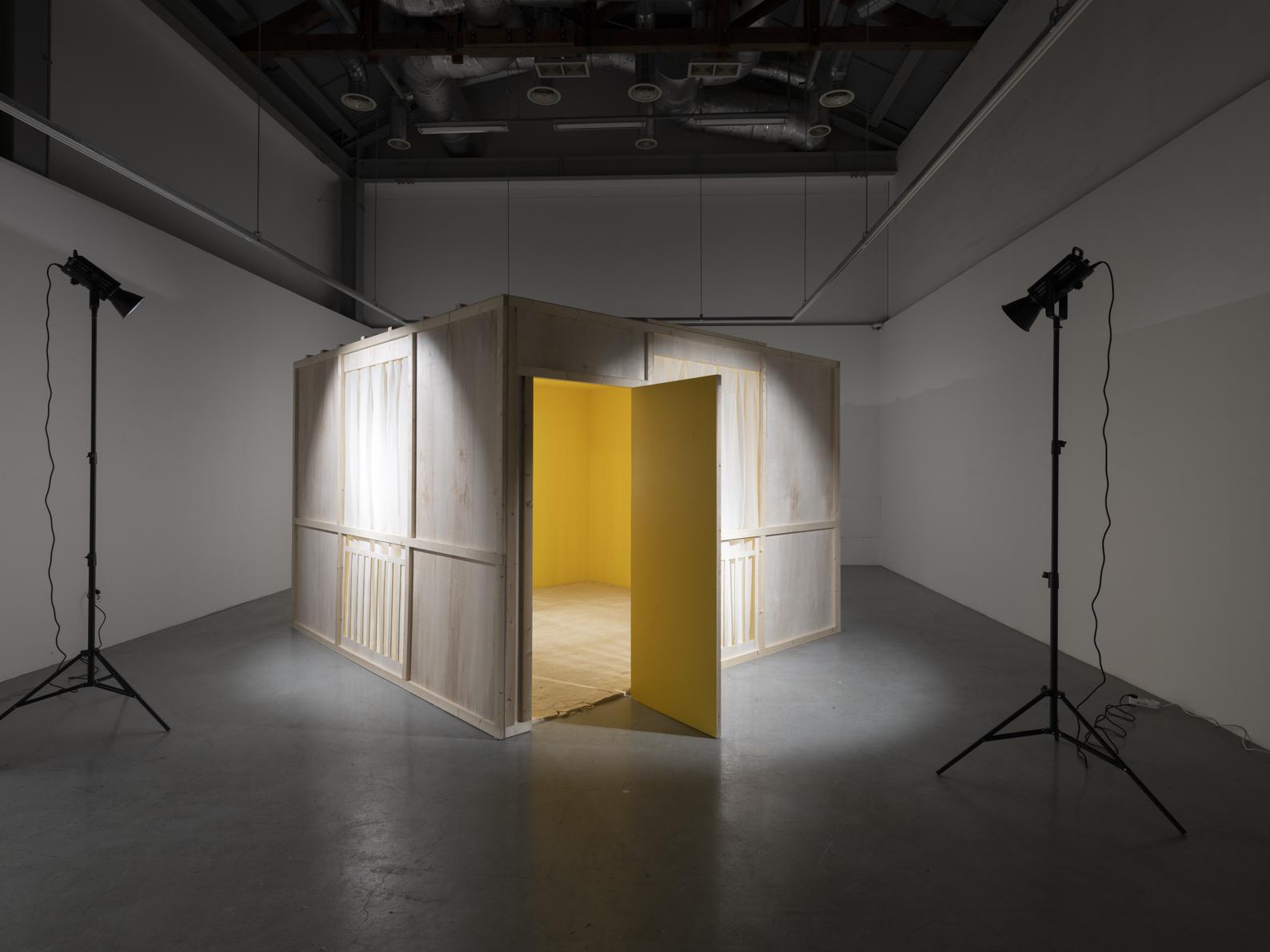
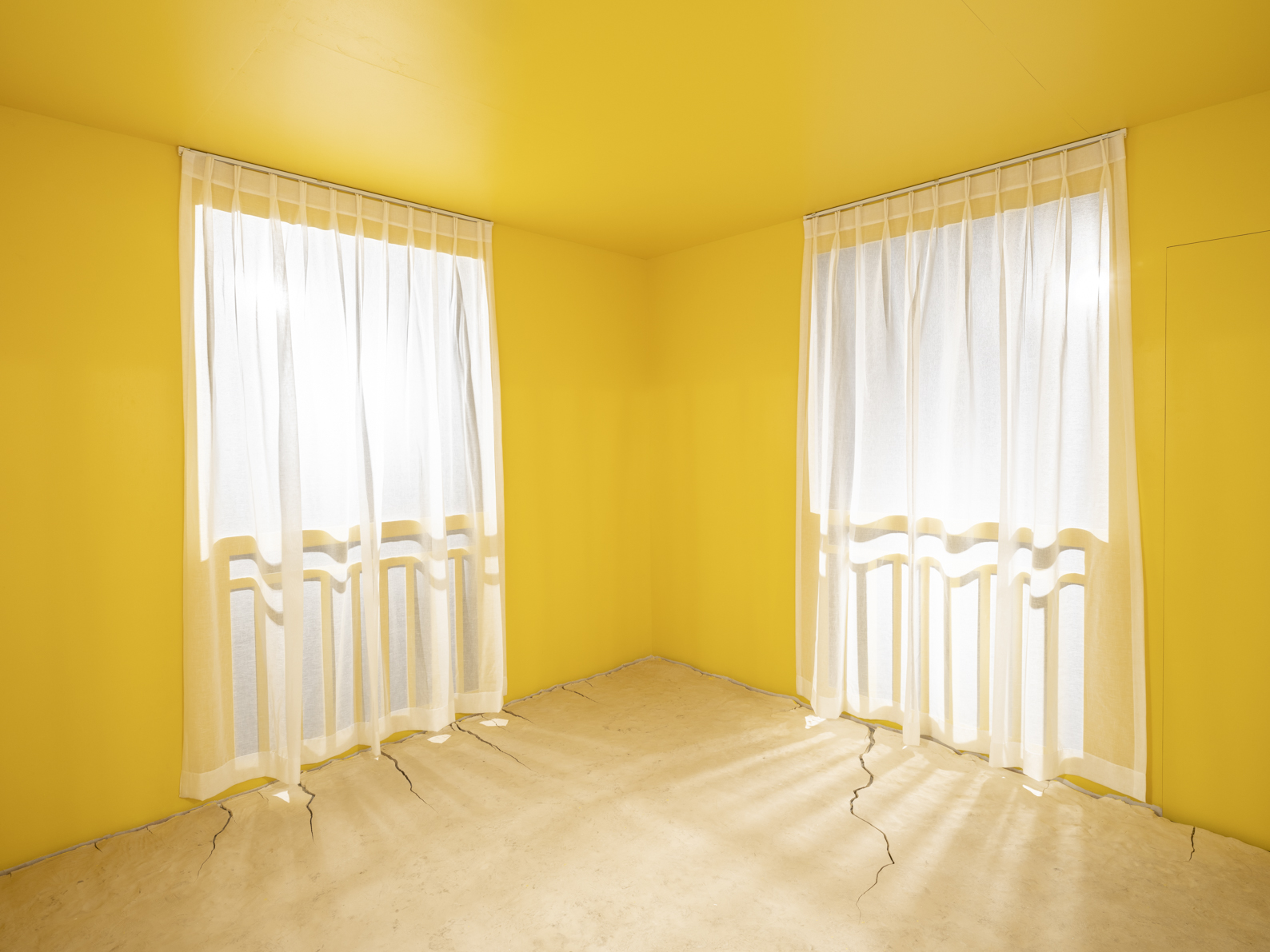
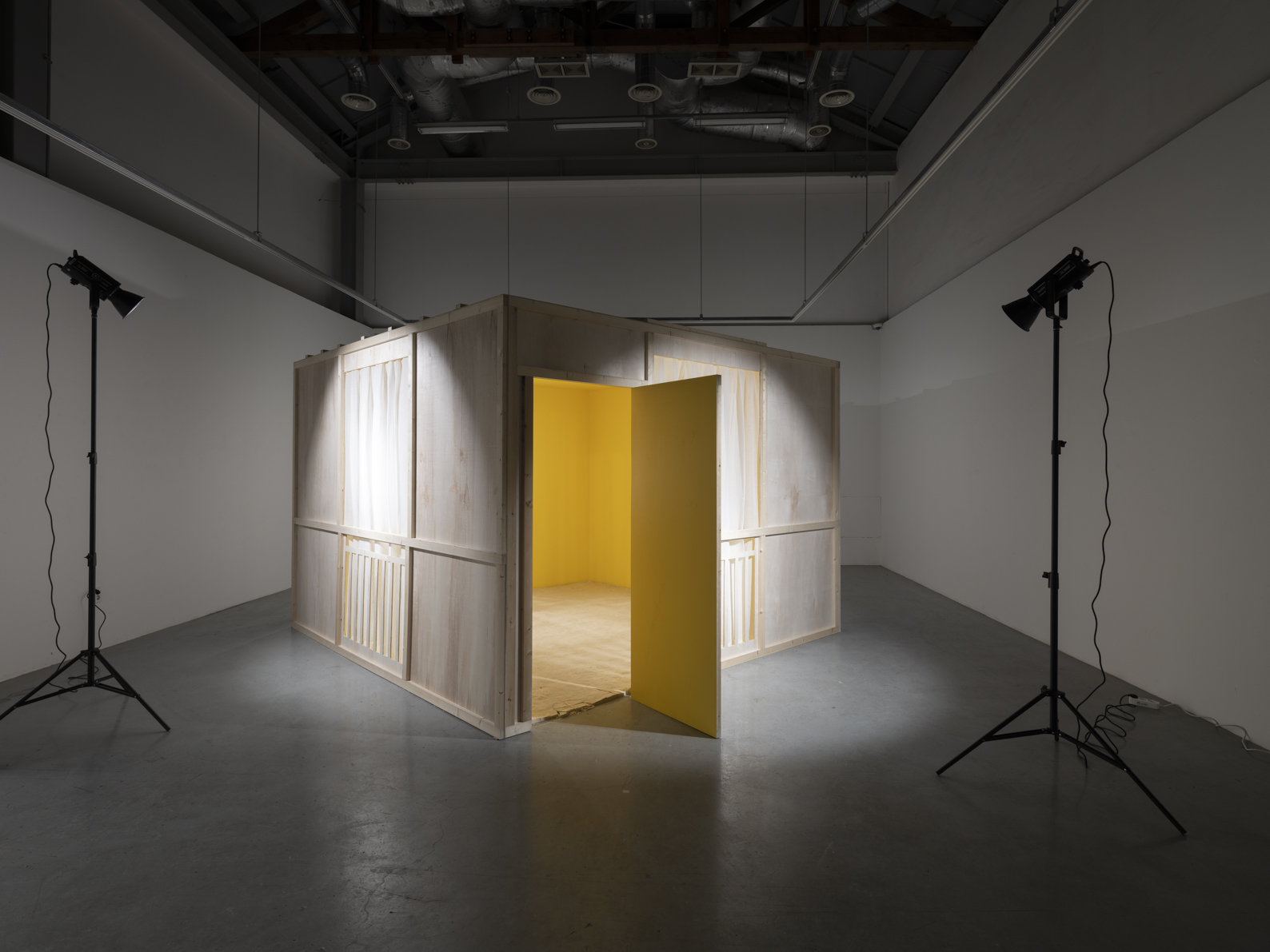
Ye-eun Min, Cannot Be Conveyed in Words, 2021, Plywood, timber, paint, curtains, clay, hinges, lighting, Dimensions variable (360x360x240cm) © Ye-eun Min

Furthermore, in her 2021 solo exhibition 《Cannot Be Conveyed in Words》 at Incheon Art Platform, Min presented unreal images created through tangible materials, proposing an experience situated between the virtual and the real.
 
Within the exhibition space, elements such as illuminated lights, curtained windows, and shadows cast upon clay spread across the floor evoked scenes encountered somewhere before and objects that appeared familiar, yet they existed together as fragments that were difficult to connect into a single narrative, creating an unfamiliar landscape.
 
Through easily recognizable elements transformed into abstract images, the artist sought to reveal the space between imagination and reality. Upon entering the large structure occupying the exhibition space, viewers encountered light pouring through four windows. This light blurred the perception of a familiar environment and created an experience of a moment in which time seemed to come to a standstill.


Ye-eun Min, Cannot Be Conveyed in Words, 2021, Plywood, timber, paint, curtains, clay, hinges, lighting, Dimensions variable (360x360x240cm) © Ye-eun Min

However, the passage of time continues beyond the exhibition space. Through the way a single source of light transforms the atmosphere of a space and alters the perception of time, Min challenges the assumptions through which we understand reality, presenting a landscape that feels familiar yet cannot be logically explained.
 
Confronting the shadows extending in all directions within the exhibition space, viewers eventually step outside and encounter the physical world illuminated by artificial light. At that moment, however, the boundary between the virtual and the real is no longer clearly defined, for the scenes experienced inside the exhibition are also real experiences perceived directly through the body and the senses.
 
In this way, Min invites viewers to experience firsthand the point at which the virtual and the real converge and intersect, encouraging them to reconsider the ways in which we perceive and understand reality.


Ye-eun Min, Peillacasanstmartinsurousthanampipriacivrysurseinesene…, 2022, Mixed media, Dimensions variable © Ye-eun Min

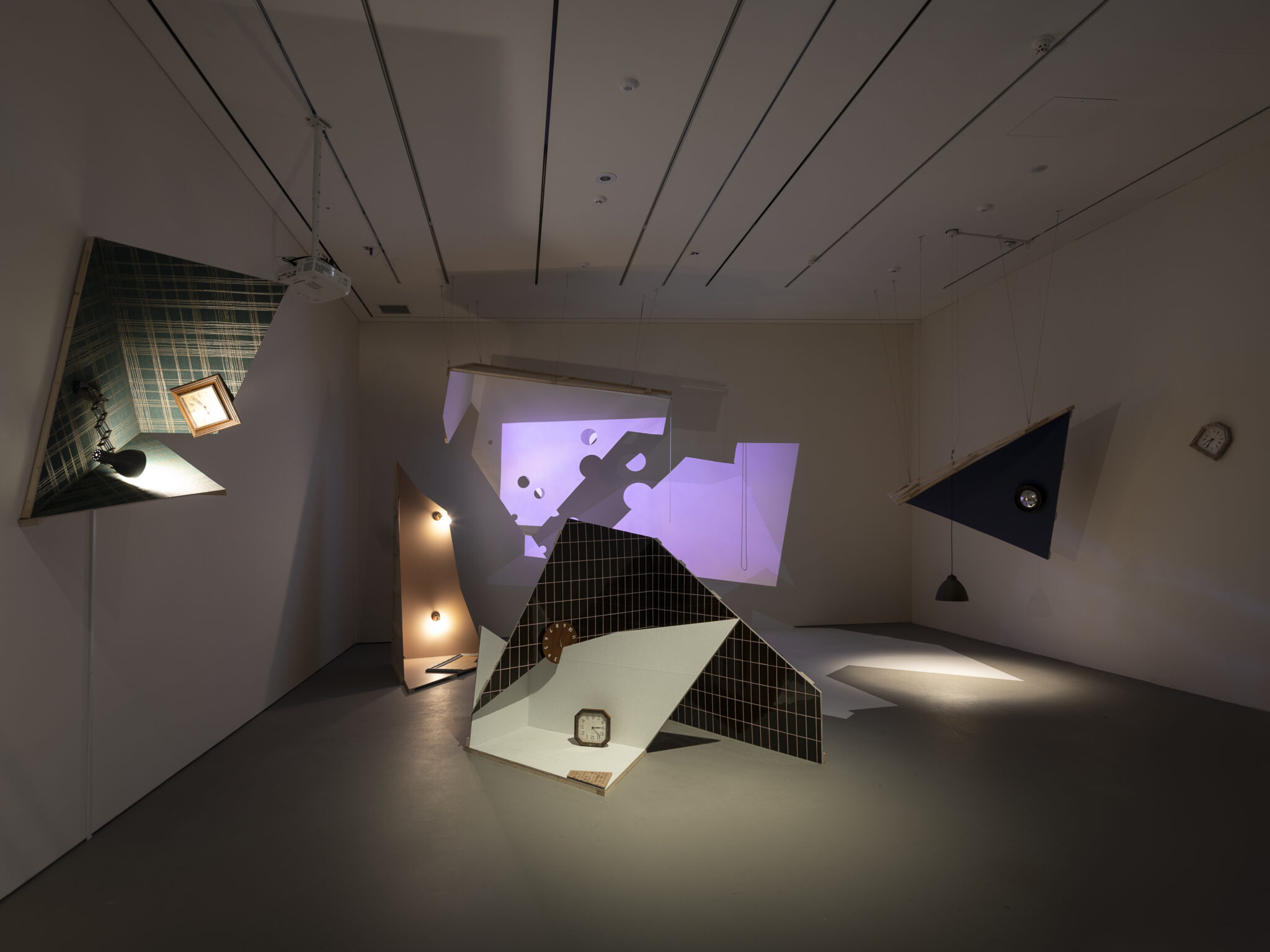
Continuing this exploration, Peillacasanstmartinsurousthanampipriacivrysurseinesene… (2022) dismantles and fragments the form of the home, creating a space without established rules by rearranging objects collected from different locations within a dispersed spatial structure. Through this process, the work constructs a virtual space that exists within physical reality.
 
By redefining and reconfiguring the functions of objects gathered from different times and places, multiple timelines intersect, encounter, and collide with one another.


Ye-eun Min, Peillacasanstmartinsurousthanampipriacivrysurseinesene… (detail), 2022, Mixed media, Dimensions variable © Ye-eun Min

The objects that compose each space are based on the unique rotational principles of the planets in the solar system. Clocks and videos that move faster, slower, or even in reverse according to planetary rotation speeds, lights rotating in place, clocks displaying only their focal points, and frames positioned at distorted angles all operate according to their own internal logic.
 
They approach the realm of reality rather than fiction, as they function through systems that, although unfamiliar, are grounded in certain rules.
 
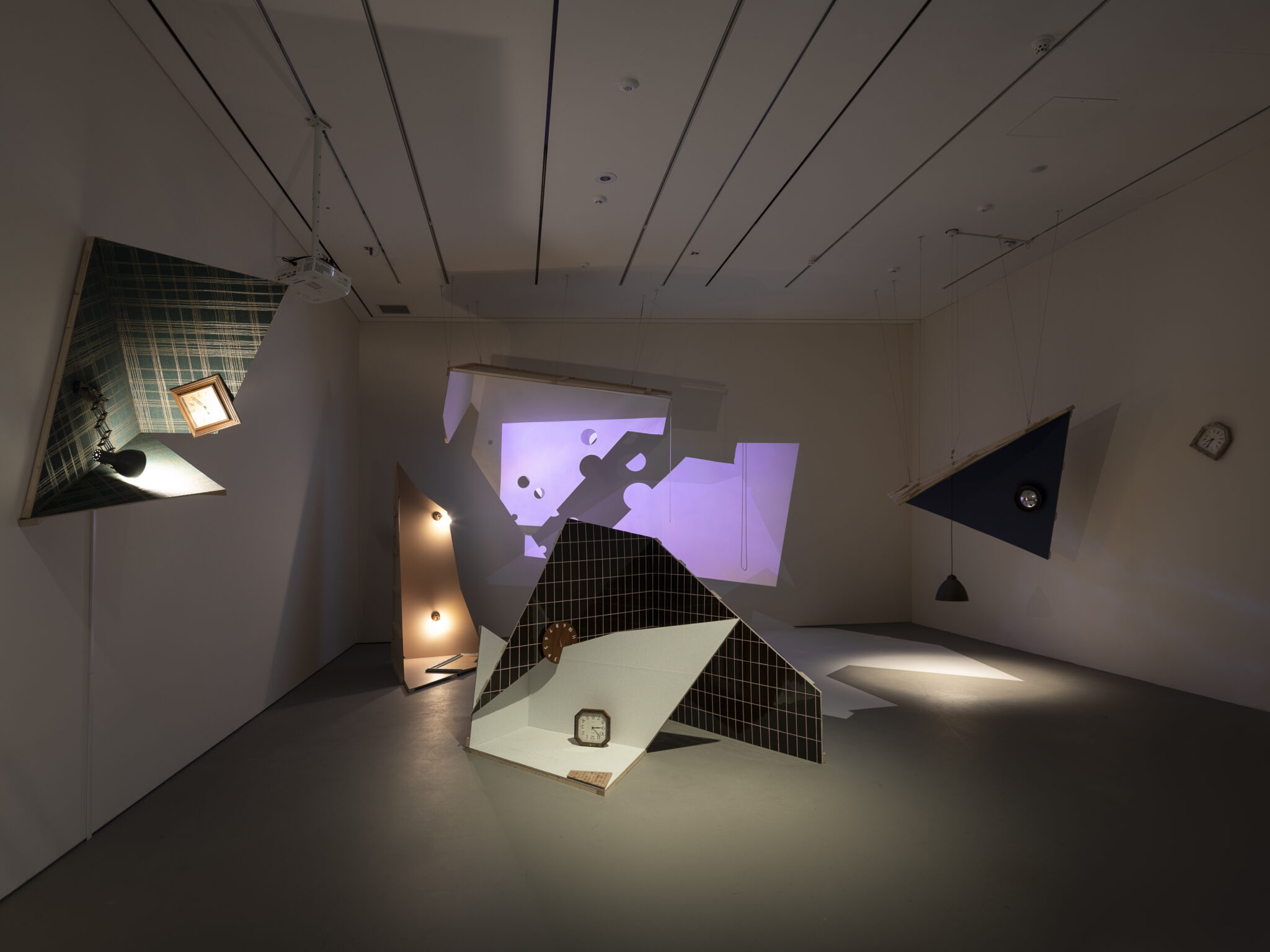
Geometric forms and colors are painted across the floor and walls surrounding the work. These shapes follow the shadows cast by the corners of the structure from various angles and distances. Each corner exists only through the walls and ceiling. Without a floor, the space becomes one of endless falling—a suspended environment in which weight is no longer perceived.


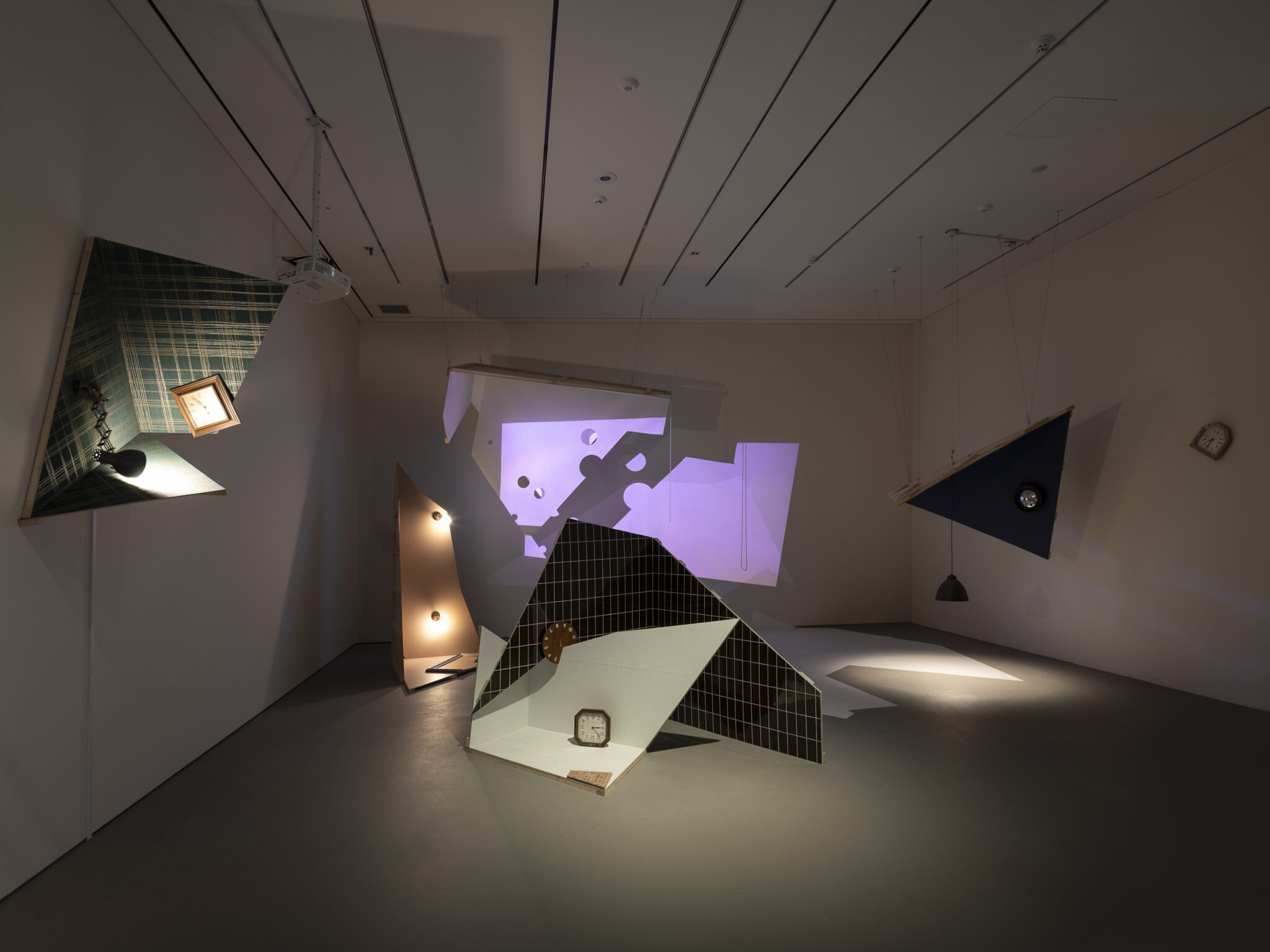
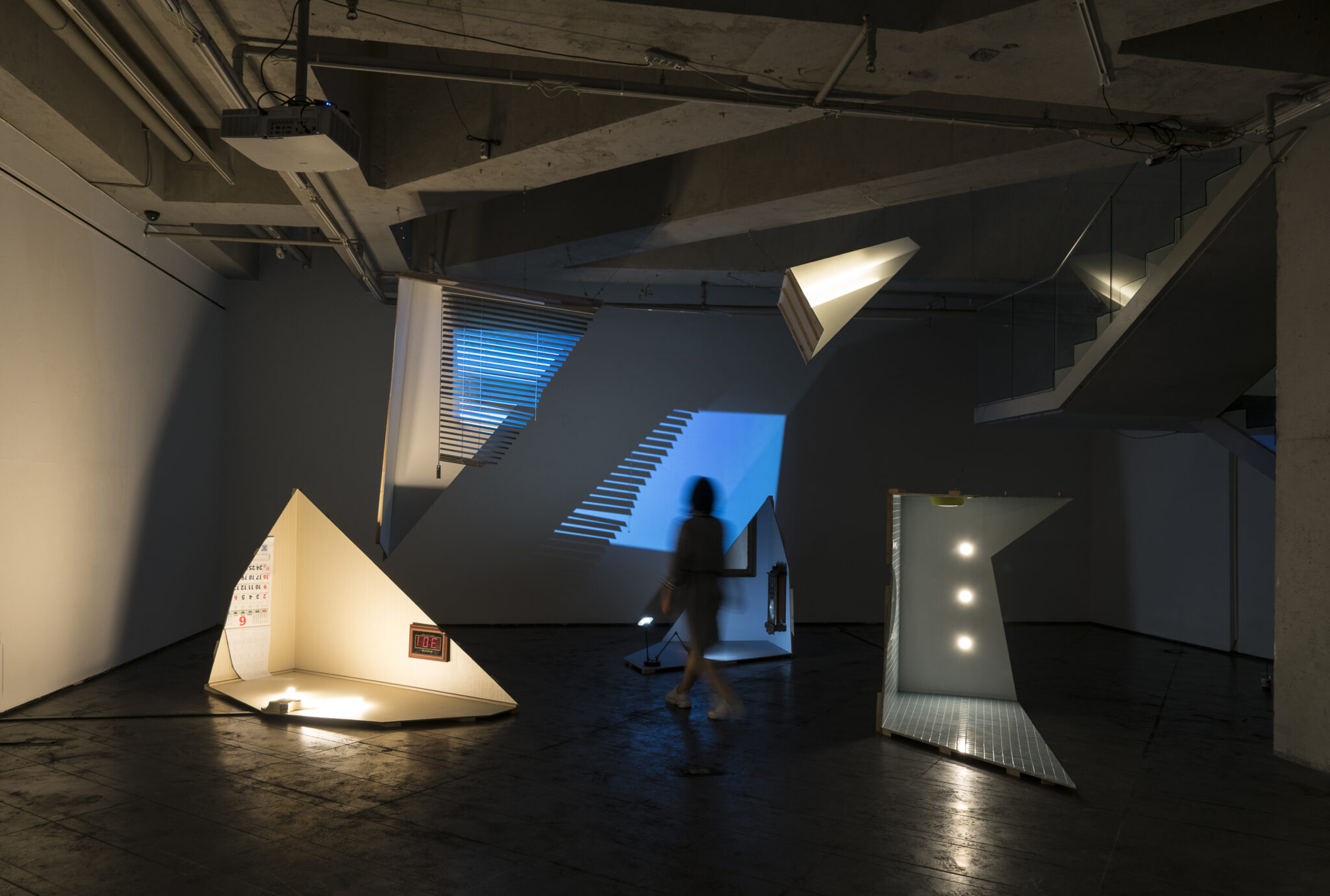
Ye-eun Min, When Memories Assume Particular Forms, 2024, Mixed media, Dimensions variable © Ye-eun Min

In her later works, Min reconfigures her existing works through processes of dismantling and recombination, proposing new ways of thinking about the linear timeline of past, present, and future. When Memories Assume Particular Forms (2024), for instance, reconstructs fragments of her earlier work Lavihamahamahyunchuchuhappyj33atomausepponssugizetteblackbyungddoungkkeong…, visualizing memories that remain invisible.
 
The work consists of thirteen corners in total: five from the original piece and eight newly created ones. While the new corners share the same structural design as the existing forms, they undergo repeated processes of cutting, assembling, separation, and reconstruction.
 
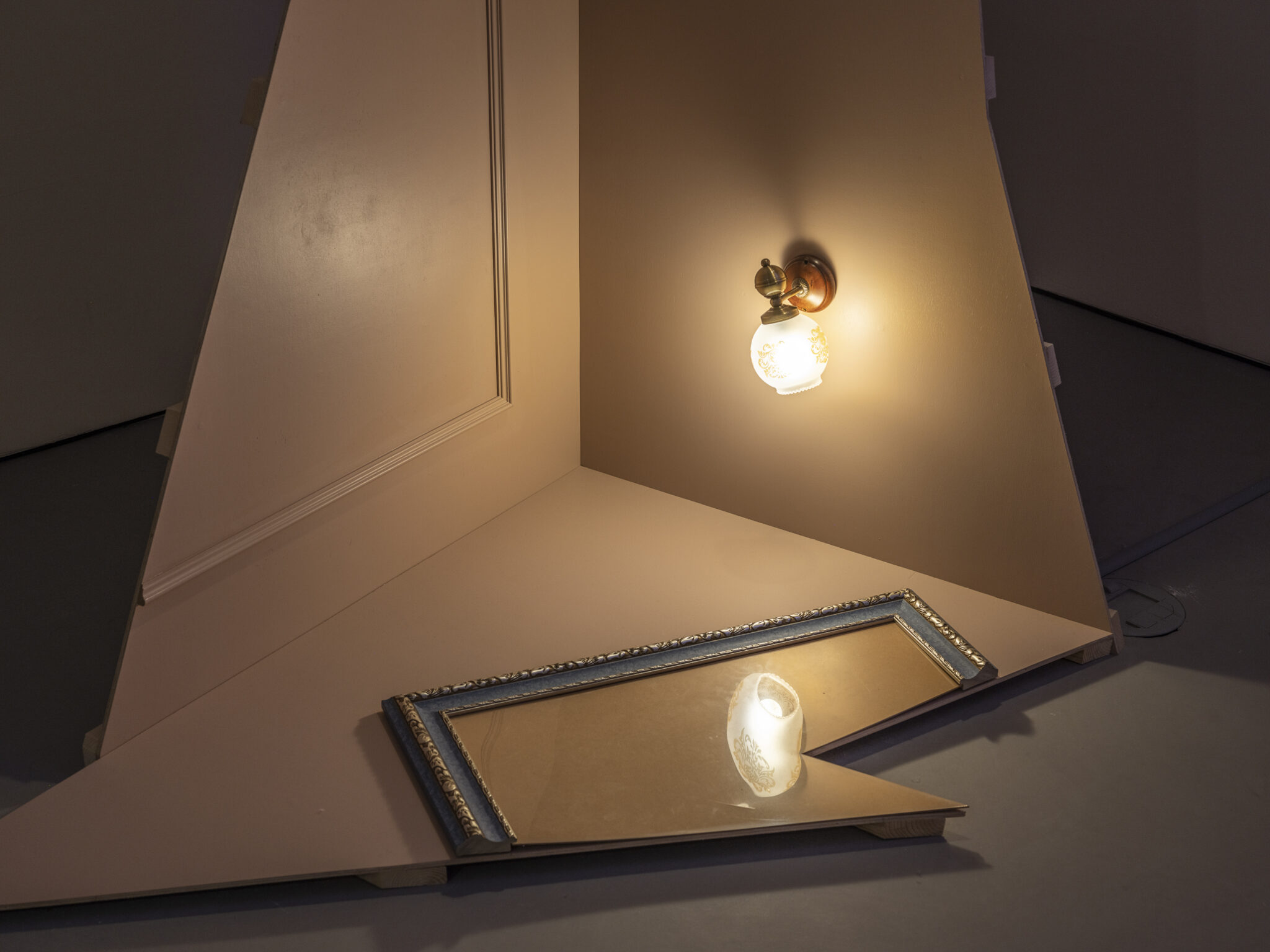
The artist reinterprets memory through the generative processes produced by repetition and the resulting omissions, errors, absences, and transformations. Within the newly created corners, she places objects collected from various people, including lights, clocks, mirrors, wallpaper, tiles, and an old intercom, allowing material fragments of individual experiences to form new configurations.


Ye-eun Min, When Memories Assume Particular Forms (detail), 2024, Mixed media, Dimensions variable © Ye-eun Min

Objects, each possessing its own individuality, accumulate unique traces through their users, environments, and various other factors. These objects simultaneously disrupt the spatial categorization imposed by the corner-based structures while retaining a universality that allows them to be imagined and remembered as different places or things within certain boundaries.
 
Our memories are never preserved in a complete and fixed form. They are continuously overwritten, erased, and transformed through processes of omission, error, and absence. Some memories gradually fade away, while others are recreated by merging with new experiences.
 
This mechanism of memory becomes embodied and spatialized in Min’s works, where fragmented objects are reconstructed through the memories they hold.


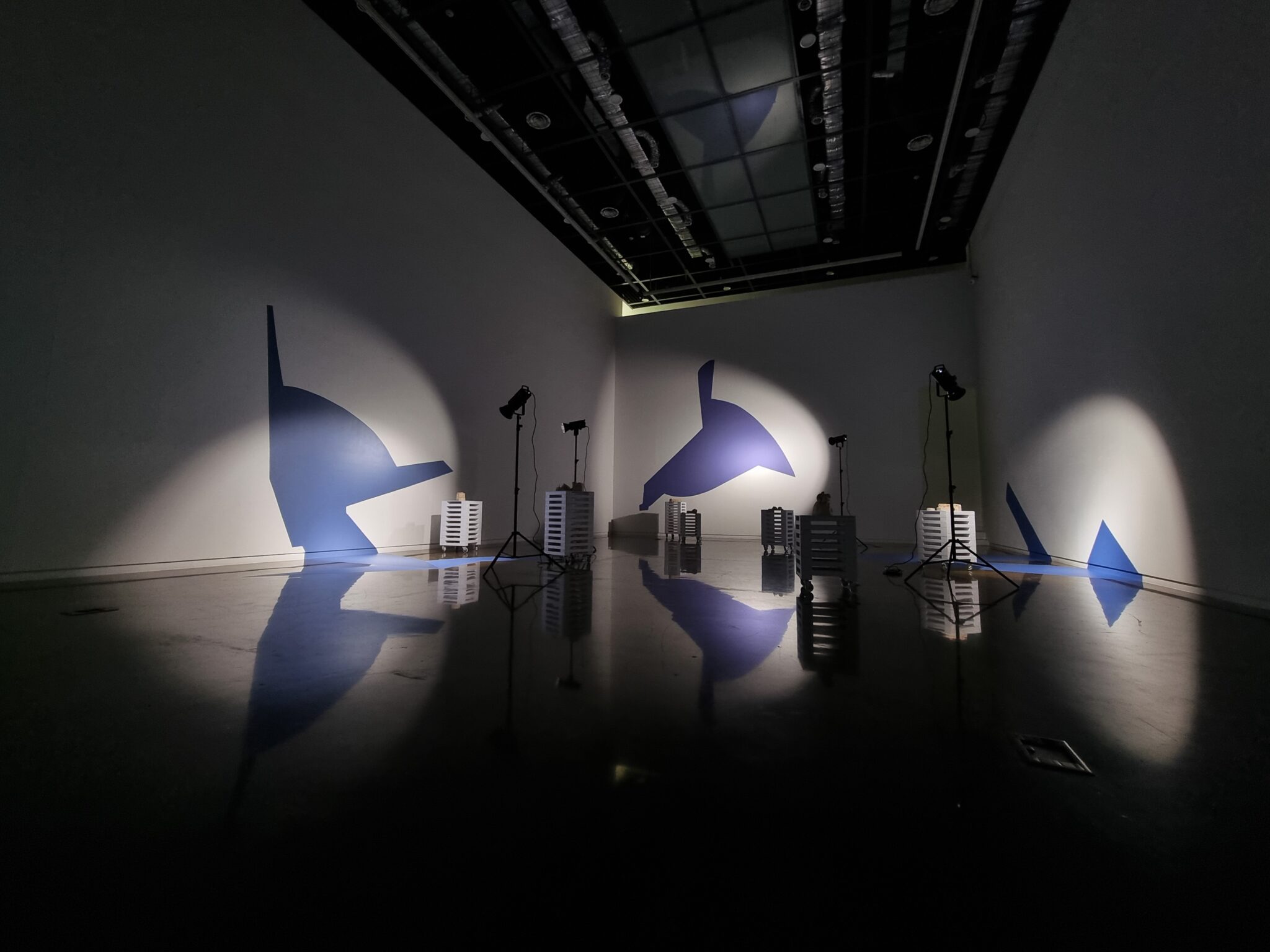
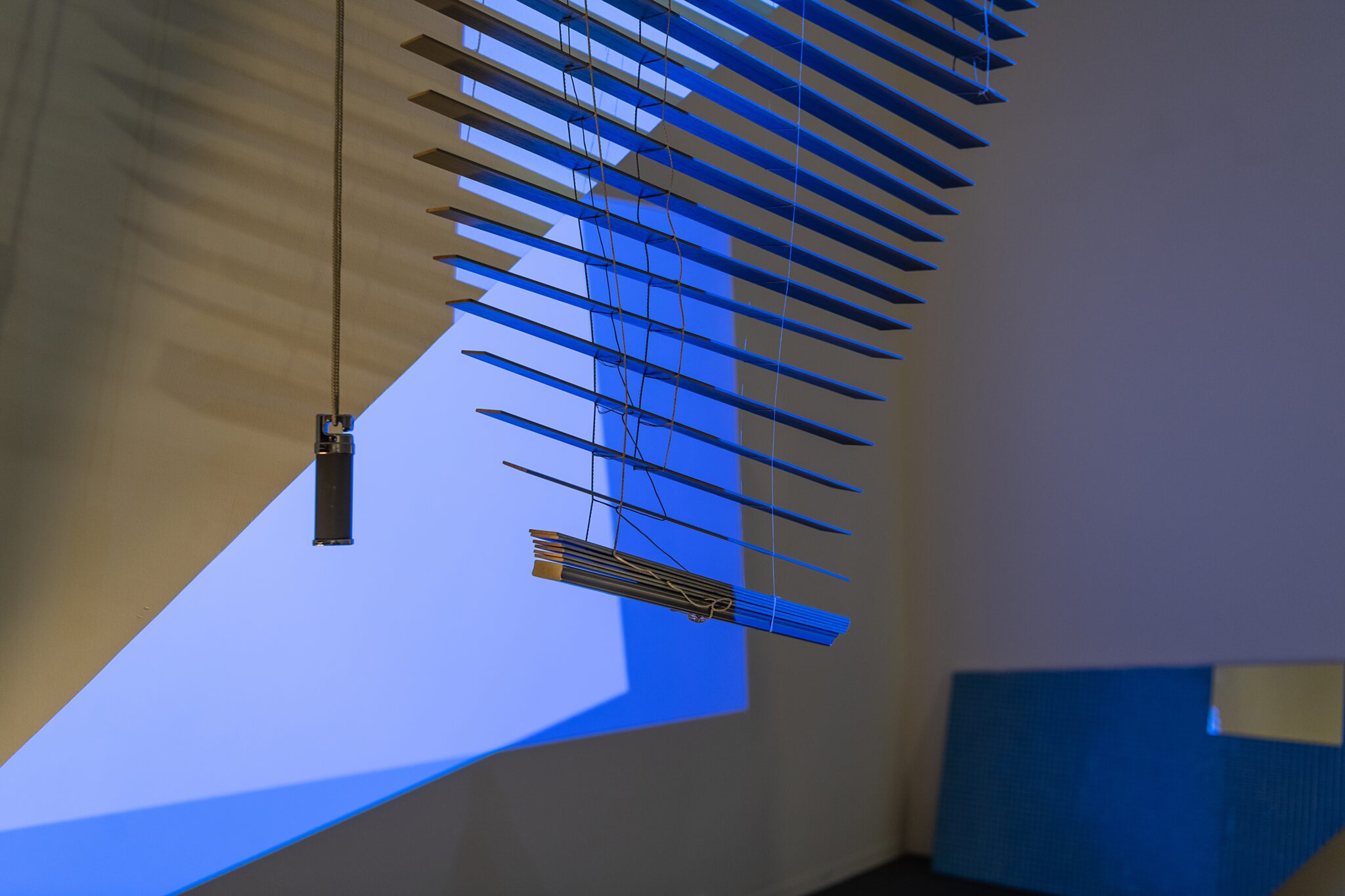
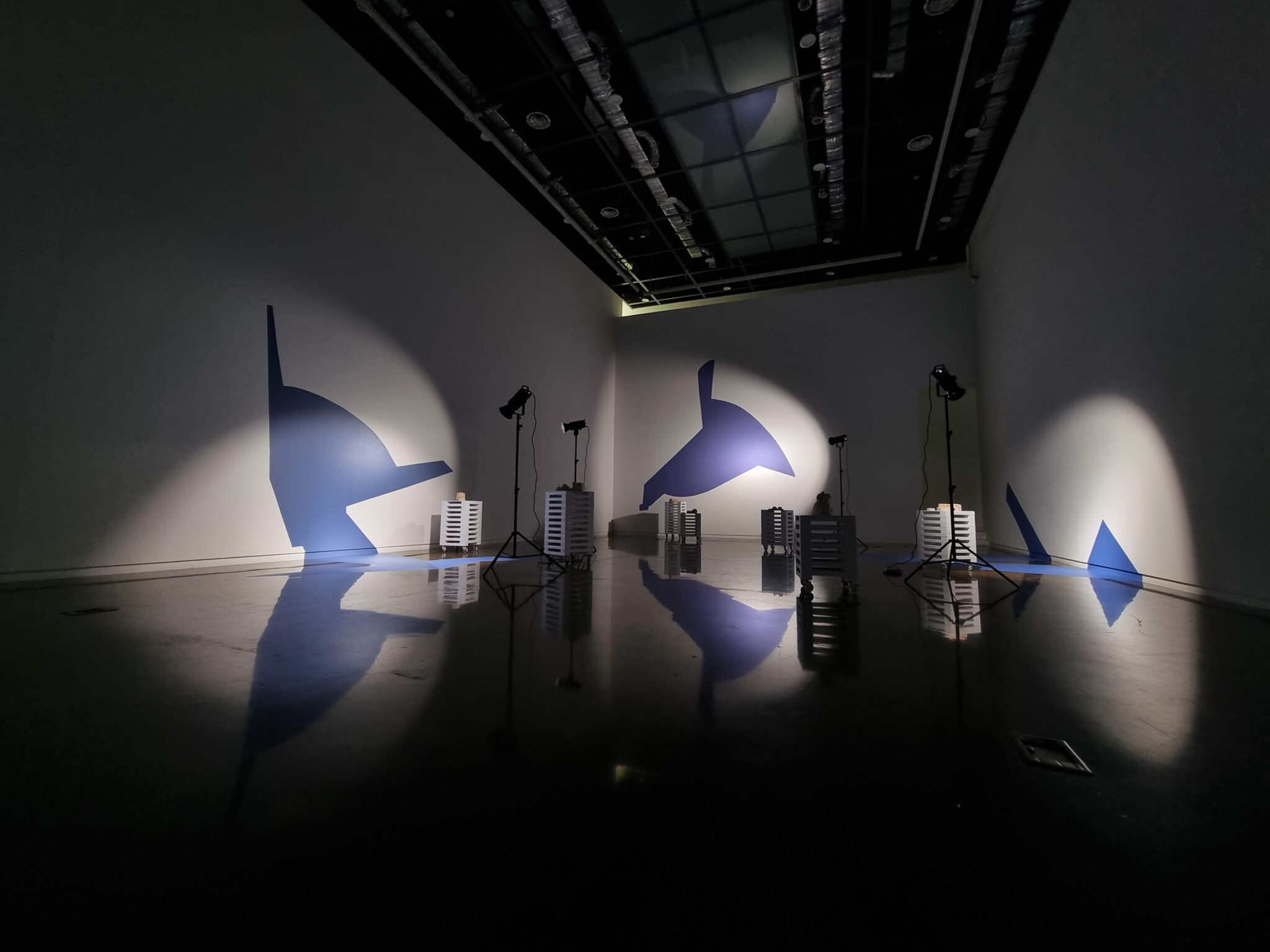
Ye-eun Min, Temporary States, 2024, Part of Hidden Images (20170, part of Cannot Be Conveyed in Words (2021), part of an untitled work, paint, Dimensions variable © Ye-eun Min

Presented in the same year, Temporary States (2024) focuses on the reality in which different temporalities coexist depending on place and circumstance. Even while living in the same era, what is experienced as part of the present in one region may be perceived elsewhere as a remnant of the past or a possibility of the future.
 
Rather than a single universal timeline, the artist reveals overlapping layers of time, suggesting that we each inhabit our own distinct “present.”
 
The work is composed of a newly reconstructed installation incorporating elements from Hidden Images (2017), Cannot Be Conveyed in Words (2020), and parts of an unpublished work. Elements from the existing works acquire new functions and meanings within a transformed context.


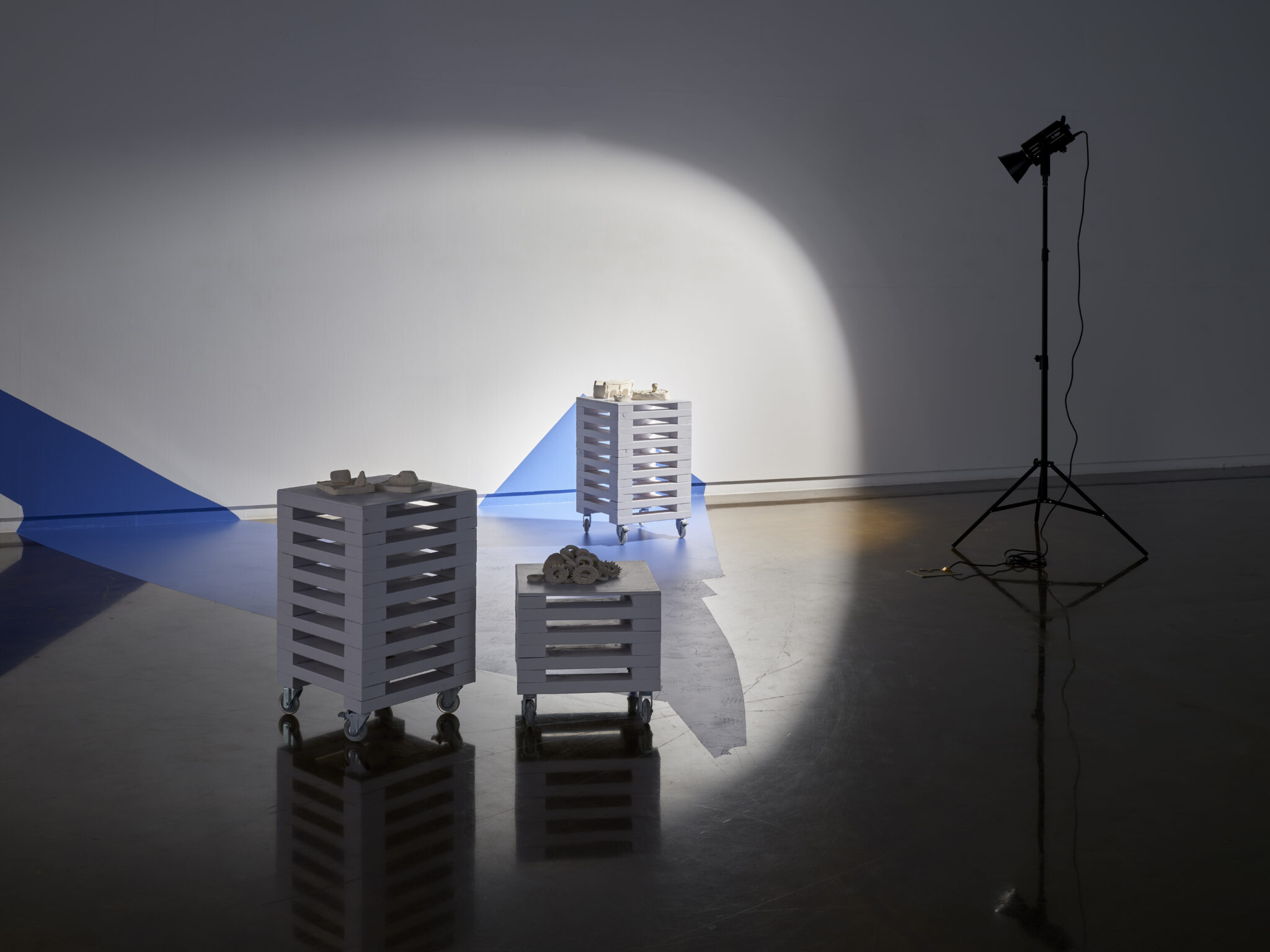
Ye-eun Min, Temporary States, 2024, Part of Hidden Images (20170, part of Cannot Be Conveyed in Words (2021), part of an untitled work, paint, Dimensions variable © Ye-eun Min

The wheeled object becomes a pedestal for displaying sculptures and moves throughout the exhibition space according to the movement of the audience, while the clay, which previously recorded traces of visitors’ interactions, transforms into a sculpture that responds to its surroundings and documents events. In addition, fragments from an unpublished work cast shadows across the walls and floor, evoking specific places and moments in time.
 
The work is based on events and experiences collected through news reports, newspapers, and conversations with local people during the artist’s stay in France in July 2024.
 
Rather than a single light source illuminating the work, four independent lights create distinct spaces within the exhibition. Viewers illuminate the work themselves using their mobile phone flashlights or flashlights provided in the exhibition space. Through this process, the audience actively participates in the formation of space, time, and memory.


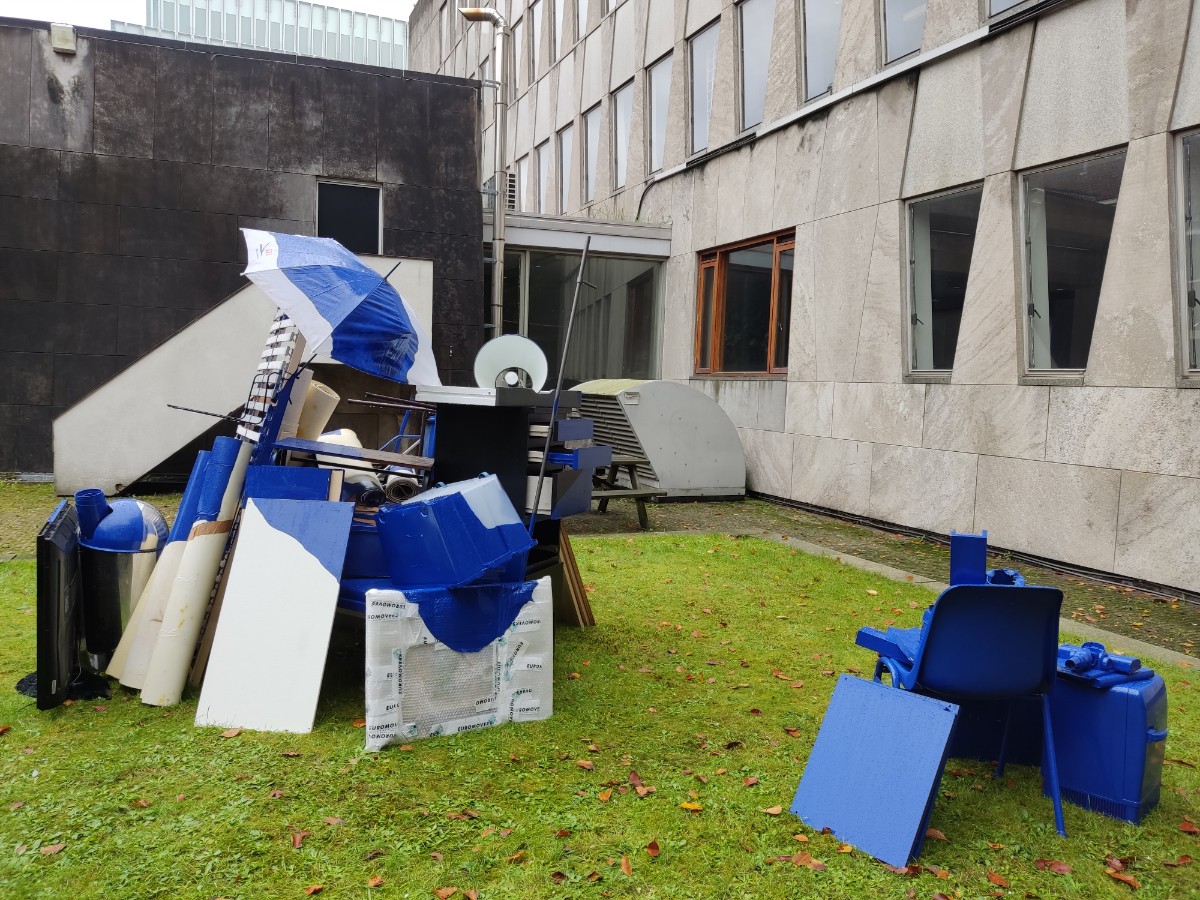
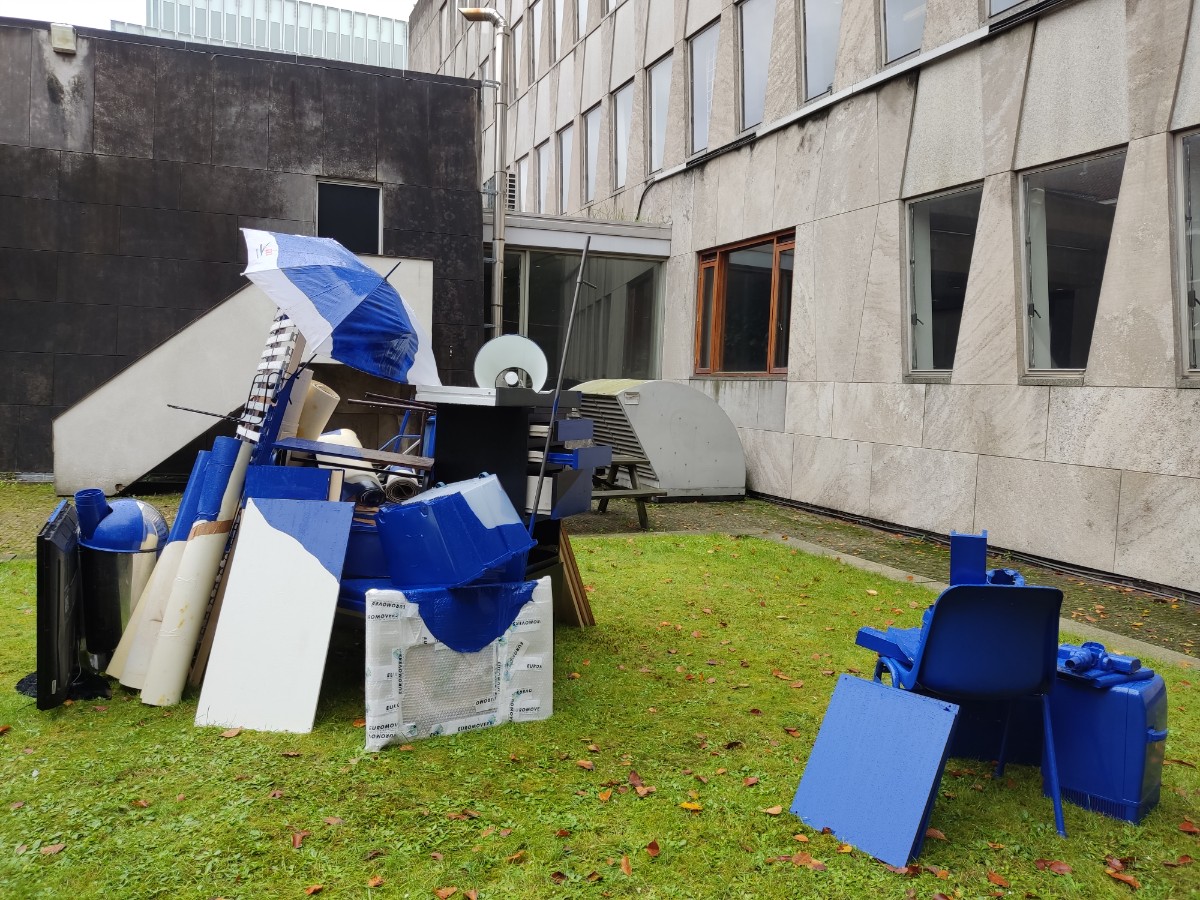
Ye-eun Min, Connecting the Unconnected, 2023, Paint, objects collected from the street, Dimensions variable © Ye-eun Min

Through her practice, Min has explored how individual entities—from space, time, language, and relationships to materials and matter—interact with and influence one another, forming equal relationships through multiple centers rather than a hierarchical order.
 
Using diverse media and materials, she constructs temporary states of harmony and provisional balances that appear unfamiliar yet operate according to their own internal rules. Her works, in which individual elements continuously interact, affect, and respond to one another, reflect the conditions of contemporary society and the lives of individuals today.

"People imagine things based on their own experiences and knowledge, and these imaginations inevitably differ from one another. They may not be supported by scientific evidence or require logical explanations, but perhaps this is, in fact, the condition in which we exist." (Ye-eun Min, Artist’s Note)


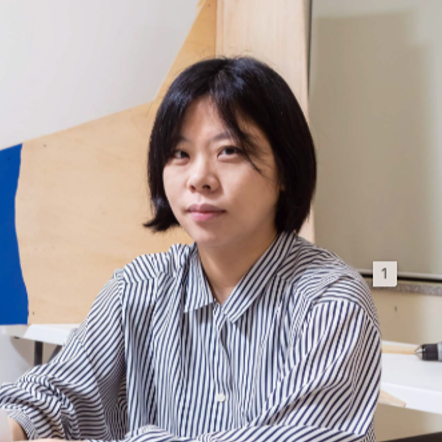
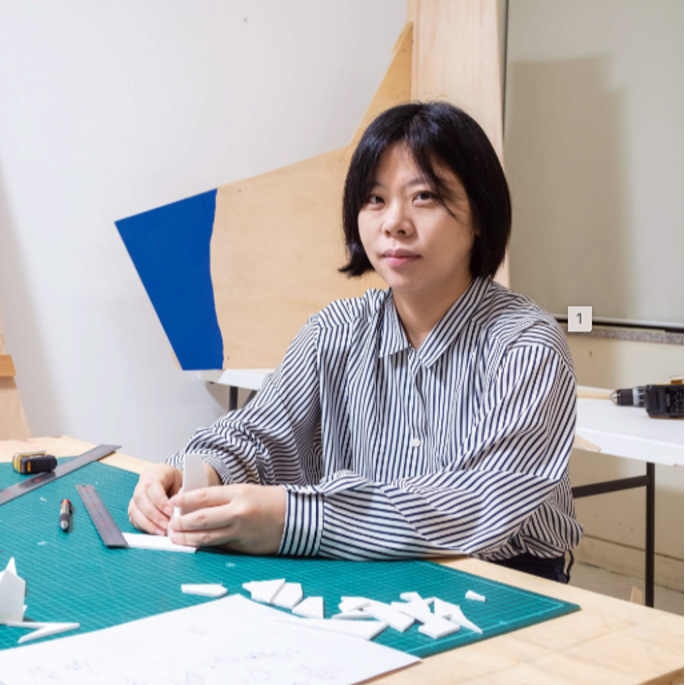
Artist Ye-eun Min © Incheon Art Platform

Ye-eun Min received her bachelor’s and master’s degrees from the École Supérieure d’Art de Clermont Métropole in France. Her recent solo exhibitions include 《The Common Illusion: No Change》 (ten to the n, Seoul, 2025), 《The Fairly Balanced Place》 (Cheongju Art Studio, Cheongju, 2024), 《A Mass That Won’t Mix》 (Dorossy Salon, Seoul, 2023), and 《Cannot Be Conveyed in Words》 (Incheon Art Platform, Incheon, 2021).
 
She has also participated in numerous group exhibitions, including 《Still-we are connected》 (Wumin Art Center, Cheongju, 2025), 《SYMBIOTIC PLANET》 (Seoul Art Space Geumcheon, Seoul, 2025), 《Elsie & Marshall: Feedback #7》 (Alternative Space LOOP, Seoul, 2024), 《Sensorimotor Stadium》 (Suwon Art Space Gwanggyo, Suwon, 2024), 《HEXED, VEXED and SEXED》 (West Den Haag, The Hague, Netherlands, 2023), and 《Refugia》 (Alternative Space LOOP, Seoul, 2021).
 
Ye-eun Min has participated in various residency programs, including Seoul Art Space Geumcheon (2025), Cheongju Art Studio (2024), Kerguehennec Art Center in France (2023), and Incheon Art Platform (2020). She was selected as one of the Young Artists of the Year by the Cheonan Foundation for Arts and Culture in 2020 and as a Notable Artist by the Korean Cultural Center in France in 2014/2015.

References