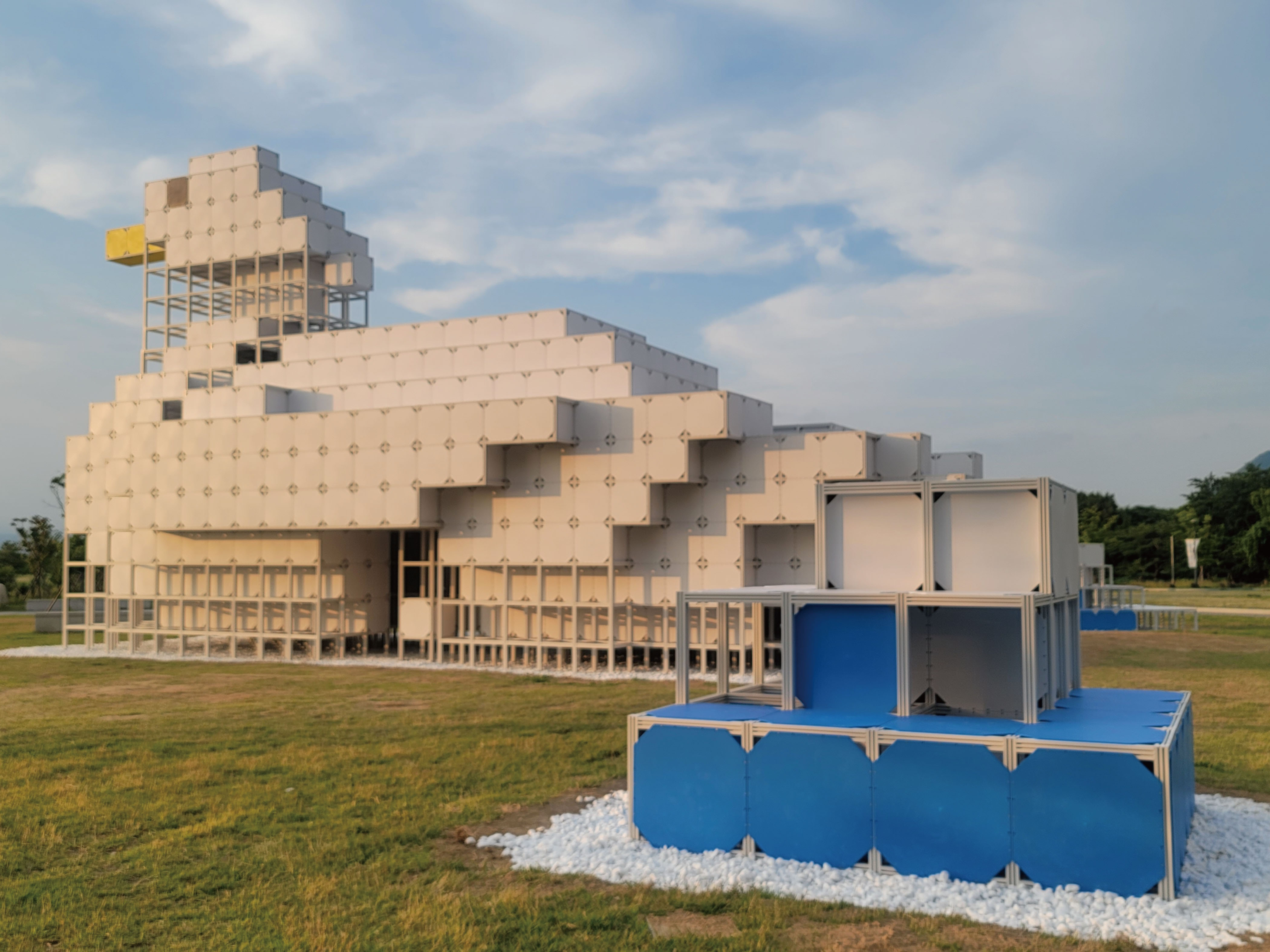
Eve Kwak (b. 1983) has long been interested in the built nature of everyday life and the physical environments we inhabit. Her practice focuses on the permanence of architectural forms and the activities that unfold within them.
 
Through sketching the structures she observes, she explores the mutable nature of human actions using media that oscillate between two and three dimensions—including painting, sculpture, books, and printed matter—creating works that function simultaneously as flat surfaces and sculptural forms.


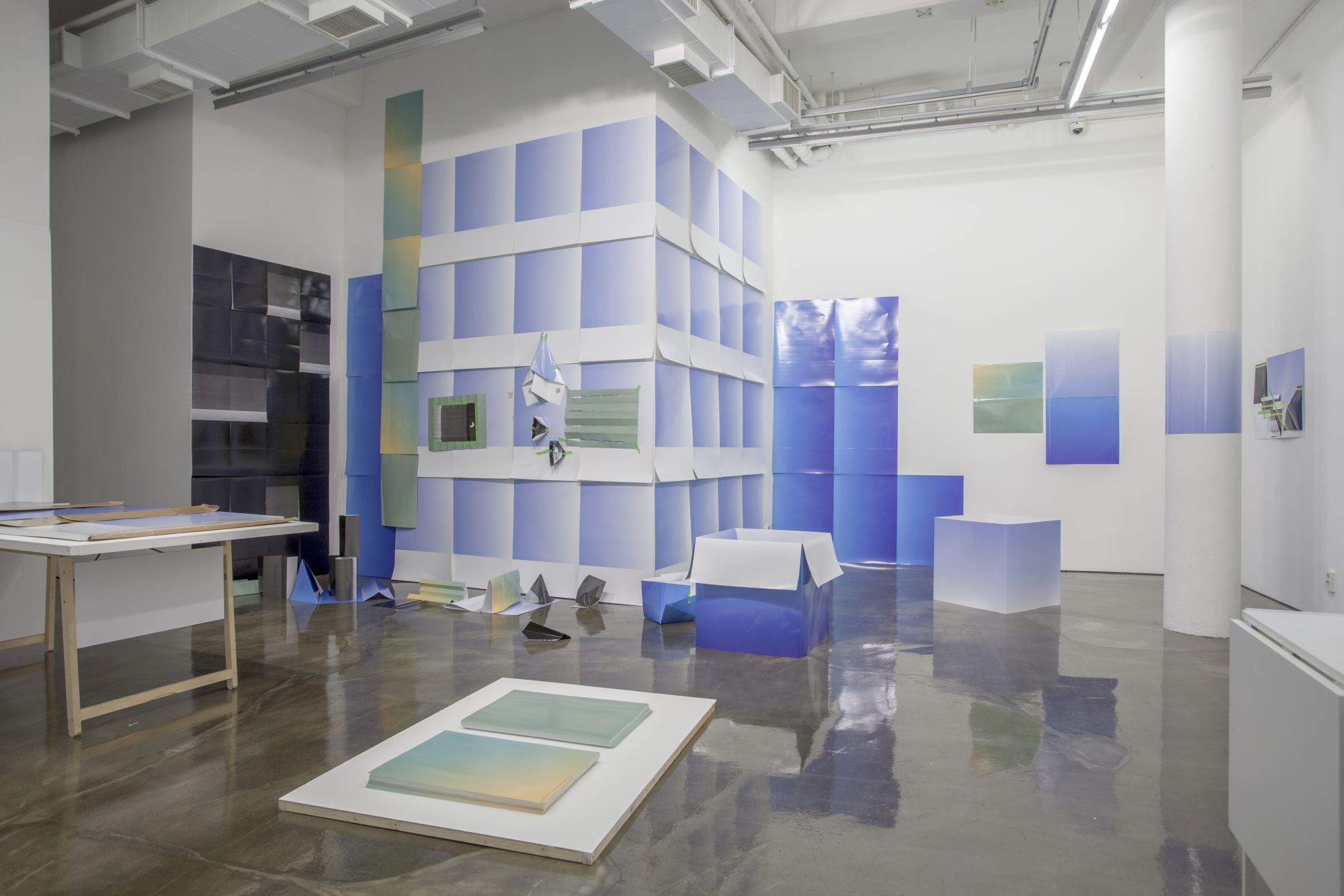
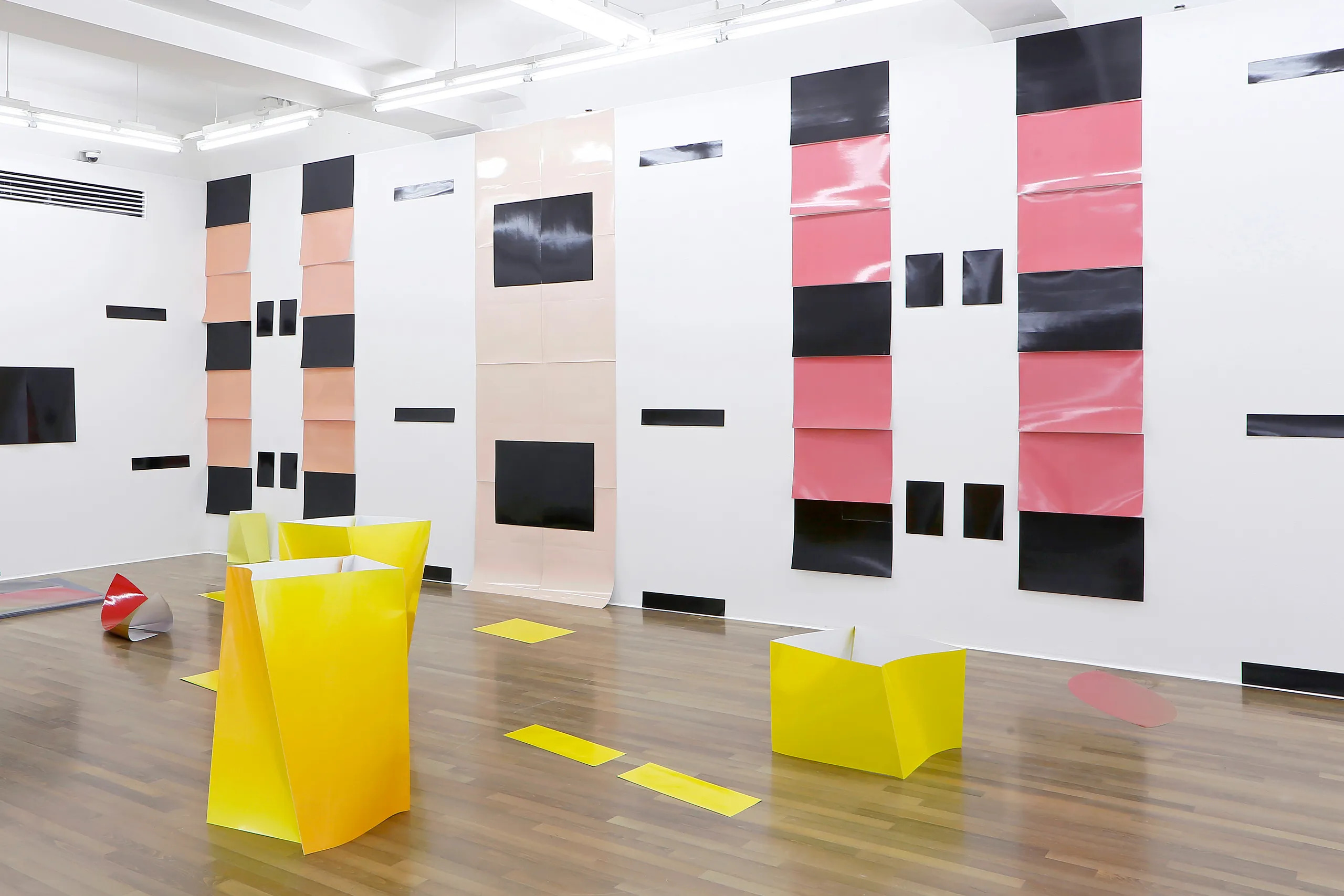
Eve Kwak, Face to Face Construction-Architecture Project: Part, 2017, Digital painting, offset print, frame, 11ea, Dimensions variable © Eve Kwak

Eve Kwak has long explored the structures and rhythms of collective housing, particularly Korean apartment complexes, and contemporary urban architecture. Her practice investigates the accumulation of time within these living environments, the production and reproduction of images, and the ways in which the human body is shaped within larger social and architectural systems.
 
Drawing on sensory impressions and observations gathered from everyday life, Kwak sketches the frames and structures of space before producing two-dimensional works—including paintings, sculptures, books, and printed matter—which are subsequently reassembled within the exhibition space to form an improvised spatial grid.


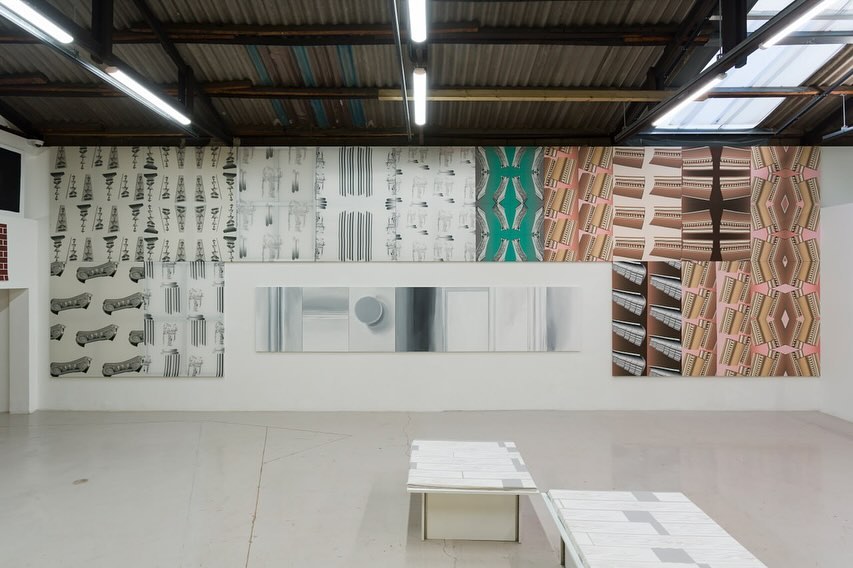
Eve Kwak, Face to Face2.3.4, 2015, Digital painting, offset print, 59.4x84.1(cm), 42x59.4(cm), 29.7x42(cm), total 7ea, Dimension variable © Eve Kwak

Through this process, Kwak investigates how two-dimensional images are transformed into three-dimensional spaces through specific conditions and movements, examining the ways in which two-dimensional images, ways of thinking, and material qualities become three-dimensional forms, materiality, phenomena, and environments.
 
By incorporating both physical and immaterial conditions—such as differences in materiality and time, distance and speed, and variations in scale—she constructs spaces where the virtual and the real intersect. Her work visualizes the structures of contemporary life, in which individuals exist as both unified and separated within shared systems.


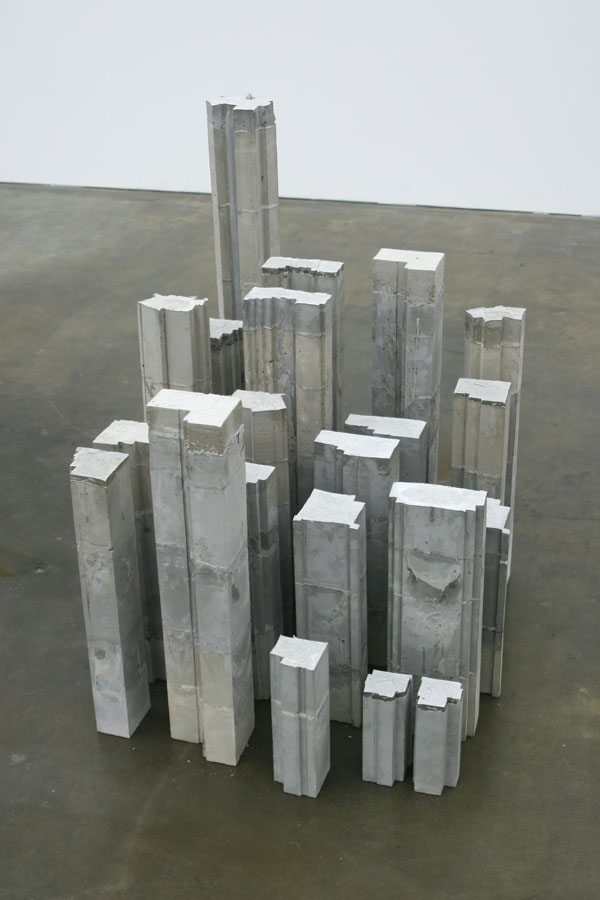
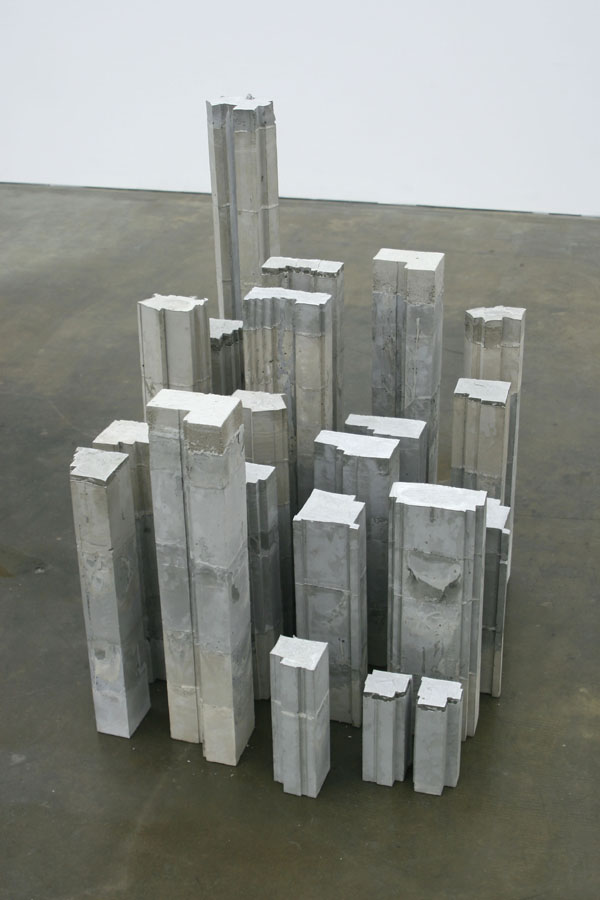
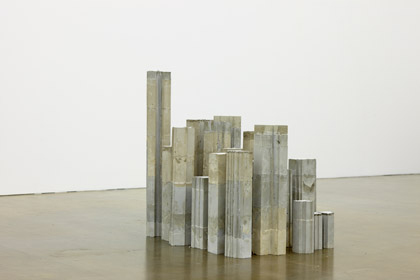
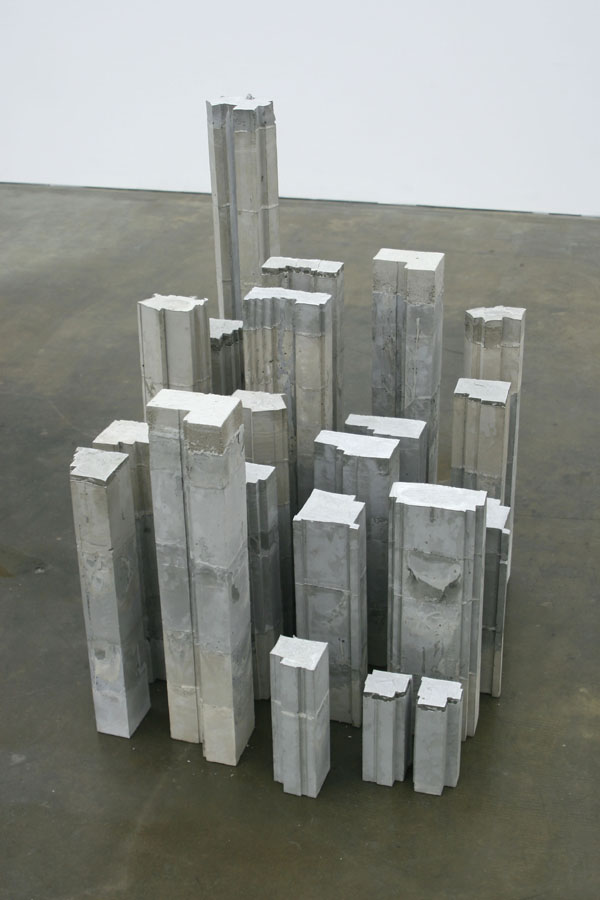
Eve Kwak, Mountain in the Back, River Up Front - Upright, 2010, Cement, Dimension variable © Eve Kwak

Among Eve Kwak’s representative bodies of work is the ‘Mountain in the Back, River Up Front’ series, initiated in 2009, in which apartment floor plans are transformed into three-dimensional cement sculptures and reconstructed as dioramas according to an arbitrary scale.
 
Divided into the subseries ‘Even if it Breaks,’ ‘Sustainment,’ and ‘Upright,’ the project originated from the artist's observation of an "excessive" scene in nature: despite many similar trees standing nearby, numerous birdhouses had been clustered onto a single tree.
 
From this image of excess in the natural environment, Kwak drew a parallel to the collective housing typology of apartment complexes in contemporary society. She adopted the floor plans of well-known apartment brands—symbols of aspirations rising alongside human desire—as the structural framework for her sculptures, reconfiguring them into three-dimensional forms.
 
The artist constructs each work by building a mold along the outer contour of an apartment floor plan and pouring cement into it. Through this process, the internal layout is omitted entirely, and only the external outline determines the final form.
 
By reversing the conventional logic of architecture, in which interior organization defines a building, Kwak's sculptures foreground the monumental silhouette of apartment blocks. While referencing existing residential structures, the works ultimately emphasize the psychological and symbolic presence of towering urban architecture.


Eve Kwak, Mountain in the Back, River Up Front - Upright, 2010, Cement, Dimension variable © Eve Kwak

Cement, the primary material of the series, is also employed in a way that subverts its conventional properties. Typically valued for its strength and durability when combined with other materials, cement is instead treated in Kwak's work as a fragile, delicate medium that is easily damaged.
 
Rather than attempting to control the material as it changes throughout the making process, Kwak embraces its unpredictable transformations and responds to them as the work develops. Fragments that break during production, for example, are carefully reattached, allowing the sculptures to retain their overall form while preserving traces of rupture.
 
Reflecting on this process, the artist explains: “Apartment buildings certainly represent densely concentrated populations through their height. But when an intact form breaks and is restored, it prompts me to think differently about that density. It seems to bring greater emphasis to the will and emotional states of the people within it.”


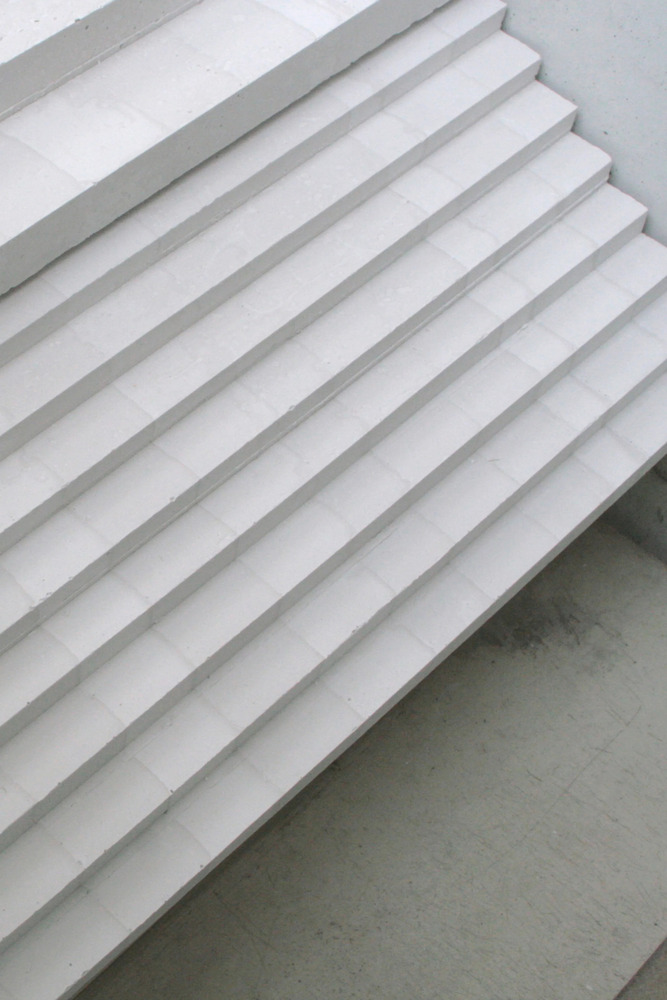
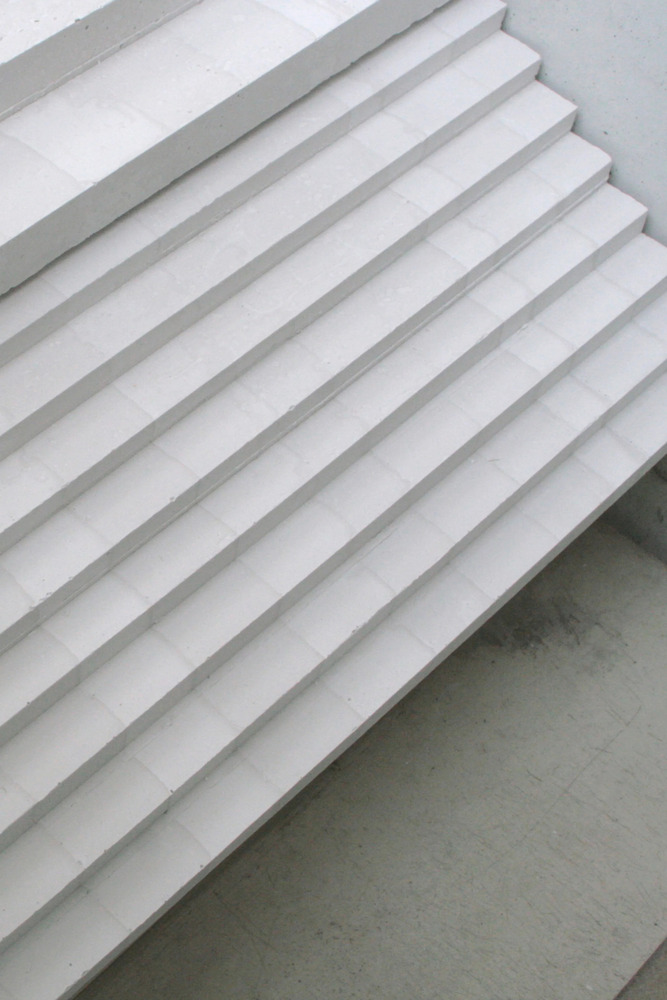
Eve Kwak, Step, 2015, Installation view of 《All flat things happen at the same time》 (Gallery Chosun, 2015) © Gallery Chosun

Furthermore, the 2015 solo exhibition 《All Flat Things Happen at the Same Time》 expanded Eve Kwak’s exploration of systems and environments through architecture as a spatial medium, presenting her perspective across three distinct locations.
 
At Gallery Chosun, the artist presented sculptural works that examined the forms and images of architectural spaces, as well as the ways in which they are consumed and perceived. Among them, Step (2015), installed on the staircase leading down to the gallery’s basement, was a sculptural intervention that altered the actual dimensions and height of a staircase, allowing visitors to physically step on and pass through the work.
 
The reduced scale of the steps transformed the structure into a steep incline, and through repeated use during the exhibition period, traces of wear accumulated on its surface, completing the sculpture through the movement of visitors. As they descended the narrow staircase, viewers were prompted to reconsider the spatial structures and bodily actions they had previously taken for granted.


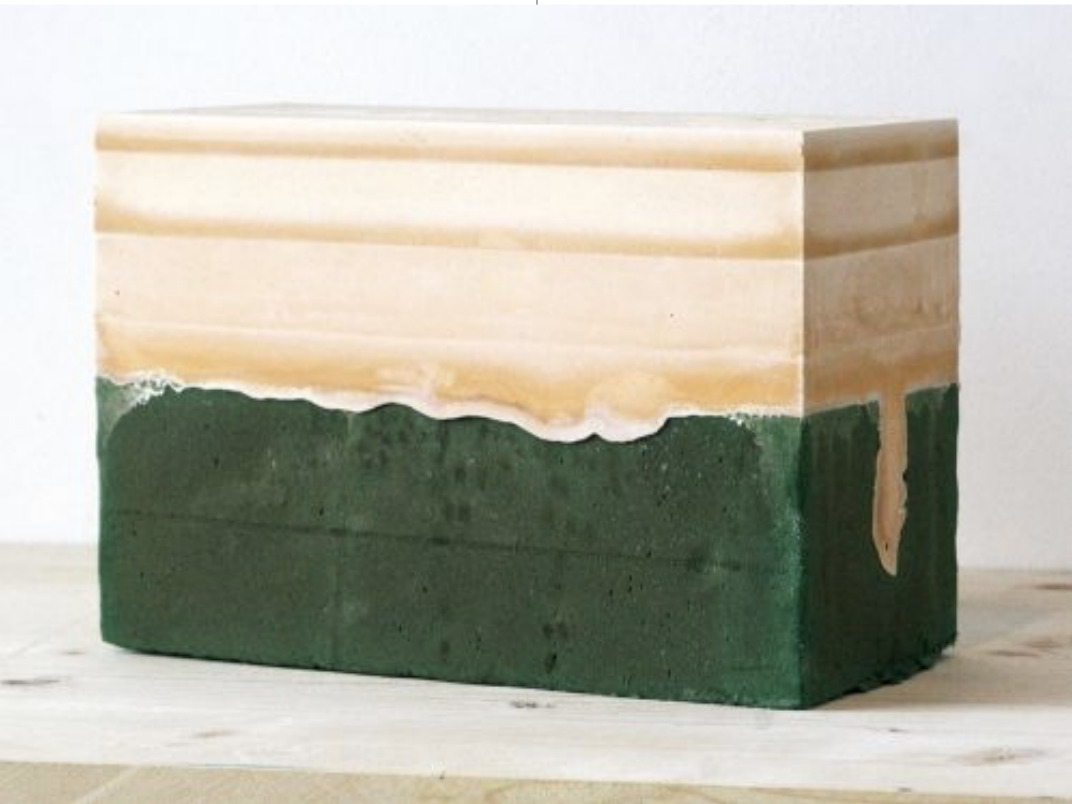
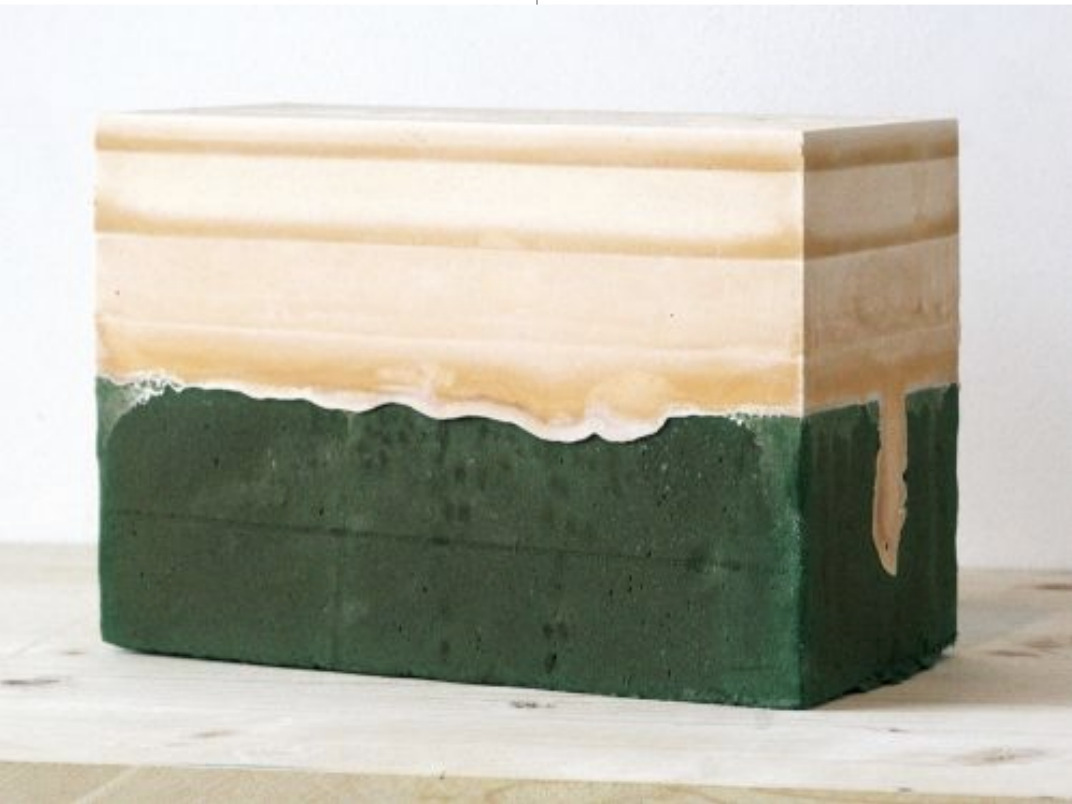
Eve Kwak, Oasis #3, 2010, Plaster, cement, floral foam, 11x23x16cm © Eve Kwak

Oasis #3 (2010), a sculpture created by pouring plaster of the same dimensions onto floral foam used for flower arrangements, is also completed through the intervention of the viewer’s actions. The work was produced after the artist observed, while staying at a regional residency and traveling between two locations, how urban structures and natural elements were arranged in repetitive patterns.
 
The original form consisted only of floral foam carved with a sculpting tool. However, the tactile quality of the material sparked curiosity among visitors, who pressed and touched its surface, leaving traces behind. Rather than restoring the work to its original state, the artist poured plaster over the altered surface to preserve these transformations.
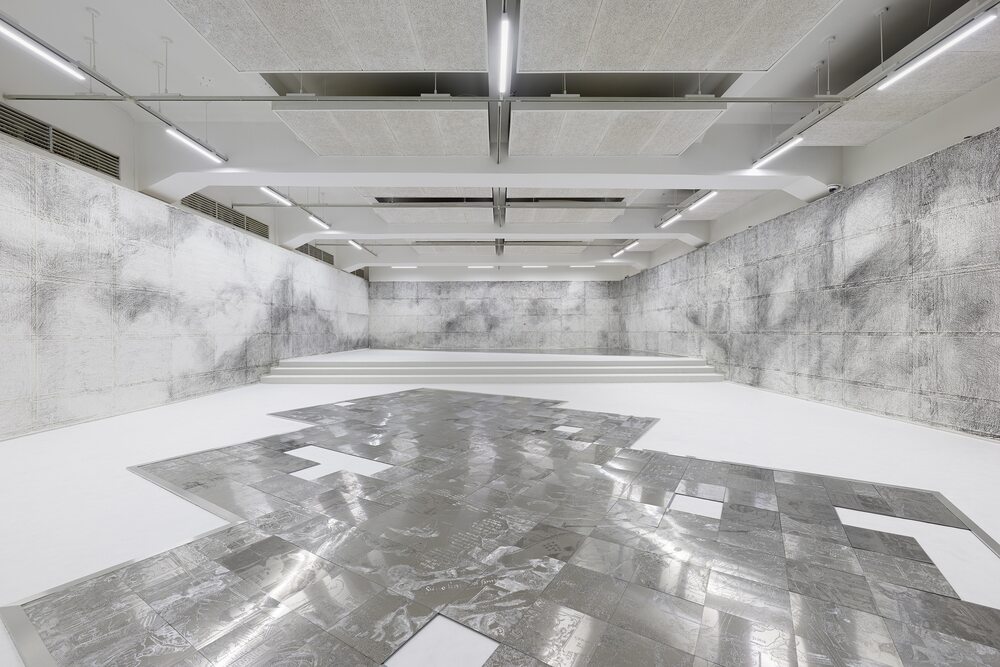
 
For Kwak, such interventions were a natural part of the work, reflecting the way human actions inevitably become embedded between constructed urban environments and nature.


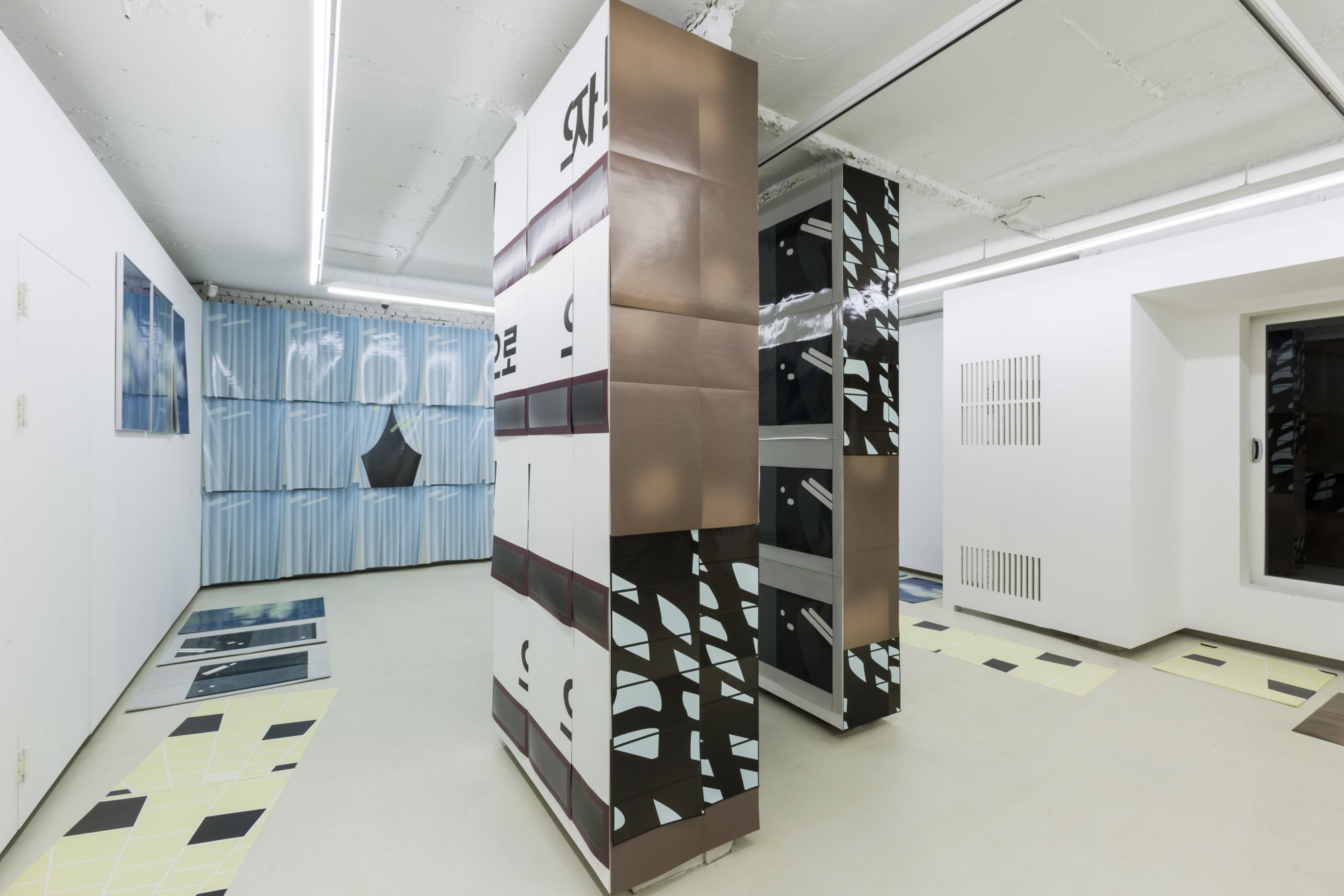
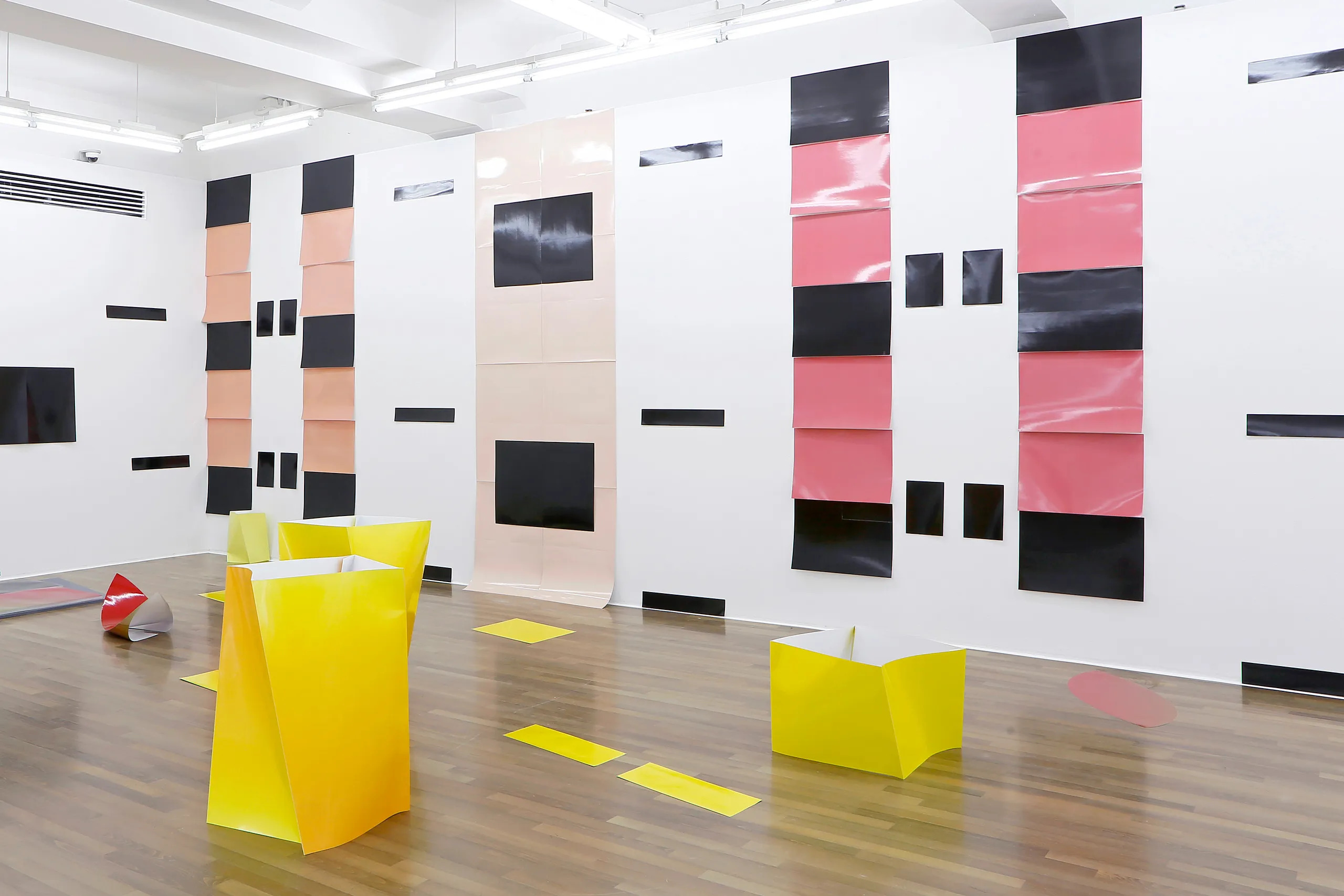
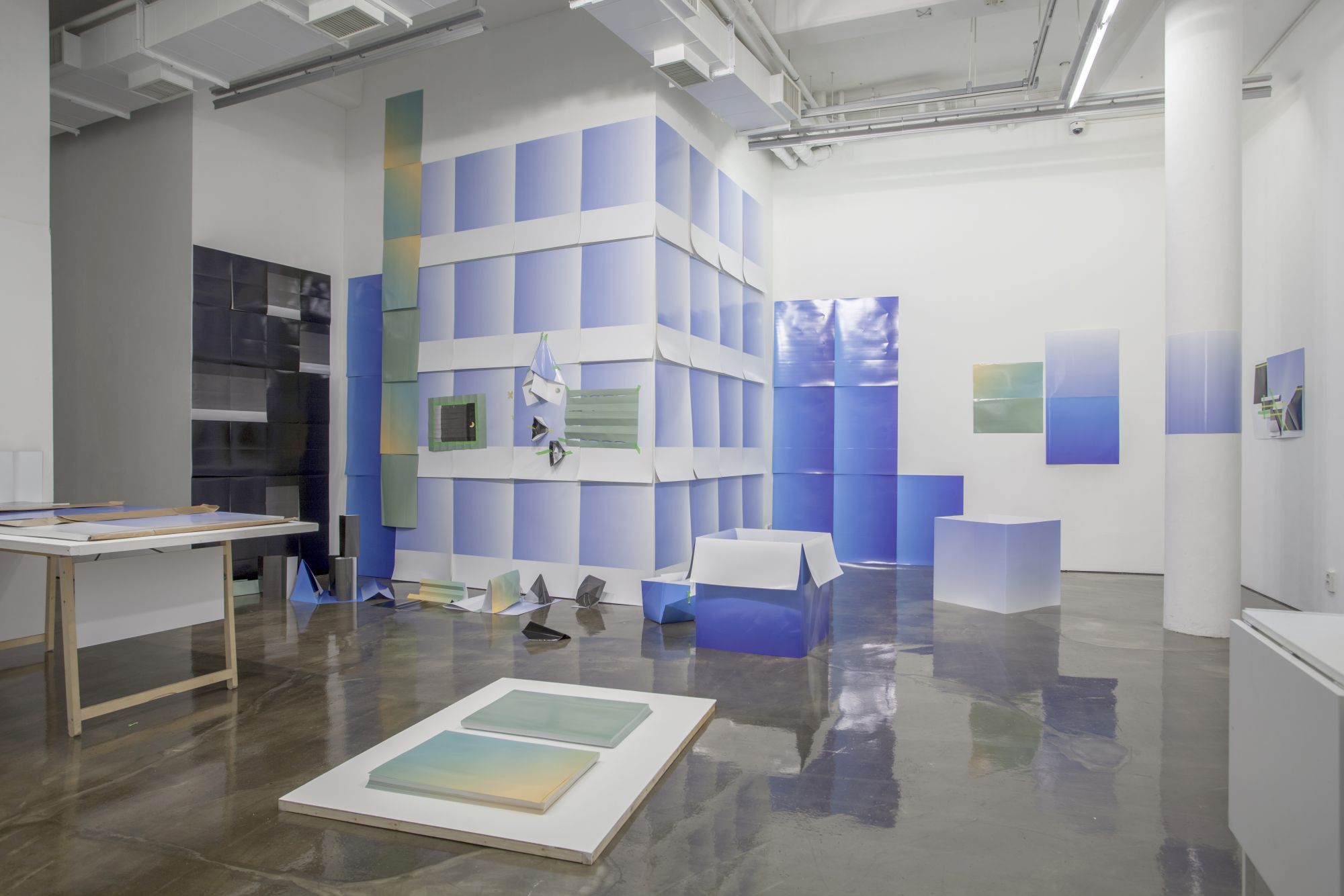
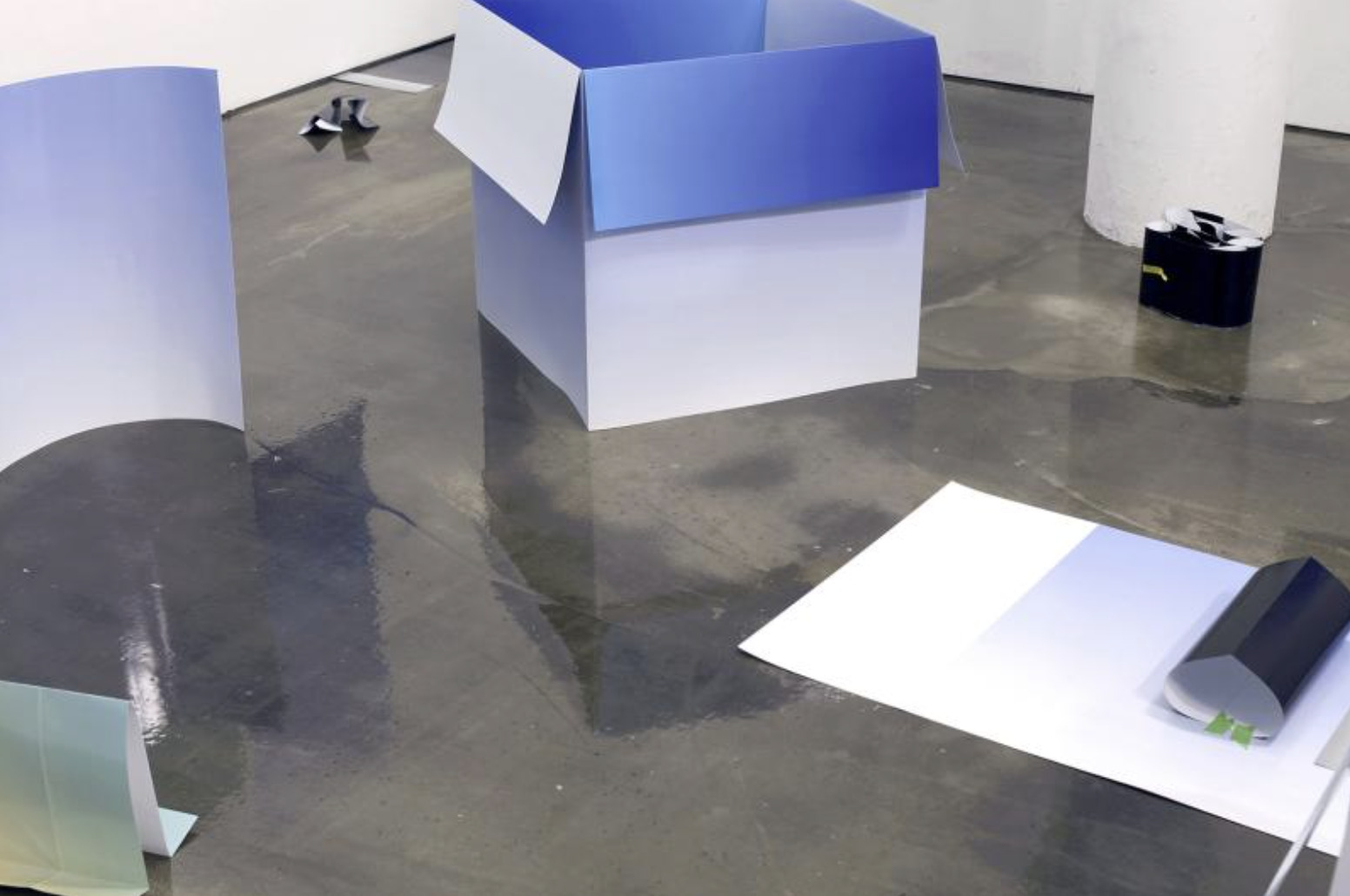
Eve Kwak, Face to Face1, 2015, Digital painting, offset print, 59.4x84.1(cm), 42x59.4(cm), 29.7x42(cm), total 6ea, Dimension variable © Eve Kwak

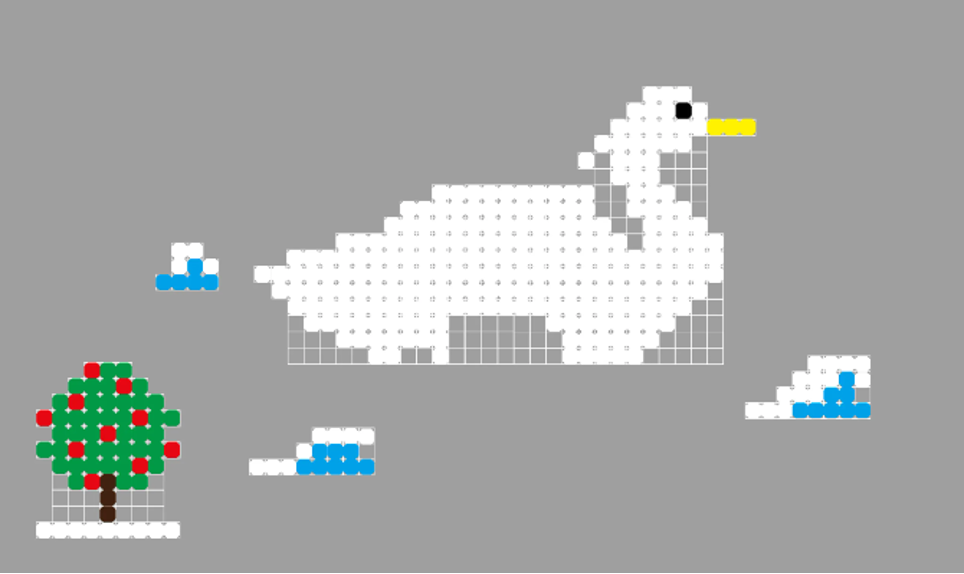
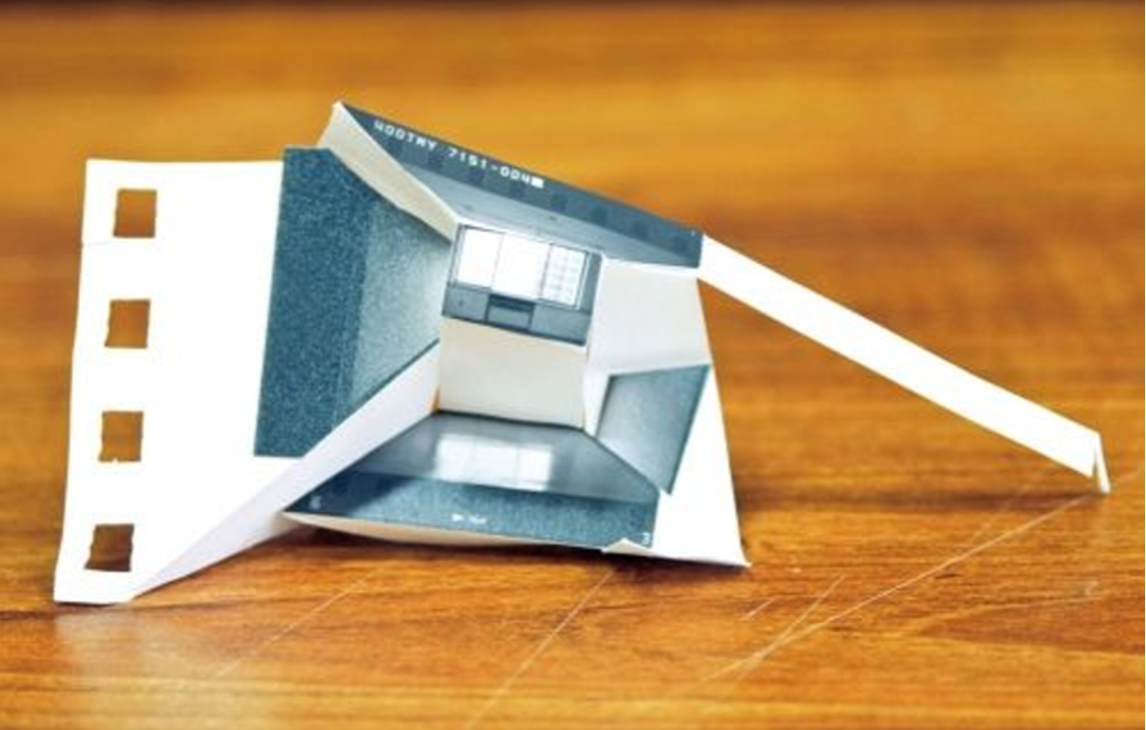
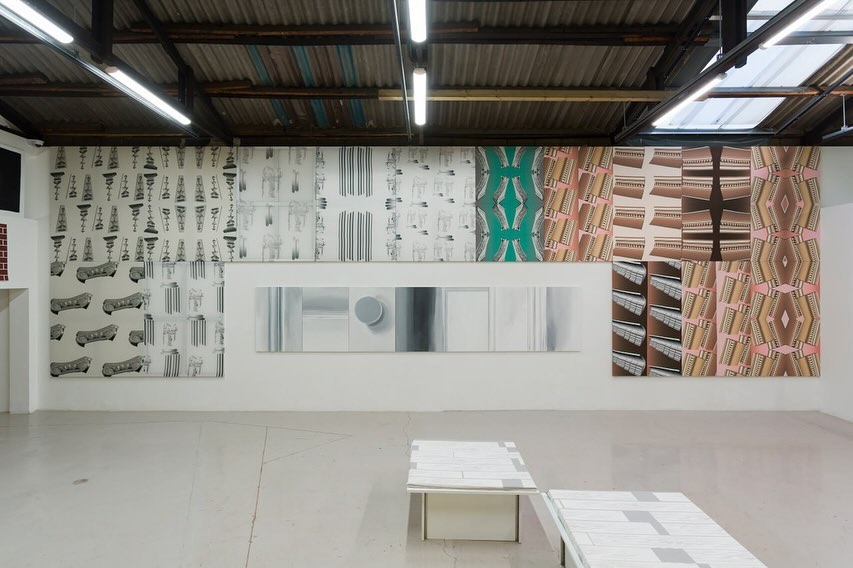
Meanwhile, placed toward the inner part of the exhibition space was the pixel-based series ‘Face to Face’ (2015–), in which Kwak creates another variable space within the existing architecture. Constructed in box-like forms, the works unfold and transform into three-dimensional structures, generating a fluid and shifting landscape.
 
For this series, Kwak used mass-produced printed materials as building elements, treating them like the glass windows and brick surfaces of architecture to construct urban environments across the exhibition walls.
 
The artist first materialized individual scenes created digitally through programs such as Photoshop and Illustrator onto paper, then reproduced and printed them in large quantities, transforming the images into sculptural forms.
 
The work later expanded into a participatory format depending on the context of each exhibition. After constructing scenes within the exhibition space, the remaining printed materials were placed around the installation so that visitors could take and use them or directly create new forms on site. Through this process, the scenes originally conceived by the artist naturally undergo transformation through the intervention of others.


Eve Kwak, Face to Face1 (detail), 2015, Digital painting, offset print, 59.4x84.1(cm), 42x59.4(cm), 29.7x42(cm), total 6ea, Dimension variable © Eve Kwak

Also installed in one section of the exhibition space was a sculptural set that transformed the book 13 Different Things (2014) into a spatial form. The book was created based on the floor plan information of a specific apartment complex that was under construction in 2014, with pages layered according to the number of individual units and designed to be detached along perforated lines.
 
During the exhibition, the process of tearing along the perforations and transforming the pages into sculptural fragments was recorded on video, capturing the spaces that emerged through the act of cutting away as well as the subtle emotions generated throughout the process.


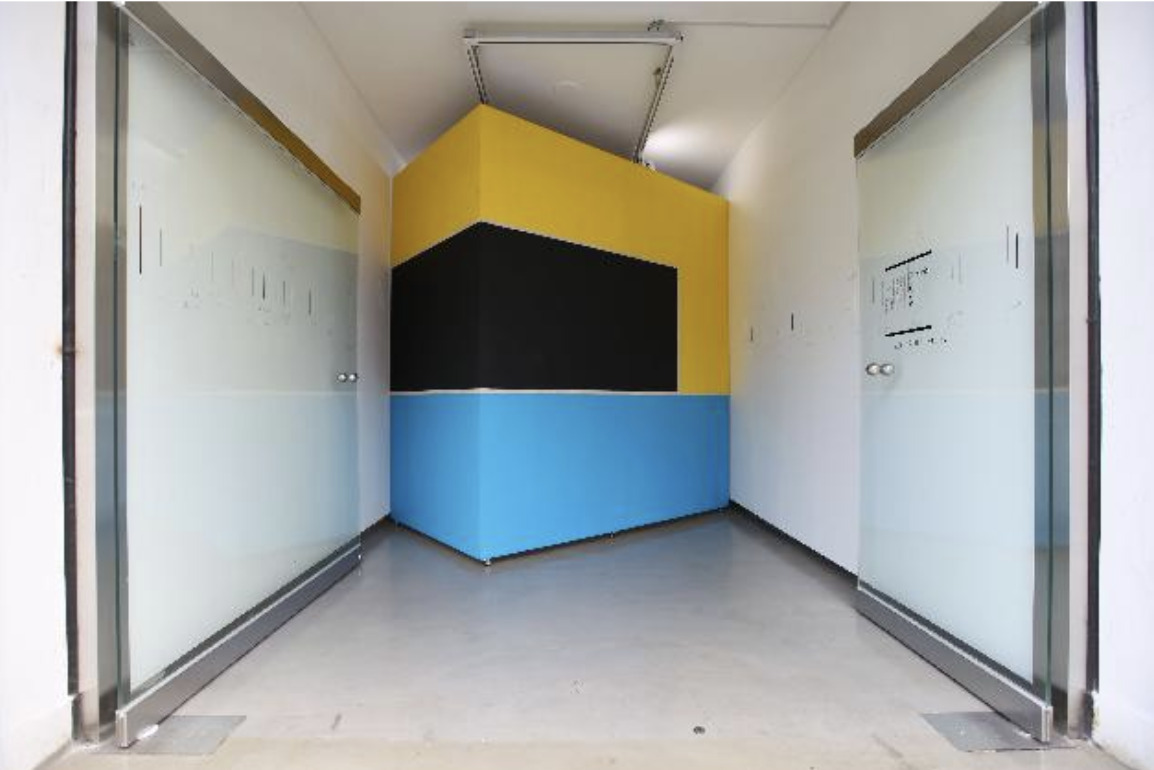
Installation view of 《All flat things happen at the same time》 (Dimension Variable, 2015) © Eve Kwak

During the exhibition period, Inohjudan in Wonseo-dong, Jongno-gu, hosted a workshop that involved making garments by hand and comparing them with mass-produced clothing from SPA brands. The program provided an opportunity to reflect on the standardized forms of clothing worn by diverse individuals in contemporary society.
 
The final section of 《All Flat Things Happen at the Same Time》, held at Dimensions Variable, presented works that focused on the physical imbalances caused by work environments requiring repetitive postures. The section consisted of partitions visualizing workplace conditions, time-based devices, sketch sculptures exploring chair forms, and related research materials.


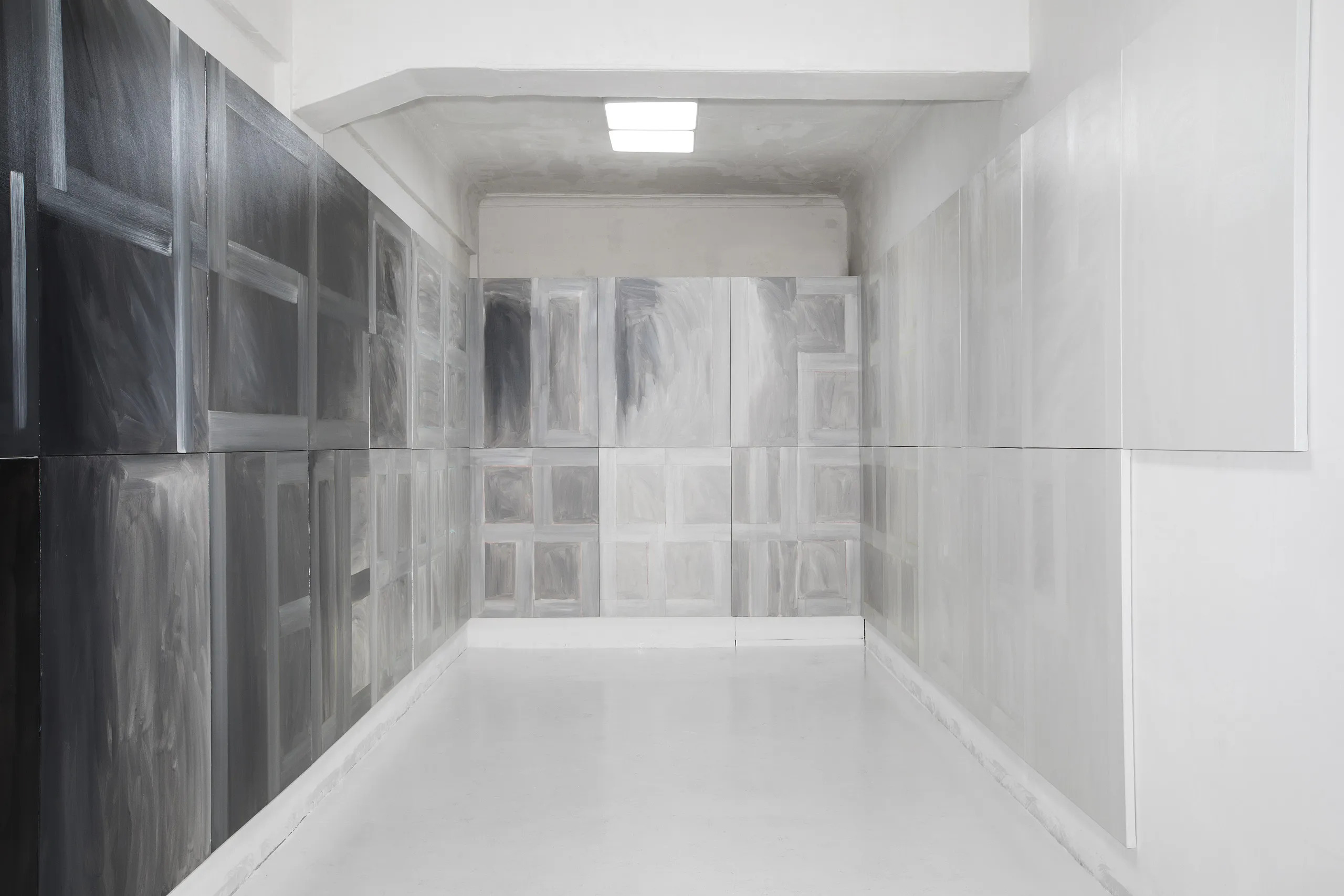
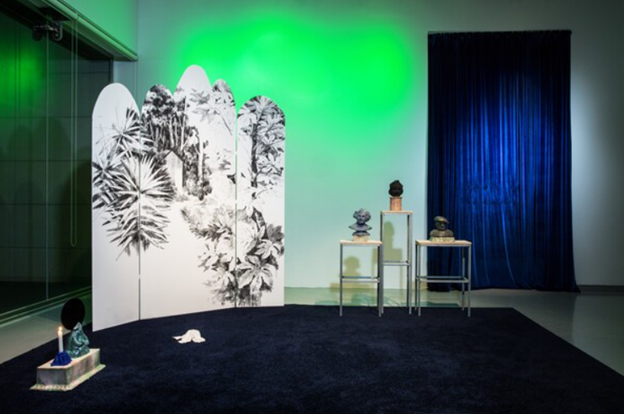
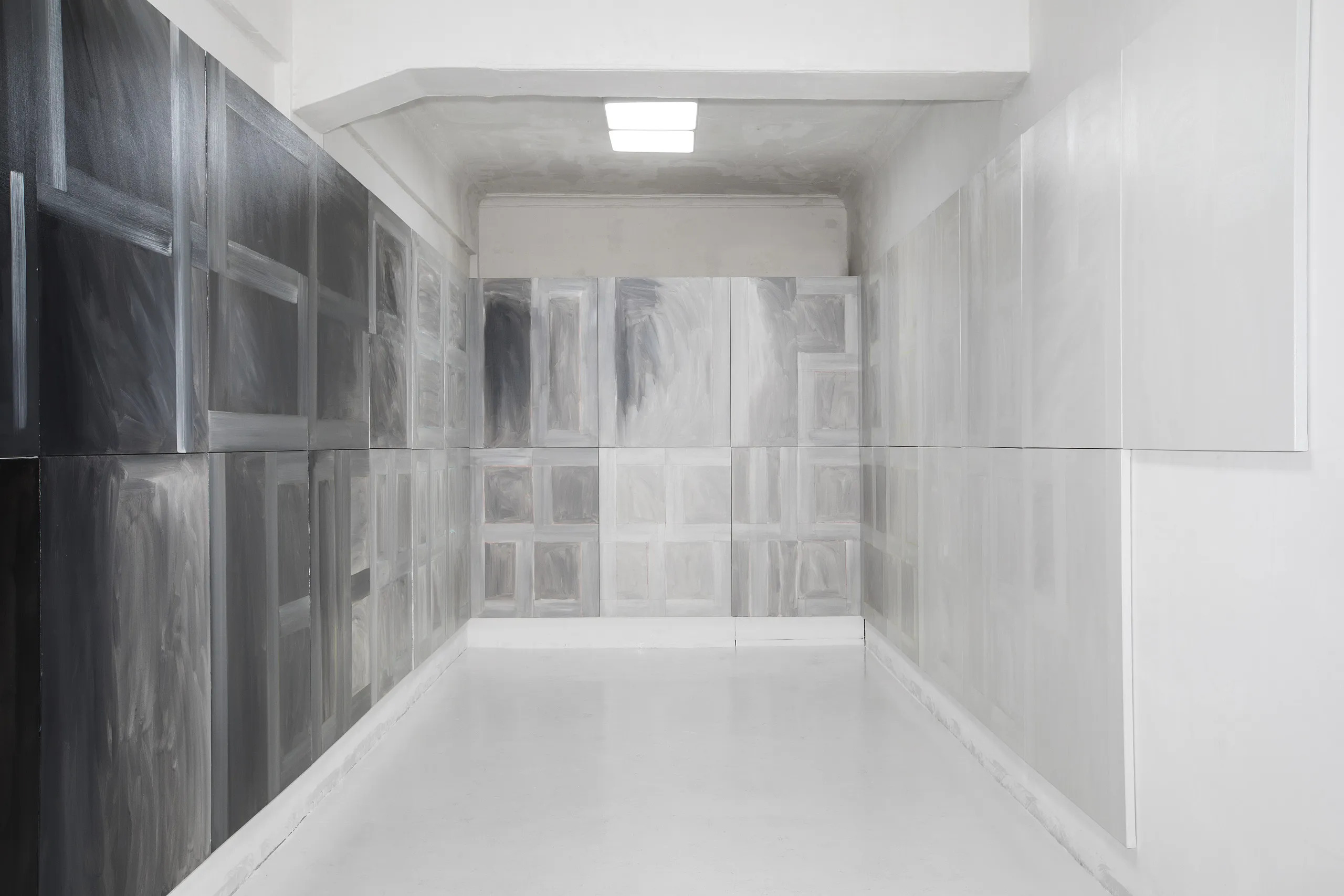
Installation view of 《Gray-White Hair》 (Artspace Hyeong, 2017) © Eve Kwak

Meanwhile, through her 2017 solo exhibition 《Gray-White Hair》, Eve Kwak sought to visualize and narrate two conditions that emerge at certain stages of human life according to an individual’s biological time: the loss of mental clarity and the state of having turned gray-haired, presenting them alongside calendars as spatial structures that contain and measure time.
 
This body of work developed from the artist’s personal experience of noticeably graying hair and from witnessing her father’s journey after being diagnosed with dementia in 2014. Kwak observed that many people attempt to reverse the passage of time by dyeing their hair to conceal signs of aging.
 
At the same time, seeing her father, who lived in a nursing facility, mistake his hospital room for his former home and experience confusion between past and present, she came to recognize that when hair turns white, changes in perception can extend beyond time itself to affect one’s awareness of space.


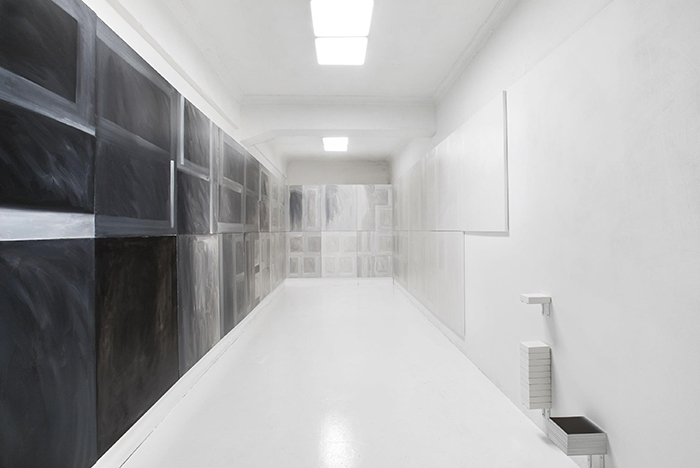
Installation view of 《Gray-White Hair》 (Artspace Hyeong, 2017) © Eve Kwak

To examine the passage of time beginning two decades before the visible manifestation of dementia, Kwak created Calendar (2017), a work that encompasses 44 years and 6 months of time, spanning the past 20 years, the present moment of the exhibition, and the 20 years to come. She also produced Day (2017), a painting that allows viewers to experience and perceive the “present” moment.
 
The artist sought to transform the calendar—an object that makes the objective quantity of time visible and functions as a unique spatial structure containing time—into a “space of time.”
 
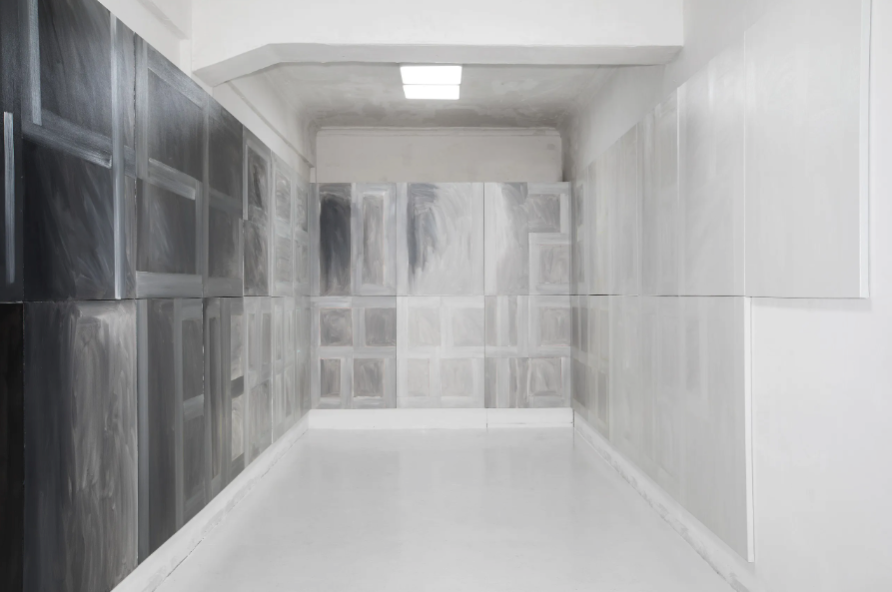
To achieve this, she painted the recurring numbers of each month and their corresponding positions within the calendar onto 35 individual canvases in oil paint. Installed along the exhibition walls, these works formed an environment resembling a continuous wall.
 
Meanwhile, Calendar was created in a handheld size, allowing visitors to physically hold and view it while comparing it with the temporal landscape unfolding on the walls.


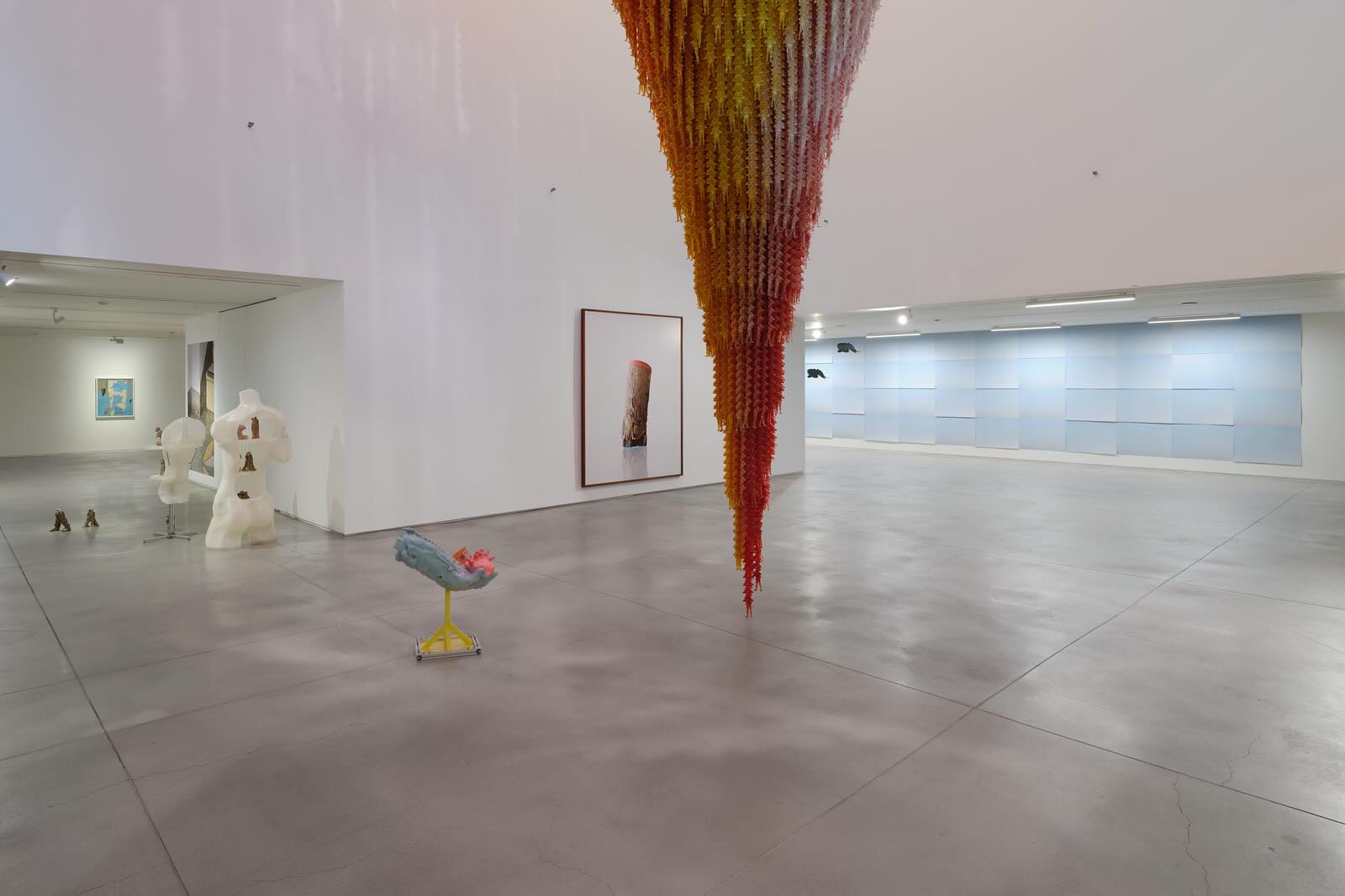
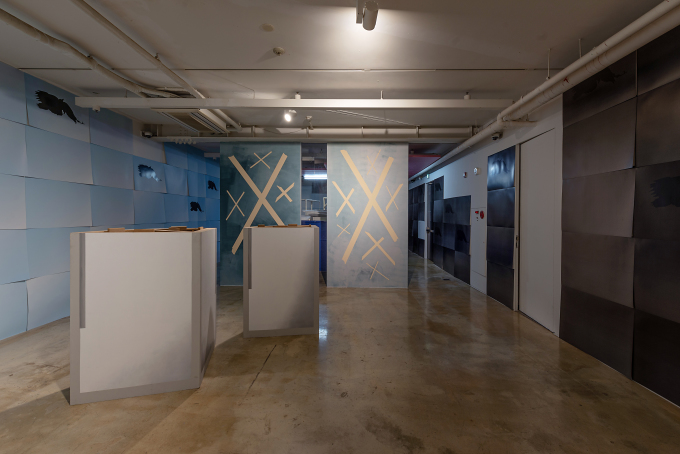
Installation view of 《MoveMove》 (Hall 1, 2024) © Hall 1

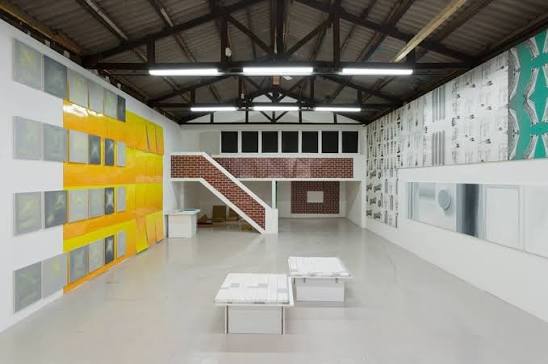
Eve Kwak’s recent solo exhibition 《MoveMove》 (2024) began with the artist’s discovery of artistic moments within the act of moving—an activity that involves looking back at the past, arranging the present, and anticipating the future functions of objects.
 
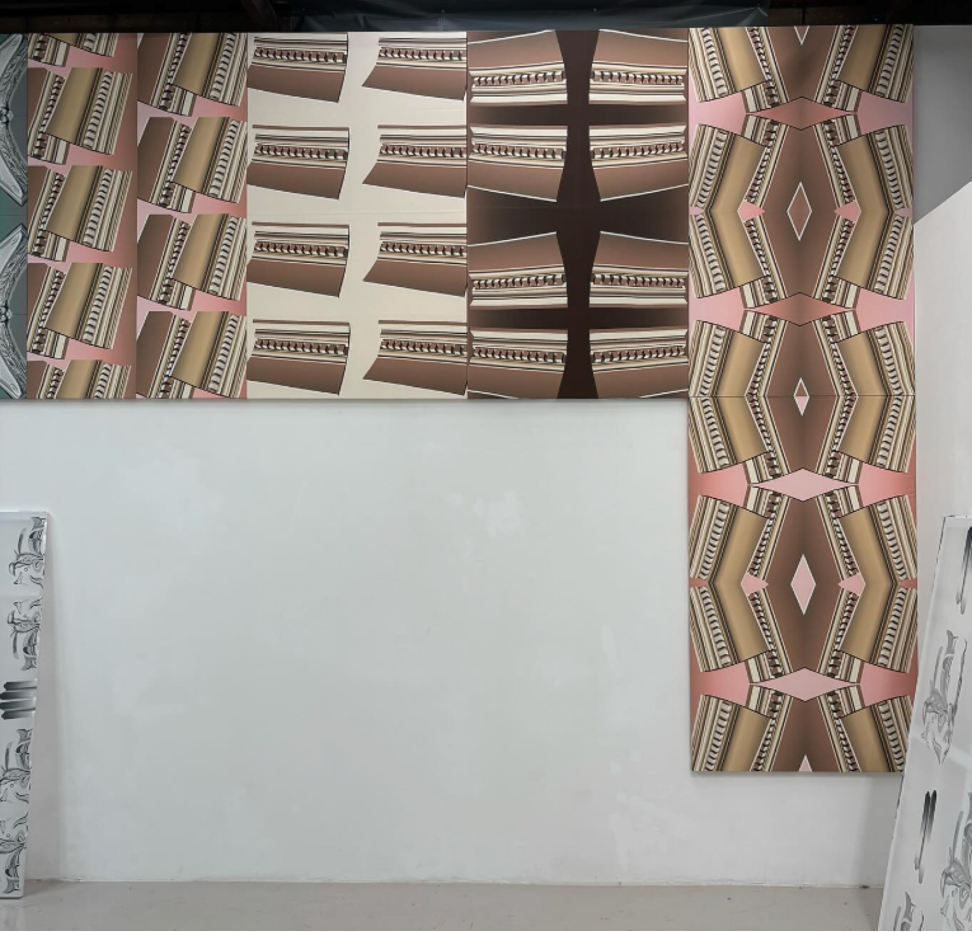
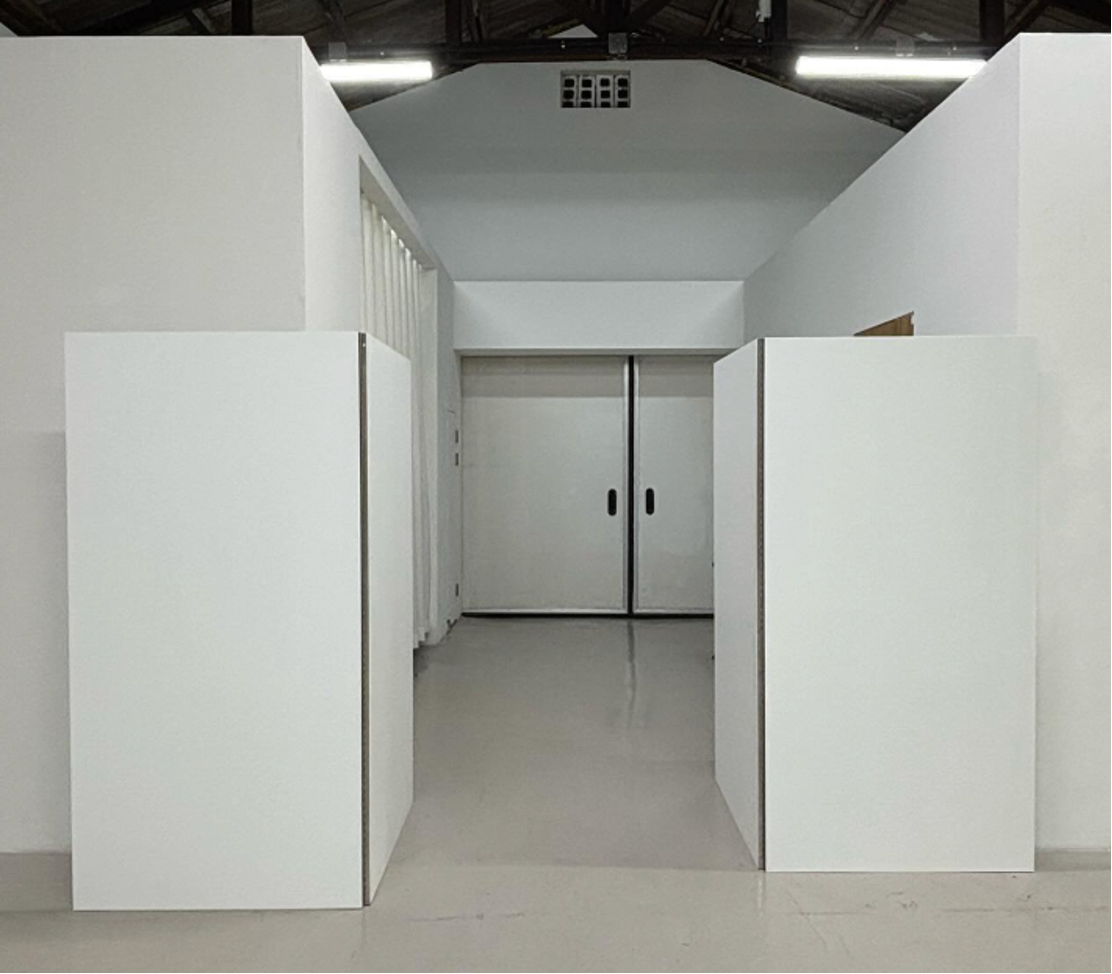
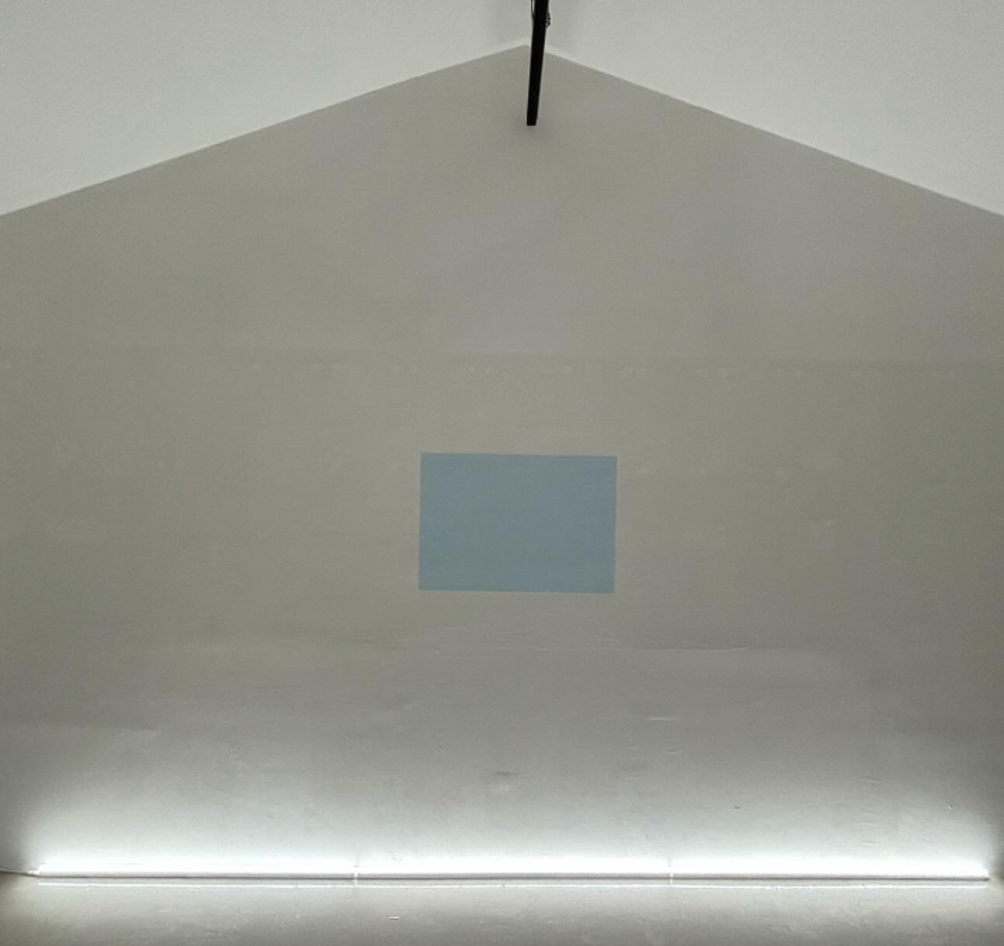
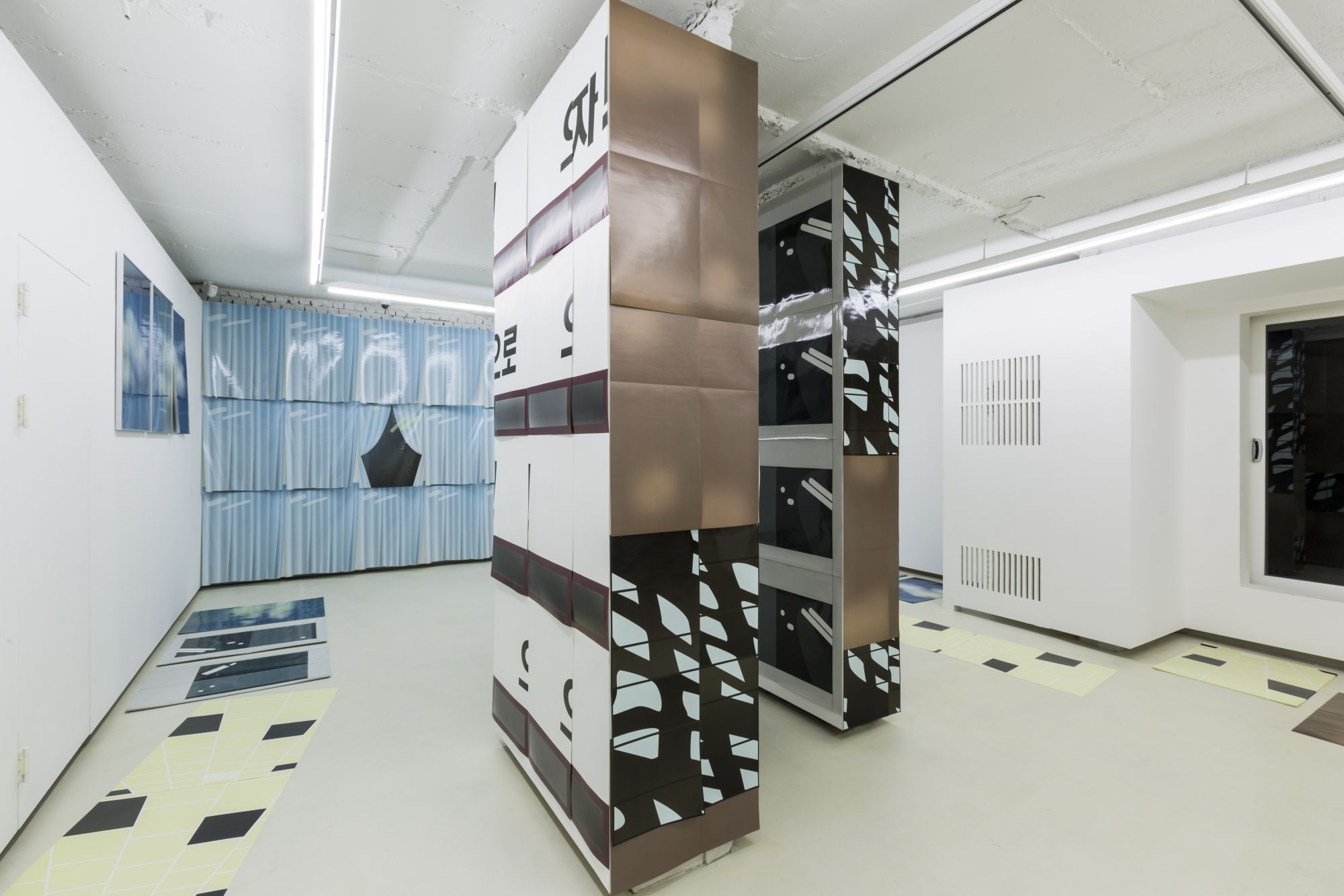
Focusing on the everyday processes of “drawing,” “transforming into three dimensions,” “moving,” and “rearranging” that shape our living environments, Kwak imitated flat surfaces, repeated forms, measured space, and transformed the exhibition walls into new spatial structures.
 
On the exhibition walls, familiar scenes from everyday architectural environments—such as brick patterns reminiscent of multi-unit residential buildings and wood molding designs commonly found in homes—became integral elements of the works, reconstructing the space itself. Within this transformed environment, previously created works and newly produced pieces were displayed together.
 
The act of moving involves selecting the elements and patterns that will constitute a new space, while organizing, relocating, and rearranging existing surroundings with new objects. This process of imagining and constructing a future resembles the artistic practice through which Kwak builds her own works.


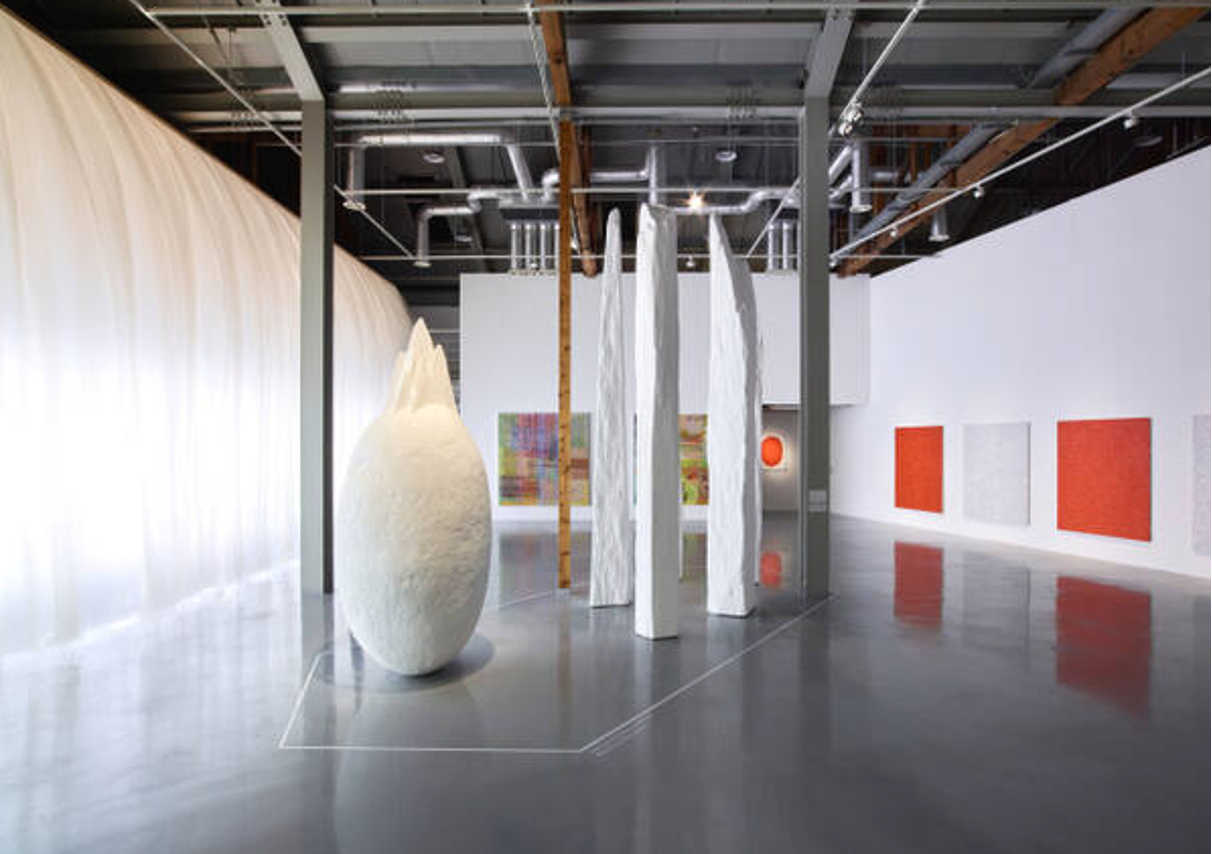
Installation view of 《MoveMove》 (Hall 1, 2024) © Hall 1

Through her practice, Eve Kwak visualizes how time, space, and the body interact with one another and continuously transform, based on her interest in the environments we inhabit. Her work reminds us that buildings and architectural surroundings, often perceived as fixed and permanent, also evolve and endure alongside human and natural life cycles.
 
By observing the world constructed through both material and immaterial elements, Kwak explores the ordinary lives of people who gradually resemble their environments, as well as the familiar systems of association and structures of belief that emerge within them. Through remembering, recording, and visualizing these layered landscapes, she reveals the intersection of accumulated time and individual experience.

"By looking into the constructed worlds of the material and immaterial, and by remembering, recording, and visualizing the three-dimensional landscapes that converge through individual perspectives—such as the ordinariness of people who come to resemble those worlds, conventional systems of association, and structures of belief—my practice ultimately aims to allow us to sense the integrated experience of time and the individual." (Eve Kwak, Artist’s Note)


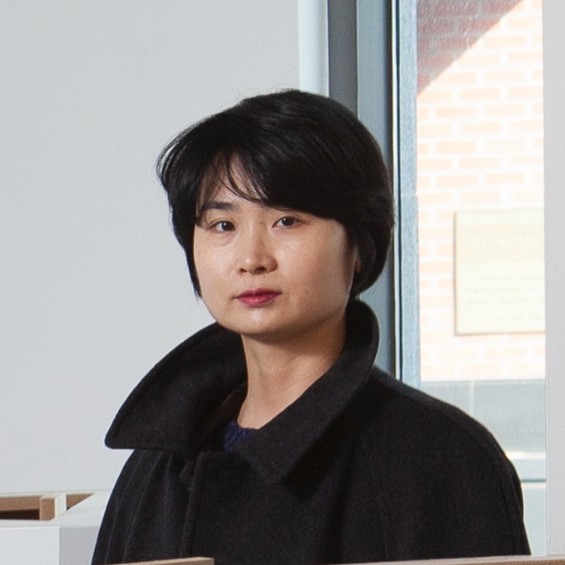
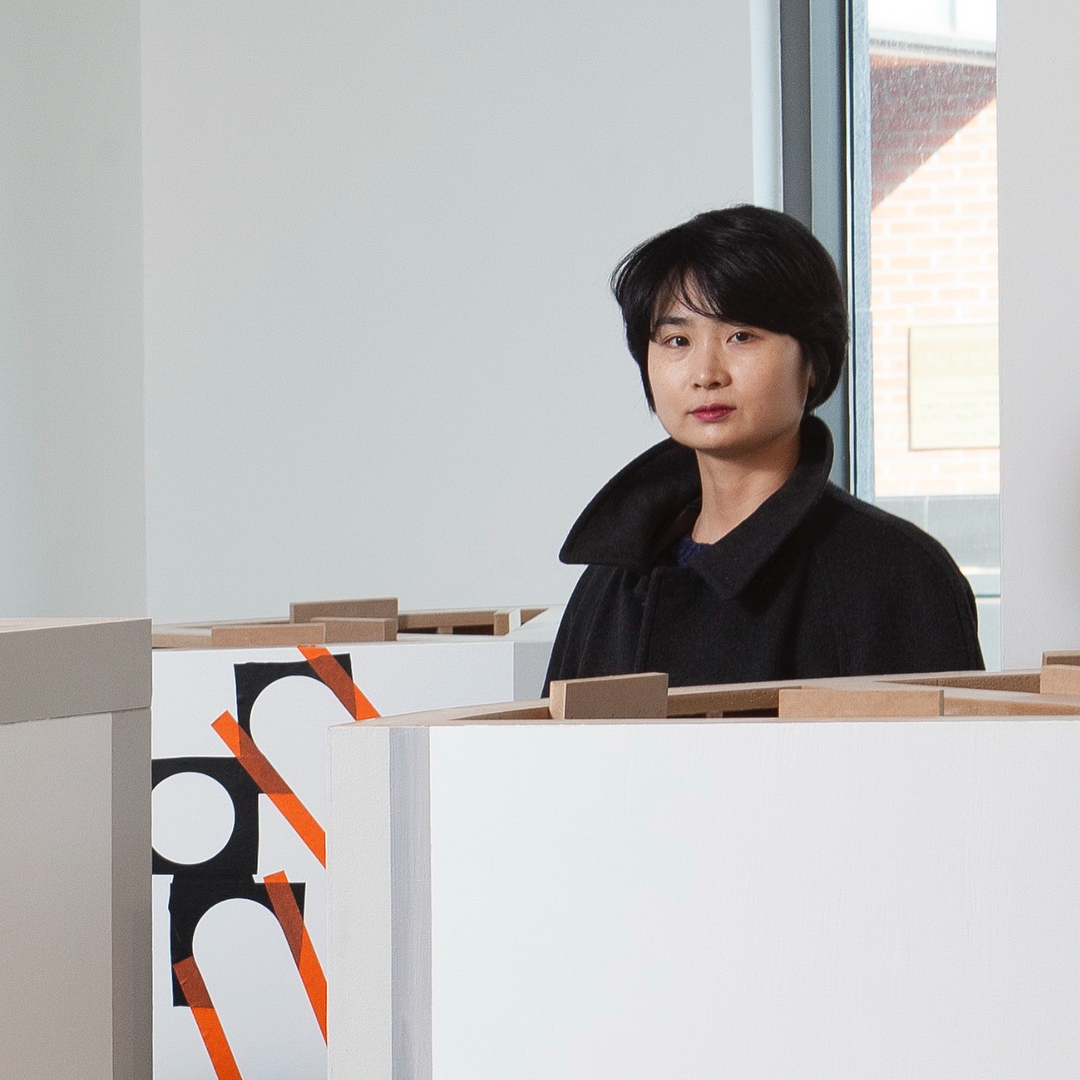
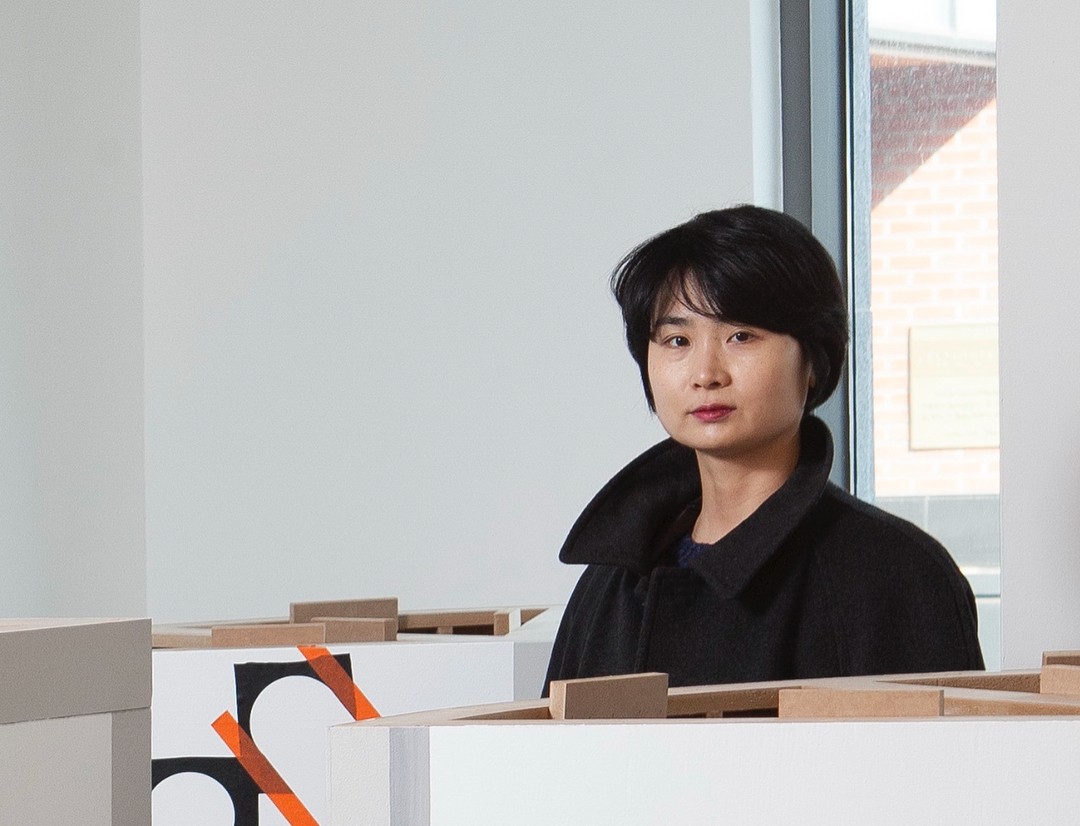
Artist Eve Kwak © Eve Kwak

Eve Kwak graduated from the Department of Fine Arts at Seoul National University of Science and Technology and received her master’s degree from the same university. Her recent solo exhibitions include 《MoveMove》 (Hall 1, Seoul, 2024), 《Gray-White Hair》 (Artspace Hyeong, Seoul, 2017), 《Face to Face Construction-Architecture Project: Part》 (Taste House, Seoul, 2017), and 《All Flat Things Happen at the Same Time》 (Gallery Chosun, Inohjudan, Dimensions Variable; Seoul, 2017).
 
Kwak has also participated in numerous group exhibitions, including 《Referential》 (HITE Collection, Seoul, 2026), 《Tilting toward Ground》 (Incheon Art Platform, Incheon, 2025), 《Tread softly, because you tread on my dreams》 (Daejeon Museum of Art, Daejeon, 2025), 《RE: New-Bird-Jungle》 (Museum of Contemporary Art Busan, Busan, 2022–2023), 《Short Circuit》 (Taste House, Seoul, 2021), 《Sunset Valley Village》 (Art Sonje Center, Seoul, 2021), 《Piercer》 (SeMA Storage, Seoul, 2021), and 《Name》 (Museumhead, Seoul, 2020–2021).
 
She has participated in residency programs including the SeMA Nanji Residency (2020), CAN Foundation Myeongnyundong Studio (2019), Incheon Art Platform (2017), and the MMCA Residency Goyang (2016). In 2019, she received the Excellence Award at the SONGEUN Art Award. Her works are held in the collections of Incheon Art Bank and the Seoul Museum of Art.

References