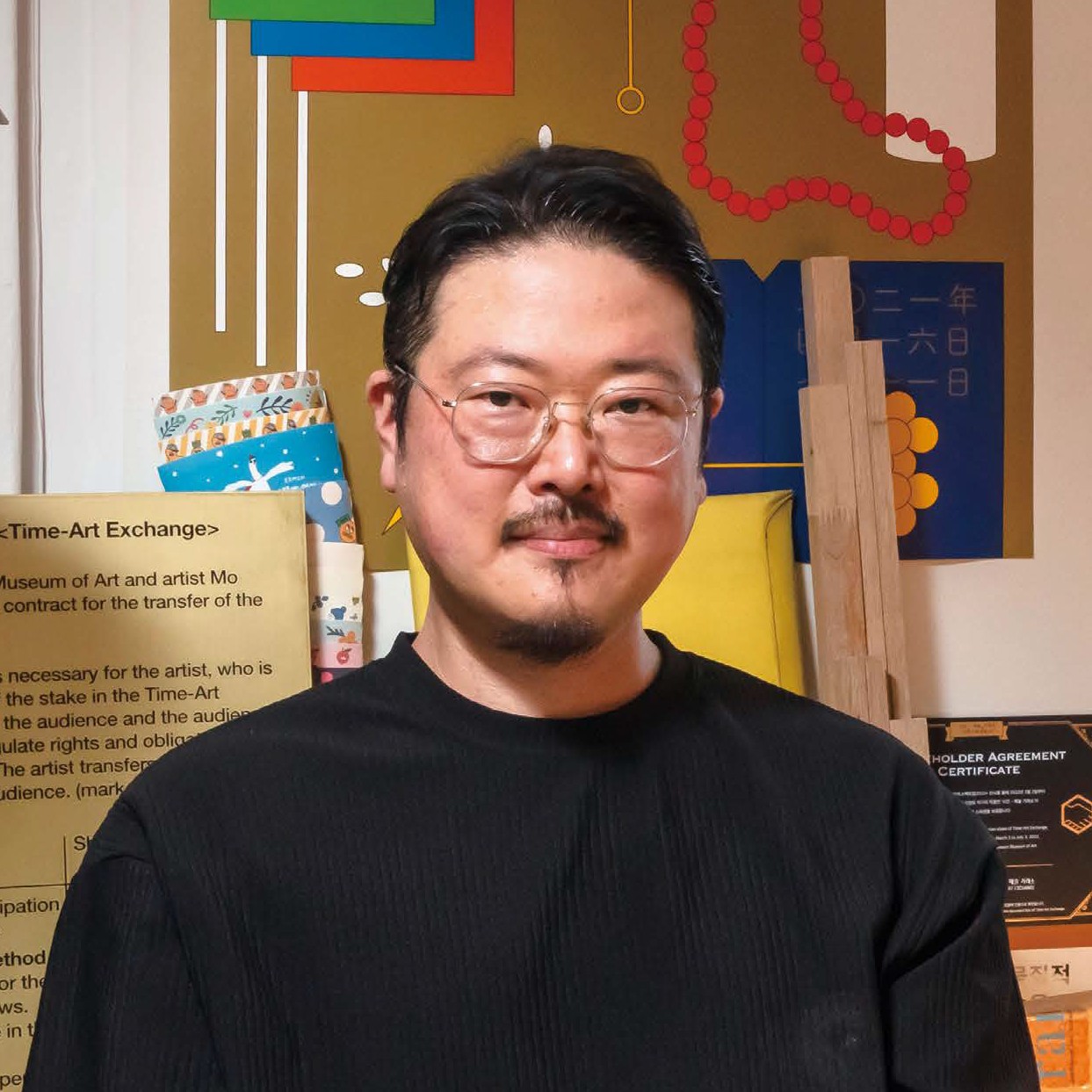
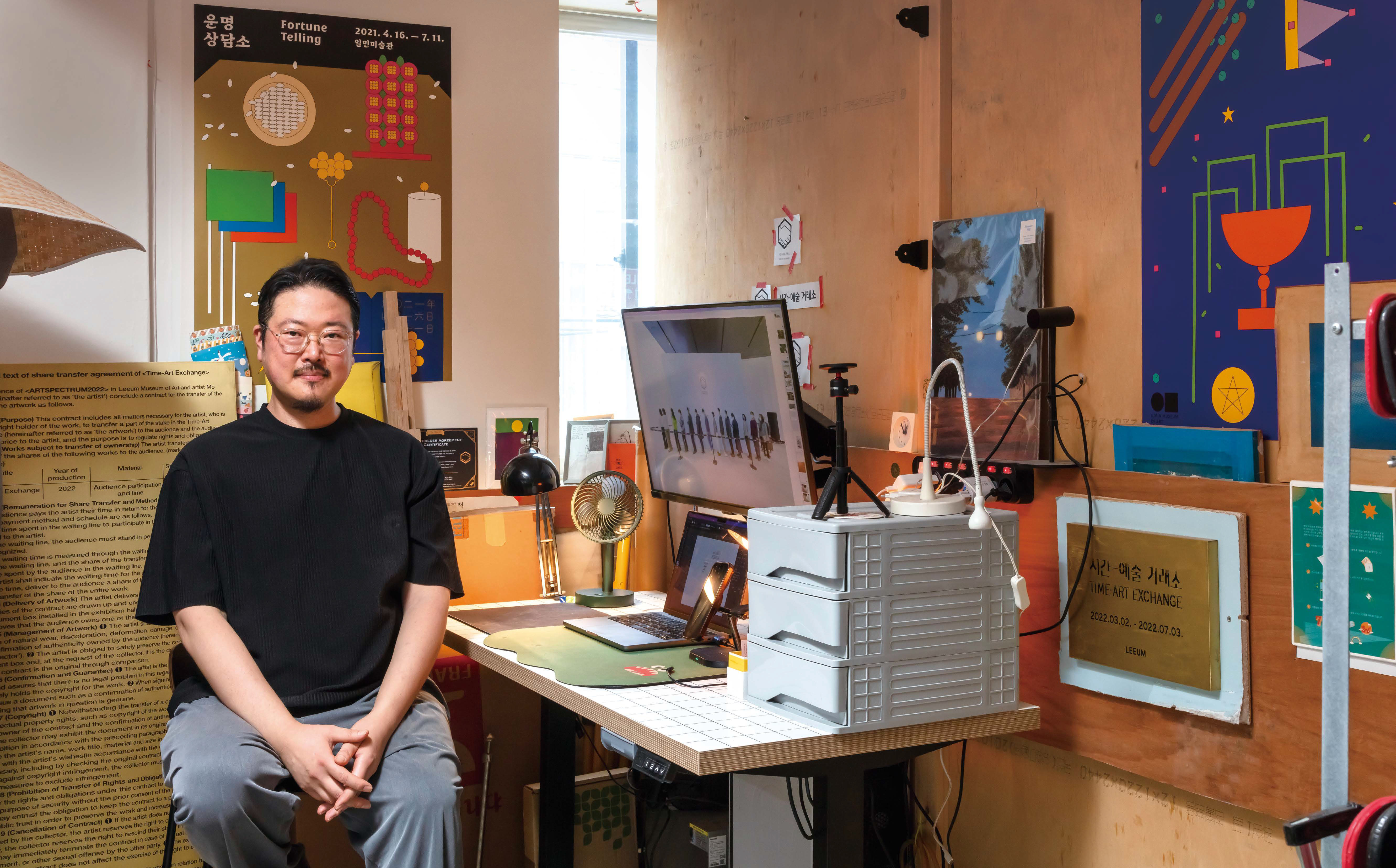
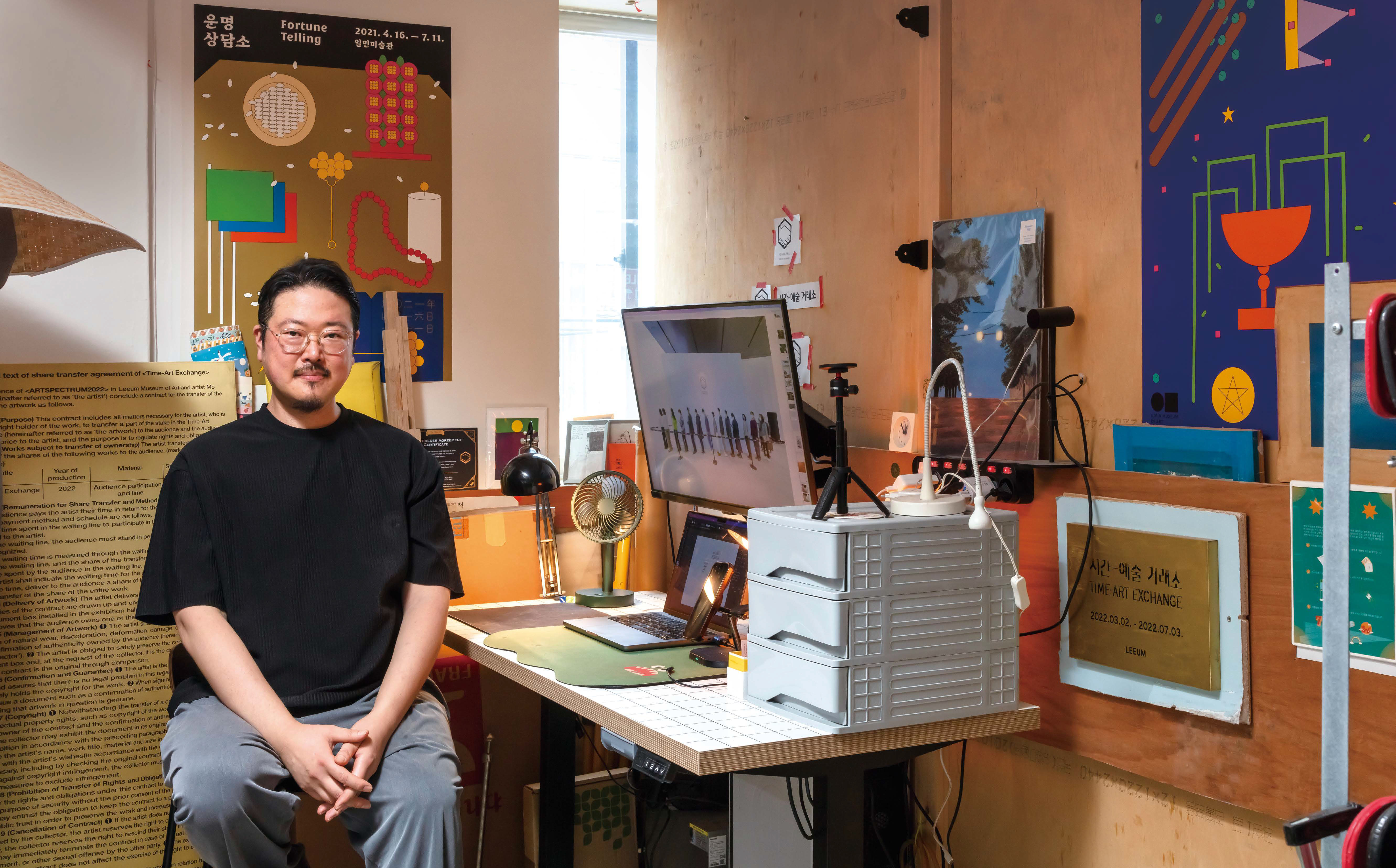
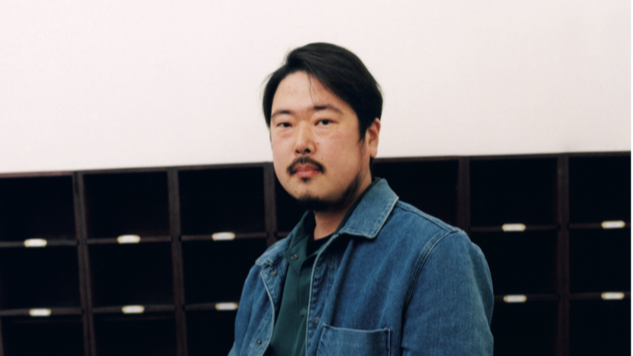
The Artist © Mo Kim

I. Frieze Seoul, Klein’s Gold, and Mo Kim’s Time

In September, the COEX exhibition halls in Seoul became a testing ground where the capital of the global art world converged and circulated with unusual intensity. Leading international galleries such as Gagosian, Hauser & Wirth, Pace Gallery, and David Zwirner gathered under one roof, filling their booths with works priced in the billions of won.

On the VIP opening day, a large-scale canvas by Mark Bradford sold for USD 4.5 million (approximately KRW 6.26 billion), setting a new record for Frieze Seoul, while new works by George Condo and sculptures by Louise Bourgeois were likewise traded at remarkable speed.

Here, an artwork is not merely an aesthetic object but something assigned value through a pricing mechanism shaped by networks of capital, scarcity, and global demand. Once hung within the white cube, the work is no longer simply a singular “artwork”; rather, it acquires meaning within the language of the market, where price and value are bound together in an equation much like a financial commodity.

Yet the moment price becomes equated with value, the artwork loses dimensions of artistic experience. The market determines the status of a work through its price, but in doing so transforms the work into an index of capital, structurally erasing its sensory and contemplative potential. This tension had already been exposed through an unprecedented experiment by the French artist Yves Klein in the 1950s.

In March 1959, while participating in 《Vision in Motion》, Klein left his exhibition space completely empty. Instead of hanging artworks, he proclaimed to the audience gathered at the opening, “First there is nothing, then there is a deeper nothing, and then a blue depth.” When a curator asked where the artwork was, Klein replied, “Here, at this very moment as I am speaking,” and demanded a one-kilogram bar of pure gold as the price of the work.

According to Klein, painting was merely the ashes of art, while its true essence, once created, became invisible and was reduced to matter within pictorial sensibility. He therefore argued that, at the moment the artist spoke, pictorial sensibility itself became specified as raw material and could consequently be exchanged for pure gold.

Klein pushed this experiment further by situating the “immaterial” within actual economic exchange and ritual. In Zone of Immaterial Pictorial Sensibility (1959), the artist divided and sold a work with no physical object in exchange for the value of gold, while the buyer who paid in gold received a receipt certifying ownership of an “immaterial zone.”

Genuine ownership, however, could be completed only through a ritual in which the buyer burned the receipt and Klein threw half of the gold into the Seine. What ultimately remained was neither material nor record, but the acts of burning and casting away themselves. This ritualistic performance was not simply an eccentric gesture of selling an “invisible artwork.”

Klein sought to shift the essence of art toward that which cannot be possessed—the dimensions of emptiness and sensibility. He thus posed the longstanding question, “What is an artwork?” in one of its strangest forms. There was no painting, sculpture, or installation; instead, he presented transaction and ritual, burning and relinquishment, as the work itself.

Mo Kim’s practice contemporaneously renews Klein’s experiment of separating the value of an artwork from its material object and locating it within pure exchange value. Taking up the questions Klein opened, Kim asks anew, within contemporary Seoul and its art institutions, what constitutes artistic value, unproductivity, and immateriality.

Since beginning to work actively in the Korean art scene in 2013, Kim has developed a practice that creates fissures within the efficient and productive systems of value generated by institutions and markets. He places devices such as contracts and envelopes, time spent waiting in line, performances of holding one’s breath, and casually imprinted footprints at the center of his work.

Unlike conventional artistic media, these devices produce no tangible outcome and offer viewers no certainty of “ownership.” Instead, the work can be experienced only through minor traces such as wasted time, empty envelopes, and futile gestures.

This essay traces Kim’s major works—Time-Art Exchange (2022), Propaganda Room (2022), Under Your Feet (2021, 2025), and his recent work Ritual for Unproductive Art (2025)—to examine how his practice, through “rituals of unproductivity,” disrupts contemporary art institutions and opens new sensory and conceptual horizons.



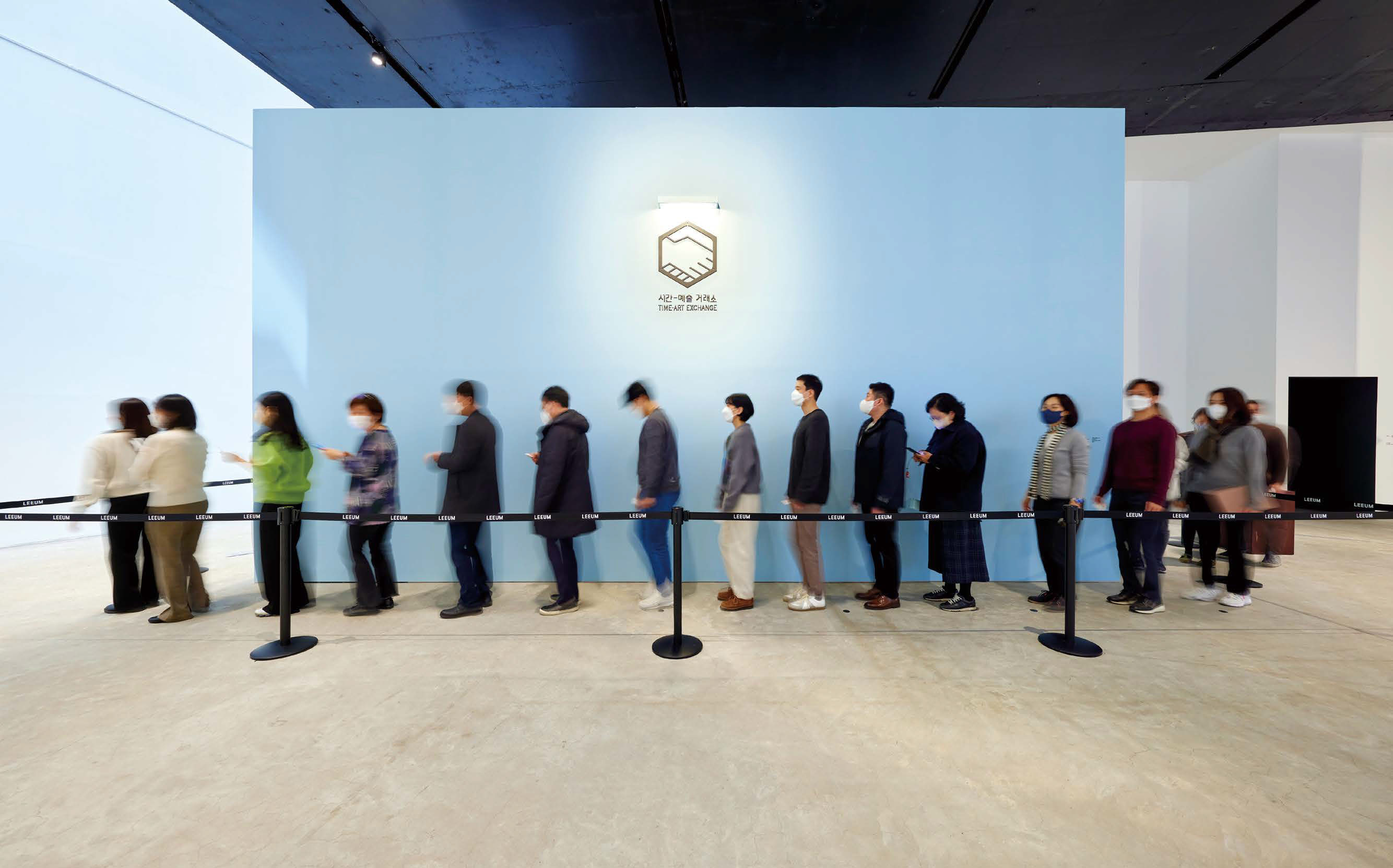
Mo Kim, Time-Art Exchange, 2022, Audience participation and time, Dimensions variable © Mo Kim

II. Gestures of Uselessness, Devices of Expenditure: From Time-Art Exchange to Under Your Feet

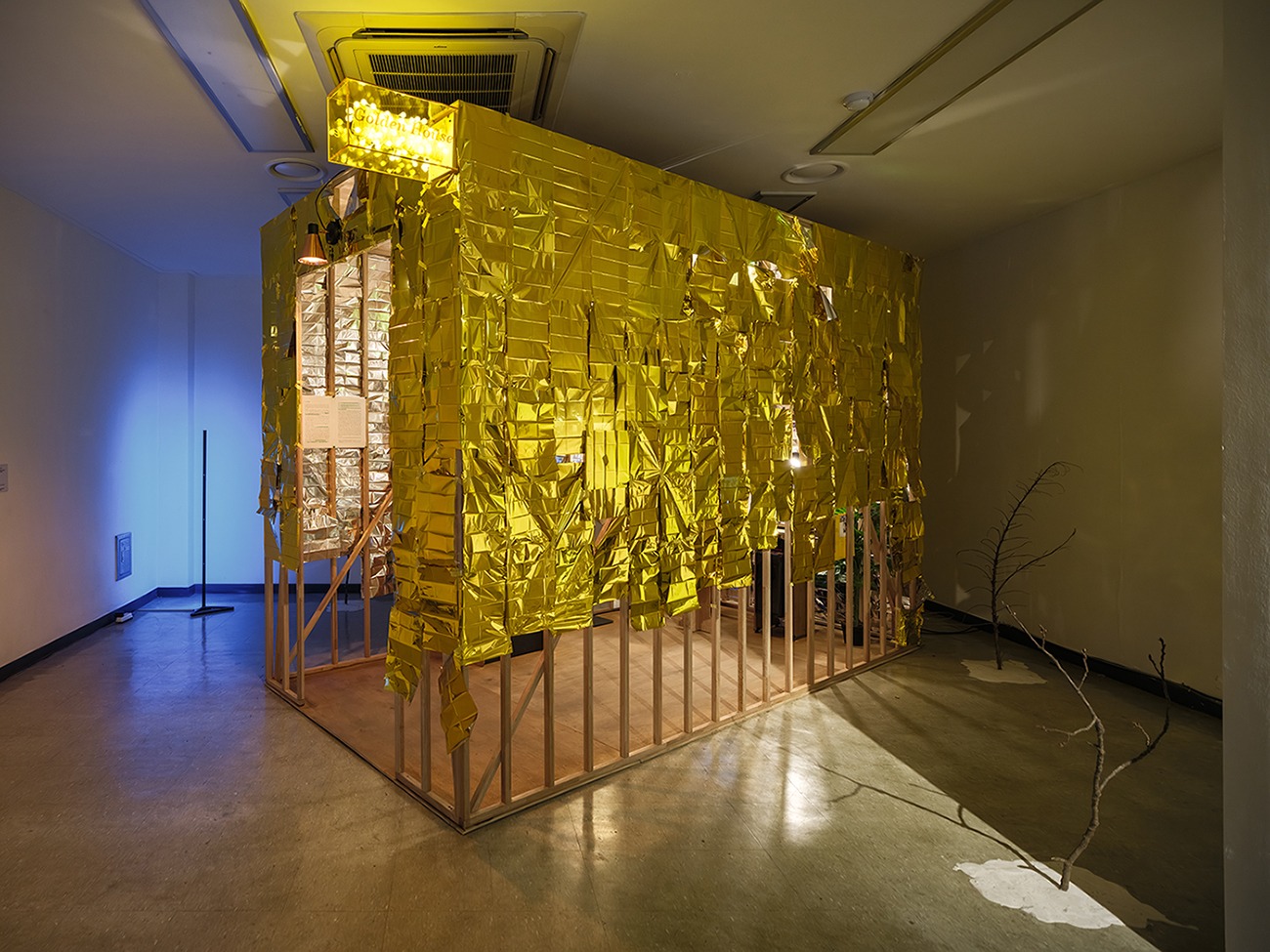
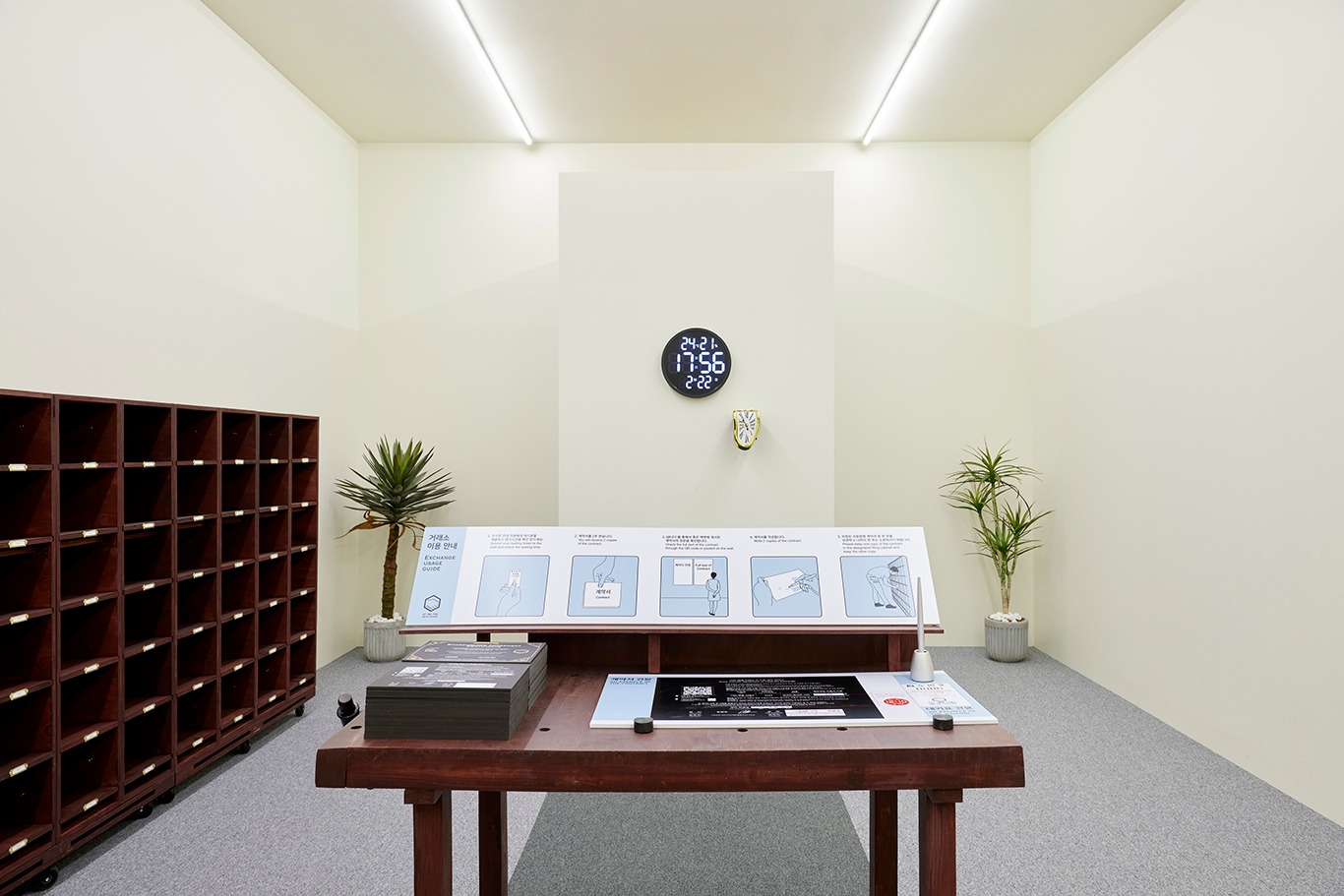
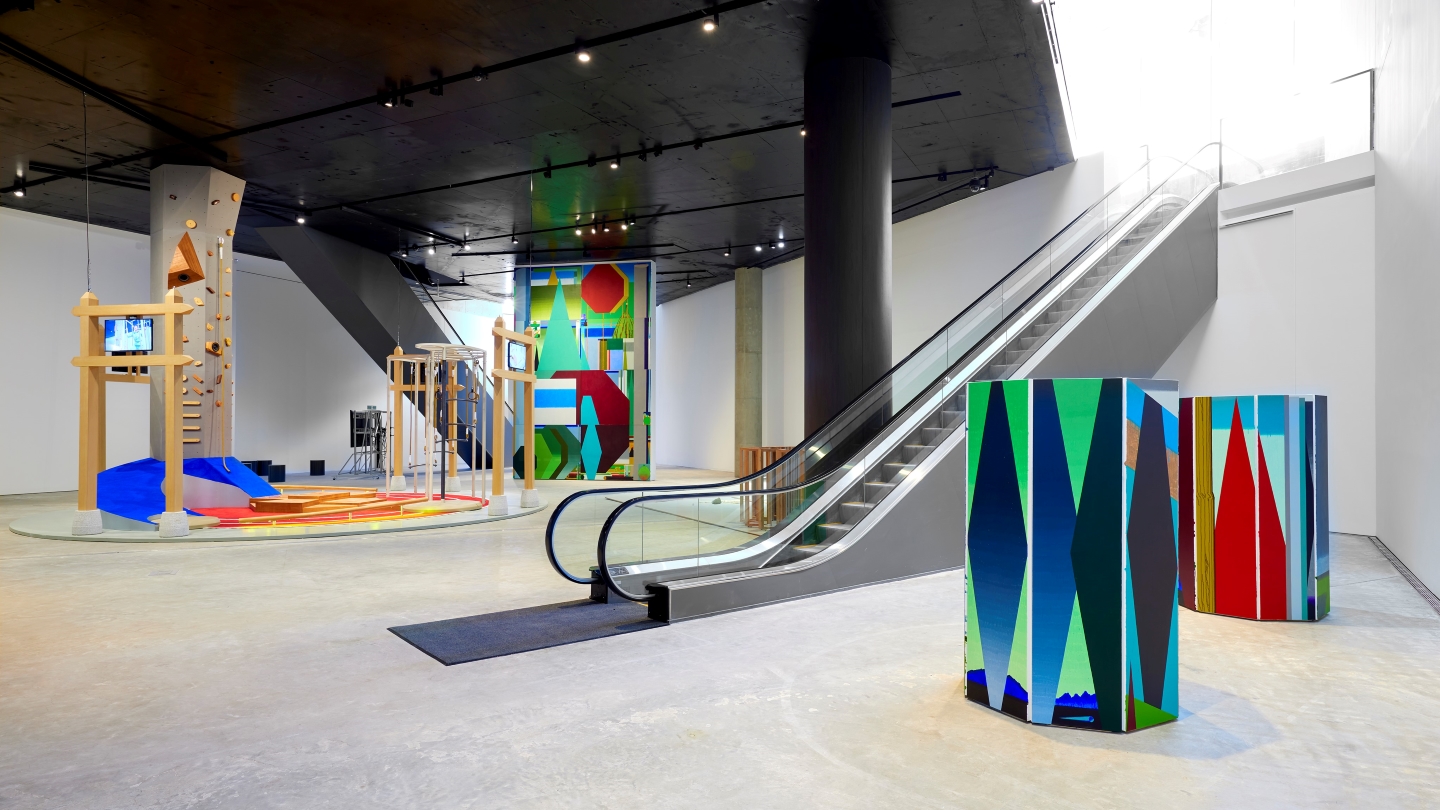
At the center of the 2022 《ARTSPECTRUM》 exhibition at Leeum Museum of Art stood an enclosed space that admitted only one person at a time. Resembling the VIP room of a securities firm, the space housed Mo Kim’s Time-Art Exchange. To enter, visitors had to wait in a long line, and the amount of time they spent waiting was recorded on a contract as their “share” of the work.

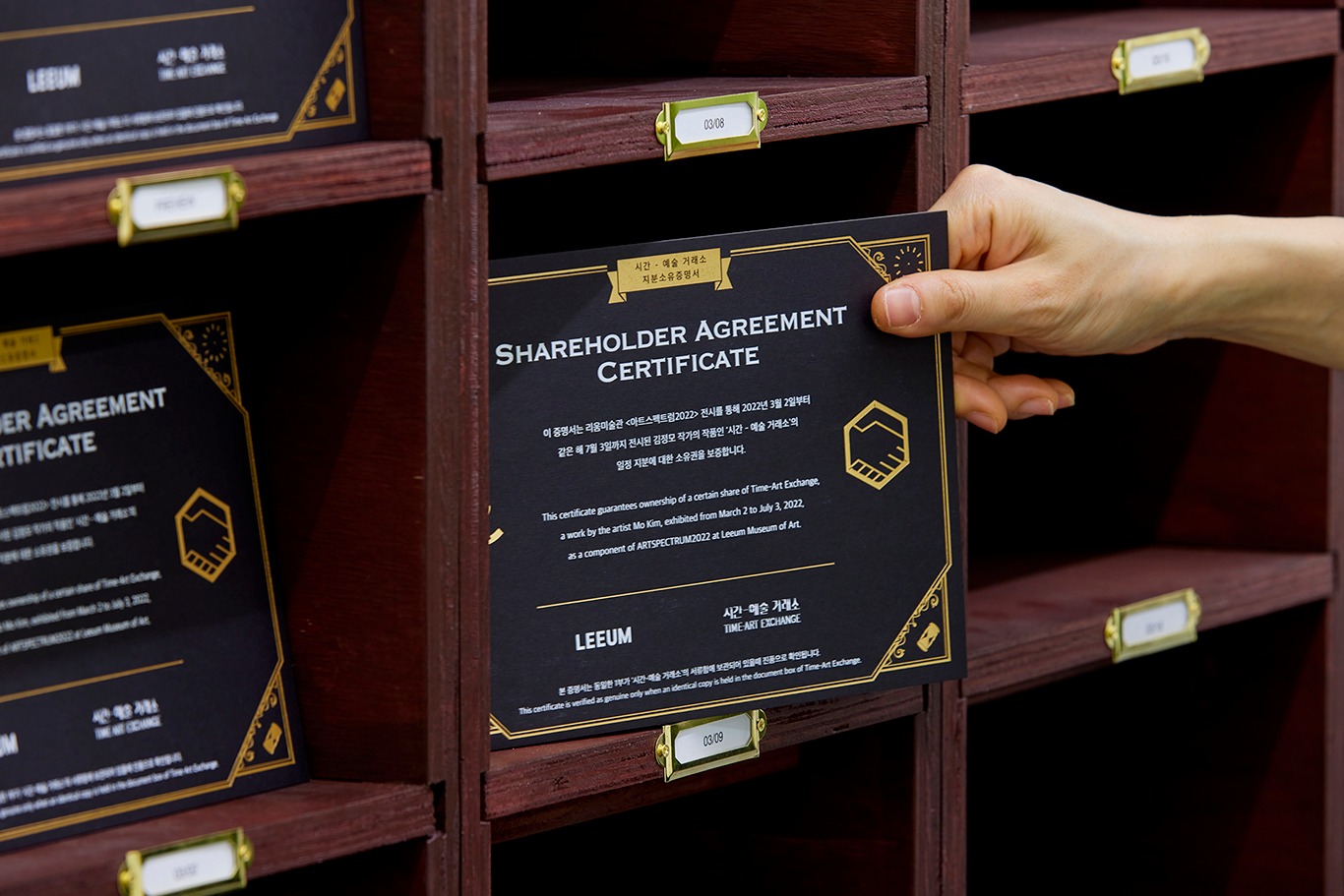
Within the solemn atmosphere, visitors followed the artist’s instructions and performed a ritual of signing a transfer agreement for a share in the artwork and exchanging it for a certificate. Yet no currency was involved in this transaction. Kim designated “time” as the sole unit of exchange. The contract was merely a document that mimicked the form of a transaction, and the substance of the artwork did not remain on the paper.

The work existed only in the time already lost to waiting, and in the experiences and sensations formed within that time. If the logic of capital defines an artwork through its price, Kim instead uses the act of expending time to restore the sensory and contemplative dimensions erased by the language of the market.

Kim’s works generally take the form of simulations of social models. He brings institutional and social mechanisms—such as exchanges, contracts, rituals, and participation—into his works. Yet these mechanisms never operate as efficient systems; they are invariably incomplete and wasteful, and may even appear to fail. It is precisely this “structure of failure” that forms the core of his practice. A key concept here is “expenditure” (dépense).

The concept of expenditure proposed by the French thinker Georges Bataille refers to the consumption of surplus beyond the demands of efficiency and production. Just as the sun continuously releases an excess of energy, societies and human beings likewise generate surpluses beyond what is necessary.

This surplus must inevitably be expended, and whether that expenditure takes the form of “meaningful waste,” such as festivals, sacrifice, and art, or erupts as “destructive waste,” such as war and violence, determines the fate of a society. By passing through Klein’s experiment and declaring “unproductivity” as ritual, Kim reminds us that art may itself be the most elegant form of expenditure.

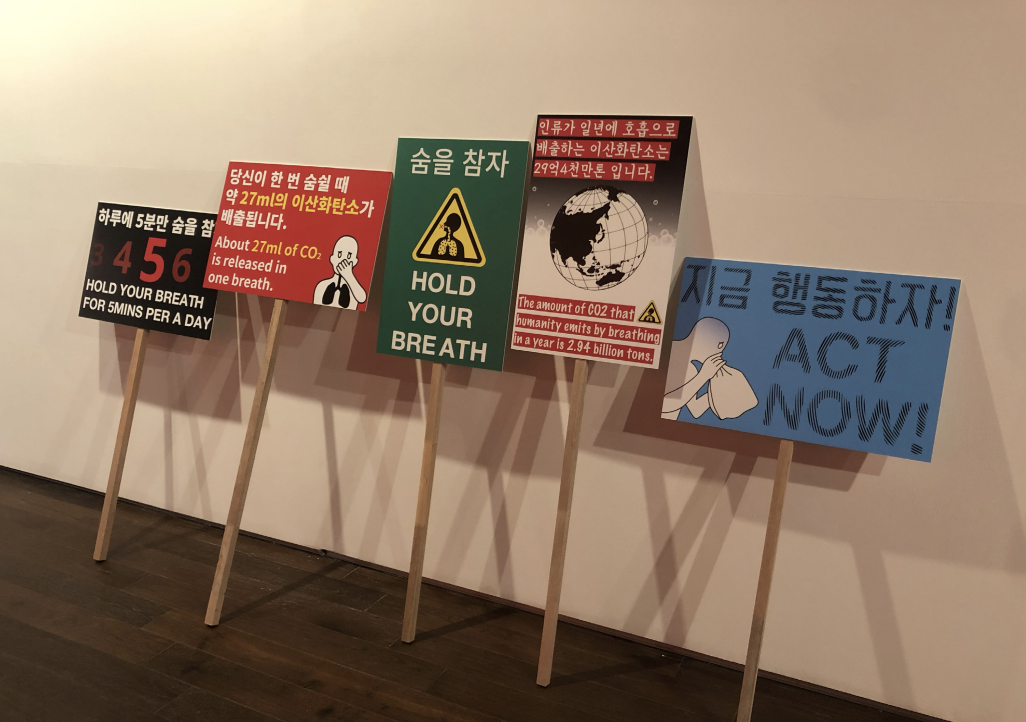
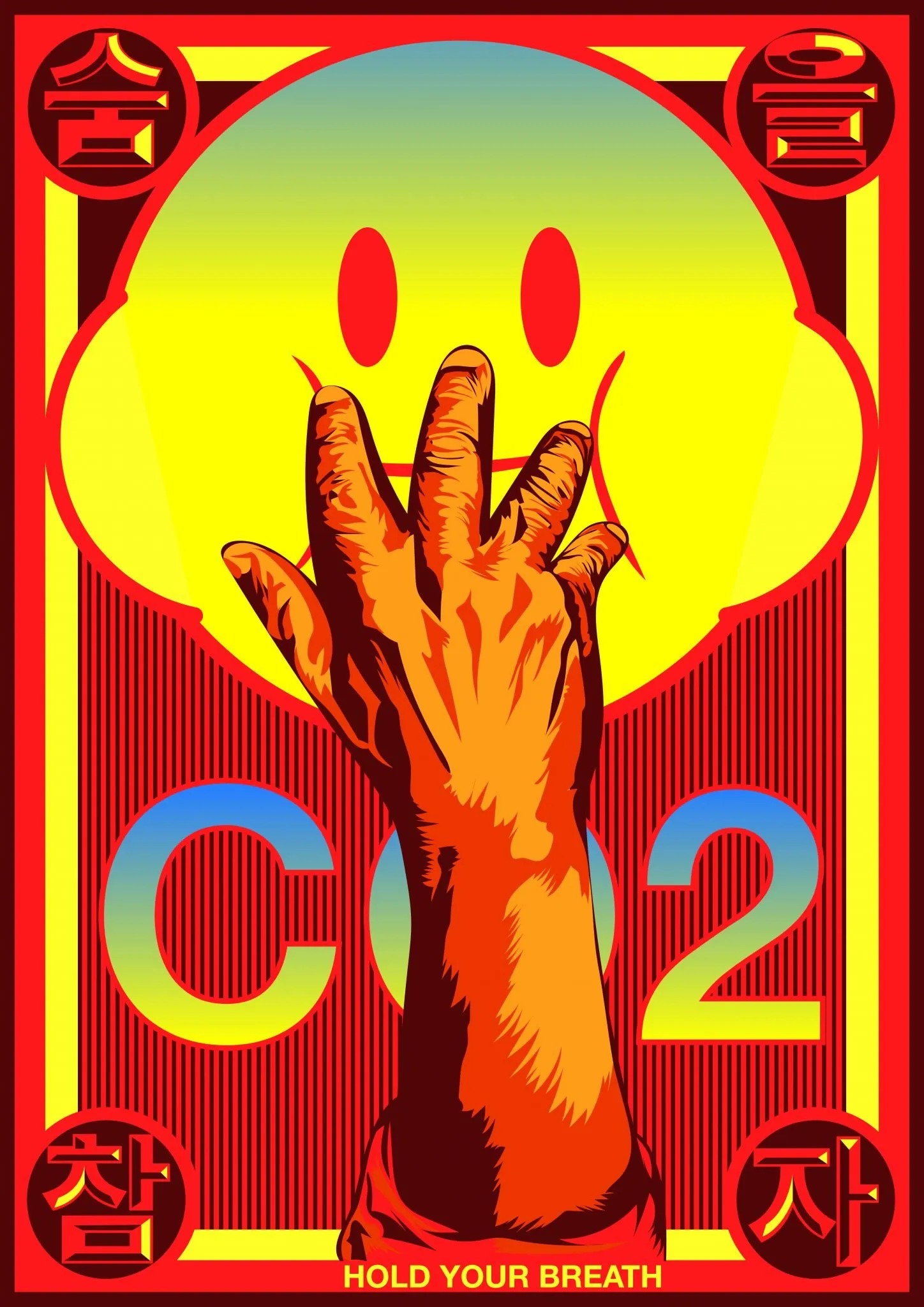
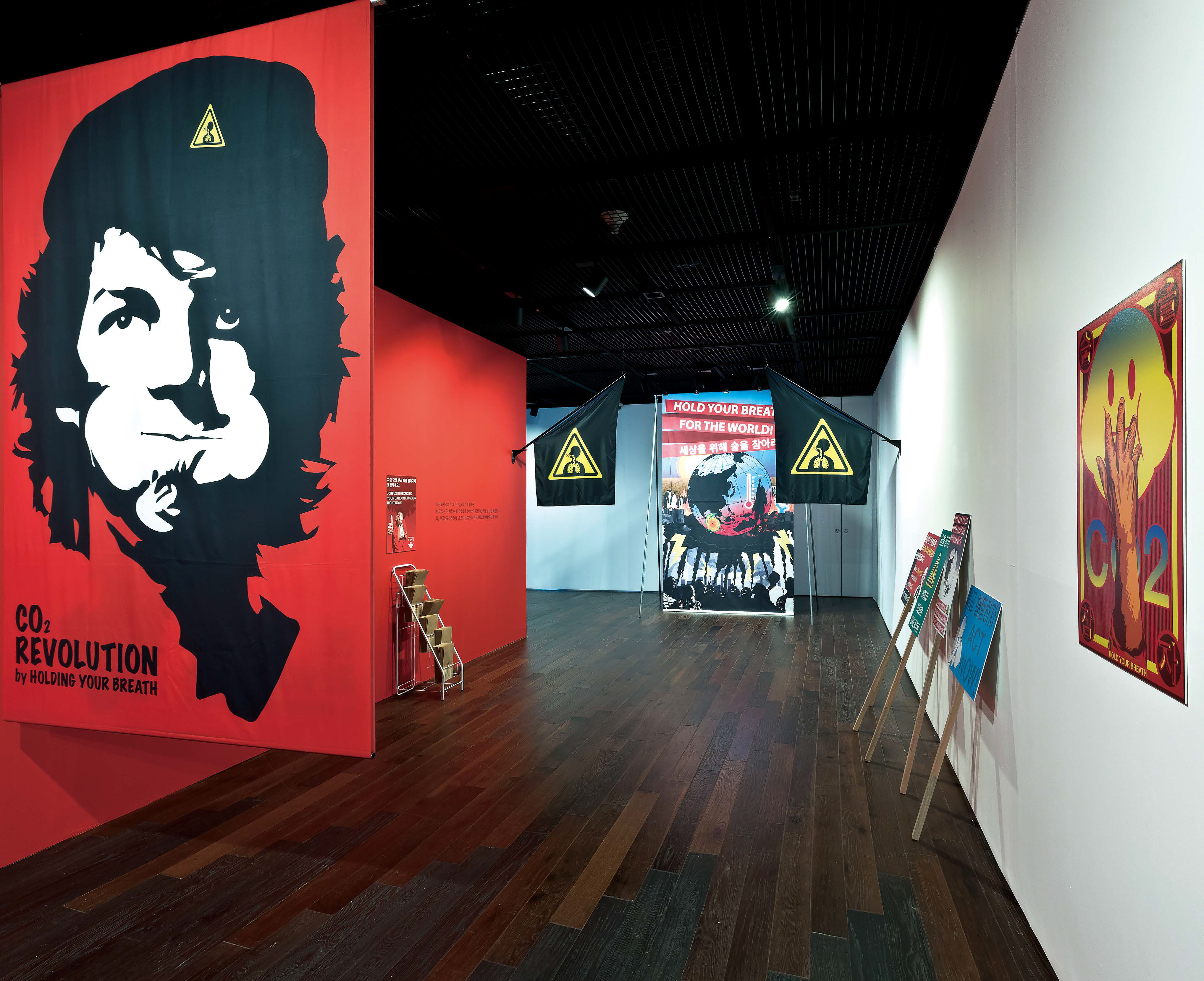
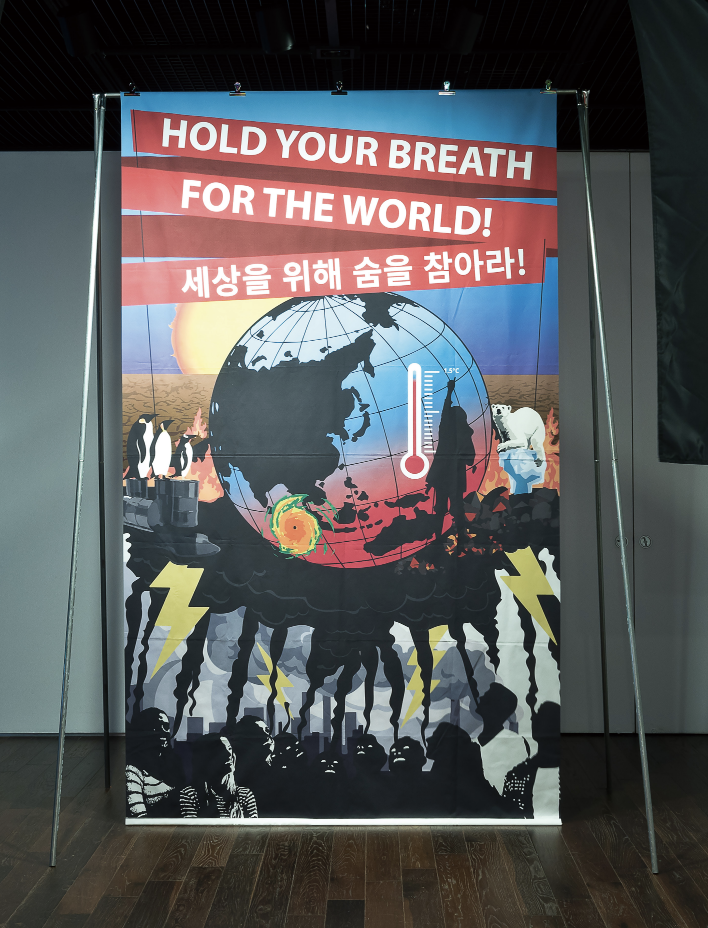
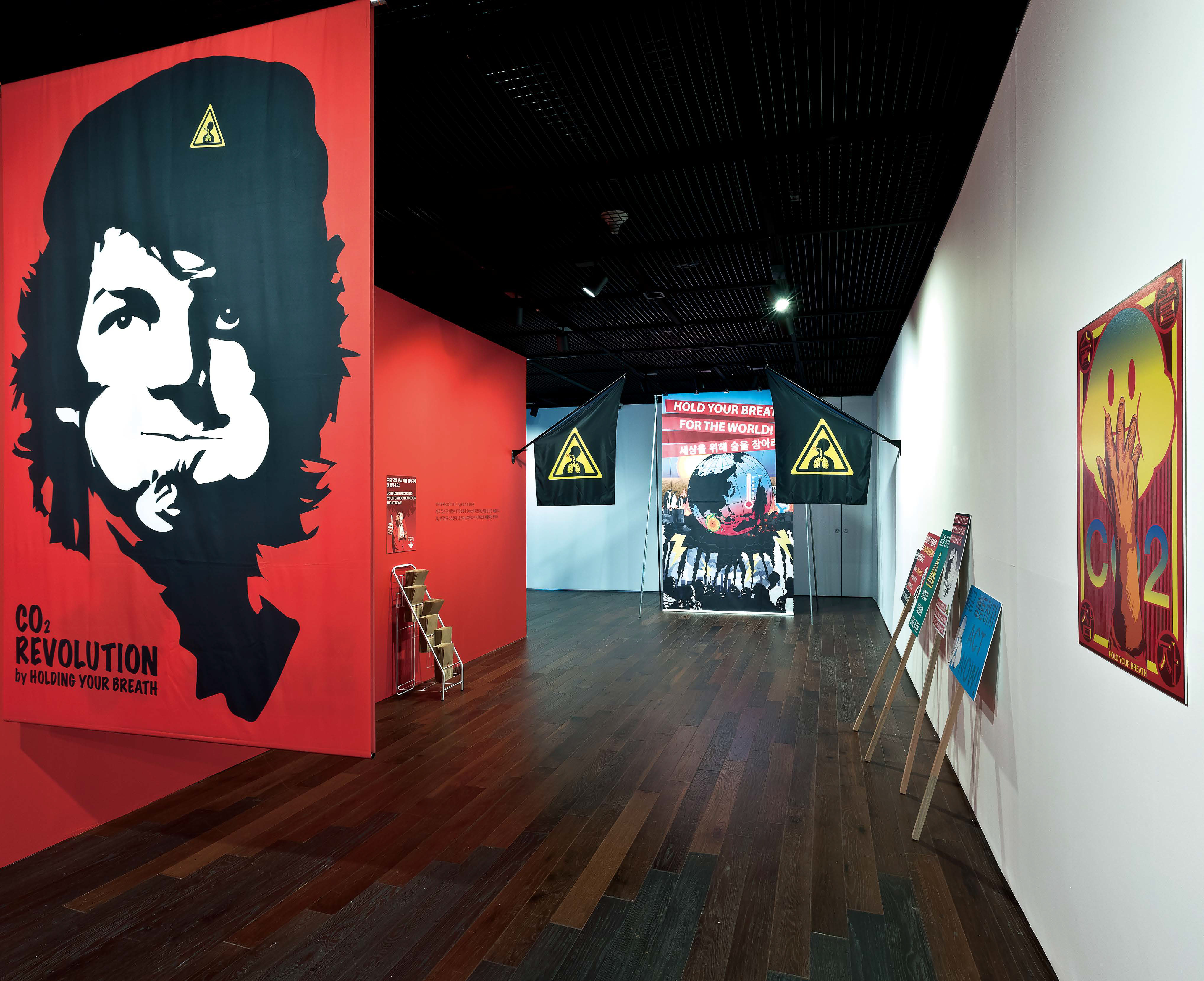
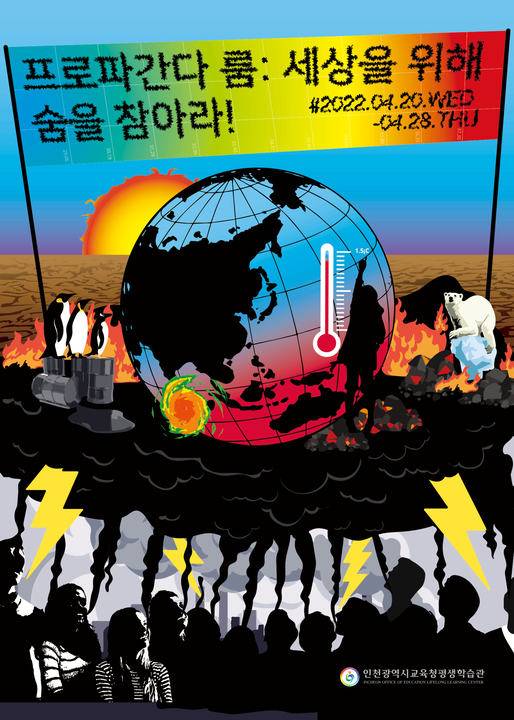
In Propaganda Room, Kim addresses the urgent issue of the climate crisis, yet his approach is filled with irony and futile gestures. Viewers encounter the slogan “Hold your breath to reduce carbon emissions.” The fact that this has no scientific efficacy is not concealed. Rather, it is precisely through this meaninglessness that the work exposes the emptiness of climate discourse, while simultaneously inviting viewers to participate in a futile action together.

Holding one’s breath is useless, yet within that uselessness, viewers experience a form of collective attunement. Here again, the work intersects with Bataille’s concept of “expenditure”: meaning emerges through consumption and loss despite the absence of efficiency. As a ritualized form of such meaningful expenditure, Kim’s practice demonstrates how art acquires another kind of force through the repetition of uselessness.


Mo Kim, Propaganda Room, 2021, Mixed media, Dimensions variable © Mo Kim

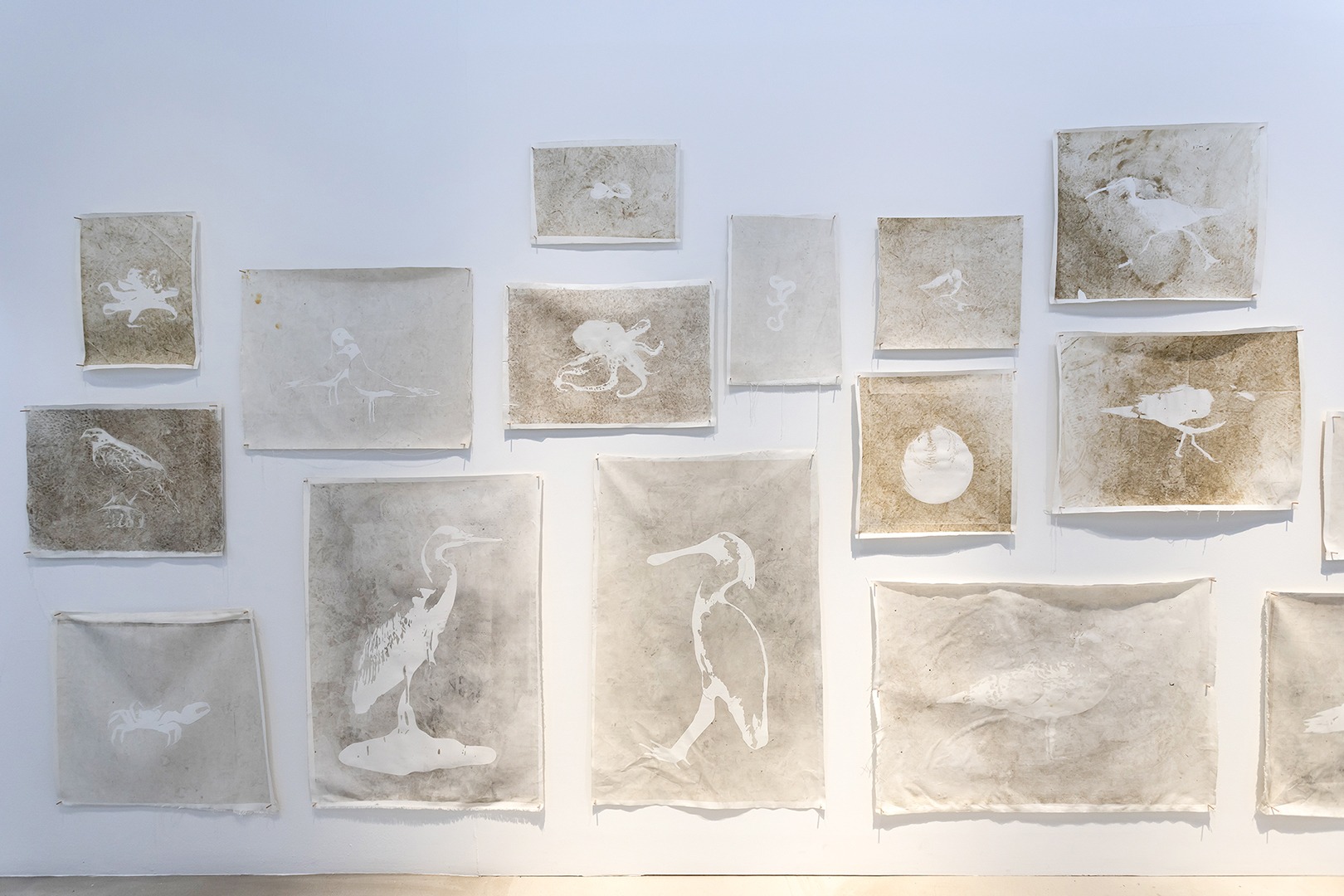
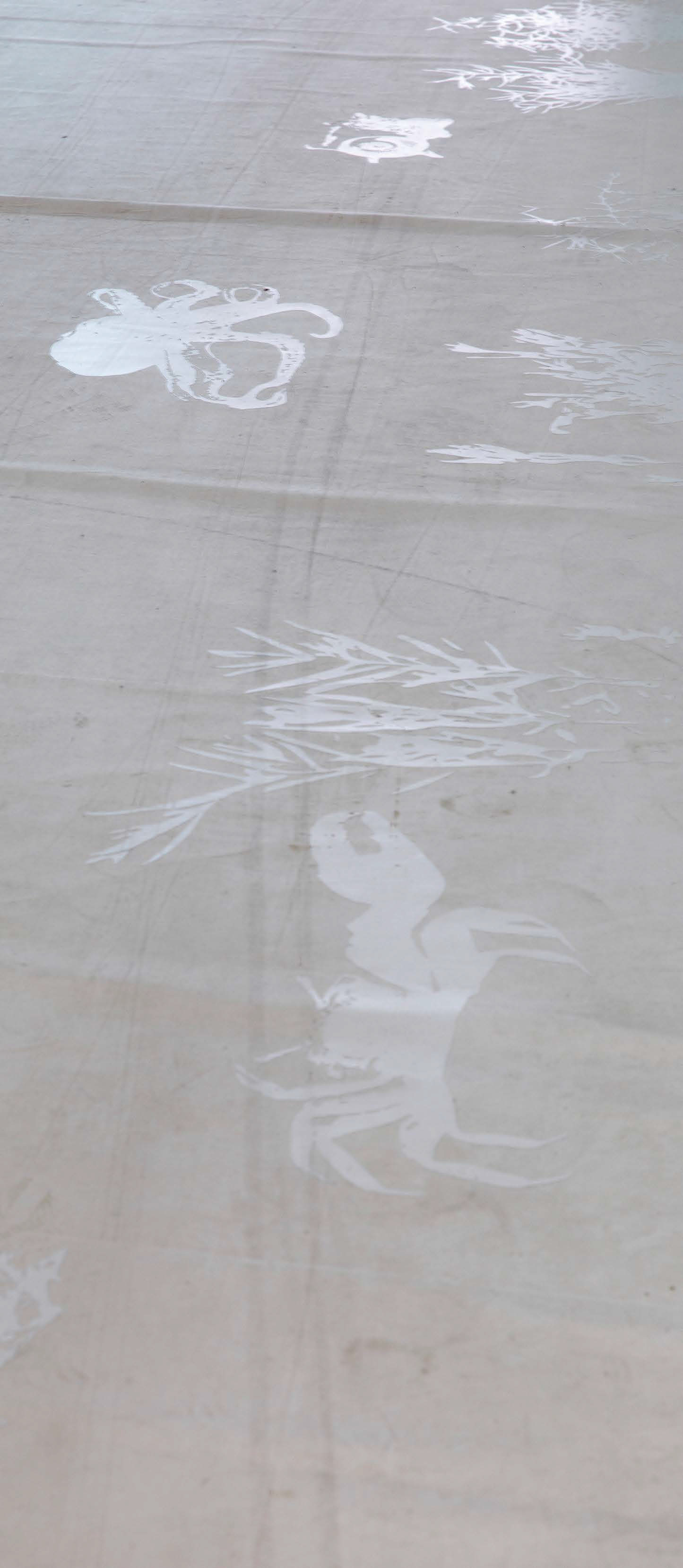
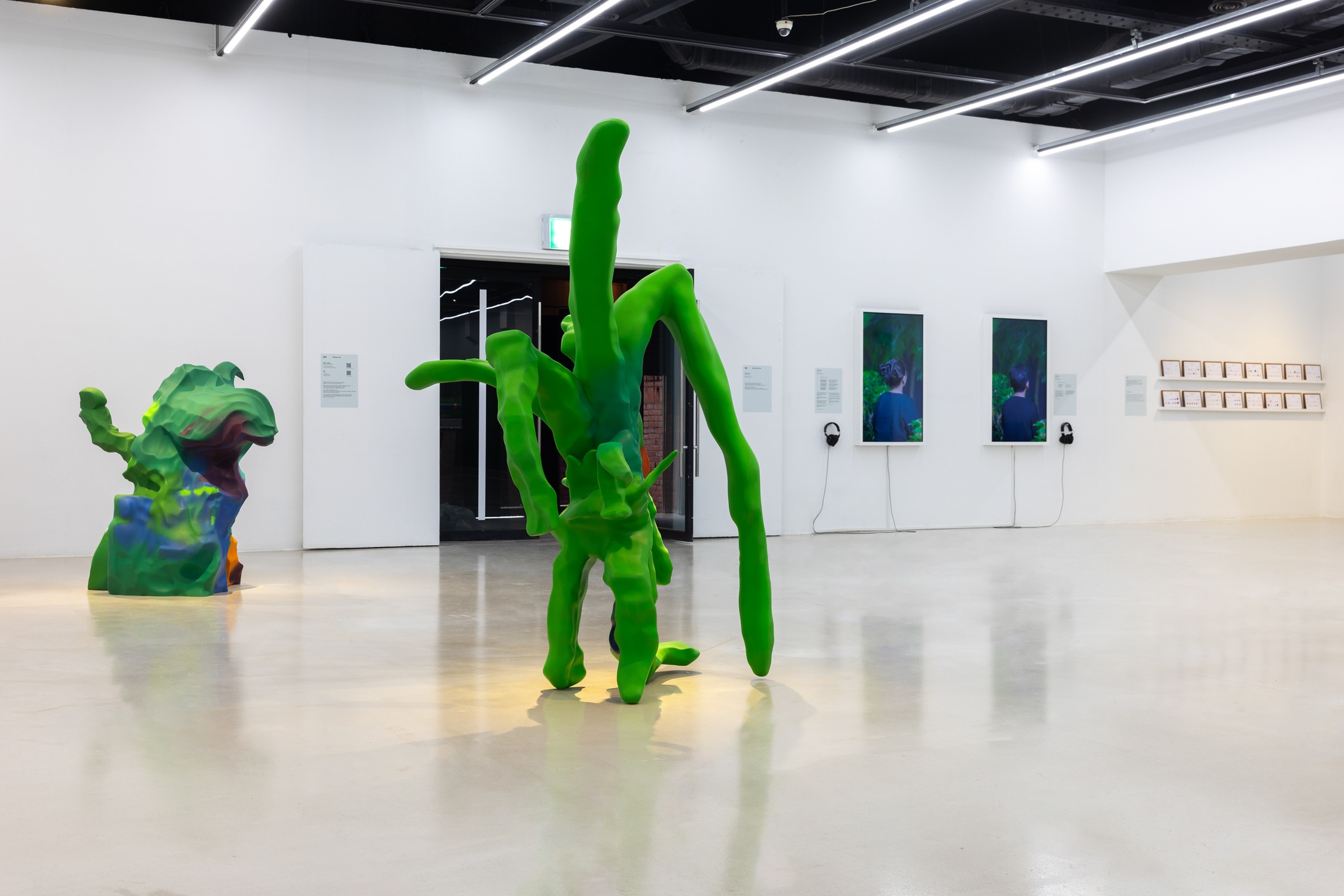
Presented at ARKO Art Center in the first half of this year, Under Your Feet (2025) transposed this aesthetics of unproductivity and attunement into the context of urban ecology. Visitors entering the exhibition unwittingly stepped on white canvases, and as their footprints accumulated across the fabric, the forms of fifty-five protected wild species found in Seoul gradually emerged.

The artist researched plants and animals that have inhabited areas such as Changdeokgung Palace, Cheonggyesan Mountain, the Han River, and Namsan Mountain, translated them into drawings, fabricated them as sheets, and attached them to the canvases. Living beings that have lost their habitats and become endangered due to urbanization and development are rendered visible only through the viewers’ inadvertent participation.

Here, participation does not simply refer to the viewer’s experience. Rather, it is an indispensable process through which the work comes into being, and within that process, viewers and nonhuman beings become attuned to one another’s existence. Footprints are merely unintended traces, yet when they accumulate to revive the forms of disappearing species, viewers unknowingly enter a relational field of attunement with nonhuman beings.

The work extends Kim’s earlier project investigating endangered species that inhabited the tidal flats before land reclamation in Incheon, creating an irony in which lives erased by development are made visible again not through documentation or restoration, but through the unthinking footsteps of humans.
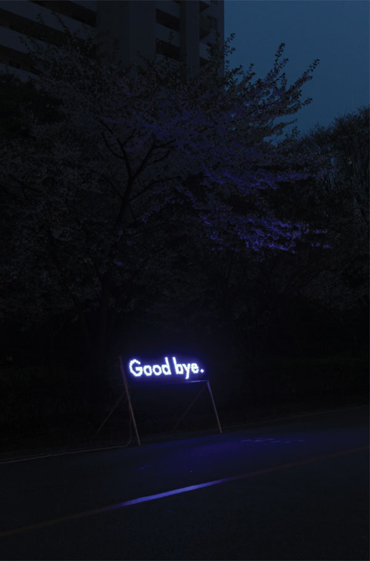

Mo Kim, Under Your Feet, 2021, Footprints on canvas, Dimensions variable © Mo Kim

III. The Sovereignty of Unproductivity and Immaterial Sensibility: Ritual for Unproductive Art (2025)
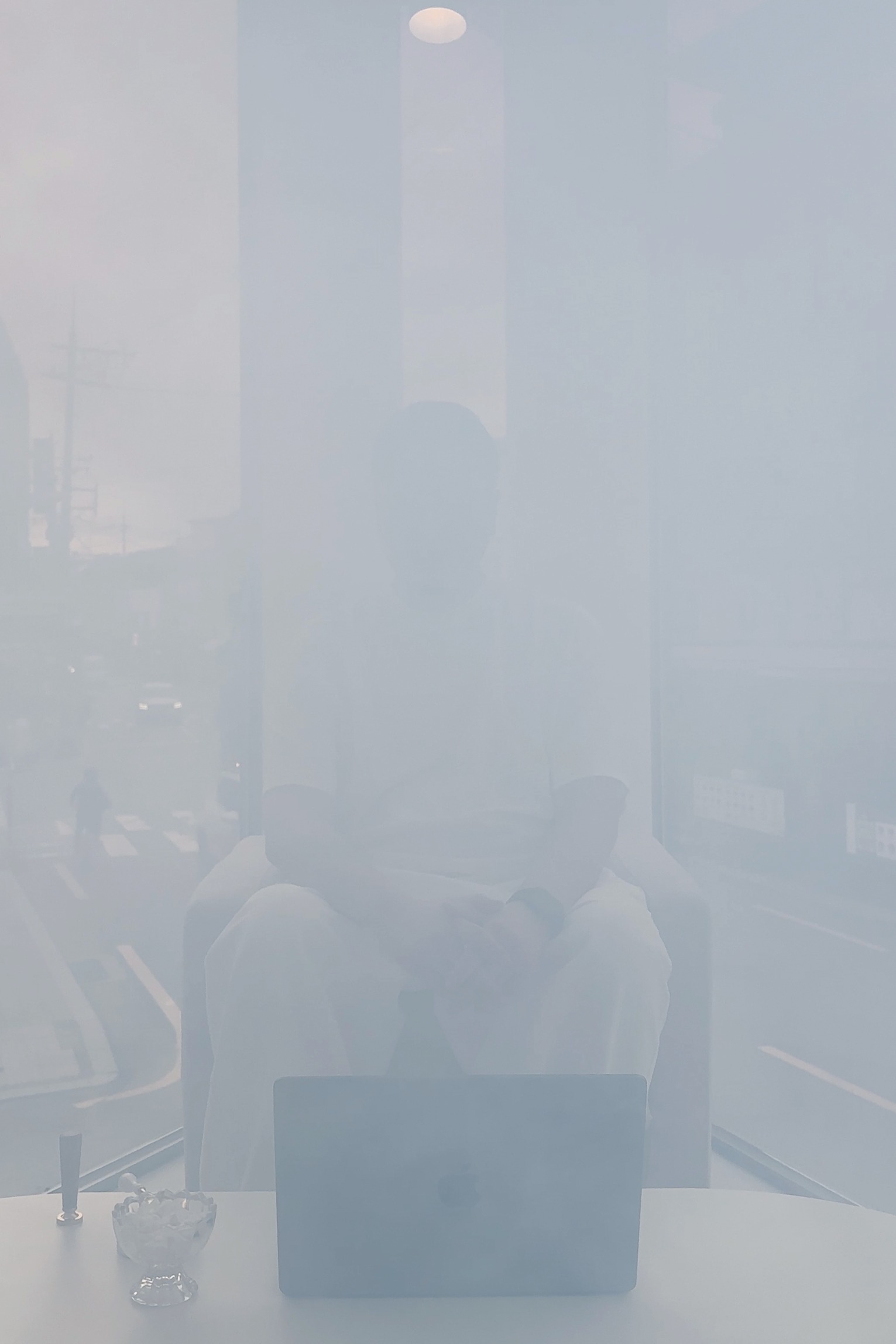
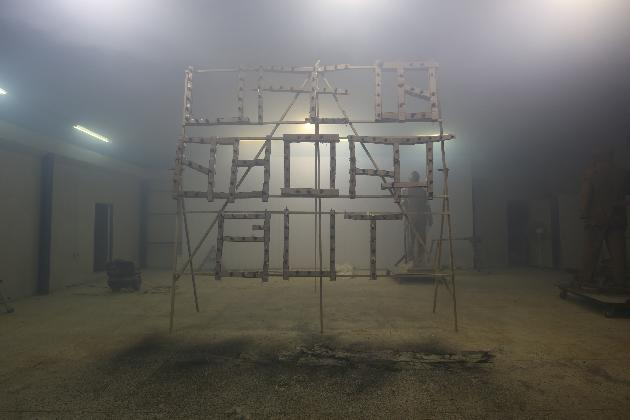
In the new performance exhibition 《Ritual for Unproductive Art》 (Art Space Osisun, October 15–19), held over five days beginning October 15, Mo Kim makes these ideas more explicit. In an exhibition space filled with fog, the artist and audience sit facing one another as a synthesized voice recites stories of works that were never realized. At the end, the viewer is handed an empty envelope bearing only a title.

The envelope serves as a monument attesting to an artwork without material substance, yet the actual work exists only in the irreversible moment of experience and sensation. Unlike contemporary digital assets such as NFTs, which reduce the ownership of art to the level of documents and data,

Kim transforms evidence and records from forms of “guarantee” into proof of absence and expenditure. He exchanges time for shares, uses breath-holding and footprints as artistic media, and probes the points at which the language of efficiency and achievement fails to capture art.

At the heart of today’s volatile contemporary art market, Mo Kim is a rare figure in the Korean art scene who redefines art through the dimensions of expenditure and immateriality. Art comes alive not within the logic of production or accumulation, but through loss and waste, lack and absence.

Just as Klein consecrated gold and receipts through rituals of burning and casting away, Kim revives art as a ritual of immaterial sensibility and unproductivity through envelopes and contracts, waiting and breath-holding. In that moment, art exists in the most immaterial form and yet as the most intense reality.

The footprints left by viewers and the endangered species revealed through them, together with the experiences of holding one’s breath and waiting, ask us: What does art leave behind, or what does it cause us to lose?

References