While the meaning of ‘sensing abstraction’ has to do with stimulating the nerves of the five primal senses of the human body in multiple ways, this is based on the premise of the process of reproducing the ‘non-presence’ of abstraction in any way possible.
Therefore, when we come across visual art in the realm of abstraction, the nerves of the senses that aren’t used much in the everyday context are sharpened, and we strive to see or read what lies beneath the other side of what seems natural. For this reason, perhaps we must regard abstraction as a special phenomenon of the senses, employed to perceive the so-called metaphysical subject, or as an expression itself.
However, while the reproduction of this sensation may capture a frozen moment, it could also manifest the moment, divided into smaller pieces, into endlessly generated and moving motion. Keun Wook Ji’s interest lies on the modern particle physics, based on Democritus’ principle of non-continuous and non-segmental atoms which compose the universe, and the delicate dynamism caused by the movement of the presence of the elementary particles.
Ji’s abstract works arise from the artist’s pursuit of the characteristics of such abovementioned abstraction. And even the title of the artist’s solo exhibition, 《Moving Sensation》(space xx, 2018), clearly tells us as to what his abstraction experimentations concern.
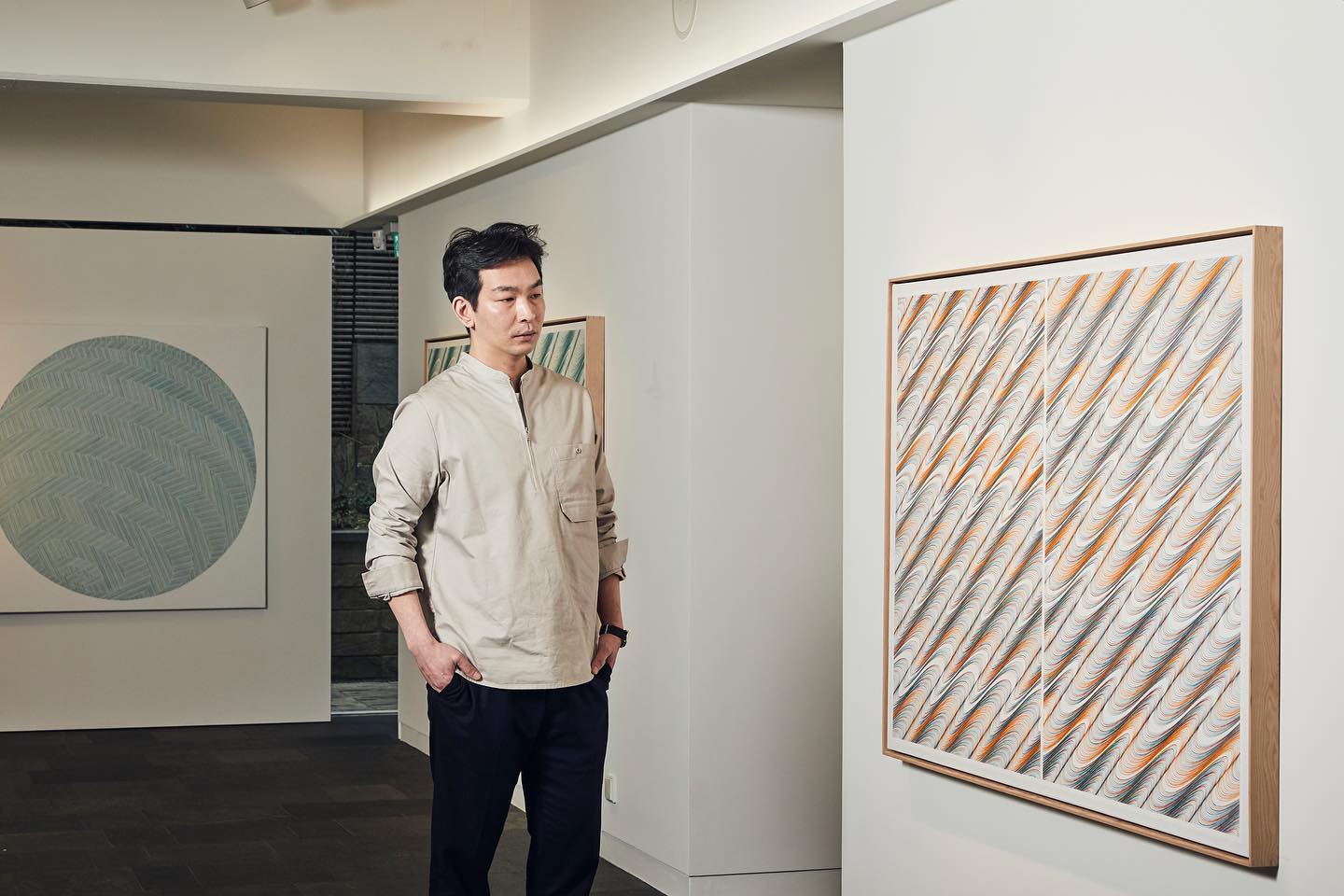
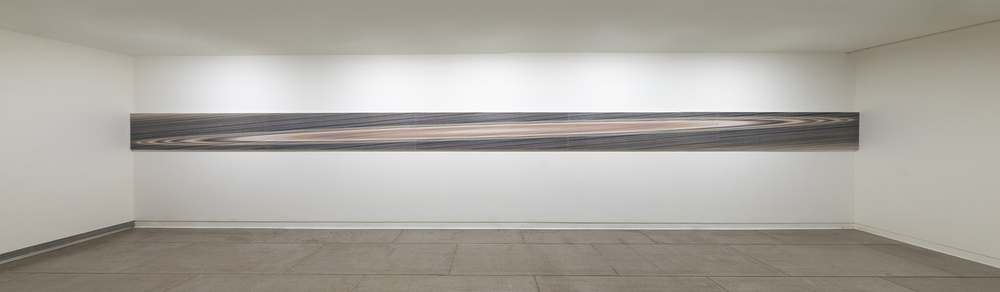
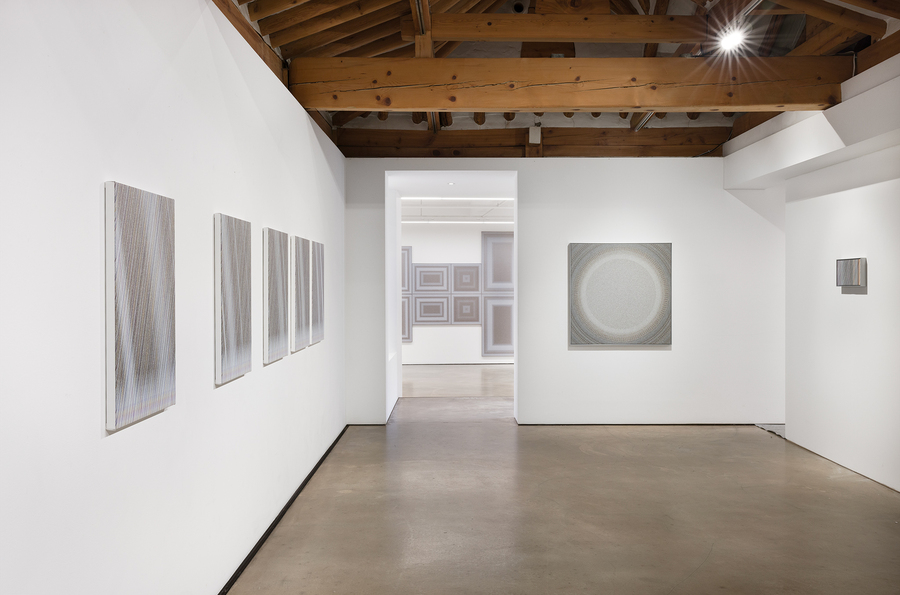
Ji focuses on flat abstract works using the most fundamental visual elements of the points, lines and planes. In fact, because his work takes on the form of a visual art category classified as ‘painting’, it would be appropriate to term the main keyword of the artist’s interests, if there were any, the ‘moving visual sensation’.
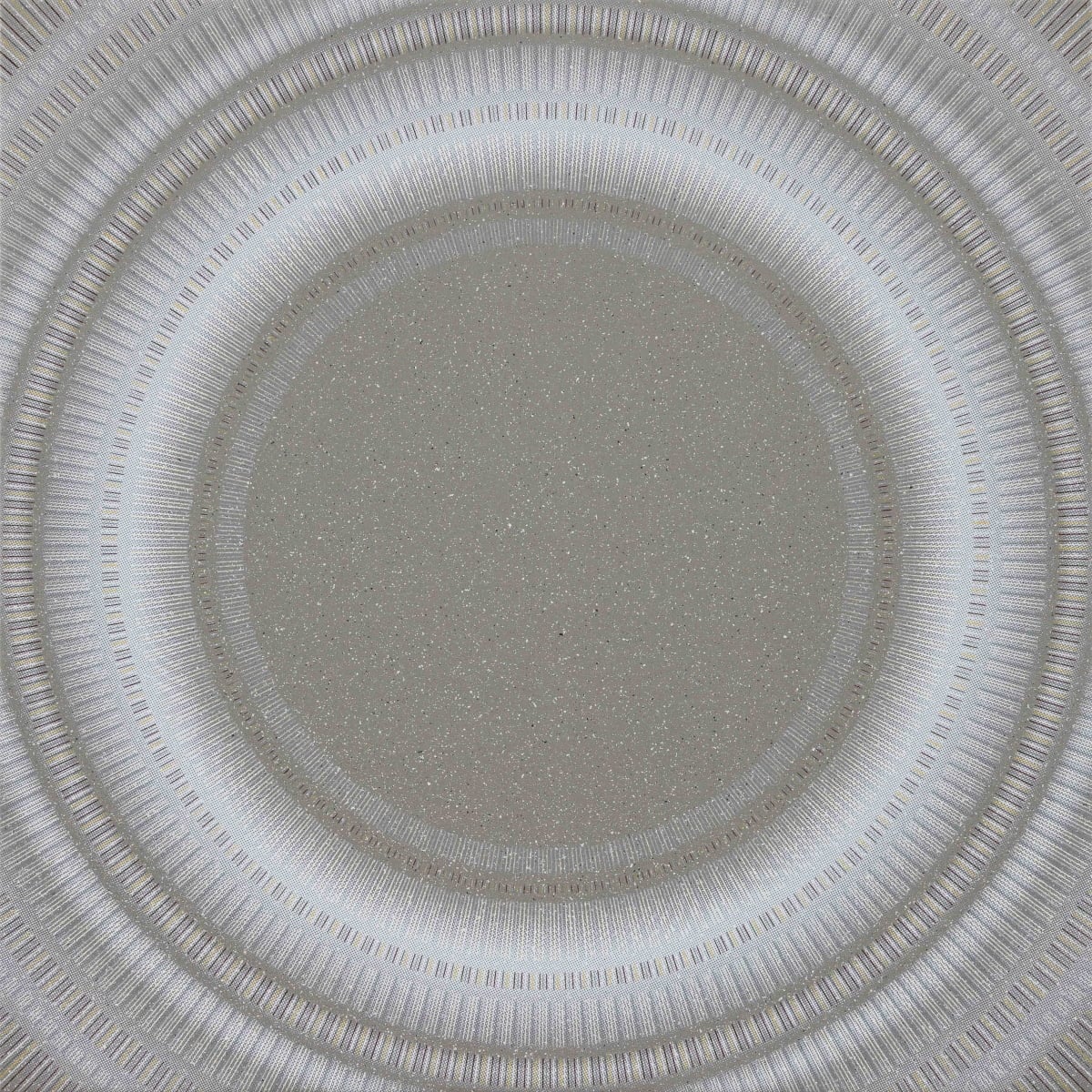
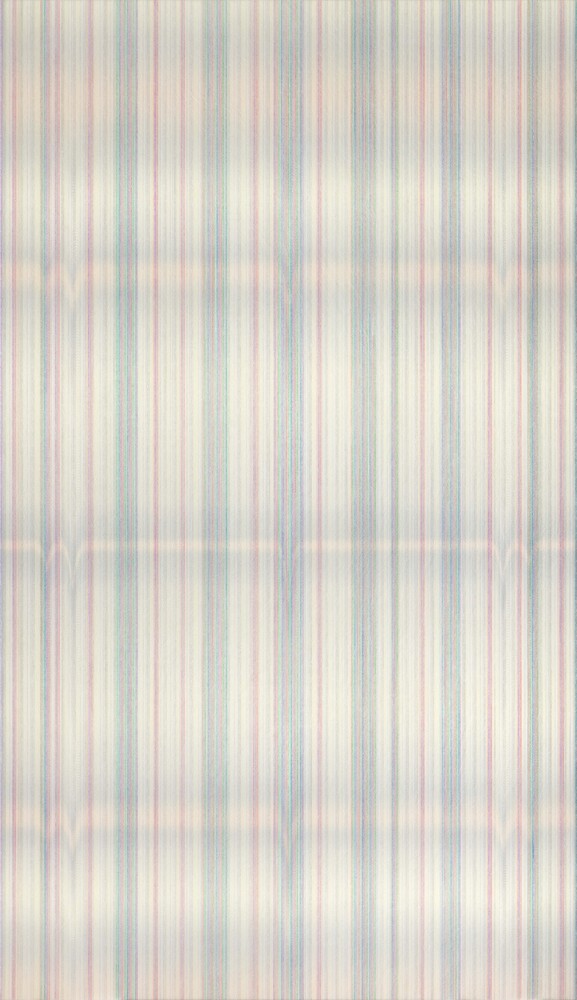
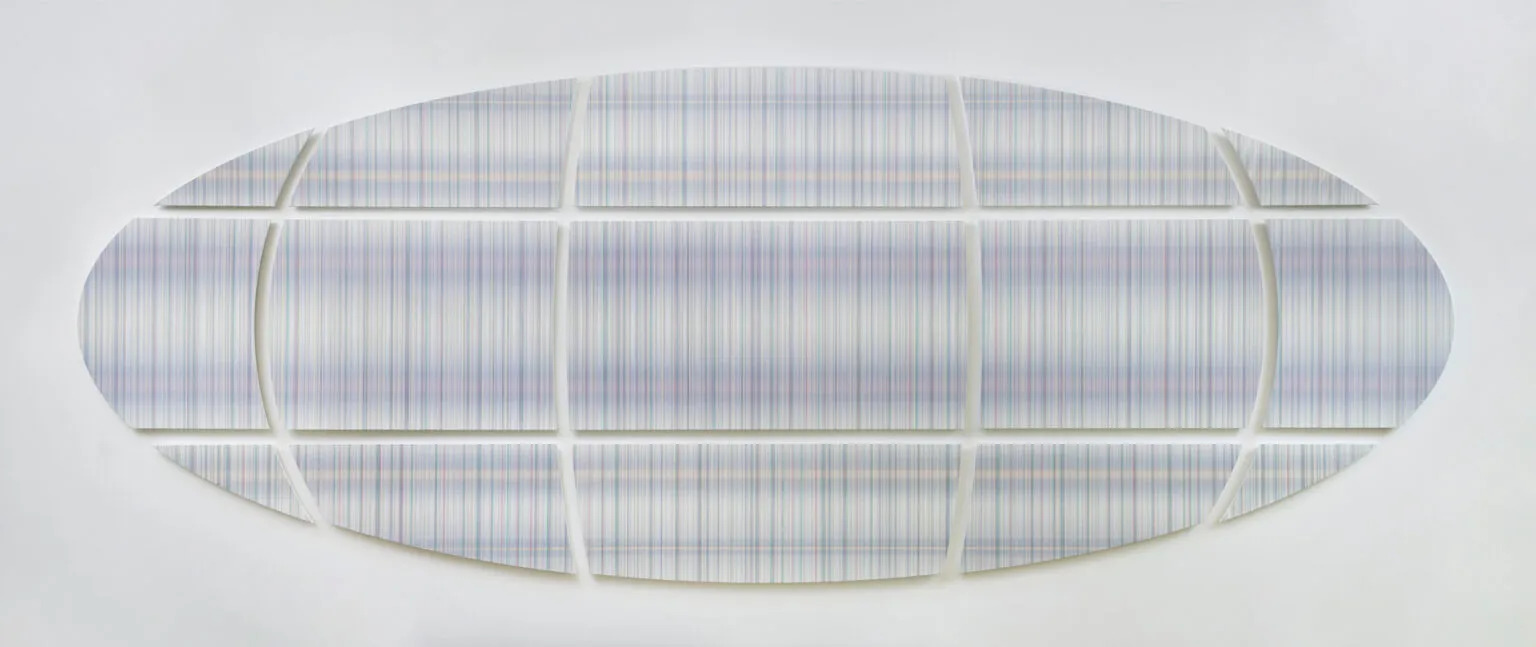
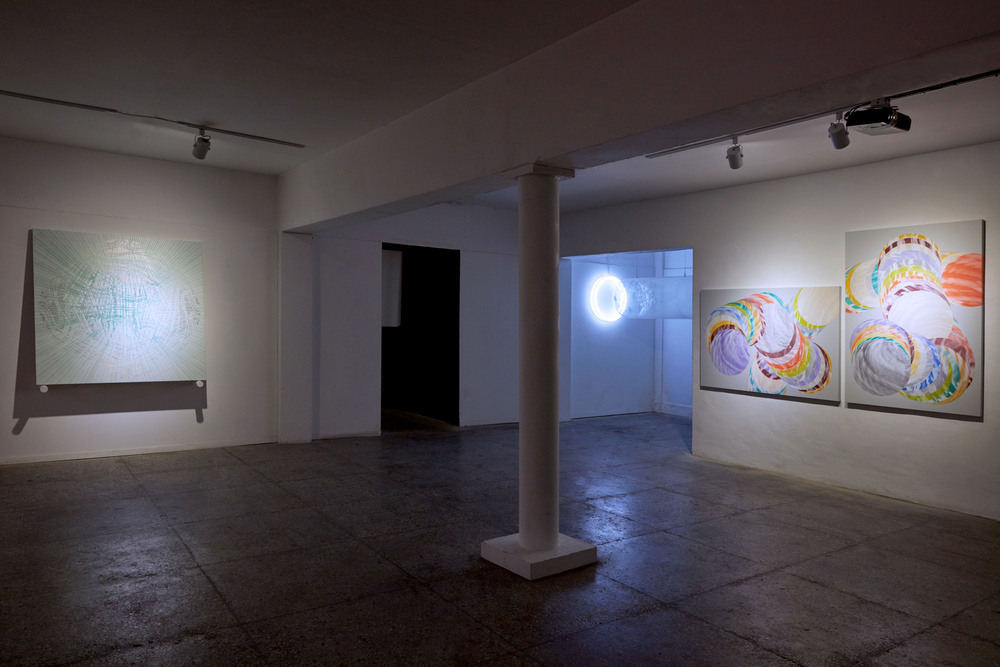
Indeed, Ji’s series of works ‘Actual Dynamics’ and ‘Cohesive Sphere’ pass through the two conceptual points of ‘movement’ and ’visual sensation’. What’s particular about these works is that they use the latter, the visual sensation as a conceptual framework for a visual art experimentation, while immersing more deeply into the concept of the former.
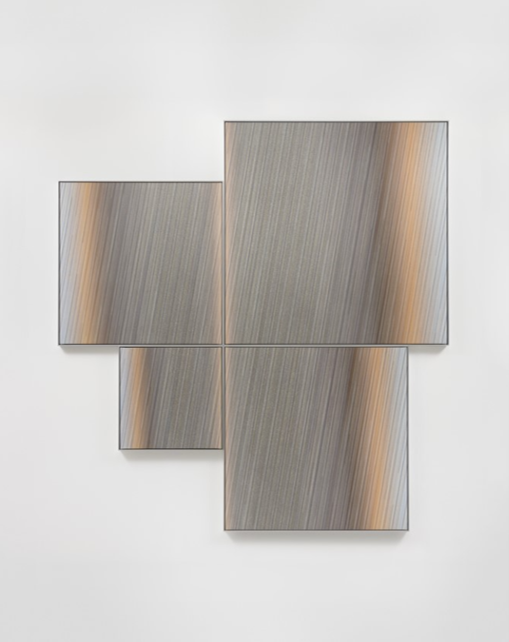
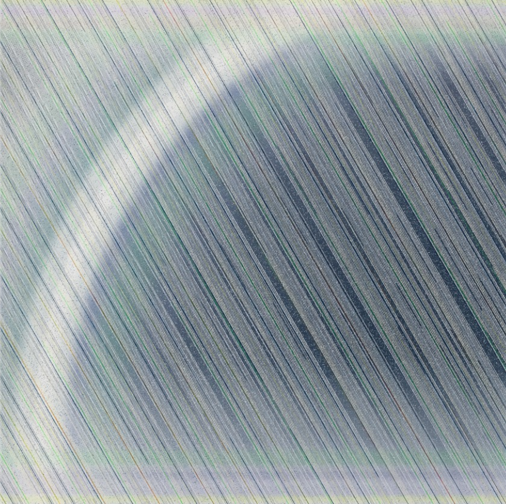
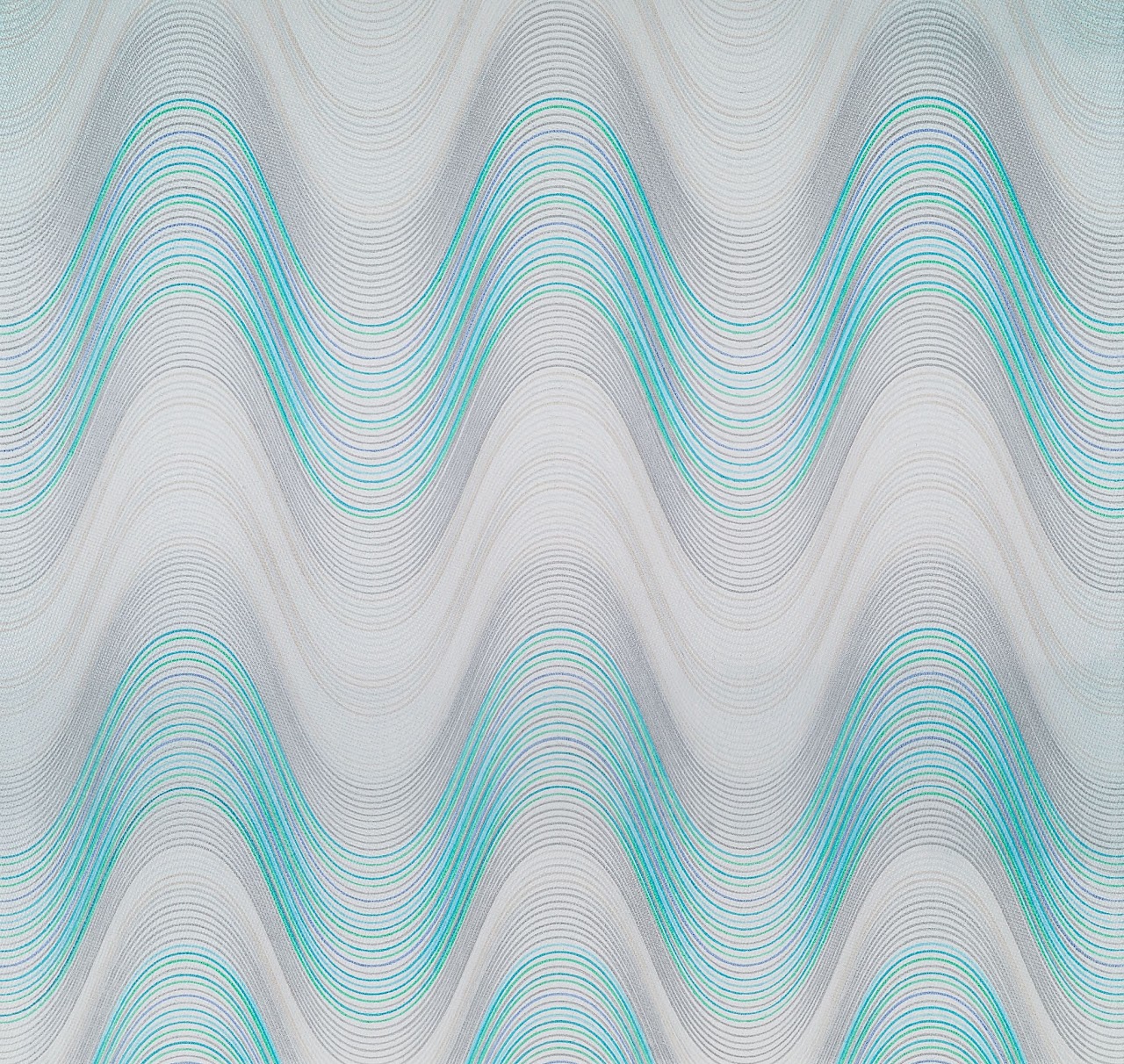
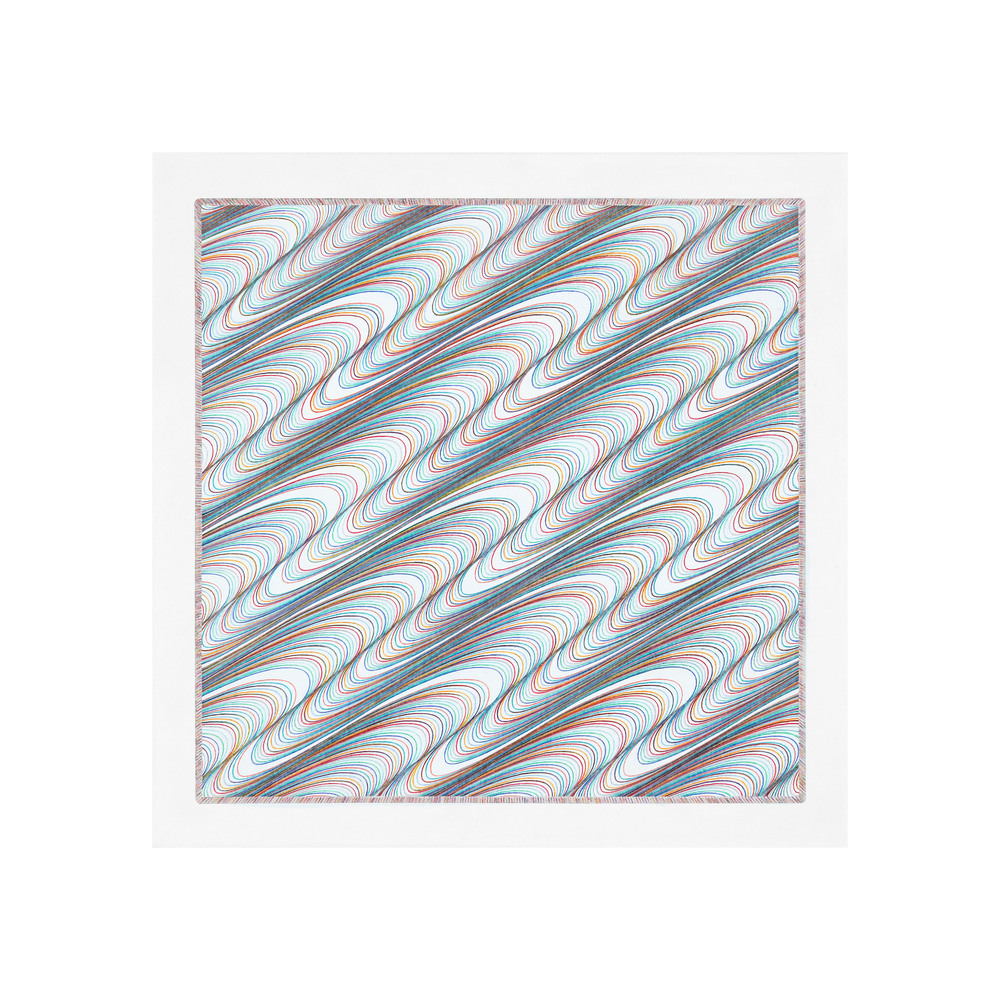
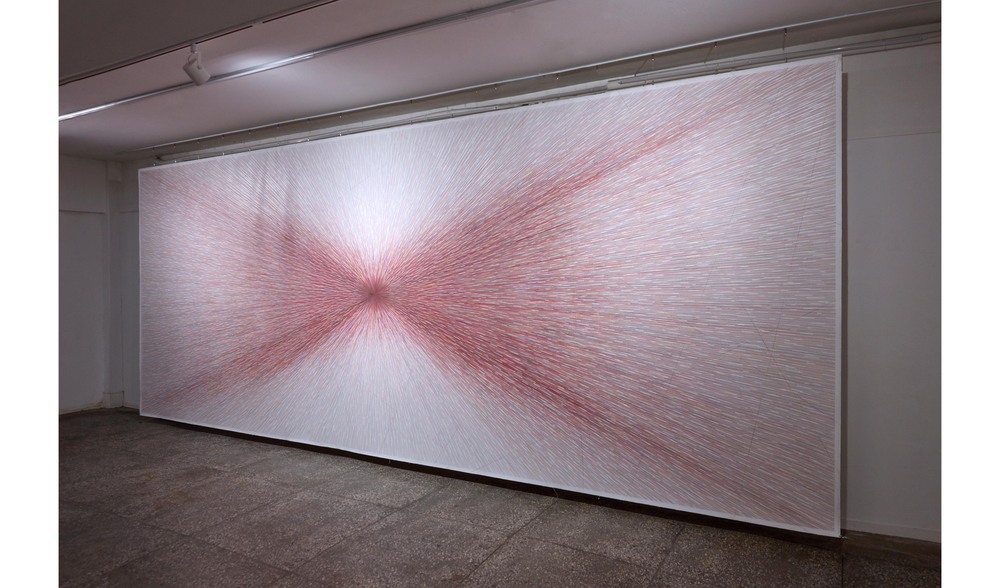
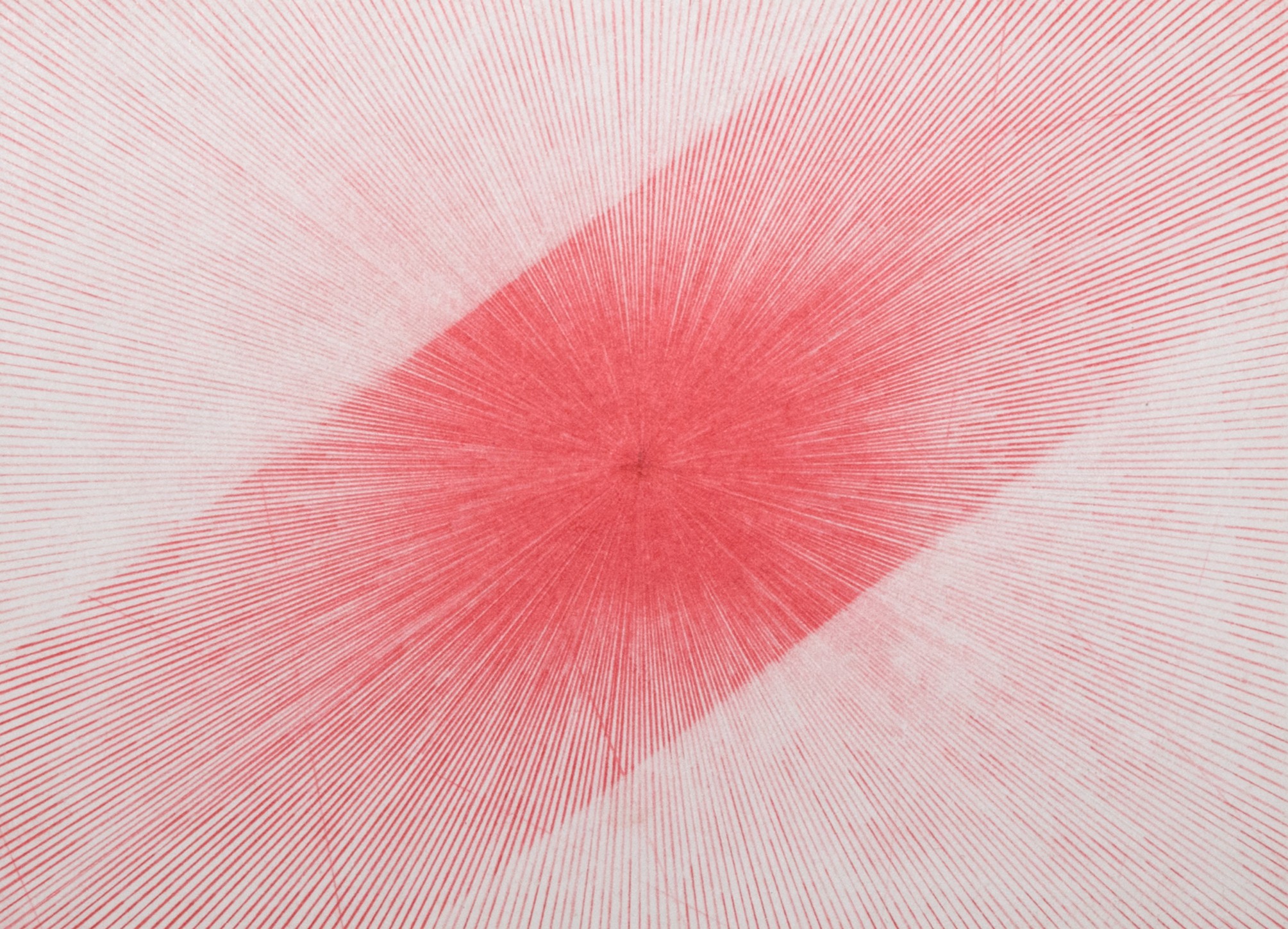
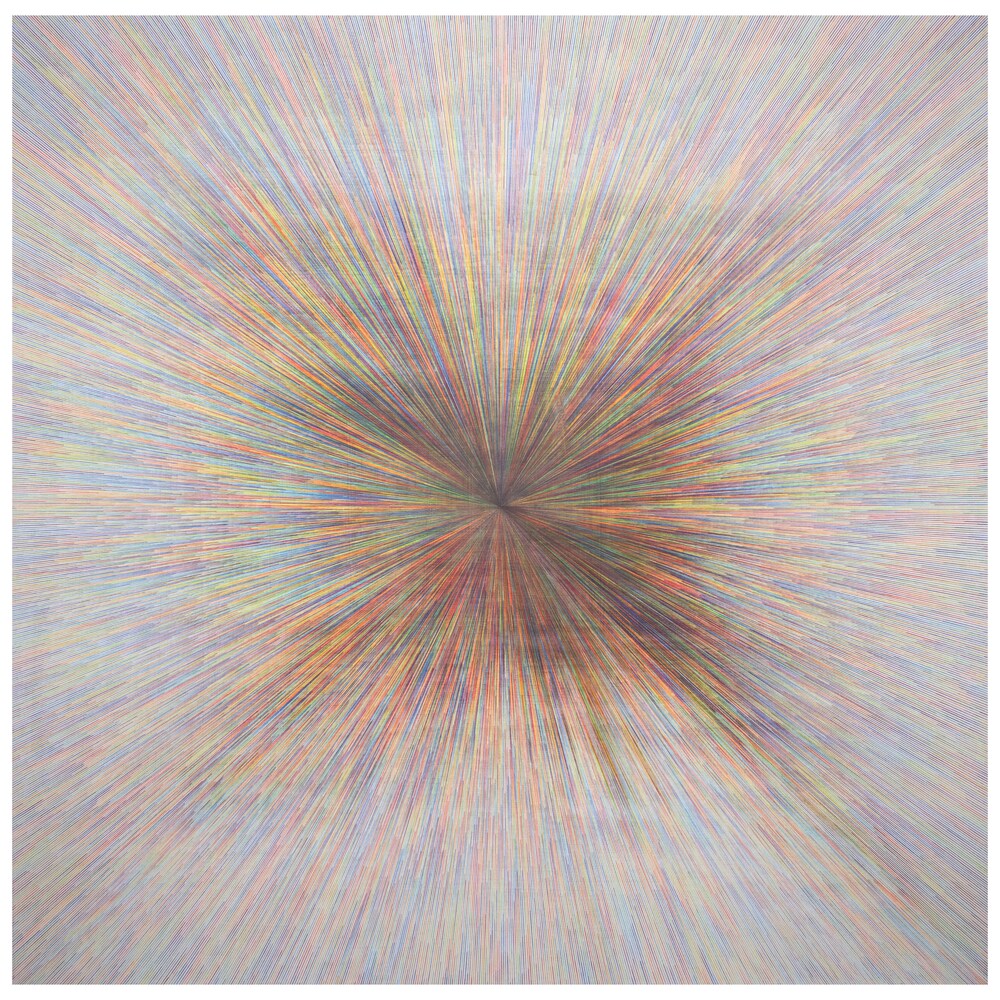
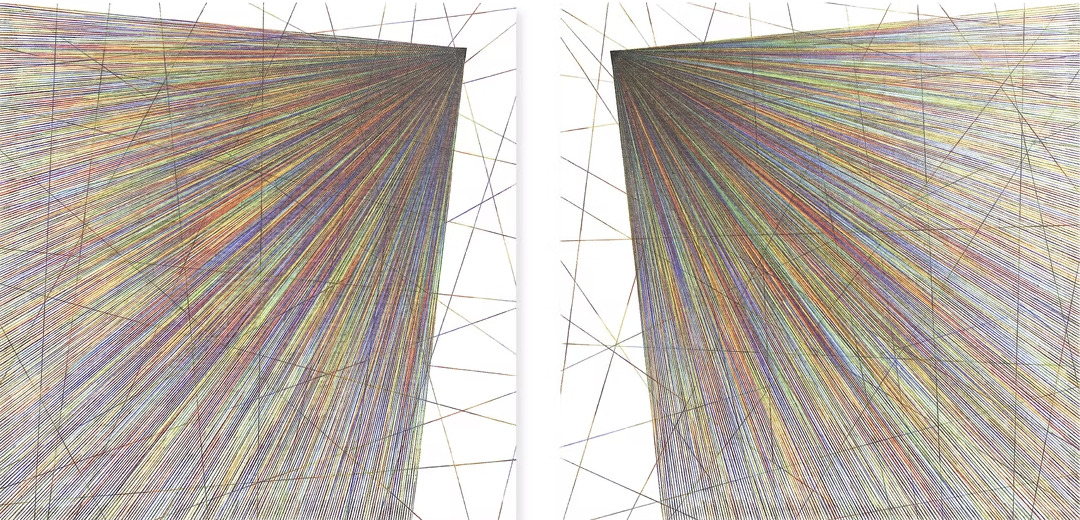
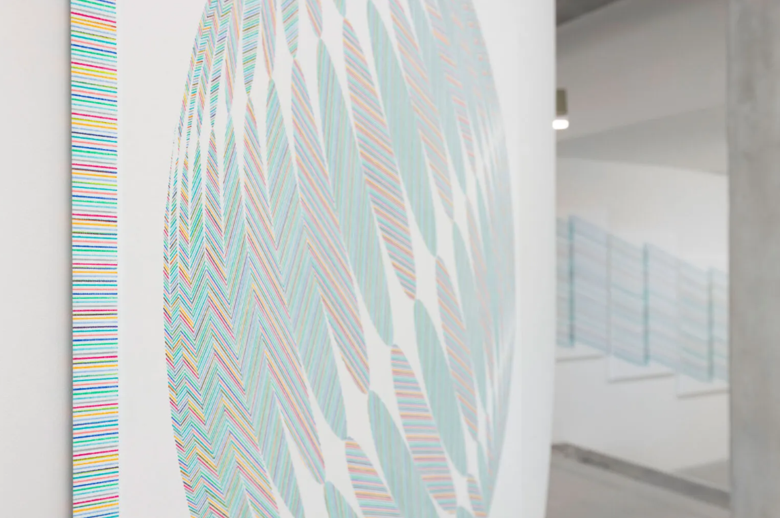
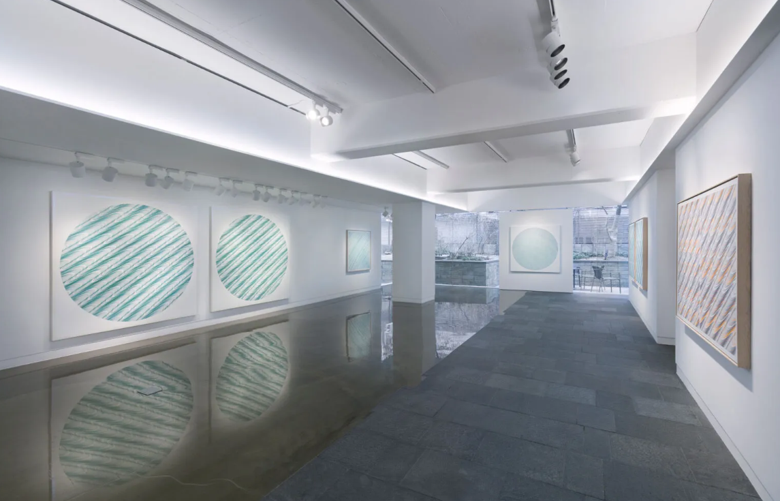
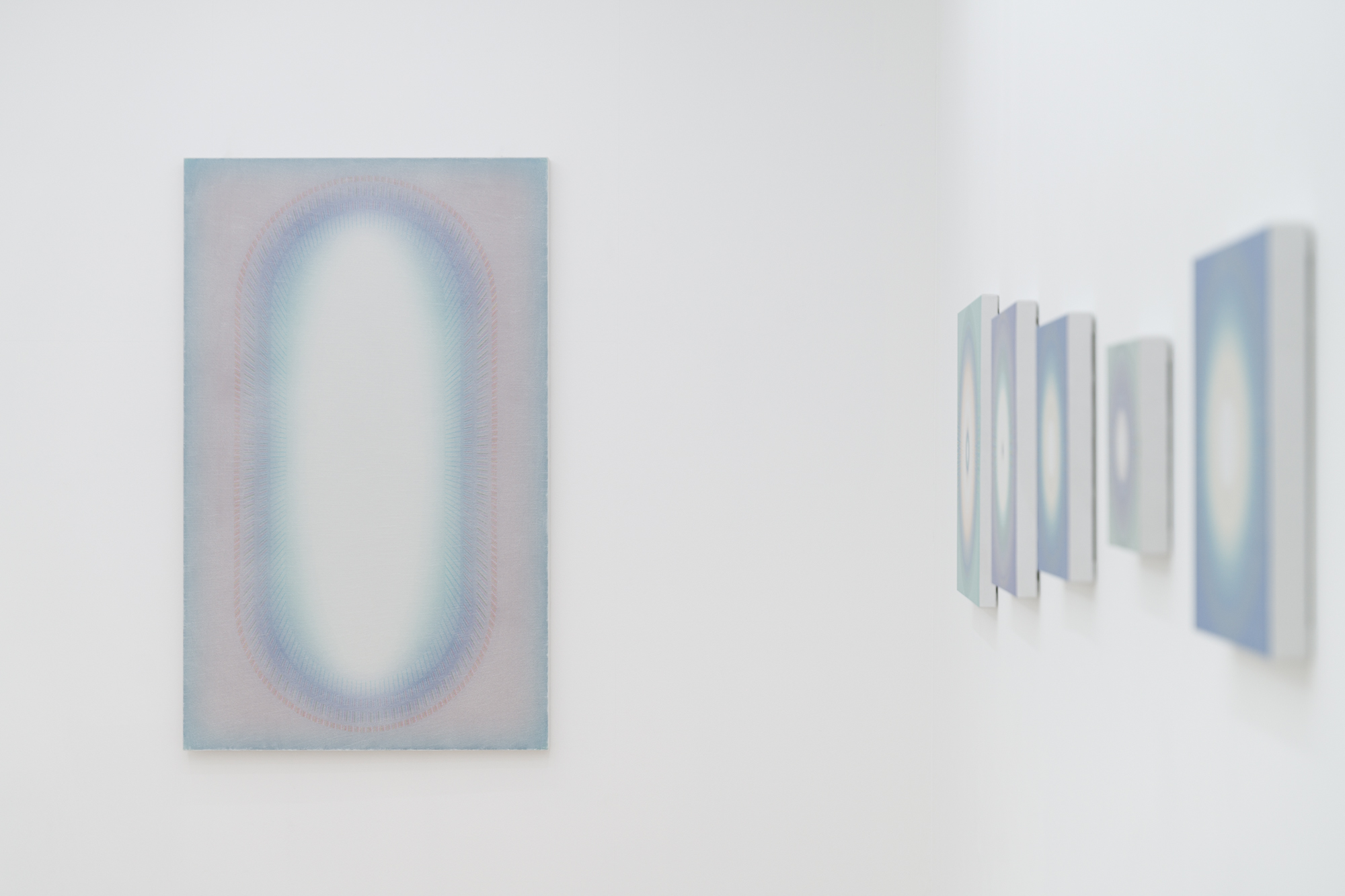
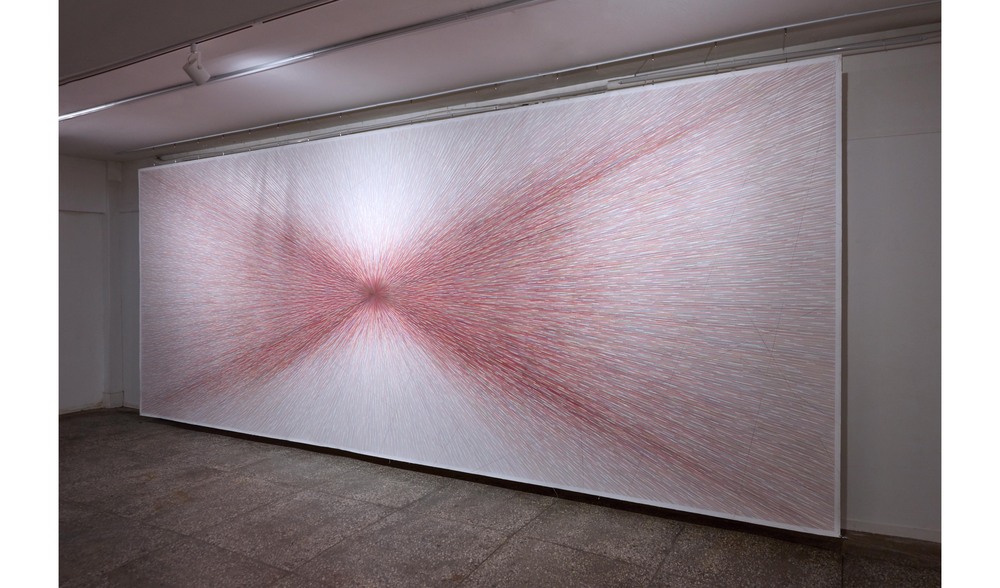
While these series continue to remain within this context in the exhibition, they lead to works such as Actual Dynamics (2018) and Cohesive Sphere Wave Ver.(2018) through which the artist also attempts to amplify the possibility of interpretation for each of the works. In Actual Dynamics, lines in colored pencils drawn from the edges of the work in a fixed distance from each other, converge in a single point in the center.
In this work, the artist fills in the sequential flow that mediates in between the planes formed by steering the angles of the lines created by the chain of dots, and situates these individual structures on clearly different layers.
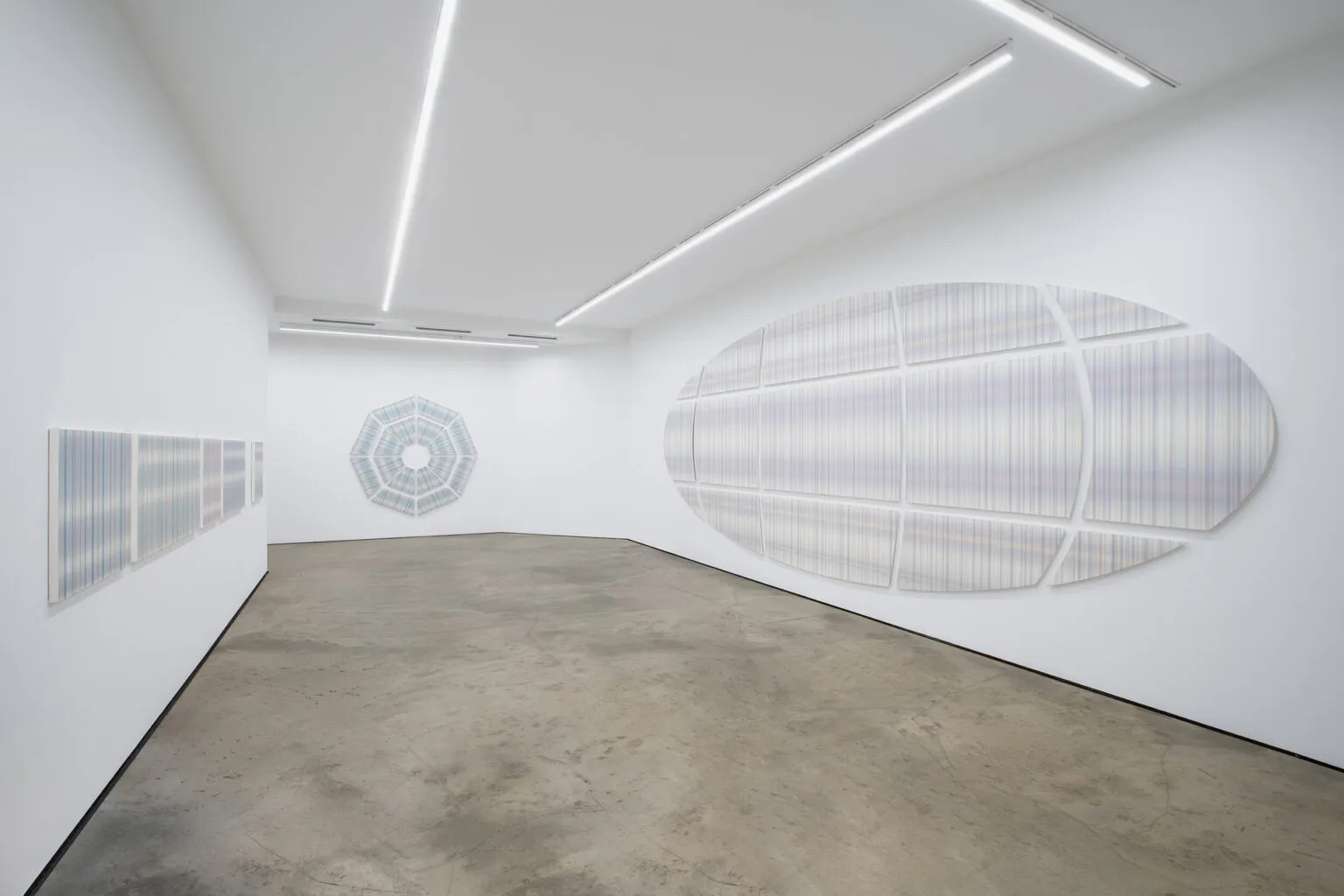
What’s important here is the way Ji brings out our perception of the plane. The artist creates a particular sense of depth through the manifestation of the perspective produced by the lines which are expressed through the variations in color and density, and the dots constructed by the crossing of these lines. In Cohesive Sphere Wave Ver., the artist’s expression of such sense of movement is demonstrated in a more immediate way.
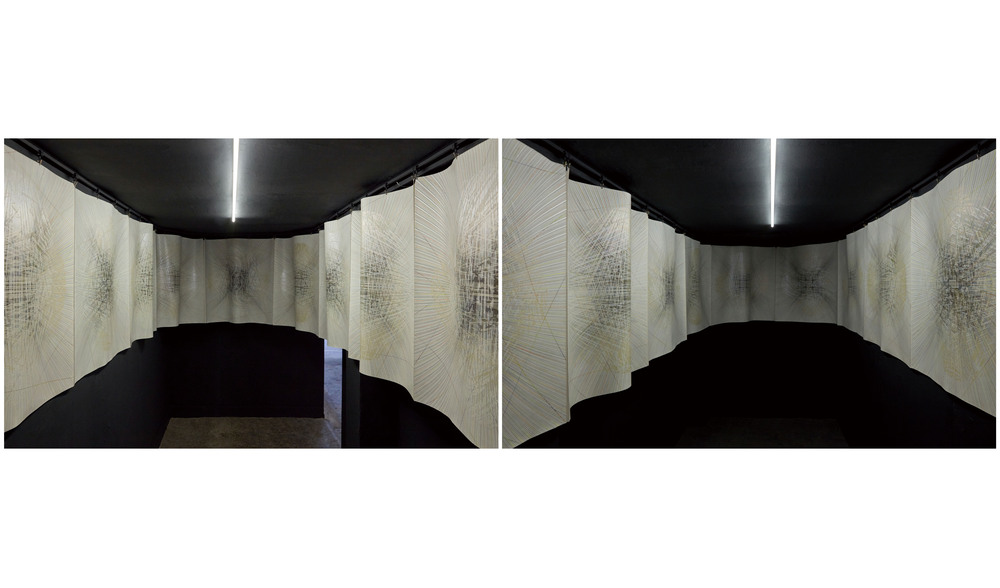
This is because the single point perspective of Actual Dynamics shifts into multiple point perspective in this work, and its visual form also conjures up a moment of rupture. The impression of this rupture shakes the fragmented images that are complexly divided and scattered across the surface of the work, creating yet another form of movement-sensation in Cohesive Sphere Wave Ver. which differs from the rolling facades in other works.
Through such works, Ji visualizes the contradictory self-motion that was previous excluded, or in other words, the so-called ‘flat visual-sensational movement’ stirred up by rendering three-dimensional movement on the flat surface.
One may claim that such way of exploring the 3-dimensional motion through the 2-dimensional flat abstraction naturally advanced the artist’s experimentation of visual sensation somewhat. Despite so, however, it seems that the inherent limitations of abstraction and flat plane could not have been completely subverted.
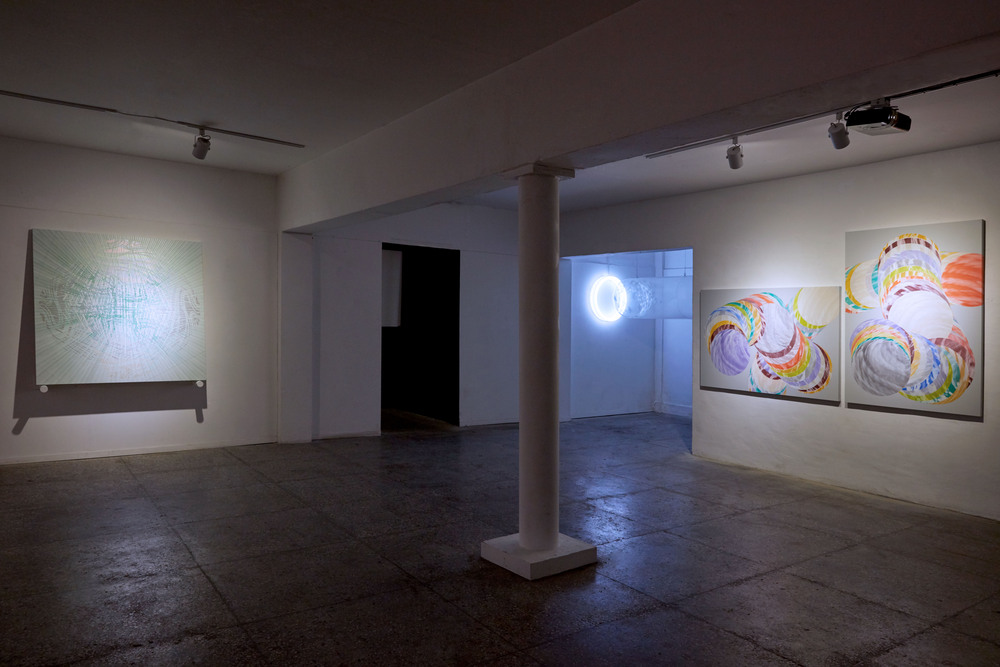
The installation work Moving Sensation (2018) and the video installation work Sequence of Forms (2018) shown in this exhibition are evidences of the fact that Ji felt keenly the necessity of a more concrete and practical approach, insofar as his experiments related to motion are concerned. In the work Moving Sensation, air is blown into a clear acrylic cylinder, and spherical objects being circulated by the motion of the air flow is observed.
The nonlinear movement of the objects placed in the cylinder is a visual representation of the three-dimensionality of motion. This way, Ji expands in a higher magnification the ‘non-visible territory’ which he tried to perceive, reflecting on the compositional territories of the atoms and their movement.
As an extension of the conceptual context of Moving Sensation, the work Sequence of Forms consists of an immaterial video and its sound part, portraying the fluid movement of the points, lines and planes projected on the opaque acrylic hemisphere. In this work, the artist uses digital mechanism to overcome the limitations imposed upon by material realization or fragmentary sensations.
Just like the two other series preceding them, these two works also deal with the subject of ‘movement’ and ‘sensation’ in a parallel manner, but are different in terms of their setting. Not only so, but such composition can be understood as a medium through which to turn the artist’s reasoning to ‘prove dynamic movement through static sensations’, to ‘focusing on static sense system by optimizing the representation of dynamic movement’.
And the material attributes of the works including their three-dimensionality and synesthesia in Sequence of Forms and Moving Sensation save Ji’s work from being dismissed as flat abstractions merely directed at ‘visual’ senses and its movement. It goes on further to expand the artist’s research on the ‘possibility in the perception of flat visual sensational movement’ to the ‘possibility in the perception of the movement of the overall senses’.
The examination of Ji’s work so far ultimately amplifies the human essential doubt on the roots. In the midst of the sharply-contrasting elementary particles such as what’s visible and invisible, what can see and what cannot, and thus believe or doubt, the artist tries to understand the world by bringing together all heterogenous and mutually-conflicting subjects.
Such methodology of ‘amalgamation’ and ‘juxtaposition’ are an attempt to deconstruct the preceding dominant reasoning, and invite a reasonable conversion of perception that can tell apart lies which seem like the truth, and truths which seem like lies.
Perhaps, Ji’s abstraction towards the ‘moving sensations’ sheds light on the idea of transforming our emotional reaction to ‘that’ which is categorized, regulated and defined on the other side, to the affective behavior which continuously analyzes, investigates and organizes it.
Translated by Hwang Sunhye