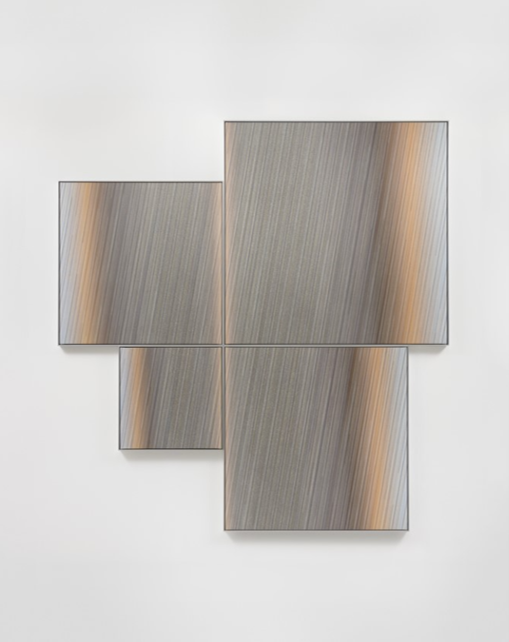
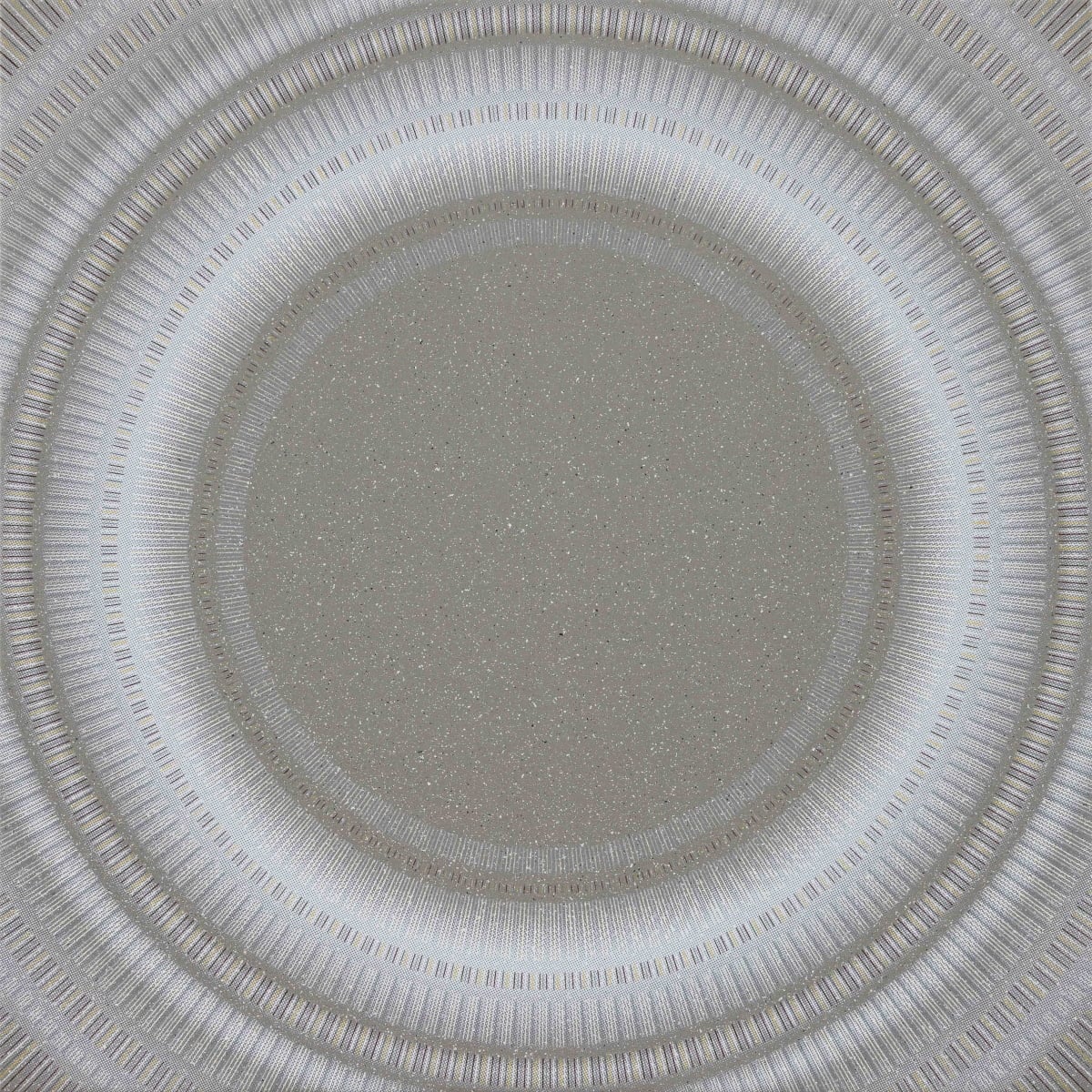
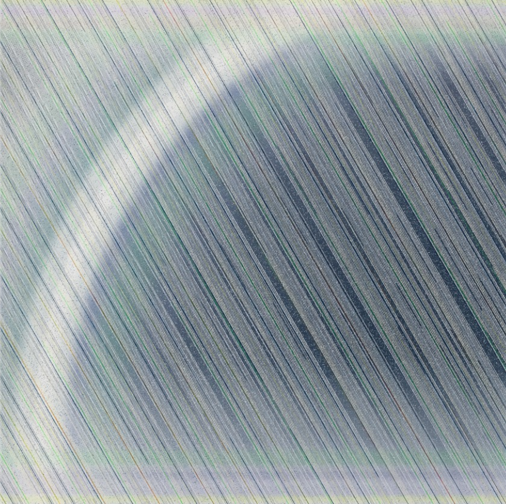
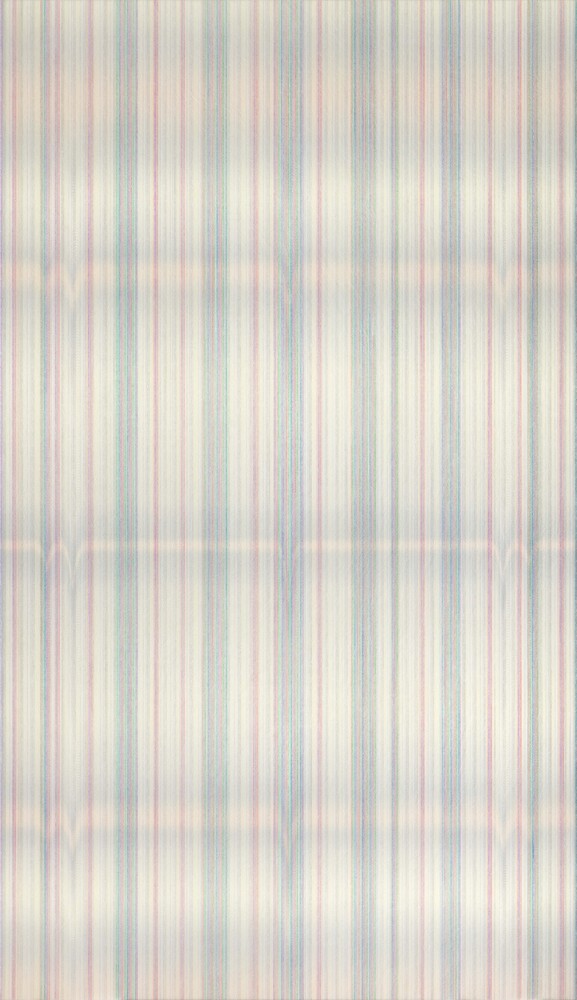
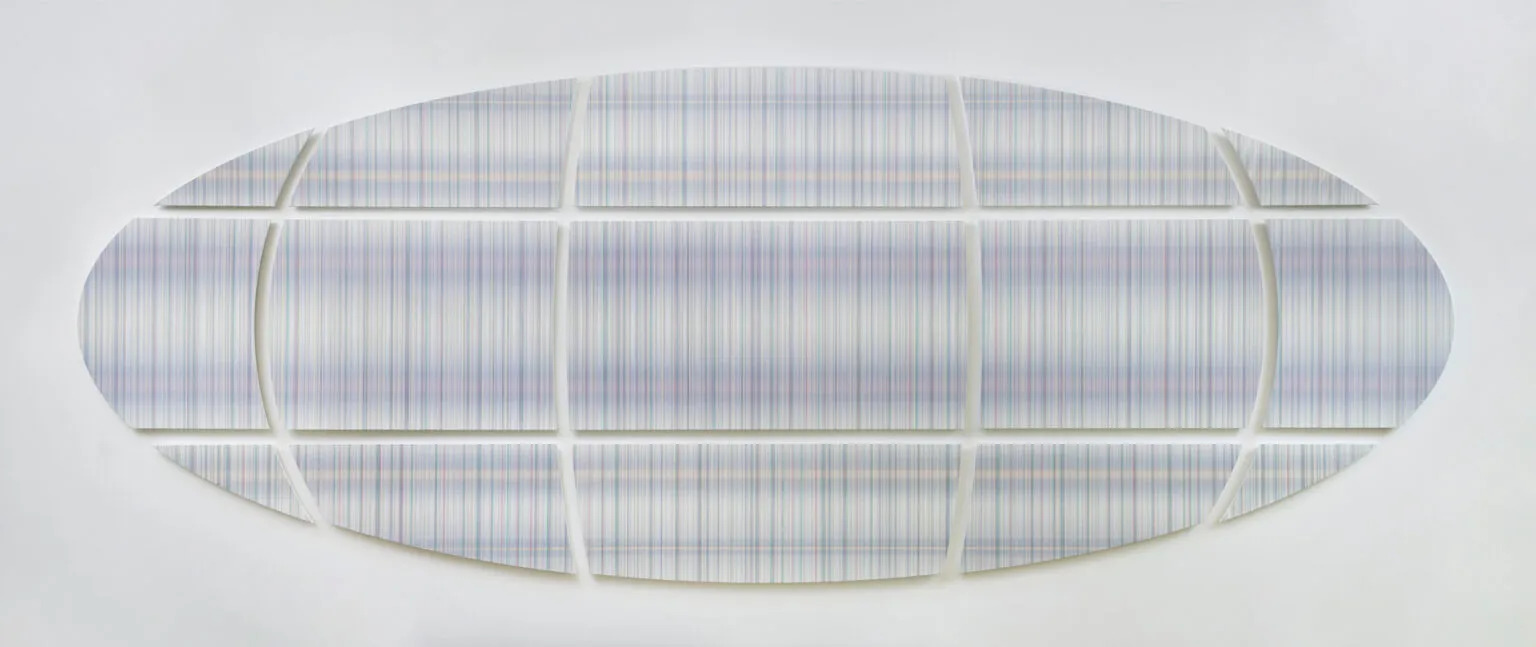
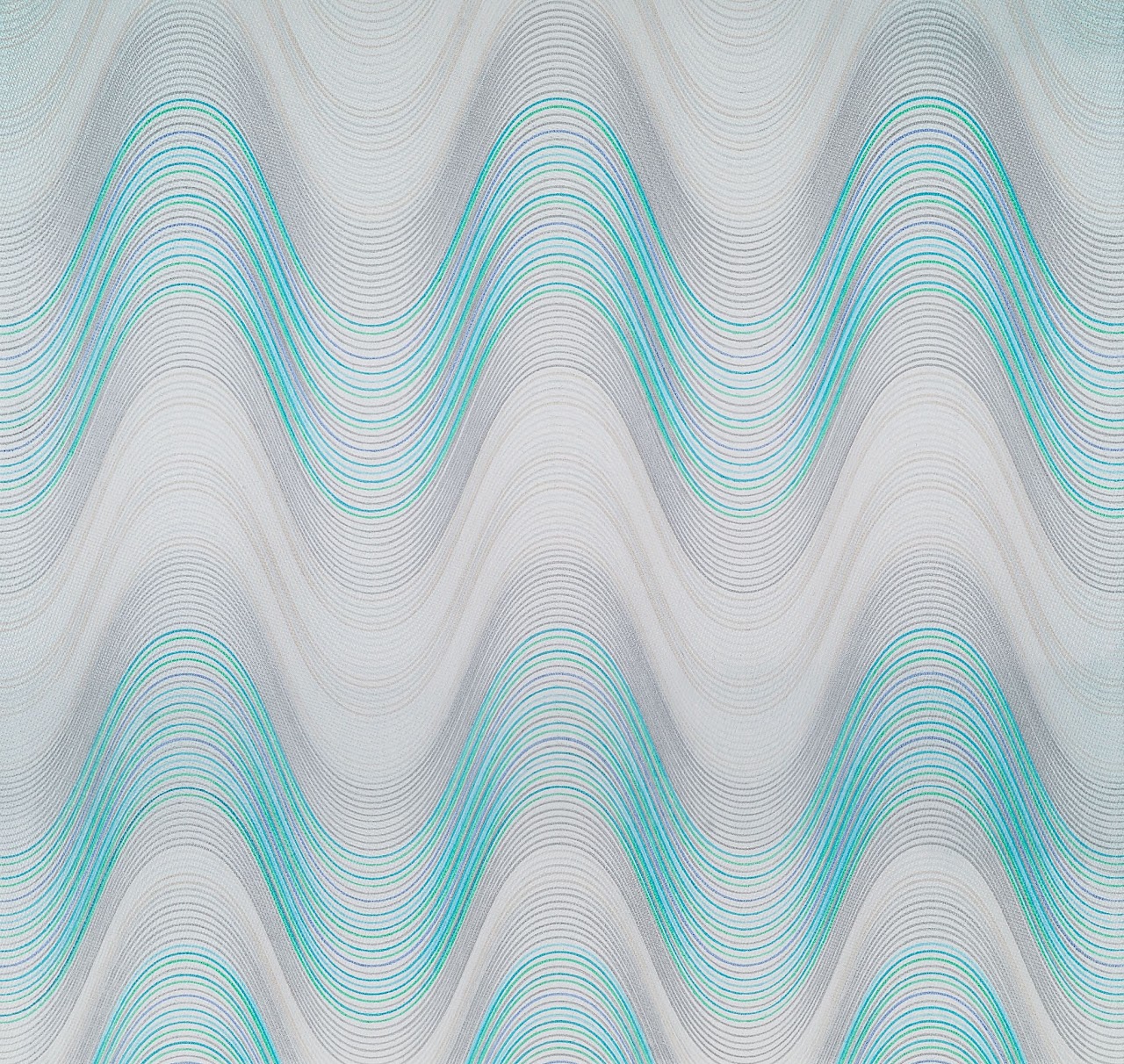
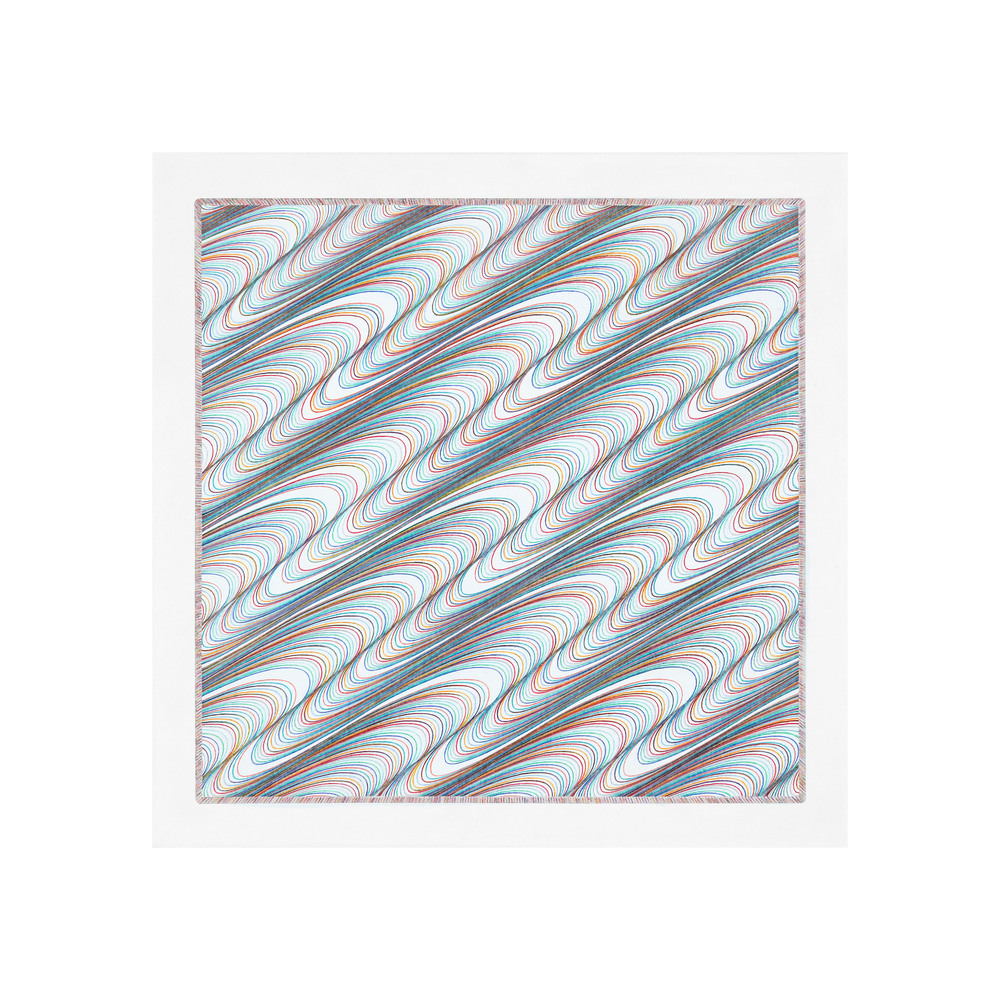
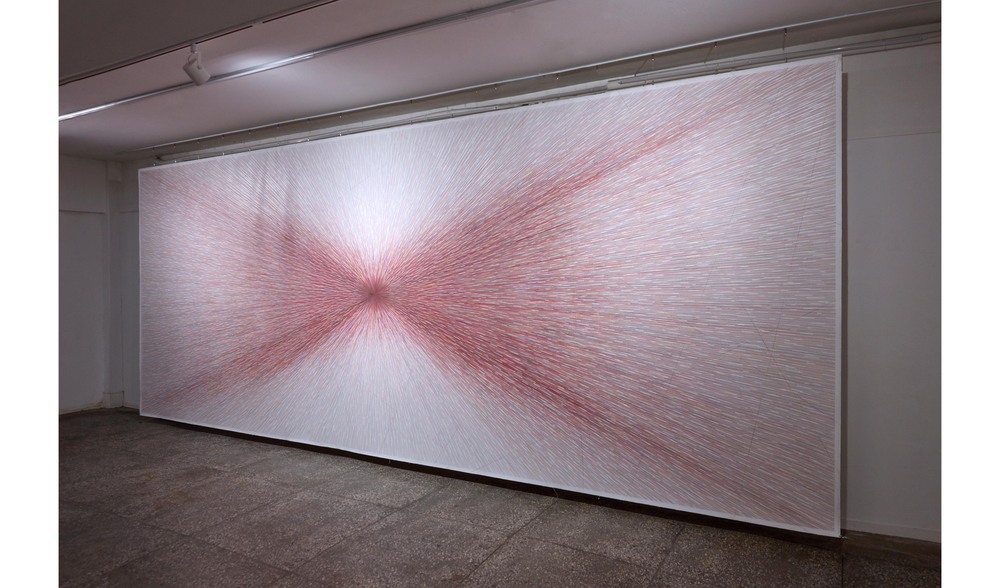
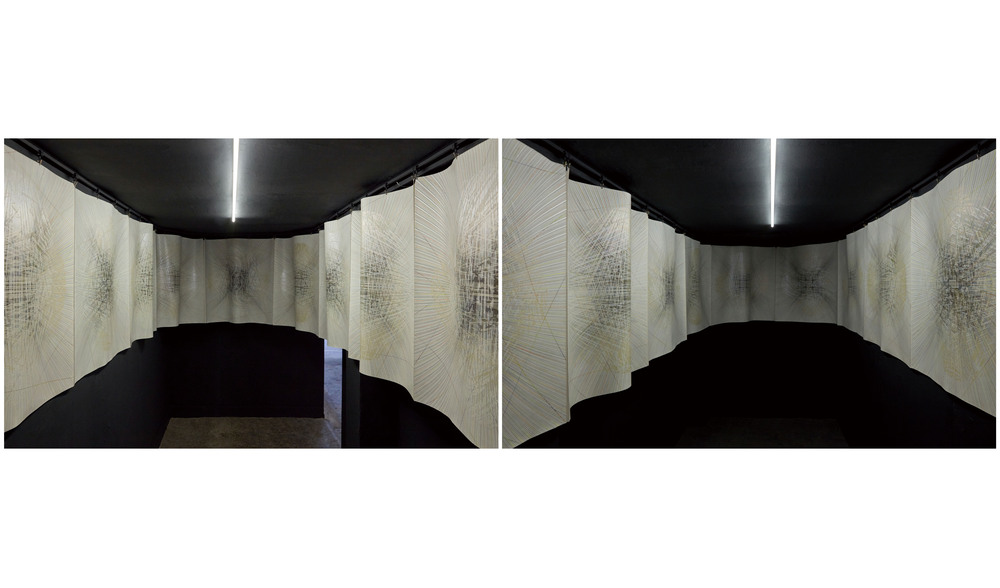
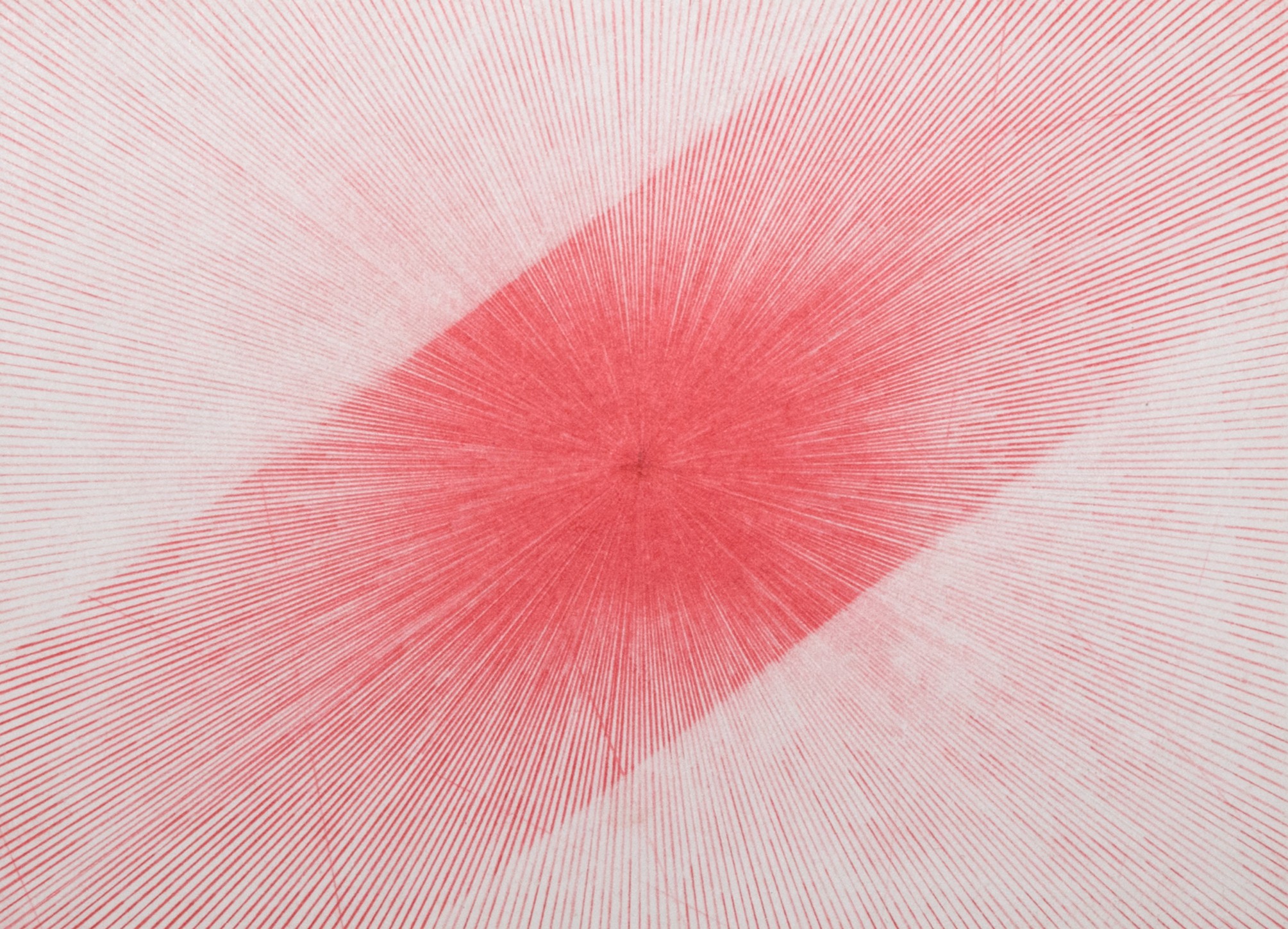
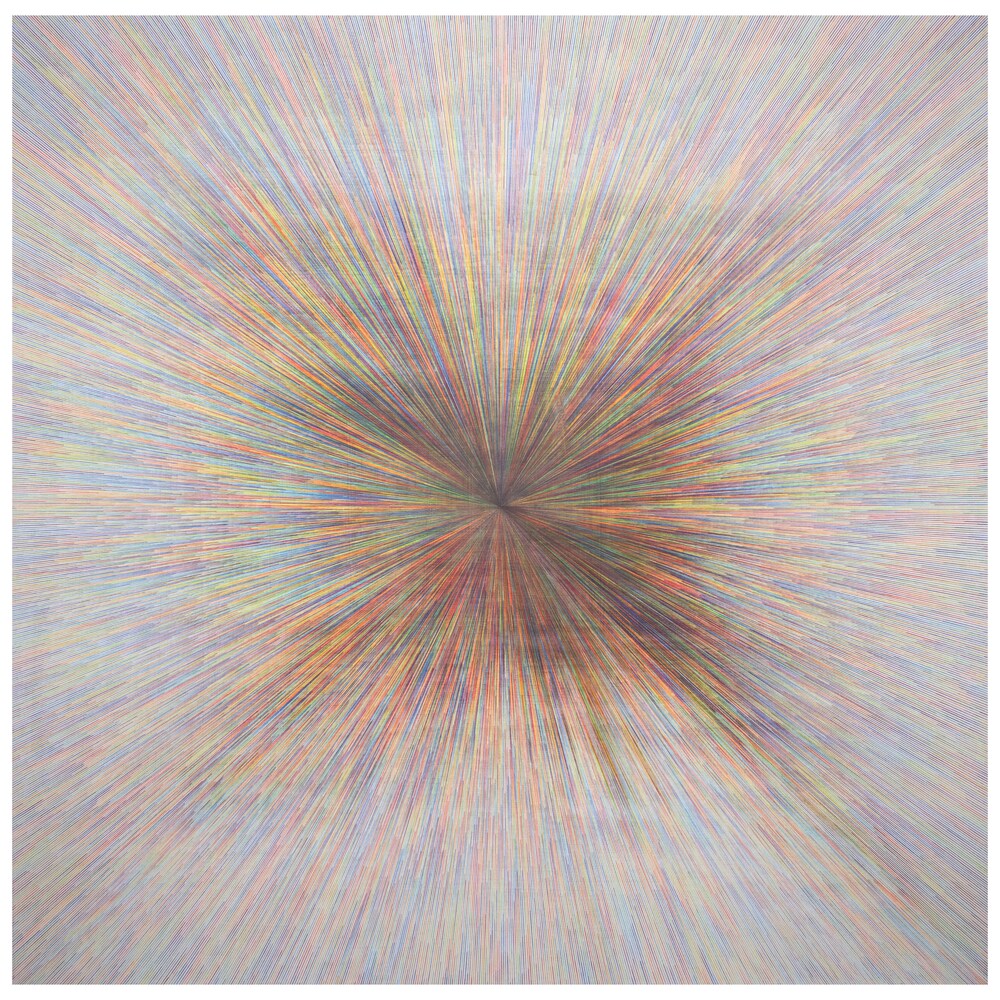
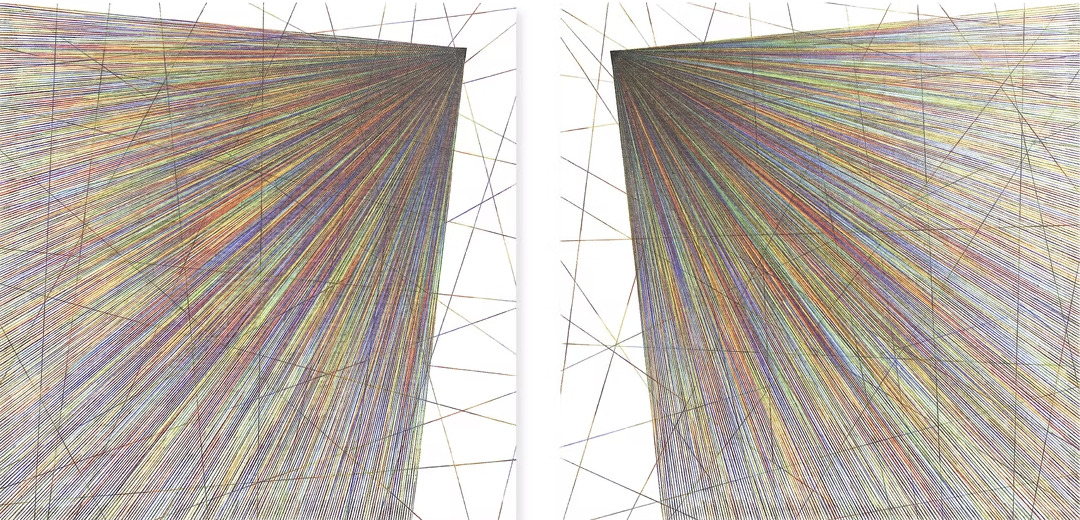
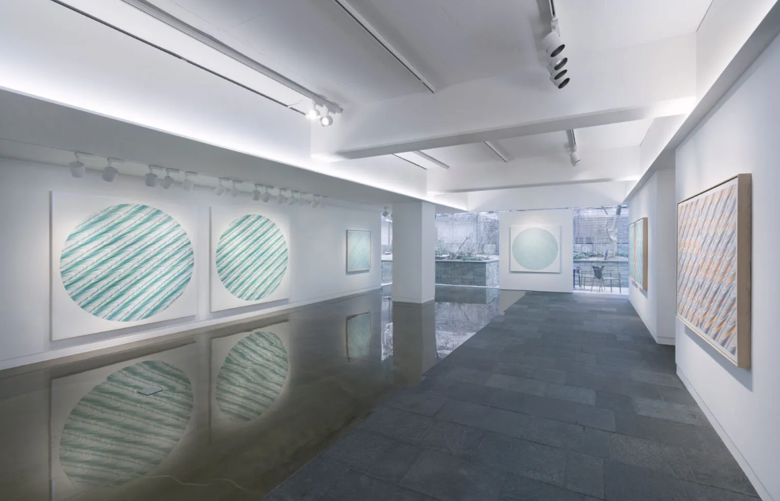
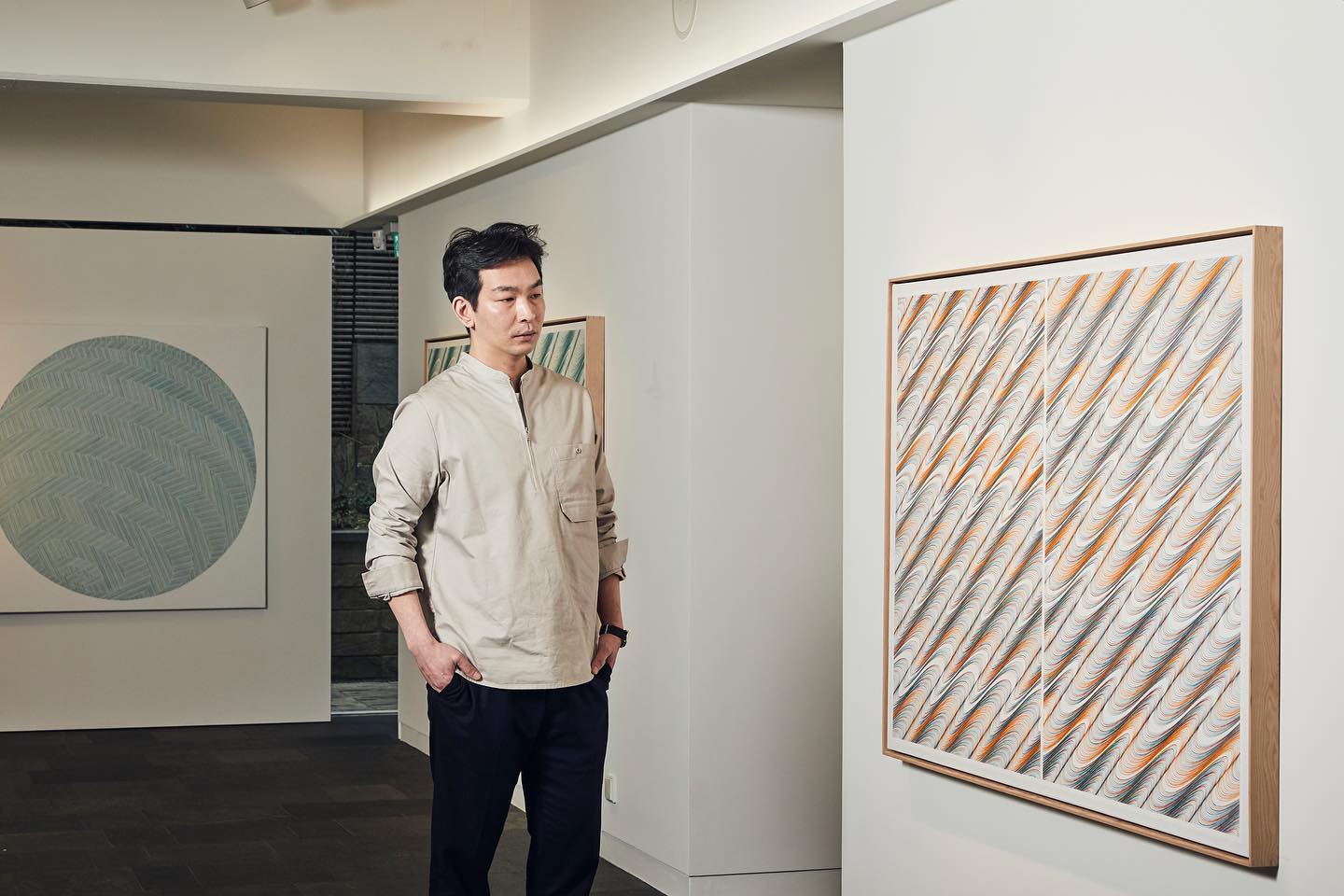
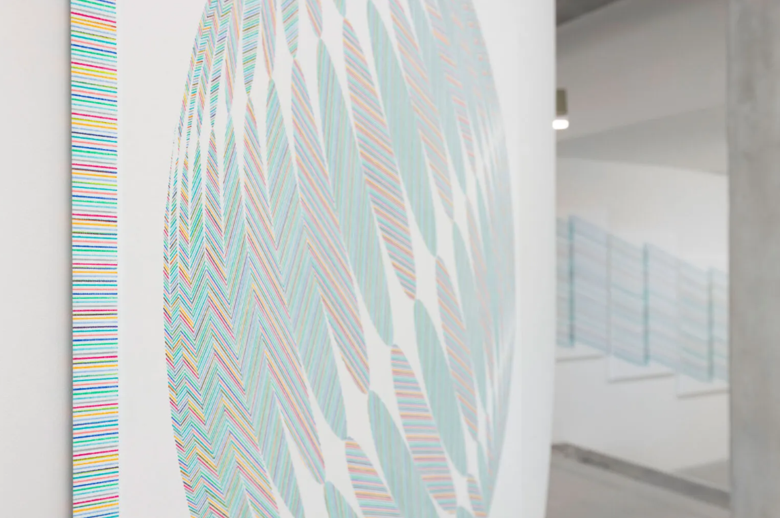
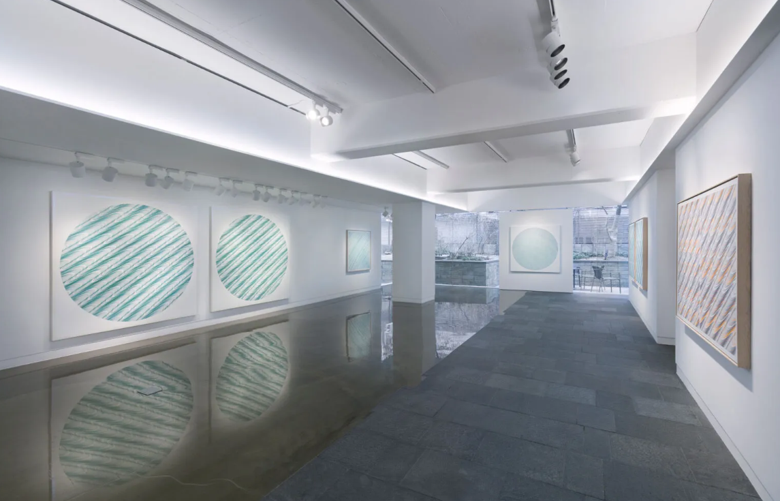
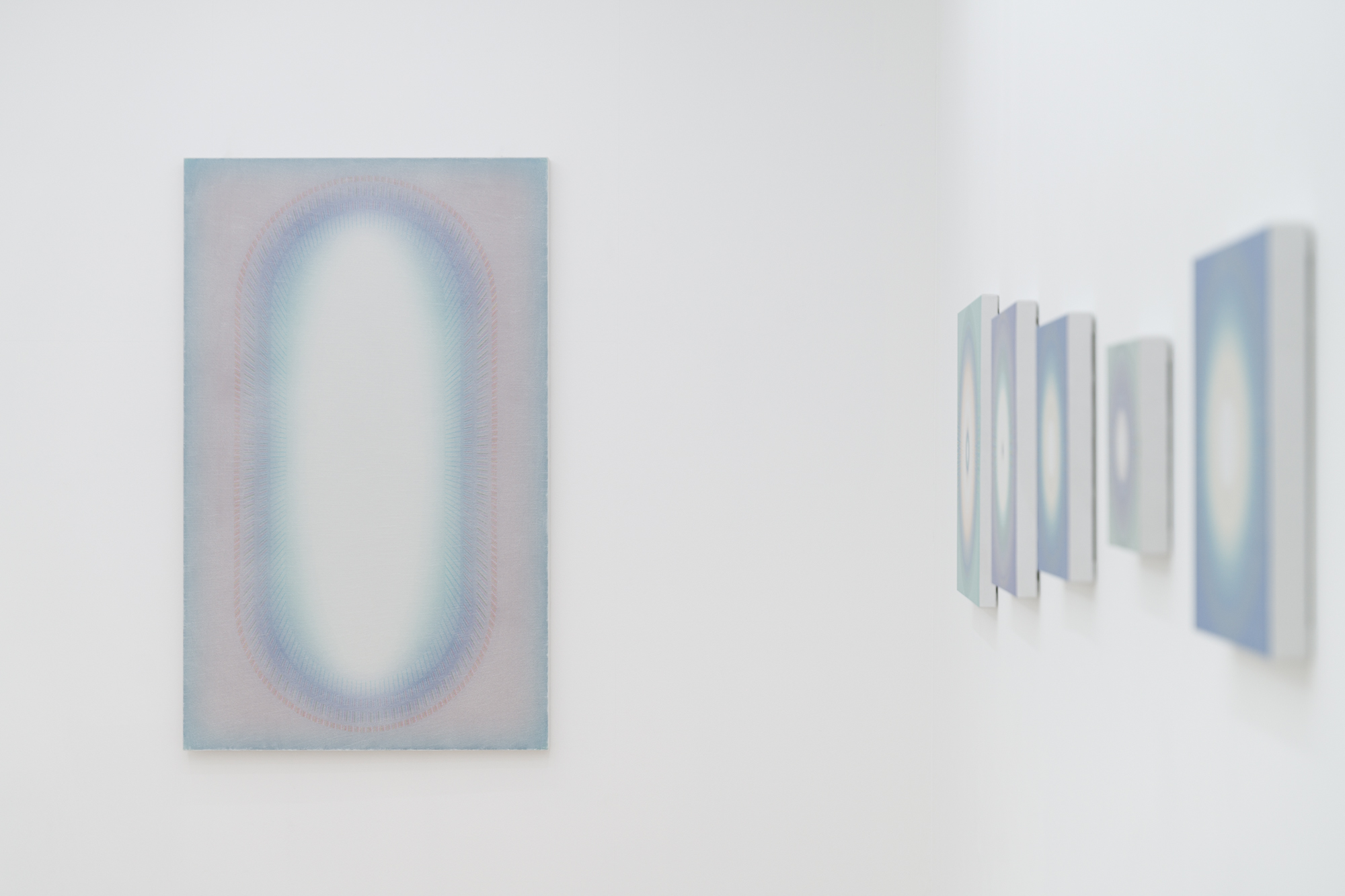
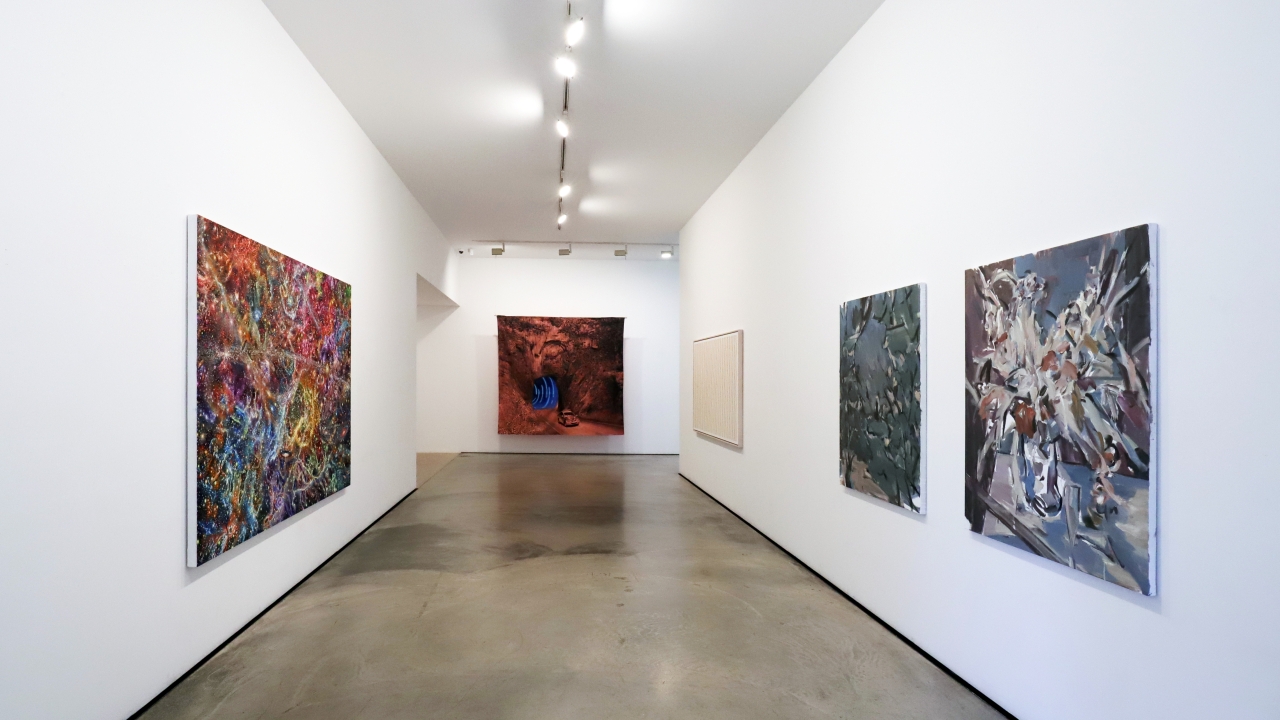
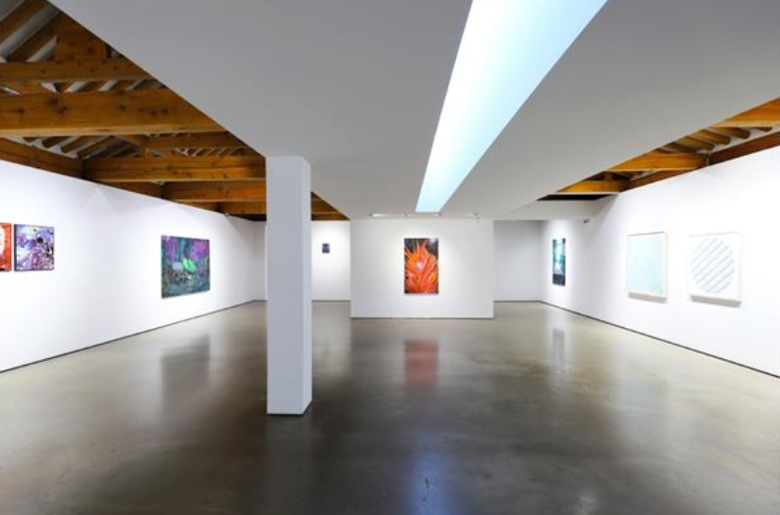
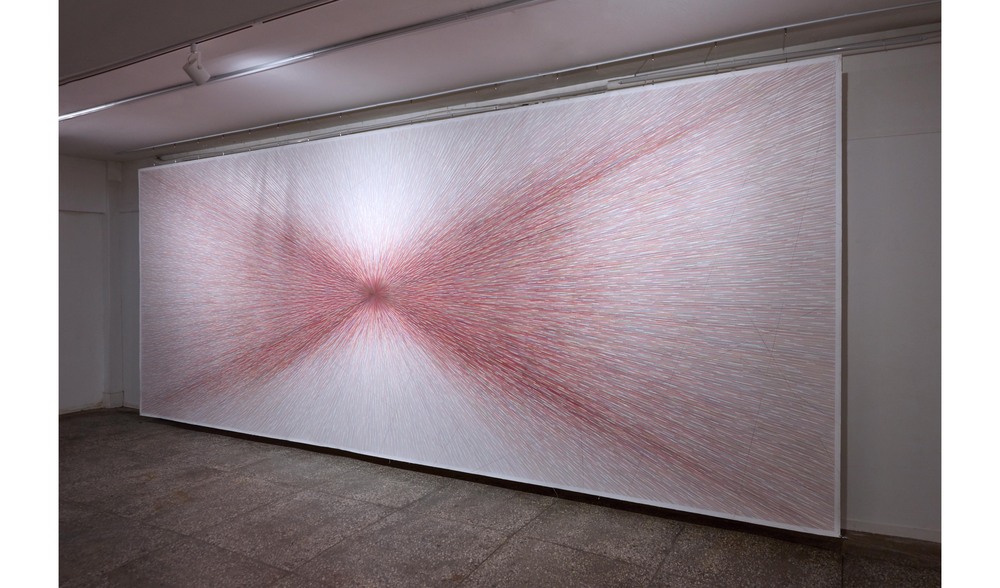
What sticks out in Ji’s paintings, without doubt, are the exquisitely aligned lines. In the world of painting, in both East and West, the stroke has always been considered a unique element that expresses an artist’s sense of the subject or their identity. In that case, what distinct realm is being built up by Ji’s strokes?
First, the artist carefully defines the conditions and environment in which the lines are drawn: that the lines are dealt with as a module of the smallest unit that constitutes an image; that each segment is drawn by a single material and what fills out an empty space is an arrangement of lines that come to have a predetermined and promised form; that lines are spaced out in the most consistent manner as possible, and; that the completeness of the work is talked about at a point when the spaces, which are arbitrarily divided, are all filled up.
In other words, his works question the diversity of the variations which can possibly be acquired within the regulations of the formative elements which they themselves have chosen.
The completed image reminds one of an accumulation of very still and persistent gestures, and represents the rather large amount time the artist must have spent with the canvas. Also, the incomplete movement of the body, which pursues a close-to-perfect balance in terms of the shape and rhythm of the lines, charge the surface of his works with countless variations of coincidence and draws a new stroke each time.
When the lines expressed through the body fill the last bit of the surface of Ji’s work, the set of lines that have stopped become an illusion as well as an actual movement and approaches the viewer. In short, Ji’s stroke does not acquire meaning as a single entity; at the point where the lines form an organic relationship with other surrounding lines, it goes beyond having just a fragmentary function as a formative element but becomes a total stroke that emits dynamic energy.
Here we can go beyond just looking at the particularities of the physical methodologies through which images are produced, and further explore the conceptual arguments that accompany the basis of such methodologies. In other words, it means that there is a need to question what internal drives propel the artist to repeatedly construct and expand such an image, and to grasp the meaning behind the existence of such strokes in various relationships of cause and effect. What does Ji draw, and why must he draw it?
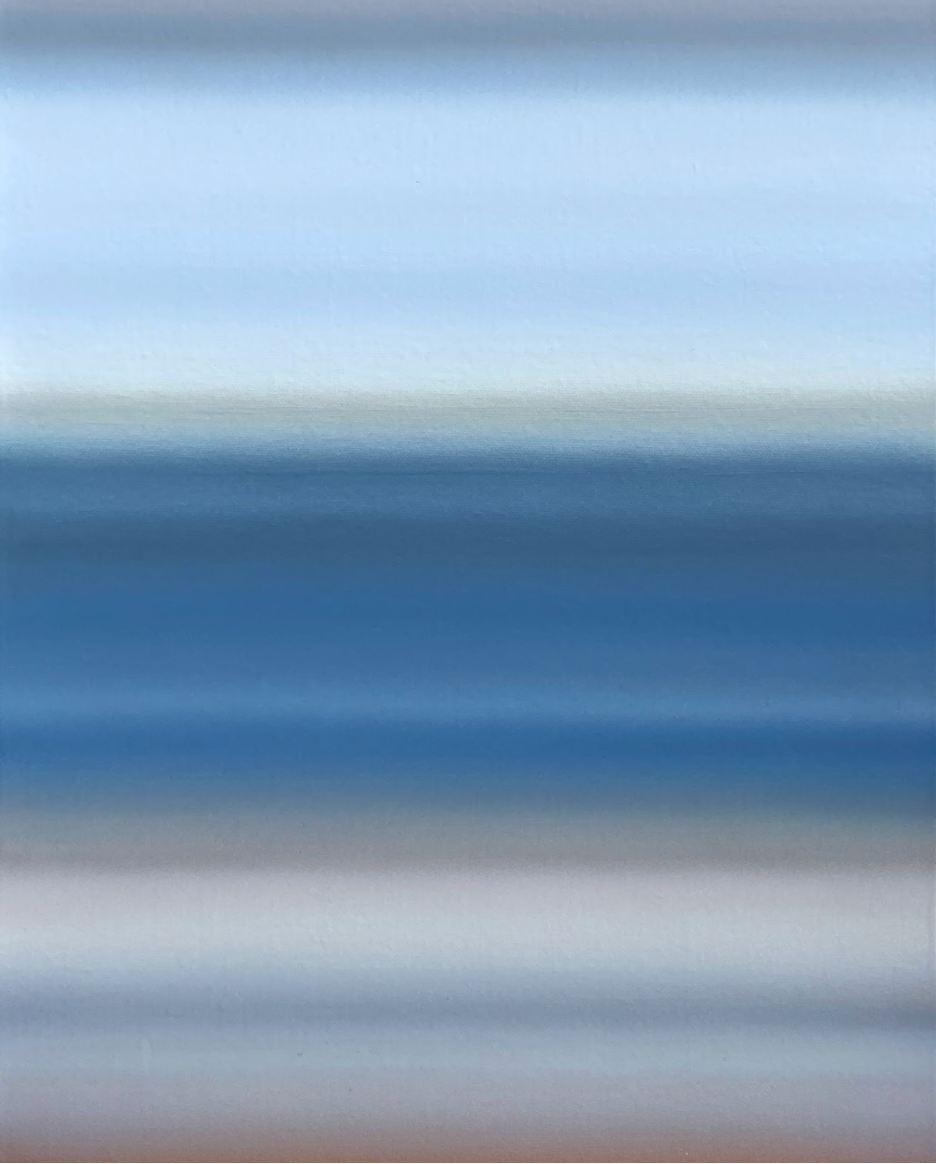
The illusion created by the group of lines reminds us of vibrations that exist self-evidently in reality, including all things in the world that consist of chains of motion, from light, sound, time and space. Fascinated by this fundamental physical phenomenon for quite a long time, the artist has been asking questions as to how to translate it into visual language.
His senses play the role of a type of a detector which captures the tremors that fill everyday life. The phenomena that are close but are invisible to the eye are soon reconfigured through the law of arbitrary strokes. In other words, the countless strokes that cut across the smooth surface are the crumbs of that artist’s senses that he has gathered little by little.
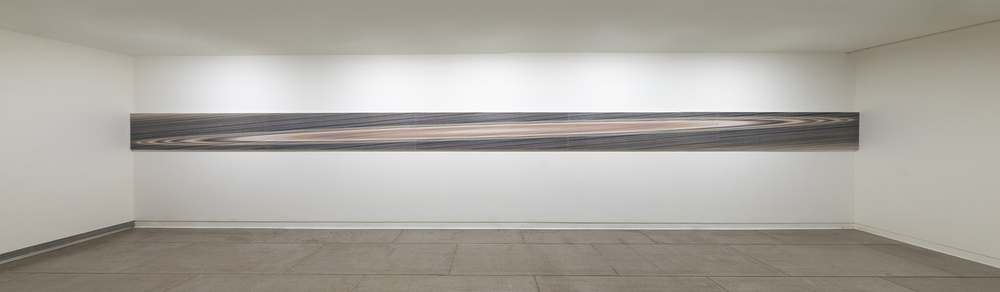
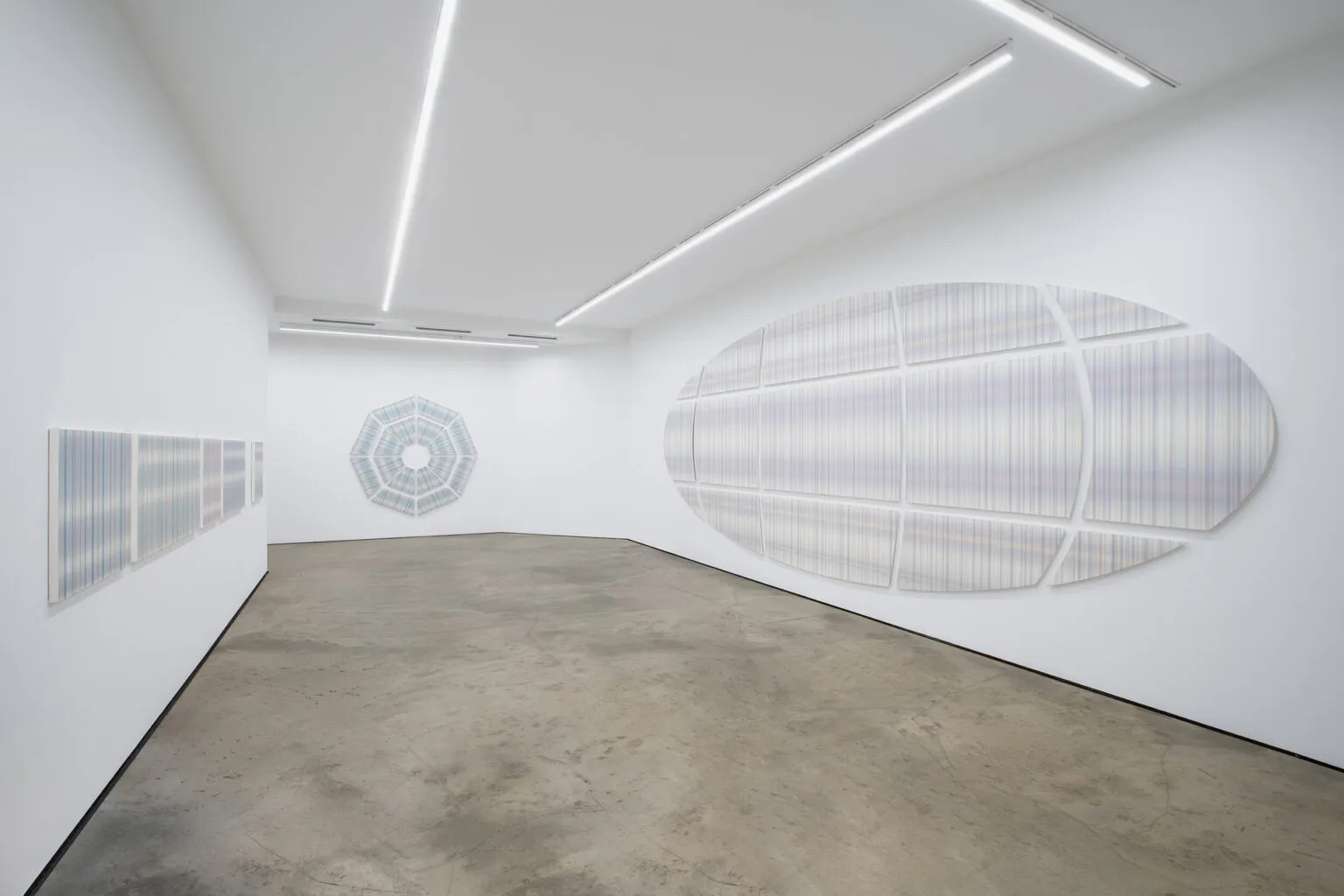
At times, they become a wave of curves like in the ‘Curving Paths’ (2020) series, or sharp slashes in Diagonal Flow (2020). The vibration collected in Levitation Curve (2020) is a gradual shift from the sense of time that unfolds on the flat surface, to the three-dimensional time and space that surrounds a curved surface.
The image of the fragmented wave makes contact with the energy expressed from the artist’s inner world and creates various new flows. However, Ji’s work does not focus on representing an index of simple physical phenomena or embodying visual effects on a flat surface. His work goes beyond the mere external markings, to being a process of constant utterance to build a subjective form of language, as well as an independent way of giving meaning to the world in which he lives.
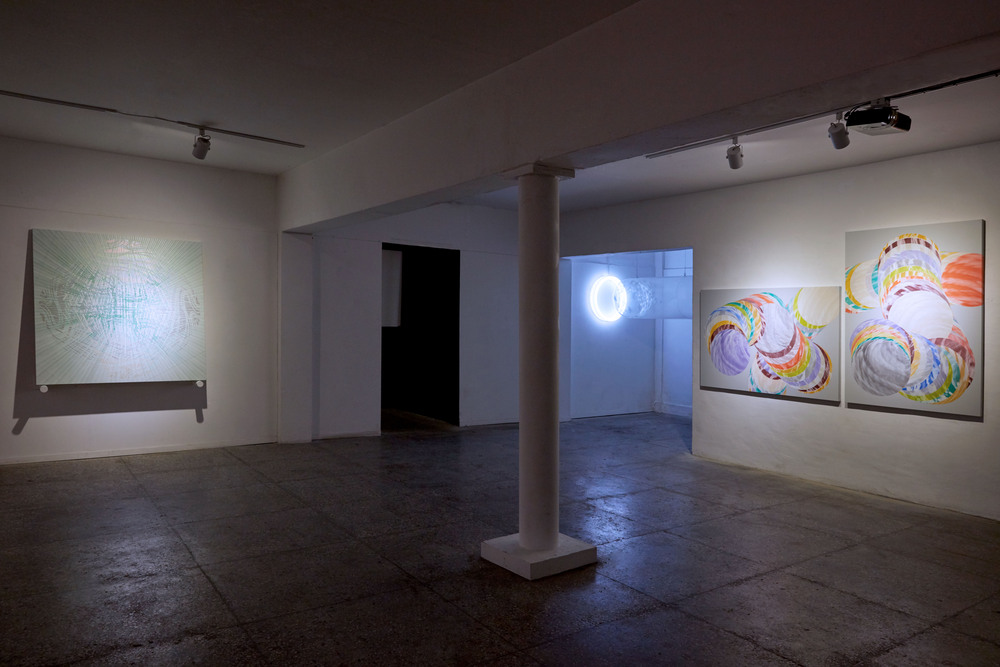
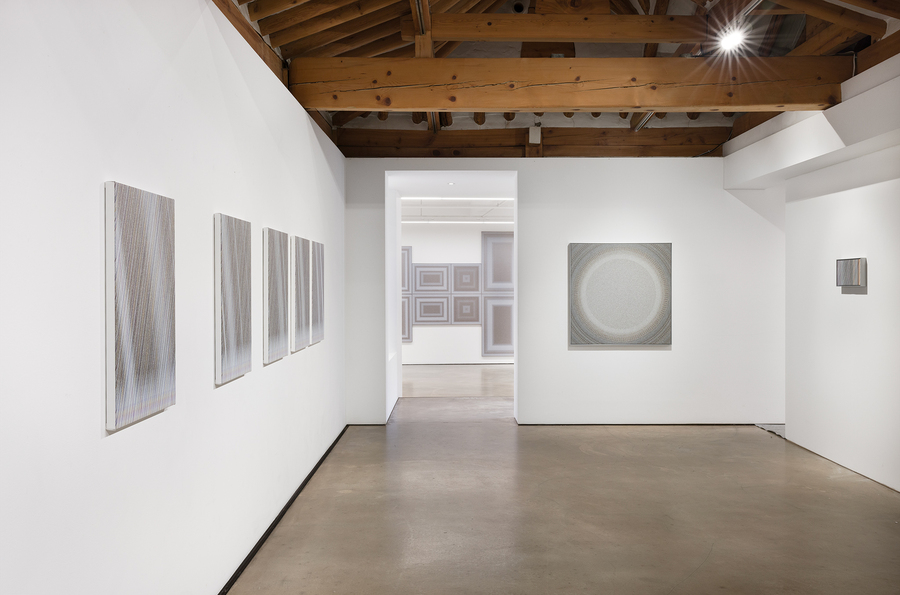
The fluid forces, which lie at the center of the artist’s interest, come together in the flat surface in 《Tuned Stroke》. Therefore, this exhibition is an experimental scene of the medium which deals with the possibility of the stroke, and an entrance to a new chapter where the repeated gestures of the individual intersects with the senses of social context.
Translated by Hwang Sunhye