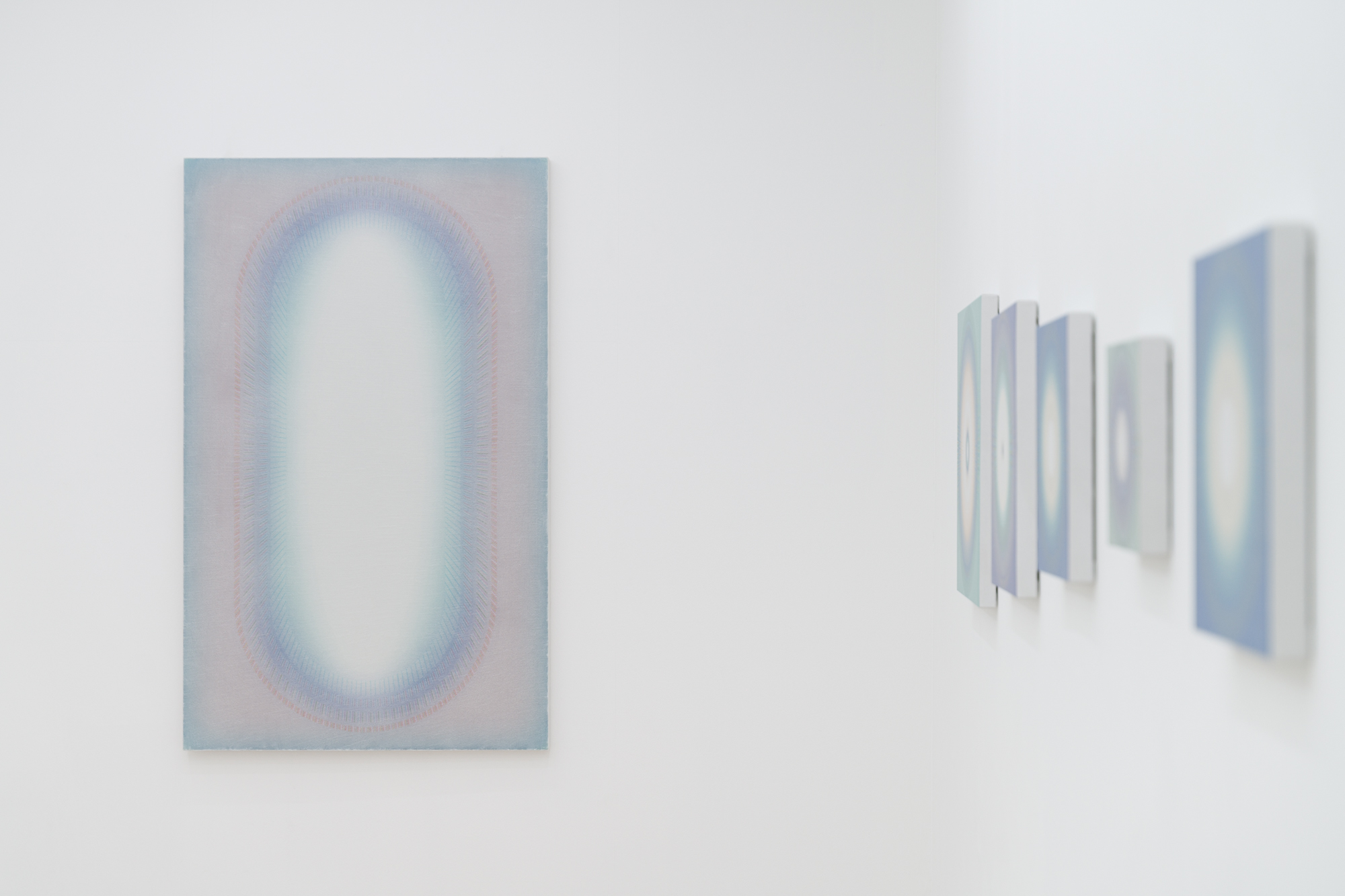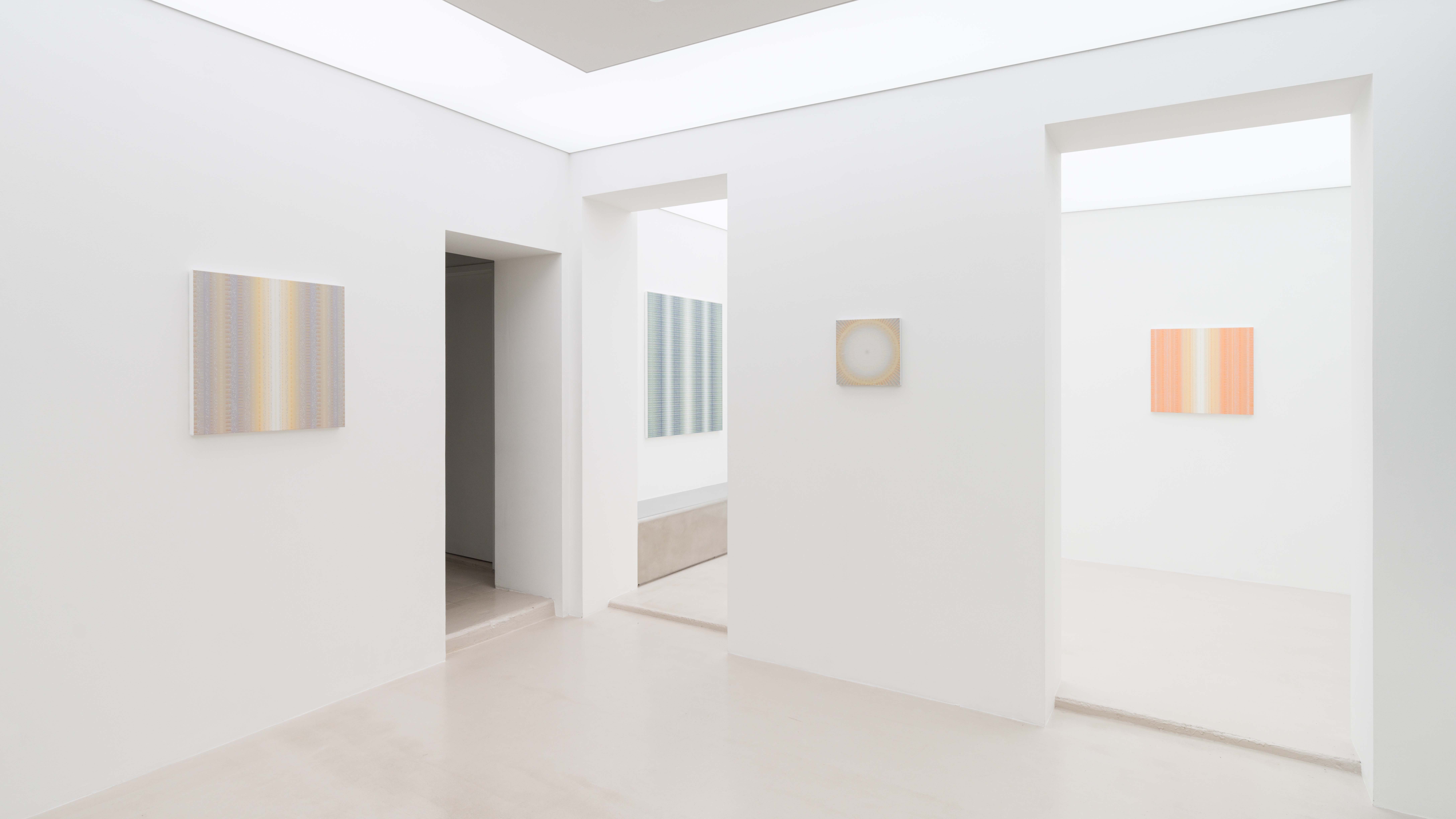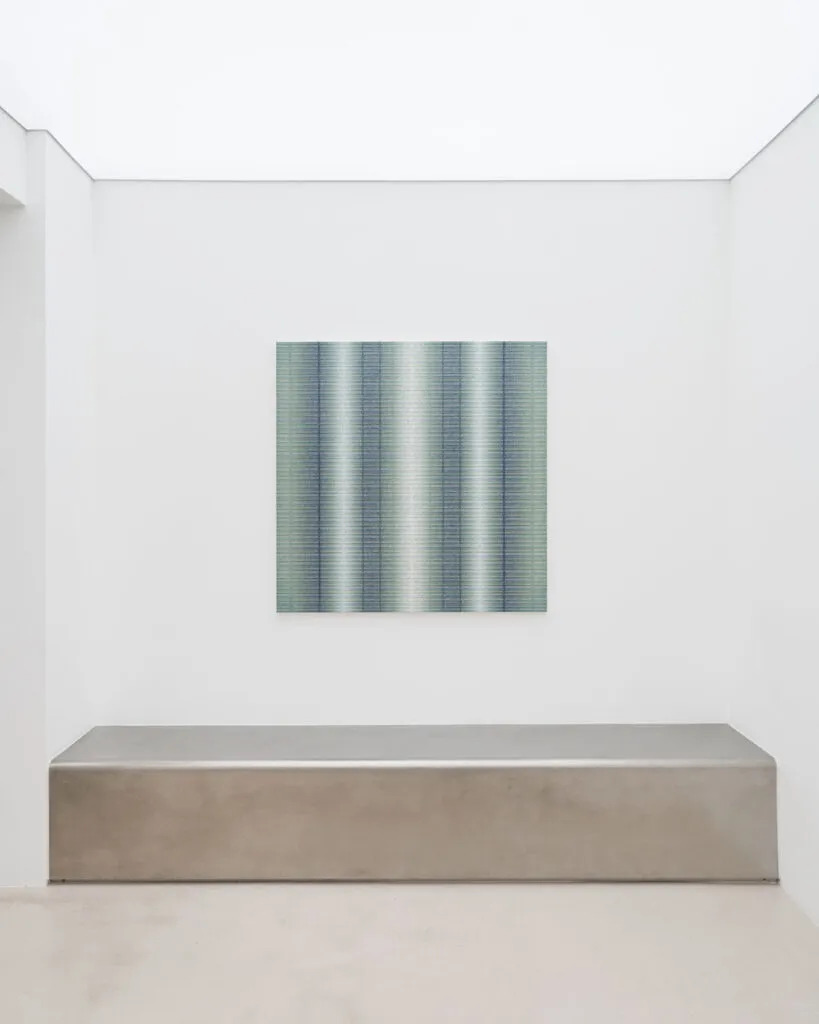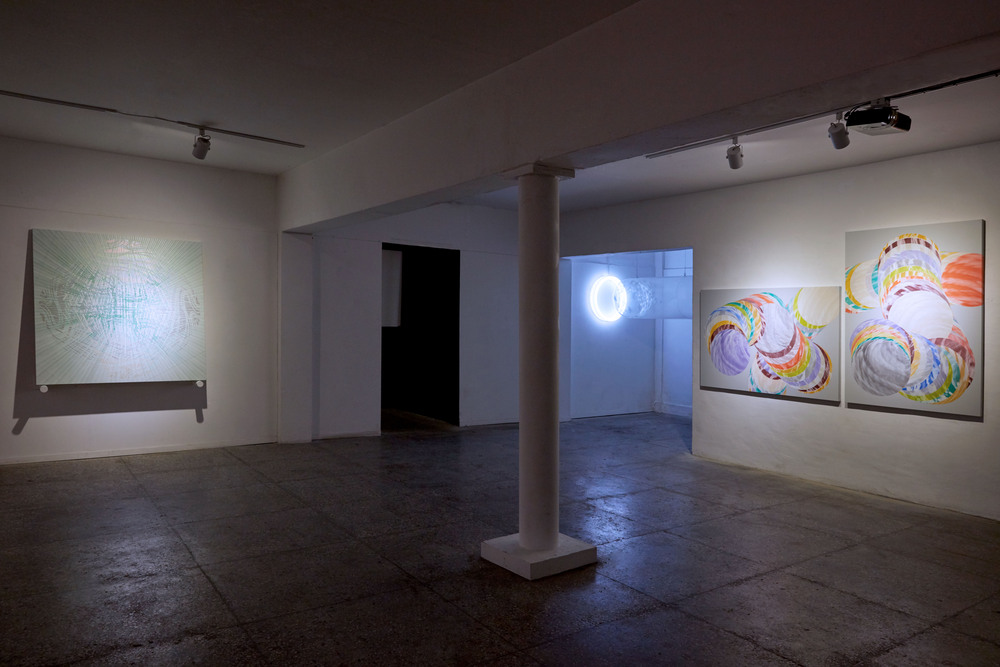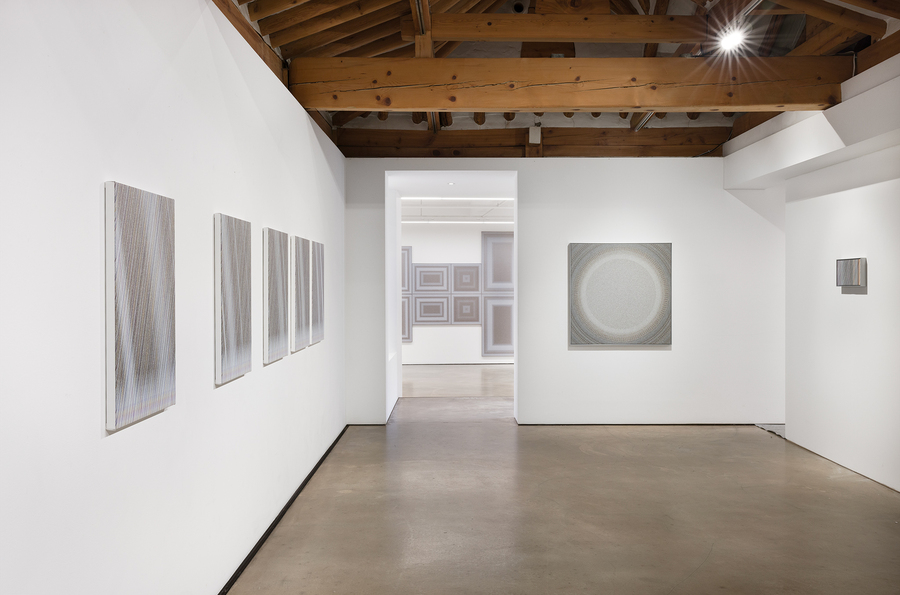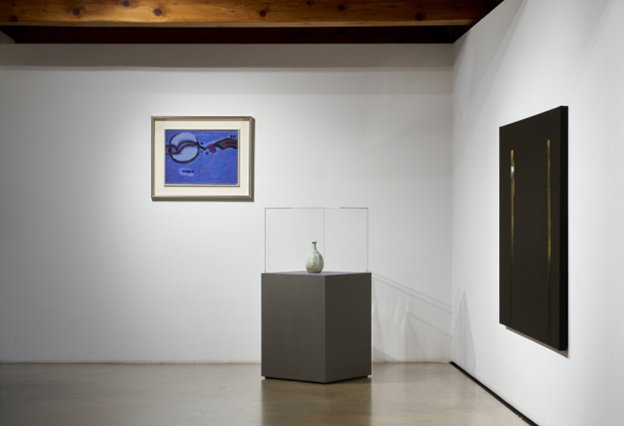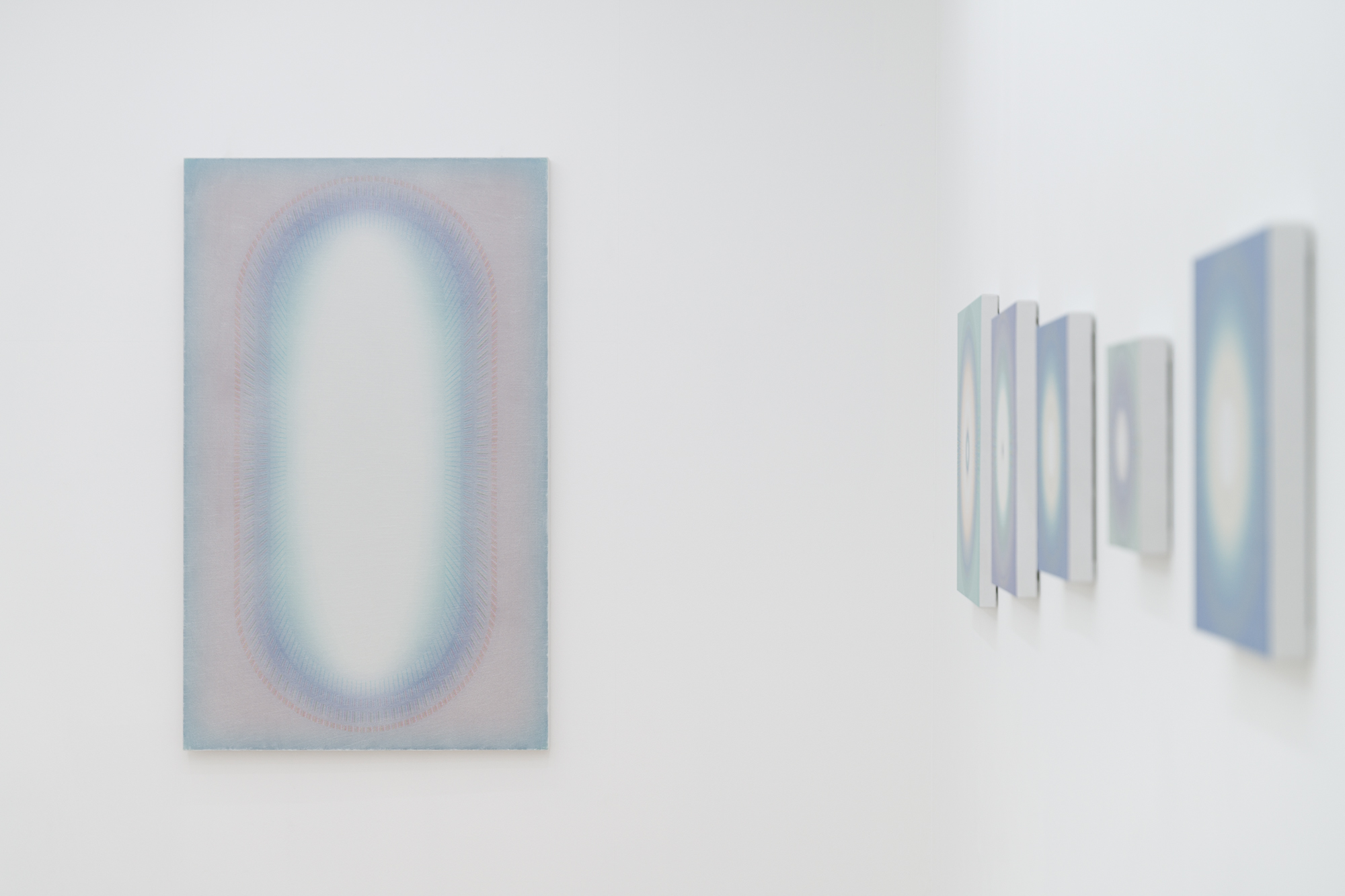


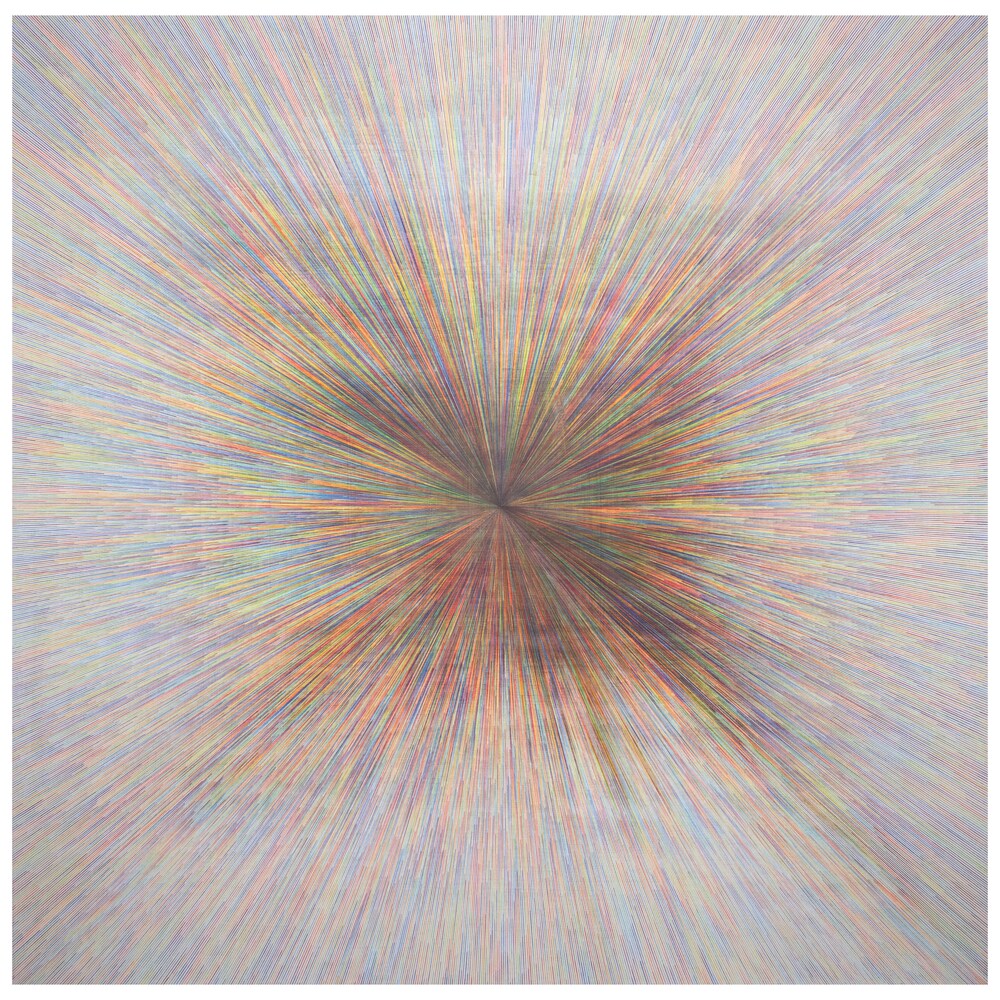
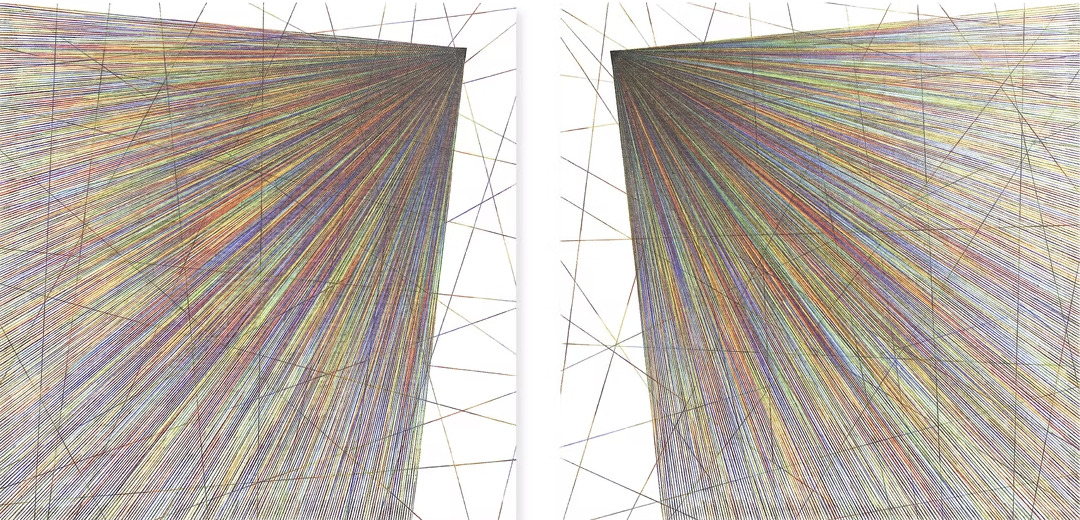
Keun Wook Ji (b. 1985) has developed a body of work that visualizes non-linear sensations through the repetitive drawing of lines on canvas, grounded in his interest in the microscopic order of the universe, such as atoms and molecules.
 
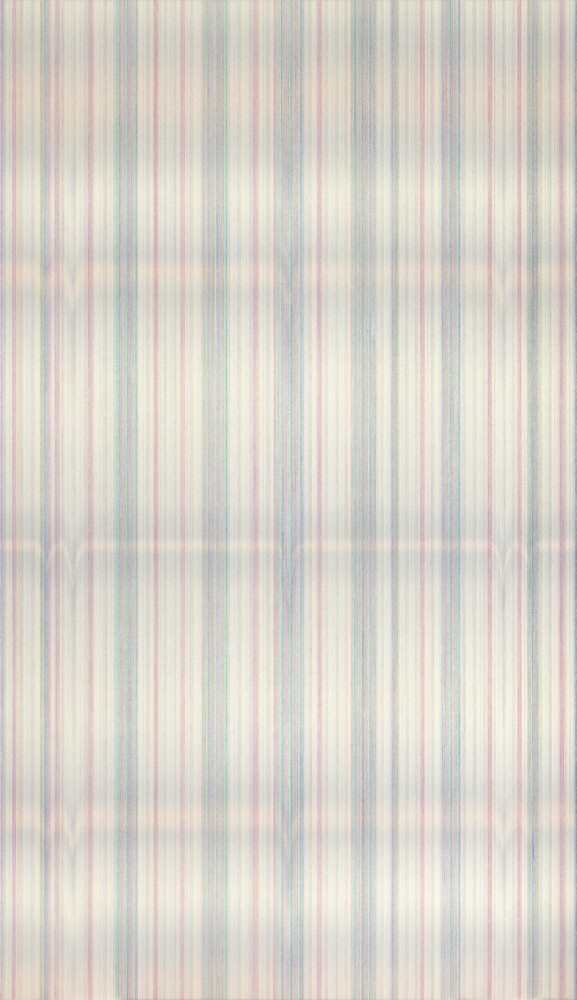
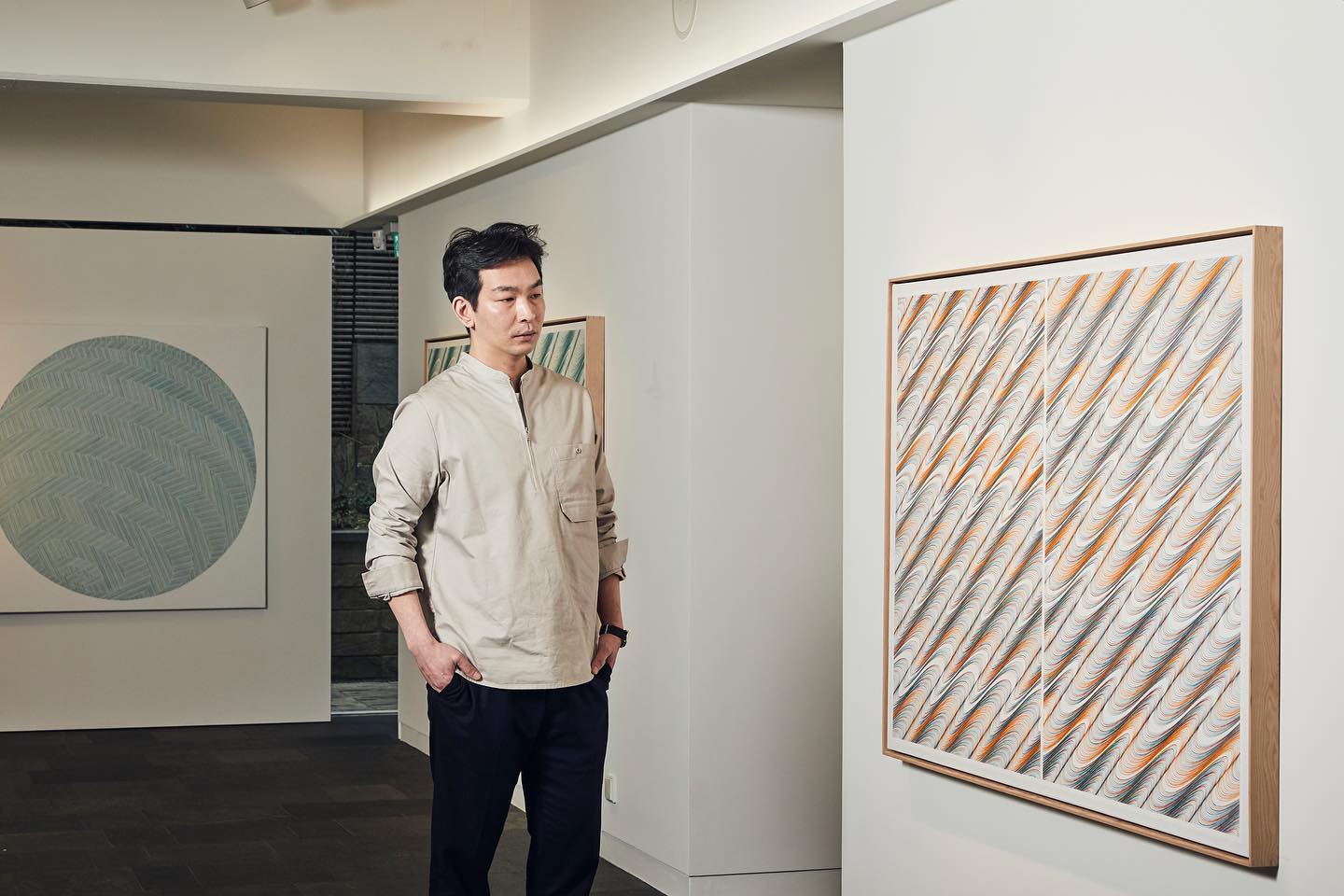
The geometric patterns created through rigorously calculated systems and the disciplined repetition of line-making generate distinctive densities and textures, producing subtle visual vibrations across the surface.


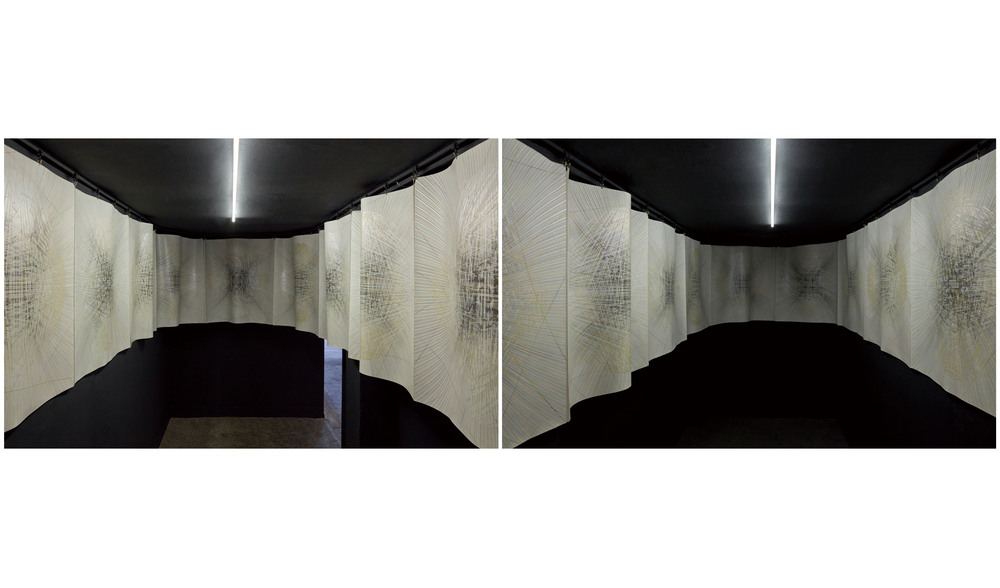
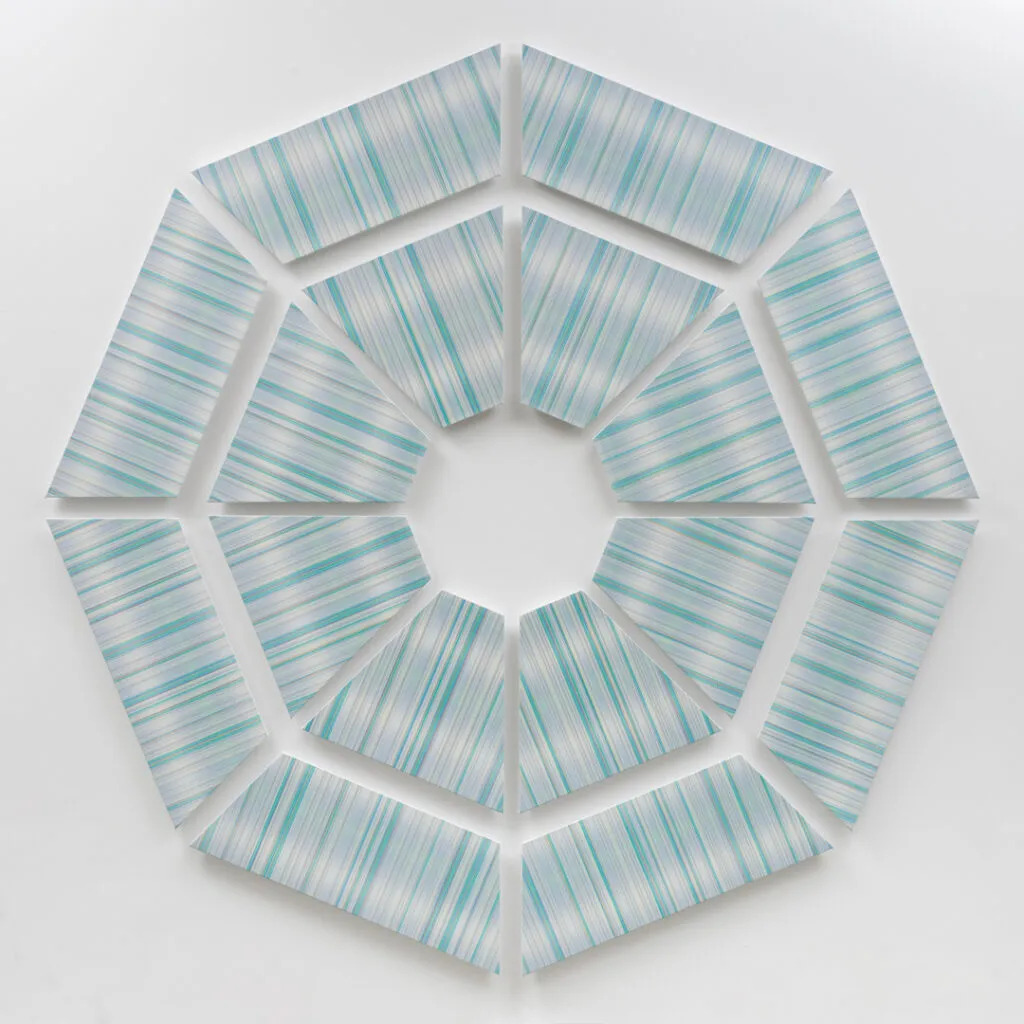
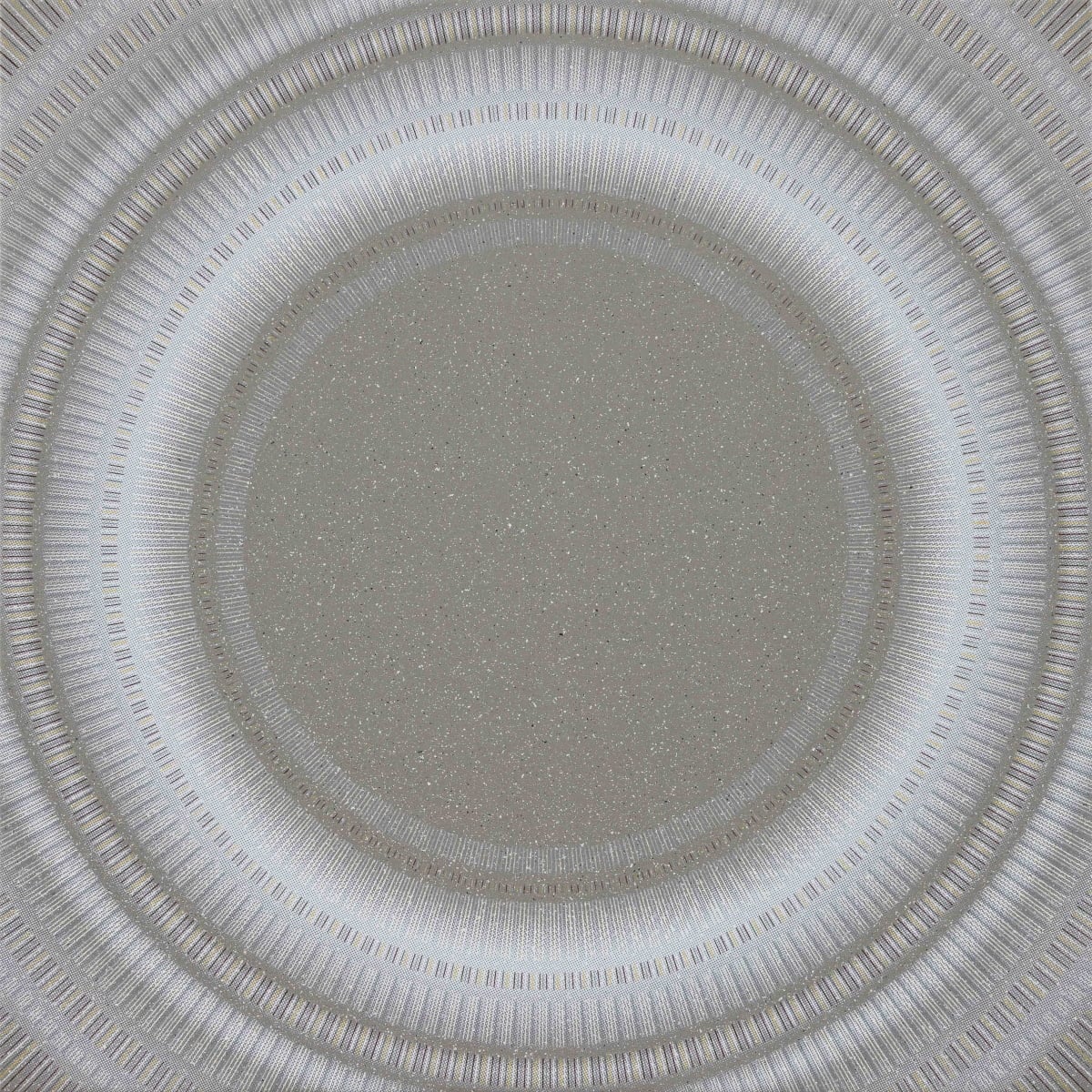
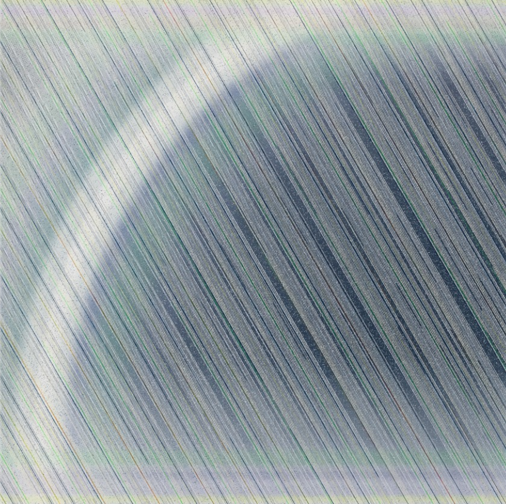
Keun Wook Ji, Actual Dynamics - Symmetry 10021, 2015, Colored pencil on canvas, each 46x46cm © Keun Wook Ji

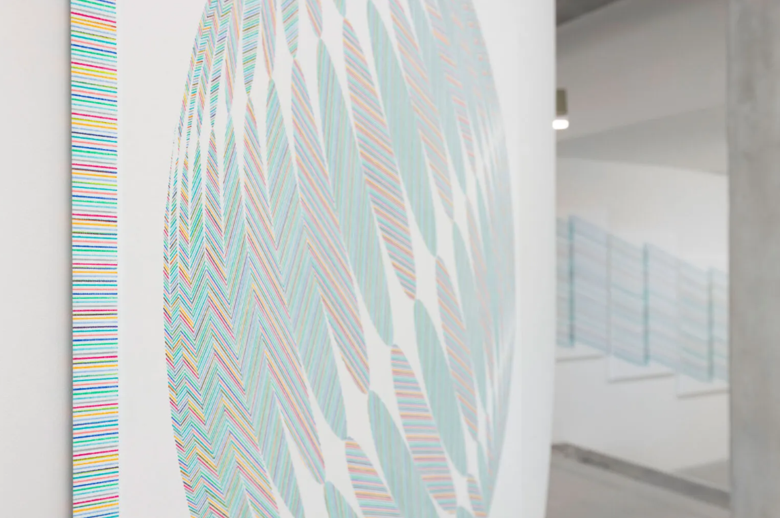
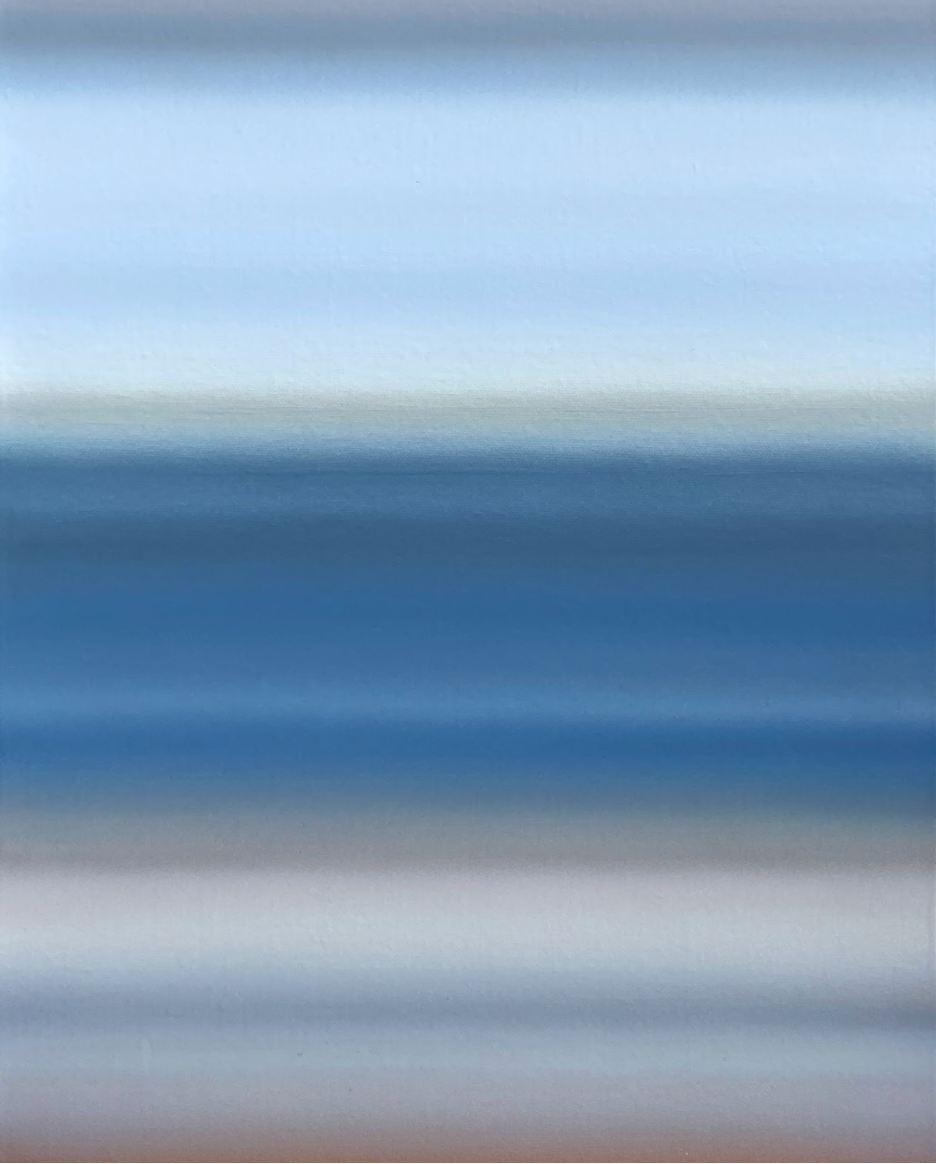
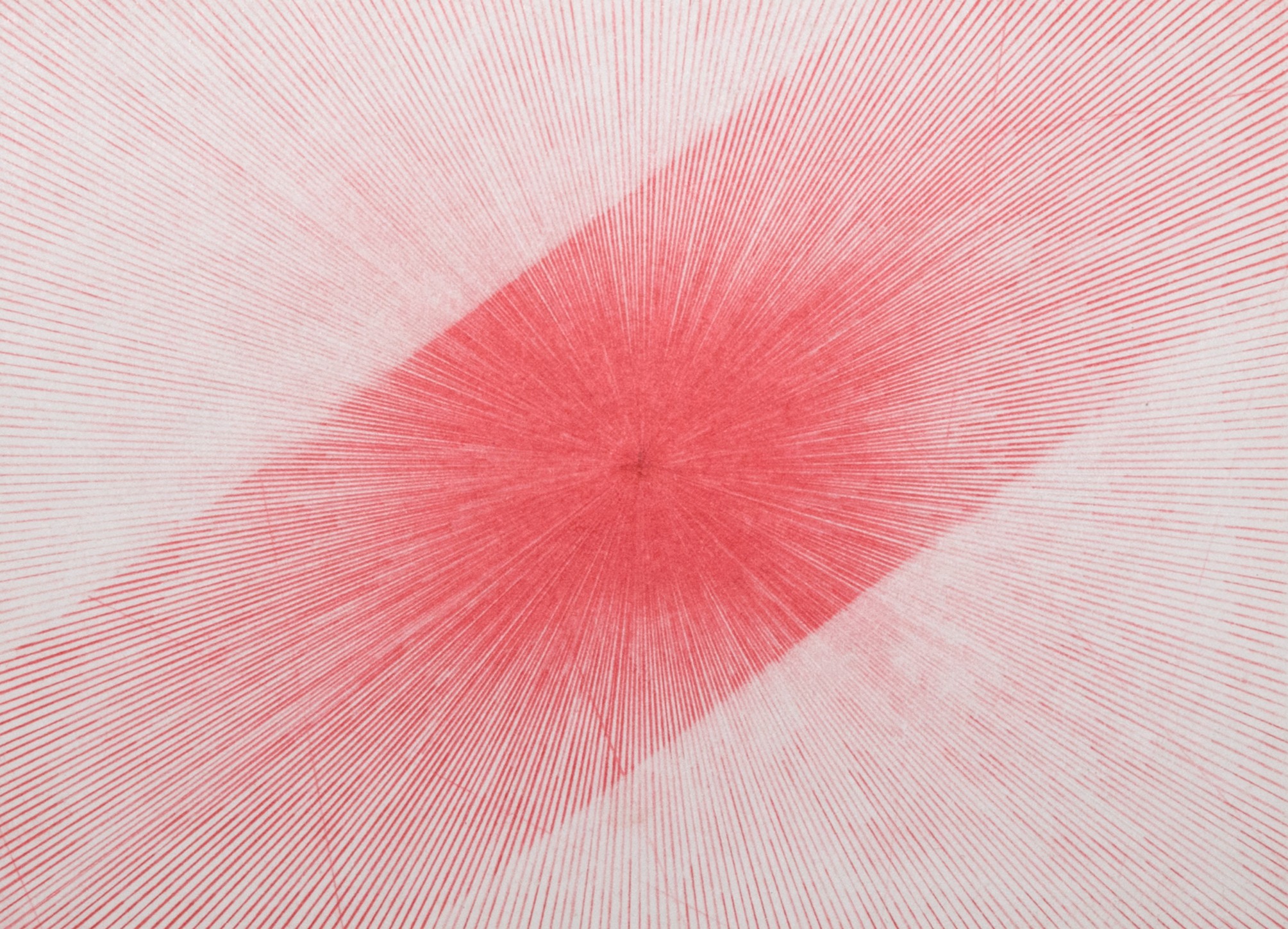
Ji’s paintings originated from a desire to express gravity through abstraction. To realize this idea, he adopted the repetitive act of drawing lines. Using colored pencils and rulers, he meticulously fills the canvas with densely arranged lines that follow predetermined directions and intervals.
 
Through this painstaking process, the accumulated lines come to resemble countless microscopic particles gathering into a single form, as if guided by an invisible cosmic order. What emerges is not merely a geometric image, but a visual field shaped by repetition, structure, and concentration.
 
The resulting lines generate subtle waves and vibrations that resist allowing the viewer’s gaze to settle on any single point. Standing before his works, viewers drift through the dense network of lines, tracing their movements and rhythms rather than simply reading an image.


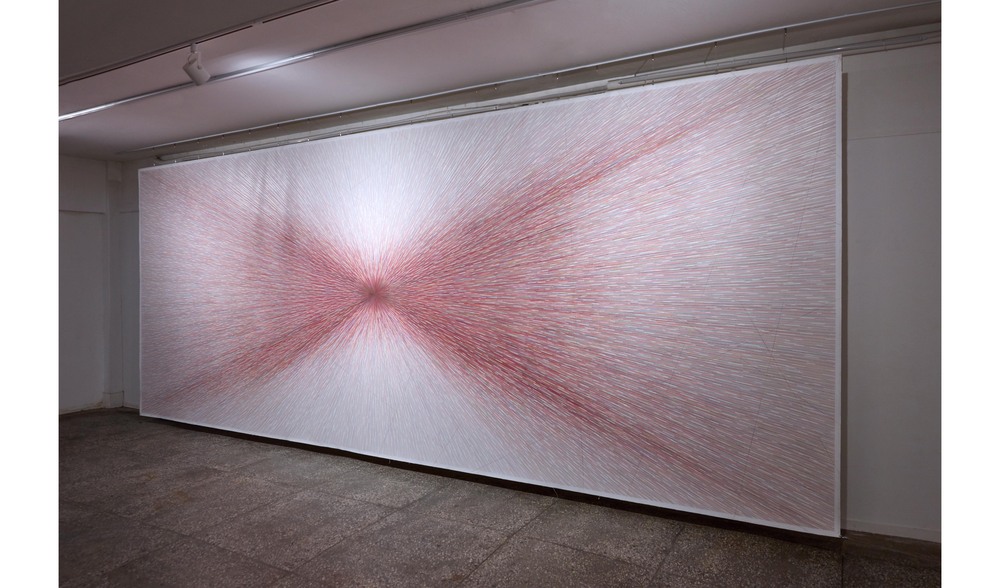
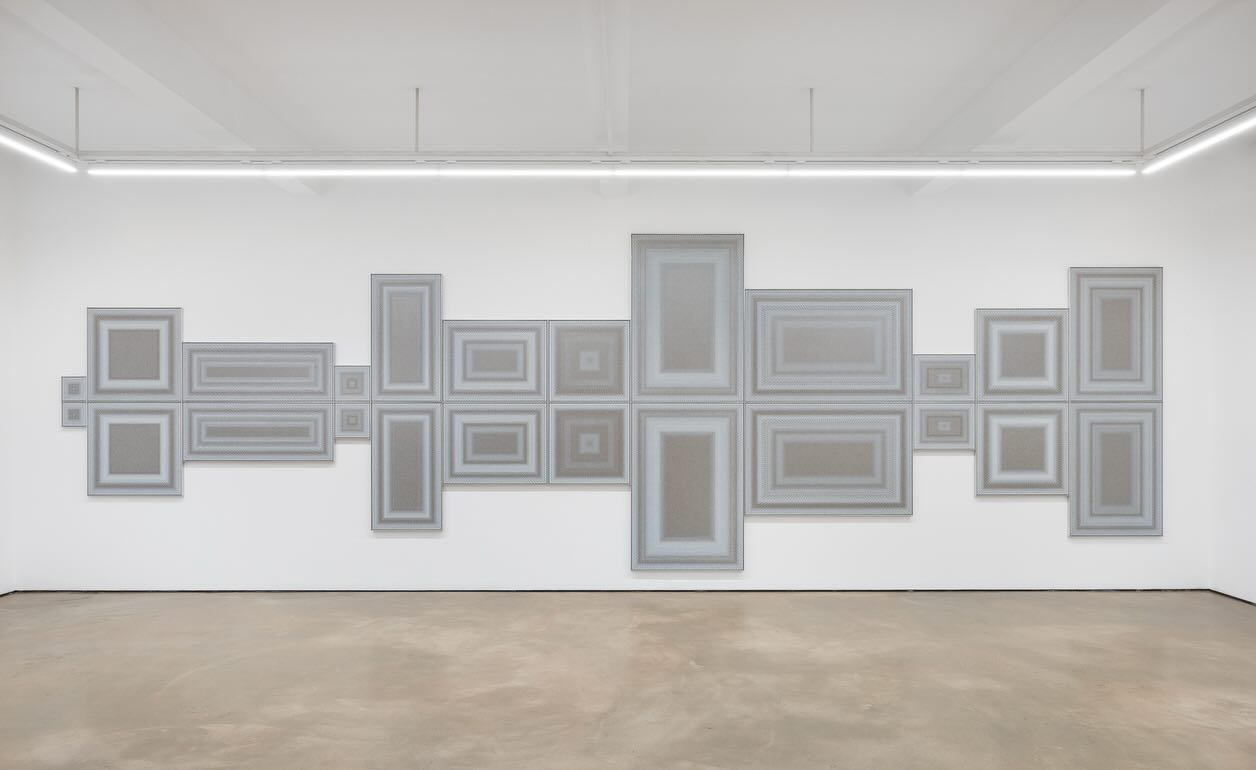
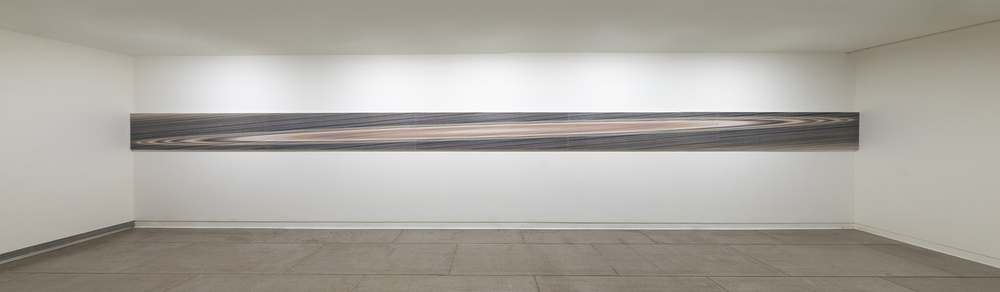
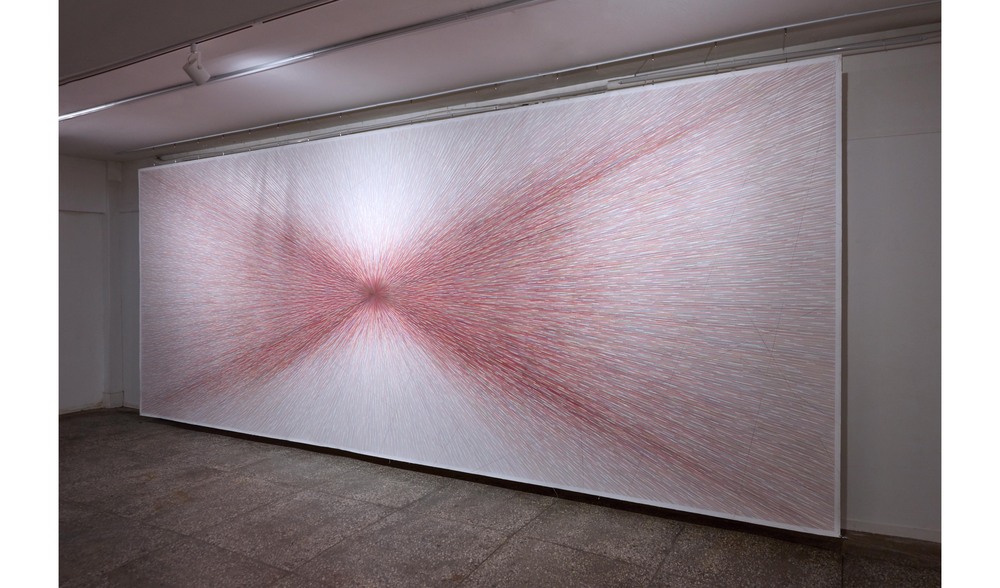
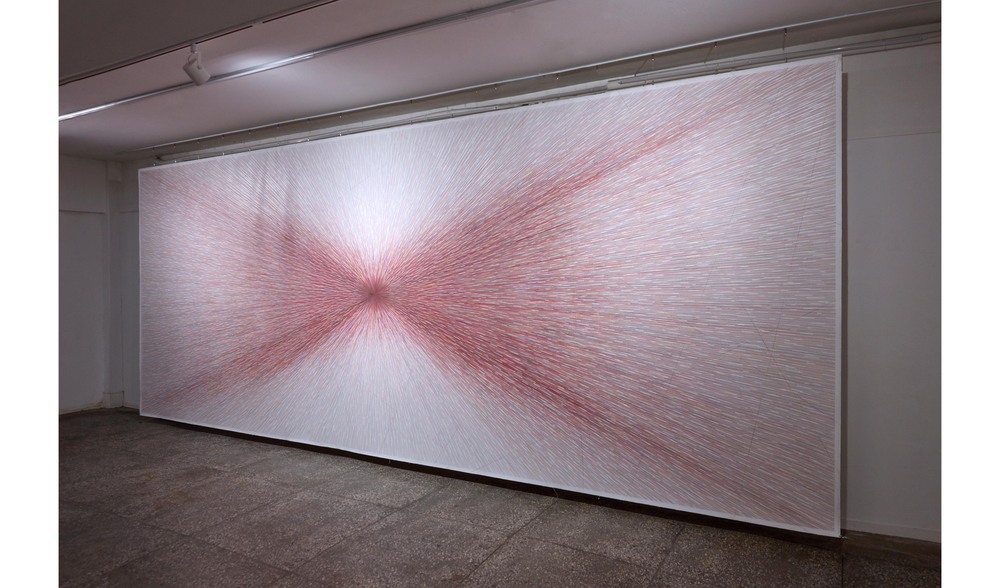
Keun Wook Ji, Actual Dynamics - 2444, 2018, Colored pencil on canvas, 270x700cm © Keun Wook Ji

In his early works, Ji sought to explore the subtle dynamism generated by the movement of microscopic particles through systems governed by strict order and limited autonomy.
 
For instance, in the ‘Actual Dynamics’ series, where colored-pencil lines converge toward a central point, and Cohesive Sphere Wave Ver. (2018), which presents fragmented structures from multiple perspectives, he reconfigures the relationships among points, lines, and planes to create a sense of depth and motion within the flat surface of the canvas.
 
Through the accumulation of lines varying in color and density, the artist generates perspective and vibrating visual energy, producing an illusion of dimensionality that paradoxically conflicts with the inherent flatness of the picture plane.


Keun Wook Ji, Cohesive Sphere Wave Ver., 2018, Acrylic, colored pencil on canvas, each 102x102cm (13pcs.)© Keun Wook Ji

Although his paintings appear static and fixed at first glance, the accumulation of countless lines generates subtle visual vibrations and movements across the surface. In this respect, his works resemble the universe itself: a vast and seemingly tranquil order composed of innumerable microscopic particles in constant motion. By embodying this paradox on the canvas, Ji invites viewers to sense the invisible flows of movement and energy that underlie the world around us.


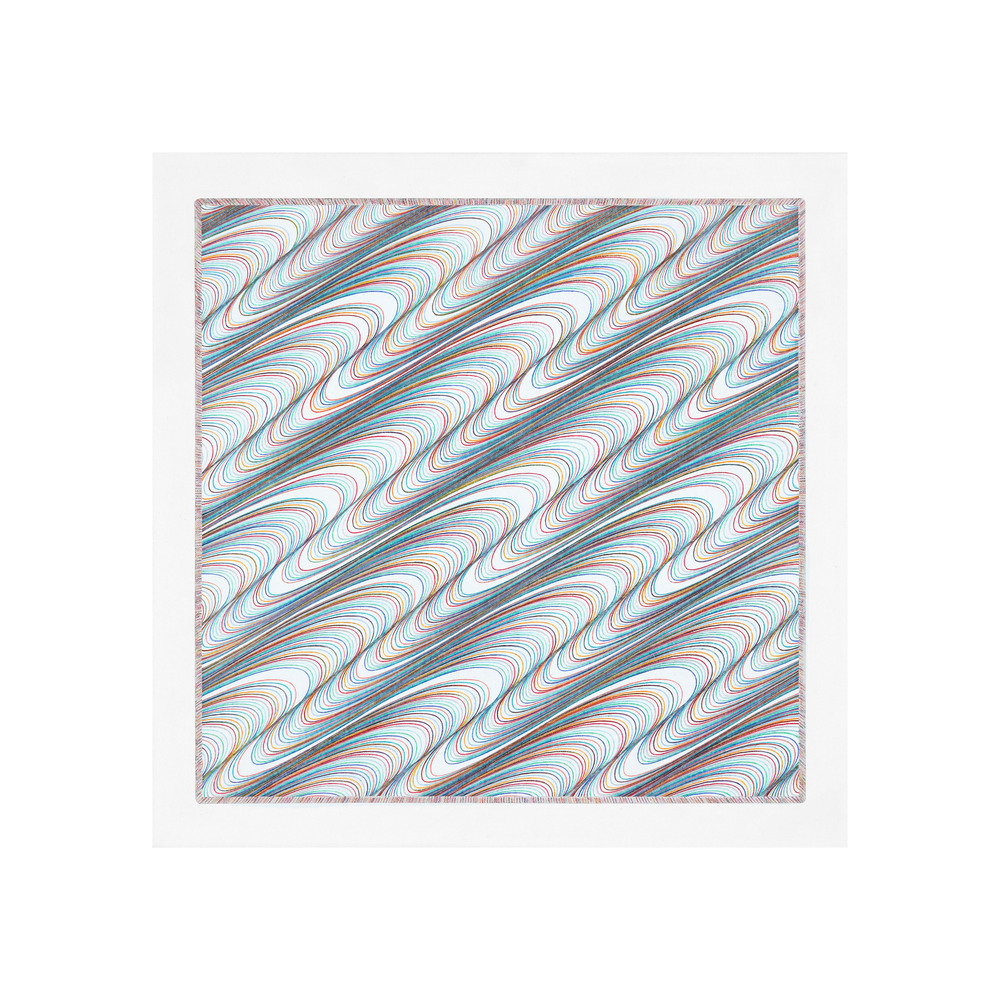
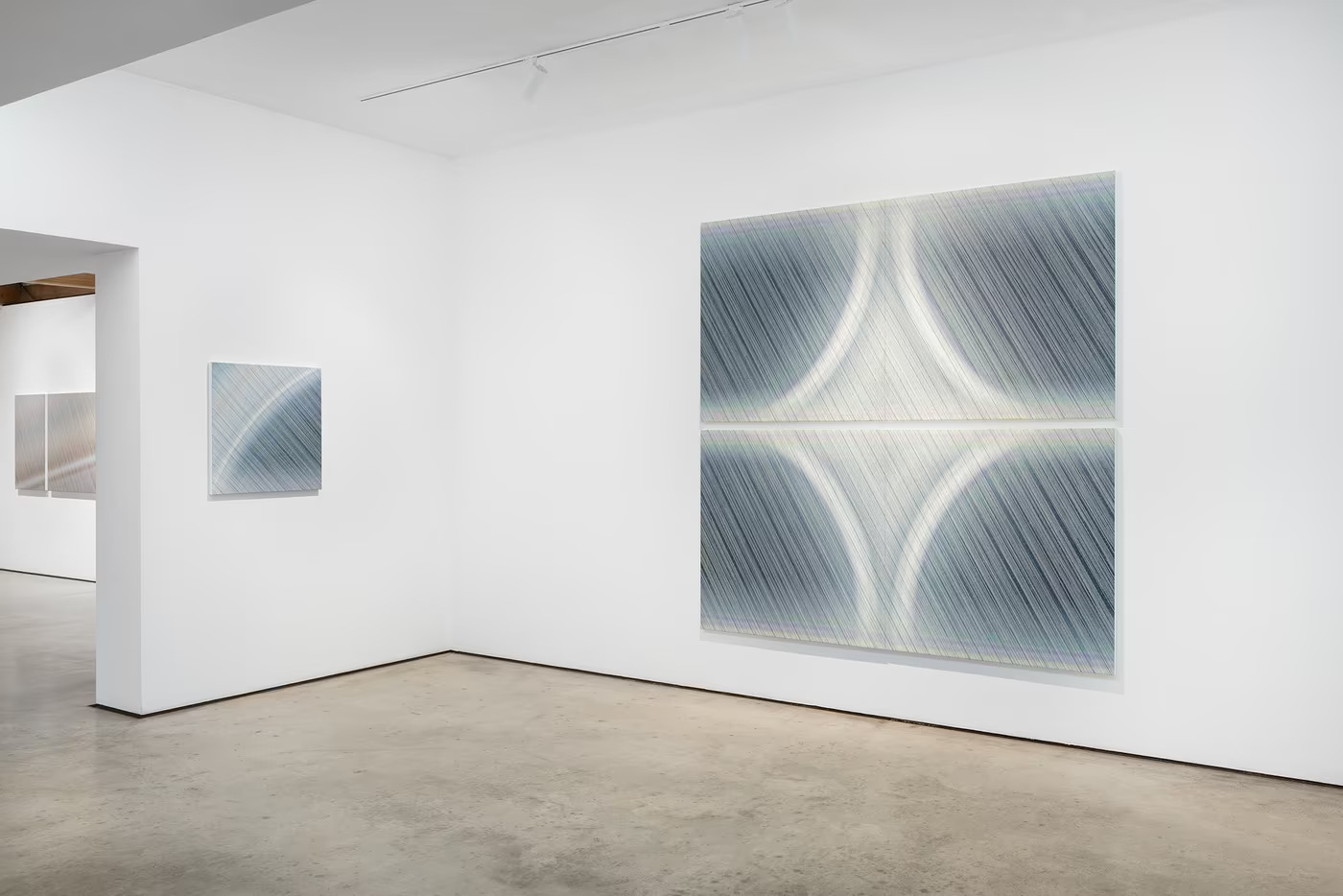
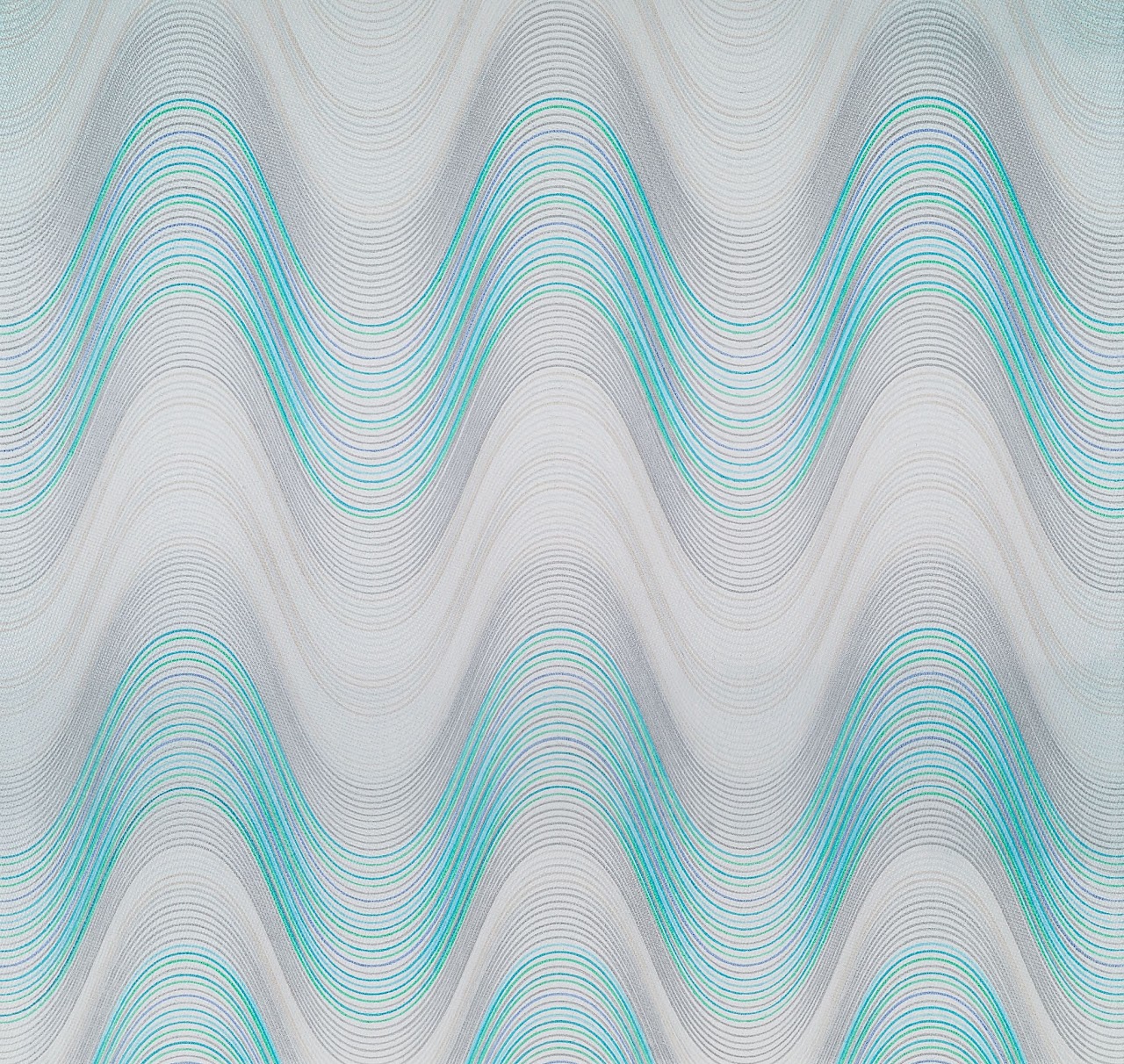
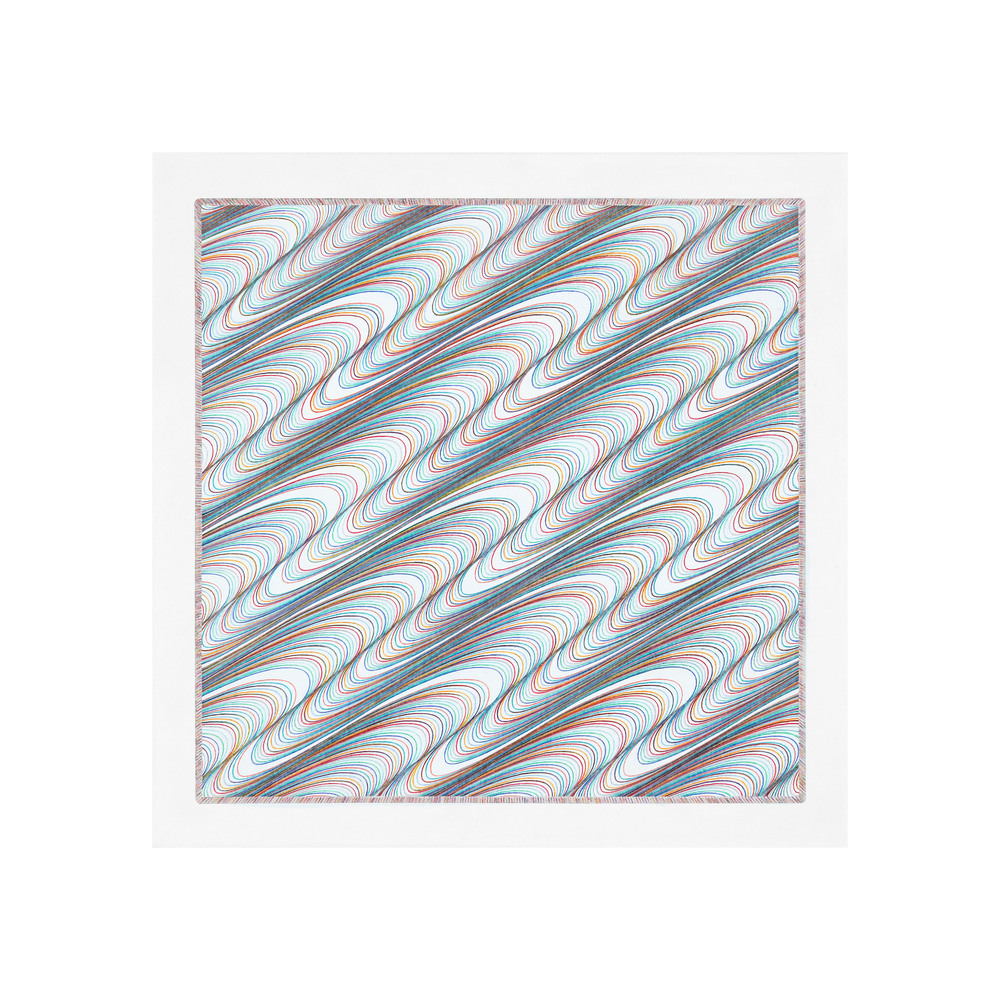
Keun Wook Ji, Curving Paths - 021, 2019, Colored pencil on canvas, 64x64cm © Keun Wook Ji

While the earlier series primarily employed radiating straight lines as their central visual element, the ‘Curving Paths’ series (2019) introduced the curve as a new formal device. Like the straight line, the curve functions as a means of expressing movement and dynamism within the image.
 
Unlike his previous works, which concentrated visual weight around a vanishing point, these paintings distribute both concentration and dispersion across the entire surface. By omitting a fixed destination and emphasizing continuity instead, Ji developed a new visual language that evokes the sense of an unceasing wave or flow in motion.


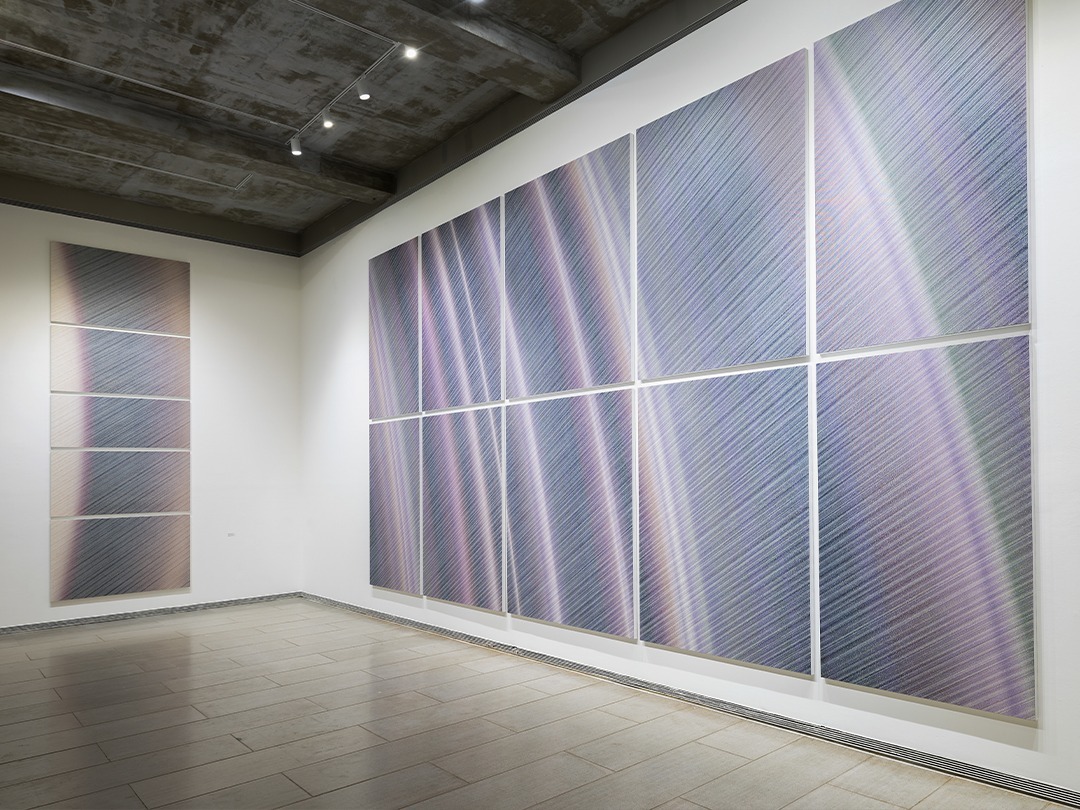
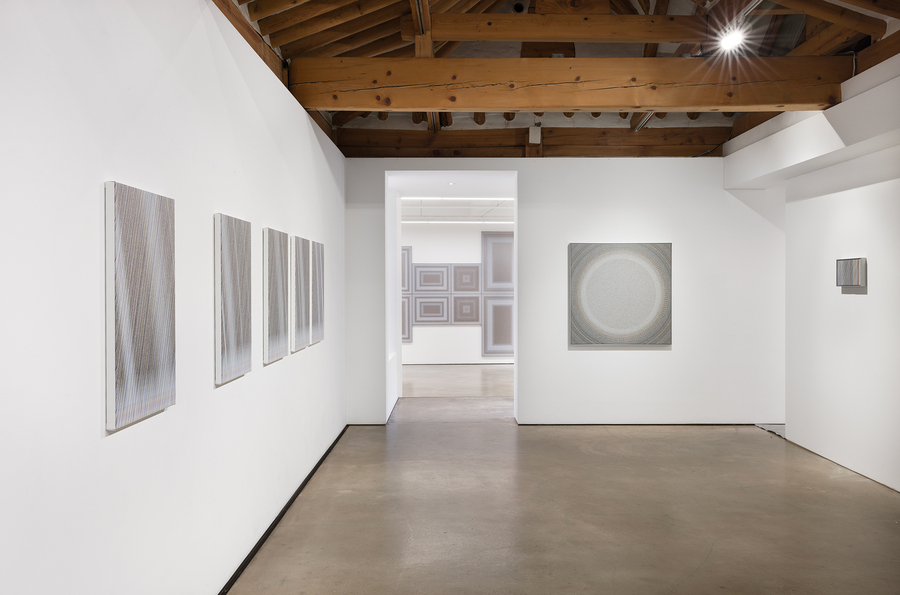
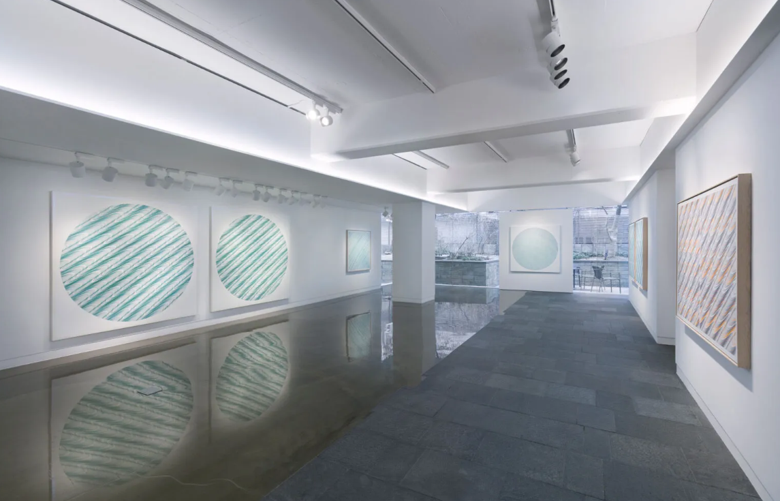
Installation view of 《Hardboiled Breeze》 (Hakgojae Gallery, 2023) © Keun Wook Ji

Thereafter, Ji expanded his practice beyond variations of line, becoming increasingly interested in formal and sculptural concerns and in creating unfamiliar stimuli that engage sensory systems beyond vision alone. This shift became particularly evident in his solo exhibition 《Hardboiled Breeze》 (2023) at Hakgojae Gallery.
 
In this exhibition, the artist explored how a gaze condensed within the inner world might be directed outward, while also reflecting on the relationships between the artwork and the external world.
 
The exhibited series, including ‘Inter-rim’, ‘Inter-wave’, and ‘Inter-shape’, reveal subtle states of harmony through layered fields of colored pencil, where deep chromatic strata and darker surface layers interact and coexist across the canvas.


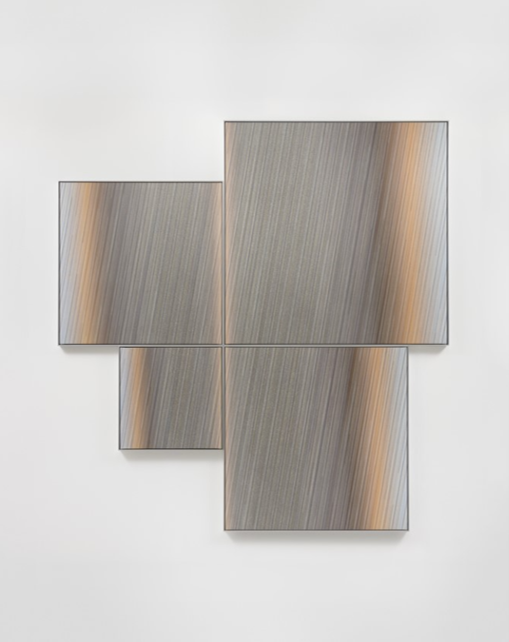
Keun Wook Ji, Inter-shape Collider, 2023, Colored pencil, acrylic, and UV print on canvas, approx. 230x230cm © Keun Wook Ji

In addition, works composed of multiple canvases are installed with deliberate intervals between them, allowing the spaces separating the panels to function as suspended gaps through which waves appear to continue beyond the edges of the image. The white gallery wall becomes a site where these interrupted currents unfold, a space permeated by a kind of emotional white noise.
 
Ji’s paintings are experienced differently depending on the scale and characteristics of the space in which they are installed. The act of viewing shifts not only according to the exhibition environment but also in response to the form and dimensions of the works themselves.
 
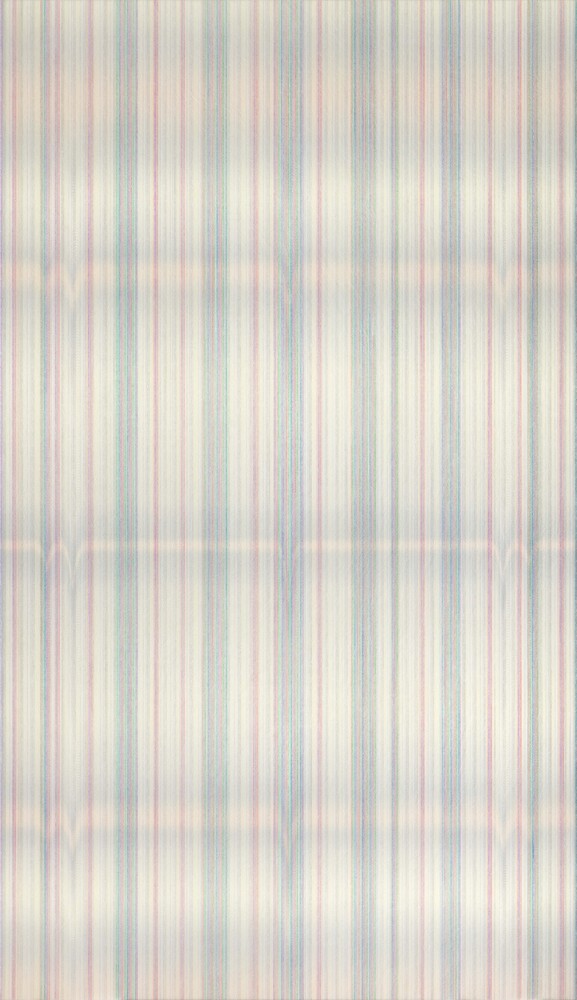
In the ‘Inter-shape’ series, individual panels generate a palpable tension through the taut intersection of vertical and horizontal lines, creating dynamic relationships both within and between the canvases.


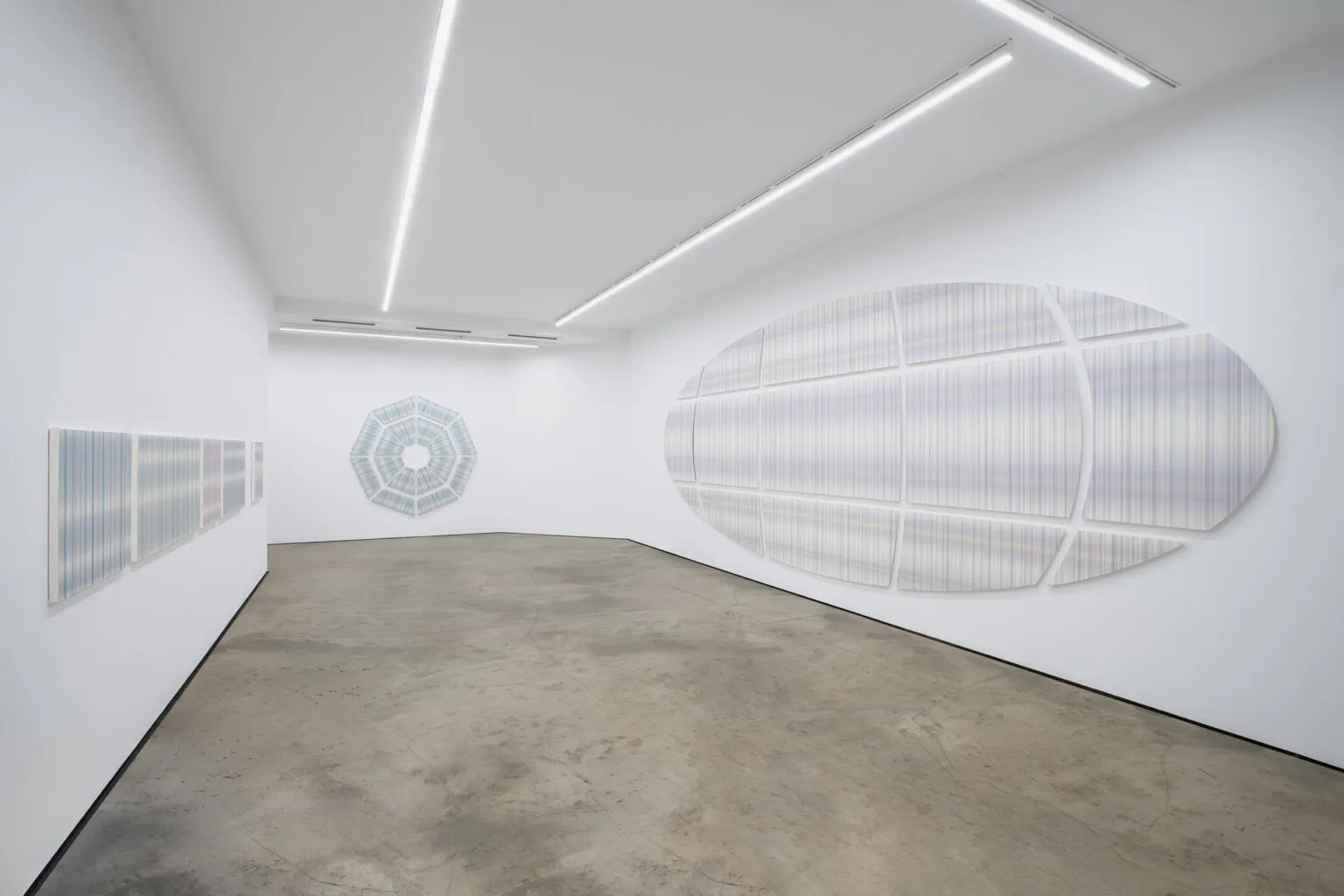
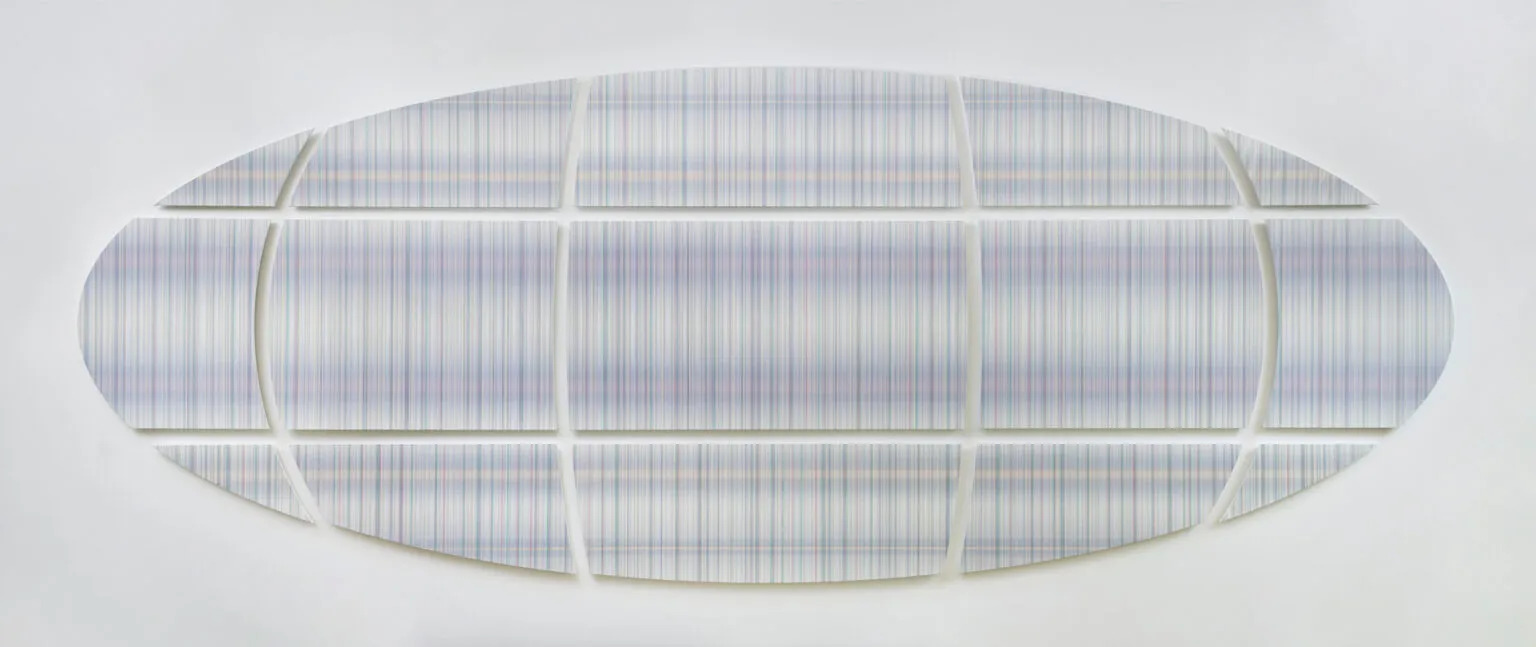
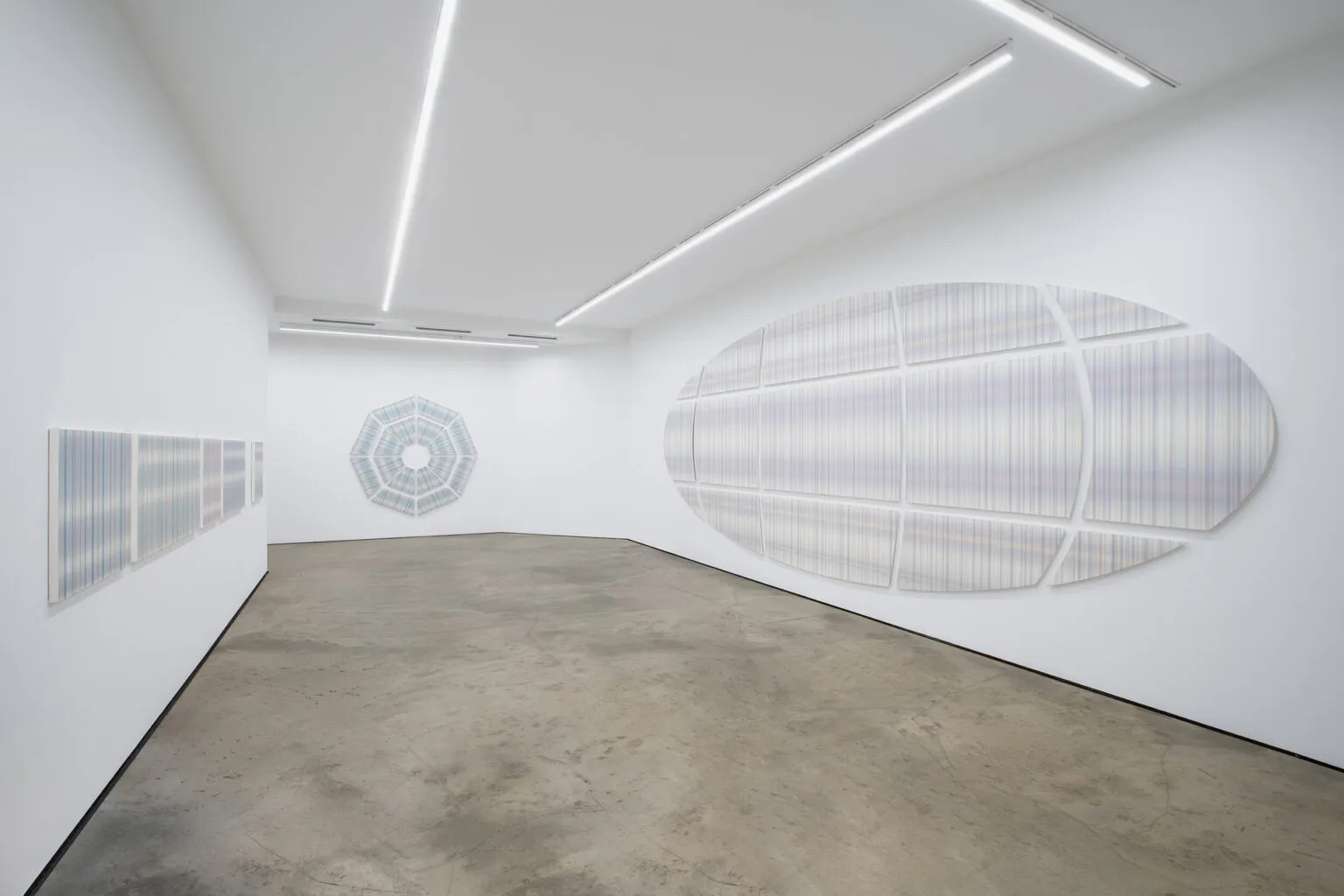
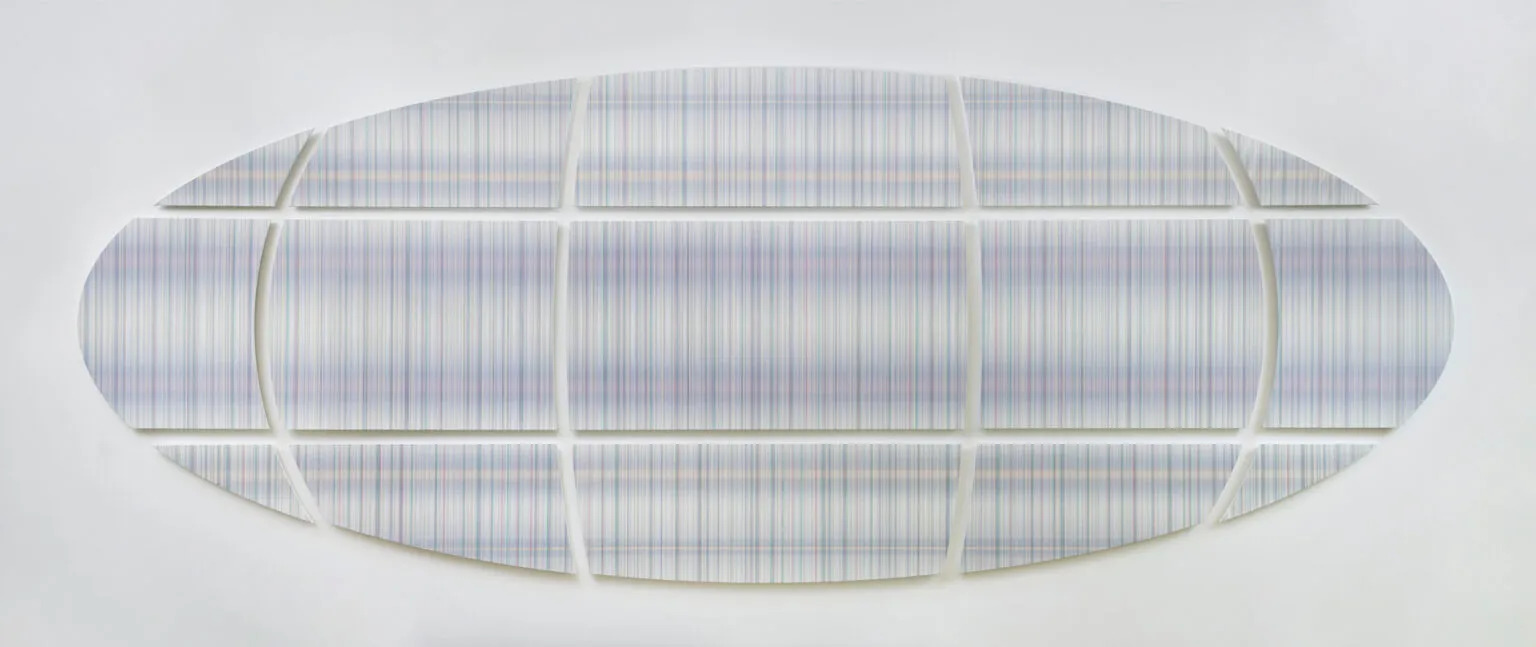
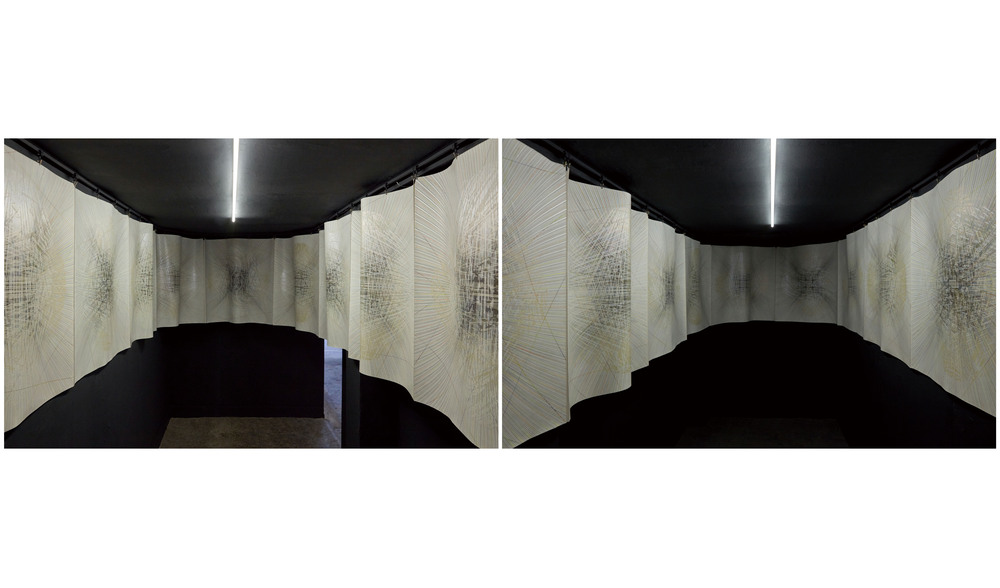
Keun Wook Ji, Inter-shape Radiation, 2023, Colored pencil, acrylic, and UV print on canvas, approx. 300x790cm © Keun Wook Ji

Furthermore, Ji proposes alternative modes of perception through canvases that depart from conventional rectangular formats. In Inter-shape Radiation (2023), a work composed of fifteen individual canvases arranged into a single configuration, each panel was cut with curved edges to conform to an overall elliptical contour before being assembled together.
 
As the curvature of each edge varies in scale and direction, the viewer’s gaze is guided along shifting visual trajectories. Curator Miran Park observes that while curves drawn within a rectangular frame invite viewers to sense the internal rhythm of the image, straight lines inscribed on curved canvases encourage them to imagine the rhythm of relationships unfolding between the painting and the physical space it inhabits.
 
By breaking away from the conventional shape of the canvas, these unfamiliar forms establish new relationships with both the surrounding environment and the viewer’s body. In doing so, they extend the waves and vibrations generated within the image beyond the boundaries of the picture plane, allowing them to resonate throughout the space itself.


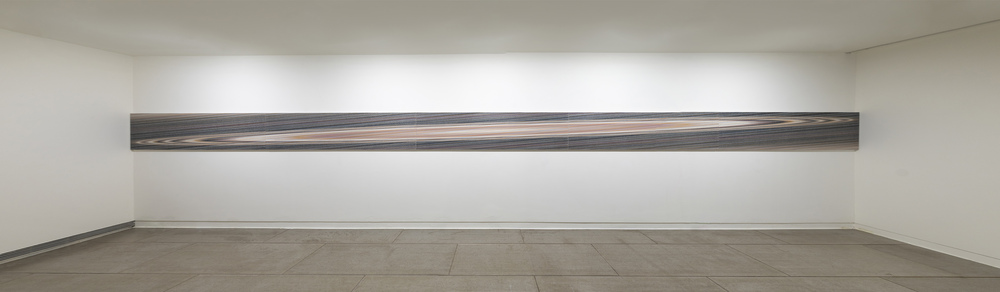
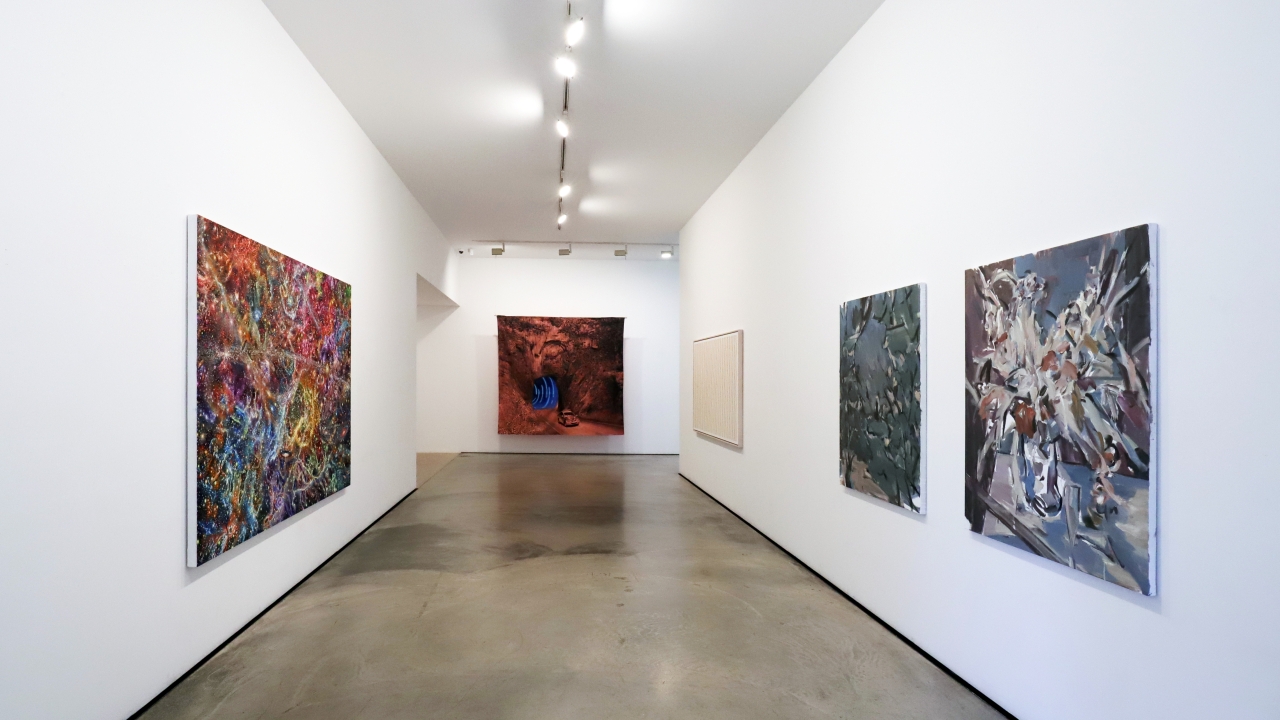
Installation view of 《Qua-o-ar》 (Sungkok Art Museum, 2024) © Sungkok Art Museum

In his solo exhibition 《Qua-o-ar》 the following year, Ji presented works inspired by the dwarf planet Quaoar, whose ring system drew scientific attention for existing beyond the limits predicted by conventional theories of planetary ring formation. He saw a parallel between the characteristics of planetary rings and the visual structure of his own paintings.
 
From a distance, a planetary ring appears as a clearly defined form, yet up close it becomes difficult to discern as a coherent shape, consisting instead of dispersed particles, gas, and cosmic dust.
 
This characteristic closely mirrors Ji’s paintings, in which countless thin lines accumulate to construct a singular image. Like a planetary ring, his works oscillate between clarity and dissolution, revealing different realities depending on the viewer’s distance and perspective.


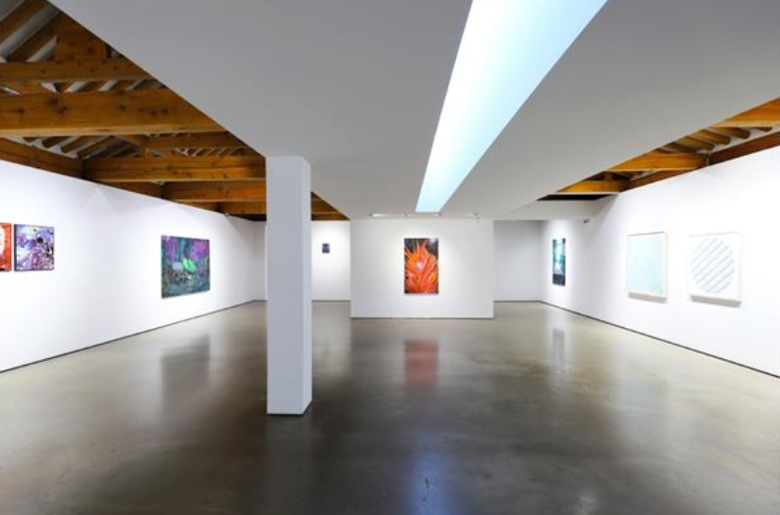
Installation view of 《Qua-o-ar》 (Sungkok Art Museum, 2024) © Sungkok Art Museum

While developing these ideas, Ji became particularly fascinated by the fact that Quaoar’s rings exist beyond the distance at which planetary rings are conventionally thought to form.
 
To him, the rings of Quaoar—phenomena that cannot yet be fully explained by current scientific theories—suggested a point at which the boundaries between reality and imagination begin to dissolve. They seemed to create a gap within the conceptual frameworks and assumptions through which we understand the world.
 
Drawing on these reflections, 《Qua-o-ar》 explored moments where established rules give way to unexpected entanglements and ambiguities. Within the paintings, lines and fields of color intersect, blur, and overlap, echoing the anomalous nature of Quaoar’s rings and their departure from conventional models.
 
The artist also incorporated references gathered from Space Engine, a virtual universe simulation program, layering these cosmic forms into the compositions. Through this process, he sought to investigate non-linear dimensions of space and time, translating speculative cosmological structures into the language of painting.


Installation view of 《GLASS》 (WWNN, 2024) © WWNN

The solo exhibition 《GLASS》, which followed, examined the movement of particles and waves—and, more broadly, the role of the gaze that intervenes in them—through the motif of glass as lens, membrane, and transparent barrier. In this exhibition, Ji turned his attention to the mechanisms revealed by the quantum-mechanical double-slit experiment.
 
The double-slit experiment was designed to determine whether matter behaves as a particle or a wave by passing electrons through two narrow openings. The two slits generate interference, producing wave-like behavior in the particles. Ji saw a parallel between this phenomenon and the fragmented spatial structure of WWNN, where the exhibition took place.
 
What particularly interested the artist was the implication that the simple act of observation can alter a physical phenomenon. Focusing on this aspect of the experiment, he explored the materiality of the gaze itself.
 
By translating these ideas into spatial form, Ji sought to create a metaphor for images and worlds that exist as probabilities—realities shaped, transformed, and brought into being through the act of looking.


Keun Wook Ji, Inter-shape Net 009, 2024, Colored pencil, acrylic, and UV print on canvas, 194x112cm © Keun Wook Ji

The exhibition title “GLASS” points to the ever-shifting nature of perception, challenging the assumption that reality is something objective, fixed, or stable. Instead, it suggests the fluid and fluctuating ways in which our gaze and perspective continuously shape what we see.
 
For this exhibition, Ji established different systems and rules for each canvas, using them as experiments to investigate how the eye generates distinct visual patterns and modes of perception.
 
The 2024 works from the ‘Inter-shape’ series, in particular, reveal structures of planes, gaps, and networks produced through the intersection of multiple forms. These compositions invite viewers to navigate relationships between presence and absence, connection and separation, while becoming increasingly aware of the active role perception plays in constructing visual reality.


Installation view of 《GLASS》 (WWNN, 2024) © WWNN

The clarity of light caught within the gaps of a net could also be found in the placement of individual works throughout the exhibition space. Colors that intersect and radiate within the canvas extend beyond the internal order of the image and disperse into the surrounding space.
 
Depending on the viewer’s bodily orientation, these loosely unified colors draw a grid across the exhibition space, guiding the direction of the gaze. This method of establishing order within space sets up a relationship between the visible object and the viewer, prompting visitors to become aware of their own physical position and the direction of their gaze within the environment.


Installation view of 《GLASS》 (WWNN, 2024) © WWNN

For Ji, extending the pictorial field into the spatial order of an exhibition and revealing the viewer’s bodily position is a way of investigating the material phenomena that emerge in the distance between image and gaze. Beginning from the premise that the act of observation itself can affect energies and flows within space, he experiments with the forms and movements that a gaze might possess.
 
In other words, his work can be understood as an attempt to capture the invisible movements and interactions that traverse the space between painting and the viewer’s body.


Installation view of 《Metallic Wings》 (Hakgojae Gallery, 2026) © Hakgojae Gallery

In his 2026 solo exhibition 《Metallic Wings》 at Hakgojae Gallery, Ji further shifted his focus beyond the representational question of “what” is shown toward the more fundamental question of “how” things come into appearance. Through the repeated acts of drawing lines and building up material layers, he investigates modes of emergence and becoming.
 
Ji’s pictorial surfaces—seemingly still yet in constant motion, solid in appearance yet gradually swelling into a light, almost immaterial state—intersect in this exhibition with the material properties and ontological history of metal.


Installation view of 《Metallic Wings》 (Hakgojae Gallery, 2026) © Hakgojae Gallery

Here, “metal” does not simply refer to a cold material substance; rather, it functions as a nonlinear symbol that has been formed through millions of years of pressure and transformation, simultaneously carrying traces of the past and possibilities for the future.
 
The material traces accumulated layer upon layer on the canvas react to light and generate a deep resonance across the surface. The immediate reflections emitted by the metallic surface stand in contrast to the subtle strata of time embedded within it, transforming the flat picture plane into a spatial and structural field.
 
Meanwhile, the “wings” of the exhibition title are not ornamental motifs that defy gravity, but forms of movement through which matter extends beyond its given conditions and expands into new states of being.


Installation view of 《Metallic Wings》 (Hakgojae Gallery, 2026) © Hakgojae Gallery

In Ji’s paintings, action, material, and formless layers of time intersect upon a single surface. The repetitive gestures inscribed on the canvas therefore function not merely as iterations of order, but as traces of transition that explore the stratified and non-linear dimensions of time.
 
As his practice increasingly engages with realms beyond the painting itself, extending outward into its surrounding environment, it moves beyond visual stimulation toward an affective dimension that is experienced through the body as a whole. In doing so, Ji’s works draw viewers into the perceptual and conceptual world they construct.

”The lines on the canvas expose traces and processes of the act of drawing. They convey visual information of the lines themselves to the viewers, rather than presenting a specific narrative. The focus is on the sensory stimulation that arises from the lines.
 
Paying attention to the temperature of colors, the optical illusion created by the undulating lines, and the impressions conveyed by the scale and shape of the canvas itself, I hope that the viewers broadly interpret the artwork based on their intuitive emotions.
 
Depending on the distance, one can pay attention to the directionality of the lines or track down the traces of the particles that make up the lines. I wish to create a canvas that can become anything based on the viewer's interpretation.” (Keun Wook Ji, from an interview for 《Hardboiled Breeze》, Hakgojae Gallery)


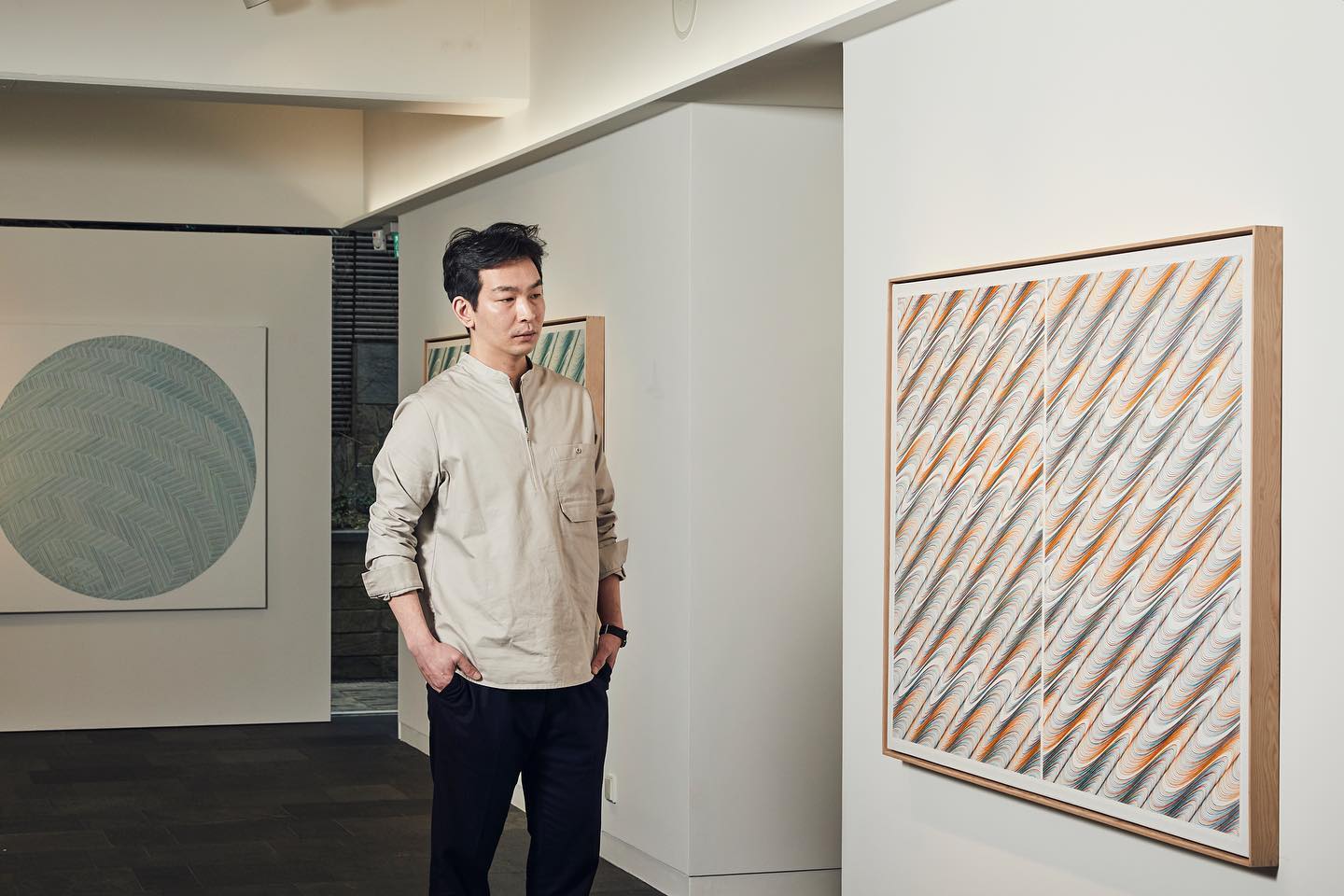
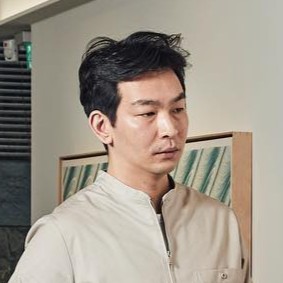
 Artist Keun Wook Ji © Noblesse Collection

Keun Wook JI received his B.F.A. in Printmaking from Hongik University and earned an M.A. in Art & Science from Central Saint Martins, University of the Arts London. He subsequently completed his Ph.D. in Painting at Hongik University. His recent solo exhibitions include 《Metallic Wings》 (Hakgojae Gallery, Seoul, 2026), 《Eyes on the Arc》 (Schema Art Museum, Cheongju, 2025), 《GLASS》 (WWNN, Seoul, 2024), and 《Qua-o-ar》 (Sungkok Art Museum, Seoul, 2024).
 
He has also participated in numerous group exhibitions, including 《From the Earth》 (Hakgojae Gallery, Seoul, 2025), 《Flyby》 (Prompt Project, Seoul, 2024), 《Another Materiality》 (MOMA, Seoul, 2023), 《Skins》 (Hakgojae Gallery, Seoul, 2022), 《Lagrangian Point》 (DrawingRoom, Seoul, 2022), 《What If!》 (A-Lounge Contemporary, Seoul, 2021), and 《Sharpness》 (Ilwoo Space, Seoul, 2020).
 
Ji was selected for the Sungkok Art Museum Open Call (2024) and the Seoul Foundation for Arts and Culture’s Emerging Artist Track and Promising Artist Track programs (2026, 2021).
References