Pyoun Daesik (b. 1984) has developed his practice around questions concerning the relationship between image and temporality. Through the painstaking and repetitive act of covering surfaces with pencil marks, he engages in a painterly process that transforms the invisible flow of time into layers of materiality.
 
Through accumulation and repetition, the surface becomes a recording device, while time emerges as a trace of condensed sensation embedded within matter.


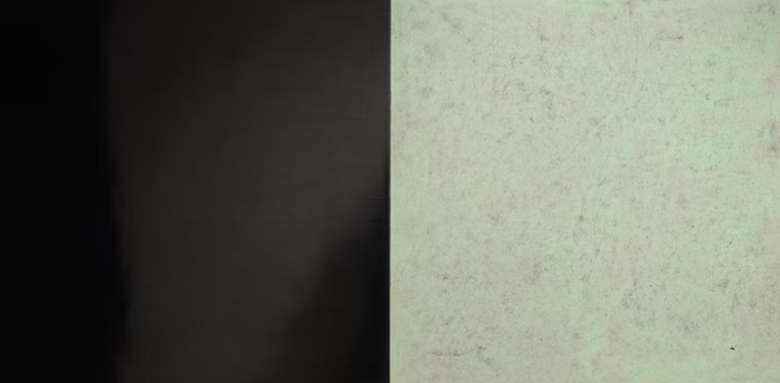
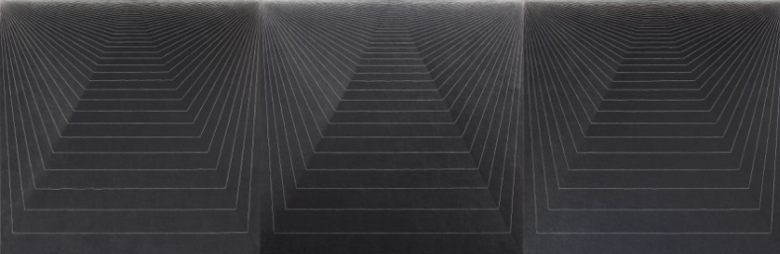
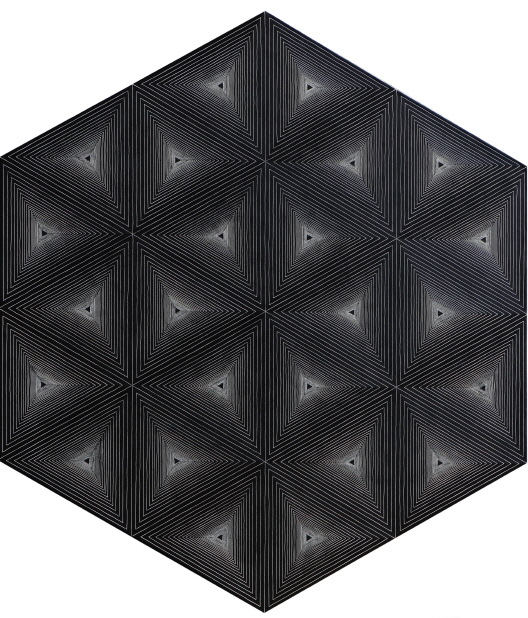
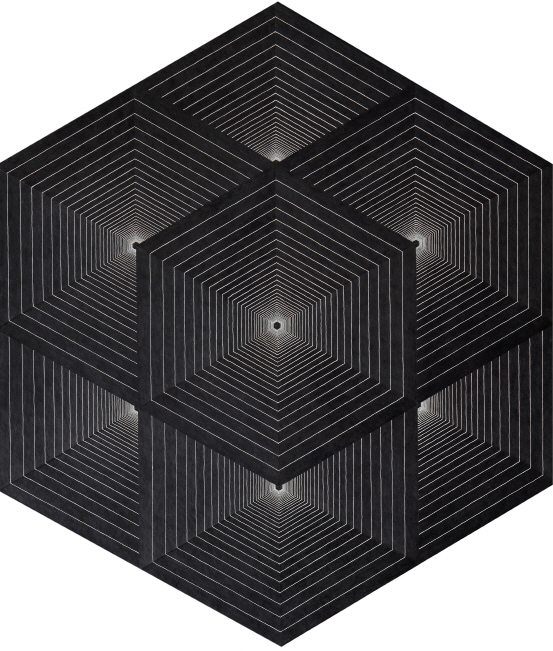
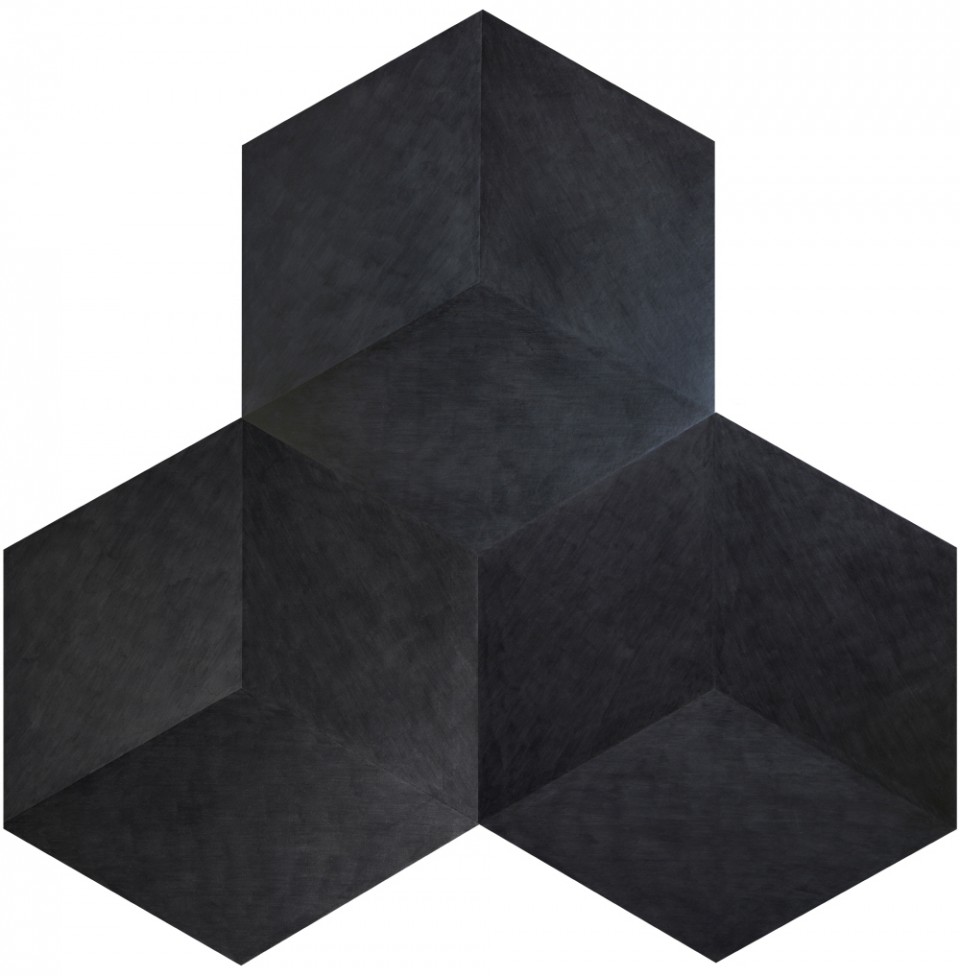
Pyoun Daesik, Untitled (cube No.14), 2011, Pencil on hanji, 150x130cm © Pyoun Daesik

Pyoun Daesik often describes the act of making his work as being akin to playing a game. For the artist, both involve establishing a set of rules and moving toward an outcome that can only be vaguely anticipated. They also share a sense of immersion in a world detached from everyday reality.
 
In this sense, painting functions as a window onto a virtual realm rather than a reflection of the real world. Reflecting on his practice in an artist statement, Pyoun writes that it is “about creating another small world within a vast and intimidating one, and playing within it.”


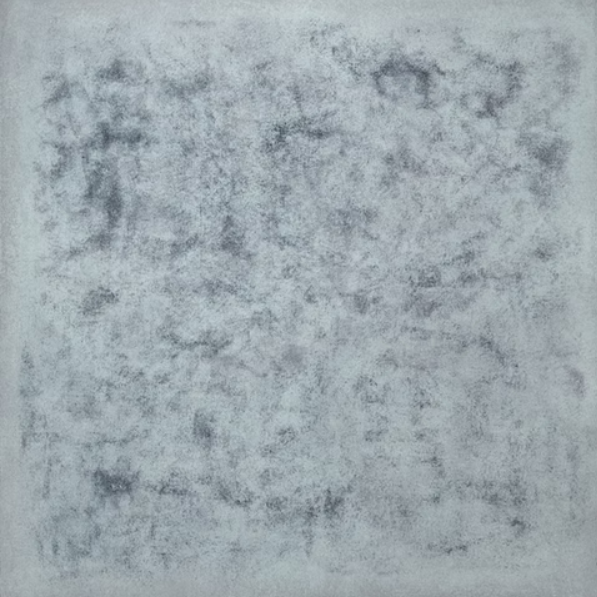
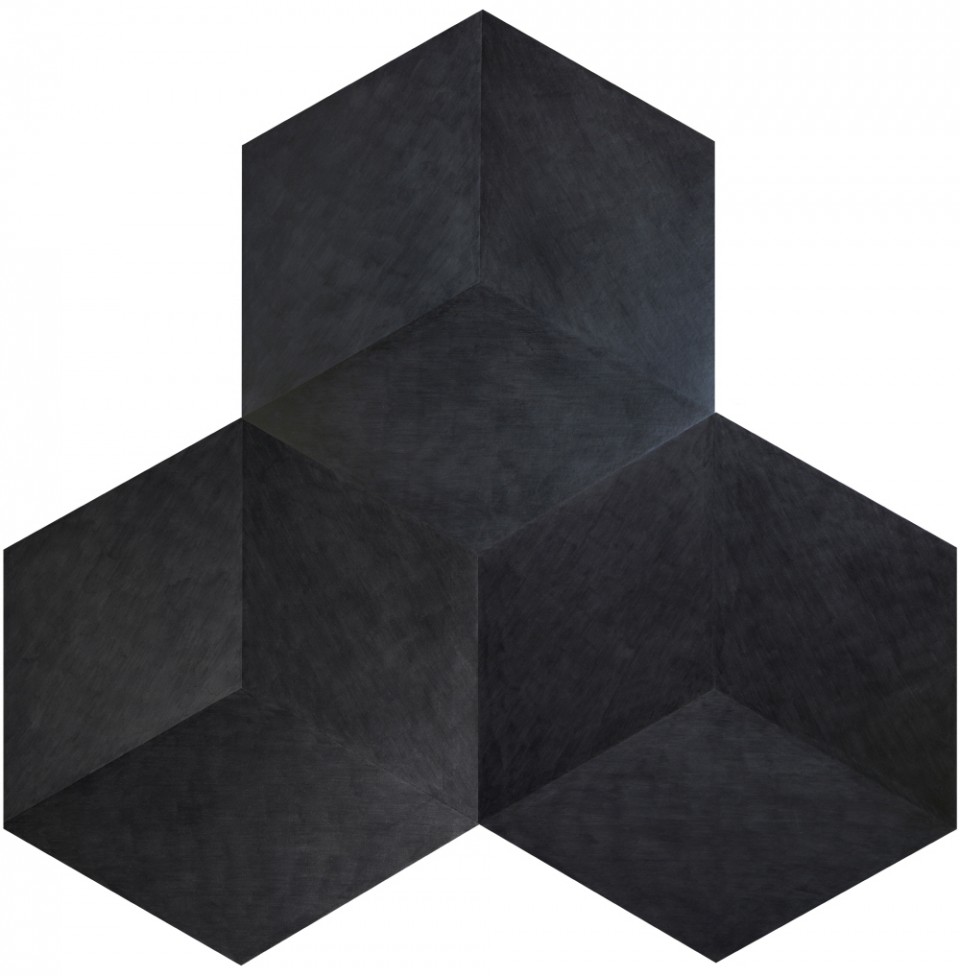
Pyoun Daesik, Untitled (cube No.5), 2011, Pencil on hanji, 150x130cm © Pyoun Daesik

Pyoun Daesik’s practice originated from an experiment with the concept of the blind spot. Curious about a phenomenon he had previously understood only in theory, he tested it directly through his own visual perception.
 
He began with a sheet of white paper marked with two dots placed approximately 20 centimeters apart. Covering one eye, he then focused on one of the dots from a distance of about 50 centimeters.


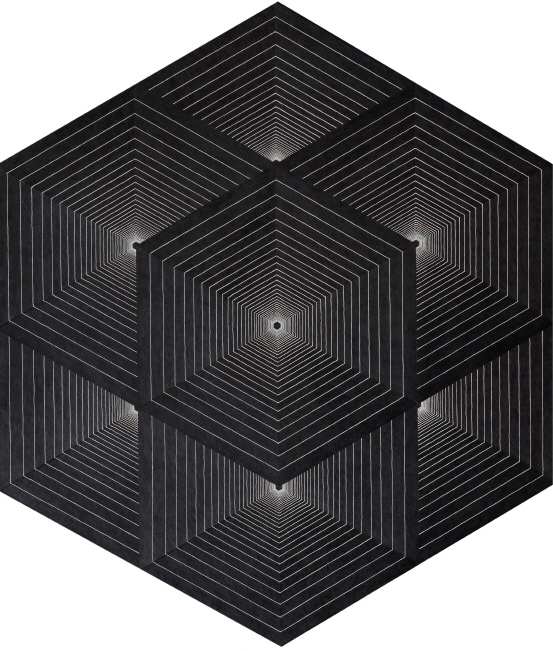
Pyoun Daesik, Untitled (cube No.11), 2011, Pencil on hanji, 150x130cm © Pyoun Daesik

As a result, the artist experienced a striking phenomenon: when viewing the paper with one eye covered, a dot that was clearly present would disappear from sight. In another experiment, a dot was drawn on one side of the paper while a broken line was drawn on the other.
 
When observed under the same conditions—with one eye covered from a distance of approximately 50 centimeters—the gap in the broken line appeared to be filled in, and the line was perceived as continuous.
 
In his artist statement, Pyoun Daesik recalls being struck by the realization that there are things we fail to see even while looking directly at them, and that the brain arbitrarily fills in these unseen gaps on its own.
 
At the same time, he became increasingly perplexed by the tendency to regard what is seen as unquestionably true, while dismissing what cannot be seen as inherently unreliable.


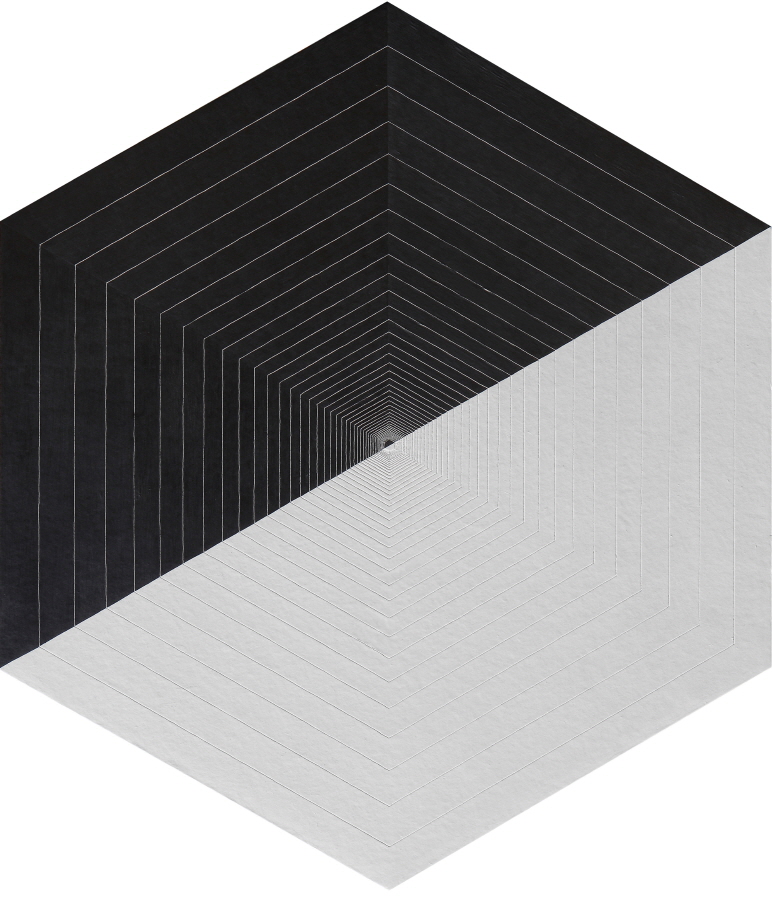
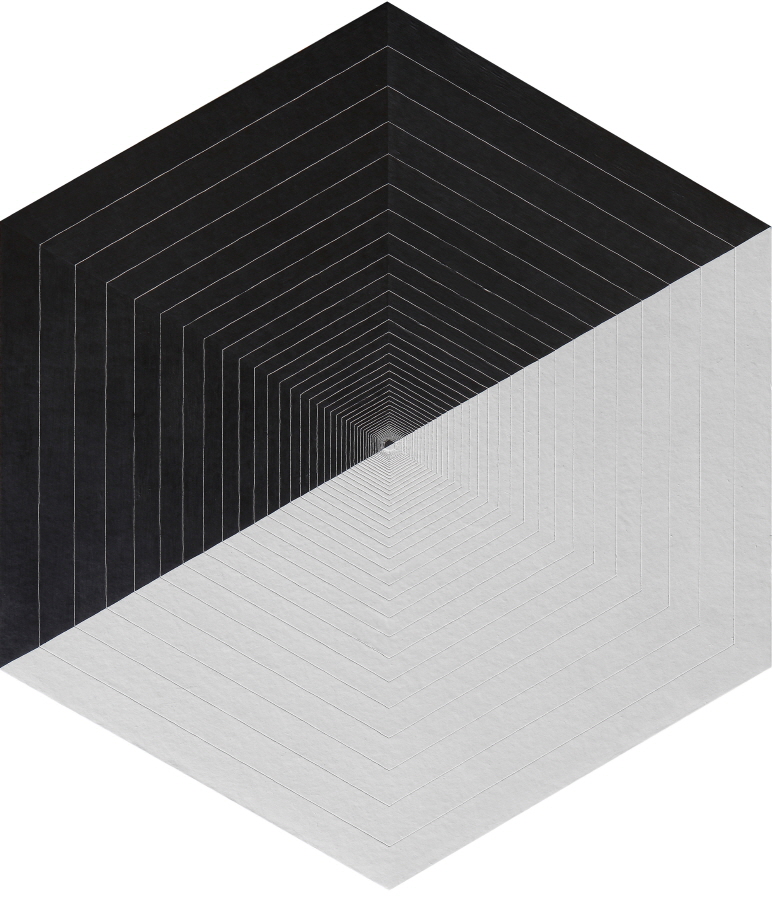
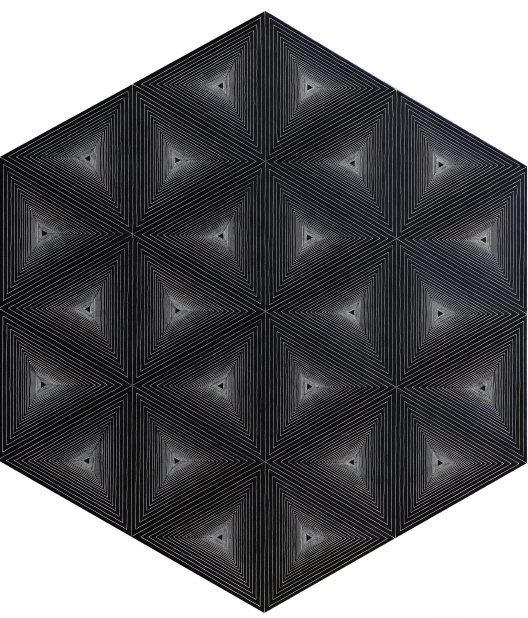
Pyoun Daesik, Untitled (cube No.15), 2013, Pencil on hanji, 150x130cm © Pyoun Daesik

These perceptual experiments led Pyoun to create works that present images with an illusion of depth and spatiality on a flat surface, inviting viewers to question what they see and how they experience it.
 
Through his practice, Pyoun seeks to negotiate a balance between visual perception—the way the eye apprehends an image—and the inherent properties of an object, namely its materiality. To this end, he gradually began to eliminate recognizable imagery from his work, shifting his focus instead toward the material presence of the surface itself.
 
What remains is an emphasis on materiality shaped through the accumulation of time, allowing traces of duration and process to emerge as the primary subject of the work.


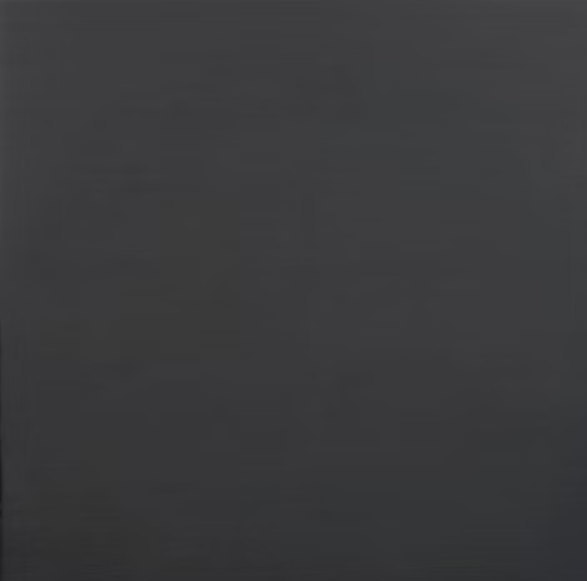
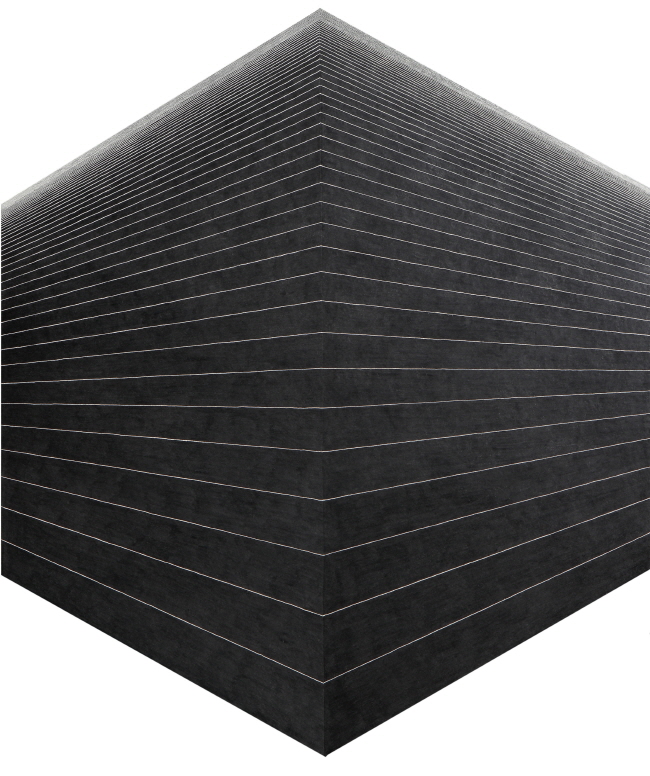
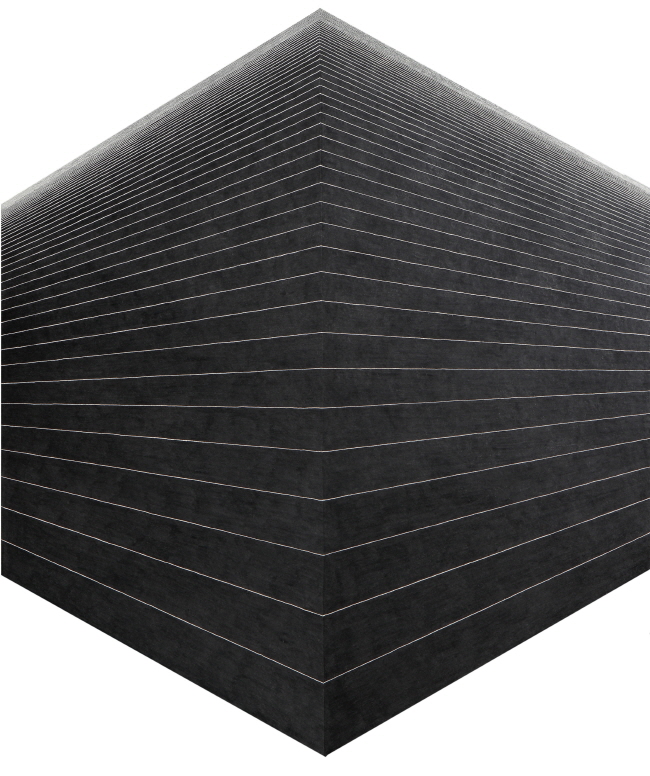
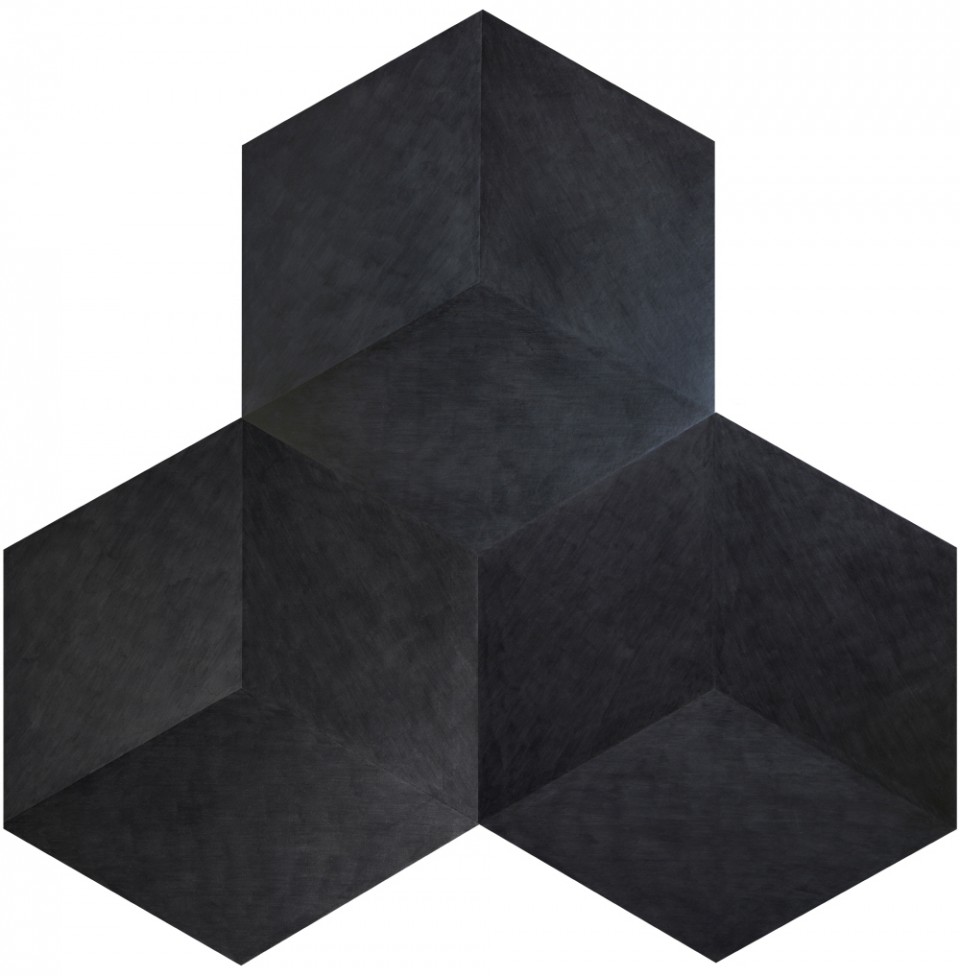
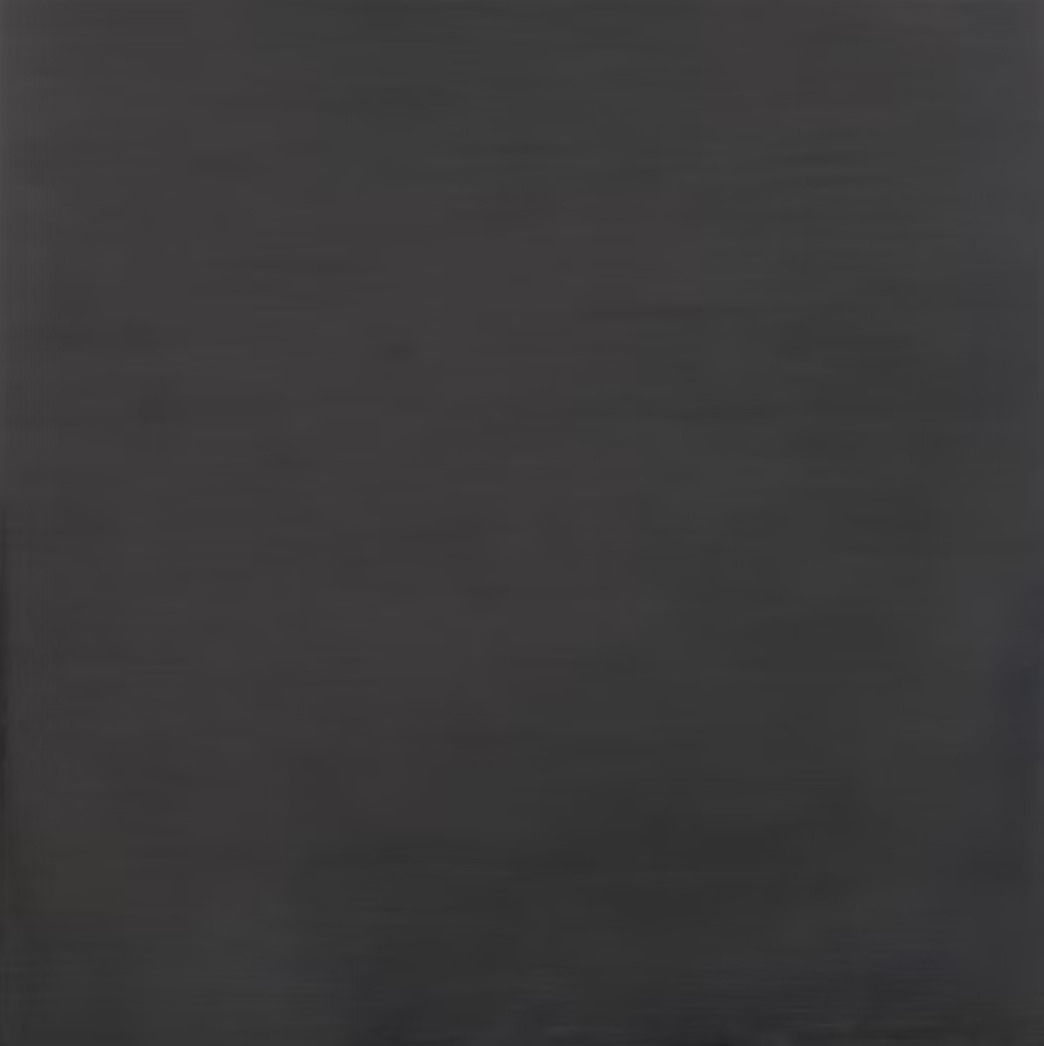
Pyoun Daesik, Untitled (vacant cube), 2012, Pencil on hanji, 262.5x260cm © Pyoun Daesik

The pencil, the primary material in his work, possesses both a deep black tone and a reflective sheen on its surface. The artist meticulously builds up each pencil stroke, one by one, revealing the process of accumulation itself and using the material as a means of recording the passage of time.
 
After sanding the surface smooth, he gradually layers time onto it through the medium of pencil. Yet the black rectangle, stripped of any emotional intervention in order to emphasize materiality, paradoxically begins to generate unexpected images before the viewer’s eyes precisely because of that material presence.


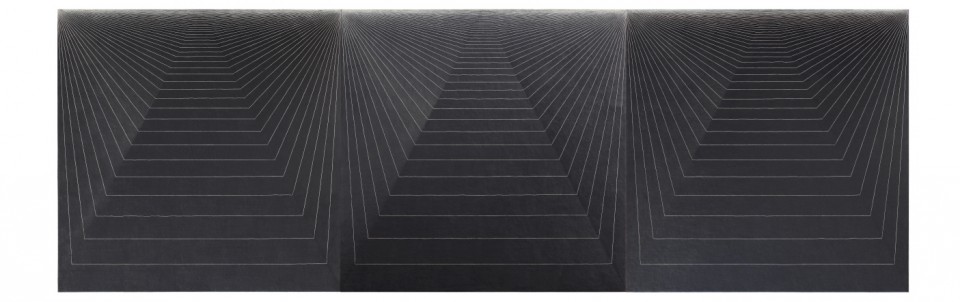
Pyoun Daesik, Untitled (valley), 2014, Pencil on hanji, 130.5x391.5cm © Pyoun Daesik

In the early stages of his practice, Pyoun focused on revealing the indented lines left on paper by pressing with a pencil and on maximizing a sense of spatial depth through the textures created by pencil shading.
 
For example, in his solo exhibitions 《ILLUSION》 (2014) and 《ENGRAVE》 (2015), he presented works that explored illusory spaces formed through optical effects within the picture plane, as well as series that concentrated on the “line” itself as a trace.
 
Through the labor-intensive process of making these works, Pyoun became aware of the inherent imperfection of human existence through traces such as uneven surfaces and imperfectly straight lines. At the same time, by presenting the optical illusions generated through these marks, he invites viewers to experience the limitations and distortions of human vision itself.


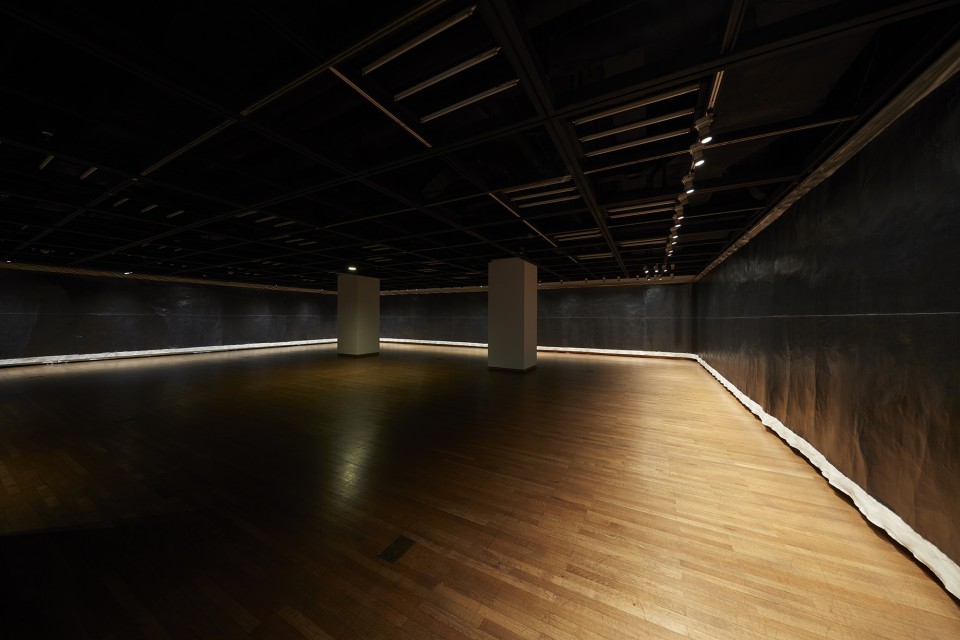
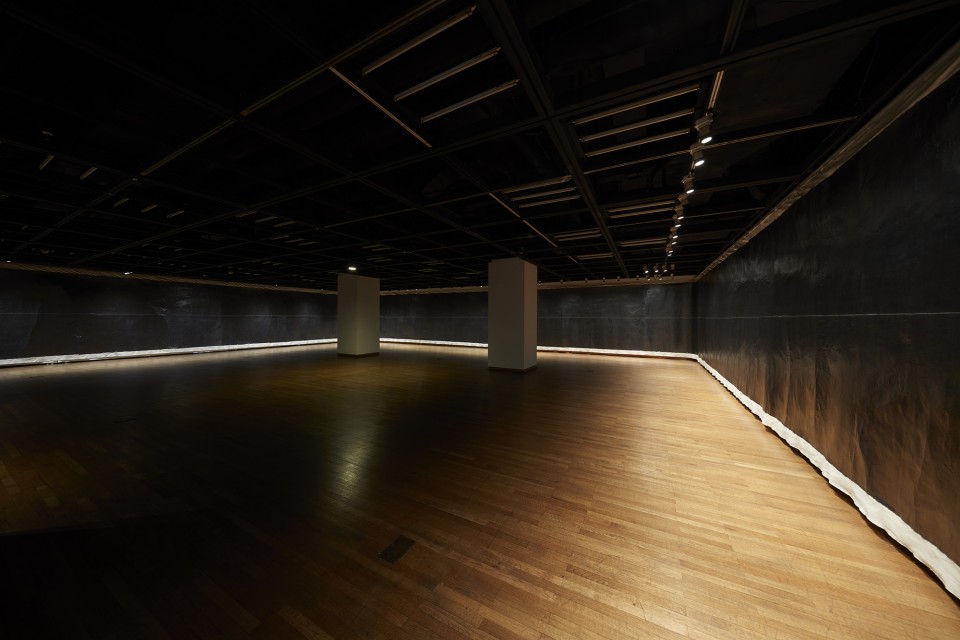
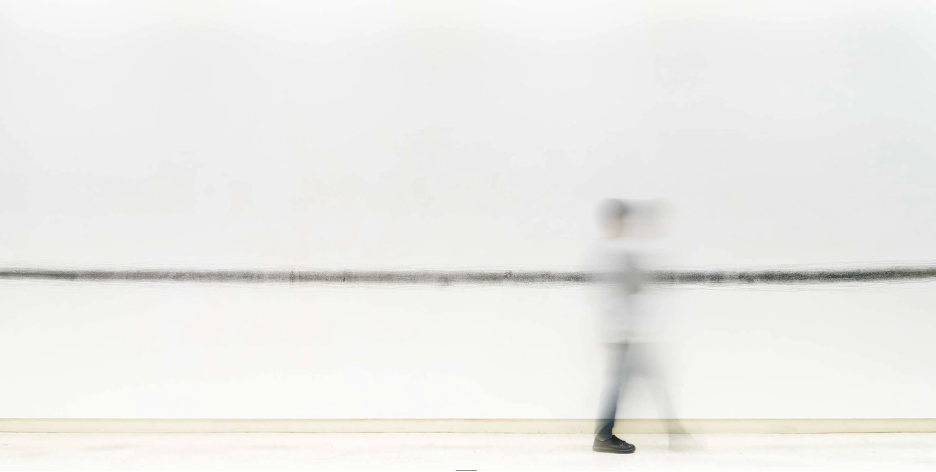
Pyoun Daesik, Untitled (moments), 2017, Pencil on hanji, 285x5400cm, Installation view of  《A Series of Moments》 (Hanwon Museum of Art, 2017) © Hanwon Museum of Art

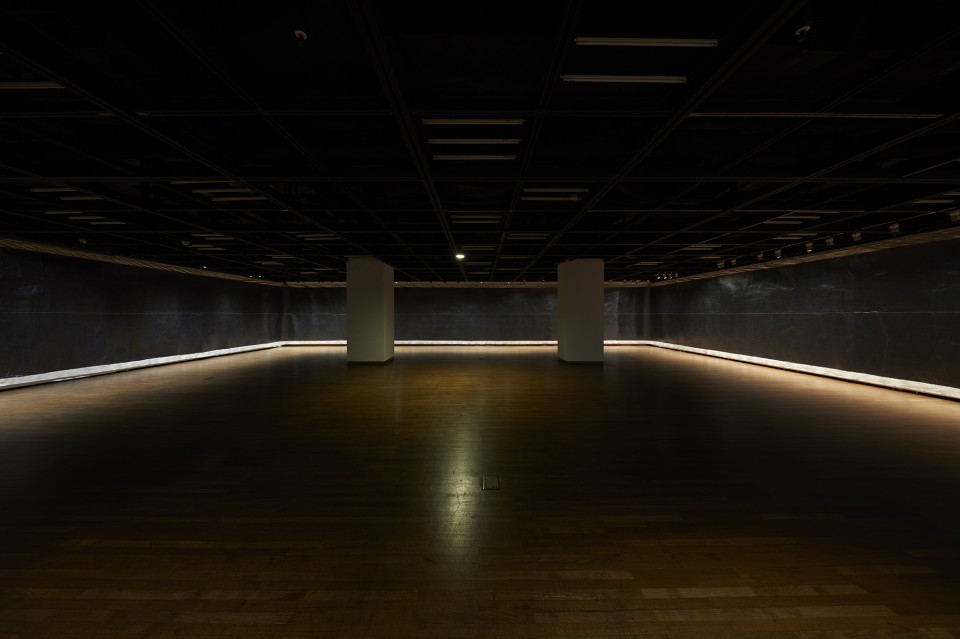
In his 2017 solo exhibition 《A Series of Moments》, Pyoun installed a 50-meter-long roll work along the gallery walls, focusing on the intense traces of an individual existence embedded within a succession of moments.
 
Through the continuous horizontal white lines incised into walls darkened with layers of pencil, the artist sought to evoke the continuity of existence. The exhibition was conceived as an experience of tracing the marks he had left behind, inviting viewers to follow these traces and pursue the lingering imprint of a presence.


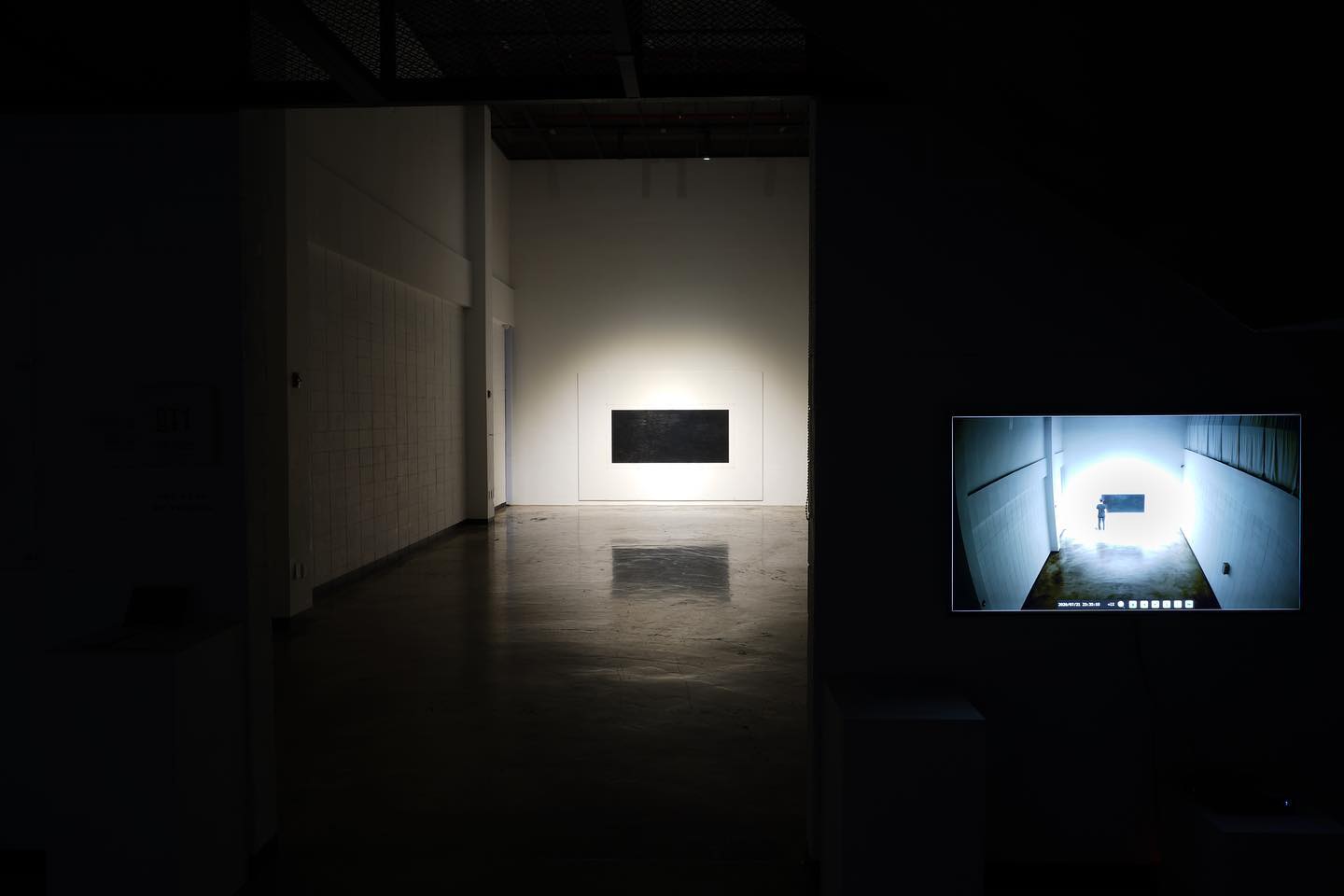
Installation view of 《ENCOUNTER》 (Hongti Art Center, 2020) © Hongti Art Center

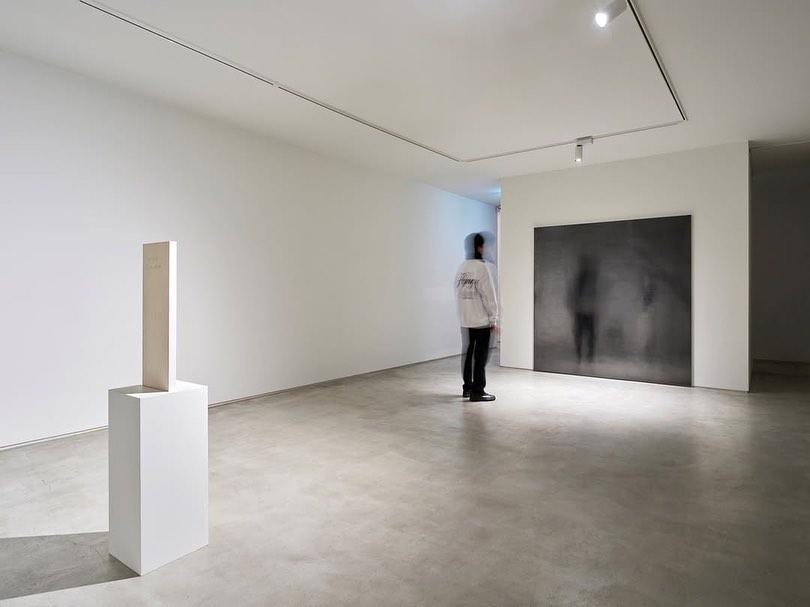
Furthermore, in his 2020 solo exhibition 《ENCOUNTER》 at Hongti Art Center, Pyoun proposed an experience of confronting the coexistence of past and present, self and other, surface and space. In this exhibition, he replaced the hanji paper used in his earlier works with wooden panels, carefully smoothing their surfaces before covering them with layers of black pencil.
 
The works, formed through the accumulation of time in repeated pencil strokes, acquired a sheen reminiscent of polished metal. Standing before them, viewers encounter not only the traces of pencil embedded in the surface but also their own reflections and the surrounding present reality mirrored upon it.
 
As viewers become aware of the present image reflected upon the traces of the past and continue to gaze at the work, they experience a reversal of spatial relationships: the reflected image seems to move beyond the marks on the pencil-covered surface and into the space within the picture plane itself. In this way, they encounter a sense of disorientation at the boundary between past and present, surface and interior.


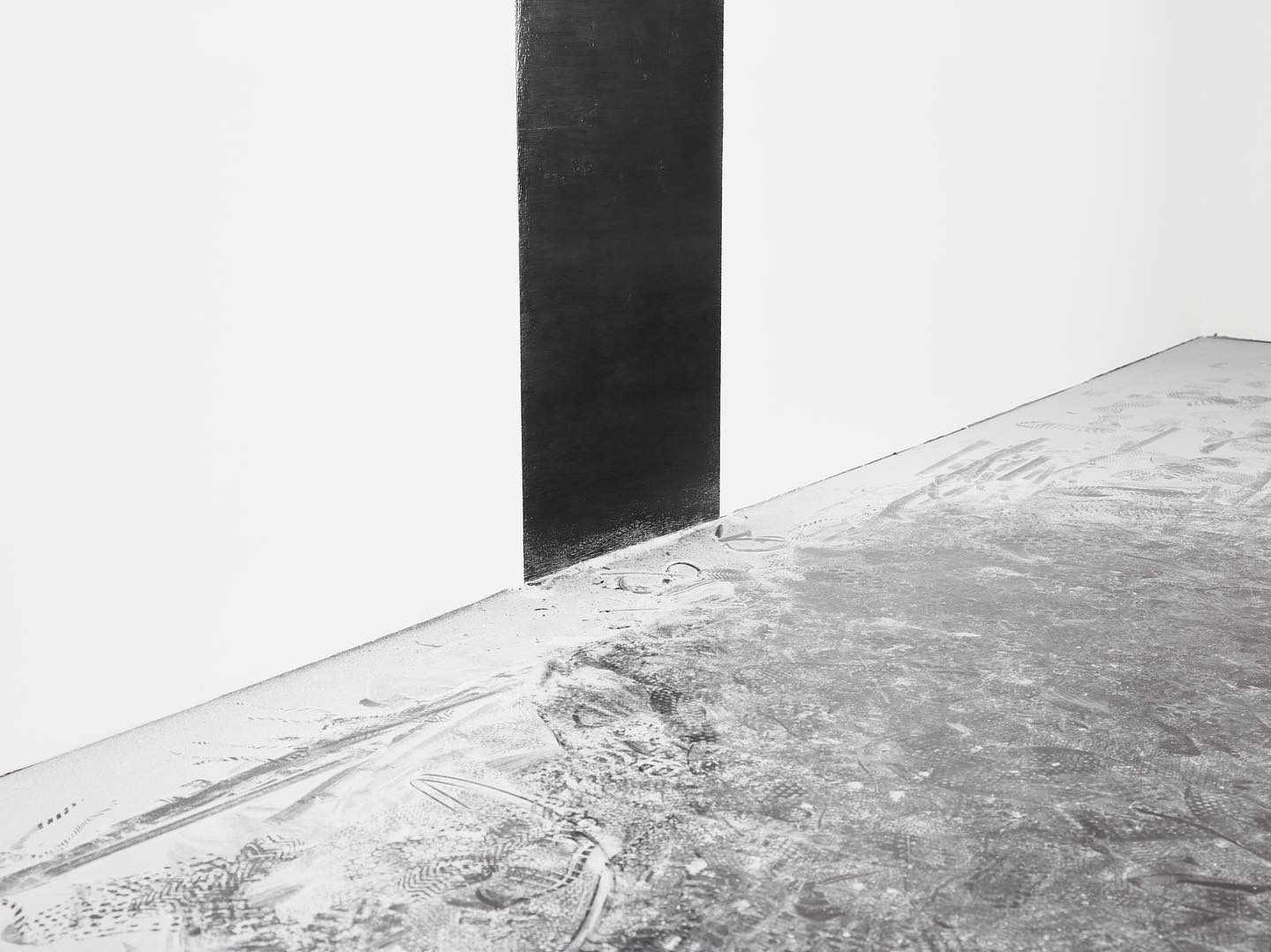
Installation view of 《Equivalence》 (Incheon Art Platform, 2021) © Incheon Art Platform

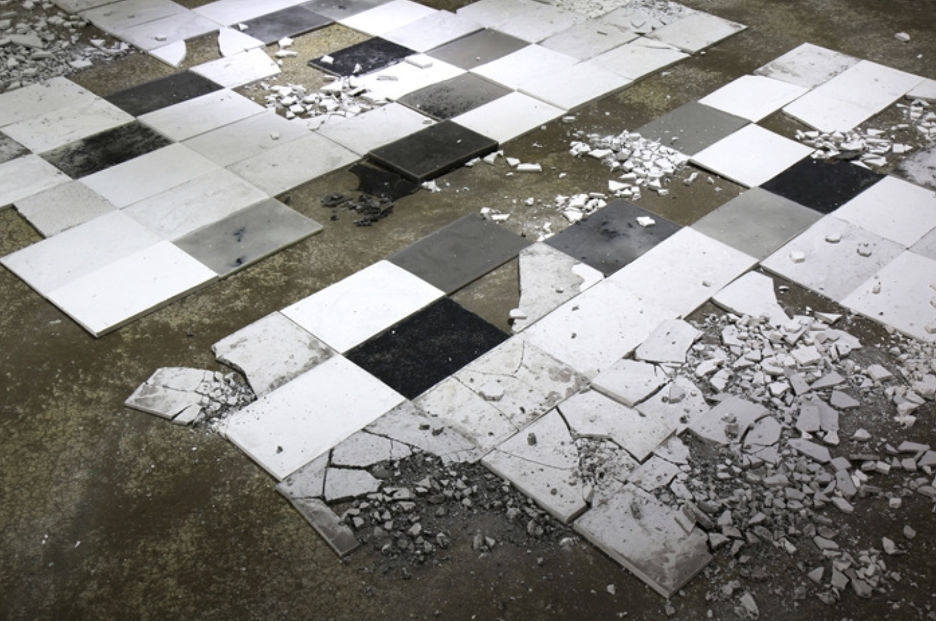
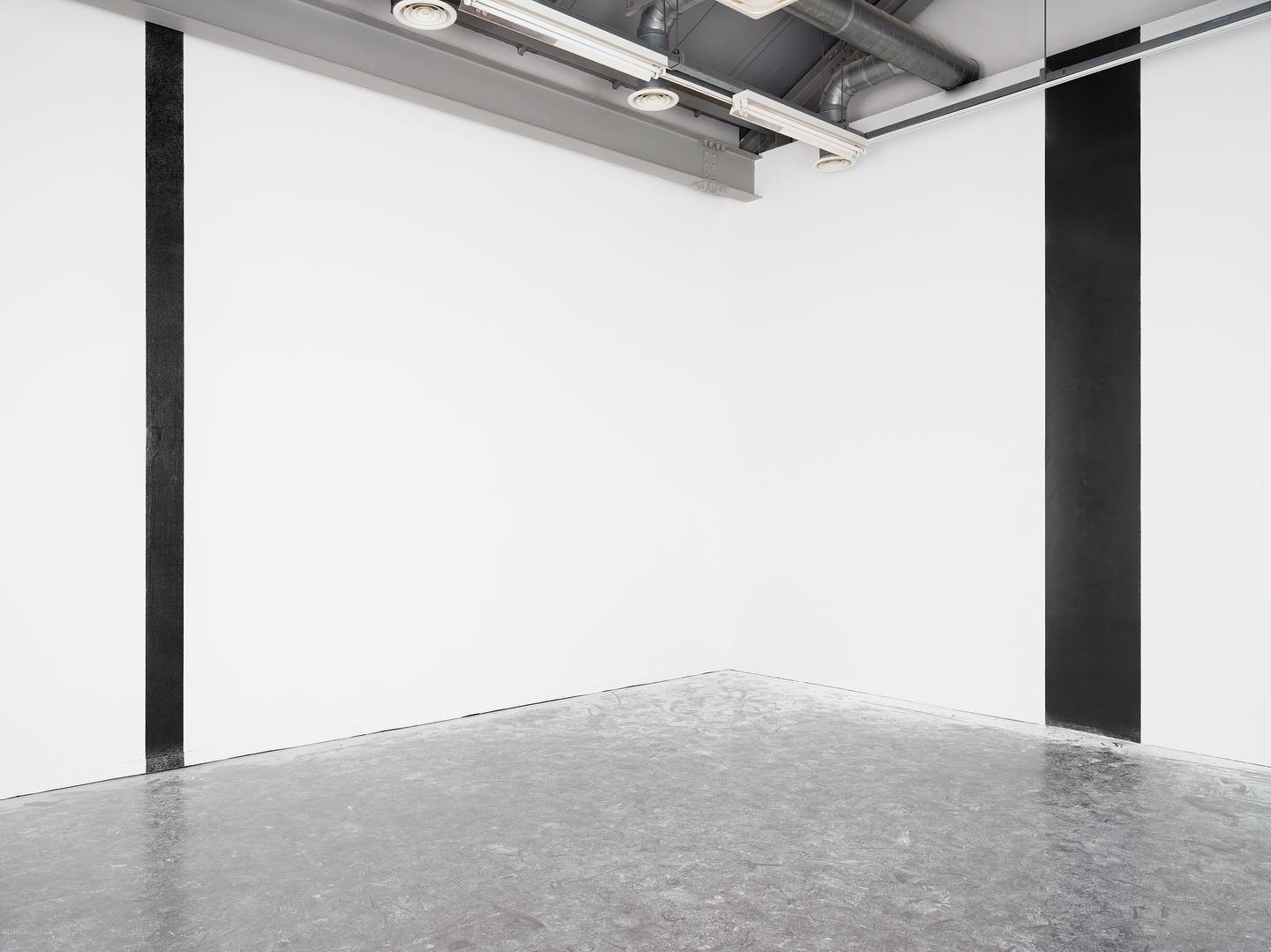
This exploration of projecting present-day apparitions onto a surface, much like a mirror, was further extended to the gallery walls themselves. A notable example is 《Equivalence》 (2021), a solo exhibition held at Incheon Art Platform, in which the artist presented the results of a process carried out within the exhibition space over a limited period of fourteen days.
 
For the exhibition, Pyoun selected sections of the gallery walls, sanded down their protruding surfaces, and gradually accumulated time upon them through layers of pencil. Throughout this process, dust produced by sanding settled onto the floor, while the artist’s movements through the space over the course of fourteen days left behind countless traces of their own.


Installation view of 《Equivalence》 (Incheon Art Platform, 2021) © Incheon Art Platform

The exhibition sought to uncover meanings generated through these ongoing events: the black images on the walls and the scattered traces spread across the floor; the footprints left by viewers as they walked across the remnants of the past; the images that appeared and disappeared upon the dark surfaces; and the light entering through the gallery doors.
 
Together, these elements formed a continuously unfolding environment in which past traces and present actions became inseparable.


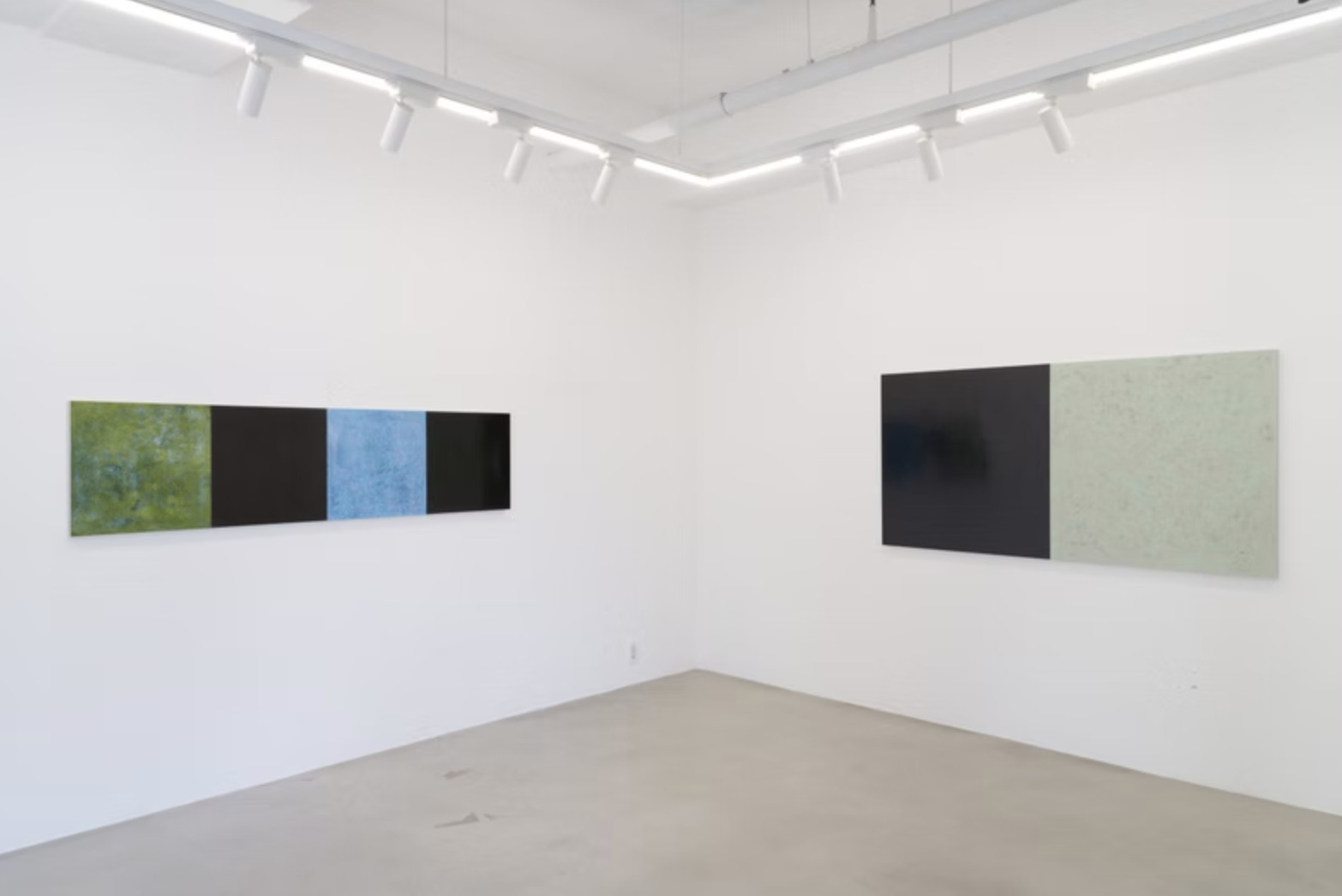
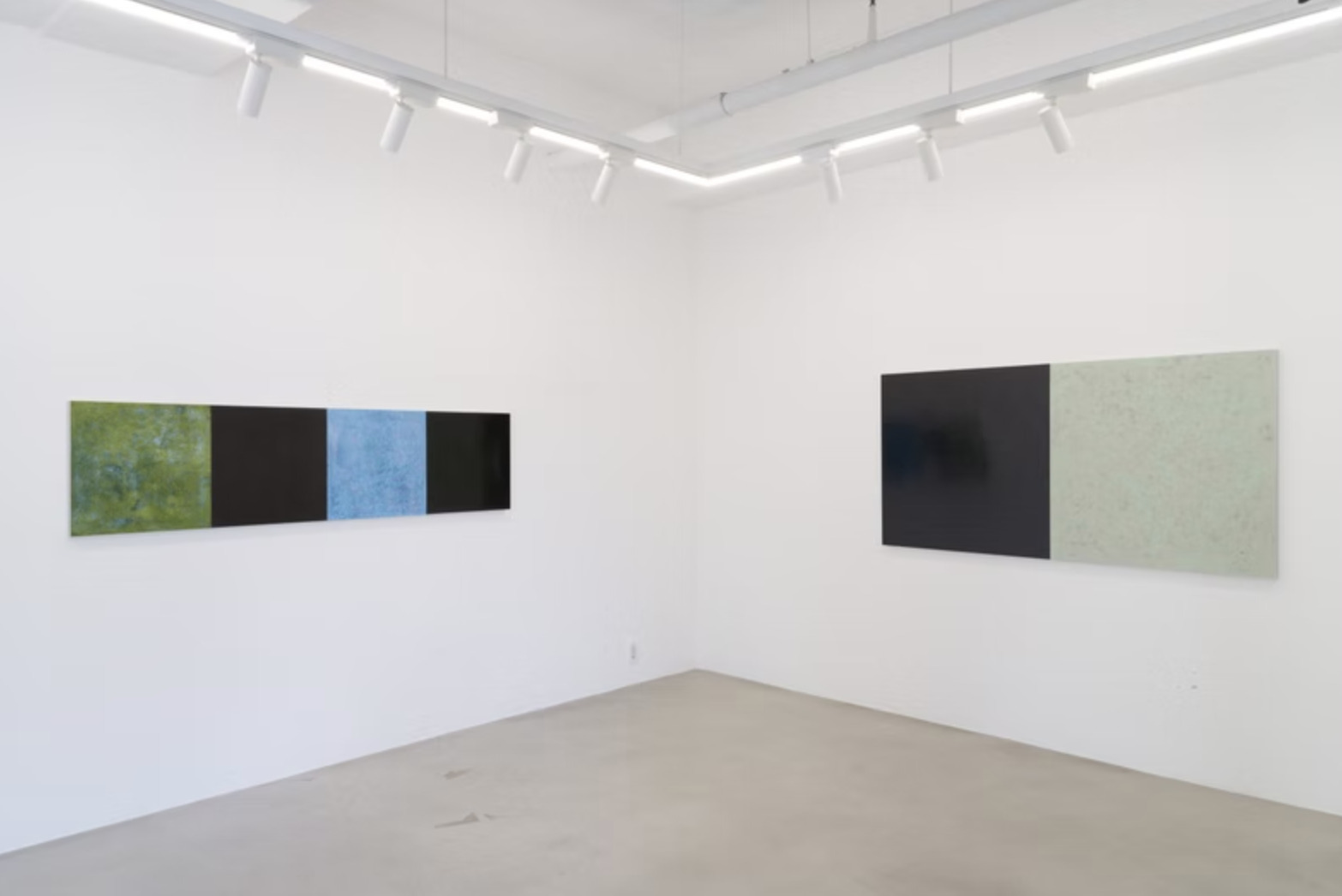
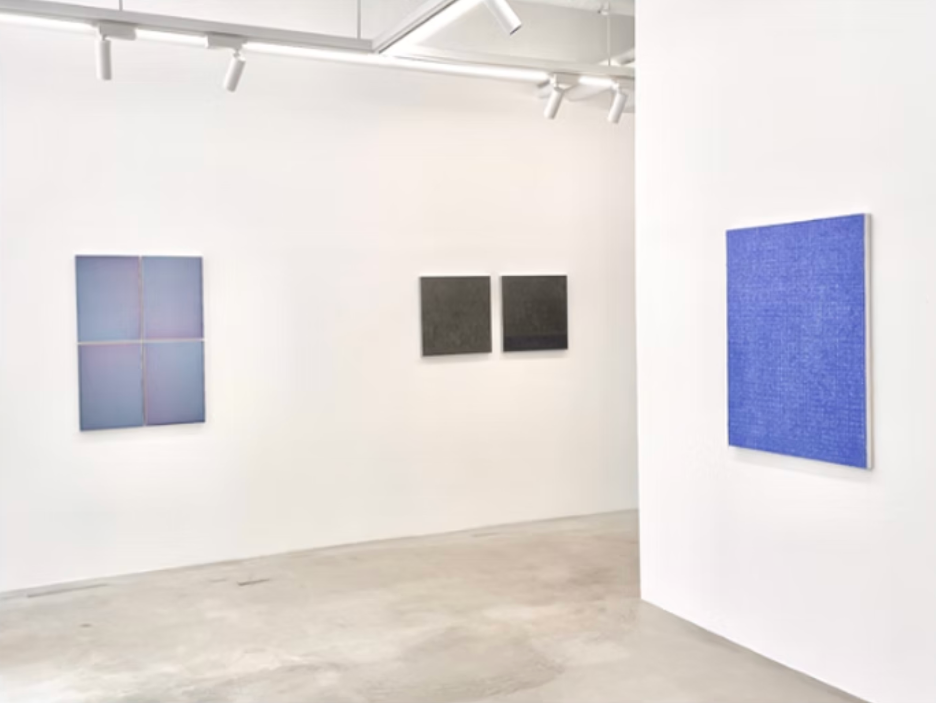
Installation view of 《Proxy Data》 (Art Project CO, 2025) © Art Project CO

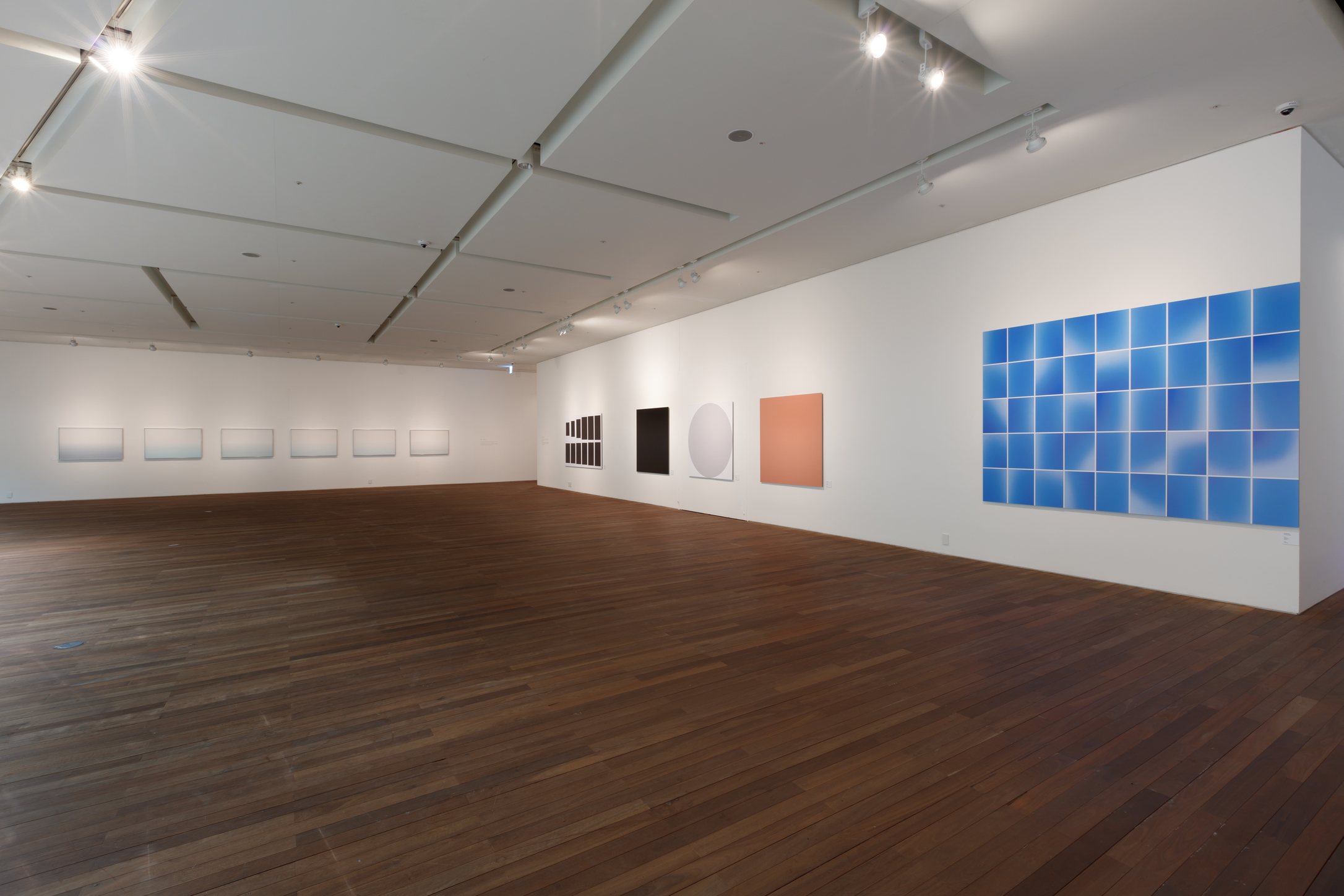
In his recent solo exhibition 《Proxy Data》, Pyoun Daesik further expanded the painterly question that has long underpinned his practice—the materialization of time—presenting a multilayered structure of time shaped through color, action, and record.
 
The exhibition takes its point of departure from the concept of “proxy data,” which refers to the indirect reconstruction of past climates and environments through observable traces rather than direct observation.
 
Much like reading time through tree rings or geological strata, this method of interpreting the temporal dimensions embedded within material forms resonates deeply with the artist’s longstanding investigation into the structures of time through painting.


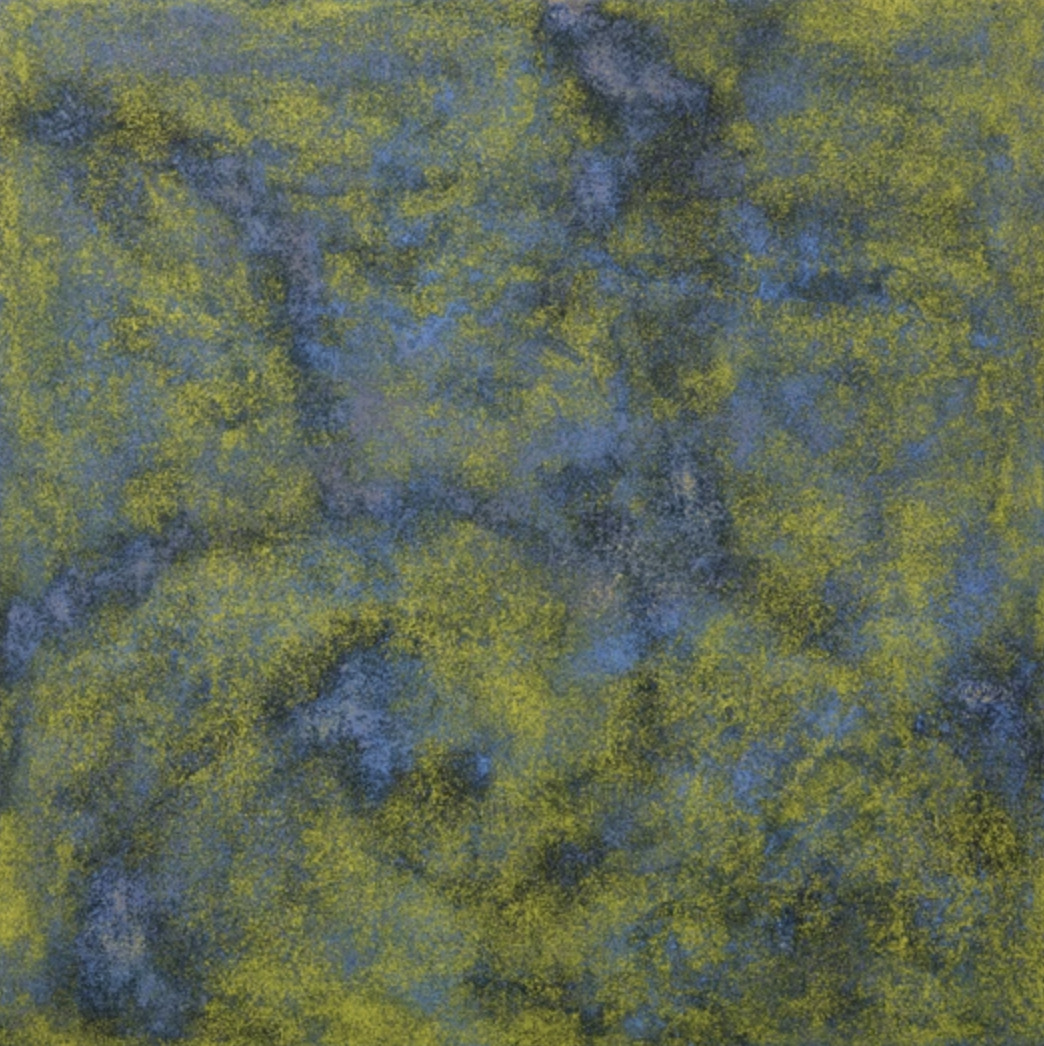
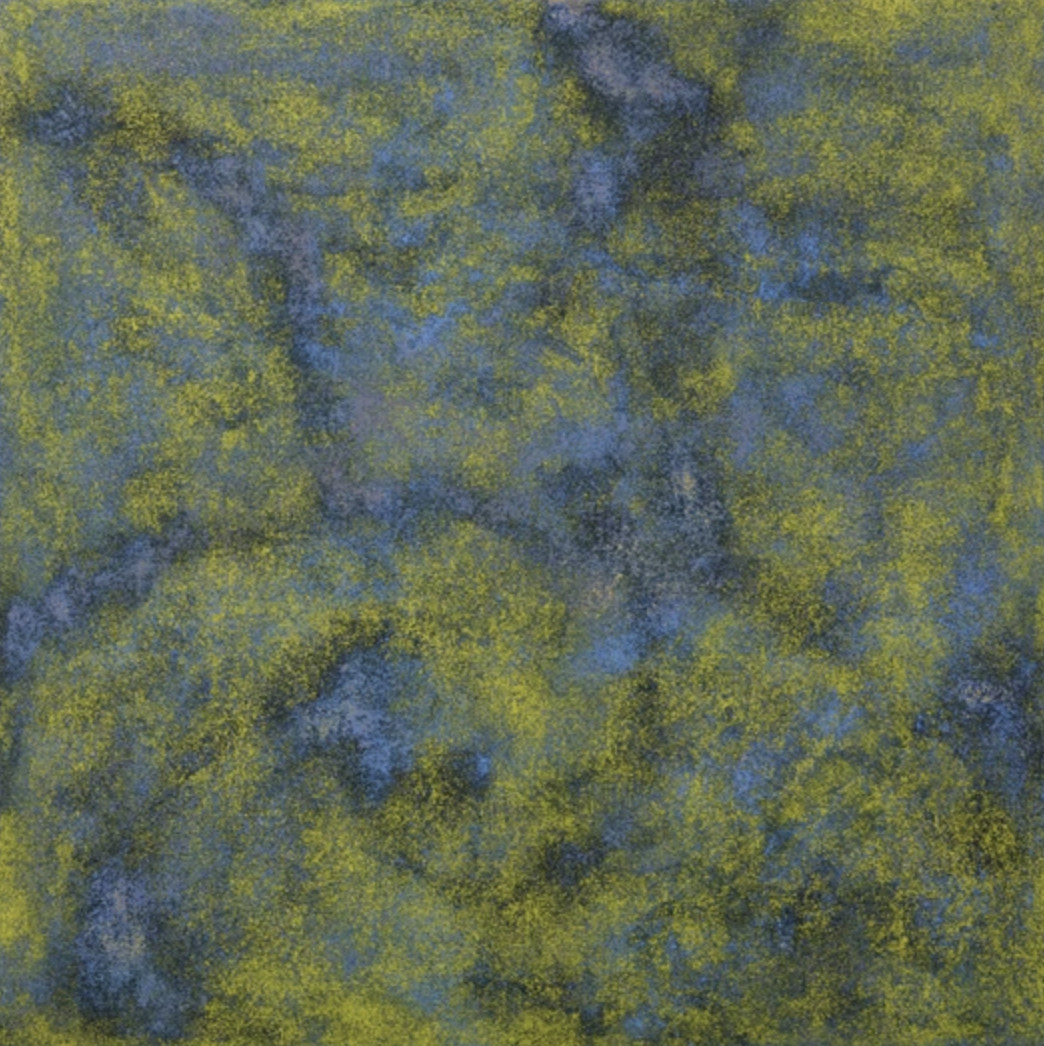
Pyoun Daesik, Proxy Data, 2025, Acrylic on wood panel, 60x60cm © Art Project CO

While staying at an artist residency in Jeju Island, Pyoun continuously recorded the colors he observed along the coast and in the forests. These collected colors were then translated into acrylic paint and subjected to repeated processes of layering and sanding, ultimately remaining on the surface as traces of time.
 
The process through which layers of color emerge and disappear transforms the artist’s experience of time in nature into painterly strata. The ‘Proxy Data’ series, the central body of work in the exhibition, most fully embodies this investigation.

Pyoun Daesik, Proxy Data, 2025, Pencil on putty and paint over sanded wood panel, 60x60cm © Art Project CO

The exhibition brought together the ‘Proxy Data’ series, which explores layers of color as temporal strata, and ‘The Record’ series, in which time is directly inscribed through the repetitive movement of pencil.
 
The dense accumulation of fine graphite marks records the passage of time on the surface itself, producing a different mode of temporality from that of the ‘Proxy Data’ series, where traces of time emerge through the material thickness of layered color.
 
Through these two bodies of work, Pyoun investigates the relationships among time, record, and materiality through distinct painterly languages. Together, they present an expanded inquiry into how invisible time can be made visible.


Installation view of 《Frozen Time》 (New Spring Project, 2024) © Pyoun Daesik

In this way, Pyoun Daesik has continually transformed the immaterial sensation of time into material layers through the repetition of labor-intensive actions. Through this process, he reveals not only the materiality and temporality of his chosen media but also the imperfect nature of human existence, offering a space for reflection on what it means to exist.
 
Furthermore, by allowing viewers to directly experience the process through which present images emerge from surfaces marked by accumulated time, he transforms the act of viewing into a complex event that moves across the boundaries between light and darkness, present and past, surface and interior, reality and illusion.

“The act of covering a work with pencil is, for me, a struggle to make contact with the present.” (Pyoun Daesik, Artist’s Note)


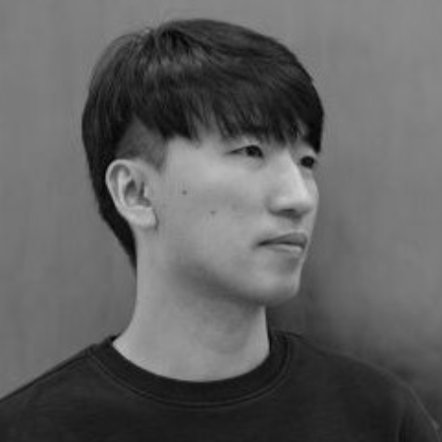
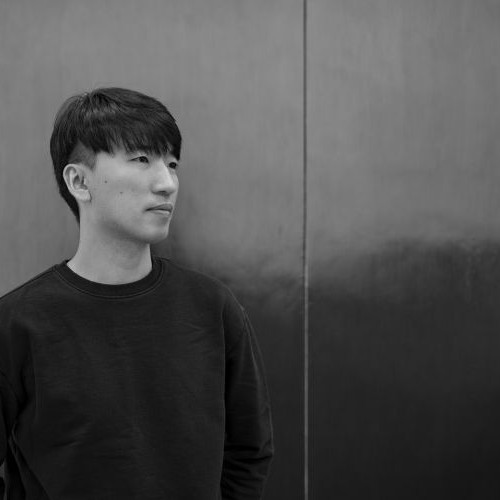
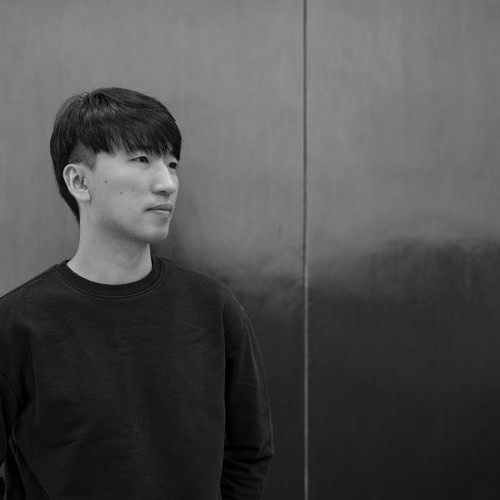
Artist Pyoun Daesik © Incheon Art Platform

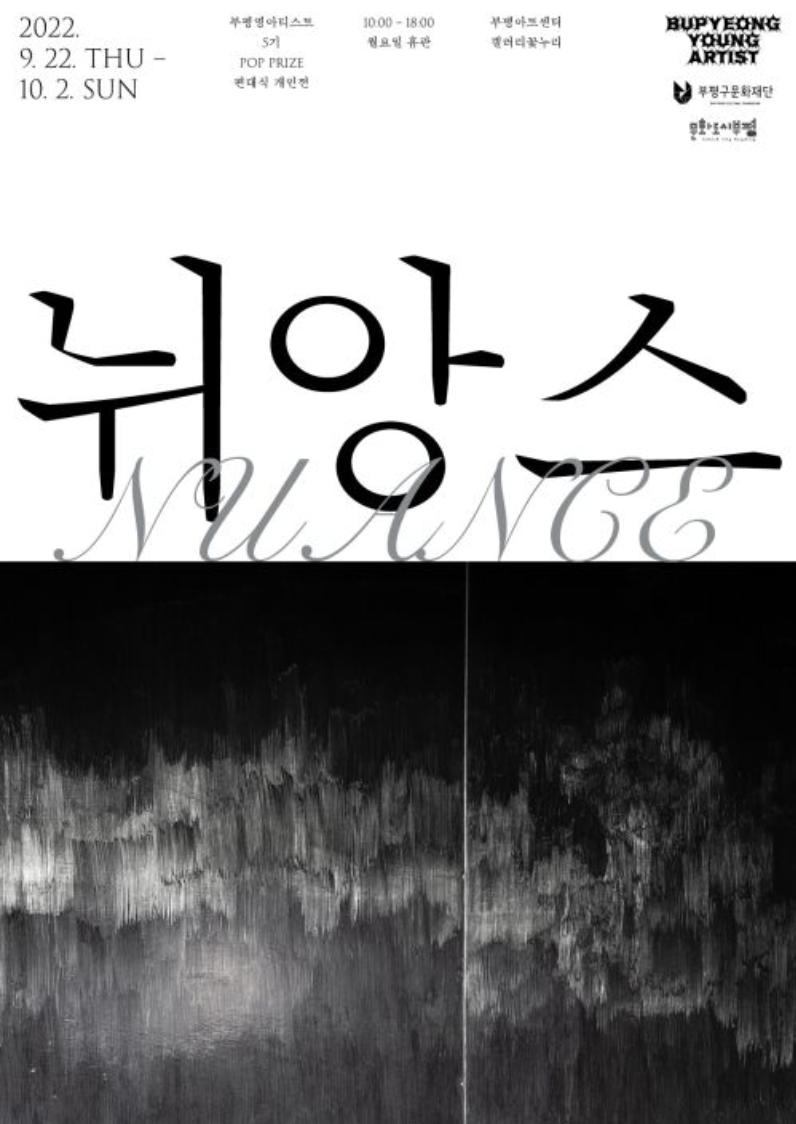
Pyoun Daesik graduated from Korea University with a BFA in Painting and later received an MFA at the same institution. His recent solo exhibitions include 《Proxy Data》 (Art Project CO, Seoul, 2025), 《Frozen Time》 (New Spring Project, Seoul, 2024), 《Time Trial》 (Cheongju Art Studio, Cheongju, 2023), and 《Nuance》 (Bupyeong Arts Center, Incheon, 2022).
 
He has also participated in numerous group exhibitions, including 《Layers of Condensation and Resonance》 (Art Project CO, Seoul, 2025), 《An Atypical Encounter》 (Cheongju Art Studio, Cheongju, 2024), 《UNBOXING PROJECT 2: Portable Gallery》 (New Spring Project, Seoul, 2023), 《Bupyeong Young Artist 2020》 (Bupyeong Arts Center, Incheon, 2020), 《The Accumulated Ghosts》 (Daecheong Ho Museum of Art, Cheongju, 2019), and 《Minimal Variation》 (Seoul National University Museum of Art, Seoul, 2018).
 
Pyoun has been selected for several residency programs, including the Art Lab Sanyang (2025), Cheongju Art Studio (2023–2024), and Incheon Art Platform (2021). His works are held in the collections of the MMCA Government Art Bank, the Seoul Museum of Art, the Yangju City Chang Ucchin Museum of Art, among others.

References