Park Seok Min (b. 1982) has explored the fundamental units that constitute the world—such as time and space—through the medium of painting.
 
Grounded in a sense of curiosity and skepticism toward the spatiotemporal condition we call the “present,” he experiments with linking signs of fact and misreading, emerging from individual perception, to the intrinsic properties of painting. Through this process, the artist seeks to realize painting as a total perceptual experience.


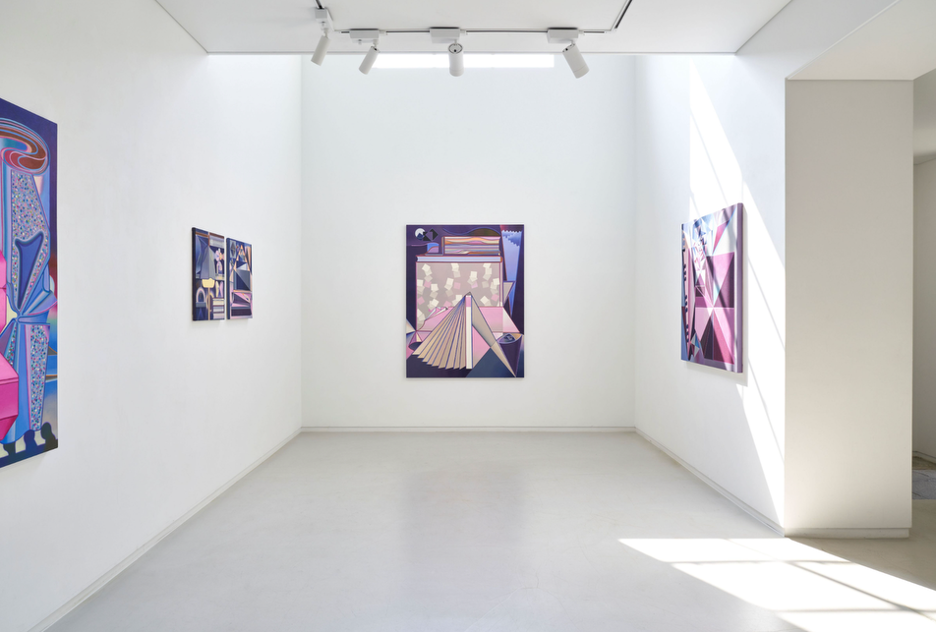
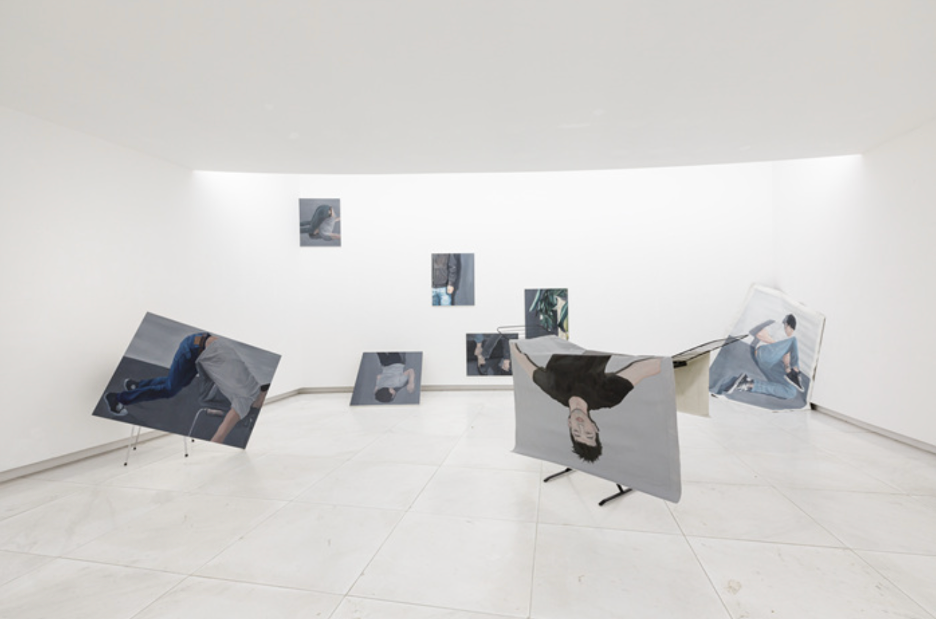
Installation view of 《Dubious Gaze》 (WWNN, 2023) © Park Seok Min

Park Seok Min’s practice unfolds through a combination of observation and speculation about the world that surrounds us. He is particularly drawn to moments when things appear differently from their perceived essence, diverge from past experiences, seem altered from what they once were, or resist precise description and definition.
 
Reflecting on experiences that elude language, the artist continually gathers phenomena, objects, events, forms, words, images, and stories that resonate with such sensations in everyday life. These collected fragments serve as the foundation of his artistic practice, providing the raw material from which his paintings emerge.


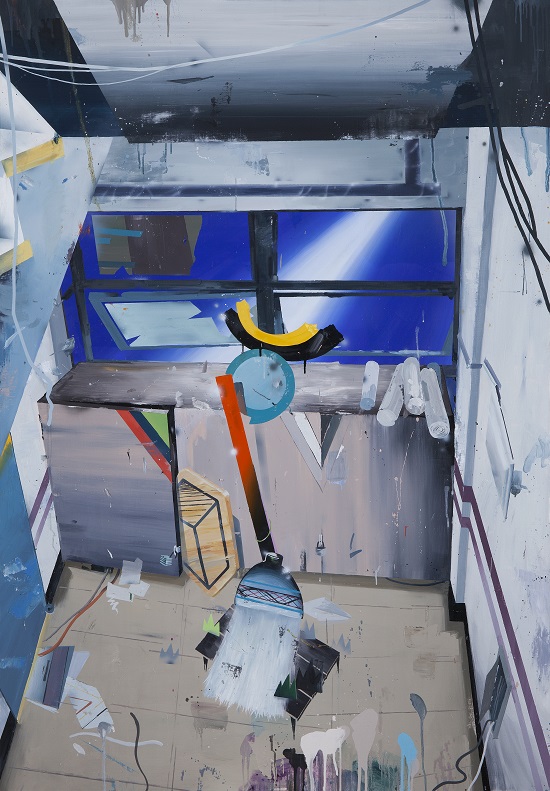
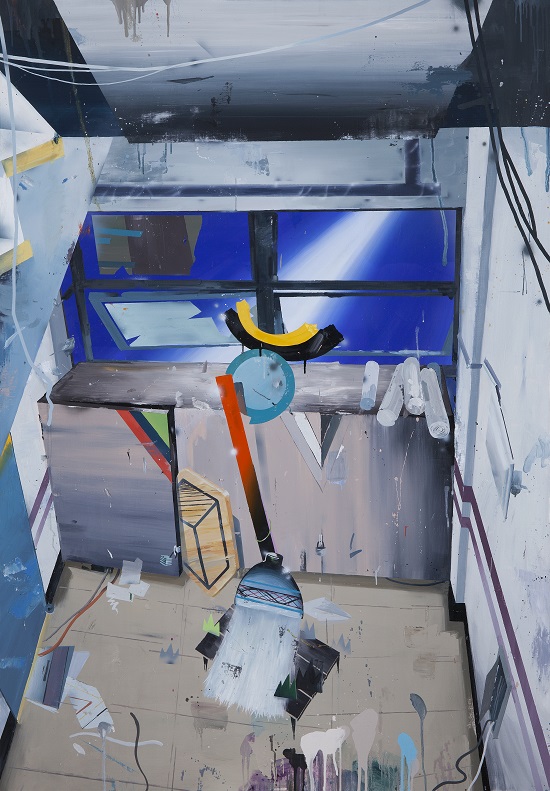
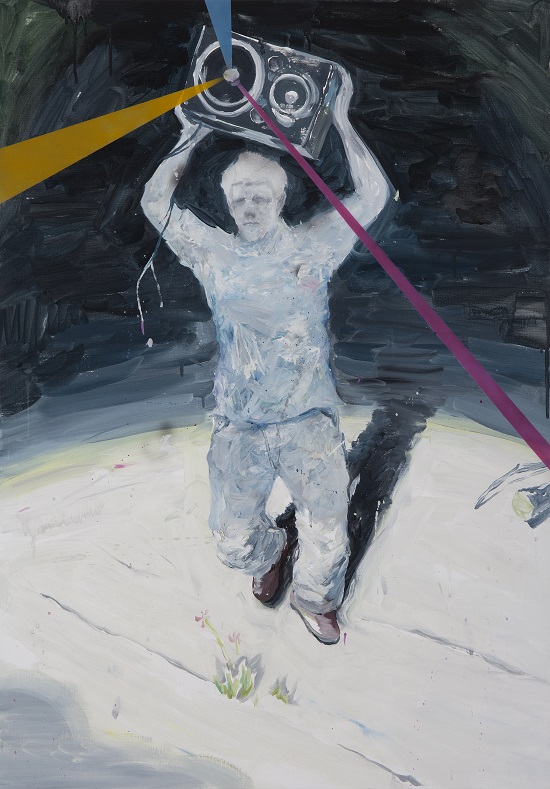
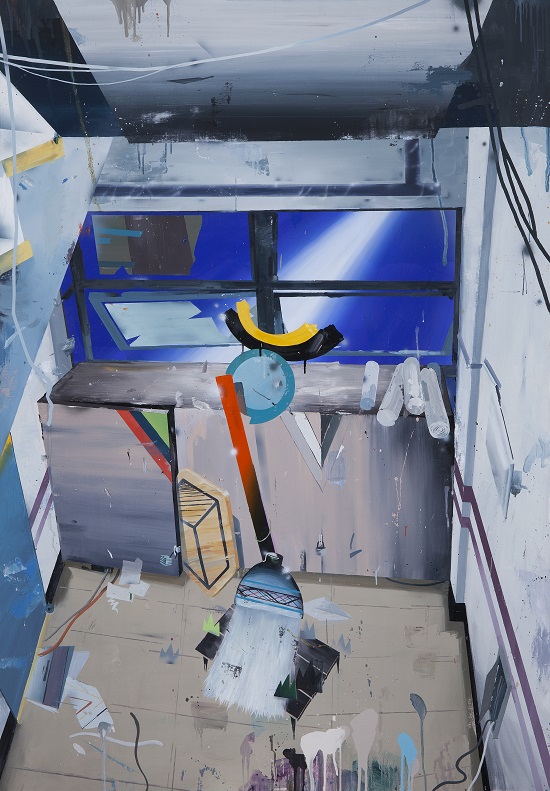
Park Seok Min, Temporary Orbit, 2016, Oil on canvas, 162.2x112.3cm © Park Seok Min

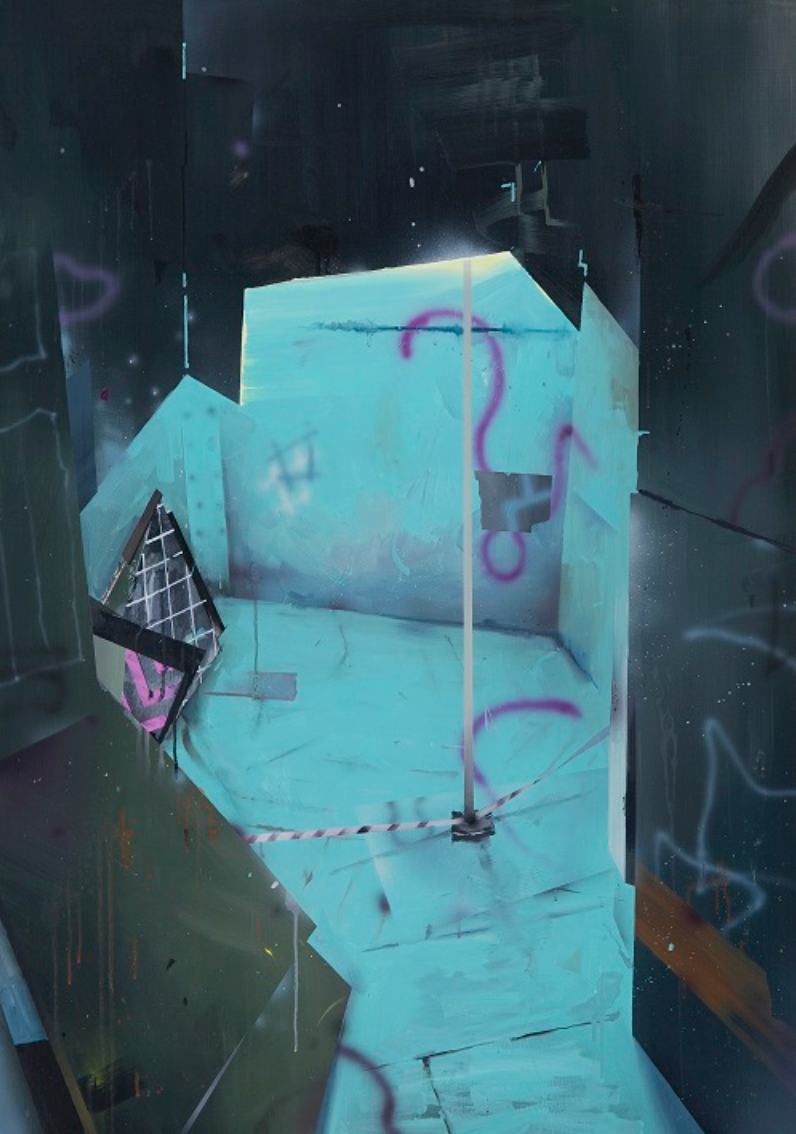
In Park Seok Min’s paintings, time, space, language, and atmosphere—the conditions and residues of the world—become intricately entangled while remaining distinctly present. On one level, his works appear to depict tangible objects, figures, and spaces rendered with meticulous detail; on another, they unfold as abstract worlds in which disparate elements overlap and coexist.
 
This ambiguity reflects not only the emotional fluctuations and sensory states the artist experiences in moments that resist precise verbal articulation, but also his perspective as an observer attempting to navigate and interpret such conditions.
 
Independent curator Hee Ra Jeong has noted that what Park seeks to convey is “a solitary and unshareable sensation captured through his own gaze, as well as the relationality generated at the point where that sensation encounters the world.”


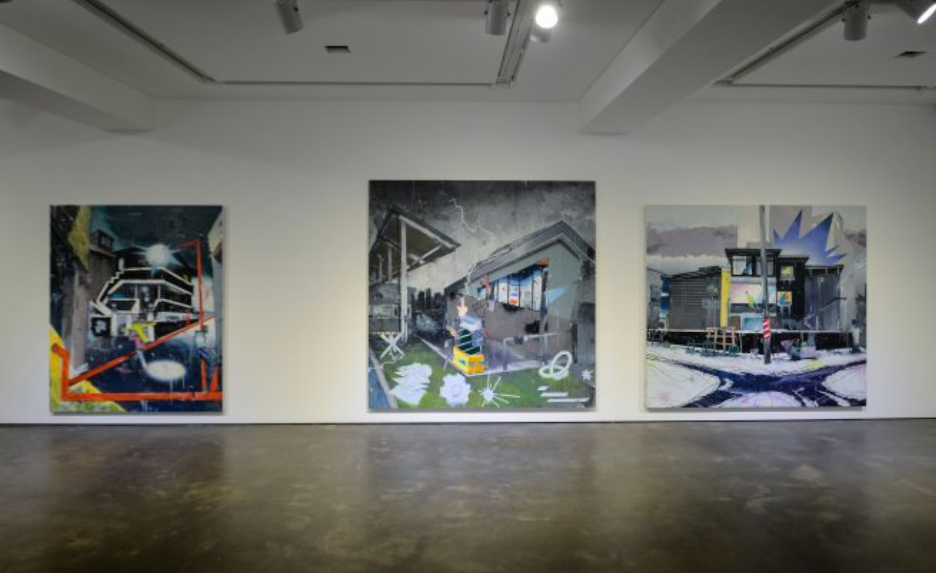
Installation view of 《New satellite- Temporary Orbit》 (OCI Museum of Art, 2016) © OCI Museum of Art

In the ‘Temporary Orbit’ series, developed between 2013 and the early 2020s, Park Seok Min experimented with combining the notions of a “model”—evoking qualities such as the temporary, mutable, and fleeting—and an “orbit,” a term associated with trajectories, repetition, and traces.
 
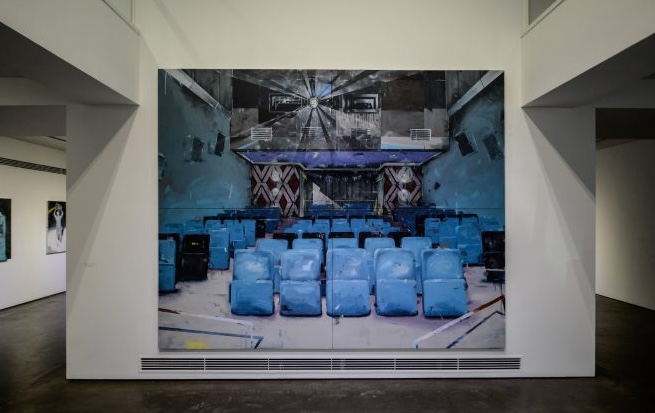
In the early works of the series, he visualized fleeting moments in which habitual modes of perception collapse, translating them into structures embedded within physical reality. Phantom Pain (2016), for instance, composed of four joined canvases, examines a complex structure of looking directed toward a single place.
 
Its stable square format depicts the interior of a theater, where a projector stands behind an empty audience. Yet the intense beam of light emitted from the projector disrupts the perspectival depth of the space, generating an unreal environment that arbitrarily divides and destabilizes the apparent coherence of reality.
 
In an artist statement, Park described his practice as focusing on “expanding the boundary between the physical environment and the invisible realm,” while visualizing or rearranging the “structural errors” latent within reality through surreal imagination. In this sense, Phantom Pain can be understood as a work that embodies both the expansion of boundaries and the structural dislocations that the artist has sought to explore.


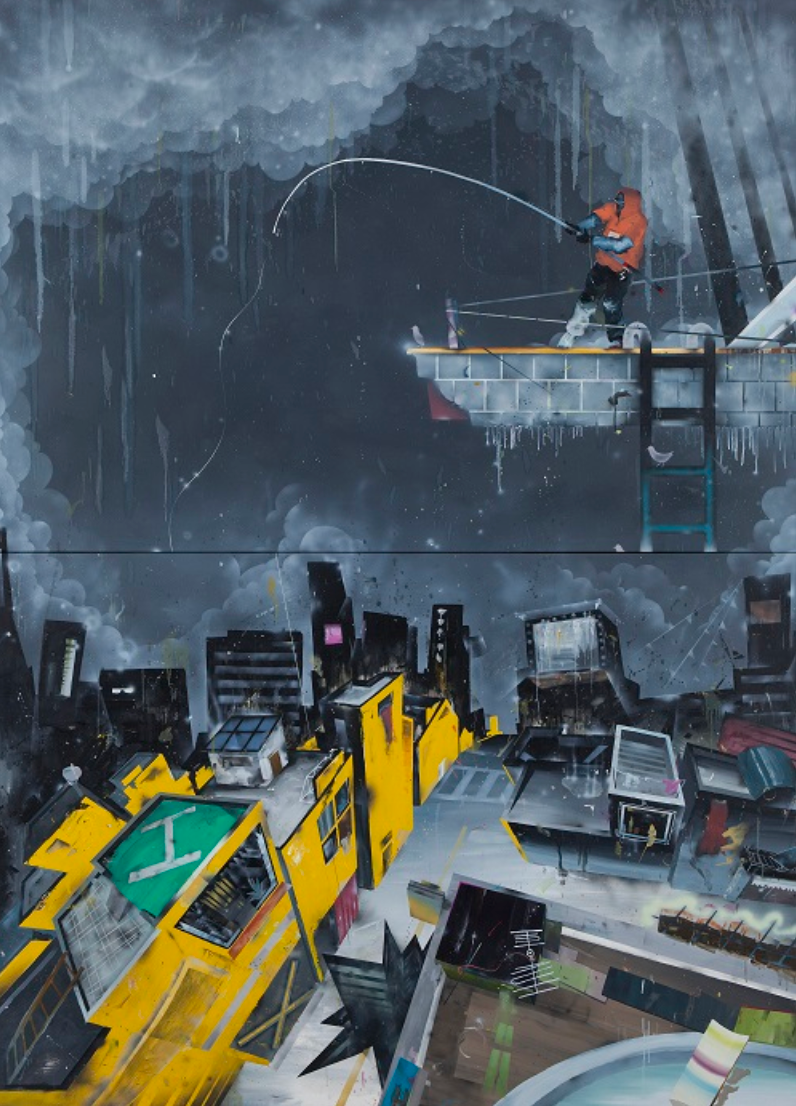
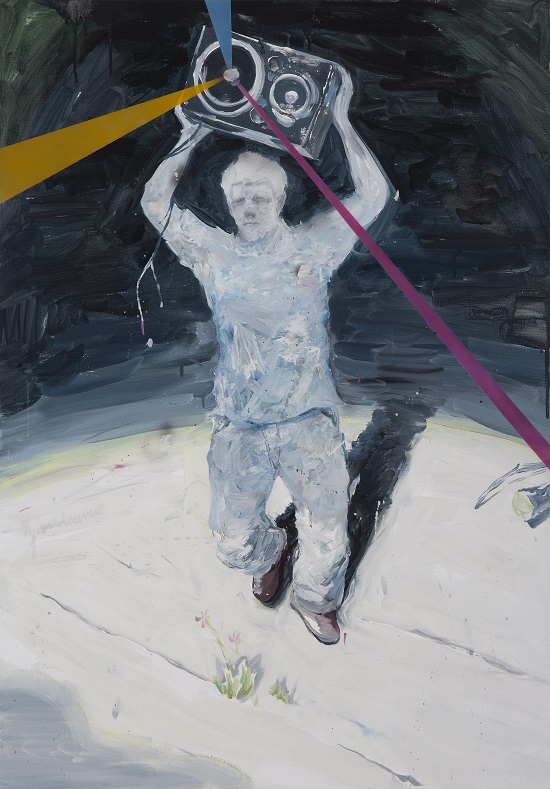
Park Seok Min, Vagabond, 2015, Oil on canvas, 100x70cm © Park Seok Min

At the same time, around this period, Park sought to implicitly capture in his paintings the atmosphere shaped by individual voices and actions within contemporary political situations. In works such as Quiet Play and Vagabond, motifs of light radiate in a single direction or disperse across multiple trajectories, subtly alluding to the social and political events and issues of our time.
 
As light is reflected and refracted, it evokes our tendency to focus on and place faith in what may not be true, while raising questions about the fragile boundaries between truth and falsehood, reality and fiction.


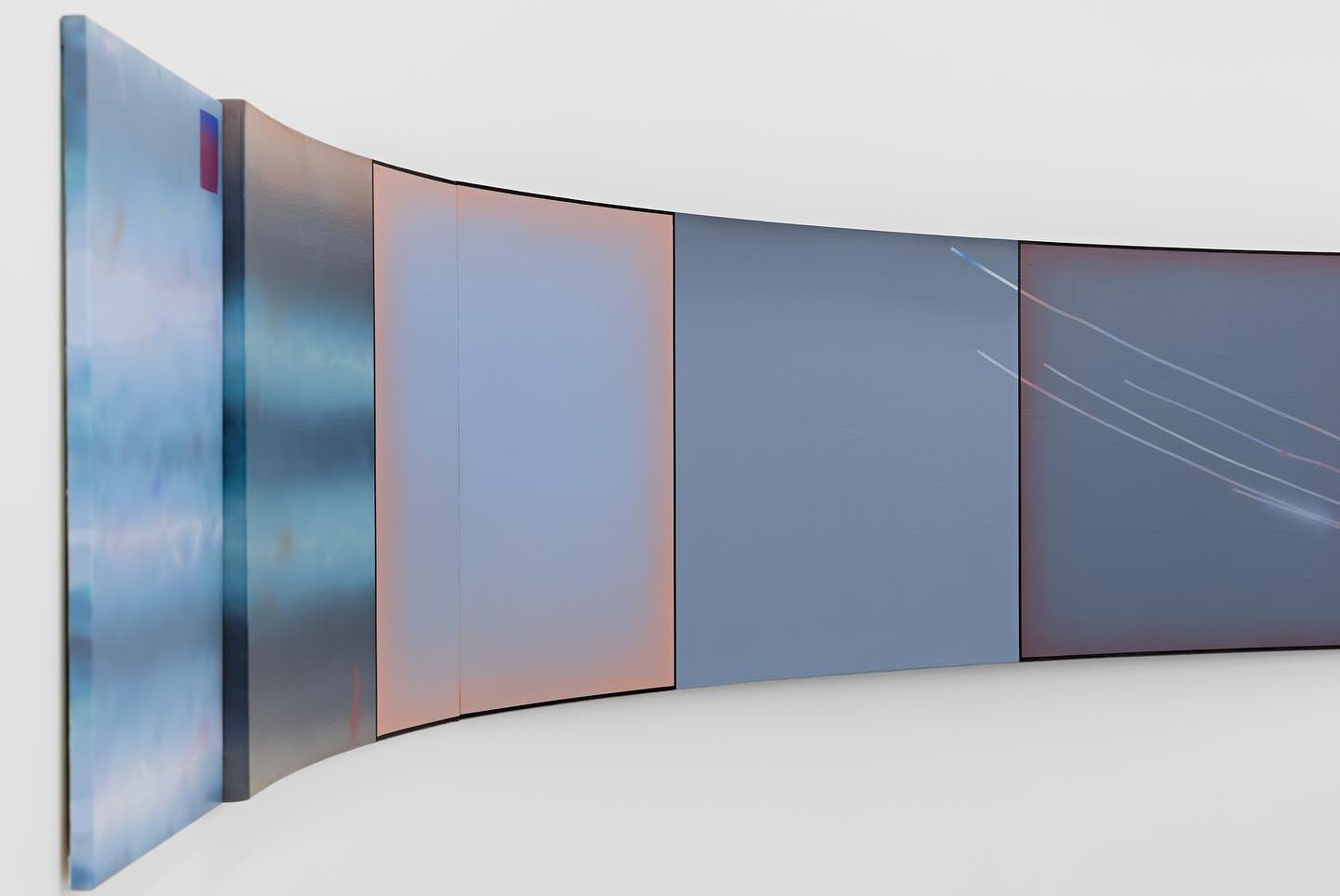
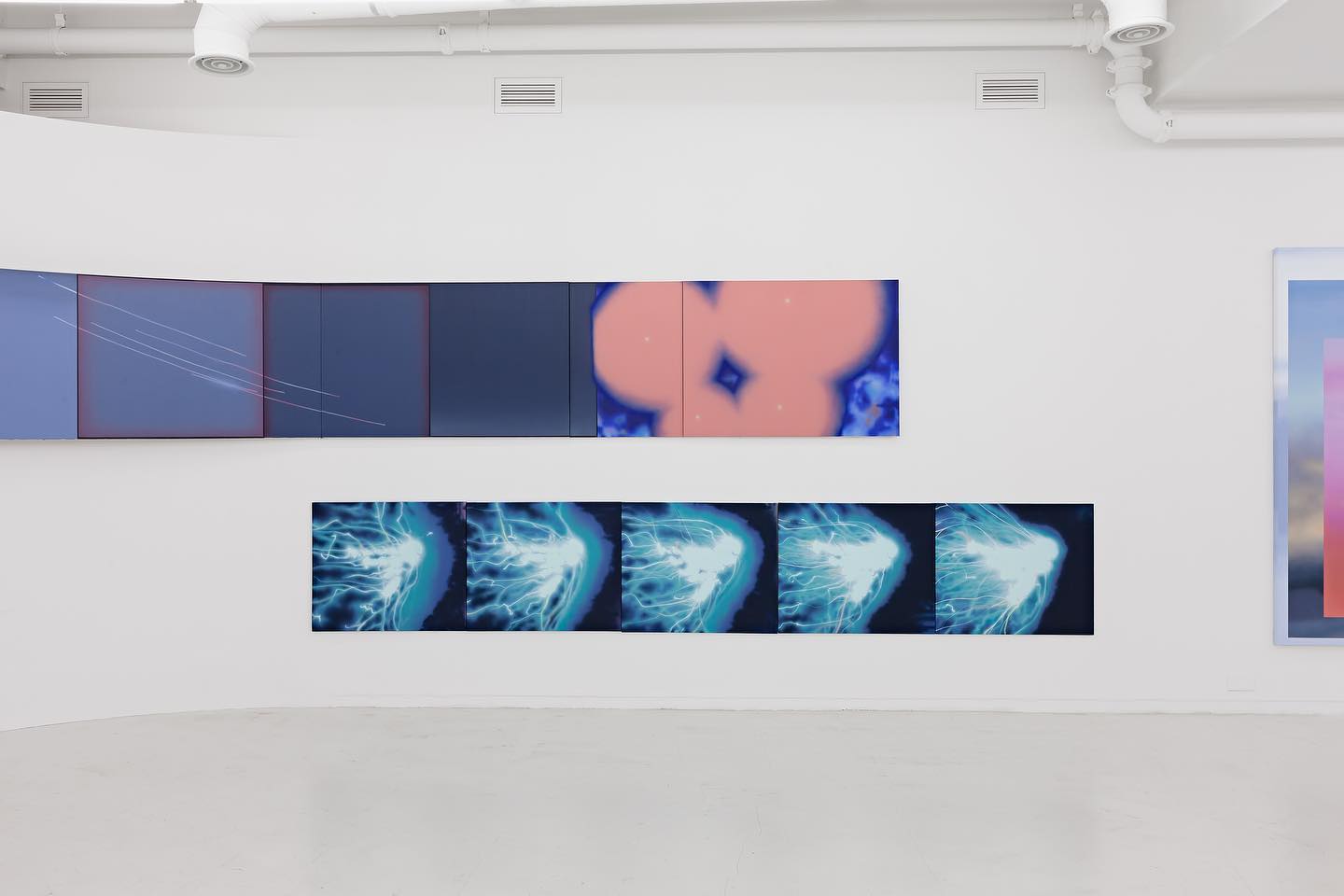
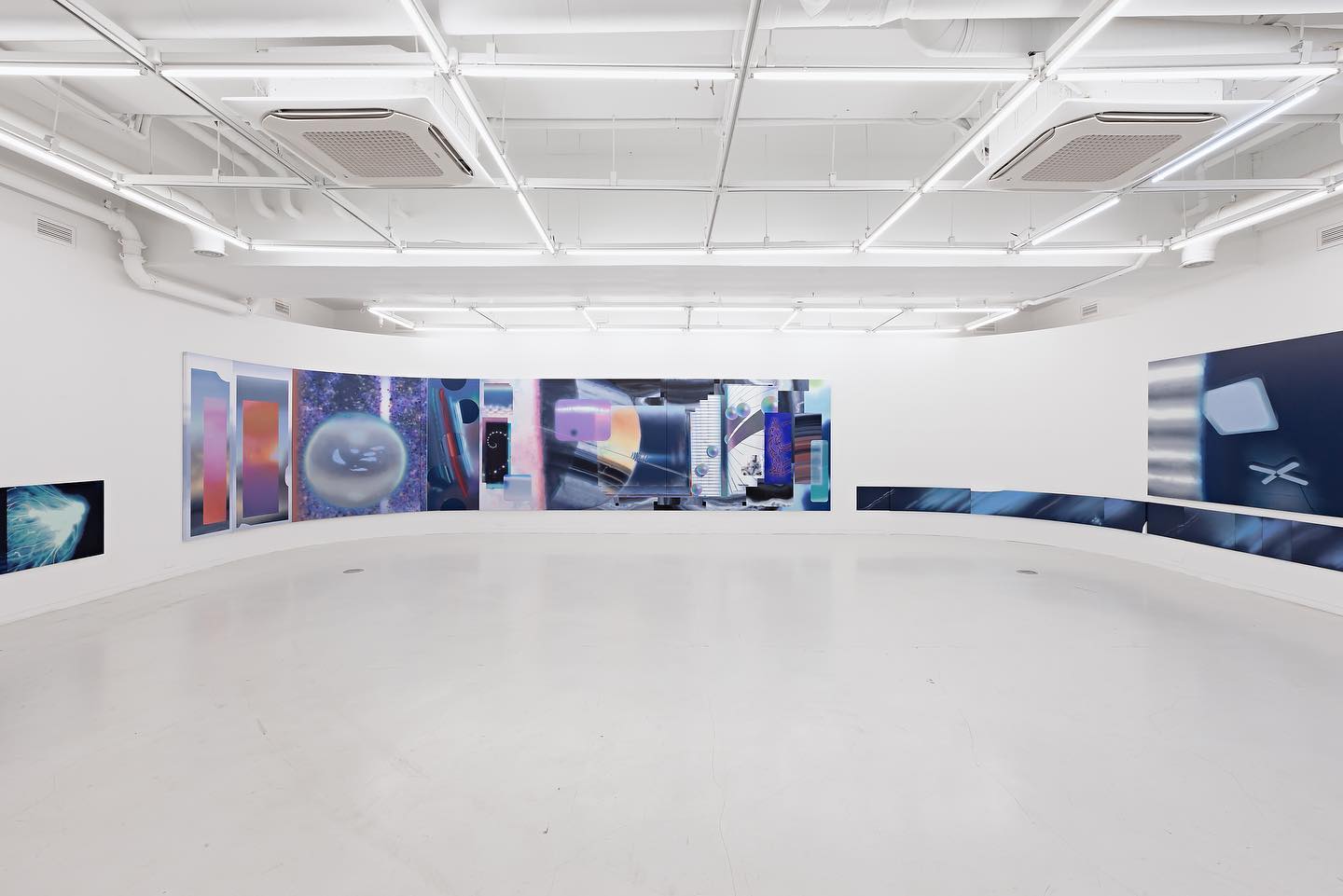
Installation view of 《Melting a Lump Sugar》 (Artspace Boan, 2020) © Park Seok Min

Since 2018, Park has pursued a series of formal experiments grounded in a sense of curiosity and skepticism toward the spatiotemporal condition we call the “present.” Through this process, he has focused on investigating how fragmented and inherently incomplete stimuli might be perceived as a coherent whole.
 
The artist has continually developed paintings that store the form of a subject in a manner akin to image data divided into temporal frames, or that resemble multifaceted recordings of a subject captured simultaneously from different perspectives within the same moment.
 
Through this methodology, Park approaches his subjects as composites of irreducible elements, seeking to derive forms capable of conveying ambiguous sensations and modes of perception.
 
Reflecting on this body of work, Park describes it as “an act of isolating one coordinate from the complex and multidimensional framework of painting’s past, present, and future as I conceive it, and materializing it as a body of work belonging to a specific moment in time.”


Installation view of 《Melting a Lump Sugar》 (Artspace Boan, 2020) © Park Seok Min

Park Seok Min’s 2020 solo exhibition 《Melting a Lump Sugar》 at Artspace Boan began with an exploration of the distance and void that exist between the self and the world, as well as the attempt to perceive and make sense of that gap.
 
Moving between a sense of estrangement felt toward those closest to him and an inexplicable affinity with distant celestial bodies, the artist focused less on the subjects themselves than on the sensations, afterimages, and intervals of relation that surround them.
 
Taking the gradual dissolution of a sugar cube as a metaphor, Park reflected on the essence of things as entities defined by their potential for transformation.
 
Throughout the exhibition, motifs associated with sugar, sweetness, lightness, and artificiality permeate the works, while elements beyond the paintings themselves—including lighting, spatial circulation, and empty space—function as integral components of the exhibition.
 
The works are connected through the exchange of afterimages and lingering impressions, encouraging viewers to move beyond the experience of individual paintings and enter a sensory orbit generated by the exhibition space as a whole.


Installation view of 《Melting a Lump Sugar》 (Artspace Boan, 2020) © Park Seok Min

Through this exhibition, Park shifted his focus away from the autonomous completeness of individual paintings and toward the movements and relationships that unfold between the inside and outside of the pictorial field. Narrative is deliberately restrained and displaced from the center, while the remaining voids expand into spaces where sensation and contemplation can linger.
 
In this sense, 《Melting a Lump Sugar》 sought to move painting toward a lighter and more fluid state. By allowing the flow of images to interact with intervals of emptiness, the exhibition generated a holistic experience in which works, spaces, and perceptions became interconnected, operating together as a single orbit—or system.


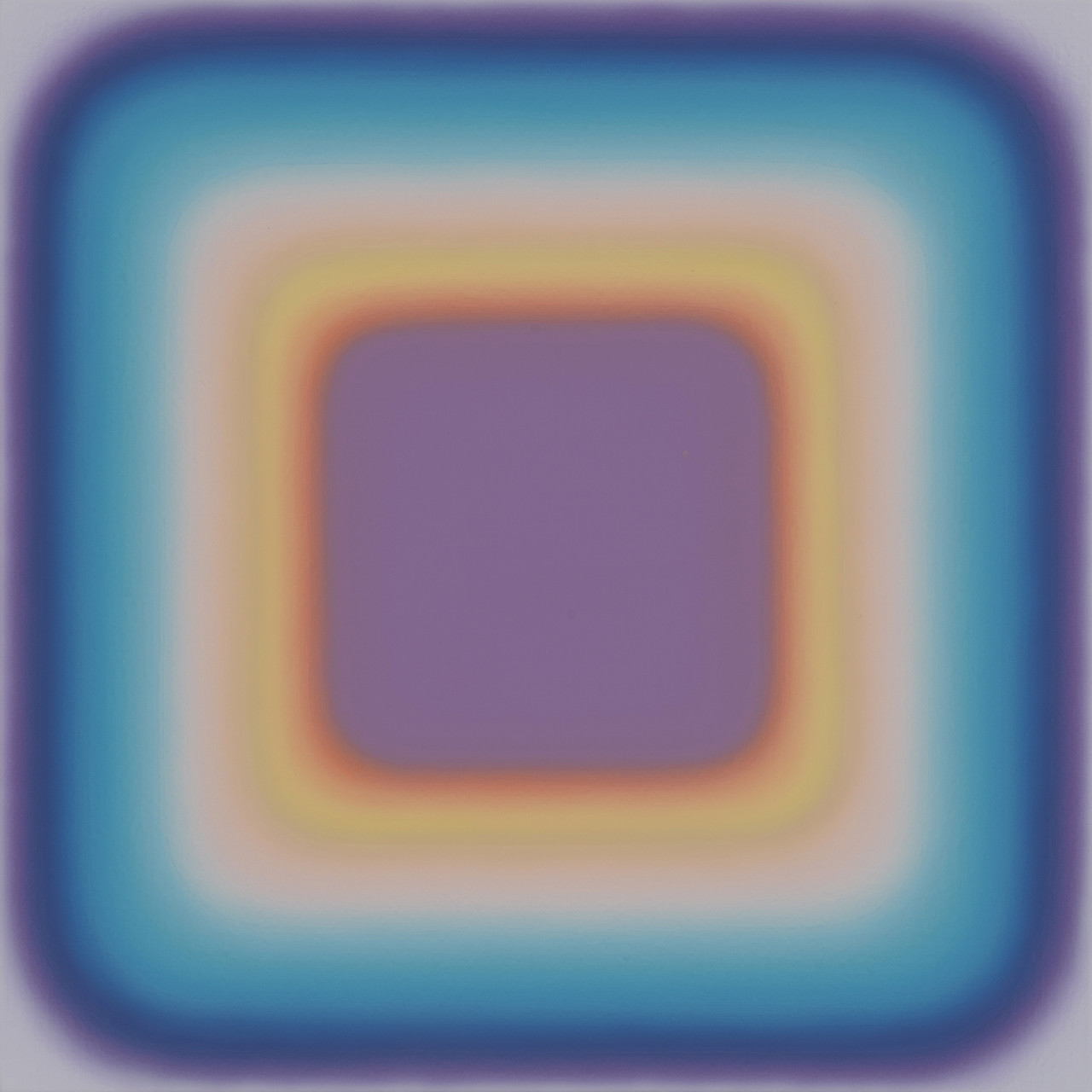
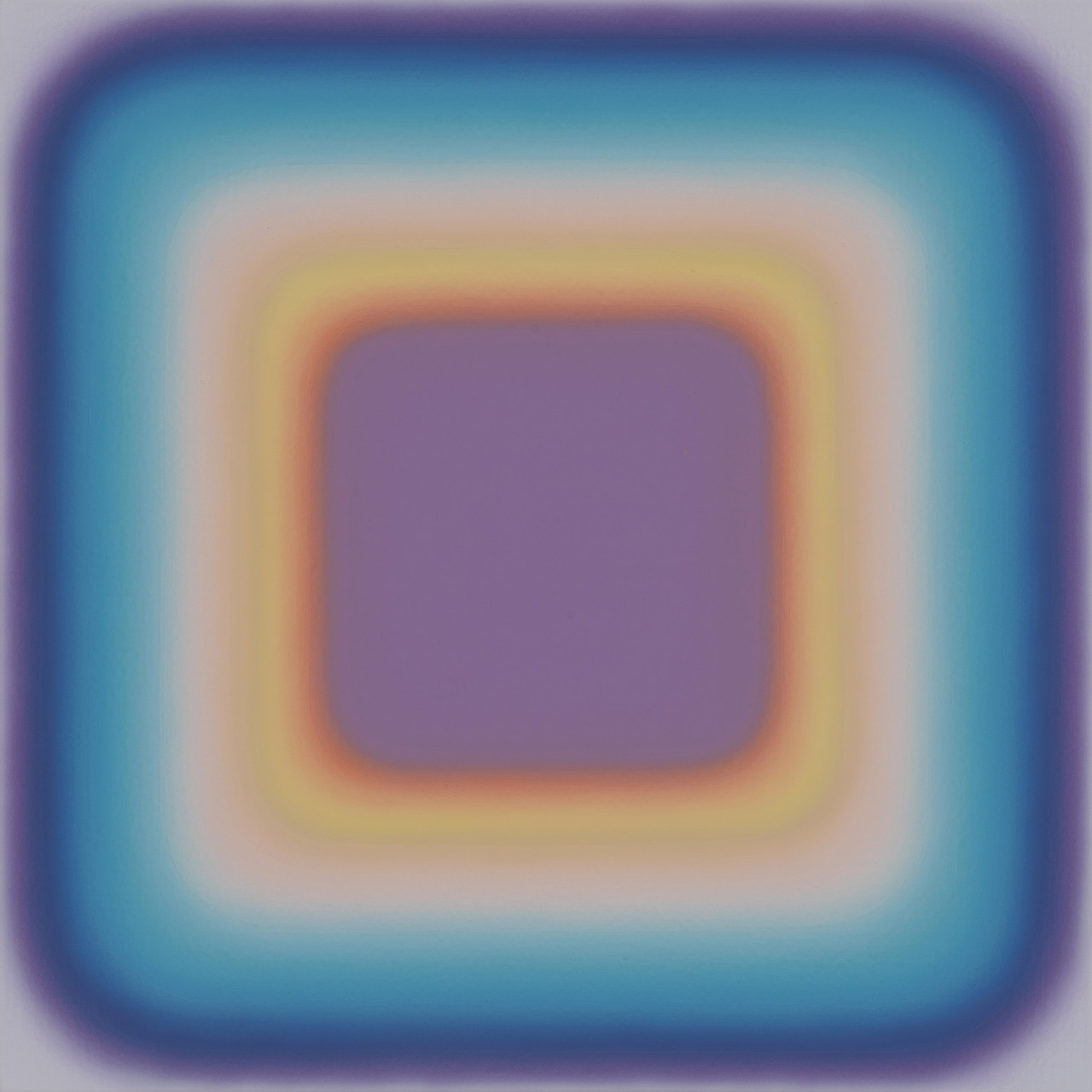
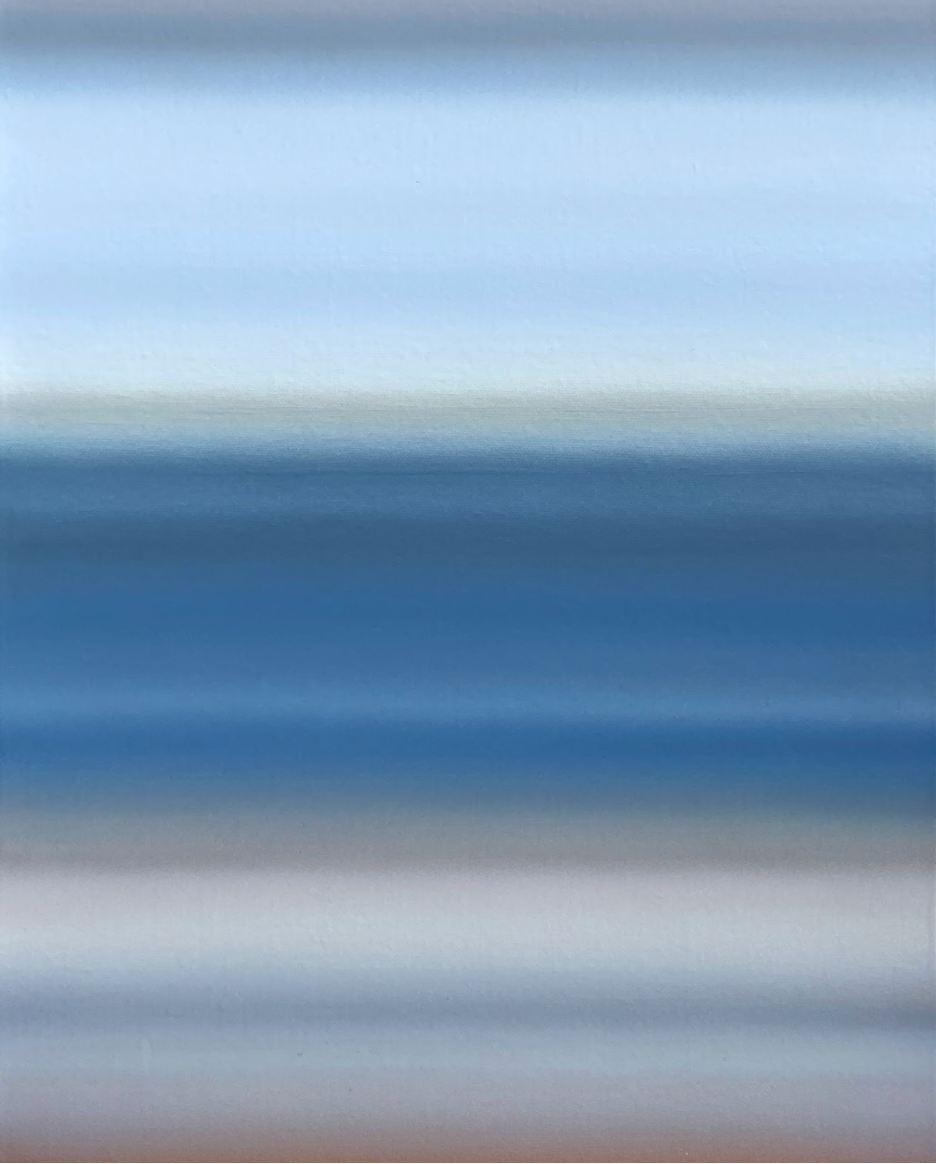
Park Seok Min, Depth Study 06, 2021, Acrylic, spray on canvas, 45.5x38.5cm © Park Seok Min

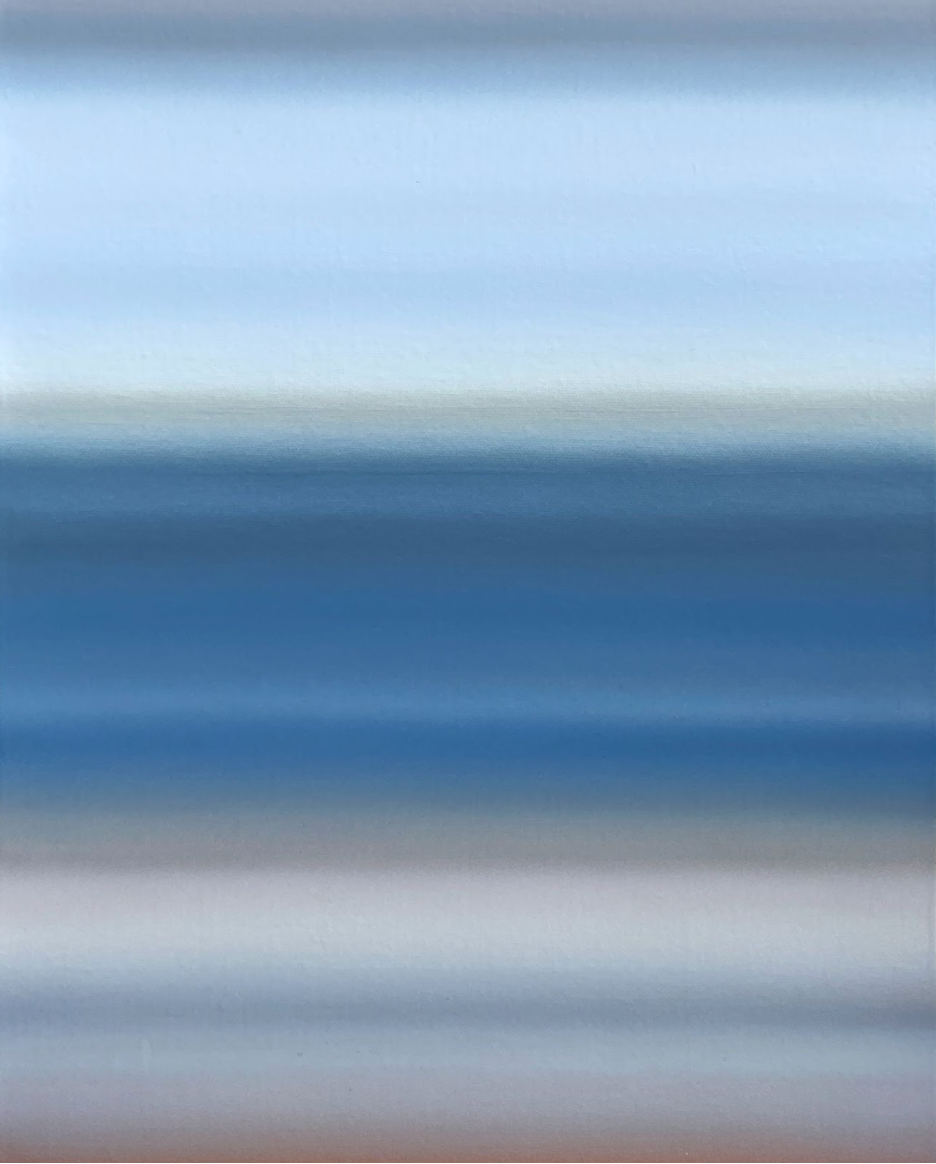
Park has consistently pursued the visualization of sensory landscapes that exist along thresholds and boundaries. In the ‘Depth Study’ series, developed from around 2021, he depicted scenes in which layers of time appear compressed and stretched, as well as moments when light encounters and reacts to space.
 
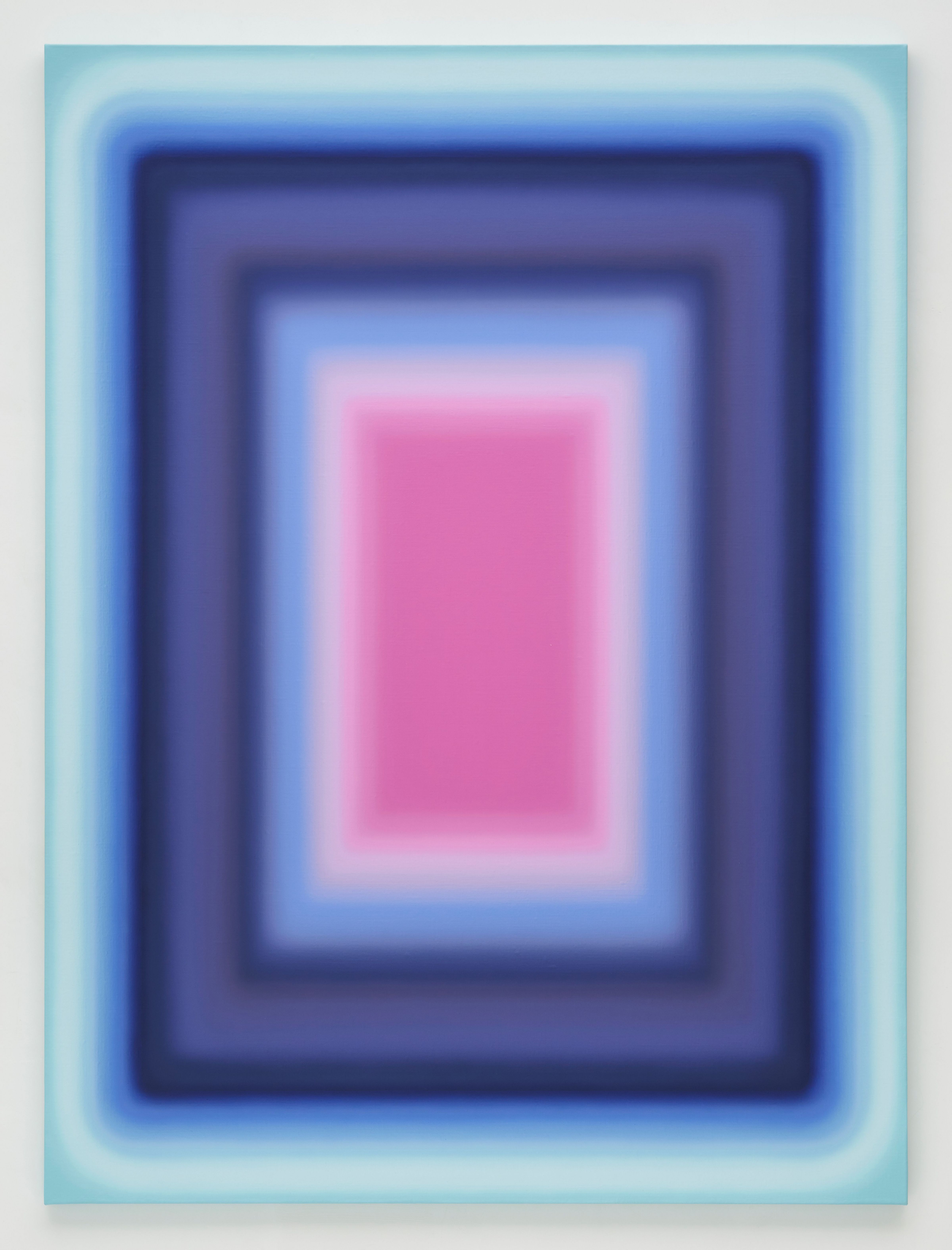
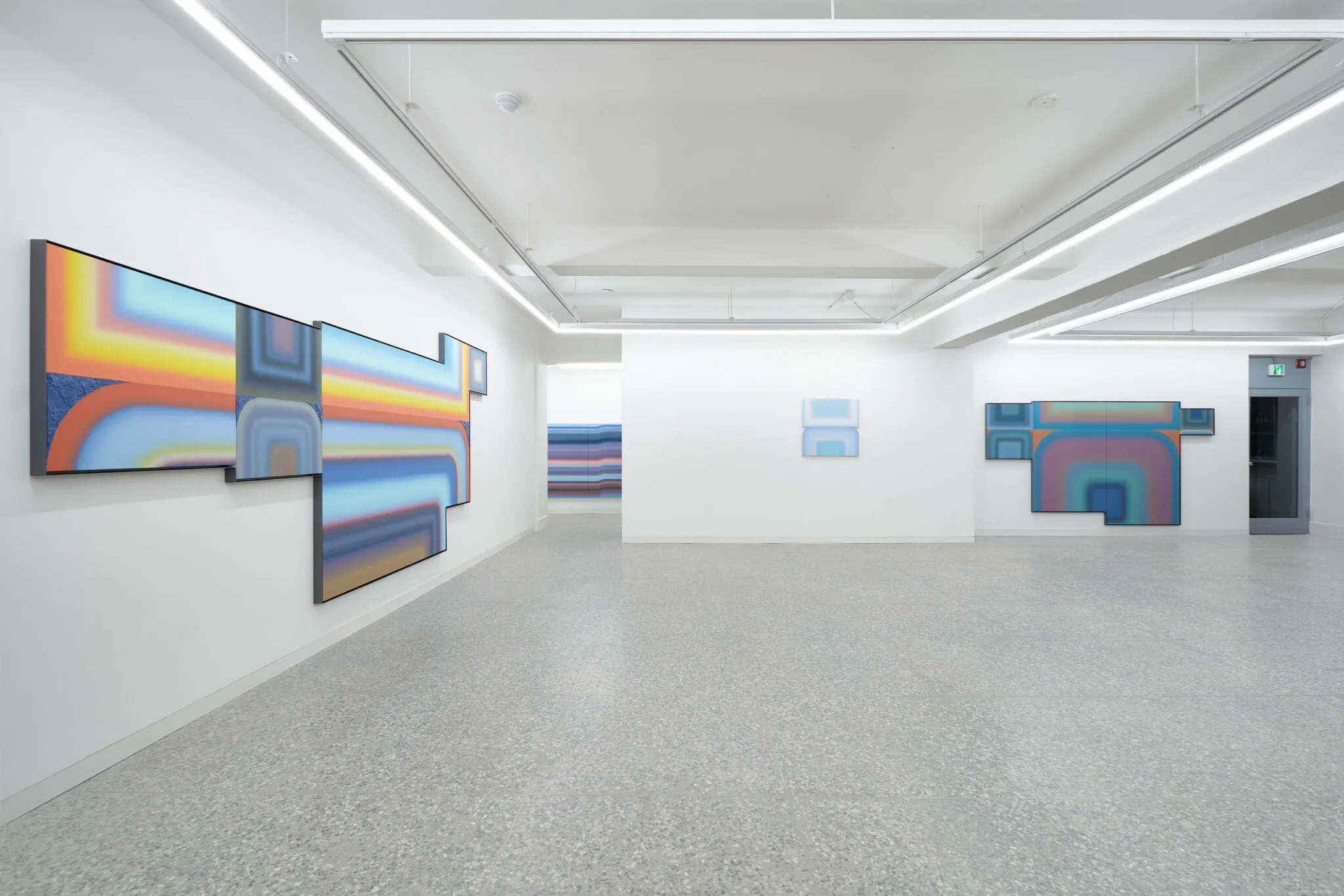
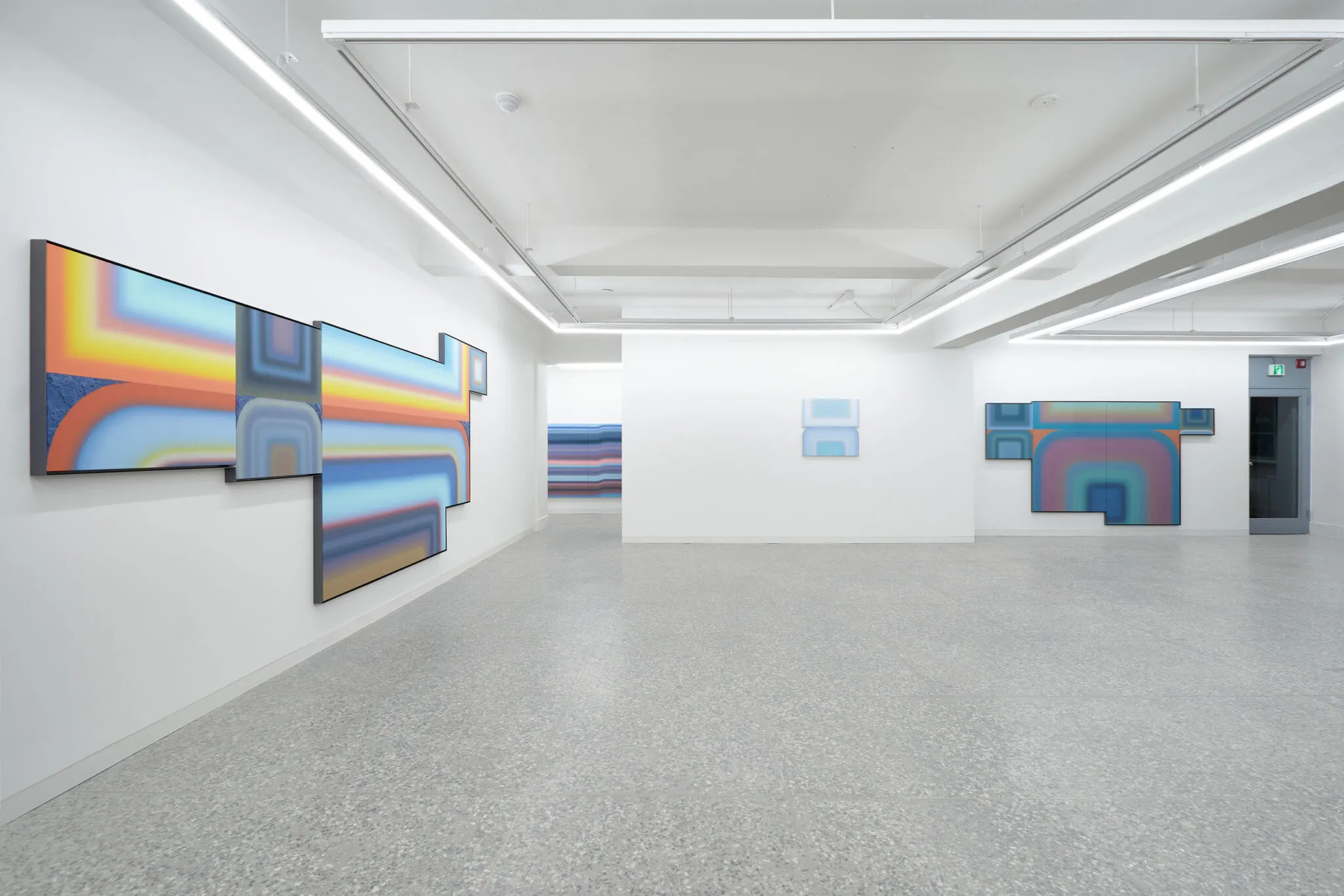
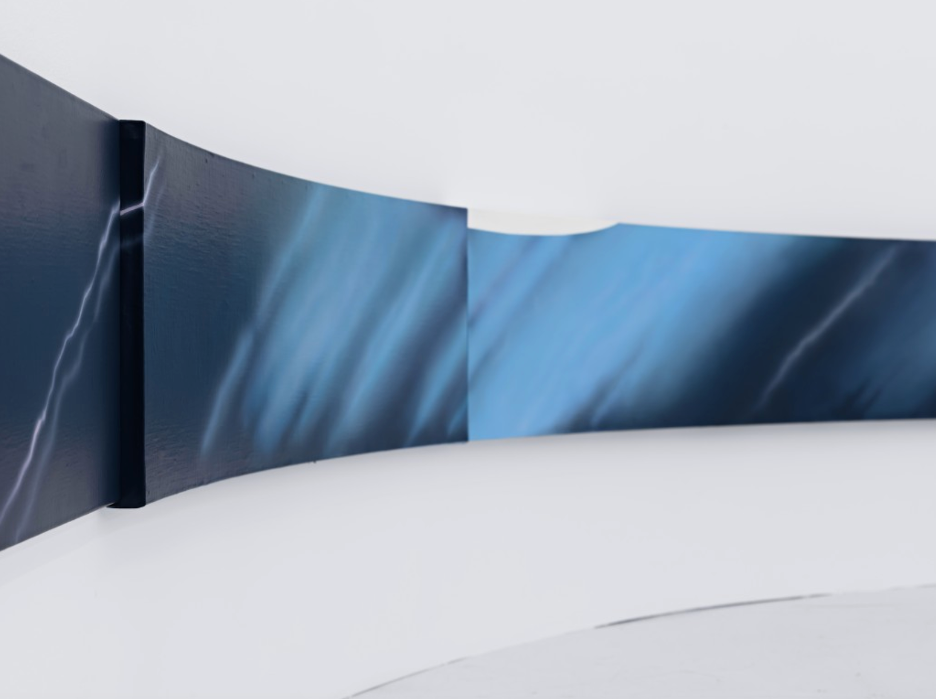
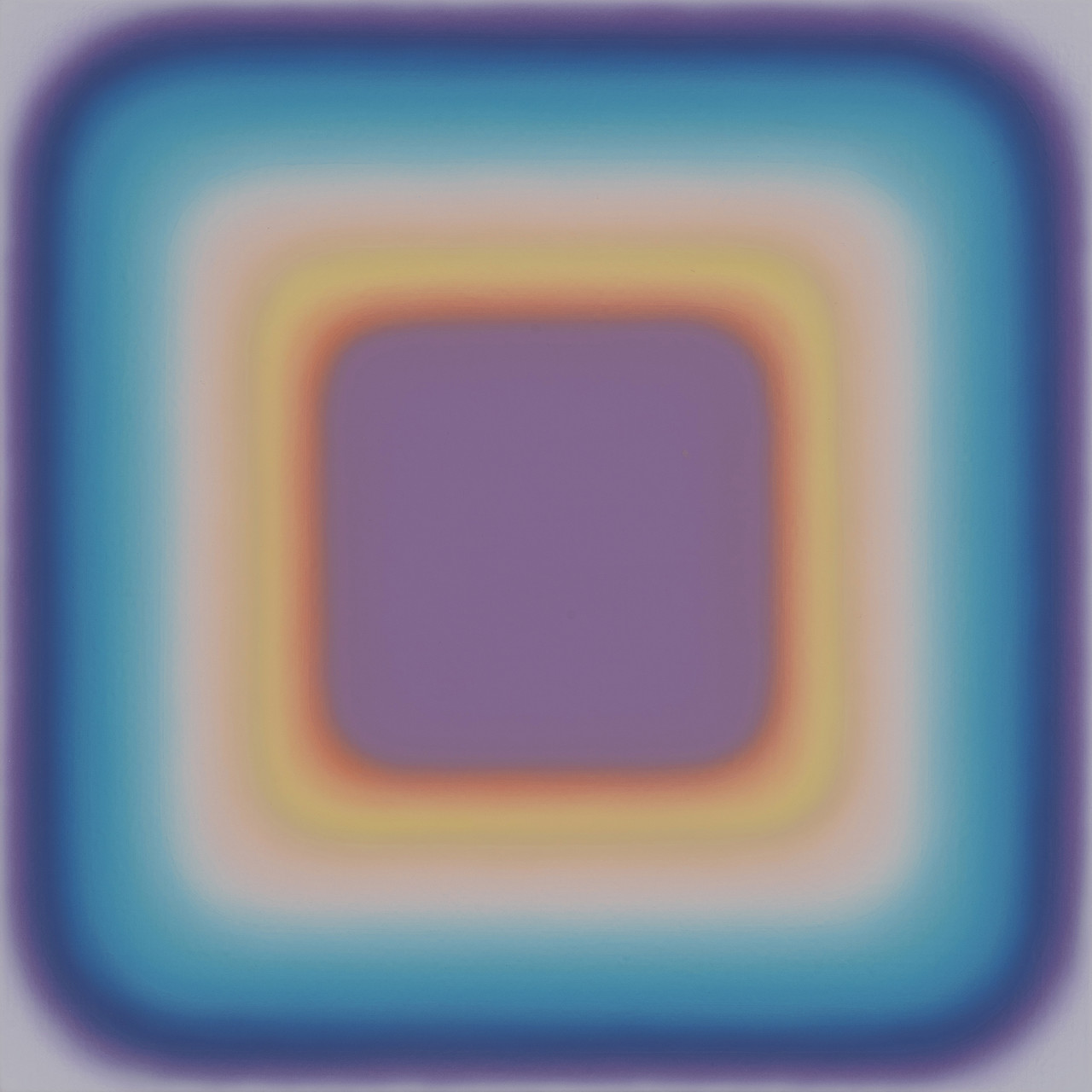
Building on these investigations, the ongoing ‘Mining Depth’ series (2022–2023) explores the gradual movement of light, whether radiating outward from the center of the canvas or advancing inward from its edges.
 
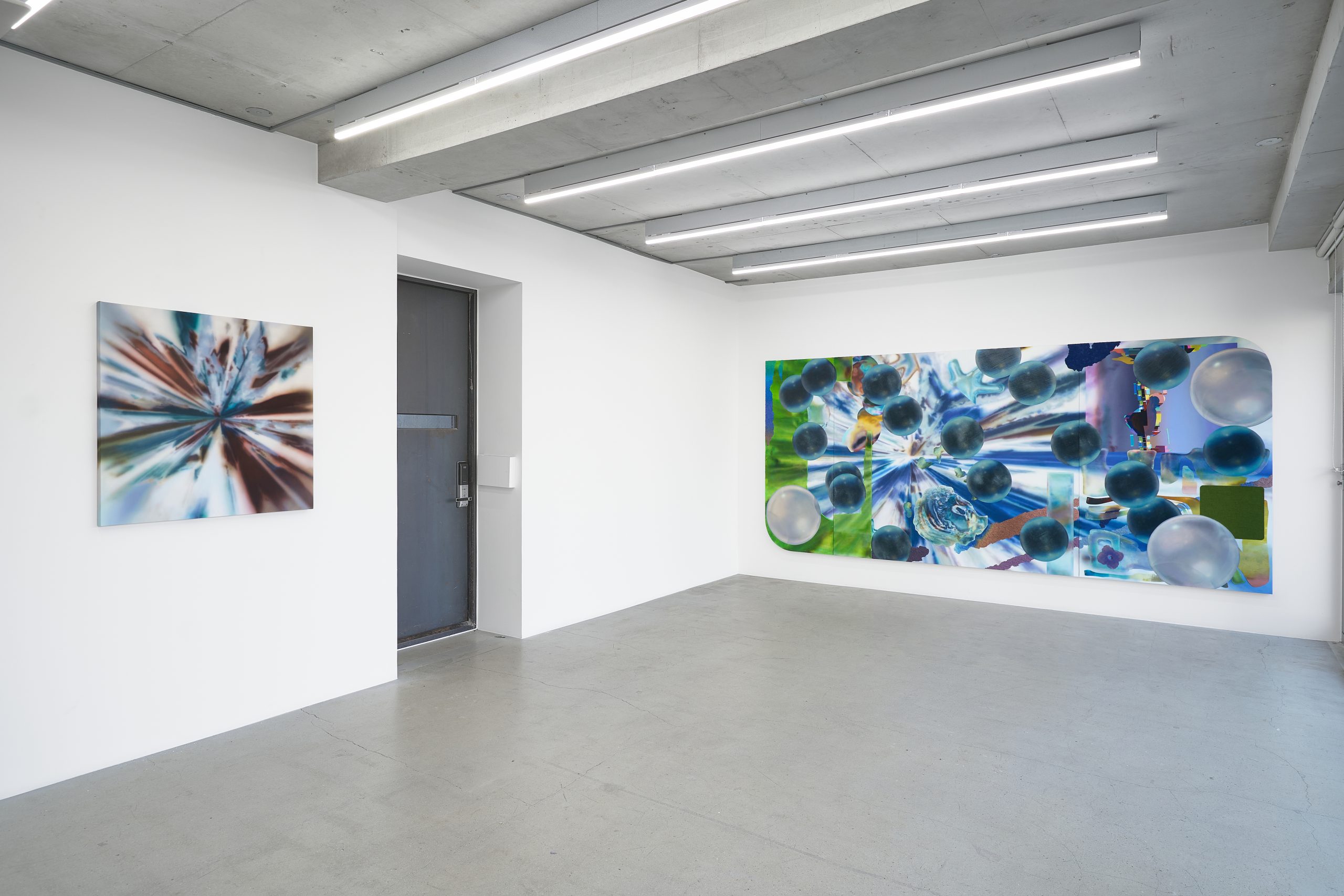
Composed of multiple canvases of varying sizes, the works resemble fragmented architectural diagrams, reconstructing the surface of reality as a structure that is deliberate yet not entirely logical.


Installation view of 《Angle Tail》 (Everyart, 2022) © Park Seok Min

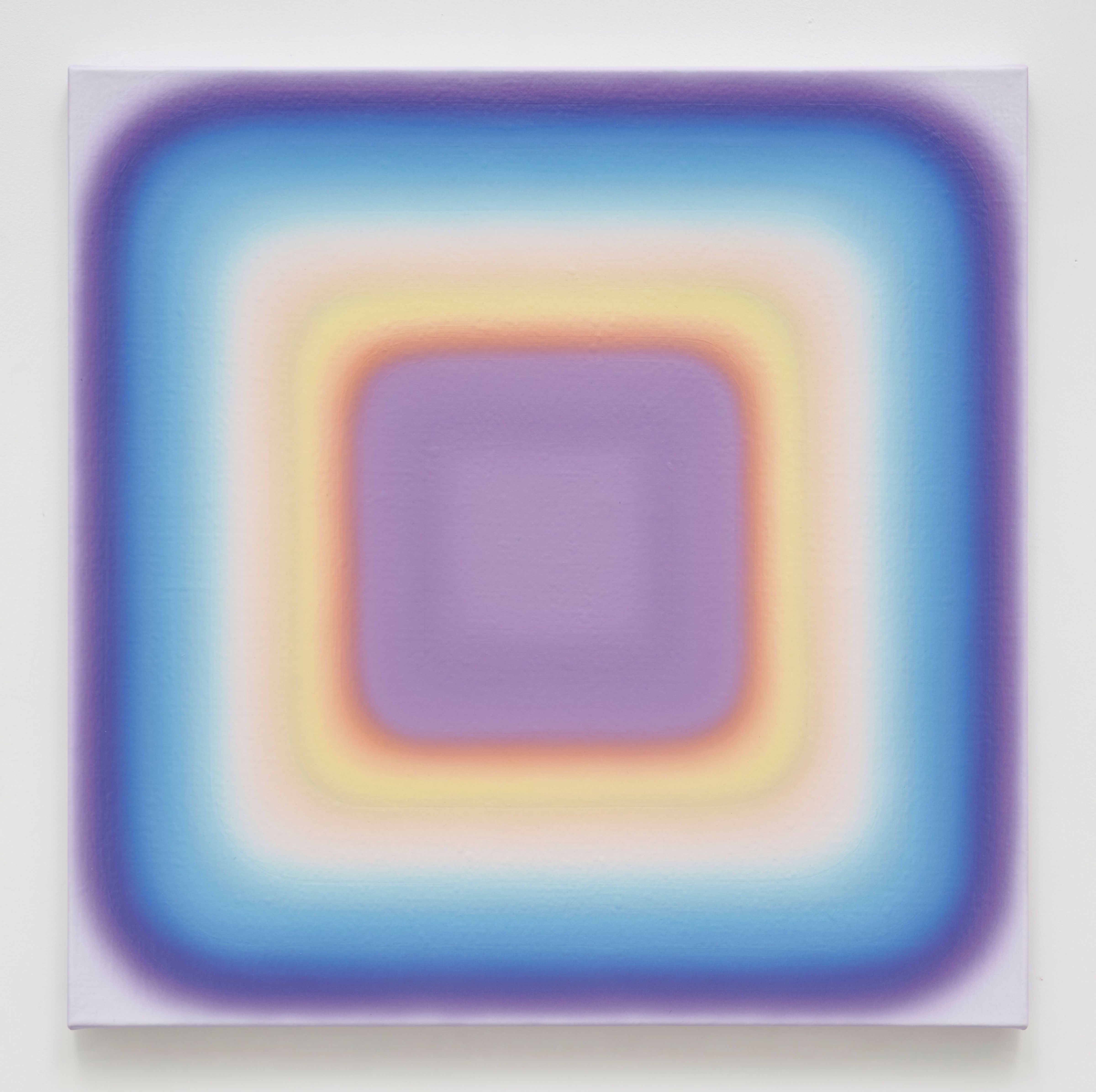
Within each composition, waves of color unfold at varying amplitudes, as if transparent echoes were gently pushing the paint outward in concentric motions. Yet these reverberations are interrupted when they encounter other frequencies, momentarily arrested by the thin line of the present.
 
At the same time, the absence created by the rounded, hollowed corners opens up gaps within the viewer’s field of vision, leading toward an unknown realm of abstraction—one that slips away when grasped and disappears when directly pursued.
 
Composed of canvases of different scales that converge into a larger structure, the *Mining Depth* series invites viewers to continually adjust their physical position and field of vision in order to navigate between its micro- and macro-levels.
 
As one attempts to examine the intimate details of an individual canvas, the body is compelled to move, recalibrating the act of seeing itself. Depending on the mode of viewing, the pictorial space can appear either infinitely distant or strikingly close, resonating with the viewer’s emotions and bodily perception.


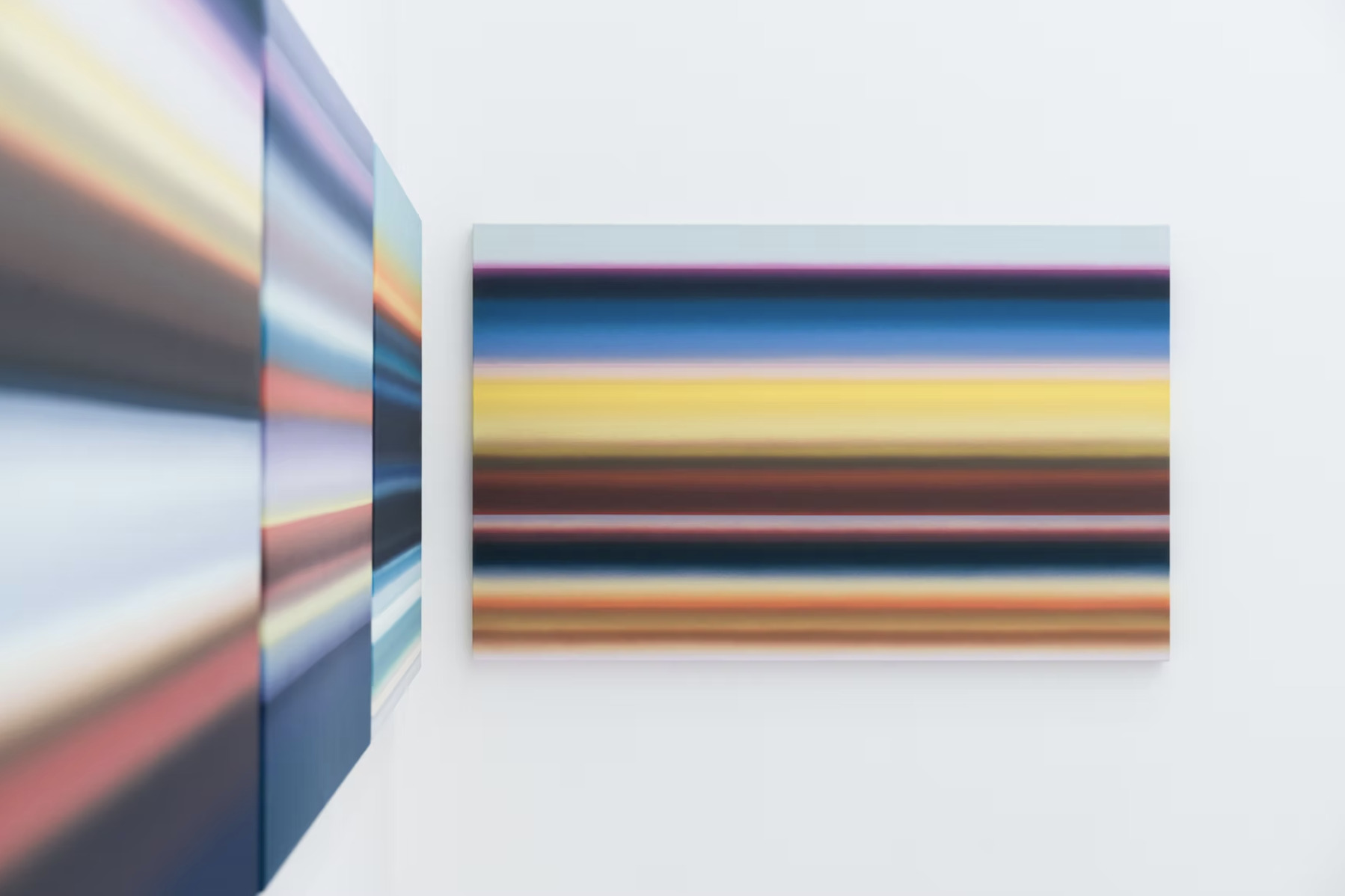
Installation view of 《Vortex 8》 (A-Lounge Contemporary, 2023) © A-Lounge Contemporary

Meanwhile, in 《Vortex 8》, a solo exhibition held at A-Lounge Contemporary in 2023, Park introduced the image of the vortex as a new motif, extending his ongoing visual investigations into space and time.
 
The exhibition was structured around the theme of movement and comprised three interconnected bodies of work: ‘Vortex–Counterpoint’, ‘Old Present’, and ‘Dark Mining’.


Installation view of 《Vortex 8》 (A-Lounge Contemporary, 2023) © A-Lounge Contemporary

The ‘Vortex–Counterpoint’ series originated from a simulation depicting the solar system’s orbit around the center of the galaxy, as well as a mobile sculpture titled “Counterpoint”. These works seek to visualize movement itself, drawing the viewer’s gaze toward the intensified state of motion contained within a vortex.
 
While the resulting images may appear to evoke a four-dimensional space, Park is less concerned with representing a scientifically conceived universe than with articulating a form of movement that has been internally translated and reimagined through painting.
 
The artist’s persistent effort to capture motion extends beyond the boundaries of figuration and abstraction, materiality and immateriality. This tendency is evident in series such as ‘Old Present’ and ‘Dark Mining’, where he experiments with compositions that resist fixed orientations and disrupt conventional perceptions of depth through the repeated interplay of projection and recession.


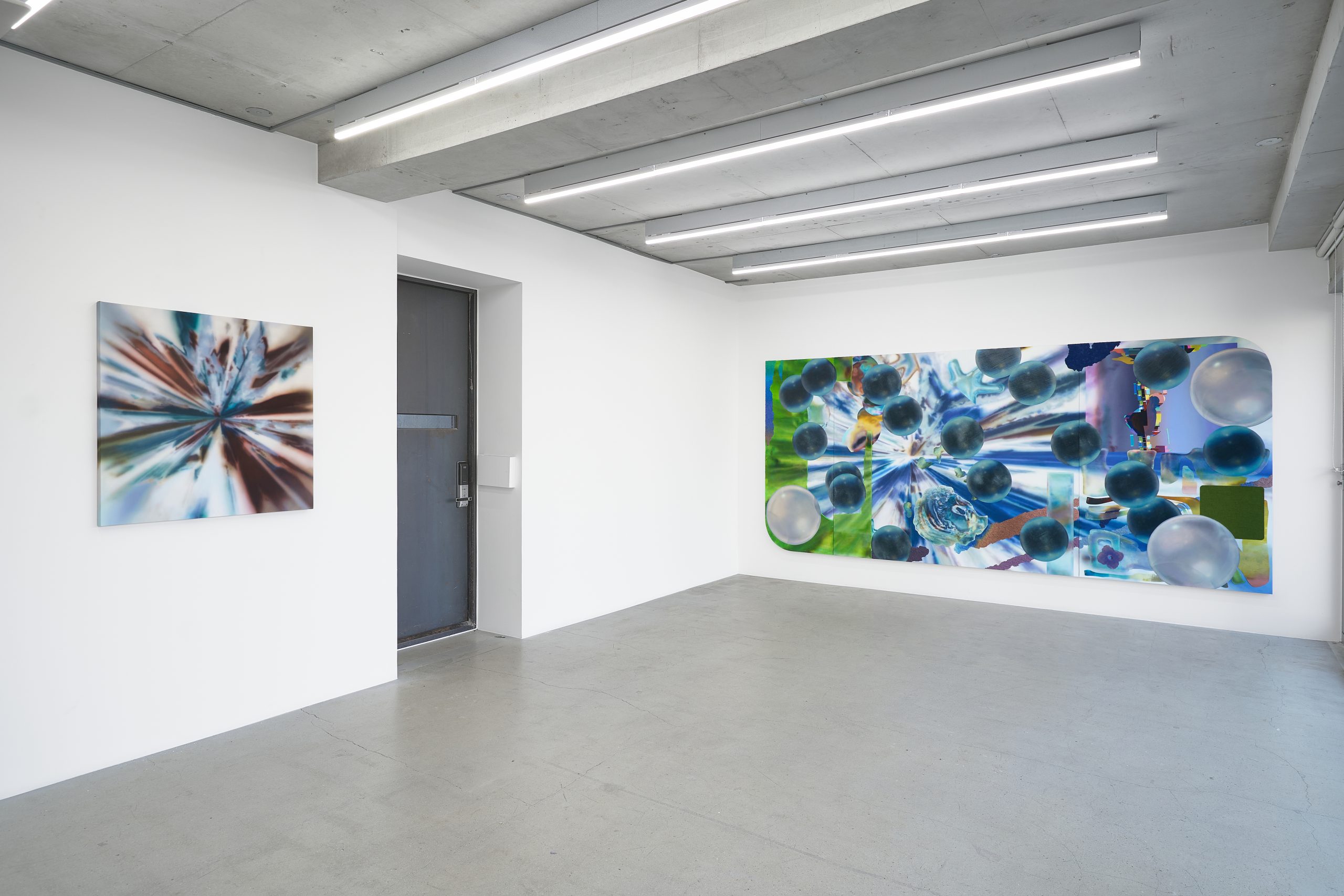
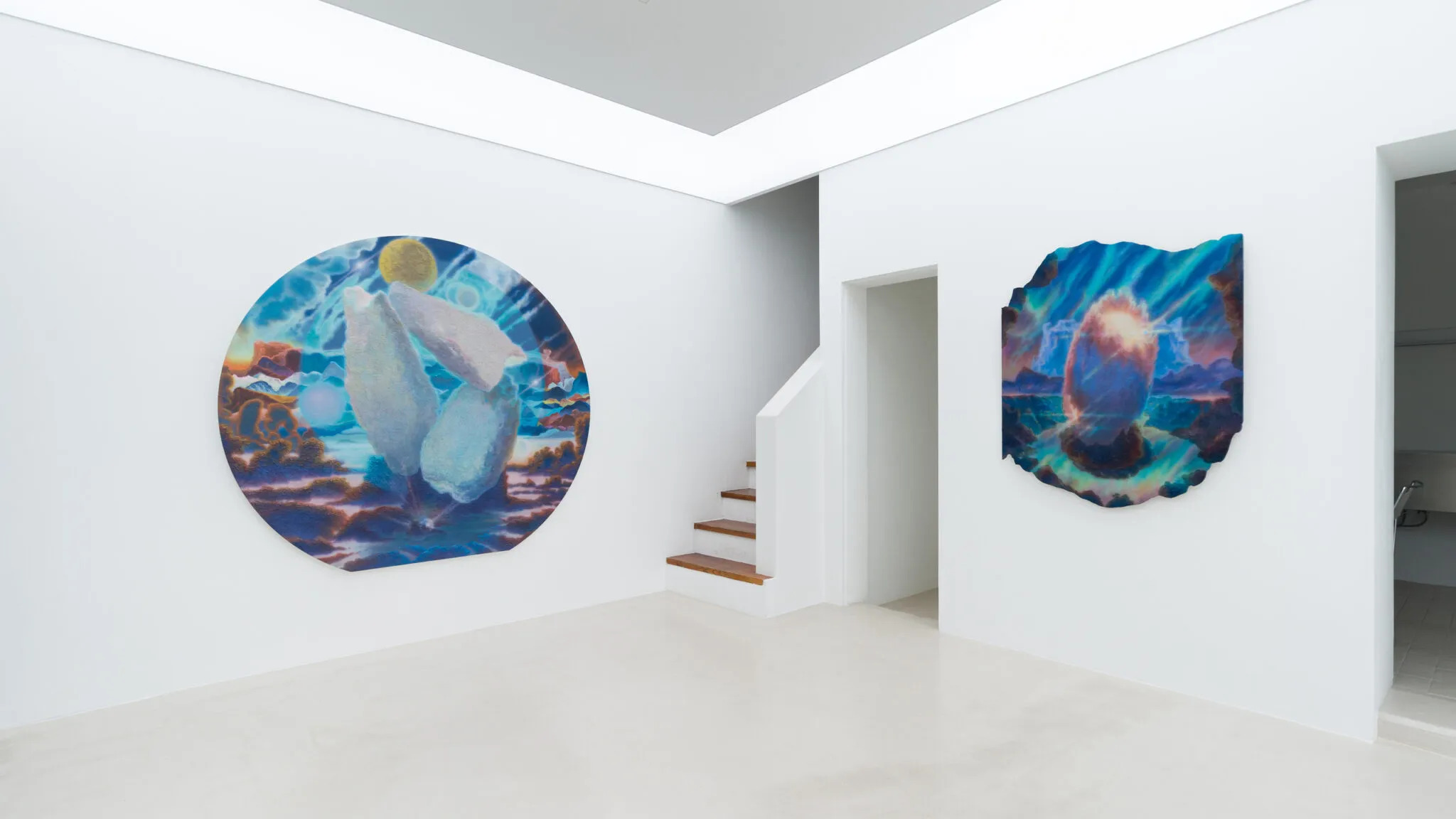
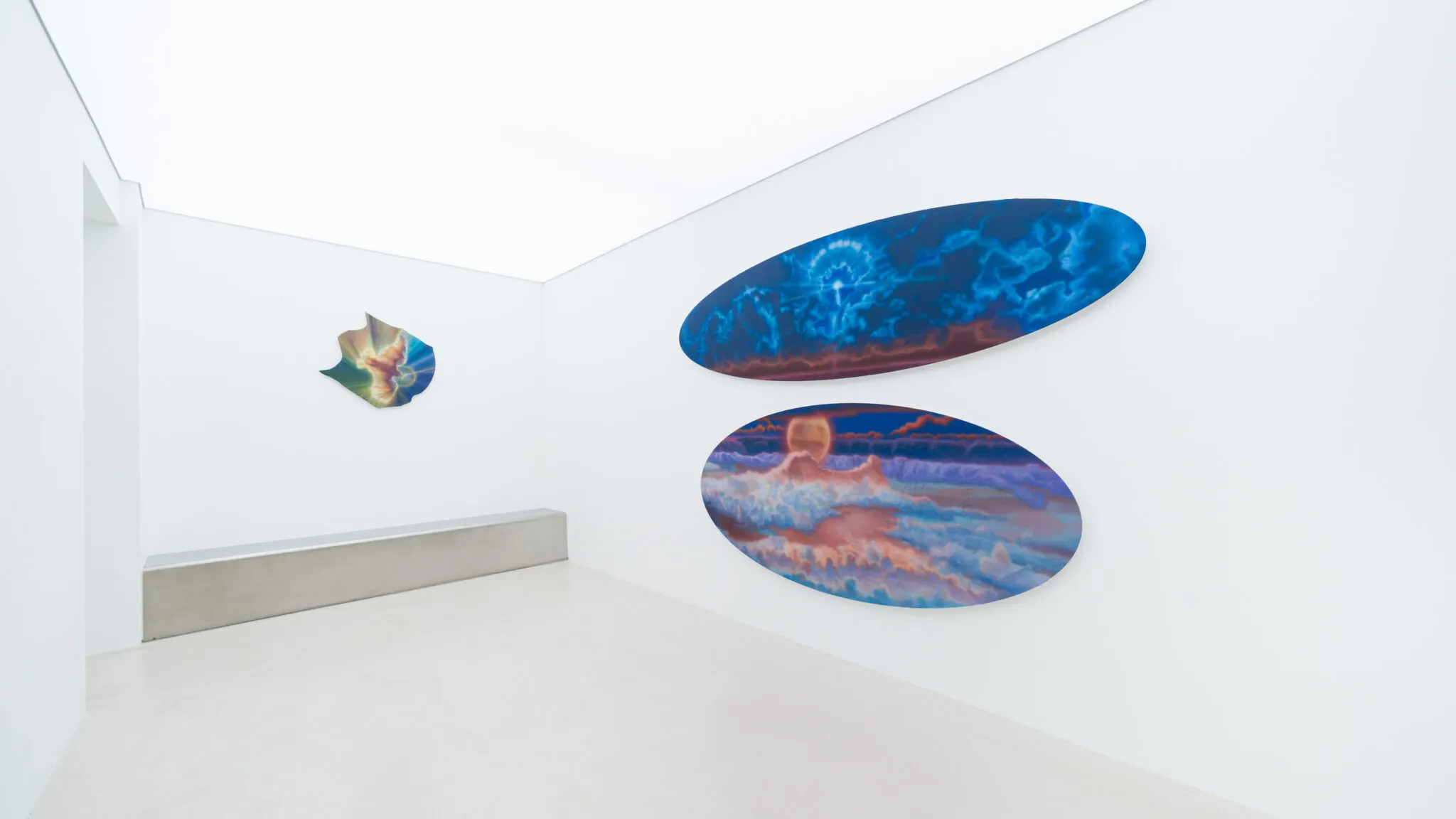
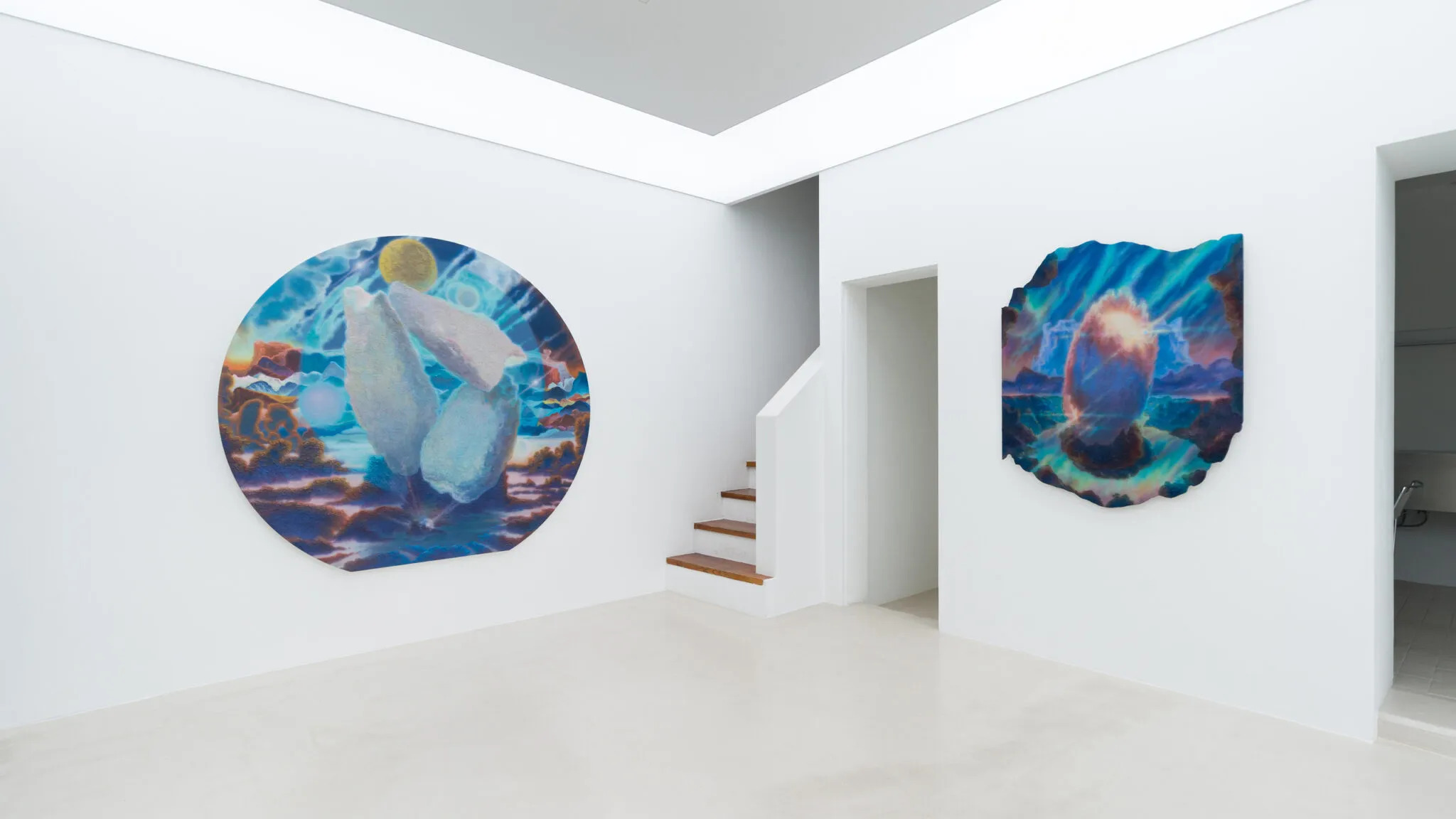
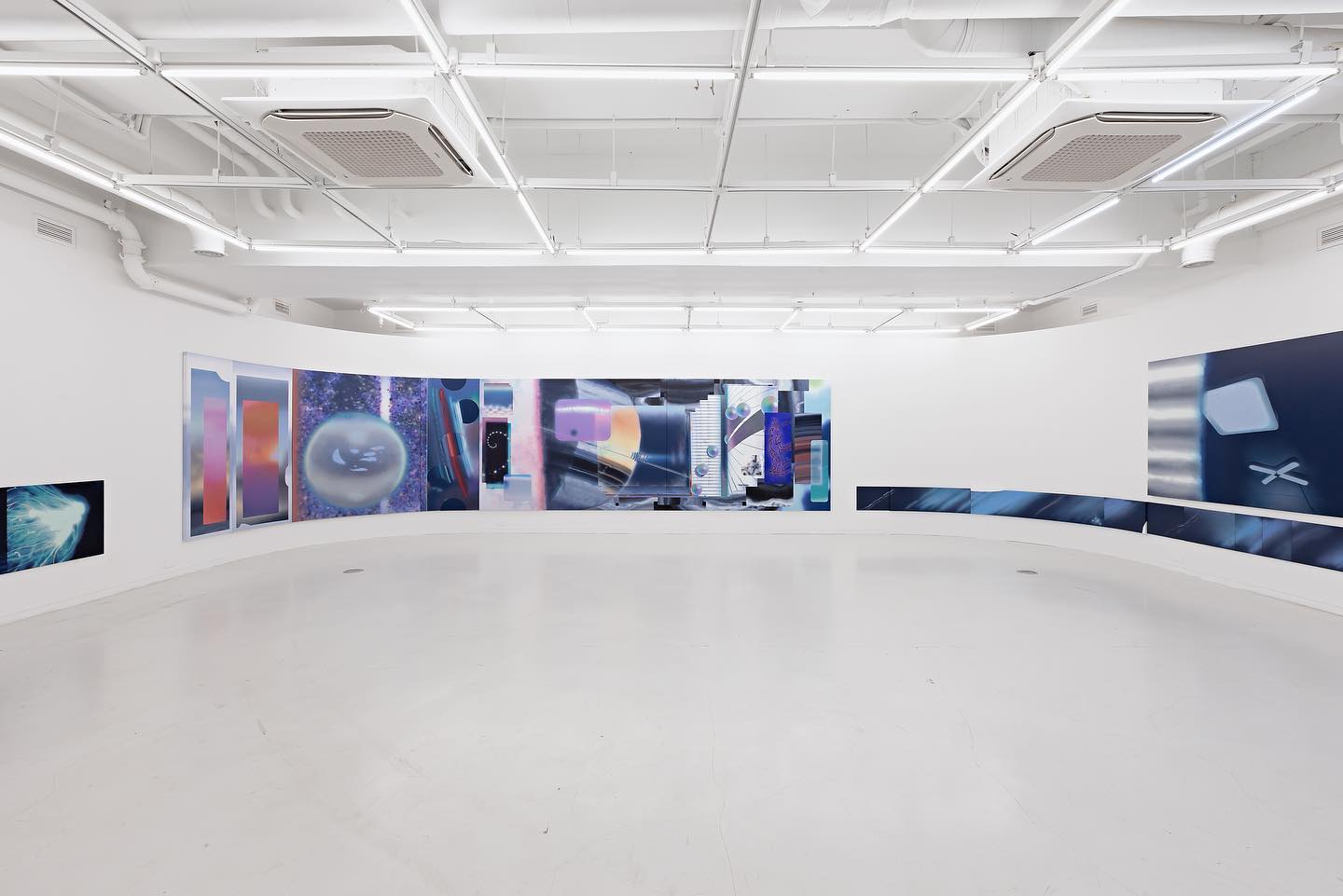
Installation view of 《Teal Greenhouse》 (WWNN, 2024) © Park Seok Min

Furthermore, in his 2024 solo exhibition 《Teal Greenhouse》 at WWNN, Park presented an imagined world constructed through speculative narrative. Taking a closed-loop ecosystem as its central motif, the exhibition conceived the gallery not merely as a display space but as a fictional greenhouse designed to sustain the vitality of the paintings transplanted into it.
 
The “greenhouse” of the exhibition title refers to a space that remains perpetually green regardless of seasonal change, existing as an environment separated from the outside world in both time and space.
 
Park was particularly interested in how the structure and concept of the greenhouse have served as recurring motifs in post-apocalyptic science fiction since the 1970s—appearing as asteroids, domes, apartment complexes, islands, and other enclosed environments—and how such settings are often understood as forms of “closed-loop ecosystems.”


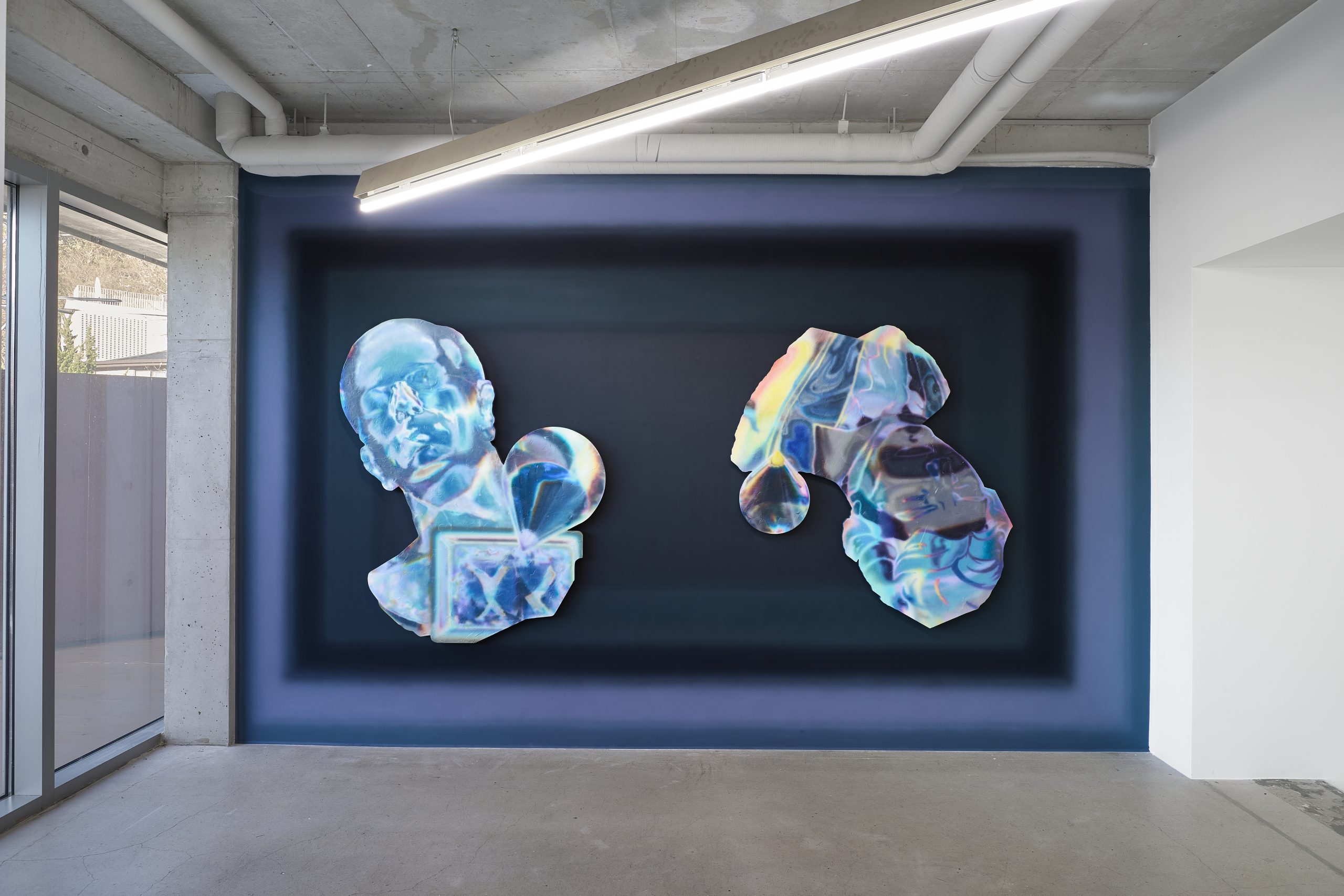
Installation view of 《Teal Greenhouse》 (WWNN, 2024) © Park Seok Min

Building on this idea, Park conceived the exhibition through the spatiotemporal sensibility of the greenhouse as a closed-loop ecosystem. The exhibition was structured as two parallel yet distinct displays that subtly echoed one another, with the teal spectrum serving as a central organizing element. Different tonal ranges of this blue-green hue were applied to the works installed on the first and second floors, creating variations within an overarching chromatic system.
 
The images that the artist rendered on panels of diverse forms—ranging from truncated circles and ovals to rectangles and irregular shapes—evoke both the boundless expanse of the universe beyond the greenhouse’s transparent enclosure and the artificial ecosystem regulated within it. In this sense, the panel itself functions as a provisional threshold where interior and exterior worlds converge.
 
To realize a near-futuristic sensibility, Park also combined a range of image-making methods with material experimentation. Employing image-generation software, big-data-based AI systems, acrylic mediums, stones, and architectural materials, he translated abstract concepts and conditions into visual form, expanding painting into a space where speculative imagination, technological mediation, and material presence intersect.


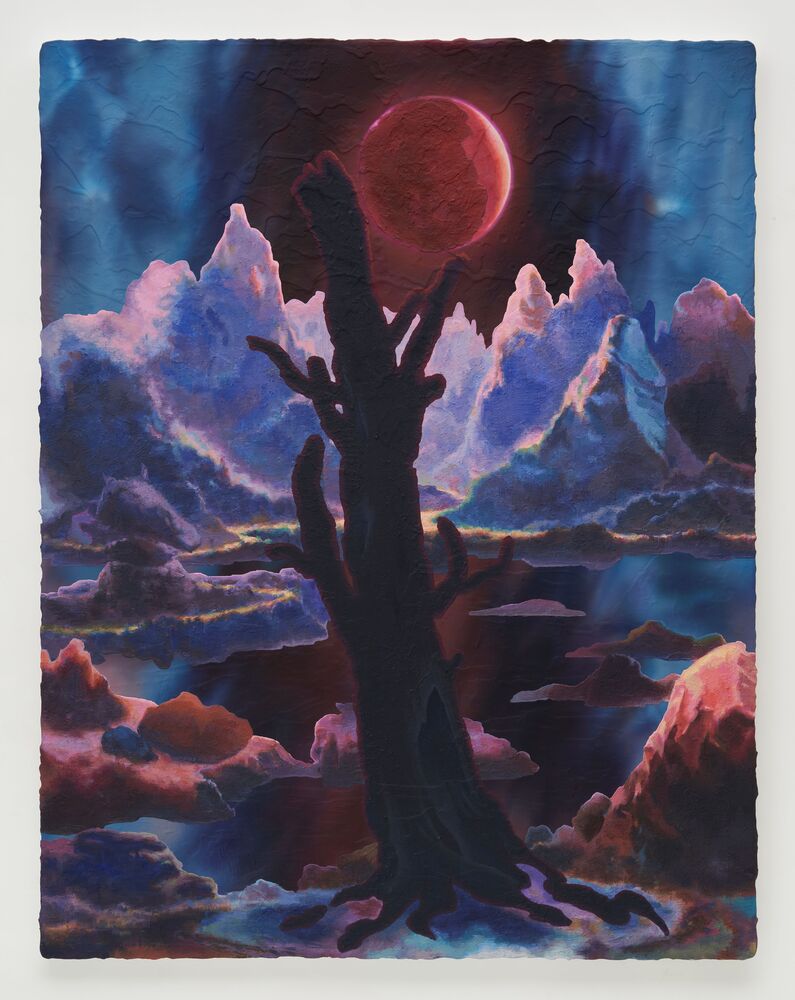
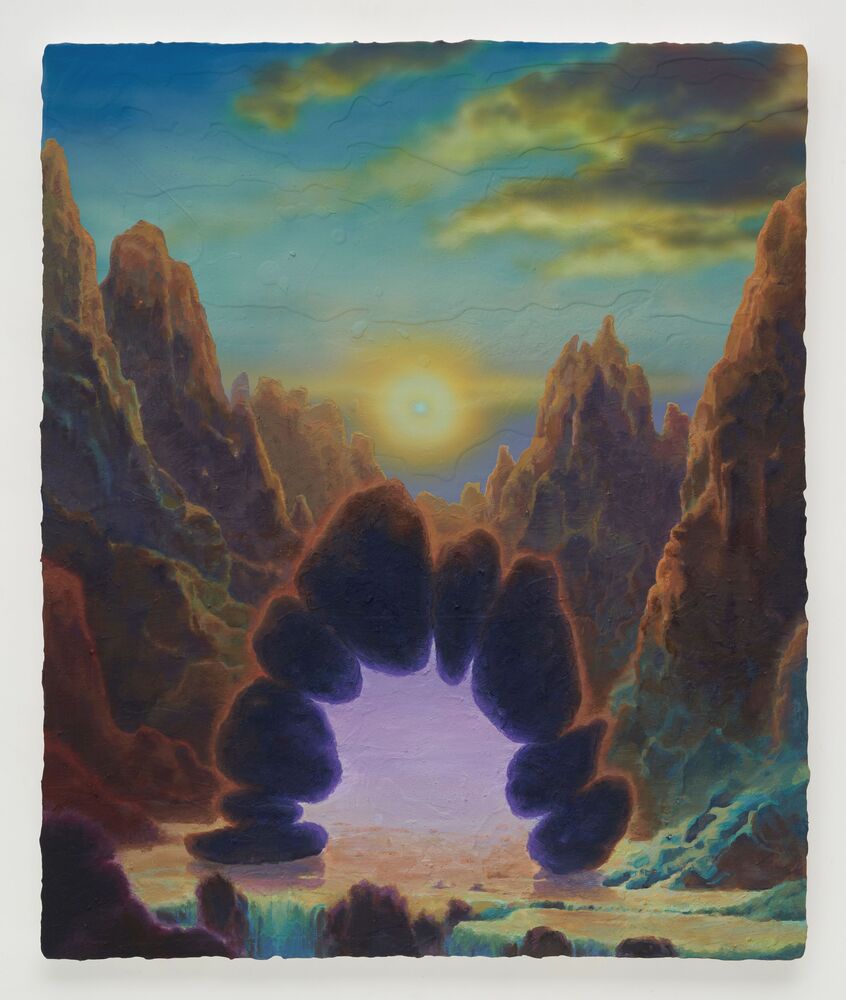
Park Seok Min, Temple Dawn 06, 2025, Acrylic, spray, mixed media on canvas, 73x62.5cm © Park Seok Min

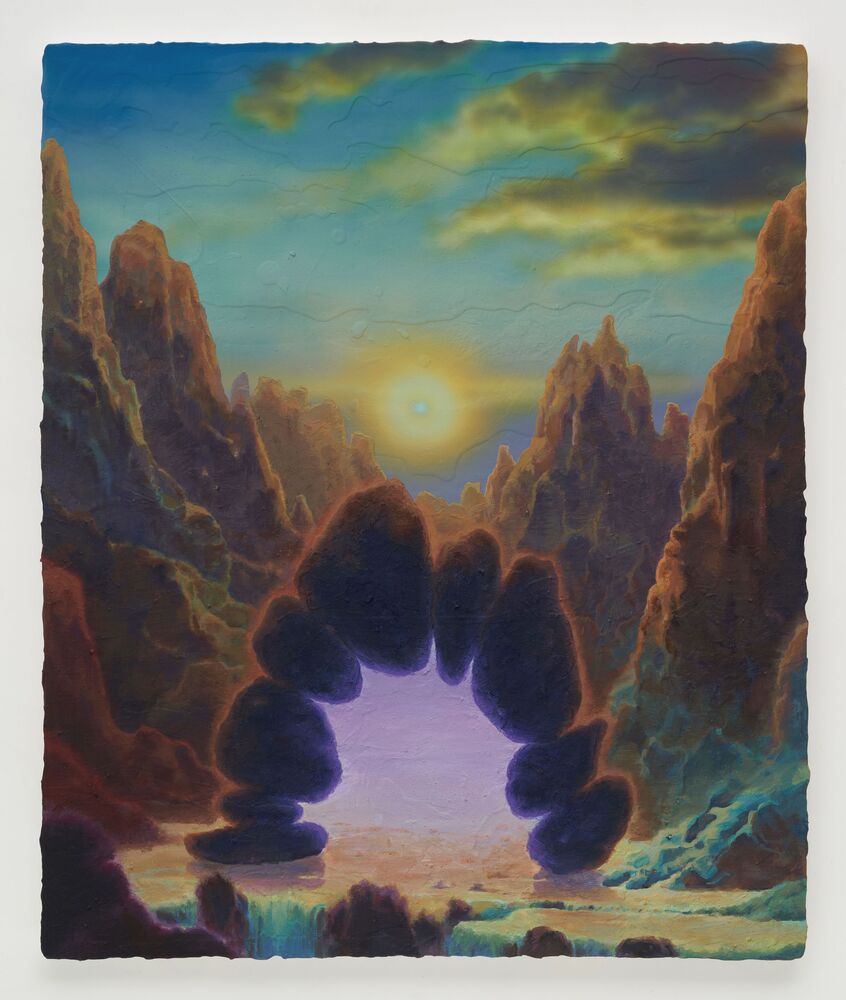
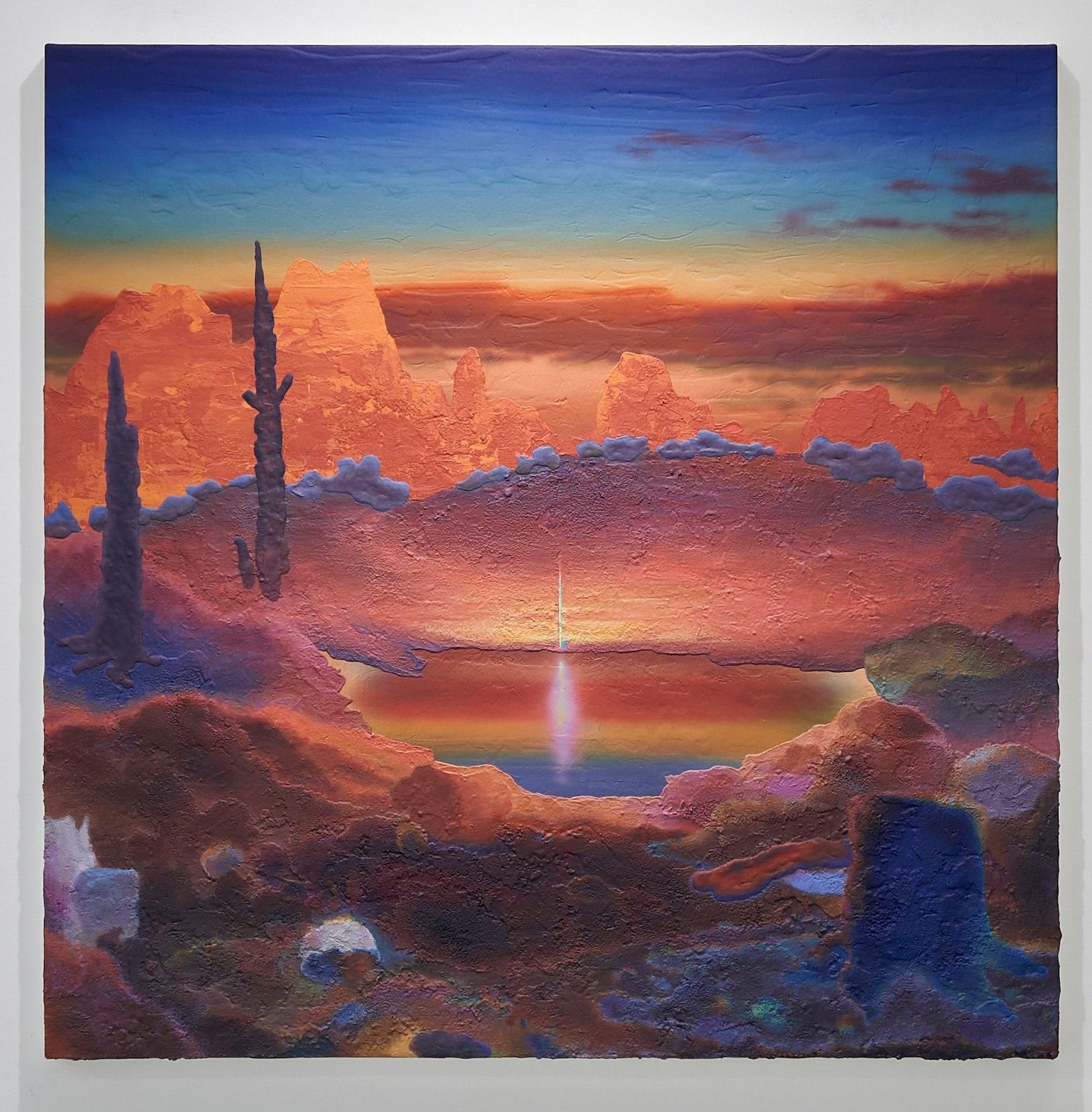
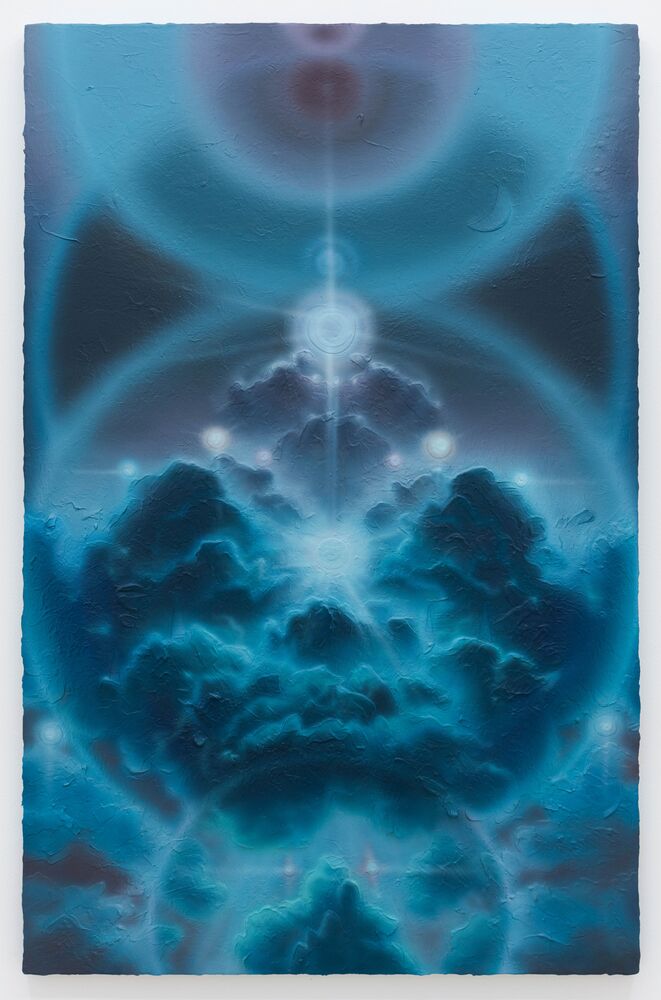
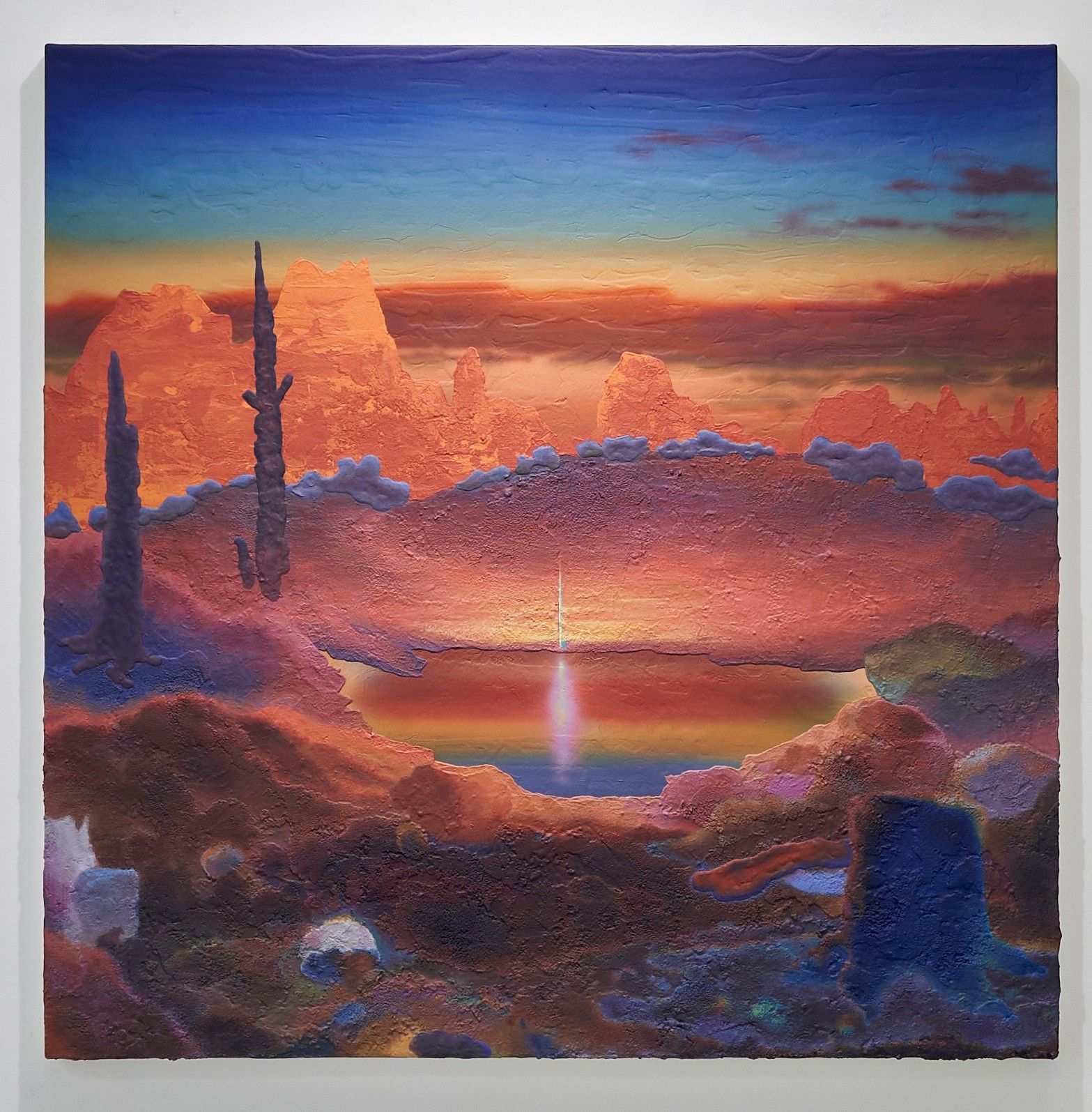
Lately, Park has been exploring the relationship between form and energy, borrowing the sculptural characteristics of geographical features that connect the physical and transcendental worlds across different cultures. In his recent works, the burnt trees, stone towers, and pools of water take on a mystical presence within the composition, embodying themes of aspiration, healing, and sacred energy.
 
In these new works, he blends pigments, acrylic paste, and gel mediums, applying them with a palette knife or layering thick and thin textures using both airbrush and brush techniques.
 
This reflects his approach of prioritizing materials and techniques that align with his artistic direction, rather than adhering to conventional formats, materials, or methodologies in painting.


Park Seok Min, Temple Incognita 01, 2025, Acrylic, spray, mixed media on canvas, 75x75cm © Park Seok Min

Throughout his practice, Park Seok Min has focused on the threshold where the physical and speculative worlds intersect. Drawing from objects and phenomena encountered on the periphery of everyday life, he constructs imaginative realms by imbuing them with particular spatiotemporal conditions and sensory narratives.
 
By exploring ambiguous boundaries that deviate from the familiar orbit of reality, his work invites viewers to imagine and sense another form of the “present” that continuously unfolds beneath the surface of the visible world.

”To approach the enigmatic idea of the ‘present,’ I have been creating works that propose a form of ‘observing’ contemplation. This is an attempt to discover a new potential of painting that connects the inside and outside of the world by establishing a kind of amorphous curtain between the painting and the viewer.” (Park Seok Min, from an interview for 《Lagrangian Point》 at DrawingRoom)


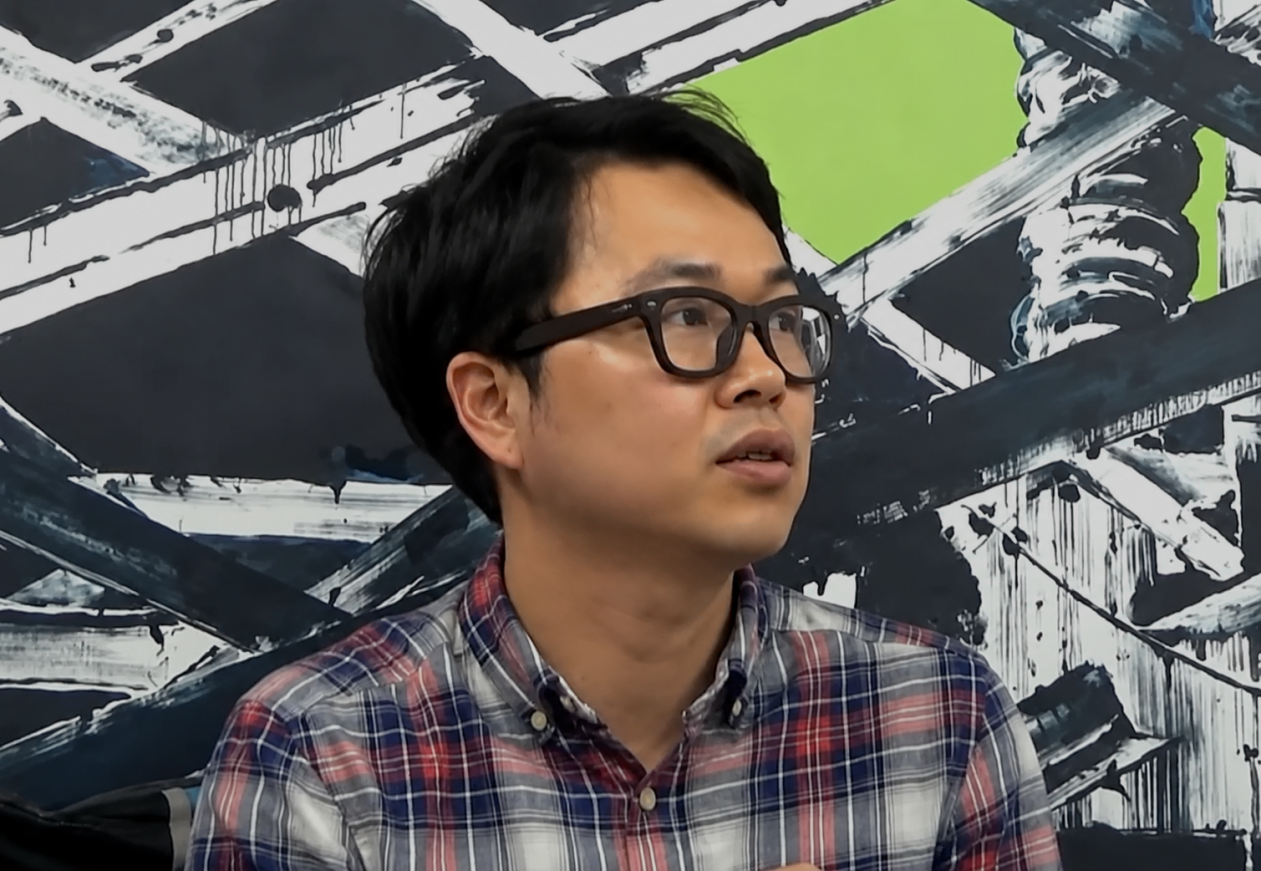
Artist Park Seok Min © OCI Museum of Art

Park Seok Min graduated from the Department of Painting at Hongik University. His recent solo exhibitions include 《Teal Greenhouse》 (WWNN, Seoul, 2024), 《Vortex 8》 (A-Lounge Contemporary, Seoul, 2023), 《Angel Tail》 (Everyart, Seoul, 2022), and 《Melting a Lump Sugar》 (Artspace Boan 2, Seoul, 2020).
 
He has also participated in numerous group exhibitions, including 《Rabbit Hole》 (KICHE, Seoul, 2025), 《FACE》 (Mimesis Art Museum, Paju, 2024), 《Dubious Gaze》 (WWNN, Seoul, 2023), 《Lagrange Point》 (DrawingRoom, Seoul, 2022), and 《Every Where & Here》 (The Page Gallery, Seoul, 2020).
 
Park has undertaken artist residencies at the Artst’s Space DAL (2021) and the MMCA Residency Goyang (2018). He was also selected for the 38th Joong-Ang Art Award and the 2015 OCI OCI YOUNG CREATIVES.

References