Plato called for the exile of poets, but in fact he himself talked about ‘Khora’ as a place for all creations and a space of hollowness, using his own poetic language. ‘Poetic’ is not converged with logos[words] only, and when combined with mythos[imagination] and pathos[energy], it makes the power of ‘chaos’ a reality.
Chaos does not have a well-defined feature, making it impossible to be sensed, but is known to be God who enjoys dance and songs, and the latter would be nothing but a praise for ‘Khora’. “It’s the most mysterious of the mysterious”[玄之又玄].
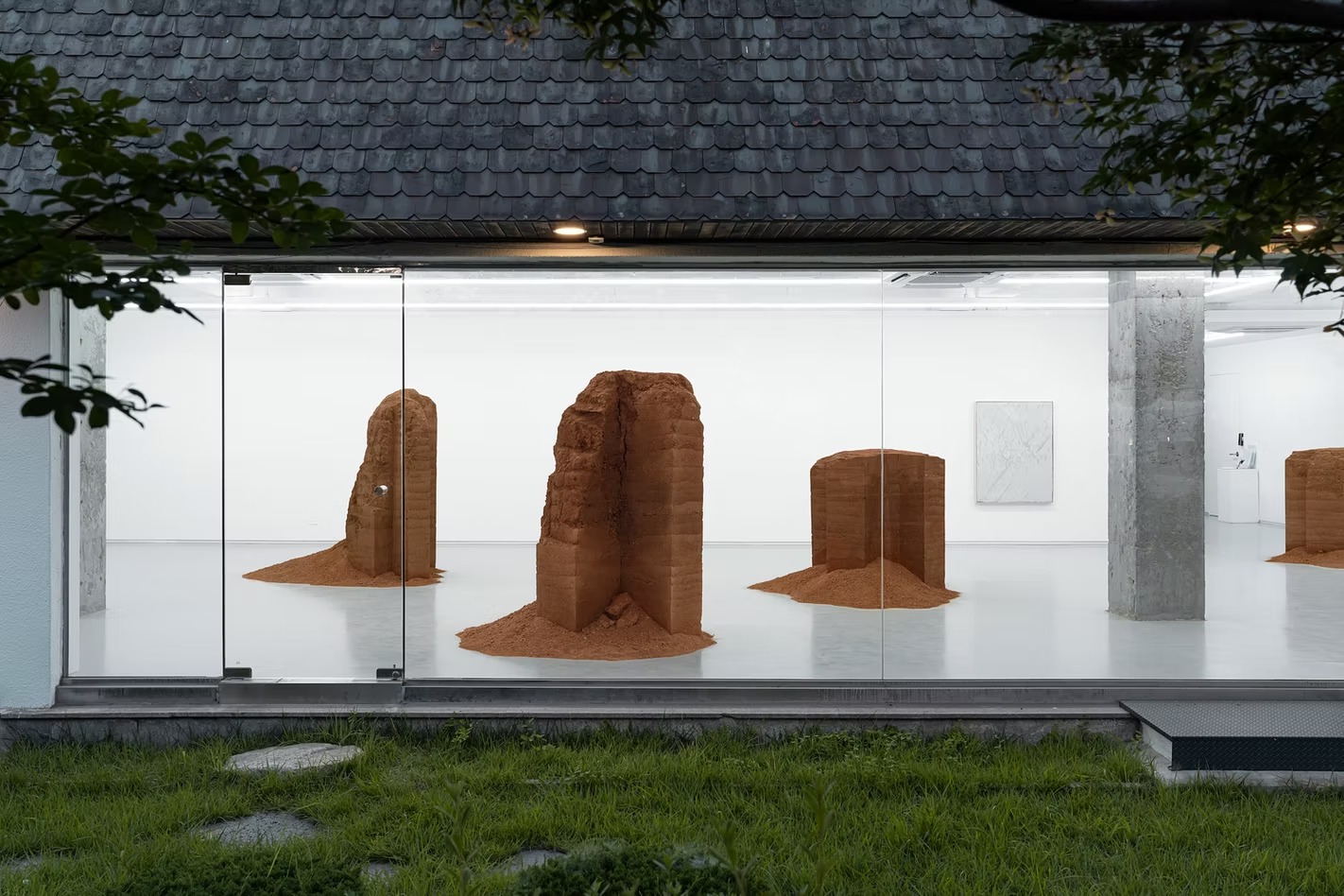
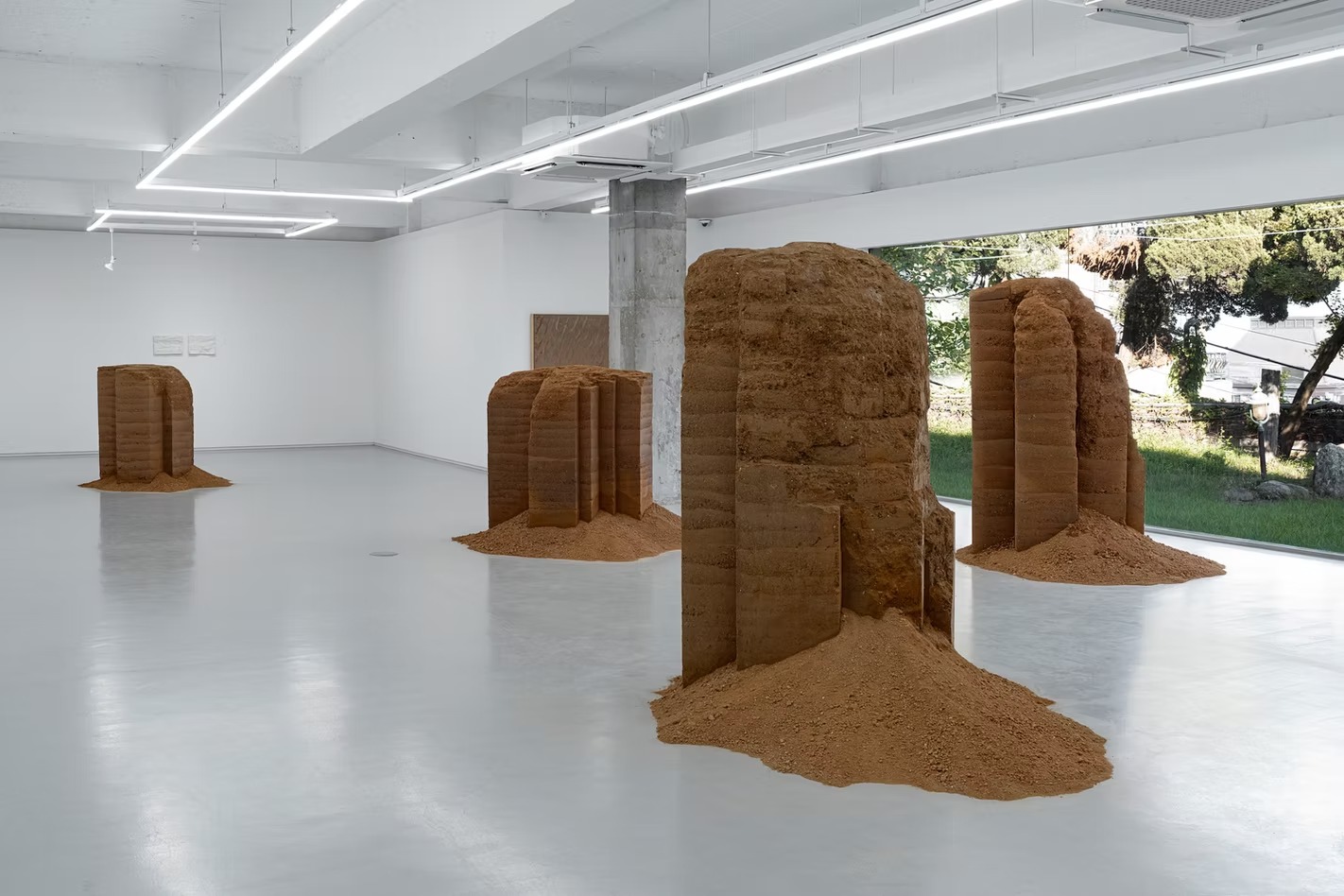
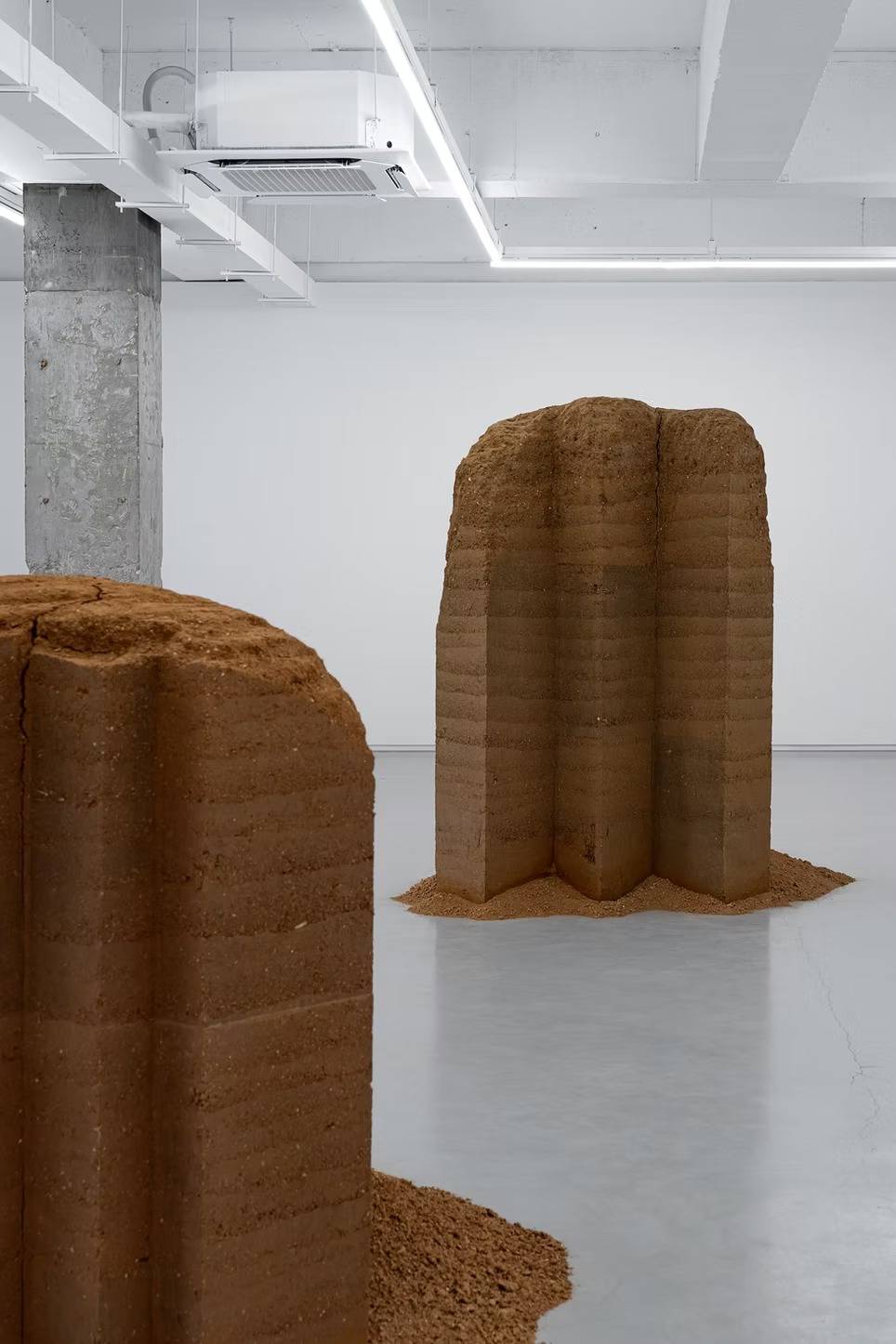
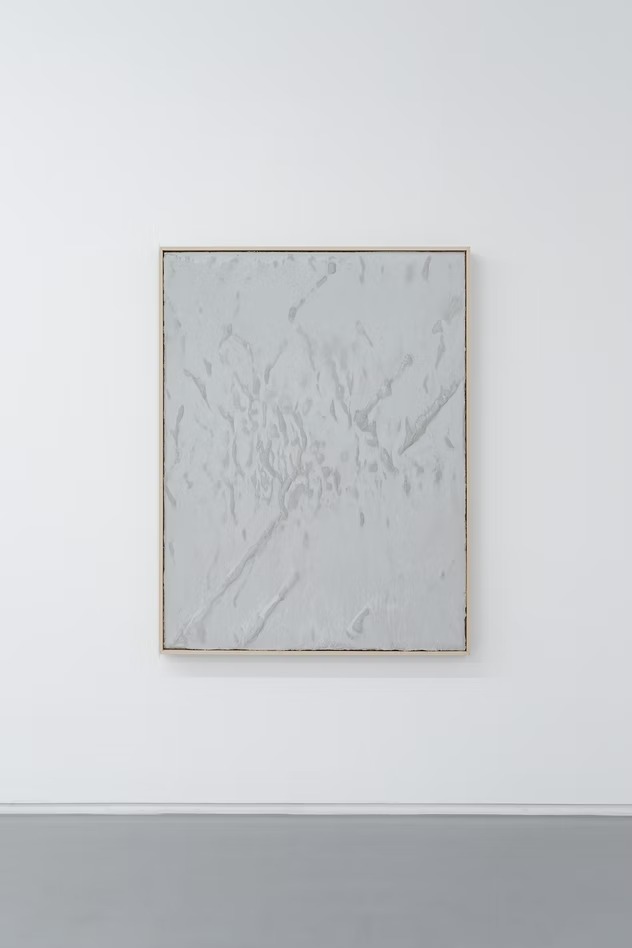
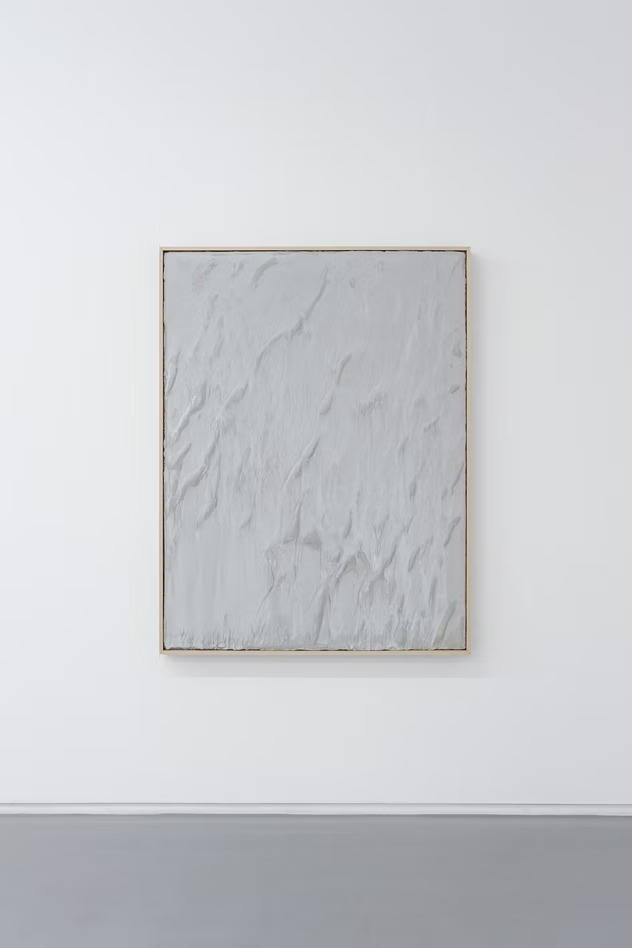
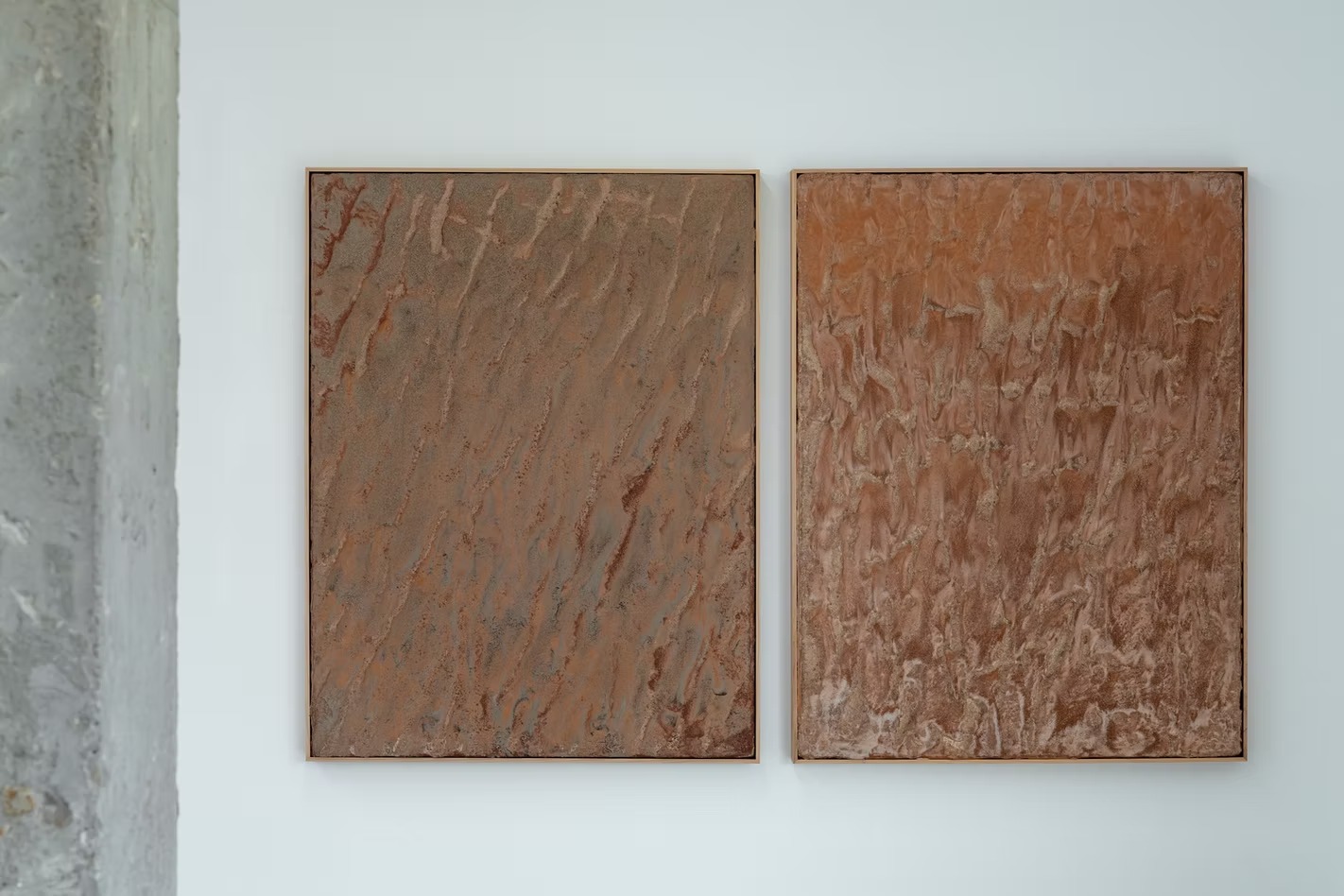
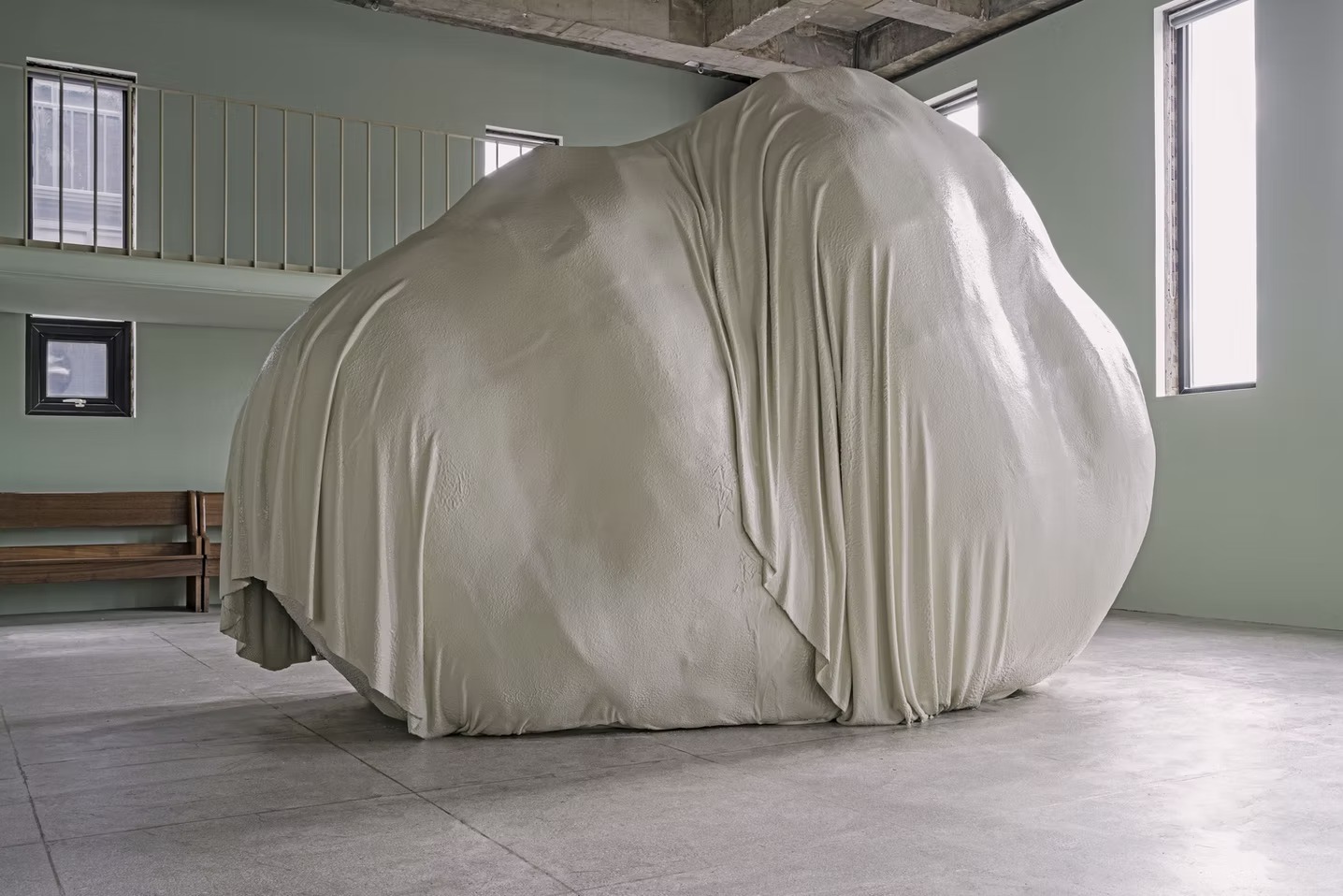
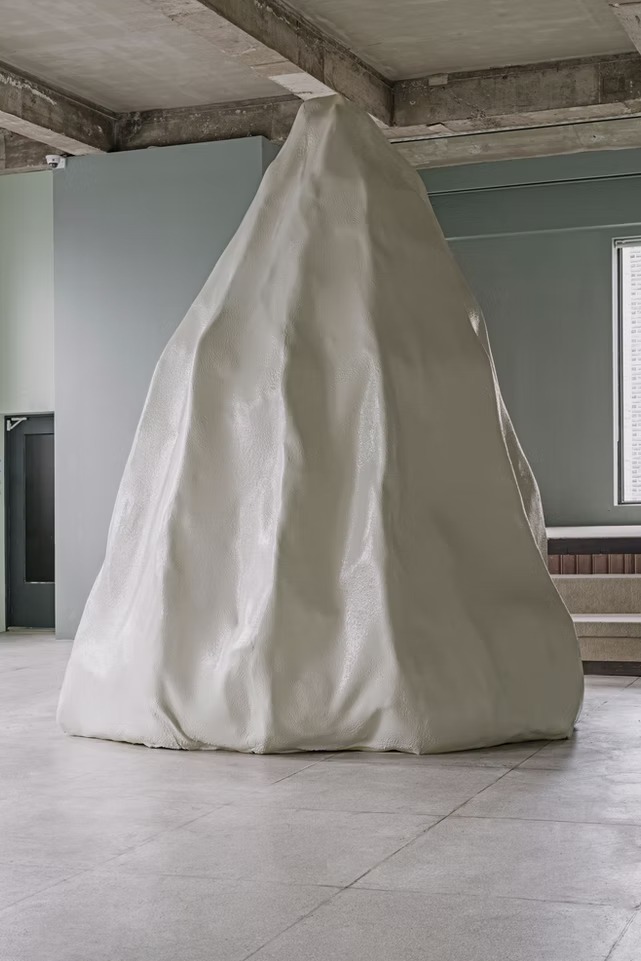
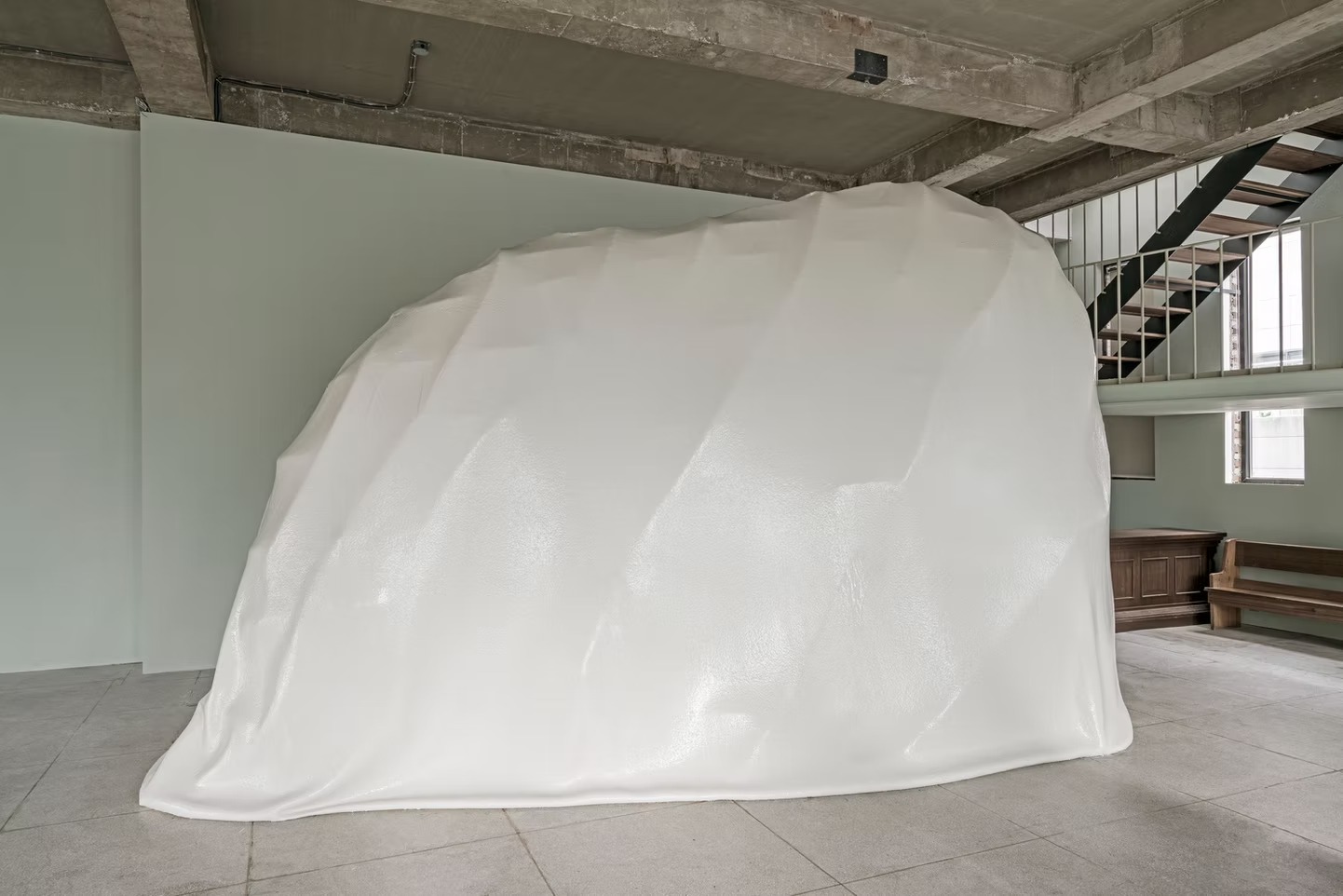
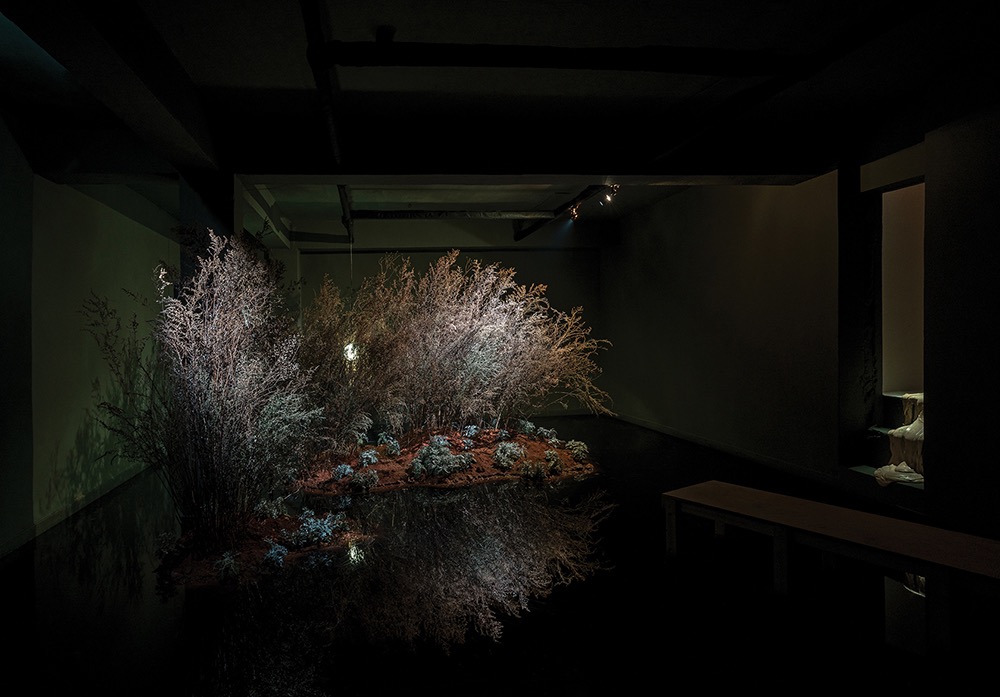
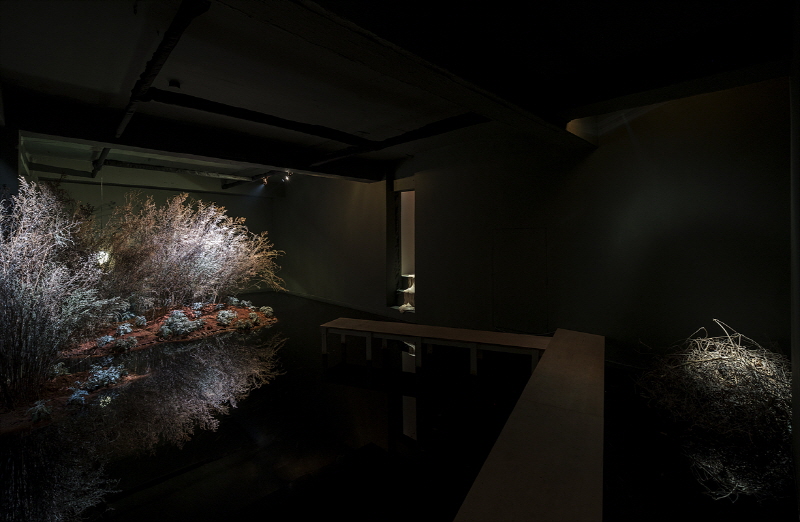
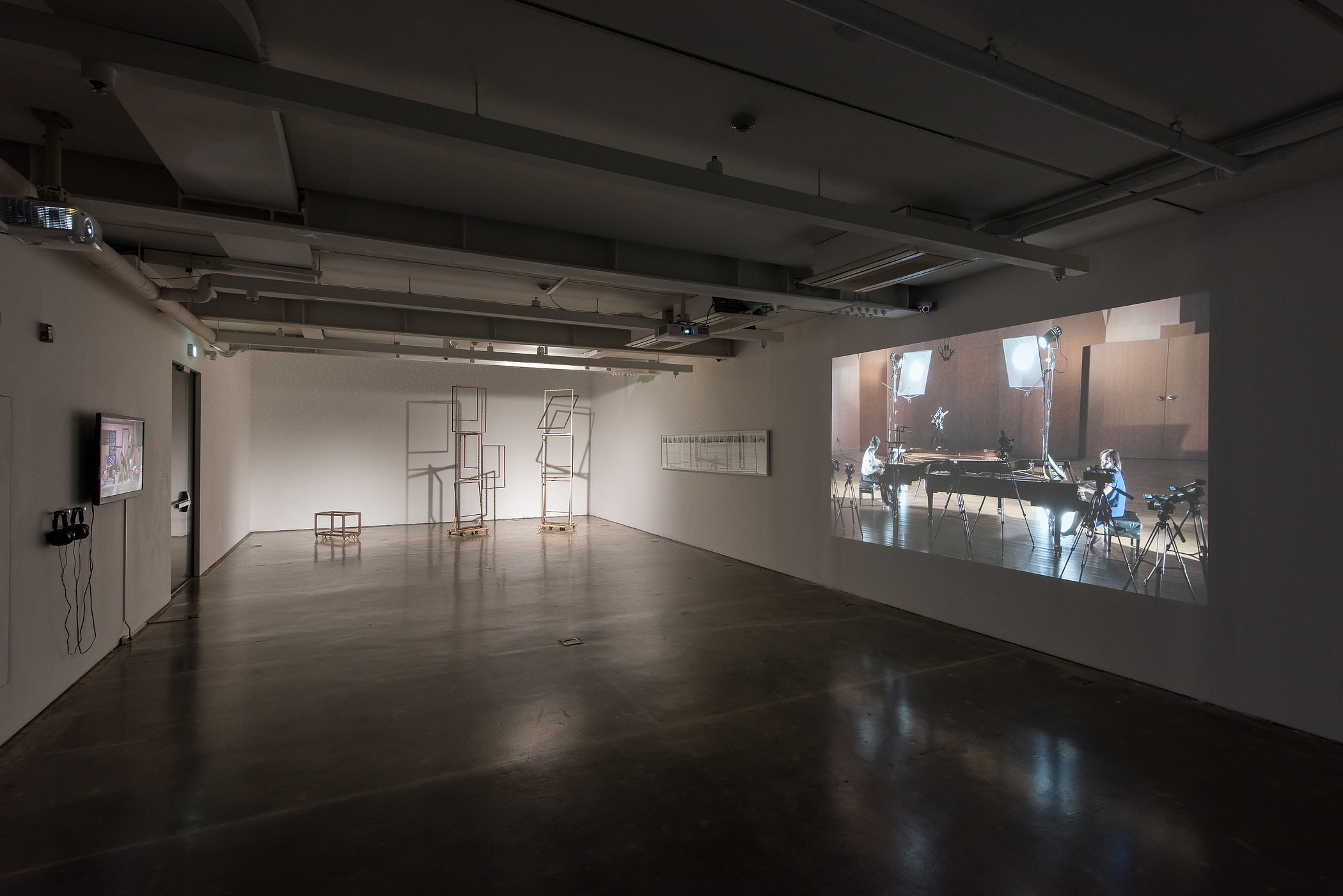
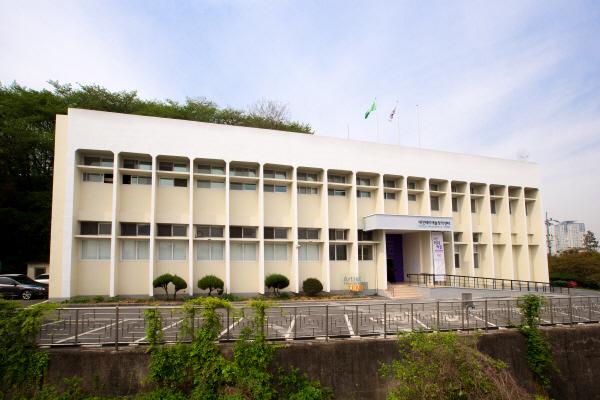
Juree Kim’s exhibition 《Wet Matter》 is an installation of three artworks which seem to be breathing like a huge colossal creature. This surreal breath, exuding across all floors of the SongEun ArtSpace, was intended by the artist, and the form of viewing takes place by raising a basic question of whether the creature is alive or not and then approaching closer to its breath.
We are constantly reminded of the question posed by anthropologist Gregory Bateson and biologist Jacques Monod—“When an alien lands on Earth, how to determine which is the creature and which is not?”—as well as the standards they suggested with regards to identifying analogous and homologous organs.
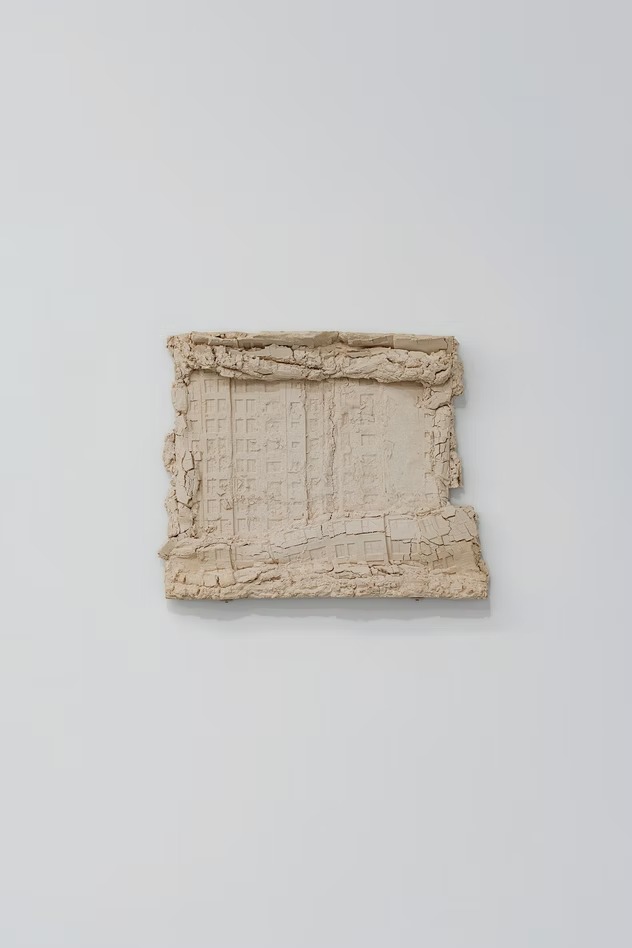
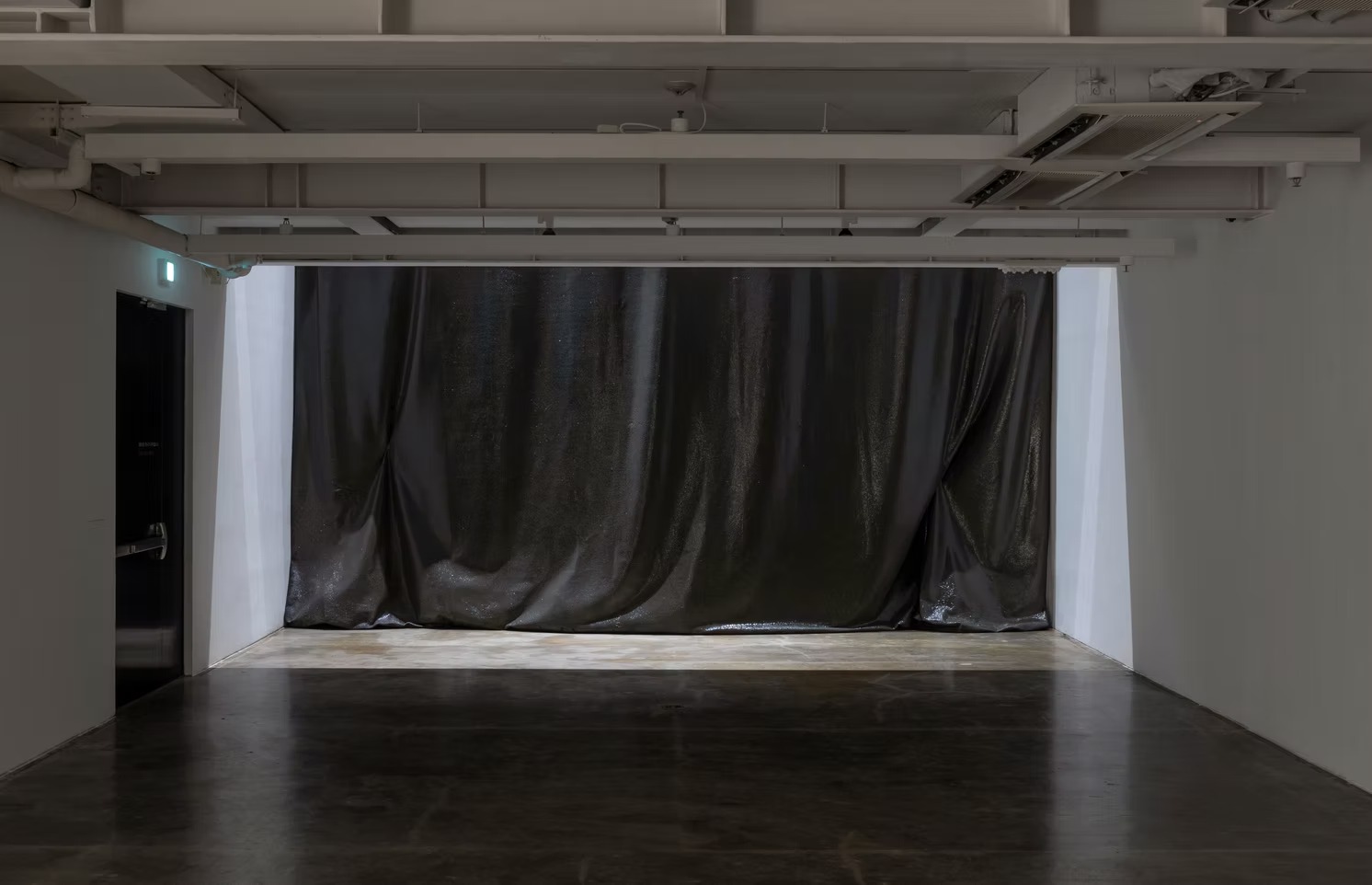
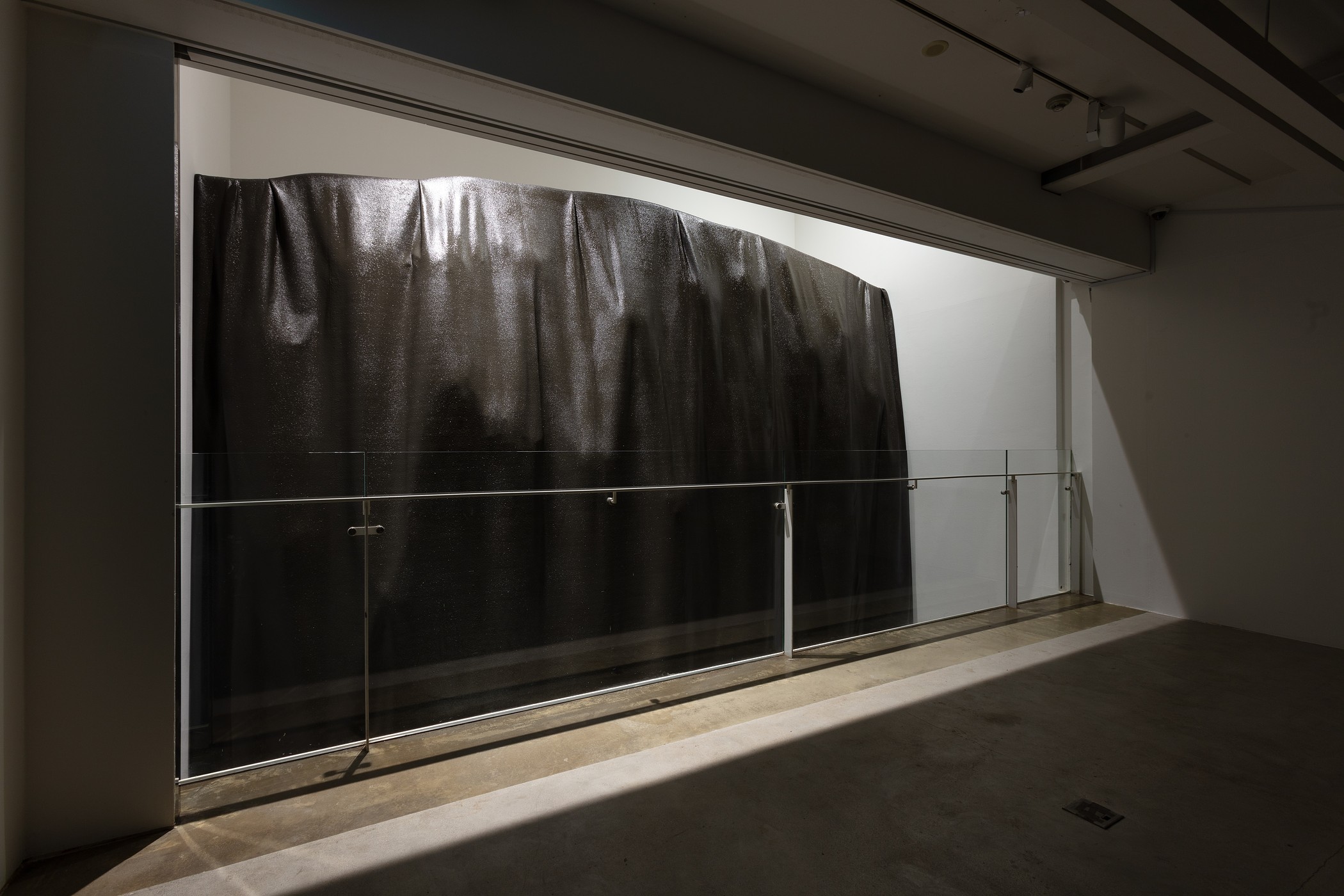
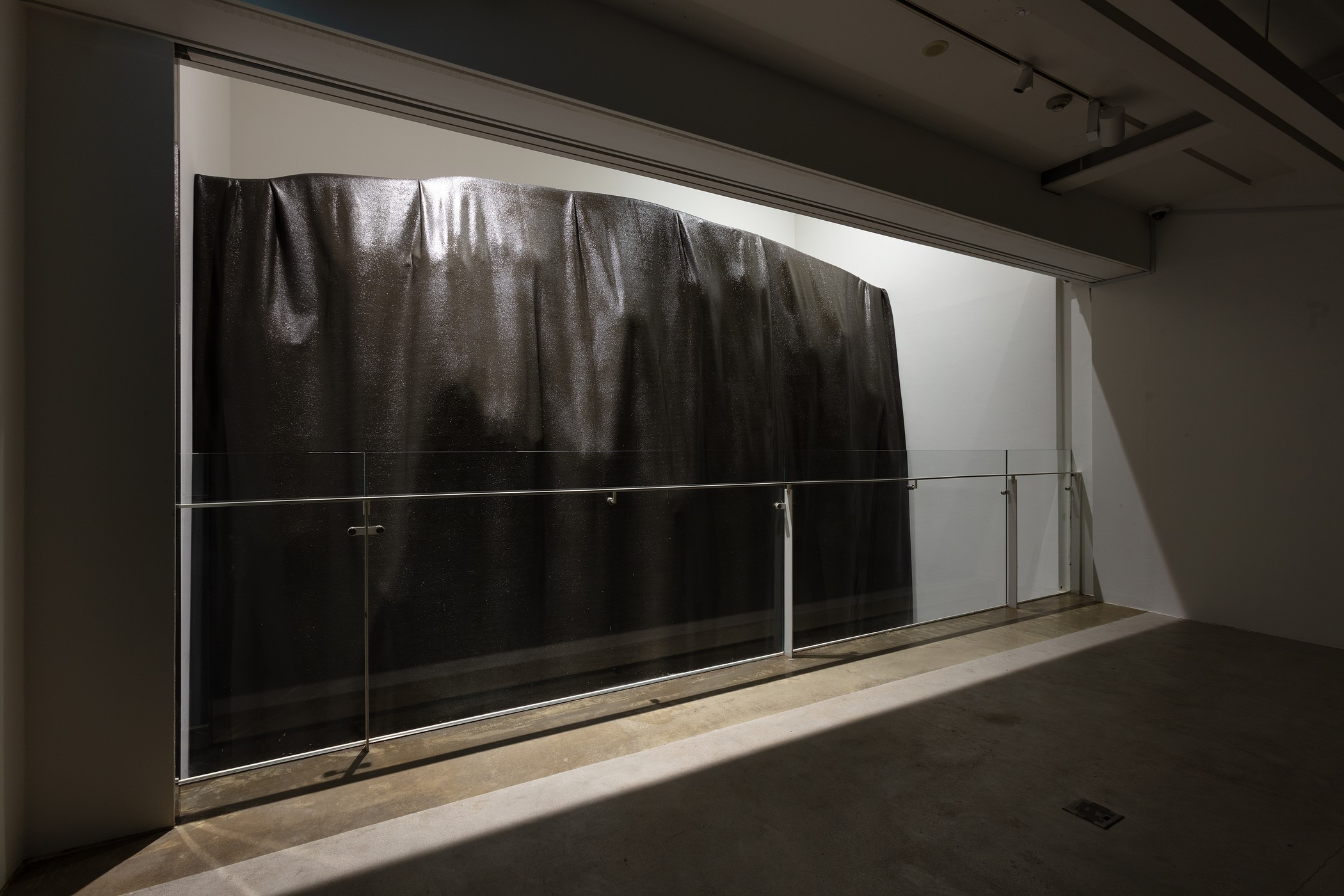
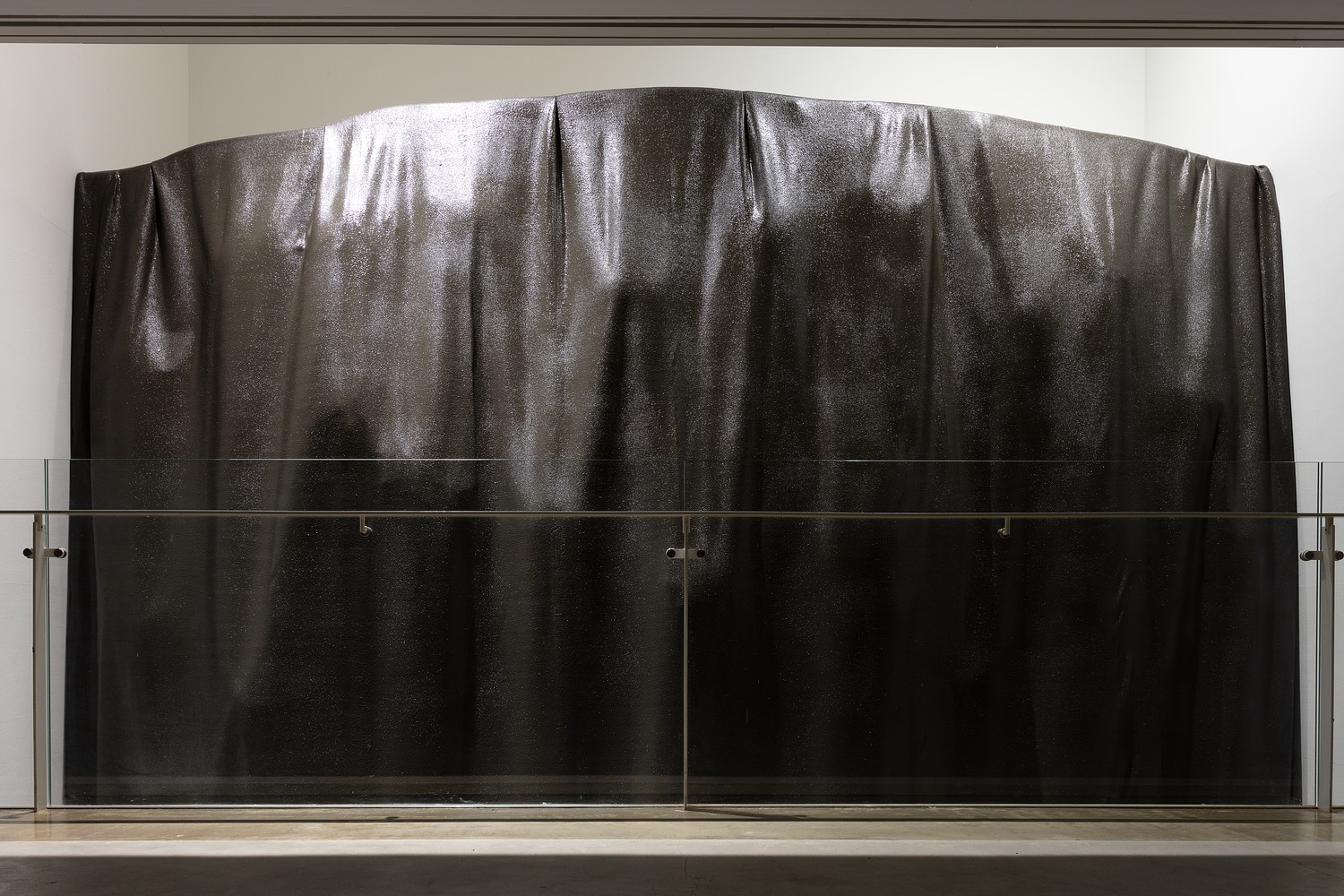
However, in Kim’s oeuvre, soil and water have their intrinsic features as elemental media respectively, but when created in a new state based on a molecular combination, they definitely become irrelevant to the said standards. More specifically, the journey of this exhibition begins with the viewers walking towards an artwork seemingly like a Greek curtain (in its drastic form of ‘representation’ that Zeuxis and Parrhasios competed against).
This work with folded decorations undulating until the bottom, doesn’t seem like a realistic representation, something close to reality, but rather hints us about the trick of an ambiguous language as suggested by the exhibition title. That is, the form of a curtain is suggestive of the ‘image’ as conventional visual object and displays an intention to brighten up/conceal ‘wet matter’ as something subconscious that goes beyond such image of visibility.
Of course, the (non) sculptural weight of the artist seems to shift towards the latter, and yet it does not completely exclude durability or persistence as a visual object of ‘appearance’. That is, it has a characteristic of ‘Khora’ embodied by ‘wet matter’, intrinsic nature as hyle for all specific creations, and yet does not discard its status as a modernist ‘primitive’ object.
Kim tries to keep a balance between this representational ‘appearance’ and ‘wet matter’ continuing to the upper gallery space. When meeting the second exhibited work in a state of suspended judgement with a phenomenological viewpoint, the viewer is reminded that the ‘wet matter’ constitutes a bottom-up connection starting from the curtain form on the first floor, realizing that such connection can be unlimited.
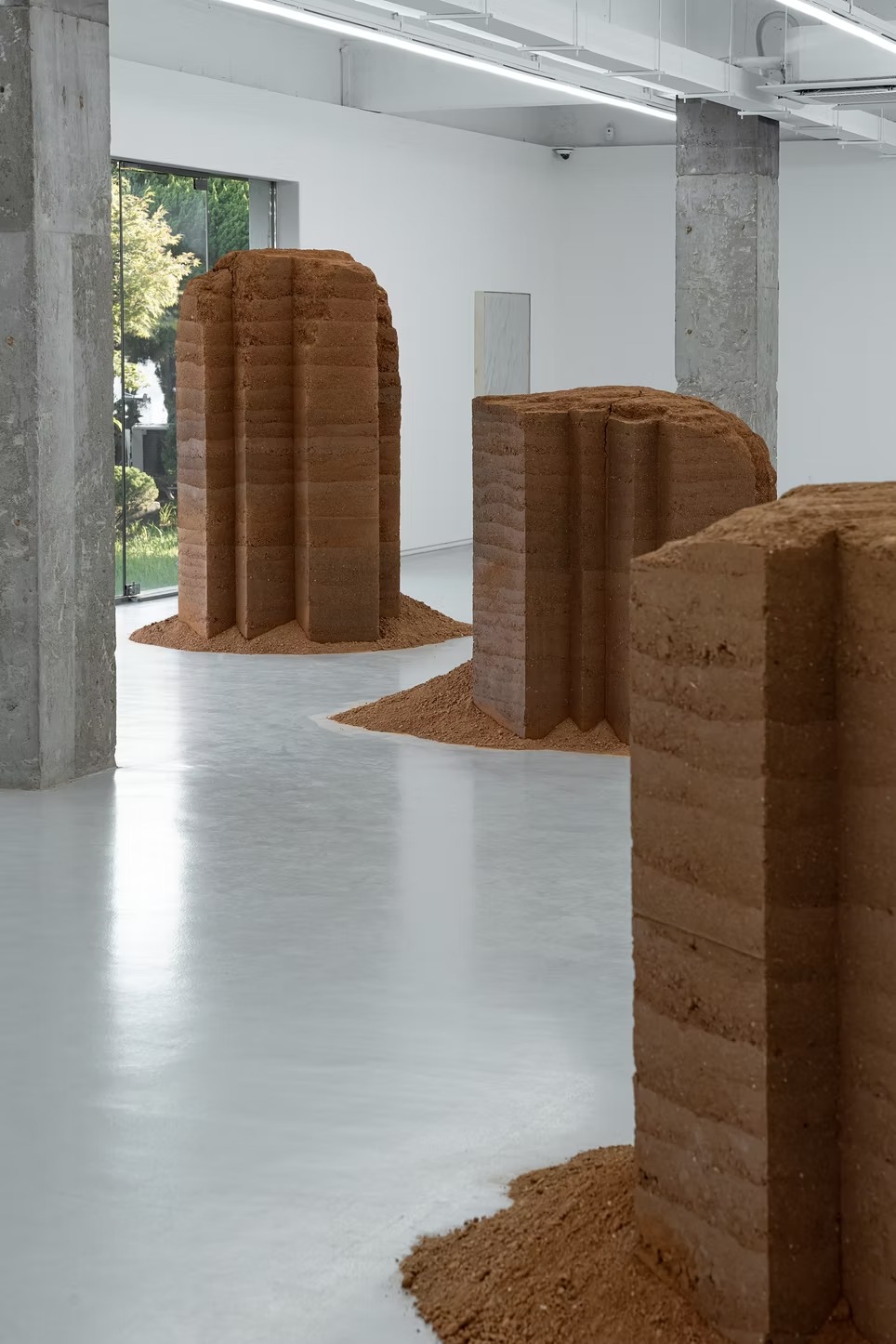
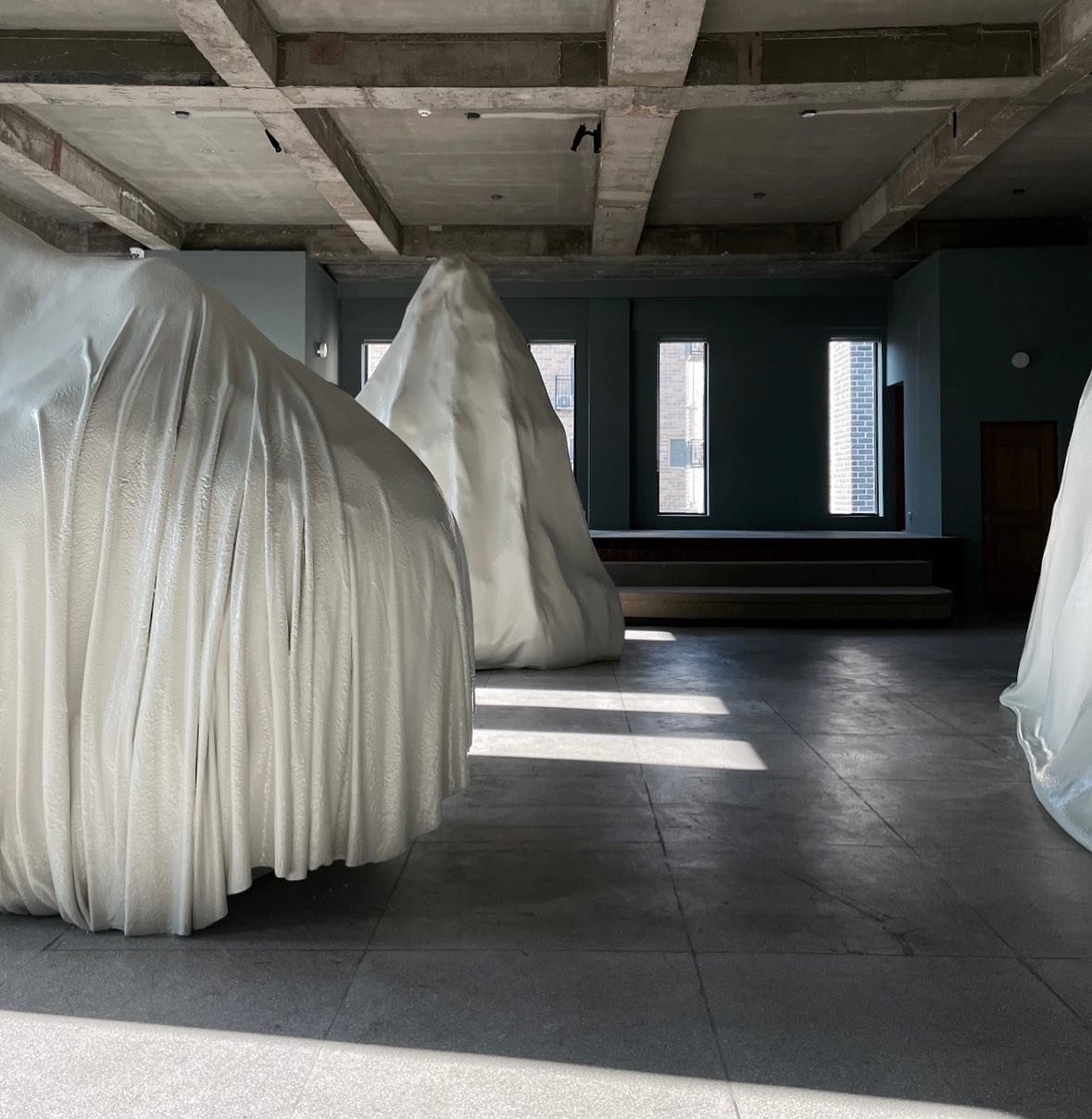
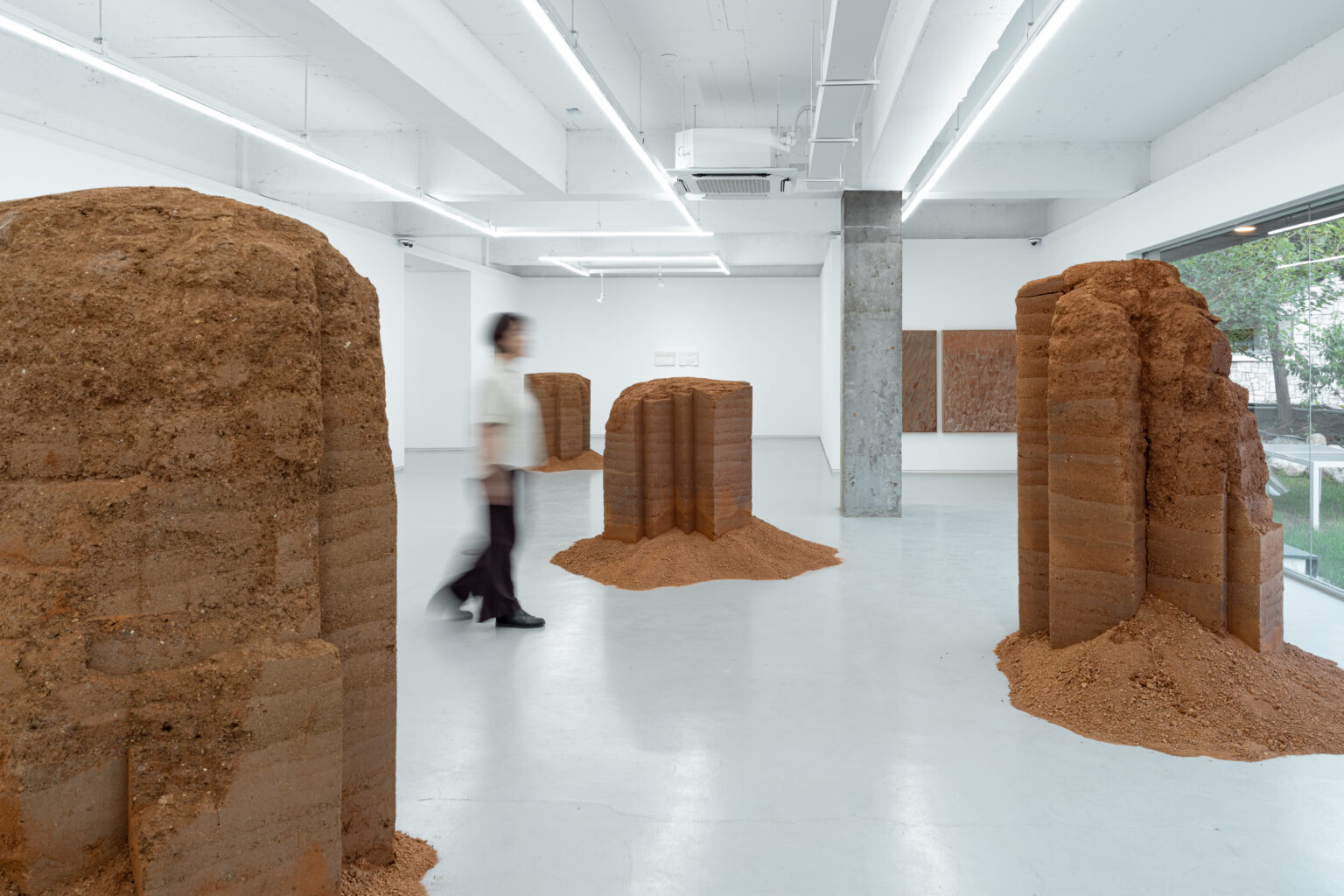
This unidentifiable scale of soil-water mass displayed on the second floor is both a form and a content, which is hollow but seems to hold something inside to conceive all things.
That is, the concept of ‘Khora’ makes its appearance on the second floor, as it melts the surface of the pile of earth, likening the surface to a breathing skin of an undefinable monster that is divine like Chaos or Di Jiang(帝江). Here already, the balance between ‘appearance’ and ‘wet matter’ is broken, as we are awakened to the invariability and incomprehensibility that this colossal, organless body consists of.
“It is death to souls to become water; it is death to water to become earth; yet from earth is water born, and from water, soul.” (Herakleitos)
The sculptural practice of Juree Kim can be summarized with the following keywords: soil, water, soaked in black, melting, extinction, return, house of existence, etc.
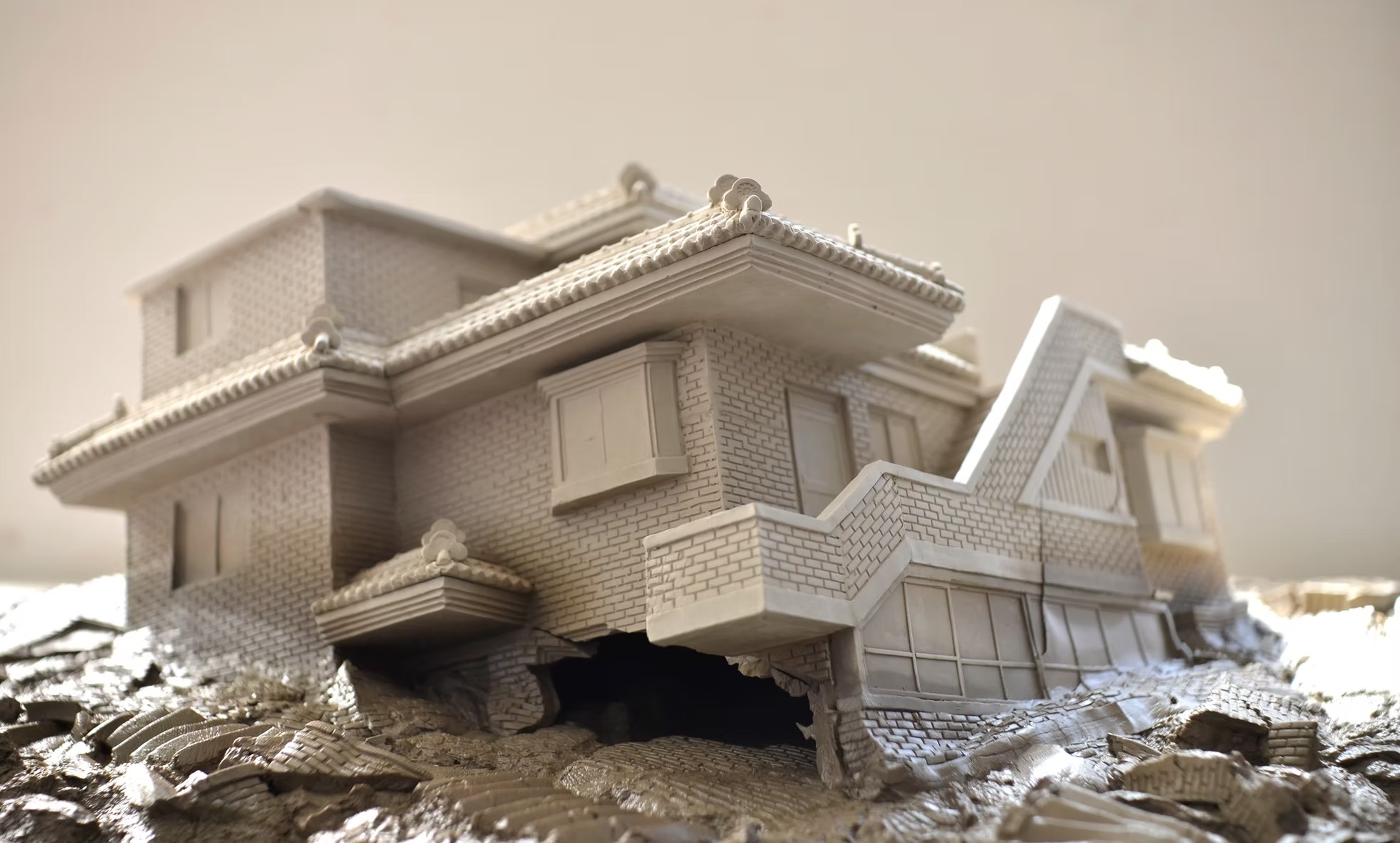
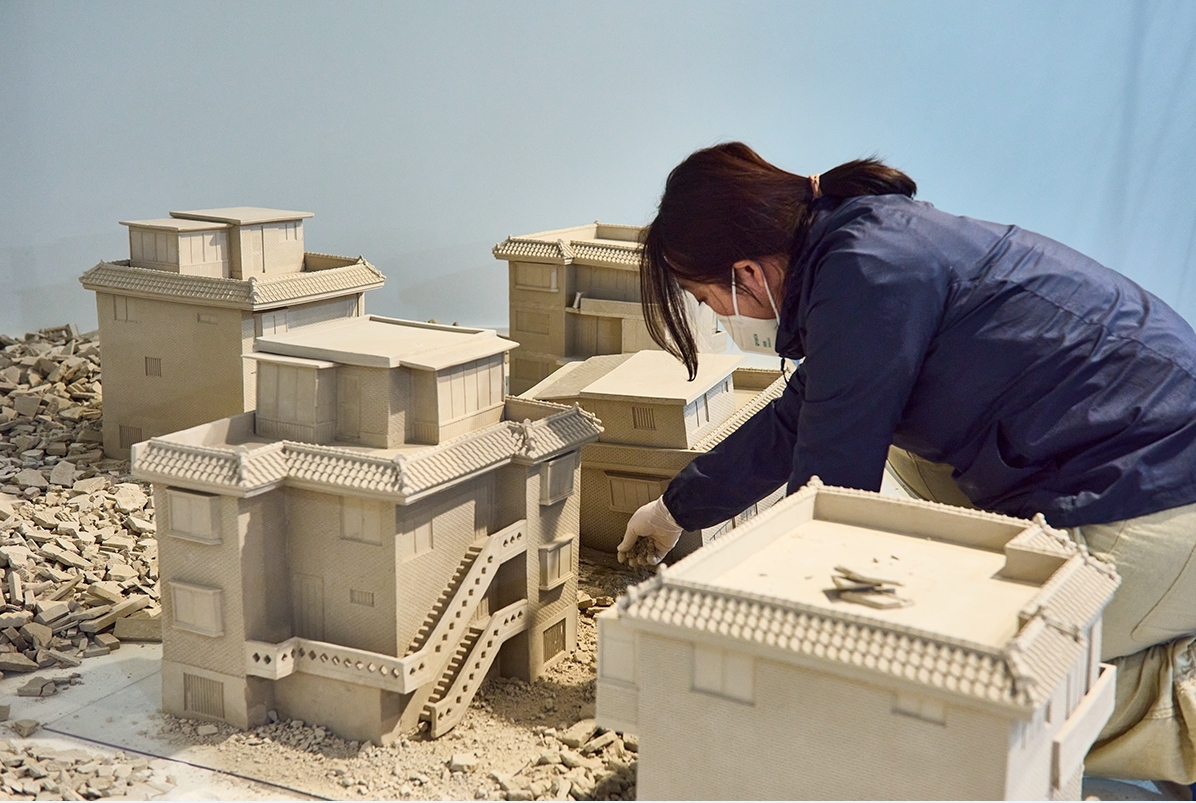
As seen in Evanescent Landscape, which brought Kim to the foreground, the artist has revealed the cross-temporal boundaries between the past and the present, based on a material performance of sort, where the human history—especially the historical fate of modernism and post-modernist dilapidated architectural landscape and the architectures seen as the archive of times—melts down by the destructive power of water.
These boundaries were of liminality —the realm of separation, reunion and demarcation—where a sense of extinction gradually progressed with like a proposition. The border areas were black sectors where soil had absorbed water, a realm where that sector made the bottom to collapse and serve as a creature of sort that moves to the top. It was a performance that dissolved as the wall structure or the body of objet in the space manually discarded the unique environment, community and subconsciousness of time.
After the 1970s, when the Korean architectural law was revised, countless number of multiplex housing units with slab roofs were built. And the fact that most the these endlessly proliferating buildings were ‘architectures without architect’ or ‘architectures copying those neighbors’ resulted in the catastrophic characteristics and the constant movement of such catastrophes, where destruction is constantly accompanied by extinction.
Those miniature buildings represented by Kim in a hyper-realistic, paranoiac, and compulsive manner were anonymous private houses, and therefore, as “houses of existence”, the symbol of such house, becoming the “living world” [umwelt] in itself was an architectural ‘monad’ of those times, with monad being the medium that mirrors the world. And that monad melting in water and vanishing and going back to its original ‘mud at sea’ seemed very critical of the civilization but also mired in creationism.
This ‘mud at sea’, rather than consisting of decayed remains of dead fauna and flora, is a combination of soil and specific substance of water based on the mechanism of light. This was the argument featured in the 19th century Textbook on Natural Philosophy.
Here, there still inhabits the idea of pre-modern or ancient materialism, and in this exhibition, Kim extensively involves the reactions of light. Just as the thesis “In the beginning, there was sound” goes, light together with sound also plays a decisive role in determining the historical fate of this seemingly misfortunate “mud at sea”.
Therefore, the practice of cybernetics (technology and science exploring the process of homomorphic self-organization among animals, humans and machines) based on standards like analogous and homologous relations, in other words, the concept of media, which begins with the birth of media art following the late 1960s, is difficult to be valid for this exhibition.
Rather, a more vast temporal movement, namely orogenic movement dating back tens and thousands of years or the process of climate change (including big floods) in a few decades time is immediately comes to imagination, intervening as cross-temporal attributes.
It would be quite unfair to link this with the conventional terms like ‘product of imagination’ or of sublimity, but more accurately, should be approached as ‘aesthetics of propitious omen’. Propitious omen[祥瑞] is a concept that intrinsically inhabts the flow of time and determines the fortunes along that temporal trajectory: Is it is auspicious or ominous?
“All living creatures originate from the fundamental mud, mud at sea.” (Lorenz Oken, 1809)
Unlike modernism based on the perspective of Theoria—Greek word for knowing by watching- and the vision thereafter, the aesthetics of propitious omen questions the auspiciousness of change, when the hylic origin transforms from ‘Khora’ with passage of time. This is different from what is ‘sublime’.
It makes us think about the value and the meaning of the process where the element returning to the ‘sea mud’ manifests a new subconscious creation from that ‘sea mud’. Being “auspicious” means experiencing the material epiphany from that non(sculptural) sculpture’s image amidst the flow of change.
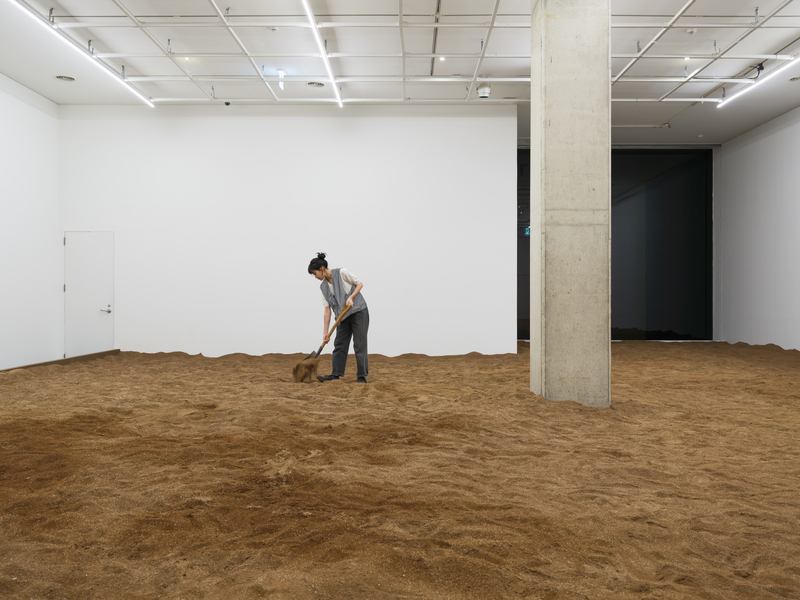
The exhibition 《Wet Matter》 guides the viewers until the third floor, who will then experience the signs of eccentric self-organizing life and vitality, seemingly drawing a breath, surrounded by soft lights and sounds. The dim lights, and surface texture gives the sensation as if walking under low gravity in an unknown universe, and a tension of possibly plunging into an altered state when letting go of consciousness…these are what constitute the experience of soil drawing its breath.
So what is this ‘Khora’ Plato talked about? When savoring Juree Kim’s oeuvre, the concept seems to ultimately boil down to ‘darkness’. “Now the earth was formless and empty, darkness was over the surface of the deep, and the Spirit of God was hovering over the waters.”(Genesis 1:2) Here, referring to the medieval painting that placed valuation on ‘darkness’ in between parenthesis, the characteristics of light cast over the surface of ‘darkness’ and the power held by the light in that darkness comes to full illumination suiting its character.
This is not ominous, but inherently auspicious. This approach can be one of many ways in interpreting these works exhibited by Kim, which highlight water as a material whose combination with the element of soil provides life to creatures and the more profound nature of water thereunder.
However, another point not to be overlooked when viewing the works is that the artist herself points to a specific topos as a source and process of this soil. Kim selected the landscapes of the Dandong region in China, where the wetland vegetation is referenced as a process of time, revealing and concealing simultaneously that the region is the aforementioned border area.
The lines dividing the Korean Peninsula and Manchuria, Koreans and Korean-Chinese, and the united Korea and the two Joseons signify and indicate as to why these specific states of soil in this border region are present in the form of ‘wet matter’. This medium of soil—politics as topos and topos as politics—attests to the fact that the discrete assessment of historical values and the fulfilling practice of “always historicize”(Frederic Jameson) prevalent in the artist’s previous of Evanescent Landscape still remains moistly ingrained in her current works.
As such, soil as a matter was produced throughout an arduous process of fermentation, maturation, vegetal mixing process, industrial process, and soil-soil antagonist reaction, to name a few. This is fundamentally different from the land art practiced by Robert Smithson. Using soil as material, he sculpted works in spiral shapes, which were submerged under the lake waters, dismantling the boundaries between nature and art, being no longer considered as objets of contemporary art.
Juree Kim’s works show no point of convergence in terms of land characteristics, symbols, and semantic network associated with nature and are rather strongly mired in an extension of ‘darkness’ or amplification of something subconscious. Their meaning and significance tend to remain inside, not easily giving room for any linguistic capture.
Therefore, given the unidentifiable and non-morphological forms, colossal scale, and mythos approach dislocating language, it seems like the ancient forms (that we’ve never experienced), the order of hylic creatures, and ‘ancestrality’ of Quentin Meillassoux dating back to the pre-‘Axial Age’ prior to the setting of current civilization, are all unfolding before our eyes.
The topology of mise-en-scene created by the state of “never-drying wetness” seems to have placed the conditions of the beginning of universe on the temporal axis. The experience of viewing the exhibition, surrounded by overwhelming surrealism of surface, will with no doubt deliver a powerful cross-temporal epiphany.