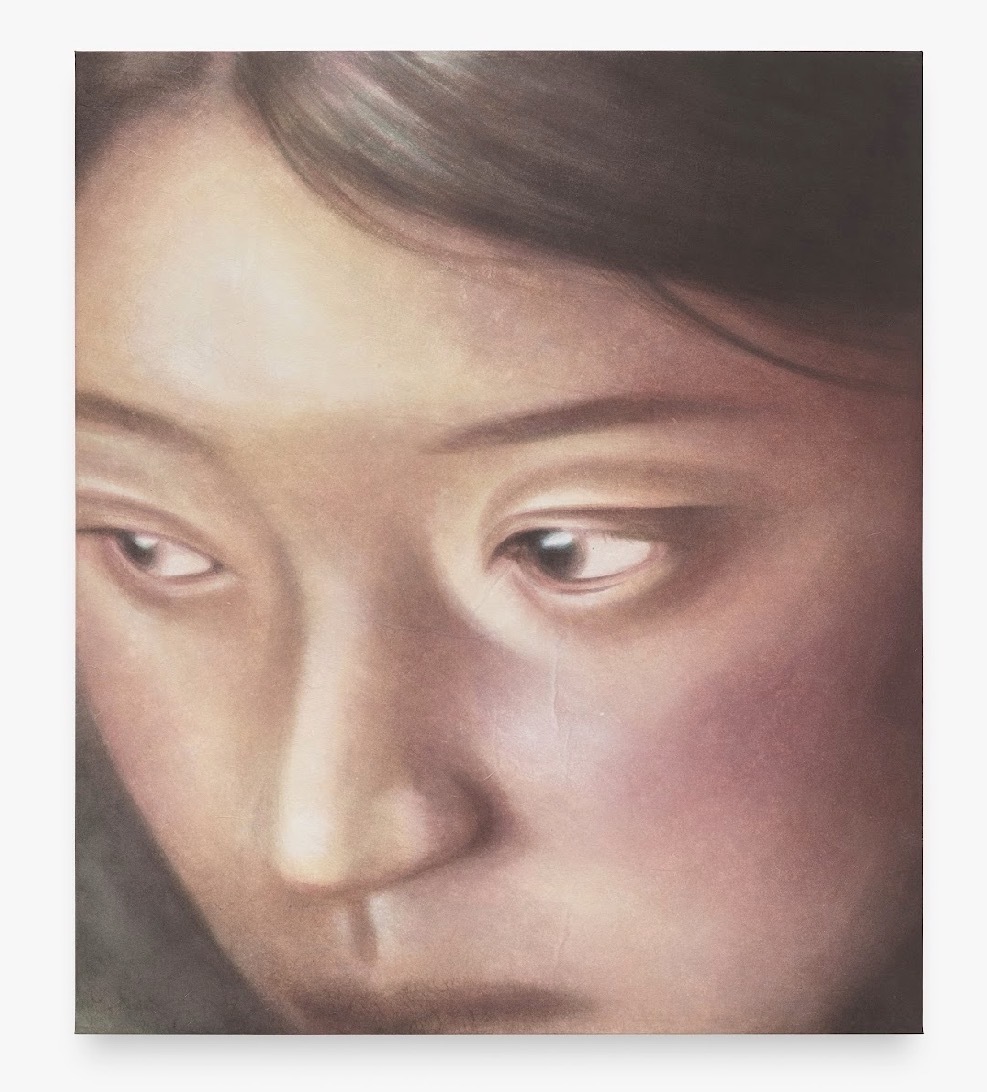
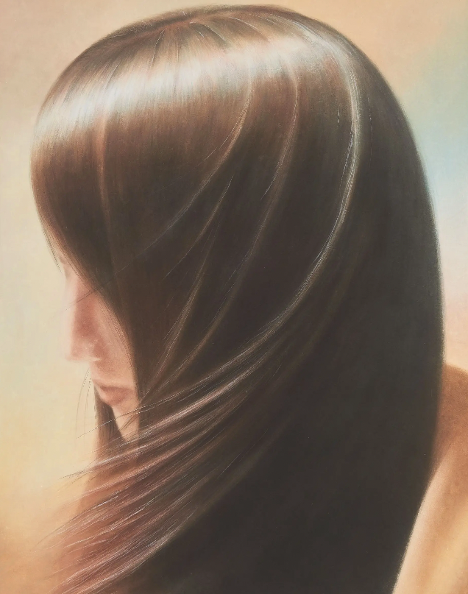
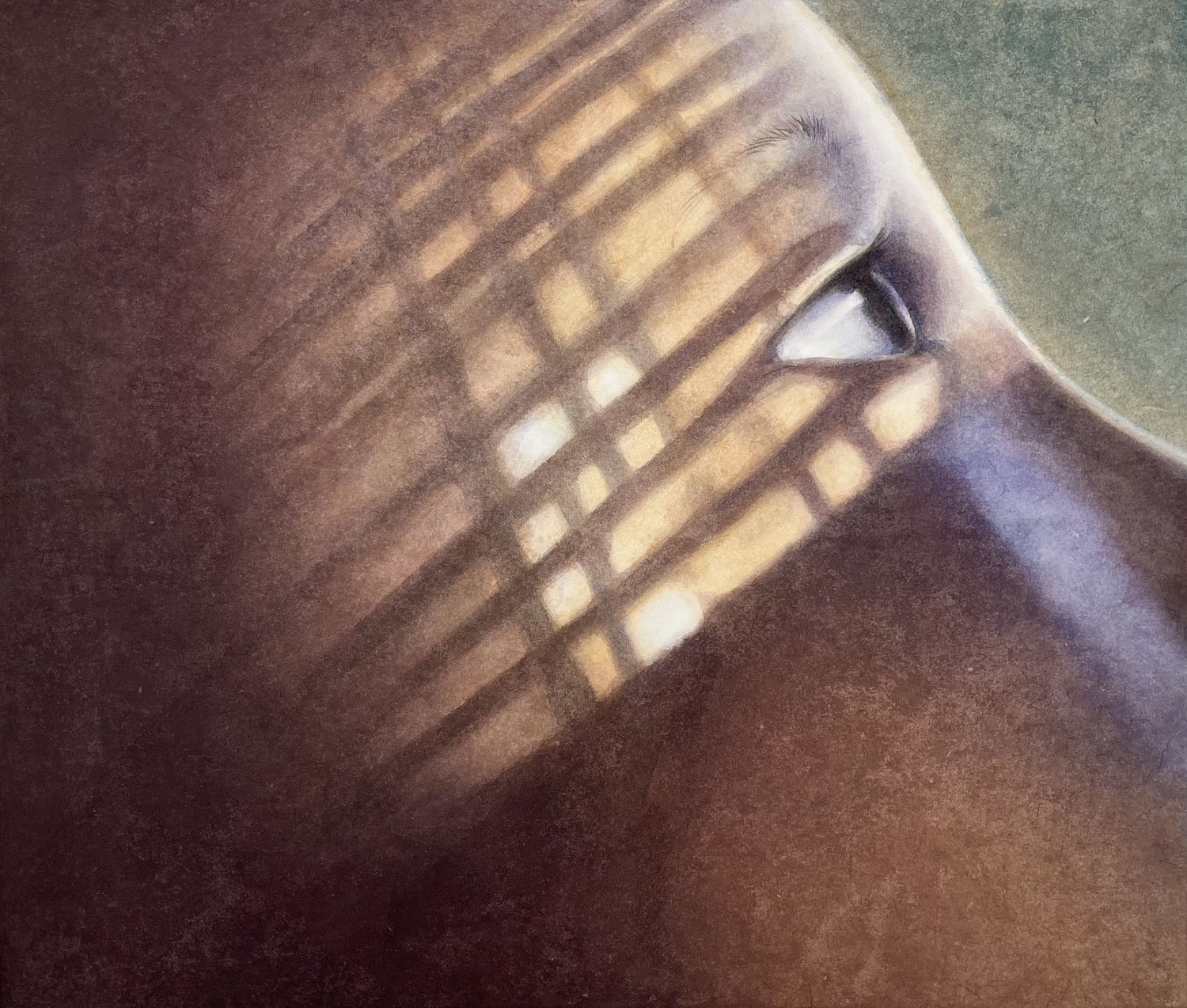
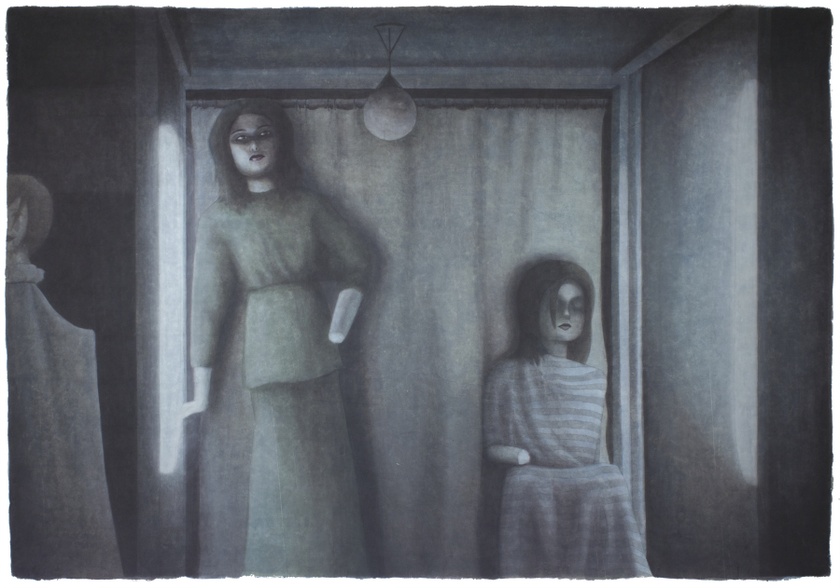
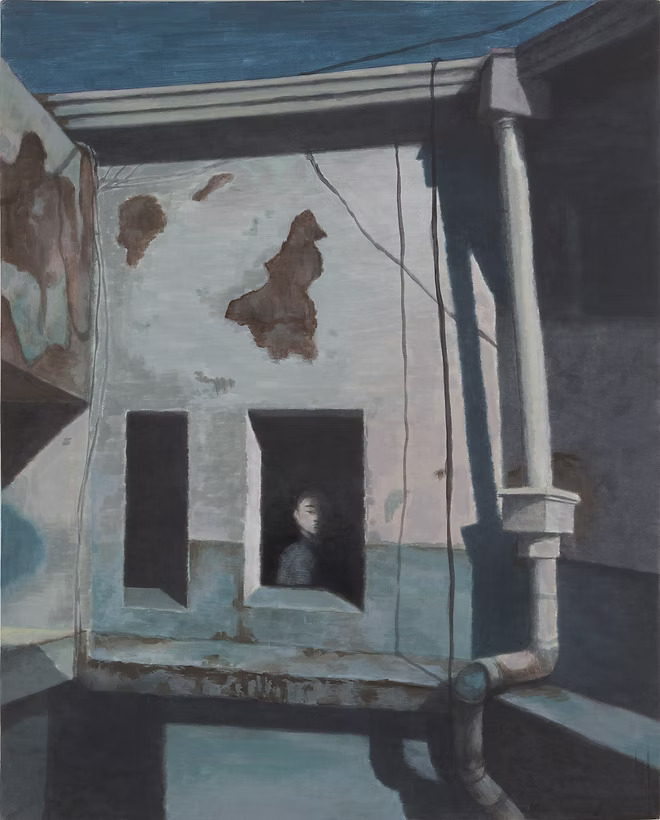
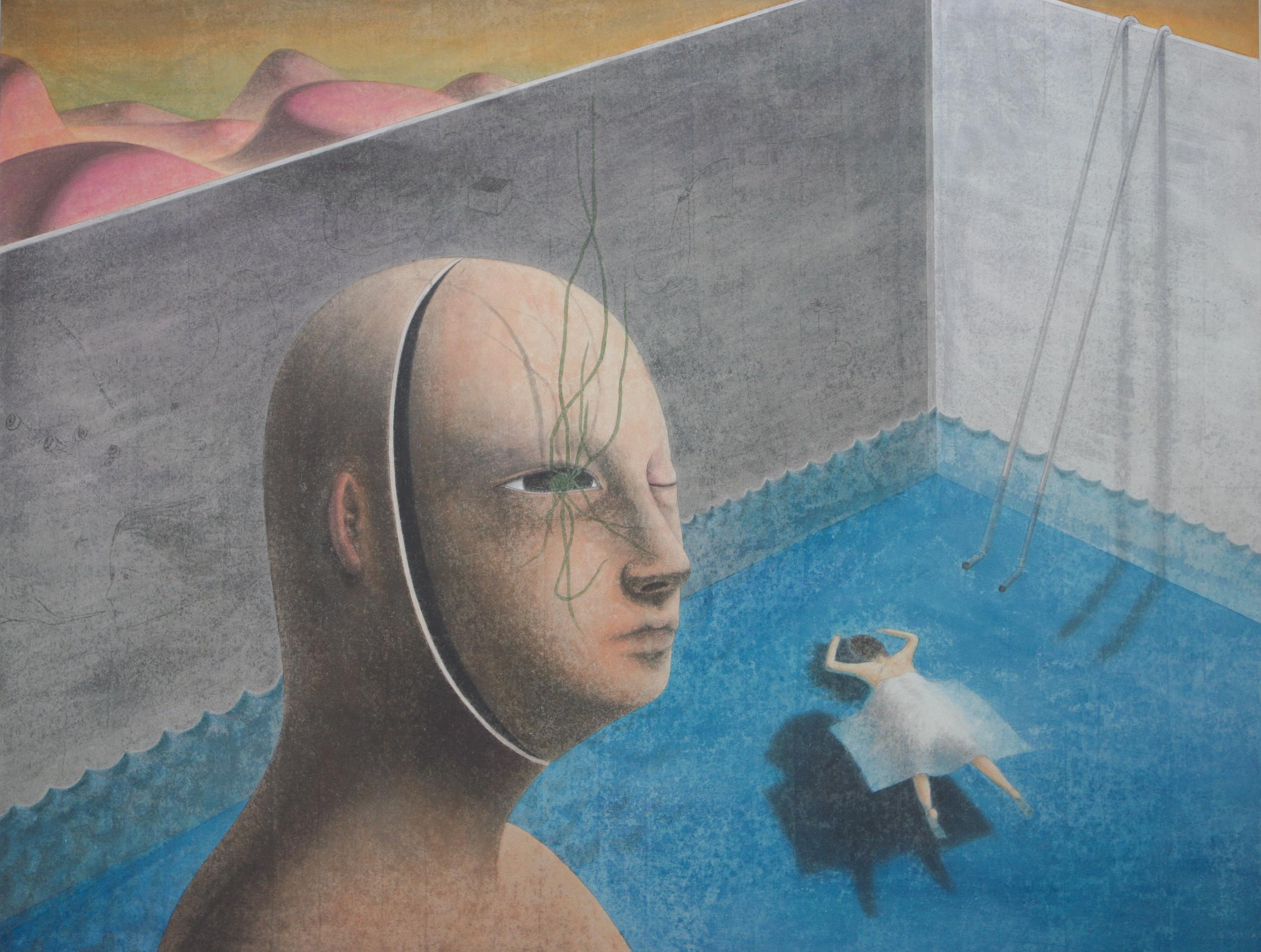
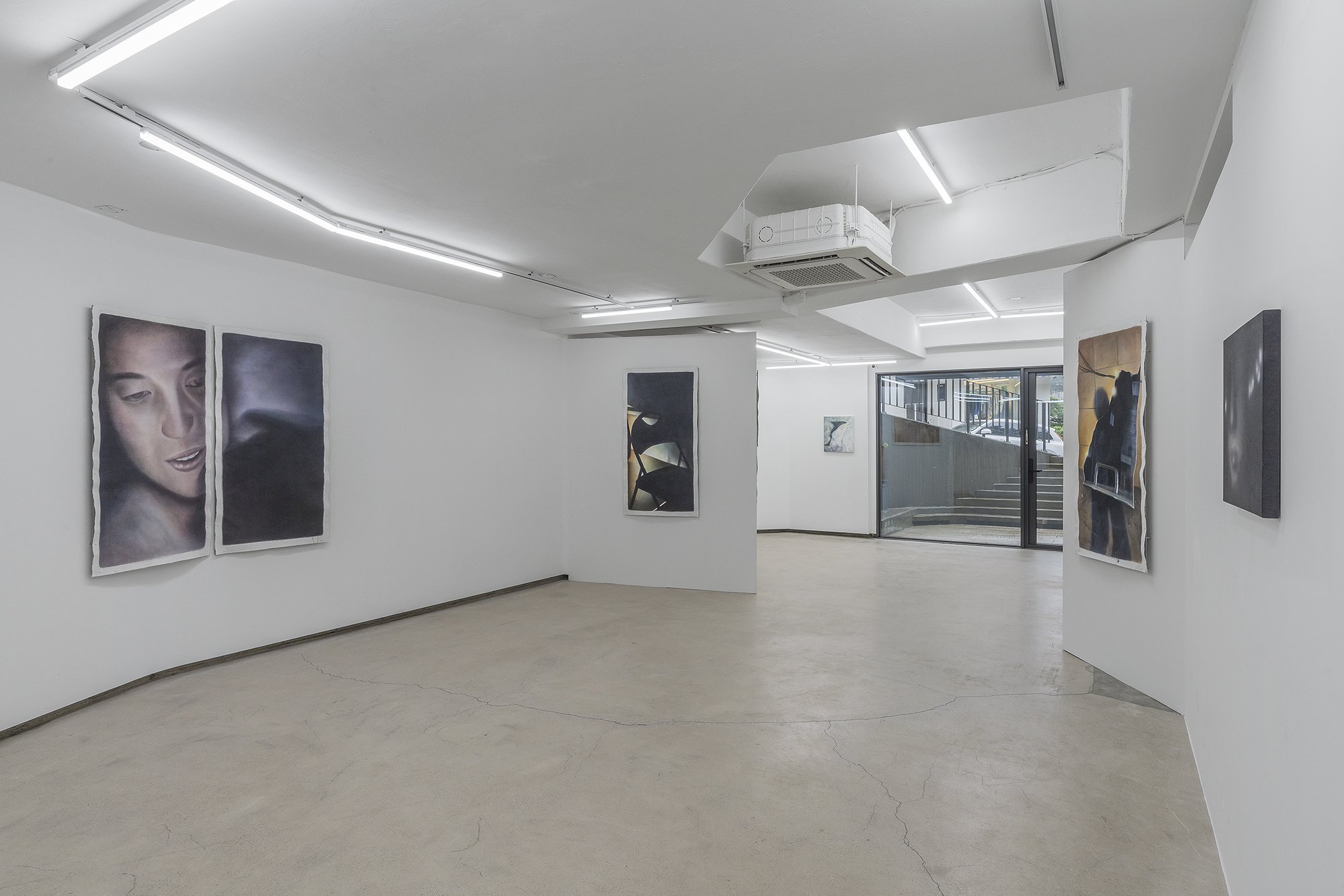
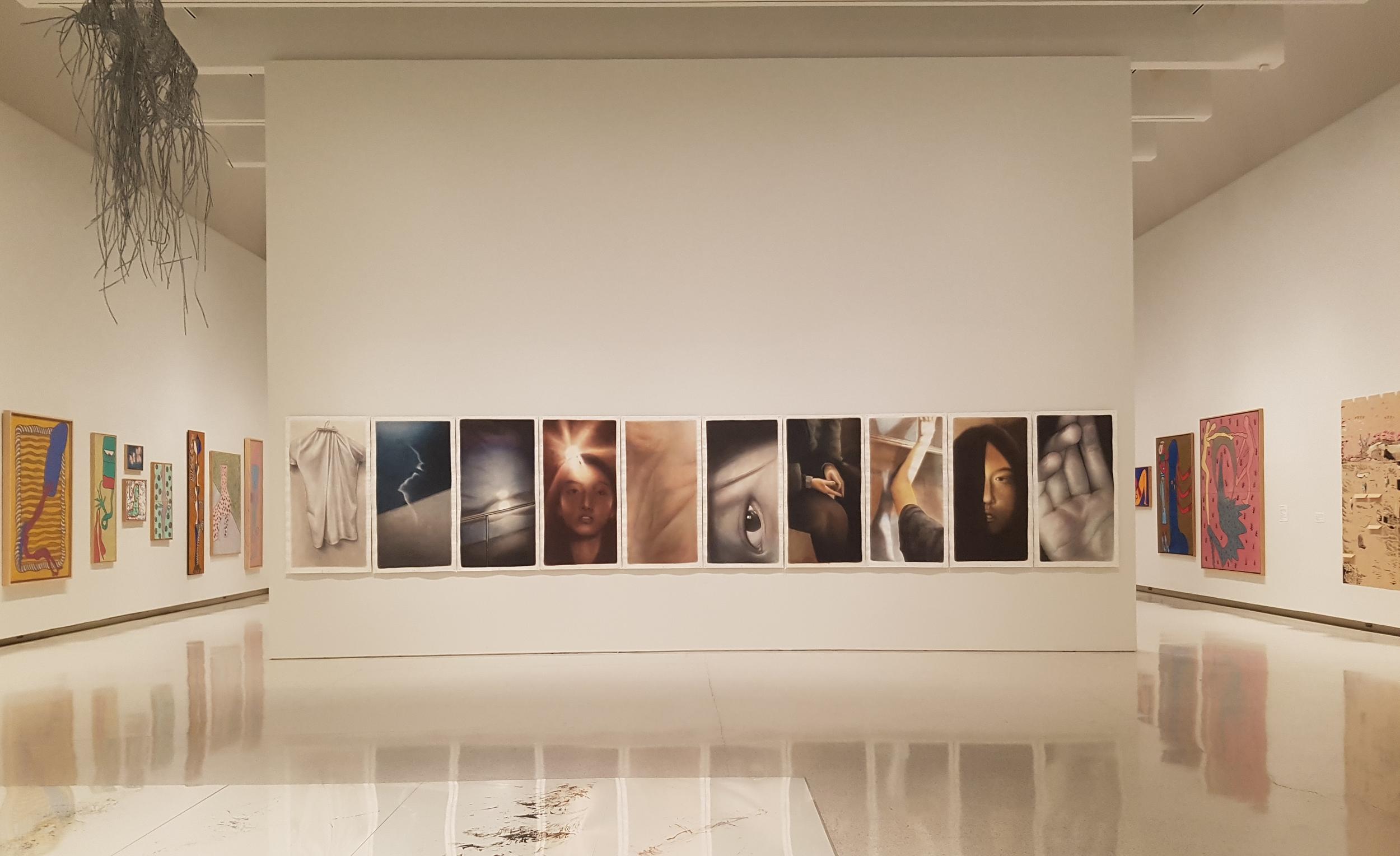
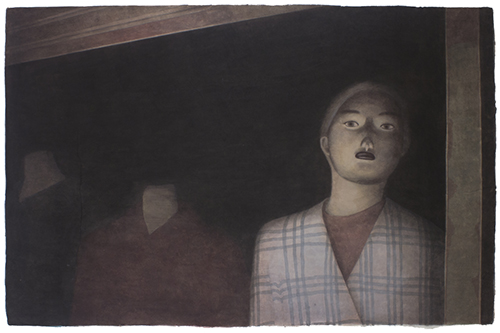
Yooyun Yang looks at landscapes. Old, worn buildings, floors with holes, sunken walls, black smoke rising from chimneys, unfamiliar houses, accident sites…. As she gazes at countless damaged landscapes on the street, she traces memories of wounds experienced during her formative years. Those wounds can be condensed into the word “fear.”
One may think that this tendency, which has continued since her undergraduate years, should by now have been healed or overcome, yet why does she remain attached to it? I had always wondered about this, and two months ago, when I visited her studio, one work caught my eye.
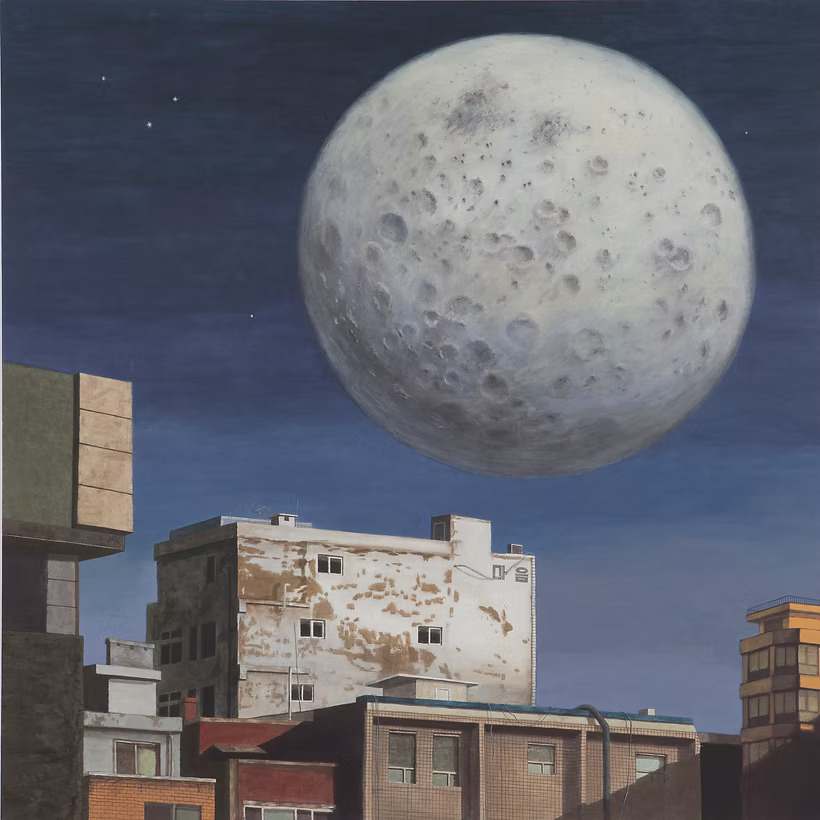
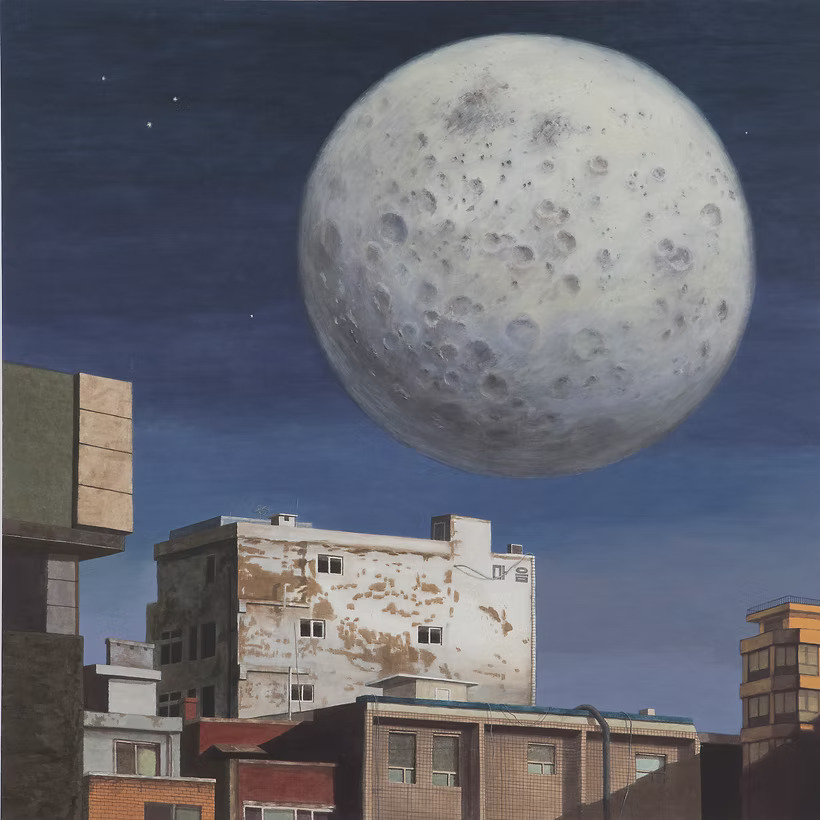
One Day. The small word “mind” clearly inscribed in this work touched me more deeply than the forms of the moon and the building. In that moment, I could glimpse a will to move away from that attachment.
This “mind” is almost touching the enormous moon that seems large enough to swallow the building. At the edge of the building, between boundaries, that “mind” may be a small wish and desire for the artist to dream of a new fantasy. Perhaps this is because her thought—“These days, I don’t know what I am painting”—is located at the boundary between them.
Such a position may be considered the first gateway an artist must naturally pass through in the ambiguous process of late-twenties youth, as she examines the relationship between “world–self–society” and searches for and experiments with the direction she must take. The crystallization of this struggle in the process of crossing that threshold is fully contained in One Day. It is a situation in which attitude comes alive and makes form stand out.
It may be an excessive expression, but “it is so beautiful!” Like illuminating the world, the moon brightly lights the neighborhood of shabby buildings and gently touches her deeply wounded mind. This fantasy was the aura of the moment that I alone felt at that place and time, and it approached me as presence itself, where time and space seemed to remain.
The moon and the city coexisting within one fence are romantic enough just to dwell on the meaning of their being together. Yet within the square frame, the artist may have intended and devised not romance, but a tension and opposition between two different sides, and in between them, the fantasy created by their collision and a slight mental collapse arising from that fantasy.
The appearance of an unfamiliar and unexpected landscape within a familiar everyday urban space summons a strange illusion on the one-millimeter thickness of paper, transcending time and space. And yet, even after witnessing this strange landscape, one feels calm. There is mind within it. No, in the painting, she has found the mind. For Yang, “mind” has served to perceive, contemplate, and purify the personal residues she has painted until now—wounds, violence, flaws, scars.
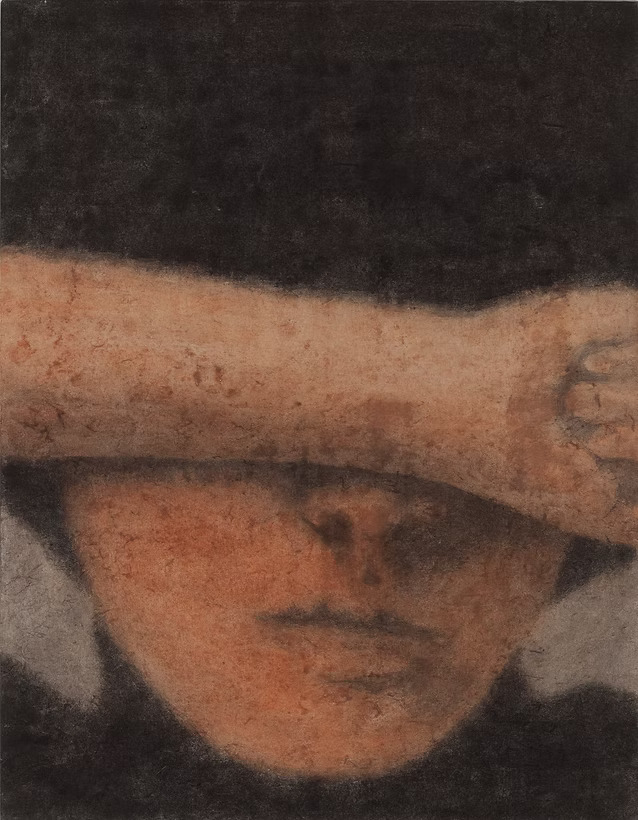
Centered on One Day, she painted works such as Surface, Daytime Moon, Time, Fantasy, and Point of Contact. These all fragment from that center and carry different phenomena. The artist is shifting her gaze from earlier works that portrayed personal concerns such as “wounds” and “bruises” toward social events, issues, and phenomena.
Through this artist, I realize that in contemporary society, inevitably transformed by the destruction of nature and the conveniences of civilization, reality enters the eyes and mind of a young artist negatively, and that negativity changes into the form of fantasy. In a society where holes open in the floor, incidents occur every day, power gives birth to more power, and people wound one another with words, it would be strange not to feel anxiety.
By setting the fantasy of the moon against that of the city, Yooyun Yang awakens a submerged consciousness in people. As if trying to see the world again through the mind, her gaze briefly rests on Beginning, a work that recreates the scene of her parents’ wedding. Soon after, she may transfer once again to some other journey. She tries to wear the mask of content rather than the mask of form.
Whether that content takes metaphorical, descriptive, narrative, or lyrical form, the great achievement she gained in this exhibition is that she came to know how to place “emotion” into the vessel called “mind.”