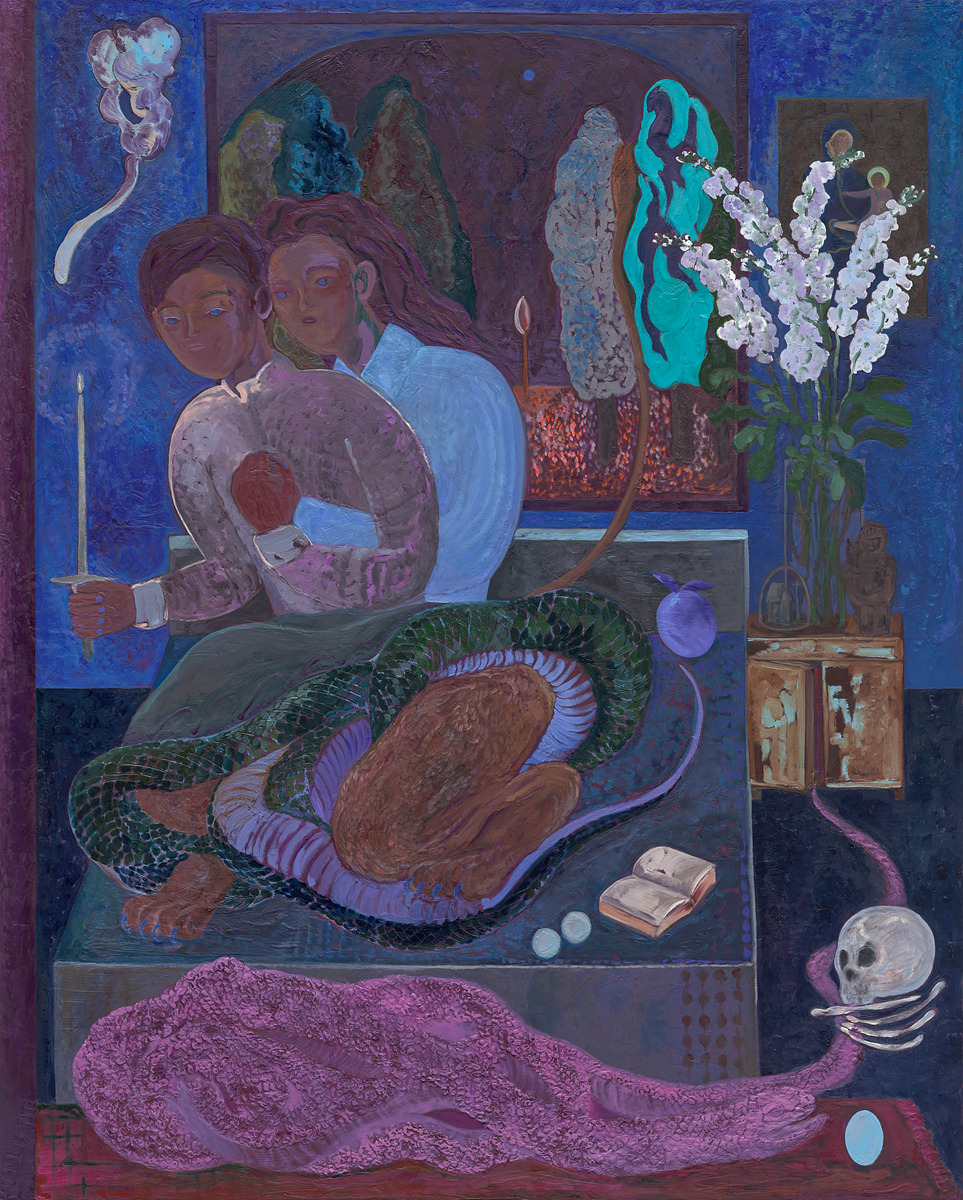
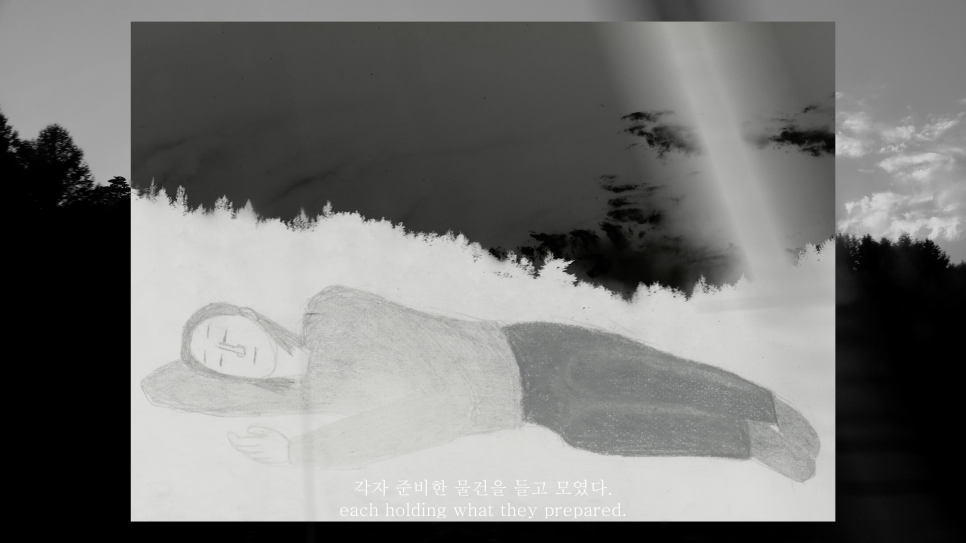
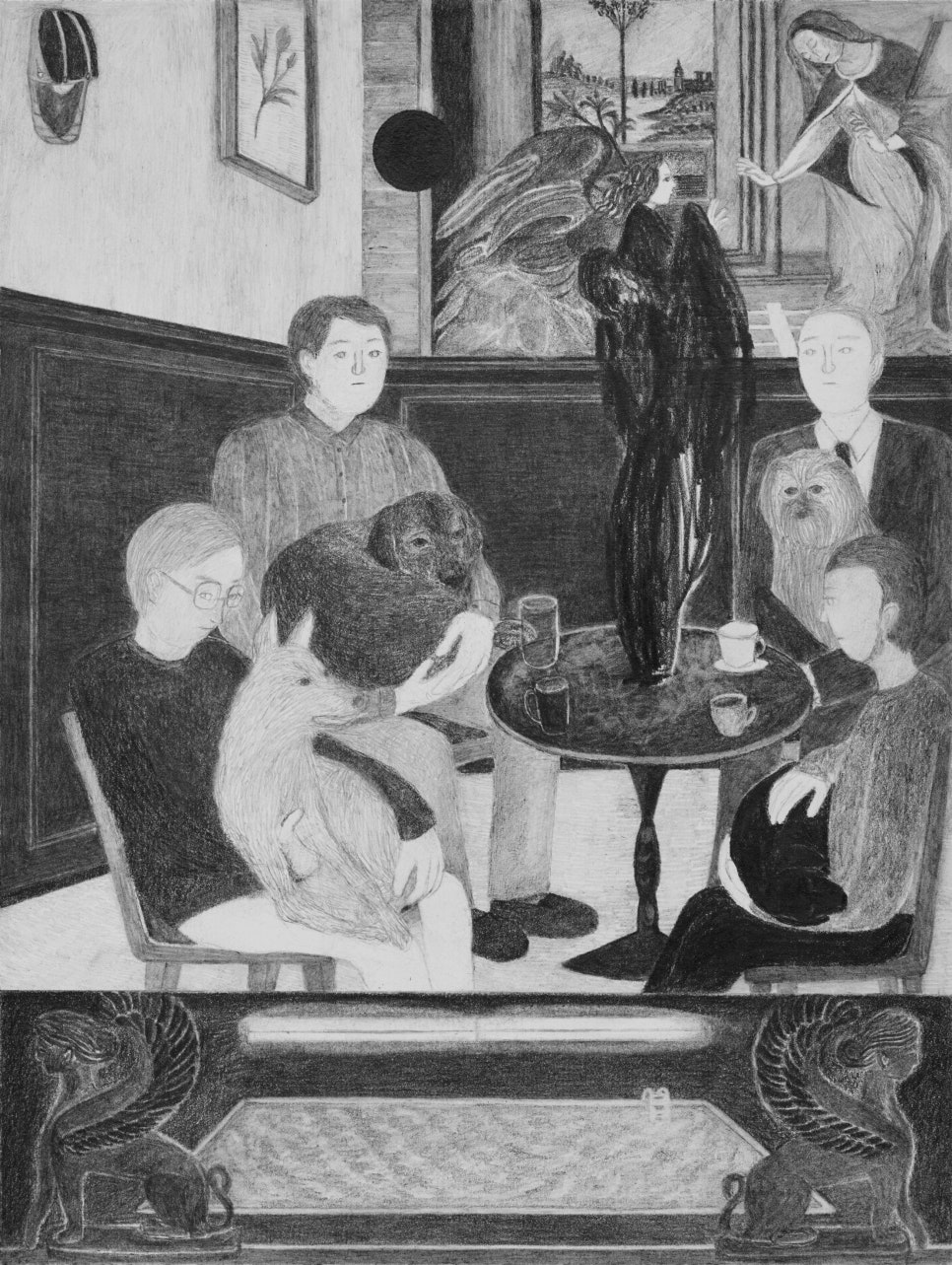
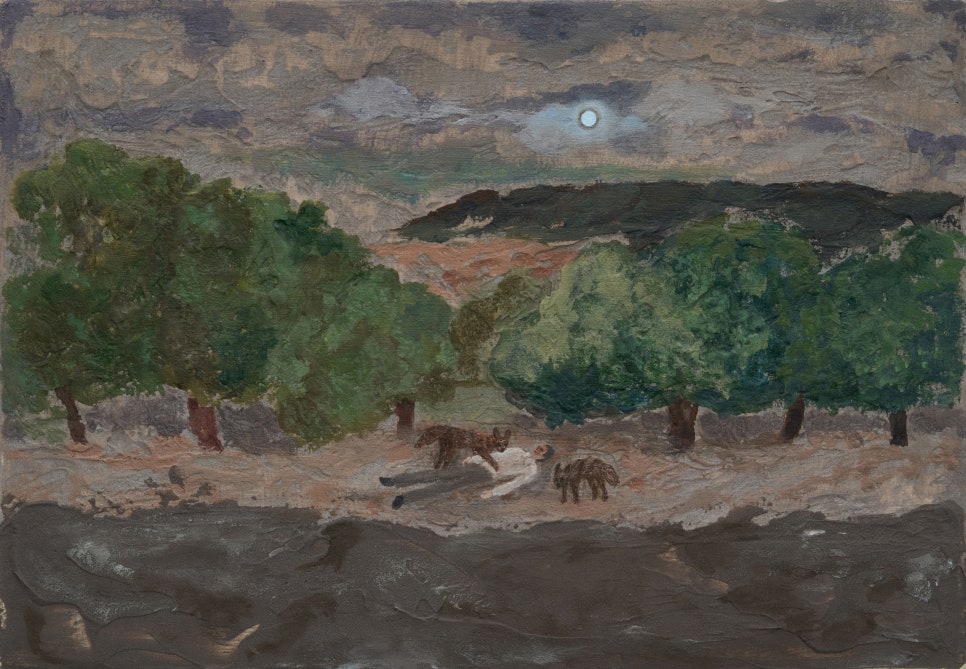
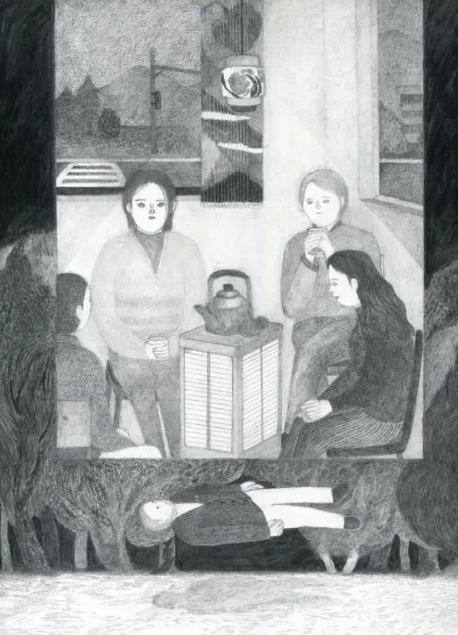
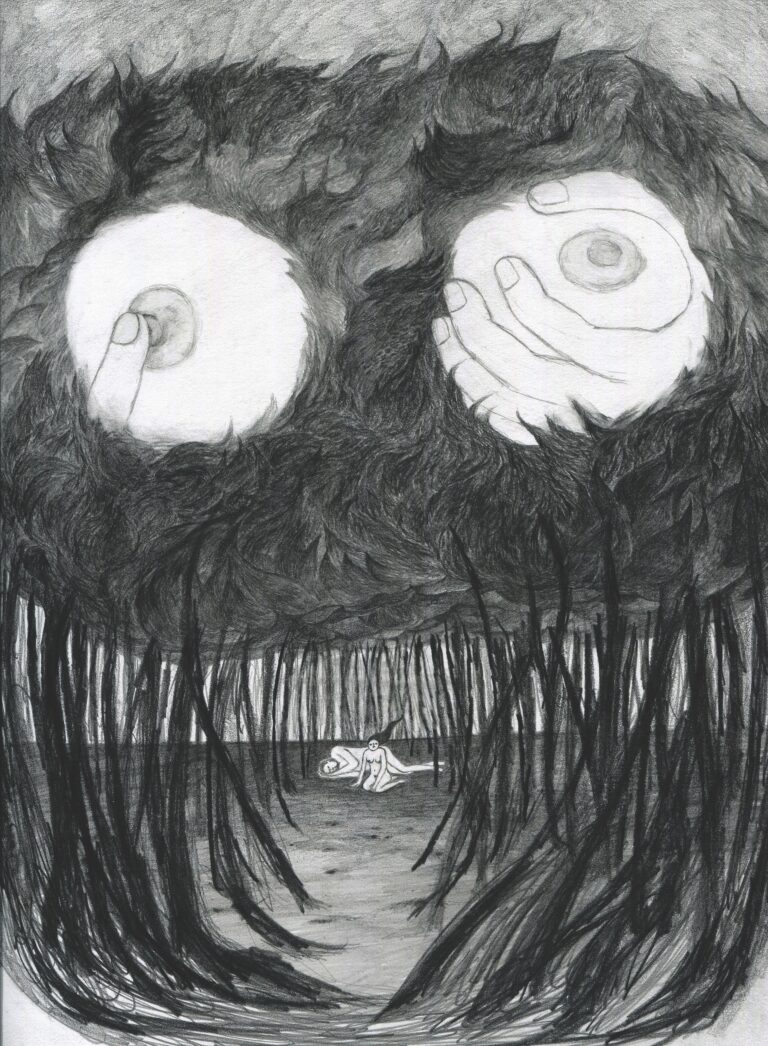
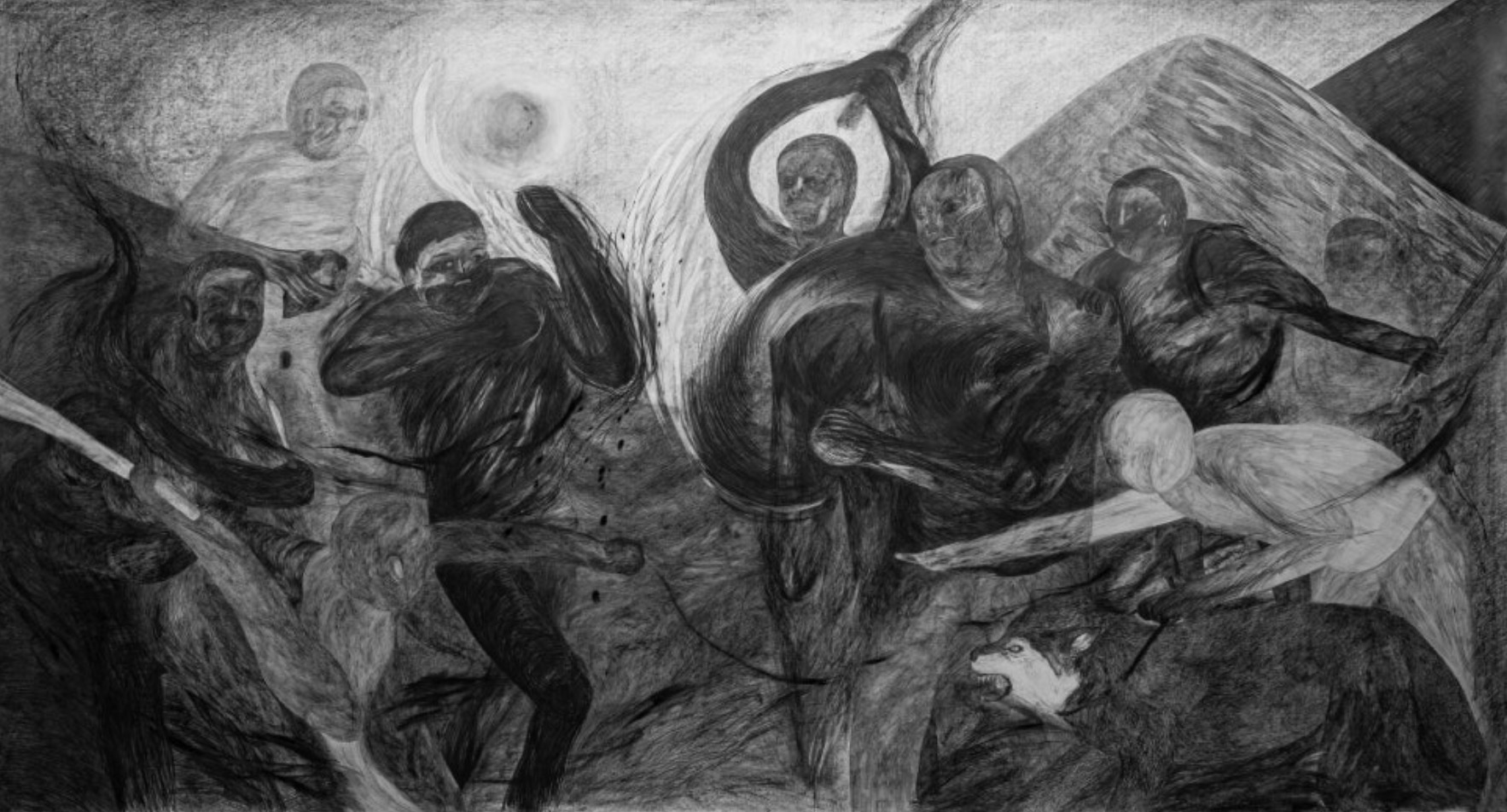
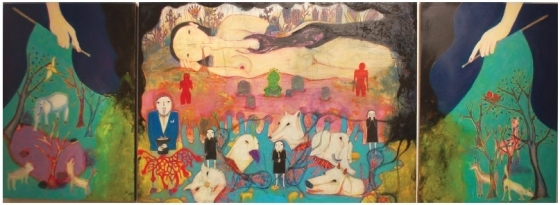
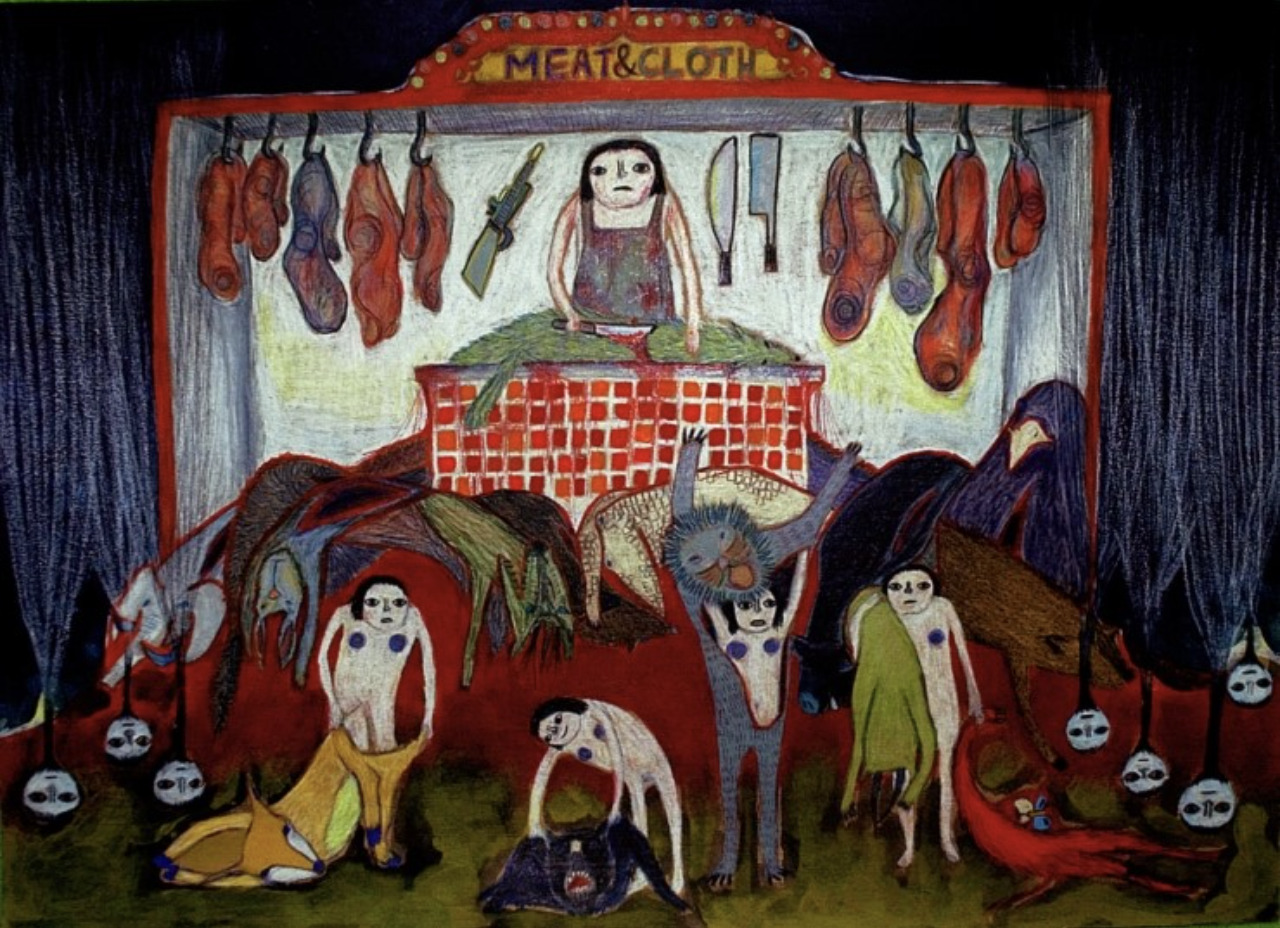
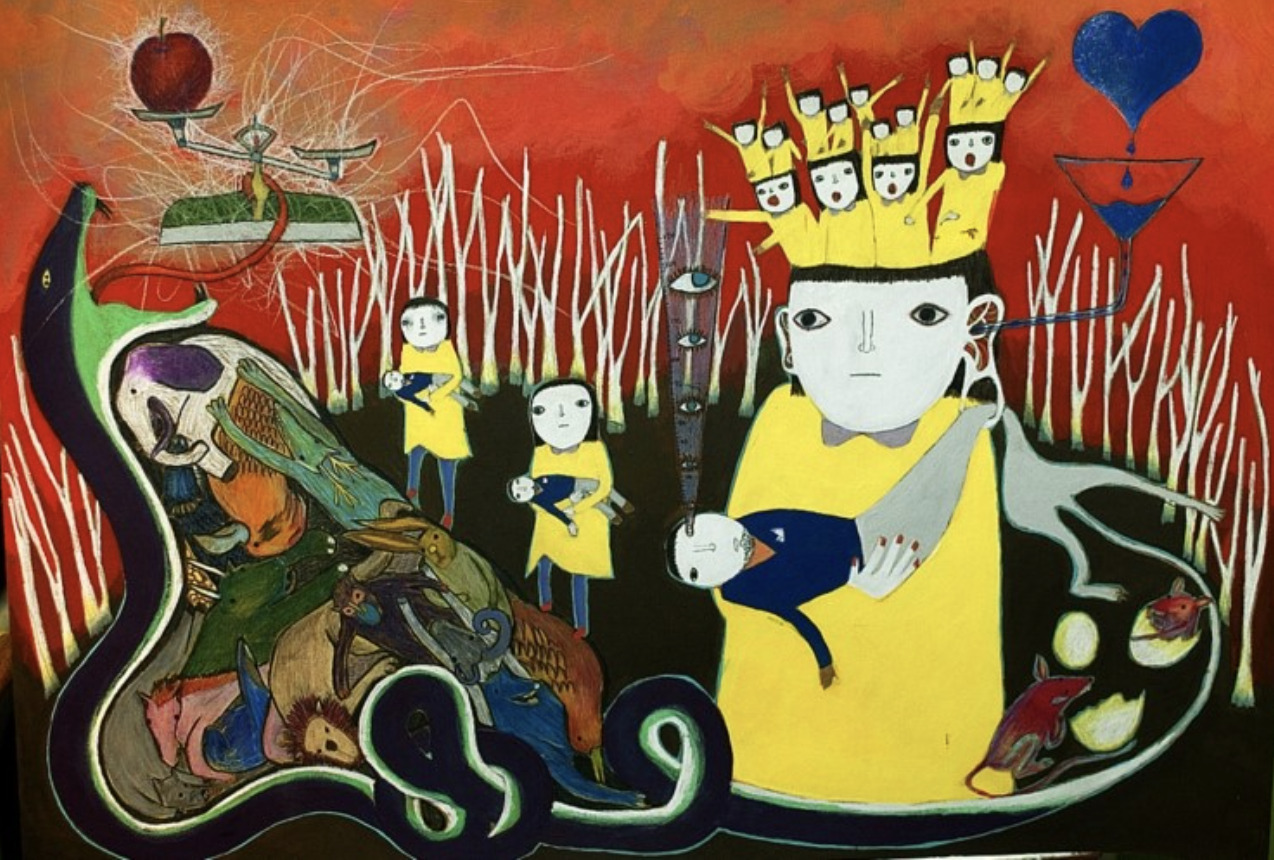
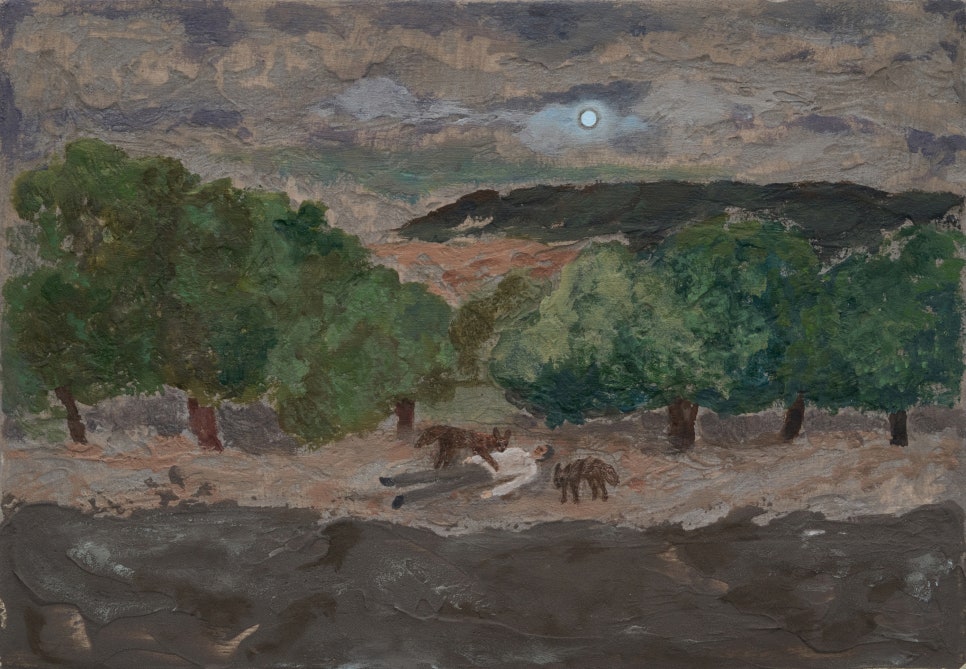
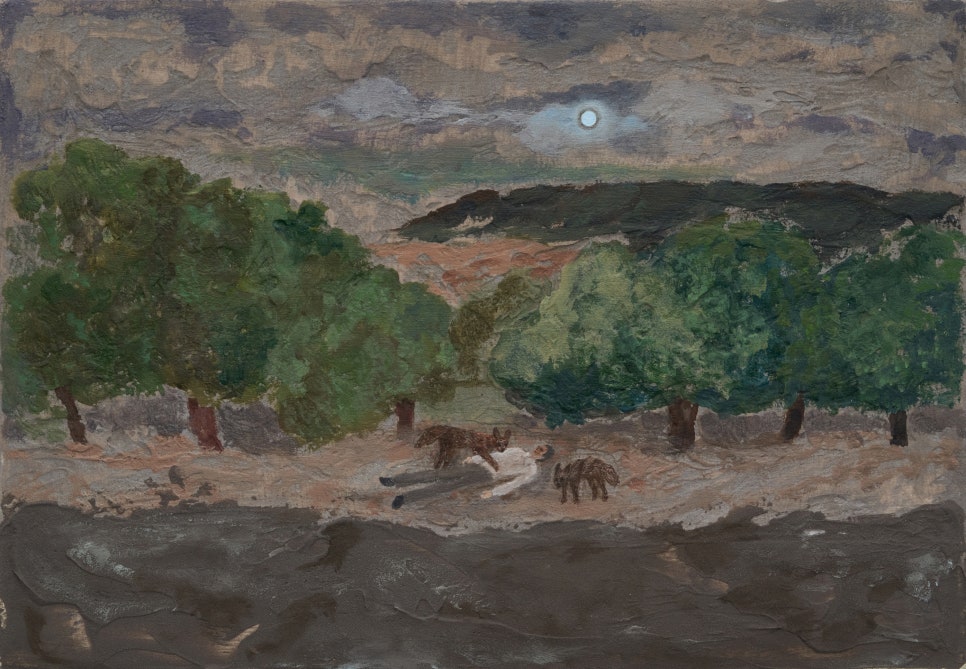
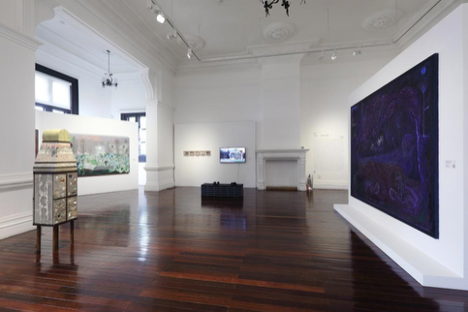
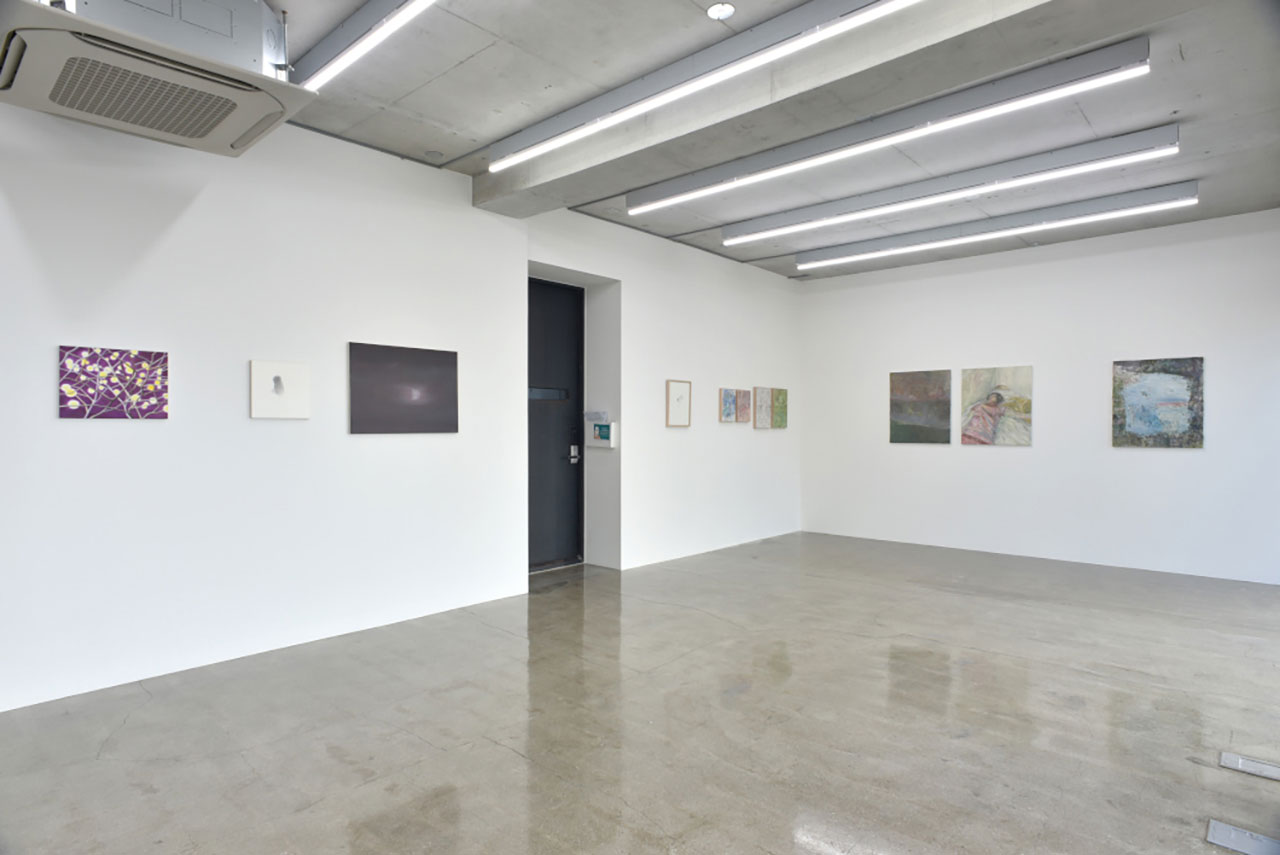
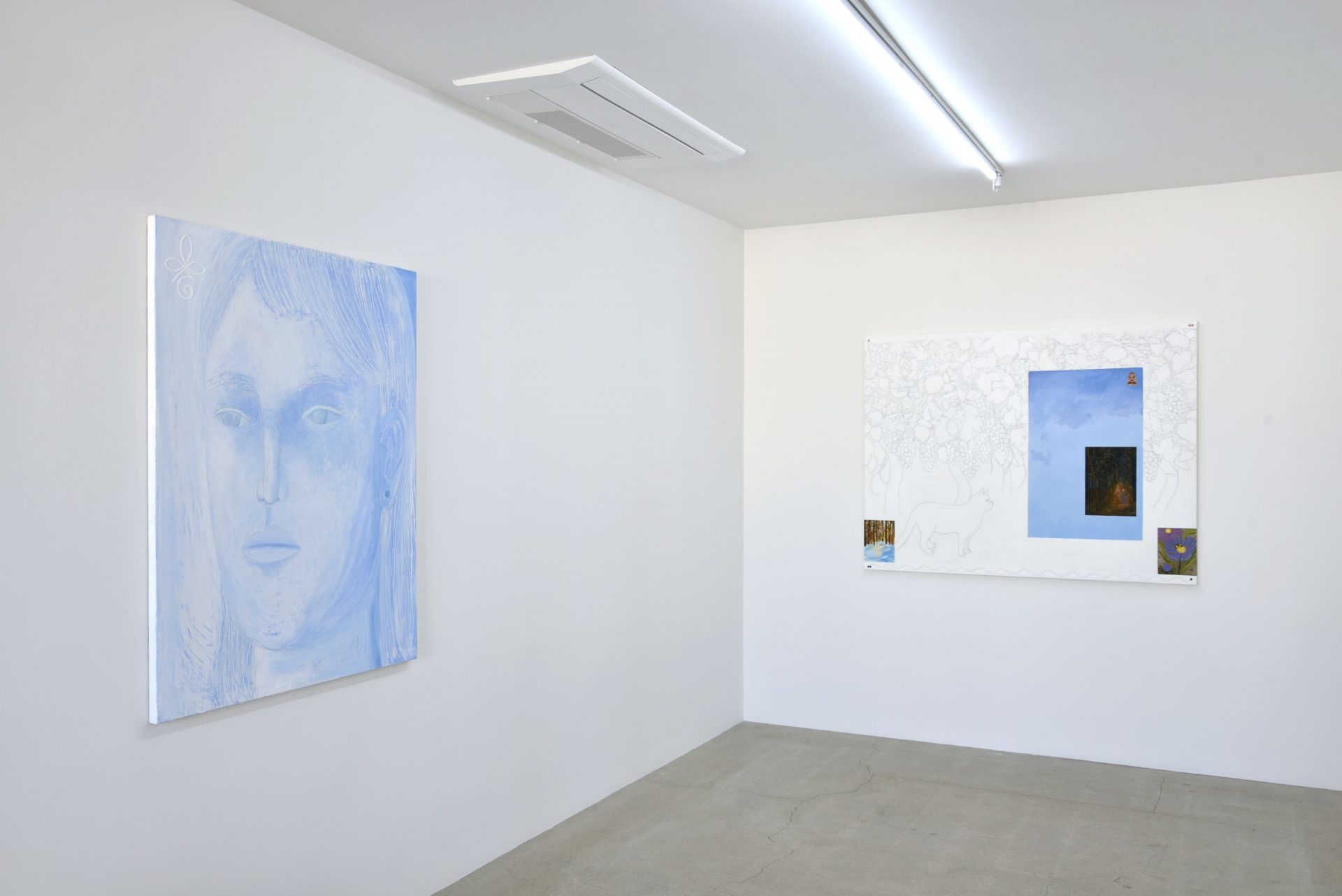
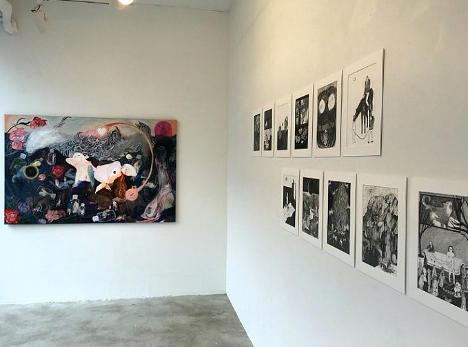
Mackerel Safranski, Two hyenas, 2023 © Mackerel Safranski

Greetings.

My name is Nakamura Shigeru(中村茂). I have received the letter you sent. I understand very well the feelings of the family members who are anxiously searching for your aunt’s whereabouts. No, I will now refer to her as she, too. I do not know whether I can be of even the slightest help in finding her, but I will tell you what I know about what happened with her.

The last time I met her was at an underground bar in Asakusa, Tokyo. At that time, the friends in the photograph were not with her. It seemed that she had probably come to Japan alone in order to prepare for evaporation(jōhatsu). However, she did not tell me clearly where she was headed either. No, perhaps she could not tell me. Because she, too, was in a state of complete uncertainty.

What was interesting, though, was that she did not seem to dislike that uncertainty itself very much. She was ready, in both body and mind, for a sufficient adventure. Think about it. Evaporation does not necessarily mean the disappearance of the body.

Evaporation means becoming anonymous. In this metropolis called Tokyo, if a Mackerel flowing in from Korea were to swim through the Sumida River or the Arakawa River, or even through the crowds of Shinjuku or Shibuya, who would know? She must have known very well that this place was the optimal city of evaporation, one that had no need for the unsatisfactory speed of evaporation in Korea.

She told me stories of wandering freely through unfamiliar areas, building a nest out of grass and stones somewhere in a red forest, laying down each heart with animals and resting there for a while, and quietly infiltrating an unknown city by express bus, leaving secret messages here and there in a language even she herself did not know, so that people could gather inside a rainbow.

Rather than entering a space and making her own story, she spoke of how stories create space, calling this “the occurrence of space.” She meant the spaces of countless stories that arise as people gather, talk, legends appear, and faiths are formed.

As I listened to her, I thought she was enjoying infinite freedom within her own imagination and ideas. And it seemed that she made part of that freedom visible in the form of images, not only to others but also to herself. When her father said, “It seemed there was some unresolved sensation deep in her chest,” I thought perhaps he meant the frustration of being unable to visualize all the forces of sensation welling up from within her.


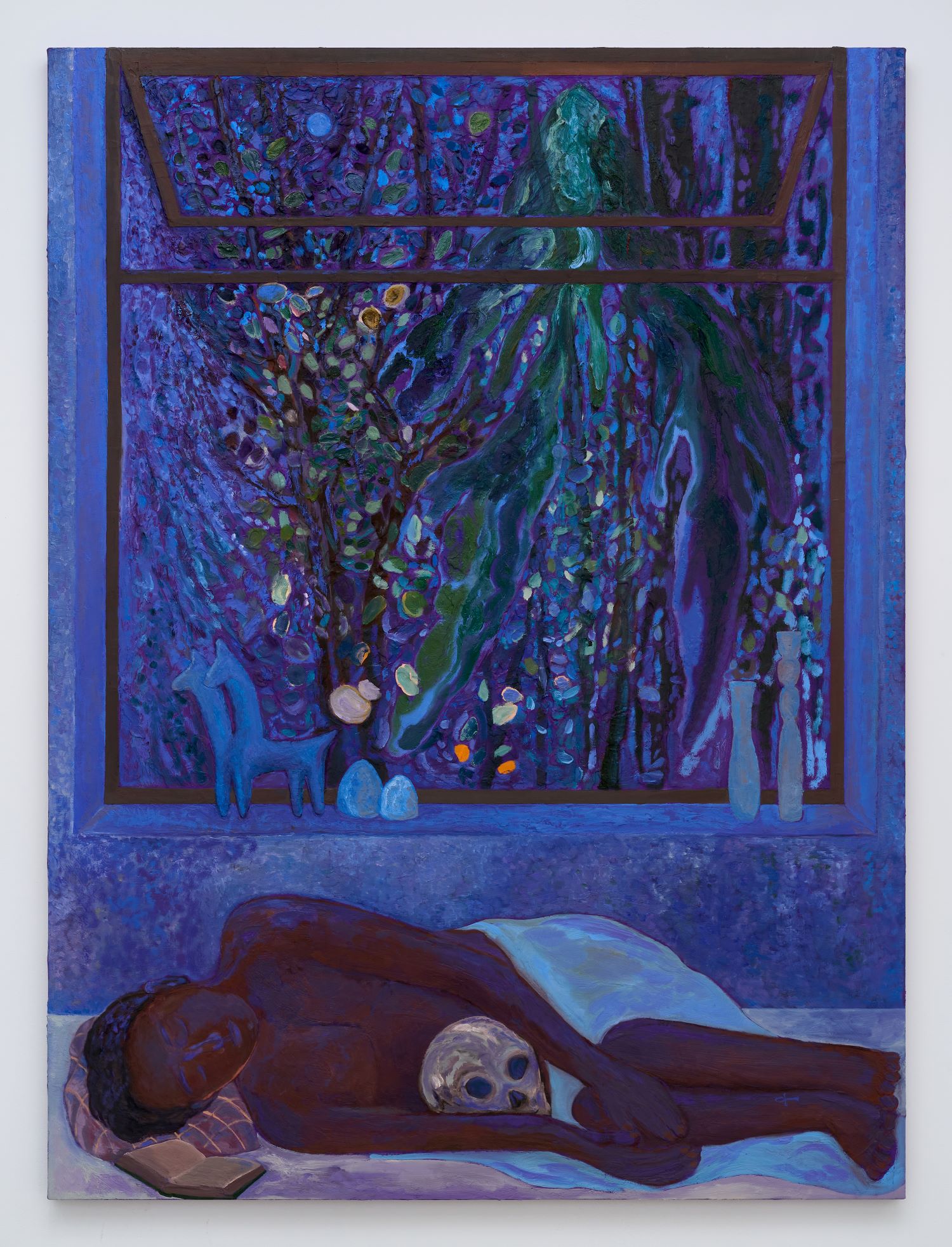
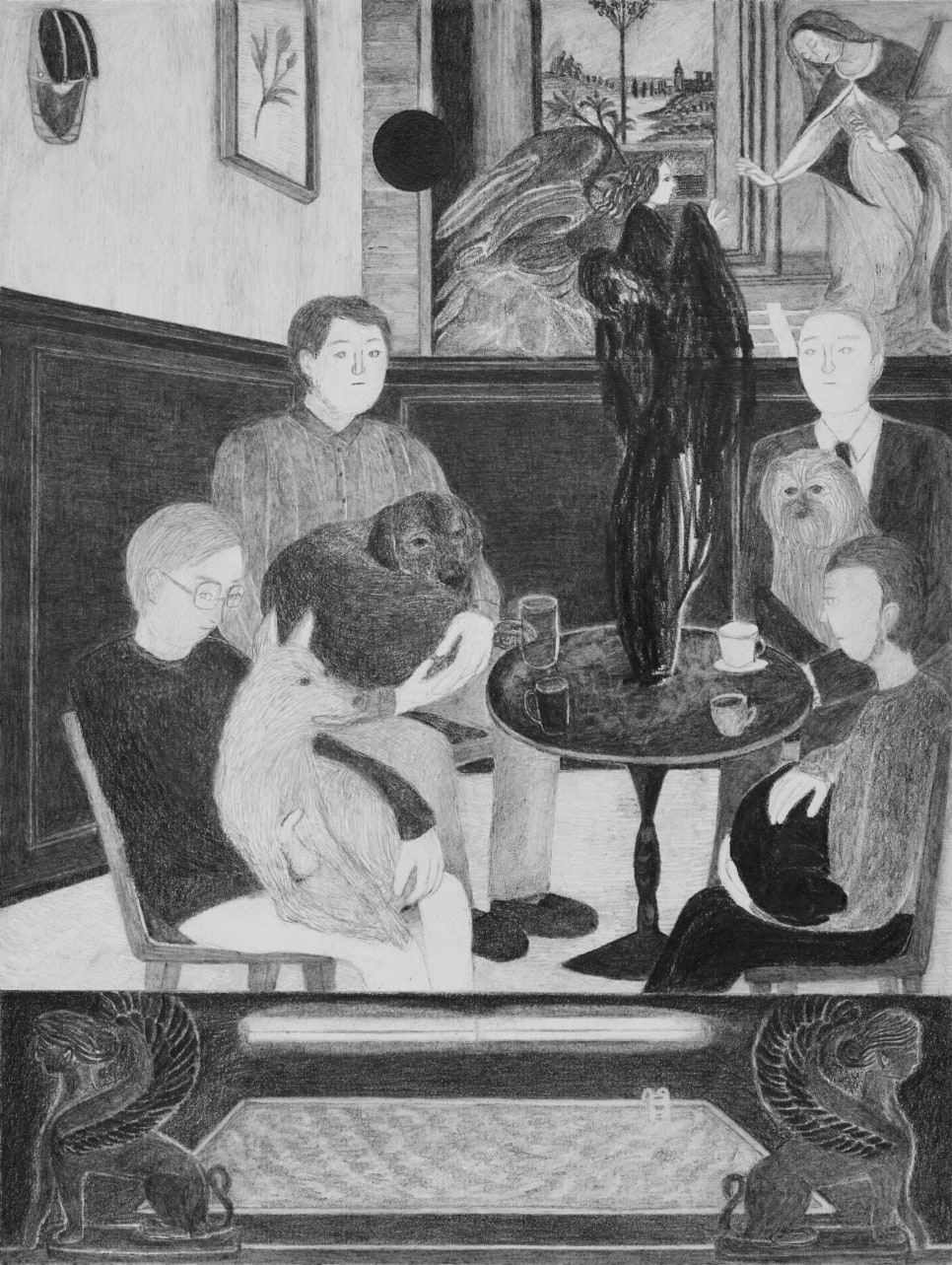
Mackerel Safranski, Body Image 8, 2019 © Mackerel Safranski

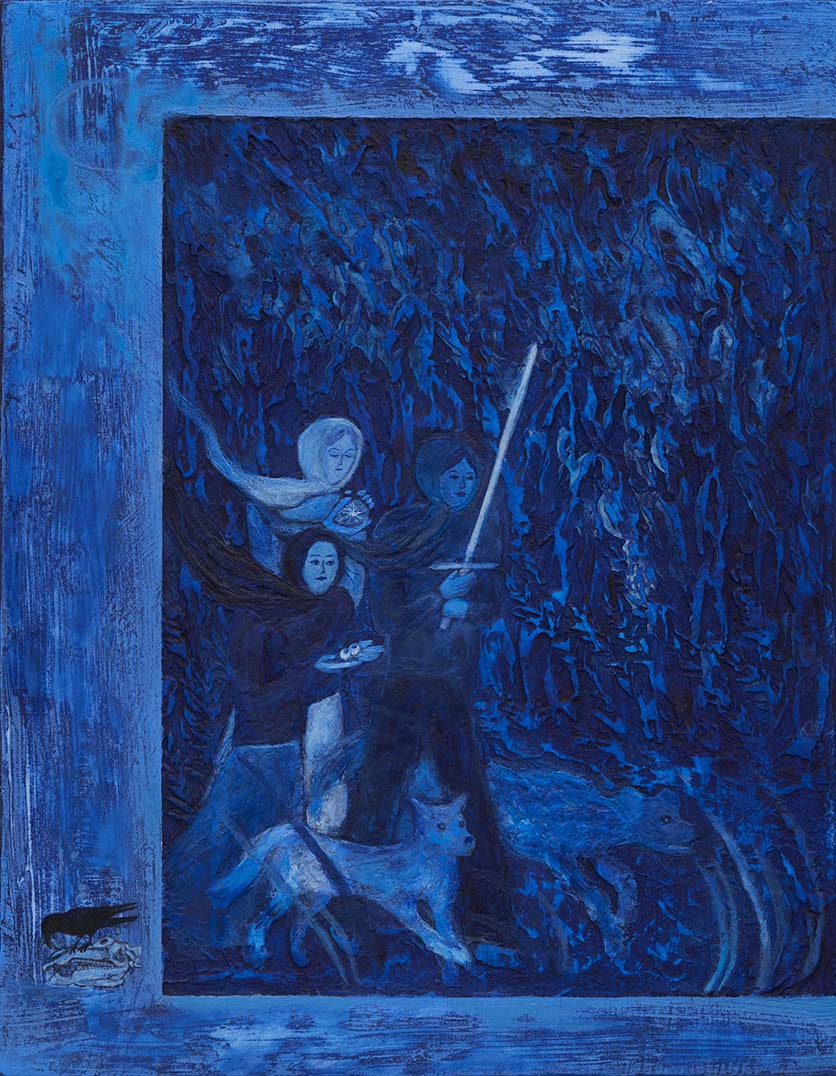
Soon she looked around and secretly showed me her paintings. As I looked at the paintings she had made, I felt that creating images was such a difficult and joyful thing. It was something in which the thrilling anticipation and helpless despair of one’s life intersected, and even when one finally turned some state that could not be fully grasped into an image, something else immediately urged on another state of sensation.

Her paintings seemed to contain the primordial vibration that gave birth to the sensation of images, as if they calmly transcribed powerful religious texts like medieval art in the West, or like the mysterious life of another world painted inside an ancient stone tomb with a high corbeled ceiling.

This vibration explored both the external world and the inside of the self, and, strongly driven by phenomena and moments of time and space, existed not only in monochrome paintings but also on canvases of intense color and within the vitality of moving images. She was not evaporating; she was growing larger and spreading transparently.

She hoped that people would gather in the space generated by her stories and discover their own religions. That is why she said she makes light. She said that when the light flickers about five times and moves back and forth, the light becomes space. She said that this space of light is a dazzling space to which even angels and migratory birds are drawn. And so, even if that space were to move endlessly somewhere, it seemed it would never disappear, but would always be a space together with light.

We lost track of time as we talked, and when we looked around, only the two of us remained in the bar. As if all the people who had been in that space with us had somehow “jōhatsu-ed.” In the bar where only the owner remained, we ordered one last vodka tonic each, a drink that often appears in Haruki’s novels. I told her it would probably taste better than the Shinjuku bar she said she had gone to because she liked Haruki.

At that moment, I remembered a short story by Haruki that I had read when I was young. It was a story about a very old elephant in a zoo and an old keeper. The elephant and the keeper, who had spent their entire lives together, one day vanished together without a trace. I said that the elephant and the keeper had only disappeared before our eyes, and that they surely still existed somewhere. I remember that she agreed.

Since that day, I have not seen her again, and I do not know where she is now. But I think she will appear before us again before long. Ah, there is one more thing. It happened when we parted on the dark shopping street across from Sensoji, which was pitch-black. I told her that wherever she went in Japan, she should not enter too deep into the forest because it would be frightening. She smiled and said there was no need to worry about forests, because for her, the world had once been like a forest.

She said that a forest known only to herself was an intimate place that could not be shared, and a space where one undergoes something.[2] Is she still in the forest? By now, might she be riding the elephant from Haruki’s short story and leisurely drifting through such a forest? Perhaps the day she comes out of the forest will be the day she returns to us.

From Tokyo,
Nakamura Shigeru


[1] This text was inspired by a letter sent to Mr. Nakamura, which was part of Mackerel Safranski’s work Frame to Frame presented at the 2023 Geumcheon Open Studio exhibition, and was written in the form of a reply to that letter.
[2] “Many situations that take place in forests appear in my paintings. (...) I also thought of the world as a forest. I think the reason I paint people in forests comes from my awareness that people are placed within some kind of system. (...) In a way, it is an intimate place where things that cannot be shared can be released, a space where one undergoes something, and also a place where there is less external coercion. I thought that such a place is not a place shared by everyone, but a forest known only to oneself.” (From an interview with Mackerel Safranski, “People Whose Colors Are Erased, People Who Move to Other Worlds,” Borderless Storyteller, Jeonju International Film Festival, 2022, p. 49)

References