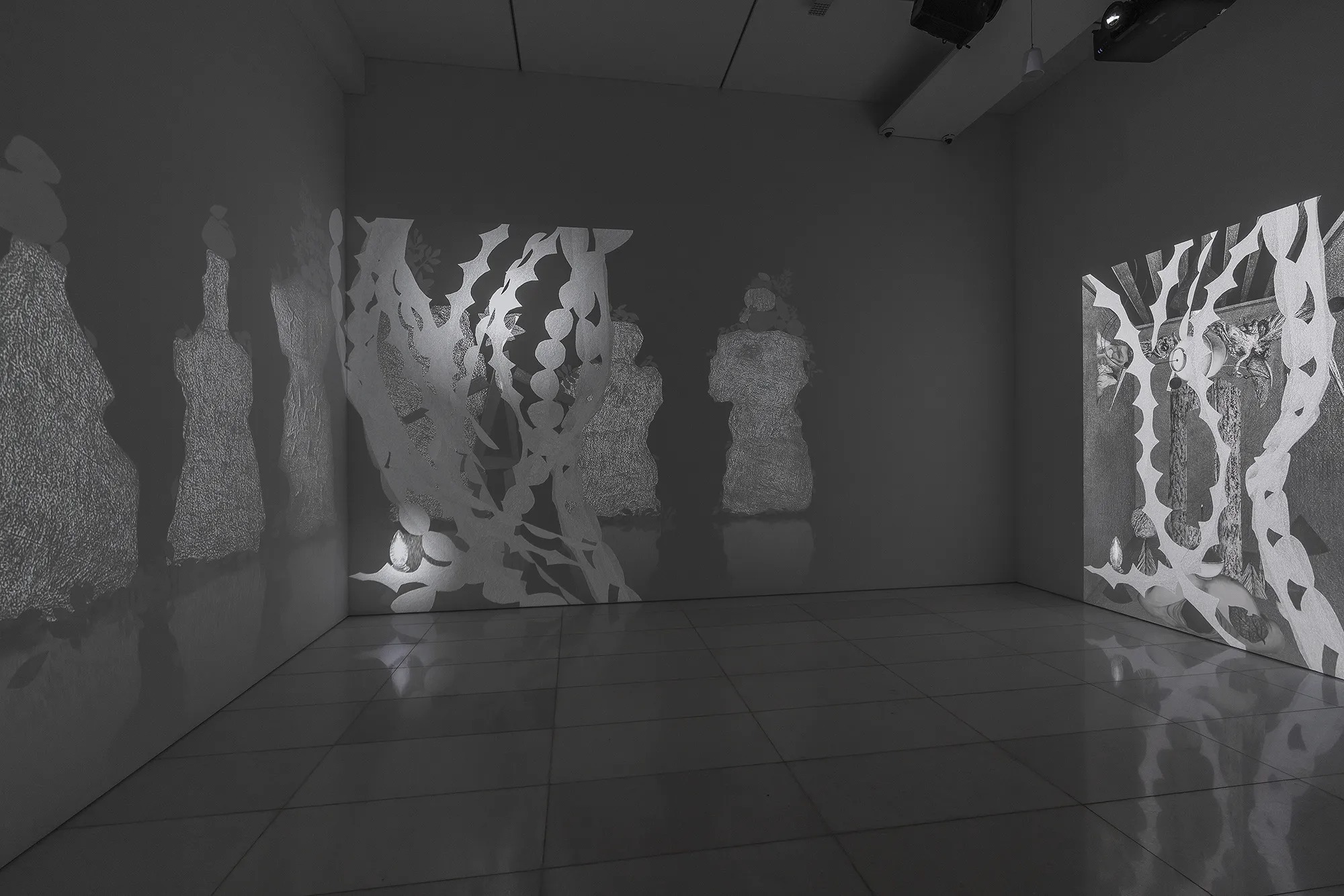
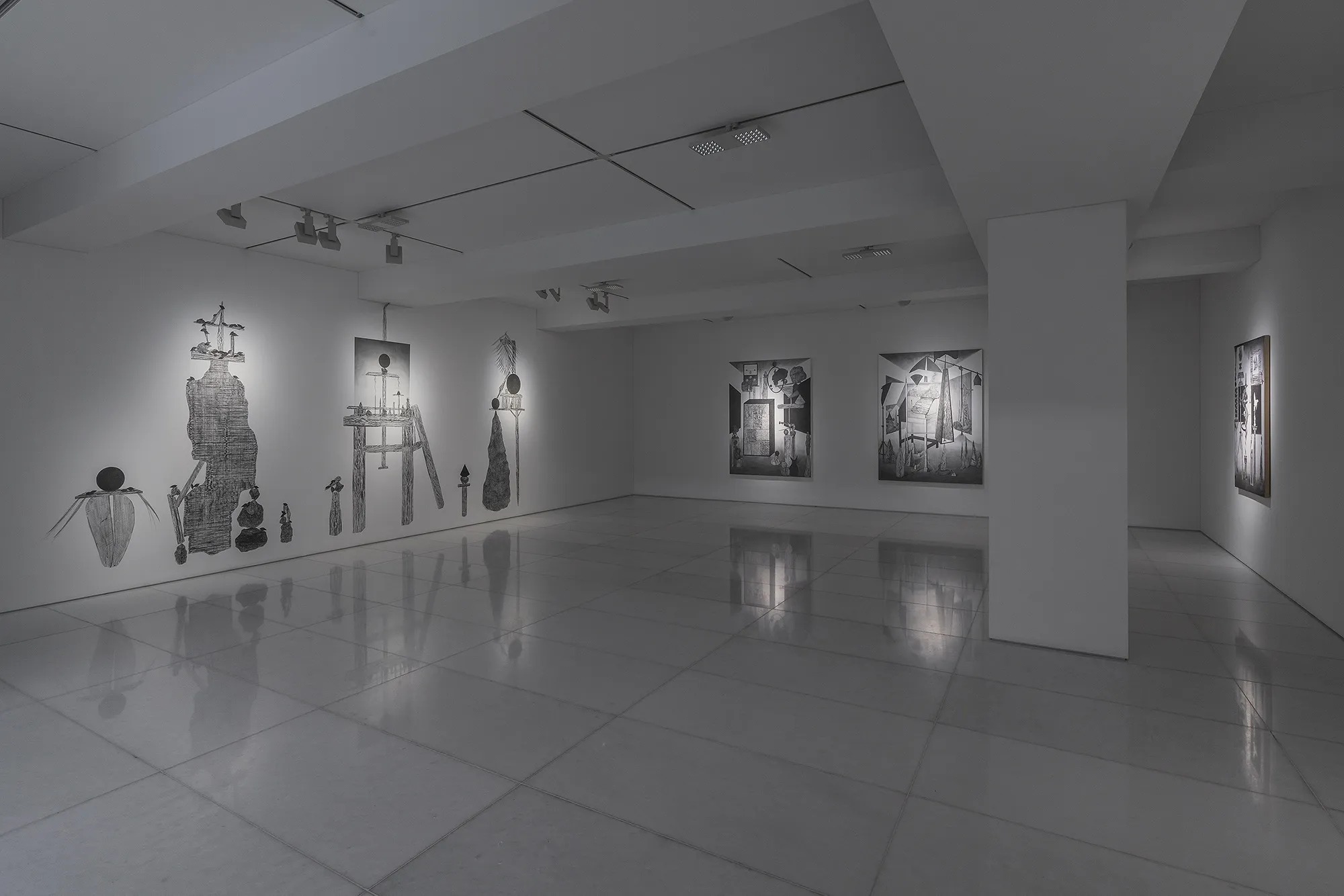
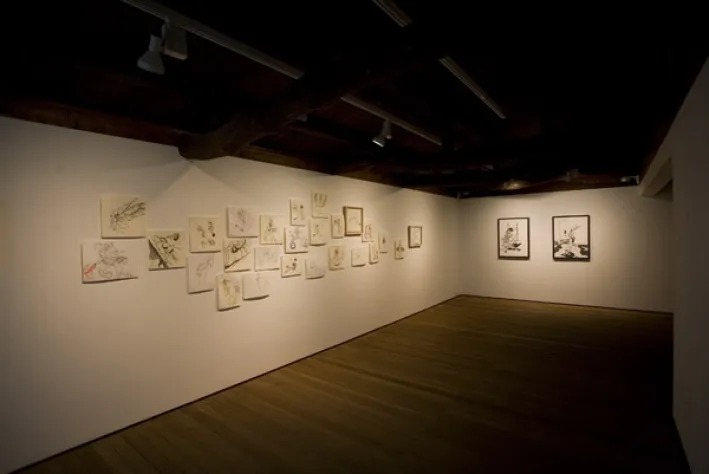
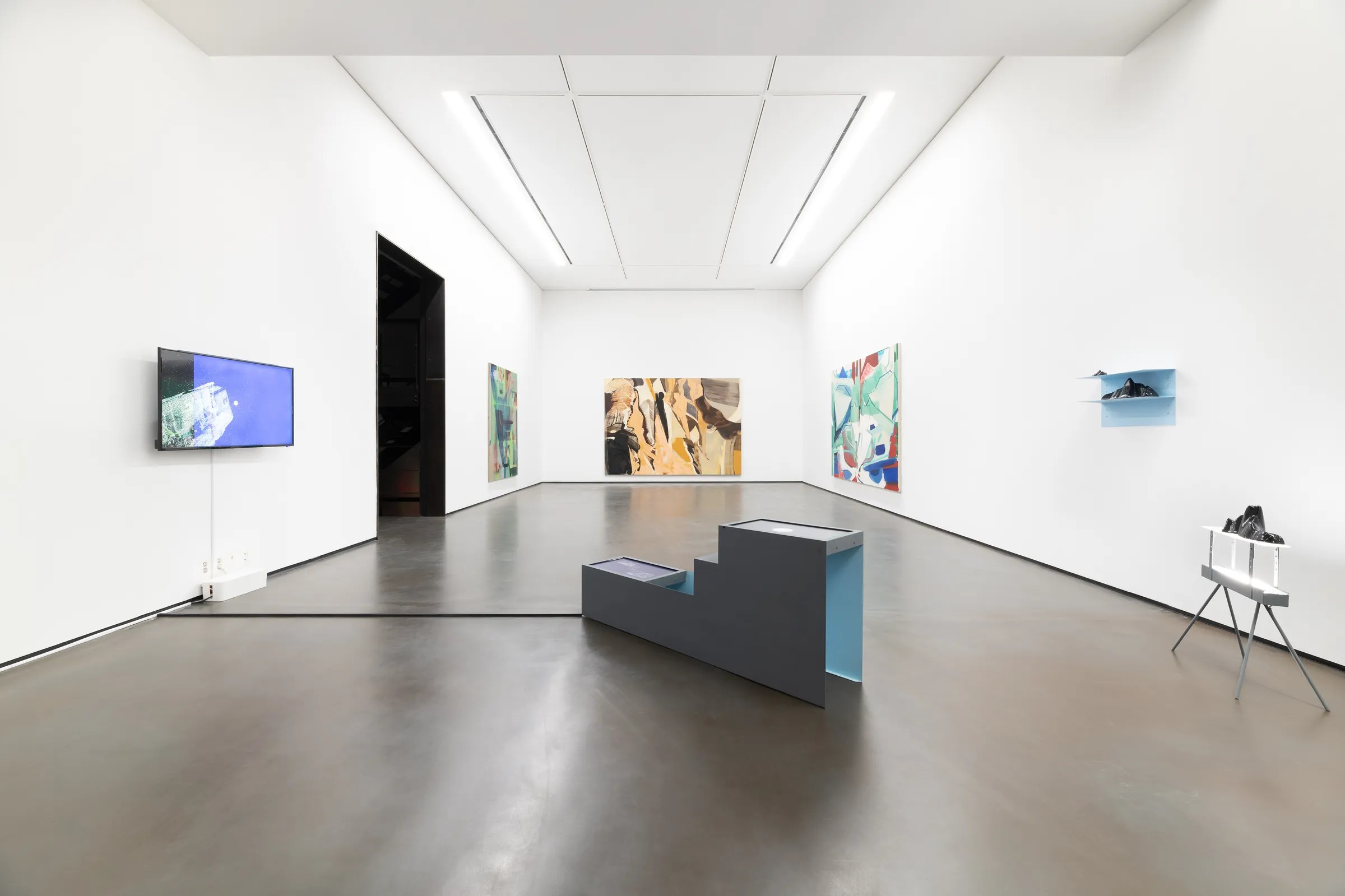
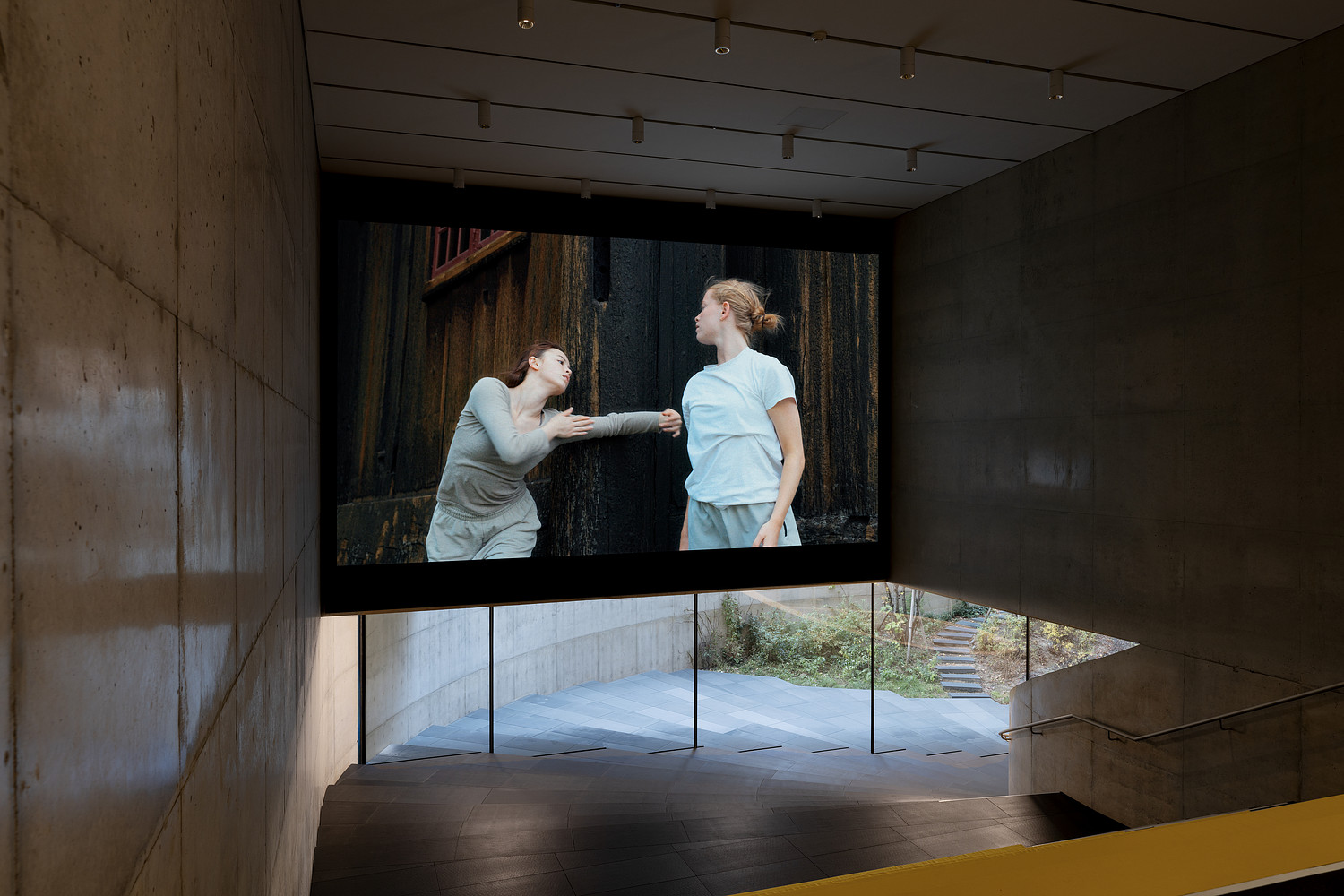
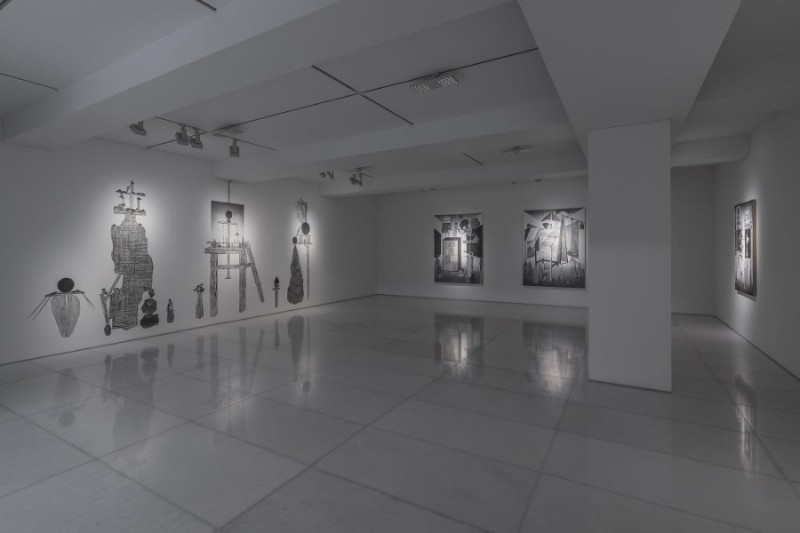
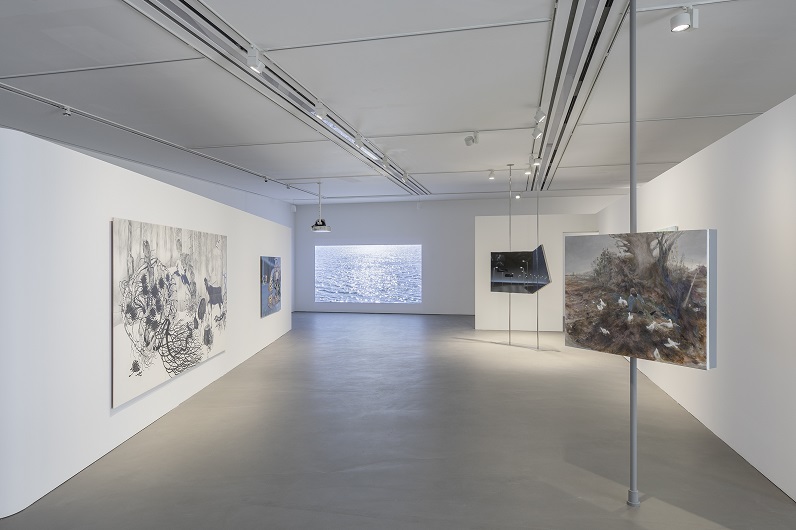
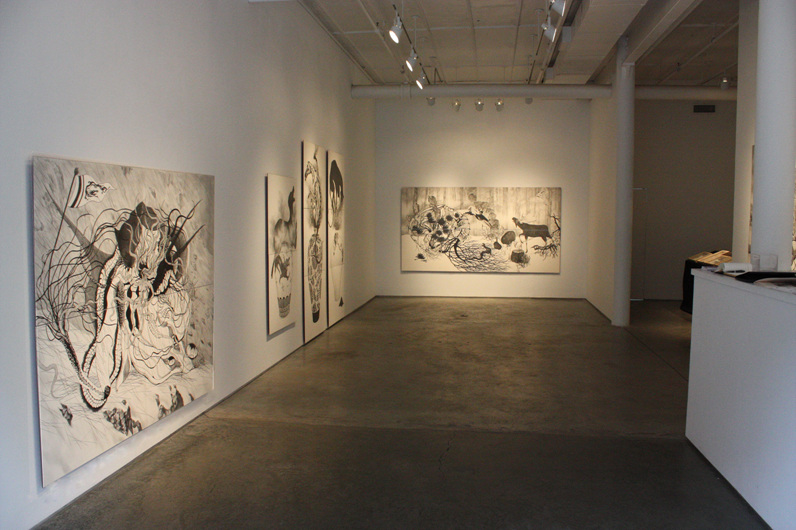
Installation view of 《The Wanderer》 © ARARIO GALLERY

Before the eyes have adjusted to the darkness, the clear ringing of a bell first resonates in the ears. Since ancient times, bells have served as instruments for calling back someone who has journeyed far away, a being whom one cannot reach despite calling out.

As in the lines, “I hear the voice calling / but my voice cannot reach it / only here / when a fruit falls / there is a world where its thud can be heard” (Mok-wol Park, “Lowering the Coffin”), certain worlds exist simultaneously yet remain separated so that they can never meet. They cannot hear one another. The clear sound that reverberates when the bell is shaken opens a sealed boundary. The sound of the bell, then, is said to connect the world of the dead with that of the living.

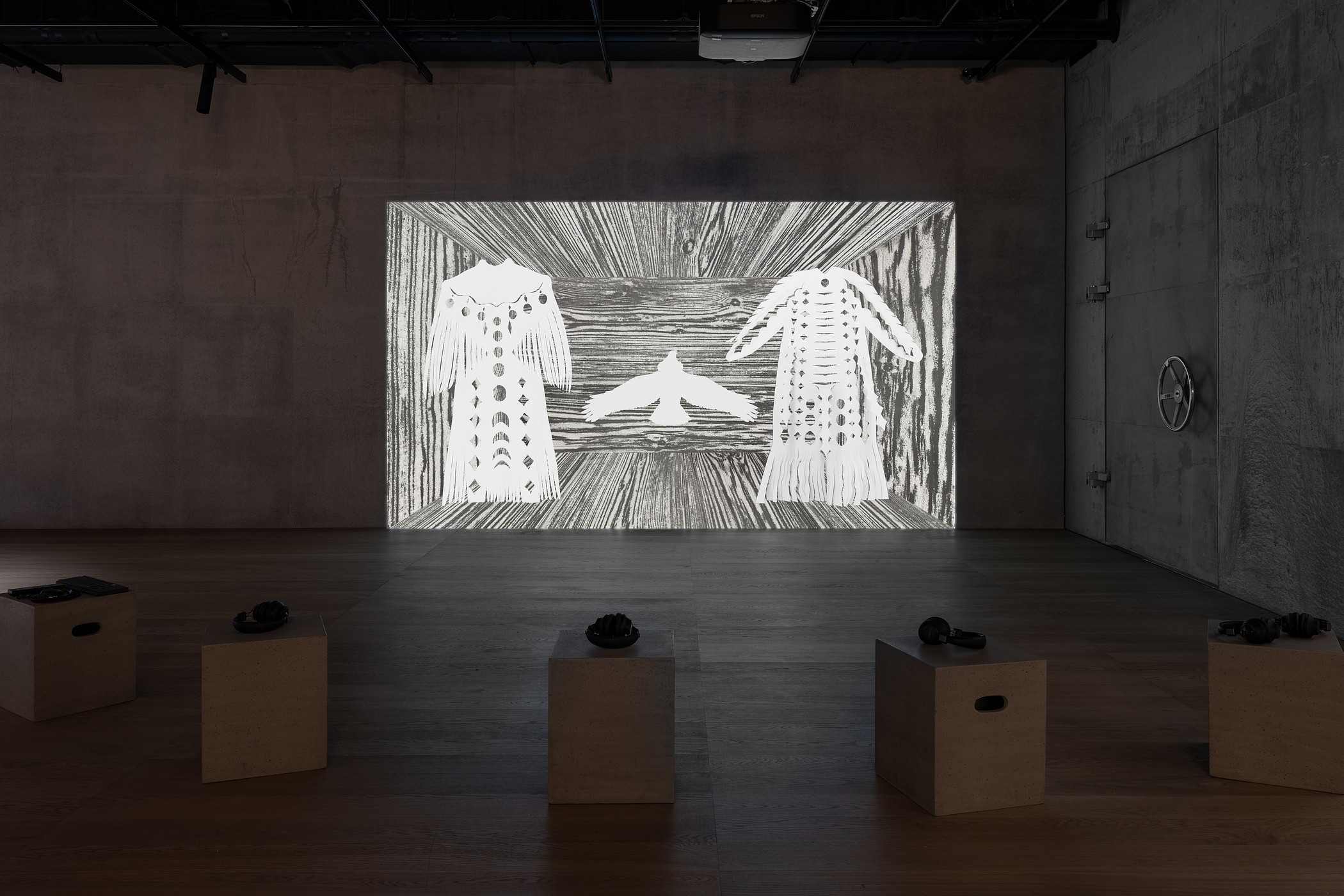
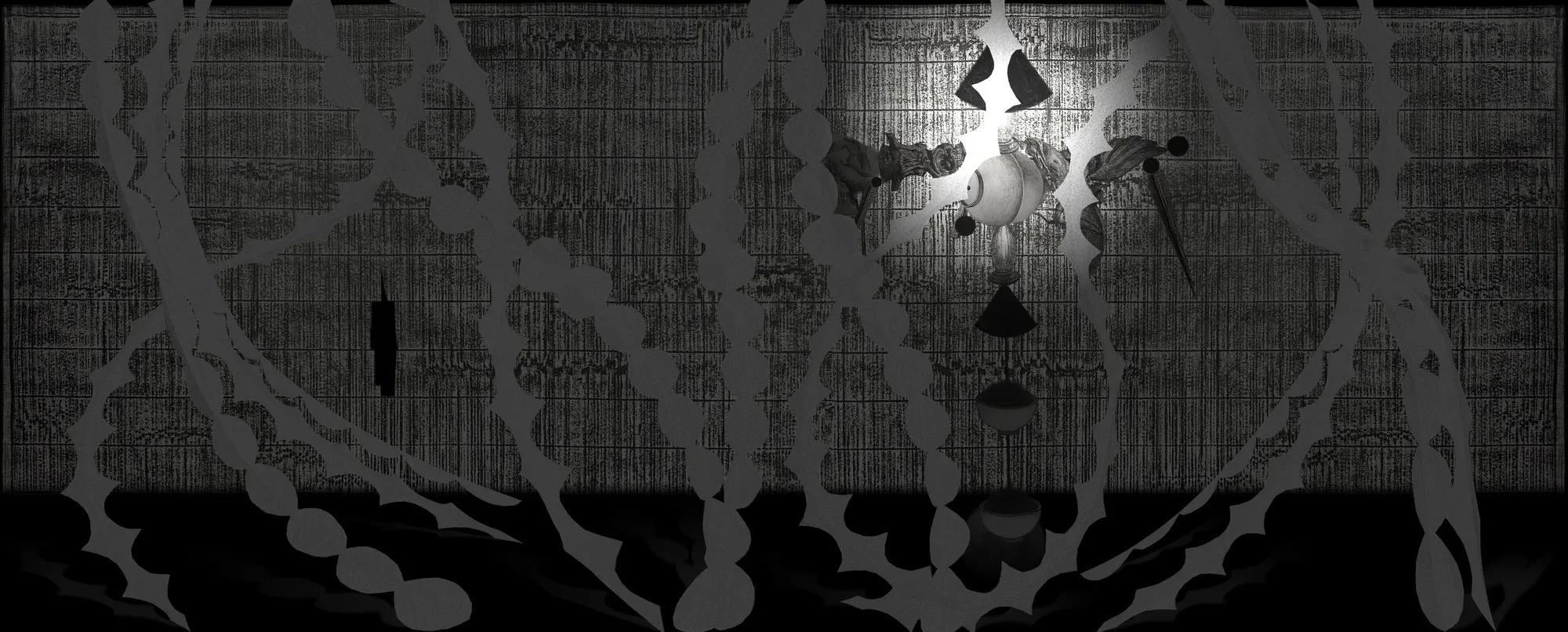
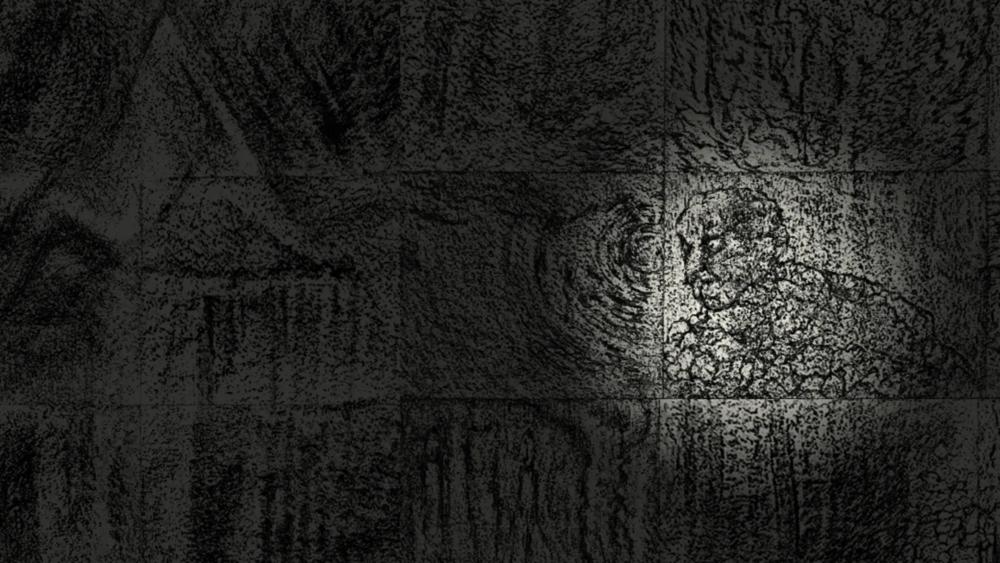
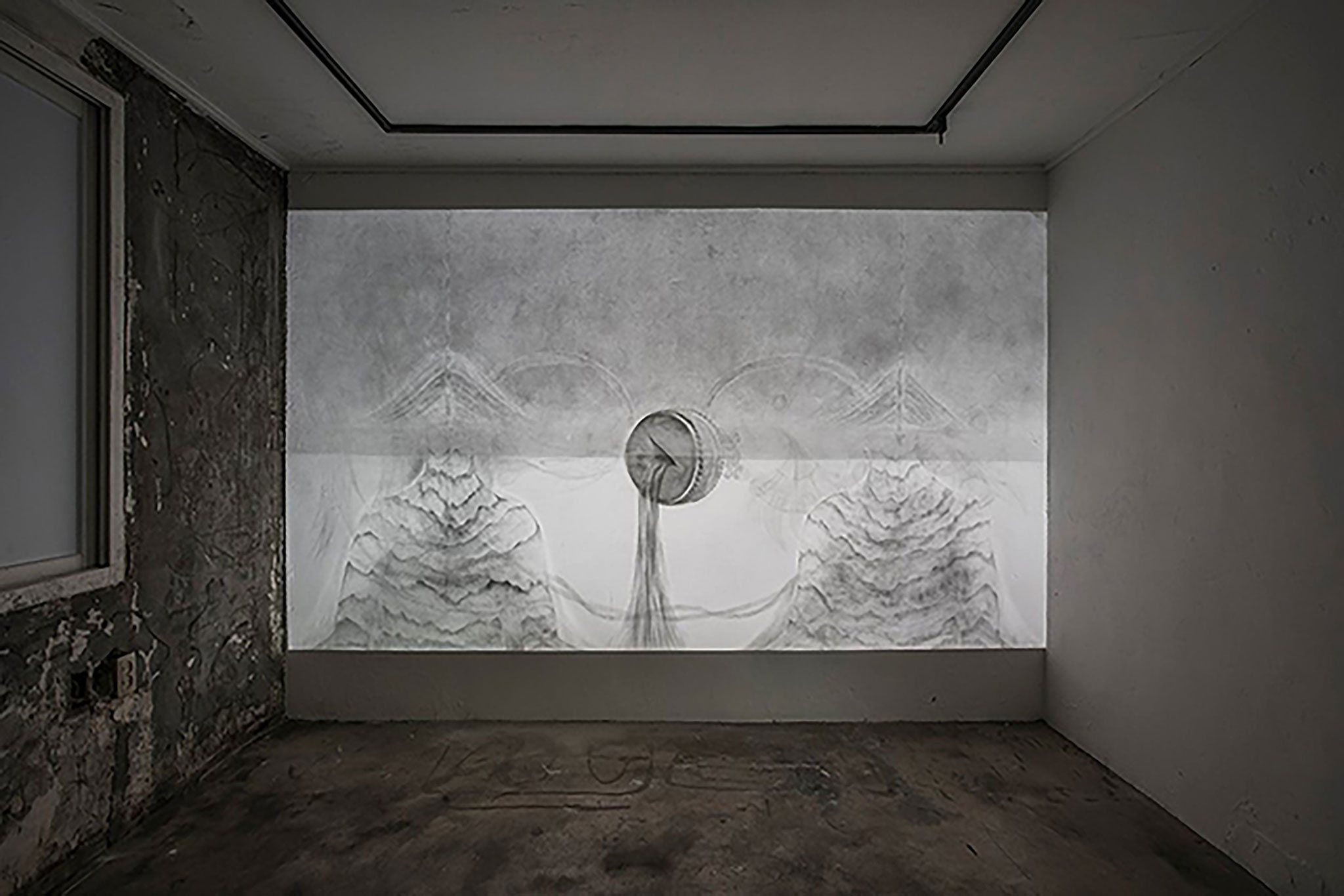
I look at what the sound has summoned. Black-and-white beings stand side by side; they, too, must once have possessed color. Incense rises between these figures, standing upright like immovable rocks, and soon the space fills with smoke. Symbols float through the air, the figures remain motionless, and the bell continues to ring.

By the time the world on the screen naturally merges with the darkness of the exhibition space, one realizes that this place lies somewhere between the world of the living and the world of the dead.

Seung Ae Lee’s animation series ‘The Wanderer’ (2023) evokes a sense of loss and absence through ritualistic imagery inspired by ssitkimgut, a shamanic rite performed to pray for the peace of the deceased. Ssitkimgut is a traditional ritual from the Jindo region that washes away the unresolved resentment of the dead and prays for their peaceful passage into the next world.

I consider the word “cleansing.” A newborn baby is bathed, and when a person dies, the body is washed and shrouded. In Catholicism, holy water is sprinkled on a baby’s forehead during baptism, while those entering a mosque must wash their hands and feet.

Whenever we cross from one place into another, we cleanse the body. To cross the threshold into another world, the body must first be purified. Ssitkimgut is a form of rite of passage for crossing the threshold into the world beyond.

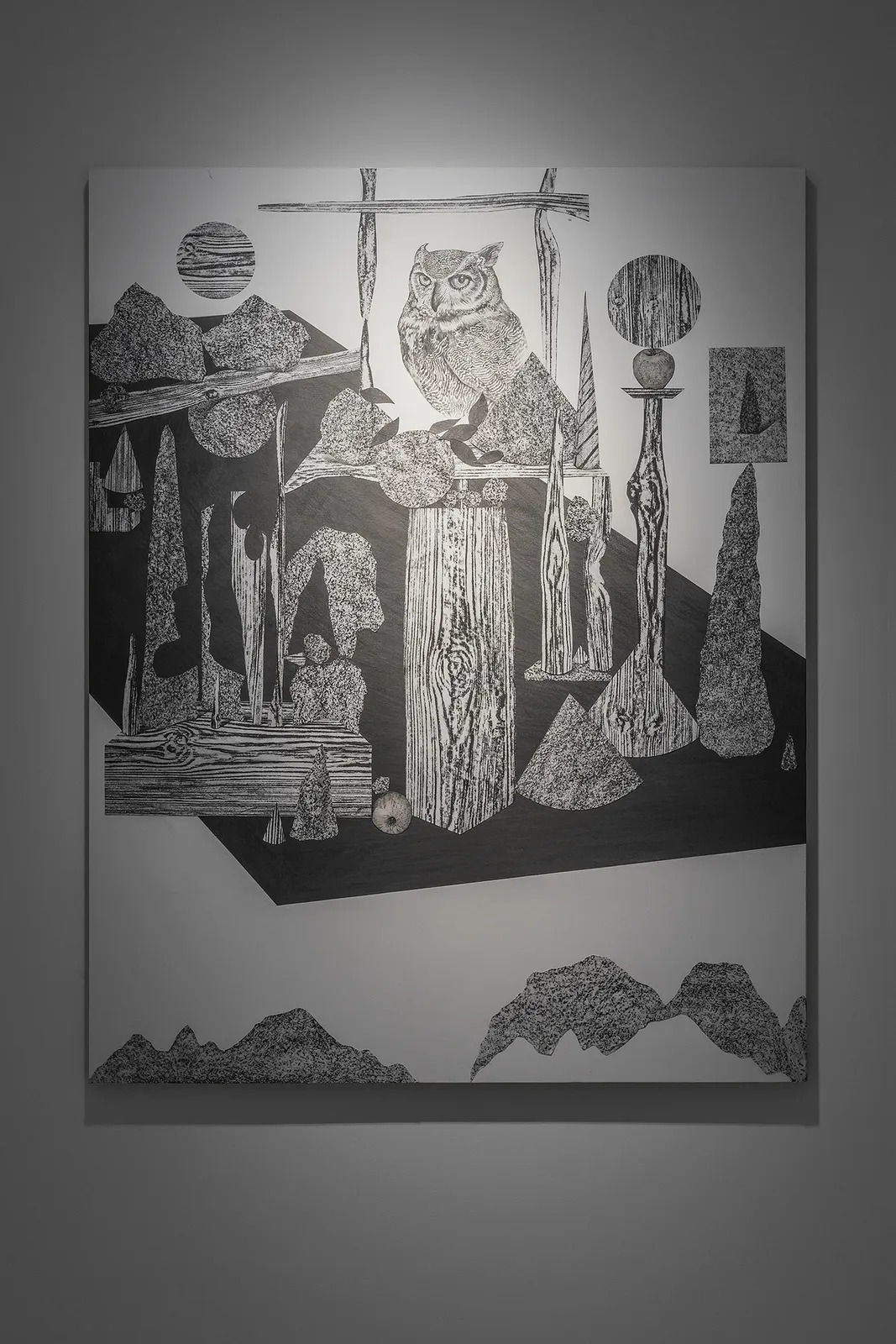
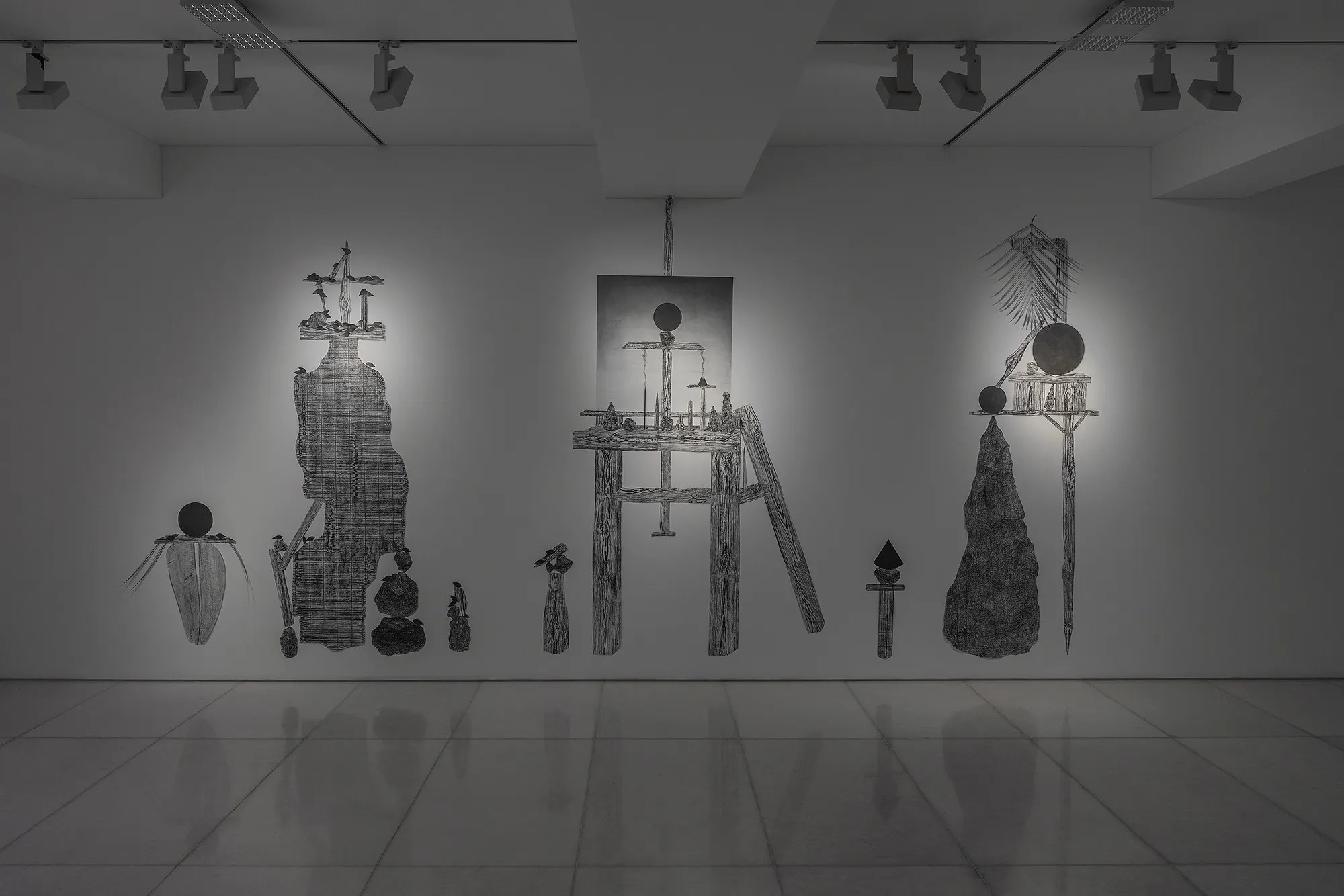
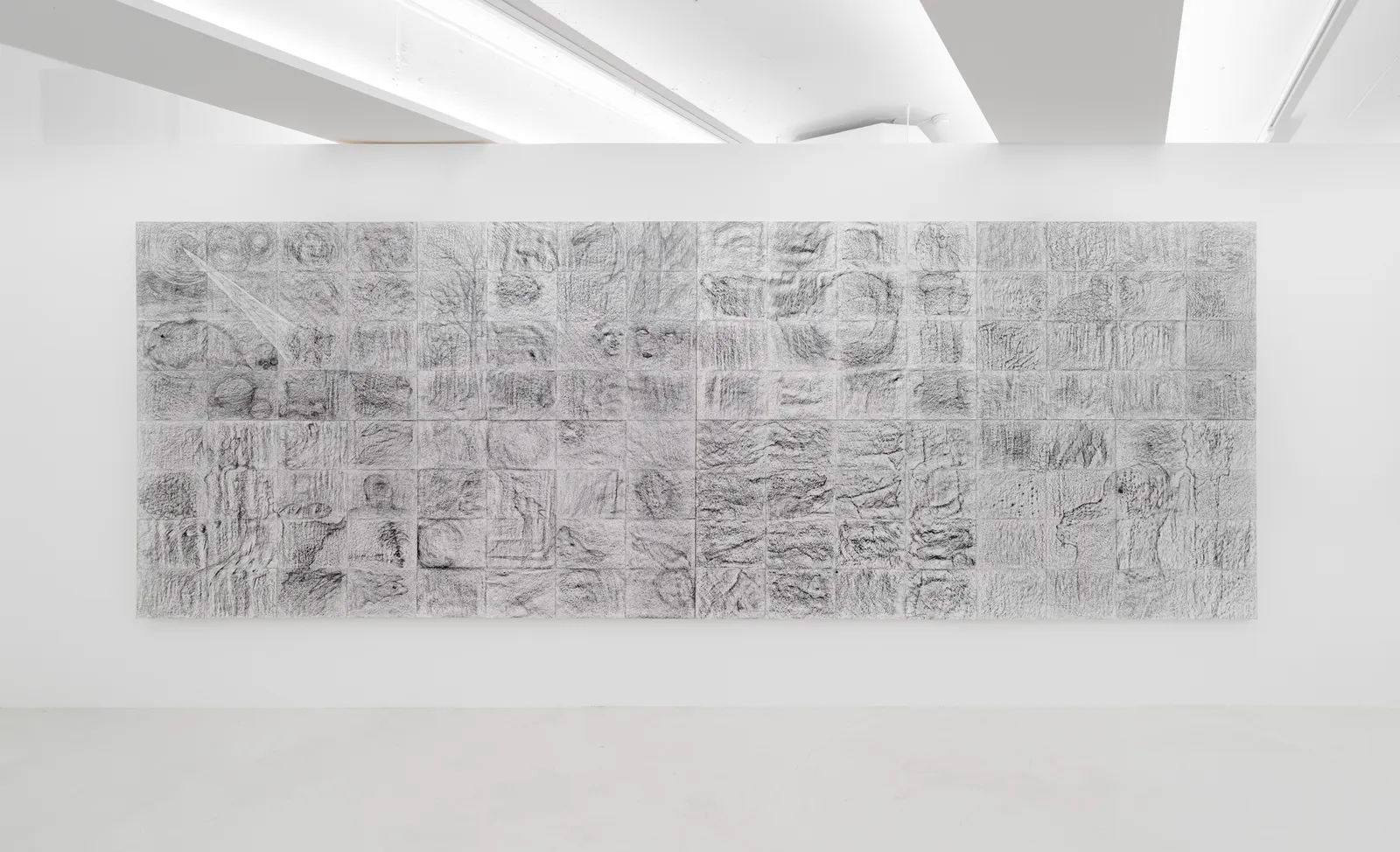
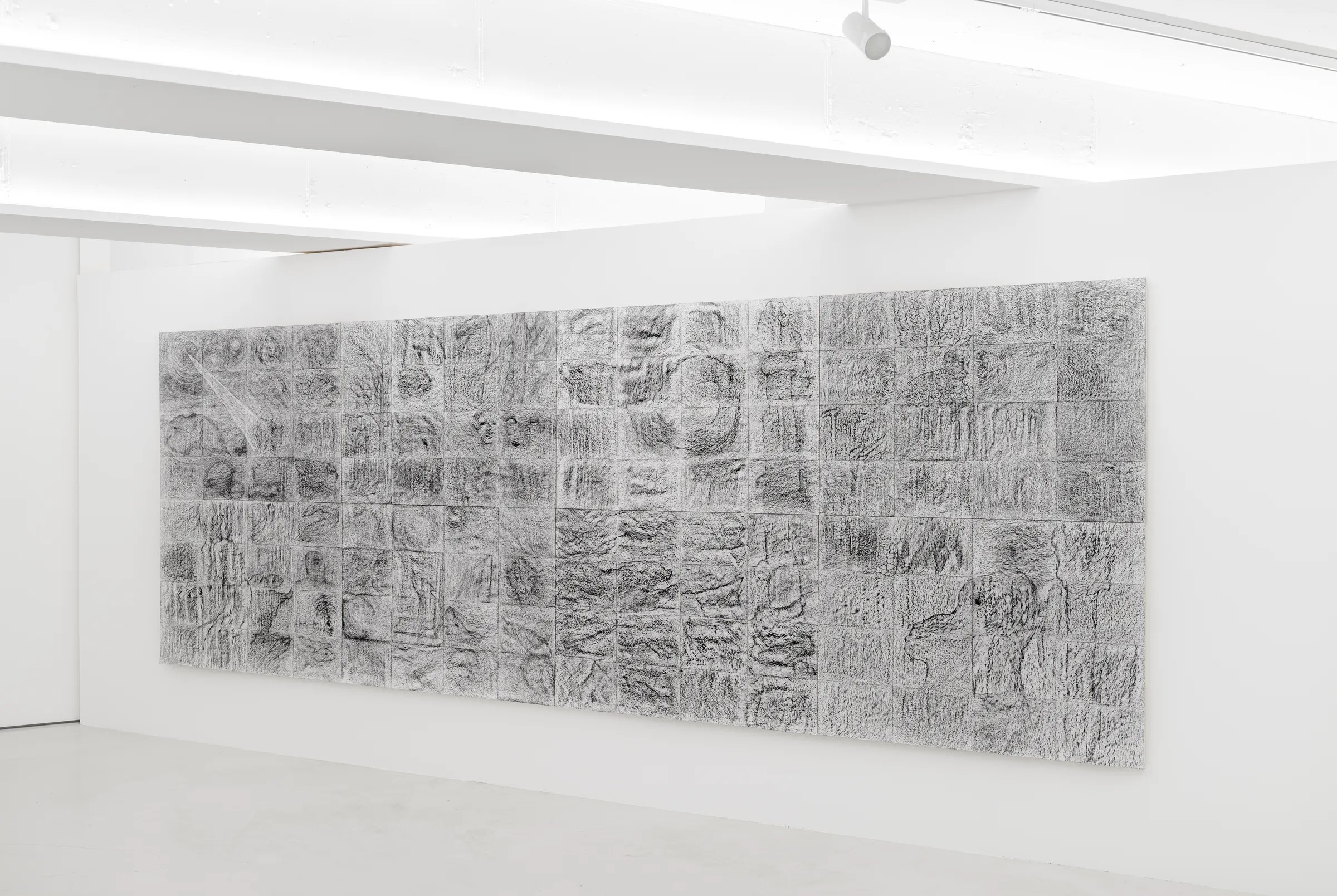
The artist presents the animation through large-scale projection mapping, creating an immersive space for the viewer, but she does not realistically depict scenes from ssitkimgut. Instead, she places paper against wood, stone, soil, and other materials, rubs the surfaces with graphite, and cuts out the resulting images to create abstract and ambiguous elements.

Just as garments and other objects are used in ssitkimgut to construct a body symbolizing the deceased, Lee assembles the cut pieces of paper into humanlike forms.

Marina Abramović’s Cleaning the Mirror (1995), inspired by Tibetan funerary rituals, presents a performance in which the artist meticulously scrubs a skeleton. The act washes away all the bad memories and resentments accumulated during life while wishing the deceased good fortune in the next. As the bones gradually become cleaner, the dust once covering the skeleton spreads across the artist’s body.

Through the reciprocal acts of rubbing and being rubbed, the dead and the living intermingle, and the boundary between here and there becomes blurred. In this way, washing and wiping involve bodies coming into contact. Touching and being touched, they share warmth and transmit energy.

The process in which object and paper, paper and graphite, and graphite and the artist’s hand rub against one another likewise resembles the act of caressing and cleansing a being.

To touch is also to inscribe something upon the other side of existence. Unable to simply let it go, one caresses and engraves it; as each rubs against the other, heat accumulates between them. From the opening where boundaries grow indistinct, a fervent mourning arises.


Installation view of 《The Wanderer》 © ARARIO GALLERY

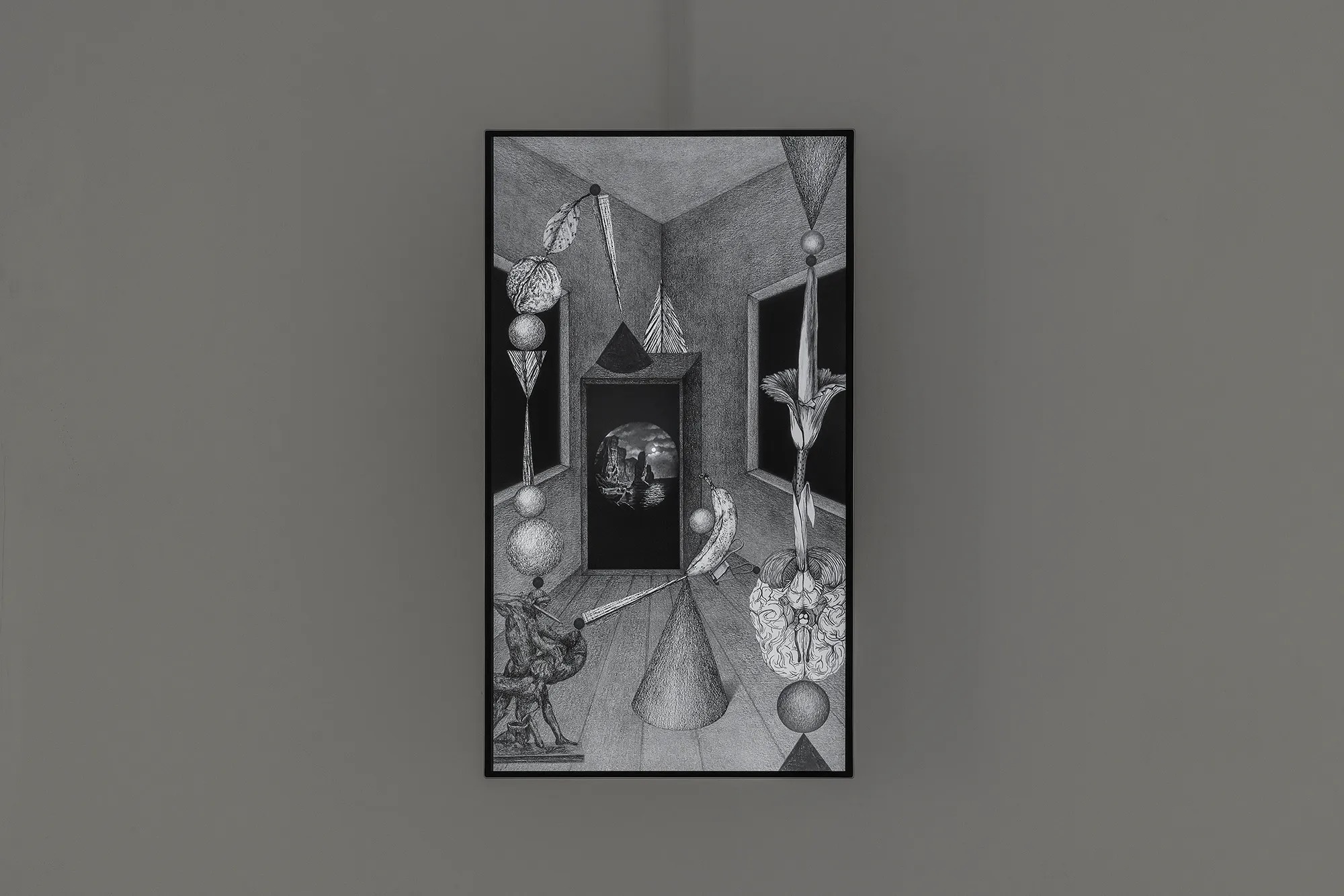
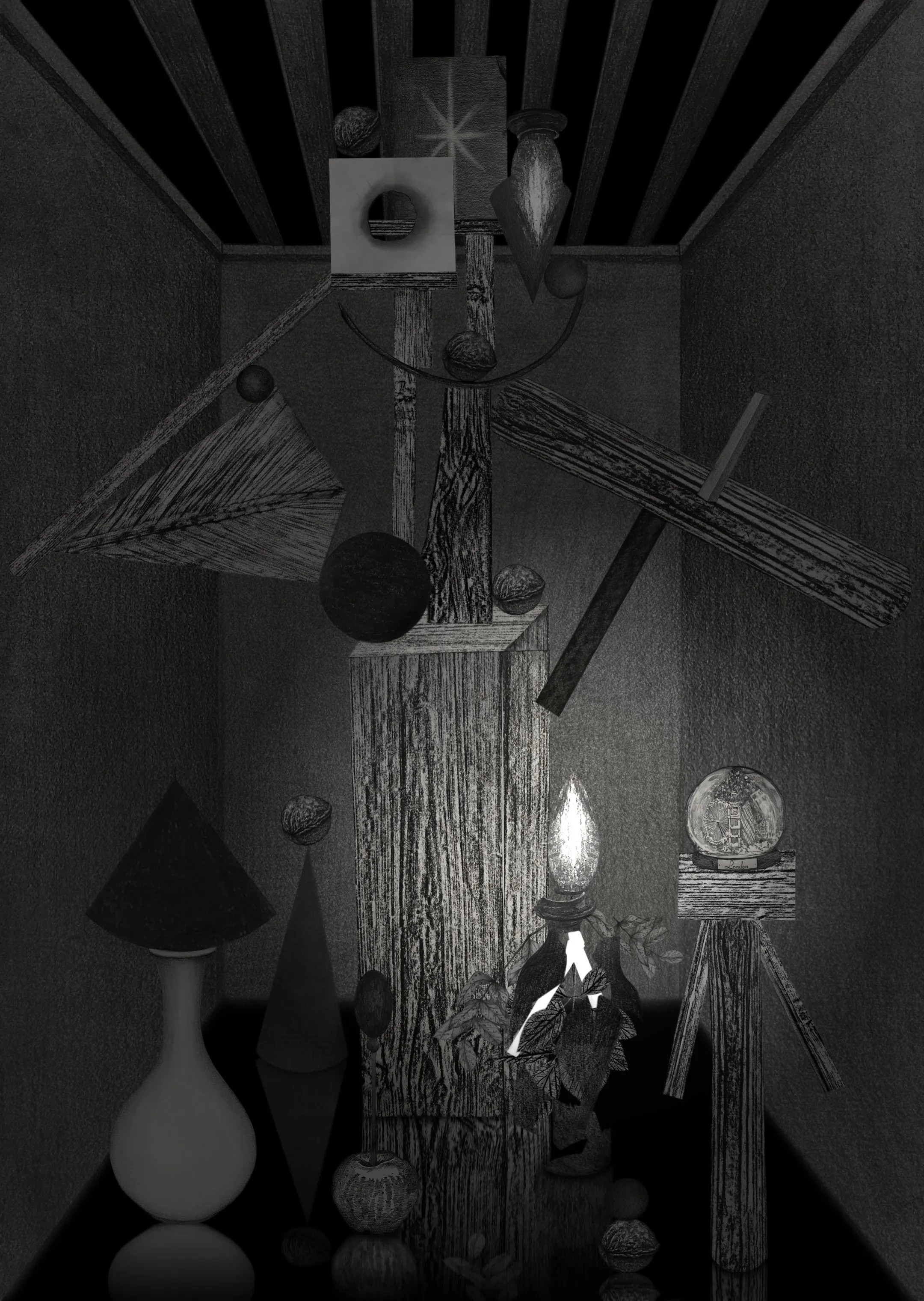
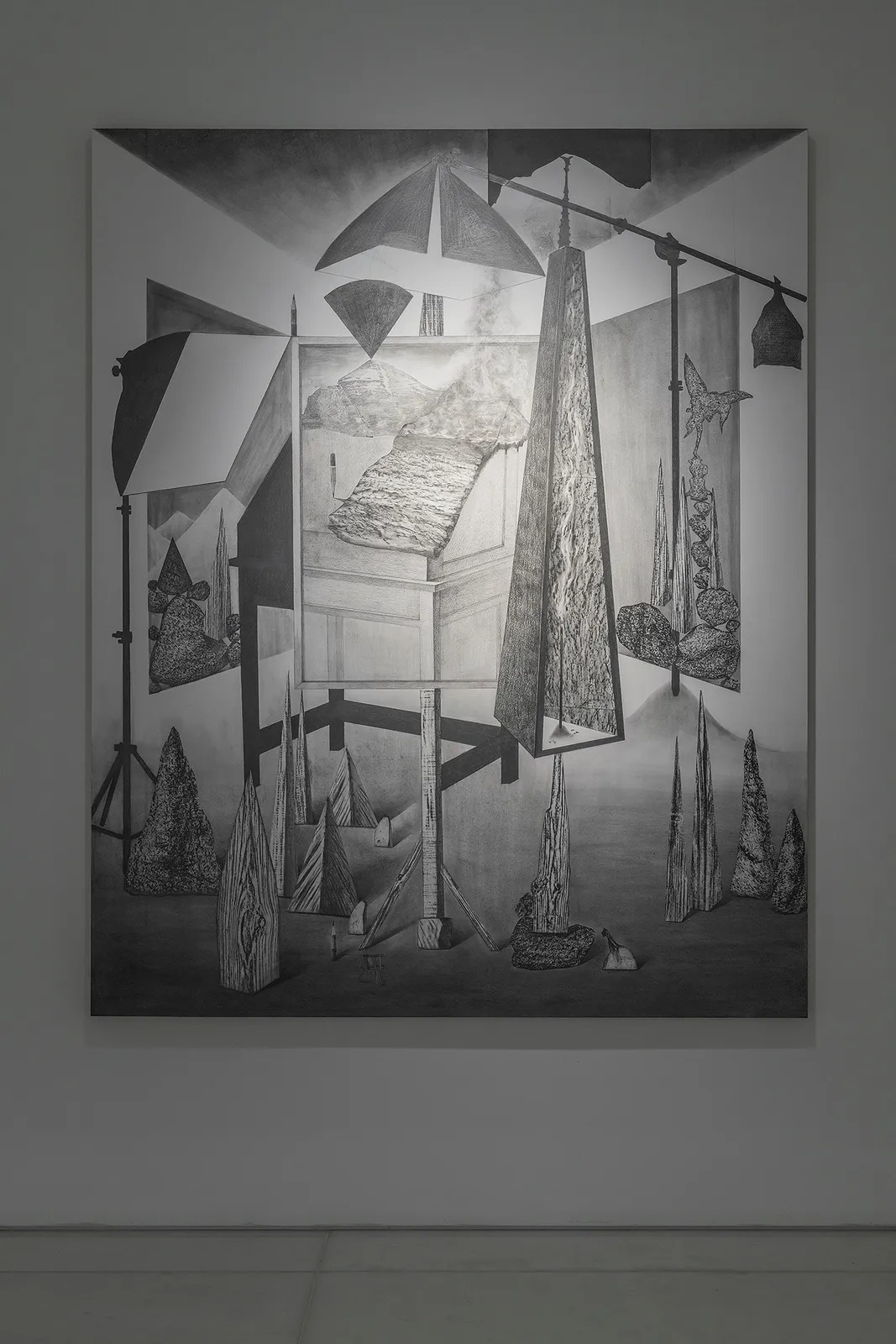
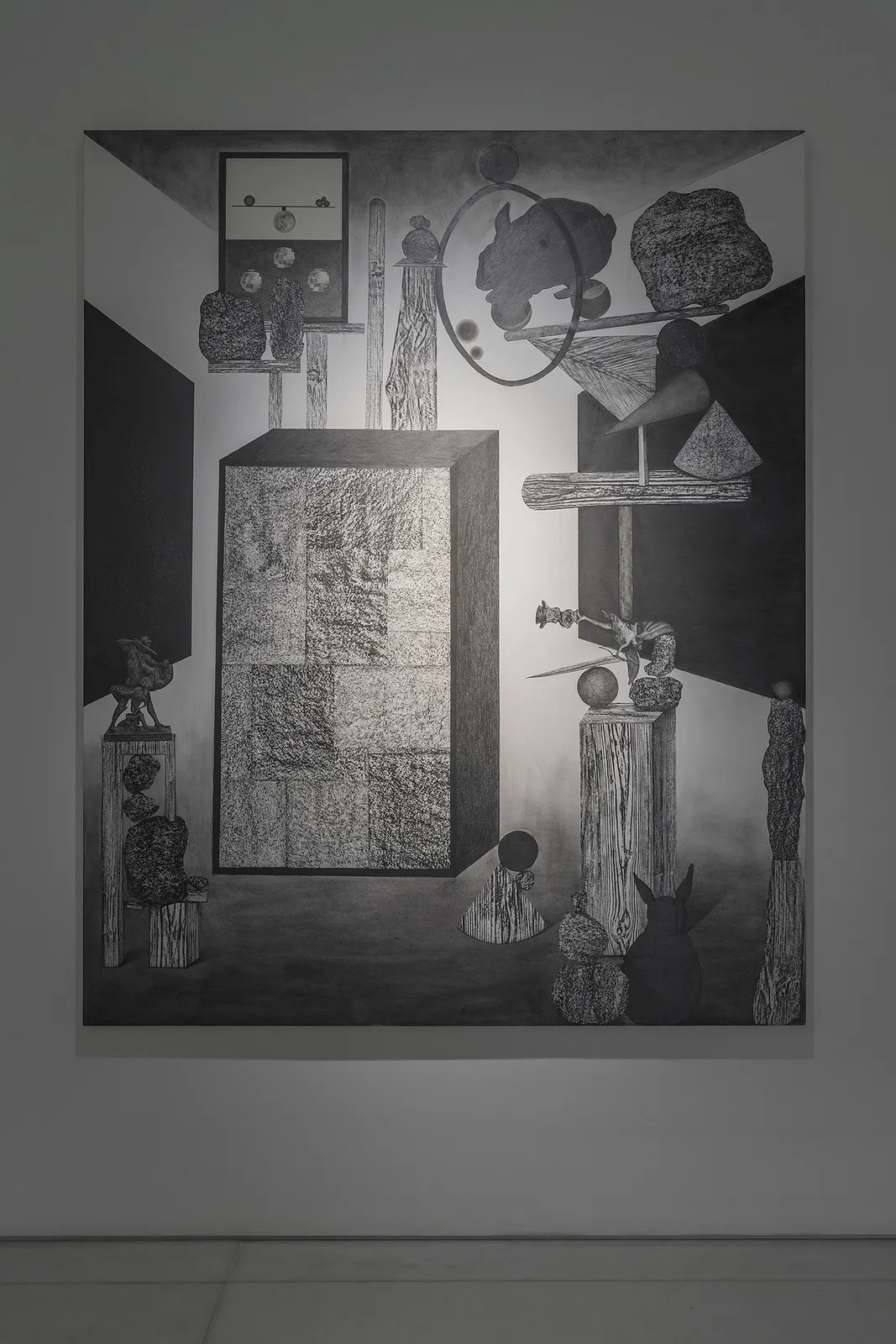
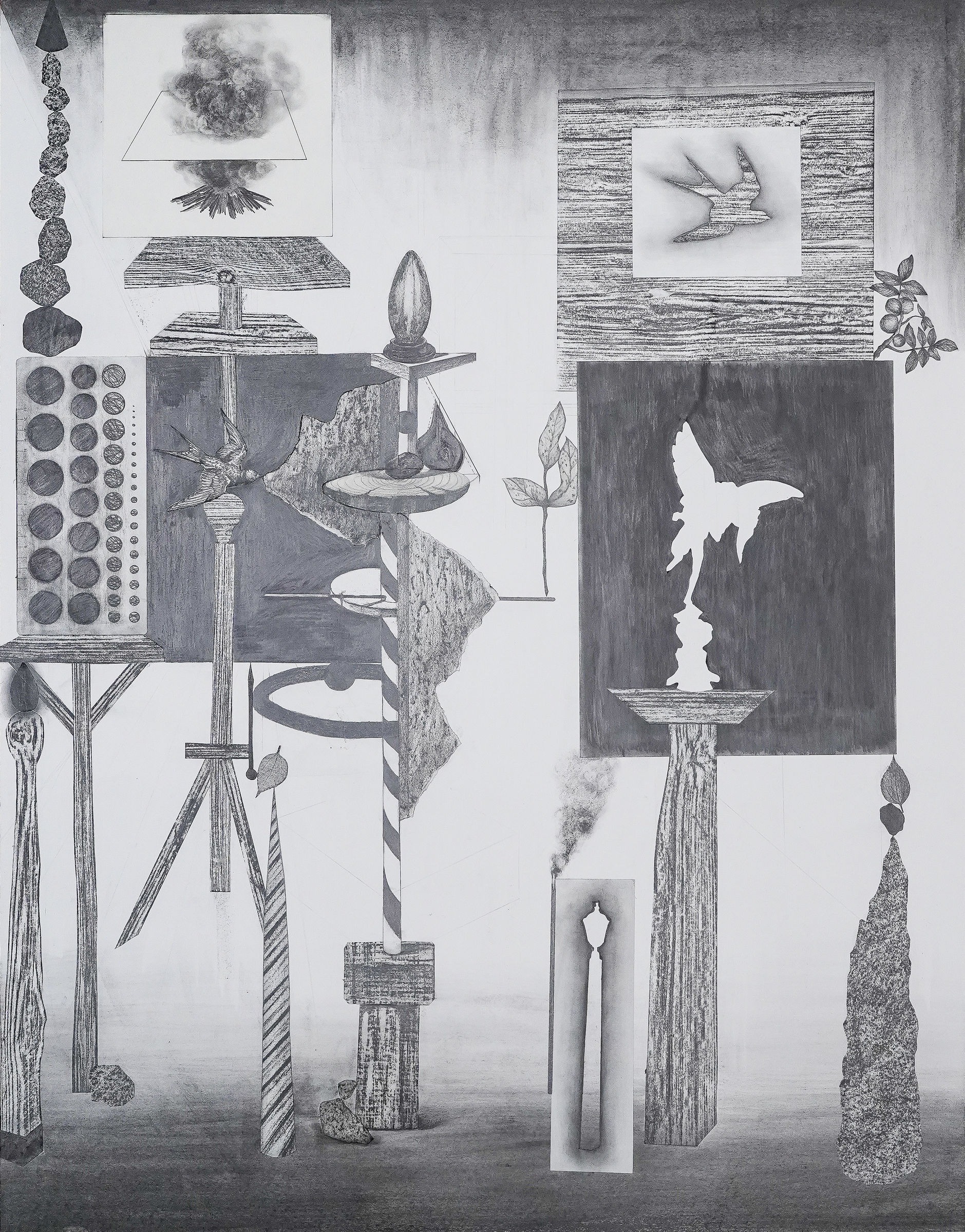
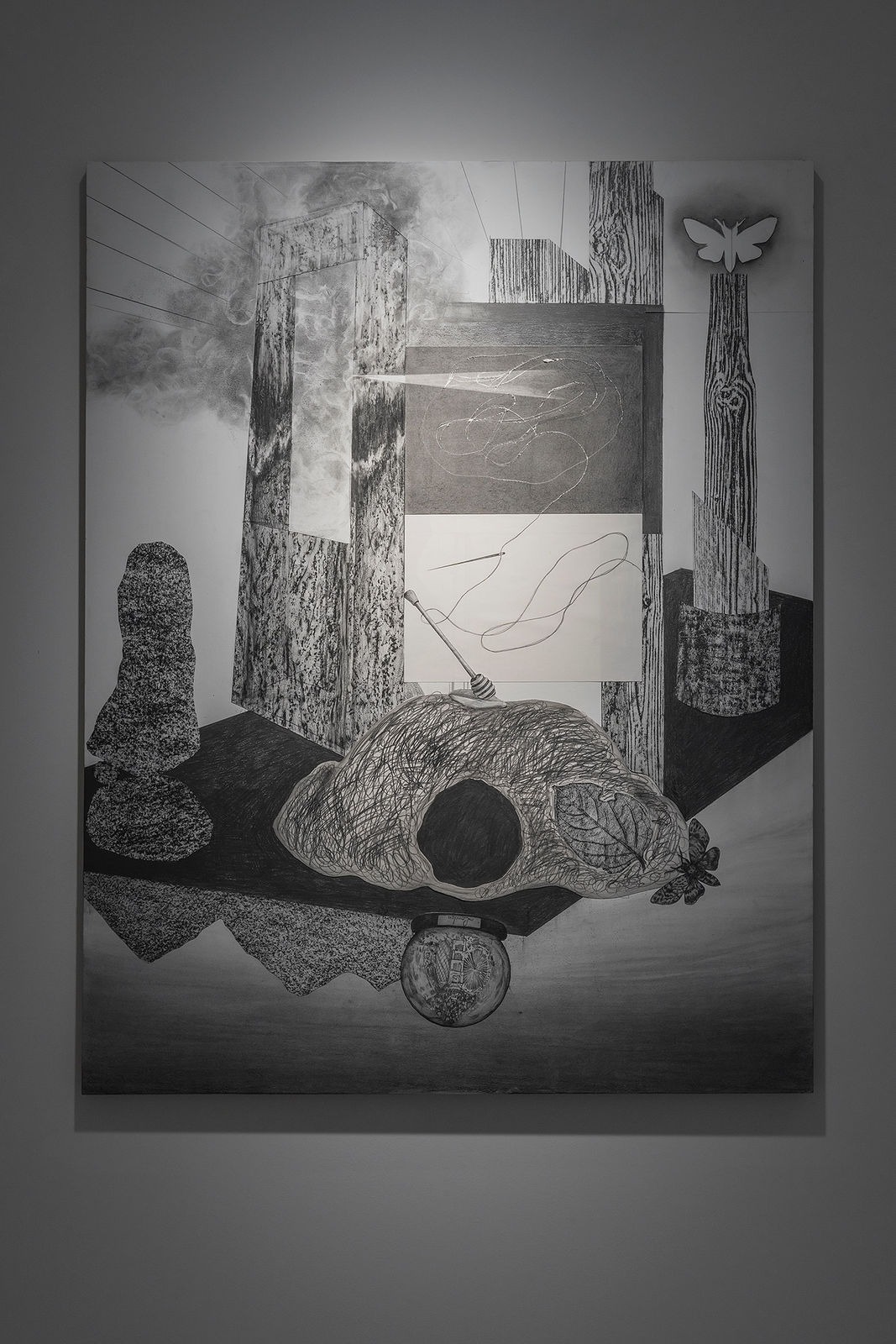
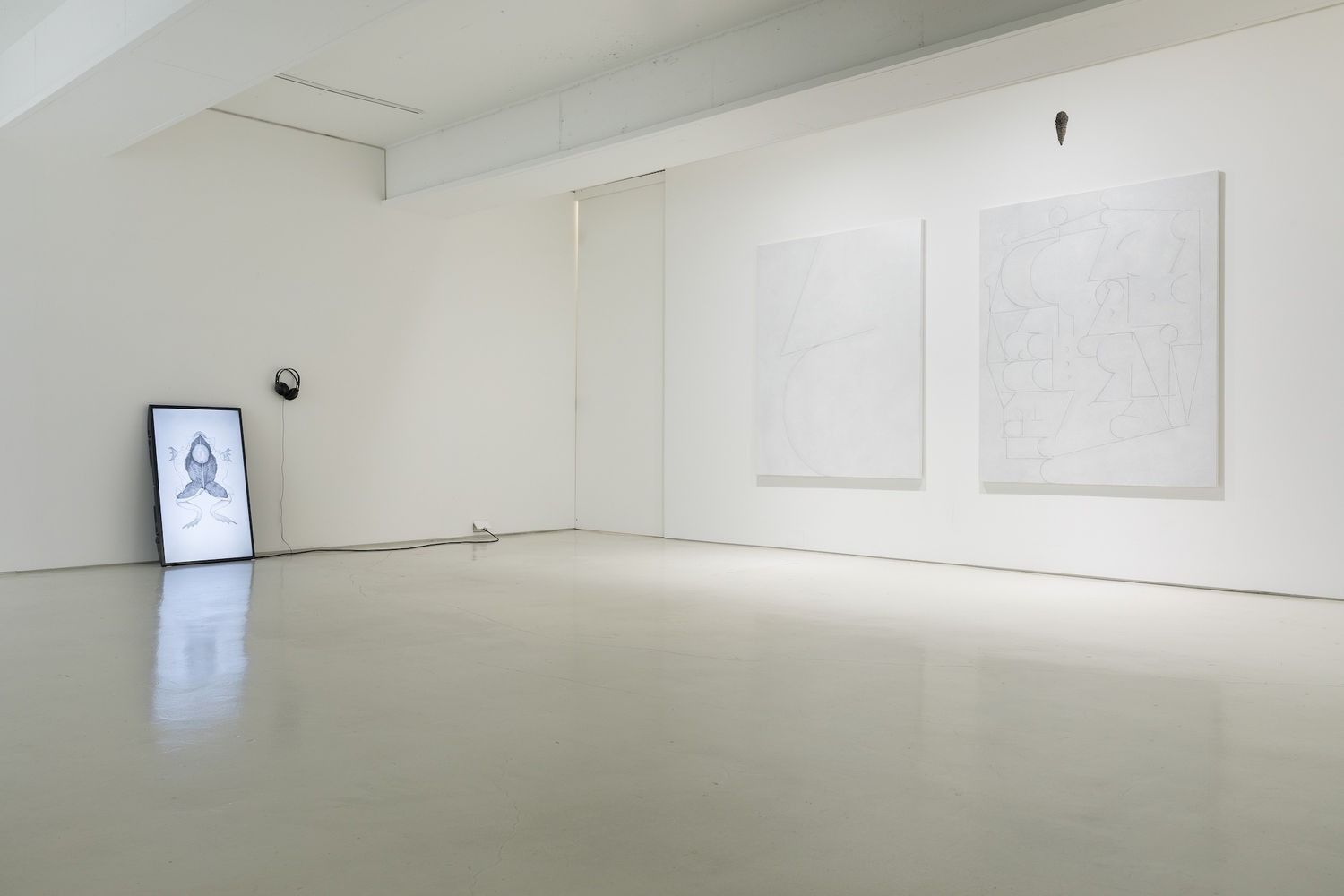
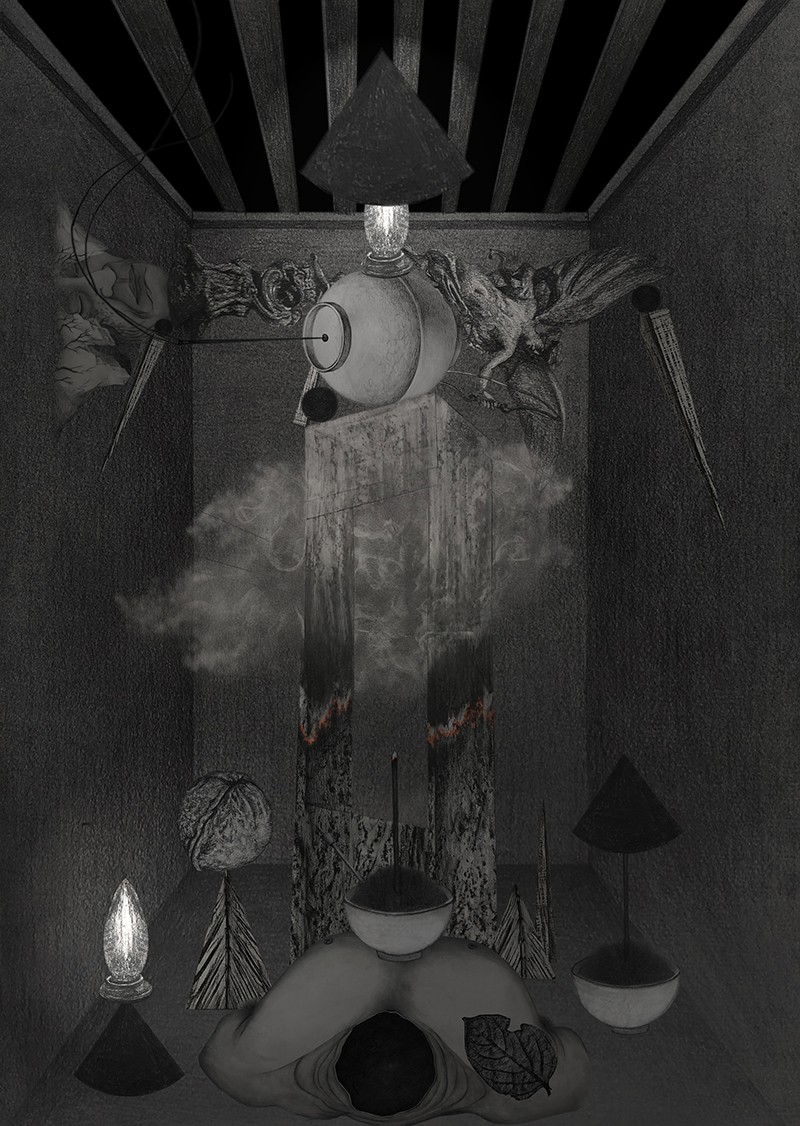
Mourning absence and loss may be directed toward a person, but it may also be offered to a place destined to disappear. In the ‘Distant Room’ series (2021–2022), comprising collage drawings and animation, the artist captures spaces that have vanished.

Based on her experience of having someone else clear out her London studio and belongings during the pandemic, the works depict worlds that exist simultaneously yet cannot touch one another, like the realms of the living and the dead, between which no sound can pass.

Even when the physical space remains unchanged, it becomes an entirely different place depending on what fills it. A space in which the artist once lived and left traces throughout ceases to exist once her belongings have been removed, the door closed, and the key handed over.
It becomes a space that certainly existed once but has now disappeared, surviving only in someone’s memory. Like the world of those who have departed, it too is a world beyond reach.

Moving across the boundaries between The Wanderer I and The Wanderer II, and between scenes in the videos and materially tangible collage drawings, the ‘Distant Room’ series forms a single interconnected world that continually places viewers in an intermediate zone belonging to neither here nor there. The endlessly looping videos also join their endings to their beginnings, revealing a cycle of recurrence.

The figure that the artist constructs by joining together fragments symbolizing instruments of consolation carries a rhythm of mourning, accompanied by the ringing of bells, toward the beings standing firmly in place. The human figure erected between the intermingling of The Wanderer I and The Wanderer II gradually collapses before catching fire and fading away.

Even the beings that appear immovably rooted in place begin to flow and disappear as though they had never stood there. Everything returns to a state of nothingness. Yet it is not absolute nothingness, for it will return before long.

To send something away well, then, is also an act of bringing it into being well. Washing and cleansing it, helping it prepare for a long journey, expresses the hope that it will one day be born anew and return, even in another form. Disappearance does not mean that something is truly gone; after circling round and round, we return to where we began.

Since the path of departure cannot be blocked, we wash the face and caress the skin so that the departed may return safely. We carefully clear the road along which the dead must travel. This is the form of gildakkeum, or “clearing the path,” performed during the latter part of ssitkimgut.
Following the carefully cleared path, the upright beings now depart for a world beyond the reach of our voices. We remain at the boundary, longing for those who are absent, pressing skin against skin to inscribe their gestures and voices and relying upon the warmth that still rises between us.

The sound connecting there and here slowly subsides, until even the ringing of the bells disappears. It is time to finish saying goodbye. One by one, they fall to the ground. A soft thud is heard. Perhaps this sound can no longer be heard on the other side.

Yet they will soon return. The standing figures disappear from this side into the other, but they will be born again somewhere, and we, too, will eventually have to follow behind the procession. Someone else will follow after us, and those who are reborn will also, in the distant future, take their place at the end of the procession.

Within the cyclical structure that runs through and governs both this world and the next, death and birth form a pair, repeating eternally in an endless loop. Yet every loss is painful, and longing is always new. This is why the act of mourning, too, must be repeated.

References