The Embodiment of True-View: Jin-gyeong
Assuming that there is a proto-imagination vis à vis Western
painting to discuss conventions of contemporary art, ponder this: How does
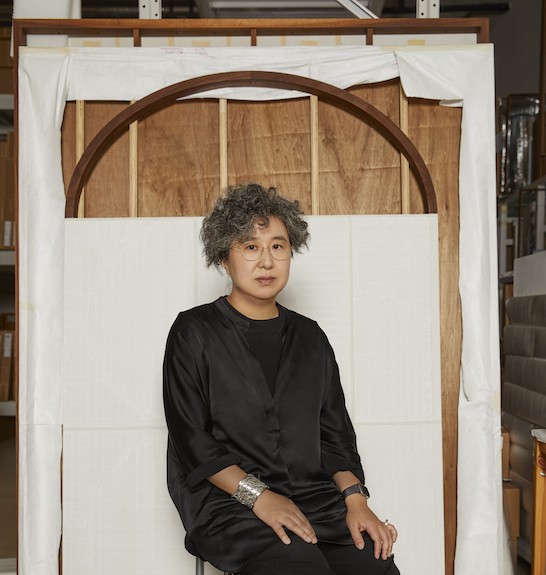
painting represent itself? Trained in classical Korean painting methods, Suki
Seokyeong Kang (b. 1977, Seoul) utilizes sound, video, sculpture, and
installation to produce a conceptual framework around what painting means,
making use of
a unique vocabulary, including various archaic Korean concepts, to shrewdly
materialize her subjects. The components of Kang’s oeuvre have brought together
art forms rooted in tradition, but employ contemporary modes of expression.
They examine the sustainability of traditions and expand both discursive
responses to contemporaneity and their significance to modern and contemporary
art.
In traditional Korean Art, true-view landscape painting
(jin-gyeong sansuhwa), influenced by Wu Wei’s Taoist philosophy, is based upon
concepts of artistic nonaction and noninterference with the order of the
natural landscape. Only inspiration drawn from natural landscapes allows the
artist to reflect upon and interpret the harmonious coexistence of humans and
nature. One of the pioneers of true-view painting during the Joseon Dynasty,
Gyeomjae Jeong Seon (1676–1759), developed Korean true-view subjectivity beyond
that of the traditional Chinese Southern School (nanzhonghua) and esoteric
literati painting styles.
To Gyeomjae, true-view painting not only represented
scenery itself, but also embodied artistic interpretations of that scenery.
What was important about Gyeomjae’s painting was not merely the ability to draw
landscapes by “imagining” them from the artist’s vantage, as the Chinese did,
but something closer to the actual incarnation of the “true-view movement,”
which relied upon the artist’s minimal engagement with the scenery.(1) In this
manner, true-view became the philosophical extension of the artist’s subjective
view of the landscape, as well as a way of embodying the artist’s experience of
space and time.
It would be quite difficult to distinguish the viewer’s
perspective of the scene in Kang’s work in relation to her new formats of
conceptual painting as influenced by true-view, as well as her complex
interplay with materiality, including the visual and the metaphysical meaning
of art as a whole. Although it seems simple enough to conjure a question about
whether the canvasless modality evokes the extended structure of discursive
painting as Kang intends, one further wonders what this synesthetic yet performative
visuality means.
Here the artist’s related sets of repetitive techniques
minimally intervene in an incommensurable constellation of themes, shapes, and
narratives. Since Kang’s artistic vision is based upon intermediality, the
nondirective interaction between subject and object, and the manifestation of
actuality, her subjects phenomenologically transform specific time space into
transitivity, the constant transition and/or transformative archive of mind
that engenders delicate senses and individual meanings to the spectators.(2)
Transformative Grids: Squares of Jeongganbo
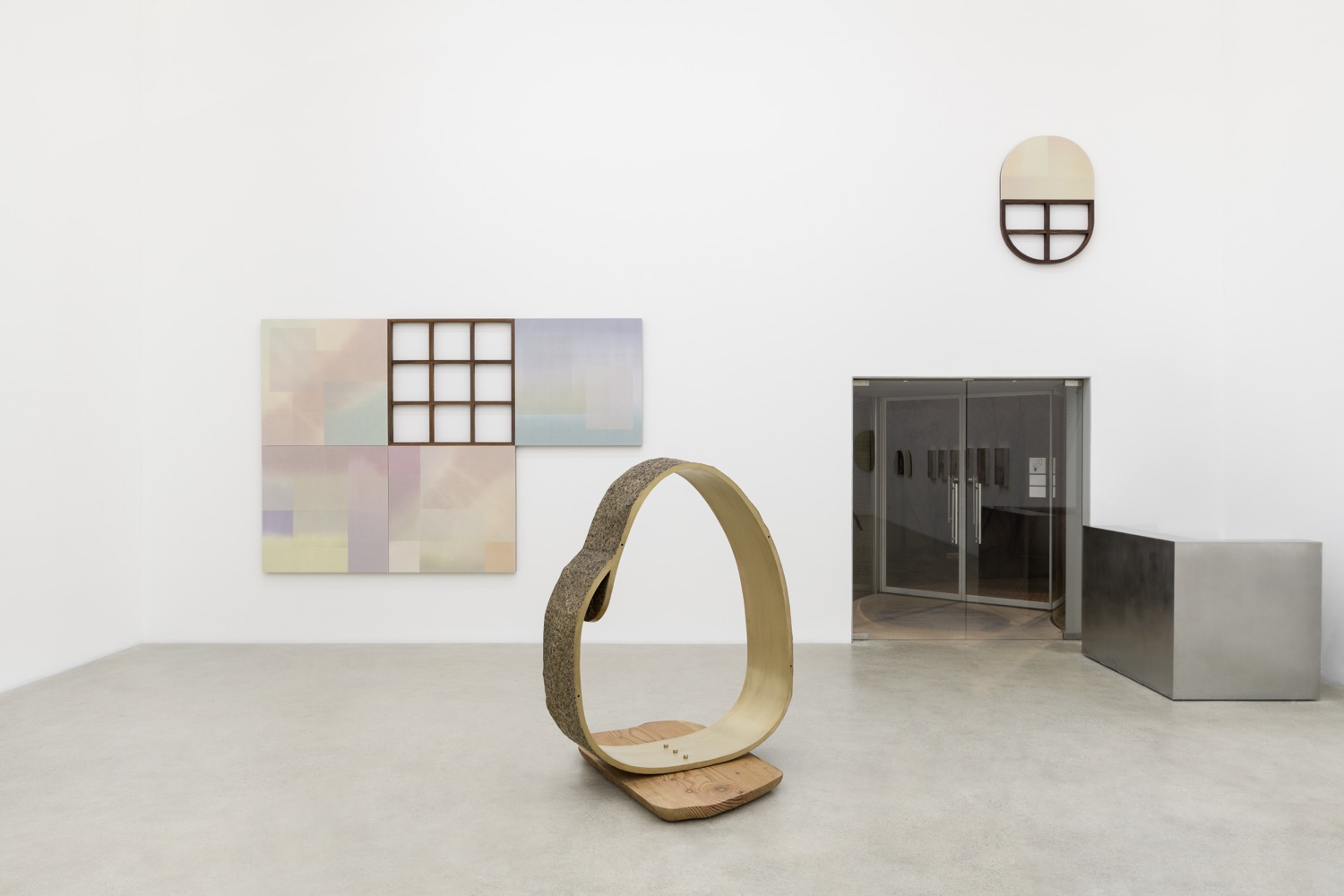
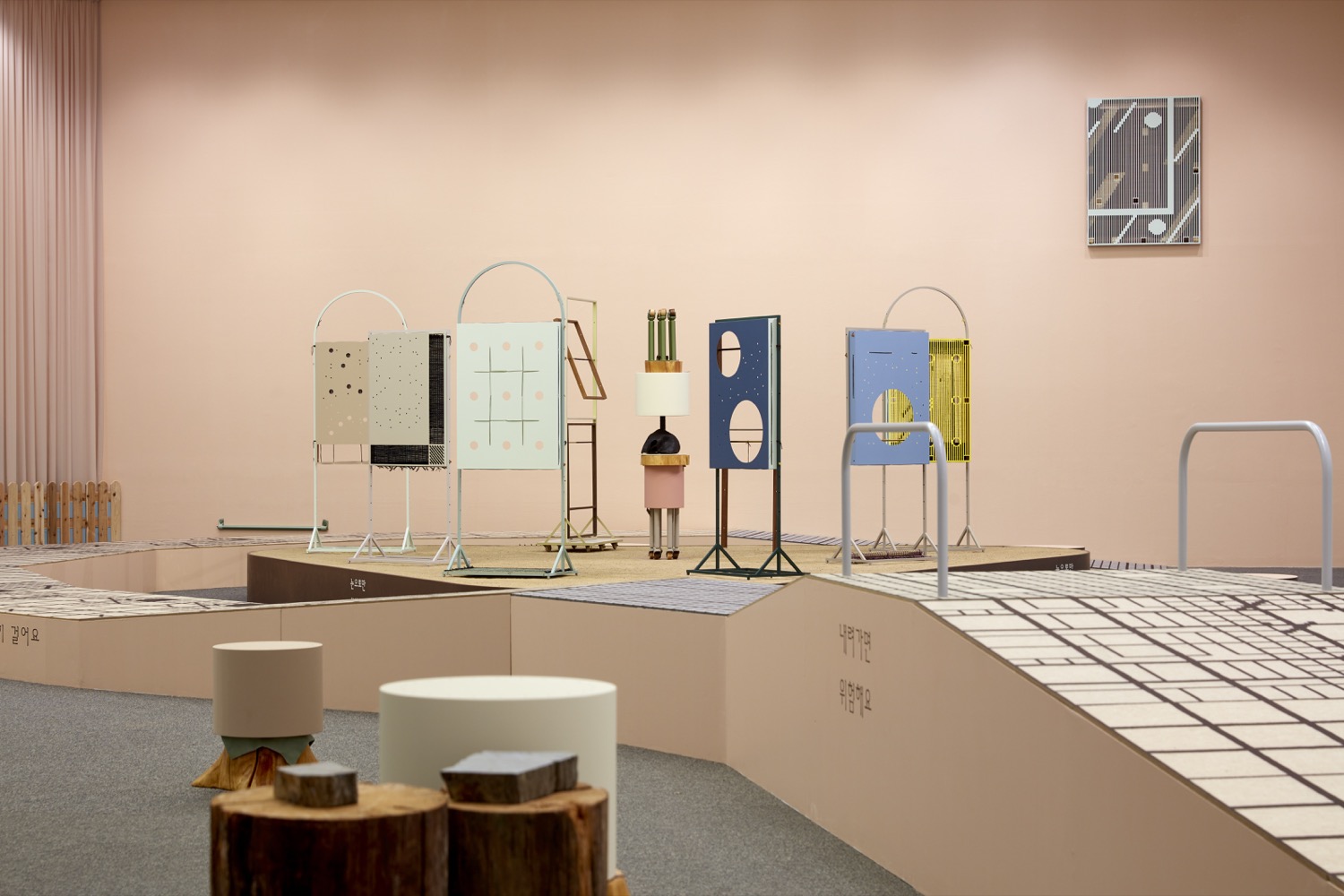
In works such as Black Mat Oriole (2018) and Black
Under Colored Moon (2015), Kang redefines her own notion of painting
through the use of a pitch black screen that becomes a conceptual handmade
canvas, recalling the classical Korean painting motif of the hwamunseok (black
mat), as well as the Korean musical notation jeongganbo. Jeongganbo was the
first musical notation of the Joseon Dynasty (1392–1910), produced by King
Sejong, to provide greater access to the public.
This ancient form of musical
annotation is an indispensable cultural reference for Kang’s works, since
jeongganbo possesses two primary functions: as an auxiliary memory system to
extend playing instruments visually, and as a sign to communicate and visualize
sounds among players. The traditional musical notation as a supplementary
memory system connotates a command system that tells musicians what to play,
while each musical notation in jeong signifies a visual substitute for the
actual sound, which indicates an expression-based system used to think about
sound itself, similar to Hangeul (Korean alphabet).
One might wonder why Kang chooses to utilize musical annotation
from the Joseon Dynasty. Although Kang’s oeuvre is characterized by various
techniques she employs in her own version of traditional painting, the minimal
set of geometric jeong (井) in jeongganbo
is not merely a metaphorical extension of the artist, but a profound reflection
of Kang’s spatio-temporal visions, brought to the surface by forgotten
compositional traditions.
Simply put, jeongganbo is a well-shaped square which
indicates an interval of time between sounds, thus inscribing the length of
sound into the scale of the space. It conveys a series of in-between sonic
gestures, such as the pitch of a sound (yulmyeong), an omnibus sign (oeumakbo),
a joint sign (hapjabo), and a footnote (yukbo). As jeong is a minimal form of
writing, the fragments of each jeong in Kang’s works are extended virtual
canvases for her “performance of becoming painting,” which invoke both
musicality and choreography in her static objects. In Kang’s works, jeongganbo
becomes a unique orchestration of trueview, implied through the multiple
connotations in each liminal square and activated as fragments of
spatiotemporality.
In the video installation Black Under Colored Moon
(2015), two elderly performers slowly move – not as “performance,” but rather
“becoming a moving painting” – in imperfect synchronization to geometric
tectonics that seem both exact and imprecise. Kang’s pieces are all similarly
marked by elements of harmonious incongruity. It was loosely inspired by the
oral literature genre Goryeosokyo, in particular the text Ssanghwajeom, which
literally means “dumpling shop,” and was anonymously composed and orally
transmitted during the era of King Chungnyeol (1236–1308).(3) The narrative of
Ssanghwajeom is based on unabashedly explicit sexual conversations between men
and women, often performed at the banquets of military commanders who enjoyed
the time’s peculiar style and aesthetic. The Goryeosokyo songs were revised
during the Joseon Dynasty under highly demanding Confucian morality and
chastity.
What is crucial about Kang’s appropriation of Ssanghwajeom is not
the contents of the sub narrative itself, but the way in which she uses the
song’s refrain as an intermedia reference. In Goryeosokyo, each stanza
possesses a specific meaning, sometimes freely improvised and modulated by an
audience’s perspective, such as gender difference, sociocultural hierarchy, and
the exchange of interracial heterosexual desire. In Kang’s work, this
transforms the subject’s positionality and clandestinely reveals the audience’s
subversive pleasure and imagination through linear and nonlinear narrative
structure.
In Black Under Colored Moon, two elderly performers, each moving on
either side of the screen, slowly and individually deal with their bodily
rhythms and repetitively reprise the ending and departure of their intermittent
rendezvous to the stanzas of Ssanghwajeom. Since the objects of this
installation are not fixed in their connection, they loosely navigate through
the bodily movements of the performers. They meet with each other as if
improvised and intentionally modified, in-between anthropomorphic sculptures
accumulated by a series of affectual transformative grids.
In Orality and Literacy: The Technologizing of the Word, Walter J.
Ong proposes that twentieth-century electronic technology is bringing back oral
culture.(4) If we posit Black Under Colored Moon as the secondary orality Ong
notes – transmitted through media such as television narratives – we find it
shares many similarities with verbally transmitted primary orality (e.g.,
folktales, rumors, and oral history), unsurprising since Kang’s Black Under
Colored Moon was influenced by the form of Goryeosokyo.(5) Still, there are
differences. Ong argued that secondary orality is not as repetitive, redundant,
or agonistic as primary orality. Here, Kang’s pieces betray the visualization
that separates secondary form primary orality, and mark its return.
Secondary
orality, according to Ong, is essentially “a more deliberate and self-conscious
orality, based permanently on the use of writing and print.”(6) In Black
Under Colored Moon, Kang uses a variety of printed materials on her
virtual canvas – from hanji paper, brass bolts, and steel to thread, wood,
plastic, and leather – to reconstruct her own concept of moving painting by
appropriating the narrative of Ssanghwajeom, so that despite the minimalistic
nature of her pieces, the work produces a sense of tactility and palpability. I
now return to the question: Why does Kang sum-mon past mnemonic techniques and
reconnect them to contemporary modes of making? What is the relationship
between her appropriation of true-view and her way-of-seeing and recognizing the
world?
Painting as Dispositif: Affective Spatiotemporality
Readings of tradition in Kang’s work lie in the fact that there
are two traditions engaged:
a past as referent or sub-narrative theme and a past that’s “immanent to its
praxis.”(7) Kang’s expanding aesthetic of true-view shows that her concept of
spatiotemporality as the organic connection to time and space, and the
audience’s affective feeling of “being here” individually and collectively,
work together in ways particular to the artistic mode of her vision. Thus,
Kang’s unique configuration of spatiotemporality from a past to interweave the
present/future engender an individual and collective sense of time/space,
leading to the use of multifarious interpretations to negotiate the very
meaning of contemporaneity.
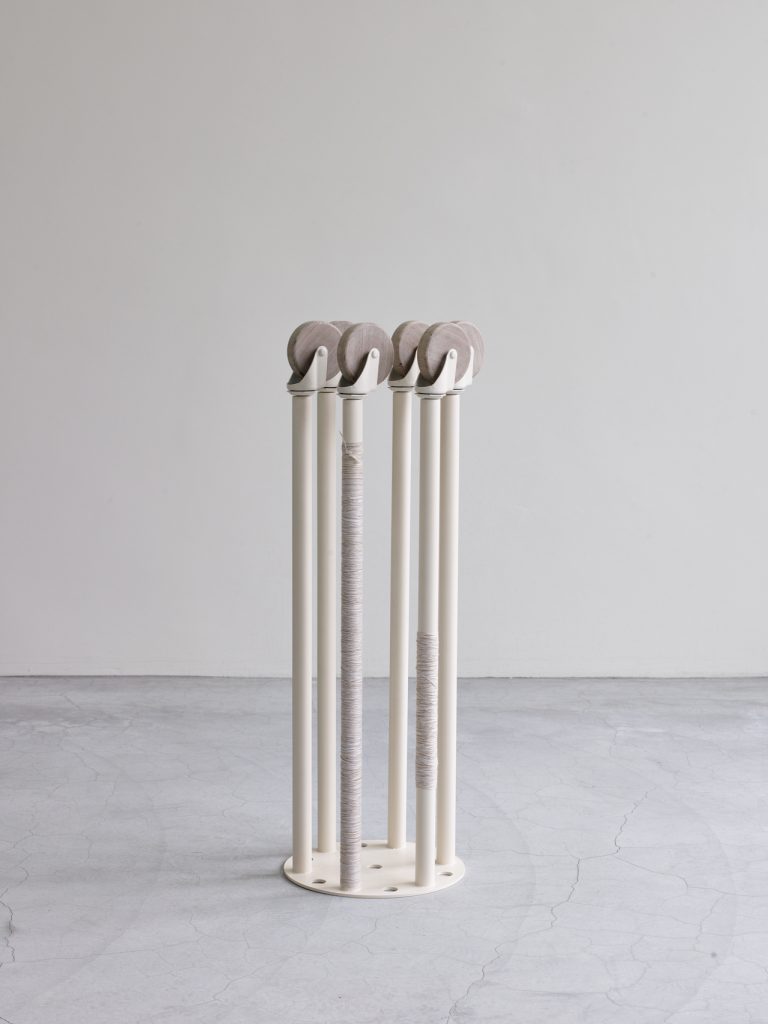
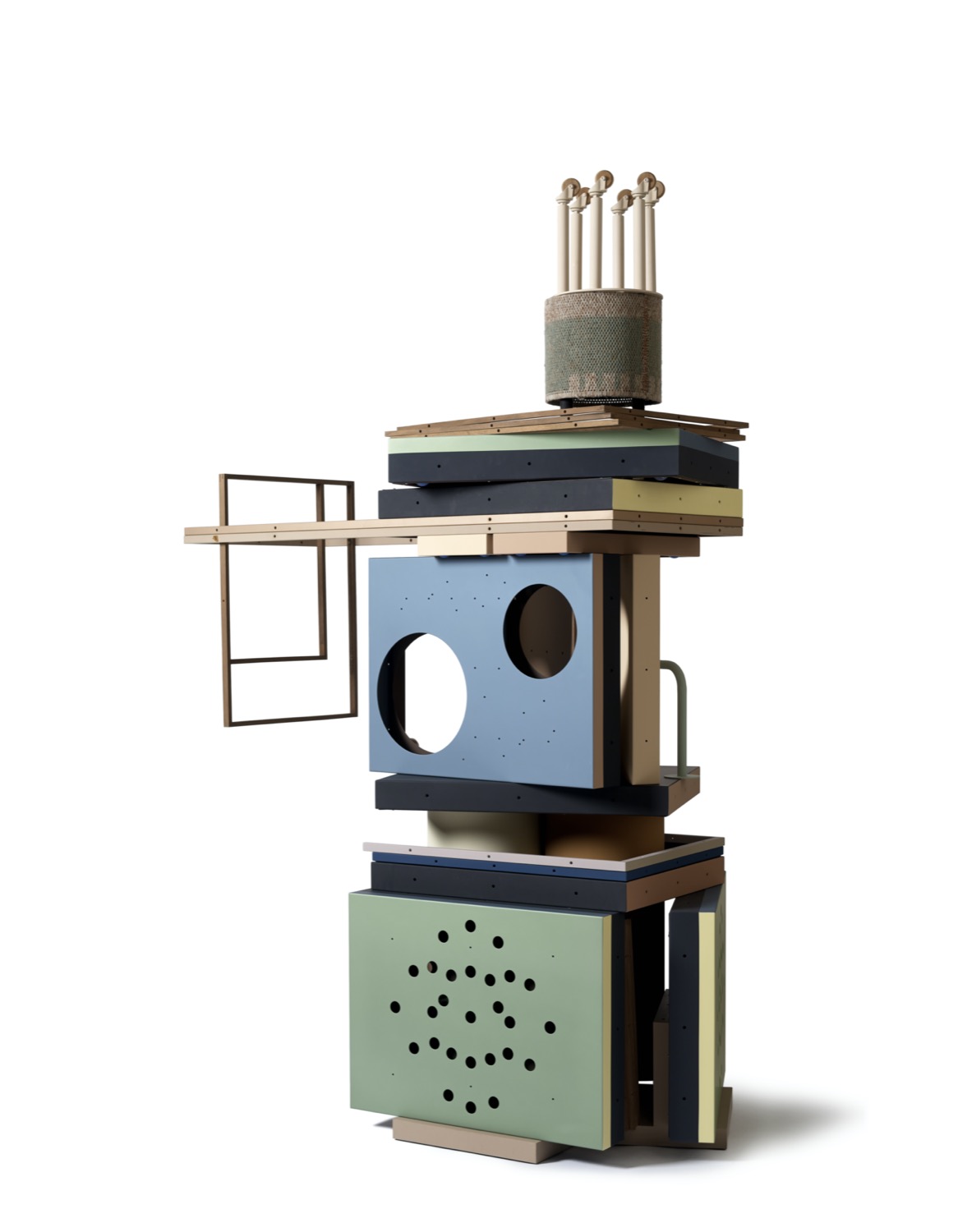
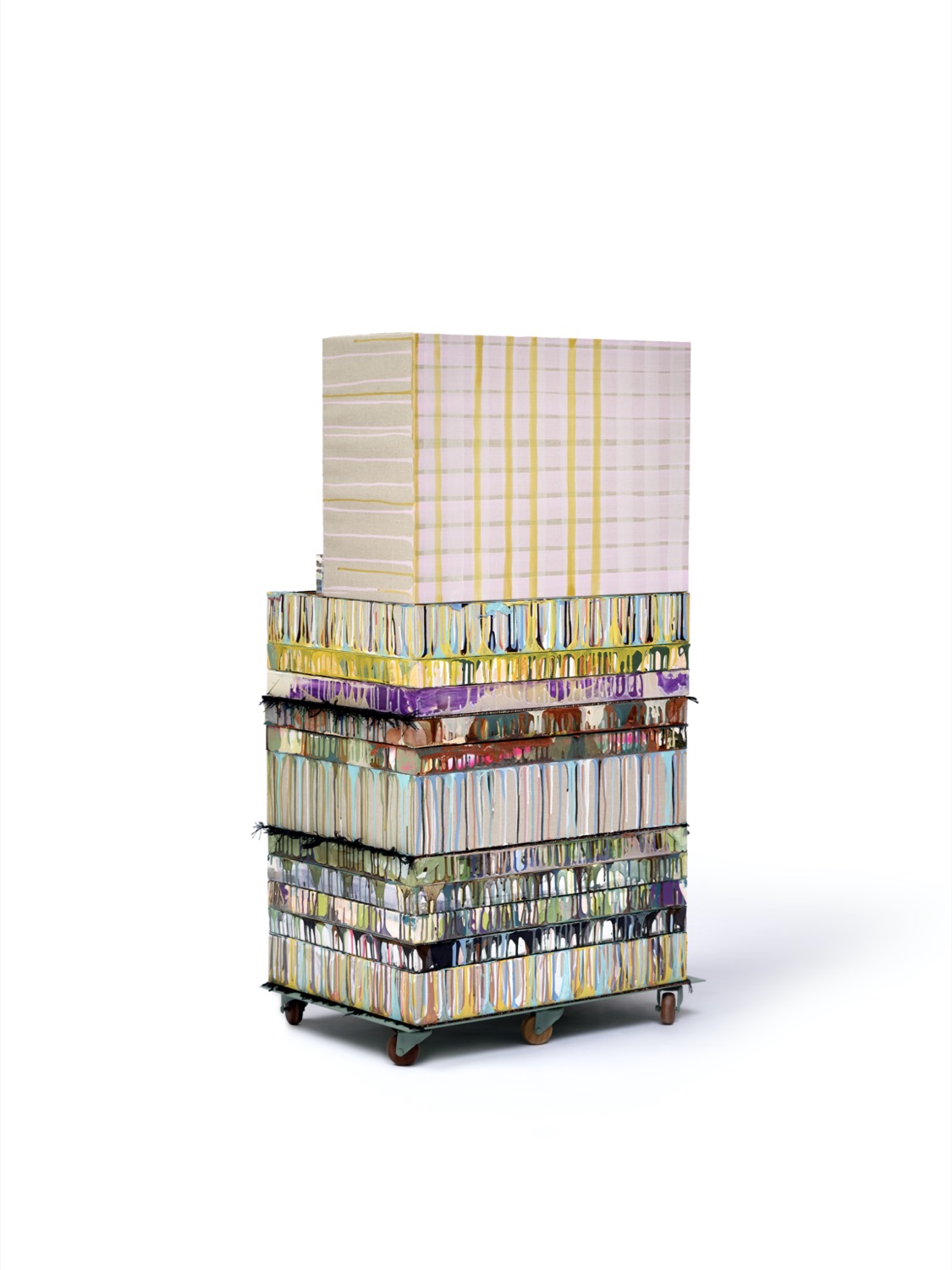
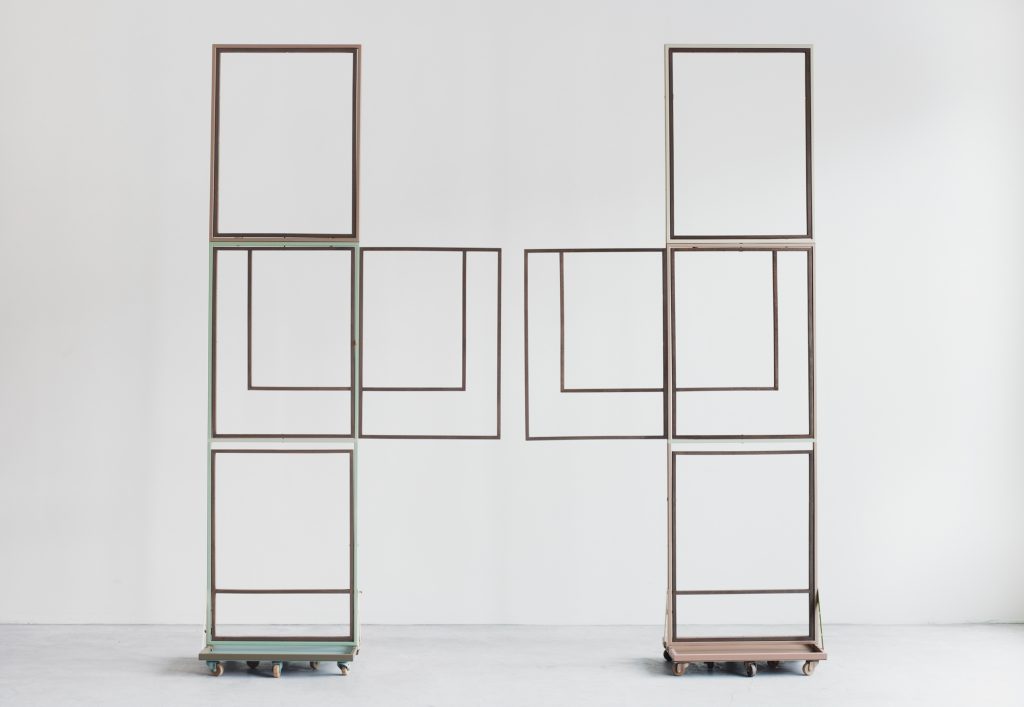
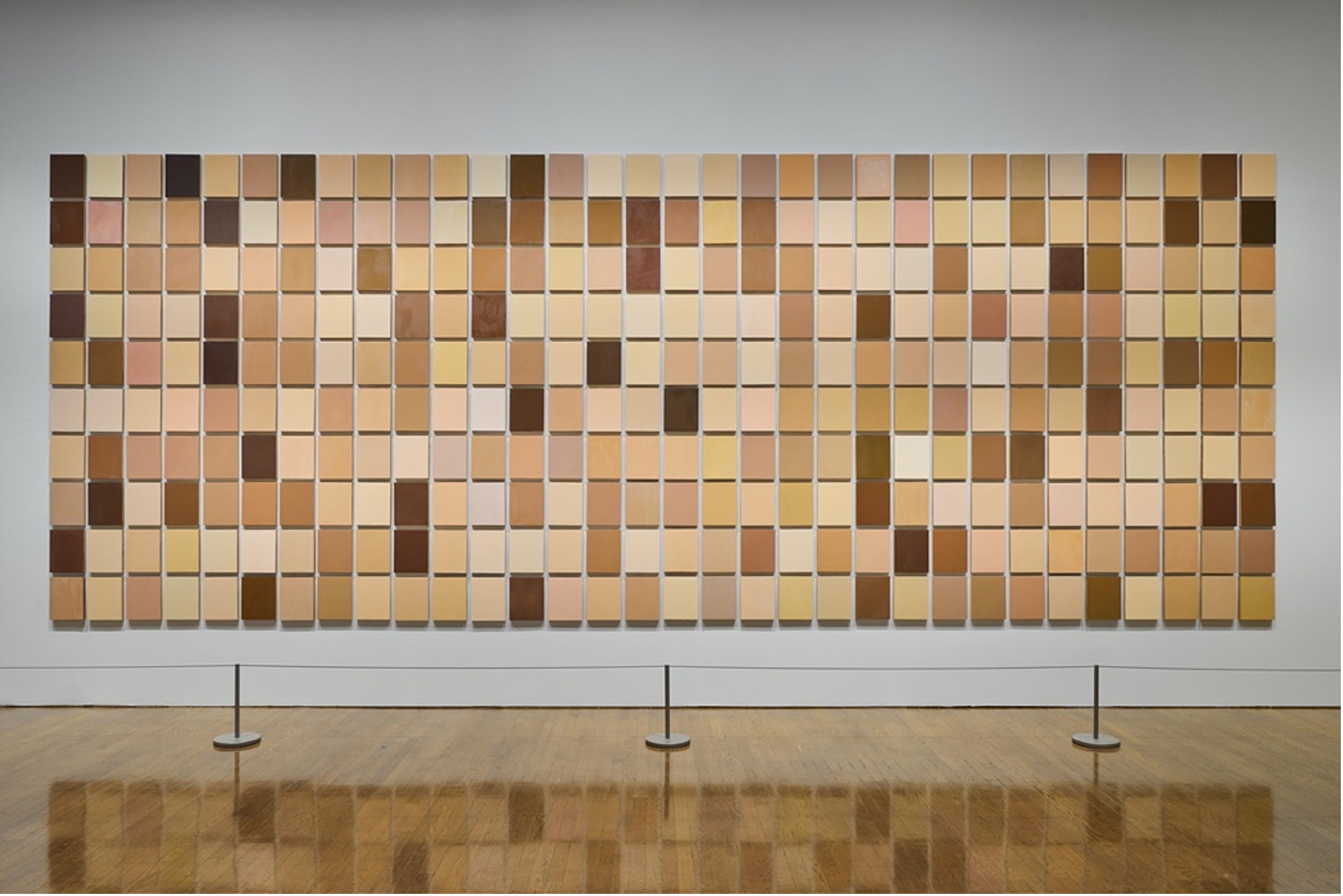
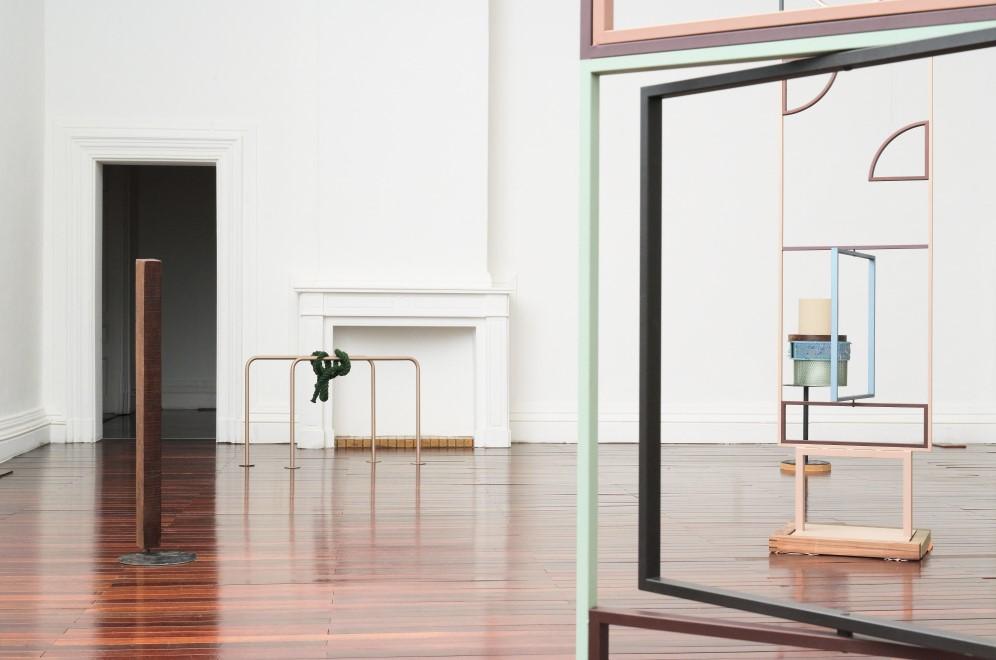
The row of installation pieces in Pause and Position – Jeong (2012–2015) may
at first appear almost symmetrical, but upon closer observation, are slightly
mismatched. Kang’s work, in general, can appear structured but fragmented,
geometrically harmonious but delicately disjointed, careful but makeshift. When
we view this work through a broader contextual lens and contemplate what it
means to understand contemporary sensibilities within the structure of
tradition – or what happens when we transfer meaning across cultural,
chronological, or spatial boundaries – Kang’s approach seems both eloquent and
earnest. Her geometric perceptions further both the individual meaning of works
and the ongoing evolution of true-view painting, reified as an ongoing process.
True-view painting functions as a Foucauldian dispositif, a term
that describes the construction and rearrangement of images, and their
heterogeneous connection to reinterpretation by the audience.(8) In media
studies, the dispositif has been engaged by Post-Structuralist approaches to
film, such as the apparatus theory. The concept of the dispositif was promoted
and expanded in the 1970s by Christian Metz, a theoretician who incorporated
psychoanalysis into film theory, by focusing on the symbolic representation of
reality through movies.
In other words, when the dispositif connects viewers
and spectators to the outside, the viewers generate new meanings as they
acquire understanding of the cinematic unreality, or the way affective
influences simulate reality through visual representation. Both Kang’s Black
Under Colored Moon and Black Mat Oriole produce
grounds for the audience’s experience of a dispositif, in which the
connection-convergence-interaction between philosophical and existential thinking
occurs. This function is actively applied and appropriated in Kang’s works, as
actual (sculpture) and virtual (video) aspects offer up both the real world and
its simulation.
The audience’s experience within Kang’s sculptural installations
echoes the fragmentation of her videos as déjà vu, which reifies a feeling of
connection. The deactivated objects, without agency, that the audience
confronts virtually on the screen enunciate their physical existence as if they
(Kang’s artistic objects) are the proof of the memory. The assemblage of
numerous grids on the screen can be arbitrarily combined at any time in the
actual site through the audience’s own imagination – introducing different
realms of reality.
Thus, actual objects seem to provoke questions about the
ontology of virtual things – how the visual (what-you-see) can be mediated as
linear, and how, combined with non- linear narrative structures imagined by the
audience, can actually limit the way we perceive thingness, the very essence of
true-view. The paradoxical meaningless in the realm of interpretation and
aesthetics acts as a Heideggerian project (Entwurf) of self-contemplation and
reflection, such that in contemporary true-view, various historical and
cultural meanings can be intermediated behind void signifiers.
Subversive Porosity: Holes and Circles of Hwamunseok
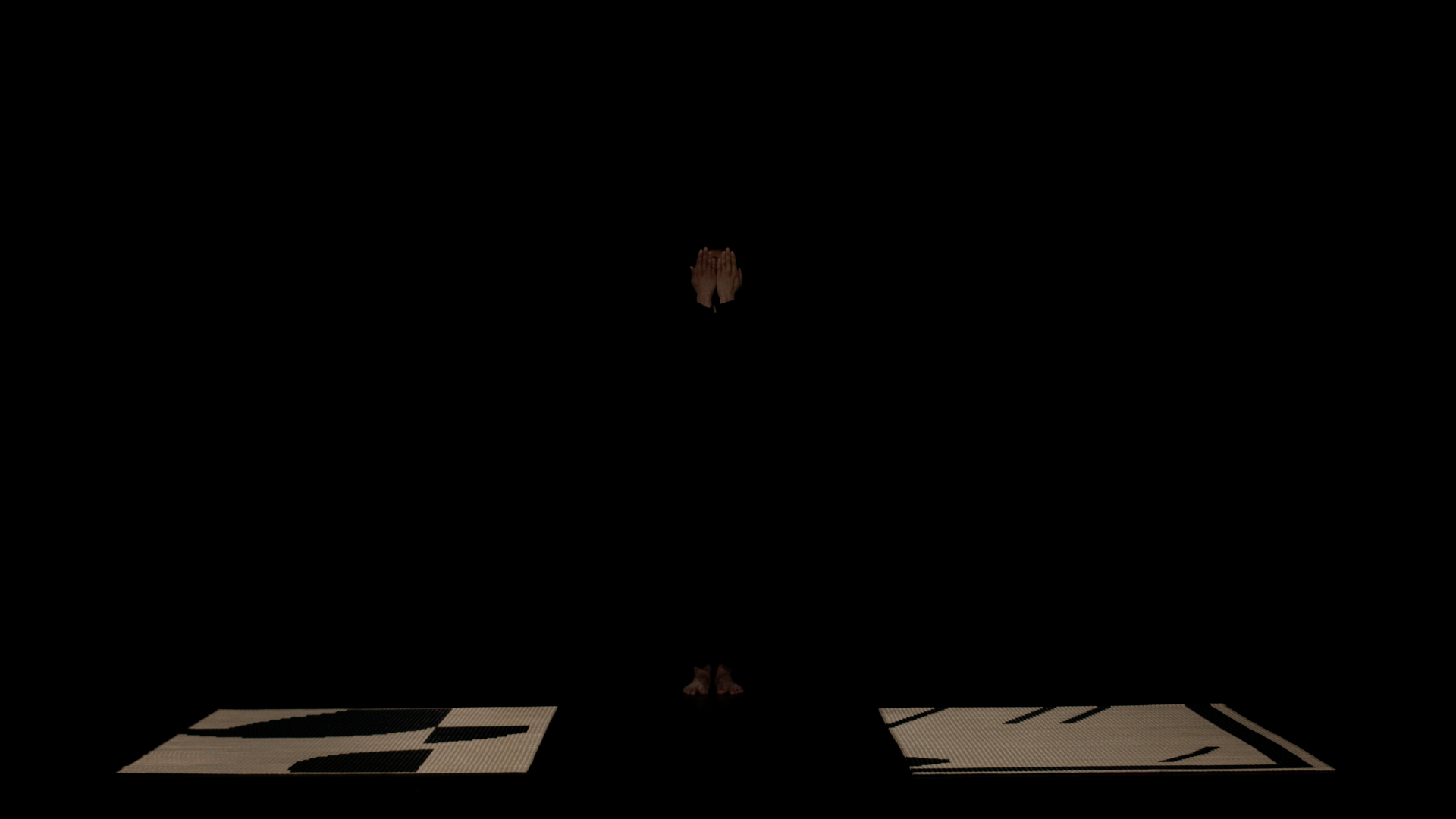
In Black Mat Oriole, we zoom in on Kang’s
faceless subjects constructing structures with intention, and yet their
mysterious movements seem unsteady; pieces of pastel shades don’t seem to
completely align in the midst of the visual cacophony. Within the epistemic
matrix of hwamunseok (black mat), another artistic platform for Kang’s work,
uncanny noises ooze out of the apertures, bodiless feet slowly hop around
be-tween stanzas, and porous squares permeate the spatiotemporality of
beings.(9) Each cadence of movement ends repetitively with the clear sound of
percussion, which plays a role in informing the beginning, ending, and change
of action.(10) Those who are situated in their own space-time start to break
away and sneak into other places, taking their feet in and out of the holes in
a pitch black diegesis, where ominous shadows appear, as if monitoring the
entire sequence.
For Kang, the metaphor of porosity evokes political engagement, in
terms of both contemporaneity and the way-of-seeing in South Korea. Since
Kang’s Black Mat Oriole indicates that the multi-layered
precondition of being that had long been confined in a small square as jeong,
is no longer constrained within the absolute spatiotemporality; rather the
subjects can instantaneously engage, expand, overlap, and interfere to affect
one another. The political transversality of porosity thus opens up a question
about the permeability of the self. Unlike Kang’s previous artistic motifs,
such as Mora and Jeong, why does the hwamunseok in Black Mat Oriole have so
many holes and circles, and what do they indicate to us as signs? To better
understand the trans-formative links between Mora/Jeong and hwamunseok, we
should remind ourselves of the historical specificity of Black Mat
Oriole, as Kang’s work is considered within the sociopolitical
circumstance of South Korea.
The installation of Black Mat Oriole is
inspired by one of the most beloved traditional solo court choreography forms,
Chunaengmu (also known as Chunaengjeon, literally meaning “dance of the spring
oriole”), from the late Joseon Dynasty.(11) Created by Prince Hyomyeong
(1809–1830), who was inspired by watching a pair of orioles chirping on a
willow branch, Chun aeng mu is a series of restrained gestures with gentle and
poetic movements, only to be performed on a square mat, called hwamunseok.(12)
In other words, hwamunseok is the only choreographical topos in which anything
can be allowed to be presented.
During the traditional solo performance, the
court music piece Pyeong jo hoesang is played to accompany the dance, though
Kang uses minimal sound to evoke its nature.(13) Since it is a court dance only
performed in front of royal family, its expression is full of
self-restraint.(14) The most striking pose of Chunaengmu is hwajeontae (花煎態), literally meaning “the graceful appearance in front of a flower.”
Performers in court dances could not dare to face the king. Hwajeontae is the
only exception – as when the dancer imitates a bird resting on a flower by
placing their colorful sleeves behind their back. Only then can the dancer
smile at the king. The quality of this unexpected smile reveals the class of
the dancer, since the very act of smiling is one of the most audacious and
subversive pinnacles of hwajeontae.
The momentary act is the only time-space
when both the performer and the audience can be hierarchically equal,
regardless of their sociocultural status. Thus, the truth of meaning can be
fully conveyed within this ecstatic interstice. As Kang clearly indicates,
hwajeontae serves as a minimal artistic platform for “the minimum space one can
stand in… it simultaneously becomes a point of departure and point of arrival,
after which we decide where we want to go,” or better, hwajeontae might signify
the political condition in which one can investigate the concept of
dispossession in contemporary Korean culture, and its connections with
bio-politics, recognition, performativity, protest, and relationality.(15)
Regardless of Kang’s ambiguous intentions, Black Mat
Oriole clearly resonates with Korean political turmoil instigated by
the Sewol ferry incident (2014) and the public’s active engagement both
collectively and individually in response to these historical moments.(16) The
attitude of these personal movements informs the poiesis of what Kang wishes to
explore, just as Chun aengmu’s hwajeontae uses perpetually mismatched holes and
seemingly unfit circles in repetition as signs for the metaphorical socio-political
movements of the individuals in motion.
The Sewol ferry incident was the signpost for Koreans to rethink
meanings of contemporaneity that they took for granted since their liberation
from Japanese occupation. The biopolitics of the Sewol ferry incident raise new
cultural concerns around sovereignty, dealing with topics ranging from
conditions of Giorgio Agamben’s “bare life,” the rights to live, questions of
governmentality related to the “disjointed time” of the sinking, as well as
issues of the governmental control of human right movements. Since 2014, the
South Korean search for trapped spatiotemporality is always, and repetitively,
concluded as the search for truth.
But, as Gilles Deleuze said, “the truth is
not to be found by affinity, nor by goodwill, but betrayed by involuntary
signs.”(17) There are signs that force us to conceive this lost time under the
government’s control through political movement and cultural censorship. For
unknown faces, no-longer existing faces, continuously born in pure states as
the signs of mismatched spatiotemporality, have been re-modified by the media
in blurred and crushed moments. Affect lingers in the past and the present
reappears on the surface – these mediatized signs give us the pain of
witnessing and constituting a time lost forever, instead of giving us hope for
the future.
Suffice to say that the present sensation sets its materiality of
culture, and gives us a sense of irreparable loss as a present sensation – the
strange contradiction of survival and of nothingness, both evaporated moments
of narrative. As Kang mentioned, the narrative within specific
spatiotemporality can create the potential to move on and undermine the very
situated-ness of a subject’s past, present, and future.(18) In Kang’s Black Mat
Oriole, this creates a specific place and time that resonates with the movement
that reflects our own position, which allows time to flow toward the future.
Memory and trauma appear in several signs: desire, the imagination of life and
death as departures and endings, lost/disjointed time-spaces, repressions and
disappearances, absences and losses. The uncovering of these in Kang’s Black
Mat Oriole – whether voluntary or not – gives meaning to our
repetitive trauma through the perpetuation of specific spatiotemporality that
mirrors contemporary Korean society.(19)
Coda: The Archive of Future Memory
Of whom and of what are we contemporaries? What does it mean to be
contemporary? – Giorgio Agamben(20)
Among all the Joseon dance performances, Chunaengmu was regarded
as the supreme aesthetic essence of court dance and symbolic etiquette.
However, due to the abolishment of the Joseon Dynasty’s class system and
practice of slavery by Gabo reform in 1895, the gisaeng dance performers, as
well as the institution set up for training and oversight of the dance,
disbanded amid the historical vortex of declining traditional art.
Only a few
performers from former gisaeng households tried to succeed in this traditional
art during the Japanese colonial period.(21) In 1969, the Korean National Film
Institute produced, Chunaengmu, a propaganda film (director unknown). This
now-rare film is based on the story of an elderly gisaeng in the colonial
period, who entrusted her assets to a national bank to secure economic
stability after liberation, and tried to pass on the movements of traditional
dance to her daughter.
Although the film was originally created to promote the saving of individual
assets at national banks, it symbolized the compressed modernization and
economic development of Park Chung Hee’s dictatorship – the plots, sequences,
and narrative of the film evoke the forgotten memory of Chunaengmu and gisaeng,
materialized through glimpses of archival footage of Chunaengmu performances
and the lives of its female entertainers. In the vividly represented monologue
of the old gisaeng in the final se-quence, the main character recalls her past:
My heart is now relieved. Today I put on my daughter a new yellow
colored aengsam with headdress that I wore to dance. After that, I didn’t live
long. Of course my daughter would have struggled and cried. But I want to say
that I have been honored by my daughter even in the afterlife. I always wanted
to keep my words in my daughter’s heart. Walk as if your feet are floating off
the ground. The body should be ridiculously light so you can sustain your own
weight with patience. When you smile, you should make yourself feel a vague
elegance with climax. Move as swallows fly back to the nest. Make your heart
attractive so your movement is equally gorgeous.
What does it mean to be honored by her own daughter, a successor
who remembers the forgotten choreography in the midst of the dictatorship?
Following postcolonial theorist Dipesh Chakrabarty, I ask a question: Who
speaks for the Korean past, and who will be the successor in the archive of
future memory?(22) From Japanese sexual slavery survivors to the US military
camp sex workers, the marginalized voices of the subaltern became a symbol of
collective resilience, a kind of “transnational feminism against the unresolved
gender and ethnicity based atrocities.”(23)
According to Hyunah Yang, these
testimonials – narratives of self- representation in which each woman looked at
herself and her experiences reflectively with her own strength of
interpretation – and their repetition of narrative triggered the map of
memories that eventually unfold and reterritorialize unpacked history against
official historiography.
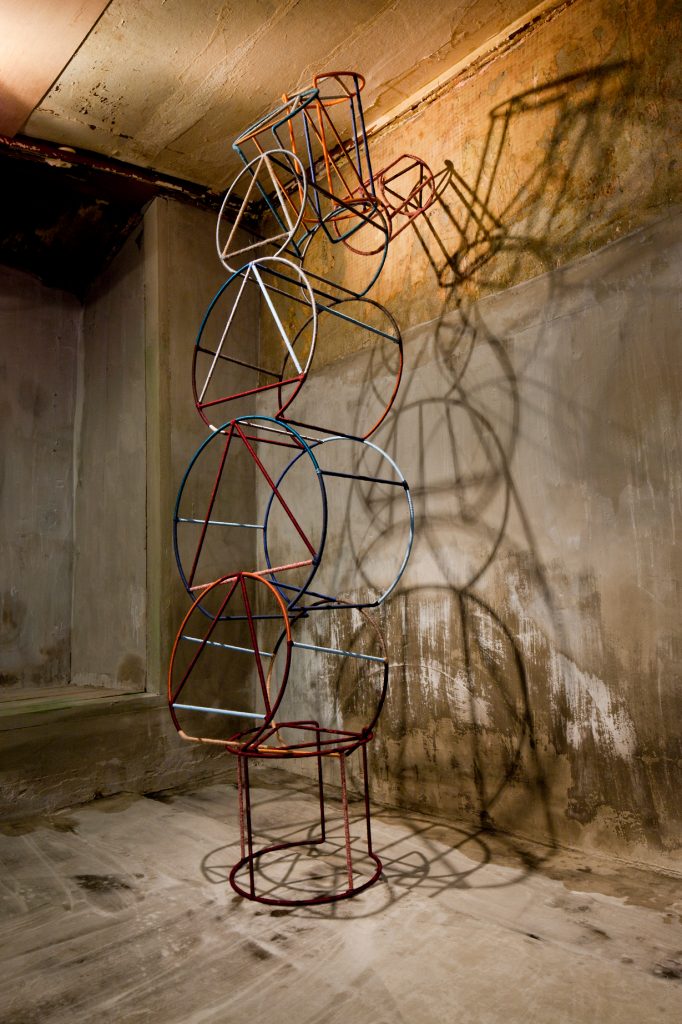
Kang’s intervention with the concept of con-temporaneity begins
with her early work, The Grandmother Tower (2011),
sculptural portraits of her grandmother (halmoni, in Korean). Kang utilizes her
own visual grammar to illustrate the very last moments of her grandmother – as
Kang mentioned, “scrawny yet beautiful” – whose personal memory embraced the
entire upheavals of the Korean modern period, from colonial to postcolonial
history. Based on her intimate conversations with and recollections of her grand-mother
– whose presence was so fragile that she was barely able to stand, yet who kept
her own dignity by smiling in front of her granddaughter like her last
hwajeontae – the work becomes an ontological skeleton of Kang’s artistic aims,
embodying time as flesh and blood. The vanishing presence of her grandmother
(halmoni) indicates not only the disappearance of premodernity to Kang, but
also the loss of vessels who can transmit memory from the past.
This idea of
art as mnemonic device summons the very meaning of Korean modern history,
especially women’s lives. The grandmother aggrandizes her personal memory to
the official historiography, as Kang utilizes the demolished voices from the
past as the proof of modernity through the lens of halmoni’s perspective. The
Grandmother Tower is the prototype of Kang’s vision of affective
spatiotemporality, which spans her unique vocabularies of mora/jeong and
hwajeontae. Art as the mnemonic device of remembering, the essence of Kang’s
conceptual painting, becomes both a dialogic form and preliminary platform to
unearth the myriad forces behind dire issues of subjectivity in Korea, here
recreated through constitutive self-displacement and spectral variations in
artistic performativity.
1.While working on a series of true-view landscapes, Gyeomjae
painted the mountains by sitting outside and looking directly at scenery.
Gyeomjae engaged this true-view land-scape painting style almost two hundred
years before Europeans began painting en plein air.
2.Intermediality is a term used to define phenomena that appear or
may appear through the crossing of media borders. According to Werner Wolf, it
“can be applied, in a broad sense, to any phenomenon involving more than one
medium,” such as individual texts, films, performances, and/or popular culture.
Werner Wolf, The Musicalization of Fiction (Amsterdam: Brill Rodopi, 1999), 36.
3.Goryeosokyo, Goryeo gayo, and/or the Song of Goryeo was an oral
genre of Korean poetry, dating from the Goryeo Dynasty (918–1392). As with
other oral literatures, such as hyangga, which were written using Chi-nese
characters in a system known as hyangchal, the compo-sition of Goryeosokyo
became popular during the middle and the end of Goryeo Dynasty. Most of
Goryeosokyo was written in the Hangeul alphabet and orally transmitted in
Joseon Dynasty. The characteristic of Goryeo-sokyo is a refrain at the end of
each stanza that builds a tone or atmosphere by introducing a different melody.
4.Walter J. Ong, “Print, Space and Closure: Hearing- Dominance
Yields to Sight Dominance,” Orality and Literacy: The Technologizing of the
Word (London: Routledge, 1982/2002).
5.What is most interesting about Ong’s theory of secondary orality
is that it postulates that electronic media can extend place and time: “This
new orality has striking resemblances to the old in its participatory mystique,
its fostering of a communal sense, its concentration on the present moment, and
even its use of formulas. But it is essentially a more deliberate and
self-conscious orality, based permanently on the use of writing and print,
which are essential for the manufacture and operation of the equipment and for
its use as well.” Ong, Orality and Literacy, 133.
6.Ong, 136.
7.David Teh contemplated the origin of national tradition in Thai
contemporary art in a 2014 paper: “Art’s address to the past is always a double
movement, addressing two pasts: the past that may be its theme or referent; and
a past that’s immanent to its praxis.” David Teh, “La Fausse Monnaie: Tradition
as False Currency,” Tradition (Un)Realized, International Symposium (Seoul:
Arko Art Center, 2014), 115.
8.According to Foucault, the dispositif is not a technical
apparatus. Rather, it is a system of relations, such as discourses,
institutions, or philosophical and ethical statements, marking historical
moments that respond to an urgent need. See “The Confession of the Flesh”
(1977) in Power/Knowledge: Selected Interviews and Other Writings, ed. Colin
Gordon (New York: Pantheon Books, 1980), 194–228.
9.Hwamunseok is an embroidered handwoven mat made with reed,
bulrush, or straw, combined with peony, plum patterns, and/ or tiger, dragon,
and phoenix shapes, from the time of the Shilla Dynasty (57 BCE–935 CE). In
Kang’s Black Mat Oriole, hwamunseok is a restricted site for the Chunaengmu
performance, where a dancer is allowed to perform for royalty.
10.Bak is a traditional percussive instrument used to announce a
transition to the prelude of ritual music in premiere court performances.
11.According to the Manual of Court Banquet (Sunjo gichuk-jinchan
uigwe, 純祖己丑進饌儀軌, 1848), the oldest documents providing
information about Chunaengmu, the dance has existed since 1649, but was revised
and perfected during Prince Hyomyeong’s tutelage. Moon Il-ji, “Ch’unaengjŏn (Nightingale Dance), a Korean Court Dance,” Yearbook for
Traditional Music, vol. 15 (East Asian Musics, 1983), 71–88.
12.Praised as “the flower of court dance,” Chunaengmu is the only
solo Korean court dance performance that includes choreographic patterns and
movements, such as gwagyosun (過橋仙), nakhwa
yusu (落花流水), daesu (擡袖), dosua
(掉袖兒), bansusubul (半垂手拂),
beonsu (飜袖), and hwajeontae (花前態) within six ja (尺, 자), a Korean unit of length (one ja is approximately 0.33 m, thus six
ja is equal to two square-meters).
13.Yeongsan hoesang is a Korean court music repertoire,
originating from Buddhist music, originally sung with seven words, as chanted
in the Buddha’s sermon. Pyeongjo hoesang is an alternative version of Yeongsan
hoesang, transposed four scales lower. Pyeongjo hoesang is used as
accompaniment to the court dance Chunaengmu and solo daegeum (large bamboo
trans-verse flute from traditional Korean music) performance.
14.Performers can dance on the hwamunseok without shoes, only if
wearing traditional socks called beoseon. In Black Mat Oriole, the performers
in both the installation and actual performance do not wear socks. Usually
dancers wear aengsam, a yellow costume, along with a headdress called jokduri,
specifically meant for female dancers.
15.Suki Seokyeong Kang, in conversation with Maria Lind, 2018
(p.193).
16.The sinking of MV Sewol, also referred to as the Sewol Ferry
Disaster, occurred on the morning of April 16, 2014. The disaster killed more
than 300 people, mostly high school students from the city of Ansan, who were
on a school field trip to Jeju Island. The tragedy is now seen as resulting
from a combination of the government’s lack of effort, eluding of
responsibility, and general mishandling of a very preventable event. The
disaster created an outrage in South Korea, with public candlelight vigils taking
place from 2014 to 2017, and created a demand for a special investigative law
to reveal and bring to justice parties responsible for the sequence that lead
to the sinking of the ferry.
17.Gilles Deleuze, Proust and Signs: The Complete Text
(Minneapolis: University of Minnesota Press, 1964/2003), 15. Deleuze explores
the system of signs via Proust’s In Search of Lost Time, through looking at
signs left by persons or events to explain how those memories interpret signs
creatively but inaccurately. One of Deleuze’s aims is to challenge the common
concept that involuntary memory and subjective association in interpretation.
18.“I created a video that animates the art and extends it to the
next page of the story. I hope this operates as a plat-form for the work, or
that it creates a space of possibility to embody personal thoughts and voices.
This is to point my work to where it stands now, its past and present, and its
potential to head to another place in the future.” Suki Seokyeong Kang, in
conversation, 155with Maria Lind, 2018 (p.199).
19.Kang’s conceptual painting in abstract grids and frames is
mobilized by a doubled spatio temporality of both past and present, where the
spectator and the sculptural presence interchange meanings and sign between the
contemporary and the archaic, and the transient and the eternal mode of
affective movements as the archives of future memory.
20.Giorgio Agamben, “What Is the Contemporary?,” in What is an
Apparatus? and Other Essays, trans. David Kishik and Stefan Pedatella (Palo
Alto: Stanford University Press, 2009), 53.
21.During Japanese colonial occupation (1910–1945), all court
dances were banned. Only five court dances survived and were inherited until
now: Cheoyongmu, Pogurak, geommu, Mugo, and Chun aengmu. They were performed in
entertainment houses called Gyobang.
22.Dipesh Chakrabarty, “Post-coloniality and the Artifice of
History: Who Speaks for the Indian Past?,” Representations 37 (Oakland:
University of California Press, 1992), 1–26.
23.Hyunah Yang, “Finding the ‘Map of Memory’: Testimony of the
Japanese Military Sexual Slavery Survivors,” Positions 16.1 (Durham: Duke
University Press, 2008), 84.