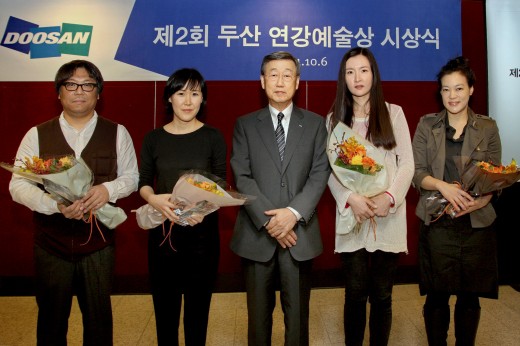
LEE: I imagine your decision to major in Korean painting was influenced by your father. Looking at your undergraduate works, however, I was struck by the wide range of experiments you pursued. Perhaps this was possible precisely because you were still a student, but your practice moved fluidly between ink painting and installation.

What led you to use materials such as gouache and pastel at the time? I also noticed that the image files you sent did not include any traditional color paintings.

LSJ: My father is a calligrapher, so I became familiar with brushes used in Korean painting when I was around three or four years old. For me, they were simply toys. Although I did not necessarily use ink more than any other medium as a child, it felt much more familiar than crayons or paint. Because I was so accustomed to ink and hanji, I think I was actually hesitant to choose Korean painting as my major.

I belonged to the first cohort admitted under the newly established School of Fine Arts system at Ewha Womans University, so I entered as a Fine Arts major. During my first year, I wanted to learn something new, so I took more courses in Western painting. Students received foundational training in Korean painting, Western painting, and sculpture before selecting their major in the second year.

Even after choosing Korean painting, I never worried that my practice would be confined to that field alone. Looking back, I realize that while taking both Korean and Western painting classes simultaneously, the byproducts from assignments in one studio often became the starting materials for assignments in the other.

I think my ongoing interest in continuity between media and forms—a central aspect of my practice today—began during that period. After graduating, rather than studying abroad, I wanted to continue learning in a new environment, so I entered graduate school at Seoul National University.

The atmosphere there was more conservative, with a stronger emphasis on the identity of Korean painting, and it prompted me to think much more deeply about what Korean painting meant. More than questioning what I was asking, I became increasingly concerned with why I, as someone living in the present, was asking those questions in the first place.

LEE: Although you experimented with many different approaches as a student, your work contains many characteristics that would readily be identified as Korean painting. I imagine you have reflected more deeply than most artists on what it means for a work to be described as Korean painting.

LSJ: Regardless of how one defines it, I grew up in a country with a long tradition of Korean painting. I formally studied it, and whether to a greater or lesser degree, my work remains connected to that tradition. It would be presumptuous of me to offer definitive answers about it. Even if I cannot articulate everything clearly in words, I have always hoped that perhaps my work itself might serve as a kind of interpreter.

Among the many questions I have about Korean painting is the tendency to approach it as something excessively metaphysical and conceptual. Take balmuk (the expressive diffusion of ink), for example. Achieving a truly masterful balmuk is extraordinarily difficult. Yet I have never been drawn to works that simply place a single brushstroke of ink on paper and attach an overly grandiose title.

Questions constantly arise in my mind: People often say that "the color of ink contains all colors." Certainly, ink is capable of remarkable expressive richness, but does it truly encompass "all colors"? Has anyone ever attempted to demonstrate that? Rather than investigating or experimenting with its actual nature, are we not simply repeating inherited ideas without questioning them?

I disliked the tendency to treat everything associated with Korean painting as sacred simply because it had been handed down through tradition, without making any genuine effort to realize or understand its meaning. I also wanted to avoid using a few stylish ink gestures, attaching excessive significance to them, and thereby claiming a kind of artistic authority.

Such attitudes not only reject opposing viewpoints but often regard the very act of questioning as irreverent. It was for much the same reason that, for a period of time, I deliberately avoided balmuk altogether and worked exclusively with fine brushes.

LEE: When did you decide that you wanted to become an artist?

LSJ: There were many art magazines at home when I was growing up. As I leafed through them, I gradually came to realize that contemporary art did not exist within a simple hierarchy of "good" or "bad" drawing, but rather revolved around asking compelling questions. I think that realization inspired my desire to become someone who could formulate meaningful questions myself.

Even before entering university, I regarded an artist as someone who creates things in order to pose questions, prompting both themselves and others to think and to engage in dialogue with the work.

LEE: Beginning with your graduate school works, the human body—particularly the female body—and tangled forms that seem to have emerged spontaneously begin to appear. These works differ noticeably from your undergraduate pieces.

Many of the elements now considered characteristic of your practice seem to emerge in earnest during this period. Given that the interval between these bodies of work is not particularly long, what prompted this transformation?

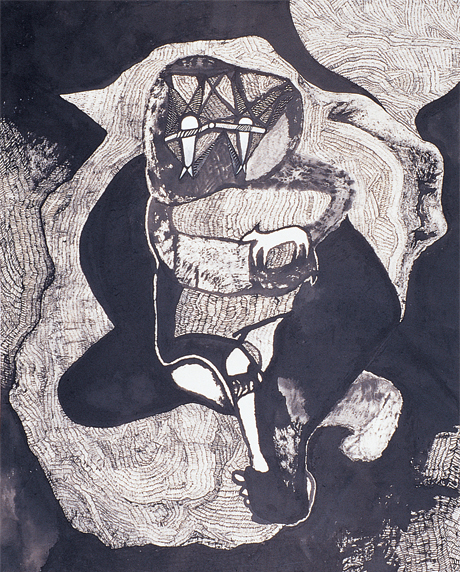
LSJ: Strictly speaking, my investigation into continuity between works—the practice of varying and recombining the byproducts of earlier pieces, a methodology that still defines my practice today—actually began during my undergraduate years. The use of spontaneous repetition and the construction of a pictorial field through recurring landscapes can already be found in works such as Stairs (1999), Landscape (2000), and Adolescence (2002).

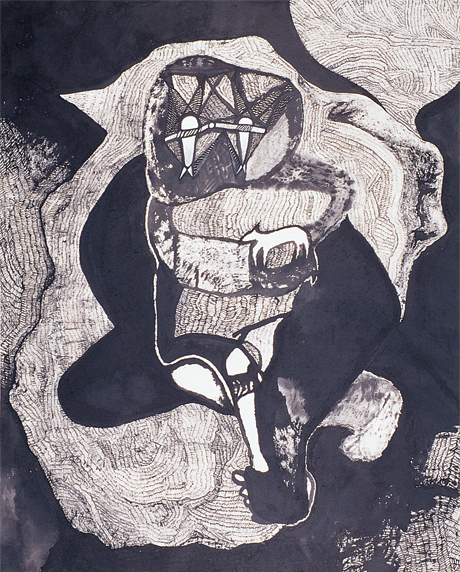
I believe the transformation of the human body should be understood within this same context. Untitled (2000), which I made during my third year, was already an experiment in bodily transformation. The intersection of spontaneous generation and the transformed body became fully evident in A Few Dogs (2003), produced during the early years of graduate school.

The more explicit representation of the female body, however, did not emerge until the middle period of my graduate studies, coinciding with the time when I began layering extremely fine brushwork.

The reason was quite practical. I decided that graduate school would be the period during which I prepared myself to become an independent artist—a time of transition and training in which I would learn to continue making work under any circumstances. My insistence on using only fine brushes was part of that discipline. I wanted to discover everything that could be achieved using nothing more than ink and paper.

At the same time, the work also reflected a sense of self-mockery: although I was physically a fully mature woman of childbearing age, I myself remained unstable. It expressed my uncertainty about whether I was truly an adult, as well as my confession of the practical realities that forced me to postpone many aspects of adulthood.



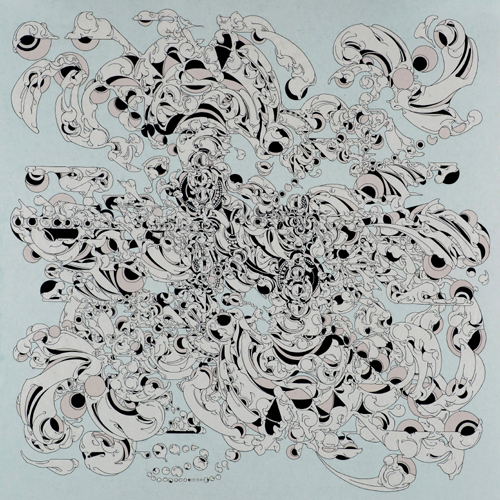
Sojung Lee, A Few Dogs, 2003, Ink on hanji, 162 x 130 cm © Sojung Lee

LEE: In discussions of your early work, themes such as sexual desire and fantasy, organisms, and monsters appear repeatedly. Looking at the works themselves, one can certainly understand them as visualizations of desire proliferating autonomously. Personally, however, I did not perceive the intensity of what might be called "abnormal" sexual desire, nor did I find the impression of endlessly multiplying monsters particularly strong.

How do you define the boundaries of what might be considered "normal" desire? And to what extent have you yourself openly discussed these aspects of your work?

LSJ: I think the work appeared provocative because my early paintings dealt with female anatomy and the body—subjects that continue to be treated as taboo. Most people possess sexual desire, and I believe that human sexuality is inherently polymorphous; it does not follow a predetermined path.


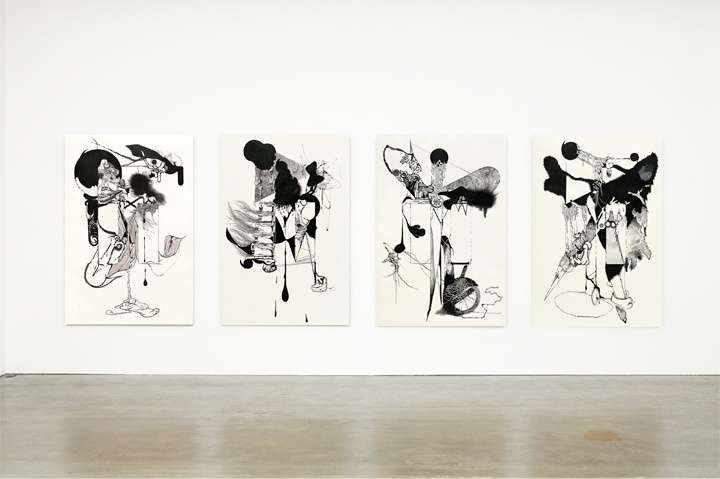
Sojung Lee, ‘Coward on a Snowfield’ series, 2007 © Sojung Lee

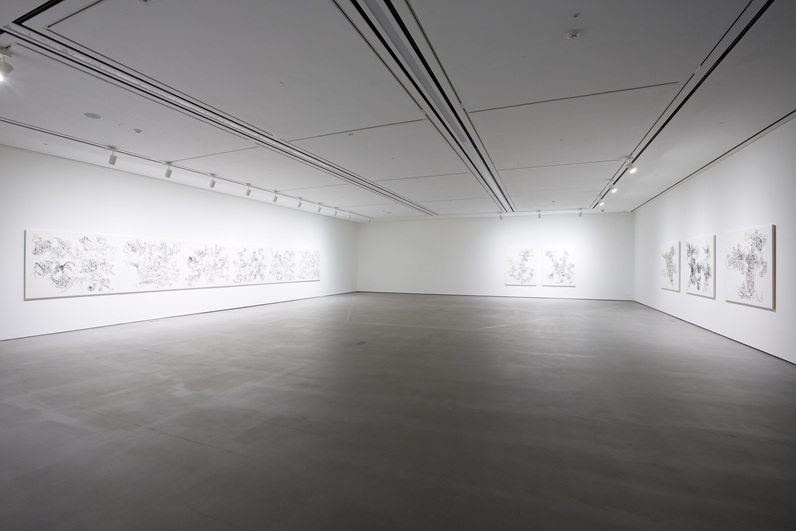
LEE: There is a considerable difference between your early spontaneously generated works, the works inspired by templates and drill manuals, and your more recent practice. The diffusion of ink, which was absent from the works of 2006, begins to appear in the works shown at the Kumho Museum of Art in 2007.

At this point, even the treatment of line reveals the material qualities of ink on hanji. Could you explain the meanings associated with objects such as scissors and keys?

LSJ: The difference between the works from 2006 and 2007 lies in the way I controlled the images. The 2006 works followed three principles. First, I would use only fine brushes in order to avoid, as much as possible, the accidental effects of ink diffusion that could exceed my own technical control.

Second, I would cut out the spontaneously generated images from the original pictorial surface, transfer them to a new surface, and allow them to exist independently. Third, the transferred images had to form narratives and structures that would also make sense in three-dimensional space.

Although the paintings clearly suggested narratives, they were not figurative, so I was often asked what they depicted and what they meant. I had my own meanings and narratives, but I left their interpretation open to the viewer, so any reading was valid. Still, I found the difficulty of answering such questions in concrete terms rather interesting.

For the 'Coward on a Snowfield' series (2007), I therefore introduced signs that would allow viewers to find clues within the paintings themselves, rather than relying on the artist's explanation, and to infer their meanings and narratives. Since signs acquire shared meanings through social convention, I thought they would be recognizable to anyone.

For example, I used the play symbol (▶) as a head and the pause symbol (❚❚) as a torso, constructing a framework positioned along the Y-axis. I then developed the image spontaneously, as though adding flesh and dressing the structure in clothing. The resulting framework and six portraits were rotated sideways and joined together to form a landscape, with each image becoming a different story drawn upon the same underlying structure.

By strictly applying this method of developing images upon a framework constructed from signs, I was able to loosen the brushwork that had previously avoided ink diffusion. Because the meaning was already anchored regardless of what or how I painted, I believed that opening up the movement of the brush would, paradoxically, make the methodology of control more visible.

The scissors, keys, and other objects that appear at this time function both as means of constructing and regulating the image and as objects connected to my own speculative context. As I mentioned earlier, my late twenties were a period when I was urgently confronting what it meant to become a socially recognized adult.

These objects can be understood as vessels for those concerns. Scissors, for instance, divide one thing into two, but they also symbolize the independence of two entities from a single origin. I presented this ambivalence as a clue to my own narrative.

LEE: Forms resembling tangled internal organs, living creatures, and various objects begin to appear more prominently in the works from 2006 onward. To what extent were these forms influenced by external images, and how much of the process was planned?

LSJ: I do not make preliminary drawings or sketches, but everything is intentional. Ink, when used with water and brush, is a material capable of producing effects greater than my own technical ability. Yet because it seeps into the paper rather than simply covering or coating the surface, once a mark is made, it cannot be corrected or concealed. I chose to focus on this latter difficulty and enjoyed the performative process it demanded.

My decision to restrict ink diffusion came from the same context. I did not want the material to embellish the work beyond the essence of what I was pursuing, so I insisted on fine brushes and excluded the accidental effects and authority conventionally associated with ink. At the same time, the forms depicted in the paintings were not based on or directly influenced by any particular image.

Of course, things I had seen somewhere may have remained in my unconscious and emerged without my awareness. What I draw must inevitably arise from my own visual experiences. If I were capable of producing images drawn solely from within my mind, I would not be human but divine.


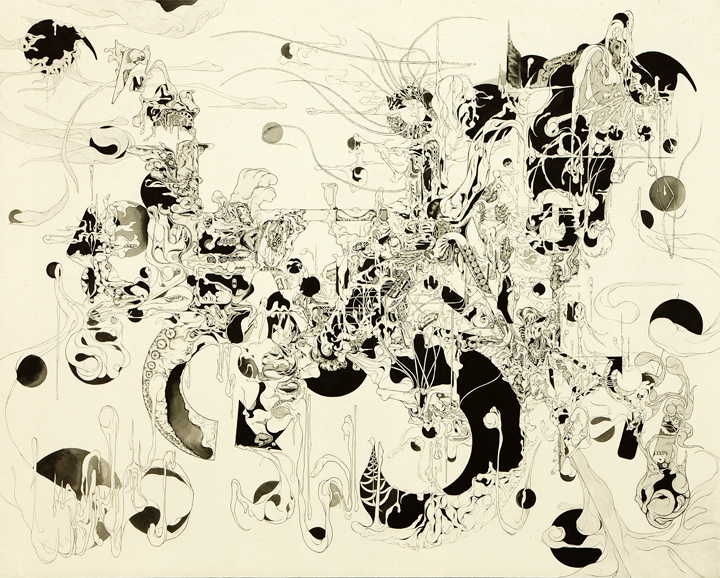
Sojung Lee, Glorious Days, 2008, Ink on hanji, 130 x 162 cm © Sojung Lee

LEE: Looking at your works after 2008, both the imagery and the mode of expression changed significantly. This seems to coincide with the period when, as you once remarked in an interview, "I felt that I was not painting the images; rather, the images were growing on their own, and I wanted to become the omniscient presence within the picture, so I began constructing the composition through symbols, templates, and drill manuals."

While it is true that an artist can never plan everything completely, neither is perfect automatic generation possible. In fact, your works up until 2007 already appear highly structured—almost impeccably ordered.

One might interpret this in terms of the control or repression of desire, but visually speaking, it also seems that you consciously regulate the forms and the expressive qualities of the ink according to your own aesthetic sensibility and preferences. Many of the works convey such rigor and tension that they feel meticulously controlled.

LSJ: My work is concerned with automatic generation, but the finished works themselves are not automatically generated paintings. The process of constructing images may be called automatic because it begins from a single point, without preparatory sketches or predetermined plans, as though I were describing the image into existence.

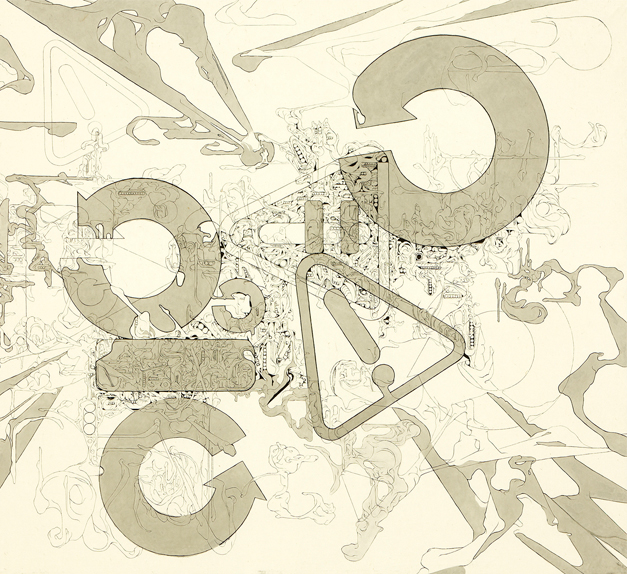
However, the moment one paints with the intention of reaching a completed work, automatic generation can only describe the process—it can never describe the result. ‘Revenge of the Manuals’ series (2010) provides a useful example. It actually began with the ‘Unfamiliar Holiday’ series (2009).

(1) In the ‘Coward on a Snowfield’ series, I had introduced the play and pause symbols, and to these I added rotation and warning symbols taken from the instruction manual of a Bosch drill. Using these signs, I constructed the underlying framework of a landscape and then developed the imagery spontaneously, as though adding flesh to a skeleton, until a complete painting emerged.

(2) Once the painting was completed, I rotated it 180 degrees, overlaid it with a thin sheet of sunji paper, and transferred every image except the symbolic framework.

(3) Into these transferred images I inserted a different set of symbols, constructing an entirely new landscape.

(4) I repeated this process until I had produced nine landscapes. These ultimately became three successive generations of paintings, each divided into image, background, and symbol, with the areas of color applied differently. They can also be understood as depictions of different responses to a single phenomenon.

As I continued repeating this process, the distinction between images that emerged automatically and those that arose through habit gradually became blurred. For the ‘Unfamiliar Holiday’ series, I therefore collected recurring patterns from the images I had drawn and created twenty-six templates. I wanted to catalogue those images that emerged from me either automatically or through repetition.

By combining them, I produced a single preliminary composition that became the parent image of ‘Revenge of the Manuals’ series. I designated this parent image as "0," dividing it horizontally and vertically into Crop 1, Crop 2, Crop 3, and Crop 4. I then combined 0 with Crop 1, 0 with Crop 2, 0 with Crop 3, and 0 with Crop 4, layering the original parent image together with all of its derived half-images into new compositions.

I pursued paintings that could be completed simply by following the rules and methodology I had established. Yet because everything was ultimately carried out by human hands and eyes, I found it impossible to leave the awkward seams that appeared where the cut edges overlapped. In the end, I inevitably adjusted, refined, and combined them according to my own formal judgment and aesthetic sensibility.

Through Revenge of the Manuals series, I ultimately demonstrated that perfect control is impossible. The work itself became a question about contradiction and error—those moments that violate the very rules I had established. Completion, "automatic generation," and "performance" can never escape the unexpected intrusion of error, contradiction, irregularity, adjustment, balance, and compromise.

Ultimately, by breaking the very manual that I had created and pledged to follow, I found myself asking what autonomy truly means.


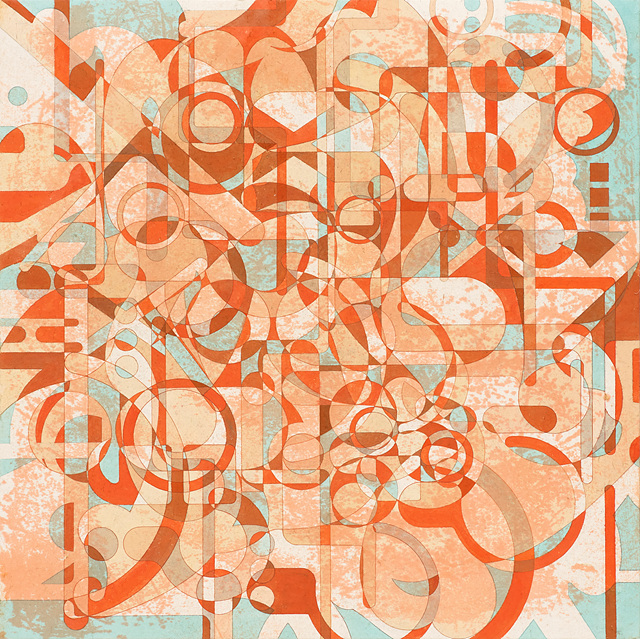
Sojung Lee, Fake Audience 2, 2009, Ink on hanji, 130 x 162 cm © Sojung Lee

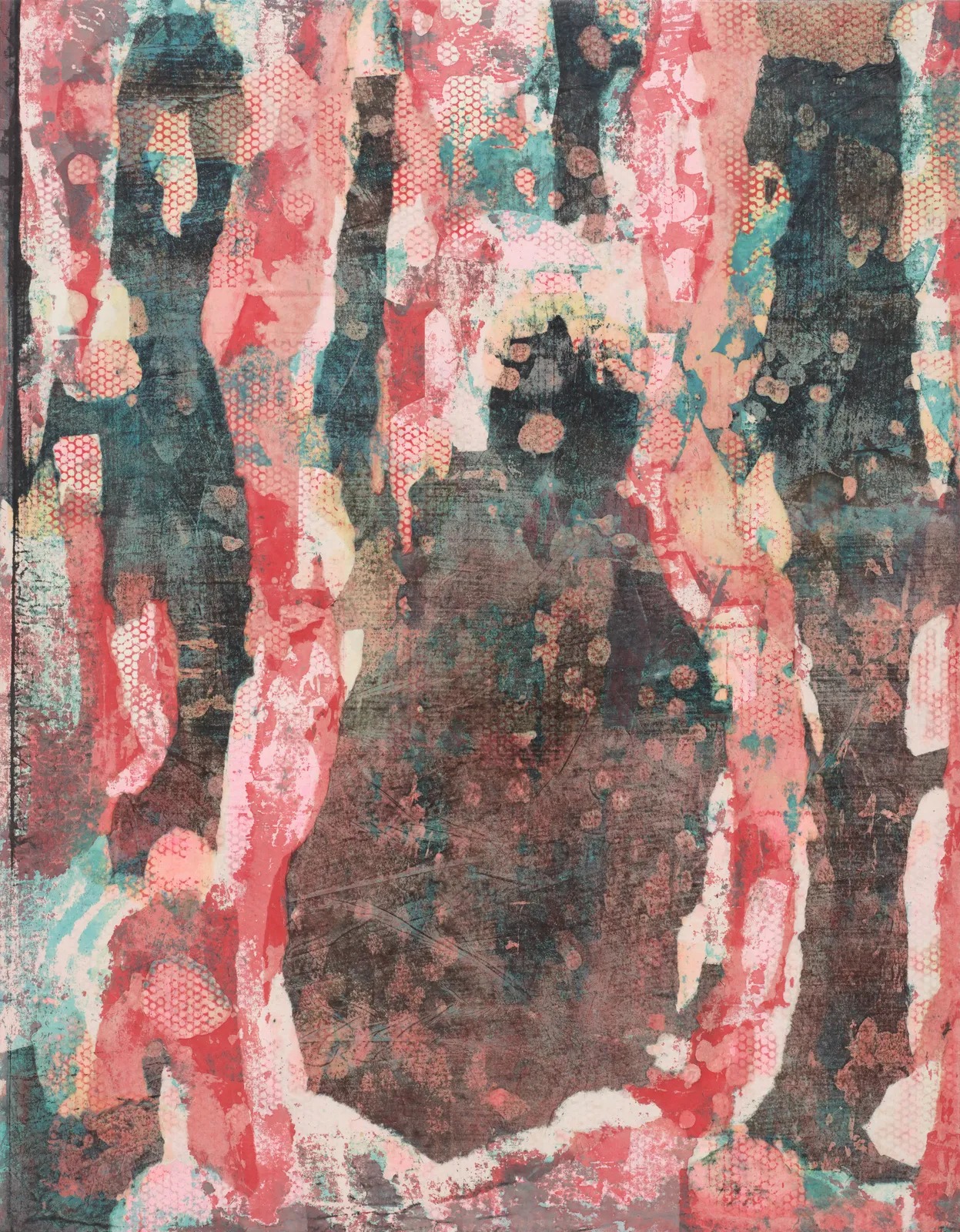
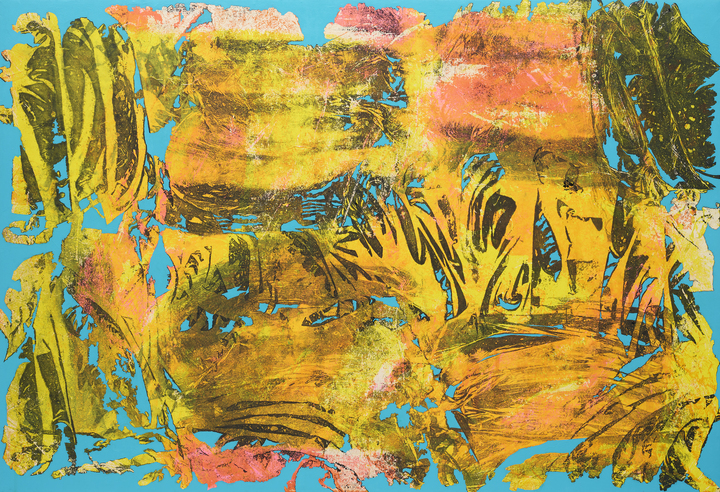
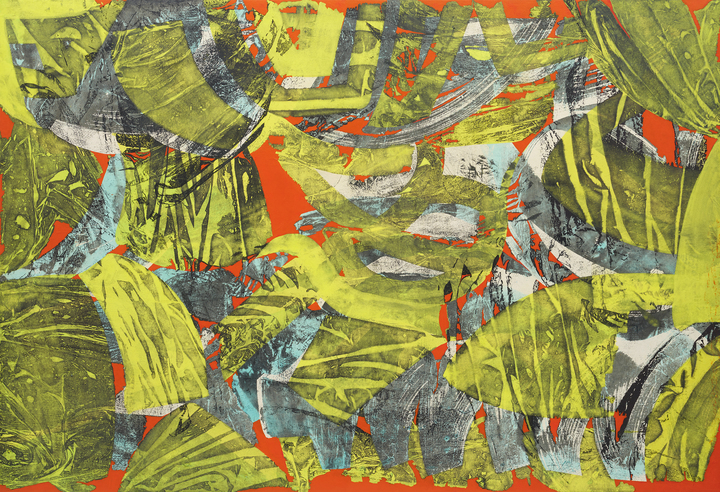
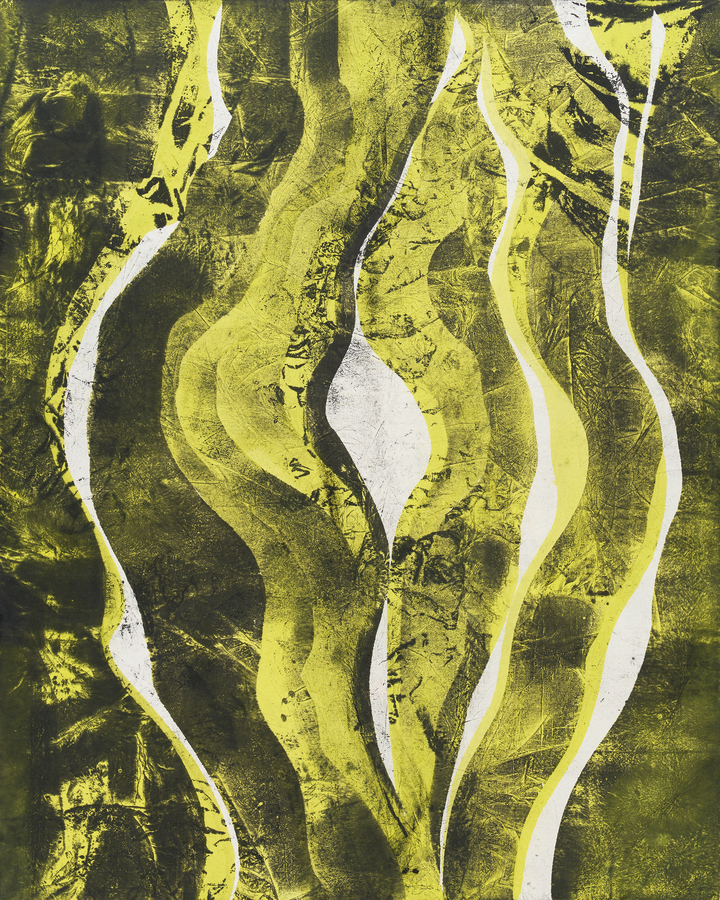
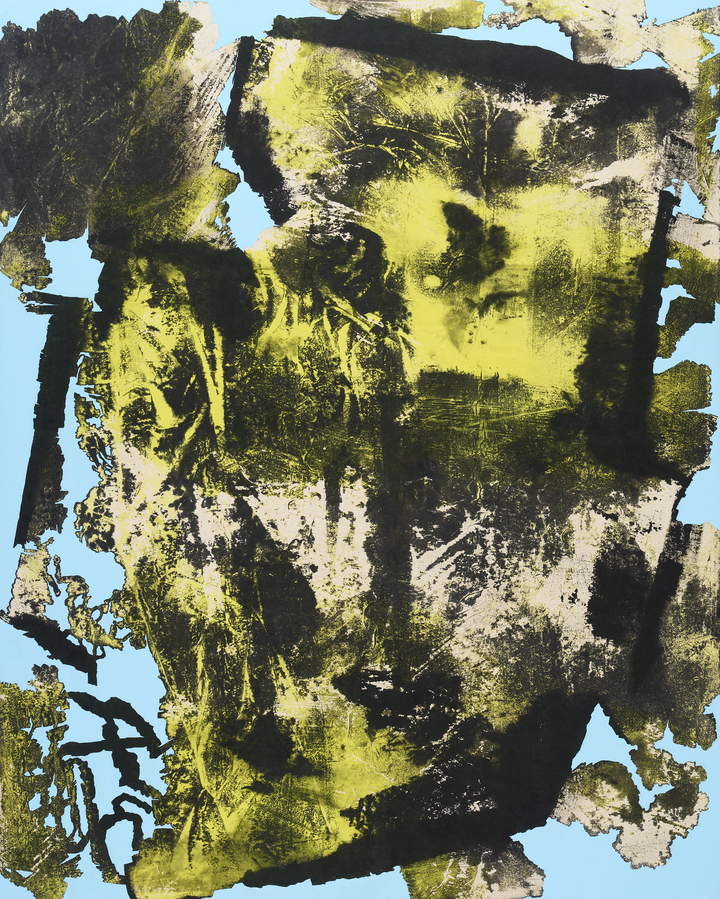
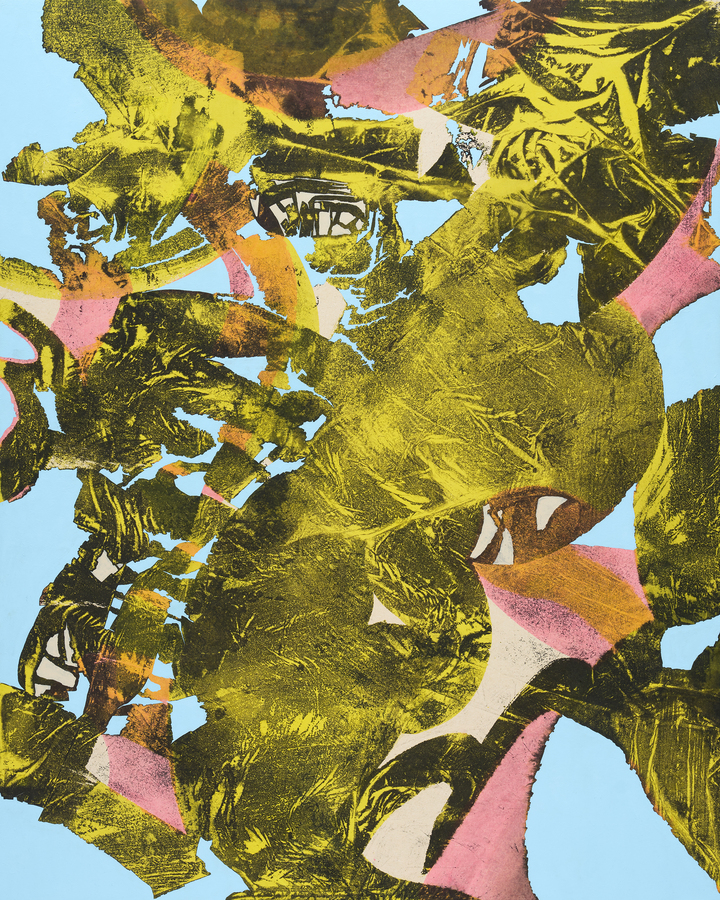
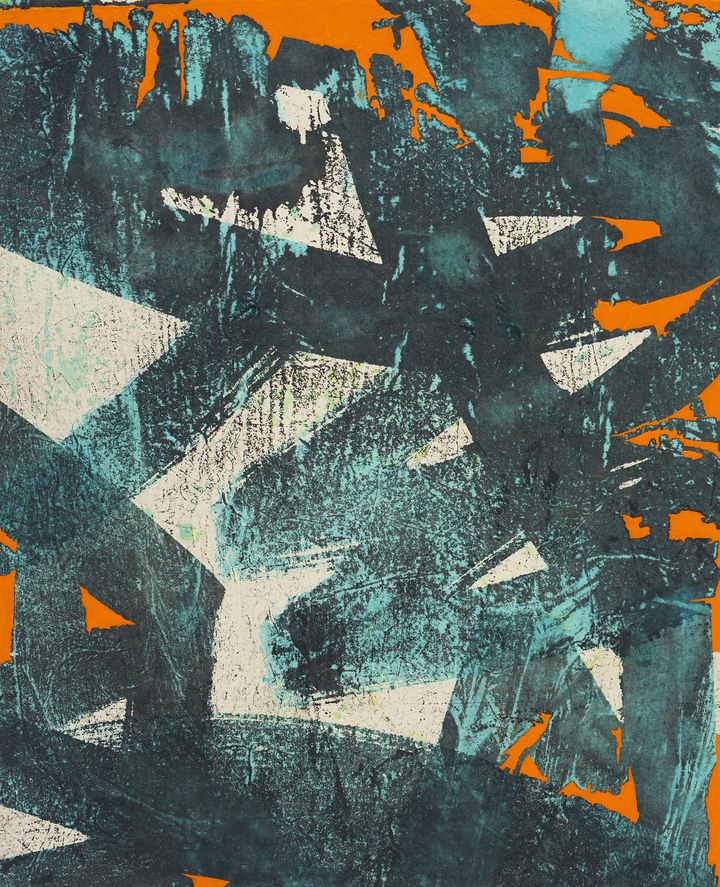
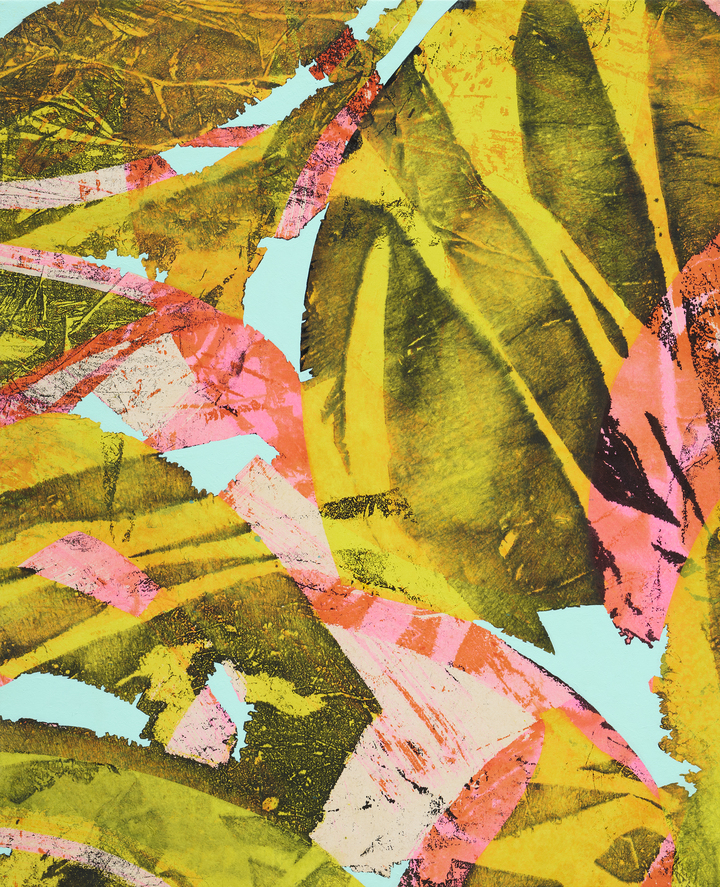
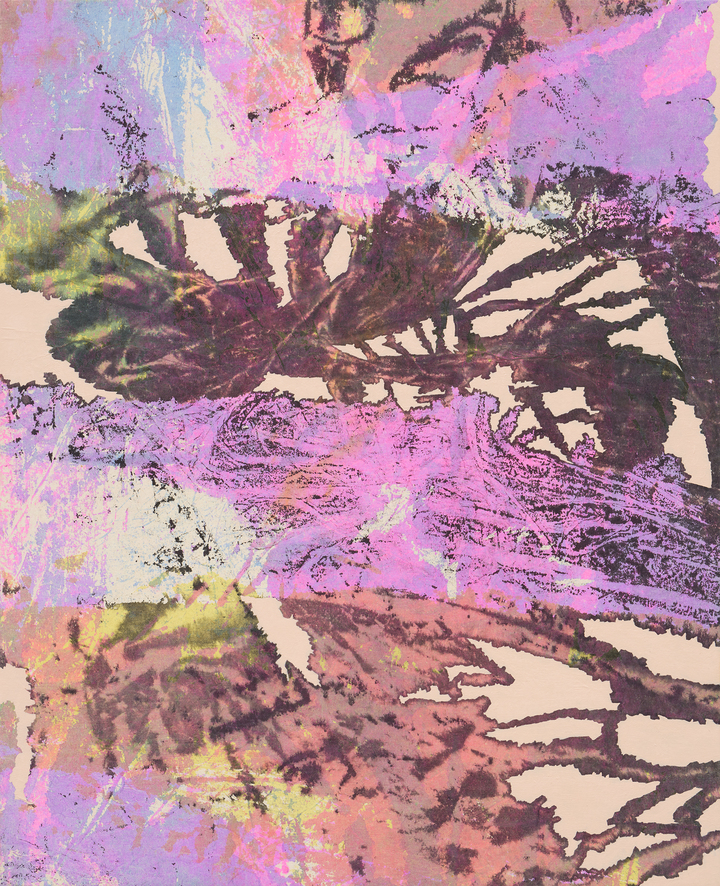
LEE: In your recent works, you place a thin sheet of hanji over jangji, apply color and ink, then remove it, leaving behind unintended traces that seep into the surface. You have also described your process as "assuming that images which are meant to exist are already there, though invisible, and searching for those hidden forms like a detective."

Compared to your earlier works, these recent paintings seem to embrace chance much more fully. Does this mean that your dependence on images beyond your control has increased? Have you abandoned the desire to control the picture plane completely, or are you still working with essentially the same attitude, only in a less visible way?

LSJ: My investigation into methods of controlling the picture plane began with anxiety over images that seemed to proliferate on their own, with the pleasure of playing with that anxiety, and with questions about who ultimately holds authority between myself and the image—particularly over deciding when a work is complete.

From the beginning, I knew these were impossible questions built upon impossible logic, and at times I even treated those contradictions themselves as the subject of the work. Looking back, I think what I truly sought was never absolute control or perfect completion, but rather an equal balance between the painting and myself.

My decision to limit balmuk (the spontaneous diffusion of ink) also stemmed from feeling uncomfortable when something unexpectedly beautiful appeared on the surface without my having consciously introduced it.

Likewise, my methods of cutting apart images that seemed to proliferate of their own accord or constructing them upon frameworks of signs were ways of establishing an appropriate harmony between myself and the picture plane and of communicating that relationship. The images seemed to generate themselves autonomously, yet I felt compelled to explain them—or rather, they had to originate from my own explanation.

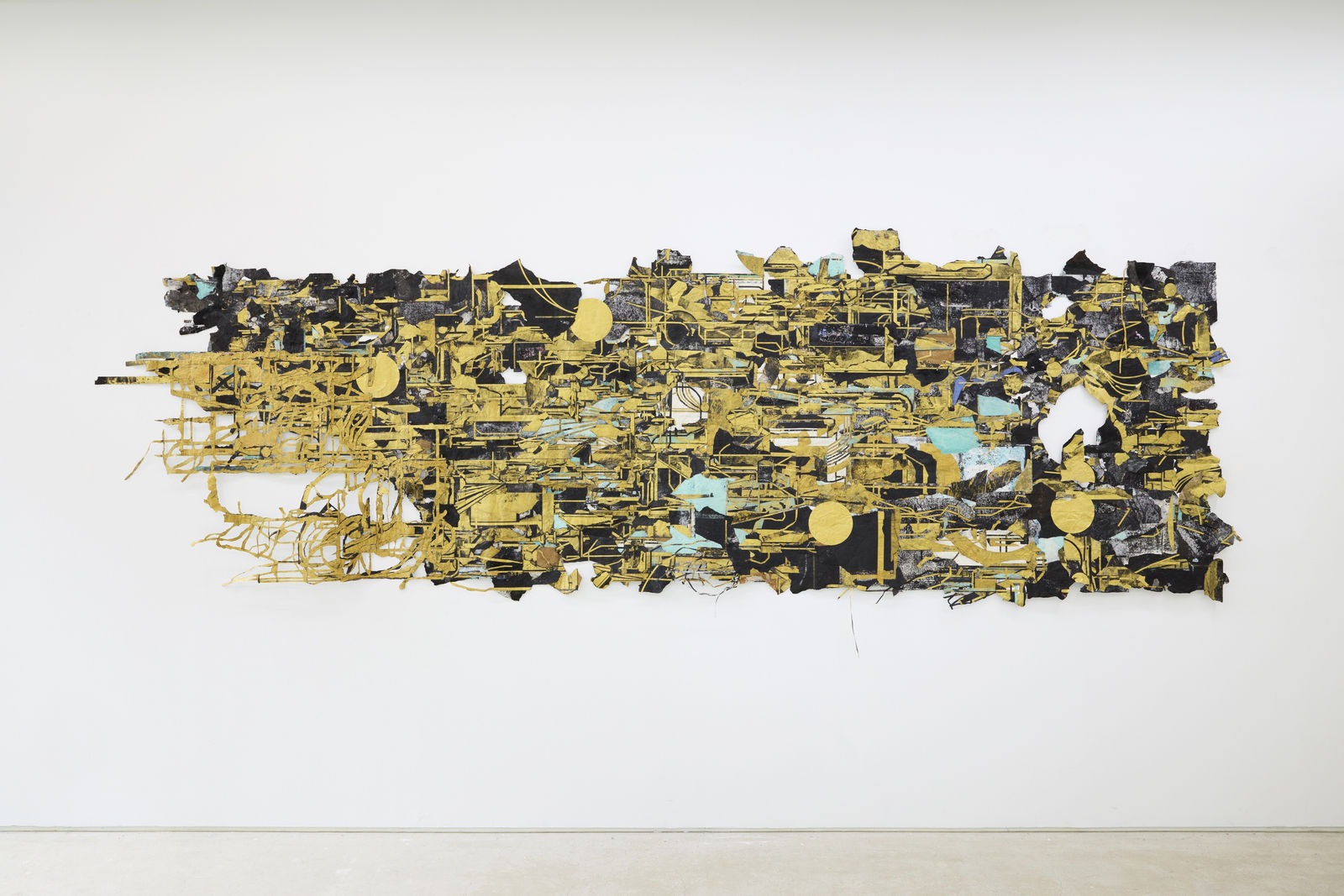
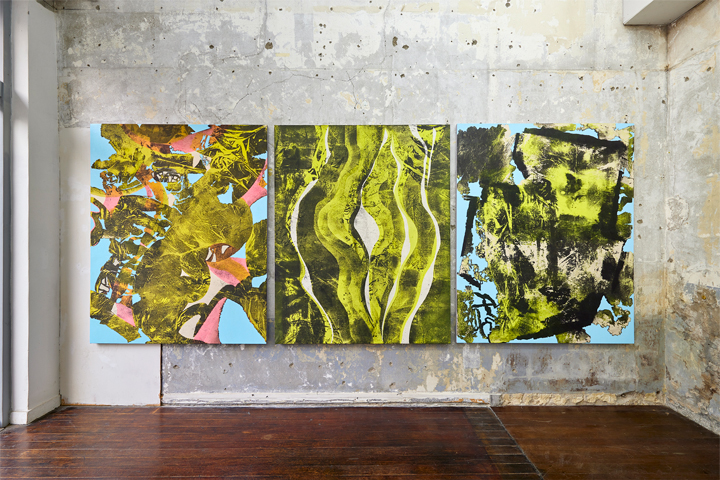
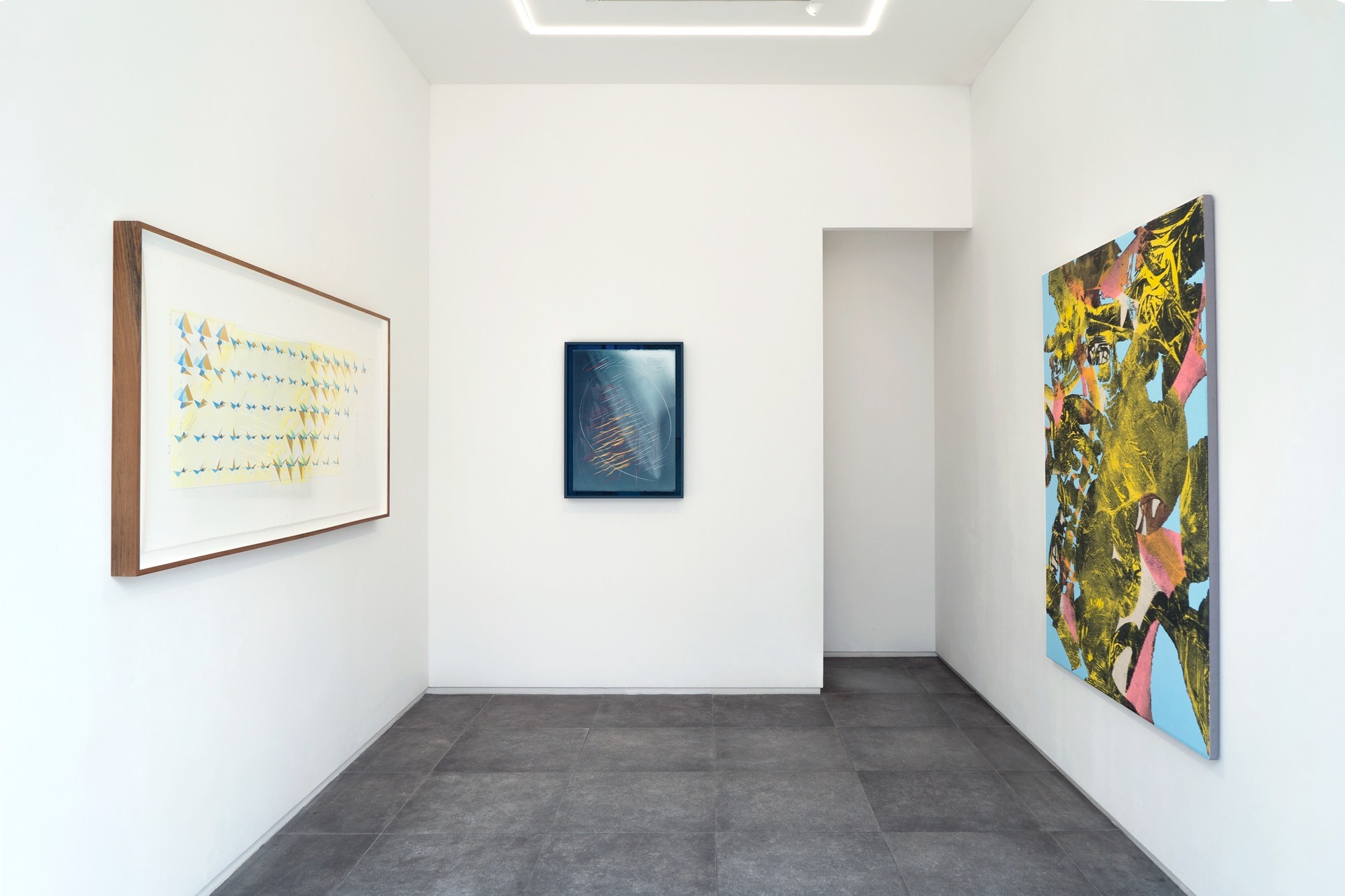
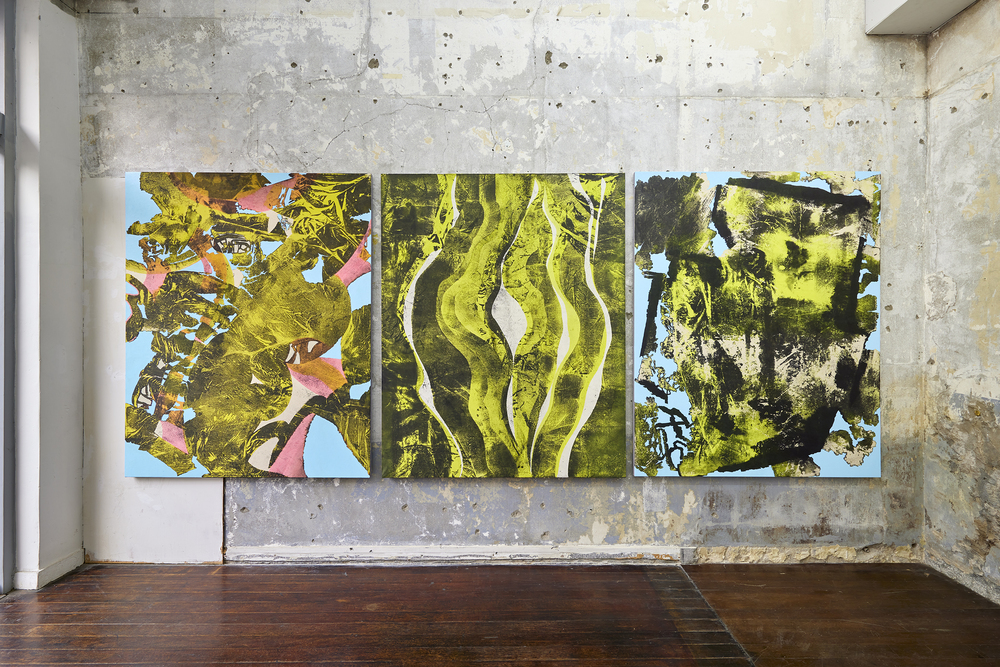
I believed that was the minimum level of responsibility and sincerity I owed to the work. Beginning with my solo exhibitions 《Detectives》 (2019) and 《Hinges》 (2021), however, I began to embrace chance much more actively and to respect and utilize the autonomy of the images themselves. The greatest influence behind this shift was not childbirth, but parenting.

Strictly speaking, childbirth is my experience, whereas parenting consists of the ongoing relationship between myself and my child. Before becoming a parent, I imagined childcare as a matter of control and upbringing. In reality, however, I discovered that parenting meant helping a small being—born through chance, growing through its own autonomy, and constantly surprising me with its unpredictability—to become an adult.

I also realized that my relationship with my child was not inherently destined or necessary. Rather, it became necessary through the accumulation of countless moments: helping this small person, struggling alongside them, and then feeling immeasurable happiness in return for something as simple as a fleeting smile. Changes to my working schedule after becoming a parent also had a profound impact.

It was no longer possible to organize my time freely. I had only brief, predetermined periods in which I could work, and I had to adapt myself completely to those constraints. Then one day, after various experiments, I discovered that a sheet of hanji I had casually left crumpled in the corner had dried into what resembled a remarkable sculptural object.

That experience led me to reflect upon the process through which chance becomes necessity. The forms and autonomy produced by the interactions between ink, one sheet of paper, and another sheet of paper constituted a landscape generated through their relationship—a moment in which chance had become necessity. I unfolded the paper, and there before me was a landscape created by wrinkles and the traces of absorbed ink.

I intervened only slightly, believing that forms already meant to exist were hidden within it. By adding color and revealing the larger masses, I completed the work.

Transforming something that might otherwise have remained nothing more than a crumpled accident into something necessary—a relationship that also possesses balance and harmony—came to represent, for me, a way of respecting the autonomy of the subject while offering only the minimum amount of assistance. I believe that comes closest to an ideal form of control, and perhaps also to an ideal form of harmony.


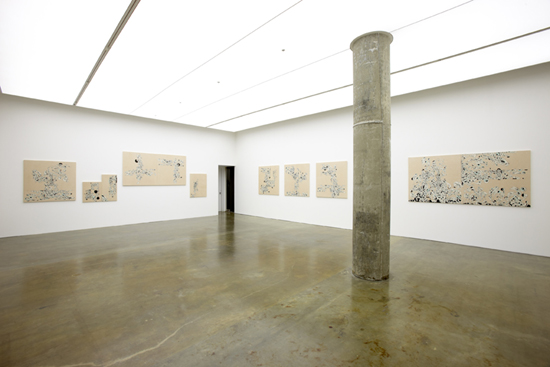
Installation view of 《Hinges》 © P21

LEE: Not only works such as Mirror Stage (2016), but your practice as a whole seems to invite discussion through the lens of psychoanalysis. The "mirror stage" refers to the process by which an infant first recognizes its reflection and identifies with that image. It marks the first attempt to objectify oneself, the initial outline and foundation upon which the ego is formed.

Yet it also precedes the full formation of the self. At this stage, the infant remains within the realm of images and is not yet capable of recognizing objects as they truly are. Only later, through the acquisition of the father's language and symbolic order, is the unity with the mother broken and a social ego established. There is little doubt that the mirror stage constitutes the first phase of self-recognition.

However, because infants cannot yet fully control their own bodies, they experience themselves as inconsistent, fragmented, and divided. Personally, I feel that this notion—of objectifying oneself, perceiving oneself incompletely, and experiencing the body as fragmented—is particularly relevant to your work.

Likewise, your process of dismantling and reassembling signs, geometric forms, manuals, and similar elements naturally lends itself to interpretations involving the eruption of the Imaginary into the Symbolic. I would be interested to hear your thoughts on this reading.

Looking only at the titles of your works, there also seem to be many points of connection with psychoanalytic theory. Beyond the concept of the mirror stage, are there any psychoanalytic ideas that have particularly informed your work or attracted your interest?

LSJ: In my work, signs function as clues whose meanings have been collectively agreed upon through social convention. They are faithful interpreters that communicate narrative and meaning, while also providing a convenient way of establishing an appropriate point of completion from the very beginning rather than only at the end.

Because my work inevitably develops alongside my own life, I have always worried that it might become little more than a diary. At the same time, however, I do not believe there are any questions that are urgent only to me. Whenever I encountered a problem or a question and tried my hardest to resolve it, only to find reality unchanged, I would begin to wonder whether it was really something that could simply be blamed on my own shortcomings.

Looking around, I found others of my own generation facing the same circumstances. When I was preoccupied with the question of what it truly means to become an adult, newspapers had begun using the term moratorium to describe a generation whose independence had been indefinitely postponed.

I realized that I was not exceptional at all—I was simply one among many people in my generation grappling with the same concerns. At that particular moment, there was something unexpectedly comforting and empowering about recognizing that ordinariness.

LEE: Judging from the images alone, one could argue that your recent works depict an even more fragmented psychology and body, while also becoming increasingly automatic in their mode of generation. Yet the titles seem to point instead toward nature.

LSJ: The landscapes created through the interactions between materials, and between materials and their support, are accidental phenomena produced by those relationships. I call them accidental because they are shaped by factors that cannot be fully explained: the humidity and temperature of a particular moment, as well as the inherent irregularity of the handmade hanji itself.

Even within a single sheet, hanji is an inherently variable support whose surface is never entirely uniform. As it interacts with various absorbent and non-absorbent materials, the phenomena that emerge can never be fully understood. Even so, there are aspects that I can grasp. By activating and anticipating these interactions, I use their accidental fragments as clues for constructing a necessary image.
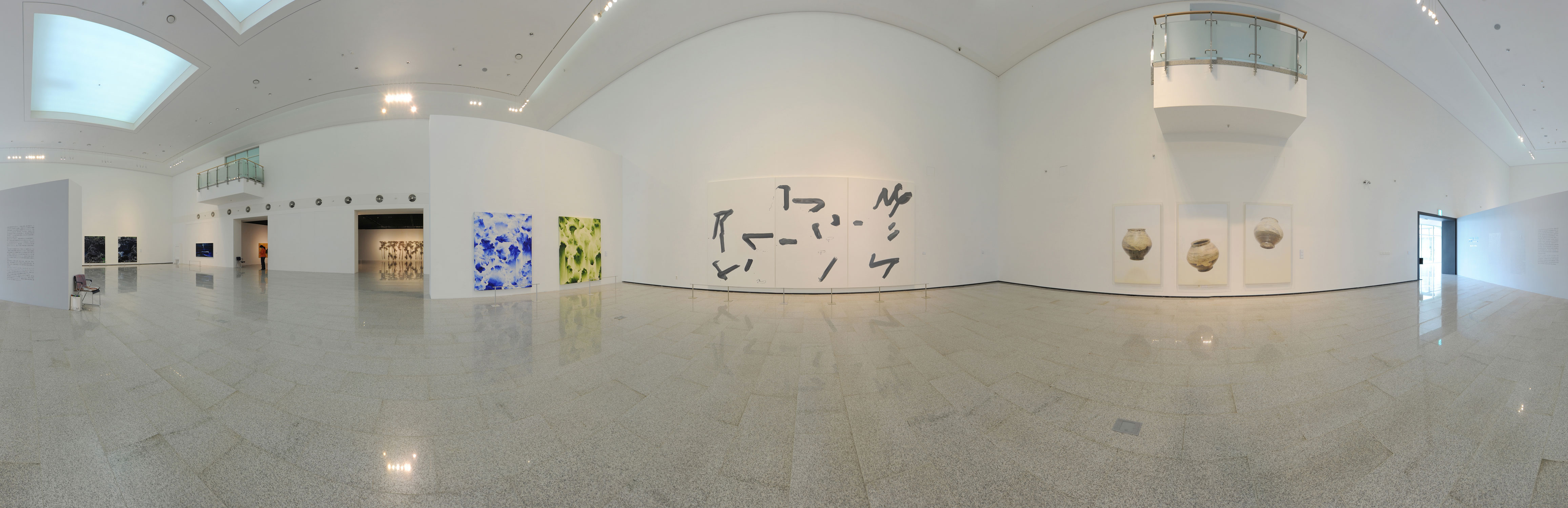
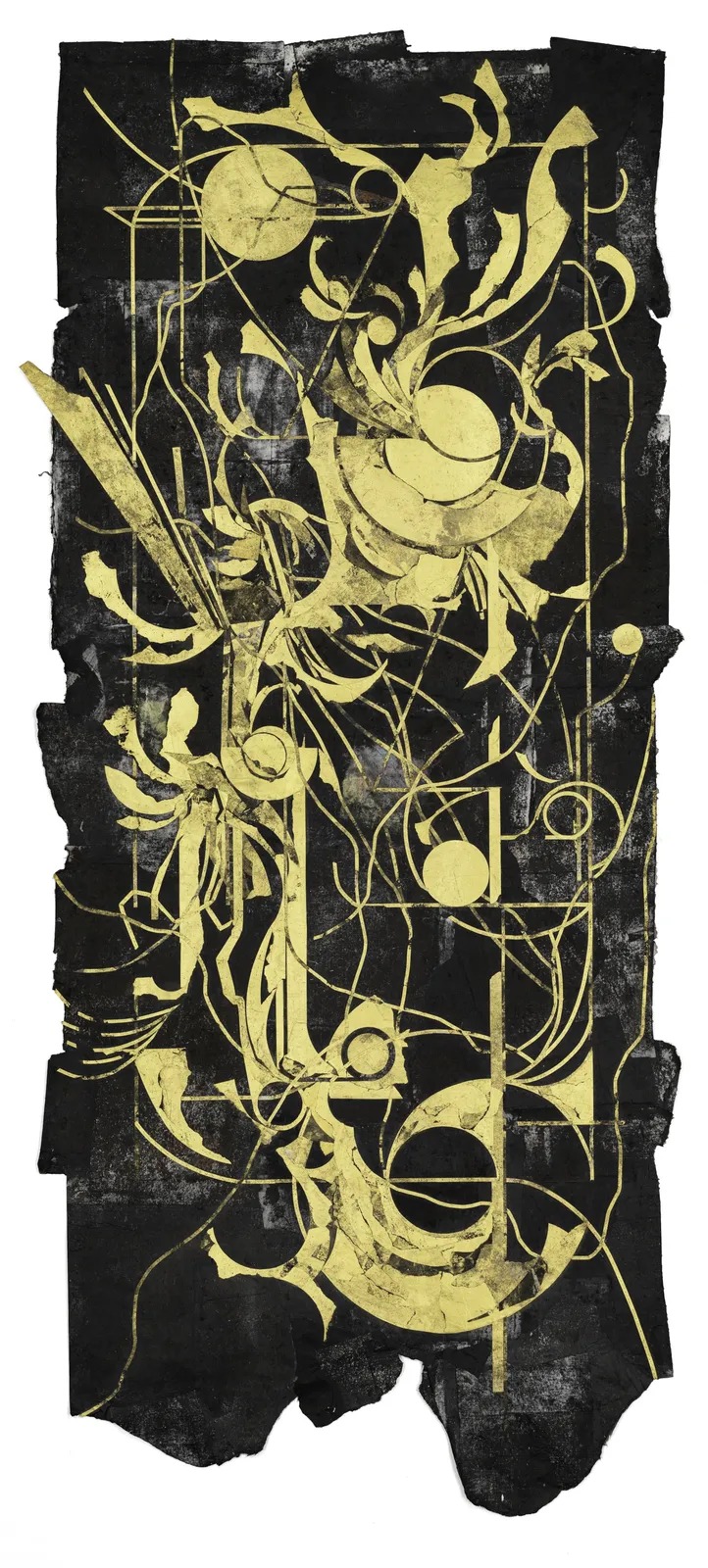
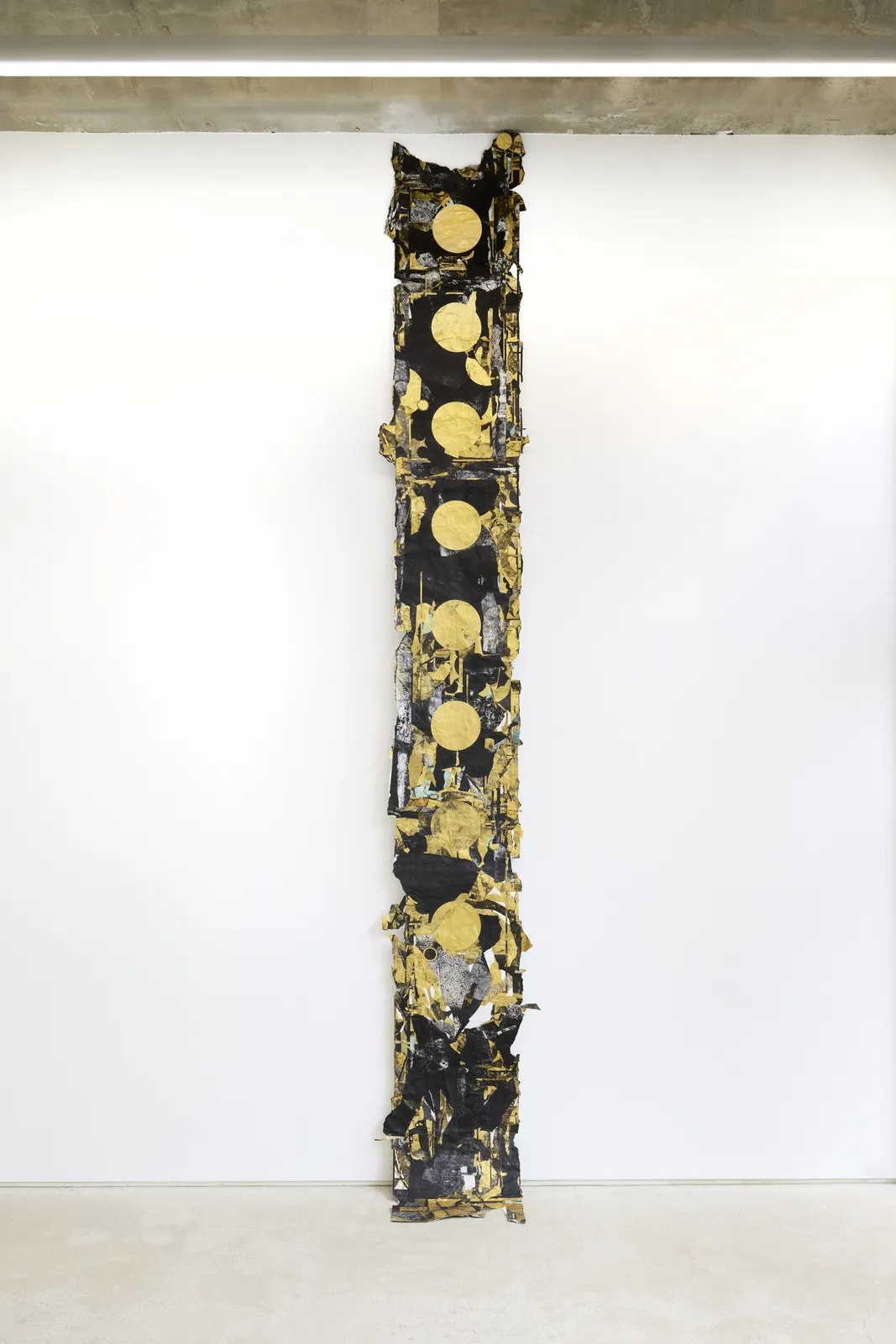
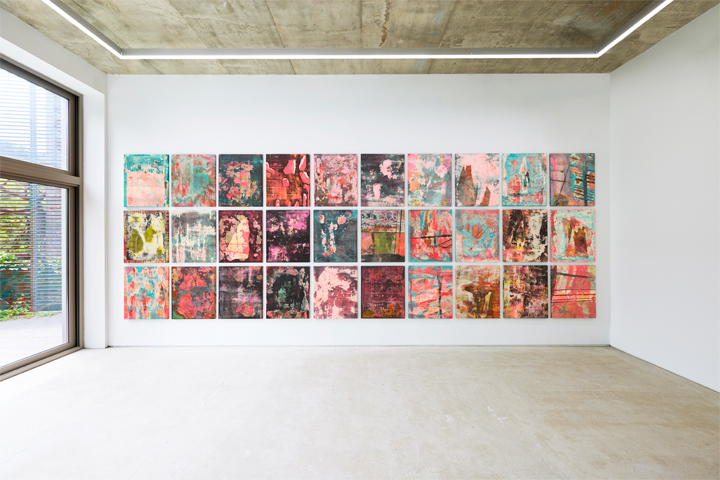
I think my practice resembles farming. Just as a farmer studies and anticipates natural phenomena—sunlight, rain, and wind—while sowing seeds, watering the soil, and managing proper ventilation, I also cultivate my work through a continuous dialogue with conditions that cannot be entirely controlled. That is why I titled the more than forty works in the No. 20 format presented in my exhibition 《Cicada Wings》 (2023), Sowing.
These works reveal forms through repeated cycles of peeling away individual layers of triple-laminated jangji and applying color, making use of the variations in color and texture generated by each successive layer. To eliminate intention as much as possible, I laid the paper flat on my worktable and worked while bent over, focusing only on the small area directly beneath my hands and eyes.

I carefully adjusted which parts of the paper would tear and which would remain intact according to the grain of the jangji and the varying concentrations of pigment and ink that had saturated it. When I reached the final layer—the point at which the paper could no longer be peeled away—I raised the panel upright and searched for those areas where forms and narratives naturally emerged.

I then cut the work to establish a necessary point of completion. In distinguishing and mediating between chance and necessity, I deliberately separated the elimination of intention from its intervention. I felt that this process generated both fragmentation and continuity within the image, while simultaneously conveying the nuances of a fragmented psyche and body.


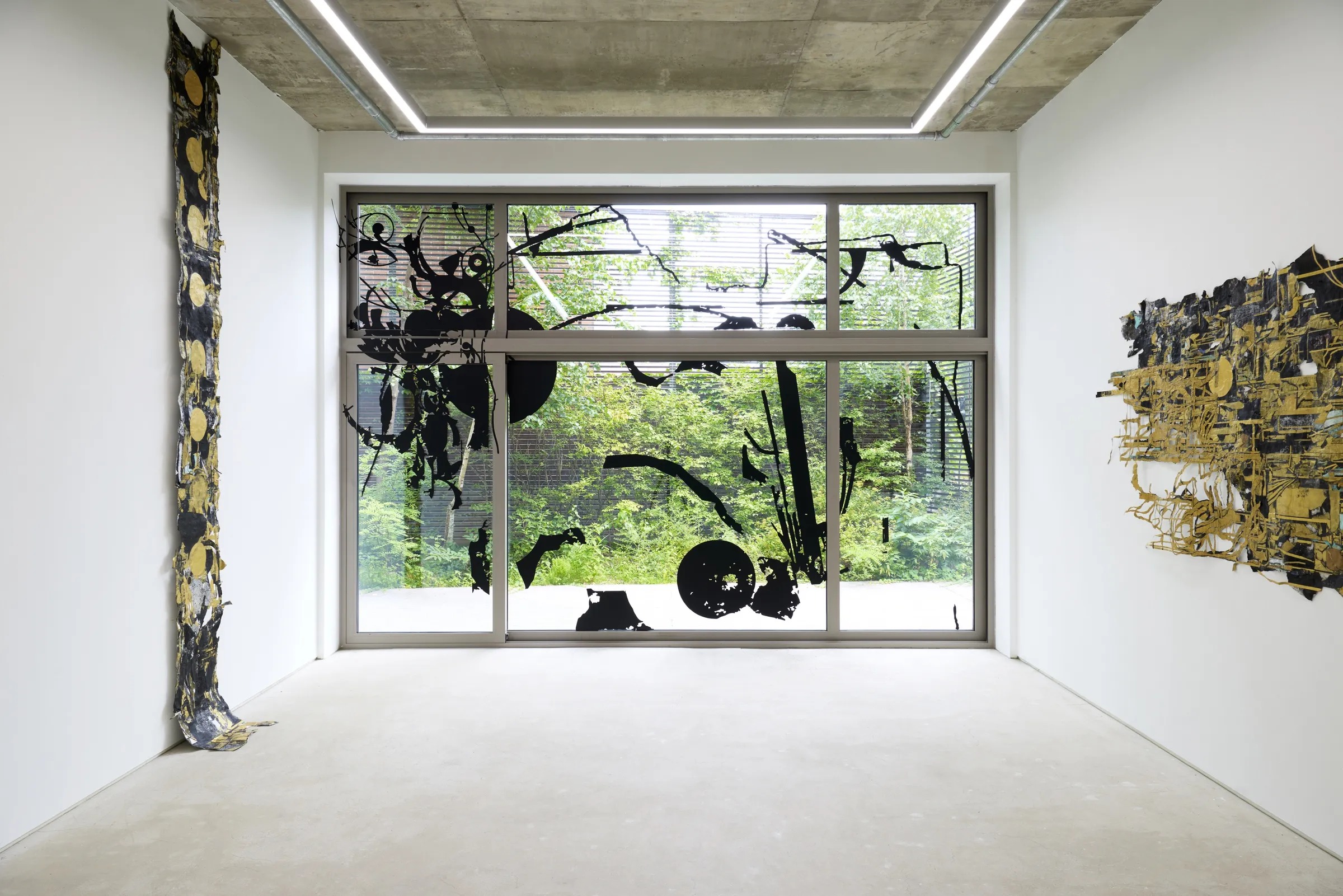
Installation view of 《Cicada Wings》 © GALLERY 2

LEE: Personally, even though ink on hanji remains your primary medium, I tend to approach your work less as Korean painting than simply as painting. If one were to distinguish between the two, it seems that your more recent works foreground the material qualities associated with Korean painting more strongly, and in fact you have increasingly emphasized Hangukhwa (Korean painting) rather than Dongyanghwa (East Asian painting).

The same tendency was evident in your 2021 exhibition. Above all, your attention seems to be directed toward the possibilities of medium and form as artistic tools. This represents a significant shift. The work has also moved much closer to abstraction. While your earlier works could certainly be described as abstract, they still suggested recognizable forms, whereas the recent works present forms as purely formal elements in themselves.

As you have put it, "the central concern is no longer what to paint or why, but how to construct the image." I would like to hear your thoughts on this development. And more broadly, is there anything you would like to say about Korean painting?

LSJ: I think this is a mixture of what I intended and what emerged unintentionally. Above all, it may simply be a natural consequence of working primarily with the materials of Korean painting. As I mentioned earlier, however, I do not want my work to be understood only in relation to traditional Korean painting.

At the same time, viewers often take Korean painting as the starting point whenever they encounter material experimentation in my work. Yet relatively few people are actually familiar with the materials of Korean painting, so I usually have to explain those aspects first. Even though they are not the principal focus of my work, those explanations tend to leave the strongest impression on people, and naturally the discussion shifts toward emphasizing Korean painting as a genre.

The reasons my work has become increasingly abstract are difficult to reduce to one or two factors. Speaking off the top of my head, practical circumstances have played a significant role. As I mentioned earlier, becoming a parent has meant that I can work only during fixed periods of time. When it is time to go home, I have to put down my brush and leave the studio, even if I am in the middle of painting.

In the past, if a painting went wrong, I would stay in the studio until I had almost completed a new one. Now, when time is up, I simply have to leave the unsuccessful work behind. One day I had been experimenting before leaving the studio, and when I returned the next day, I found the traces left by my brush unexpectedly beautiful. So I resumed working from that point.

On another occasion, I unfolded some paintings I had crumpled up because I disliked them, only to discover that they resembled beautiful sculptural objects. I could barely remember the moments when I had painted and crumpled them, yet they had become complete works in themselves, preserving the accidental folds they had acquired.

Previously, I was fascinated by creating templates composed of explicit signs—situations that were so precisely directed and guided that they required no interpretation at all. Now, however, the stains left by bleeding ink and the unplanned creases produced by crumpling seem to me like templates that physically encapsulate moments of chance.

Upon those surfaces I began incorporating techniques I had learned and experimented with over the years, including takbon (rubbing). Although I provided the initial conditions and causes, I then work alongside the accidental results, helping them become necessary images. In many ways, that process resembles my own life.

Had I not experienced marriage, childbirth, and raising a child, I would probably still be making manuals, imposing control, cutting apart traces, and arranging them. Instead, I have come to respect the folds and forms that reveal themselves when the paper is unfolded, just as they are.

I now believe that the most balanced way to relate to the picture plane is to search, like a detective, for forms that emerge within accidental landscapes, to color their outlines, and to cover and uncover them as though conducting an excavation. That is the most significant transformation in my practice, and both the appearance of the work and its titles have grown directly out of that change.

References