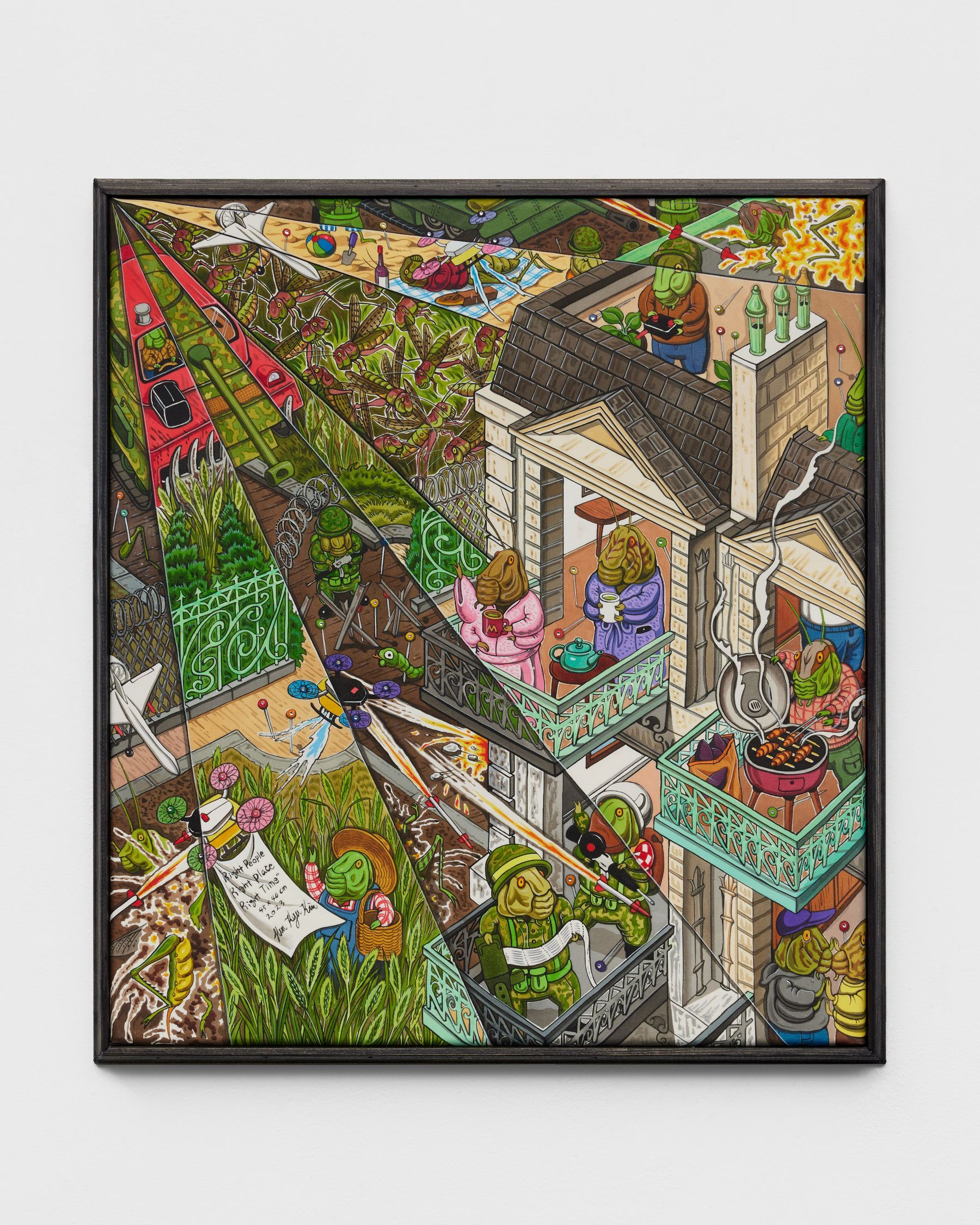
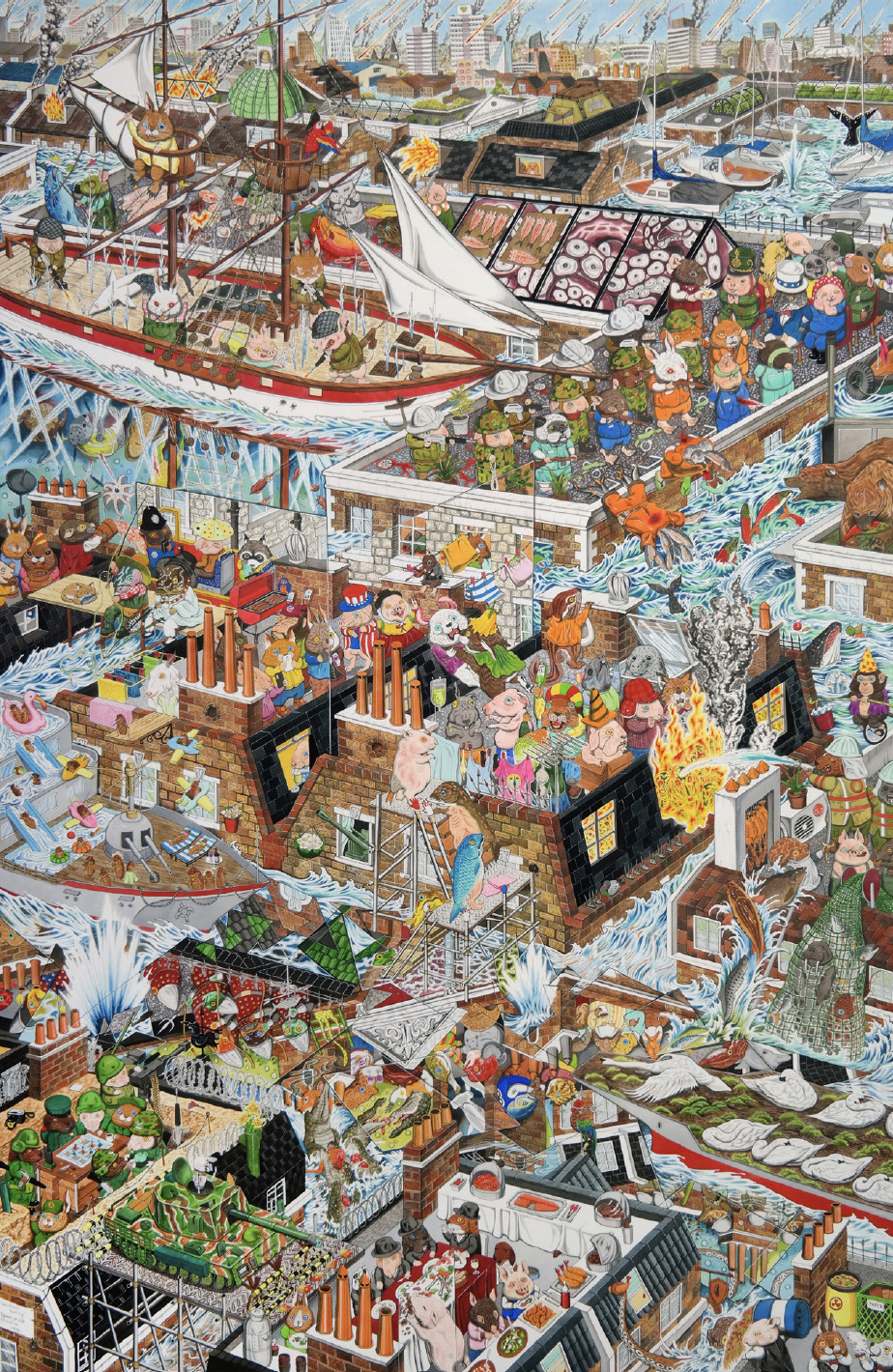
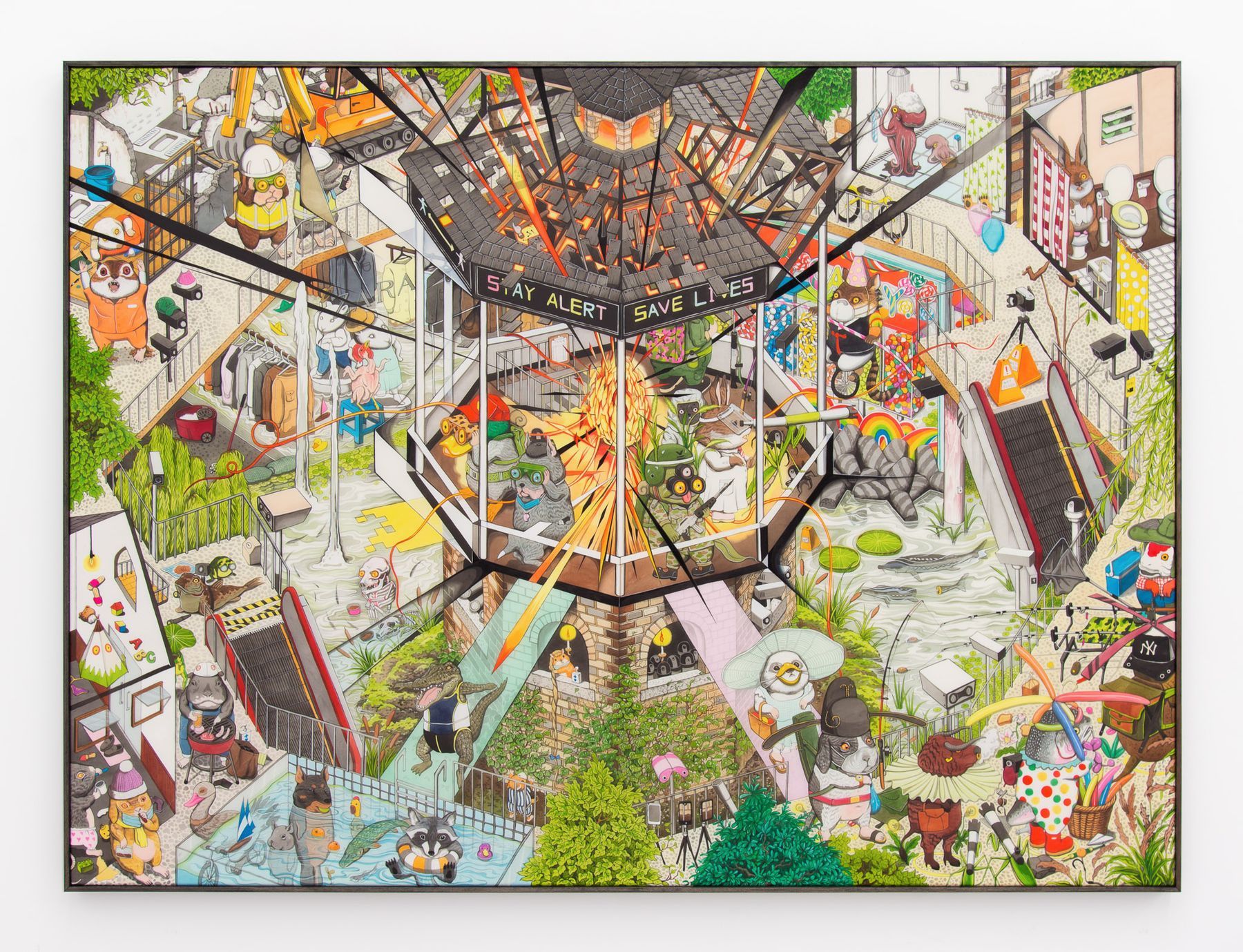
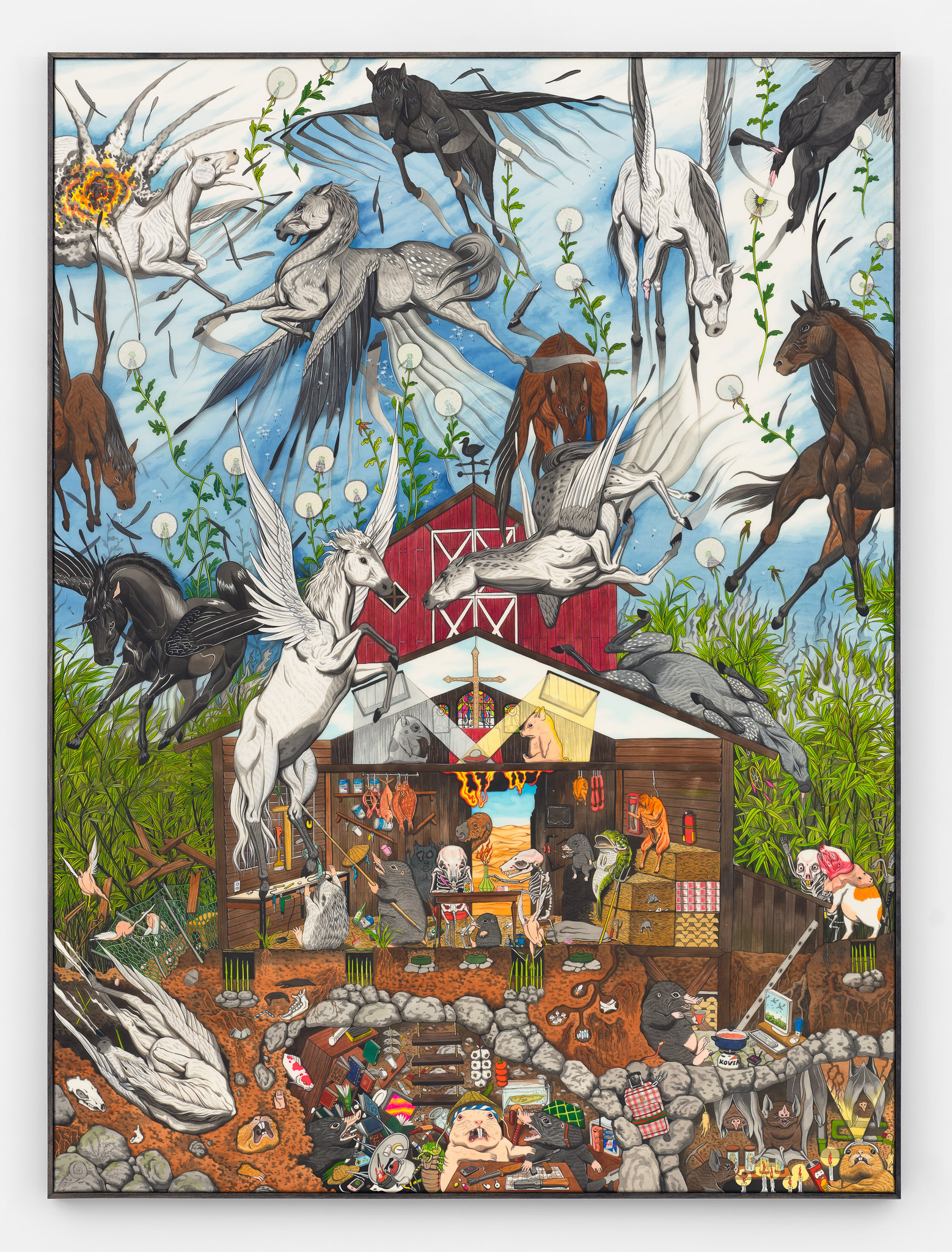
Hun Kyu
Kim's paintings began, from the outset, as political allegory. In his first
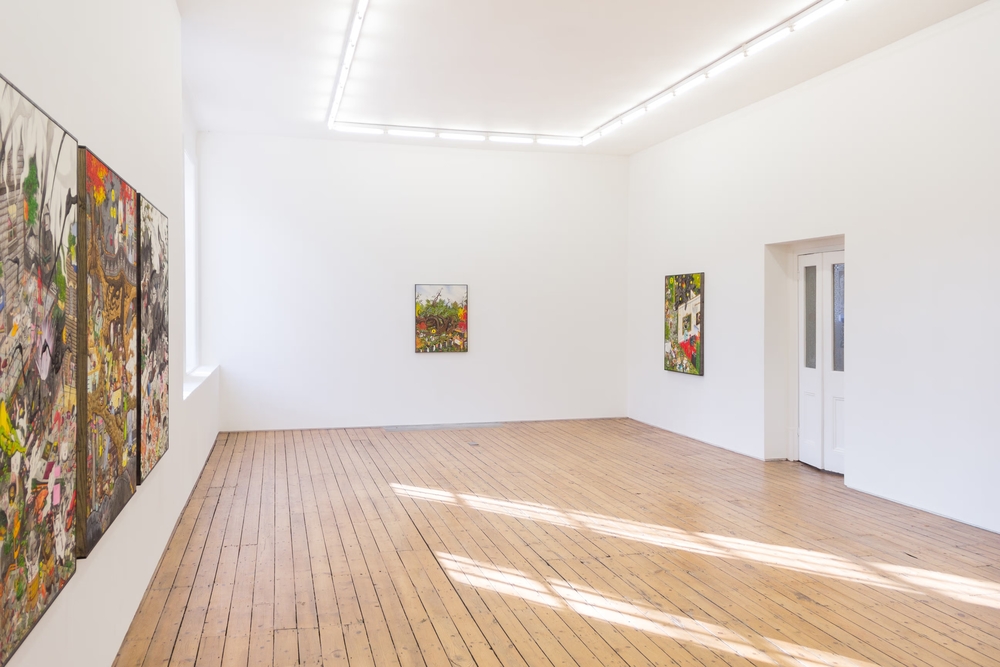
solo exhibition, 《Eight Universes
and The Machine》(The Approach, London, 2018), he built
eight parallel universes across eight paintings, imagining each world as
governed by one vast machine: neoliberal capitalism.
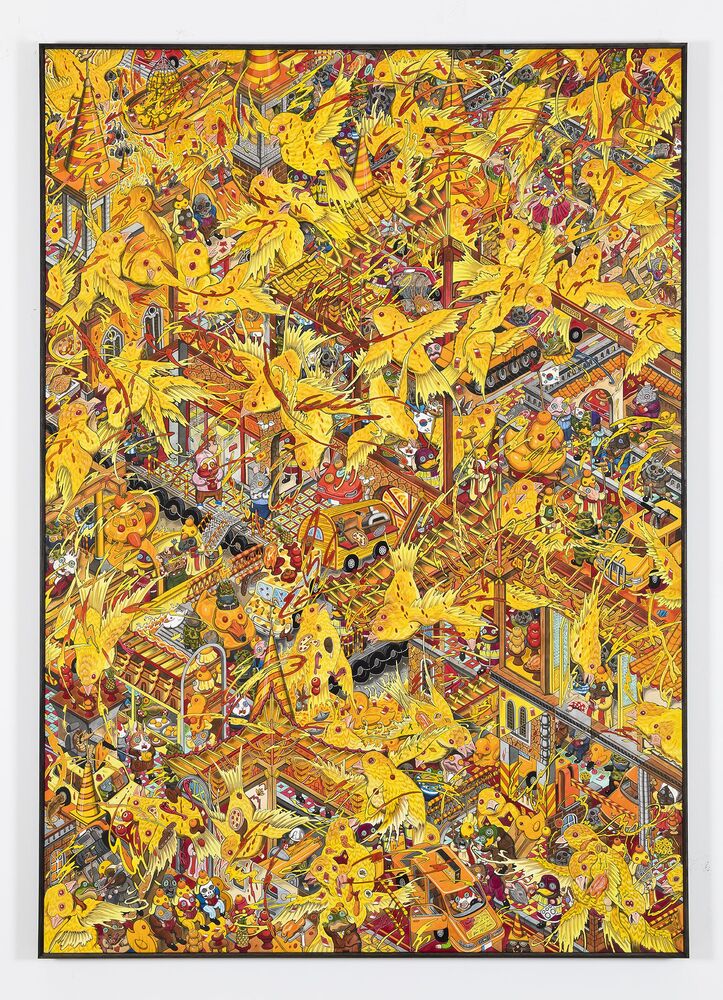
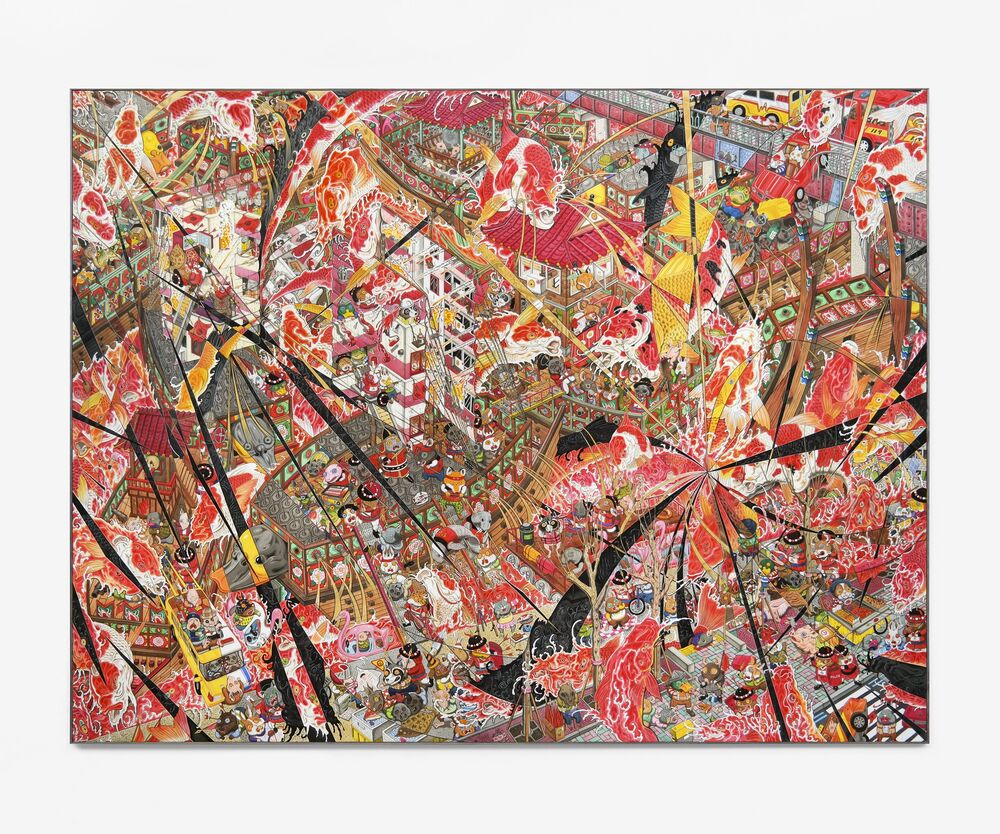
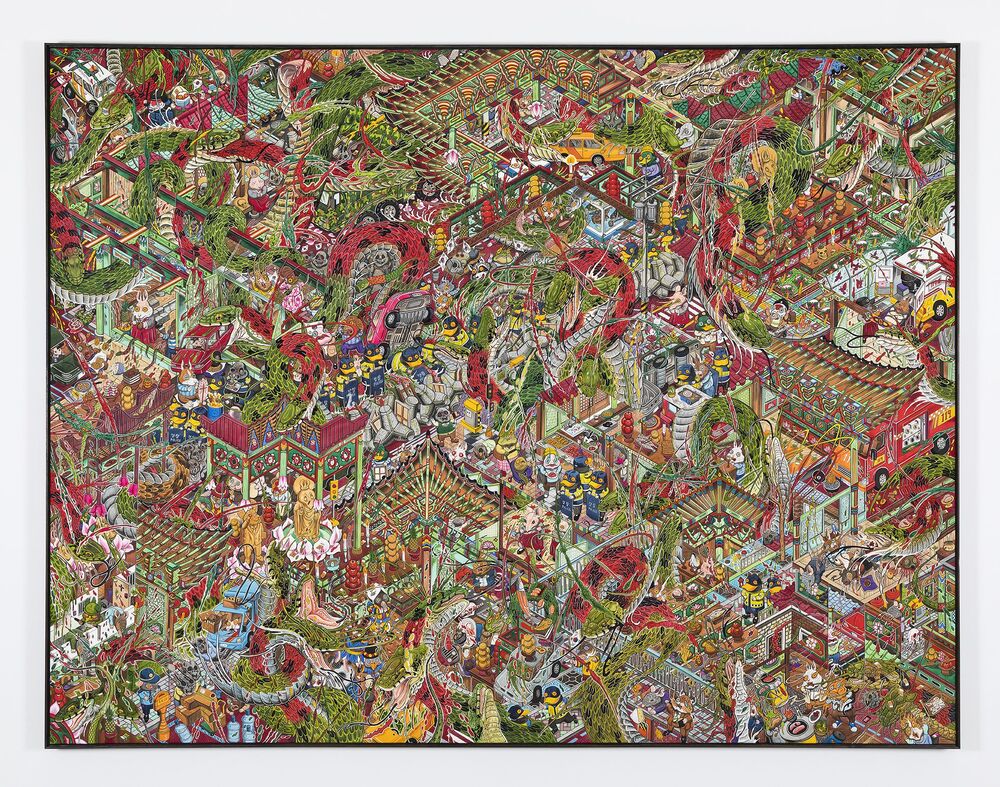
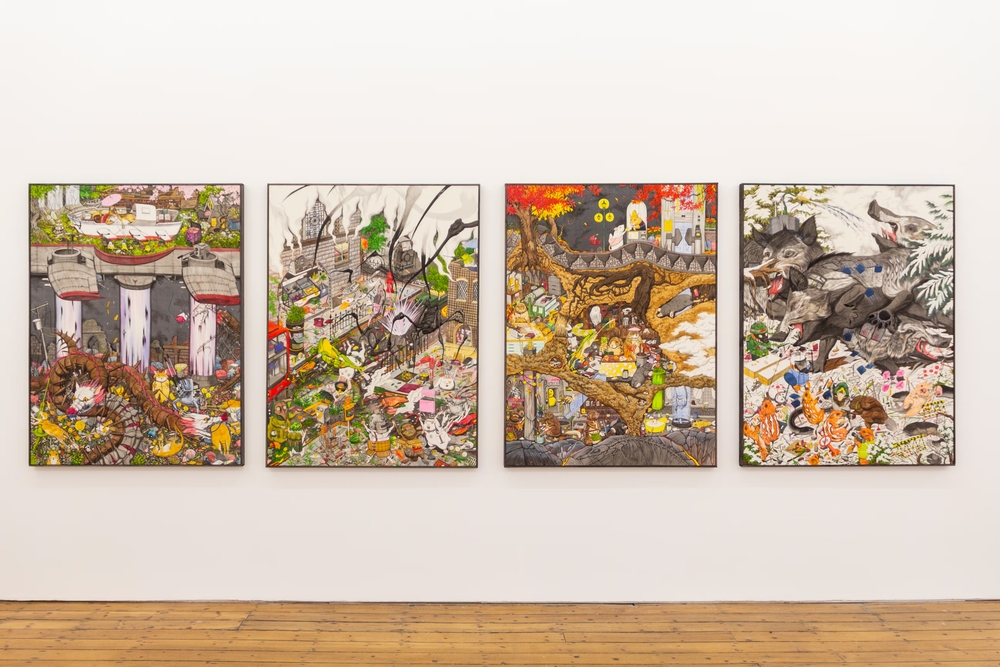
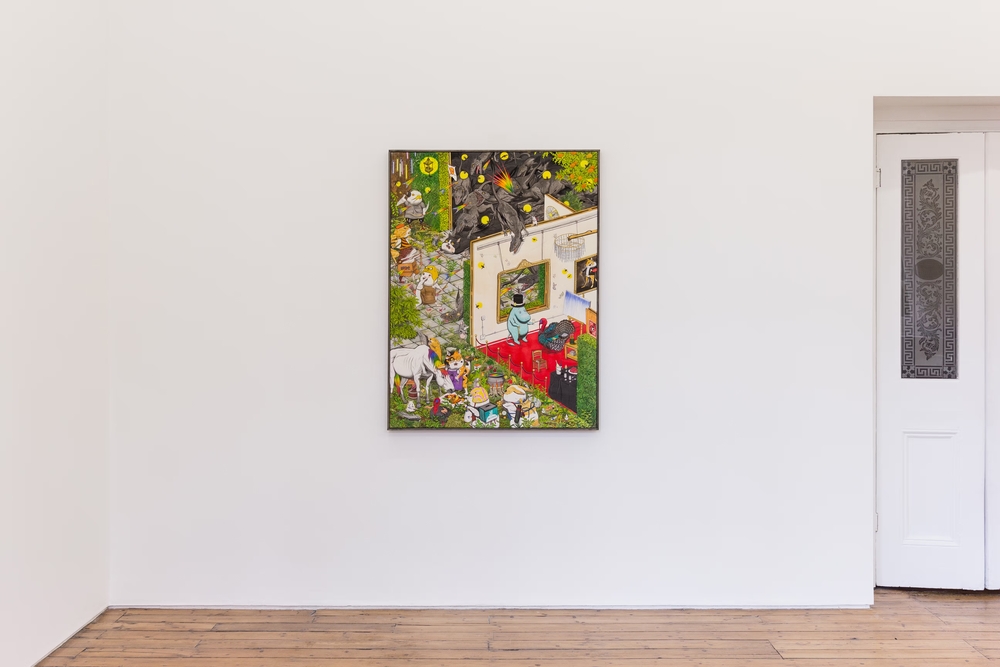
The 'The Big
Picture'(2018- ) project, first unveiled in that exhibition, is a long-running
undertaking that weaves Korean folktales, political history, and folklore into
a science-fiction narrative, carrying within it the artist's reflections on the
2016-17 Candle Revolution and the transformations that followed in South Korean
society.
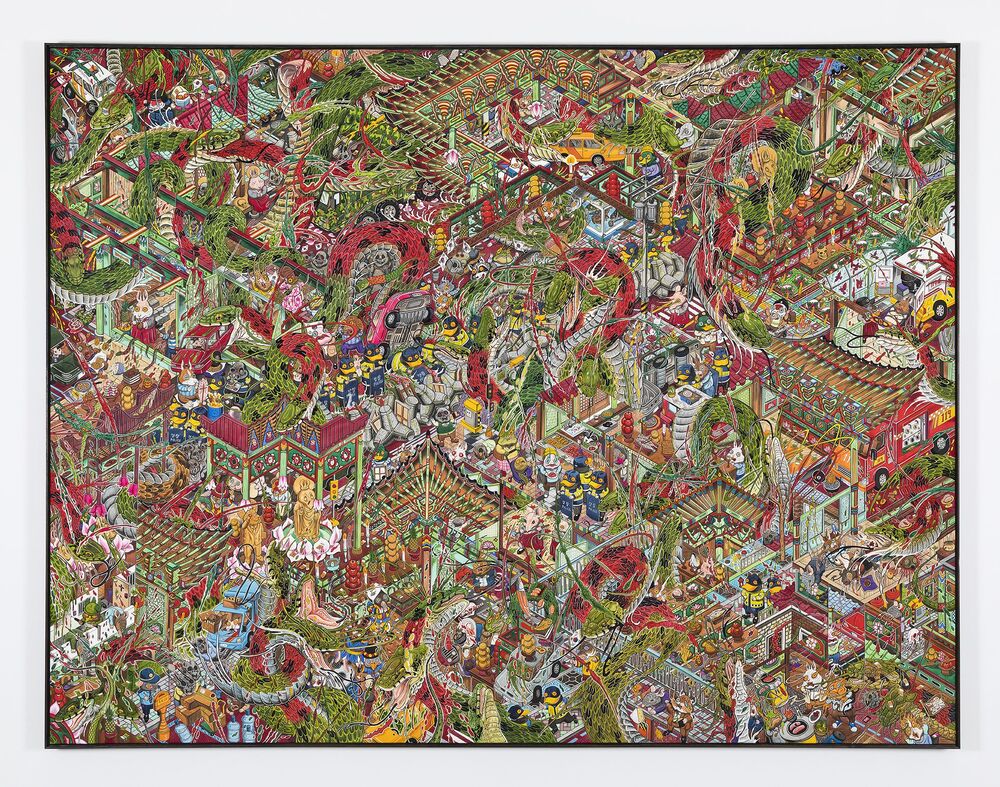
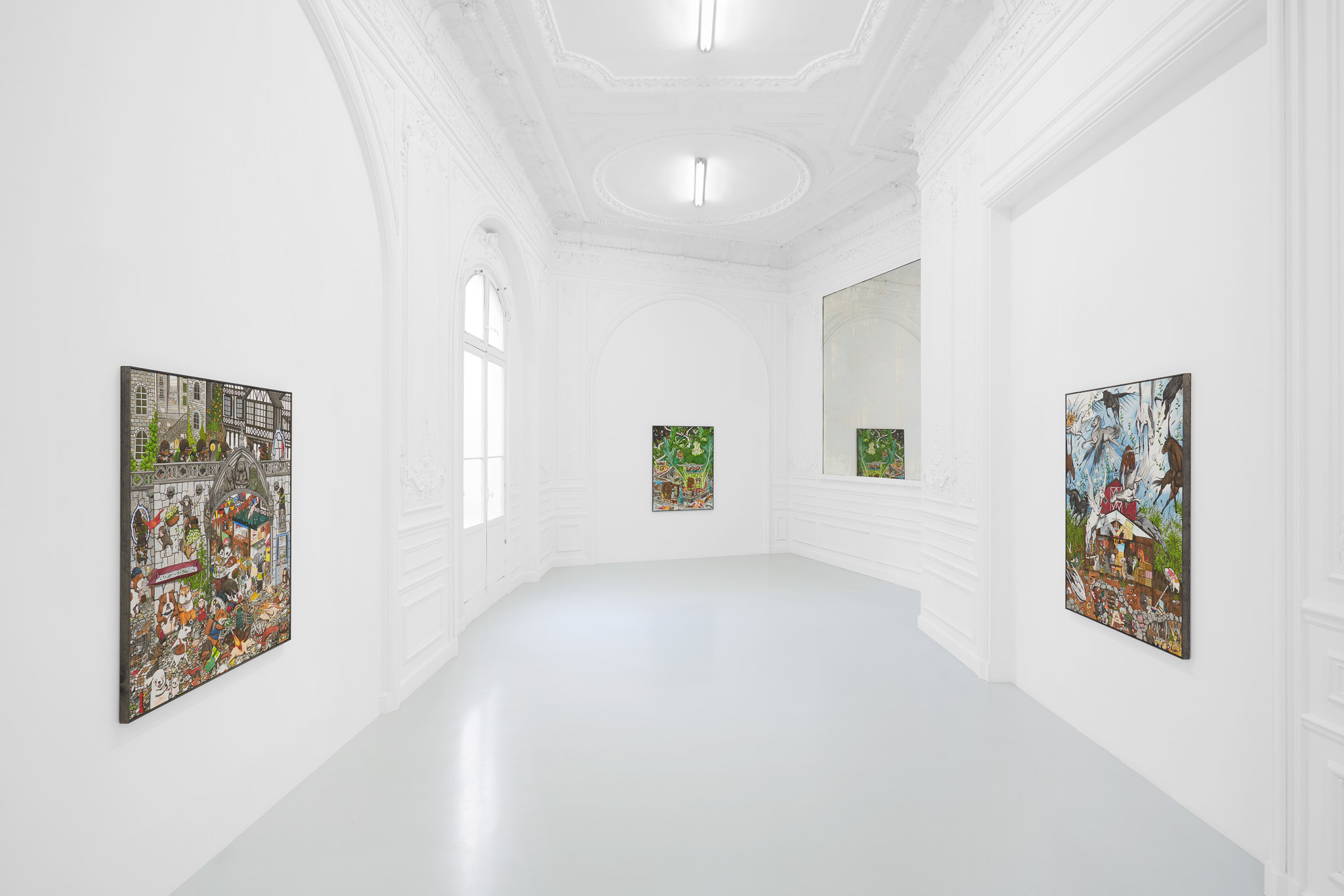
The
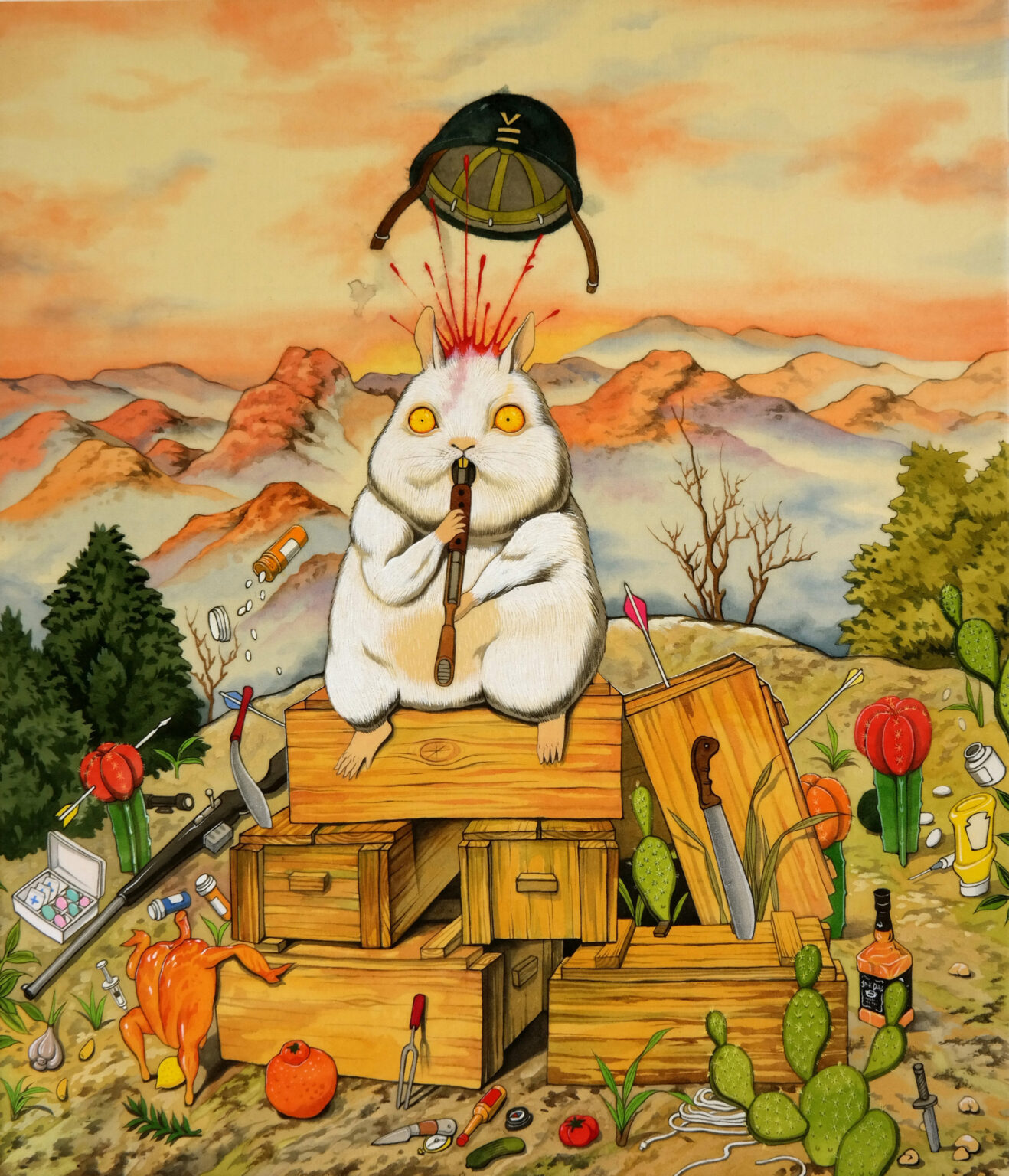
following year, his solo exhibition at High Art in Paris, 《Pure War》(High Art, Paris, 2019), borrowed
its title from Paul Virilio's book 『Pure War』, casting war itself as history's recurring protagonist.
Mapping the
evolution of weaponry — from stone tools to biochemical, nuclear, and genetic
technologies — onto the twelve animals of the Chinese zodiac, the series
compressed onto a single surface a world economy dependent on perpetual
conflict and a technocratic political order sustained by it. Already here, the
description of Kim's work as suspended between disarming cuteness and sharp
diagnosis begins to take shape.
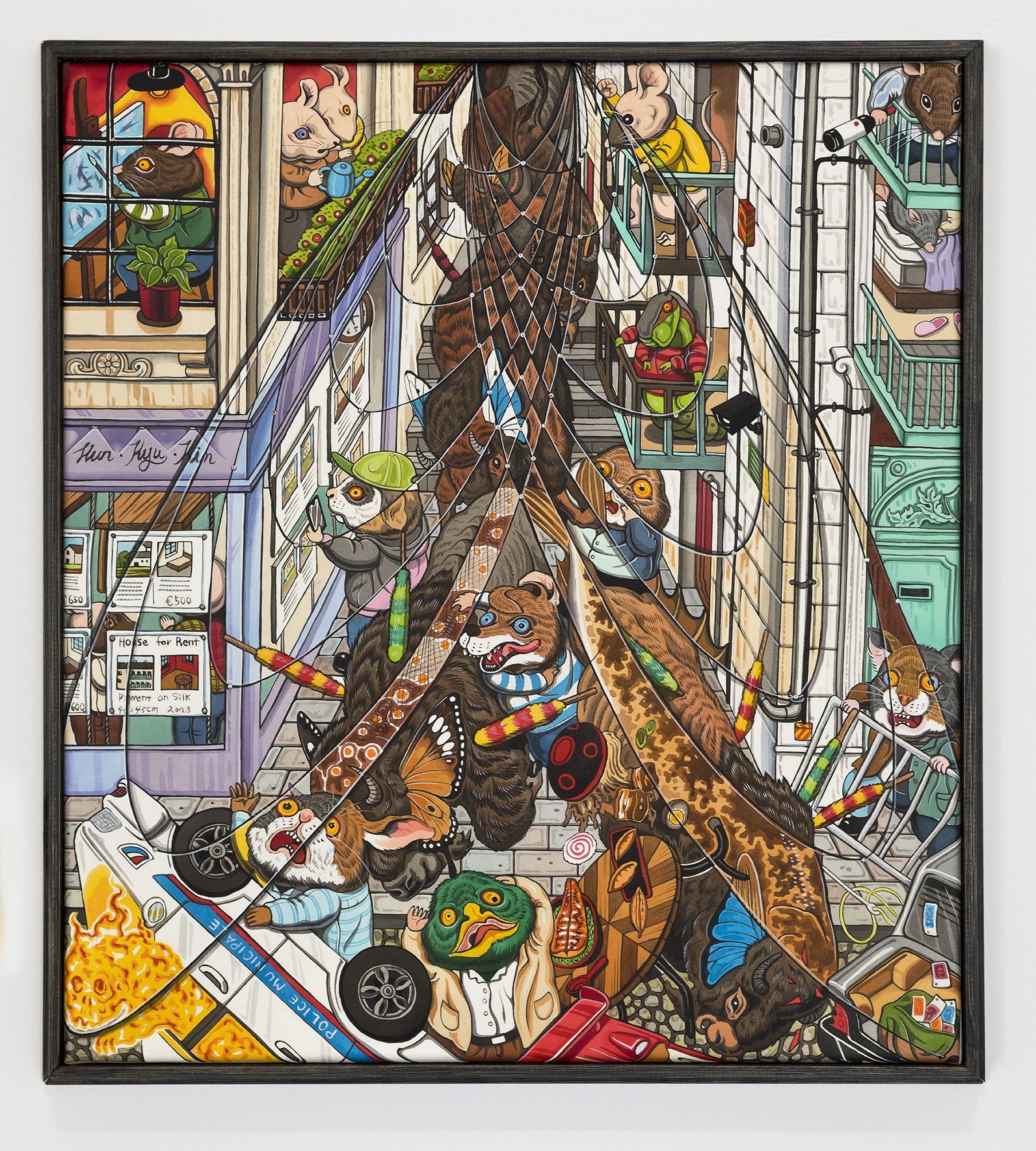
After
relocating to London, the artist grew attentive to how the same event or
situation could be read entirely differently depending on nation, era, or
personal position — an observation that crystallized into his recurring theme
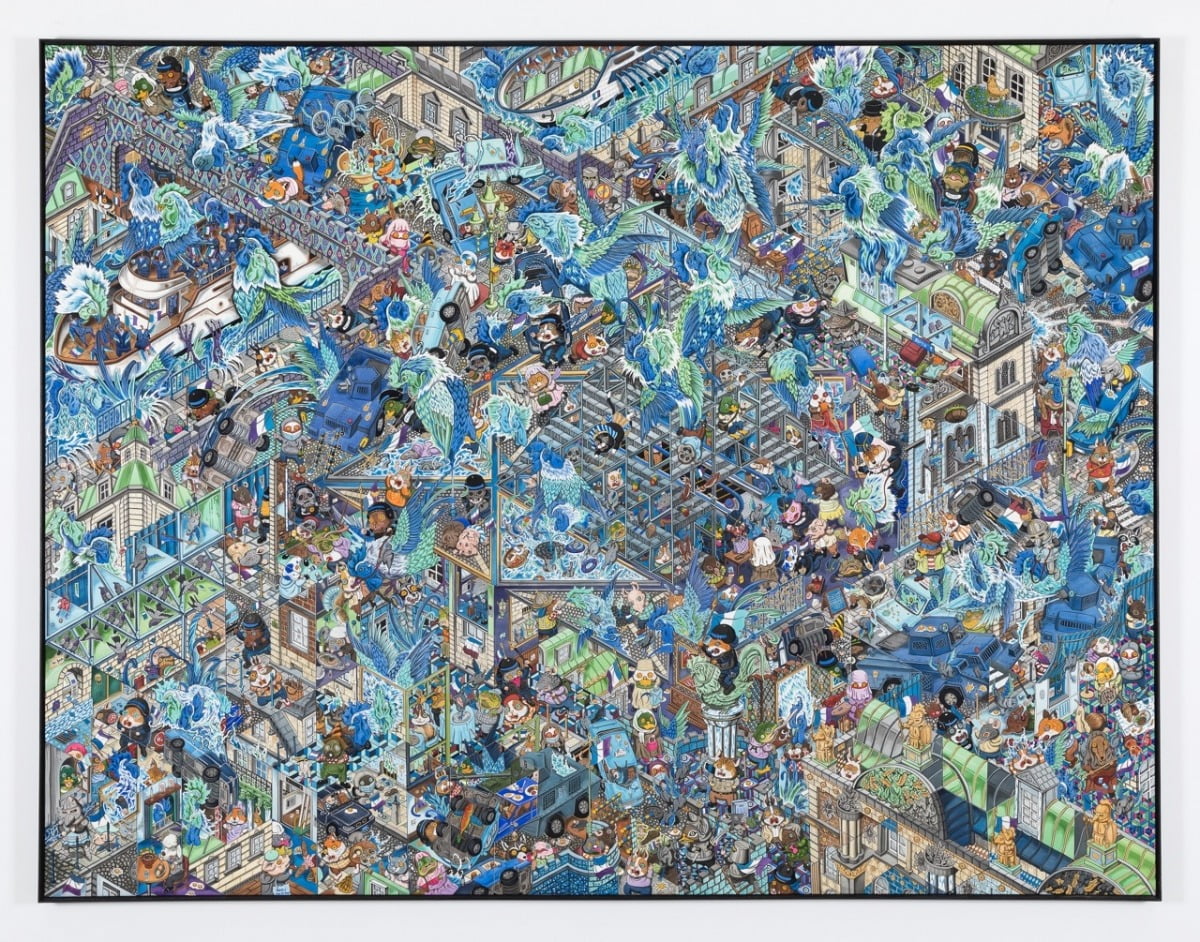
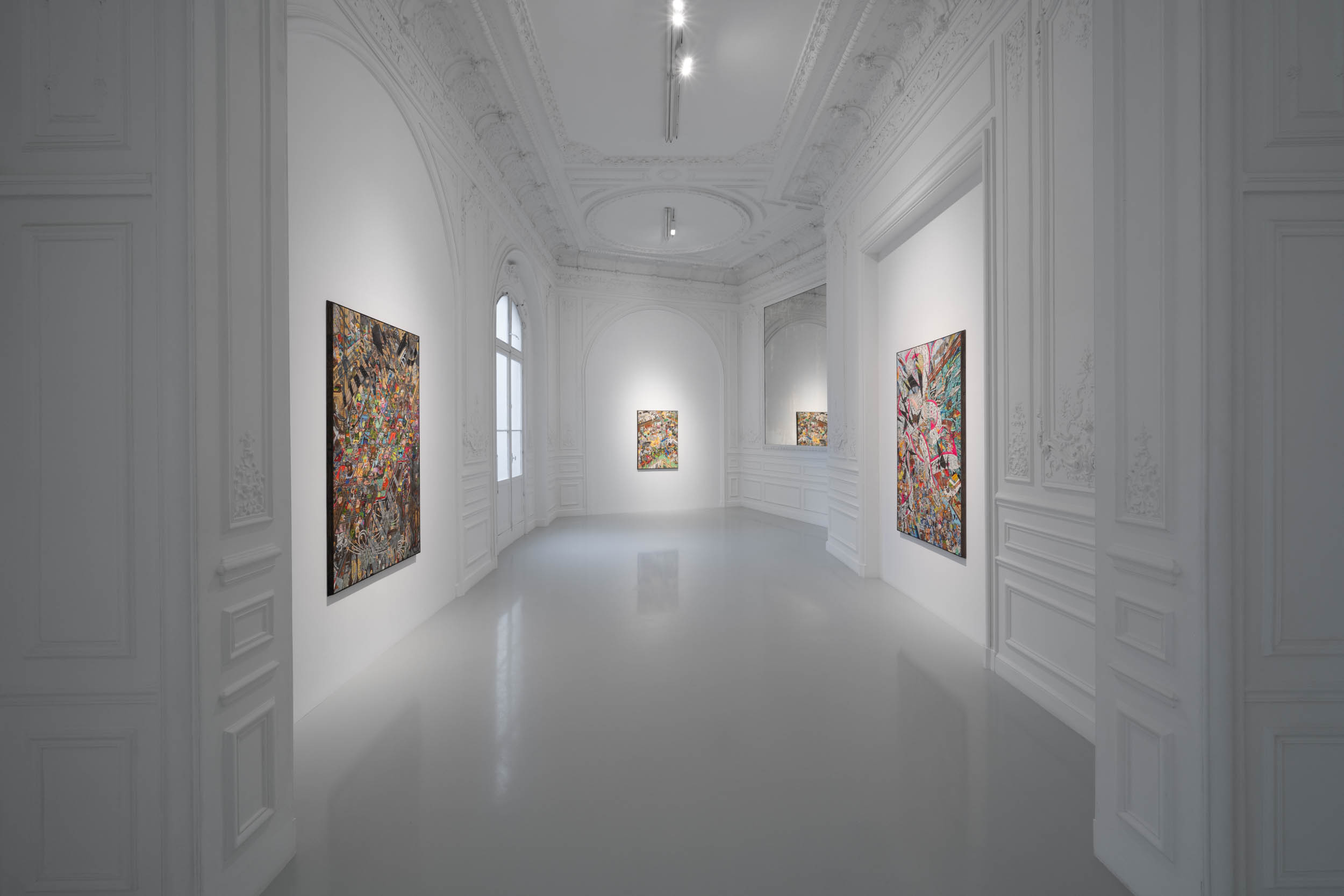
of perspective. 《Enemy of My
Enemy Is My Enemy》(High Art, Paris, 2023) frames
history not as a fixed entity but as a tapestry woven from countless
viewpoints, pairing questions of narrative authorship with the notion of
endless war.
That same year, the group exhibition 《Keep
Calm and Give a Shit》(Buk-Seoul Museum of Art, 2023)
widened this lens toward more immediately contemporary and global conflicts —
the war in Ukraine, the political situation in Hong Kong, the pandemic, media,
and surveillance.
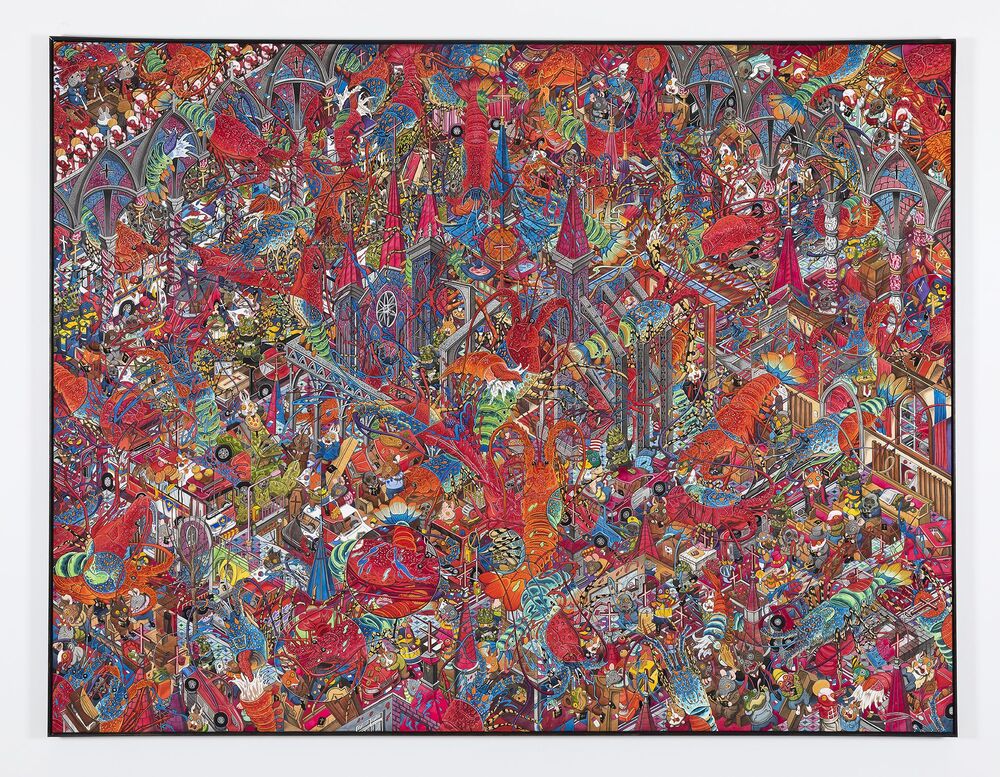
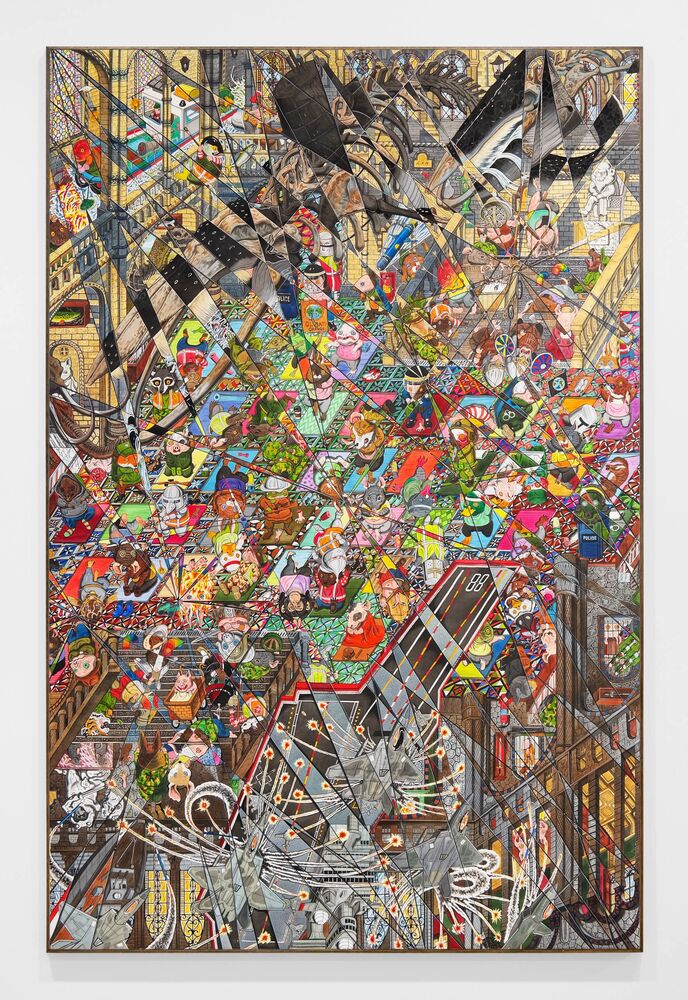
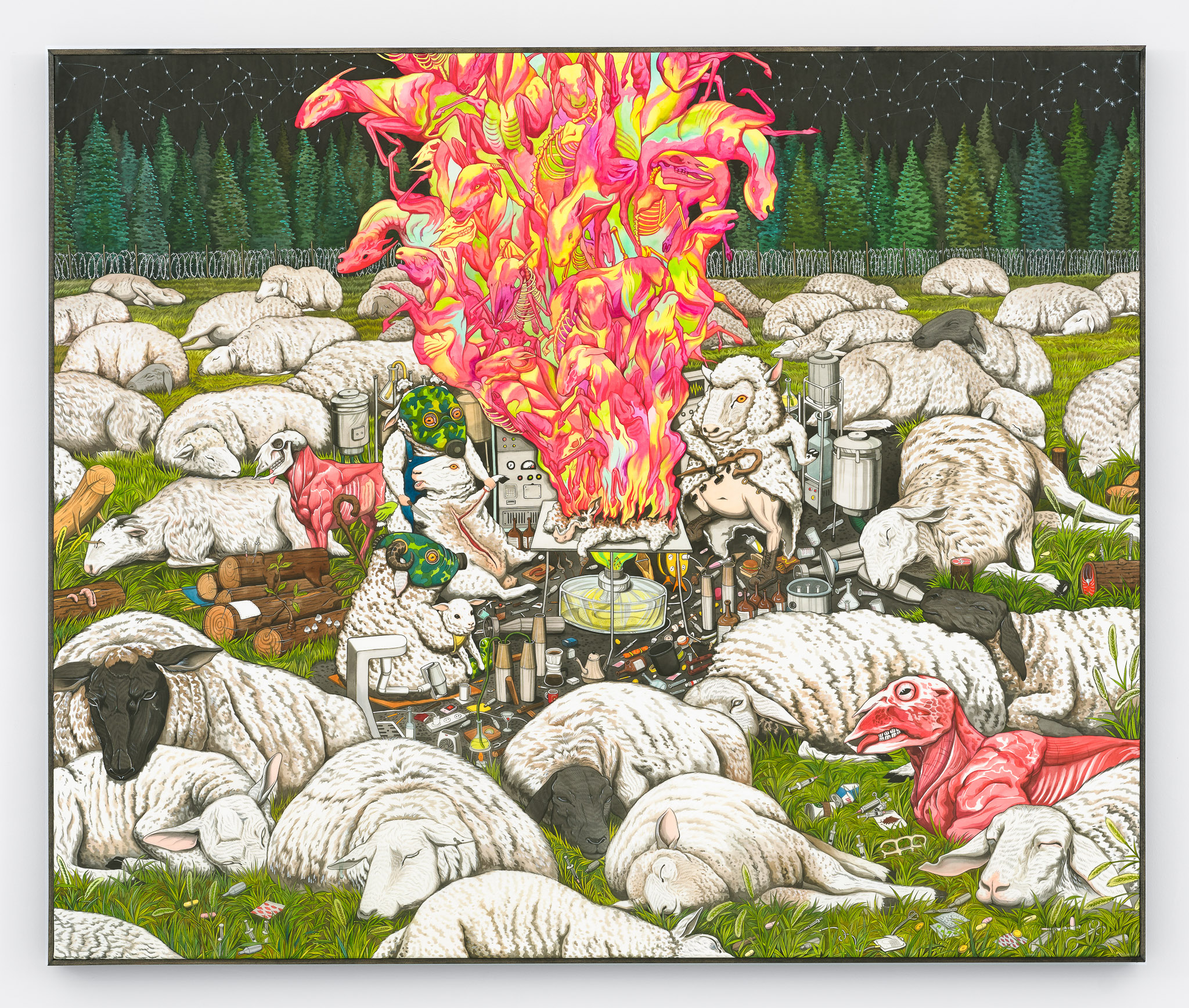
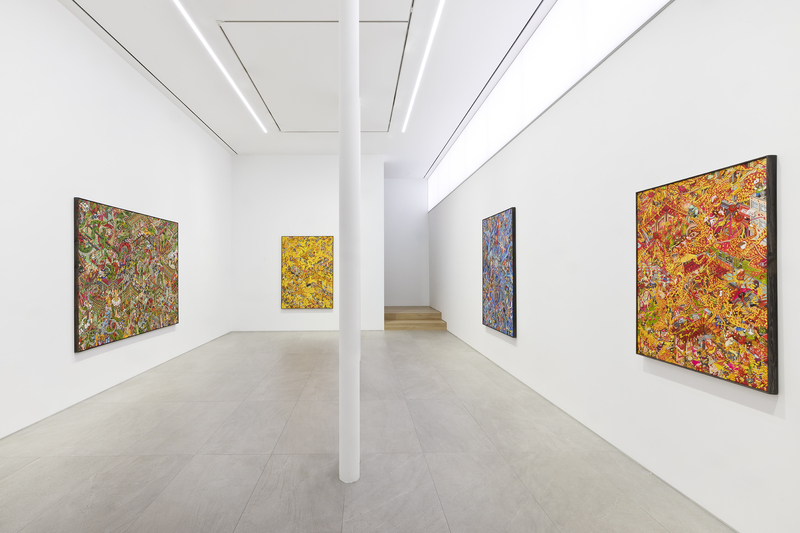
By 《The Prayers》(Perrotin Seoul, 2025), his
first solo exhibition in Korea, Kim's inquiry had extended beyond politics and
history into religion and belief. He treats religion as a force that has long
justified human frailty and desire outside the bounds of reason, placing Christianity,
Buddhism, Catholicism, and Islam alongside an invented Church of the Rubber
Duck.
Having long studied how political conviction operates much like religious
faith, his gaze arrives, in this body of work, at the point where social
structure gives way to the inner architecture of belief and desire.