A movie theater in which you can watch two or even more movies at the price for one is called a simultaneous screens theater (a double feature theater). A consecutive showing would be a more accurate term. However, ‘simultaneous screens’ was settled because there was a logical basis of watching two films at the price for one, watching two at the same time.
The difference between the two films is not important. What is important is the time to kill/spend for the two movies, say, 3 to 4 hours of homogeneity. In a shabby movie theater on the outskirts of a city, one does not watch some enthralling, choice movies, but movies that are outdated, movies that are no more than just movies.
The time for the simultaneous screens theater is a time to spend alone because one has nothing particular to do and has no other place to go. And the simultaneous screens theater, which was dedicated to an empty, linear or quantified time, is now being closed up or transformed into a silver movie theater that costs you 2,000 won for a film.
Once the simultaneous screens theater was the most modern in its name, its mode of functioning, and its way of survival. Yet it has been pushed out from the current of the hypermodern age. Now, as usual for any ugly buildings in Seoul, it becomes an ‘organism’ that ‘gets old’ in its present place, i.e., an ‘organism’ that is weird, unless a new owner of the building or huge amount of mortgage loan turns up.
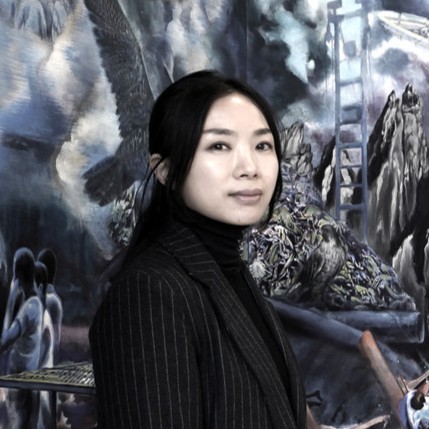
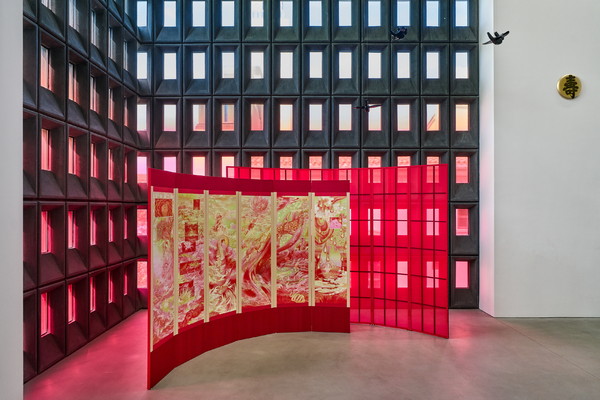
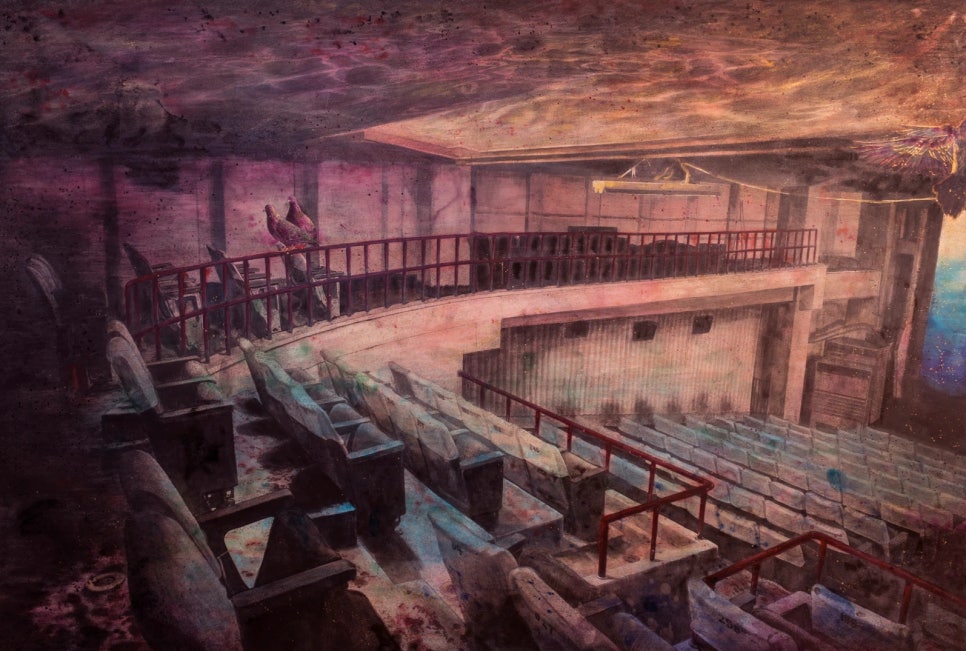
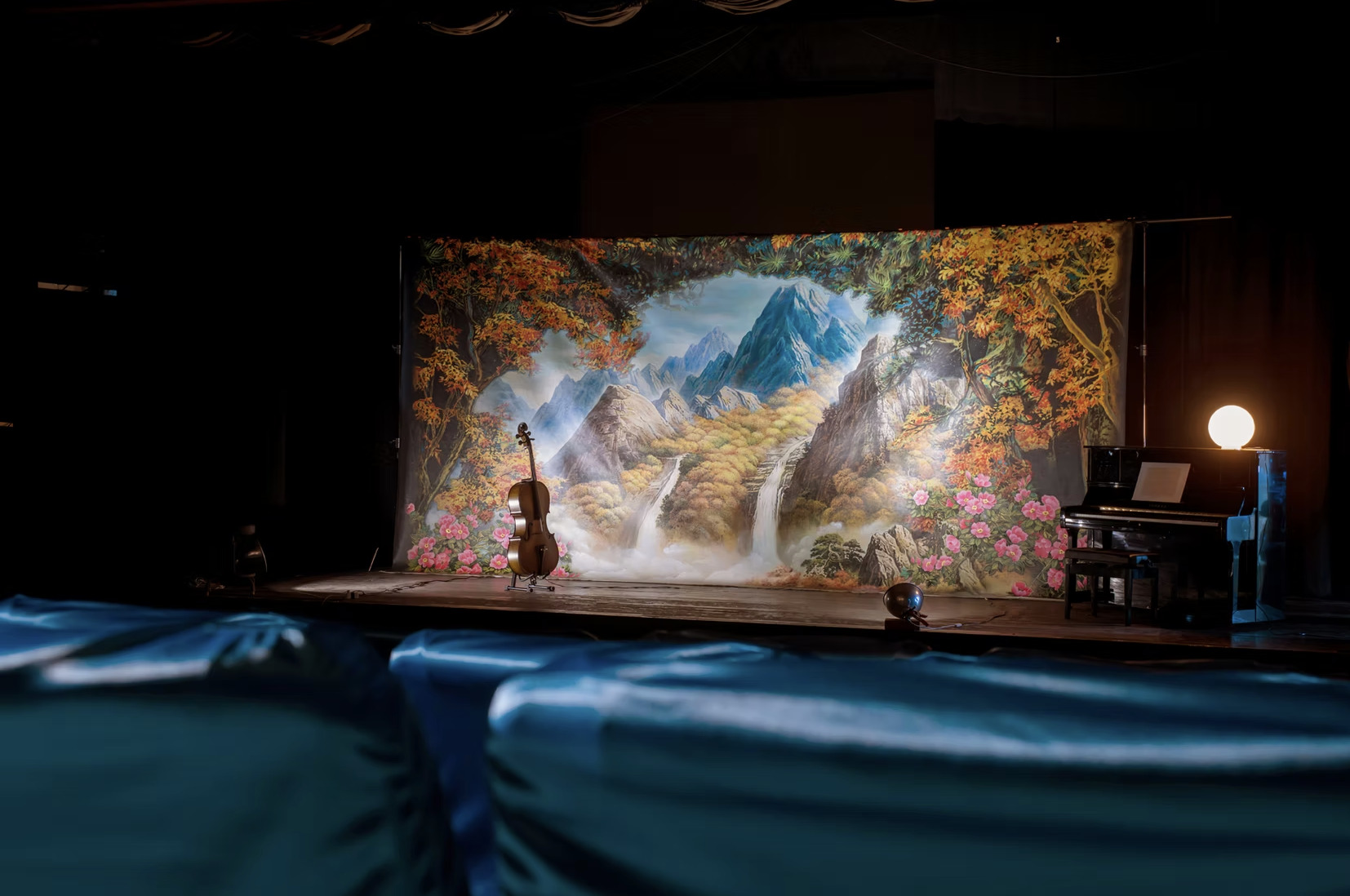
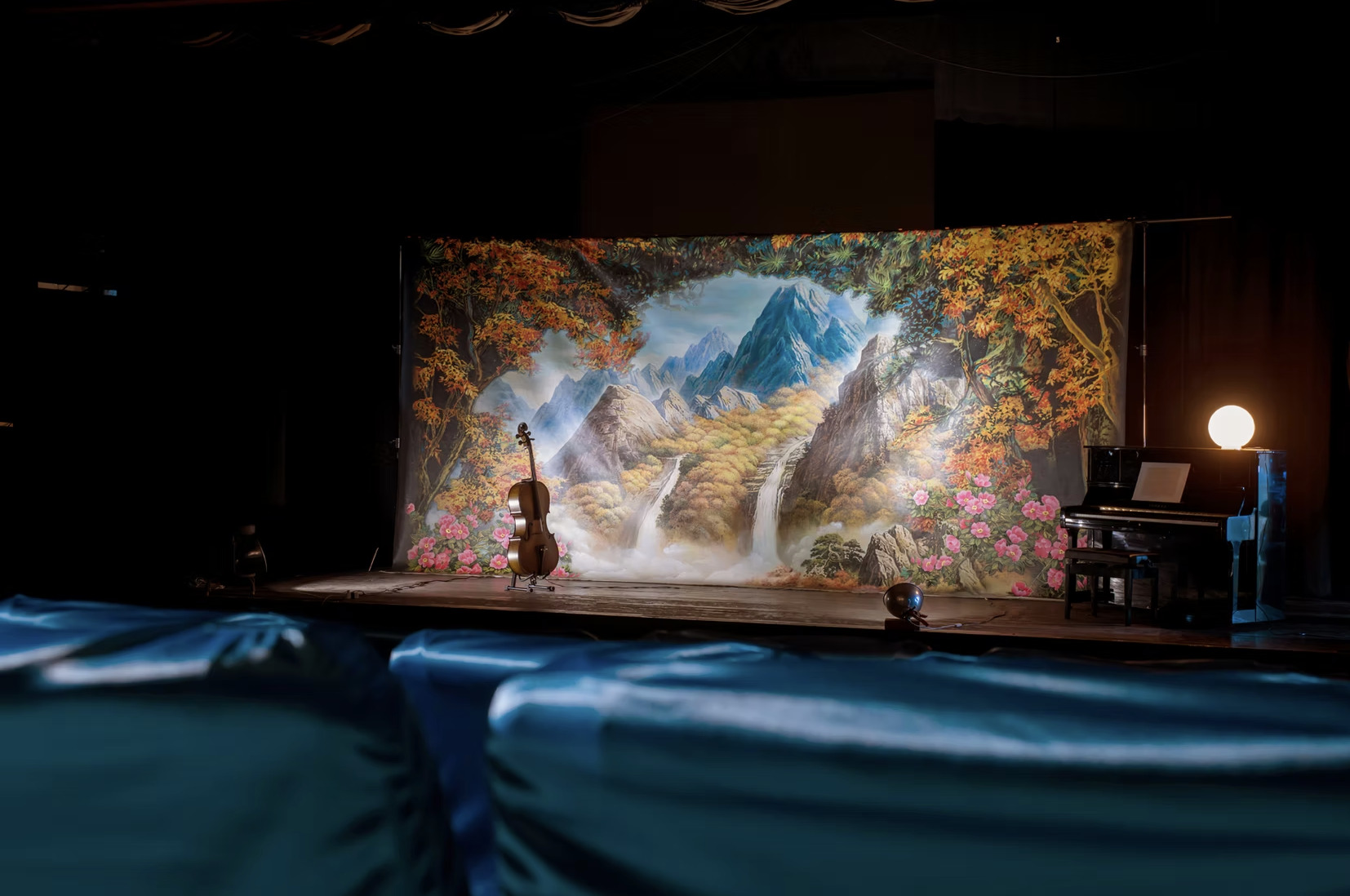
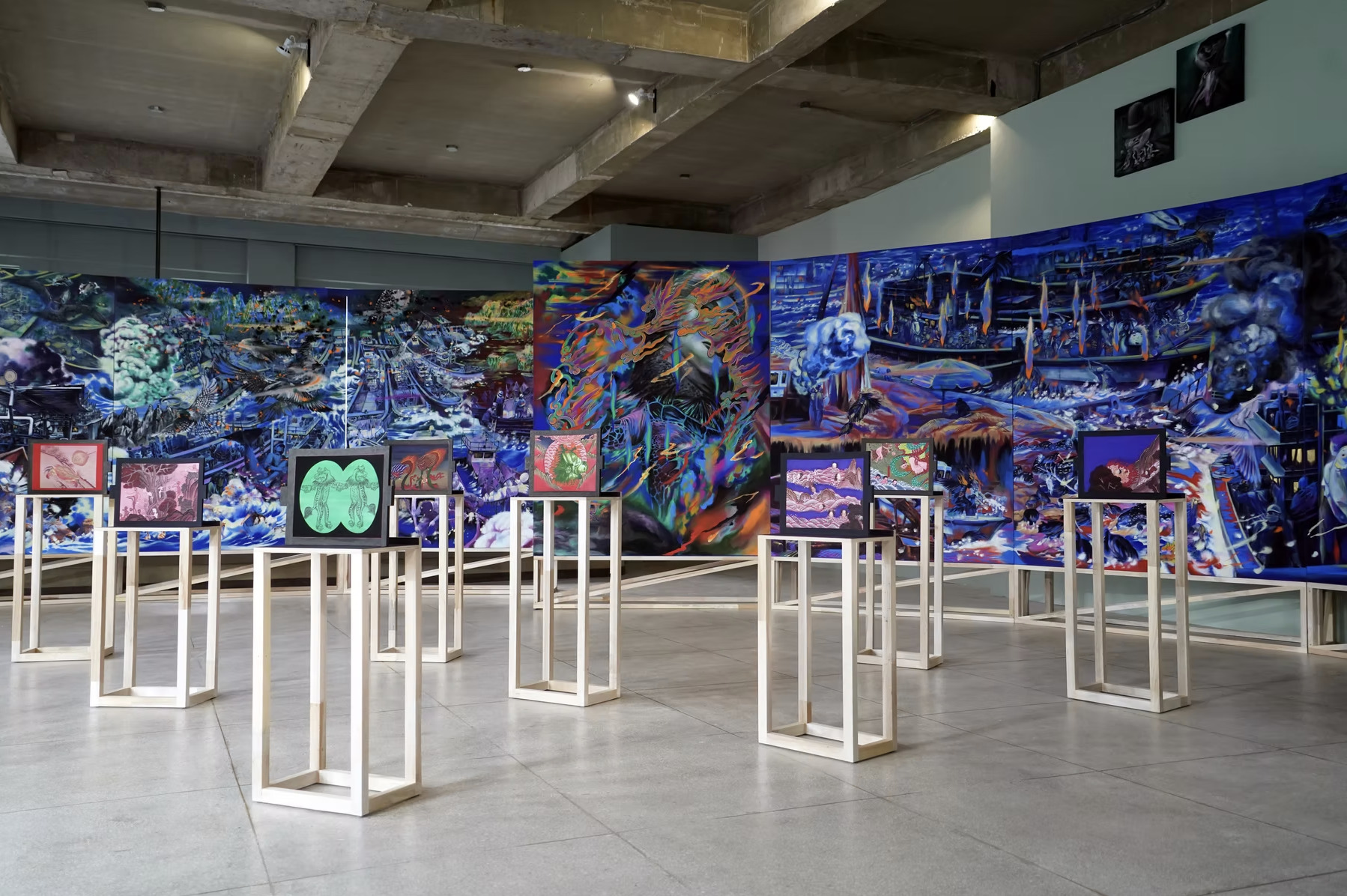
Naomi held an exhibition titled 《Simultaneous Screens》 between October 27th and November 11th, 2018, by arranging the Bada Theater in Cheonggyecheon, which was closed in 2010. The artist reappropriated the Bada Theater, which was a double feature theater, in her own terms, the ‘simultaneous screens’ theater.
So in the exhibition title too, she reflected her aesthetic methodology of intervening in the disappearing culture or places. The temporality that is outdated, that is to say, that has lost the ‘simultaneity’ with the interest of the audience who desires novelty; that has arrived here and now with something gone awry; the temporality that is the past and the present at the same time: such temporality is showcased through the Bada Theater, which is a double feature theater.
It is the Bada Theater for the artist who has delved into the simultaneity of “East and West, reality and ideal, tradition and modernity” and the separability of the two. In the theater that shows two films at one go, we experience the hybridity of then and now.
Bada Theater, “located next to the Samil Overpass, a symbol of modernization and industrialization that has disappeared”, will also disappear. The Bada Theater, which owned the “homogeneous and empty time" (Benjamin) of historicism in the form of a double feature is the ‘real’ of modern temporality and the other in the modern fantasy. Hence it will disappear now for the hypermodern fantasy.
Whether it was alive or dying, the Bada Theater was a place like a swamp full of stagnant water that does not flow. Now the artist focuses on the time that is stagnating in the inside that lost functions and context, on the dead time that ‘flows’ in this place that has not opened since 2010. Naturally, a place like this is full of stories, stories of imagination. Naomi first visited here in September last year.
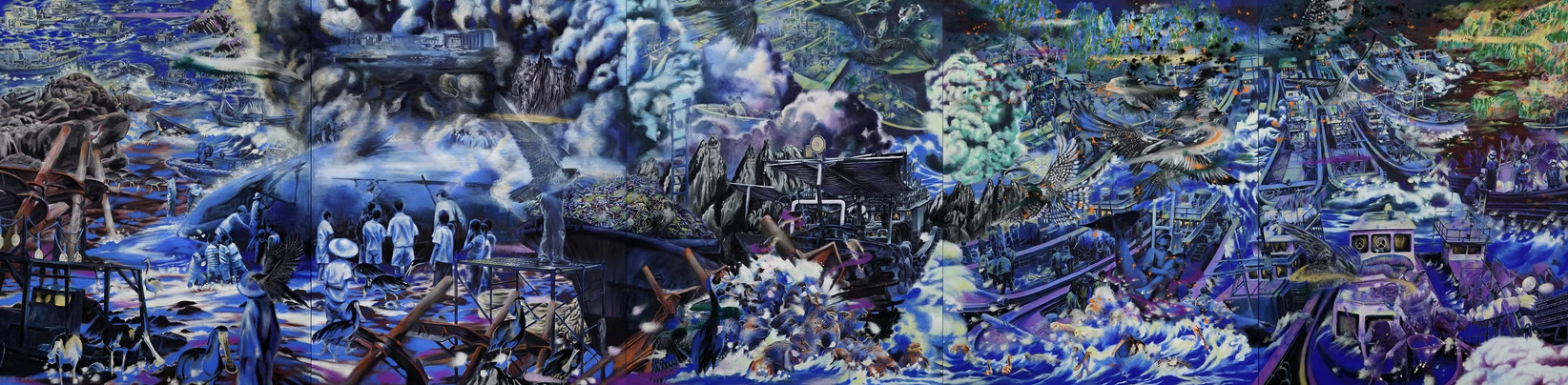
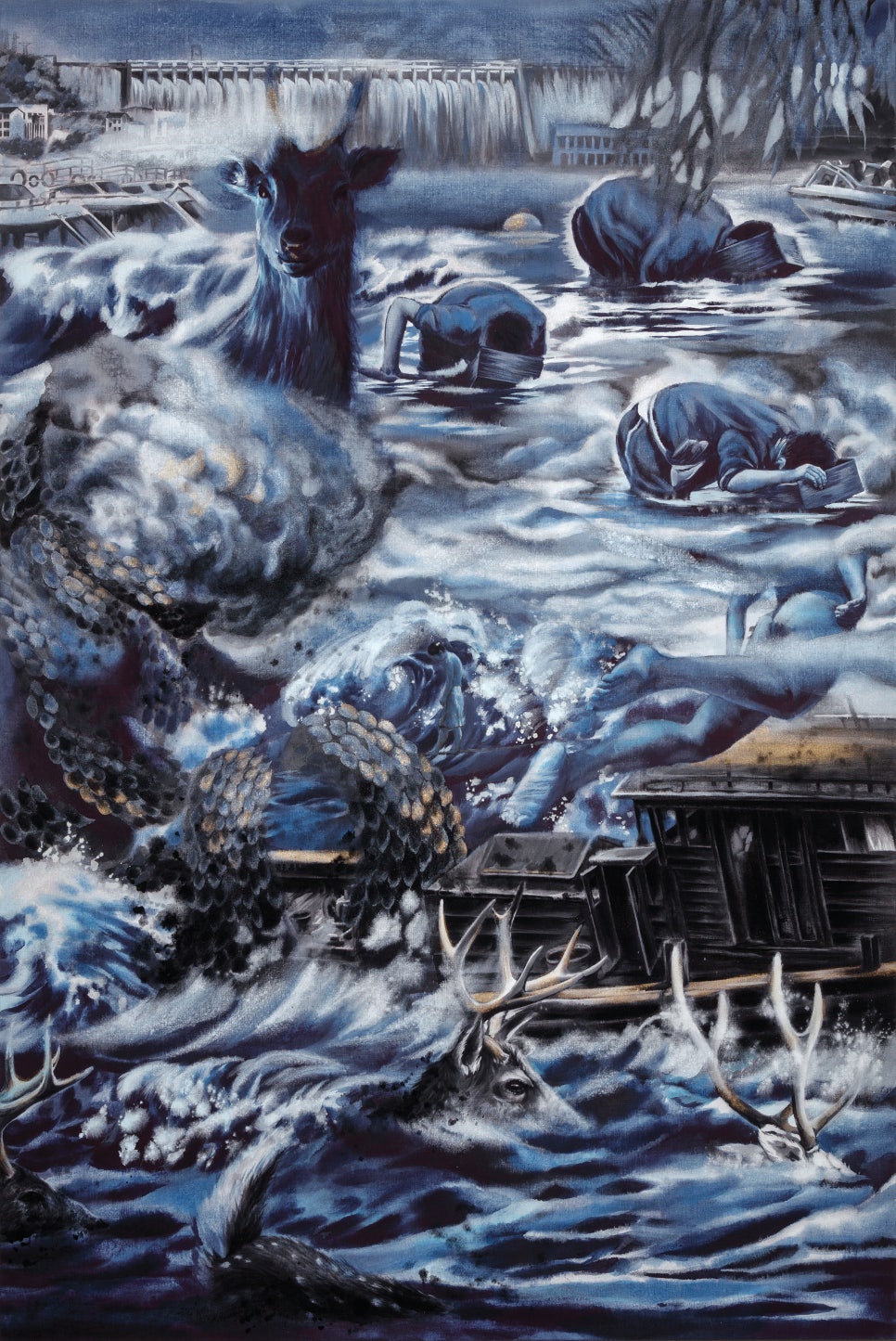
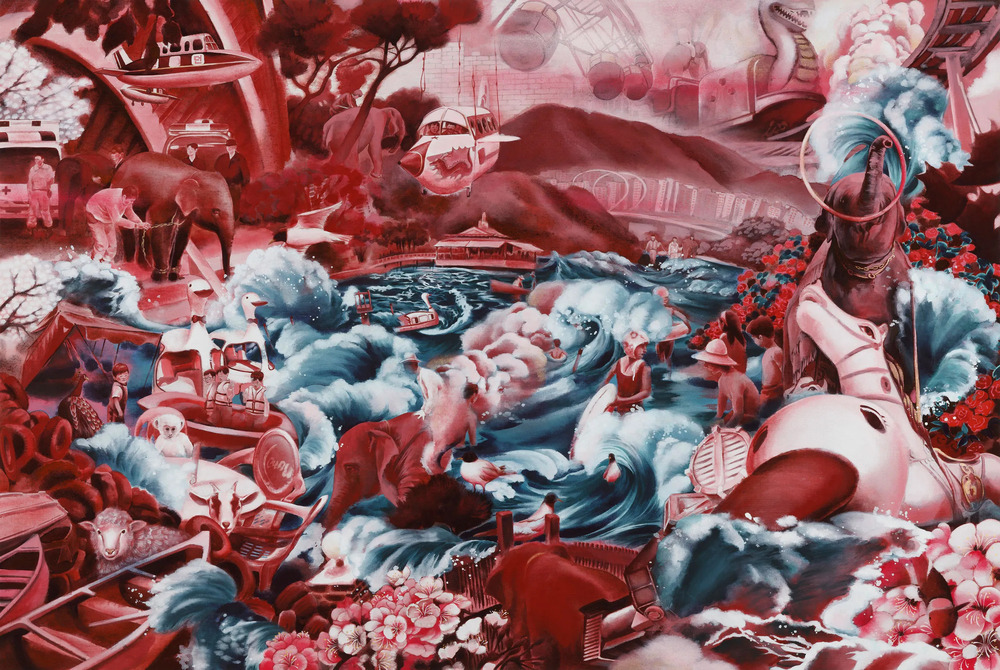
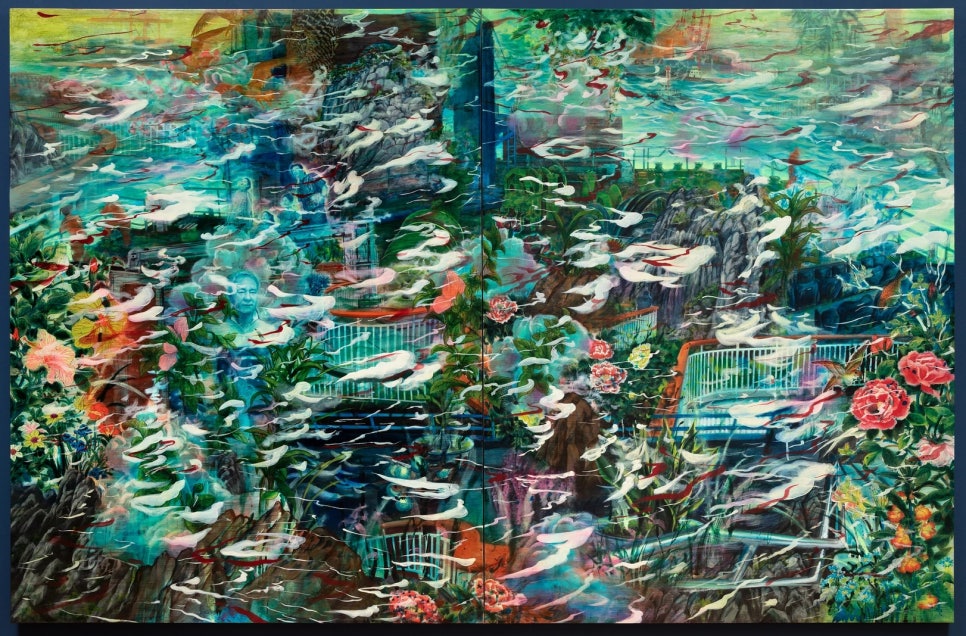
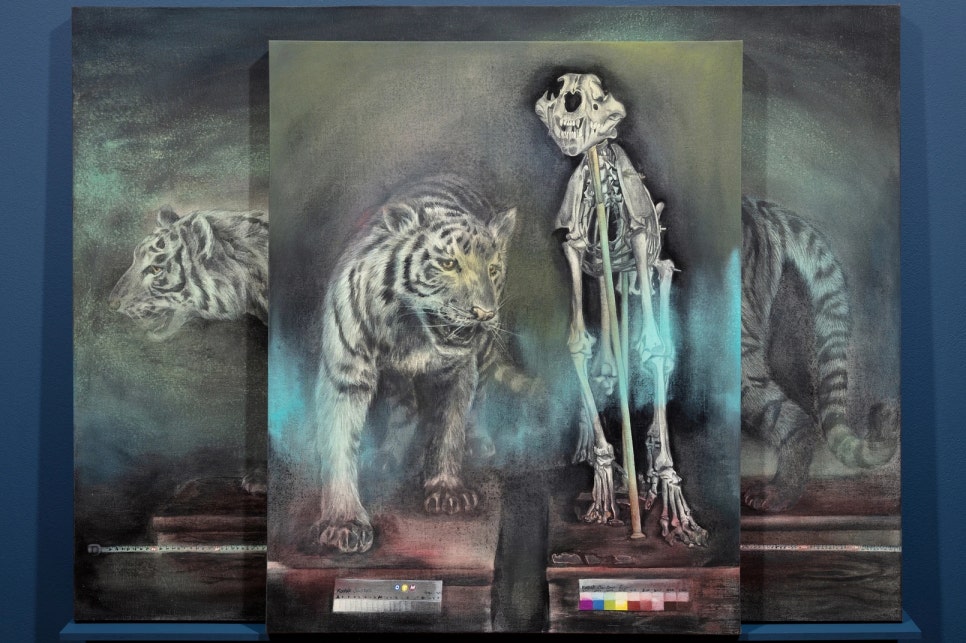
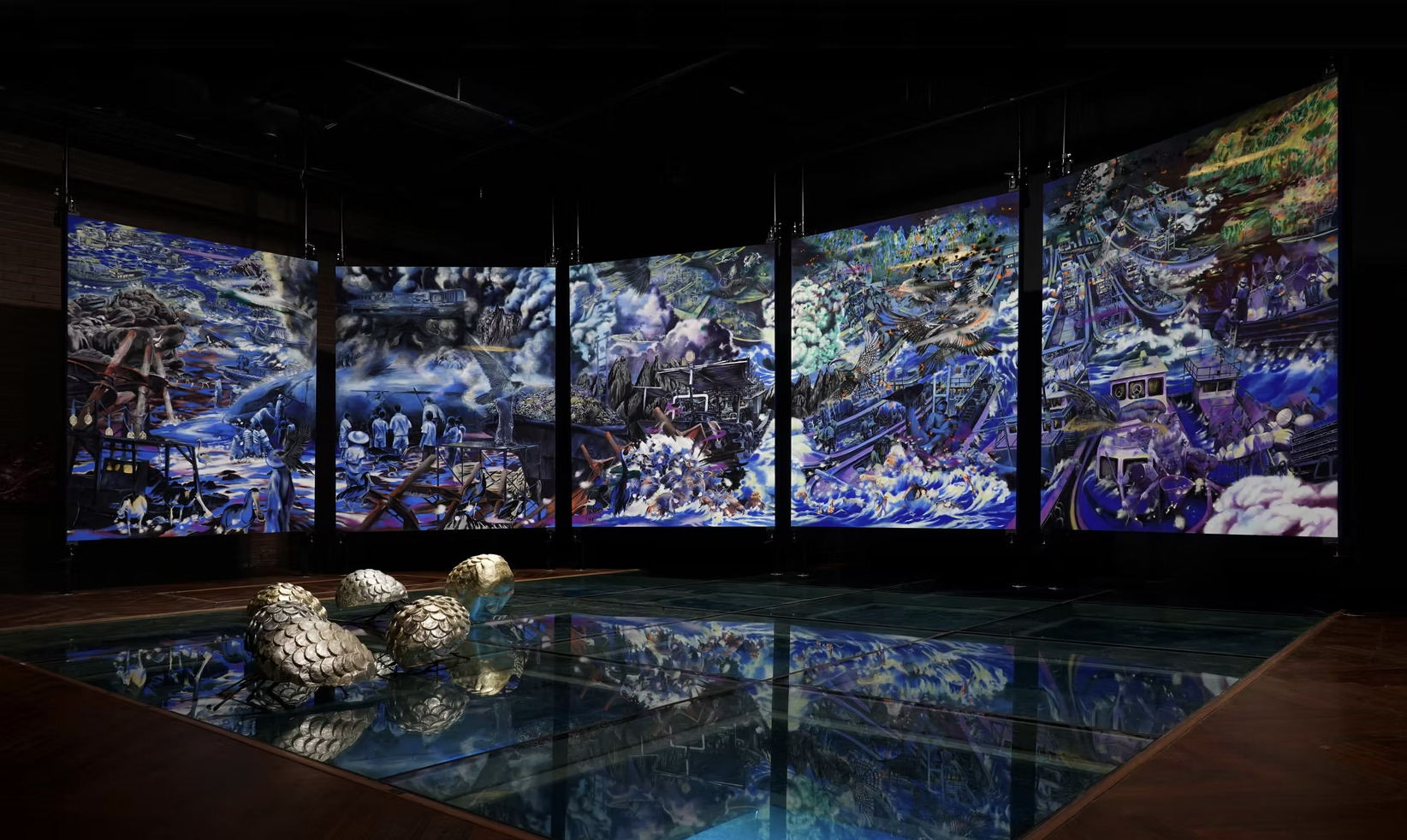
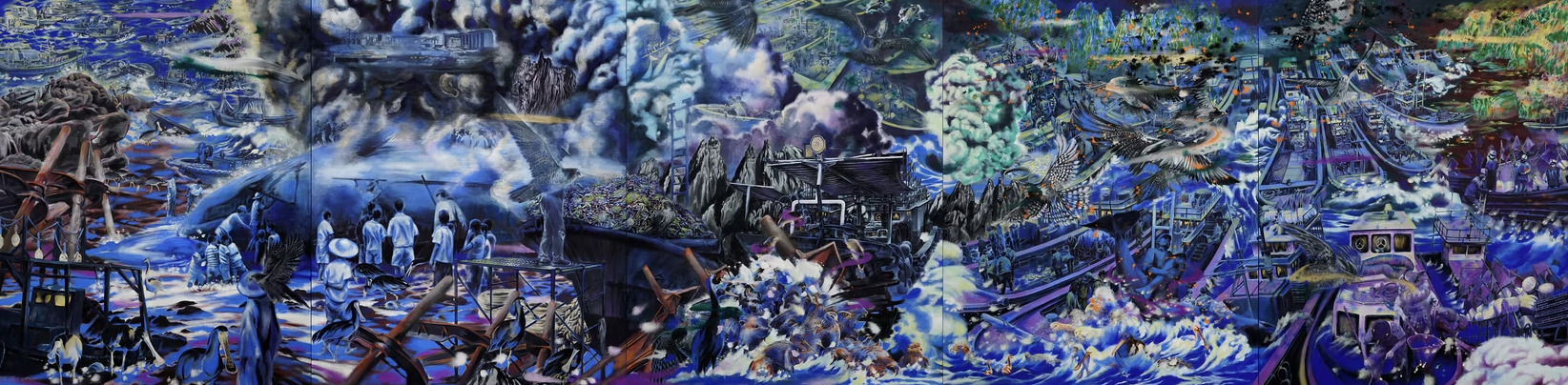
The artist, who cherishes oblivion and absence, made the story of the objects/archives she likes into pictorial images: things like the paper 'Visitor Guidelines’ posted on the wall in 1997, or the clock that stopped at 3: 42. Pigeons living there as if they were the ‘owners’ of the theater, or the father of the artist who was the pillar of the industrialization in the 1970s, appear on the surrealistic canvas.
This was a theater that provided the dreams and fantasies to those who were exploited in the homogeneous time of endless rush; and what remains of it is the old, scruffy, and dusty 'inside'.
And instead of fetishizing the past, ideal, and memories, there is a visit by someone who ‘utilizes’ this kind of space to say that it continues now, in the present, through desire, who wants to make the space alive ‘temporarily’ through her intervention. According to Naomi’s self-introduction, she majored in Western painting, participated in stage art and historial film art, and dreamed of becoming a copier for restoration of cultural properties at an Institute of Cultural Properties.
It was very interesting for her to draw Minwha (民畵, Korean folk paintings, which is regarded as ‘second-rate’ art, in the art team for historical films. It is not ‘art’ proper as we know. A Minhwa is a painting drawn on the basis of “constancy of the daily life style and customs of the common people by nameless painters or wandering painters who had not received formal painting education”.
So “compared to orthodox painting, it varies greatly in level and difference according to changing times.” (Naver Knowledge Encyclopedia). In other words, folk painting is not listed in the inherent and developmental continuity of art history. It is an instrumental product that directly reflects the era that created it, the desires and hopes of the common people.
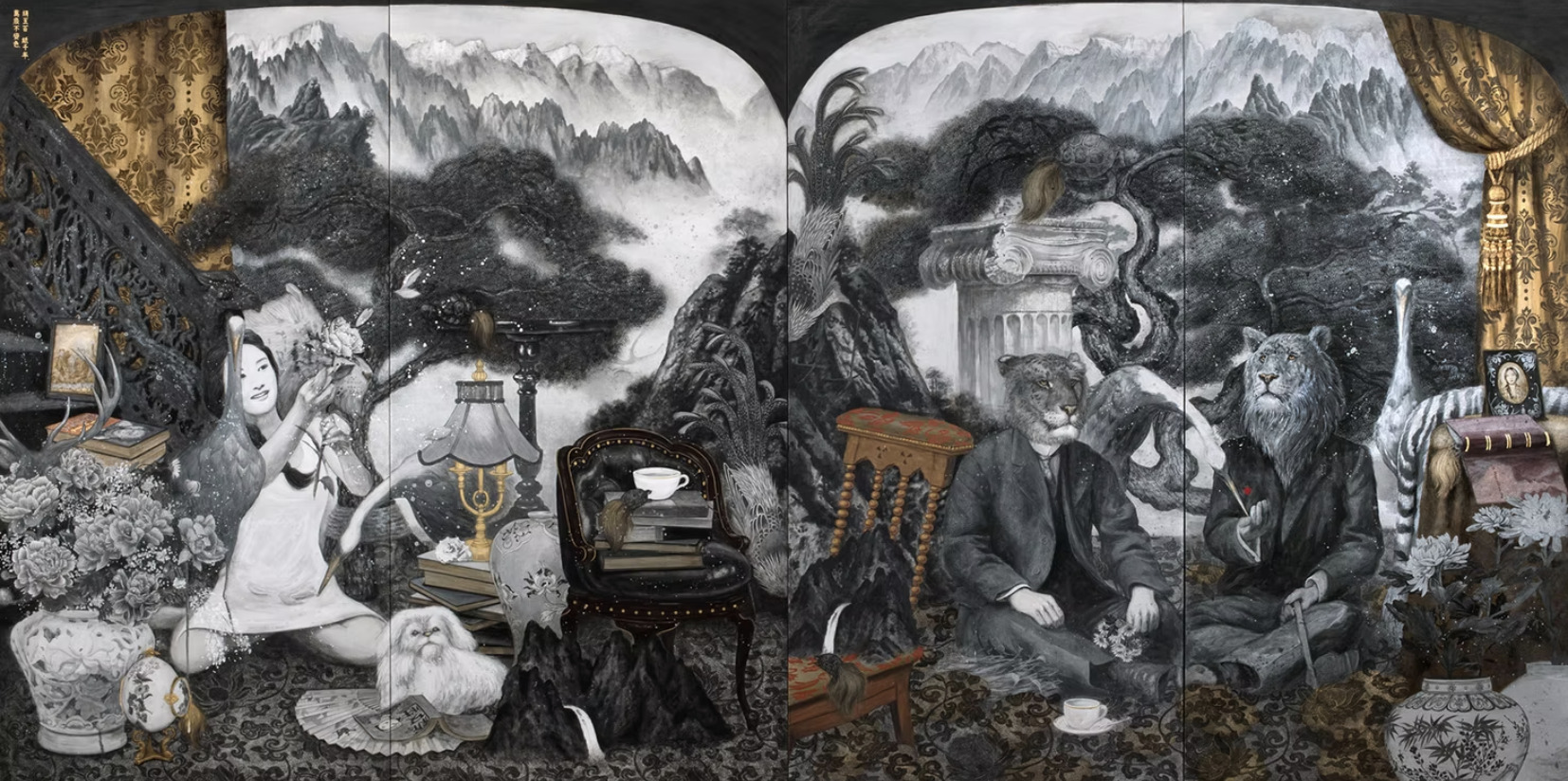
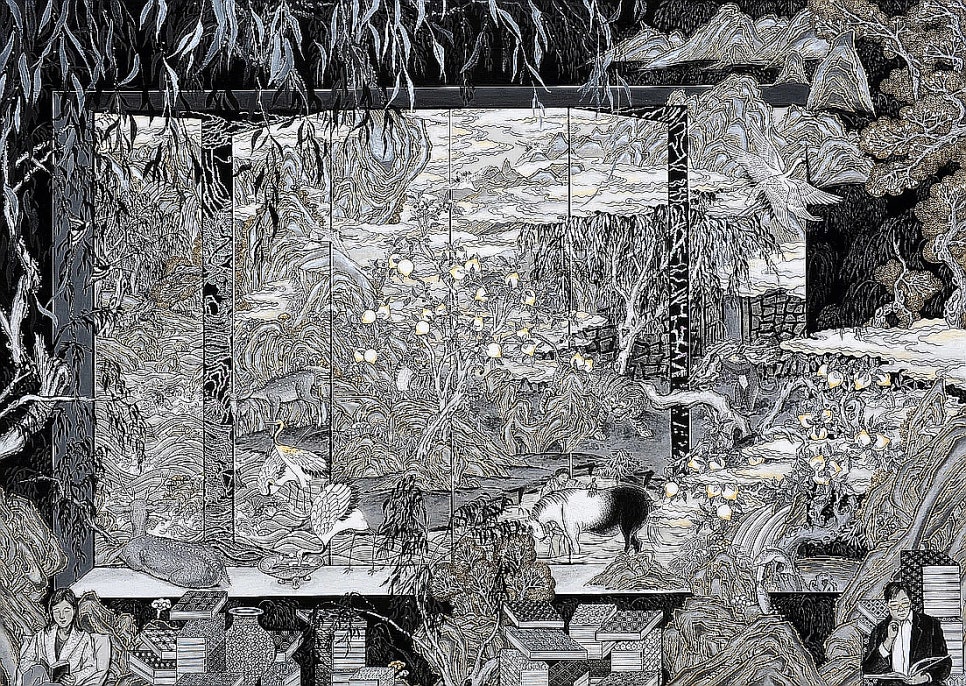
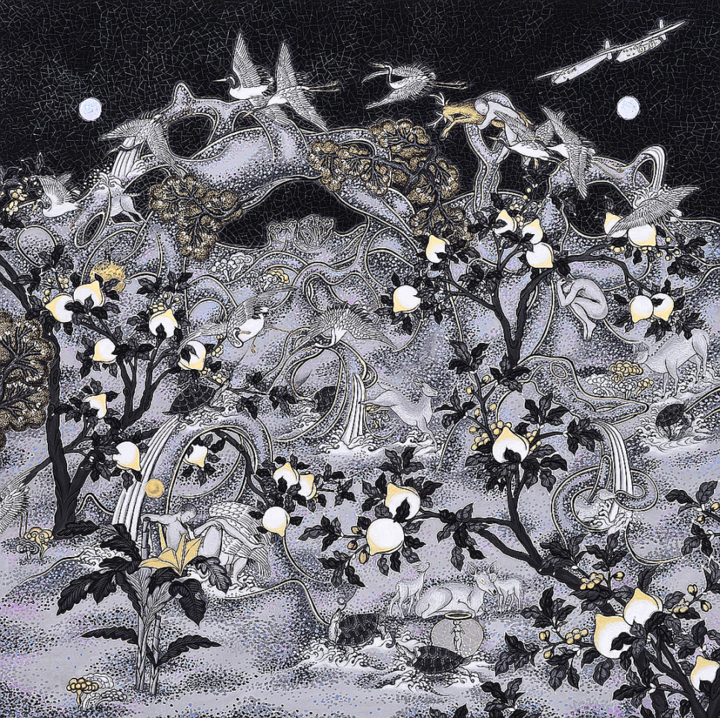
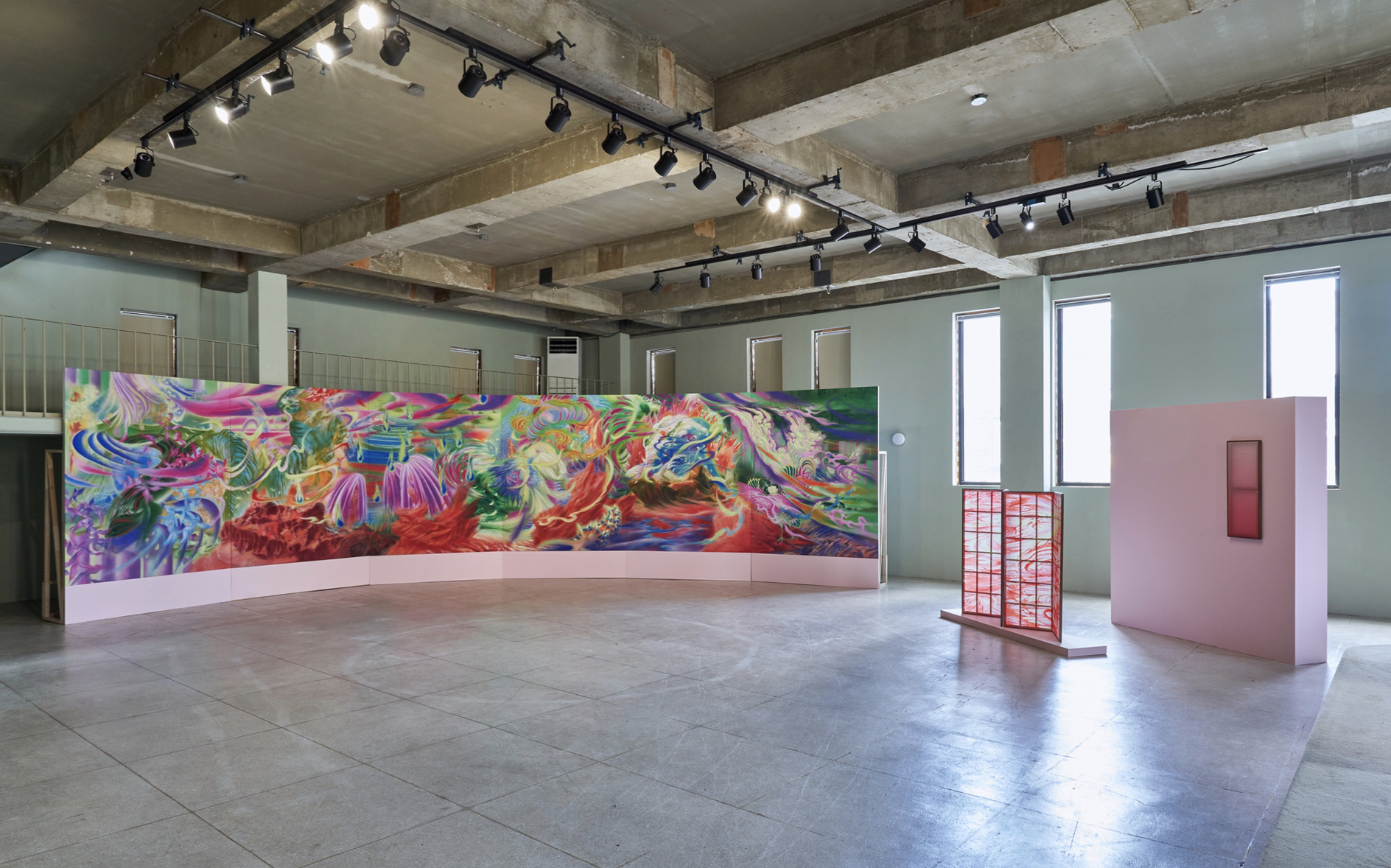
Naomi has ‘gone down’ from Western painting to Minhwa and became interested in the manifestation of the desire of ordinary people or the general public for ‘Eternal youth and longevity' through various images in the genre of Minhwa. She now attempts pictorial intervention in those direct and collective images or pictorial transformation of them into paintings.
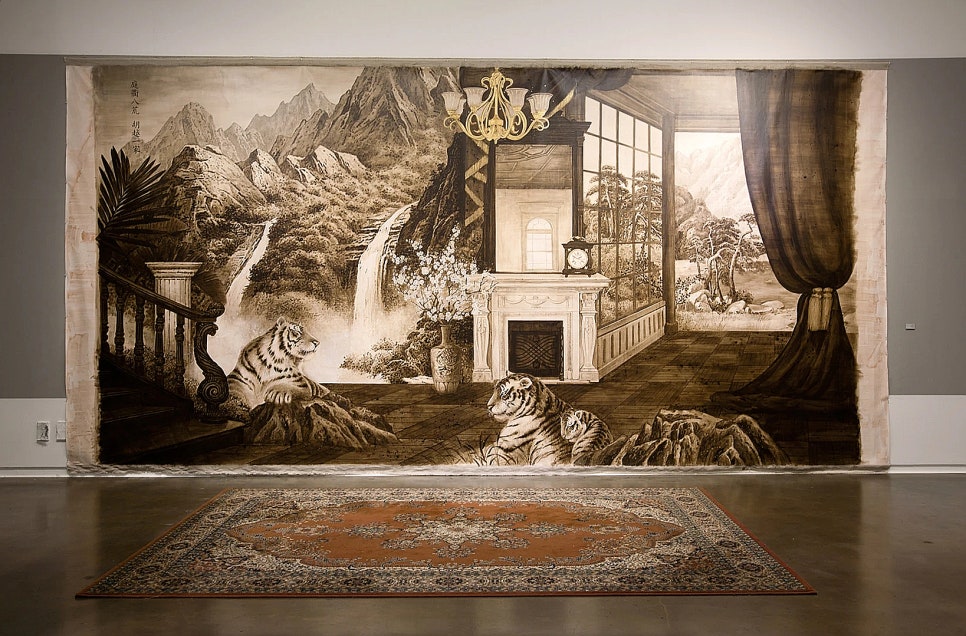
At first glance, Naomi’s painting seems to be a faithful repetition and imitation of Minhwa. However, she focuses on making folk painting up-to-date by combining and merging the folk painting works of the past with the subjective, and even collective desires of her contemporaries.
Based on the realization that our desires assumed to be private are actually visualized through collective imagery, as was the case with the people in the Joseon Dynasty who created Minhwa, Naomi produces paintings that look like traditional folk paintings, but in fact close to subjective interpretations of the desires of contemporary people.
It is the same for Naomi to intervene in Minhwa pushed out by “orthodox painting” and intervene in an outdated double feature theater pushed out by multiplex cinemas. It seems that her interest and mission are to give opportunities to the losers and others that were not able to arrive at the ‘newest’, which is the value of the hypermodern, but that still live along with us as odd forms or spaces that still hold our desires, and to give life back to those things to disappear and be forgotten.
The artist, who has witnessed how art and culture are linked to power in daily life and in social reality, would have to explore tradition or ‘nostalgia’. As tradition is linked to nostalgia, it is bound to collude with the present hegemony. And by bringing tradition into present-time and giving it life, the artist tries to prove that the past things are still alive.
Naomi does this by bonding Minhwa to modern paintings and re-installing the Bada Theater as her ‘stage’. For this reason, this exhibition is The Sightseeing Theater Project, which started in 2017 with the theme of Diamond Mountain Tour, and the next exhibition is planned to be held at Mirim Theater in Incheon.
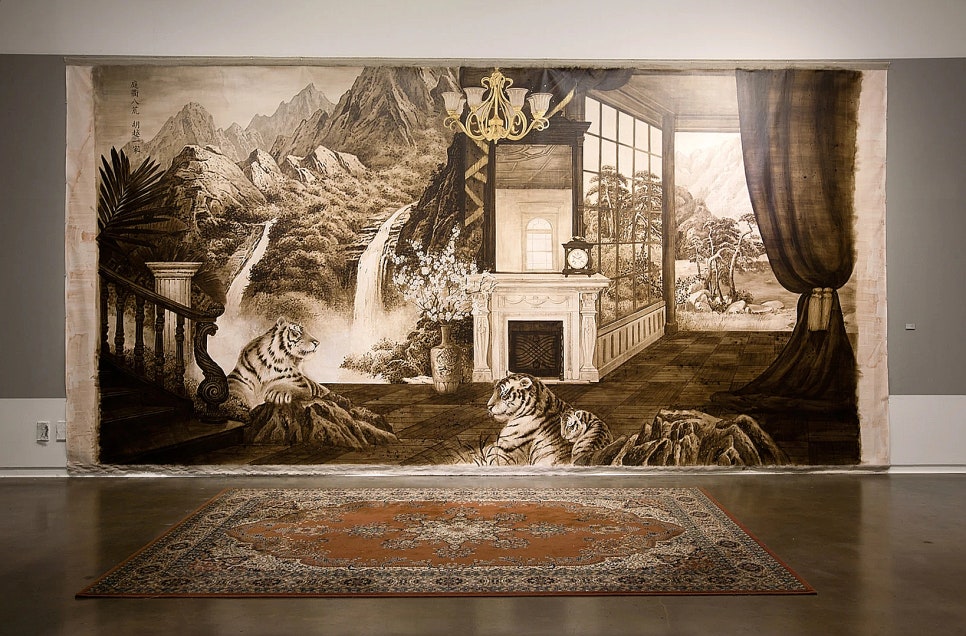
The artist confirms the basis of cultural and collective nostalgia-desire that both South Korea and North Korea gave to Mt. Geumgang in the sentences of Geumgang Mountain, the Scenery Unparalleled in the World published by a Pyongyang publishing house. The book records the location of rocks and hermitages on Mt. Geumgang, the origins of names, and the legends connected with places and names in the mountain.
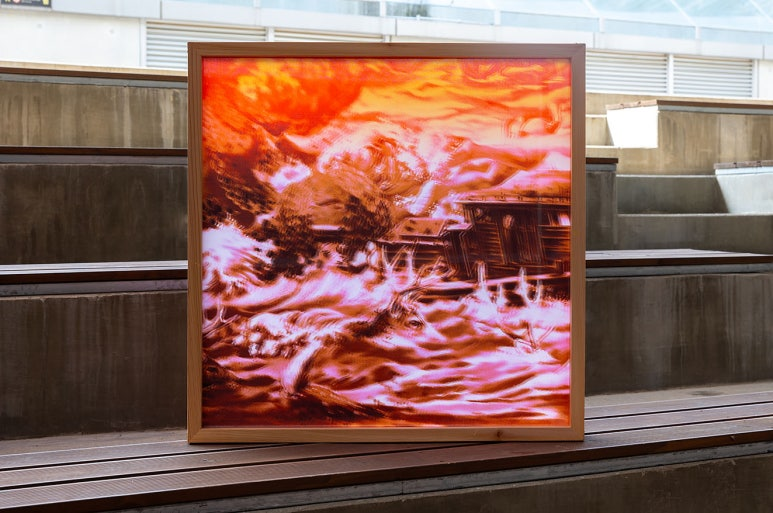
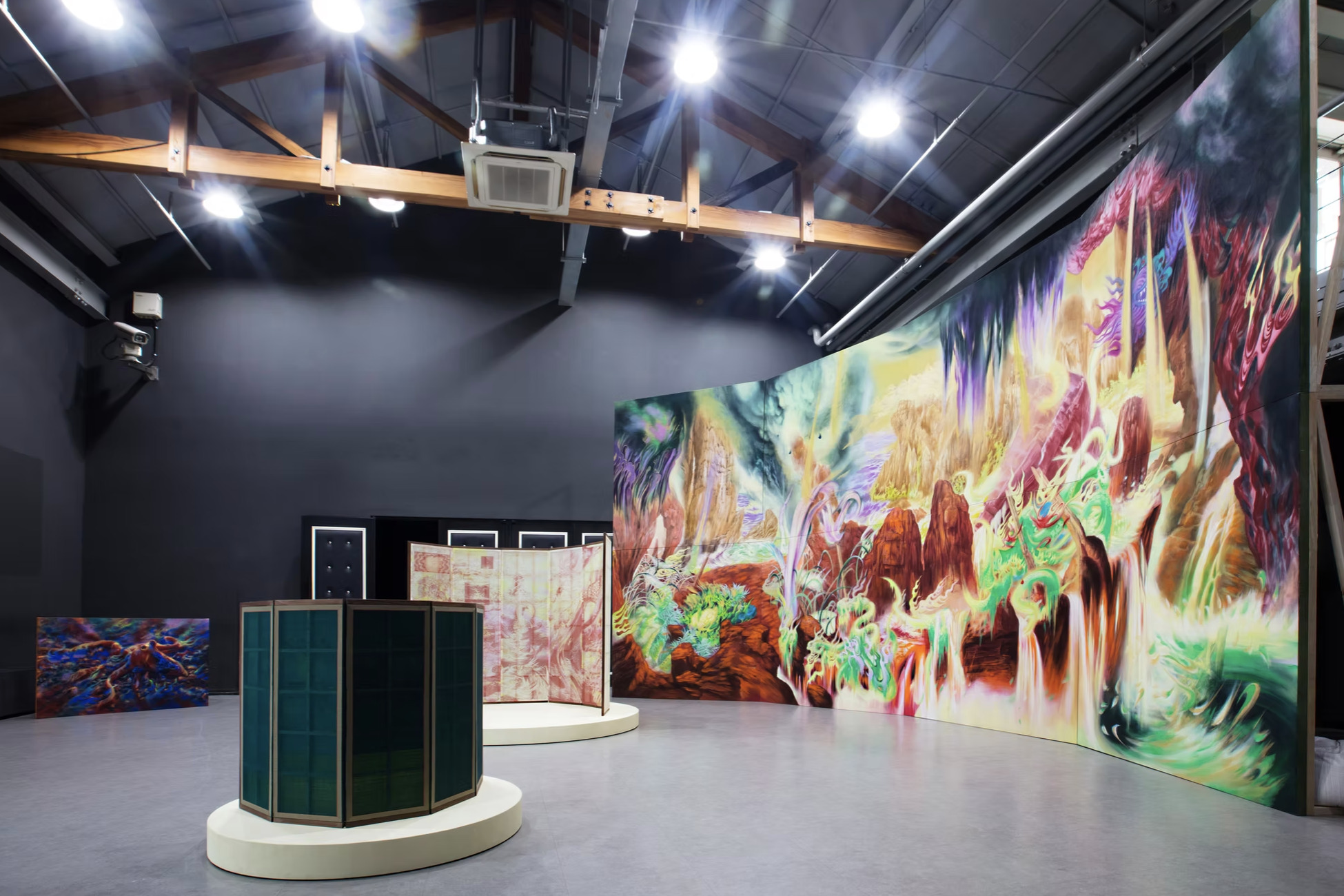
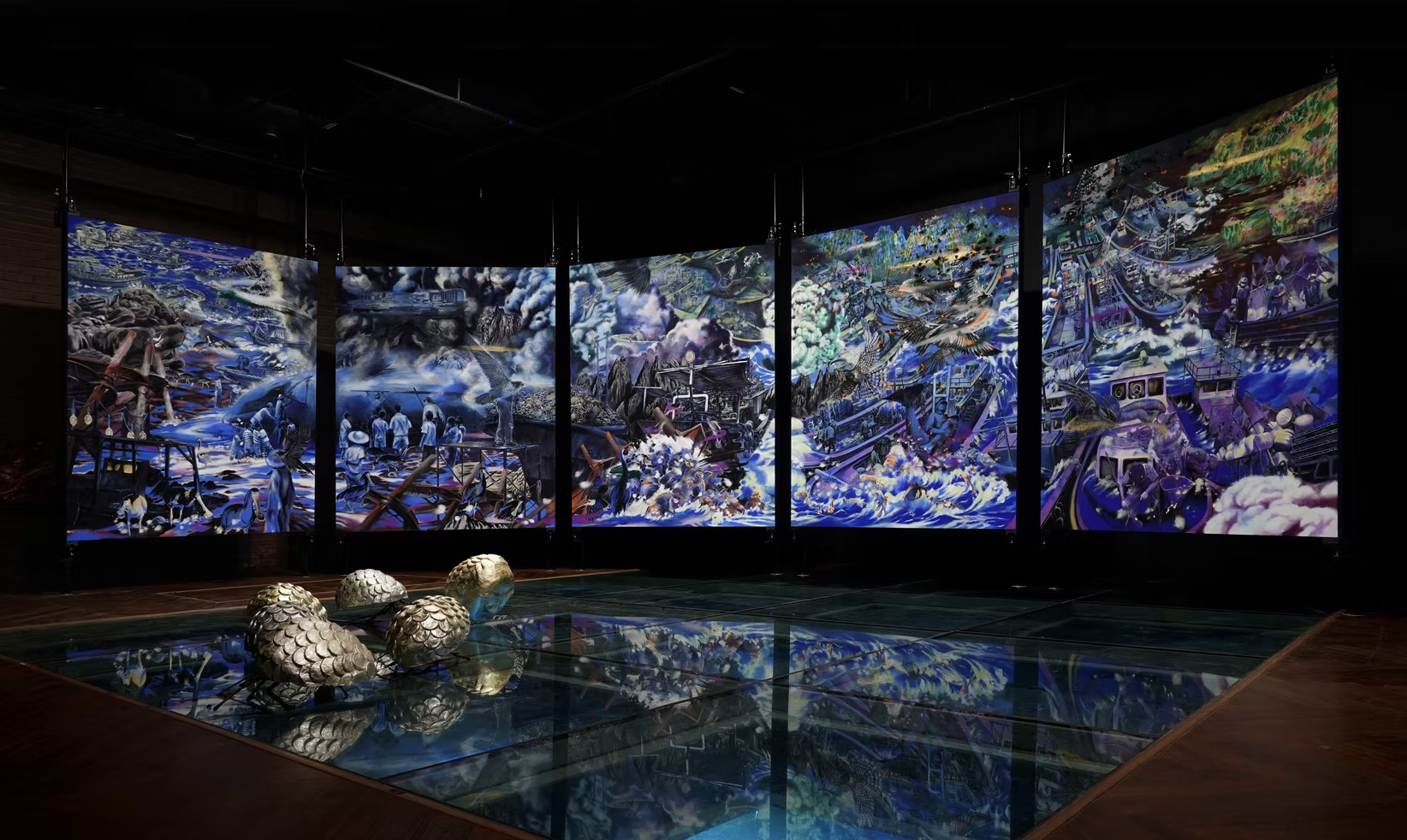
The book fixes the trip of Koreans onto Mt. Geumgang as an age-old dream, as a trip to the past history, as if a dream that we desired in a theater. On the stage of the Bada Theater the artist hung pictures depicting autumn leaves at their peak, the waterfall pouring down from two valleys, a kind of ‘technicolor cinemascope’ consisting of soaring, massive rocks, or vulgar Kitsch landscapes, or the stage background of a cheap performance hall, or paintings that would fit the backdrop for the propaganda performance of North Korea.
And as the opening of the exhibition, Kim Kyung-ju, who has been working at the theater for 37 years and who “had dreamed of becoming an actor”, is appointed as the host of the stage performance. So, although late, an old dream of one person is realized.
Naomi remembers people who have visited the Bada Theater since the 1970s; finds out and does “coloring” of the black-and-white photos keeping the dreams and hopes of those ordinary and unimportant people; makes the Bada Theater that had been closed operate for a week; supplements the memory of the people visiting Mt. Geumgang with ‘crude’ landscape paintings; represents the 1970s-style landscapes (such as “Yangjiri”), which is still alive now, in the form of painting; and even exhibits the leaflets for a rally she happened to receive from the vendors of Cheonggye Market around the time of her graduation from college.
The busy, warm, and humble intervention of Naomi is a typical attitude of an artist who professes to be a person on the outskirts. Readjusting what is disappearing into what is alive would be a feeble resistance to the cruel ‘massacre’ of our hypermodern contemporaneity. By living only a little and in a lesser way at that, the outskirts lives a different life from the center that lives by ‘doing the best’.
Even if it is not a massive resistance as if to show off itself, even if it is just an attempt to summon the contemporaneity of the worn-out, old, and backward life, we come to applaud the laziness of recollecting things that have disappeared, things that will disappear, and for that reason, things that always come back to us, on the stage prepared for things that have not found their own time and their own place, namely, for those anachronistic beings.