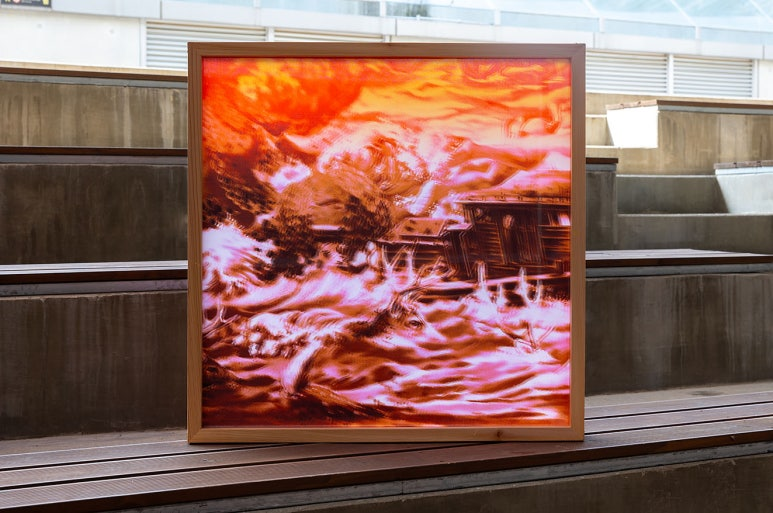
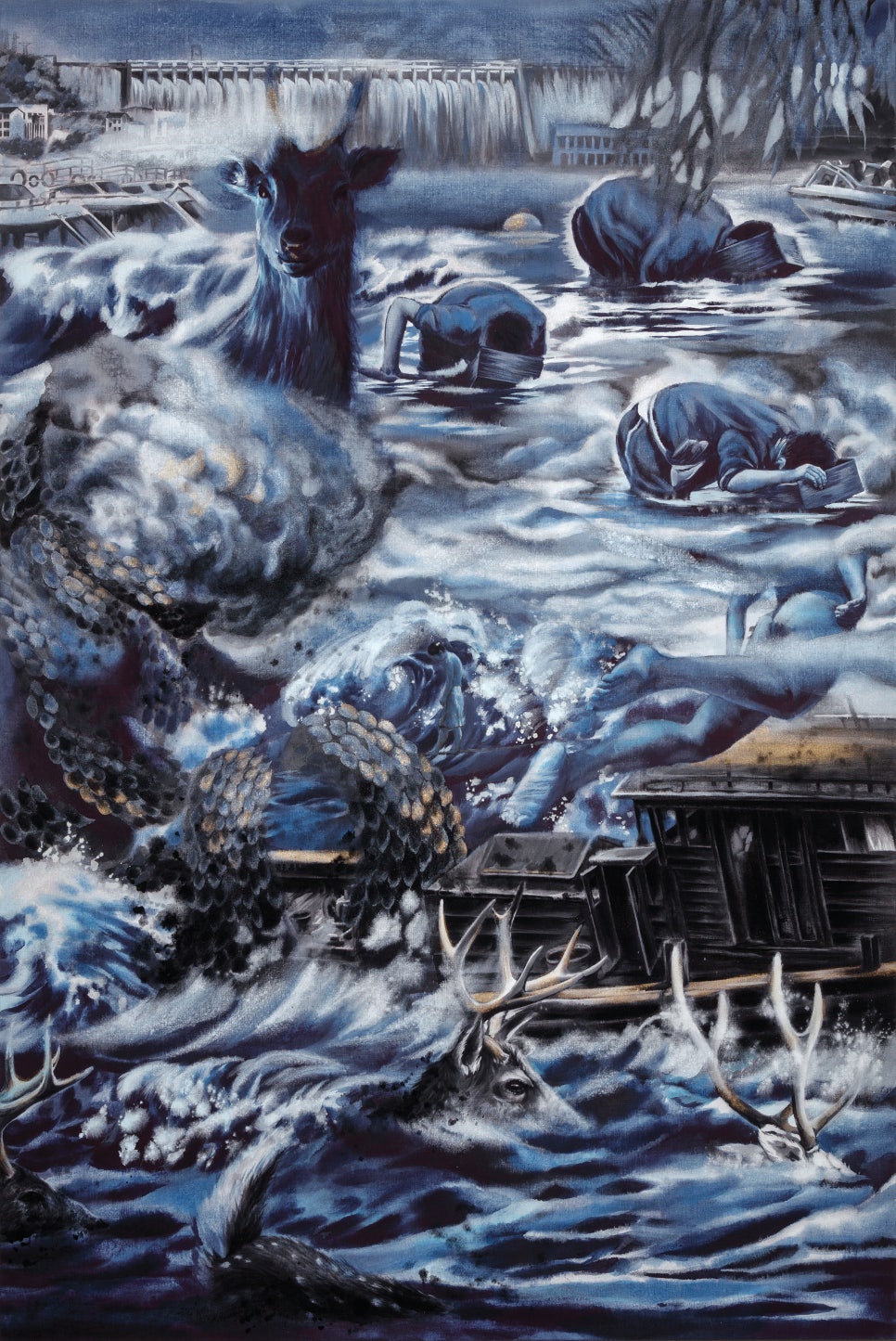
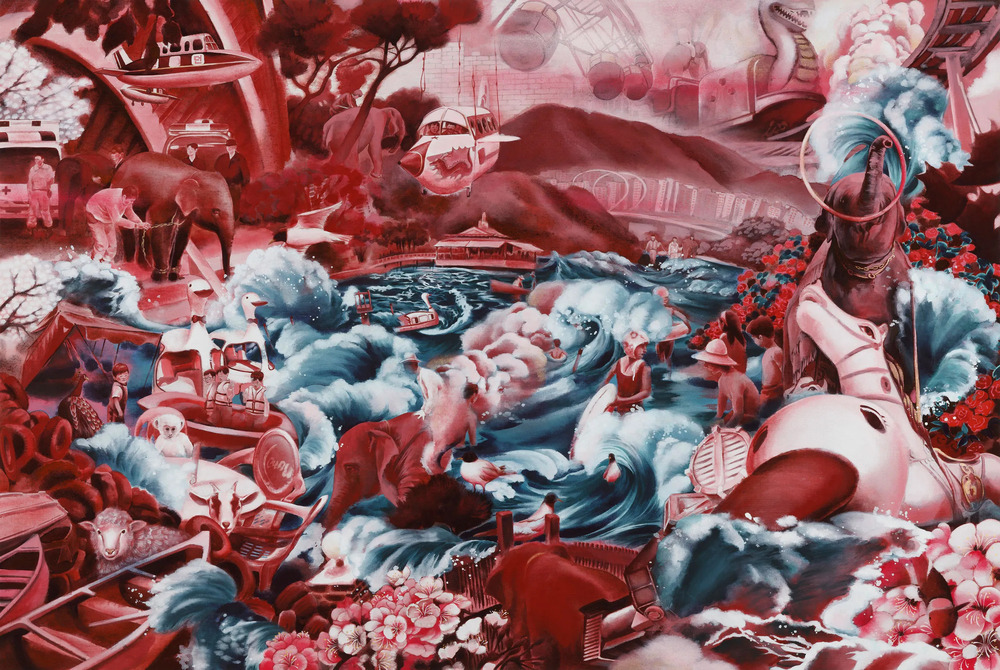
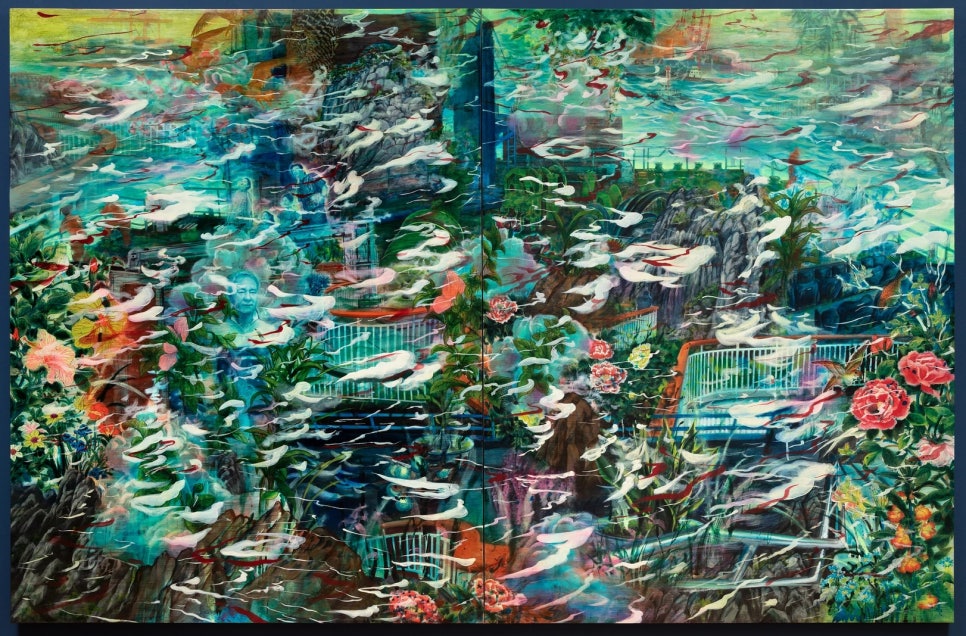
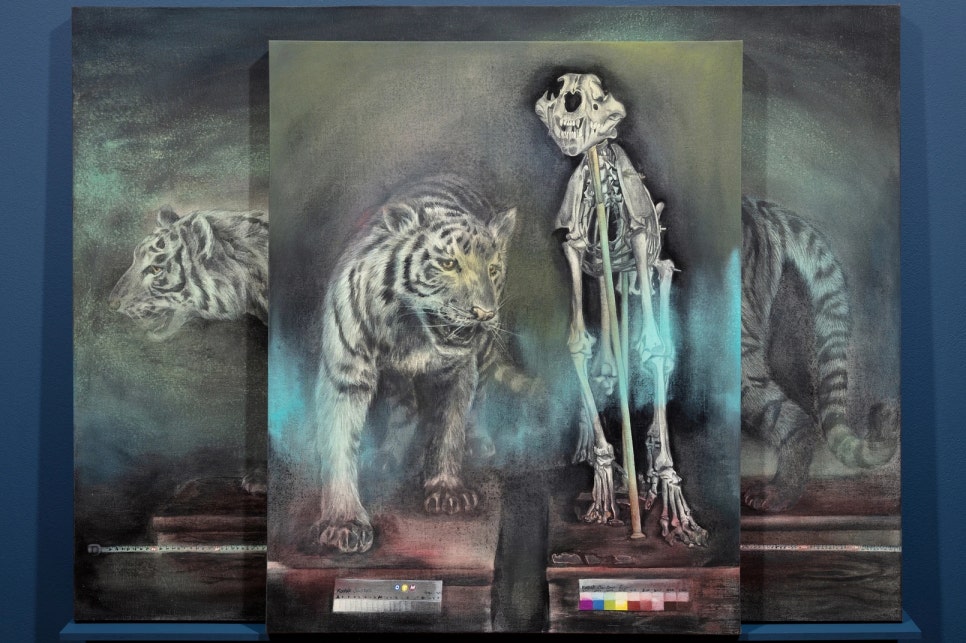
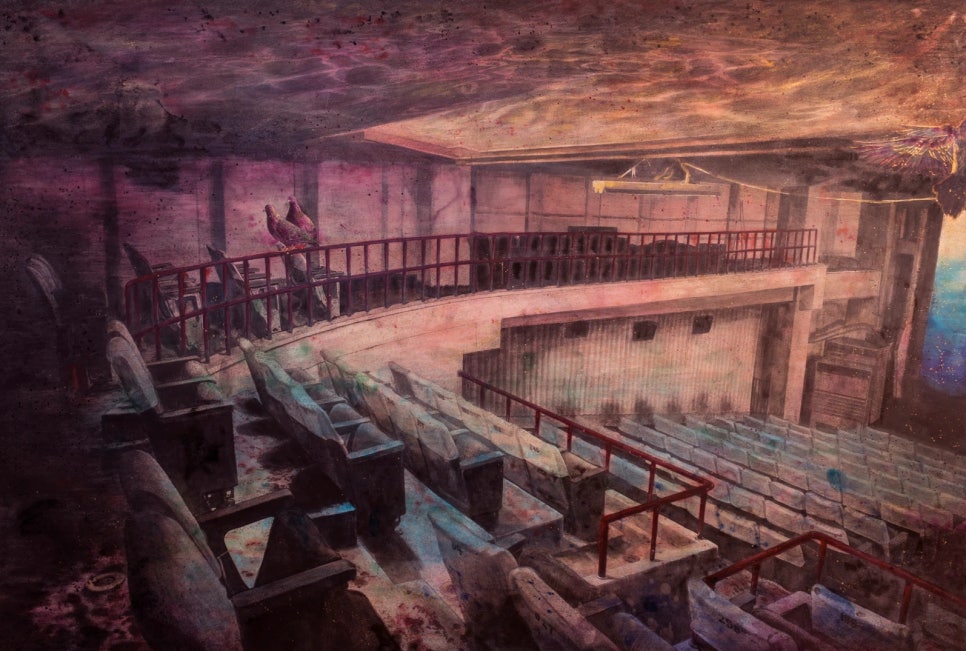
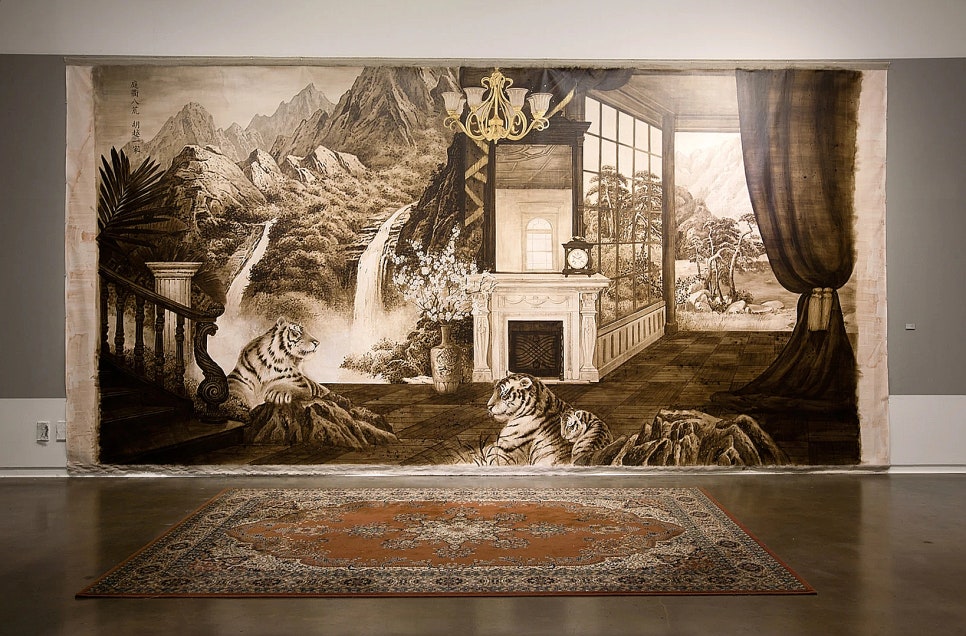
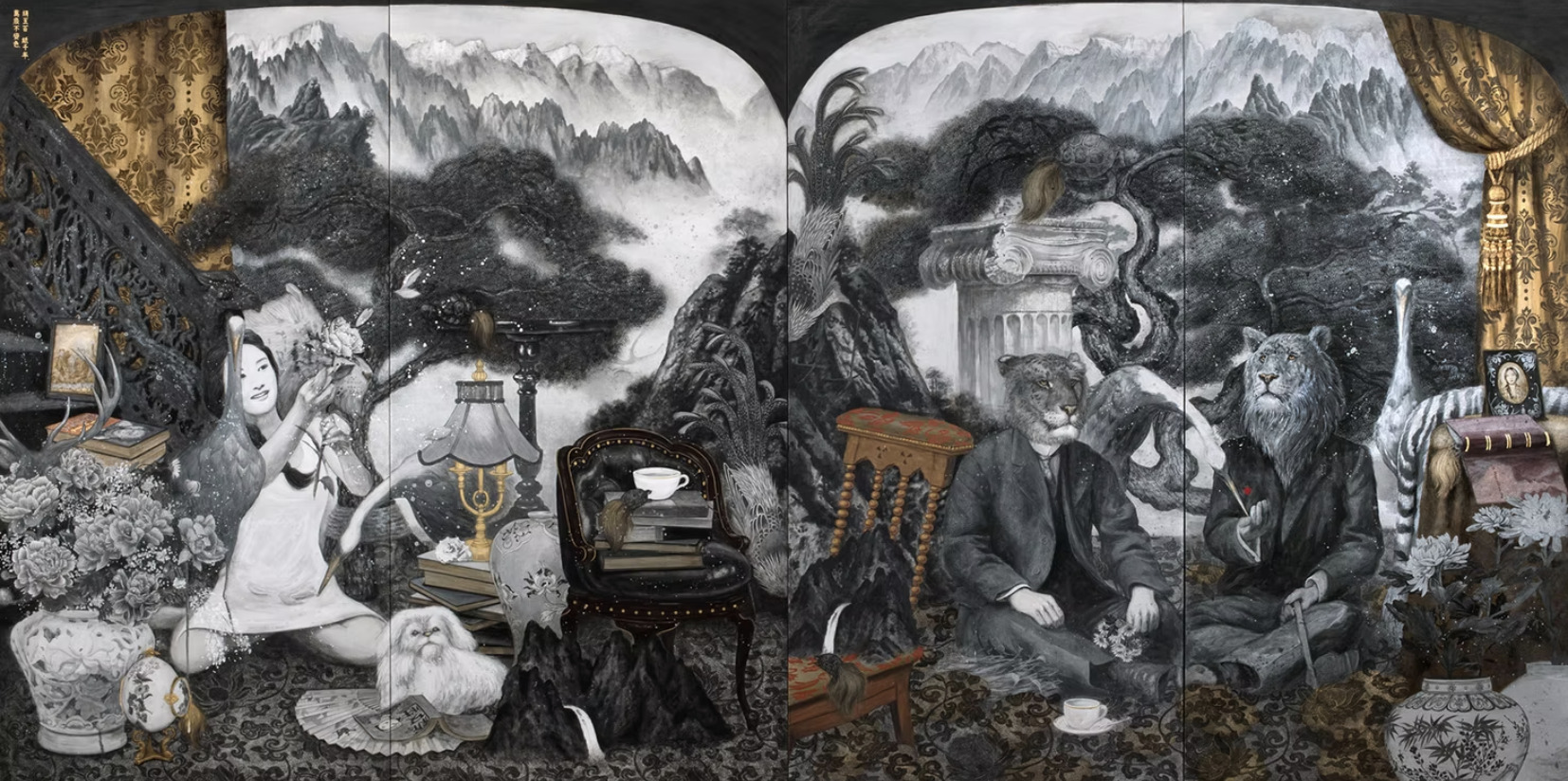
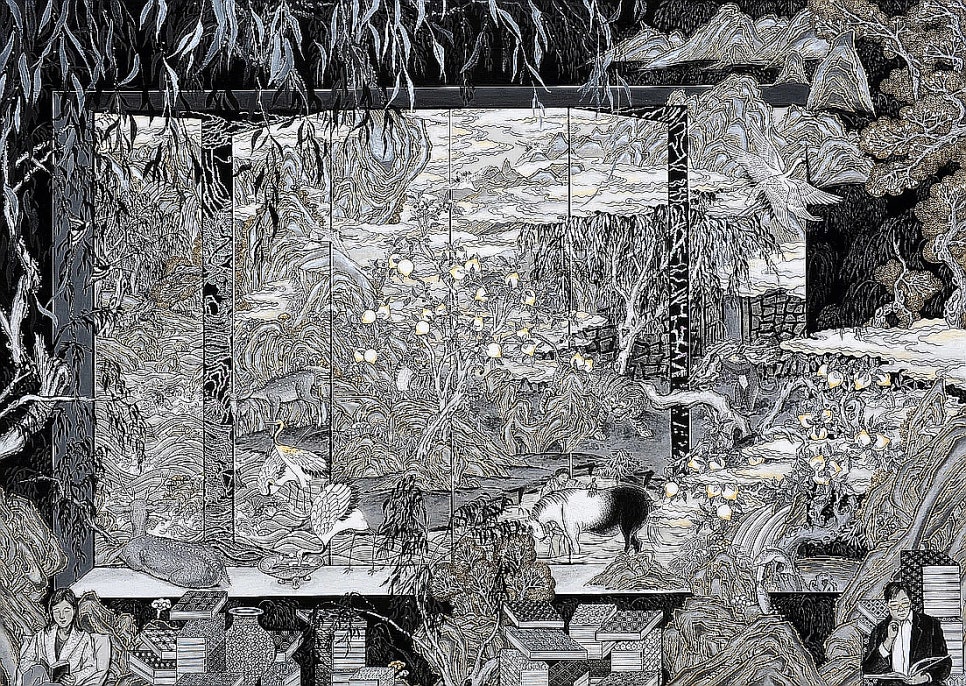
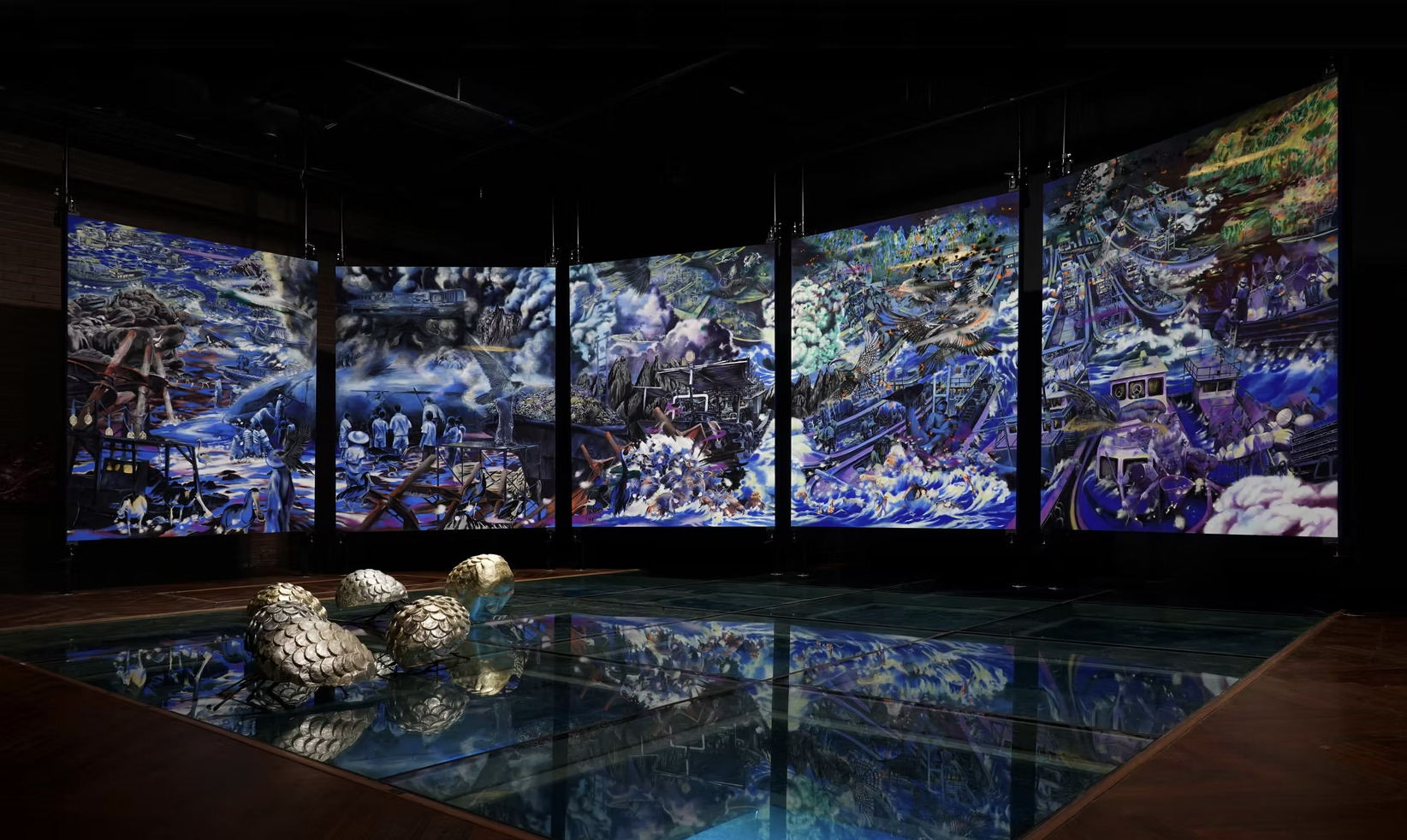
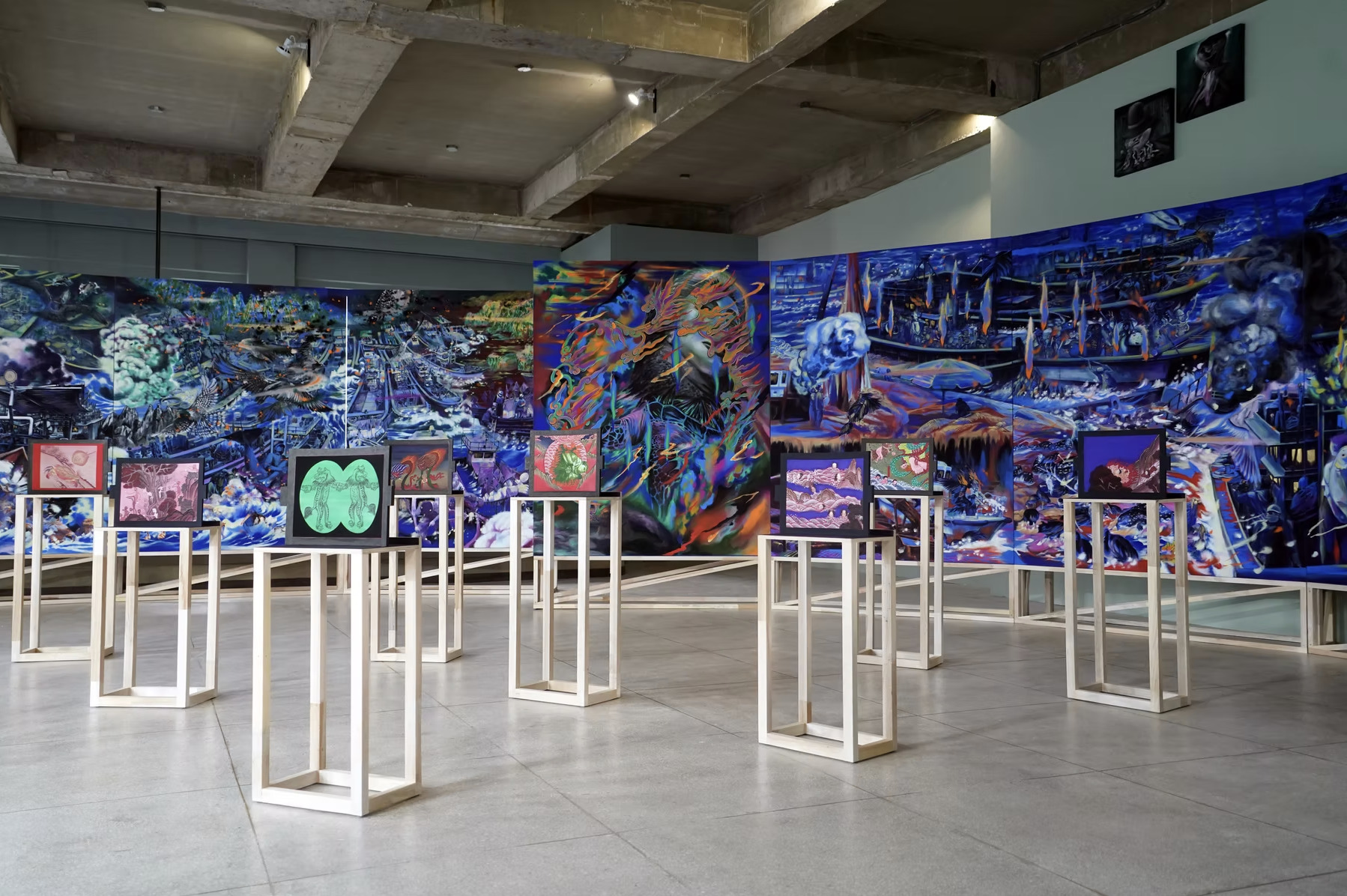
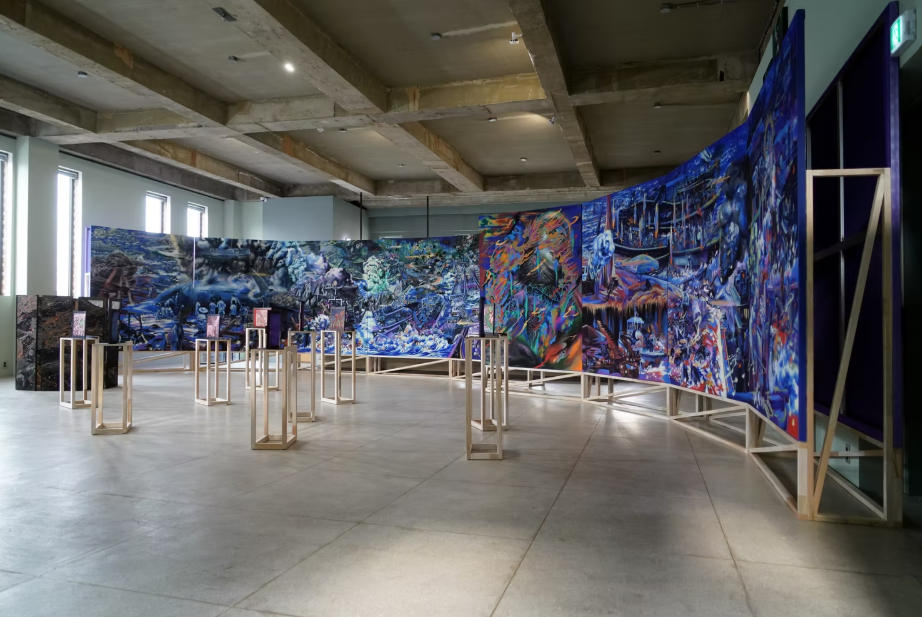
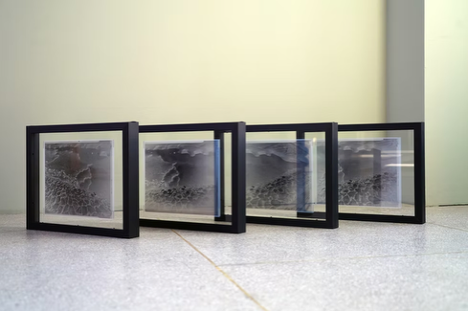
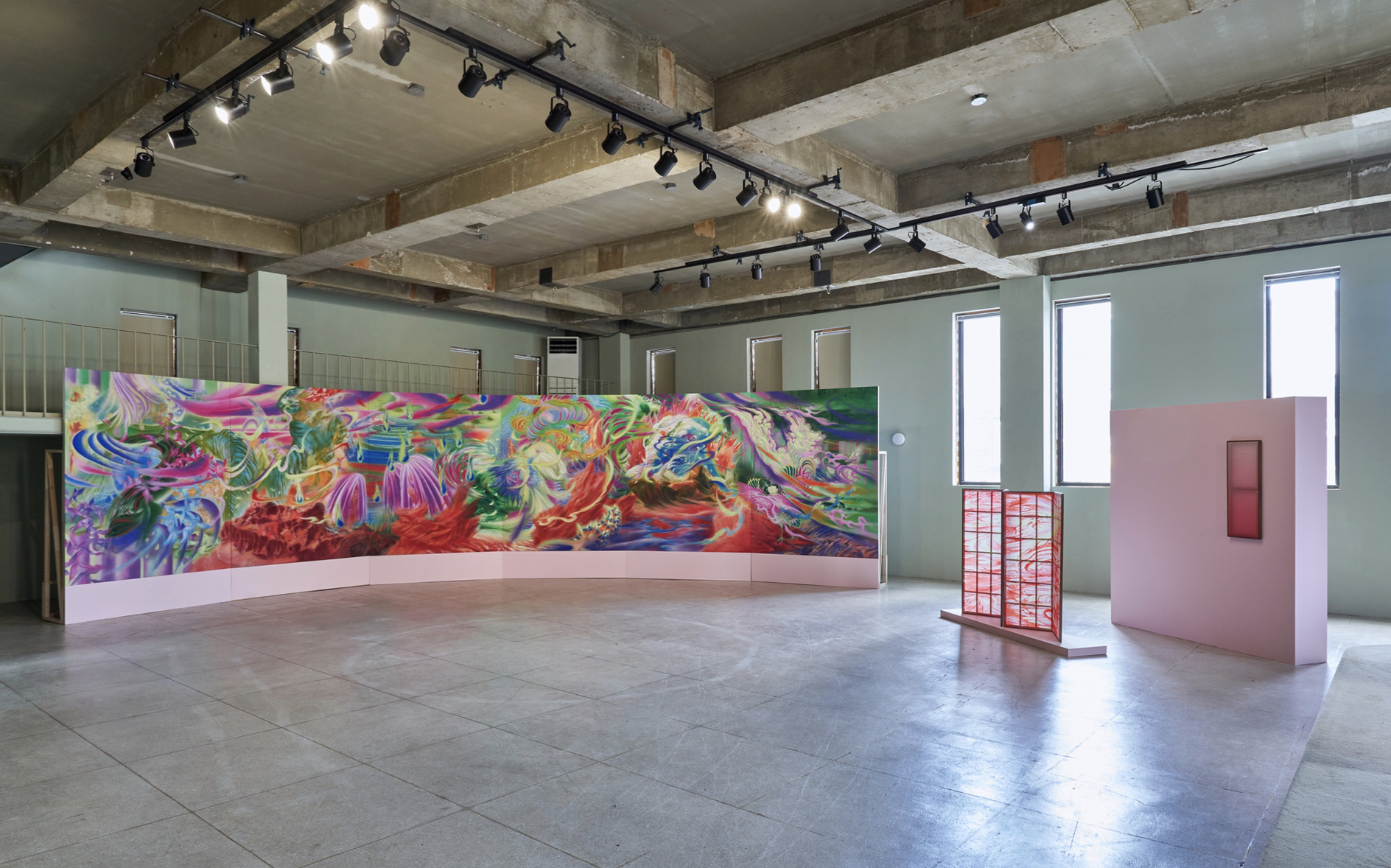
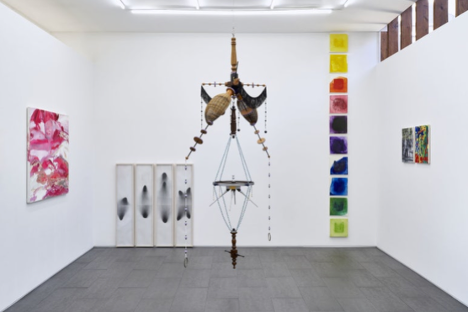
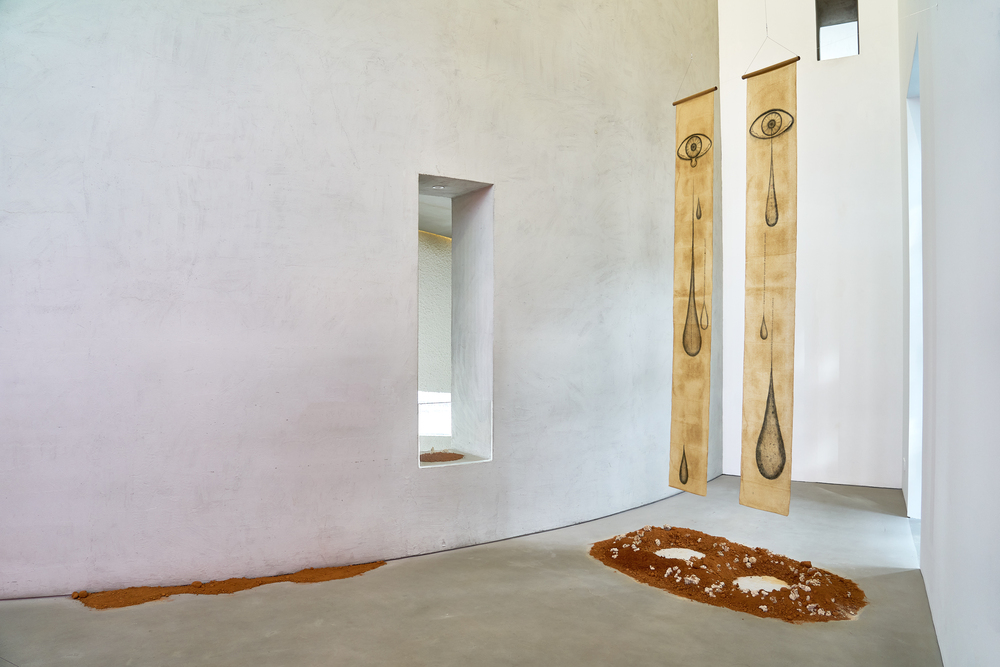
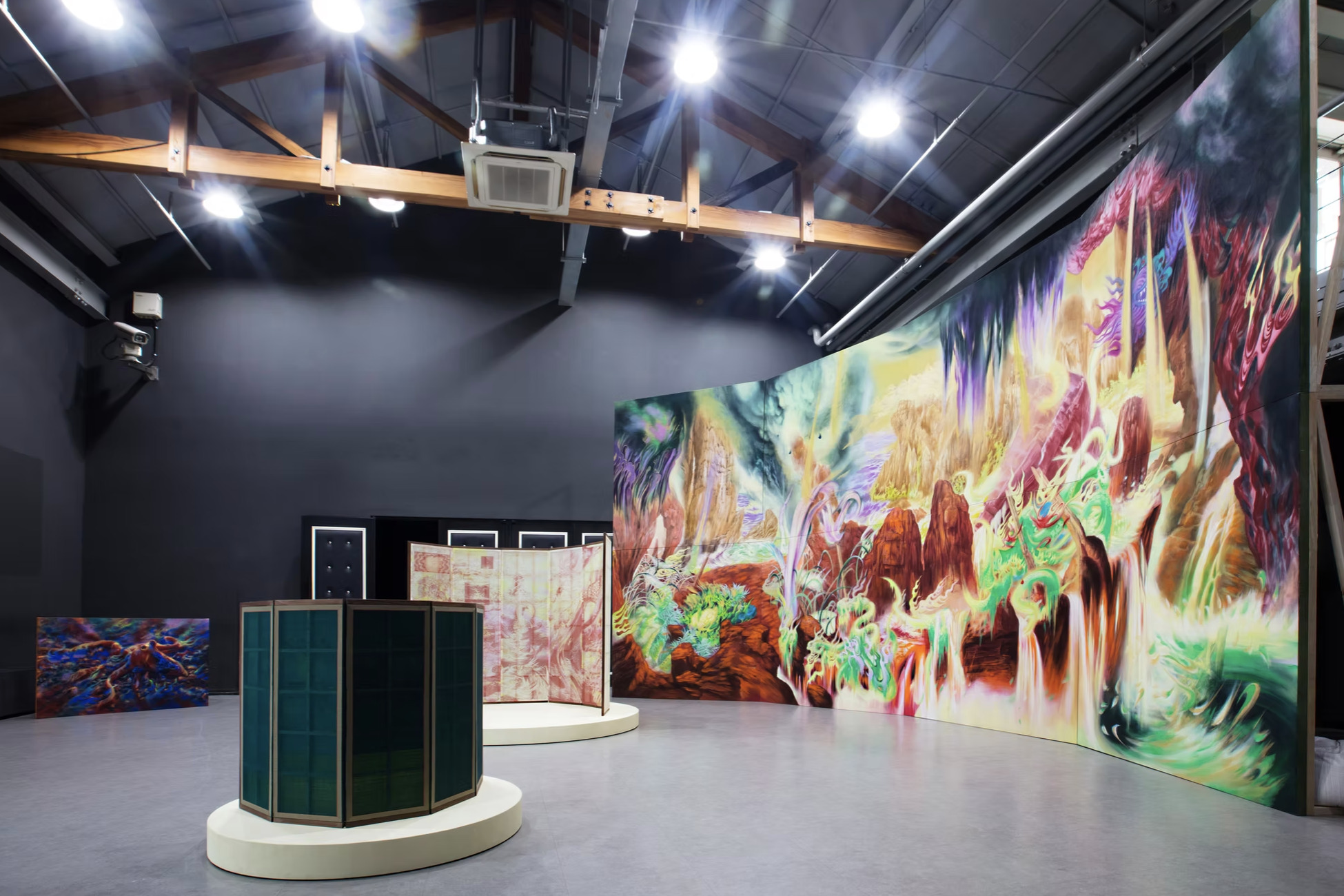
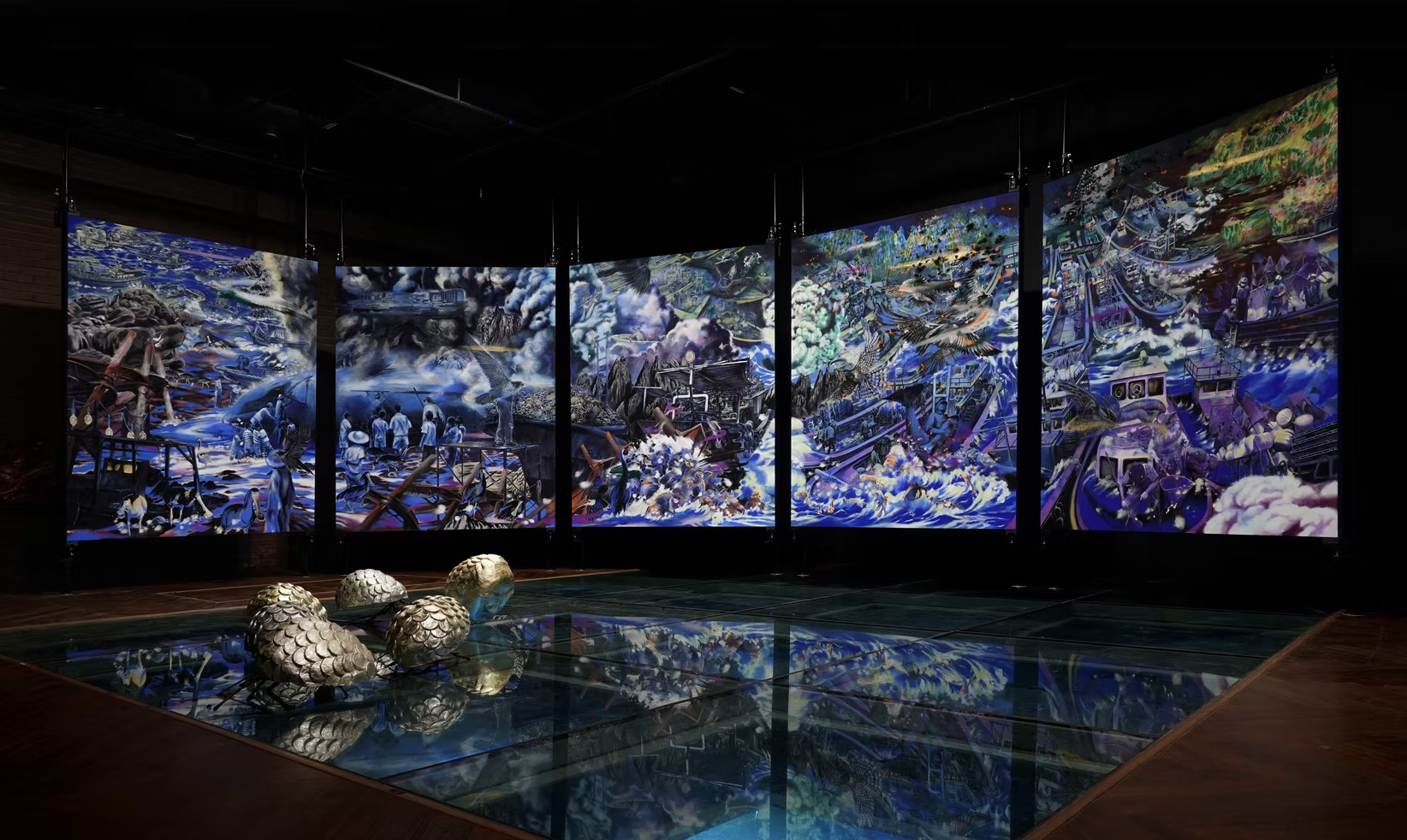
Installation view of 《Floating Islands, Day for Night》 (TINC, 2023) © Naomi

Floating Islands, Day for Night

Following 《Pasi (波市)_Lost village on the sea》(2022), this exhibition is a narrative of day and night centering on the gods of the sea — faceless moored ones* — as elements of landscape that remain in the Yellow Sea (a broader concept than the southwestern sea) invisible yet transparently sensed and perceived.

As part of the 'Liberation of Coastline'(2019–) project, which has been developed through solo and group exhibitions on the theme of changes to harbor landscapes — including shifts in the natural coastline, the loss of coastal function, and the reclamation of tidal flats — this exhibition gives form to pasi, a vanished landscape, and to the elements of that landscape.

While researching Bukseong Fishing Port, which was undergoing land reclamation, the artist came to focus on the fact that a shipboard pasi landscape could still be seen there, and upon actually encountering it, witnessed that its distinguishing features were fading away.

Pasi was a scene of an offshore market where fishing boats moved about like fish migrating north along the ocean currents, and by viewing modern and contemporary photographs recording the pasi of Yeonpyeong Island, the artist was able to recall its afterimage. Because of its temporary and mobile character, a transient landscape unfolded, as though a floating city were being generated and then dissolved.

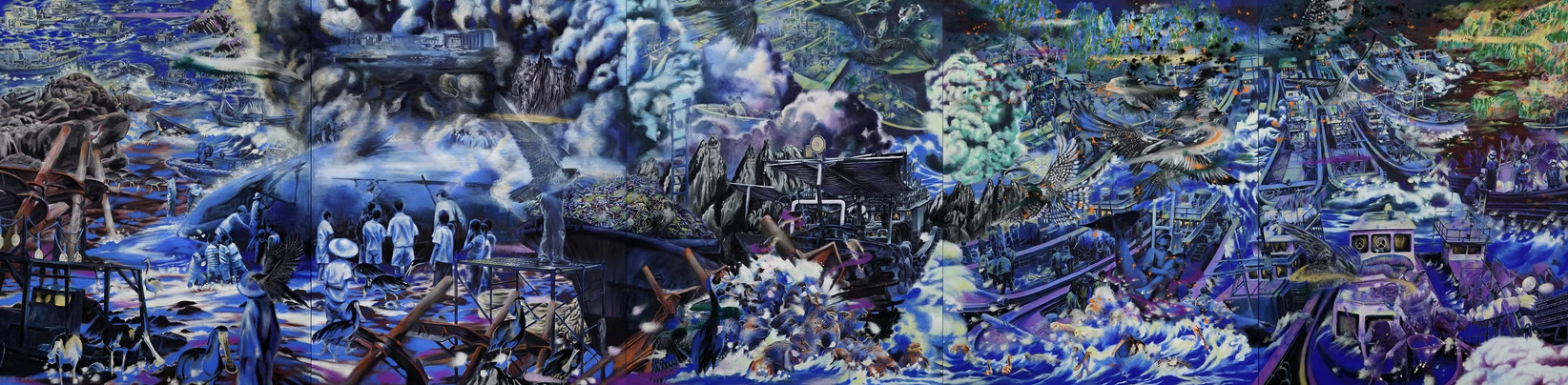
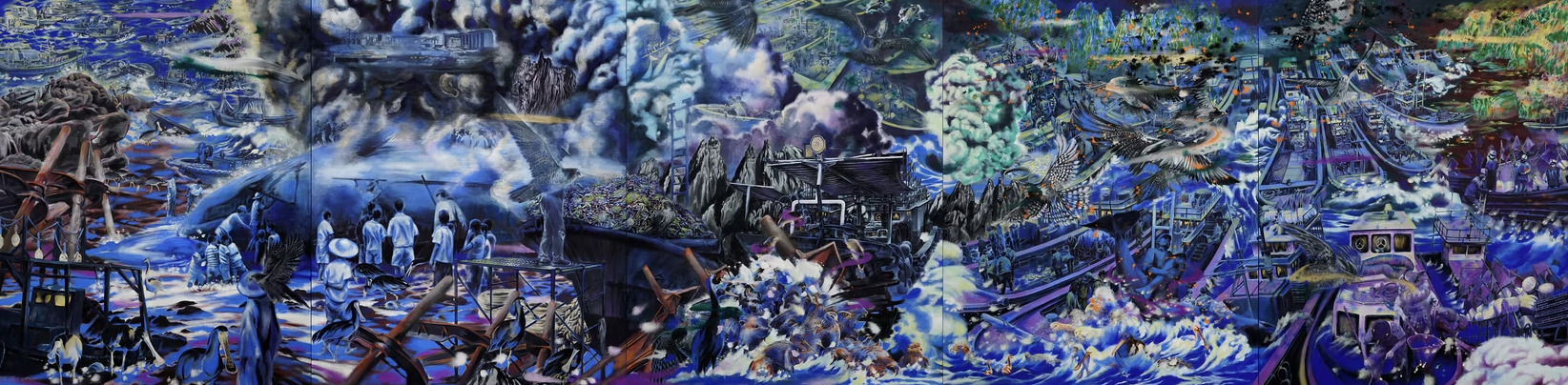
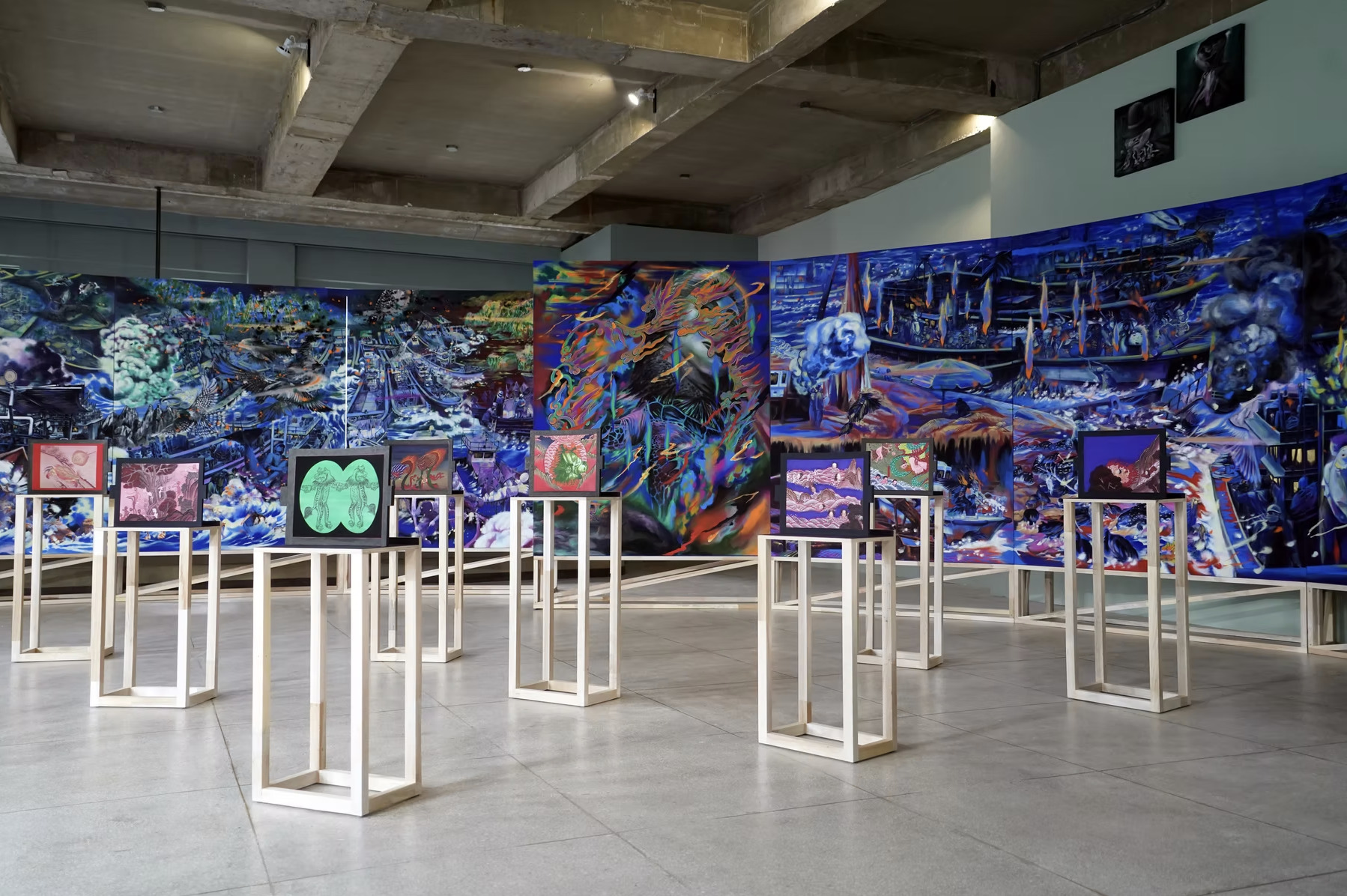
The work Pasi 波市_Lost village on the sea (pigment on canvas, 227x1638cm (227×182cm, 9 pieces)) develops this transient landscape as a narrative in the form of a diorama.

Within a single picture plane, it paints into scenes: boats becoming land and a sea without a horizon; the whale hunting at Daecheong Island by the Oriental Whaling Company, founded by the Japanese; the present-day coast where there are no longer boats, only anchors left behind; portraits of birds and fish disappearing amid ecological disruption; images of historical events such as gods of the sea; and the landscape of the present.

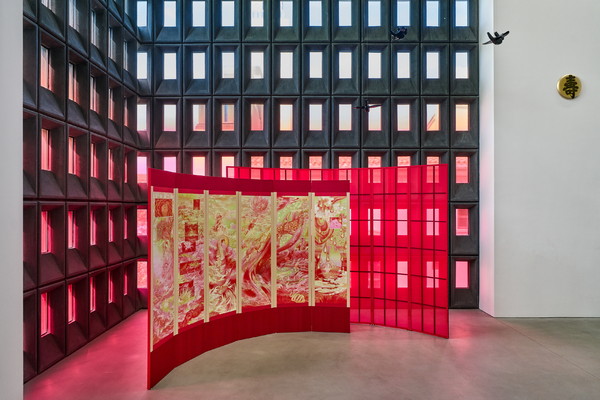
Installation view of 《Floating Islands, Day for Night》 (TINC, 2023) © Naomi

On the Gods of the Sea: Writing a History of the Weird and the Eerie

On the weird and the eerie, born of our fixation on the unfamiliar. Such a sensation arises when something exists in a place where nothing should be, or when nothing exists in a place where something should be.**

On the shaping of the dokkaebi, the faceless god of the sea. Dokkaebi-chambong, or Mulchambong, Kim Seobang, Yachae, Geumchae, Okchae, Yeonggamsin — all of these names refer to the dokkaebi, and it is said that fishing villages centered on the southwestern sea used to hold a folk ritual, Dokkaebi-gosa, offering rites to pray for a bountiful catch.

Although this tradition is now difficult to find, in an interview in May 2023 with Oh Chun-ok (shimbang and holder of Jeju Intangible Cultural Heritage No. 2, Yeonggam-nori, b. 1953) in Jeju, I was able to find traces of this figure in 'Yeonggam(-nori)' (yeonggam being the Jeju word for dokkaebi). I also came to learn that, besides Yeonggamsin, festivals for gods such as Yeongdeung Halmang, the god of wind, and the Dragon King god, are still held every year, like an ember that has not yet gone out.

On the deification of historical figures. Following Generals Im Gyeong-eop and Choe Yeong, General MacArthur, too, became a god, grounded in the regional and historical character of the West (Yellow) Sea.

The MacArthur shaman painting (musindo) was judged to be a counter-memory image created by the mansin Yi Jeong-ja, shaped by the absence of fathers caused by the Korean War, the era in which a U.S. military base stood in Incheon, and the erection of the MacArthur monument (1957). These images felt, to those who did not directly experience that era, like a medium connecting the past to the present.

On the phenomenon of Amabie (アマビエ), a god of the sea that resurfaced once again, in Japan. Amabie is a sea yokai with long hair and a beak, scales on its body, and three-forked legs; its presence was negligible before Covid-19, but it briefly and explosively emerged as a deity believed to protect people from the pandemic, before soon sinking back beneath the surface.

It is said to have been an image of a yokai drawn by people of the Edo period, carrying the earnest wish to protect their families from plague. I was able to find an answer to my questions about this phenomenon by interviewing the journalist Yamada Takako (director, citizen journalist, Incheon Honorary Citizen Diplomat, b. 1967).

On the various forms of fear that produce a sense of the eerie, and on whether the power of images created to resist fear still holds today: the image of Amabie, for a time, answered the demands of reality, playing a role of recovery and healing.

On Mazu, the sea god of Asia. My encounter with Mazu took place at Uiseondang (義善堂) in Incheon's Chinatown. At the altar of Uiseondang, Guanyin stood at the center, with Mazu and the Dragon King god's altar on either side. As the function of the place was lost, much as the coastline itself was losing its function, the past felt more vivid there than the present.


Installation view of 《Floating Islands, Day for Night》 (TINC, 2023) © Naomi

Day for Night: The Day and Night of the Image

In the video Yeonbulsinbul (煙火神火), fire on the moon, day for night(2023), single-channel video, 11:25, modern and contemporary photographic images of the pasi of Yeonpyeong Island are turned into day and night using a diorama viewing device (Megalethoscope) in which light and darkness cross.
The scene, in which smoke-fire (yeonbul) rises by day and spirit-fire (sinbul) rises by night, is visualized and intercut through image and sound as soundless bodies and bodiless voices, making an appeal to us — to careless ears.

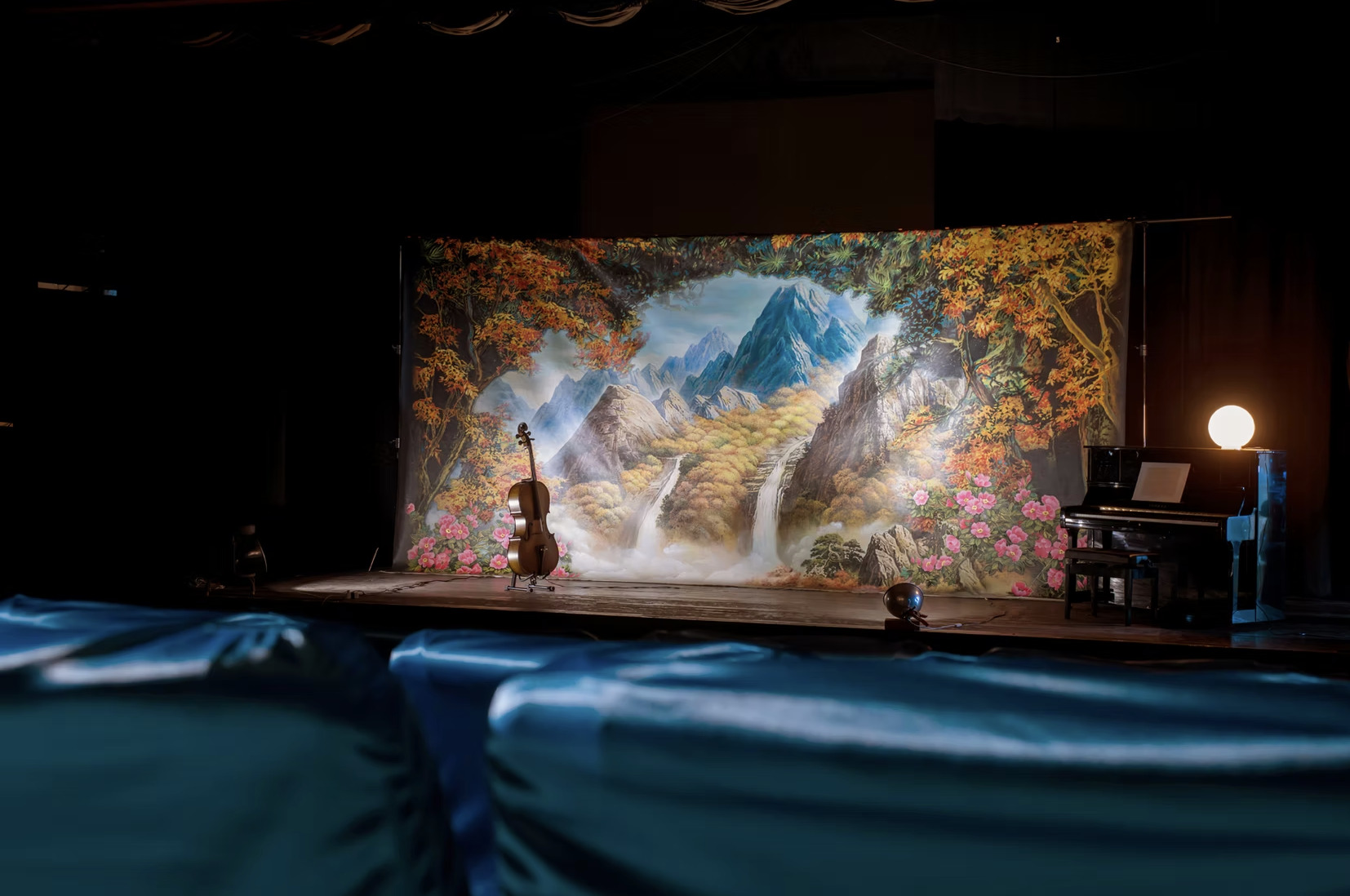
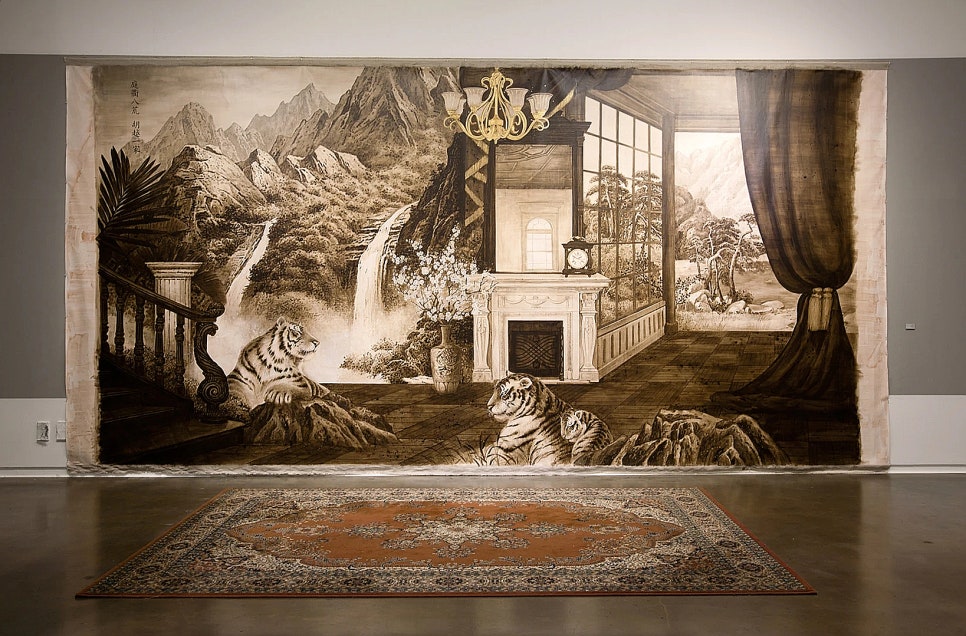
The methodology of this work has developed from folding-screen painting, through research into photo-studio and theater backdrop paintings, into the present form of diorama painting; what folding screens and dioramas have in common is that they place us within the actual site itself. When the folding screen is unfolded, when we step into the space of the diorama, the reality beneath our feet becomes a different, imaginary place.

Unlike the traditional role of the folding screen, here each panel functions as a 'curtain' marking a scene transition. The exhibition space, set before the vast curtain of the pasi landscape, symbolizes boats drifting on the sea like islands, and is composed of illusions in the form of paintings and objects.

* Choi Gi-suk, Gyeryujadeul (The Moored), Hyeonsil Munhwa, 2022

** Mark Fisher, The Weird and the Eerie, Gupic, 2019

Text by Naomi

References