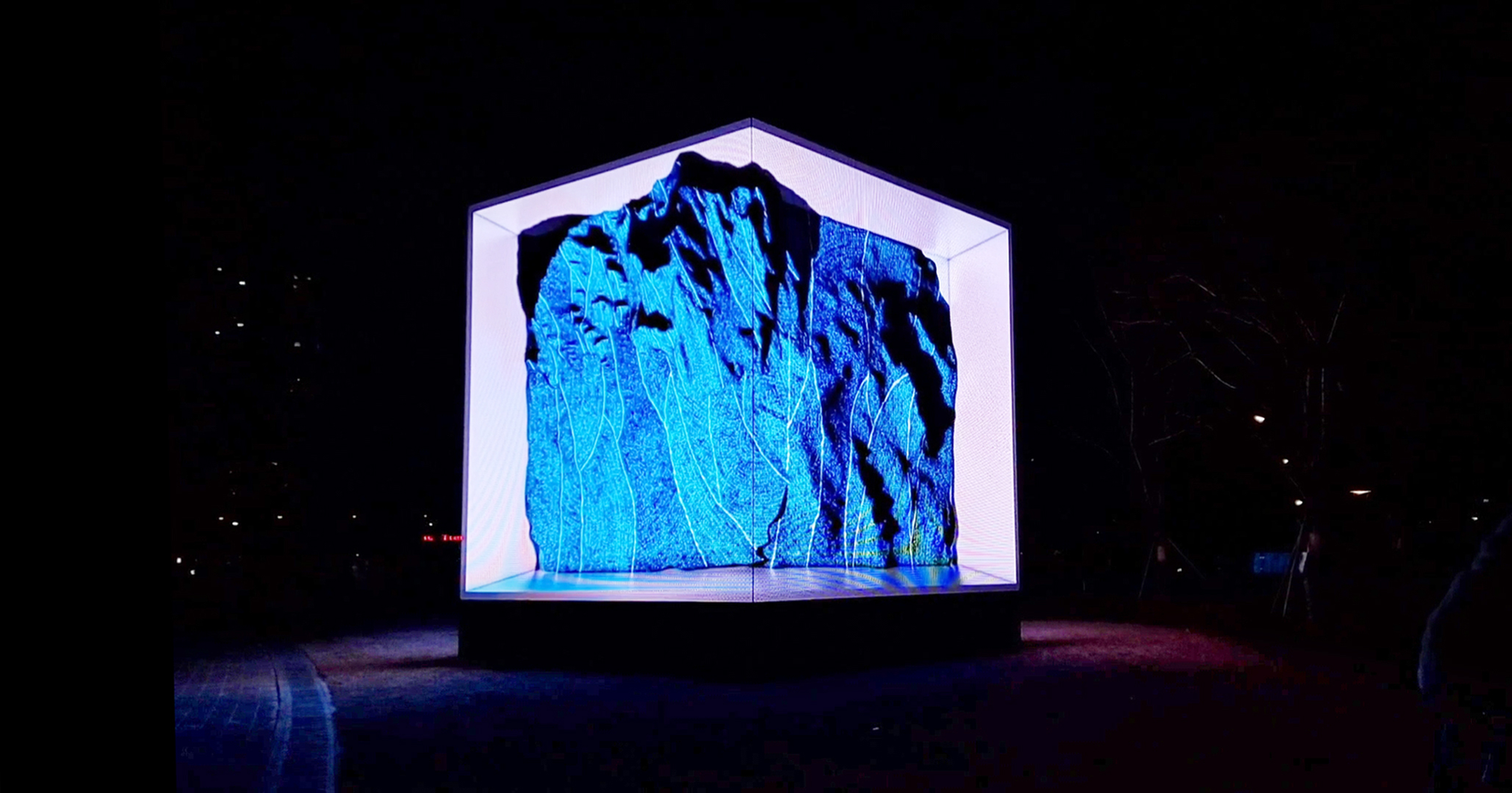
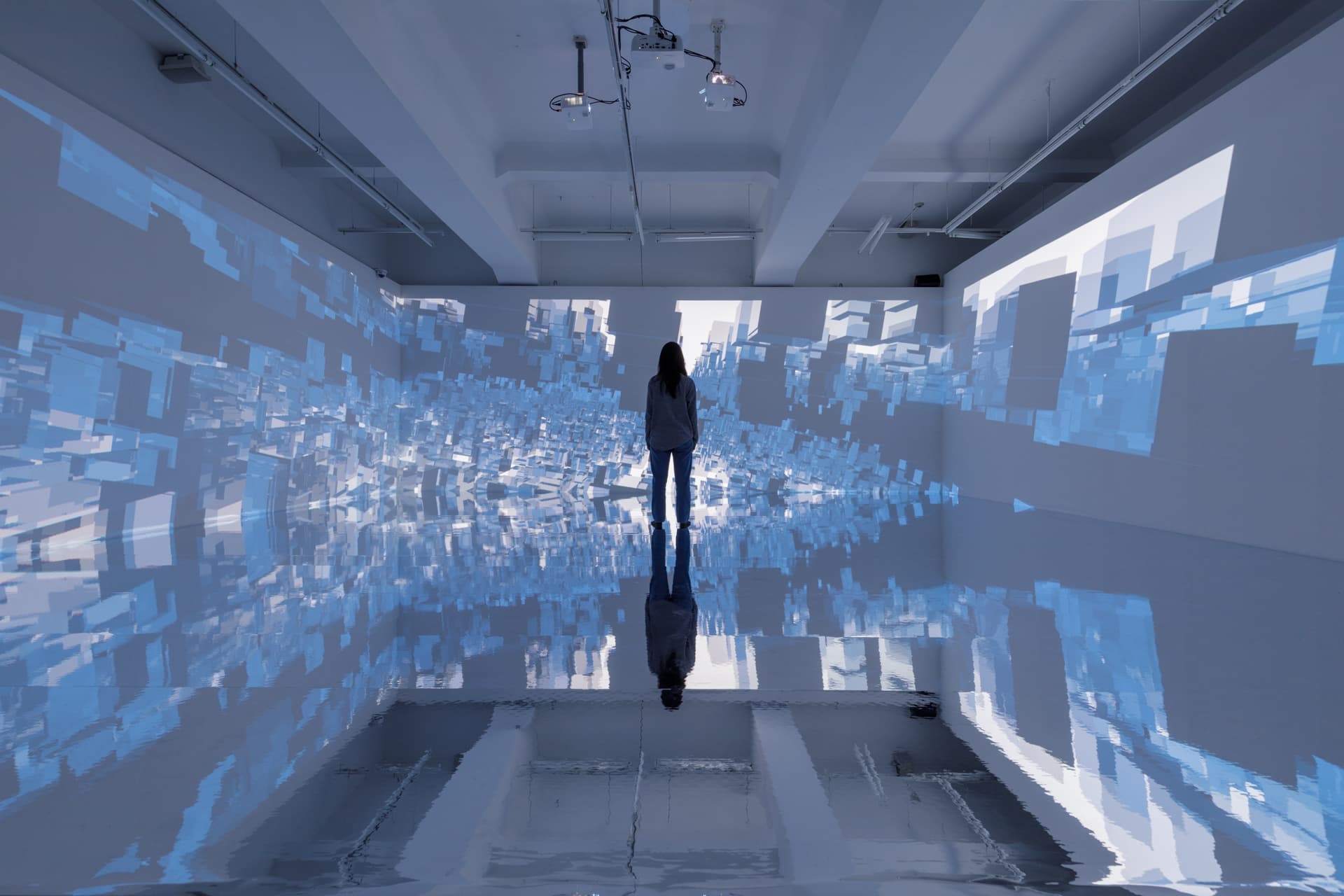
The proposition of “between” in Yiyun Kang's work pursues a visual paradox: the more one attempts to see, the more one seeks to communicate, the further the essence recedes. Most social norms are linked to issues of vision, and various visual signs are grounded in what we have learned to know and to associate.
Through diverse media, Kang attempts to pursue the real or construct new forms of virtuality, yet the more she does so, the more she addresses a reality that continually slips away.
This is evident in her projections of bodily movements that appear only as traces upon screens, in her photographic images of non-existent objects and situations created through 3D processes, and in clusters of letters that scatter the moment one tries to grasp them. Running through the entirety of her practice are the tensions between reality and illusion, and the problem of communication that traverses them.
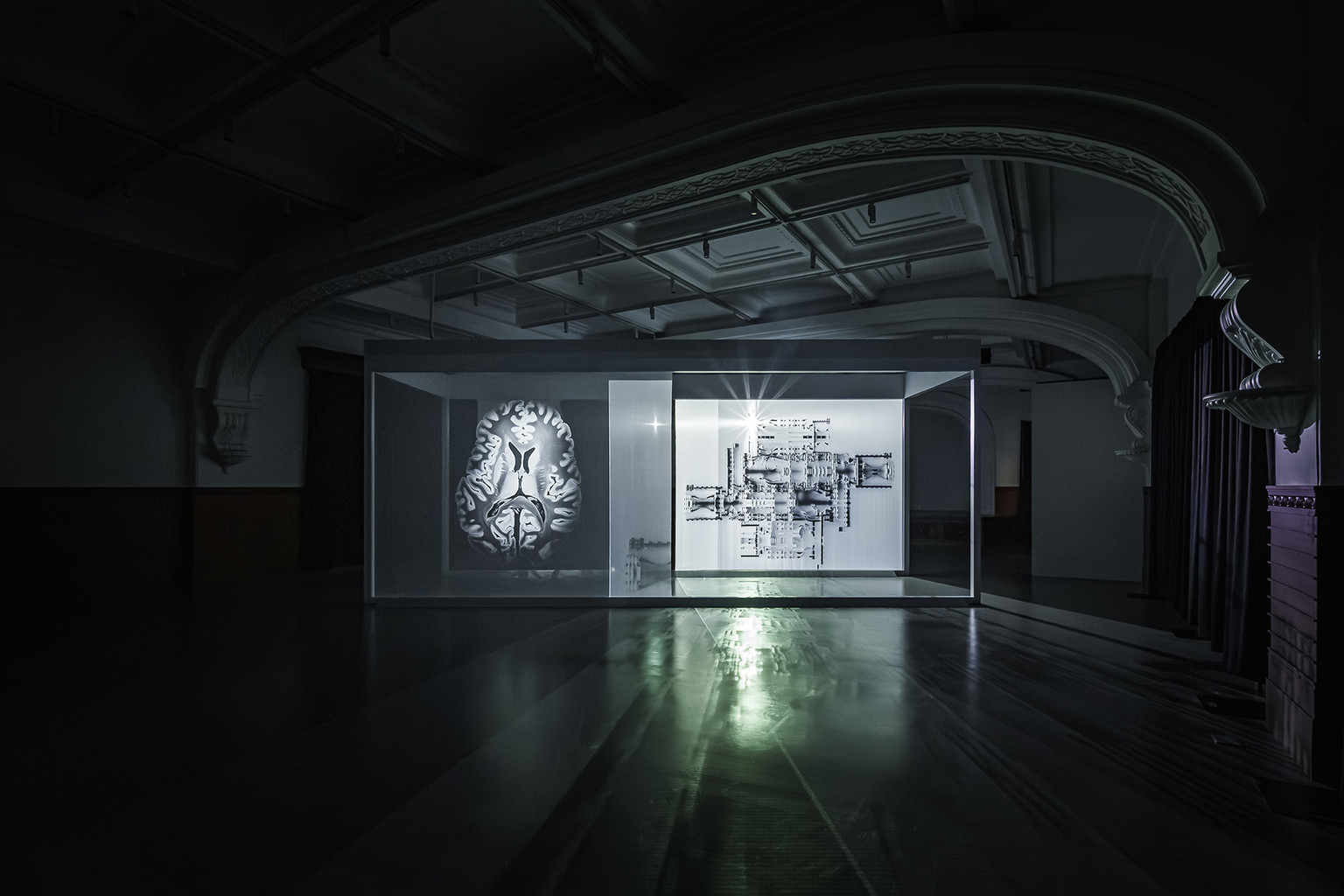
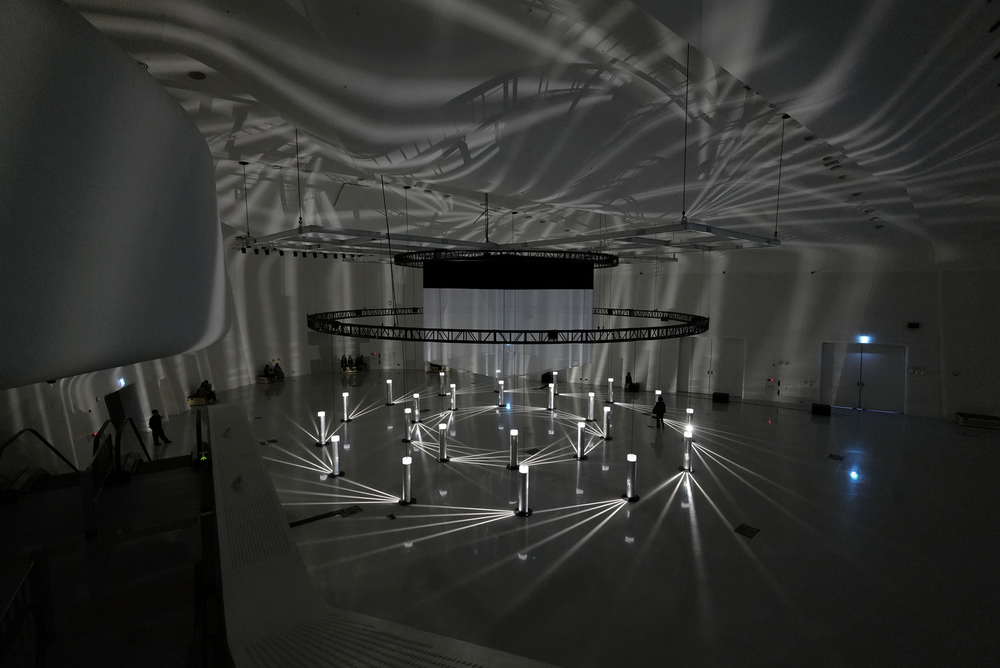
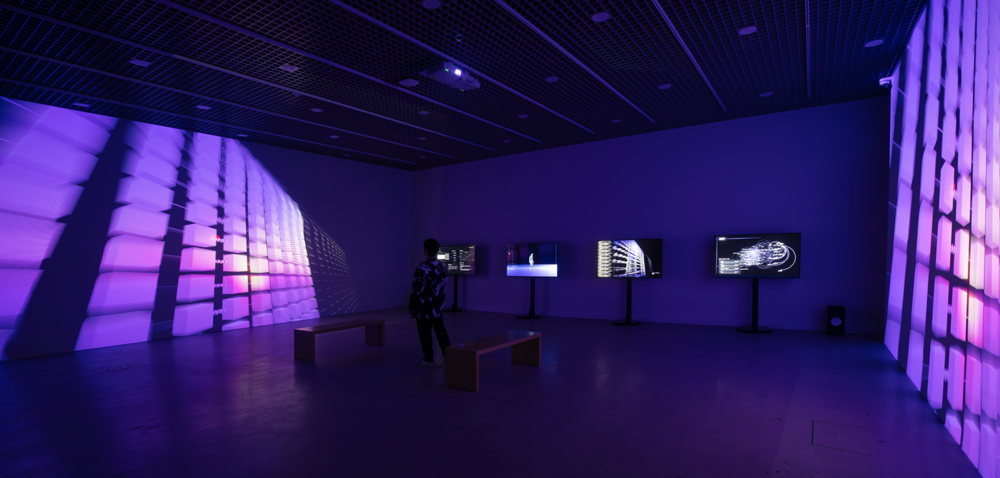
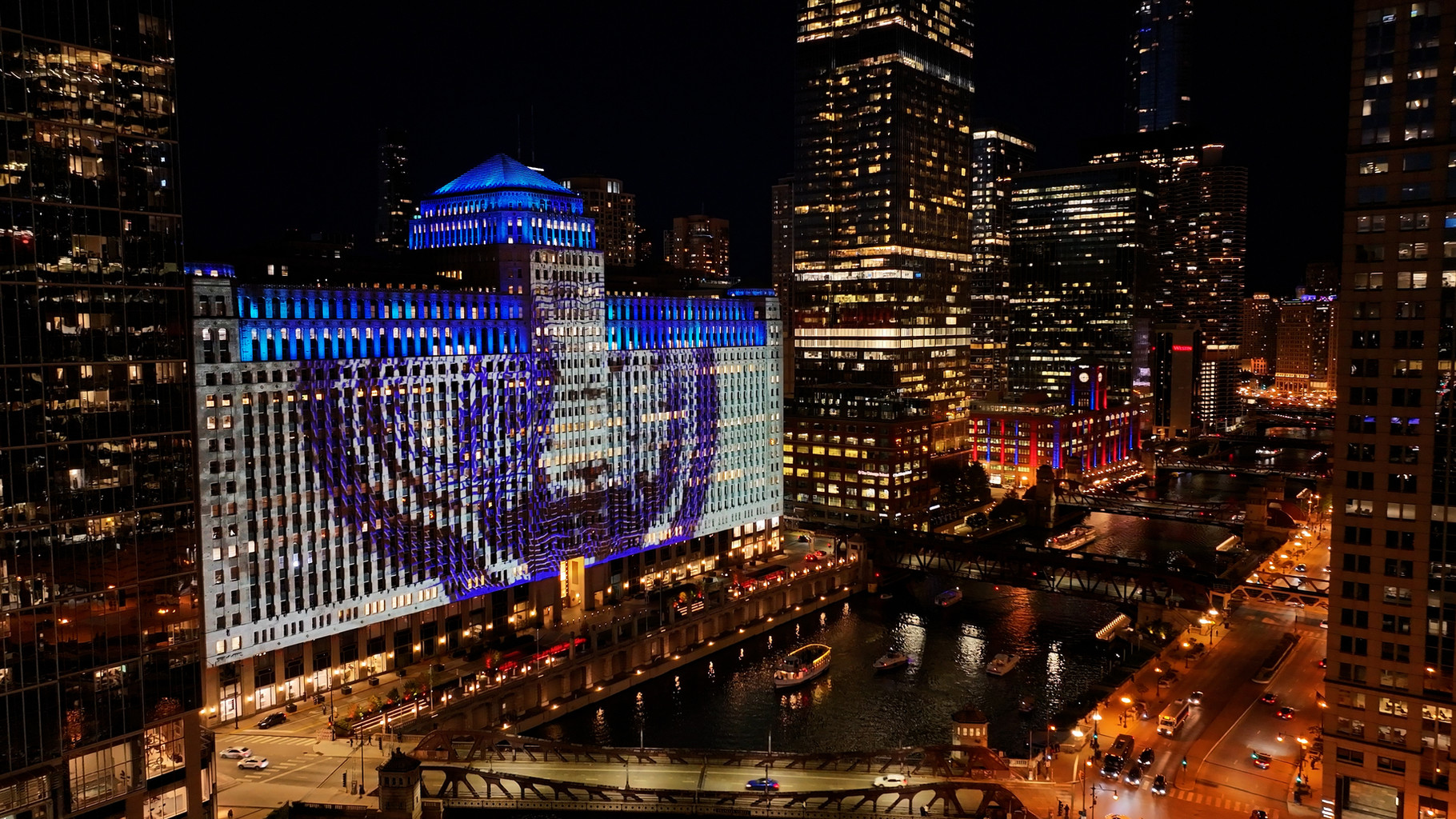
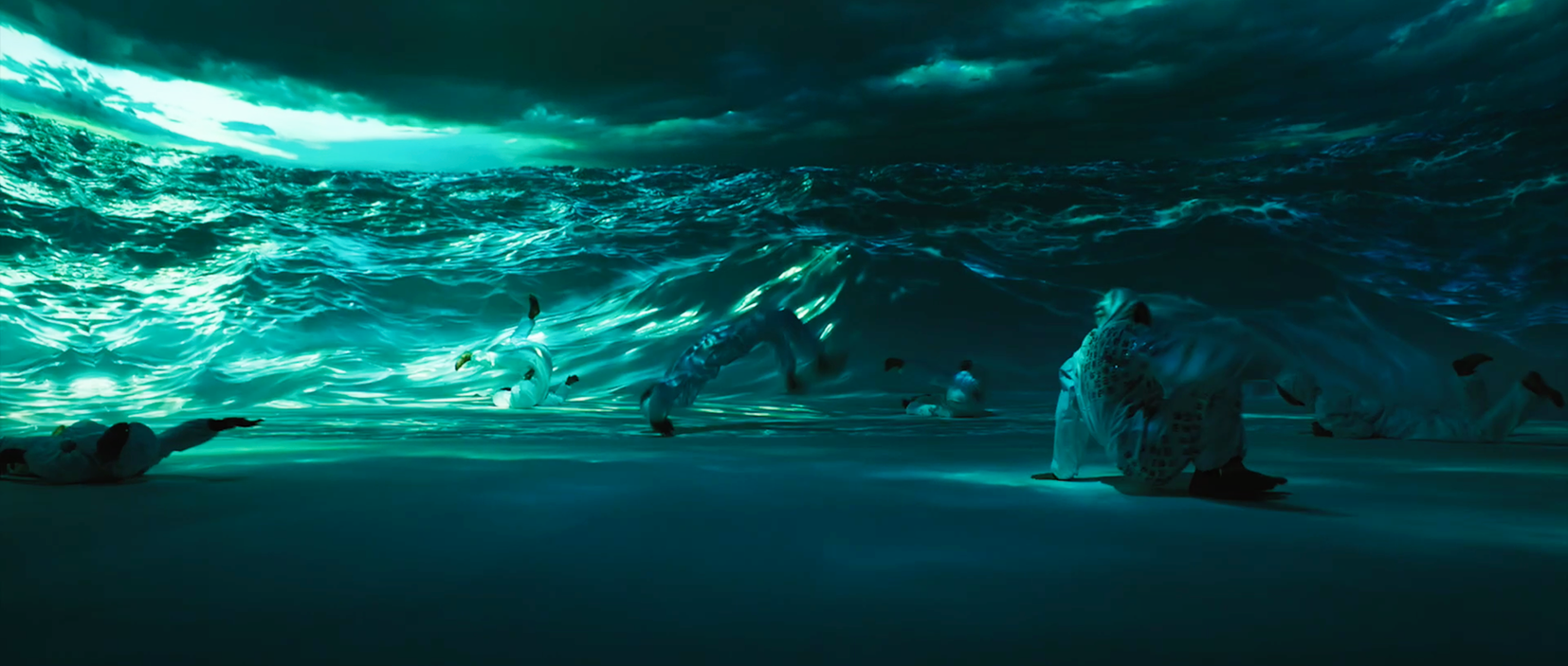
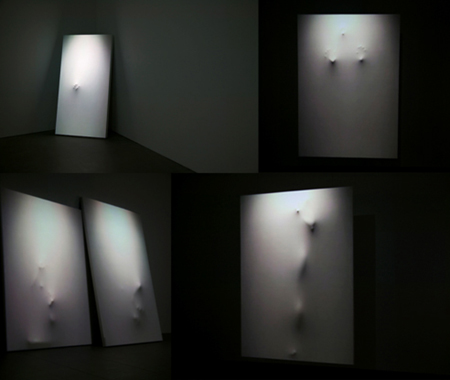
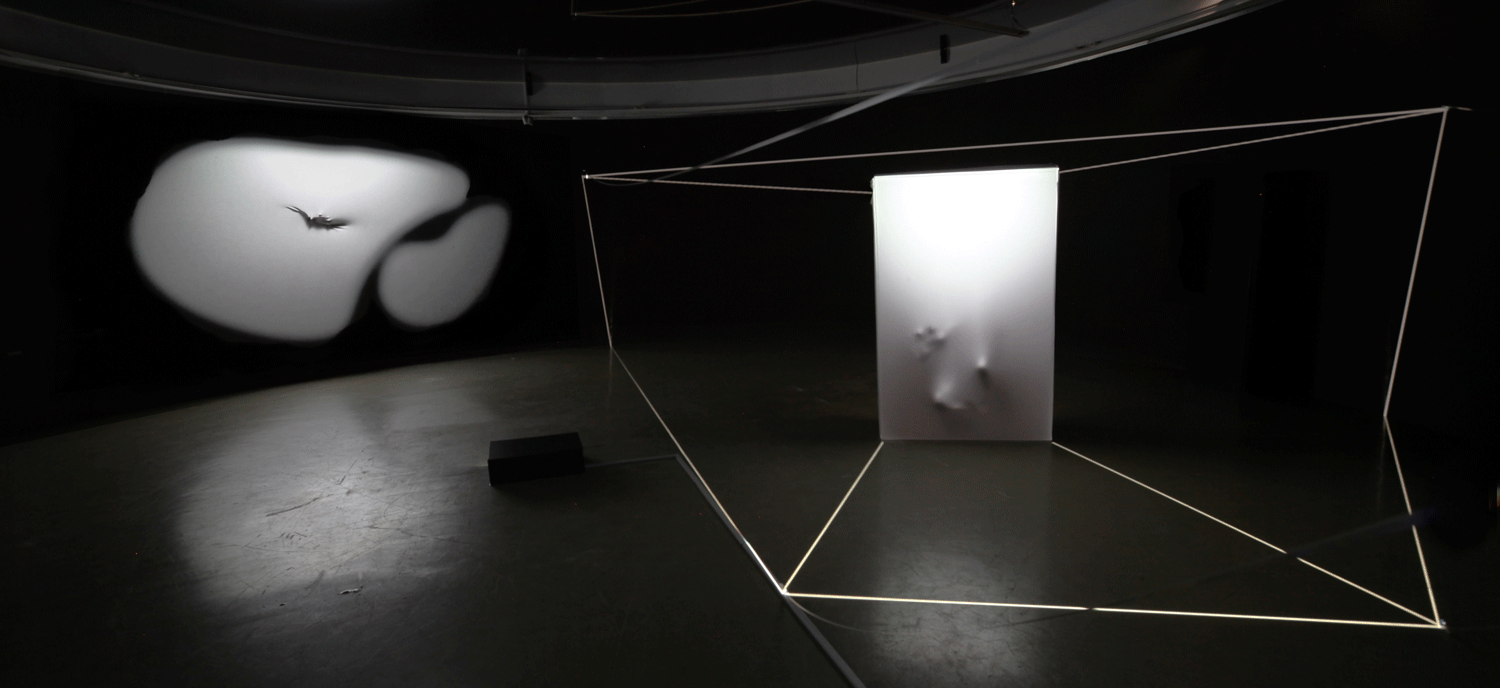
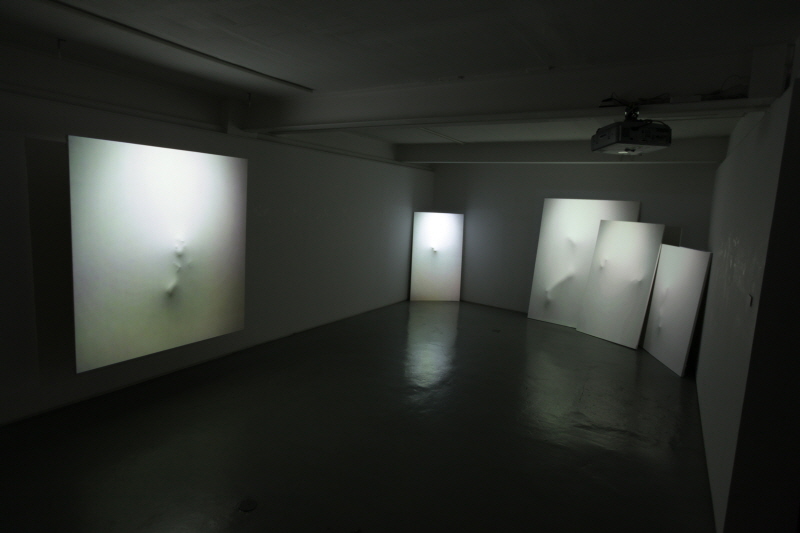
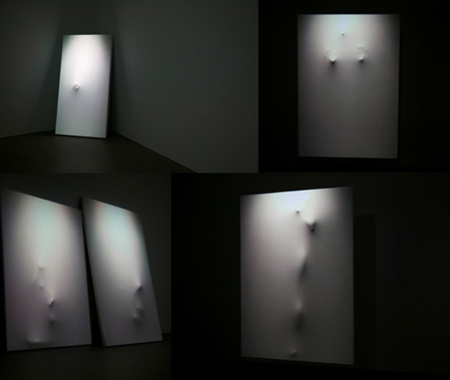
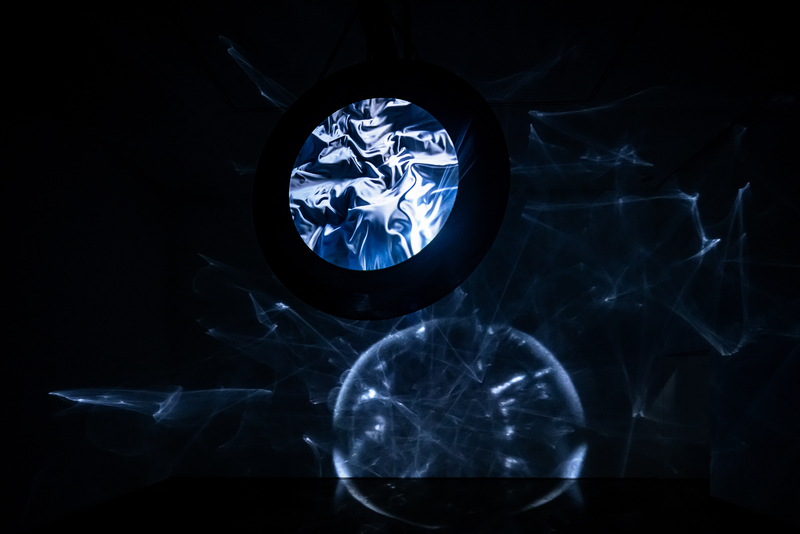
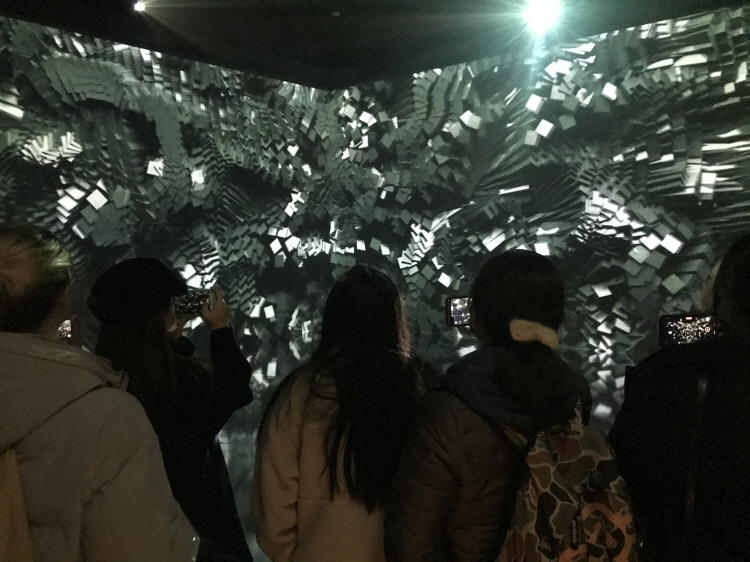
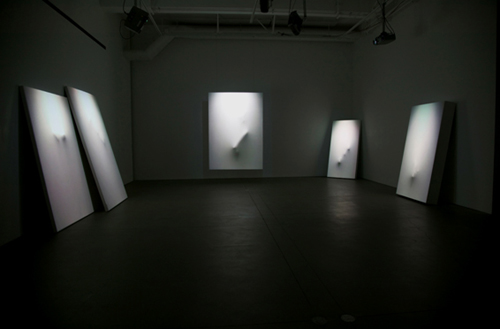
Traces drift through space. Dynamic marks, as though about to burst through the surface of the screen at great speed, fill the exhibition space. The taut tension generated by an invisible entity behind the screen is intensified precisely because that entity cannot be known. Depending on the force exerted by this unknown presence upon the surface, the screen bears distinct traces that provoke curiosity.
The images floating in space are the contacts and impressions created when bodily movements meet the surface; such images become marks and indices that testify to existence. Yet because these images are merely replays of recordings made in the past, the unrevealed entity becomes an illusion, making it appear as though something tangible exists behind the screen. In the end, all of this is nothing more than light projected onto a surface.
At the heart of Kang's practice lies the question of the gaze: the problems of how we see, the ways in which things become visible, and the objects of vision themselves. The sensory act of seeing—visuality—takes on new forms within an increasingly diversified media environment. In contemporary art, ways of seeing no longer depend upon a pure and transparent mode of perception but demand diverse forms of cognition characterized by synesthesia and immateriality.
According to Paul Virilio, contemporary people no longer truly wish to see; rather, they simply wish to be shown, employing every possible means of audiovisual telepresence. By filling space with traces alone and refusing to reveal the object or its substance directly, Yiyun Kang appears to expose this condition of contemporary spectatorship, in which we no longer seek to see.
Her work frustrates the voyeuristic visual impulse that longs to glimpse the entity seemingly existing beyond the screen and, in doing so, moves beyond the aesthetics of representation.
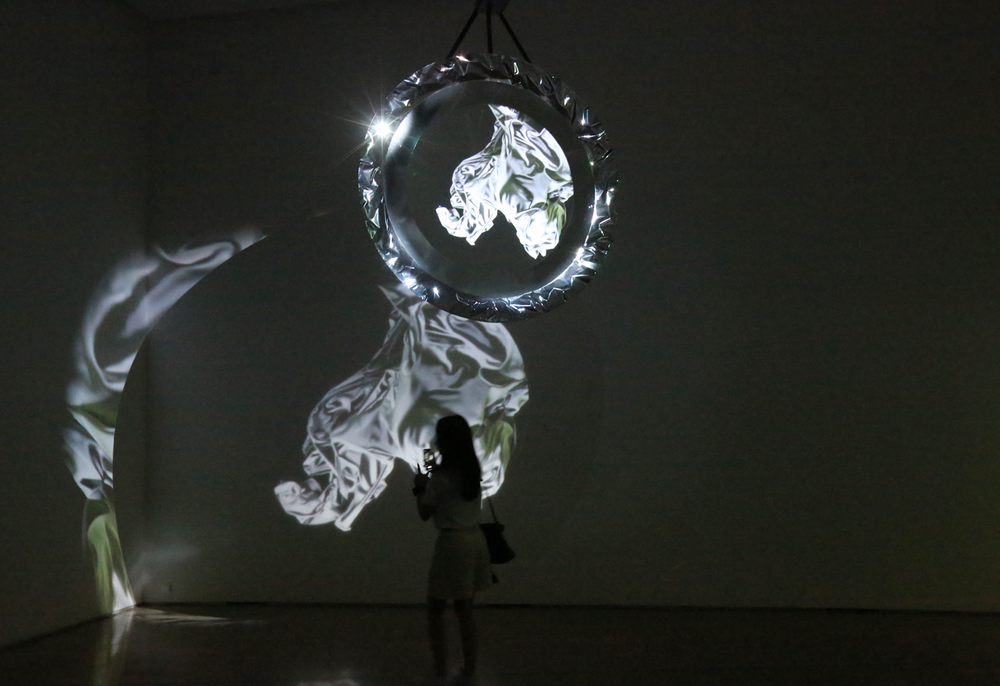
The ambiguous entity suggests that it is a body through the silhouette it leaves behind. The moment its substance becomes perceptible, one gradually realizes that the human figure behind the screen is, in fact, the artist herself. In other words, what is projected onto the screen is a “record of an action” once performed by the artist.
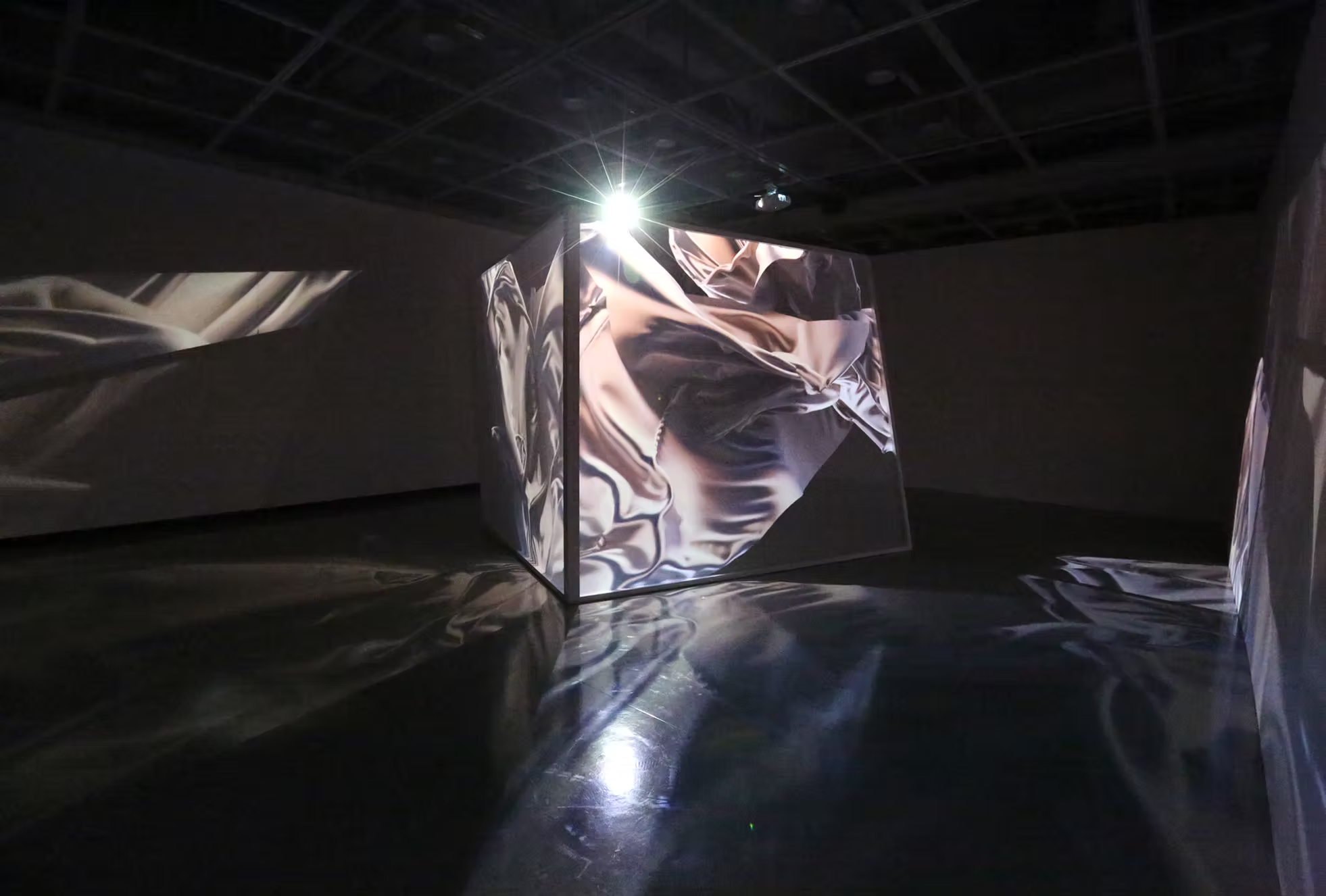
By equating an actual piece of fabric with the screen, Kang reprojects actions that once took place upon a real surface into the screen in real time, replaying the past while making it appear as though it belongs to the present. In this sense, the work resembles representation. Yet unlike the proposition of an actual space unfolding in actual time, it is a trick generated by the simultaneity of recording and playback.
What we witness is the replay of movements that once occurred in real time. This creates an extreme sense of estrangement between the actual site where the actions took place and what can be perceived on the video screen. It is not virtual reality, yet it confounds our perception by blurring the boundaries between the real and the virtual.
This mode of perception stimulates in viewers a desire to commune with images devoid of substance. At this point, viewers no longer seek to see; rather, they wish to be seen. They want to become visible to the unseen entity and expect it to respond to them. For a fleeting moment, the spectator transforms into a performer, reacting to movements without substance—to images.
Yet this expectation is soon frustrated. The instant one realizes that these movements are nothing more than projected images, anticipation turns into disappointment. This impossibility of communication, this replay of a past time rather than a real-time encounter, ultimately thwarts the viewer's expectations.
The fact that the screens, which function in place of frames, are placed on the floor signifies that actual space has been drawn into the work itself. Moreover, the screens do not appear as screens; they appear as objects. Rather than projecting moving images onto conventional screens designed precisely for that purpose, Kang projects them onto unexpected objects, thereby intensifying the question of the “real.”
The screens situated within actual space and the images projected upon them occupy a position entirely different from the relationship between a canvas and the depicted image it contains. Ultimately, because of the way the screens are installed, the works do not exist as isolated objects, detached from reality like paintings; instead, they become sites where the realms of the real and the illusory intersect.
Yet this question of representation is no longer, as it was in the twentieth century, a simple matter of the figurative versus the abstract. Rather, it concerns the replay of the work within actual space and the pure, immediate presentation of non-static and dynamic events and occurrences such as performance and installation.
Ultimately, representation is transformed into a question of reproduction and replay. Within the spaces that Kang constructs, fiction and virtuality coexist, and through the exploration of a virtualized reality, the viewers' numbed senses and perceptions are awakened.
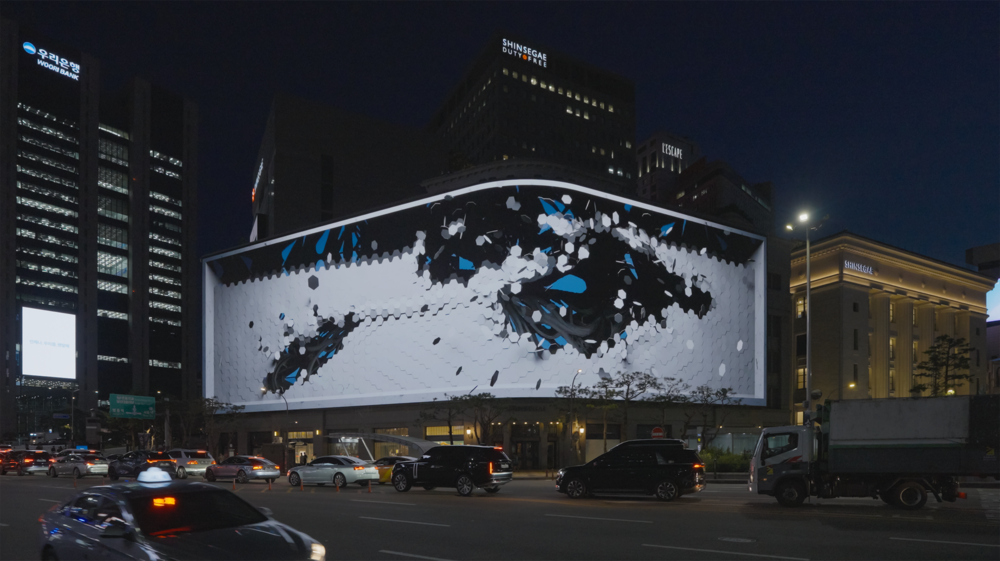
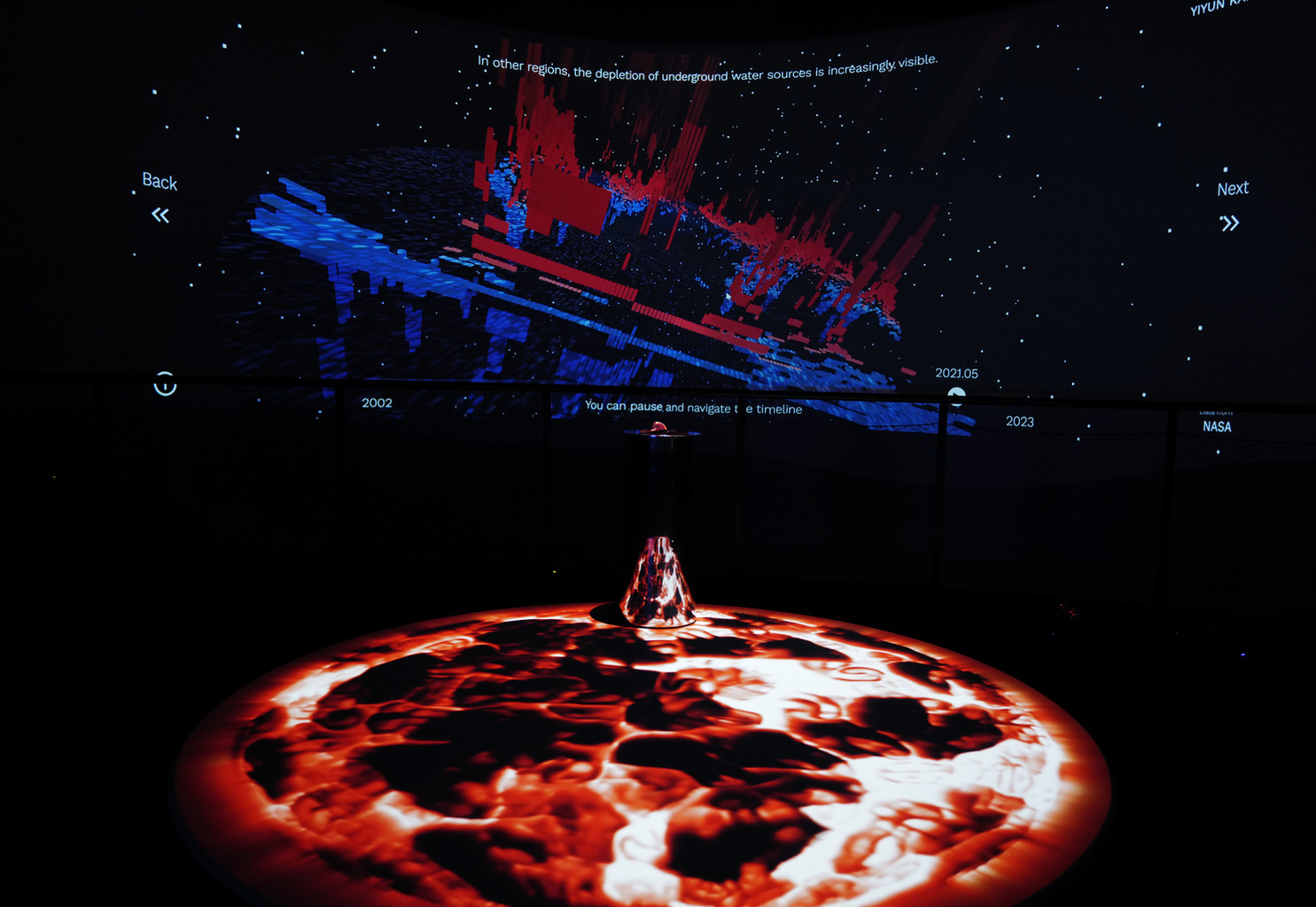
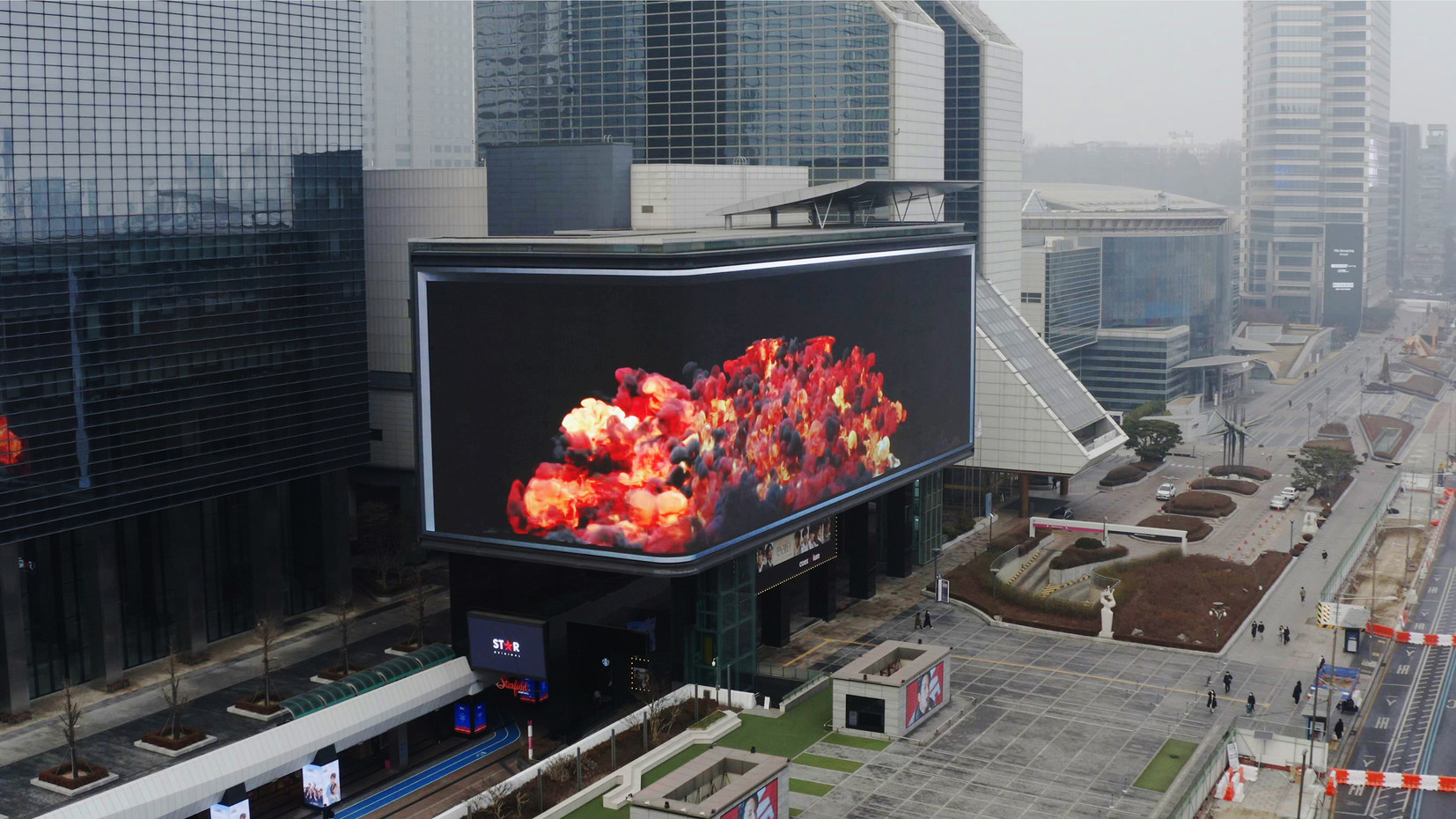
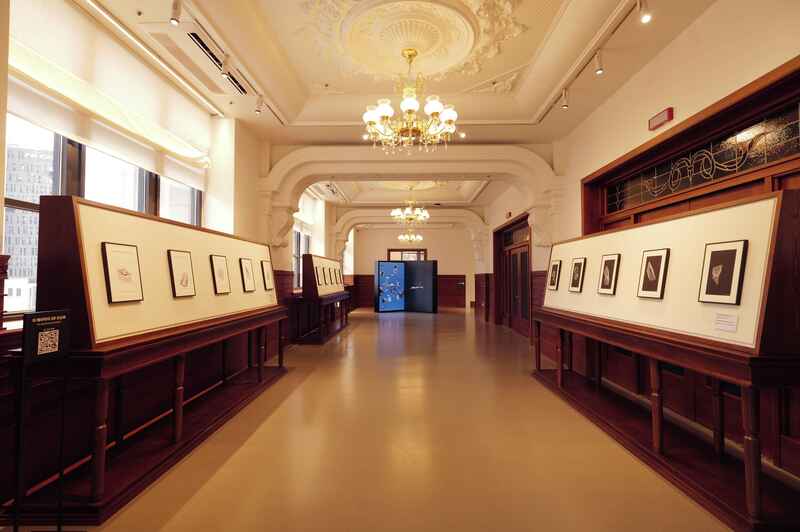
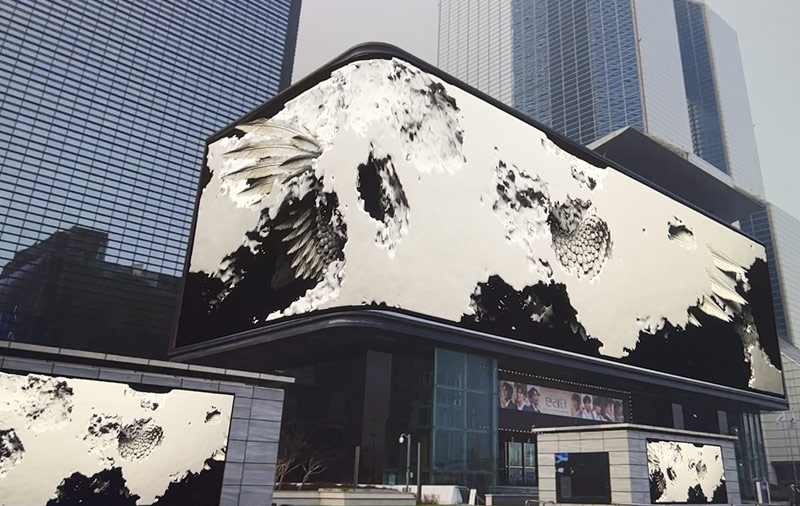
Meanwhile, the objects that appear in her digitally generated 3D images, unlike those of analog practices, are neither things that exist nor things that once existed. These works do not re-present an object but instead bring forth something immaterial that has never existed.
What they produce is a simulation of something that might exist. The possibility that something constructed can always be transformed into something else belongs to its essential condition. In the end, what exists is nothing more than a cluster of data.
Yiyun Kang disrupts our perception by calling attention to the dilemma between reproduced images that exist beyond our consciousness and an ungraspable reality. Her work reveals a system of perception that continually pursues an elusive essence beyond reality and fiction, only to encounter frustration again and again.