#1. Jeokyo (寂寥); Silent and Empty
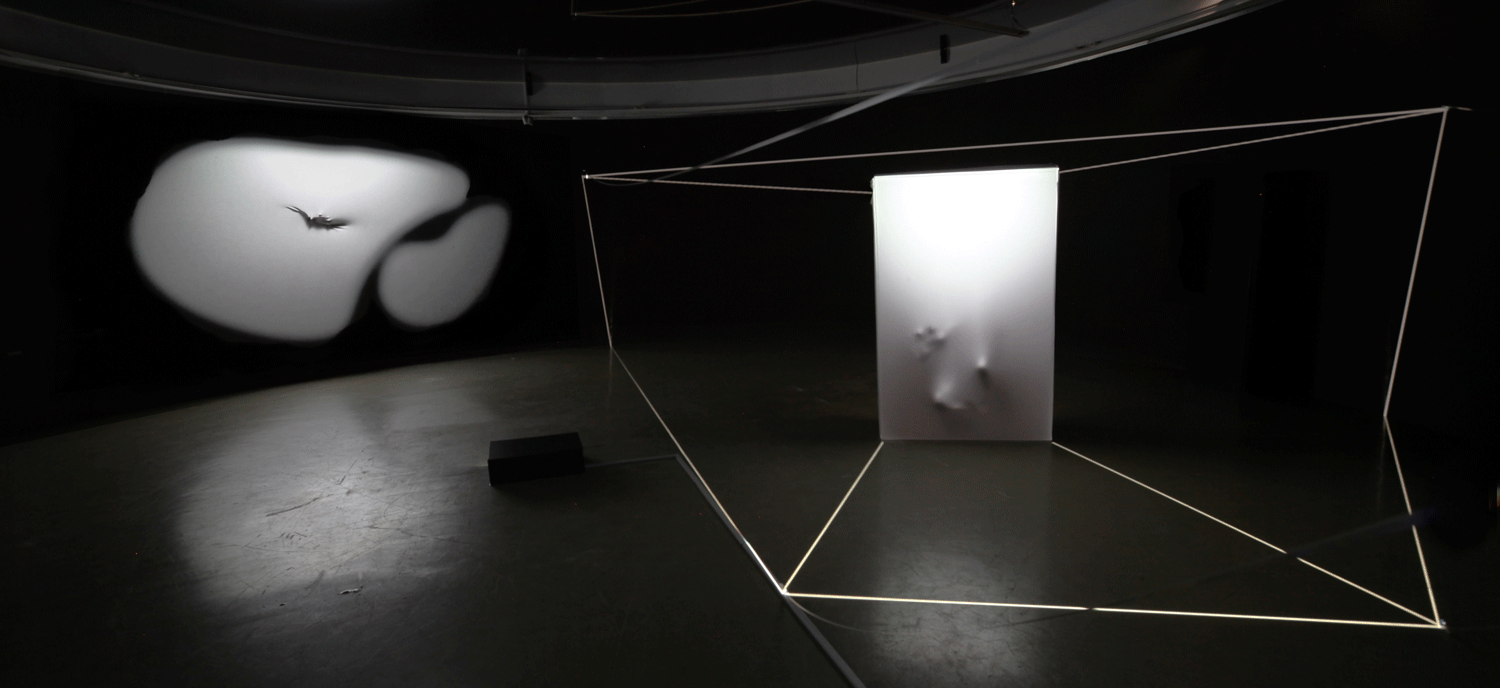
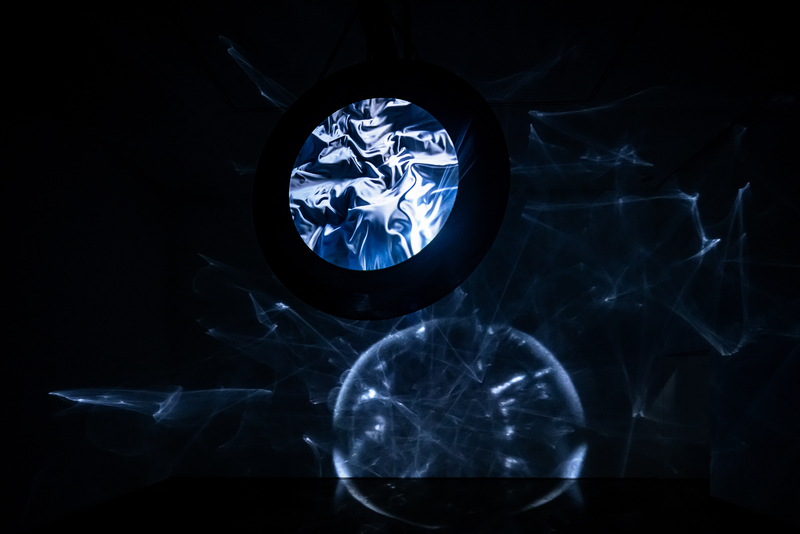
It resembles a stage of some kind. A taut “curtain” stretched like the strings of a finely tuned instrument, a monochromatic shower of light and a profound darkness, and the gestures of a performer unfolding behind the curtain together form a singular landscape.
This landscape is an indecipherable language of gestures, written by a naked body beyond the curtain—without monologue or dialogue, without stage directions that might guide us toward an understanding of the situation.
The performer enters this world without a carefully scripted scenario, surrendering instead to gestures led by the body itself. There are only fleeting instants and the movements of a living body responding to the moment and finding its rhythm.
Because consciousness and unconsciousness intermingle, it seems insufficient to speak of a boundary between them, and even the act of projecting the temporalities of reality and surreality appears meaningless. In these moments, actions begin to germinate. As if coaxing these sprouting seeds of the body into bloom, the performer slowly presses against the curtain, tuning muscles long lost through disuse.
Hands, fingertips, arms, shoulders, calves, thighs, back…. When the delicate muscles connecting these parts form the “act” between one gesture and another, the very substance of haeng (行)—of action, movement, and conduct—surges forth. To go, to walk, to move forward, to flee, to wander, to endure, to flow, to send away, to labor, to write, to give, to enact—the roots of all these forms of haeng emerge.
On this side of the curtain, the traces of the body and the fleeting moments of action writhe intensely beneath a shower of light. Shadows abruptly leap forth, disappear, and tremble; body and light rotate with both hesitation and urgency. Then, at a certain moment, the breath riding along the curtain begins to drift through the empty space.
#2. Tangeum (彈琴); Playing the Body
Perhaps it is the silent resonance of strings. The bow of the body collides with the string of the curtain, producing bursts of sound. Even if it is not literally a bow, the body plays upon the curtain as one would play a geomungo, tracing melodies with its own corporeal rhythms. Now it is the fingers: fingertips gathering and unfolding, sharply piercing and flicking, rubbing and pushing against places here and there.
Then come the arms and legs. The plane of the curtain is embraced and wrestled with as though it were wind, as though it were earth itself. None of these actions are aligned to a predetermined musical order; they are dissonant, atonal, and closer to syncopation than to regular rhythm.
Yet it is not only the curtain that he plays—he is also playing his own body. To play the body is not merely to perform an action; it is something closer to rhythm, and more actively, to dance. If dance is the structure of movement that stirs an empty space with the limbs like the branches of a log sweeping through the air, then this is all the more true.
And yet, his is not a body trained for dance. It is not a body that functions as an instrument responding to sound, nor is it a body of climactic virtuosity that instantly overwhelms our gaze. His body does not move according to measured beats but strikes only variations. This, precisely, is the gesture of syncopation—the sound of silence through which an unexpected intensity flows.
When the intimate sounds resonating within his body grow louder, he momentarily suspends his actions. Although these gestures are not intended to expose trapped pain or reveal an inner ecstasy of self-transcendence, his body nevertheless carries muscular pain whenever it moves toward a new “act” after one flow has passed.
The act of playing the body itself may be a profound pain for him, and the pain reverberating through countless joints may at any moment lose its balance with the curtain and collapse. There lies the pause, and there lie the tears of the body.
#3. The Gaze; I Look at You
It is like an ecstatic light. Light and darkness push and pull against one another like a taut curtain. A beam of light suddenly falls upon the surface of the curtain, piercing the vast darkness. As the darkness, cut by that light, recedes like spreading ink, something slowly surges forward—the notes of that body. The light illuminates what approaches, sometimes more intensely, sometimes more softly.
Mezzo piano (moderately soft), mezzo forte, forte, fortissimo (very loud)—crescendo, decrescendo, and accent—allegro (fast), moderato, and andantino (a little slow): following these notes of softness and strength, of speed and slowness, the light traces the contours of the body and rides its melodies.
Notes mingled with allegro, accent, and piano now become light. They become luminous notes and begin to glow. In the darkness, upon the empty stage, the curtain itself becomes a luminous note that plays upon the body.
Behind the curtain, there is a camera. The camera watches “you,” who plays upon the body within this silent and empty curtain of darkness. The camera is the sole passage connecting your world and mine. “You”—or “he”—exists on the inside, beyond the curtain, while “I” exist outside the curtain, right here. Between you and me there is an “in-between.”
Within this in-between there is no ethical time (history) or political space (place) that asks after our identities. Rather, it is the ethics of time and the politics of space that permeate it. “You” always remain the same and yet exist as the trace of a particular duration, while “I” encounter “you” within the space where those traces are staged. Perhaps your “dimension variable,” as a variable or mutable dimension, resides precisely there.
Before coming to me, you must have gathered countless fragments of actions to compose these luminous notes. You—and the bodies that have restrained pain and wiped away tears—may therefore be a language made only of adverbs and verbs: stealthily, writhingly, quickly; to go, to walk, to move forward, to flee.
Yet when these languages come together and become light, they produce a clear sound. Perhaps, I think, what you wished to strike from the depths of your heart was precisely this sound of light.
#4. Exhibition–Space–Work; Between
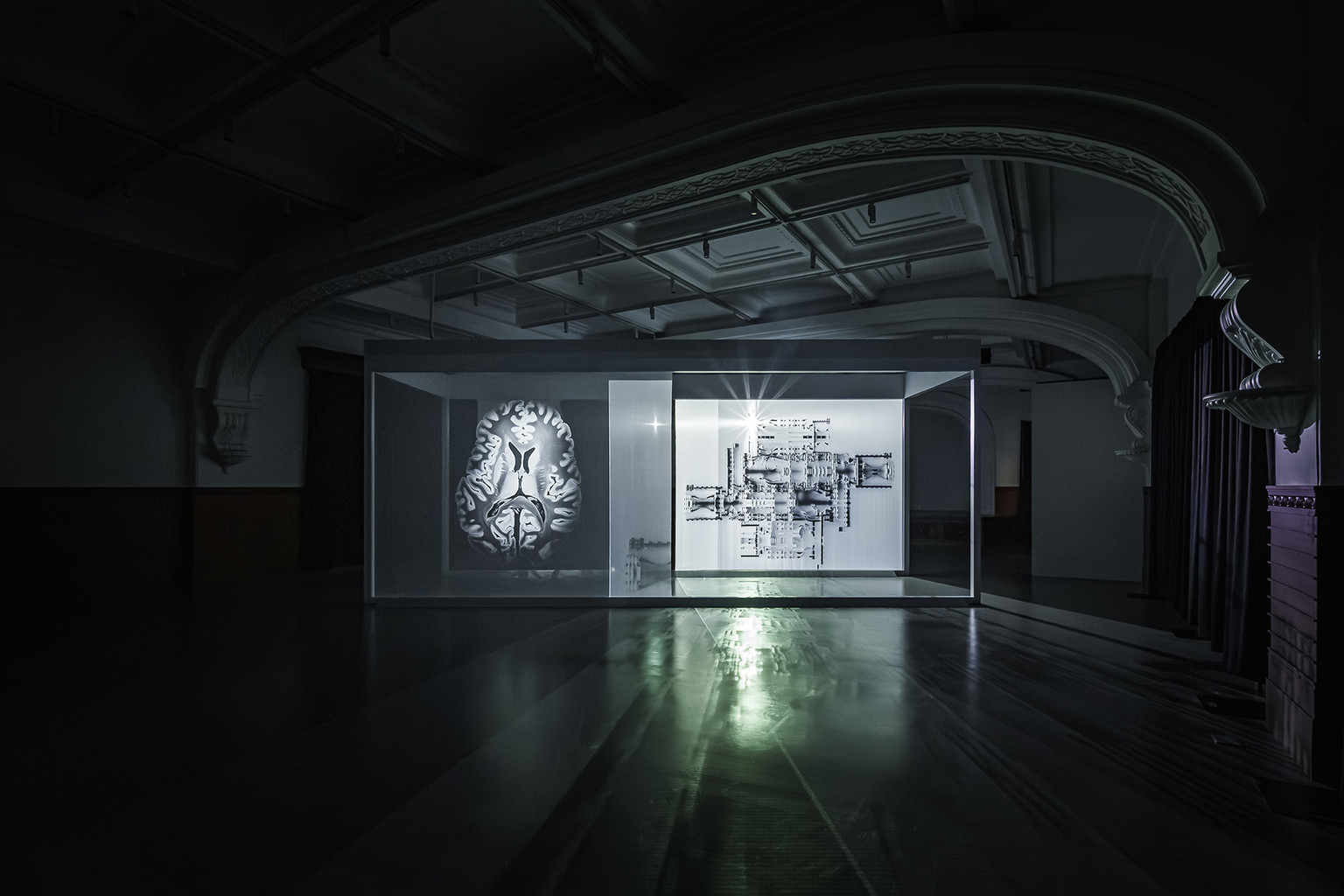
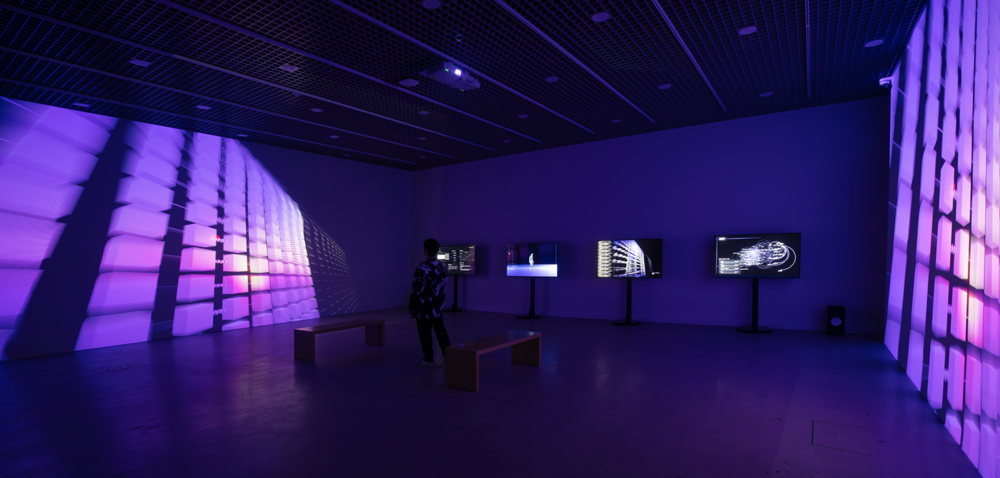
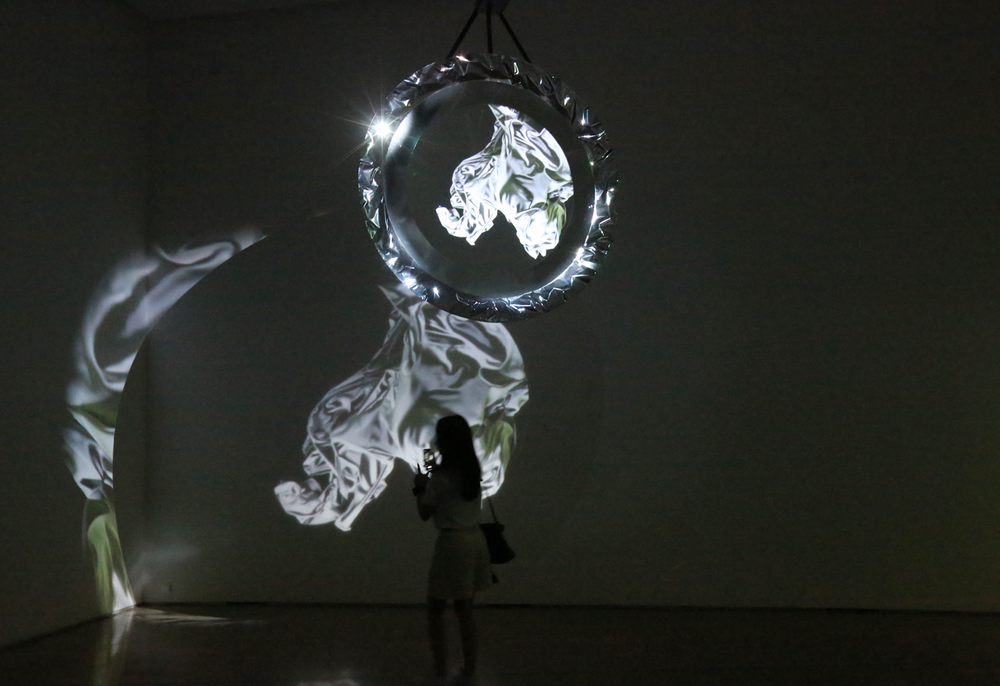
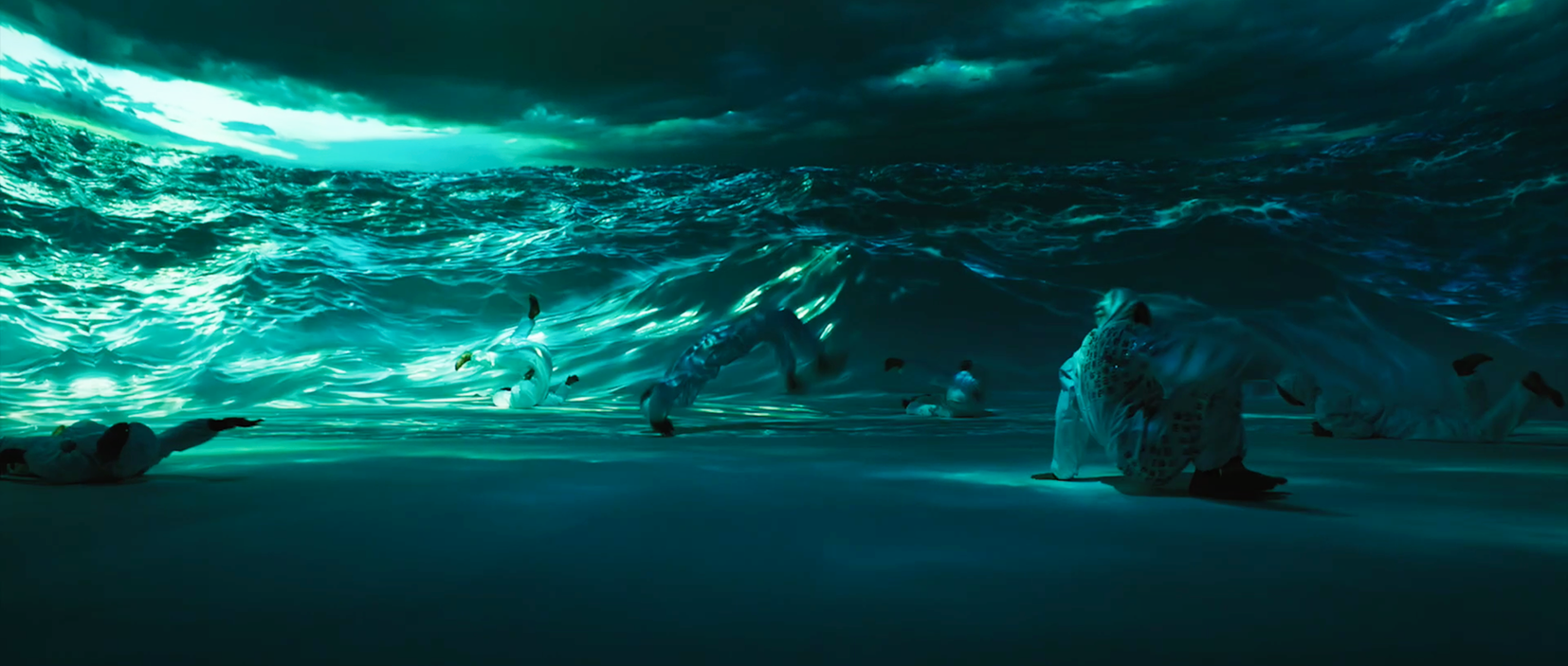
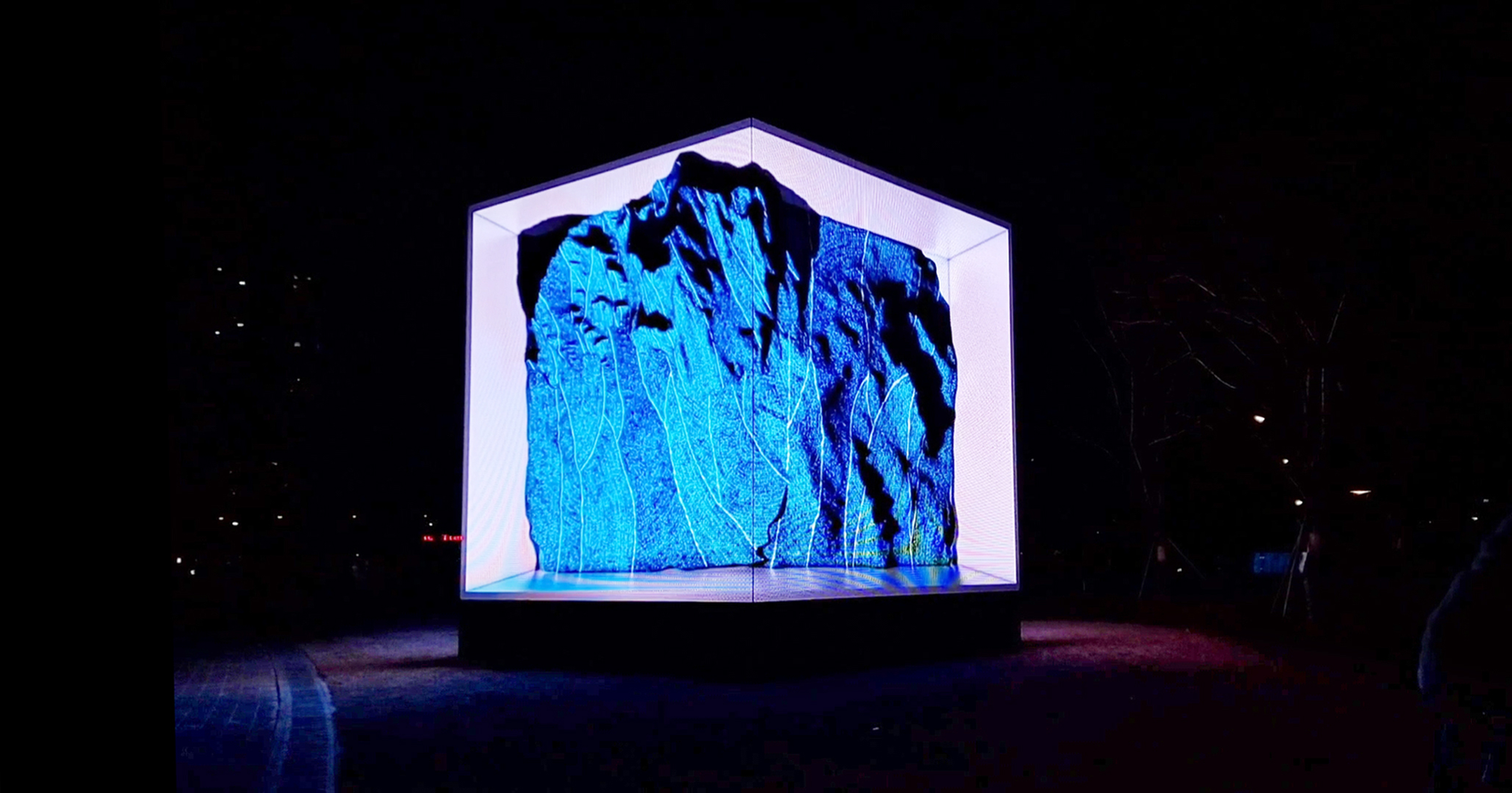
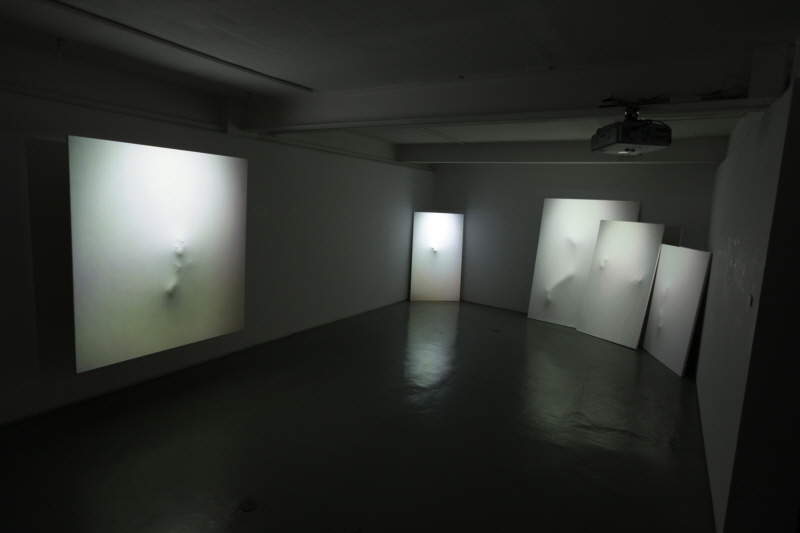
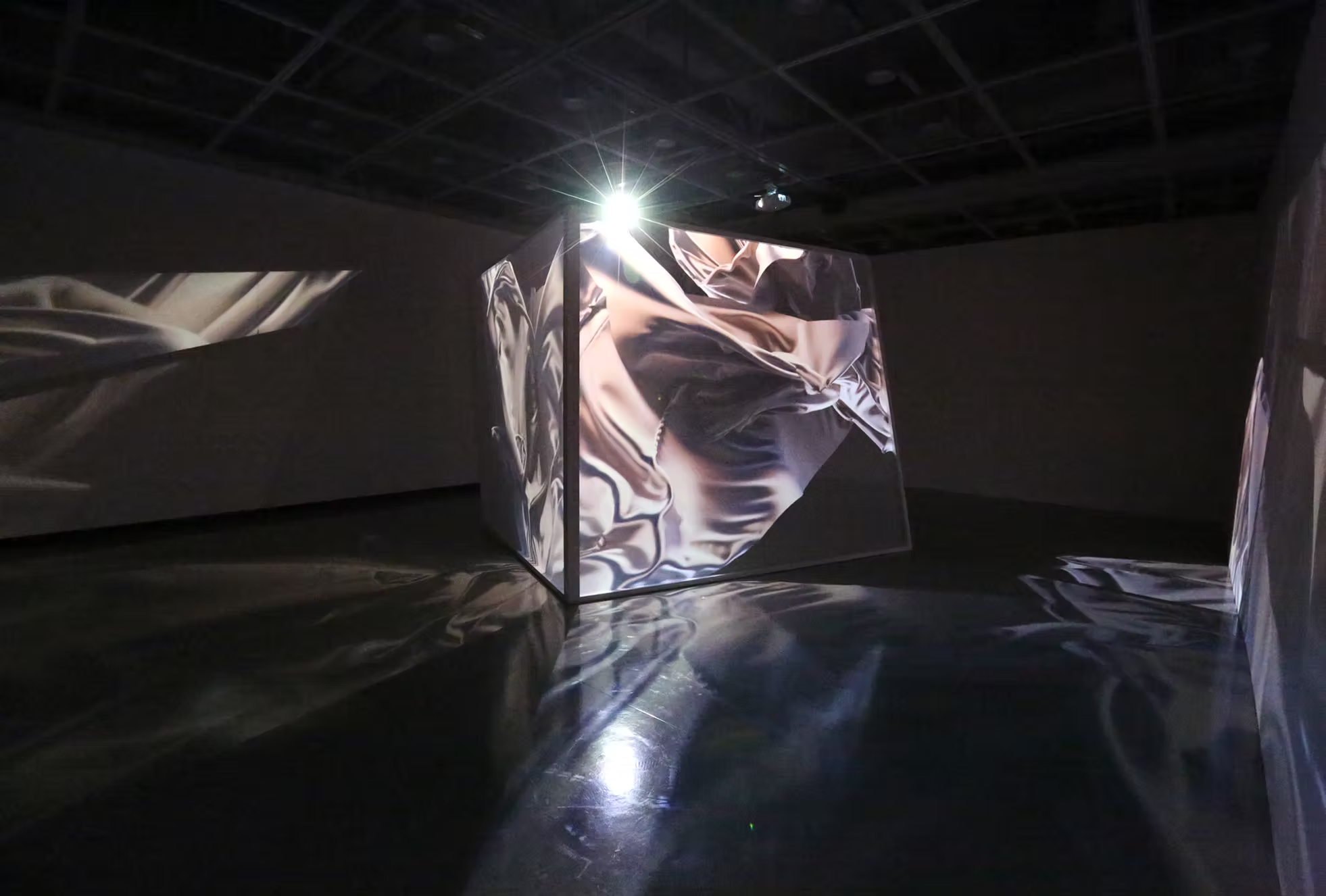
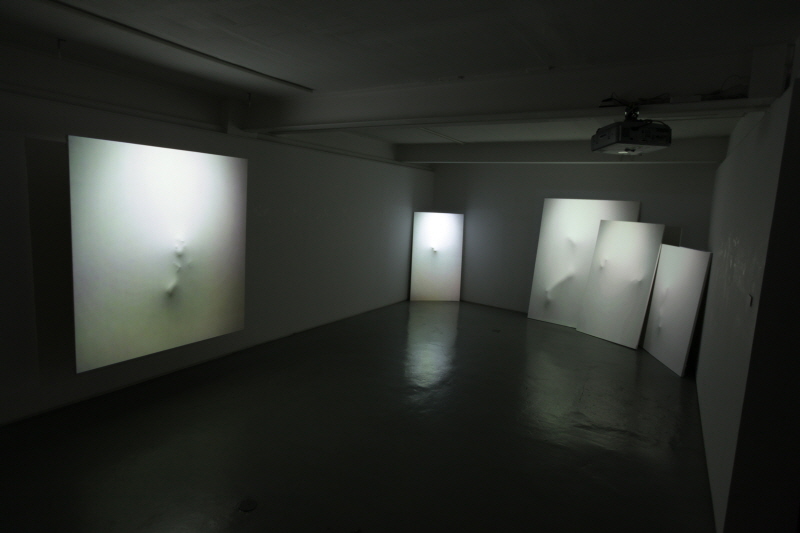
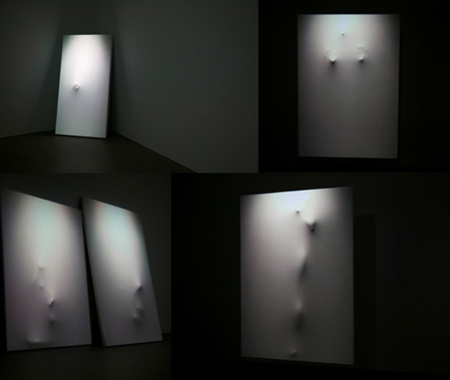
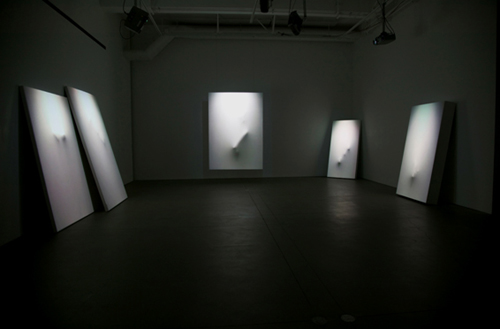
Yiyun Kang’s video installation Between consists of multiple rectangular white projection screens installed within a dark exhibition space, onto which moving images are projected. The screens, varying in size, are either fixed to the walls or leaned against one another in layers.
Before the images appear, they resemble white canvases, white monochromes, or even minimalist objects. They exist within darkness until light arrives. For Between to fully unfold, such complete darkness is essential.
When the projection begins, shadows of light emerge upon the screens, and in an instant we witness the rhythms of a body revealed like an apparition. It appears as though someone is writhing behind the screens, struggling, like a larva within a cocoon, to tear away the membrane surrounding it.
Yet as the gestures continue, we realize that the body within is not engulfed in such intensity, nor does it seek a saving hand from the viewers outside. Rather, the performer merely moves little by little, as though tuning the screen itself, inscribing traces and leaving behind residual drippings—yeojeok (餘滴).
Some works inscribe these luminous shadows with the entire body, while others are created solely through the movement of hands. The screens installed throughout the exhibition space each articulate and tune distinct languages of the body. They begin to feel like manifestations of a self that exists in pursuit of a single harmony.
Yet every image projected onto the screens is the artist herself, and every language is born from a single body. Harmony and body flow through the exhibition space, separated by only a subtle “in-between.” Her between may exist between the screen and the viewer—the “I”—or within the internal intervals generated by the fragmentations of the body itself.
Interestingly, however, such questions and analyses become fragmented at a rather unexpected point: the moment we recognize that these movements are nothing more than the light of a projector. The seemingly real body moving across the screen is merely a recorded image stored by a camera and projected before us; the gestures we witness are only moving images.
This mixture of apparition, magic, fantasy, and illusion is a trick of vision, an algorithm in which logical stages have been lost. It is perhaps precisely there that Yiyun Kang’s work resides.
It may be an intense afterimage existing somewhere between loss and residue, a trace of being itself. All of us who enter the space where her work unfolds encounter, through the projected screens, a silent and empty abyss.
There we come face to face with a world of “I,” composed of a taut curtain stretched like the strings of a finely tuned instrument, a monochromatic shower of light and dense darkness, and the gestures unfolding behind the curtain as a single landscape. Beyond the passageway of this seemingly empty space lies the in-between that fills the distance between “you” and “I.”