Since 2013, Yun Taejun has presented photographic works that show a wide range of explorations into visual media. He has expanded his thinking on photography, from the ontology of photography to the expansion of the medium, and more recently has been seeking the possibilities of sensory expression within the digital environment.
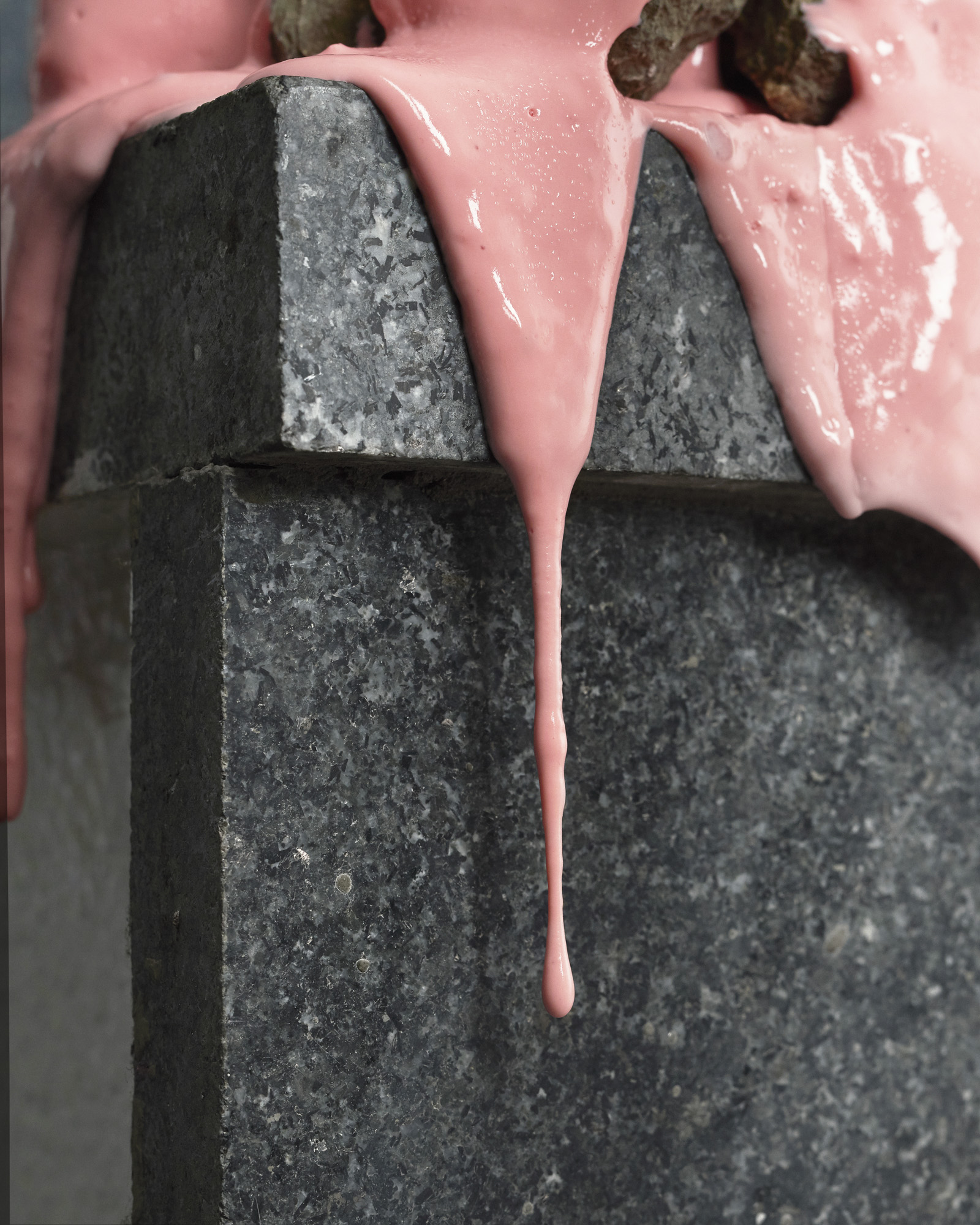
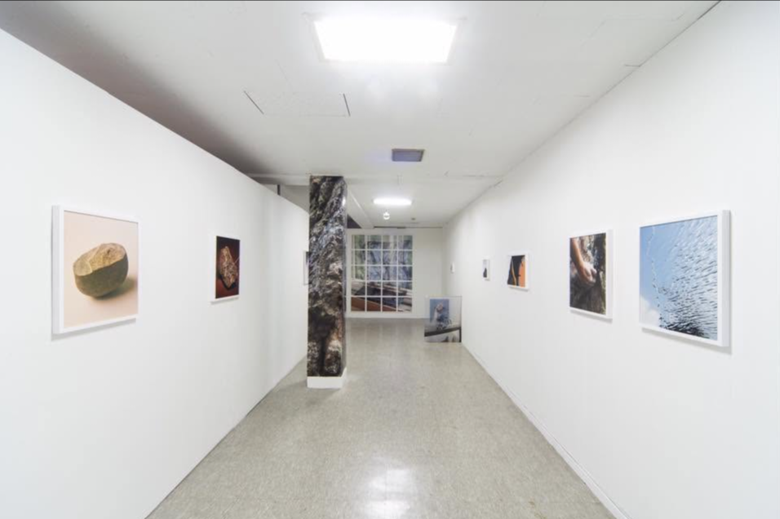
From 'Weight of Remorse'(2013–2014) series to 'Middle Turn'(2020–) series, the content, methods, and exhibition styles of his photographic works differ from one another, but one thing that runs through almost all of his series is that they take “stone” as their material.
In Yun Taejun’s work, stone may represent the objective documentary nature of photography, create cracks in the truthfulness of photographic representation, or mediate reality and virtuality, matter and sensation, within digital space. Therefore, here, I would like to examine the aspects of his work around the trajectory of Yun Taejun’s “stone” and follow his photographic journey.
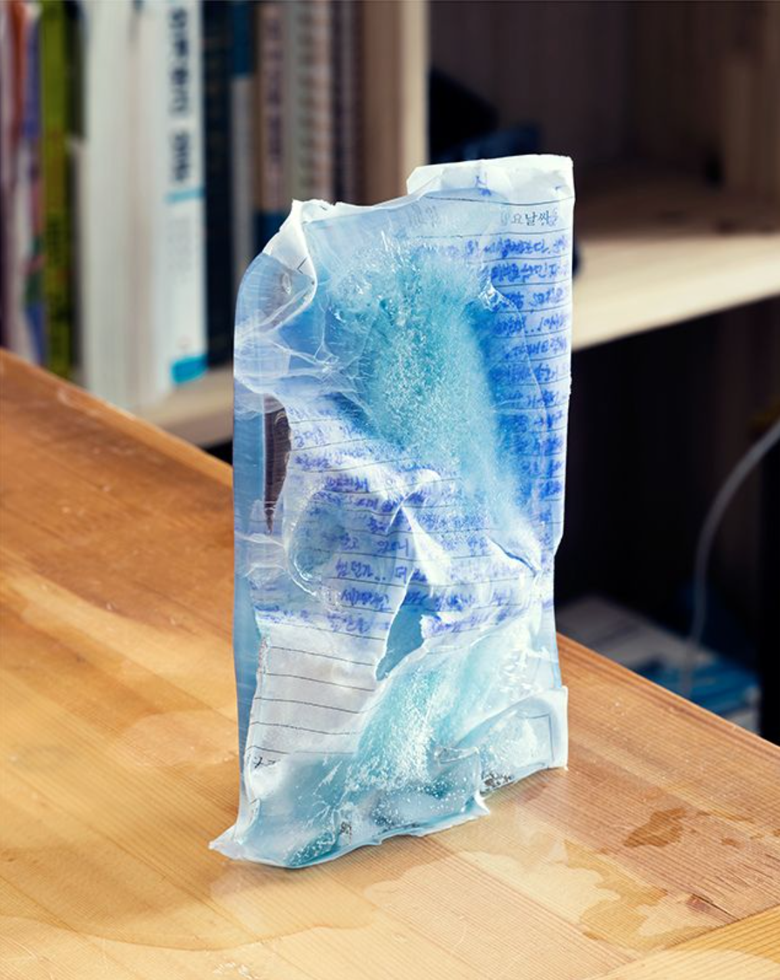
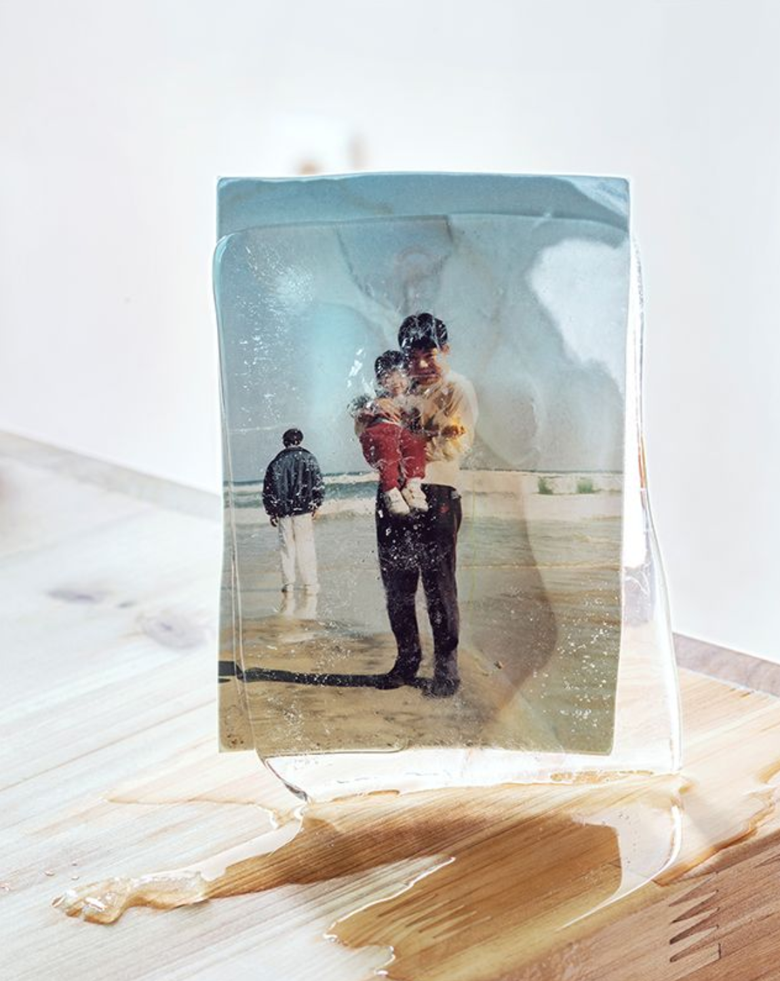
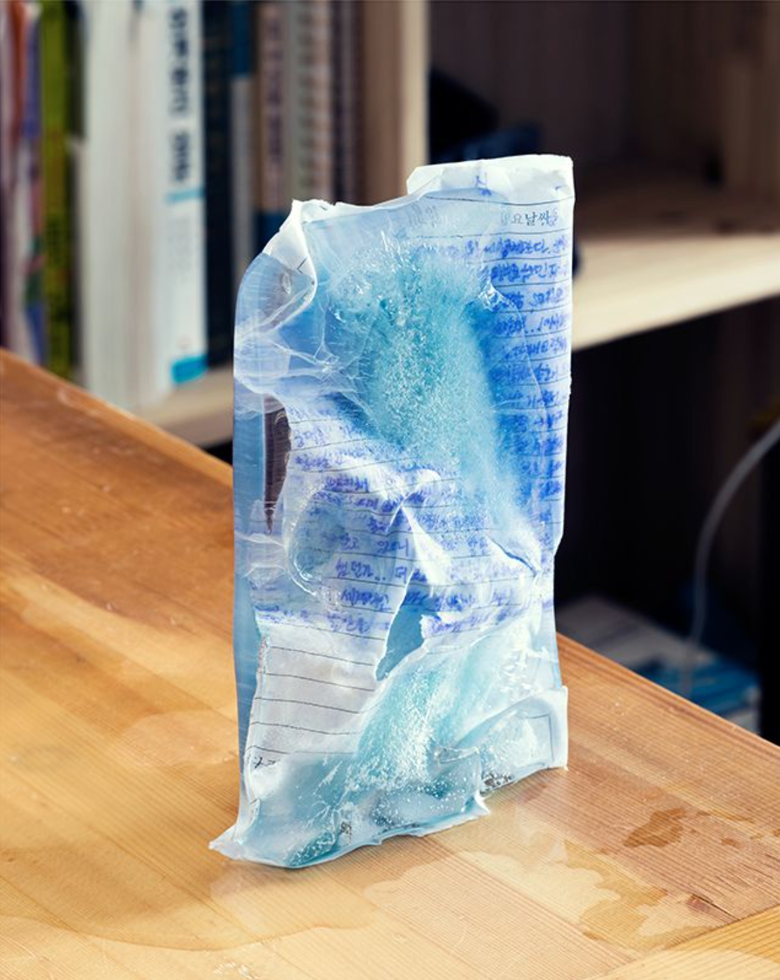
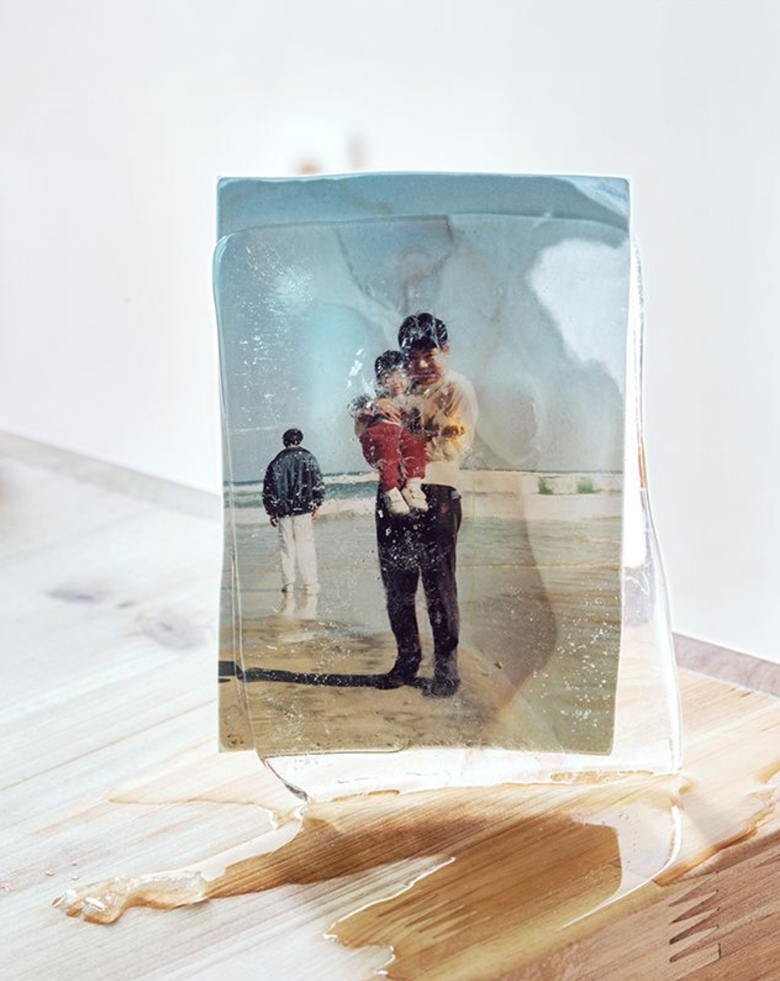
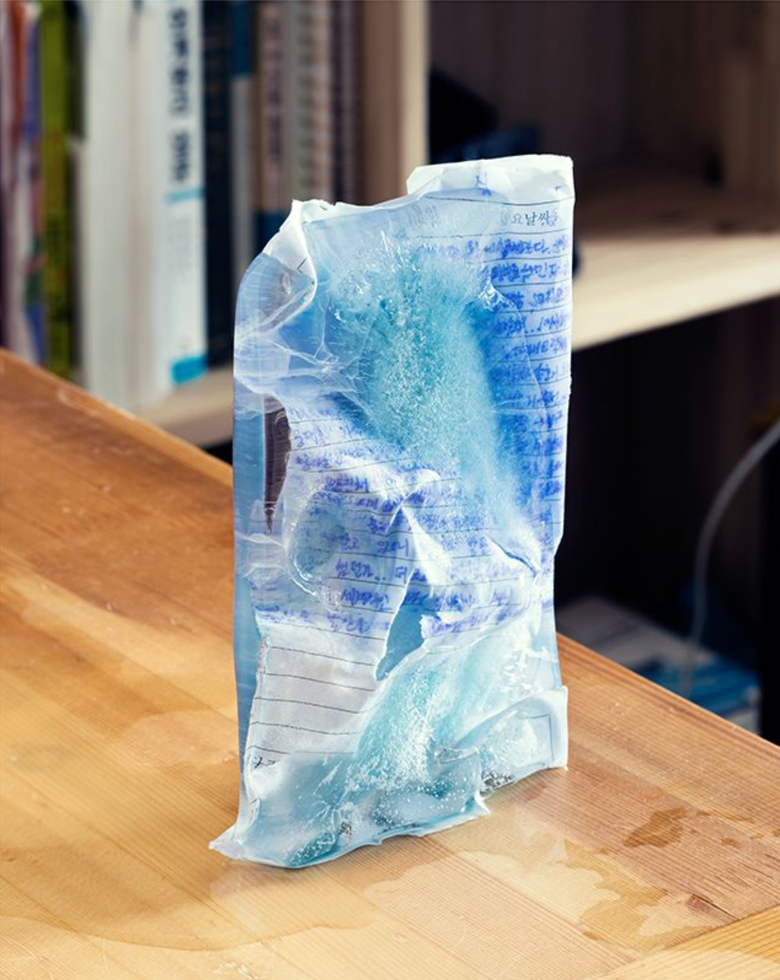
Yun Taejun’s 'Weight of Remorse' series is a photographic series documenting everyday objects as ice melts around them. The artist froze objects that recalled special memories and meaningful experiences from the past, such as a clock, photographs, stones, shoes, a name tag, and a diary. Just as photography cuts out one cross-section of continuing time and changing space and fixes it within the flat frame, the artist wanted to freeze and trap matter and memory inside ice.
In doing so, he sought to safely protect those experiences from the irreversible destruction of time. He sought to protect those memories from the crisis of oblivion. Yet ice was, above all, an unstable place of preservation. Through freezing and thawing, the forms of objects were transformed and altered, losing their original appearance.
The clock stopped, the photographs became discolored, and the diary with ink that had bled could no longer recall that time in the same way. Just as time exerted a transformation on matter through the physical motion of expansion and contraction, it also affected memory.
This is because memory itself contains temporality. Due to the time gap that occurs between the moment a memory takes place and the moment it is recalled, distortions of memory such as “transformation, substitution, reversal, or restoration” are bound to arise.
One scholar of memory calls this the “vitality of memory.” Memory is not a computer file whose input and output values are identical, and so it is not mechanically reproduced; rather, it is a newly produced activity of the mind. What the artist truly wanted to record was this incompleteness of memory.
He sought to show, through the fragility of ice, that memory is not a fixed scene or time, but something that flows within the continuity of time, and that when it is recorded, another meaning is generated. 'Weight of Remorse' series unfolds, in a photographic manner, reflections on incomplete memory and time together with the diminishing weight of ice over time or the transformation of objects.
'Weight of Remorse' series is photography that mechanically reproduces the object before the camera. The images of stone and lumps of ice captured in the photographs, and of water melting and flowing, testify to what the French philosopher and critic Roland Barthes (1915–1980) called “that-has-been (ça-a-été).” But where does the general belief in the truthfulness of photography come from? How is the value of photography formed? Yun Taejun raises questions about the testimonial status of photography.
The 2015 work Bukduchilnak(2015) is a project that attempts to deconstruct the concepts of photographic truthfulness and testimonial value. The artist performed the role of a museum curator, archaeologist, or ethnographer. First, he researched materials concerning a figure named “Nak,” who was believed to have existed in written records.
He then photographically reproduced artifacts and related narratives that evoked the history of this figure, and restructured them in the form of an archive. Photographs of rocks positioned at the center of the frame, such as The Birth Rock of Nak, as well as numbered stone fragments, were presented as legendary places and historical artifacts through an archaeological context.
The American literary critic and social activist Susan Sontag (1933–2004) once pointed out that “to photograph is to confer importance.” The moment a stone fragment bearing a registration number becomes the object before the camera and is recorded as a photograph, a stone fragment that had been no more than one of many scattered natural objects is granted a special value that confirms the existence of a historical figure.
Sontag calls this photography’s “inherent tendency.” However, Yun Taejun inserts fictional images, such as The Feather Growing from Nak’s Armpit, almost imperceptibly, creating cracks in the viewer’s belief. The artist points out that photography’s representation of an object and the value it comes to have, or the meaning it conveys, are entirely separate issues.
Through photographic representations in which the virtual and the fictional are intertwined, he makes us recognize that an attitude of accepting what is seen without suspicion is a form of vision that has been made conscious through convention and learning. By borrowing the way photography is received within institutions such as museums and art museums, this paradoxically shows how photography is granted value as historical evidence or translated into culture.
The 2017 work Fantasy Staircase(2017) is an installation work that participated in 《2017 Community Art: Hello》(Buk-Seoul Museum of Art, 2017). Fantasy Staircase substitutes abstract existence with images of reality and with objects possessing materiality. Yun Taejun makes fiction intervene deeply within reality, rendering the boundary between the opposing concepts of reality and illusion even more ambiguous and indistinct.
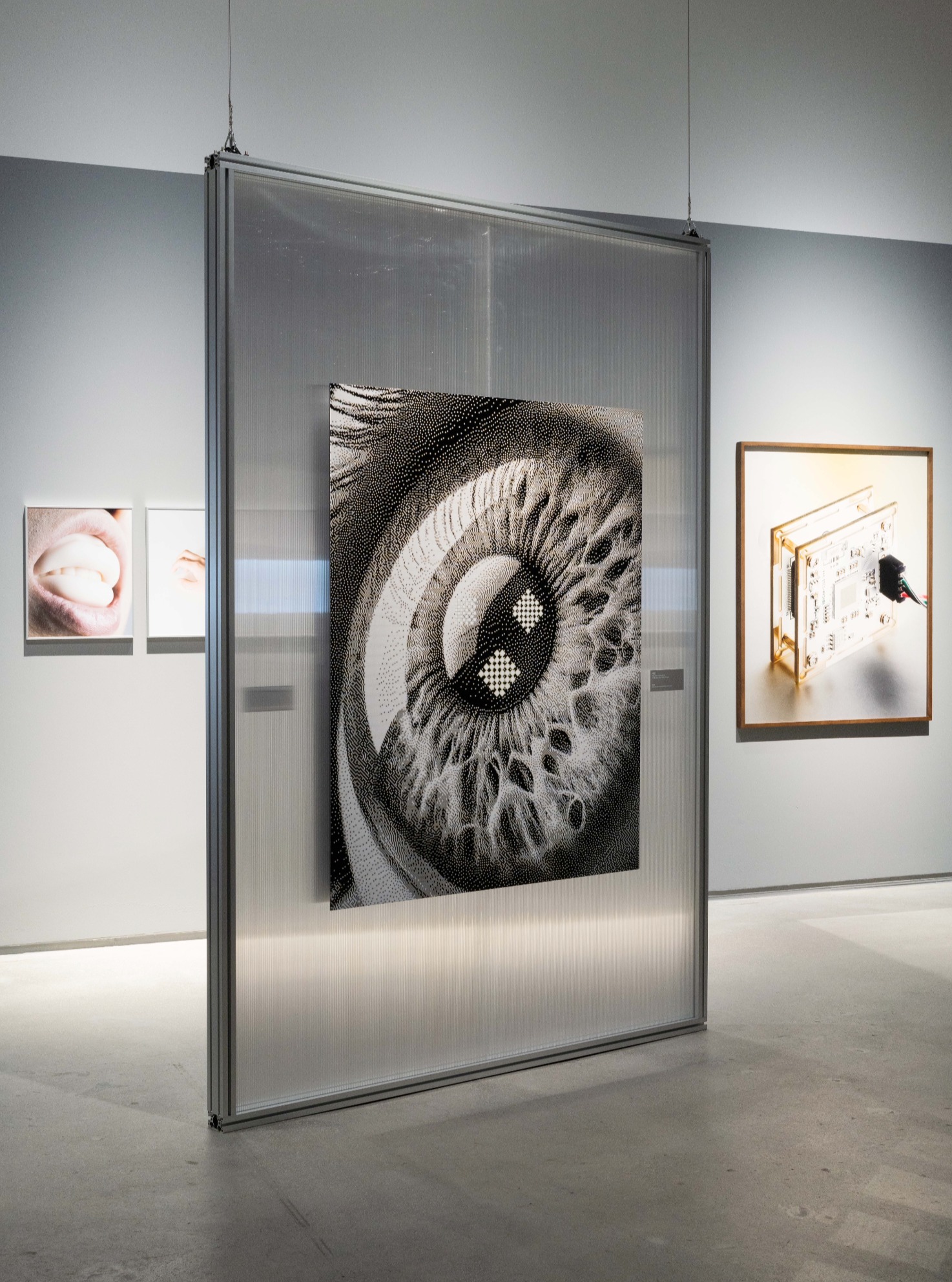
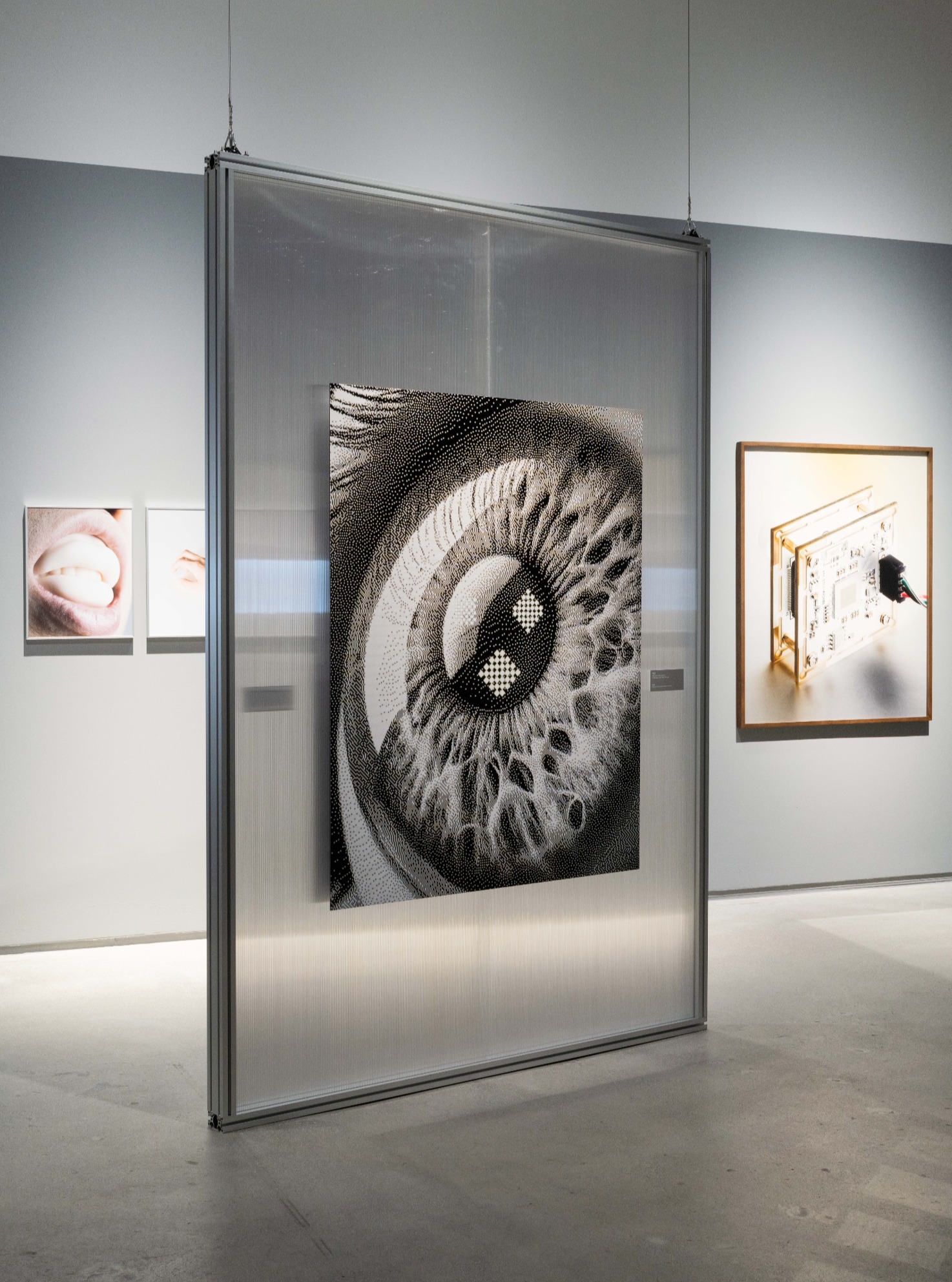
Fantasy Staircase, Evictee shows an image marked with halftone dots, as though printed using screen-printing techniques. Its form is abstract, because halftone dots of different sizes both reveal and conceal the image, seeming to disclose it while hiding it. According to Sontag, because of photography’s aforementioned “inherent tendency,” photography “idolizes” its object regardless of content.
Photography’s aesthetic tendency transforms its object into a “beautiful image.” In doing so, it neutralizes the pain or sadness that appears in the photograph. However, through the device of halftone dots, the artist makes the image ambiguous, blocks photography’s “idolization,” and remains alert to photography’s aesthetic tendency to beautify and consume pain.
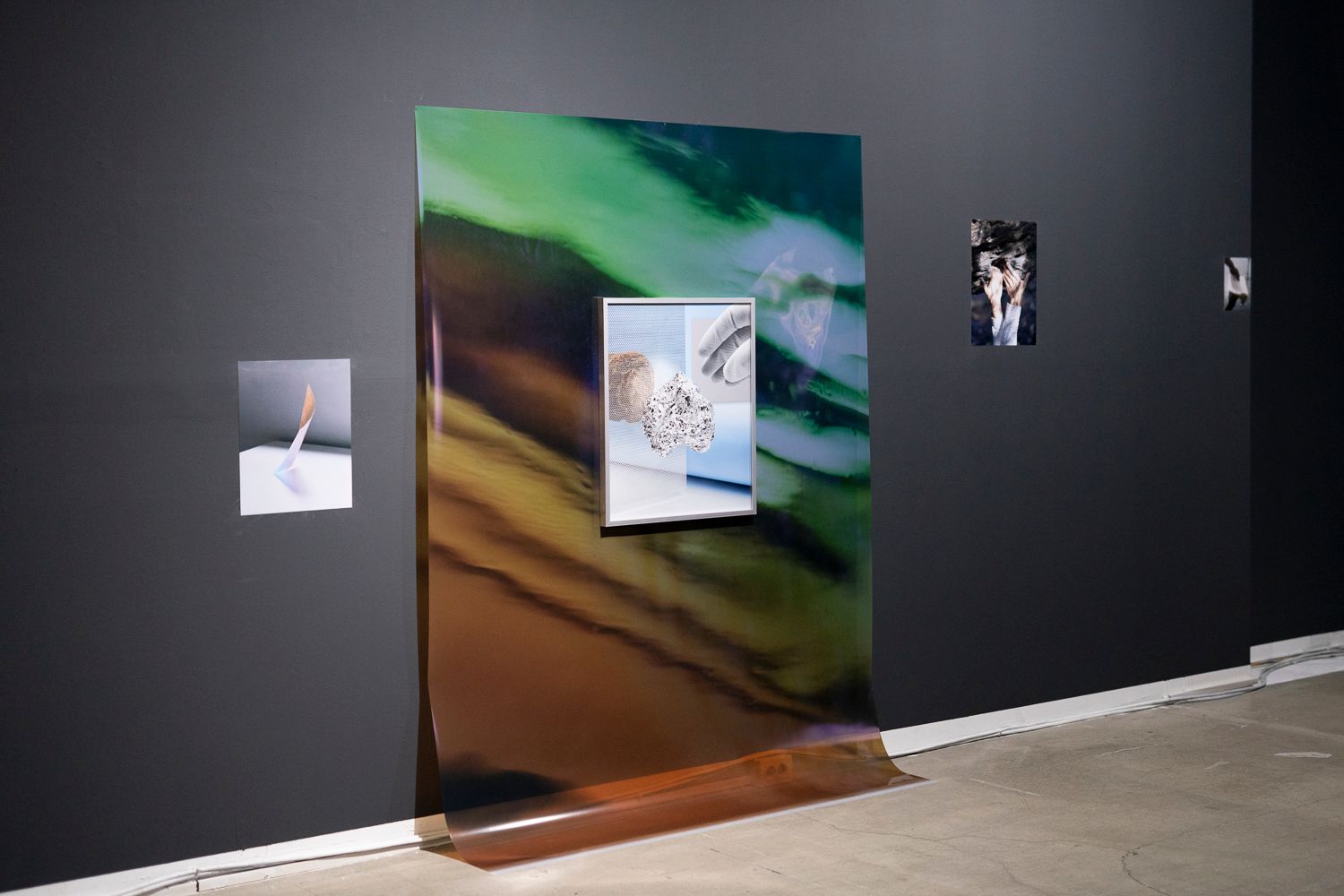
Meanwhile, Fantasy Staircase, Evictee also introduced a change in production method by being printed on vinyl sheets, and through this occasion, the artist came to seek a contemporary vision by conducting various experiments with photography and digital media.
After 2019, Yun Taejun’s photographic interests shifted toward the convergence of digital technology and photography. First, for the artist, digital technology is a tool that enables him to dismantle concepts such as the original properties and identity of matter.
In a digital environment where processing such as compositing and extraction, imitation and transformation is freely possible, concepts such as originality, permanence, and immutability possessed by all entities existing in the world are no longer valid, nor are they commonly accepted. For him, the material world is something that transcends time and space, something variable, something that can transform into any form and combine with any property, and through this, awaken new sensations.
In an age of technological evolution represented by the information and communications revolution, robotics, and artificial intelligence, the independent form and essence of an individual entity have yielded their place to imitation, variability, and reproducibility. Low, Quickdraw(2019–2020) and Middle Turn(2020–) are based on these concepts.
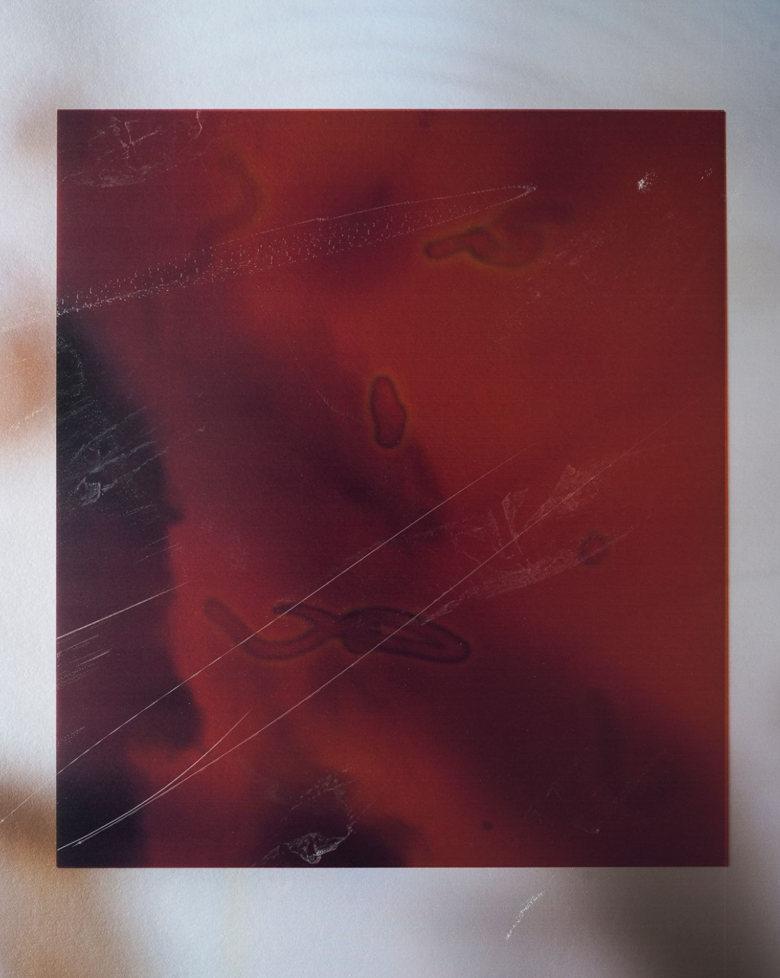
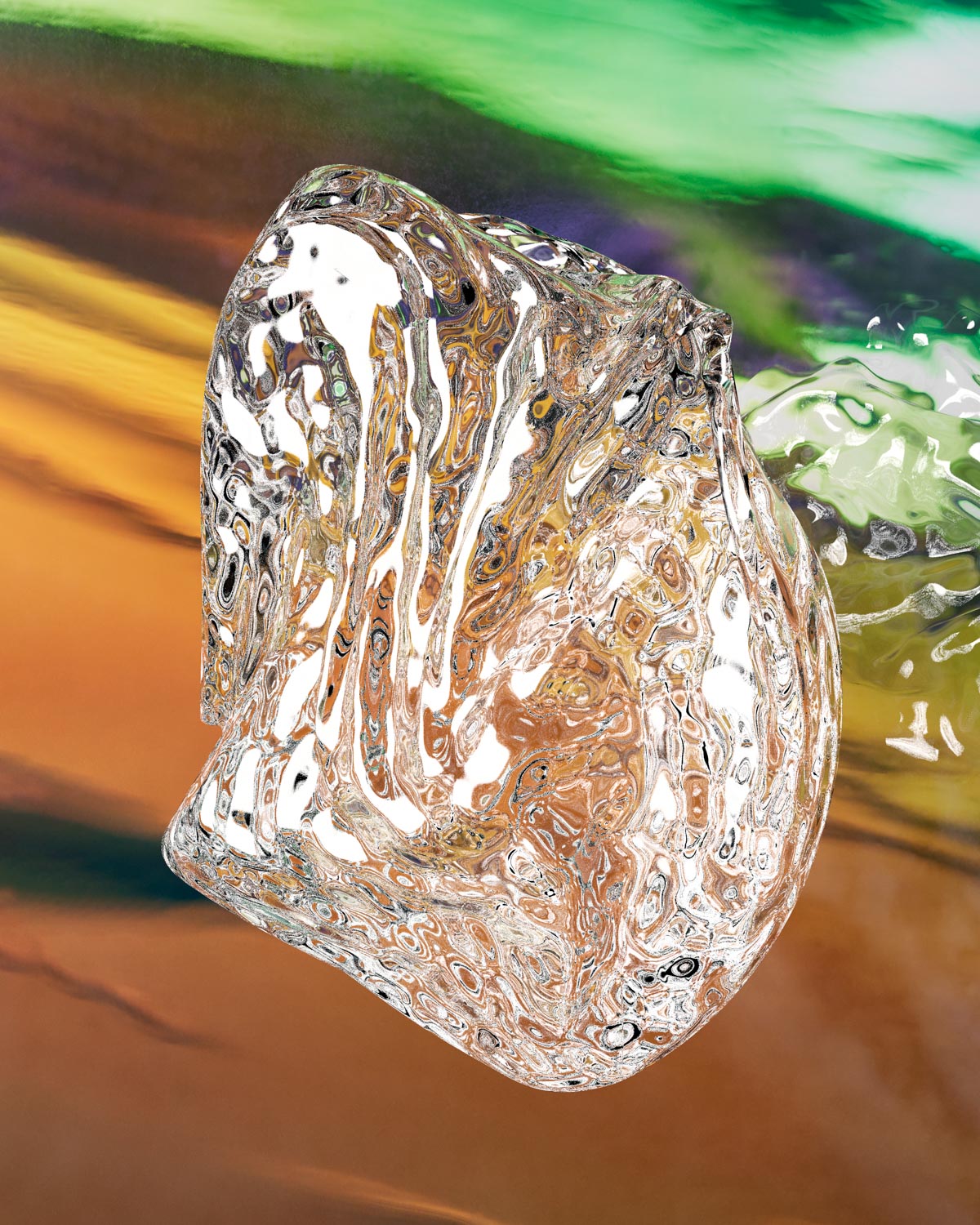
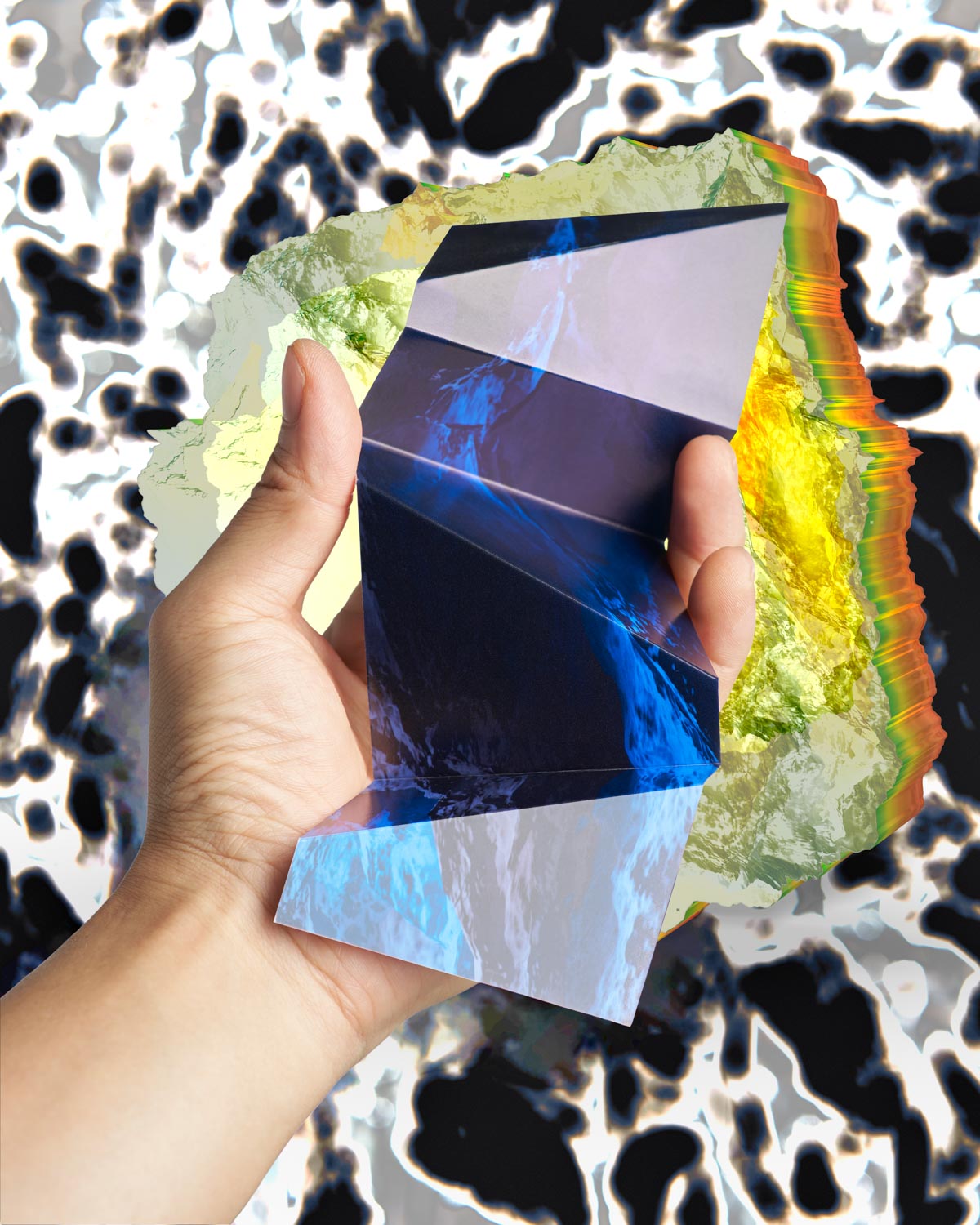
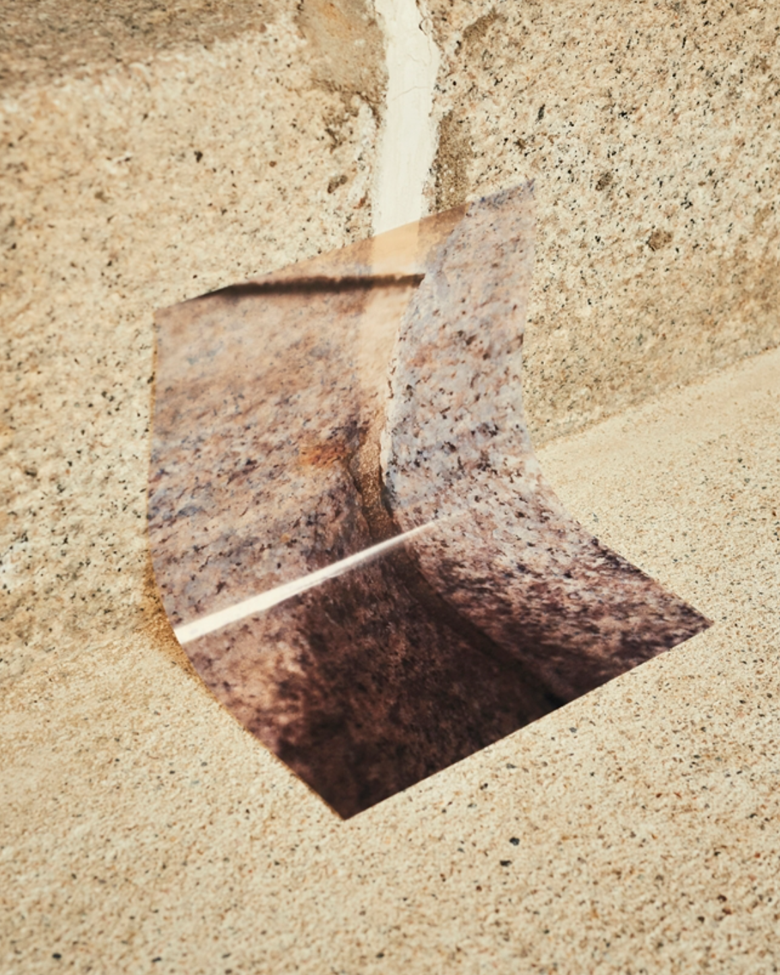
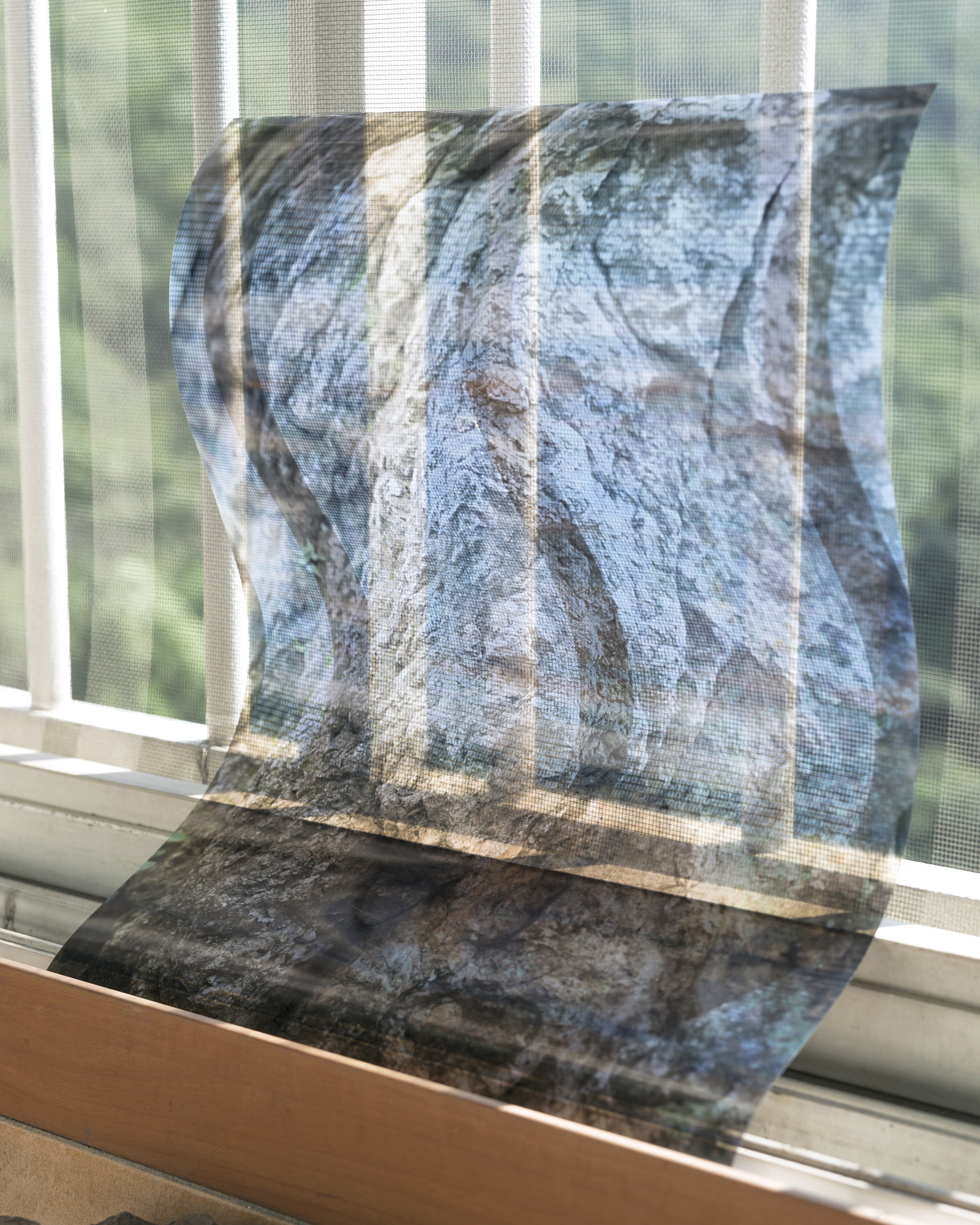
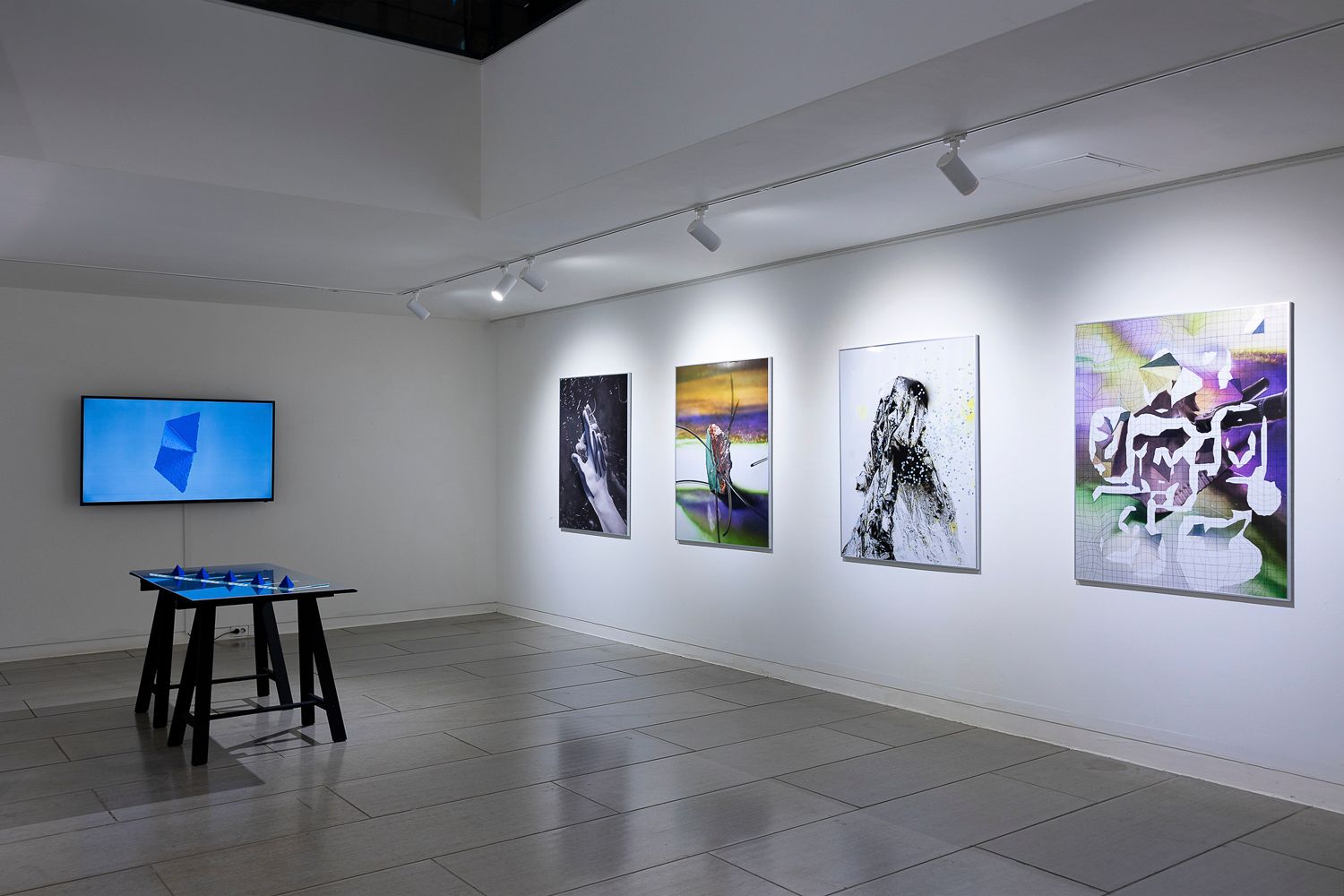
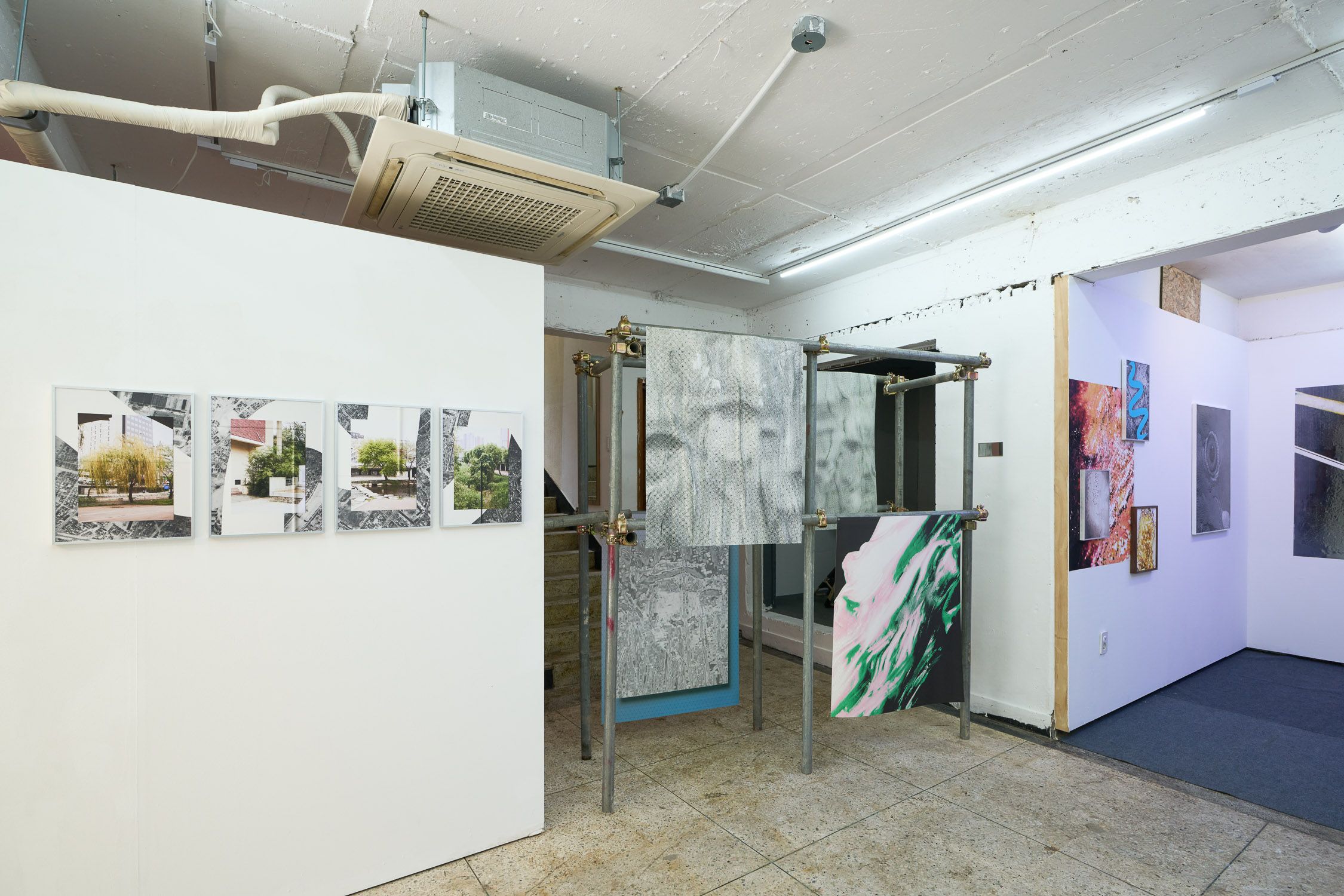
First, the artist photographs the stone he has selected, completely incorporating it into the world of data. Then, through various imaging software programs, he transforms the form and materiality of the stone into heterogeneous or different entities, overturning the stone’s original identity and reconstructing it as an entirely different visual product.
For the artist, stone is a product of nature that represents the real world, and is given the role of mediating two heterogeneous domains: reality and the digital, matter and sensation. Through this digital process, the artist expands the creative possibilities of vision at an intermediate point between real-world objects and graphic images.
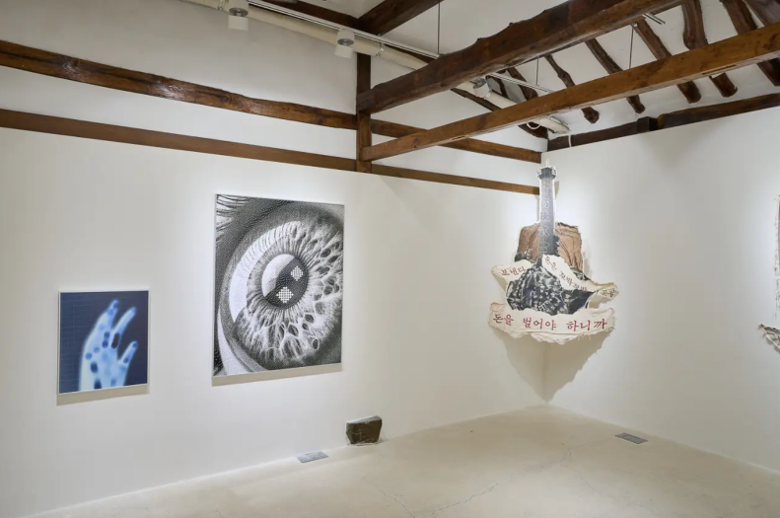
The artist seems to have sought to grant “human experience and sensation” to the virtual space-time in which everything becomes data. This is because the images transformed into abstraction are combined with worldly and natural matter and materiality that stimulate our perception. For example, these include things that reveal weight, texture, or particular material properties, such as crumpled foil, film, cross-sections of rock or geology, water, mirrors, aluminum, and glass.
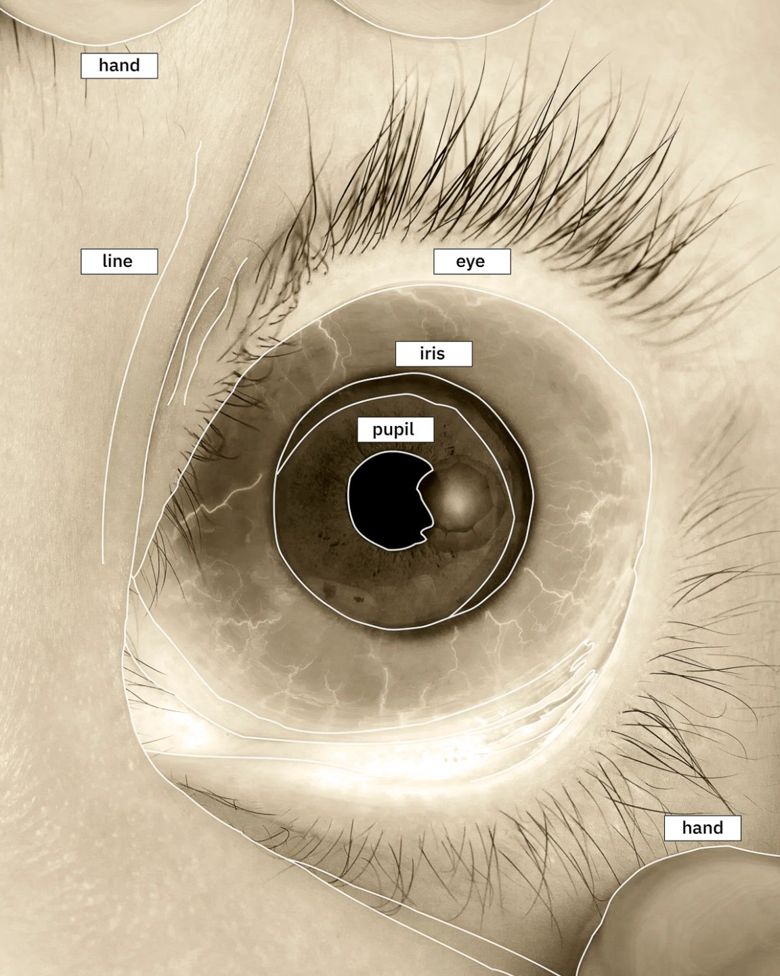
This paradoxically reveals that what digital space has removed is not only the external form, shape, identity, or originality of individual entities. As digital technology expands the world of data, what becomes submerged is the loss of sensation. If the natural world is a space of sensation, the digital environment, as its etymology suggests—the “digit,” meaning finger—is a world “limited to clicking and typing.”
The shape of the hand that appears in the images recalls precisely the point at which matter and sensation meet. As fictional space expands, what becomes restricted is our bodily experience and sensation. Yun Taejun’s “digit” images more heterogeneously and fantastically combine two opposing domains—reality and virtuality, nature and the digital, matter and mind—and recover, restore, or rediscover our reduced and limited sensation and corporeality.
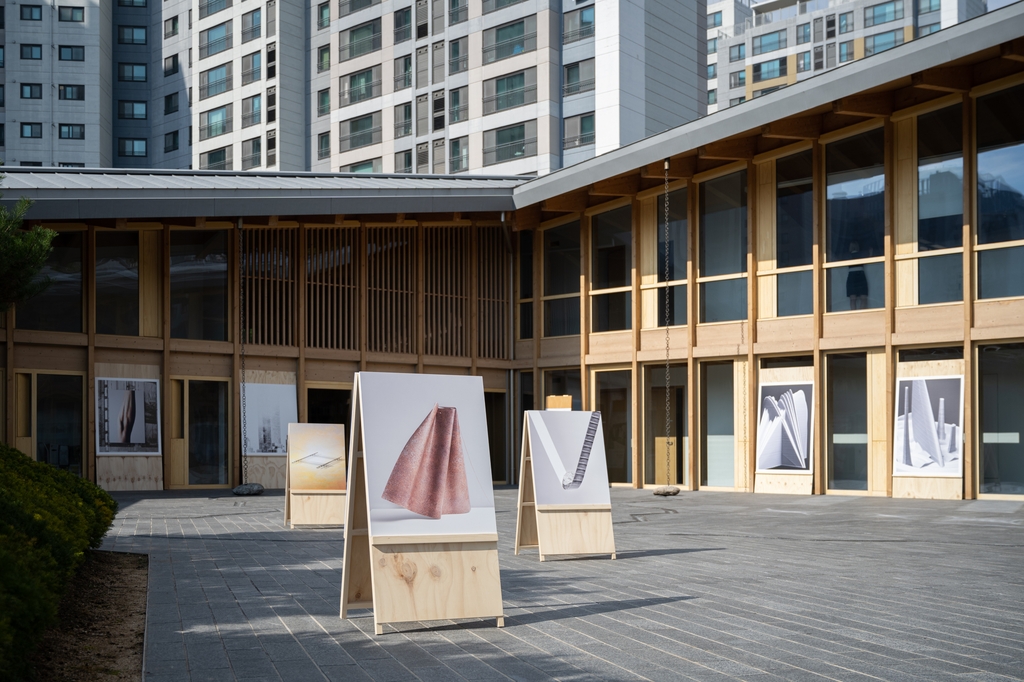
Middle Turn, which points to the intermediate point between photographic images based in reality and fully digitized digital images, has “turned” toward the journey of light in the work Firefly(2021). Let us open wide our own experiences and sensations and follow where the next work of the artist, who has moved beyond the objective representational nature of photography and sought various modes of vision through digital processes, will go.