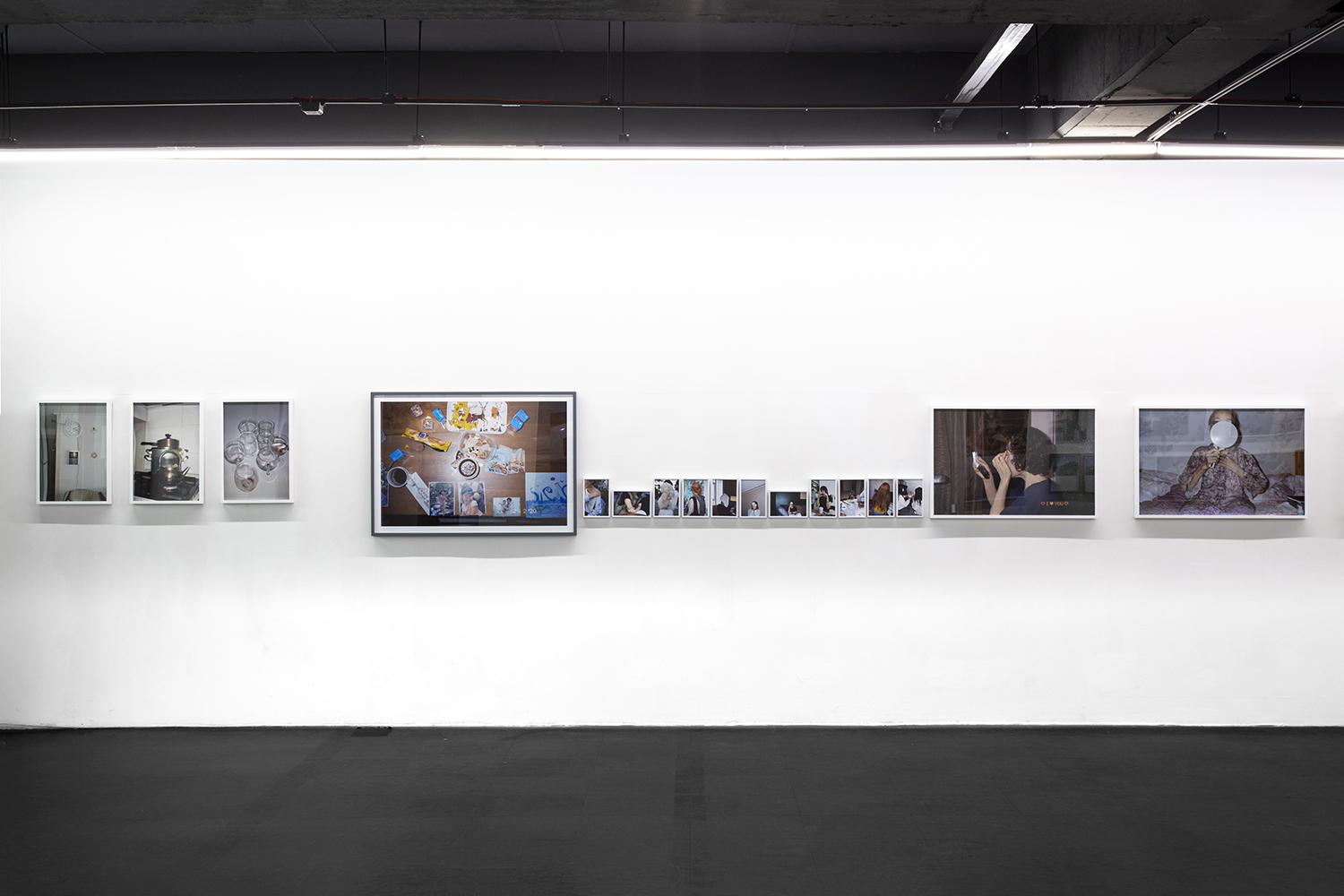
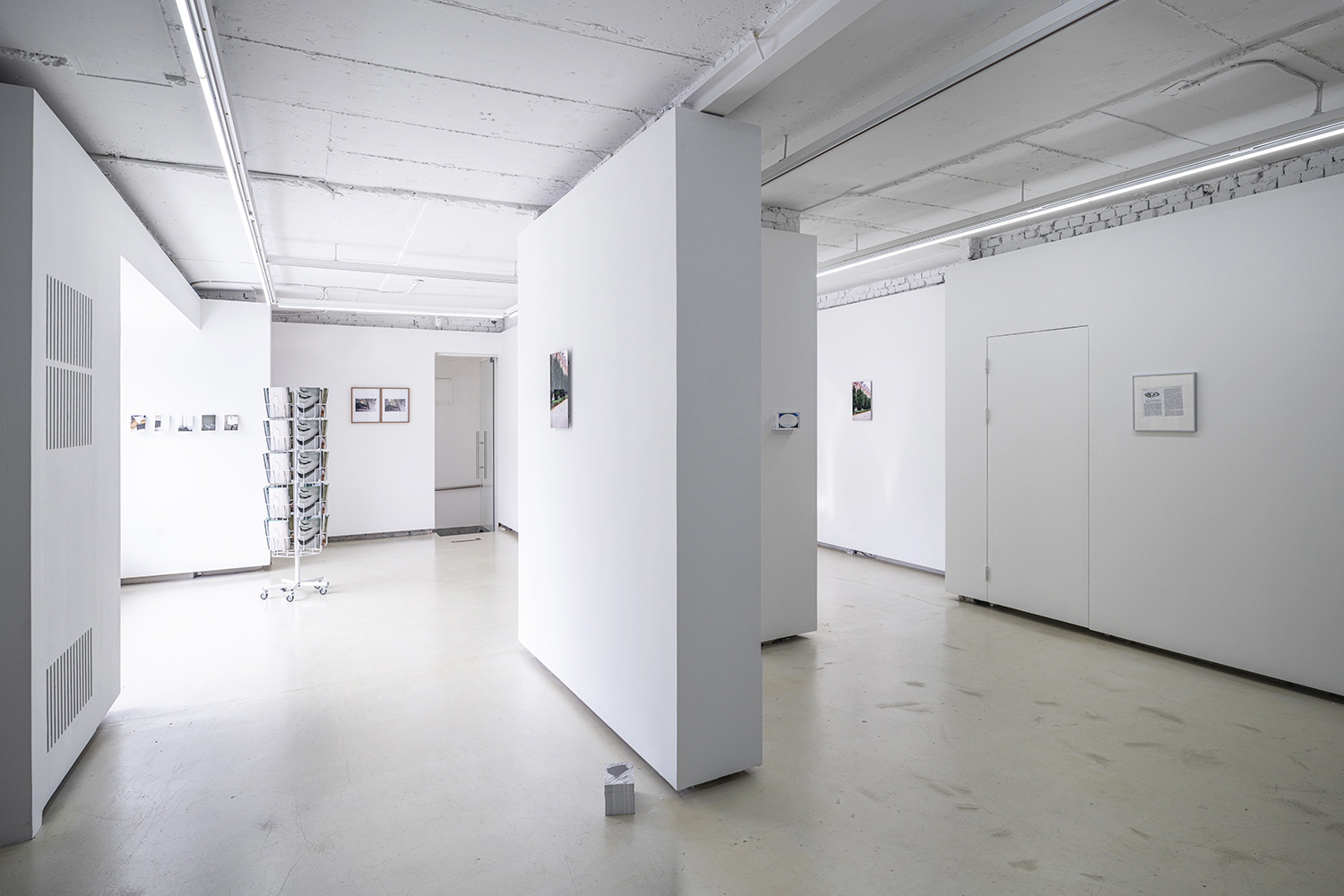
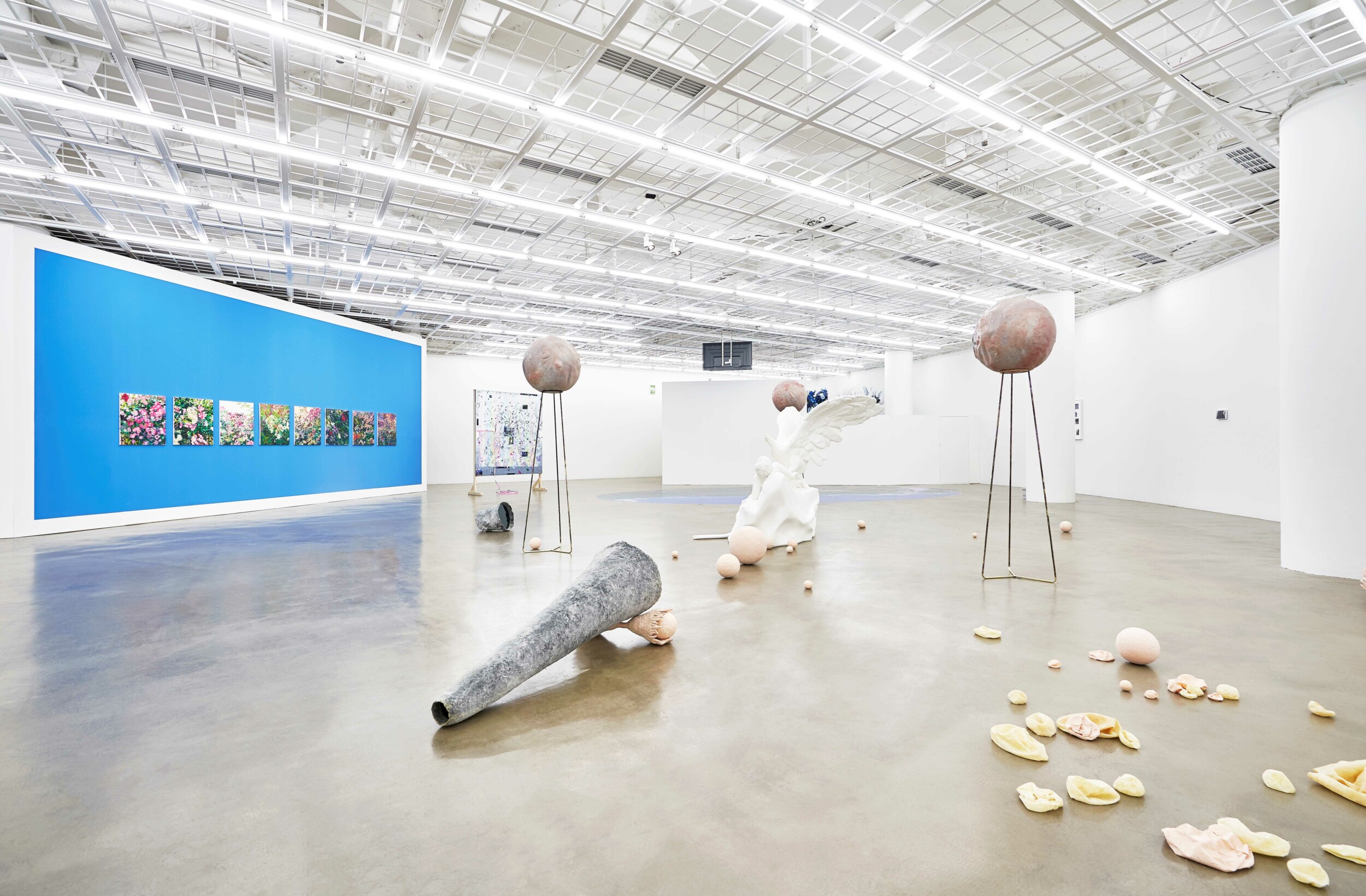
If it were possible to speak from differing time lags within the same space, it would be possible not through the utterance of language, but through the recording of images. As Barthes described, a single sheet of photographic paper becomes a letter containing memories and never disappears.
Of course, even though the image left behind in a photograph is firmly fixed, there is no way to confirm the footsteps of the one who existed there as a passerby.
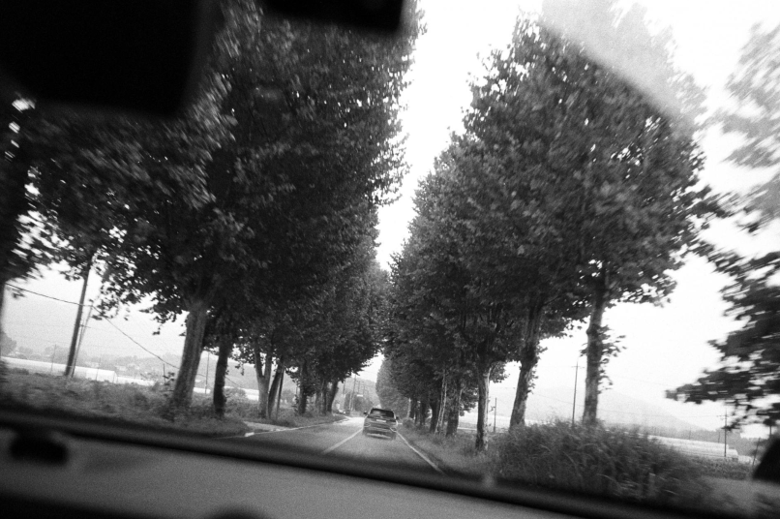
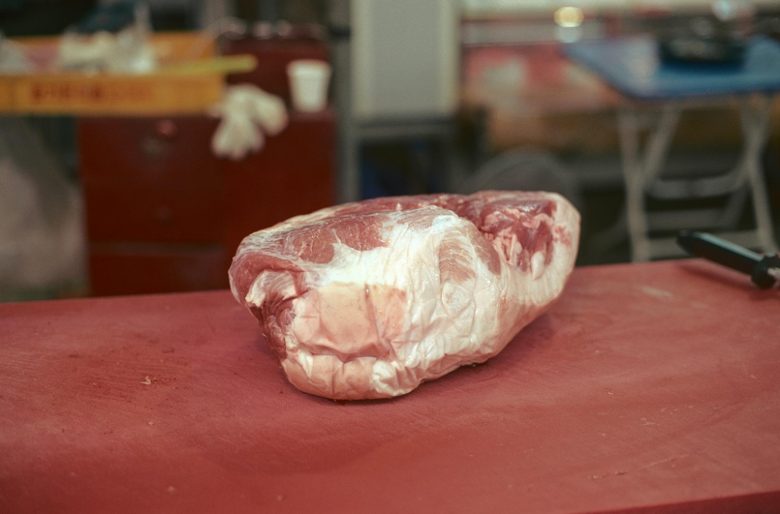
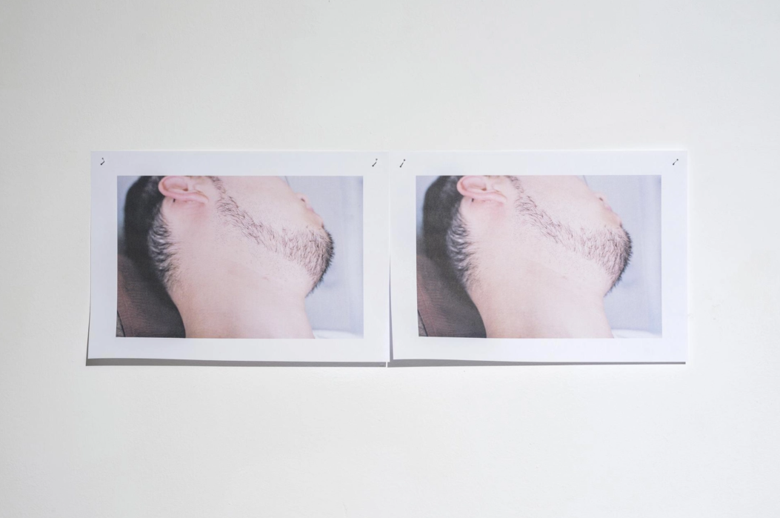
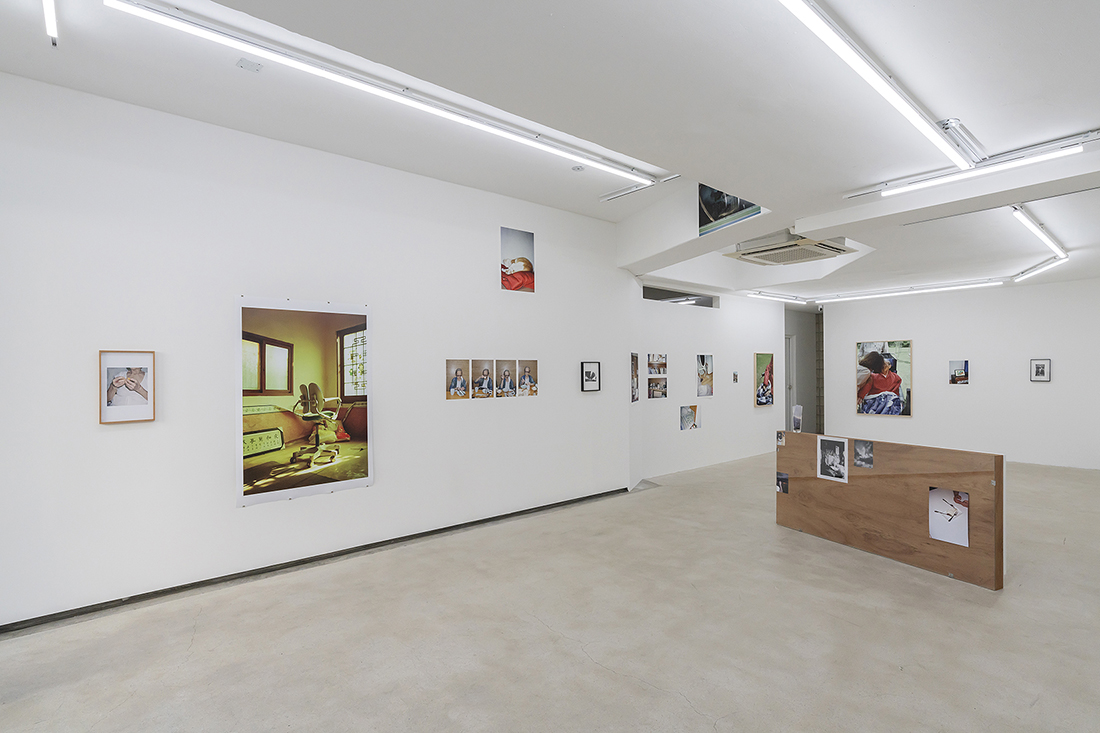
Within this structure of the unconscious, photography subtly overturns the discourse of memory and temporal difference. For example, if snapshots taken successively within intervals of less than a minute cause an interference of memory different from before, they would be recorded as an arrangement that cannot be guaranteed in a linear sense.
Opening with a skewed left-right symmetry that appears to be a hurried scan of the first page of Chapter 5, in which Psyche and Cupid appear, from Part Two, “Stories of Love and Adventure,” of Edith Hamilton’s Mythology on Greek and Roman mythology, the book Natural Gene is edited as though tracing the contradiction of two irreversible images being exchanged as a pair of postal correspondences.
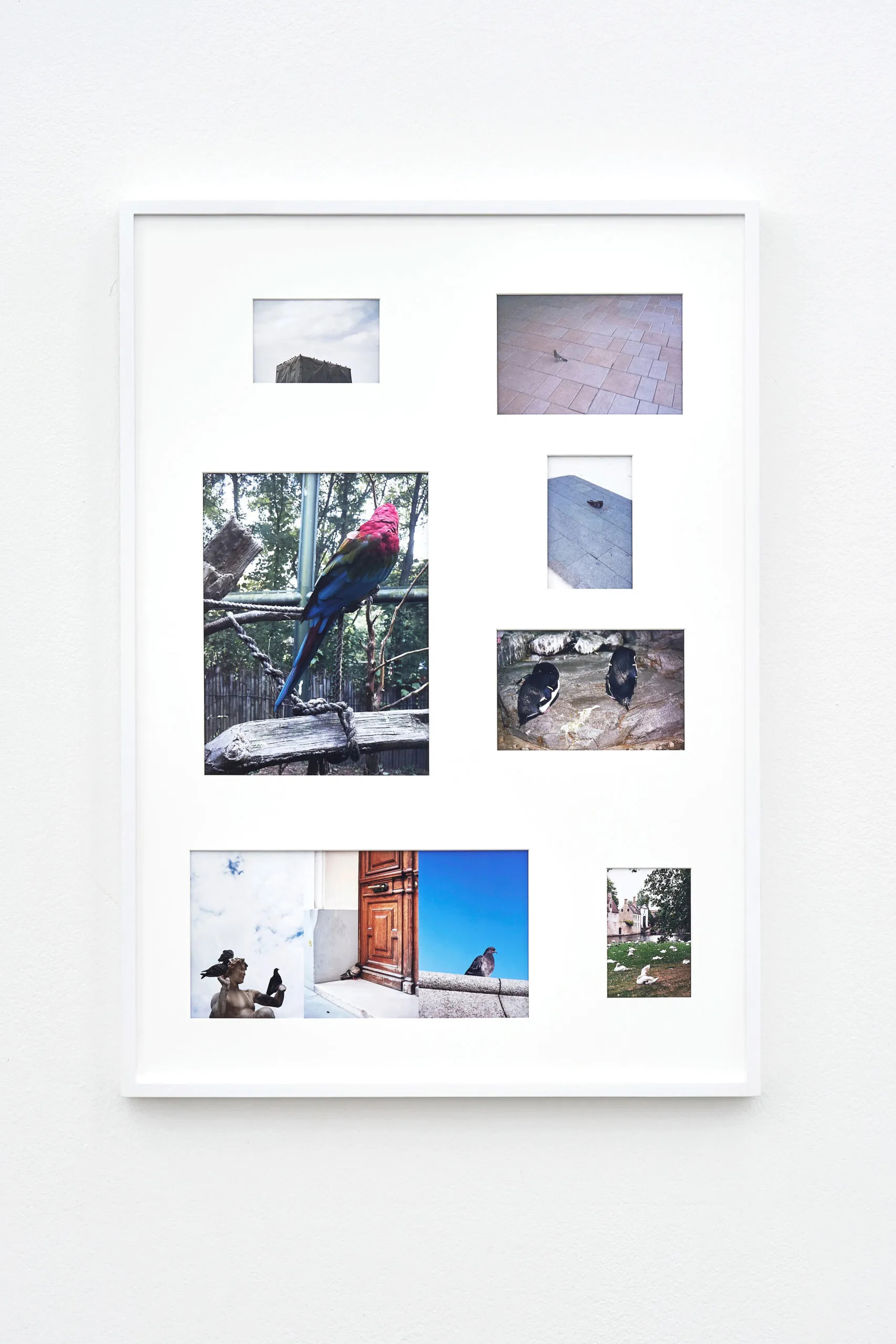
Within the narrative system of two seemingly identical images, the cuts in which focus and composition are slightly displaced sufficiently indicate that fragments of everyday life that have lost their aesthetic efficacy are staged as artificial indices.
This is because the single image inscribed earlier testifies that it is reality and a guaranteed memory, while the other photograph taken immediately afterward is deferred as a dissonance that paradoxically asks whether the reality first encountered can truly be reality. In other words, when one attempts to reveal the change of time through a still image, the realistic referent is instead alienated into the empty notion of a butterfly dream.
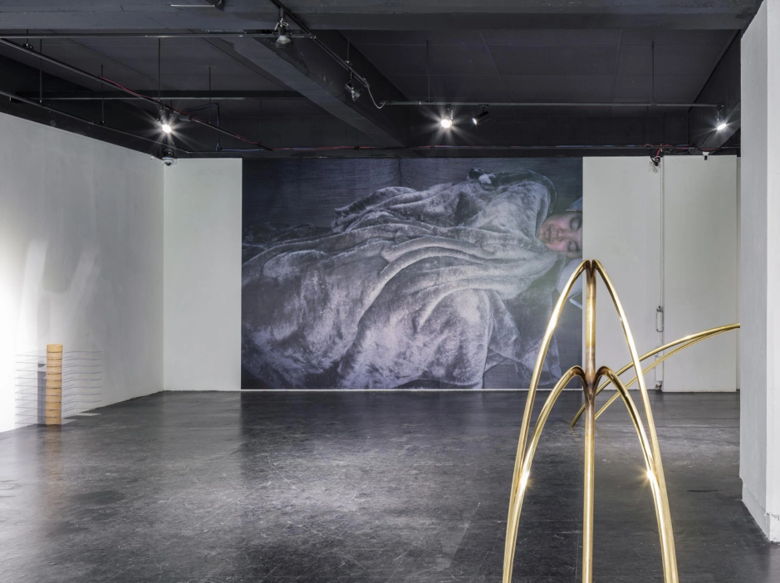
At such a junction of time and space, where the presence of images is dreamily intermingled, the viewer immediately falls into limbo.1 This is because two images, overlaid and rubbed against one another as “a form of hallucination that is false on the level of perception, but true on the level of time,”2 endlessly reflect each other like a double-sided mirror.
As a result, in a place where the cold air soaked into the photograph, the clamorous noise around it, the sunlight obscured by a sign, and the damp humidity have all been refined away, only a banal cliché is perceived.
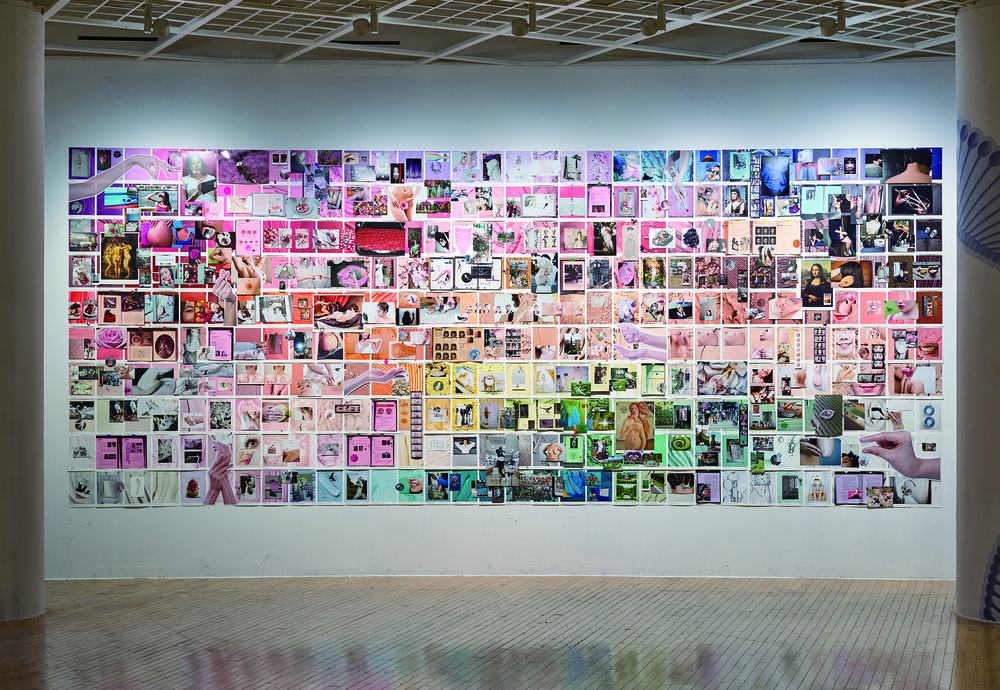
In this way, the act of publishing images as a book possessing materiality can be seen as always connected to the noema of time, as revealed in the activities of the group Compression and Expansion (CO/EX), who classified indices and printed them with a large multifunction printer. This is because what is inherent in AN Chorong’s photographs is interpreted not as elements such as authority, memory, or preservation, but as a form of appropriation regarding the plating of time.
For instance, within the architecture of time, two similar photographs are arranged and mixed from a landscape in which reality is sensitized as a kind of material, rather than as the pure “receipt of reality.”3 What is interesting here is that photographs capturing the same subject twice in succession are read as a compulsion toward time.4
This is because one can see them as being stained with traces that secure the subtle circumstances of a time lag recorded as an event. What can be inferred from this distinctive point is that this is not an act of mediation that photographs reality in order to transfer it to an archive like Flickr, and that it is also distinguished from the level of technical reproduction, in the precedent that the original scene cannot be inferred from two copies divided by a minute gap.
In other words, the properties of photography are discussed through the presence or absence of a speculation about how the landscape of life and its record can be juxtaposed, beginning from the compulsive act of recording two sensitized images on actual photographic paper.
The way in which the variability of actual time disrupts the viewer’s perceptual system as it moves between dream and reality recalls the fact that AN Chorong shifted to the medium of photography after majoring in sculpture. The mode realized through the compulsive act of photographing a subject in succession is inseparable from a sculptural mode of thought that crafts a single time, as something different from reproduction.
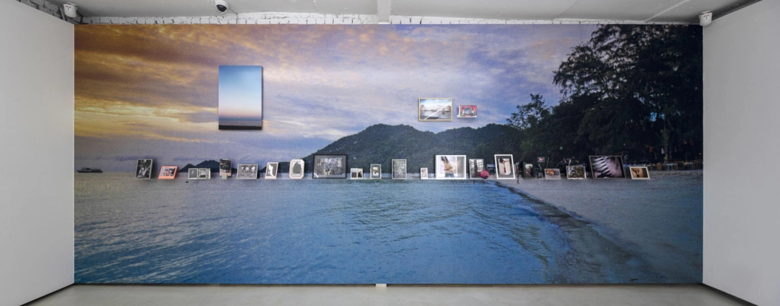
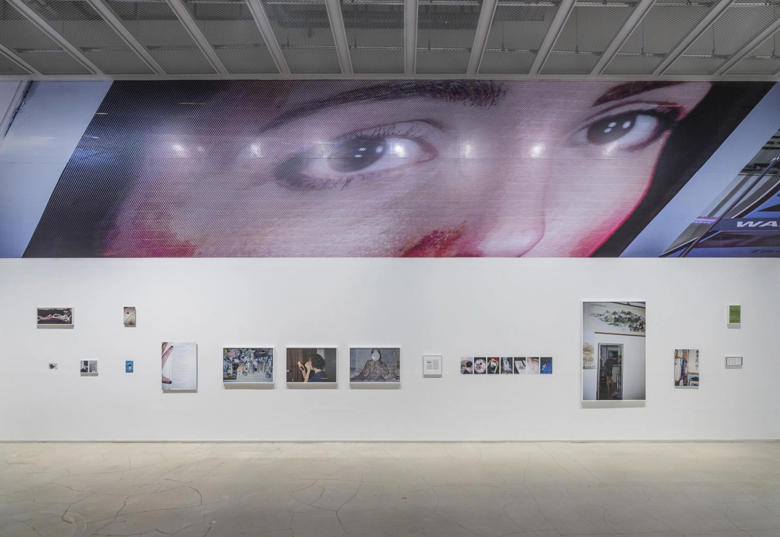
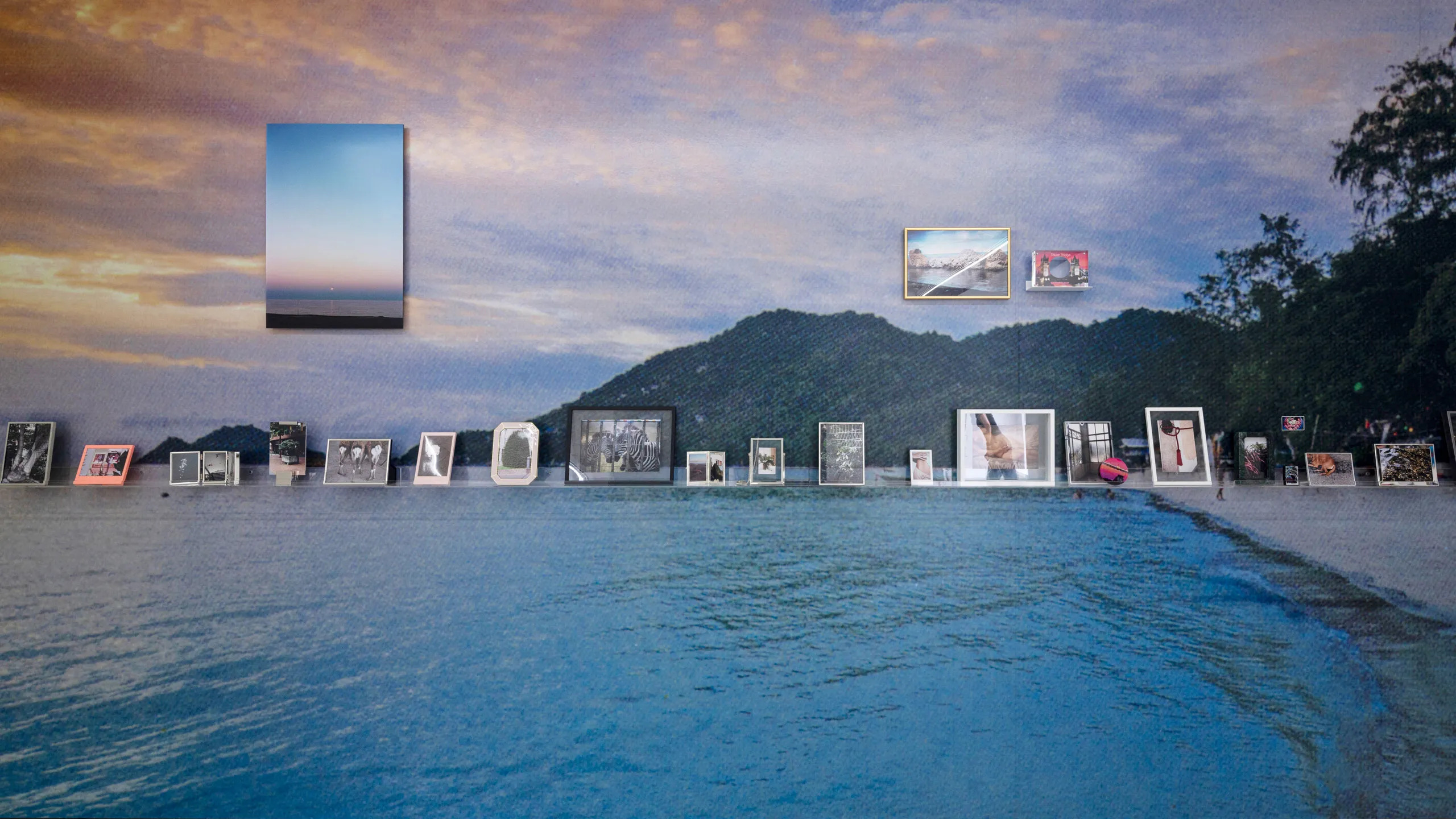
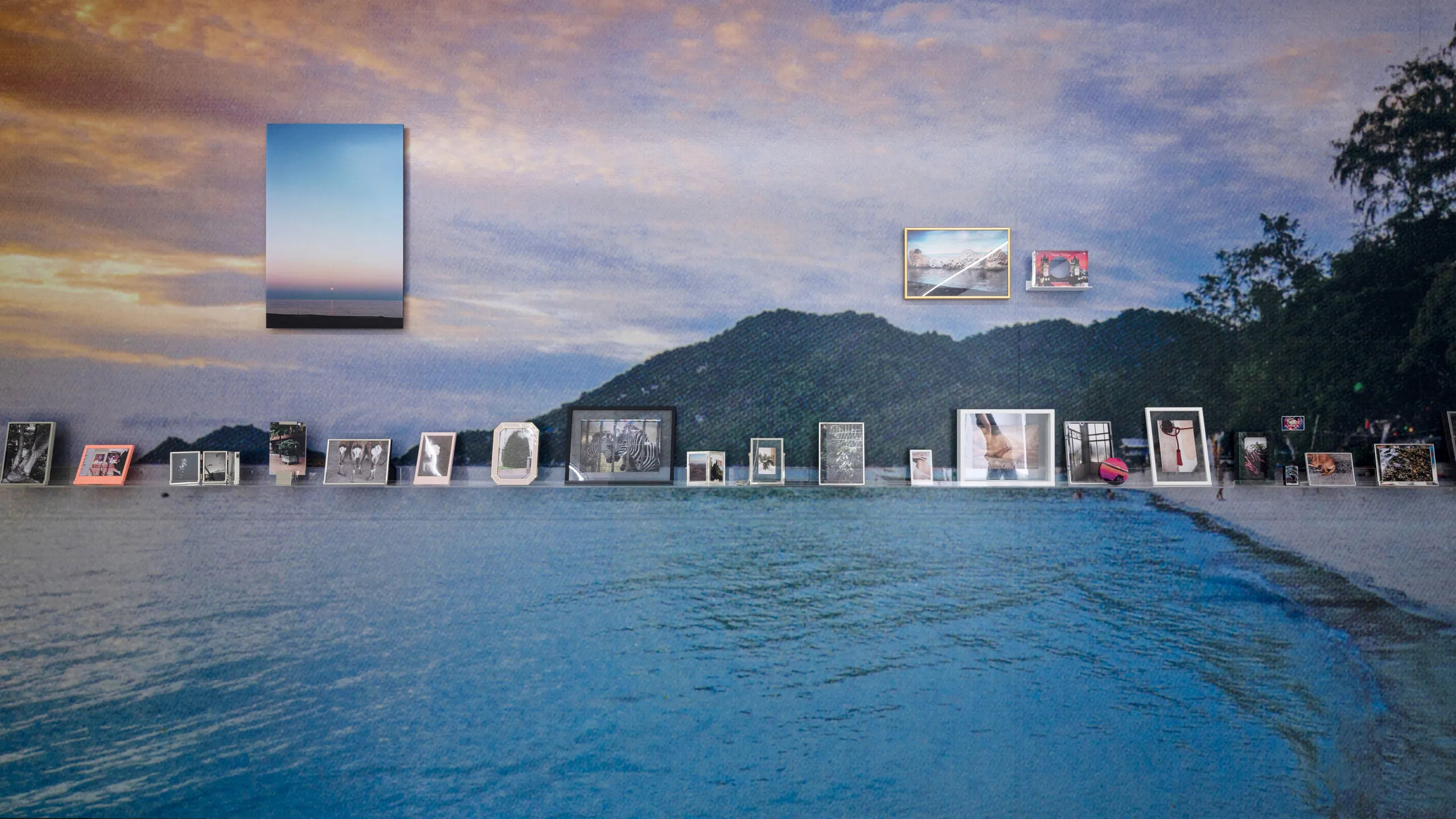
For example, the vast beach horizontally cut and pasted in the Koh Tao Thailand postcard reveals that this place was, from the beginning, an axis of time constructed as an artificial fabrication, like an architect’s model. In addition, the individual picture frames placed in front of the beach in before Sunset from Dew 2011(Ultra Wide Screen Ver.), designed like a panorama using the entire wall as its ground, function as supports that grant physical volume to the unconscious drifting in the air.
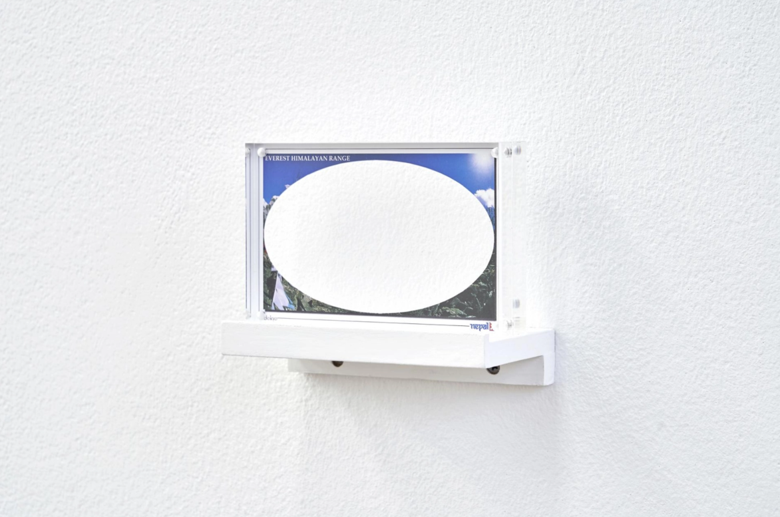
In other words, the two scenes photographed in succession are not appealed to as letters containing complete content, but are sustained as an attempt to disturb memory by producing multiple temporal differences. From the postcard of the Himalayas sealed inside a round pendant necklace with a lid, to the zebra pressing its head against a coin locker that appears like iron bars, the images contained in each frame are thus expelled from the nonlinear parallelism of memory.6
The whereabouts of memory, slowly suffocated by such optical illusion, reminds us once again that we are trapped in a maze. Yet every maze ultimately hides an entrance and exit somewhere. As is well known, this is because the topography of the image is demarcated as a driving force that continually grants the necessity of escaping from limbo frozen within the passage of time.
In this sense, the hidden function implied by the lyric sheet of Sade’s “Maureen,” printed on the final page of Natural Gene, can ultimately be inferred as another clue included as a kind of kick for waking from a dream, like Édith Piaf’s “Non, Je Ne Regrette Rien.” In other words, through the two alibis of Psyche and Cupid, AN Chorong, who designed reality as a kind of lucid dream, must stimulate the nervous system at the proper moment with sweet lyrics in order to help herself escape again from the floating maze.
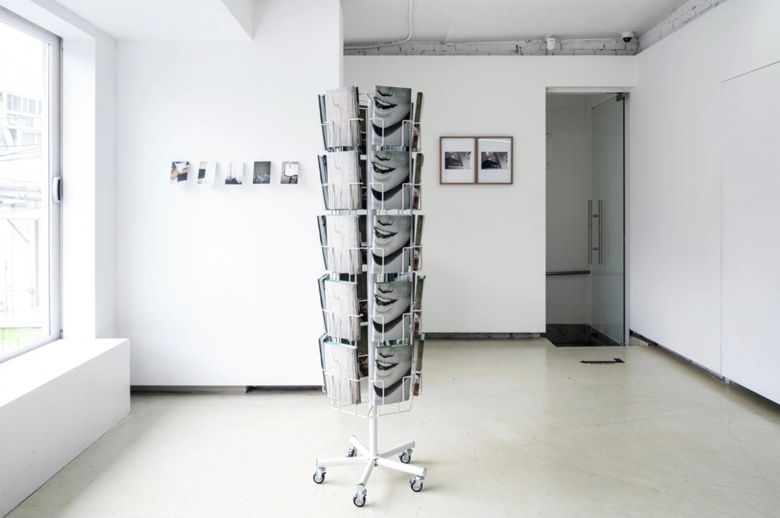
If this assumption holds, the published book can also be said to function as a totem that gauges the artist’s direction. Or it may be called a fairytale-like newsstand as a sculpture designed to allow access to the same dream.
Of course, because the hypothesis of this maze is traced in the pleasant travel format of various postcards and photo albums, it holds the viewer’s ankles throughout at a two-way intersection. By this standard, criticism that interprets the function of the book merely as one of several supports for developing data may arrive at a somewhat narrow point.
This is because another point in AN Chorong’s work that contrasts with the discourse of reproduction technology is that each photograph can possess the character of an original, while at the same time being rejected and unfolded. This is also why a time and space devoid of surface meaning is given as a more important clue than discourse on the photographic subject or the medium of photography.
Or perhaps it is a device for temporarily anchoring each scene that has lost time and space. If one recalls that the lyrics of “Maureen” also mourn a dead friend who can no longer be seen in this world, the function and role of photography can be said to correspond to the status of transferring reality on the empty margin of photographic paper, where time, space, subject, object, protagonist, and everything else are absent.
This is because the dry photograph, from which the memory of the person concerned has been erased by the suffocating sensation of absent volume, can finally be inferred as a reasonable alibi.
In an age when digital cameras have fully replaced photographic film, AN Chorong’s act of slinging a small 35mm analog camera over her shoulder and willingly going through the trouble of making prints is thus nothing more than a foreshadowing for transferring time into a physical medium. Beyond the dimension of preserving time, the support that temporarily holds contemplation on the phenomenon of that time is prepared as a layer of each dream.
This is because the rule that those trapped in limbo must heed is the prior recognition of how to symbolize, as cast evidence, the fleeting memory that arises from the causality of carving, overlaying, and joining the texture of space. As is faintly revealed in the artist’s background as a sculpture major, the mischievous double designer may be walking through meaningless non-places, gazing at unrelated objects, and continuing to gauge the axis of the camera, while observing how time is cast and how memory is packaged within the bonds of history.
In this way, the vacuum top that spins round and round, having lost its bearings between two misaligned photographs, may appear precarious, but it will never stop rotating. For the photograph that stuffs a moment will one day fade and set out in search of another owner.
1 Limbo, which in Dante’s Divine Comedy refers to the place where the souls of righteous people and infants who were not baptized remain, is described as an intermediate afterlife between heaven and hell. In Christopher Nolan’s Inception, it refers to a hallucinatory state in which one dies in a dream and cannot return to reality. The word limbo derives from the Latin limbus, meaning boundary or edge.
2 Roland Barthes, Camera Lucida, trans. Kim Ungkwon, Dongmunsun, 2006, p. 141.
3 Rosalind Krauss, Le Photographique, trans. Choi Bongrim, Gungree, 2003, p. 243.
4 For example, if there was no need to leave the space of 《Honey and Tip》, constructed as a kind of interior material, then the viewer who soon falls into limbo from the compulsive treatment of the gaze in the photographs of 《Natural Gene》 is given the necessity of actively heading toward an exit. For a discussion related to the former exhibition, see Kwon Siwoo, “Spatial Interface: The Cases of ‘Compression and Expansion’ and Kim Donghee,” Quarterly Visual, Winter 2017, pp. 75–78.
5 There are also examples composed of three attempts, such as Treelined Landscape, but the majority of works shown in the exhibition 《Natural Gene》 were photographed twice. Of course, one can naturally infer that the work would also not have been exhibited were it not for the distinctive spatial characteristics of Taste House, where two temporary walls were installed in the middle.
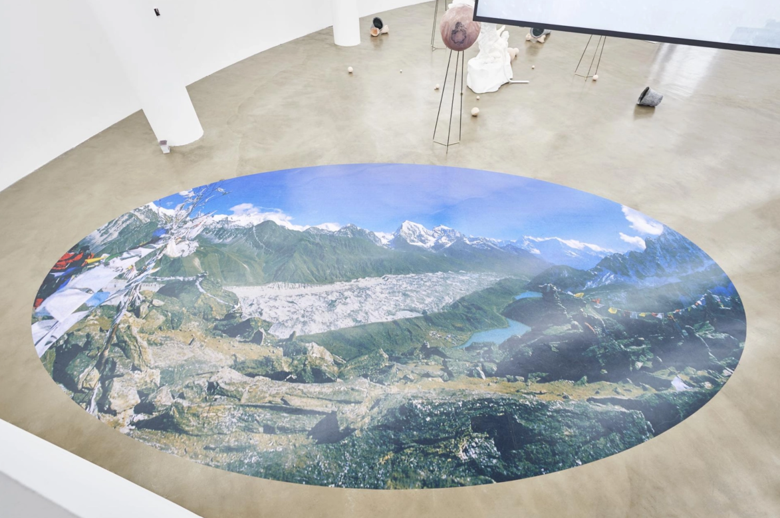
6 In The Lake of Milk from Dew 2011(Frame Ver.), the image cut out in a circular shape was produced not only as a pendant, but also as a large 875 × 500 cm sheet and attached to the floor of the exhibition space at Art Sonje Center’s 《Night Turns to Day》. Perhaps it was from this point that the artist began to contemplate a limbo as a way of dropping viewers into the optical unconscious. That is, as an aesthetic practice concerning how, while standing on a postcard beneath one’s feet, perception could be disturbed and the viewer made to slip into a pit beyond the image.