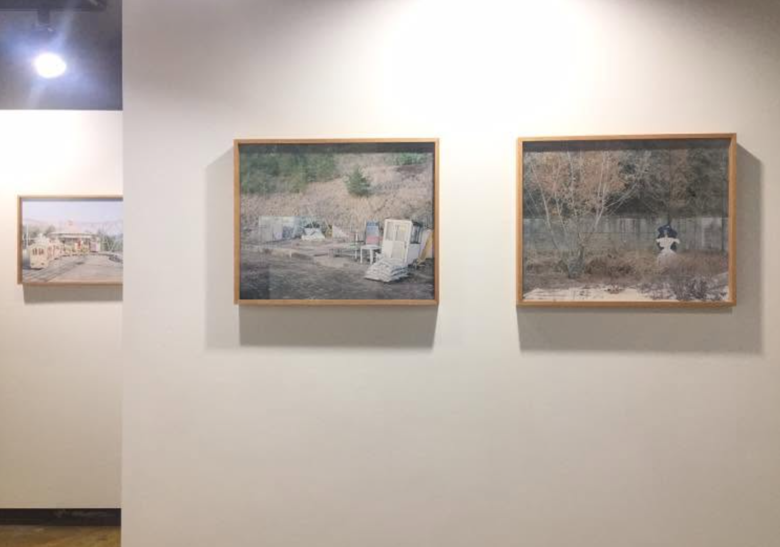
If there are people who do not know what it is to live as though retching, with that sour stench, I envy them deeply. That is why I feel a sense of kinship with Dongkyung Kwak, who says that he “crammed in… and vomited out” photographs.1)
A few years ago, when I coaxed and persuaded him that I wanted to see his photographs, he stayed on for two more hours past midnight filling up the time, yet even as he showed them to me, he gathered them up in an instant before I could properly look. The work I saw then was the '510kilometer' series.
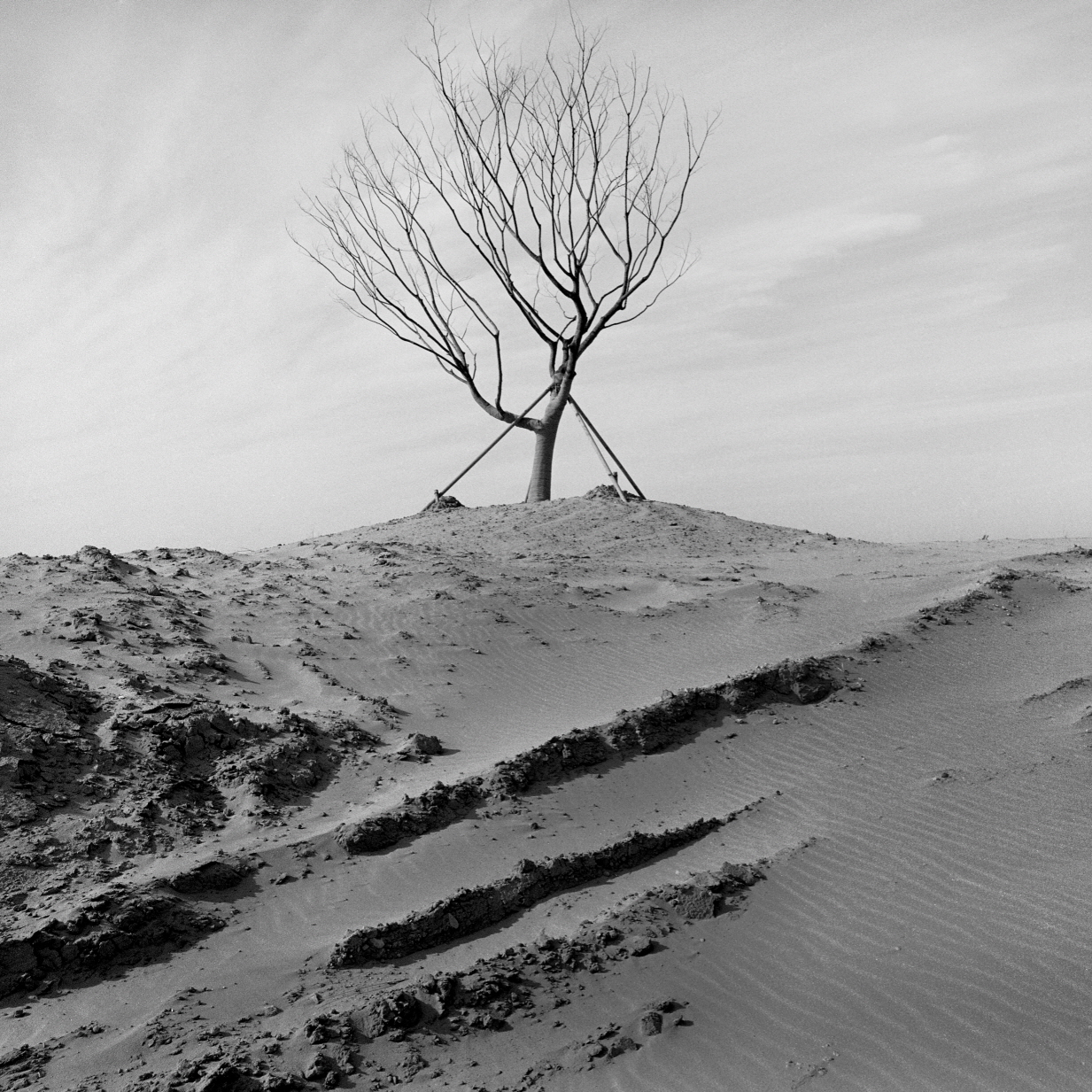
It was a series of photographs he took while walking without a car along the Nakdong River during the height of the Four Major Rivers Project. Last year, I coaxed him again, saying that if he could not hold a solo exhibition even the following year, perhaps he should stop now, and made him pull out his past photographs.2) Seeing him looking haggard at his first exhibition, I saw myself as well. It took a long time to get here.
The title of this exhibition, 《Tyltyl Mytyl》(Plan B Project Space, 2021), is taken from the names of the siblings Tyltyl and Mytyl in Maurice Maeterlinck’s play The Blue Bird (L’Oiseau Bleu). After pouring out all kinds of phrases such as “an overturned dinosaur, the veranda is much warmer, ghost kiosk, sodium thiosulfate,”3) he arrived at “Tyltyl Mytyl.”
The title contains the memory of a childhood recollection cracking into pieces when he learned that the names he had firmly believed to be Chirr-Chirr and Michil were in fact Tyltyl and Mytyl,4) as well as the sense of emptiness that comes from no longer believing the bright lesson that, after the adventure in search of the blue bird, the bird was ultimately nearby. “What can one say with arms and legs cut off.”
And so, instead of speaking, he takes photographs. When he asked me, “What do you think the concept of this exhibition is?” instead of asking why he was asking me, I replied, “a massive warehouse clearance.” He calls himself a ragpicker, but I do not want him to be a hoarder. I believe there has to be a channel opened through the collection and accumulation of more than ten years in order for there to be a next step.
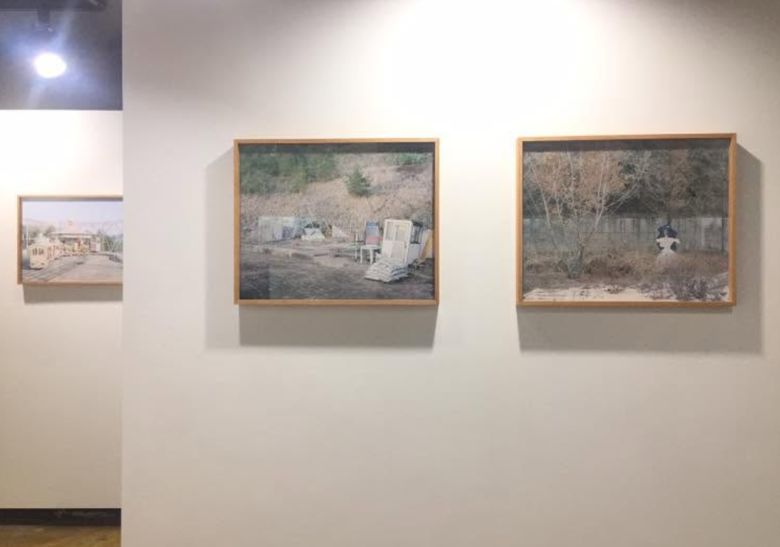
Therefore, this exhibition selects and presents four broad categories from among the photographs that had filled up his storage. In terms of the exhibition route, it moves from recent works to earlier works, but just as errors in communication arise when we sometimes skip back and forth through music or video and say “turn it forward, turn it back,” whether from front to back or from back to front, all of it is Dongkyung Kwak up until yesterday. Dongkyung Kwak from today onward will now sprout differently in those who see the photographs and read this text.
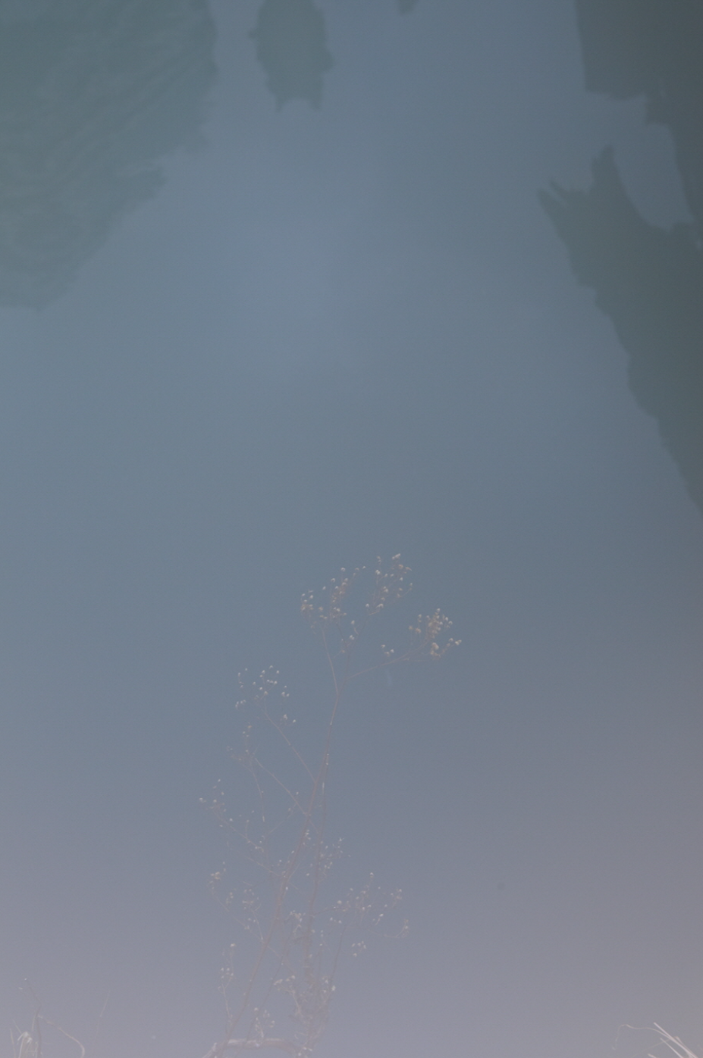
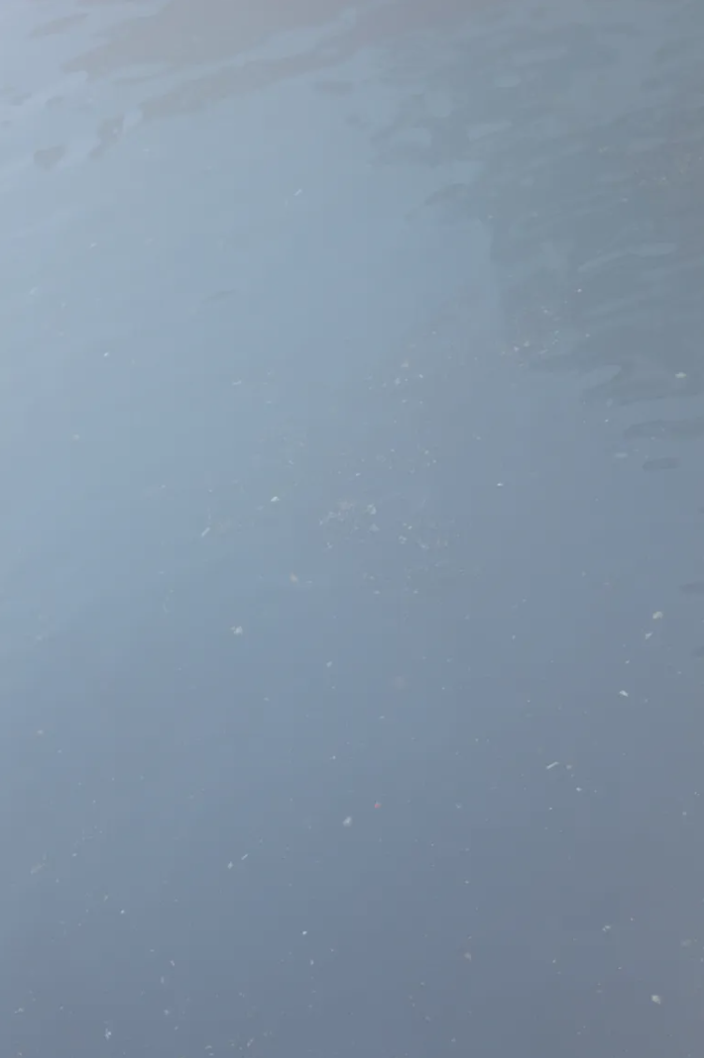
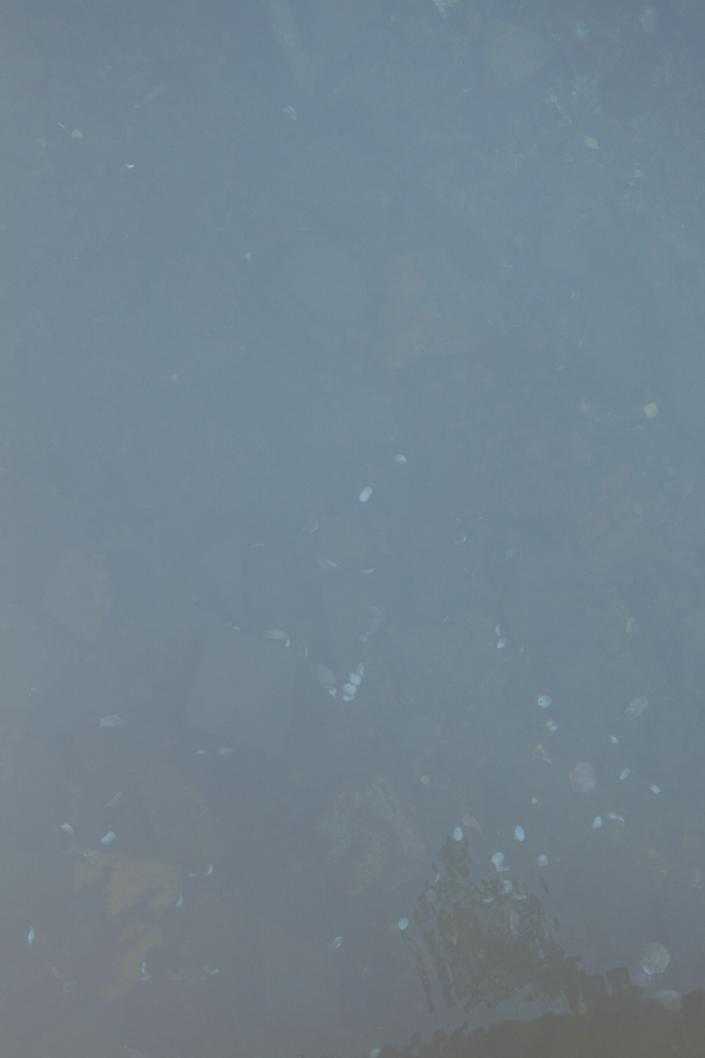
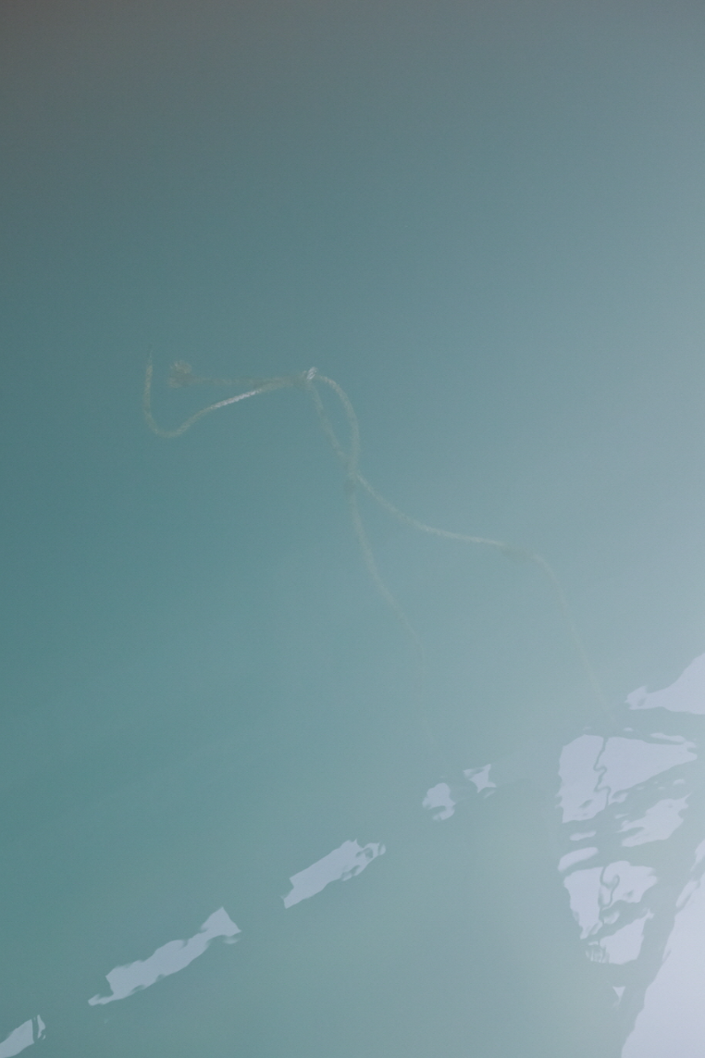
The 'Exhalation' series, located at the entrance of the exhibition space, is concise in terms of process. It consists of photographs of the sea taken after breathing onto the lens to create a filter effect. Earlier this year, we participated together in research on Yeongdo, Busan, and while sharing only the title “Degree Zero of Transmission”5) as a clue, I wrote and he photographed, patchworking the two.
How to capture that place, or that thing, was our shared assignment, and it seems that he struggled no less with what should be captured. It is not easy to look raw reality straight in the face, but an assortment of raw things does not necessarily gain power simply by being raw. Instead of capturing countless indices, his choice was the dockside seawater, which may be older than modern and contemporary Yeongdo, and he treated it with so-called “Photoshop” using nothing more than a breath.
Did this make the sea more beautiful? Of course not. There is no world that only he could capture, and adornment or makeup is not very Dongkyung Kwak-like either. The range of movement at the level of breathing is the 'Exhalation' series. When one becomes short of breath climbing uphill, forgetting to breathe can make the effort feel lighter; likewise, things without arduous narratives can be more natural and peaceful. I hope he has embodied the sense and attitude that this much is enough.6)
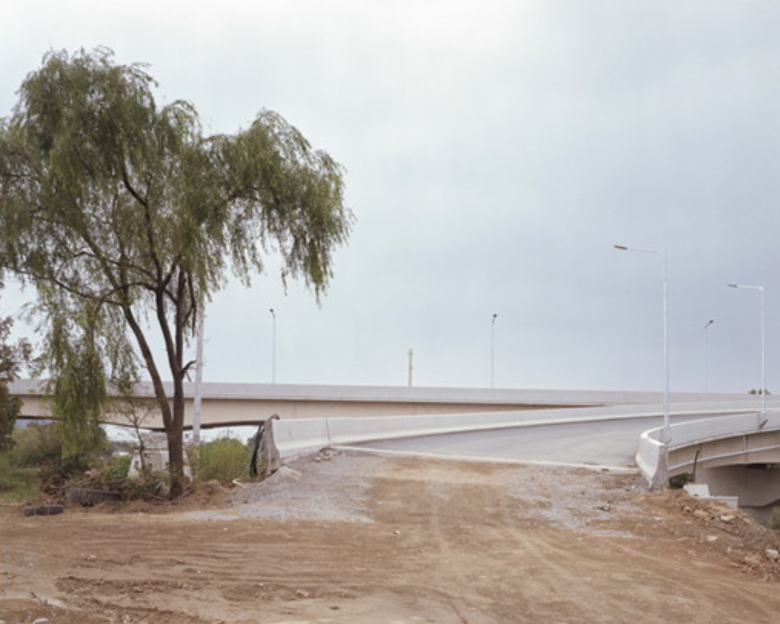
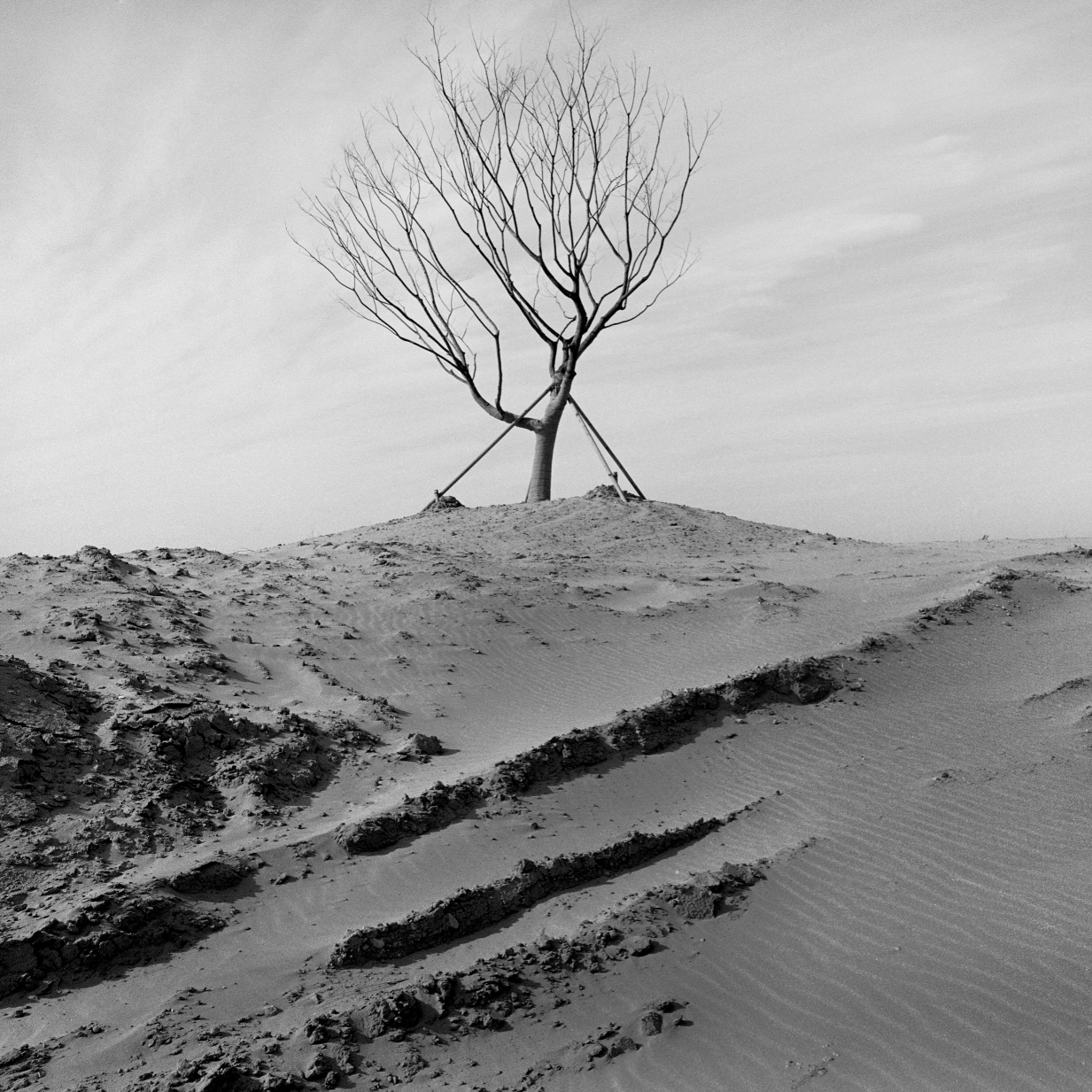
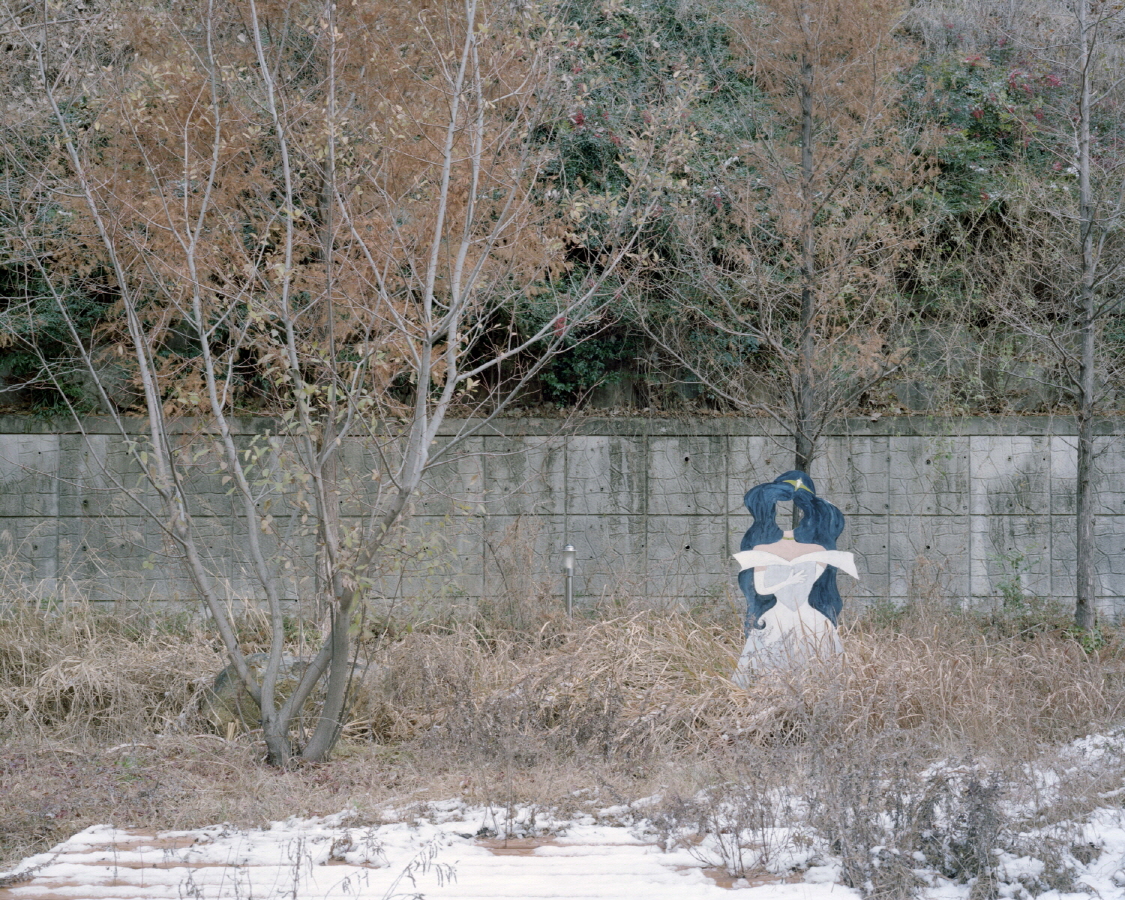
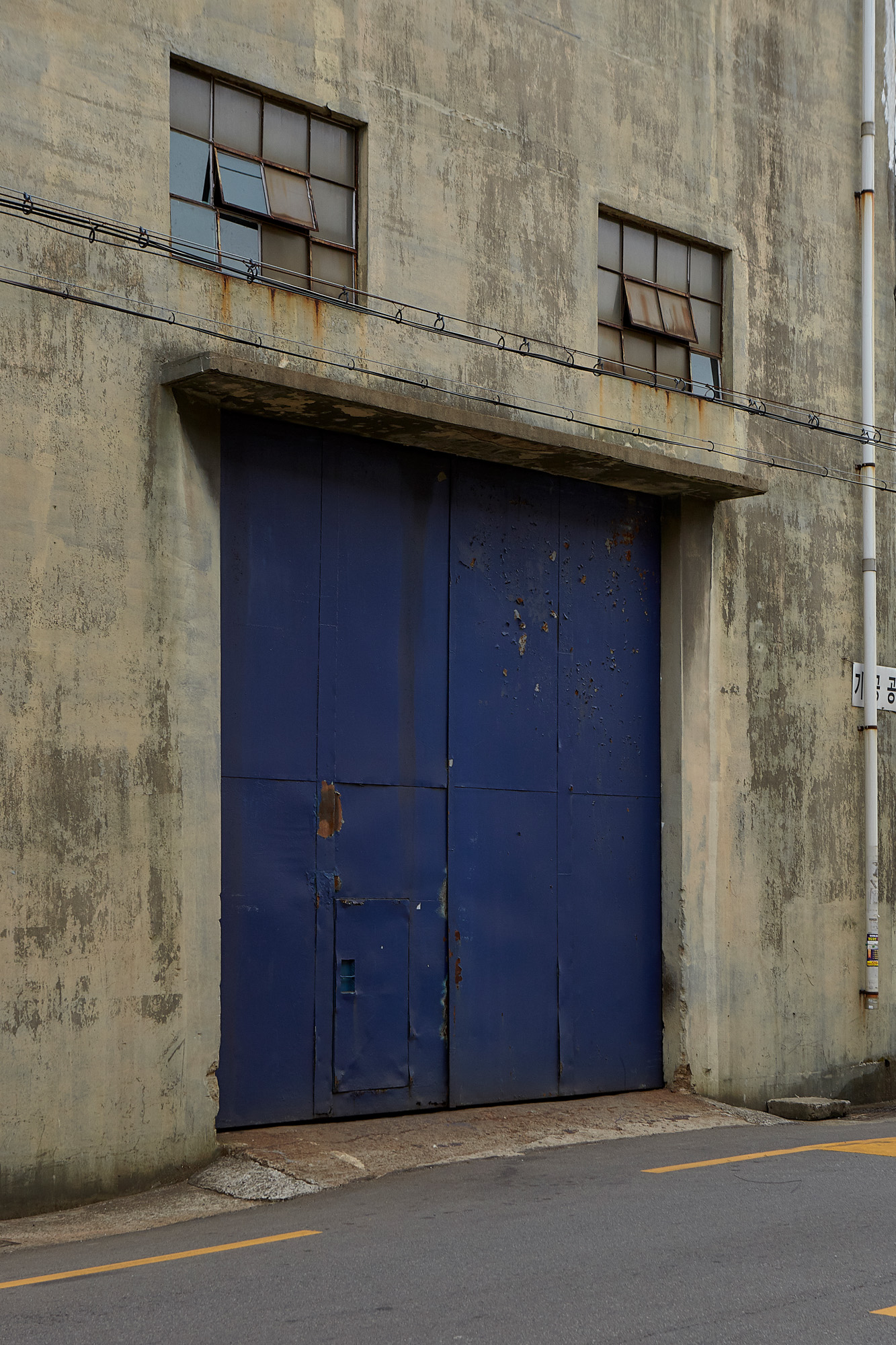
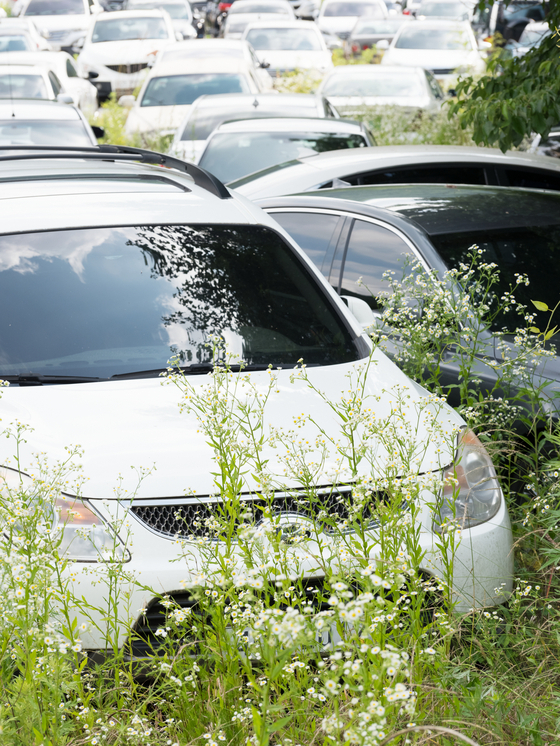
When I asked what the meaning of another series, 'Remainder Theorem,' was, he reminded me of the formula: “dividend = quotient × divisor + remainder.” He said that while he is photographing remainders, his interest lies in “the process of finding the quotient and the dividend.”
I wondered why arithmetic had suddenly appeared, but then remembered that he had been a science student, more precisely a former environmental engineering major,7) and asked no further. Higher mathematics is beyond me, so if I try to understand the remainder theorem in arithmetic in my own way, when the quotient has a place of its own, as the word literally suggests, and the divisor has an active function, the remainder is always left behind, unable to go anywhere.
And yet in this operation, the remainder is necessary in order for the dividend to be identified. If so, is Remainder Theorem a search in which one fiddles with a single puzzle piece? Looking at this series with such thoughts in mind, I become interested in a certain lack that seems as though it must exist somewhere inside the photographs.
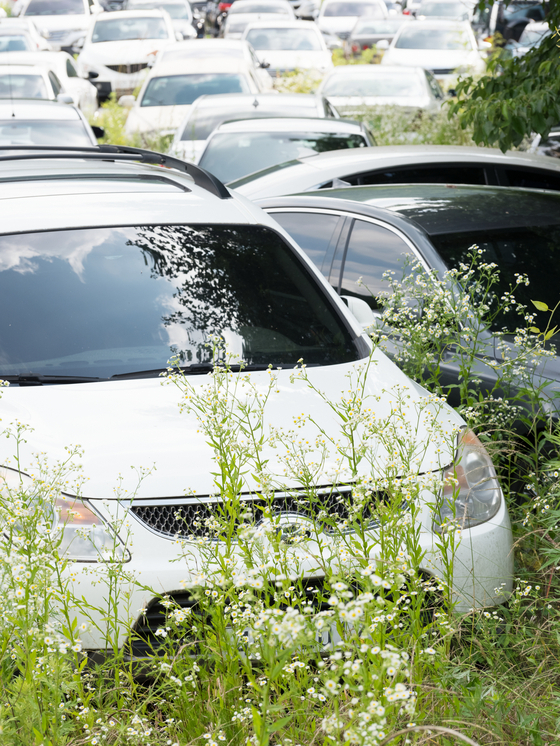
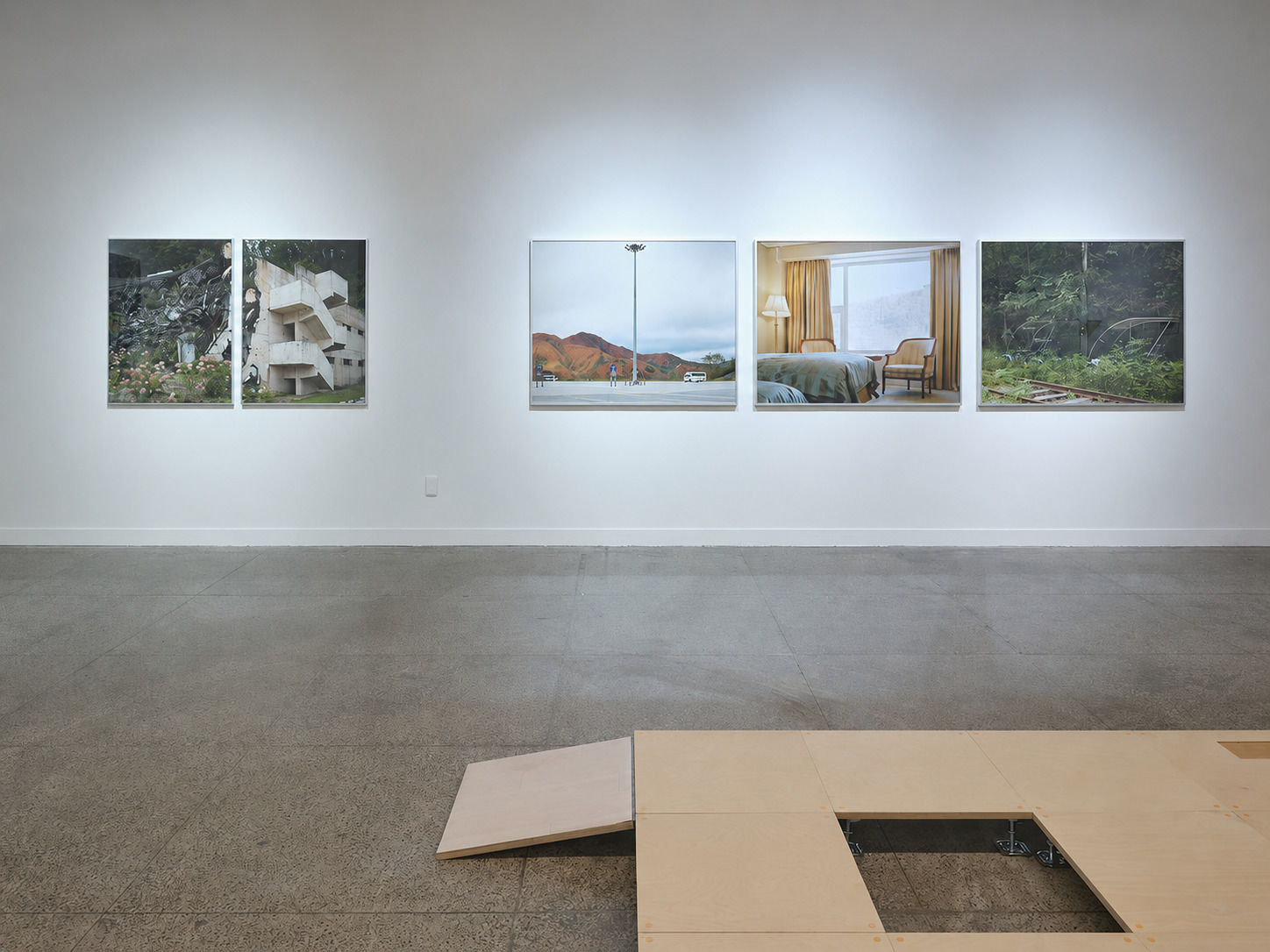
The railroad apartments near Mindungsan Station, where trains rarely pass, are subject to a flood of complaints that they have been “left abandoned as an eyesore,” but no such noise appears in the photographs. The agitated voices surrounding development belong only to humans; the railroad apartments and the trees growing close beside them seem to be both quotient and remainder, indifferent to worldly currents. If one asked the artist for the reason and the narrative, he would answer, but rather than deliberately asking, I find myself wanting to figure it out.
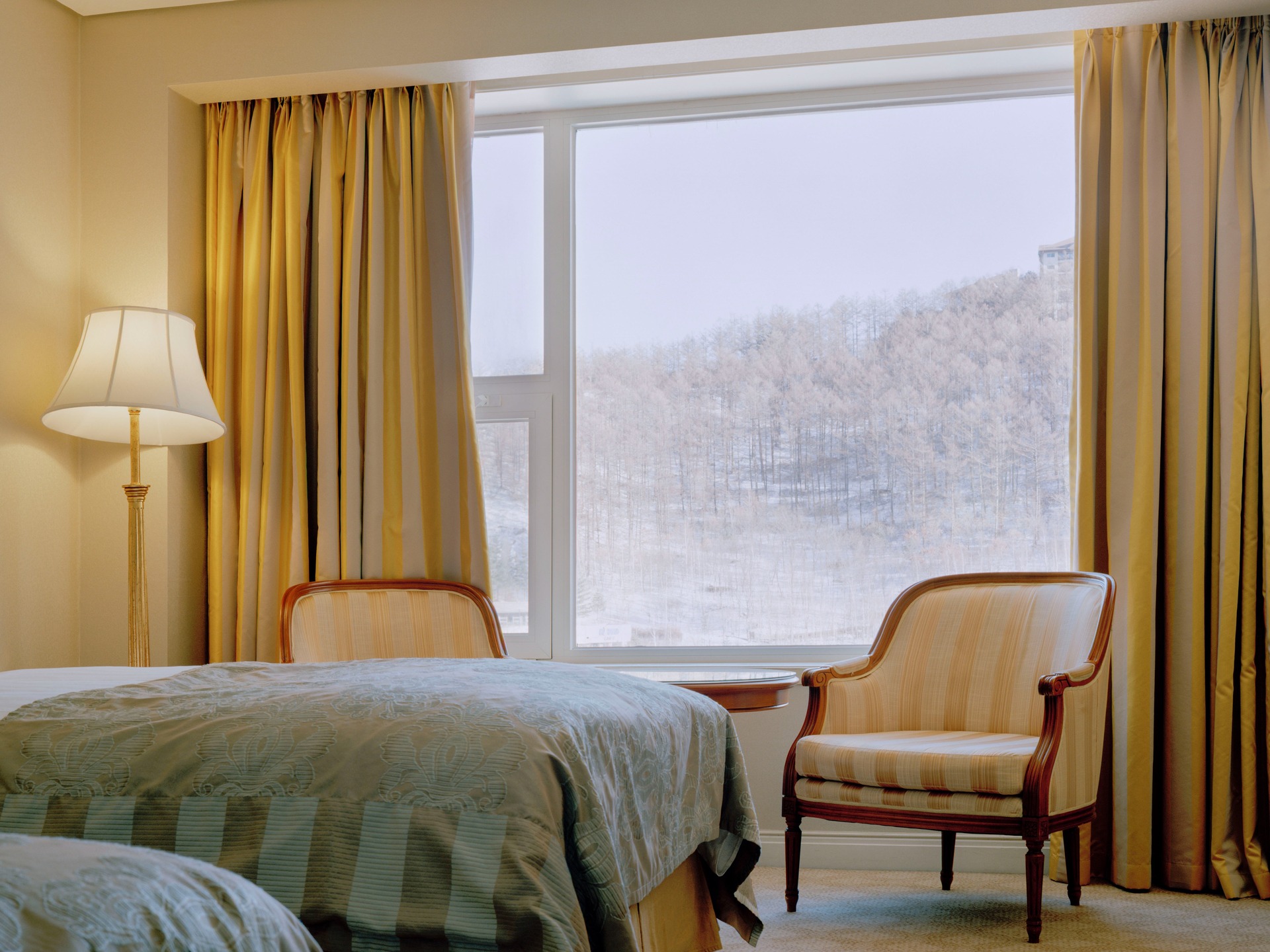
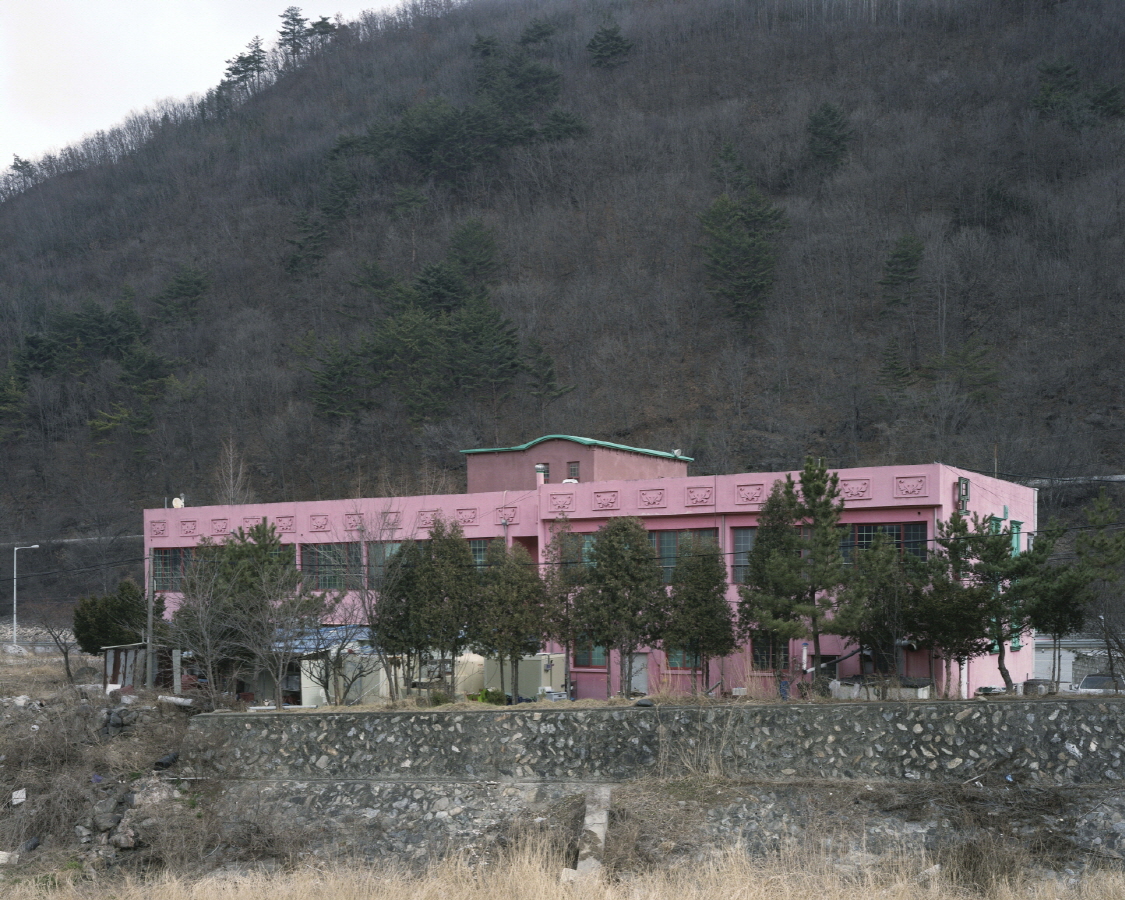
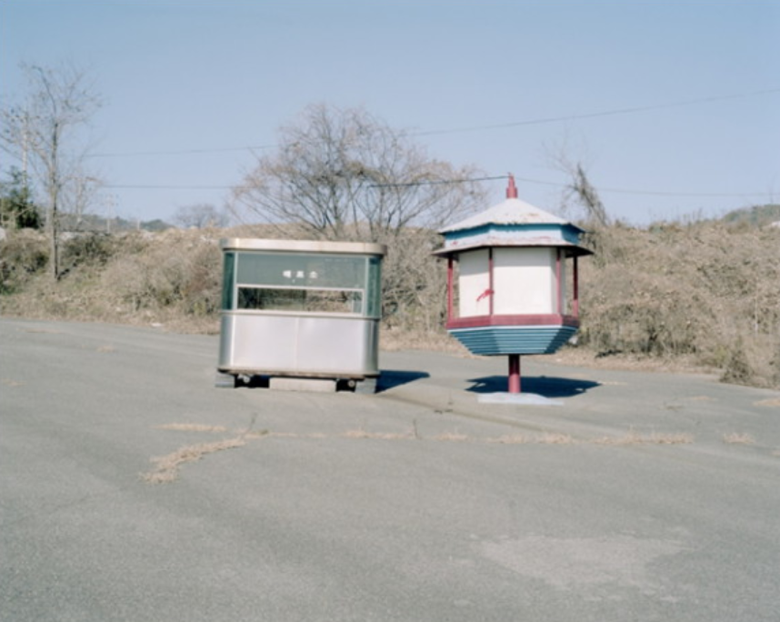
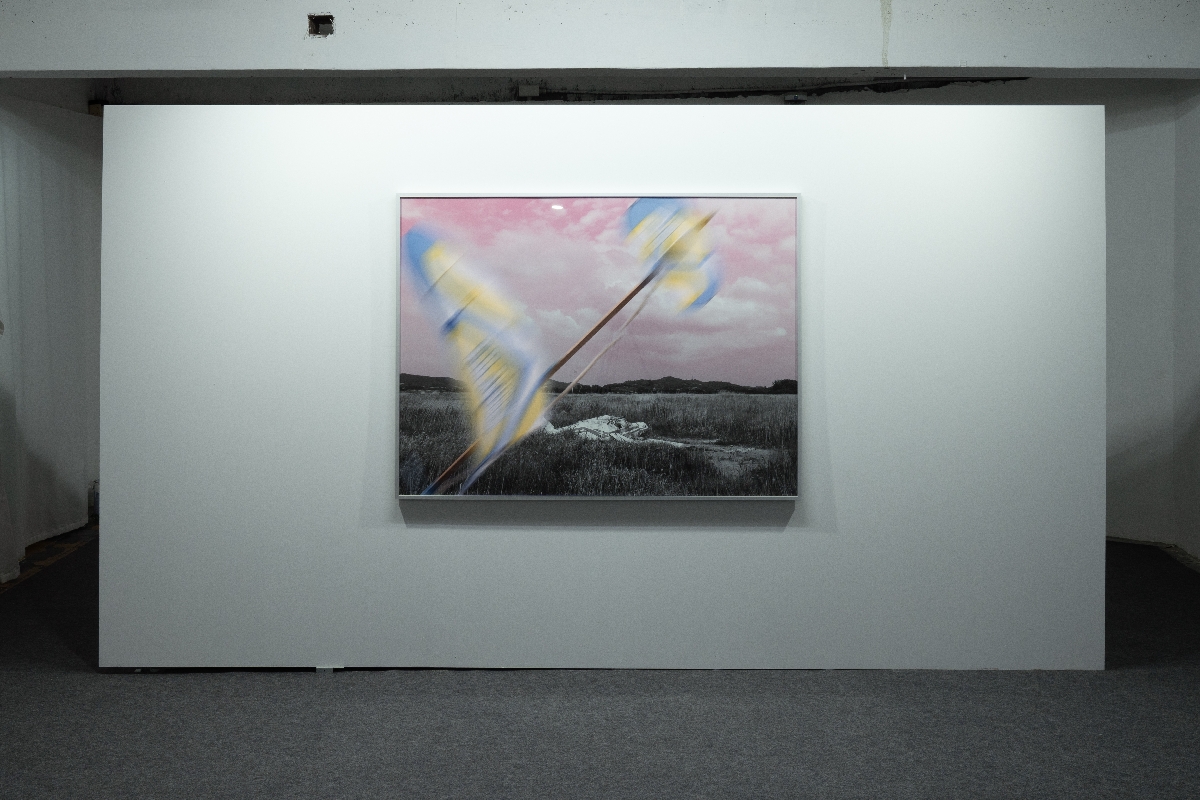
The 'LAND landscape' series captures declining amusement parks across Korea. The artist has said that it began from personal memories related to his family history,8) but this series contains, in its deteriorated state, a contemporaneity beyond past stories. I do not think that many photographs containing old things are fixed in the past.
Many photographs pour forth, dwelling on things collapsing, but the disquiet lies in selling nostalgia and selling photographs; in front of photographs that seem to possess not even a handful of anything to sell, phrases like “retro” or “newtro” feel merely vulgar. Although he calls his photographs landscape photography, he rigorously removes any technique that might read as more than the perspective of the landscape.
That time and place remain for everyone, but the unfamiliarity that comes from no longer visiting is each person’s own sentiment; “the world is peaceful as expected.” When asked whether any works had been provisionally concluded as a series, he mentioned LAND landscape and 510kilometer, each for different reasons.
He described one as not completed, but with an emotional line drawn, and the other as effectively forced into completion. In that sense, I speculate that LAND landscape may be a procedural process within a laboratory for cultivating self-questioning, in which subjects are arbitrarily composited with landscapes,9) and that the remaining assignment is an operation to be worked through in Remainder Theorem.