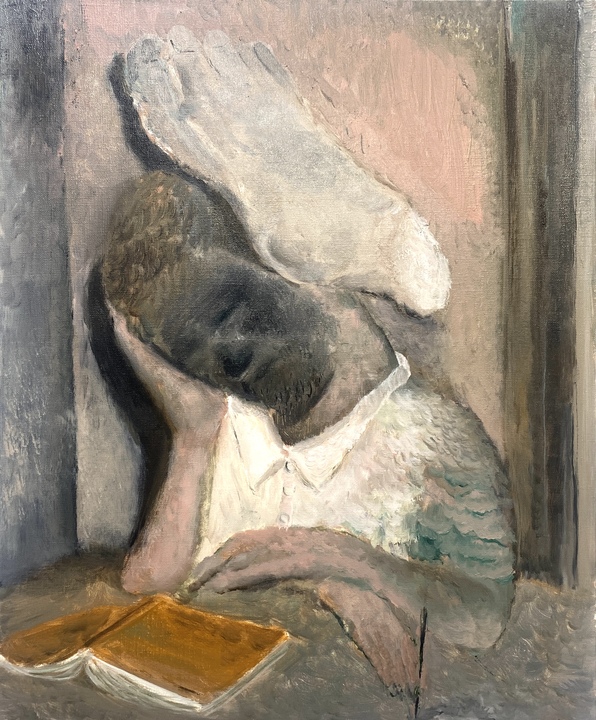
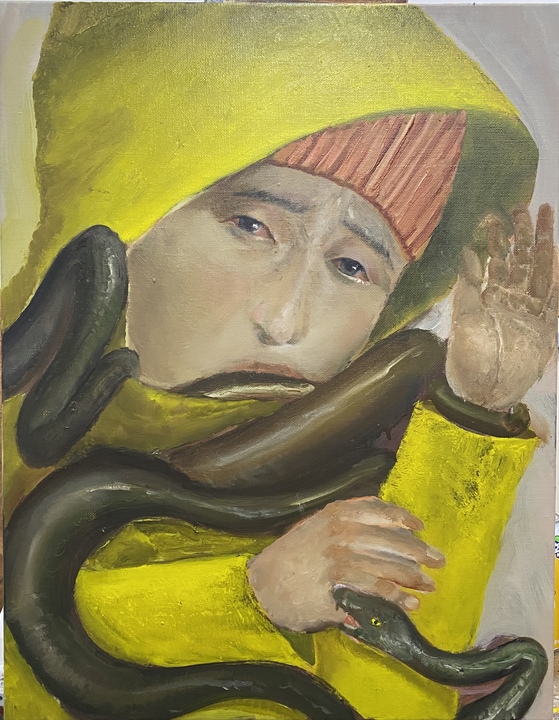
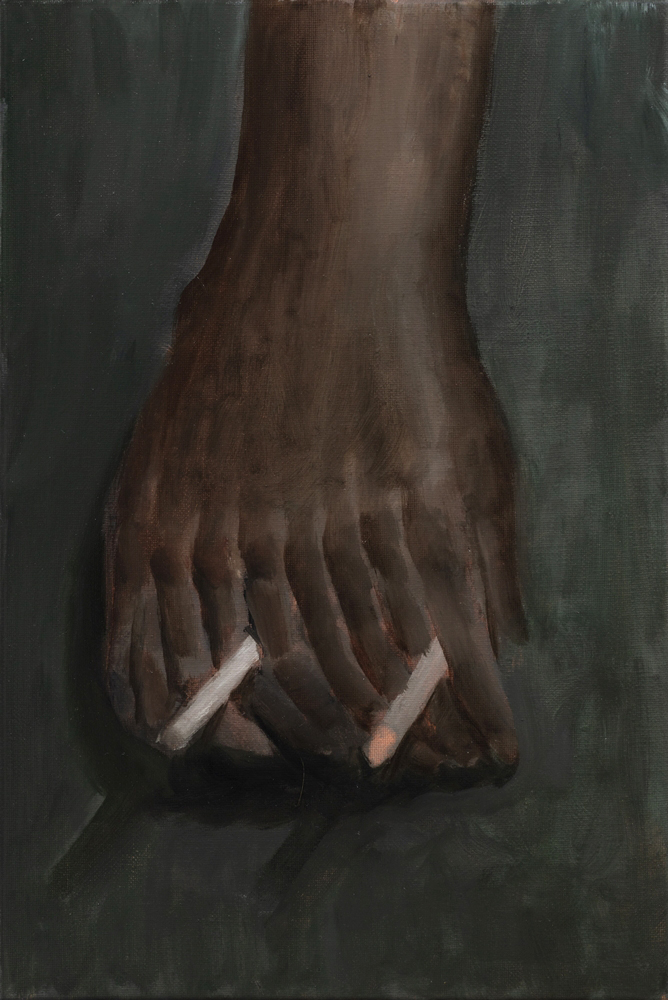
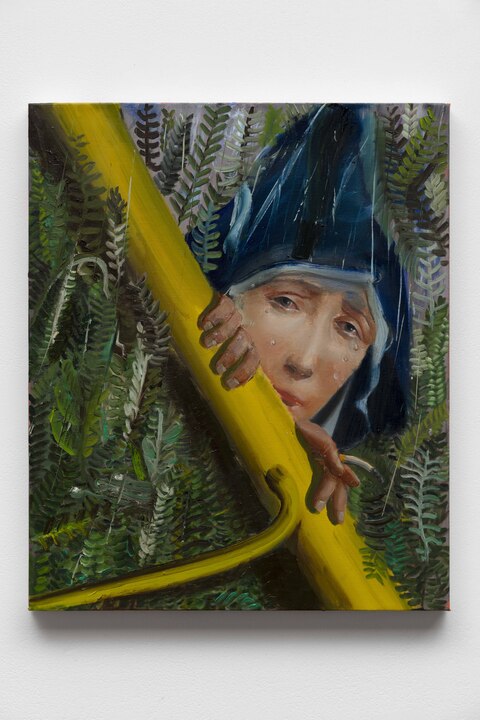
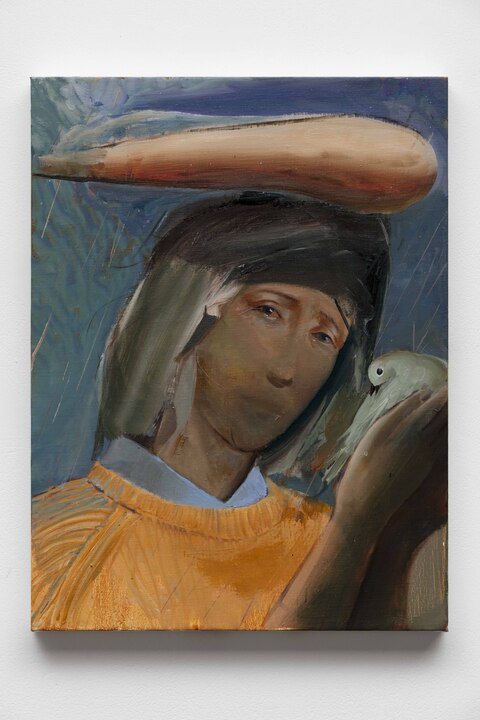
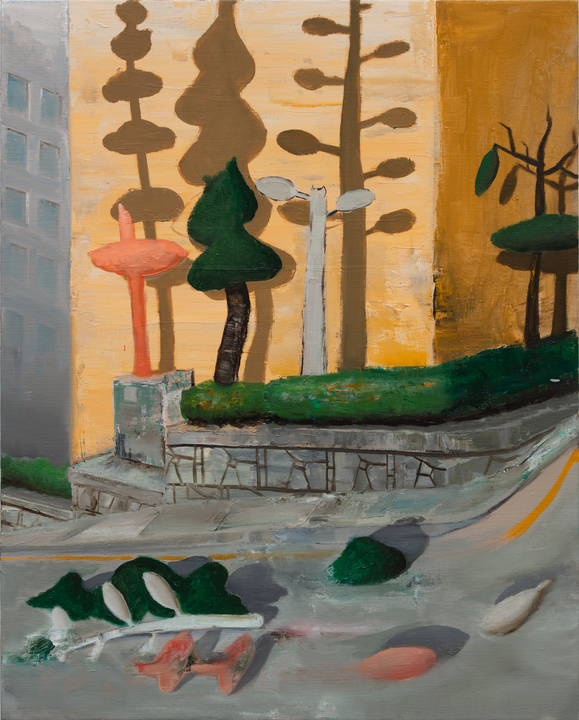
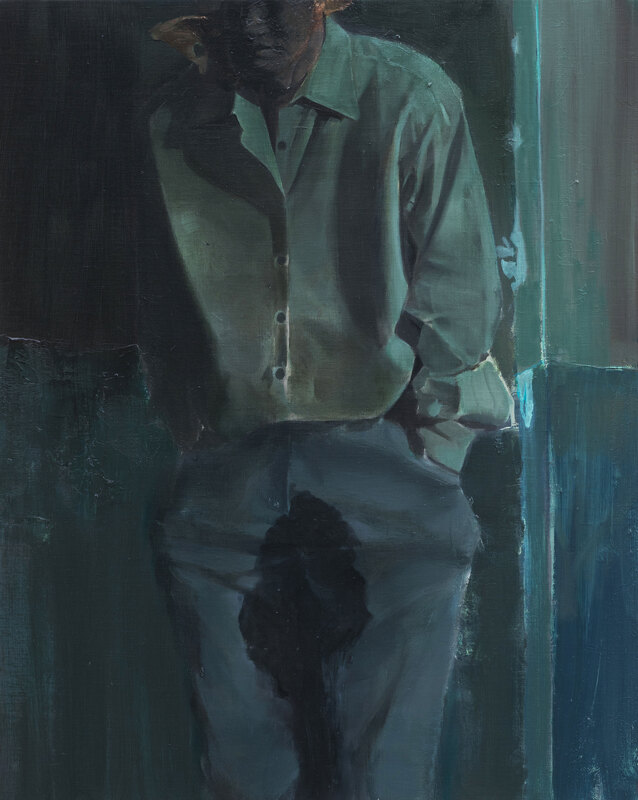
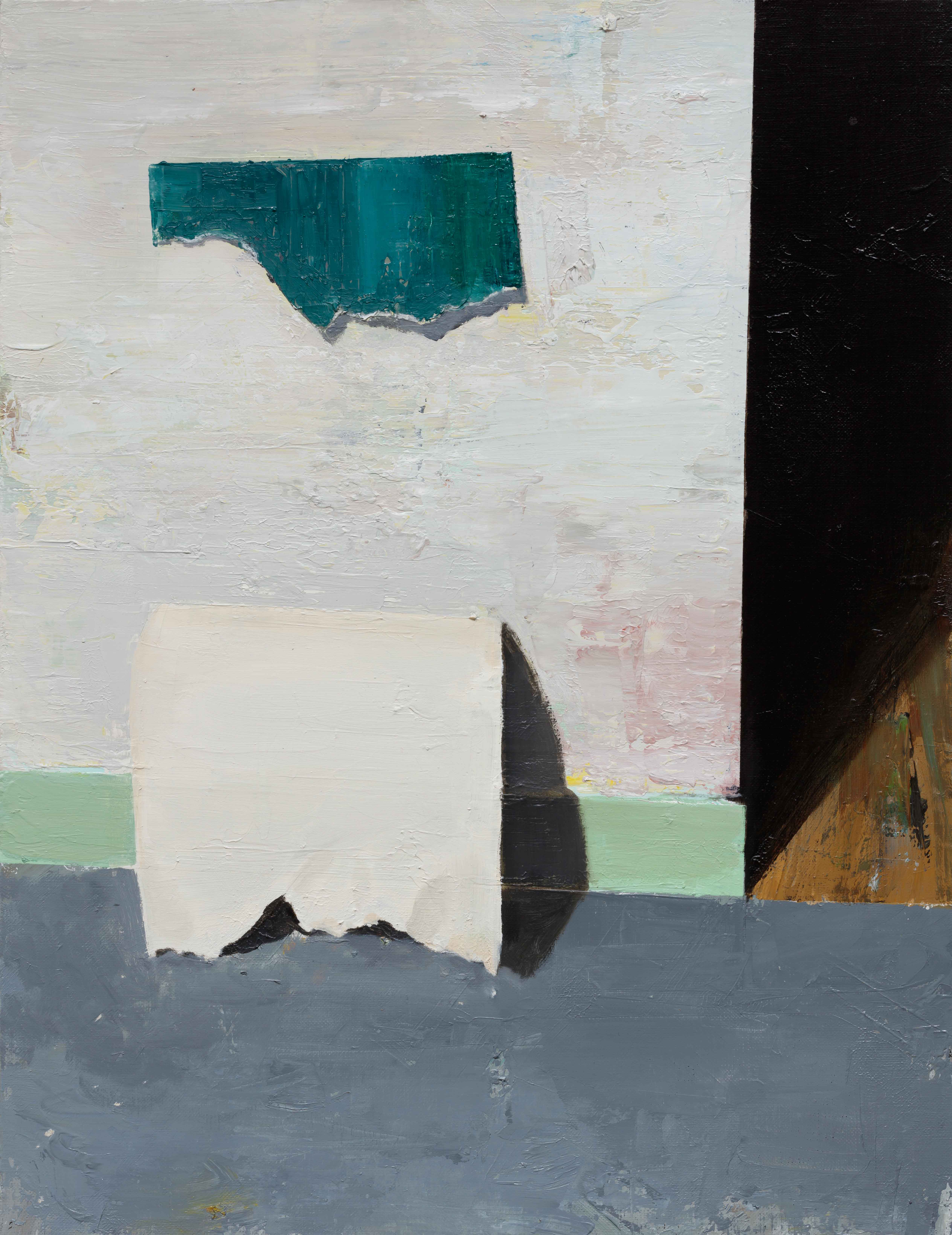
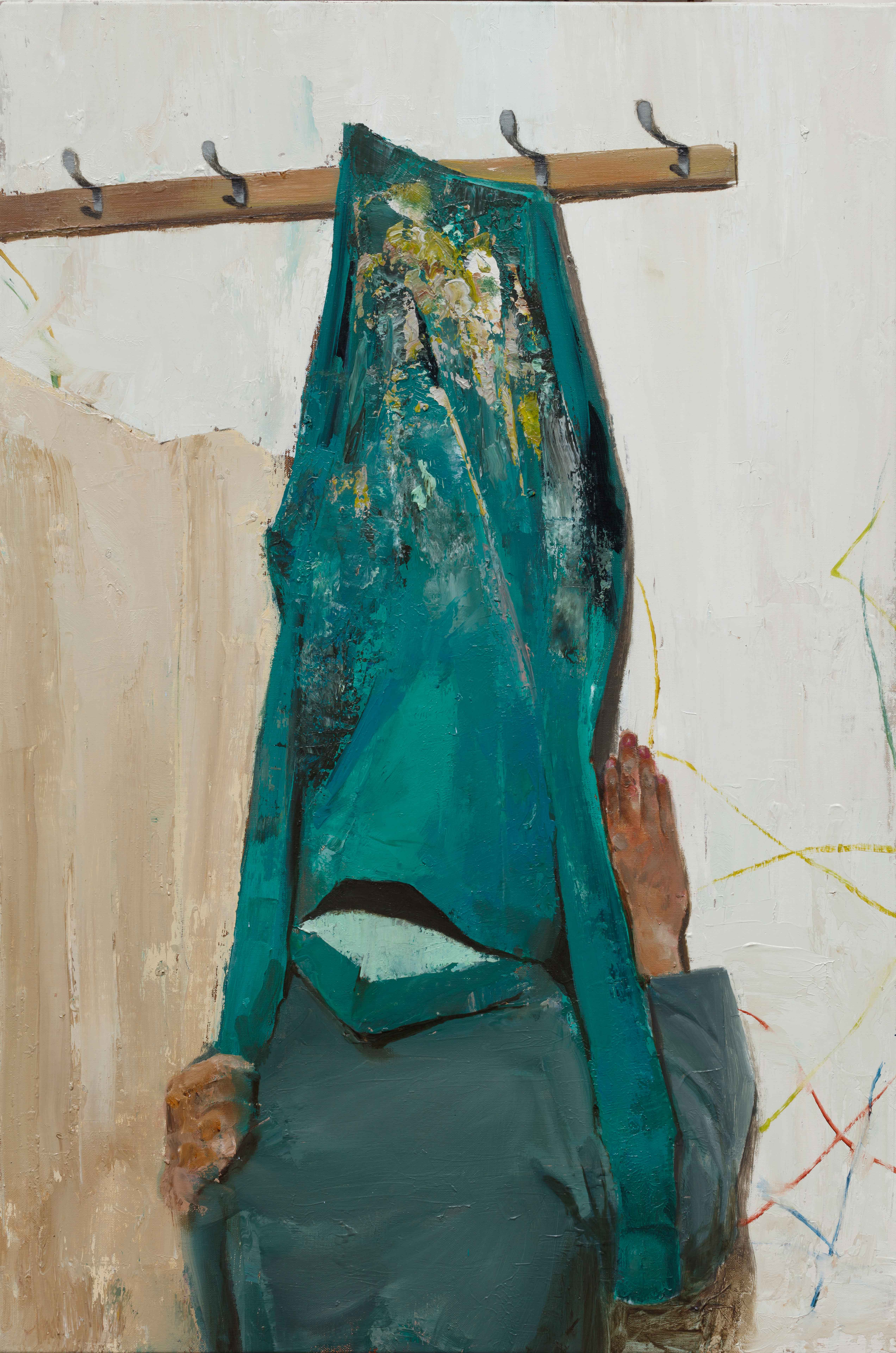
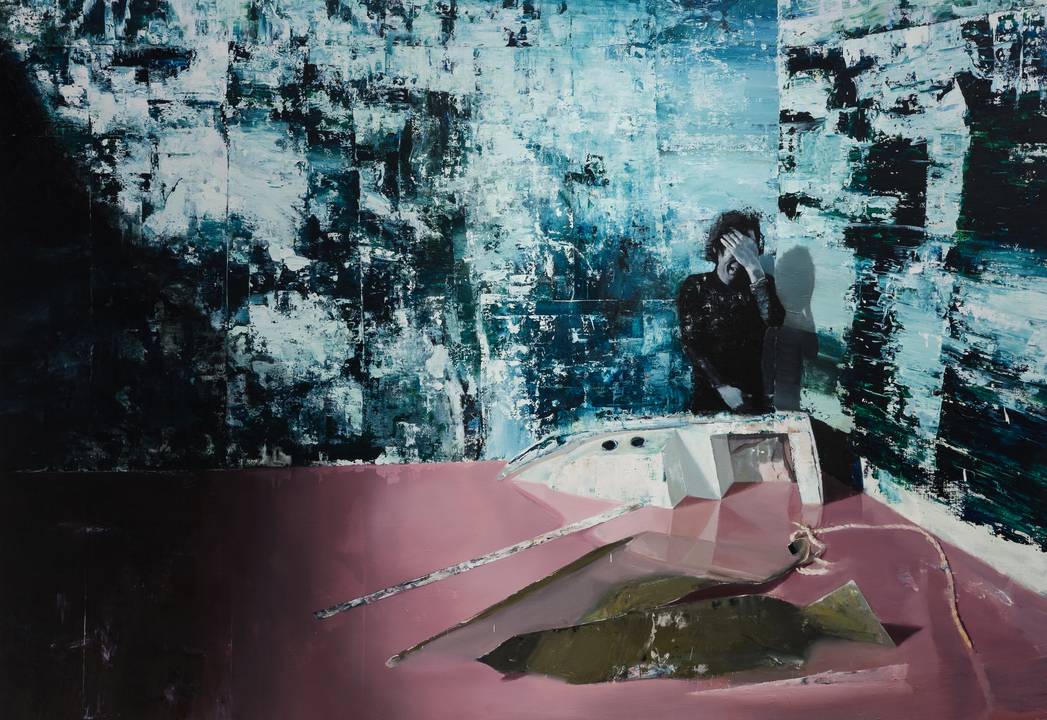
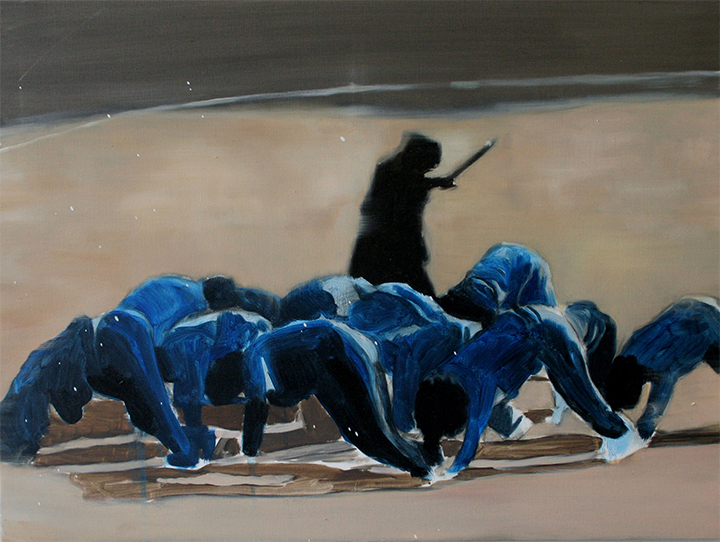
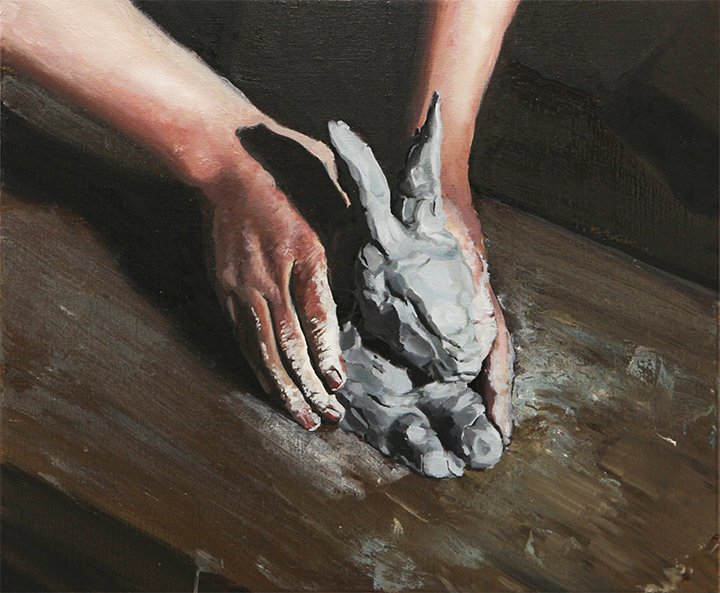
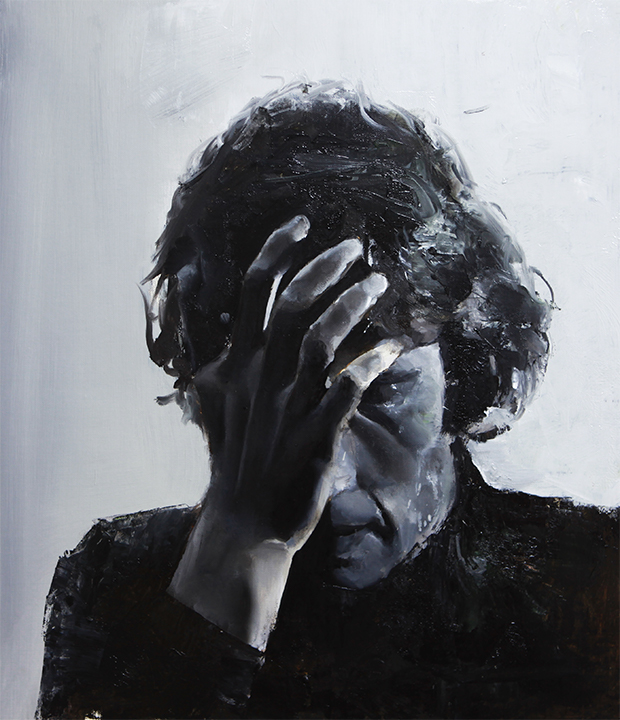
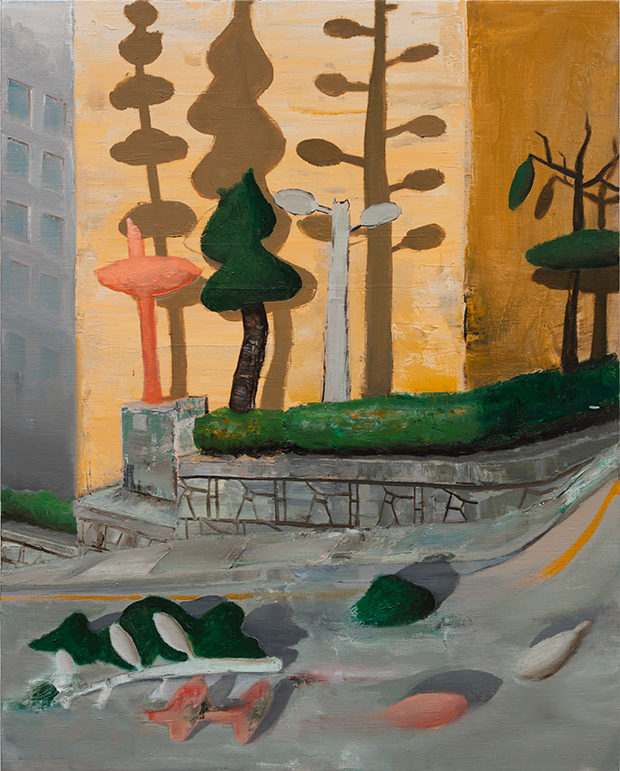
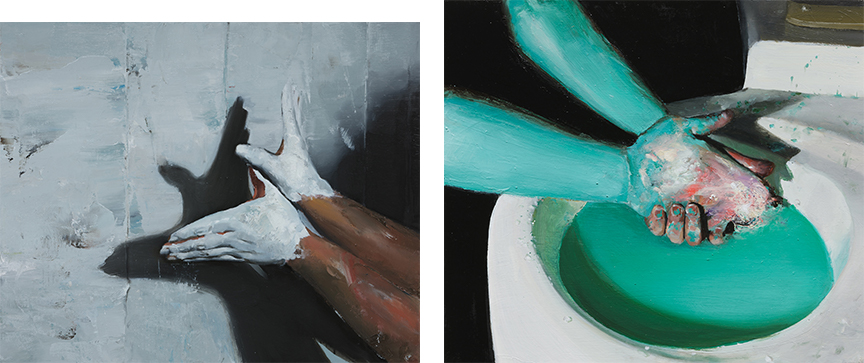
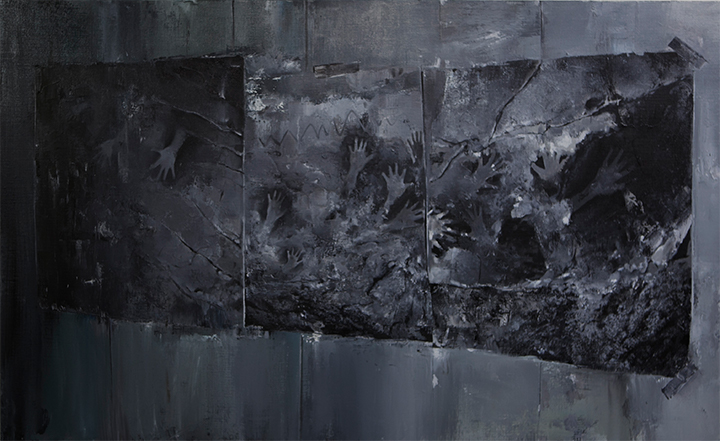
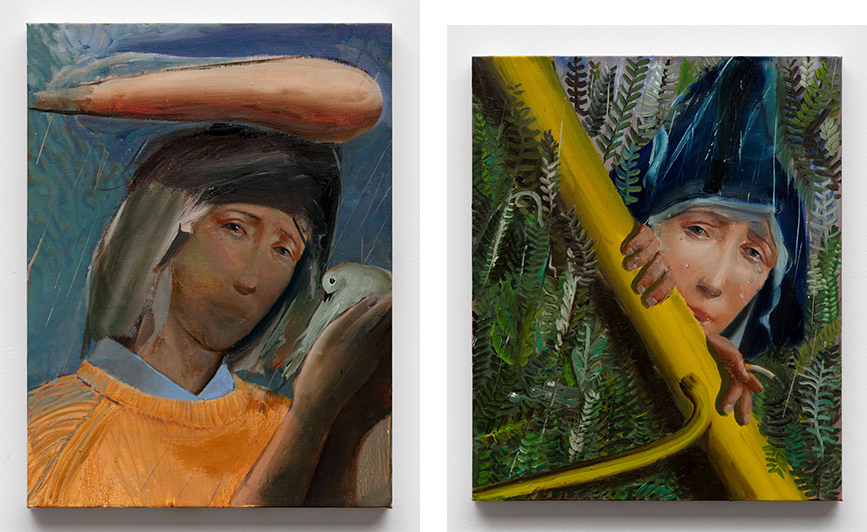
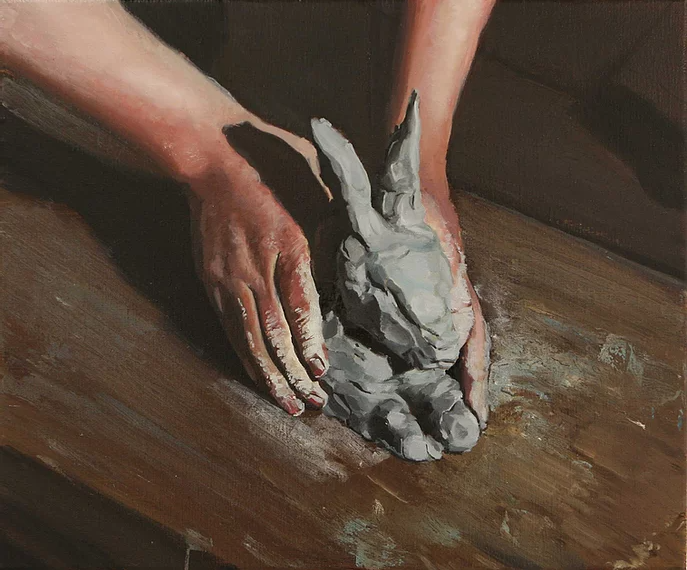
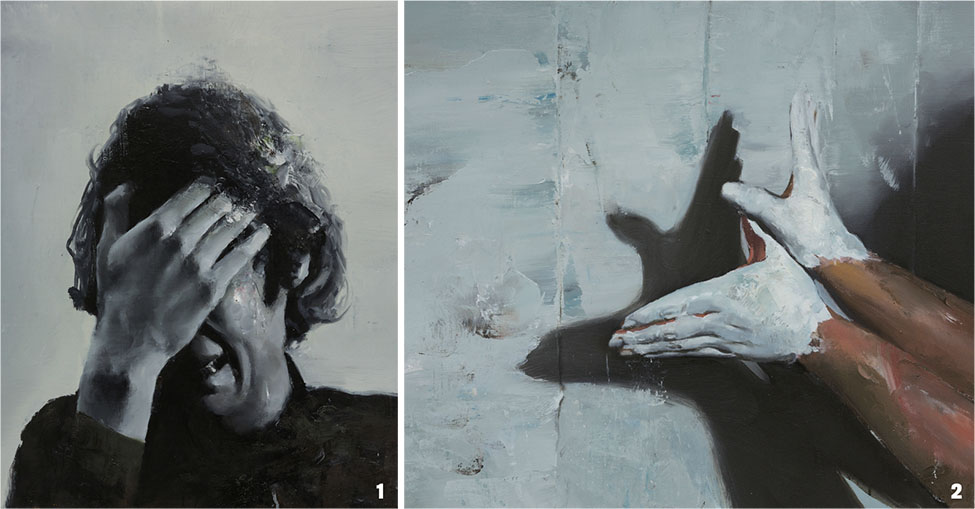
LEE: Death and disappearance seem to run through your work in every respect—as an emotional undercurrent, as subject matter, and as theme. Works such as Legs (2014), Folding Your Hands (2014), and Standing on Tiptoe (2016) endlessly question existence, evoking the loneliness, sorrow, and anxiety of individuals confronting a world that refuses to answer.
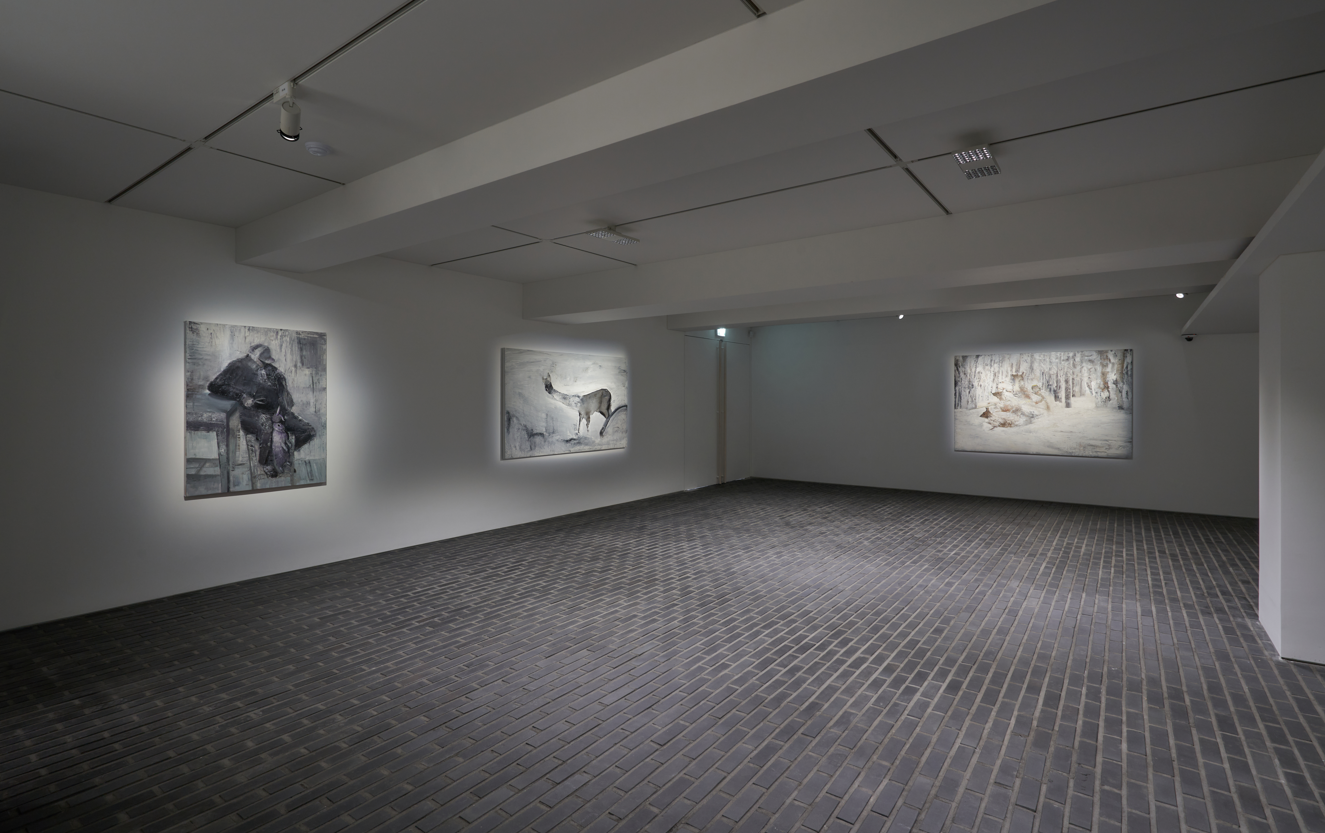
At the same time, whether depicting figures or still lifes, your paintings often resemble fossils—their vitality seems suspended through your treatment of color and form. Although action and emotion are clearly conveyed, the depicted subjects appear frozen in time. One could therefore interpret your work not only through the relationship between reality and image, but also through the relationship between life and death.
A dead being ceases to move and eventually disappears, yet acquires a kind of permanence through the traces it leaves behind and through the memories of others. Likewise, the painted image does not exist in the same way as its real-world referent, yet it, too, achieves a form of permanence. In that sense, your paintings seem to inhabit both the material and corporeal realm and the immaterial realm, the visible world and the invisible one.
Ahn: I think my work reflects not only questions of death but also multiple strands of art-historical discourse surrounding painting, whether consciously or unconsciously. As I mentioned earlier, my earlier works were structured primarily around asking questions. Now, however, I try to absorb those questions more naturally into the paintings themselves. Perhaps that is simply a gift that comes with the accumulation of time and experience.
LEE: This is a slightly different question. In the ‘Unfinished Stories’ series (2013), what exactly are The End (2013) and the two works titled Untitled (2013) depicting?
Ahn: I actually have two different series that include works titled Untitled, but they stem from almost the same idea. They are based on fragmentary thoughts that surfaced while living my daily life or while developing new works. They are, quite literally, brief thoughts or short narratives rather than parts of a larger storyline or overarching meaning. At first, I used dates as titles, but I later standardized them all as Untitled.
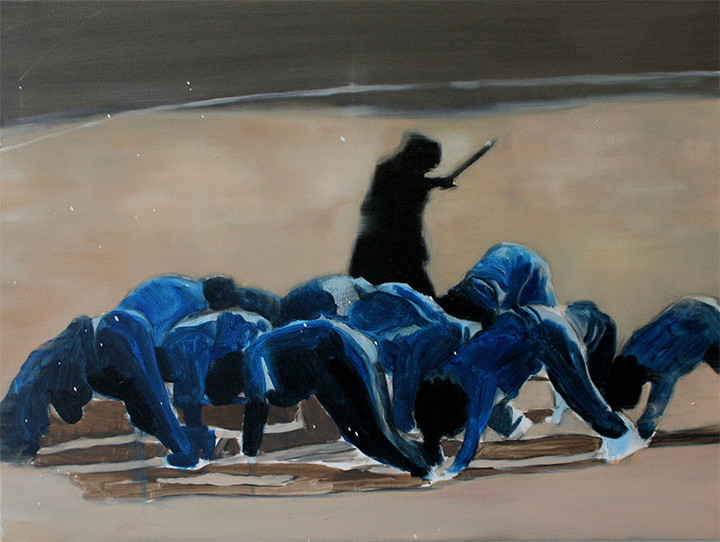
Unfinished Stories depicts scenes of war, explosions, and laboratory environments associated with them. The ‘Untitled–Abandoned Ideas’ series, on the other hand, draws upon images from old films, advertisements, and even pornography. If you look at Korean advertisements from the 1970s, for example, they strongly emphasize family values and filial piety.
My 2017 painting of a man pinching his own cheek is based on a modified scene from the film A Bloodthirsty Killer (1965). Early in the film, there is an intriguing sequence involving a painter, the subject of a painting, and a collector. I was also interested in a work that enlarges the faces of the figures from 雲雨圖帖 (Album of Erotic Paintings) by Kim Hong-do. Although the figures are caught in moments of intense passion, their expressions all appear strangely sorrowful, and that contradiction fascinated me.
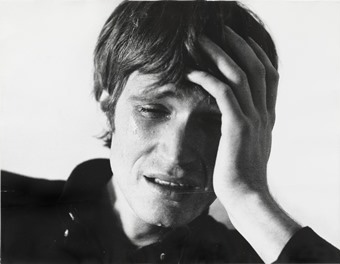
LEE: Works such as 27sec. 67 (2015), in which you respond to another artist's creation and transform it into your own painting, also prompt reflection on our image-saturated age—a world increasingly mediated by images rather than direct experience. As a painter, I imagine you have particular thoughts about living in a world governed by images rather than reality.
Ahn: I think what I do is search for patterns and trajectories within the endless flood of images surrounding us. Perhaps the role of a contemporary painter is to receive those images according to one's own sensibility and character, and then reorganize, edit, and reinterpret them. None of us—not even artists—can stop that flood of images or escape from it. It has also become incredibly easy to acquire images.
People who are not artists often regard images as repositories of memory or nostalgia. I approach them somewhat more critically, even cynically. I reshape them according to my own way of thinking. What matters to me is how an image is ultimately read. Rather than dwelling on personal memories, I reinterpret images through my own perspective and present them to others.
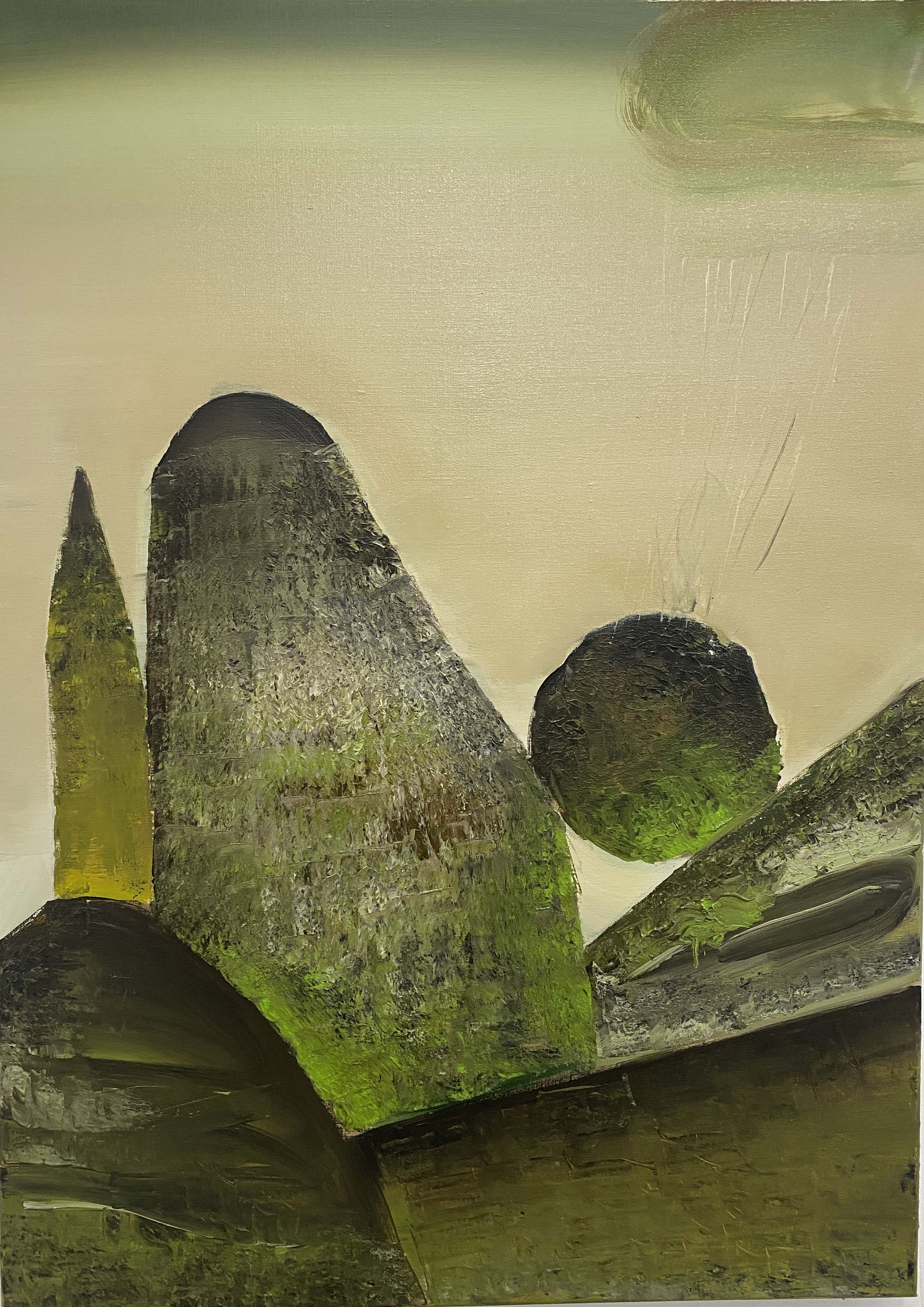
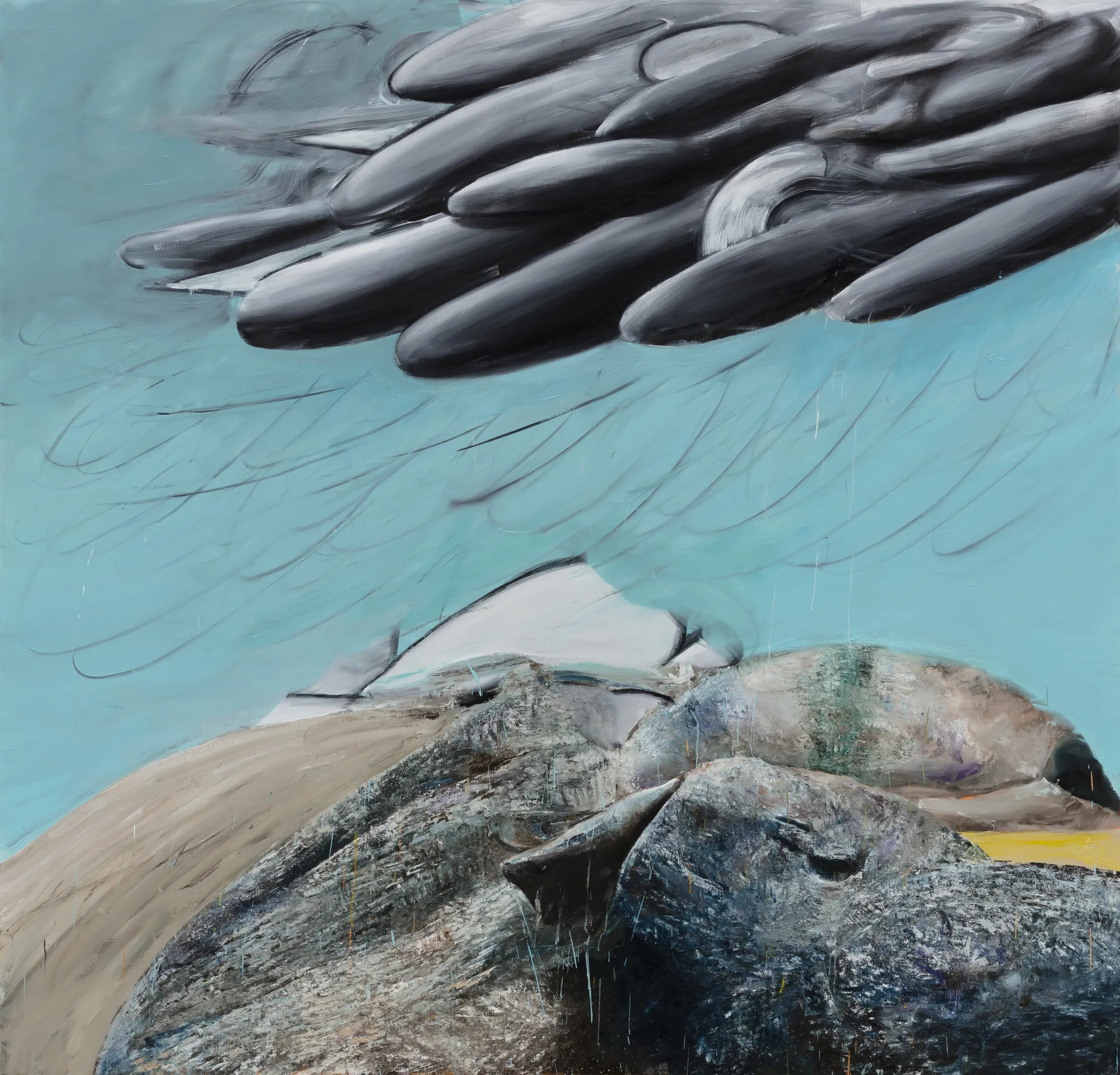
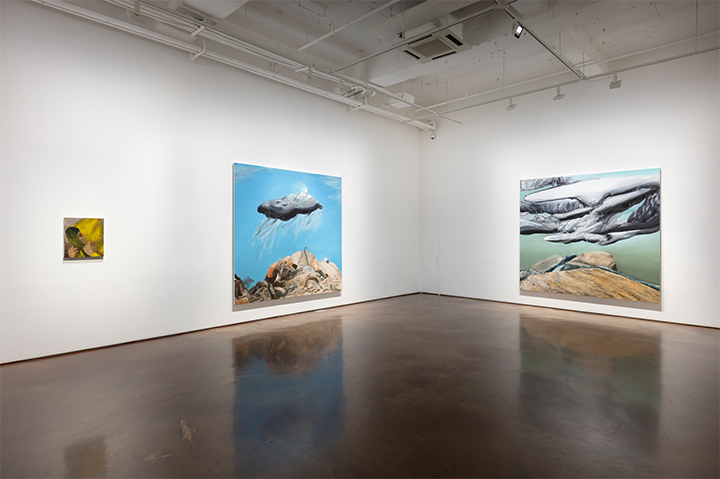
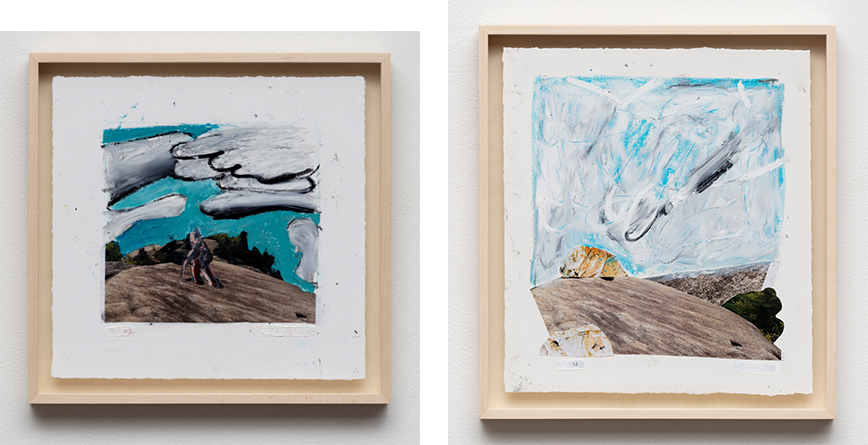
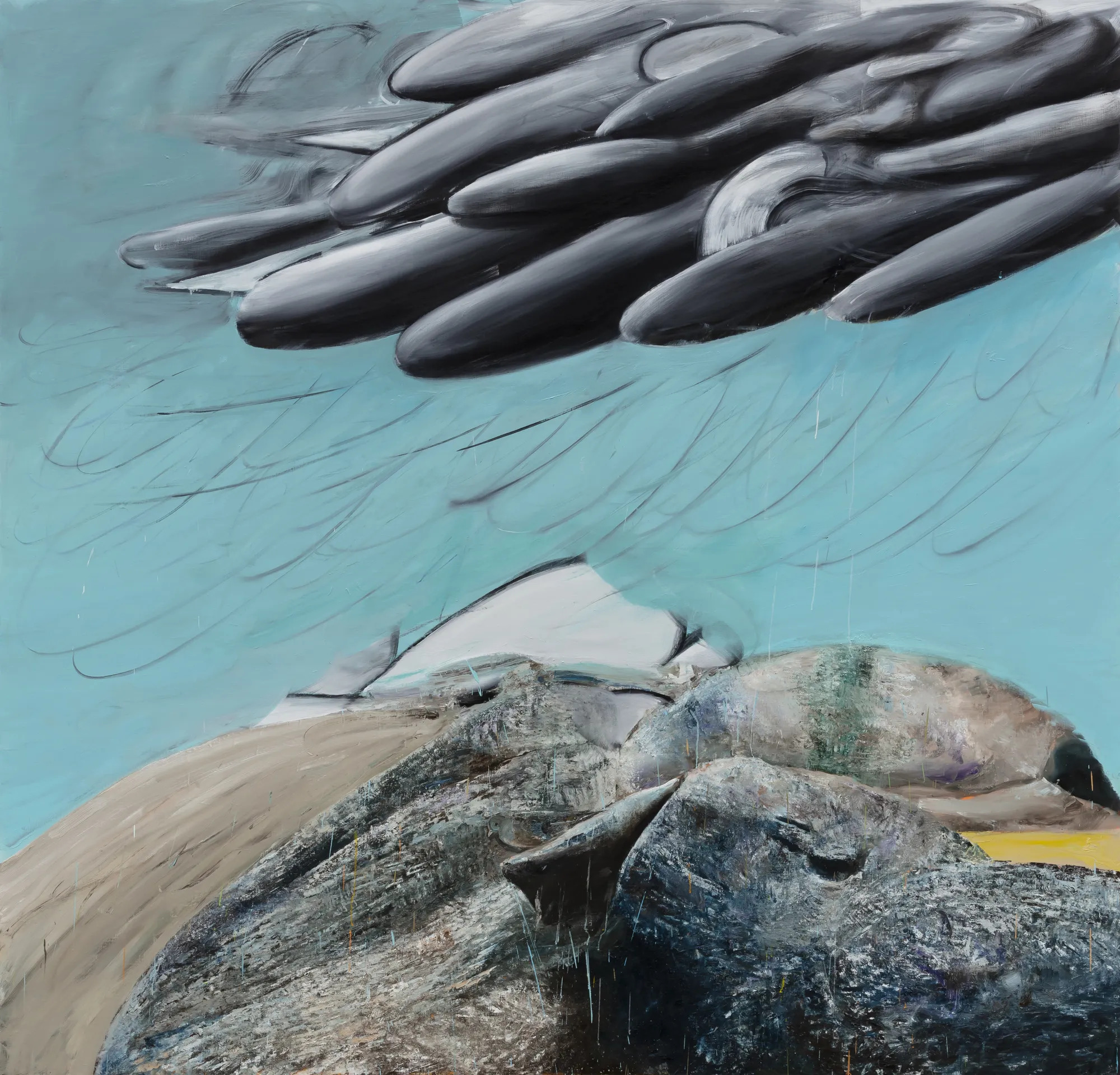
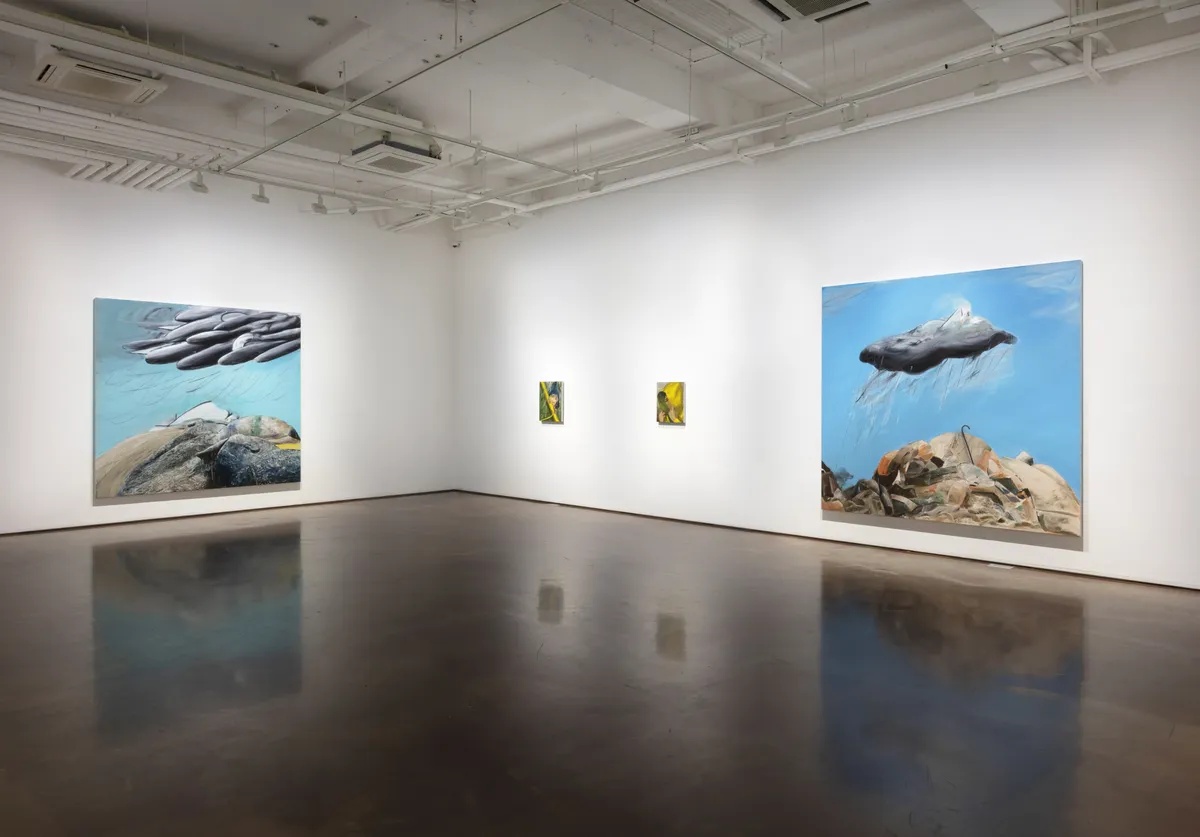
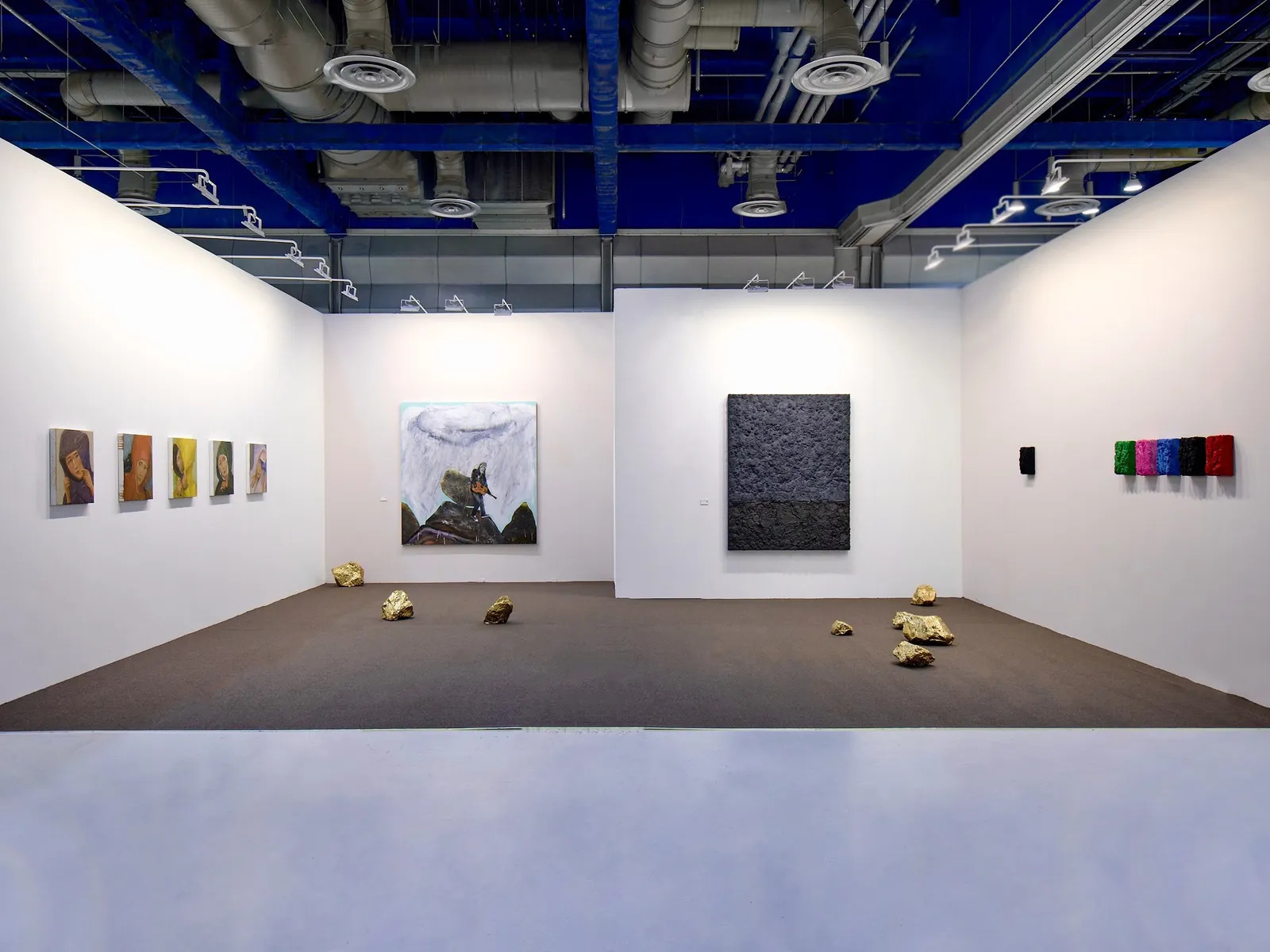
Lately, I think I have been handling images in a rougher, even somewhat more violent way. The rocky mountain in ‘Storm Is Coming’, for example, was reconstructed from photographs that I took myself. It was based on the slopes of Bukhansan, where trees were scattered throughout the rocky terrain. But I removed them all.
I wanted the primal sensation of the storm clouds I was trying to express to collide with the rocky mountain in a harmonious way, so I eliminated every element I considered unnecessary. It was a process of selection and concentration. Had I felt a sentimental attachment to the mountain itself, I probably would not have been able to do that. Perhaps that somewhat cynical attitude is, in the end, how I approach images.