Kayoung Choi (b. 1989) explores the relationship between reality and ideality through paintings that evoke the romance of the unexperienced and the allure of constructed fantasy.
 
Through painterly installations and carefully staged environments, she creates a sense of imagined presence, prompting viewers to question the boundaries of perception and experience, as well as the fundamental meaning of painting itself.


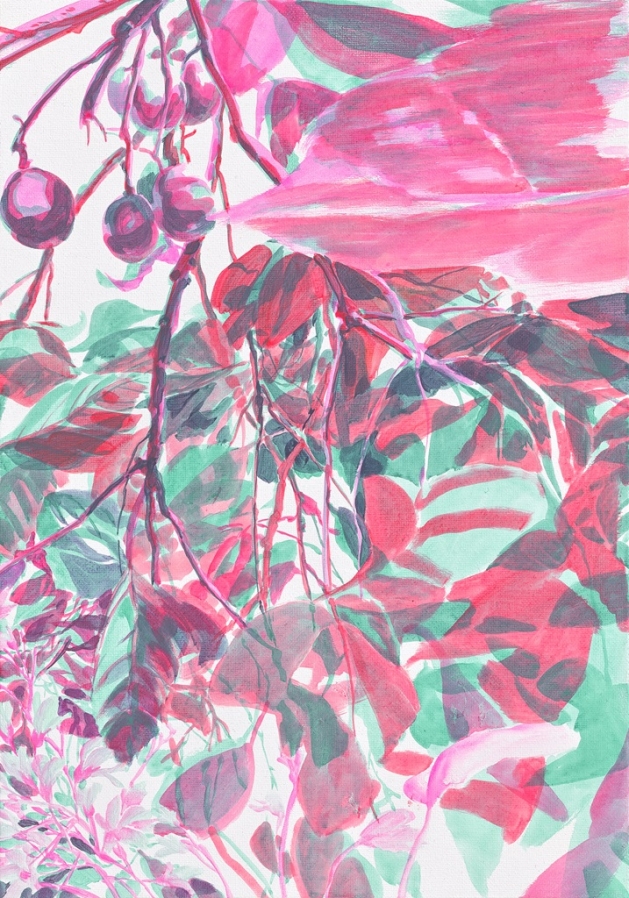
Kayoung Choi, Curtain Call, 2022, Acrylic on canvas, 100x80.3cm © Kayoung Choi

Choi’s practice begins with an observation of the human desire to escape reality and move closer to an idealized world, as well as the ways in which forms of manufactured and consumed extraordinariness emerge from this psychological impulse in everyday life.
 
This line of inquiry originated from the artist’s own experiences of travel—moments of departure from the routines of daily life toward unfamiliar places. Many people embark on journeys in search of refuge from the fatigue and monotony of reality.
 
Yet just as an ideal world can exist only in relation to reality, travel itself remains deeply intertwined with life.
 
Choi sees travel and life as sharing a similar condition: both are directed toward places that have not yet been reached or fully known, and both are bounded by a finite duration that inevitably comes to an end.
 
We move toward future destinations in the hope that our next journey—and tomorrow’s life—will be better than the repetitive routines of today, drawn by the promise of what has not yet been experienced.


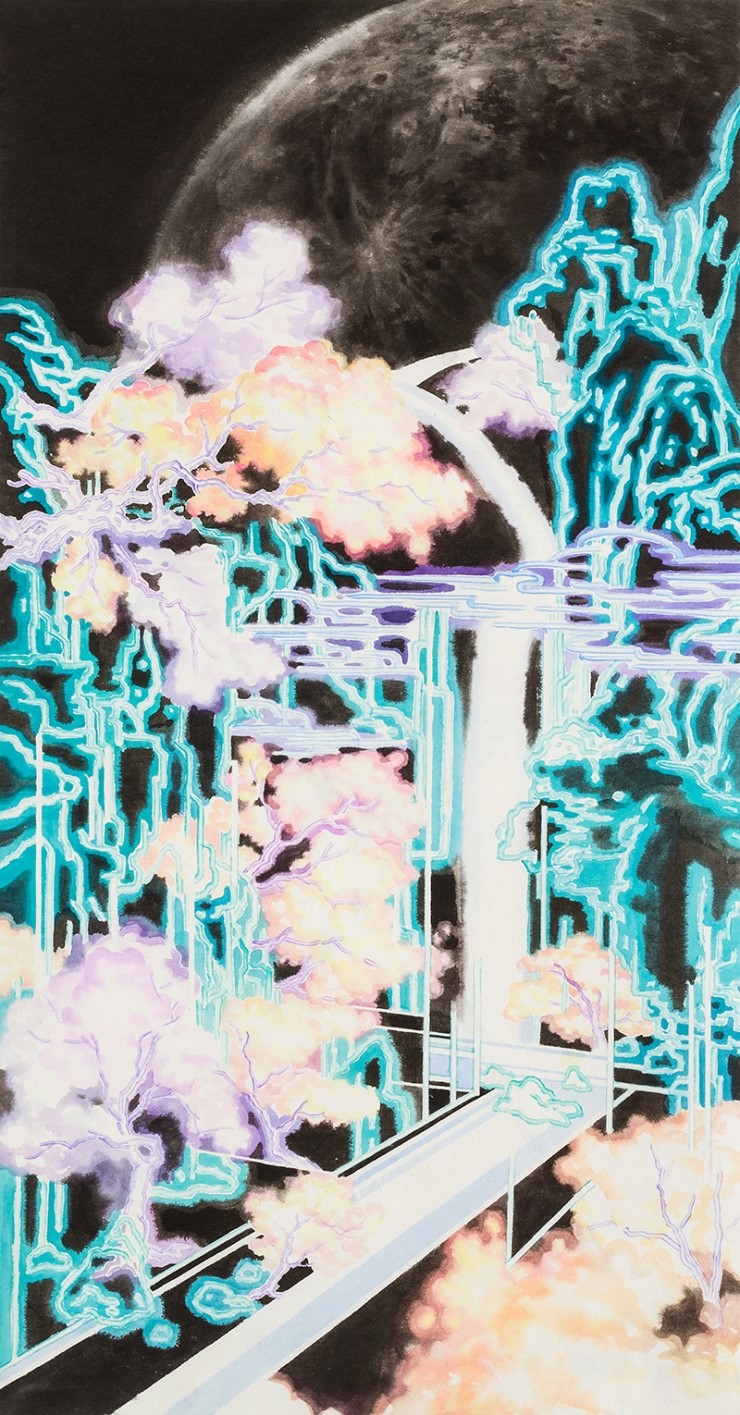
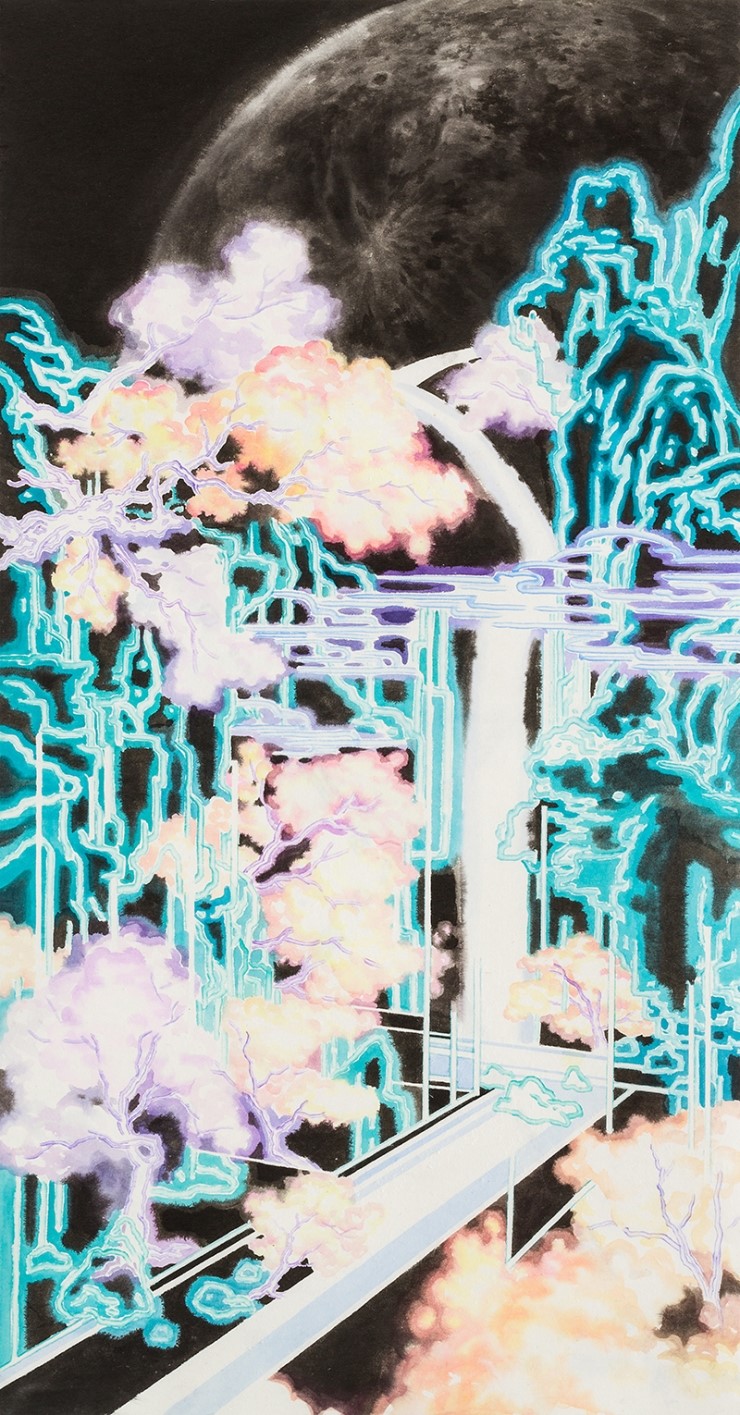
Kayoung Choi, Moon and Fall, 2017, Watercolor on hanji paper, 135x70cm © Kayoung Choi

In her 2017 solo exhibition 《FOUND》 at Gallery DOS, Choi translated the emotions she experienced during her travels in Iceland into paintings that visualize an inner ideal world. The works were inspired by the exotic landscapes of Iceland, which left a particularly strong impression on the artist.
 
Yet these natural landscapes are not depicted as straightforward representations of what was seen. Instead, they are reimagined through the artist’s imagination and fantasy, unfolding on the canvas as reconstructed worlds.
 
In this sense, specific and tangible places encountered during travel are transformed through a process of internalization, becoming imaginative spaces shaped by Choi’s own subjective vision.


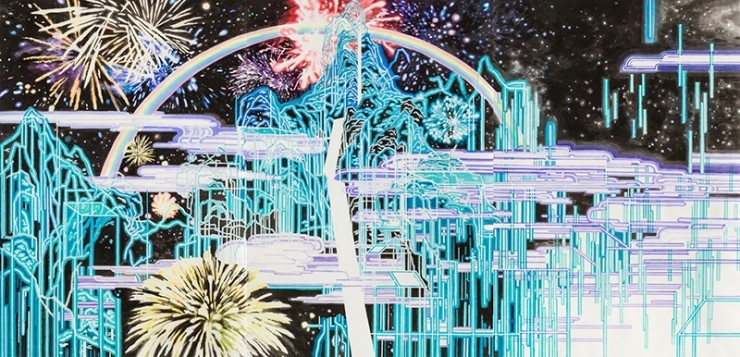
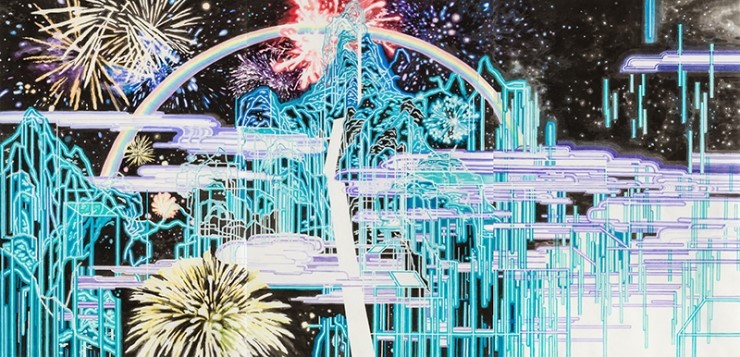
Kayoung Choi, we welcome you, 2017, Watercolor on hanji paper, 190x390cm © Kayoung Choi

Drawing on the tradition of East Asian landscape painting, which often uses natural scenery as a vehicle for expressing an inner ideal world, Choi portrays her own psychological landscapes unfolding within exotic natural settings.
 
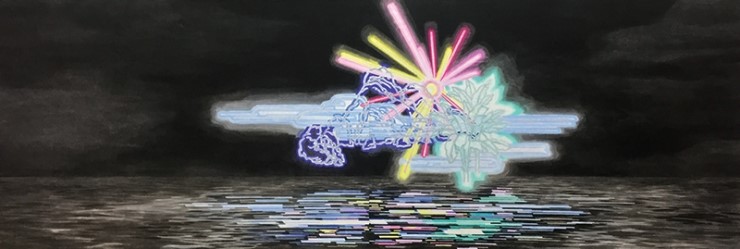
For instance, while incorporating motifs frequently found in traditional East Asian painting—such as pine trees, plum blossoms, and mountainous landscapes—she also reconfigures them alongside dreamlike elements to which she assigns personal symbolic meanings, including fireworks in the night sky, rainbows, and the moon.


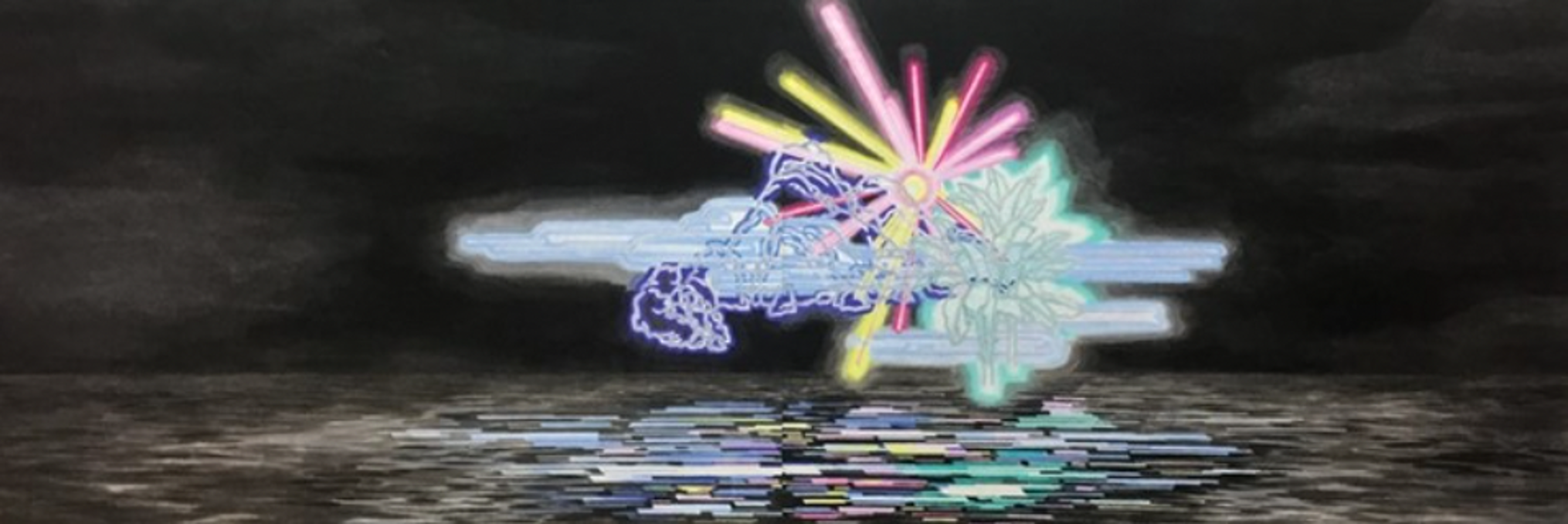
Kayoung Choi, Night Sea-Island, 2017, Watercolor on hanji paper, 130x380cm © Kayoung Choi

The nocturnal landscapes that unfold alongside mountains and water evoke a sense of quiet serenity, mystery, and dreamlike tranquility. Luminous forms glowing like neon signs against the night sky seem to conjure the atmosphere of a vibrant festival.
 
In Choi’s imagined landscapes, rainbows appear even amid fireworks lighting up the darkness—nature rendered so ideal that it begins to feel uncanny.
 
The use of traditional East Asian painting techniques, in which pigments spread and seep into hanji paper, further amplifies the sense of unreality and romantic imagination. Through these fictional landscapes, Choi seeks to express a vision of perfect happiness—something she knows may be unattainable, yet still longs to pursue.


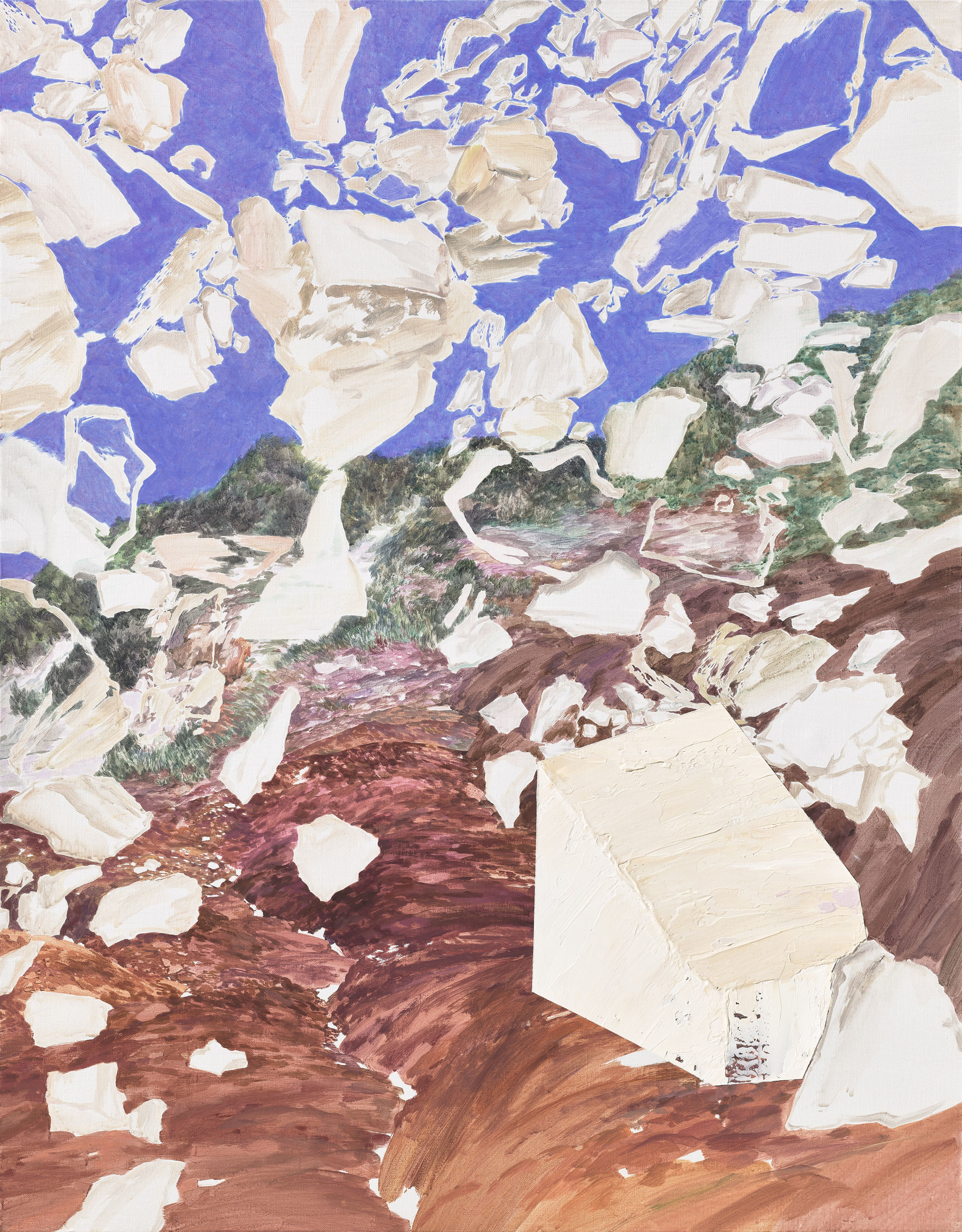
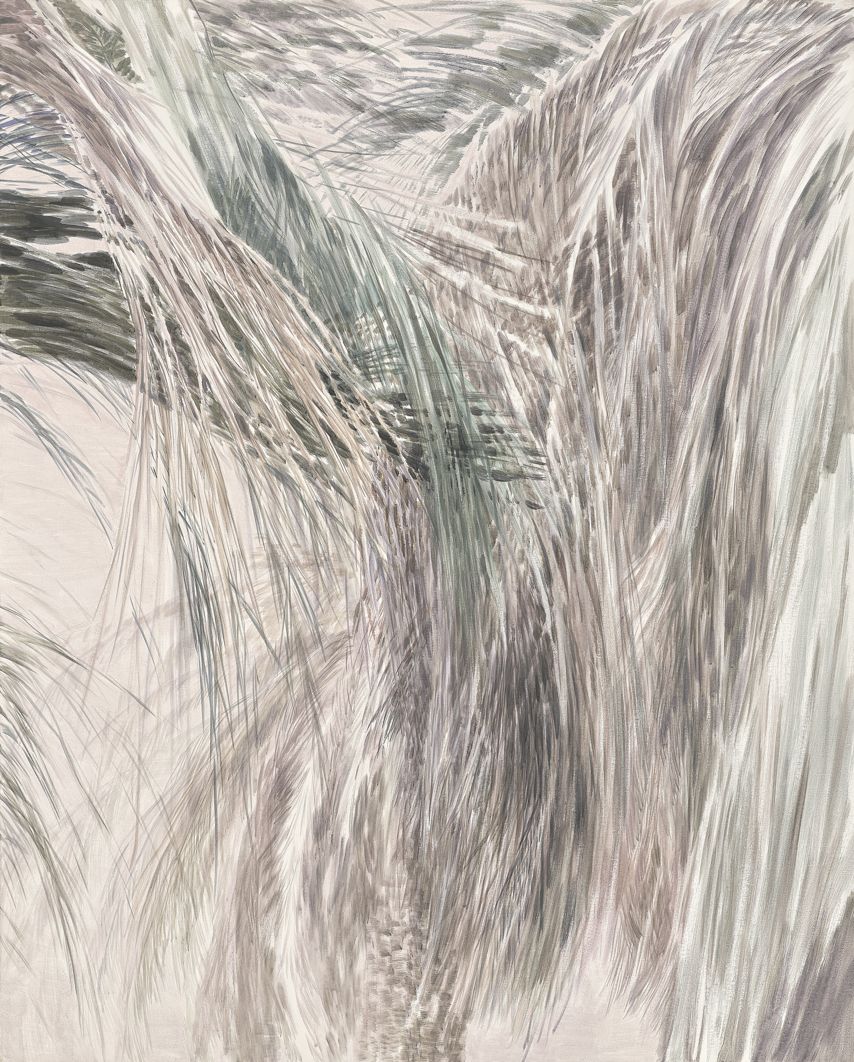
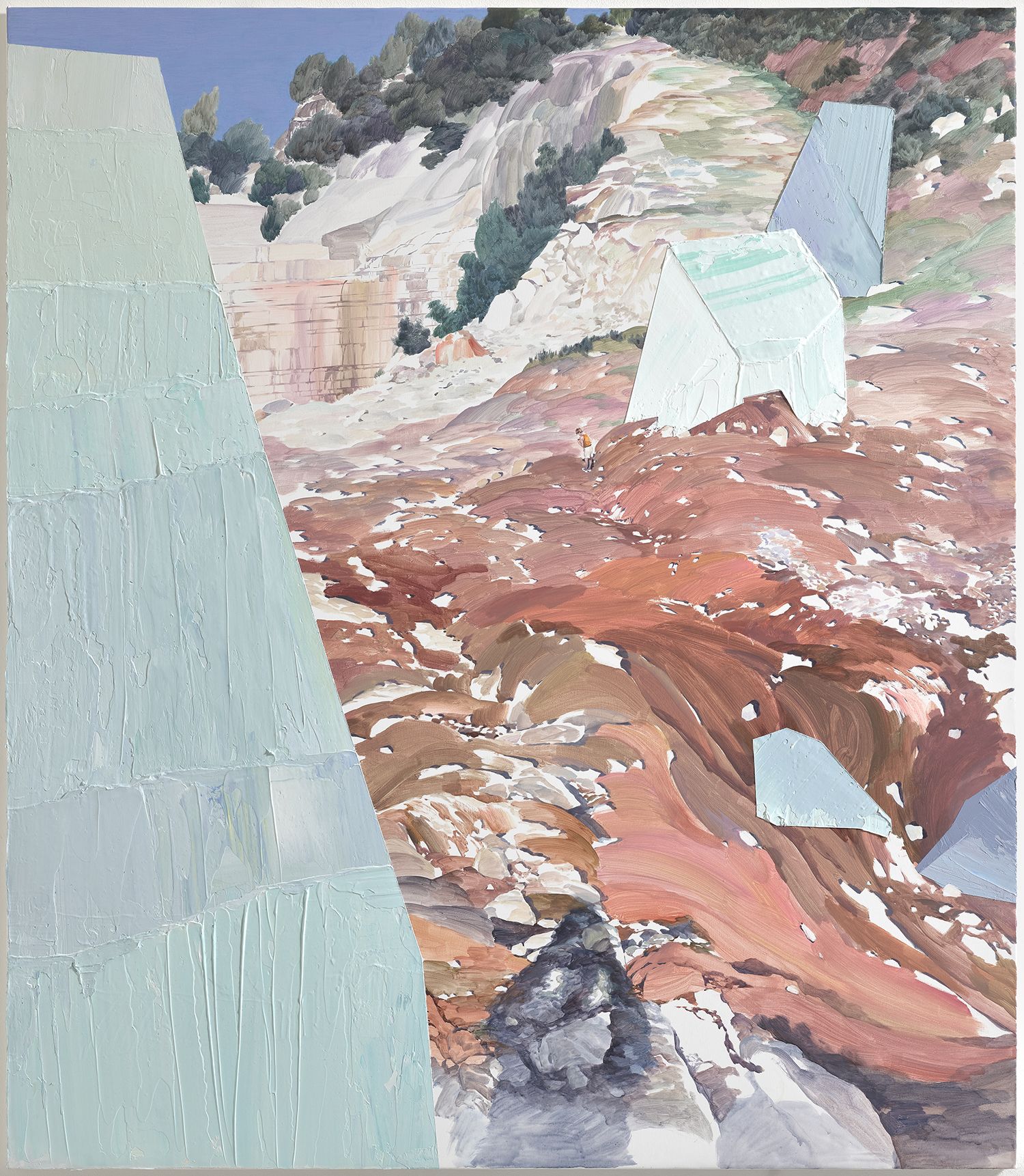
Kayoung Choi, White Marbles in Venčac-from Vukasin Stancevic, 2020, Acrylic on canvas, 150x130cm © Kayoung Choi

In this way, Choi believes that unrealistic hopes can serve as a force that enables us to live through the reality of today. Weaving together forms discovered in everyday life and fragments drawn from memories they evoke, she creates new narratives within her paintings.
 
The worlds constructed on her canvases do not actually exist, yet they confront viewers with a new sense of reality that can be generated through perception and sensation.


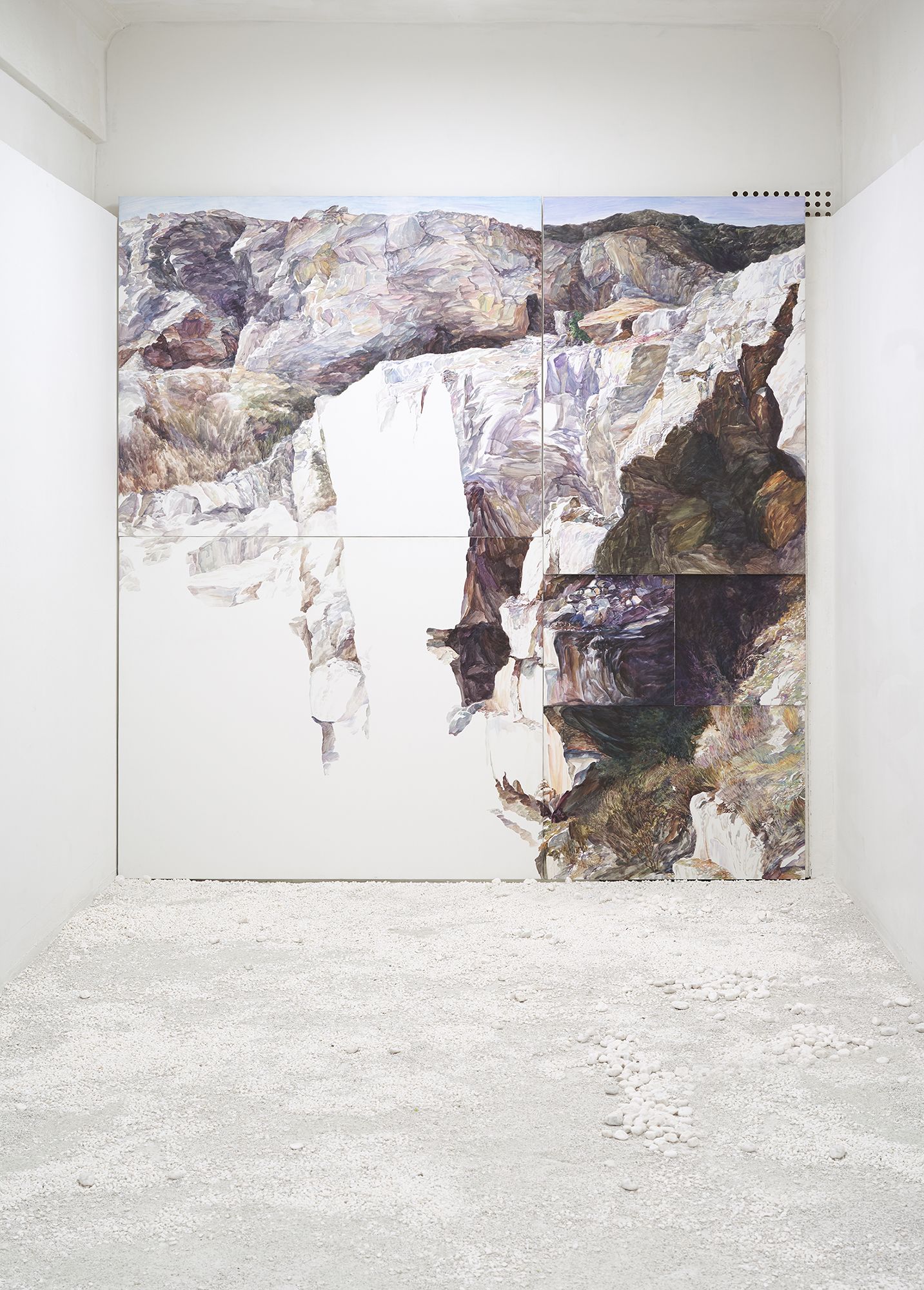
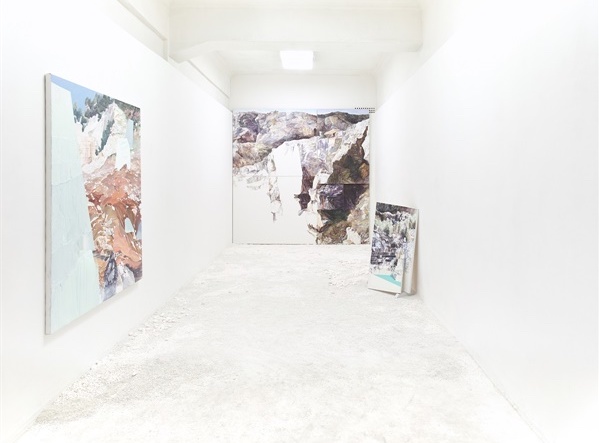
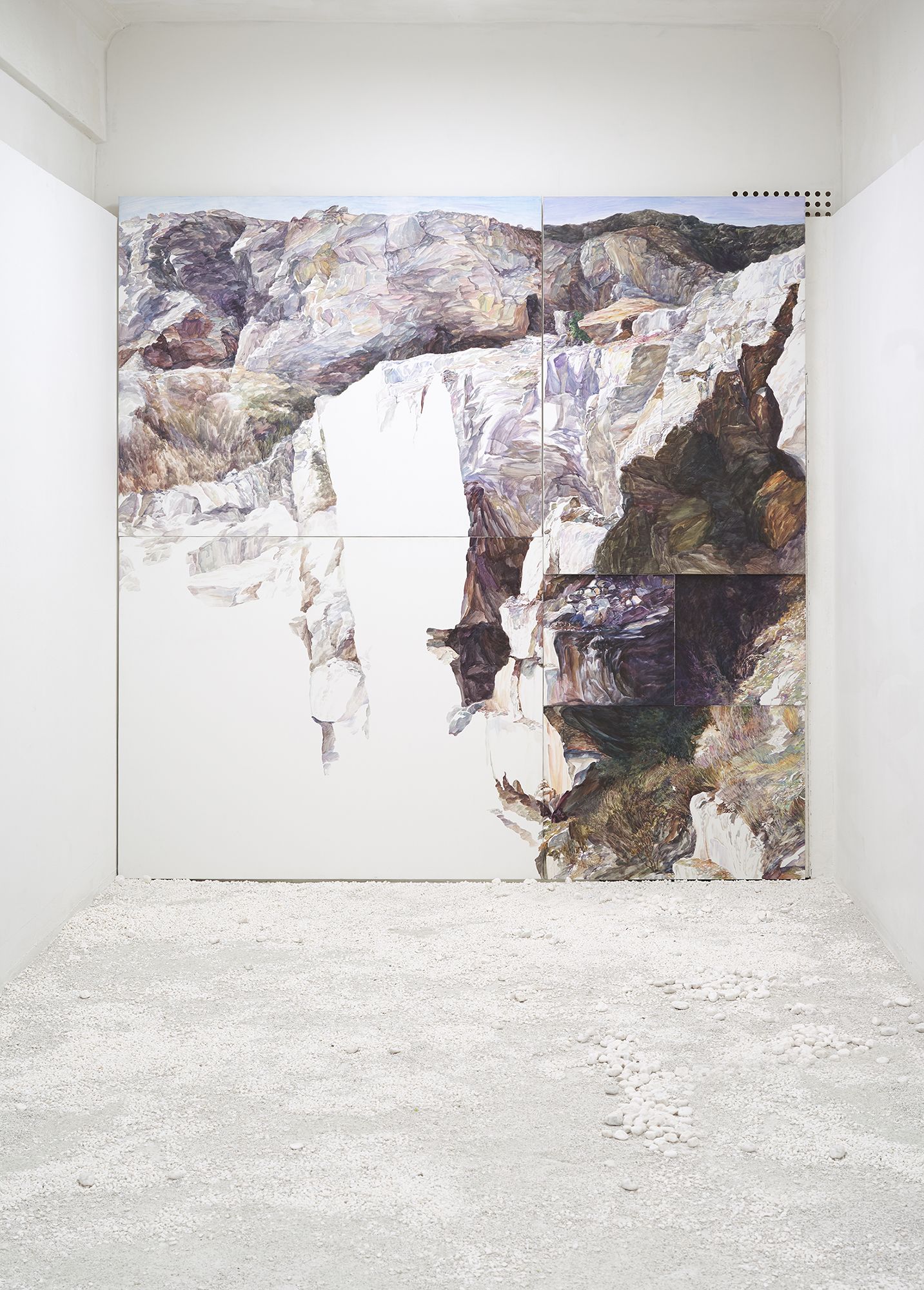
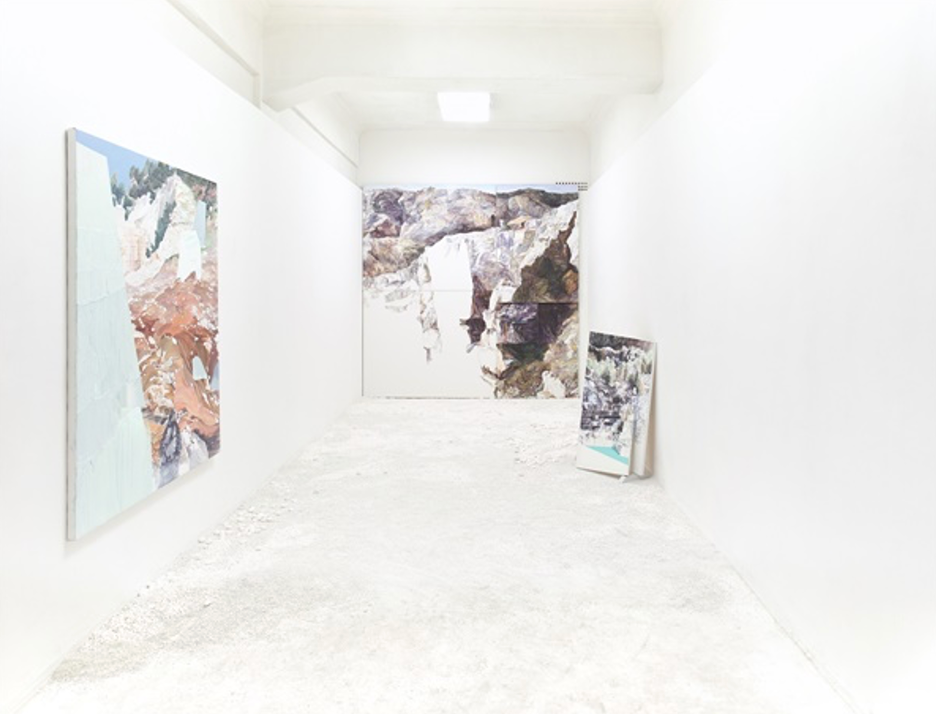
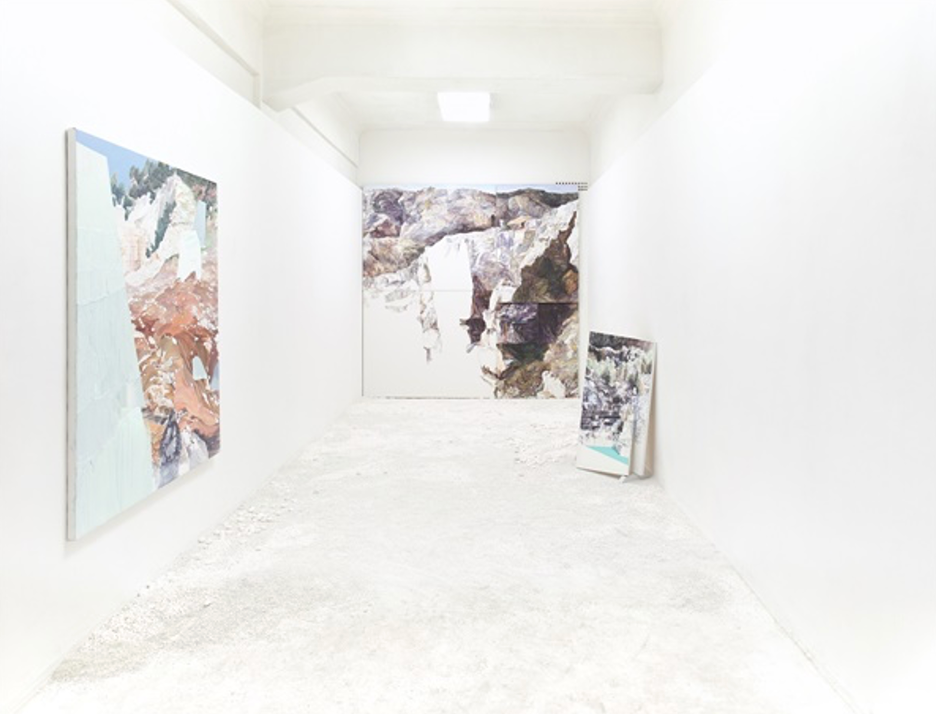
Installation view of 《A Serbian Mountain, a Quarry, Venčac》 (Art Space Hyeong, 2020) © Kayoung Choi

In her 2020 solo exhibition 《A Serbian Mountain, a Quarry, Venčac》 at Art Space Hyeong, Choi presented works that reflected on the relationship between virtual or indirect experience and actual reality.
 
In 2019, while participating in an artist residency in China, Choi became acquainted with Serbia through an artist from Serbia, identified as “M.” Through stories and photographs of a place she had never visited, the artist says that “a certain Serbia” began to take shape within her imagination.
 
Choi decided to first paint this “certain Serbia” that had emerged in her mind—a place she had never seen in person—and then visit it someday. To this end, she asked M to send her “photographs of beautiful natural landscapes in Serbia.” Among the JPG files that arrived in Korea, she came across a photograph of a mountain.


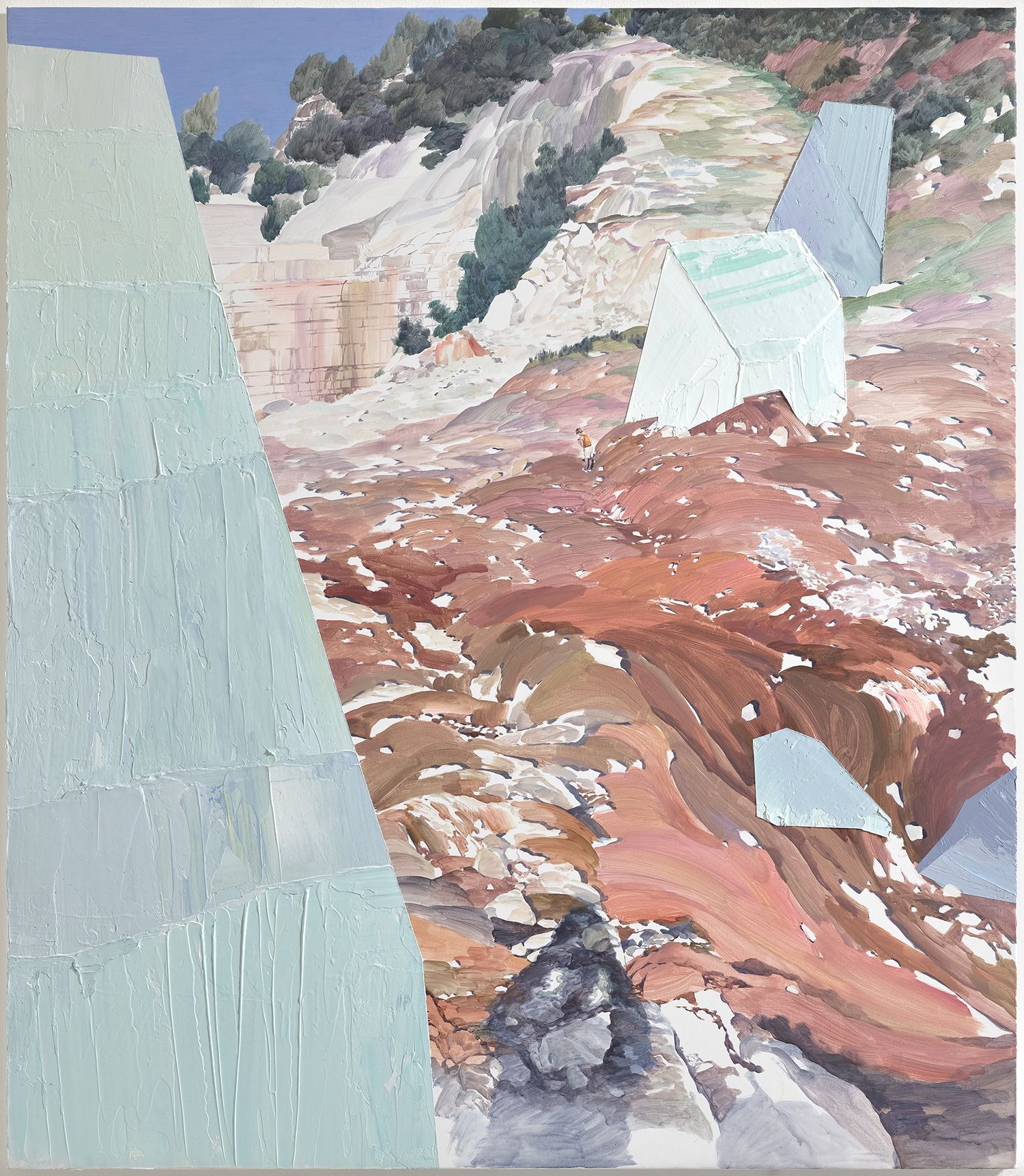
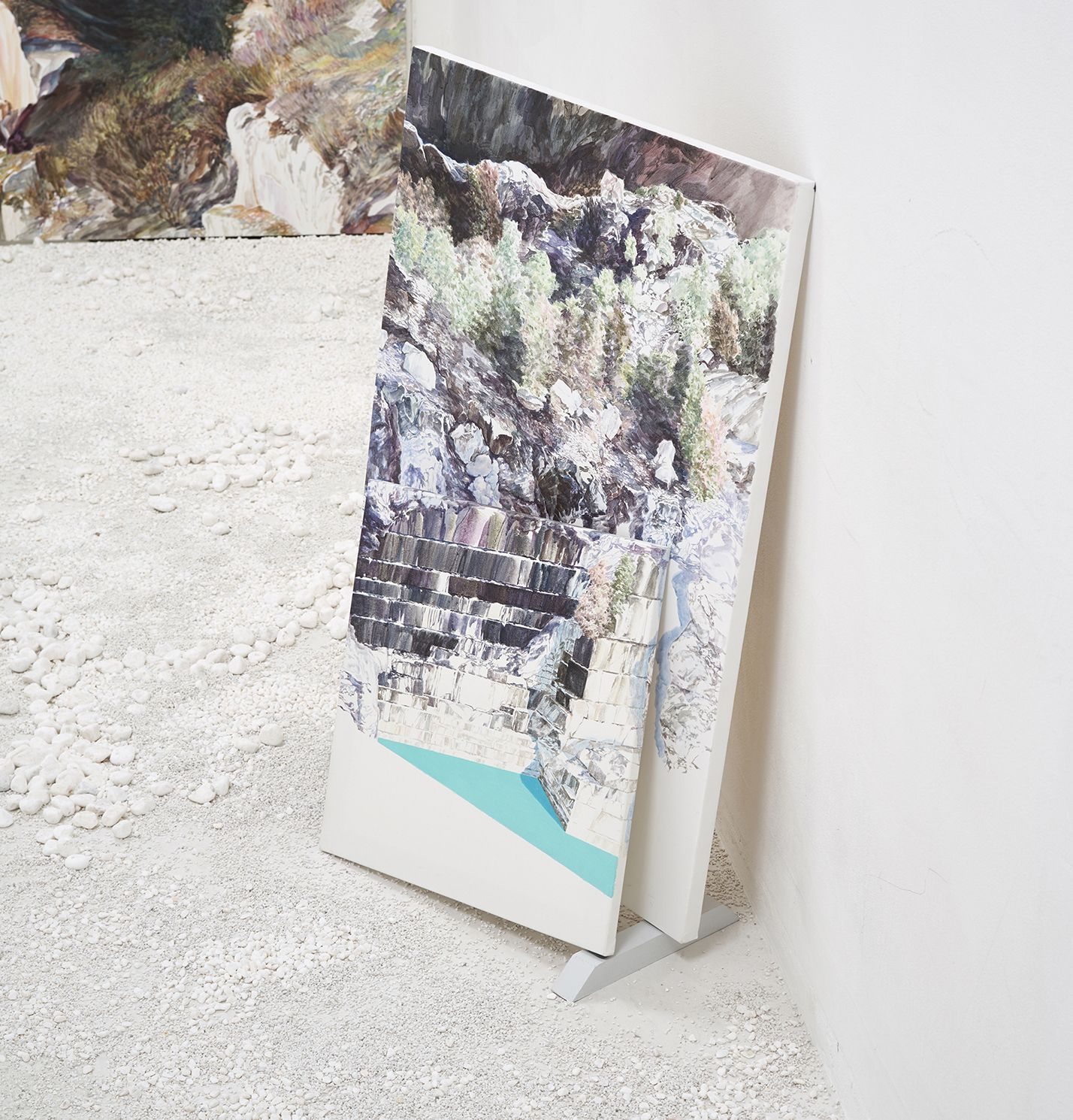
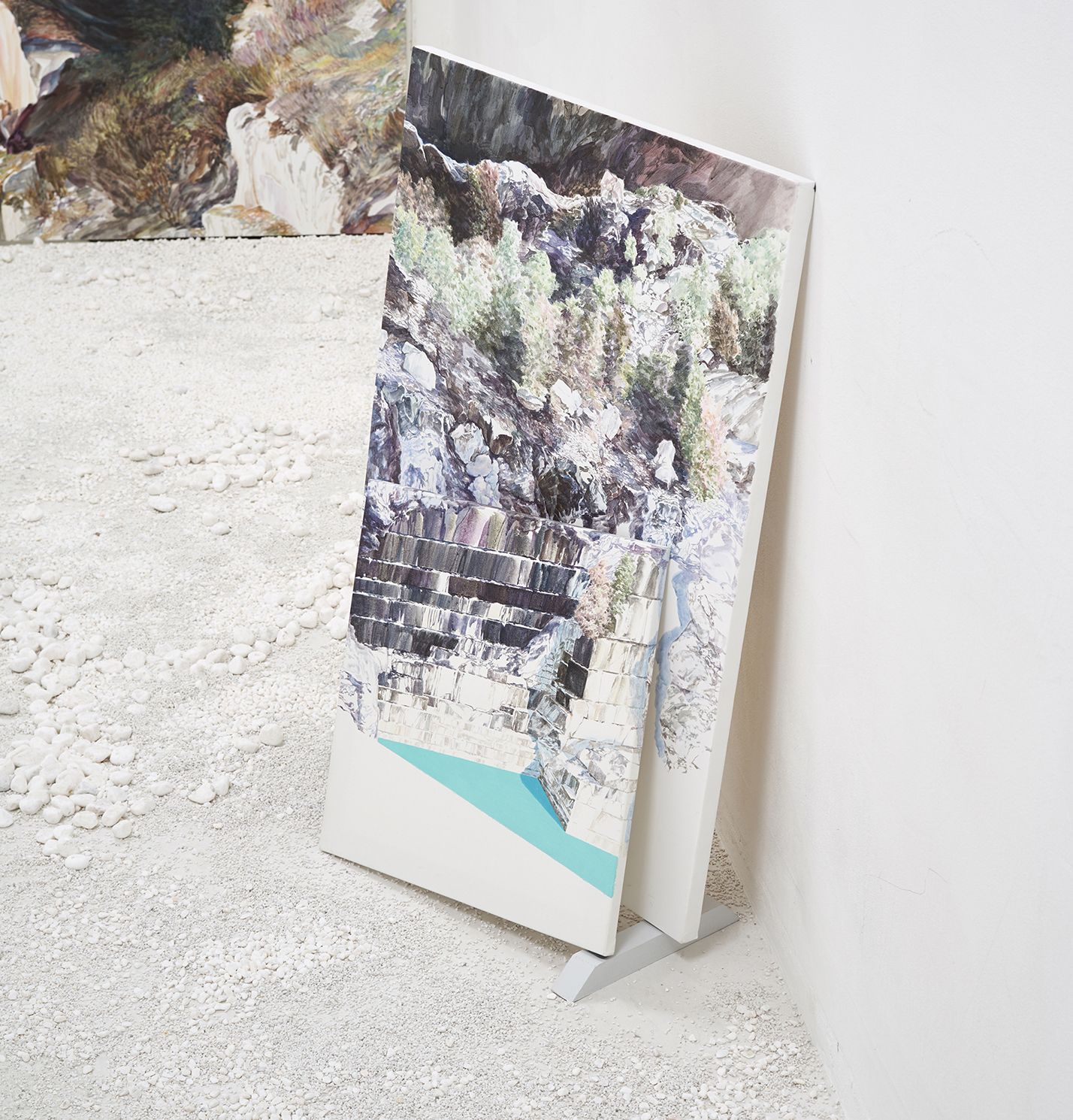
Kayoung Choi, A Mountain, a Quarry-from Marija Curk, 2020, Acrylic on canvas, 95x72cm, 50x50cm © Kayoung Choi

As she worked, Choi imagined herself walking through the mountain in the photograph, almost as if placing herself under a form of self-hypnosis. At the same time, she developed the work through conversations with M, who had actually experienced the site firsthand.
 
While painting the mountain, however, she came to learn that the landscape depicted in the photograph was in fact a quarry. Realizing this, the artist became increasingly curious about its present condition—not the picturesque, landscape-painting-like scenery she had imagined, but the actual site, where rocks were still being cut and excavated, continually altering the landscape from the image she had been working from.


Kayoung Choi, A Serbian Mountain-from Marija Curk, 2020, Acrylic on canvas, 262x262cm © Kayoung Choi

Afterward, the artist searched for “Venčac” (Венчац), the name of the location, gathering relatively recent photographs and related information to continue the work. Yet the further she progressed with the painting, the farther it drifted from reality. Ultimately, the painting became sketches of scenes that do not exist anywhere.
 
By looking at photographs of a real location and painting a place that does not exist, and by imagining that nonexistent place while dreaming of experiencing it someday, Choi began to confront fundamental questions concerning experience, perception, ideals, and the nature of the picture plane and painting itself.


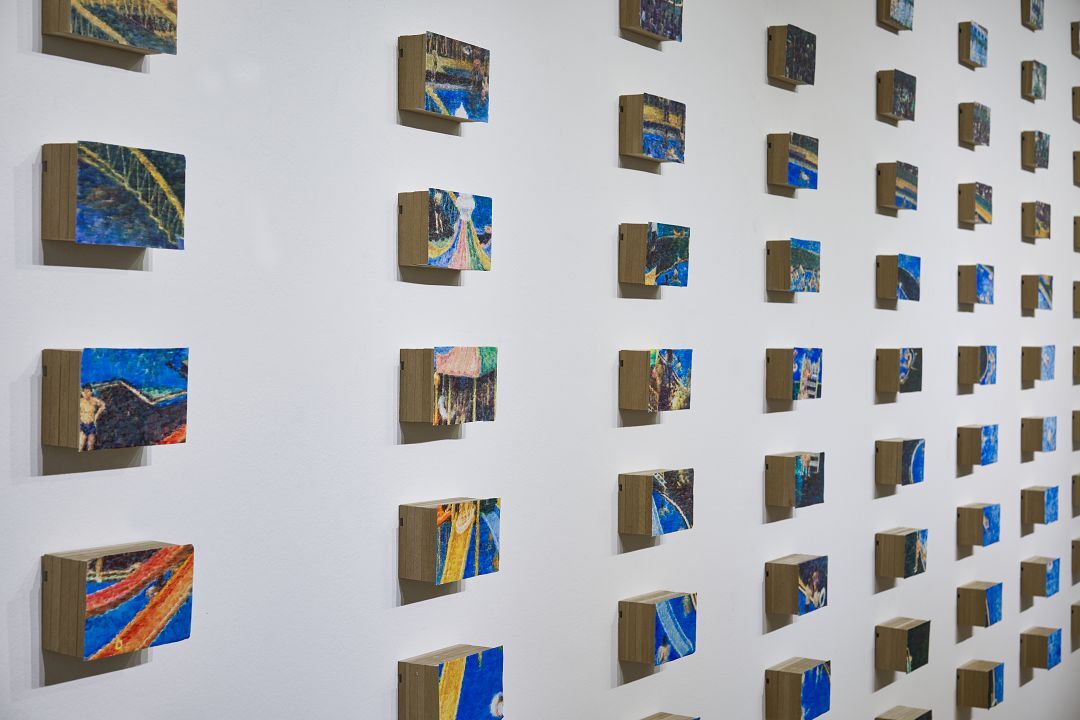
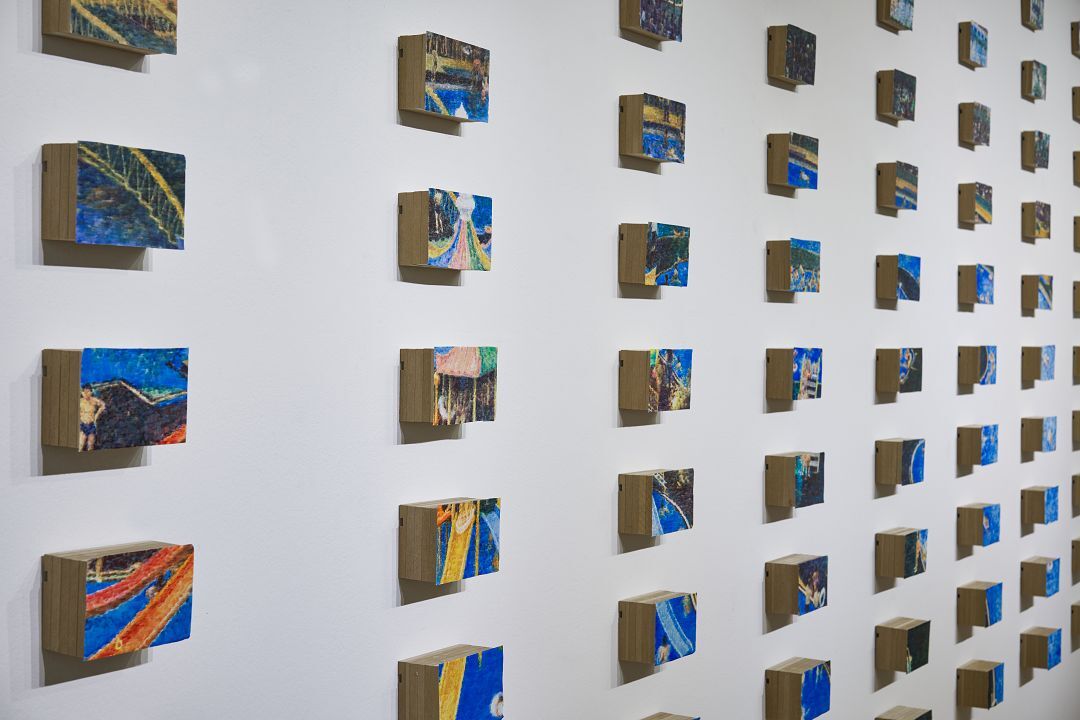
Kayoung Choi, 99 Pieces of Bugok Hawaii-From J in 1984, 2022, Acrylic on canvas, 10x15cm (99 pieces) © Kayoung Choi

Meanwhile, Choi’s 2022 solo exhibition 《Survival in Fantasy》 at Kumho Museum of Art began with a postcard that she happened to acquire while browsing an overseas website for buying and selling secondhand goods.
 
The postcard had been sent to the United Kingdom in 1984 by “J,” a foreign dancer who had worked at Bugok Hawaii, a Korean theme park that has since closed.
 
The Bugok Hawaii described by J in the postcard was a place the artist had never visited, belonging to a time before she was born and conveyed through the account of someone she had never met.
 
Taking this discovery as a point of departure, Choi drew upon archival materials, interviews, and site visits to create paintings that express her impressions of a place that can no longer be physically experienced.


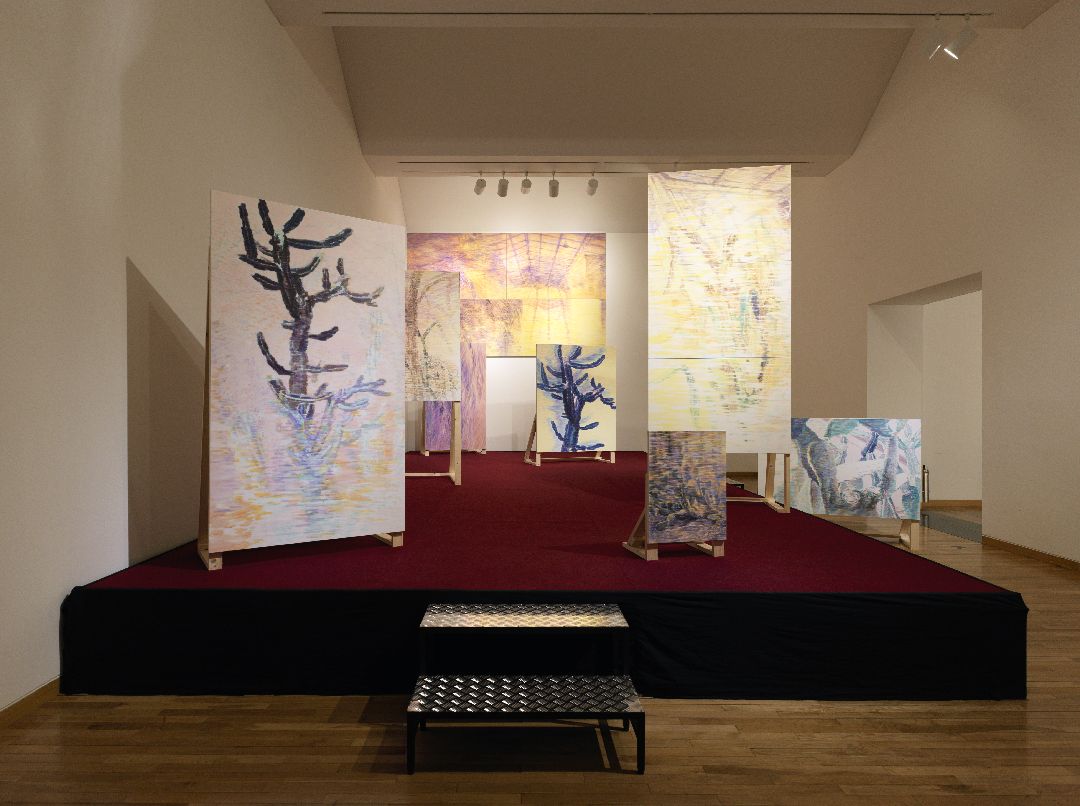
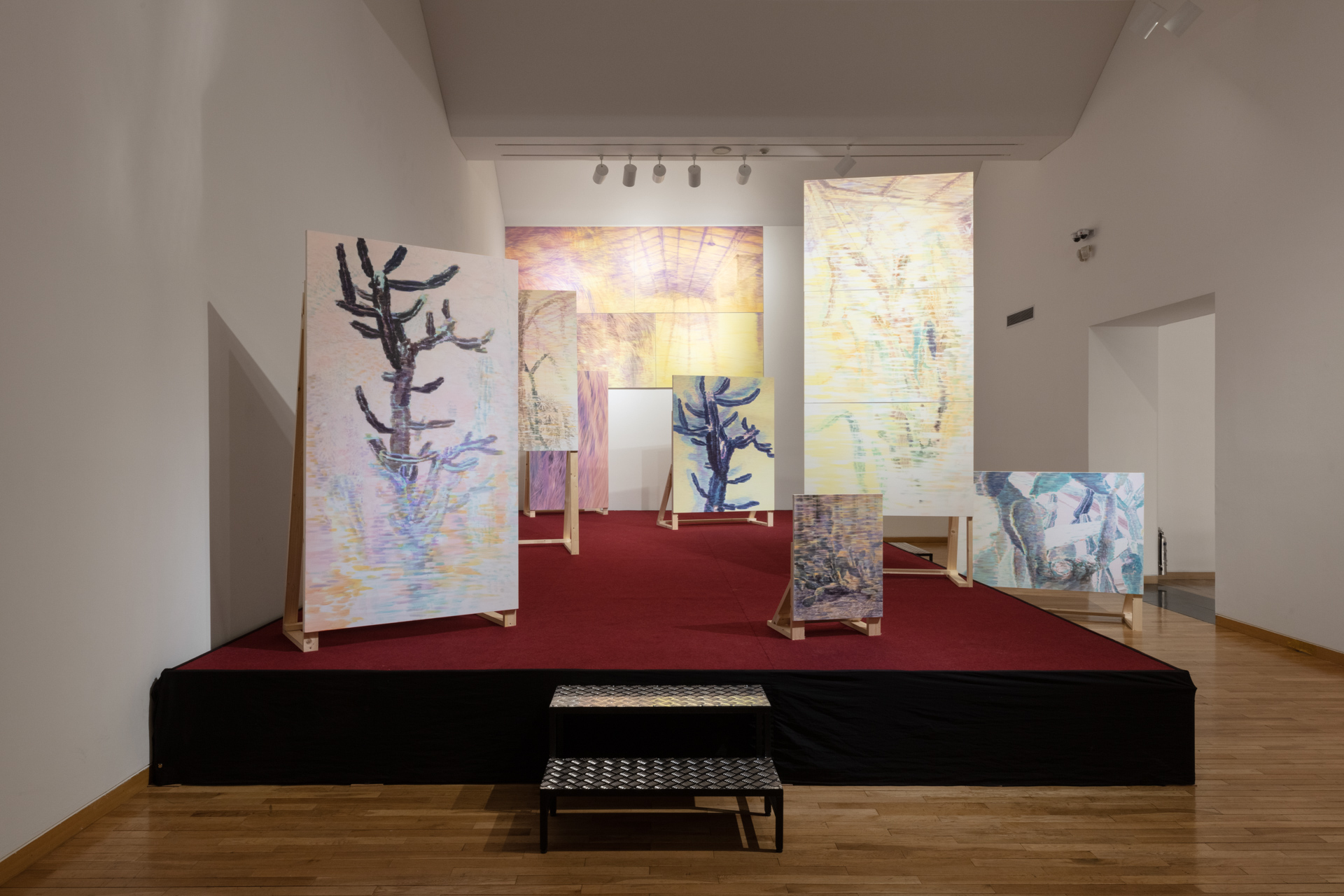
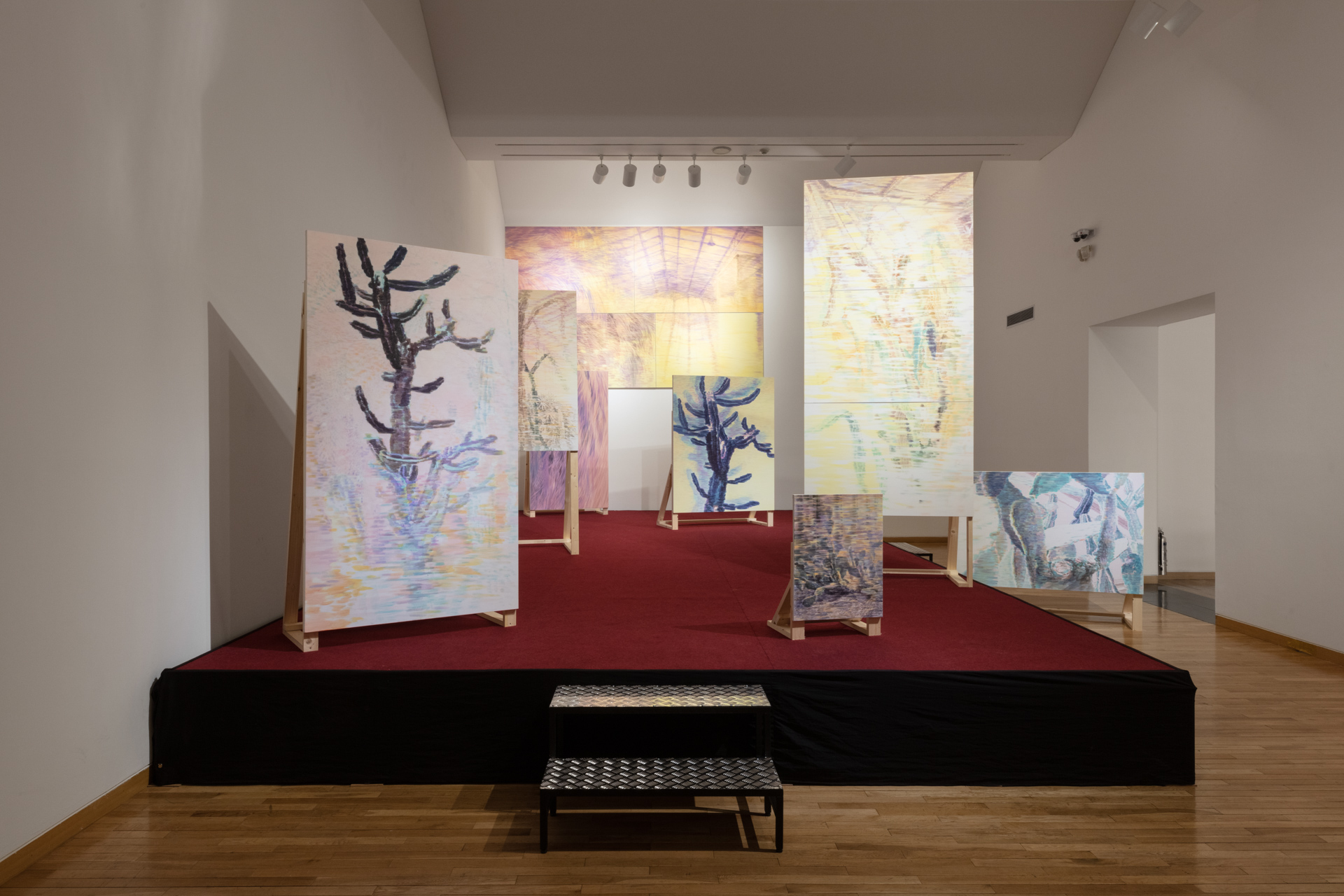
Installation view of 《Survival in Fantasy》 (Kumho Museum of Art, 2022) © Kumho Museum of Art

Through interviews with people who had experienced and remembered Bugok Hawaii in the 1980s, as well as through her own research trips to the site, Choi became interested in those who had labored and struggled to survive in order to produce its exotic and fantastical imagery.
 
The exhibition title, “Survival in Fantasy,” refers to the stories of survival of the foreign dancers who crossed the ocean to create “Hawaii” in the Korean town of Bugok, as well as the tropical plants that were brought there to sustain the illusion.
 
Through the exhibition, the artist hoped to encourage reflection on our own lives and the ways in which we continue to pursue our personal ideals within the routines of everyday existence.


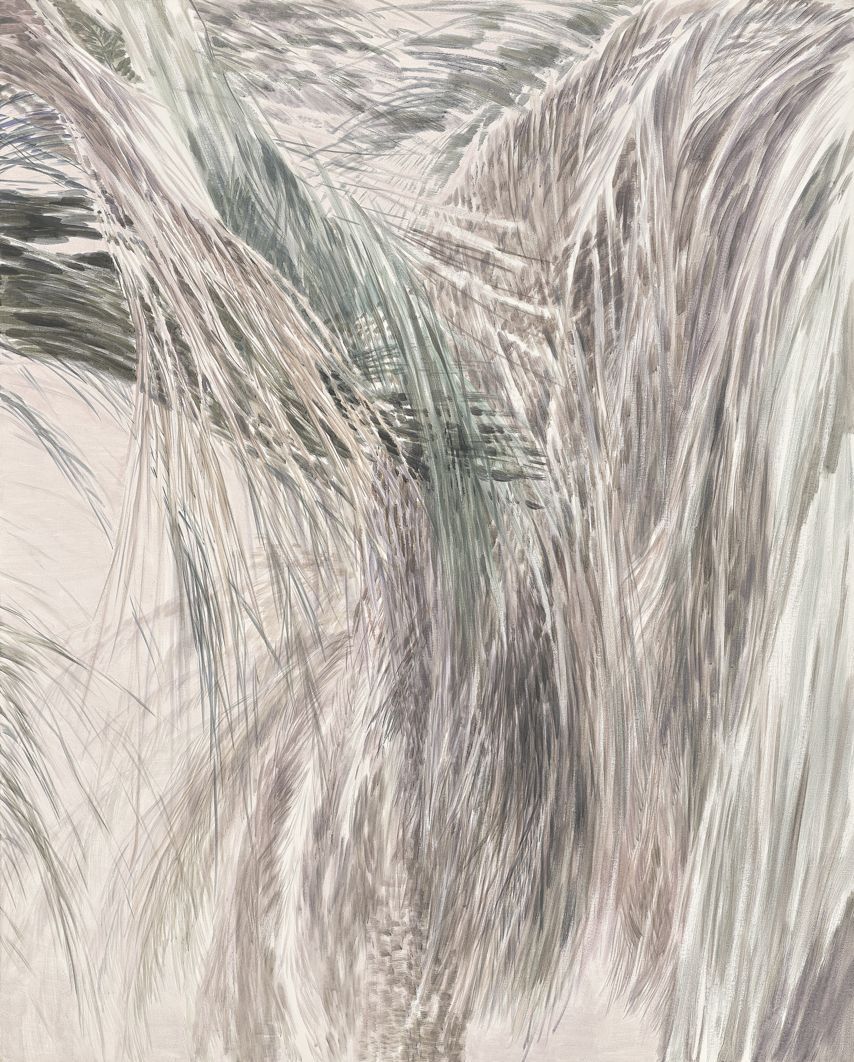
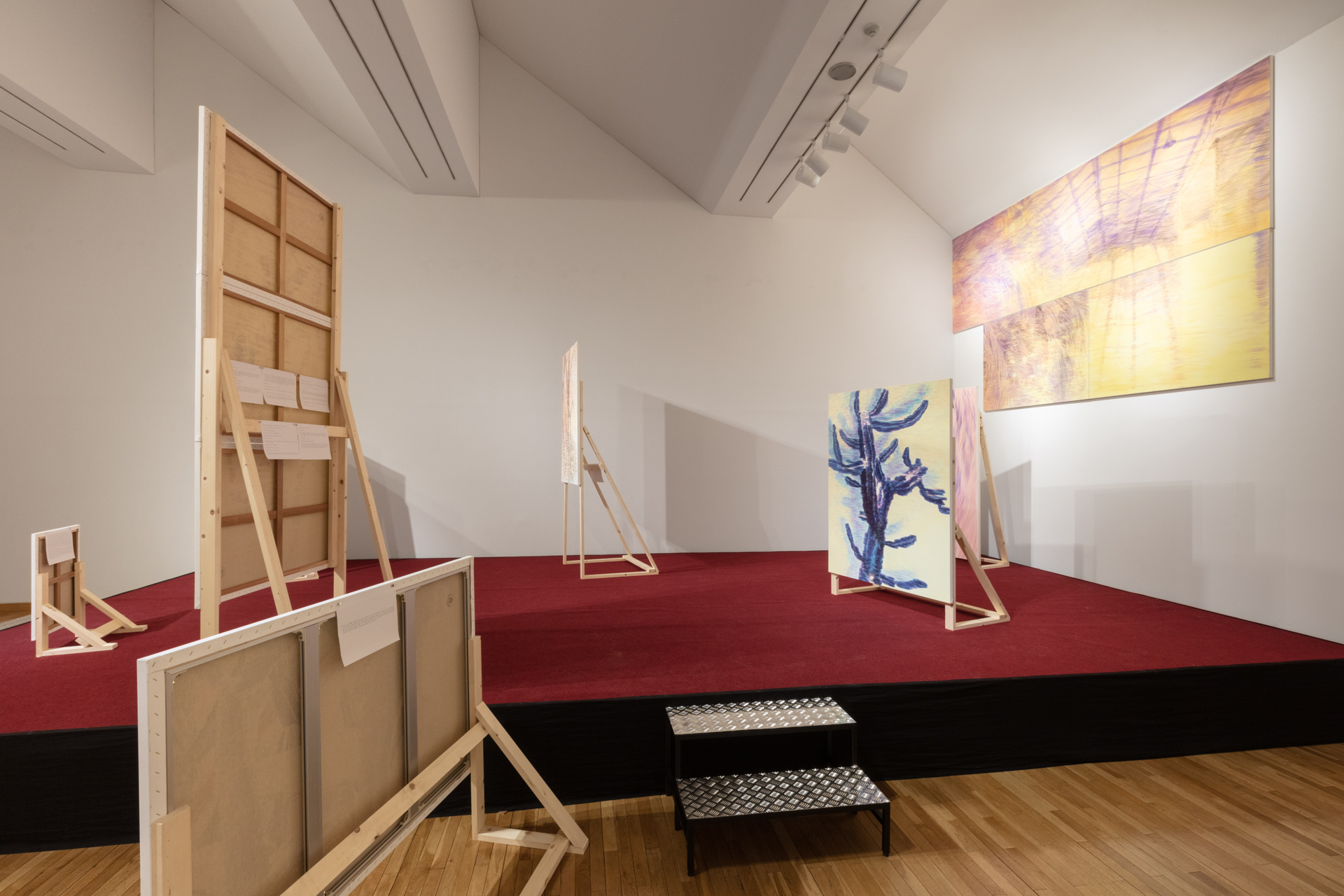
Installation view of 《Survival in Fantasy》 (Kumho Museum of Art, 2022) © Kumho Museum of Art

Choi incorporated into her paintings both the photographic image on the front of J’s postcard and the tropical plants that had traveled from distant places to help realize the fantasy of “Hawaii in Korea.” The brushstrokes that sweep across the surface evoke traces of time and space, as well as a sense of longing that extends beyond the physical reality of Bugok Hawaii itself.
 
In addition, the paintings were installed as part of a stage-like environment through which visitors could walk. By allowing viewers to move among the works, the exhibition invited them to engage with the stories behind the scenes—the unseen labor and circumstances involved in constructing idealized images and fantasies.


Installation view of 《Furutsu》 (Gallery Chosun, 2023) © Kayoung Choi

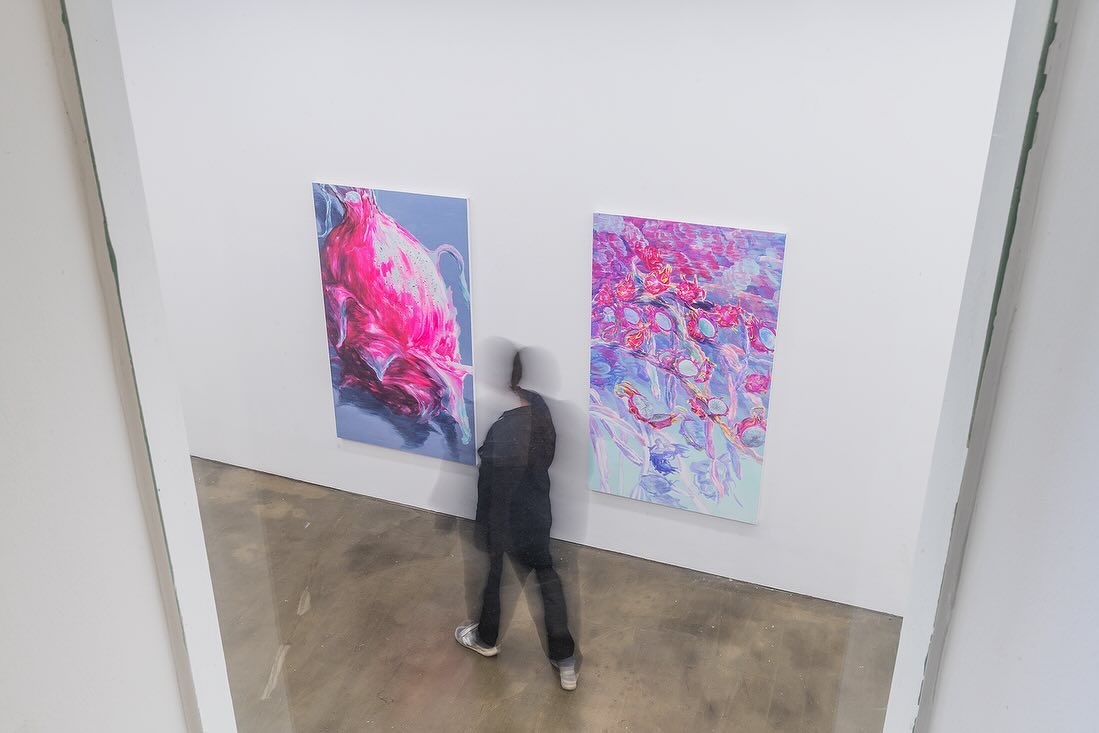
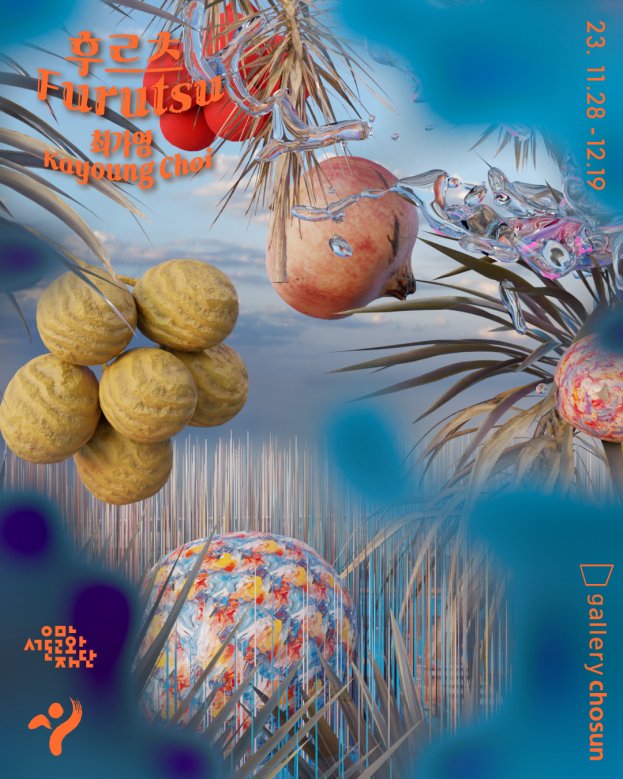
Continuing her interest in exotic fantasies, Choi’s solo exhibition 《Furutsu》 (Gallery Chosun, 2023) presented portraits of tropical fruits that have existed as decorative elements for, or on the periphery of, carefully staged fantasies.
 
The title “Furutsu” derives from the Japanese pronunciation of the English word “fruits” (フルーツ). Choi was inspired by the way the term is often used in the names of processed products that imitate the flavor of fruit, such as fruit cocktail canned fruits and fruit mix jelly.
 
In the exhibition, Furutsu functions not simply as a reference to something fruit-flavored, but as a broader expression encompassing beings that live by imitating fantasies associated with particular places, times, or desired objects—along with the strategies of survival they develop in response to those fantasies.


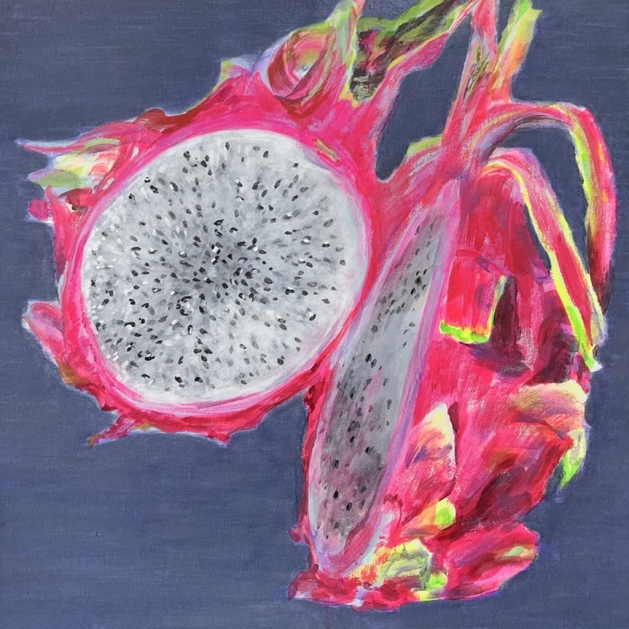
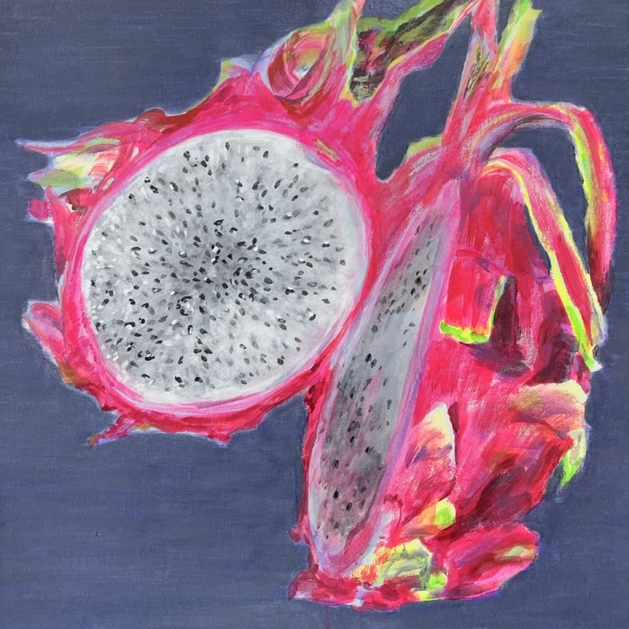
Kayoung Choi, Selenicereus Costaricensis, 2023, Acrylic on canvas, 38x38cm © Kayoung Choi

In Choi’s paintings, tropical plants appear imbued with a dreamlike sense of the “tropical” and an exaggerated sweetness. Yet the fruit depicted in her works—resembling canned cherries—evokes not the freshness of real fruit but rather the hollow aroma of artificial flavoring.
 
The artist suggests that the ways tropical plants have evolved to become sweet, colorful, and visually appealing in order to survive bear a resemblance to the conditions of life in contemporary reality. As such, her portraits of tropical plants also reflect the realities of living as a “furutsu”—a being that survives by embodying and performing a desired image or fantasy.


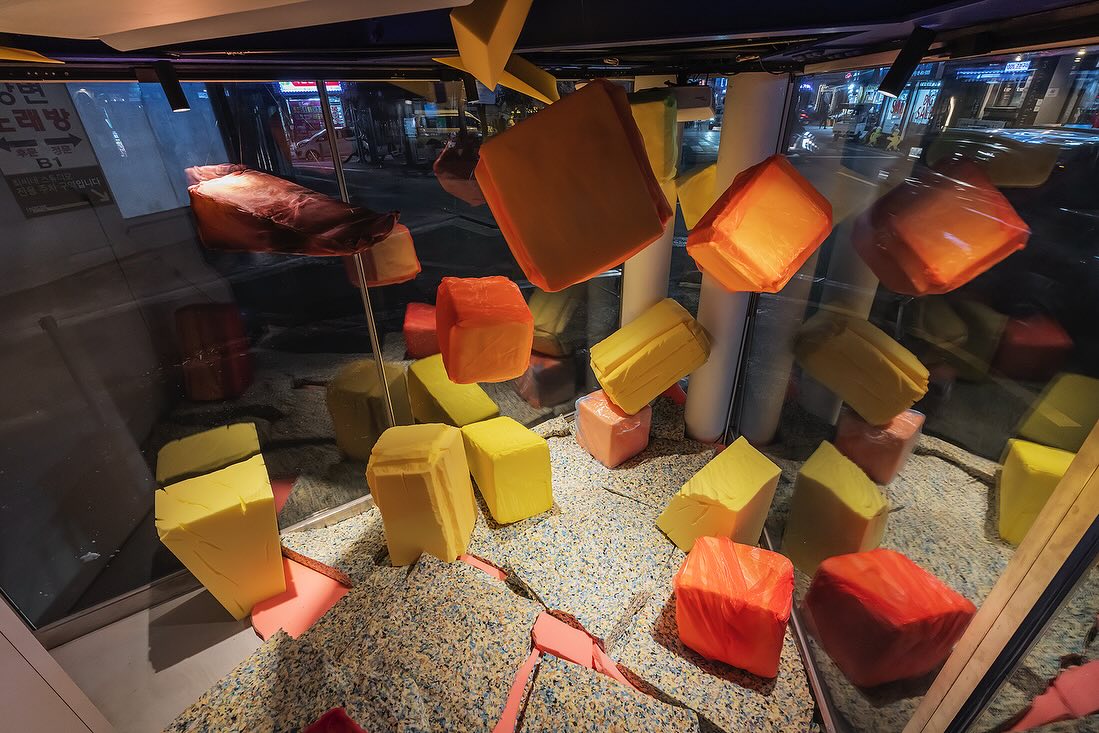
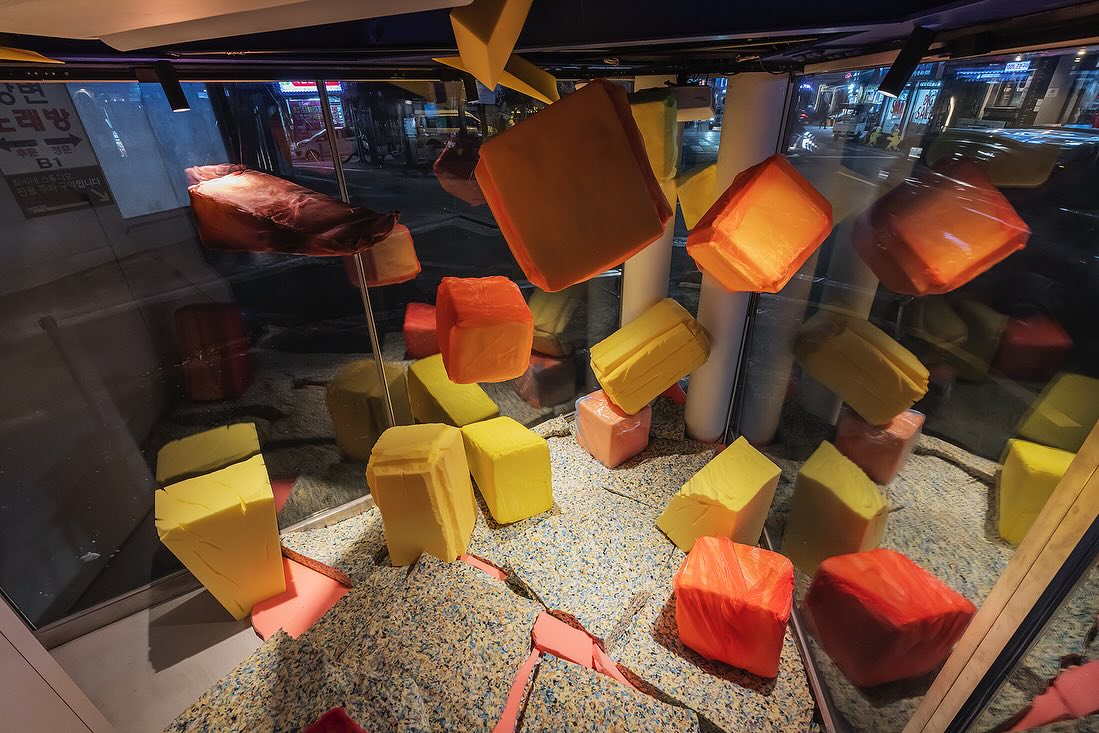
Installation view of 《Furutsu Jelly》 (Osisun, 2023) © Osisun

In the related solo exhibition 《Furutsu Jelly》 (Osisun, 2023), Choi presented an installation that invited viewers to step into the world of 《Furutsu》 and experience it from within.
 
Fruit pieces soaked in canned syrup were enlarged into monumental sculptural forms, filling the exhibition space. As visitors moved among them, they were invited to imagine themselves as another “furutsu,” drifting together through a pool of sweet syrup and inhabiting the fantasy embodied by the works.


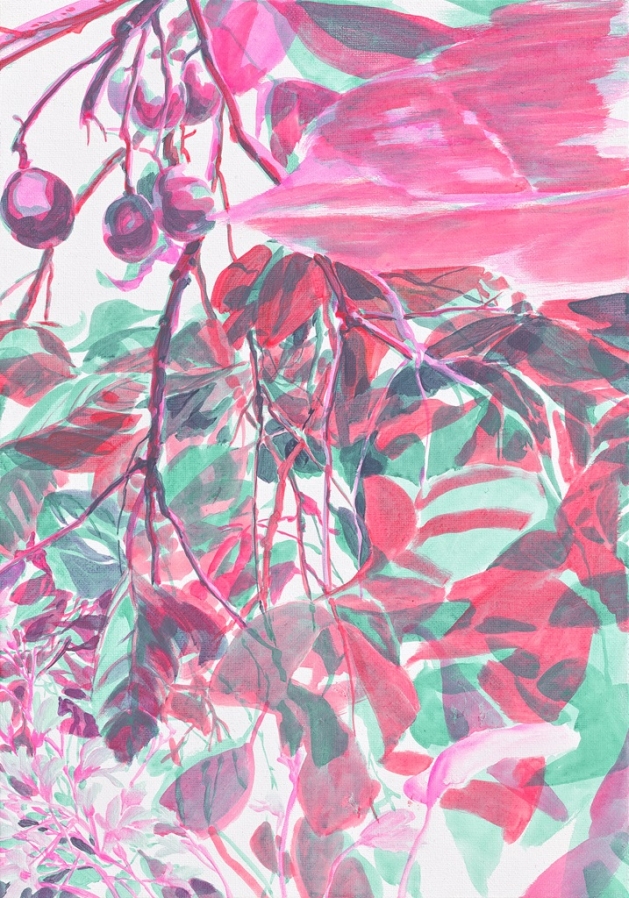
Kayoung Choi, A Hawaiian Summer Dream 5, 2023, Acrylic on canvas, 34.8x24cm © Kayoung Choi

In this way, Kayoung Choi’s practice draws upon research into distant places, people, and subjects to construct narratives that metaphorically and imaginatively reflect on reality, the individual, and society through painting and sculptural installations.
 
By expressing the very real desire for the extraordinary and for idealized worlds, her works encourage viewers to contemplate the relationship between reality and ideals. At the same time, they hold up a mirror to our own lives, revealing the ways in which we struggle, adapt, and persist in the space between the two.

"I am, at times, deceived by misconceptions and illusions created by the world that unfolds on the two-dimensional plane; at other times, I pretend as though I have been fooled by it. As I do so, I contemplate the relationship between reality and the virtual or indirect experience.
 
By "painting what I have never seen in person," I view the world in which images reproduced by pixels on the screen gradually come to resemble the reality" (Kayoung Choi, Artist’s Note)


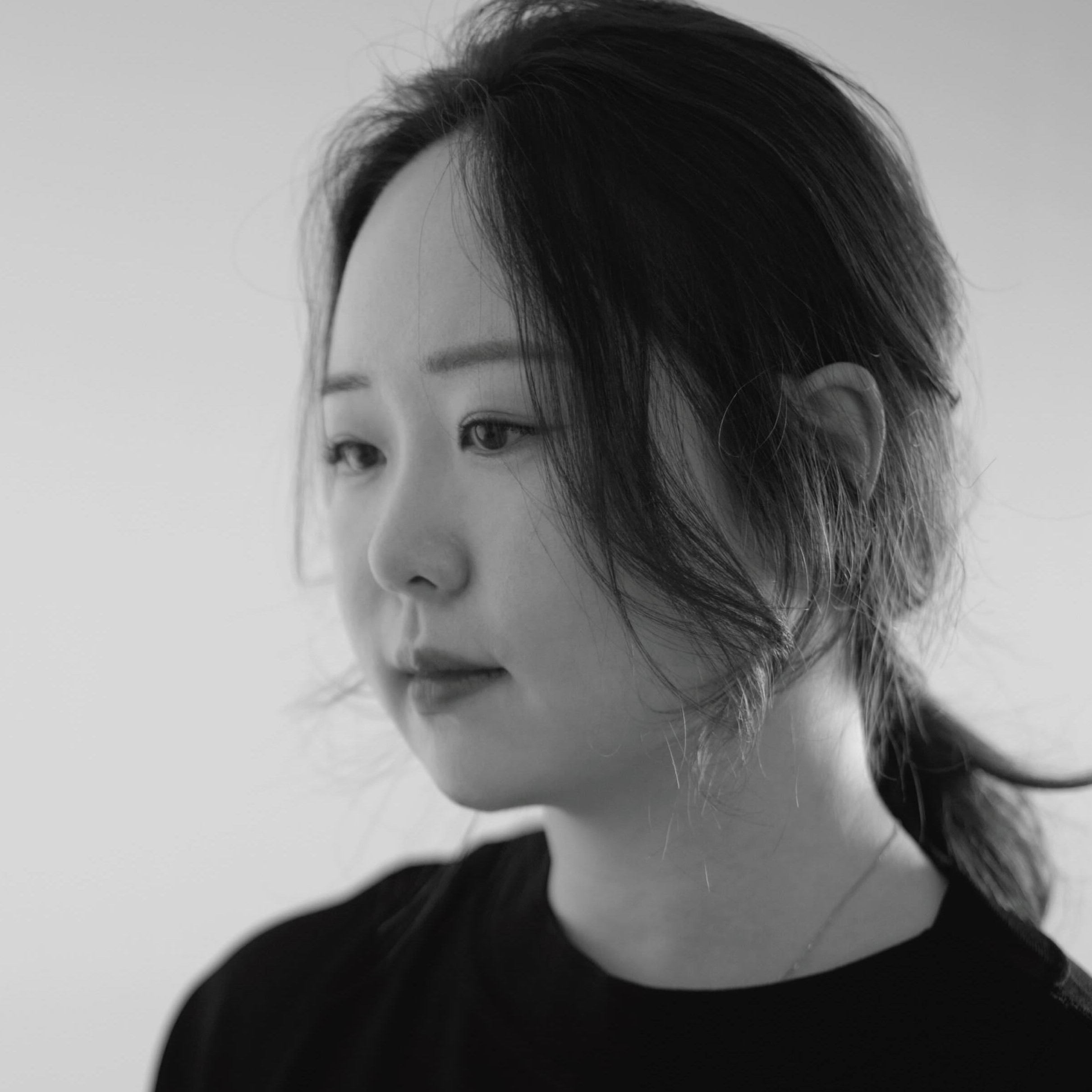
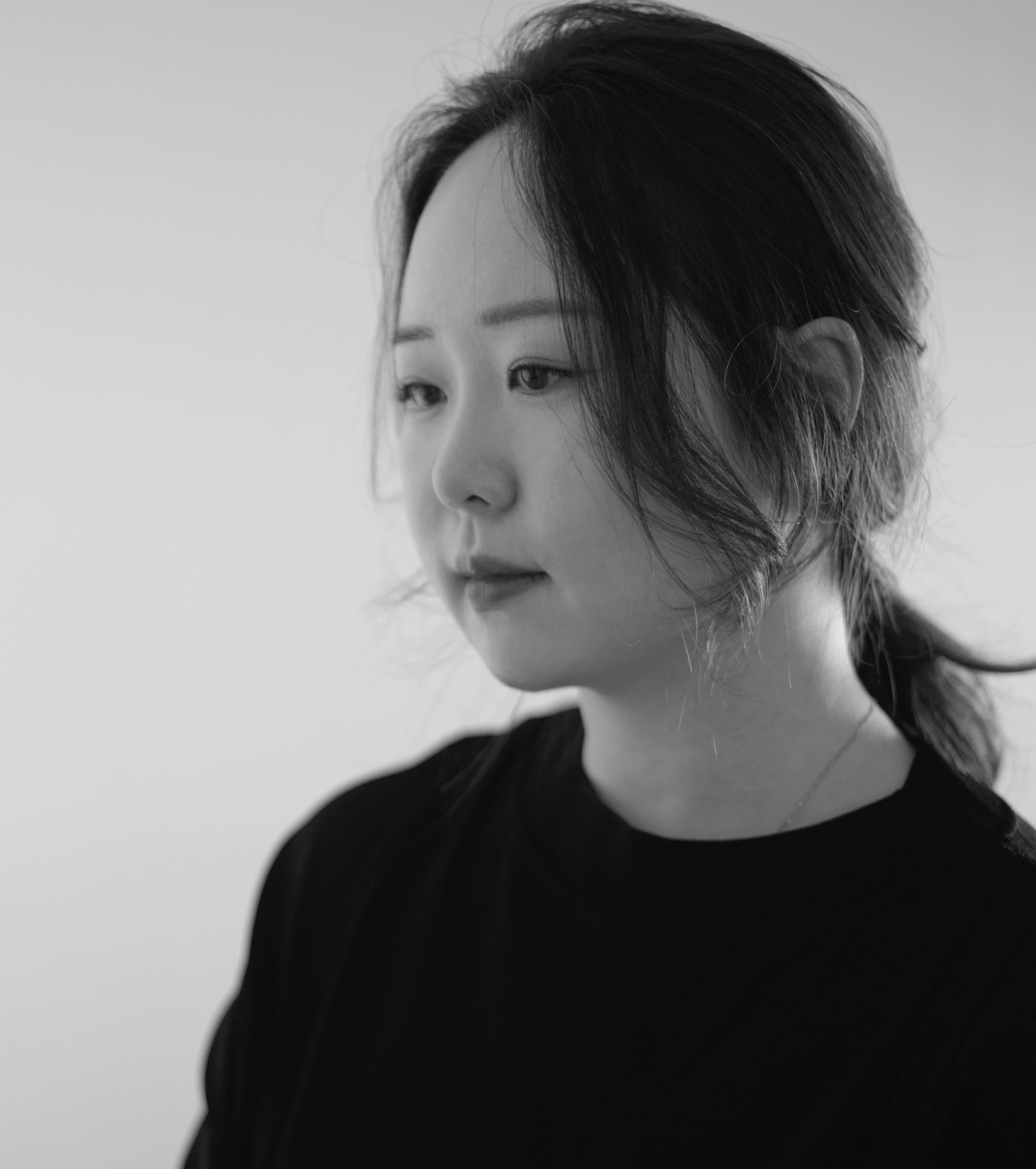
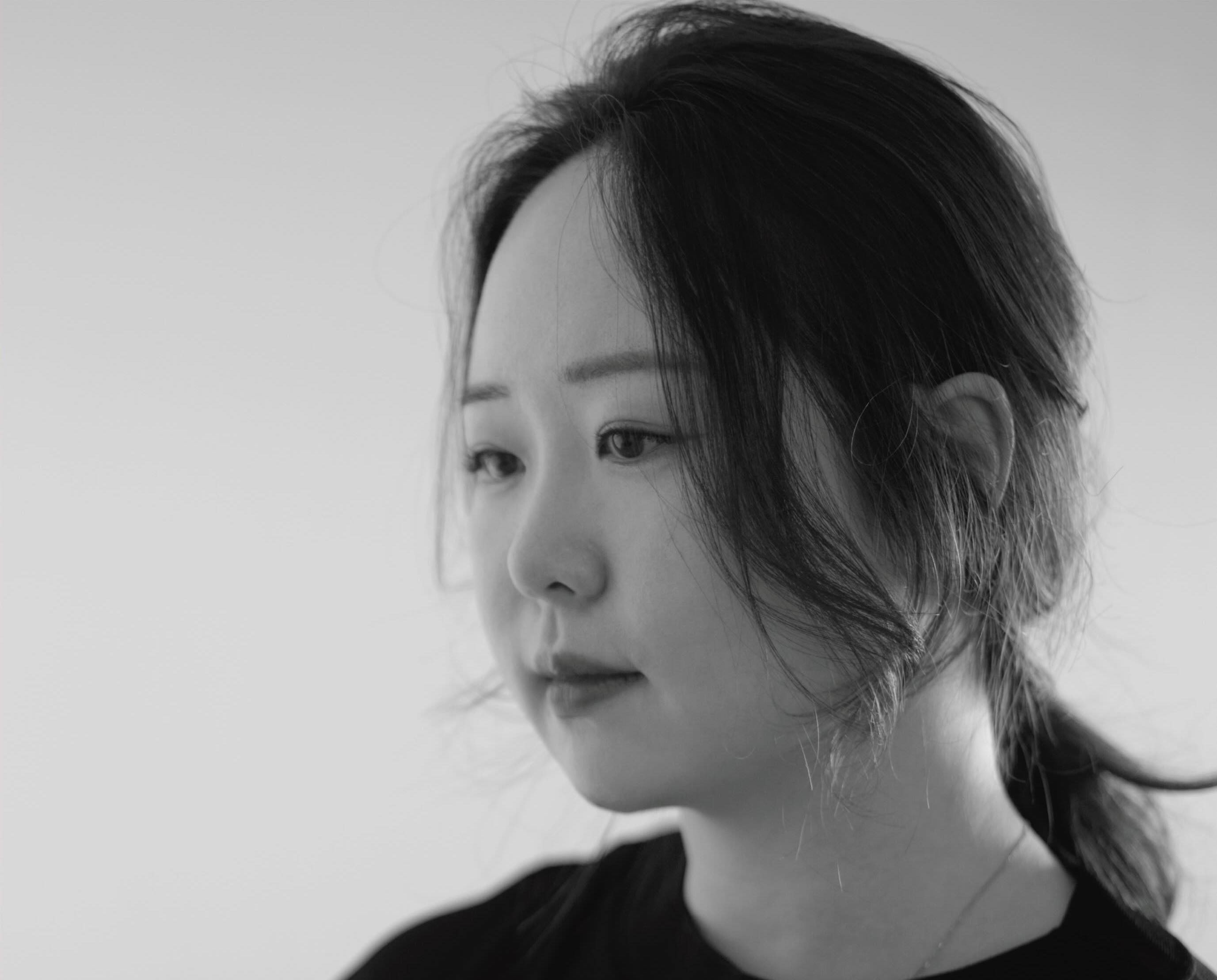
Artist Kayoung Choi © Piet-2 Art Center

Kayoung Choi received her B.F.A. in East Asian Painting from Seoul National University and later earned her M.F.A. from the same institution. Her solo exhibitions include 《Furutsu Jelly》 (Osisun, Seoul, 2023), 《Furutsu》 (Gallery Chosun, Seoul, 2023), 《Survival in Fantasy》 (Kumho Museum of Art, Seoul, 2022), and 《A Serbian Mountain, a Quarry, Venčac》 (Art Space Hyeong, Seoul, 2020).
 
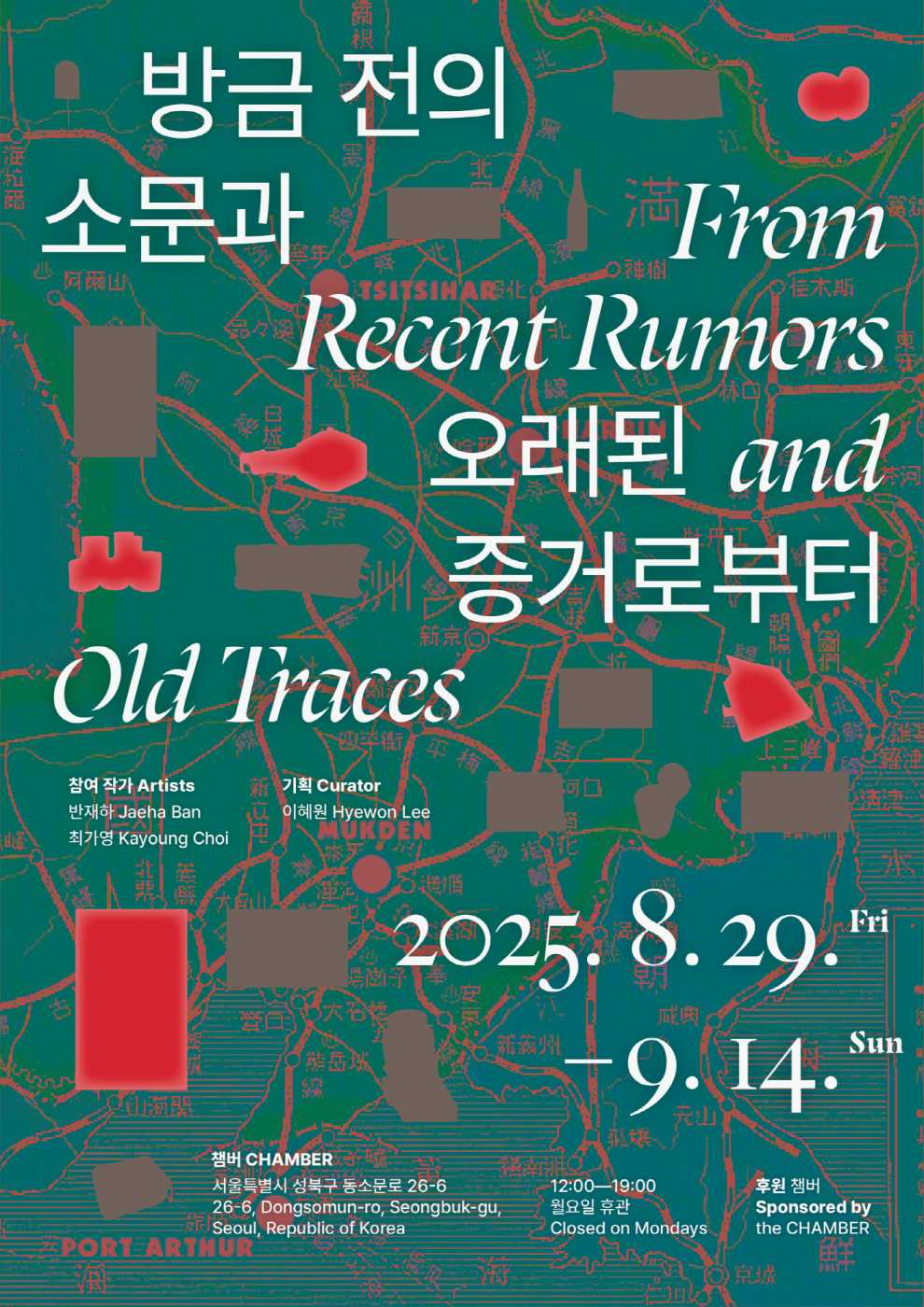
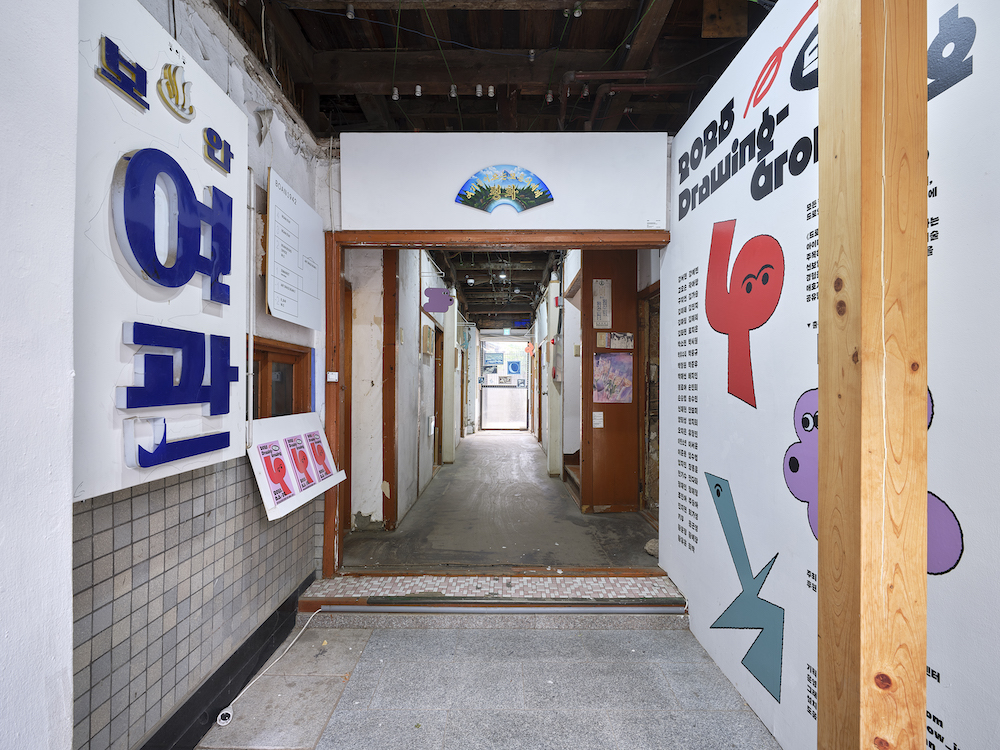
She has also participated in numerous group exhibitions, including 《From Recent Rumors and Old Traces》 (Chamber, Seoul, 2025), 《Even on the day when waiting ends》 (Gyeonggi Museum of Modern Art, Ansan, 2025), 《Drawing-Growing (Artspace Boan, Seoul, 2025), 《Transurfing》 (Noblesse Collection, Seoul, 2025), 《Showcase: Landscape Gardening》 (Incheon Art Platform, Incheon, 2023), and 《Even the Erased Memories Leave a Rhythm》 (Woosuk Gallery, Seoul, 2023).
 
Choi has participated in a number of residency programs, including Incheon Art Platform (2023), the Fujiyoshida Do-So Artist Residency (2019), and the Tao Hua Tan 5th International Artist Retreat and Residency (2019). She was also selected as a Kumho Young Artist in 2021.

References