Such excessive passion applies not only to science but also to lives that become wholly substituted by art. The more intense the experience of immersion in which one becomes completely absorbed into the work, the more unfamiliar the return to everyday reality becomes. Artists who devote themselves entirely to their work while neglecting reality inevitably encounter difficulties.
Some press onward without considering the return journey and thereby bring hardship upon themselves. Yet if one must proceed, perhaps one must go far enough to realize the fiction one has created as reality itself. Immersion is dangerous, but it also produces meaningful results. The world of art is one into which one should not enter at all unless one is prepared to become immersed.
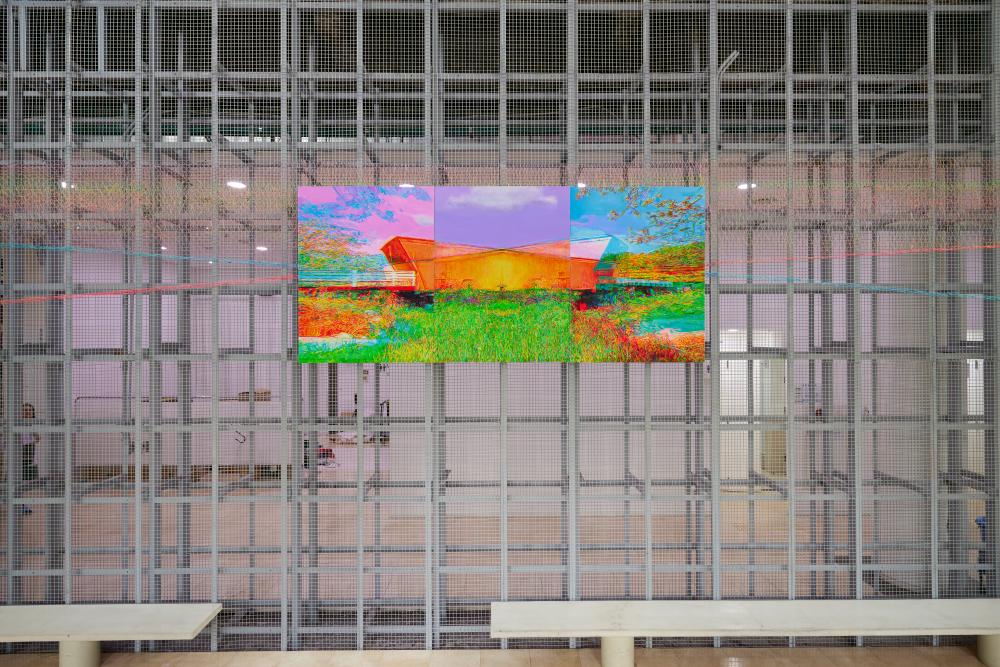
Paradoxically, the loss of distance from illusion produced by immersion creates a distance from reality. Choi Soo Jung’s work is structured around a game between these two dimensions: distance and the loss of distance. Mugan (No Interval) / Gonggan (Space) / Hyeongan (Threshold) addresses a certain interval—or the absence of one—that may exist between words and things, people and people, and countless other relationships.
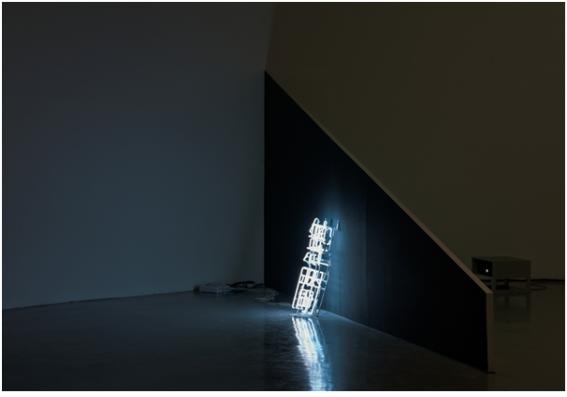
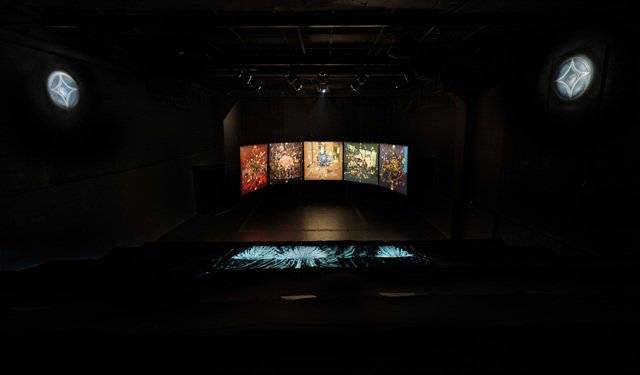
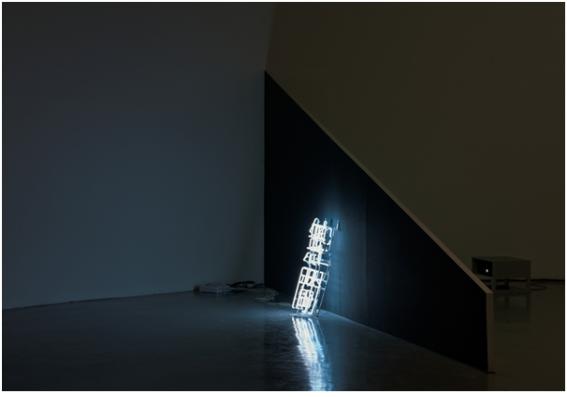
In this work, overlapping words occupy the same space and glow in different neon colors—white, red, and yellow. When illuminated in this manner, “mugan,” or the condition in which intervals disappear, causes language to cease functioning as a window or mirror through which reality can be viewed. Instead, the words appear as entangled objects.
Language itself acquires materiality and becomes the referent. Words and things are inevitably separated by a gap. Yet a passion for truth so intense that it seeks to eliminate this gap entirely produces only writing and speech that can no longer be read or heard. Just as extreme speed paradoxically creates a sensation of stillness, a frenzy of expression ultimately suspends expression itself.
The recognition of difference is a necessary condition for diverse forms of life and art, yet reality is often dominated by strong tendencies toward reduction and one-sidedness. Mugan / Gonggan / Hyeongan exemplifies the black-comedic paradox that characterizes Choi Soo Jung’s practice.
In Interminable Nausea, the artist sees “one of the Eight Hot Hells, where suffering is continuous and unceasing.” The loss of an appropriate distance—that is, the absence of difference—appears not as bliss, but as a form of hell.
The letterforms glow all the more apocalyptically against the dark background. In Choi Soo Jung’s work, an already desolate world is rendered even more desolate, yet a peculiar romanticism permeates it. Art protects the instinct to preserve warmth even amid the coldness of the world. Choi, however, does not rely on the human figure to convey this warmth.
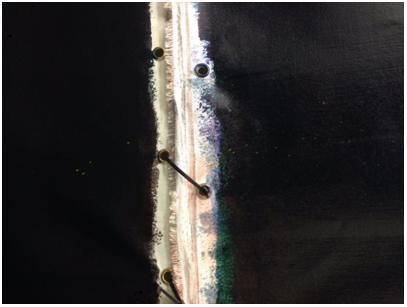
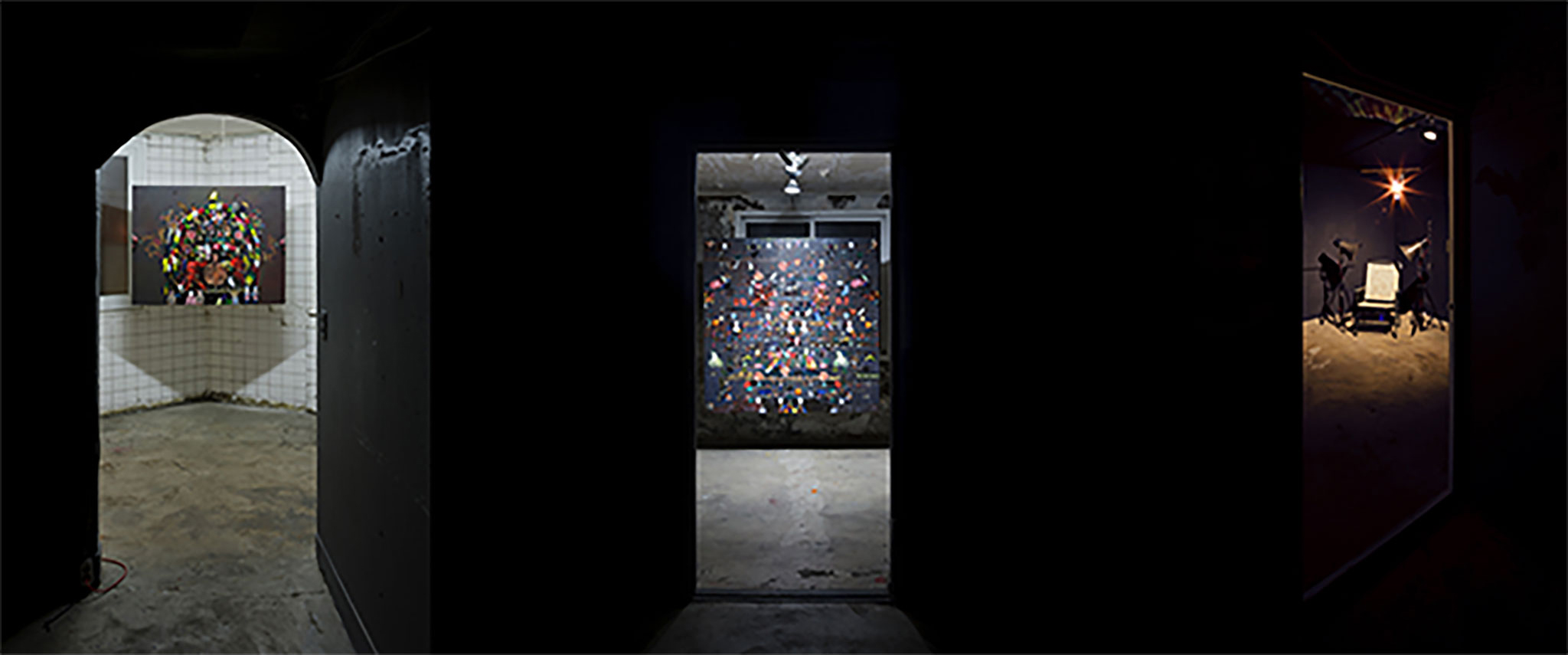
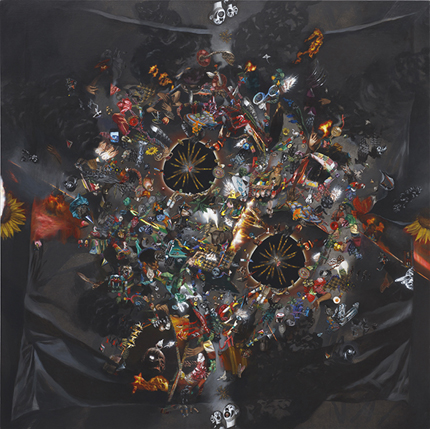
Interminable Nausea consists of two square canvases (1 × 1 meter) painted in acrylic. Their surfaces are so pitch-black that, like black holes, no light seems capable of escaping them. The work juxtaposes one canvas entirely covered in black pigment with another black canvas produced through the repeated layering of transparent colors—green, purple, red, blue, yellow, and others.
The interval between these two blacks becomes visible only at the edges of the canvases facing one another. Unlike light, colors become black when combined. Black therefore contains within it the potential of many colors. The two blacks reveal their subtle difference only along the edges, where traces of paint remain visible.
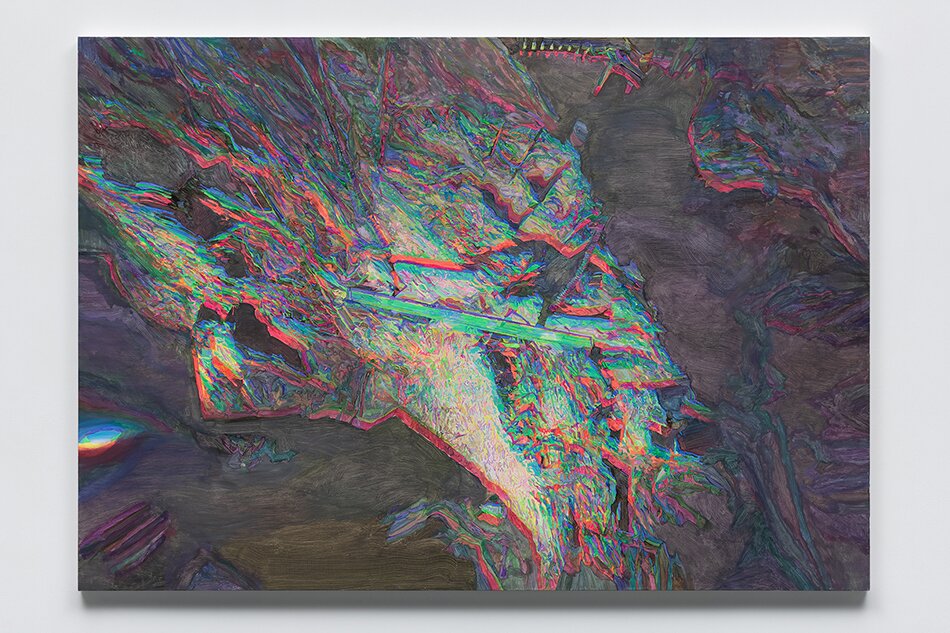
Yet in reality, can we ever go far enough to fully perceive such a difference? In an age in which essence and foundations have disappeared, perhaps truth can only be approached through a continual exploration of surfaces. In Choi Soo Jung’s work, black composed of multiple colors appears as an allegory resembling a palimpsest layered over countless years.
Allegory does not transparently reflect its object; rather, it describes a condition in which meaning becomes opaque because of its distance from its origin. Allegory lies dormant within ancient ruins and archaeological sites, and in the postmodern era, where the myths of novelty and progress have lost their force, “the repressed allegorical impulse returns” (Craig Owens).
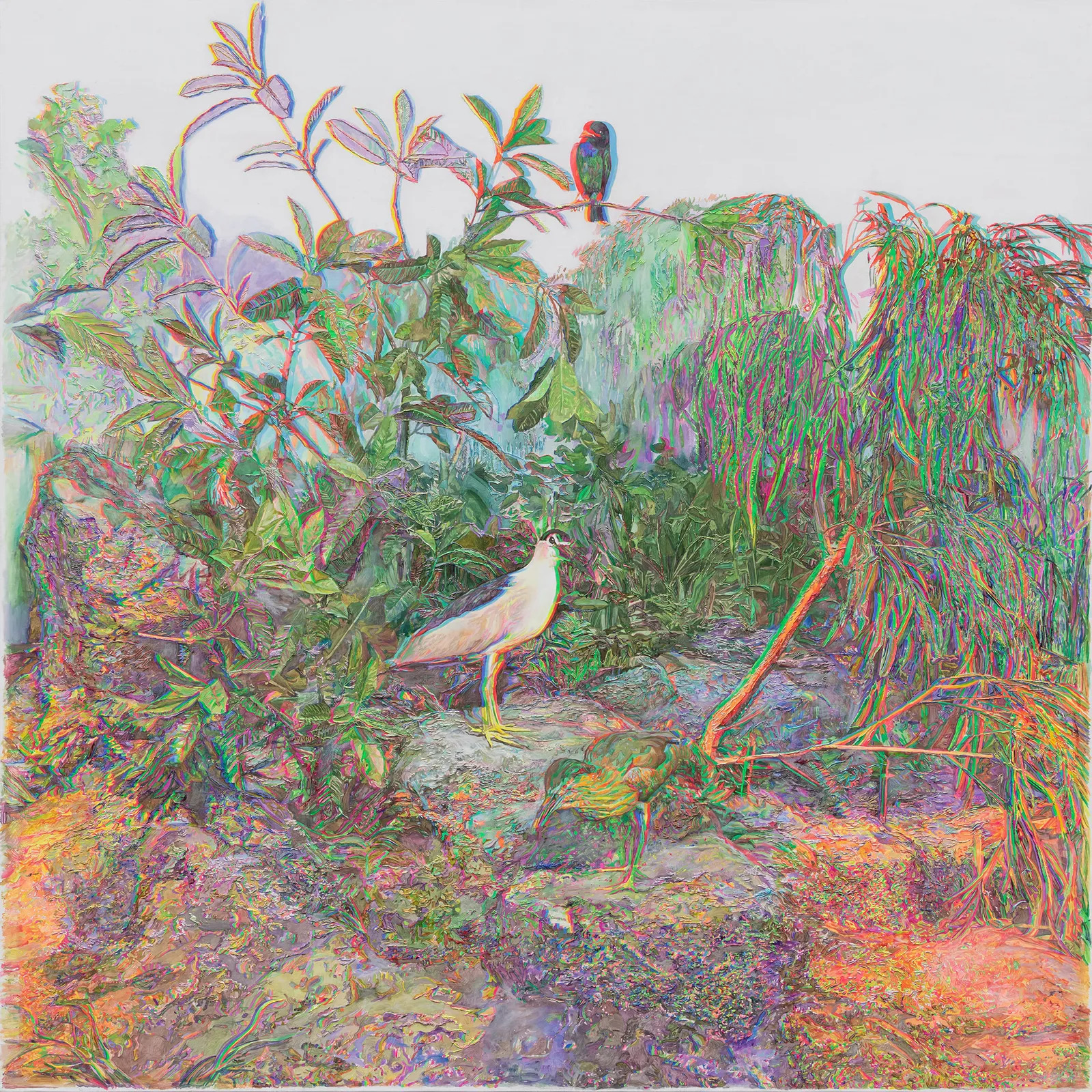
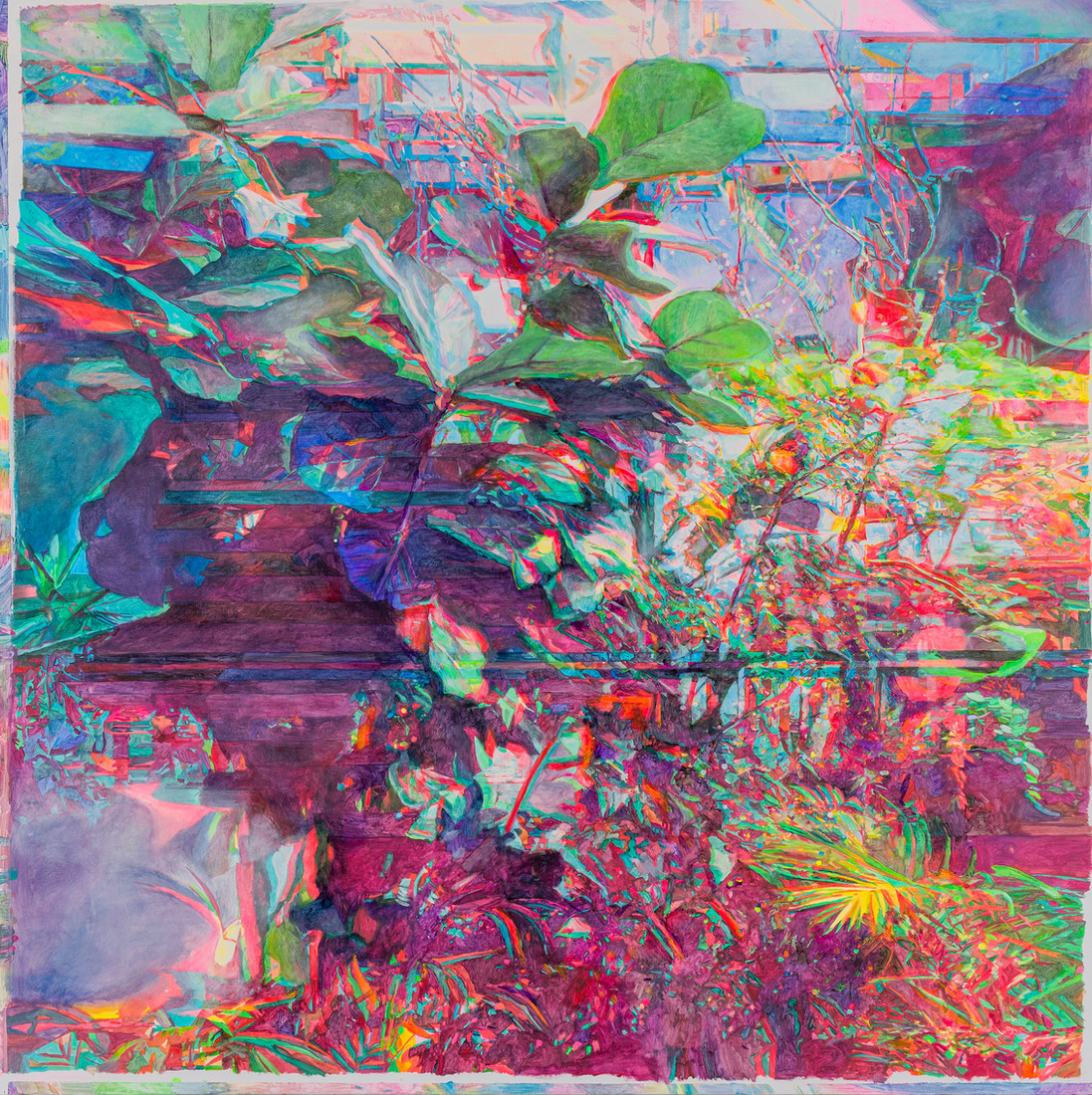
Just as the Greek root of allegory, “allos”, means “other,” a single color in Choi’s work continually shifts into another color. Infinite layers of difference converge into black, yet traces of those differences remain faintly visible along the edges. The repeatedly painted surface possesses a toughness akin to finely tanned leather.