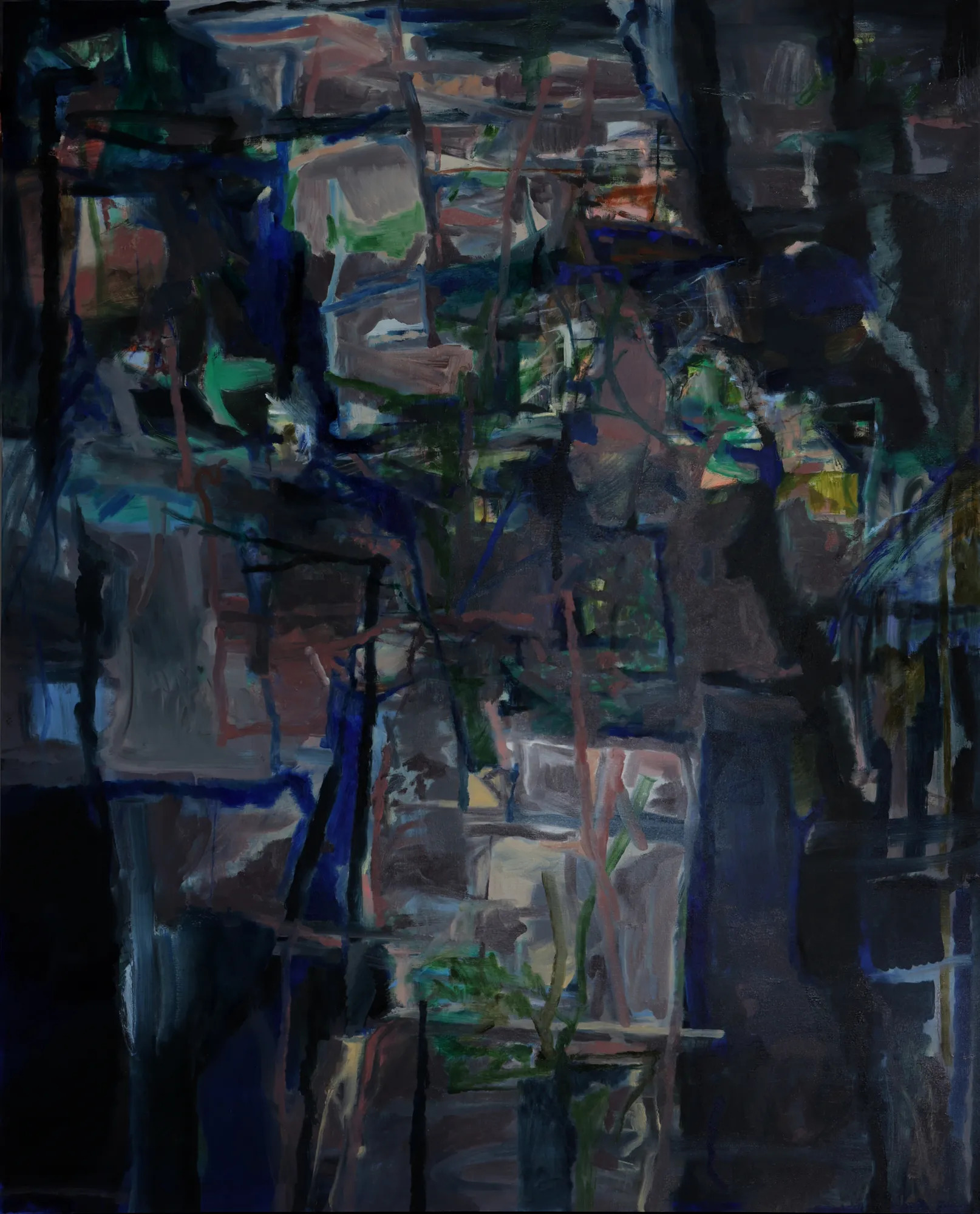
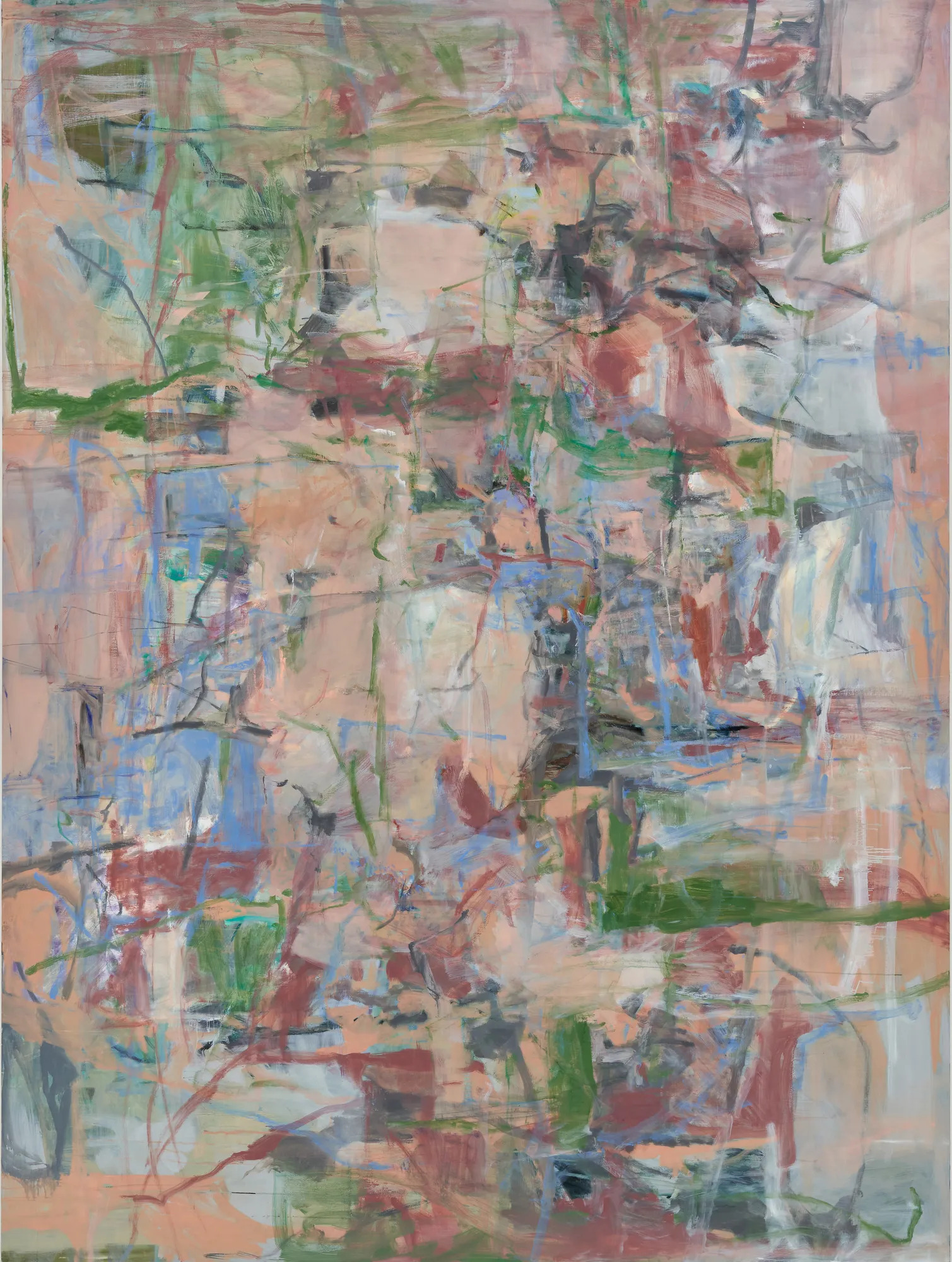
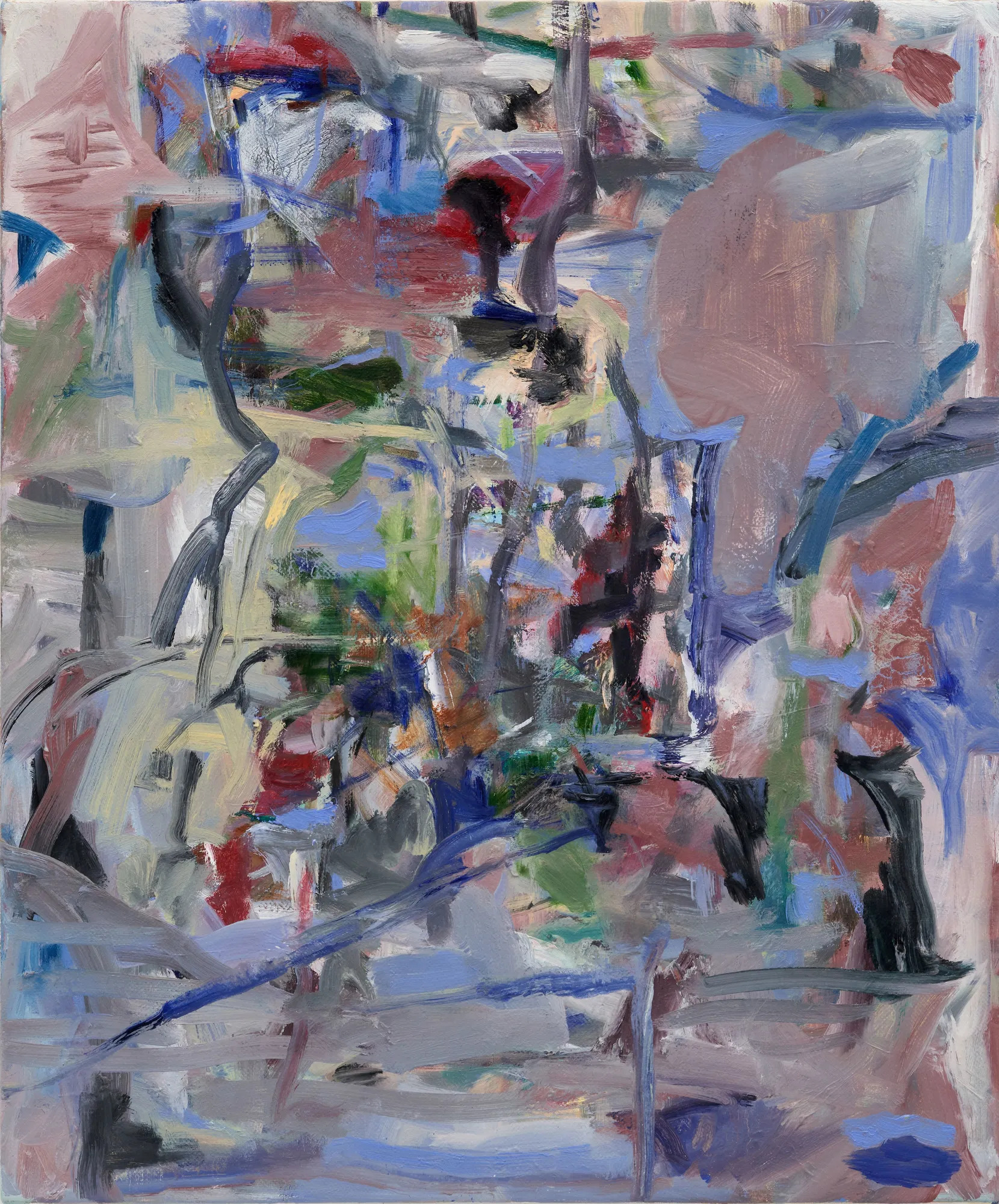
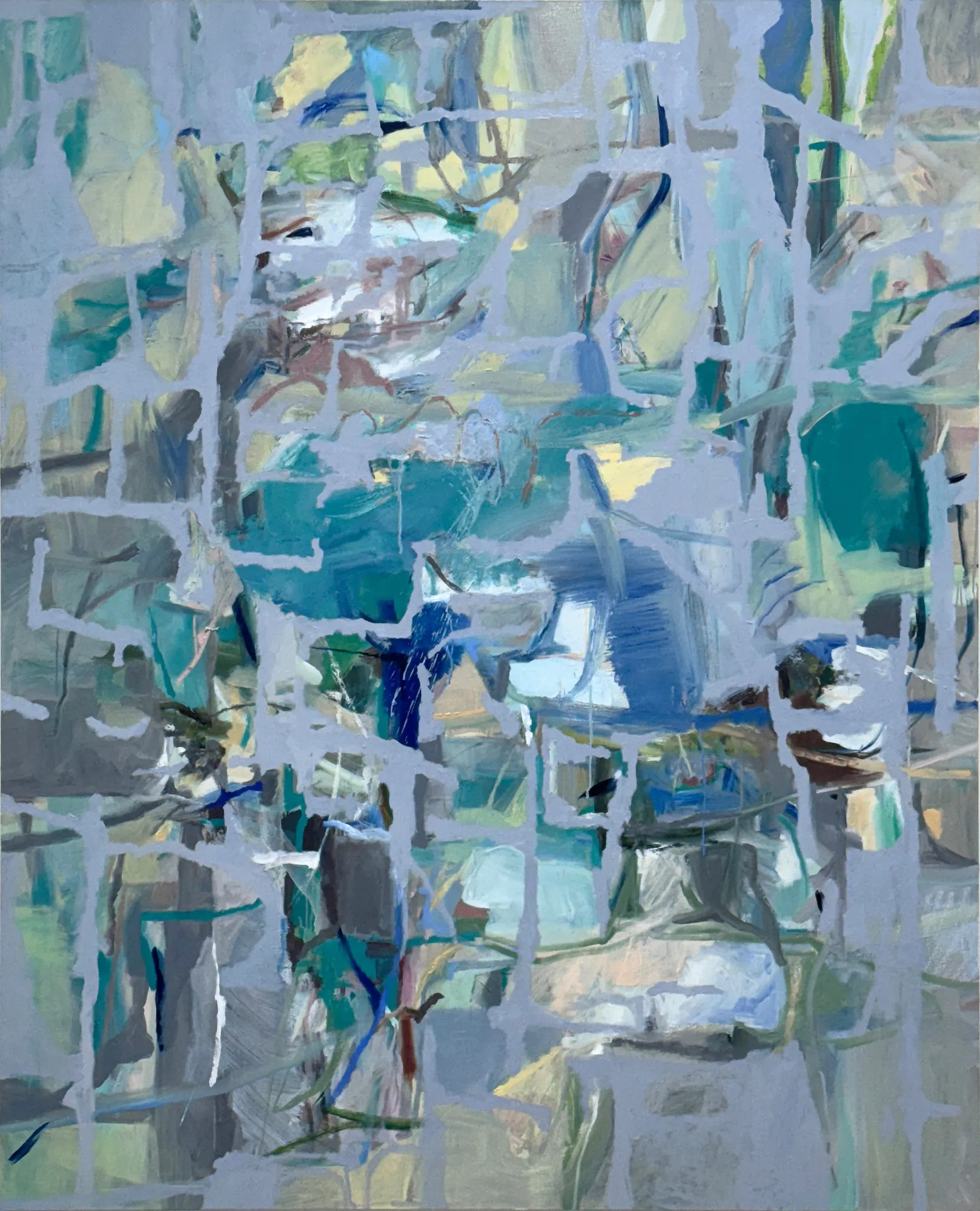
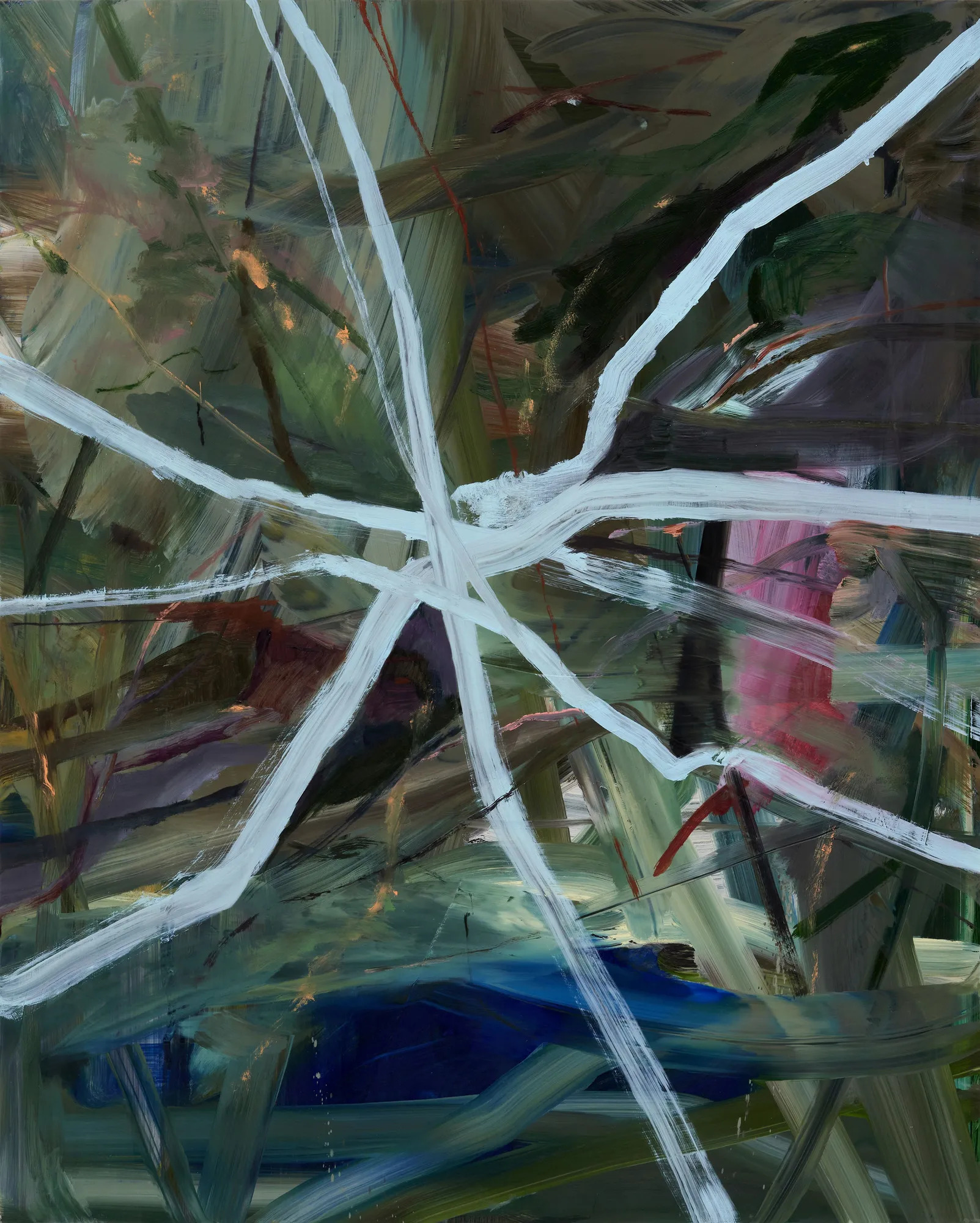
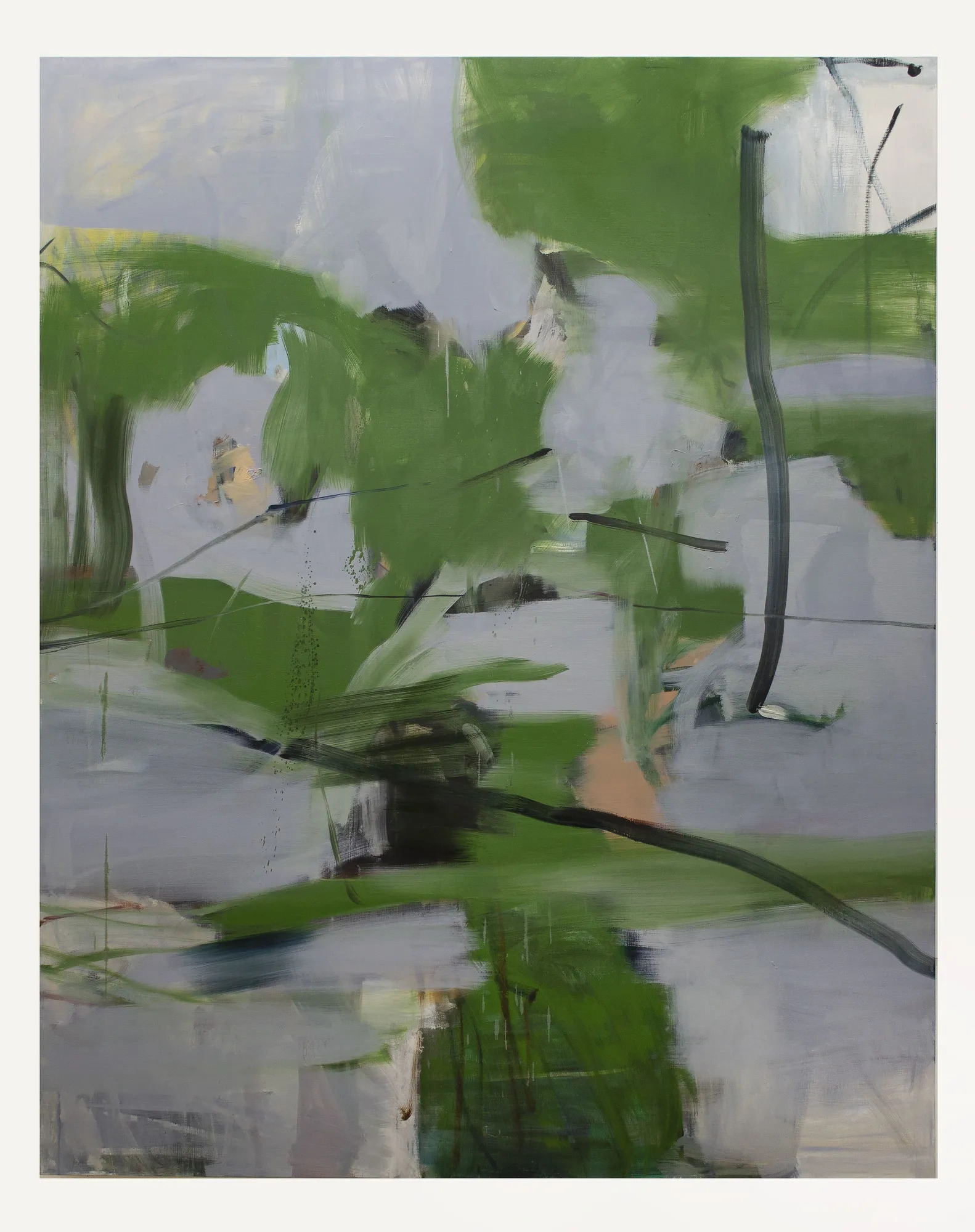
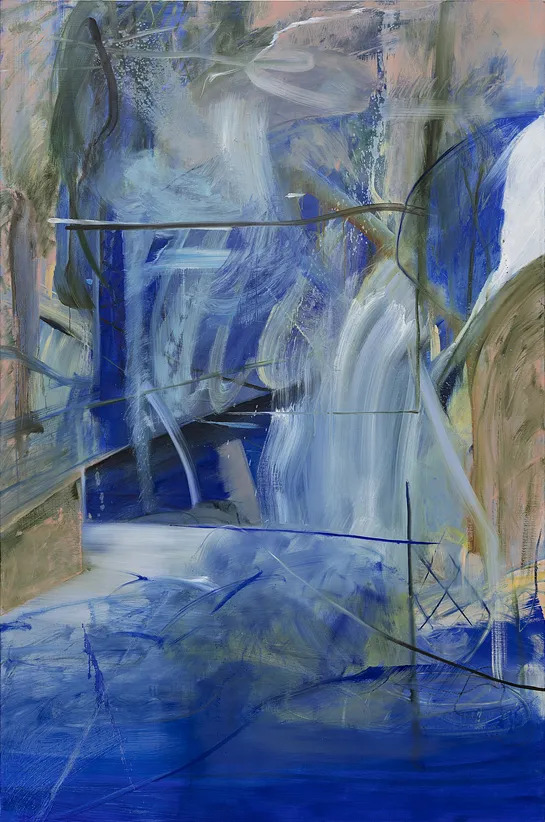
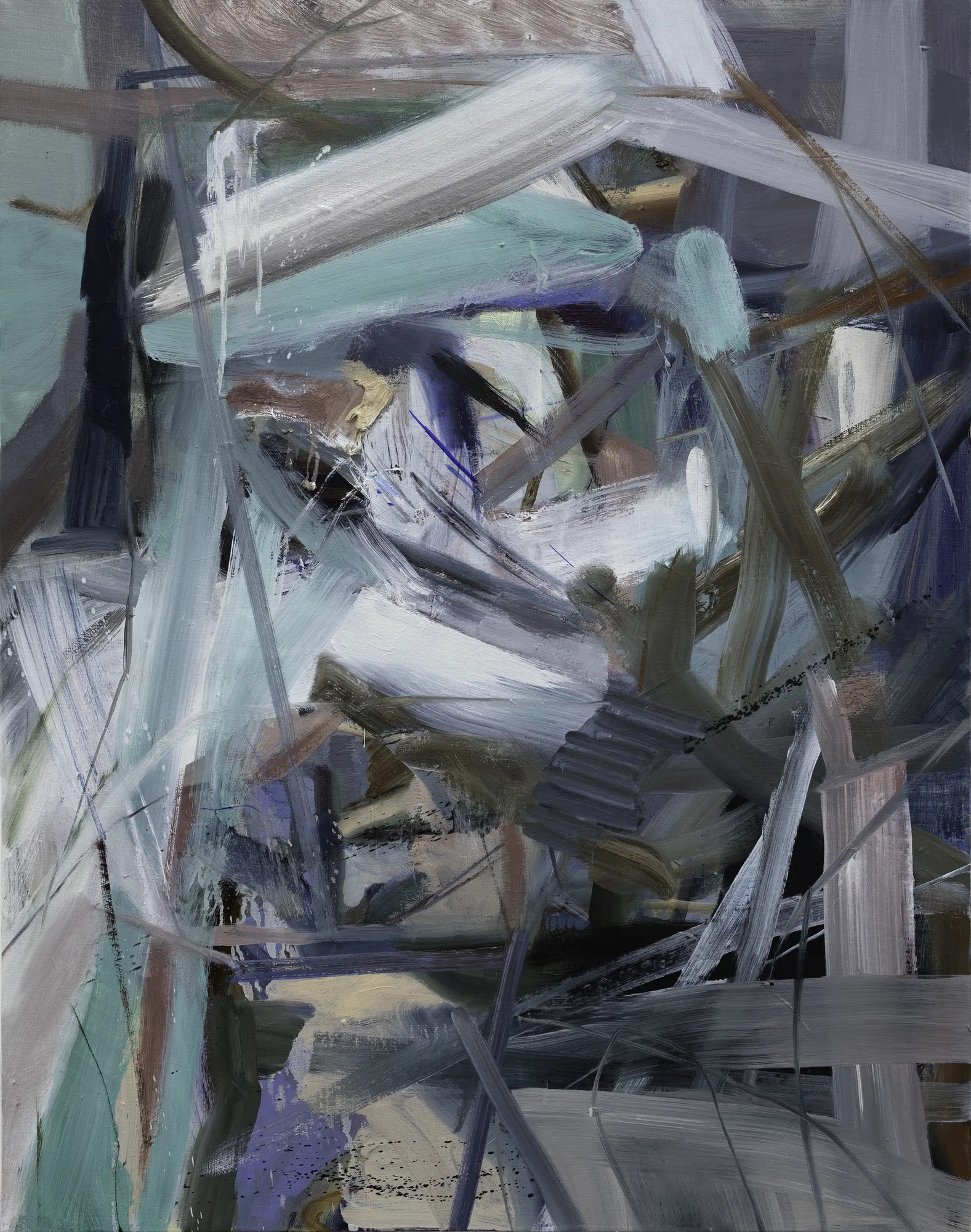
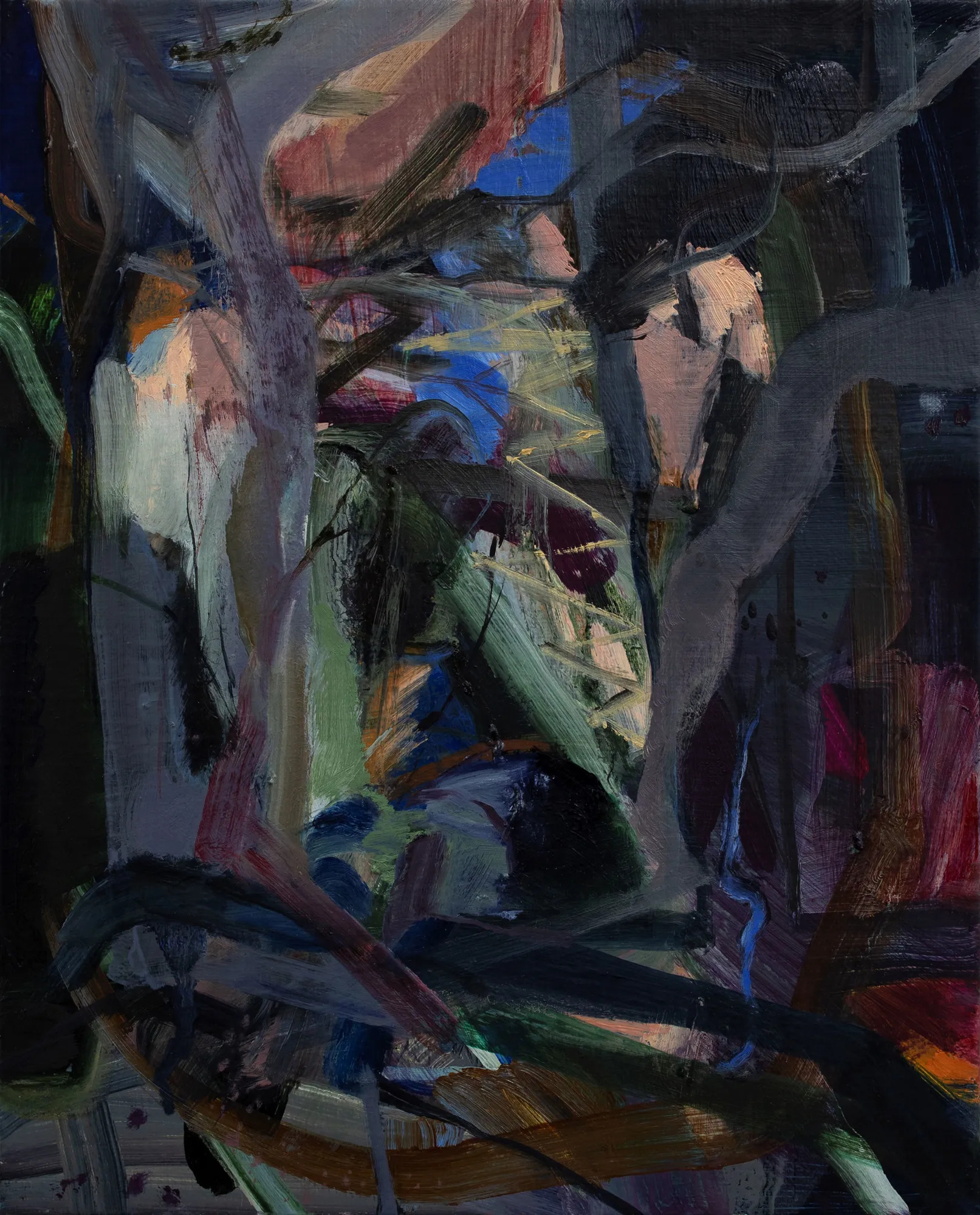
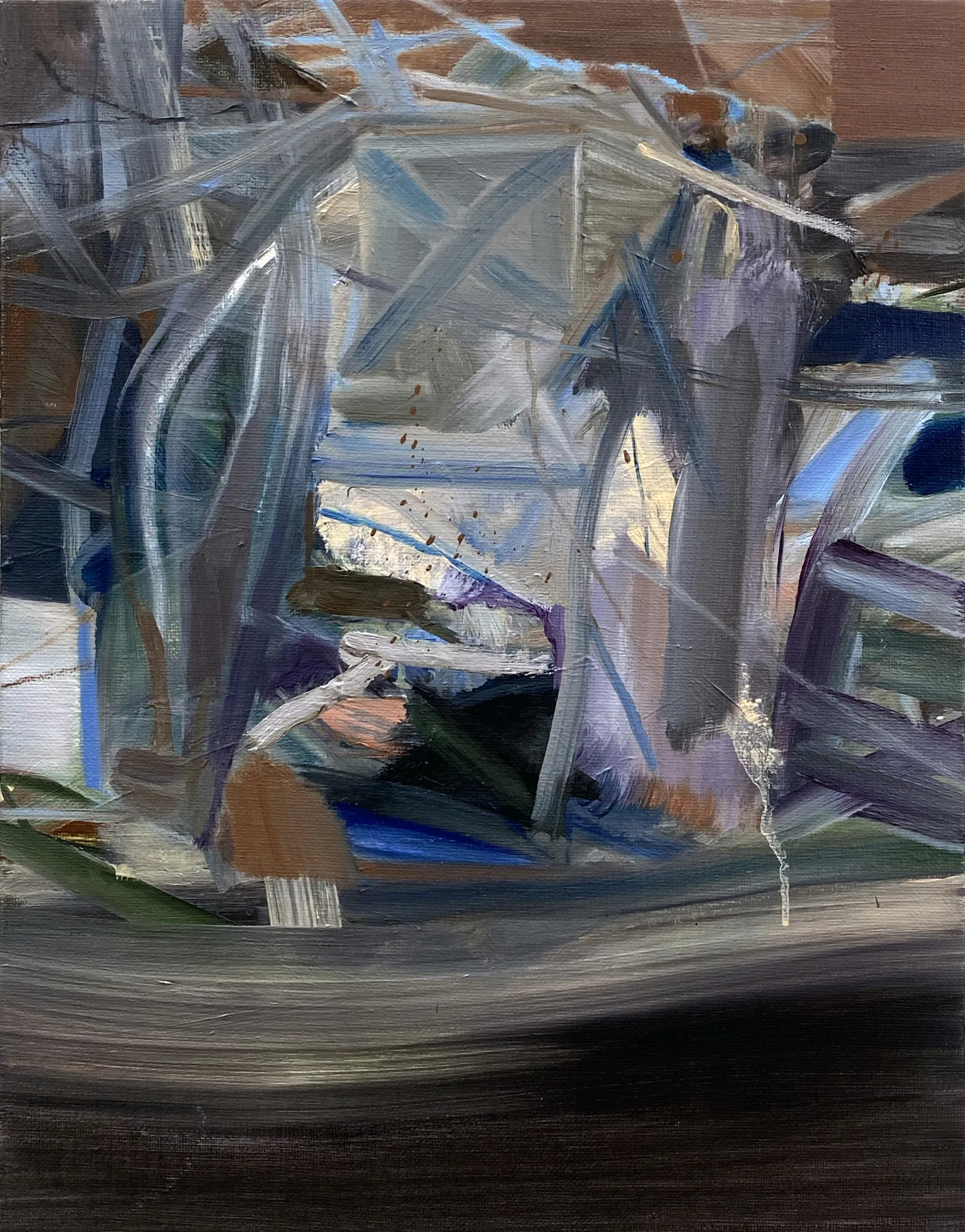
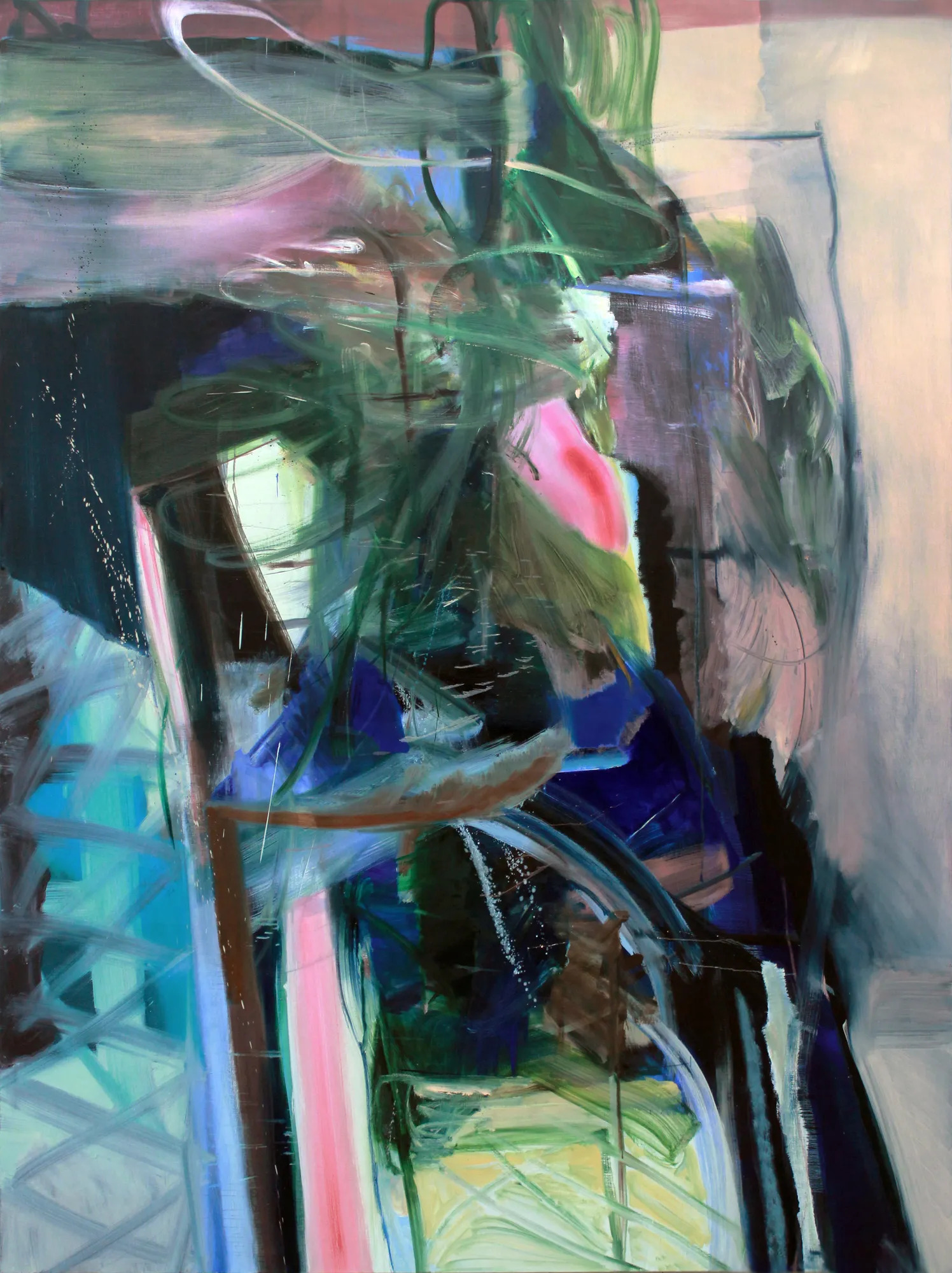
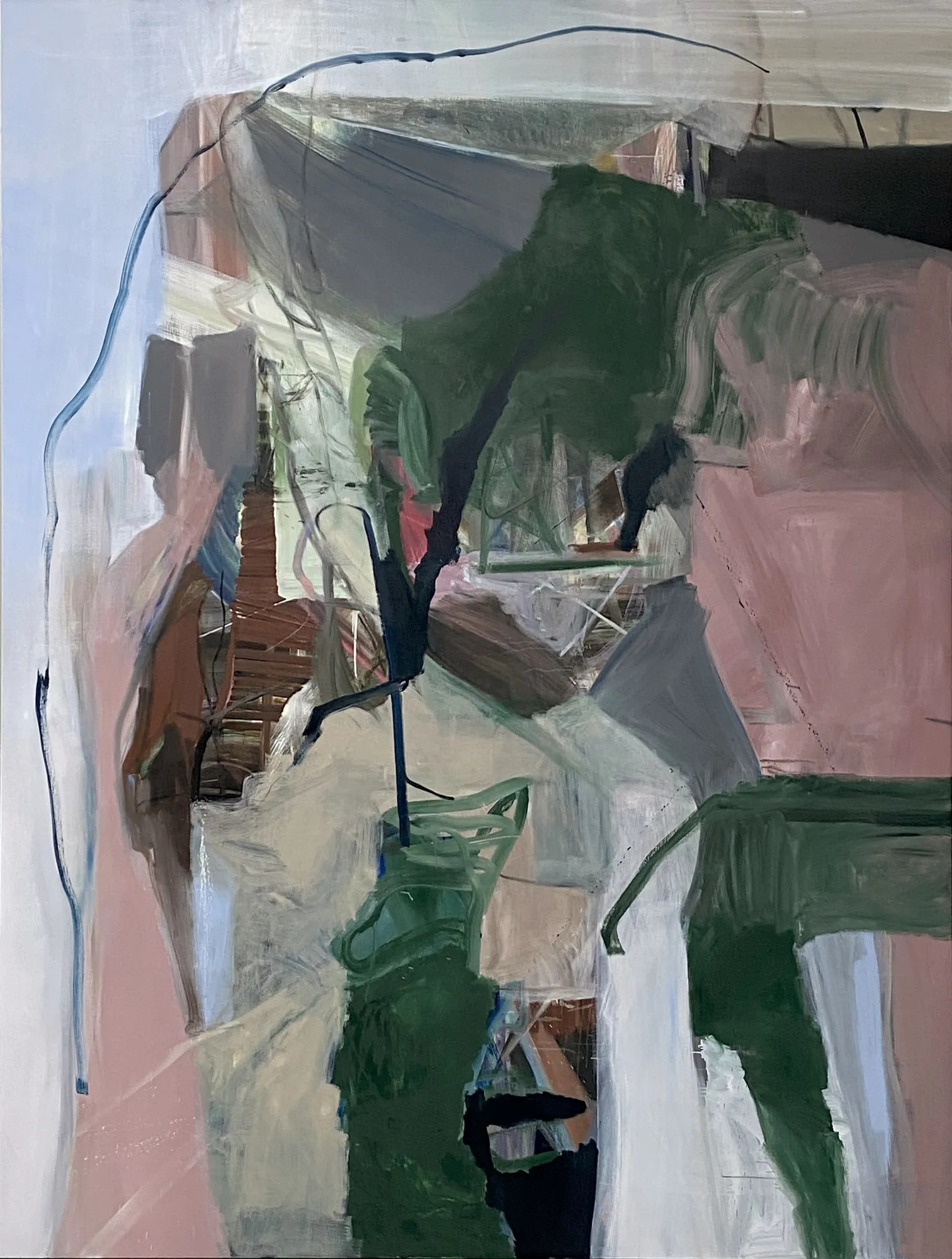
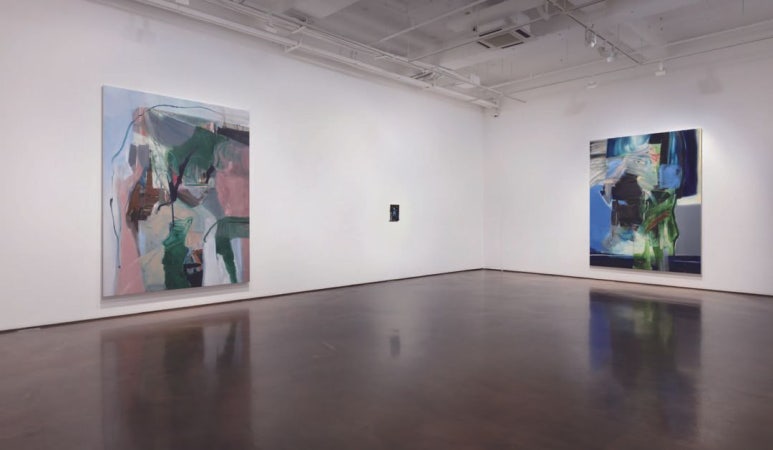
Photographs of old apartment buildings were pinned to the studio wall. These familiar scenes—apartments that one might have encountered somewhere in the city—had been translated into sketches composed of points and lines. The sketches, in turn, became colors and brushstrokes transferred onto canvas, where the apartment buildings seemed to collapse and rebuild themselves repeatedly, tracing a spiral of time.

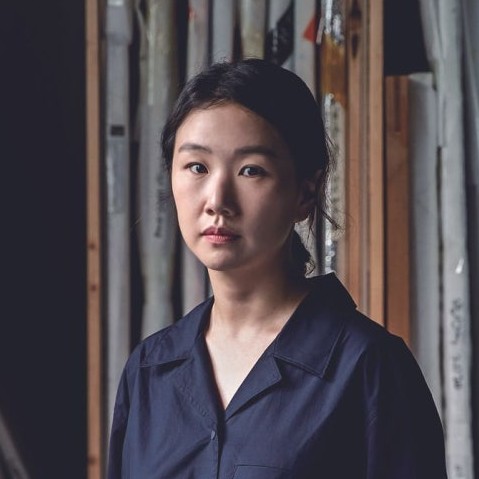
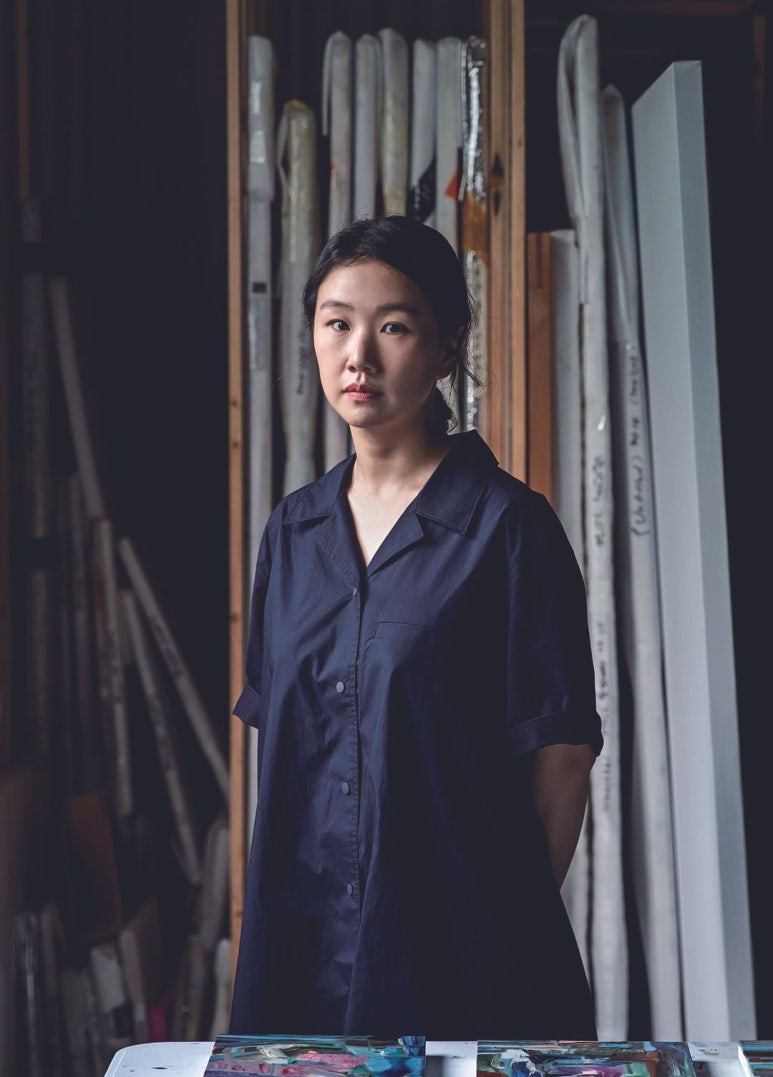
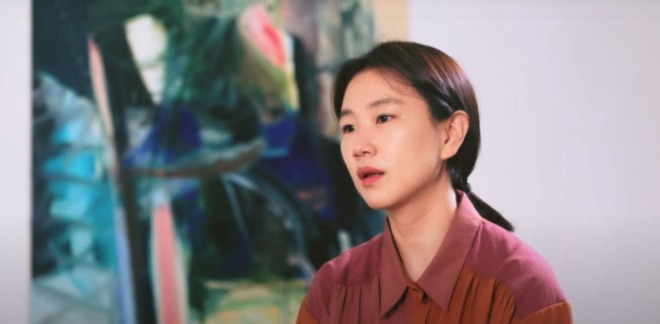
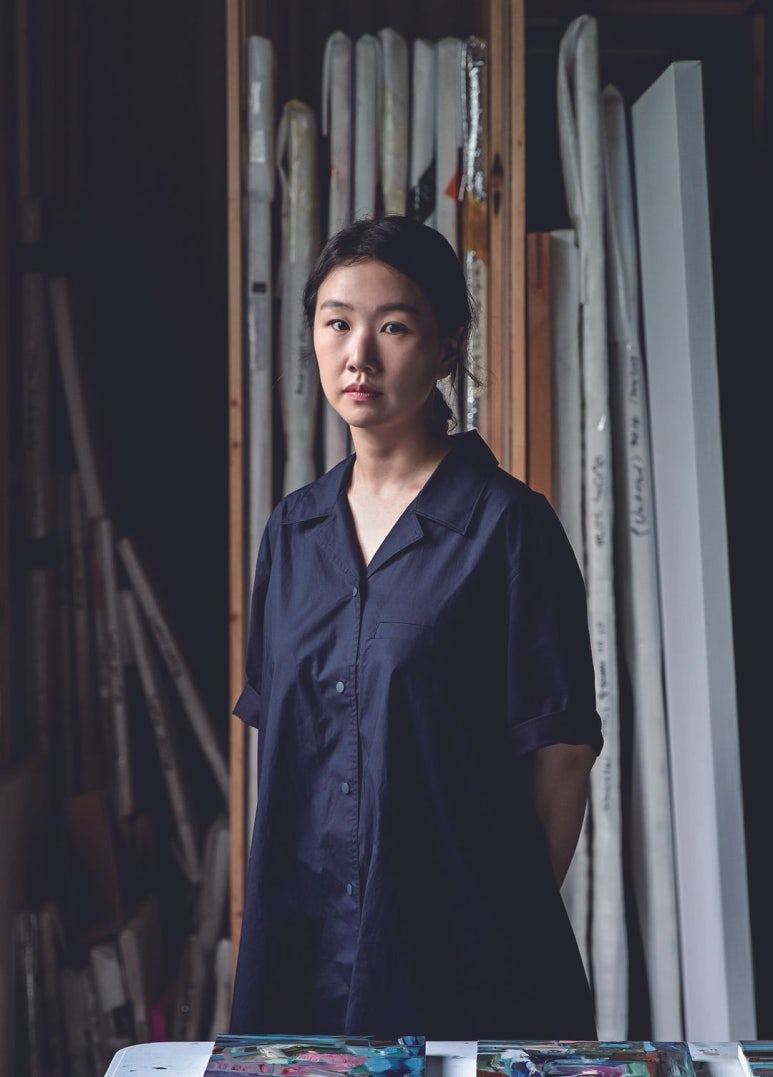
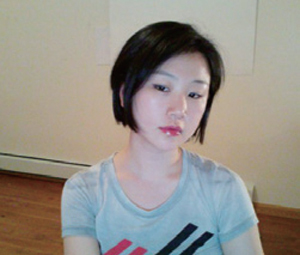
Standing beside these large-scale paintings was Koo Jiyoon, an artist and professor who has maintained an active exhibition practice through solo exhibitions such as 《Tongue & Nail》 (2021), 《Blue Vinyl Curtain》 (2019), and 《Purple Noise》 (2018), as well as numerous group exhibitions.


The Artist © Koo Jiyoon

The Light of Works Confronting the City and Time

From your solo exhibitions 《Purple Noise》 (2018), 《Blue Vinyl Curtain》 (2019), and 《Tongue & Nail》 (2021), the city appears repeatedly as a central theme. Could you tell us what first led you to focus on the city, and how you approach and perceive it as a subject?

There was a time when I returned to Korea during a summer break while studying abroad. Even though Seoul was a city where I had spent most of my life, the simple fact that I had been away overseas for a while caused me to see it somewhat through the eyes of a tourist. It was an extremely hot summer, and demonstrations were taking place throughout the city. Looking at those scenes, I felt a kind of manic urban energy.

I began making work as though I were releasing that condensed energy, and that experience became the foundation of my current practice.
Since then, I have remained interested in the city, gradually transforming and developing that interest through my work. The reason construction sites became a motif and subject in my practice also stemmed from everyday experience.

Having lived exclusively in large metropolitan areas, construction sites were among the spaces I encountered most frequently. I became interested in the dust, the noise, and the overwhelming scale of these environments. It struck me that a construction site is a place that is simultaneously being built and destroyed—a space suspended ambiguously between the past and the future.

I think I came to define the city as a patterned environment of continual demolition and renewal, and in doing so, I began to see the city as something like a living organism, constantly changing and evolving.


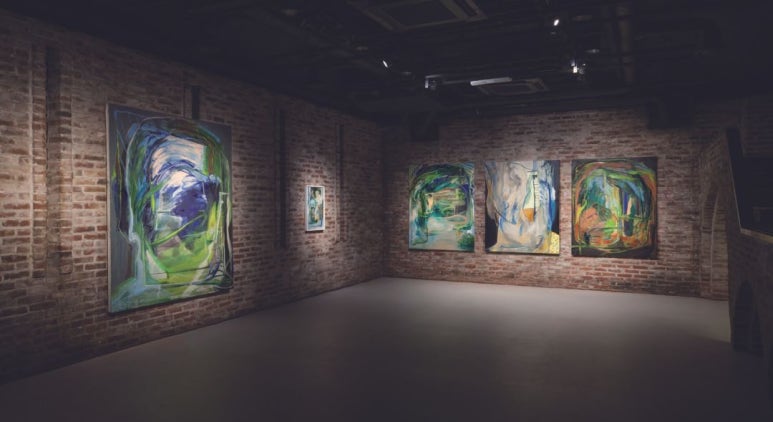
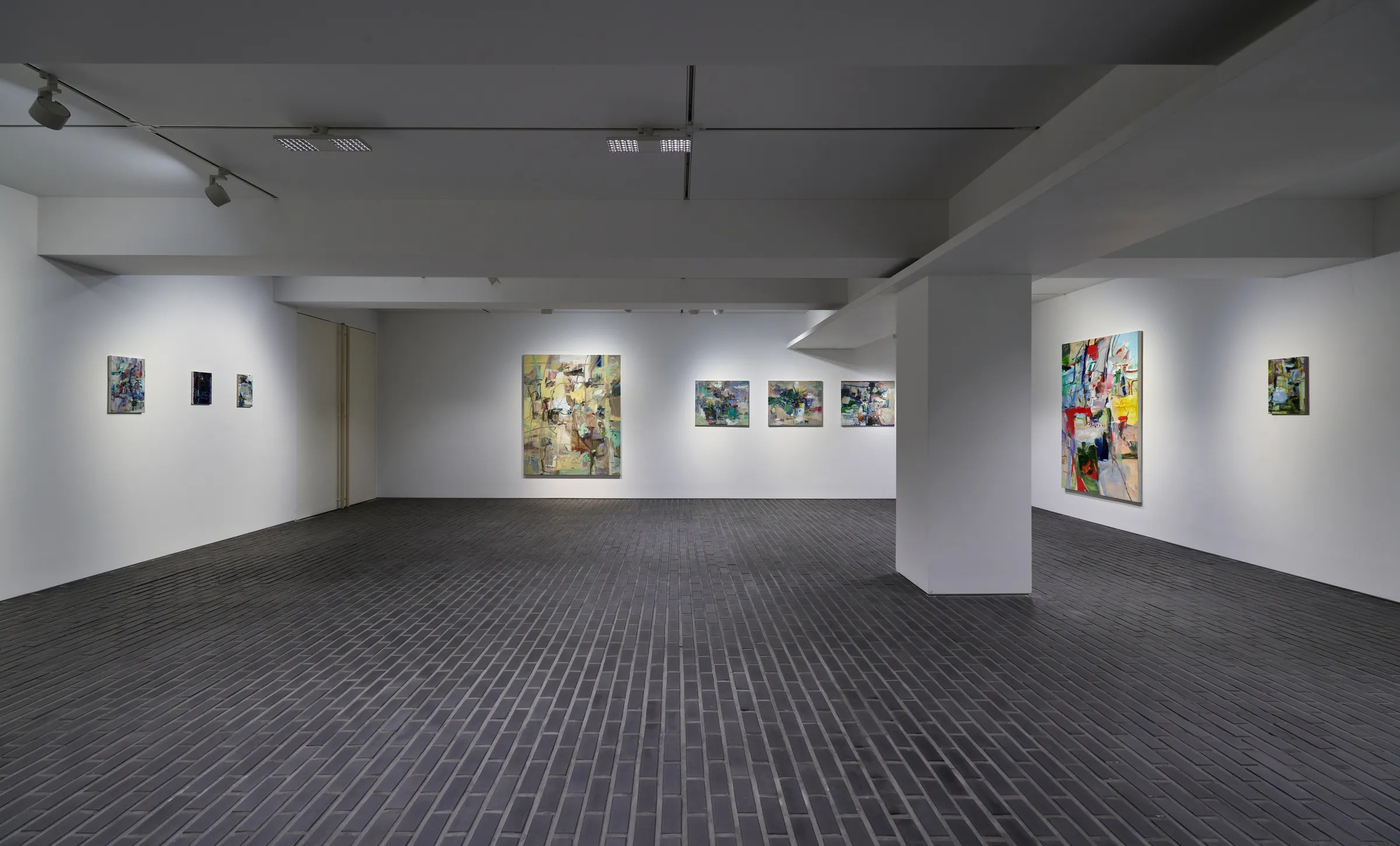
Installation view of 《Purple Noise》 © ARARIO MUSEUM in SPACE

In works such as the ‘Face-Scape’ series, you seem interested not only in the city itself but also in the psychology of those who inhabit it. What aspects of the contemporary psychological landscape have particularly captured your attention in recent years?

People are beings who can feel loneliness and solitude wherever they are. I do not think loneliness necessarily comes from a lack of something or from a sense of deficiency. While studying abroad, there was a period when I found myself wondering why, despite being surrounded by so many things and consuming so much, I still felt bored and increasingly weary.

As I became absorbed in the boredom and ennui experienced by people living in cities—by contemporary individuals in general—the ‘Face-Scape’ series emerged. After working on that theme for some time, my attention gradually shifted toward the body and our physical existence. I began asking questions such as: What kinds of sensations do we lose while living in cities? What forms of emptiness arise from that loss, and what kinds of numbness do we acquire?

Although my work initially began with invisible emotions and psychological states, more recently I have wanted to approach these concerns from the opposite direction. In 《Tongue & Nail》 (2021), for example, I explored invisible human desires through parts of the body. That is the direction my work has been taking in recent years.


Works such as 《Purple Noise》 (2018) give the impression that they originate not primarily from visual experience but from other senses. When translating such sensations into visual form, what do you consider most important?

When we think about subjects such as cities or construction sites, we already have certain images associated with them. The reason I chose not to depict them directly was that I wanted to paint the invisible forces and energies that cannot be captured through representation—the wandering, intangible things that generate those forms in the first place. As a result, formal elements such as color and shape came to occupy the place of recognizable imagery.

When trying to translate a phenomenon—or a stimulus originating from a sense other than sight—back into visual form, I think it can only be expressed intuitively through layers of interpretation and personal memory. I became interested in understanding those differences and even read books on synesthesia, but eventually I felt that the concept was somewhat distant from my own experience.

I came to believe that approaching my work through the framework of synesthesia was not quite appropriate. As I continued to think about these issues, I found myself looking at rusted or bent steel rebar over time and imagining flowers that had exhausted their lives and bowed their heads. I began expressing things more indirectly by associating them with the forms of other living beings or objects.

Rather than depicting them literally, I borrowed their lines, colors, and visual qualities. In fact, one of the questions I have encountered most often—and one that I have asked myself repeatedly while working in abstraction—is whether such work can truly communicate as a visual language.

There is always a particular mood or atmosphere that I want to convey, and I hope that viewers can sense it. Perhaps because of that, I eventually came to feel that incorporating a more universal visual language was the approach that suited me best.


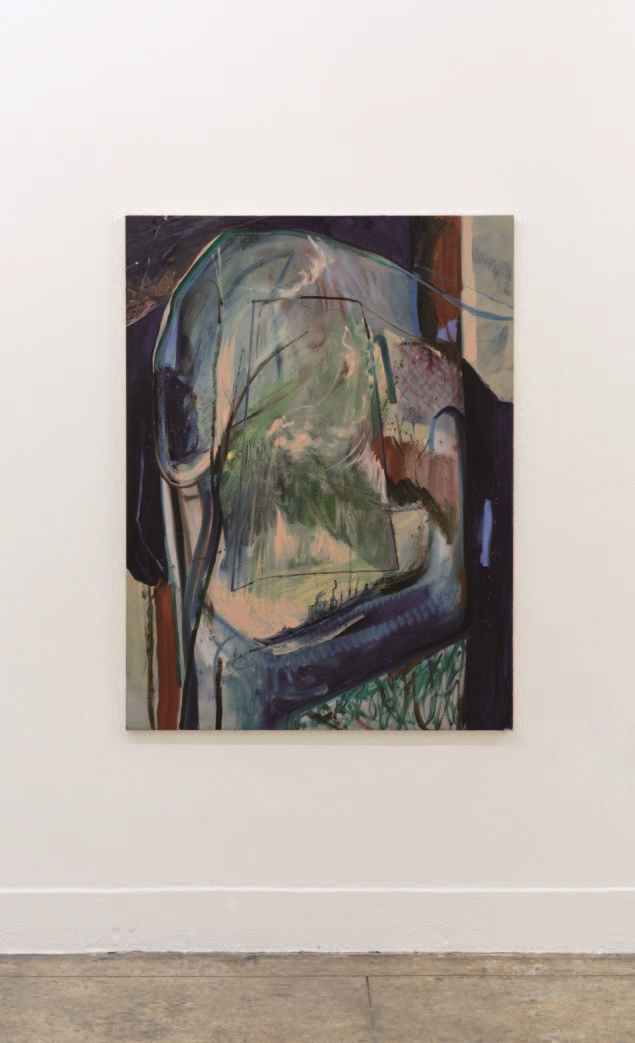
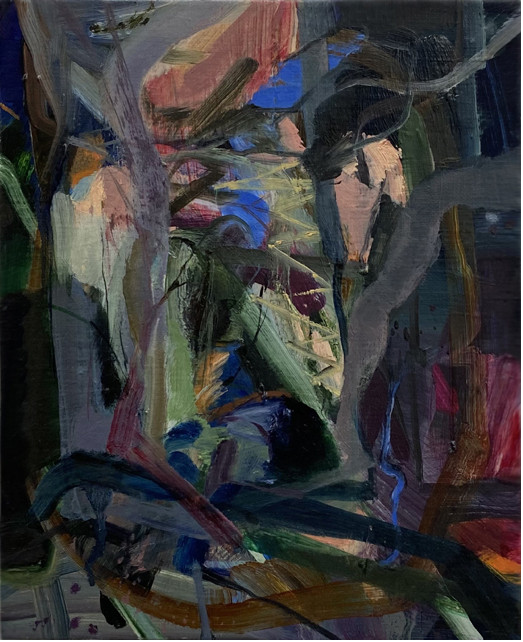
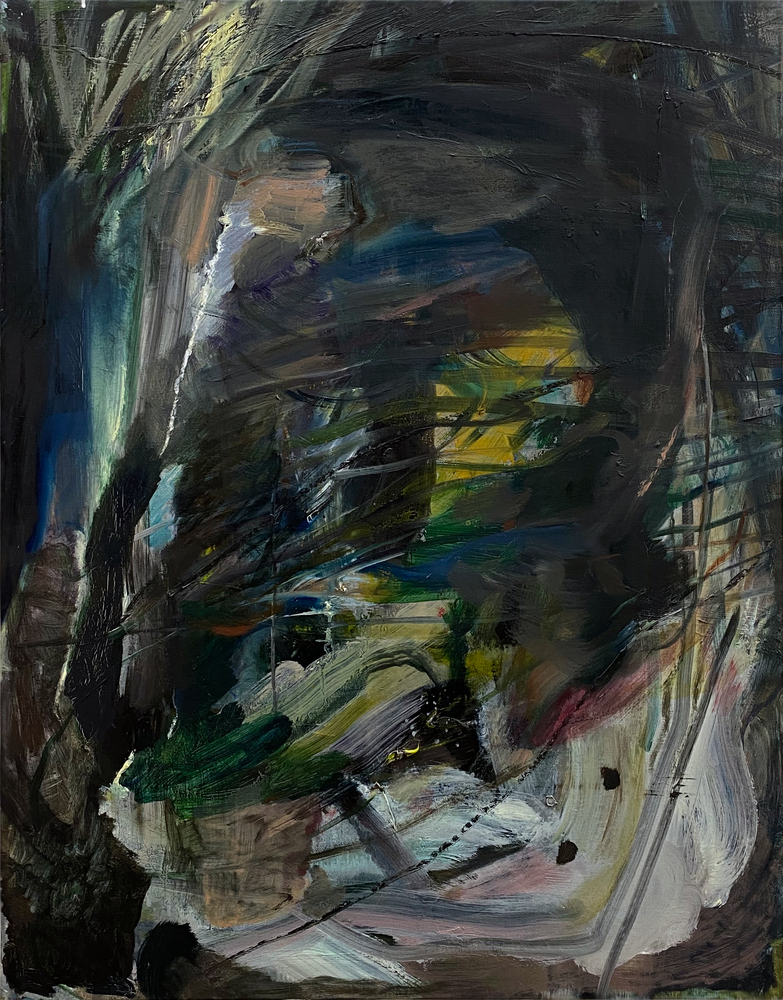
Koo Jiyoon, A Man with His Chin Propped on His Hand, 2016, Oil on canvas, 130 x 97 cm © Koo Jiyoon

Is there a particular reason why painting remains your primary medium? In an era when new media frequently occupies exhibition spaces, what value do you believe painting continues to hold?

Painting is an extremely old medium. Because of that, I have been asked similar questions throughout much of my career. What I have come to feel recently is that every medium—even the newest forms of media—contains both “old media” and “new media” qualities. Painting may be one of the most representative old media, but I believe it also contains distinctly new possibilities, and that remains true regardless of how much time passes.

I continue to work with painting because I have faith in those possibilities. At the same time, painting feels like an especially suitable medium for addressing the themes that concern me, such as the accumulation of time, the value of that accumulation, and the notion of failure.

Of course, approaches to painting differ from artist to artist, but the way I engage with painting—and with time within painting—tends toward a more cyclical or primordial sense of time. I think of time as something that permeates every part of a work, so that no matter where one touches it, traces of time are already embedded there.

When I move frequently, there are often paintings whose development has been interrupted. Sometimes I gather these works and build entirely new compositions on top of them, creating works in a completely different context. What I find fascinating is that I am not beginning from the absolute emptiness of a blank canvas; instead, I am creating new images on a surface already saturated with time.


The Light of Learning Together

You graduated from the Department of Fine Art and Art Theory at Korea National University of Arts. How did that period influence your artistic practice, and what aspects of your education left the strongest impression on you?

As soon as I entered the school, I participated in the Foundation program alongside students studying theory and design. What I found especially interesting was that I was able to meet students not only from the Department of Fine Art but also from many other departments through shared courses.

The program itself was extremely intensive, and because I was constantly completing assignments, I hardly made the kind of paintings I had been producing while preparing for entrance exams during my first year. Instead, I learned how to approach a single theme through a variety of media, and I spent increasing amounts of time participating in critiques that encouraged multiple interpretations of a work.

Looking back, I think those experiences may have become the starting point for the questions I continue to ask myself today while making paintings—questions about why painting matters and why I continue to engage with it. Working in a studio is, in many ways, a solitary activity. While that solitude can encourage deep self-reflection, it can also lead one to become trapped within one’s own perspective and grow rigid.

The education I received at Korea National University of Arts helped me avoid that tendency. I was also greatly influenced by the anti-hierarchical attitude of the professors I encountered there. They created an environment in which students could speak comfortably about their work, and they actively participated not only in discussions but even in playful activities. That openness felt very different and left a lasting impression on me.


Now that you have returned to the university not as a student but as a professor, what is the most important thing you emphasize to your students?

I once visited a retrospective of Bahc Yiso at the National Museum of Modern and Contemporary Art, Korea, and what impressed me most was seeing how meticulously he documented his ideas—not only as an artist but also as an educator preparing his lectures. In the accompanying publication, there was a passage in which he emphasized the importance of cultivating what he called a “critical companion.”

Since my first year of teaching, I have often told students that before they graduate, they should make at least one friend who can speak honestly and openly about their work. It sounds simple, but in reality it is quite difficult. The closer someone is to you, the harder it can be for them to critique your work frankly, whether critically or supportively.

Of course, there is much to learn from professors, but I often tell students that they may learn even more from their peers. I encourage them to spend time together and to engage with one another’s work as much as possible. I also encourage students to pursue a wide range of experiences during their time at school.

After the Foundation year, it is easy to become absorbed in a single direction or way of thinking. Because of that, I try to encourage them to broaden their horizons and experience as much as they can during that period of their lives.


Alongside your role as an educator, you continue to maintain an active artistic practice. How does balancing these two positions affect you personally and influence your creative work?

There are definitely both advantages and disadvantages. In the past, when I came to the studio, I could spend all of my time immersed in my own work—sometimes enjoying that time, sometimes struggling through it. After I began teaching, however, the amount of time I could devote entirely to my practice decreased dramatically, and at first that was somewhat unsettling.

But looking back, I also have to ask myself whether I truly used all of that available time productively when I had it. The answer is not always yes. One positive aspect of teaching is related to something I mentioned earlier. When making art, it is easy to become deeply absorbed in oneself. That can be beneficial in the sense that it allows a practice to become more profound, but it can also limit one’s ability to expand beyond one’s own perspective.

Through teaching students, and through discussing their work alongside other faculty members, I am constantly exposed to new ways of seeing. My students are in their twenties, or slightly older, and through critiques and one-on-one conversations I hear about the concerns, interests, and perspectives of their generation.

Although I cannot fully understand all of their experiences, I find myself making a sincere effort to do so. That process encourages me to study, to learn, and to remain intellectually open. In that sense, teaching prevents me from becoming confined within my own viewpoint. I believe I learn a great deal from my students as well. Maintaining both roles ultimately allows me to achieve a healthy balance between teaching and artistic practice.



Installation view of 《Tongue & Nail》 © ARARIO GALLERY

The Continuing Light of the Artist

What do you believe is the most important thing about living as an artist?

Over time, I have found myself continually thinking about how to sustain a healthy artistic practice over the long term. When you look back on the lives of artists, there are some whose work flourishes explosively during a particular period and who continue making art afterward, even if later works are not regarded as being at the same level.

Then there are others who burn intensely for a short time, only to stop working altogether, effectively bringing their lives as artists to an end. Personally, I find the former path more meaningful. In reality, it is also the more difficult one. There may be times when interest fades, when audiences forget you, or when the energy to create simply does not come.

Even so, I keep asking myself how one can continue despite those challenges. I often tell my students the same thing: take the long view. Working with a long-term perspective means enduring certain periods of difficulty. There may be moments when the realities of earning a living intersect so closely with one’s artistic practice that it becomes tempting to give up. But I hope they can persevere through those periods. I remind myself of the same thing as well—to keep going, even during quieter times, and never completely let go of the thread.


I have heard that many contemporary artists struggle to find adequate space to store their work after it has been created. This must be especially difficult for those producing large-scale works. Have you encountered or experienced situations like this yourself? And what does this studio space mean to you?

When I was living in New York, I became interested in making larger works. I bought rolled canvas, purchased stretcher bars, and assembled everything inside my studio. As a result, I ended up creating a canvas that was much larger than the studio door itself. I worked on it until it was nearly finished, and then the time came for me to move out of the studio.

Suddenly, I found myself in a difficult situation. The painting had become much larger than both the door and the windows, so there was no obvious way to get it out. And because oil paintings generally require at least six months to dry fully, I could not simply fold it and move it elsewhere.

The work had actually been made by joining two canvases together. In the end, I tore apart the seam that connected them, folded the canvas, inserted wooden supports, and transformed it into a piece that was partially folded in on itself. Standing alone in an empty studio and looking at it, I realized that although it was technically still a painting, it no longer felt like one. It looked more like a physical object—a piece of luggage or cargo.

At the time, one of my professors saw it and asked whether I knew the artist Jay DeFeo. She is best known for her work The Rose. DeFeo initially painted the work directly on canvas attached to the wall of her home, but over the course of nearly nine years the accumulated layers of paint became so heavy that she eventually had to construct a new support system for it.

Thinking about that work made me wonder what kind of love-hate relationship she must have had with it. When the painting was later included in a retrospective, it was reportedly impossible to remove it from the building in a conventional way. Six or seven men had to detach the work, and parts of the wall itself were cut away with a saw in order to move it.

Seeing stories like that made me realize that what I had initially thought was my own personal problem was actually something many artists experience—even artists as renowned as DeFeo. Ultimately, painting is a physical practice, and factors such as space and circumstance have a tremendous impact on what can be made. If your studio is small, there are limitations on the scale of work you can produce. If you have a larger studio, different possibilities become available.
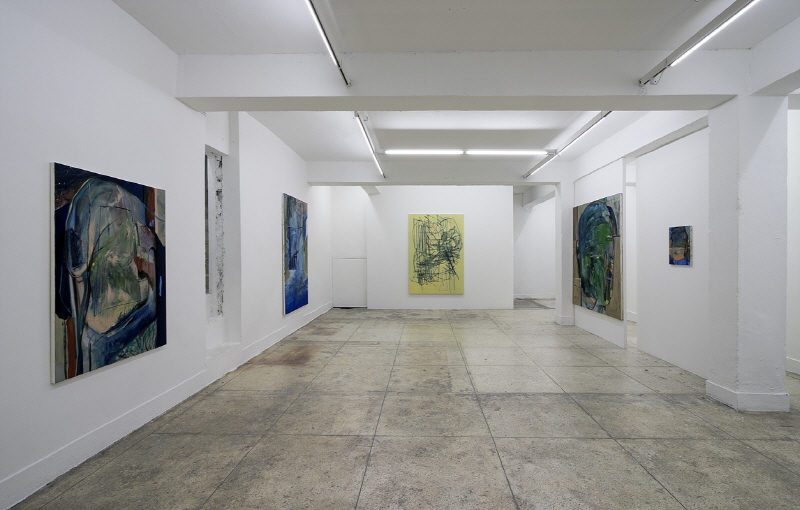
For me, this studio is a place that provides those opportunities. While I have access to this space, I try to make the most of the possibilities it offers. One thing I often want to tell students is that I have thrown away a great deal of my own work over the years. On campus, I often see students leaving works abandoned in hallways or discarding them altogether.

Yet when you revisit a work later, it may generate entirely new ideas, and sometimes it already possesses value in its own right. I think many students do not fully realize that.


The theme of this issue of K-Arts Magazine (Issue 43) is “Glitter.” What kinds of works—or what kinds of moments—strike you as truly radiant?

There are moments in every artist’s life when the desire to quit inevitably appears. Even after successfully completing an exhibition, there is often a sense of emptiness that follows. Because making art is, in many ways, a cycle of continual expenditure and consumption of energy, I sometimes find myself asking quite realistically whether this is truly the right path.

One of the reasons I ultimately decided to become an artist comes from a memory of a fellow artist. He was someone who, in a crowd, did not particularly stand out. But one day he was given an opportunity to speak about his work, and everyone in the room listened in complete silence. At that moment, he seemed to shine.

Seeing that made me think that perhaps I, too, am at my brightest when I am engaged in my own work. It is through my work that I am most able to communicate with others and most able to speak honestly about myself. I felt that this was what I needed to continue doing.

What began as a conversation about artworks gradually unfolded into a reflection on the moment when the artist first decided to pursue a life in art. The discussion moved through the different phases of her life—as a student, as an educator, and as an artist. And throughout those years, light seemed to permeate every moment: a light scattering in all directions.

References