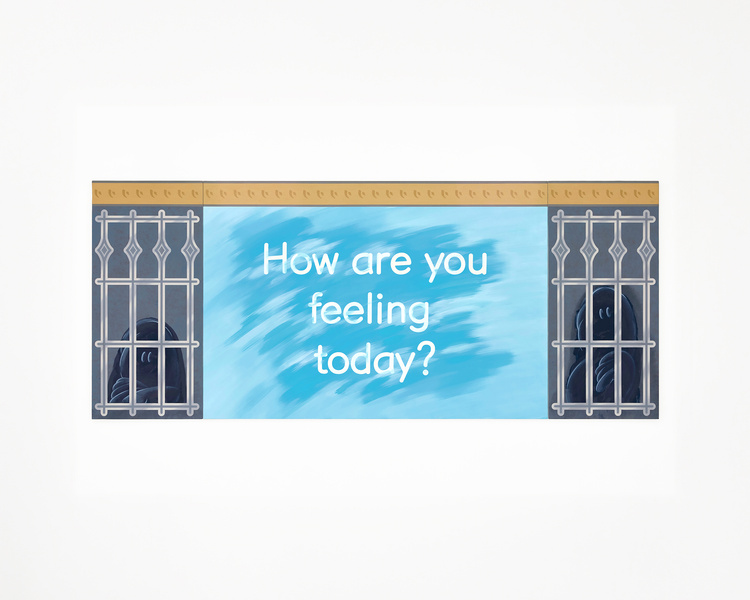
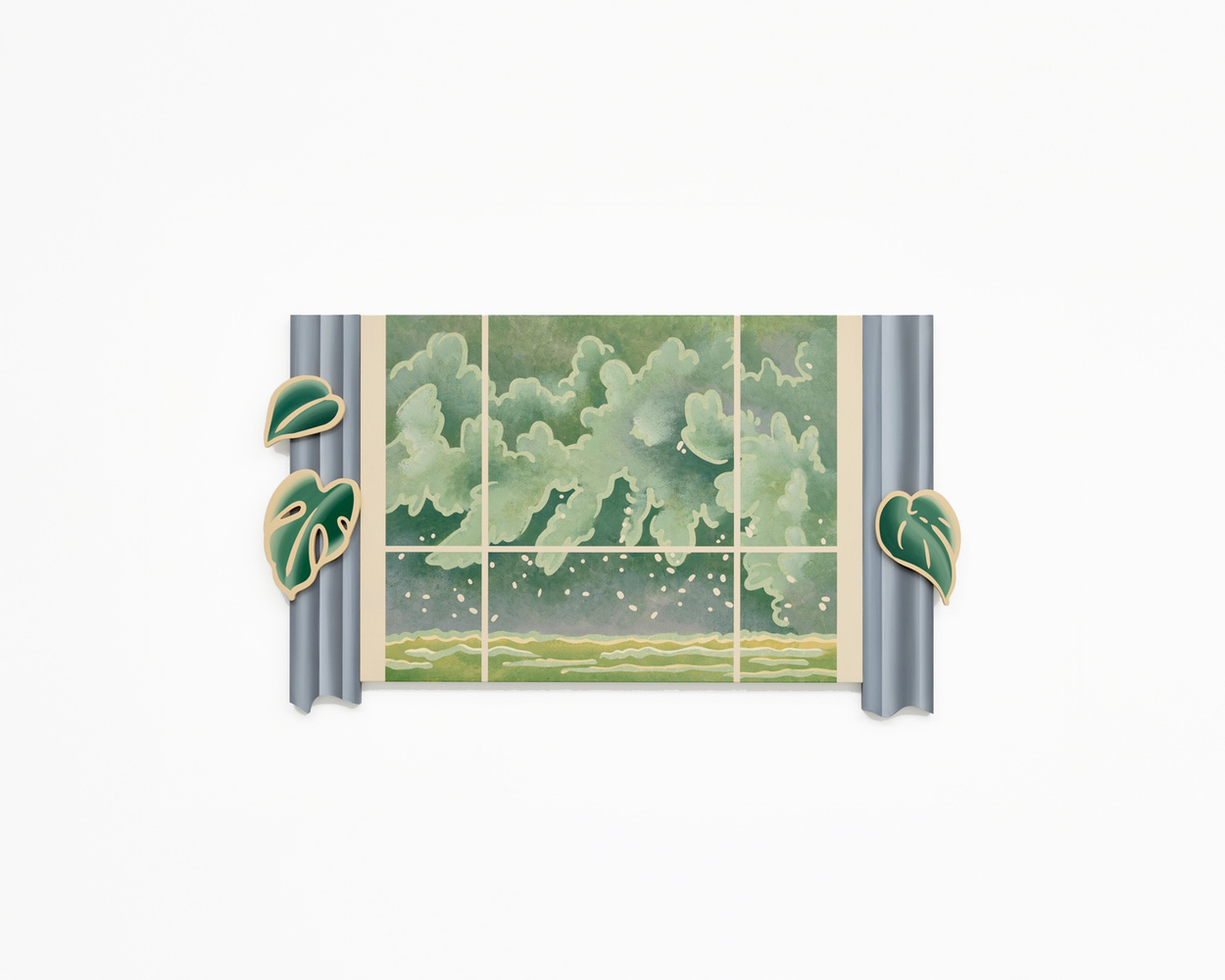
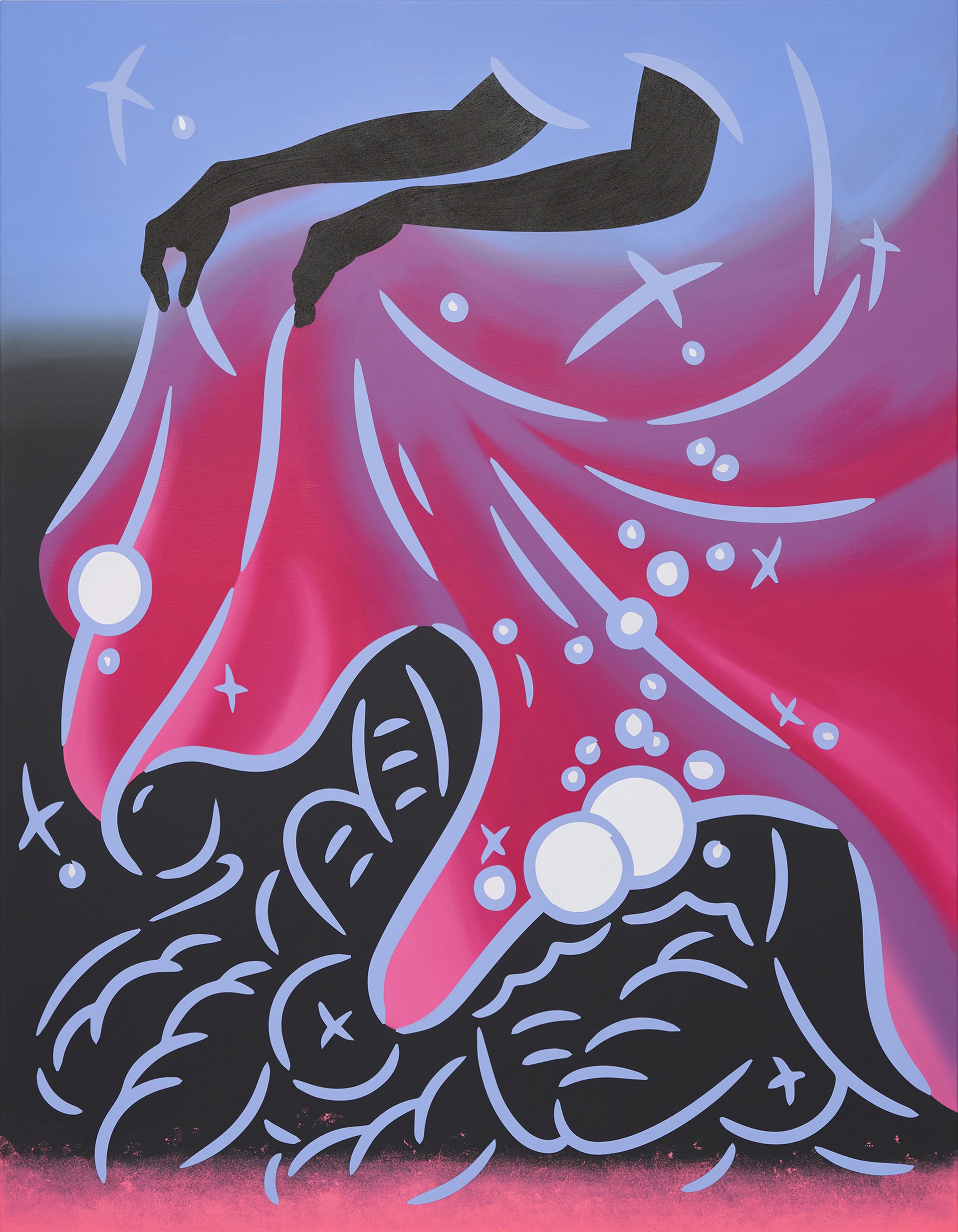
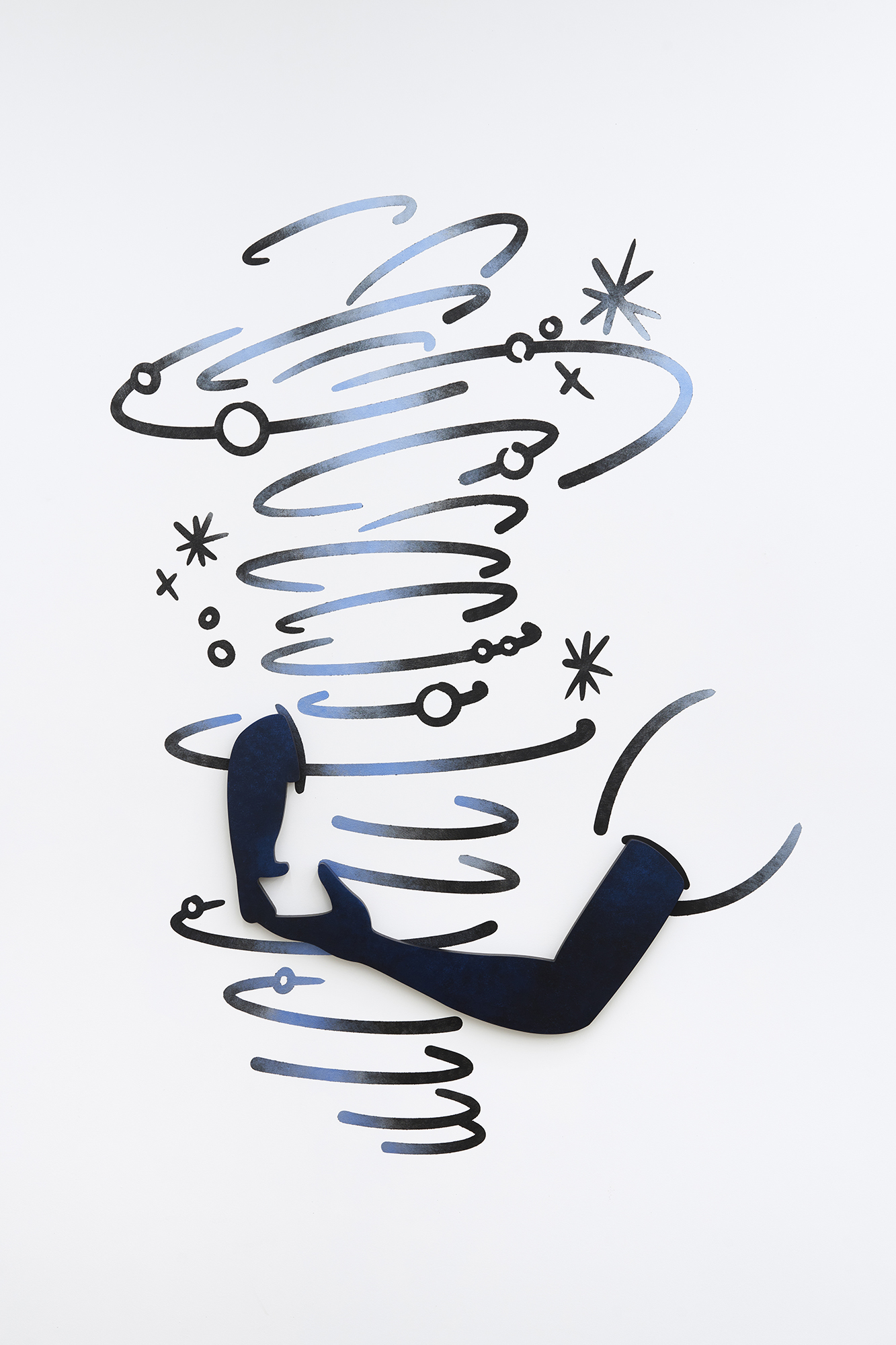
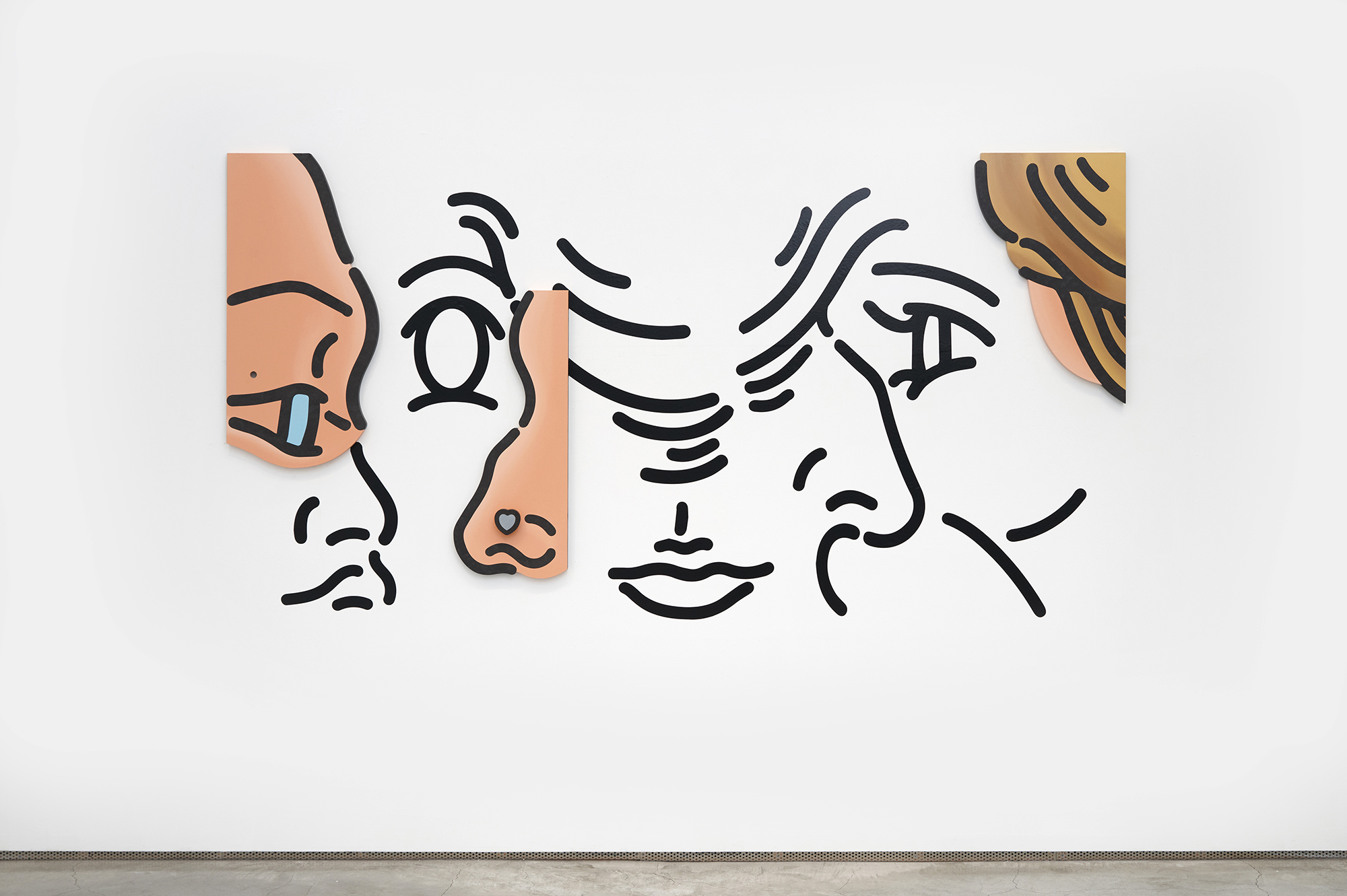
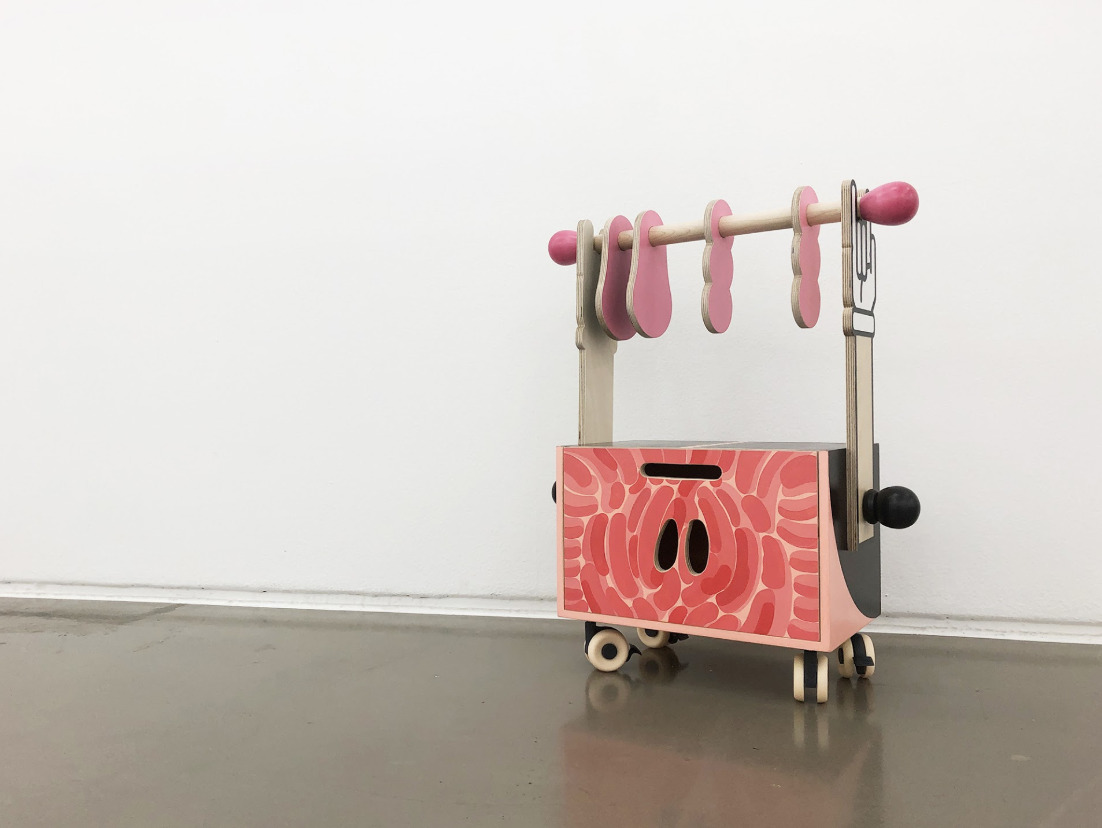
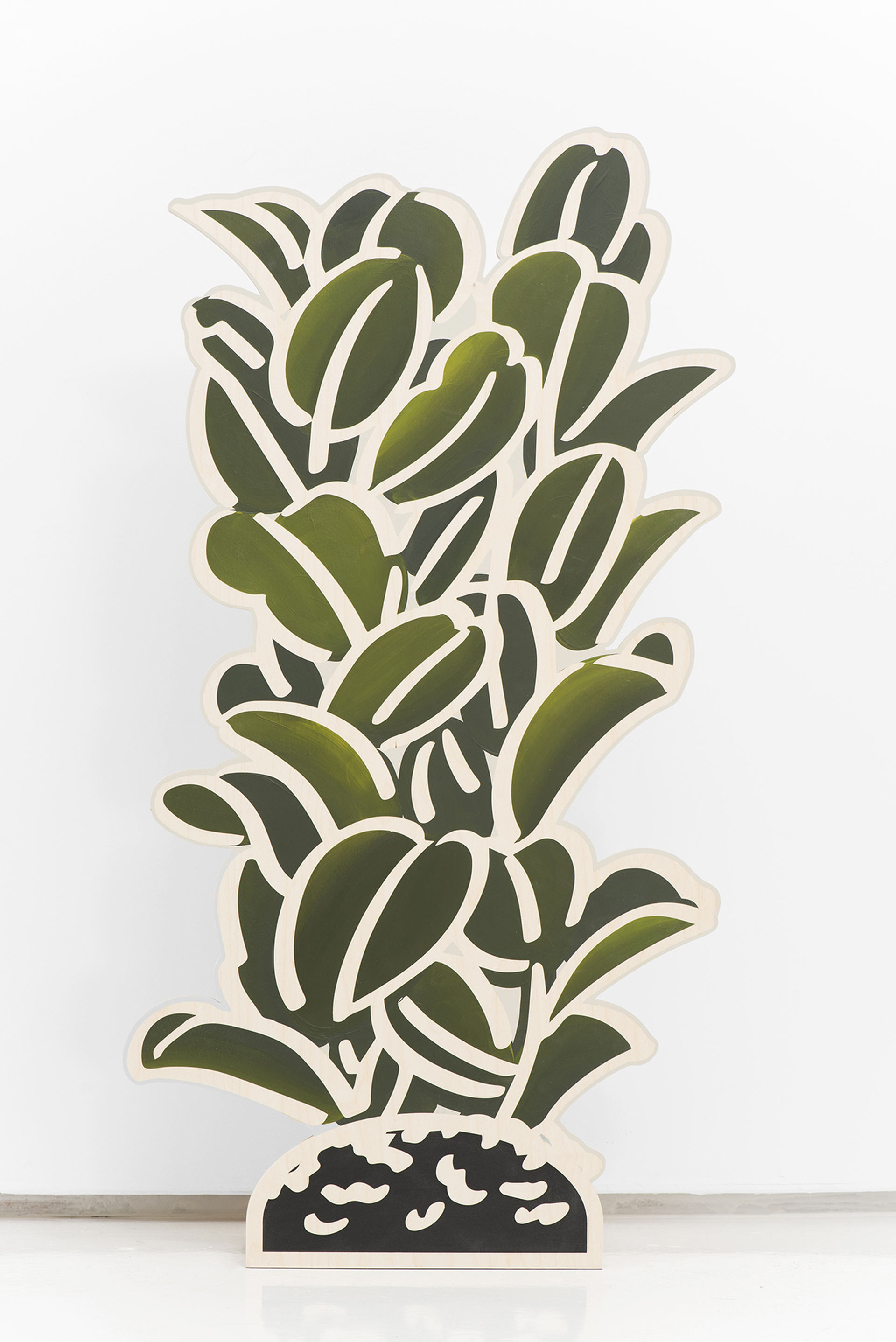
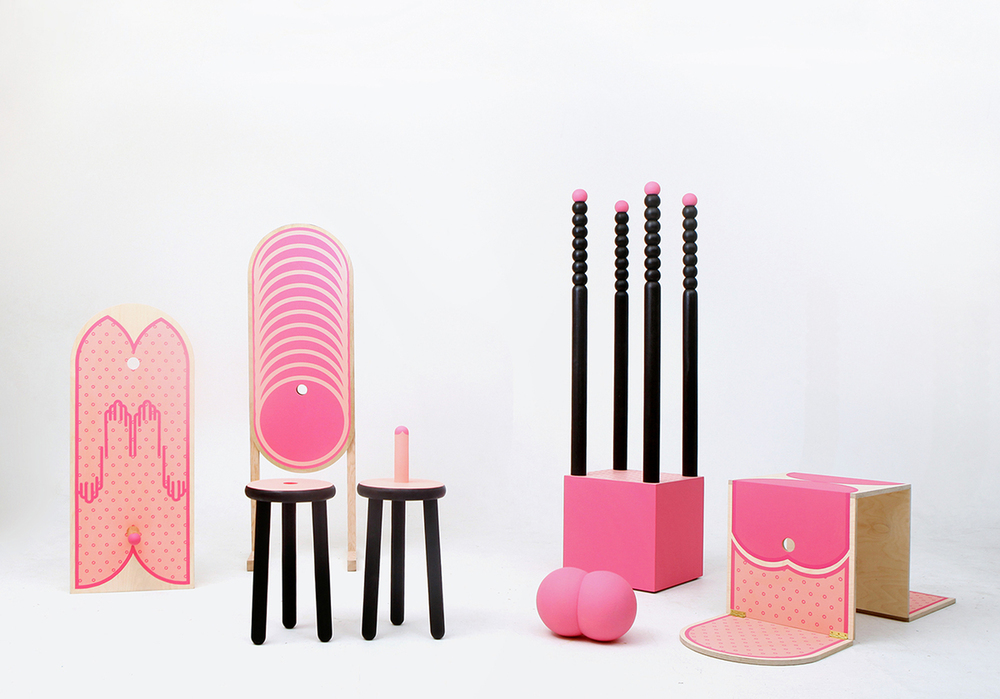
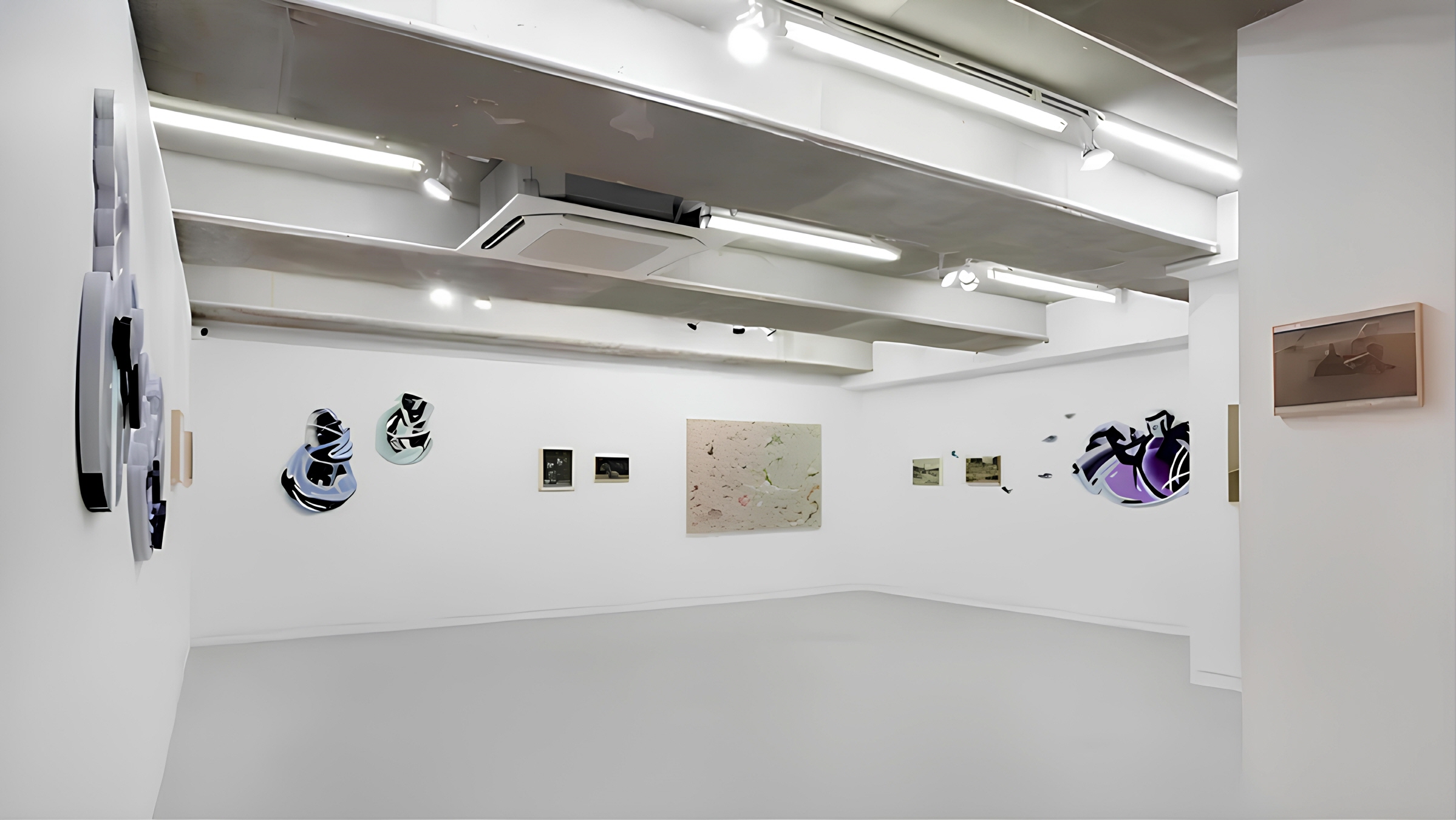
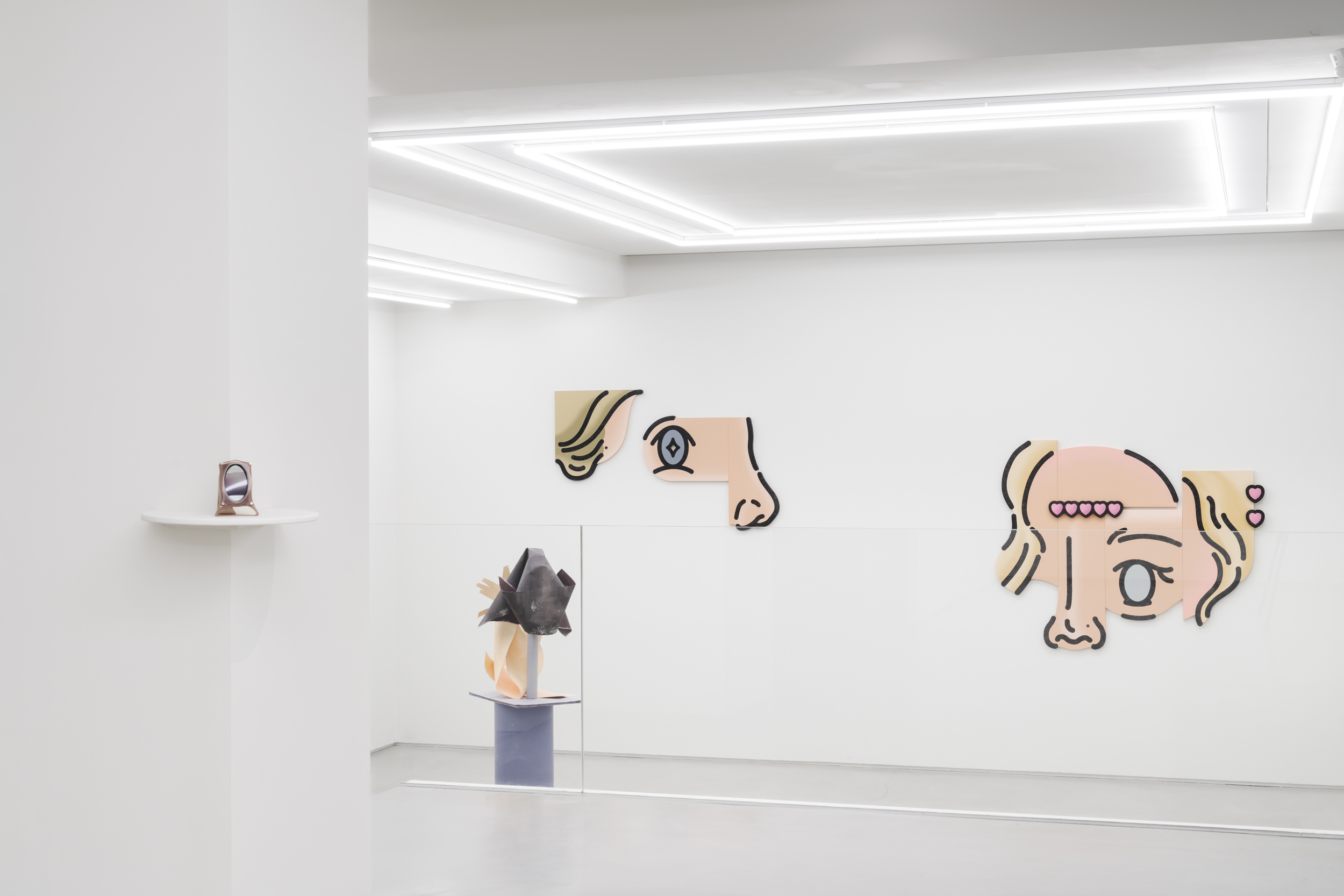
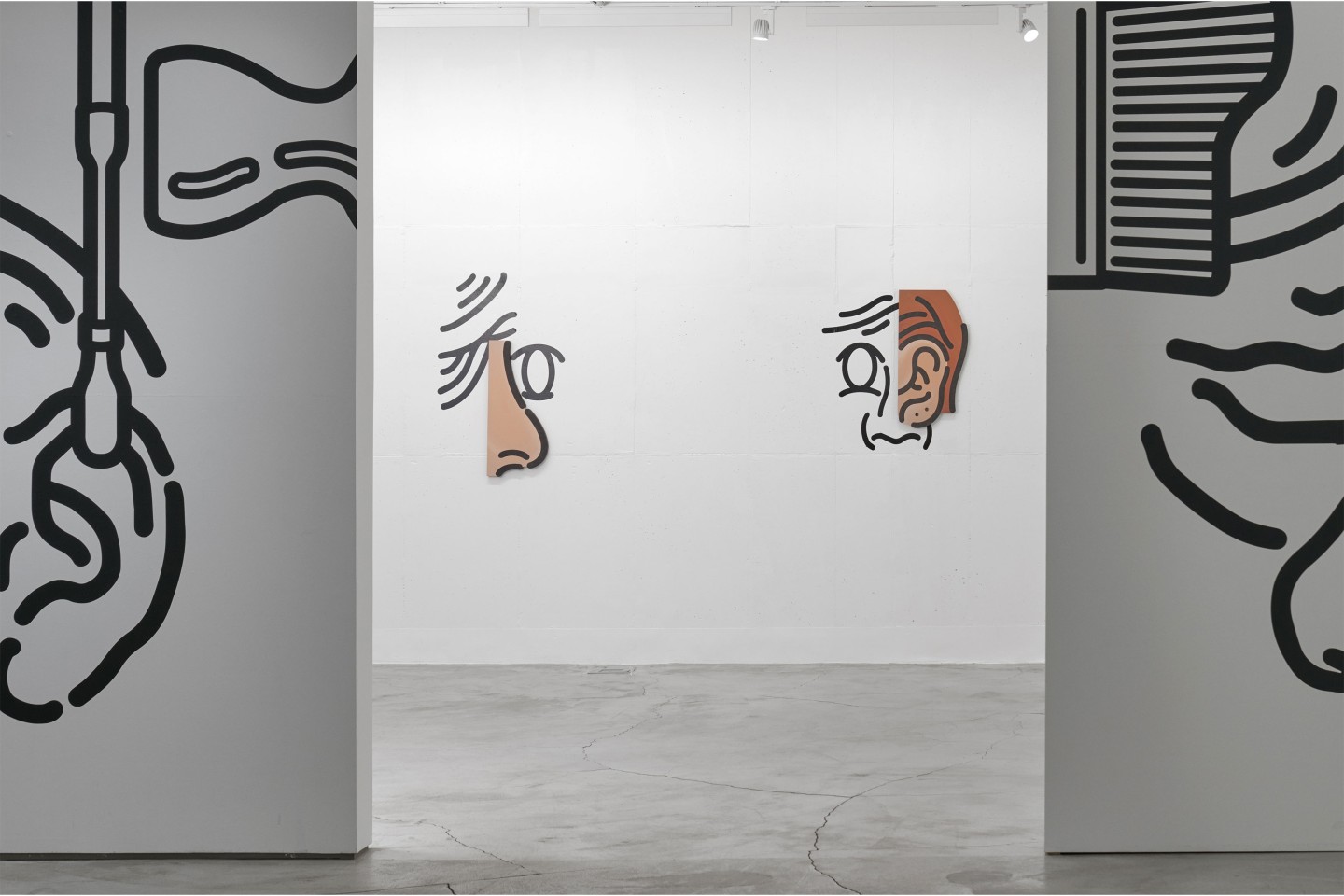
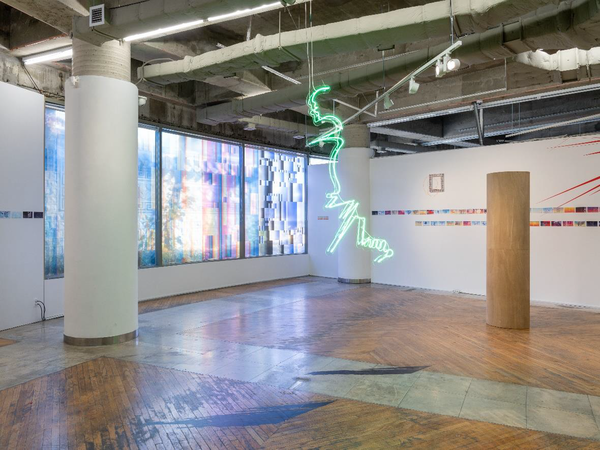
Here are objects. Icons with smiling or slightly frowning expressions, fruits with luscious colors and plants with vivid coloration, decorations and patterns on walls used to furnish an interior exactly to one’s taste, and even the most popular wall-paint colors today.
Perhaps for this reason, the scene created by objects dressed in these pleasing images is moderately refined, satisfying our tastes, and connects with what might be called the sensibility of everyday life, which we frequently encounter from SNS to actual living environments. Here, “moderate” means that it suits popular taste.
It is neither too dramatic nor too maniacal; it can also be described as a safe, sensibility-stimulating taste that now frequently appears under search terms such as “taste” or “sensibility” on social media such as Instagram, where staged images of everyday life are broadcast live. These can be said to form a layer of sensation that, precisely because it is popular, is consumed by the majority without much disagreement.
When we recall that Bourdieu, the sociologist who analyzed class dispositions in capitalist society, emphasized that a socially formed hierarchy of value exists in every cultural product, we can see that “taste,” strongly preferred by a particular group, functions as an indicator of class.
Therefore, as he said, “taste classifies, and it classifies the classifier,”* subjects constituted by the social classification system distinguish the beautiful from the ugly, thereby revealing their own distinction, while at the same time finding themselves in a situation where their social position is defined by this distinction.
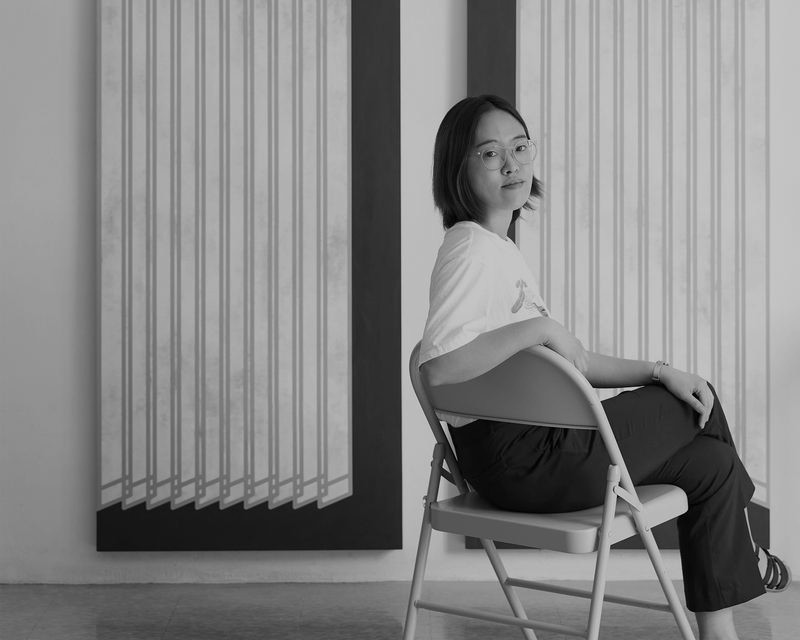
Lee Mijung’s work touches on the issues of taste and class represented by familiar and typical contemporary sensibility by adopting the strategy of easily eye-catching images such as those described above.
And by actively introducing into her work the strategies of today’s countless image circulation and consumption platforms, where images evaporate in an instant, she makes us question not the image as a substitute for projecting the self, but the present on which each individual stands beneath it.
There are several points that prevent her work from remaining at the level of tasteful images and instead lead it beyond, toward a critical consideration of the superficial dimension of images or an imagination of their possibilities. The first is the slippage that occurs where flat images and the structural forms of objects meet.
To begin with, the tastes of popular preference that appear in Lee Mijung’s works—for example, smiling or frowning faces that might be used in advertisements for certain brands or in emojis, and the tones and patterns used in interior decoration that might be seen in lifestyle magazines or in cafés that people flock to—can be called signs that decorate today’s landscape, converging our aesthetic sense into one and directing it toward particular tendencies.
In addition, the clean finish without excess, the calculated thickness of lines, the smoothness of the surface image achieved through the appropriate placement and composition of colors, and the rational structures and modular methods of composition referenced from self-interior design evoke the now familiar modes of our lives and stimulate consumer desire.
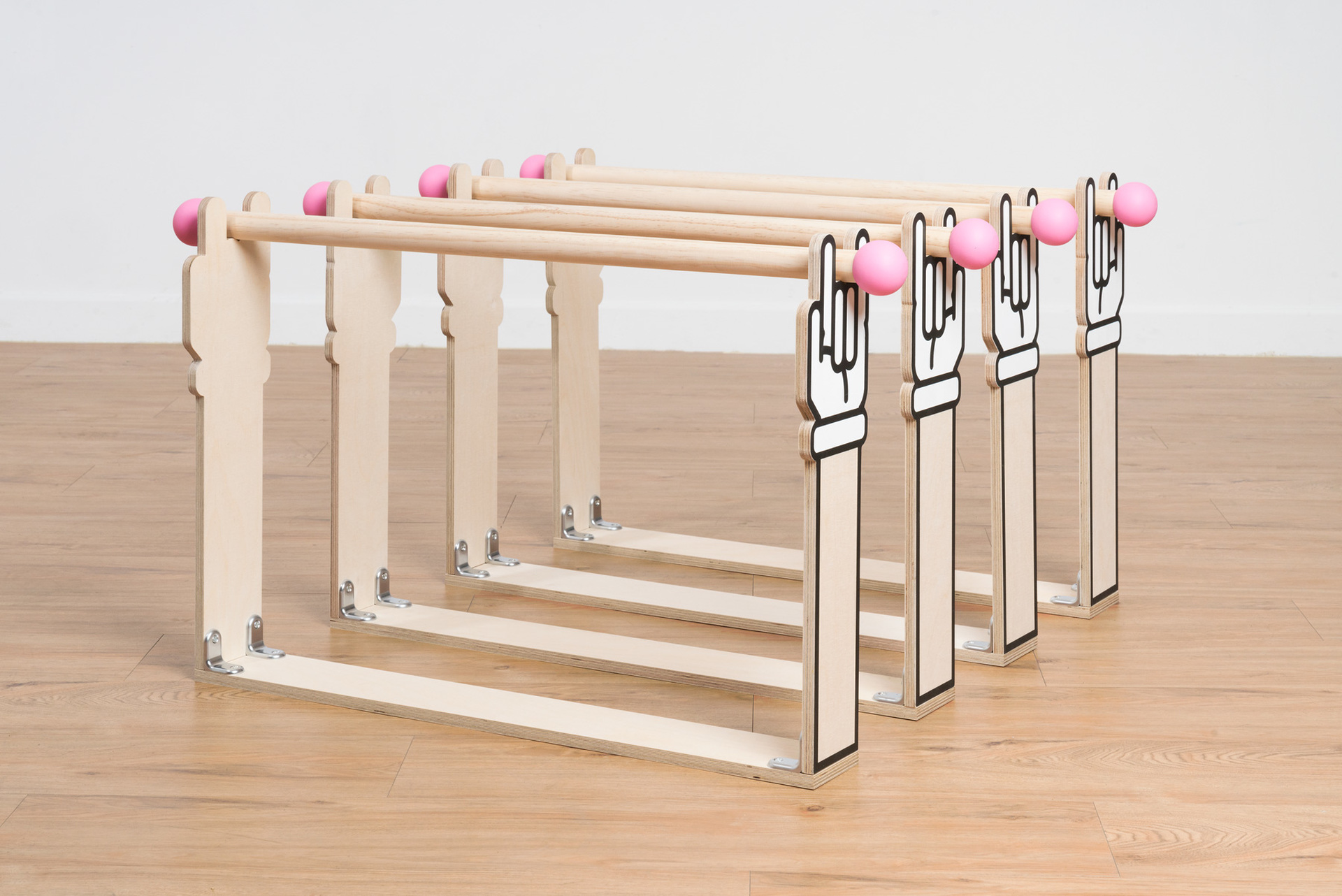
However, the point at which the artist’s work gains value is when we notice that the forms of these objects, which at first glance take the form of furniture, remain somewhat distant from the functionality or purposiveness pursued by existing products, staying at the level of mere imitation. This arises from the discrepancy between the image decorating the surface of the object and the purpose pursued by the object.
For example, the neatly colored image evokes skinned images that circulate and are consumed on digital platforms, thereby extremely compressing and causing the loss of the functional structure of furniture.
And this shifts our gaze to the three-dimensional structure of the object, which seems merely to be standing upright with its angles set, not sturdy enough to perform a function, making us realize that the object before us is nothing more than a sculptural background prop devoted to the surface image, an illogical object displaced from the logic of production and consumption.
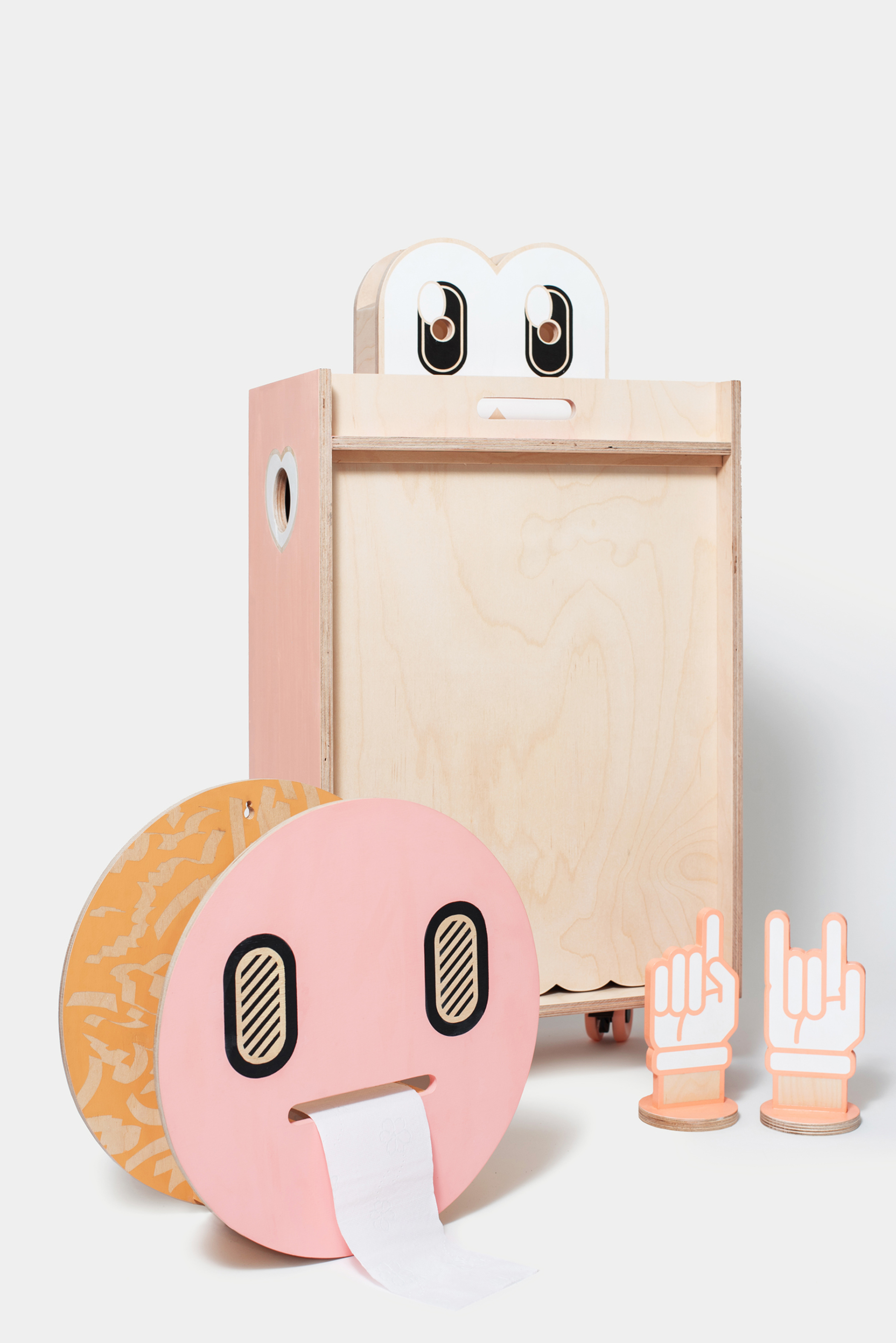
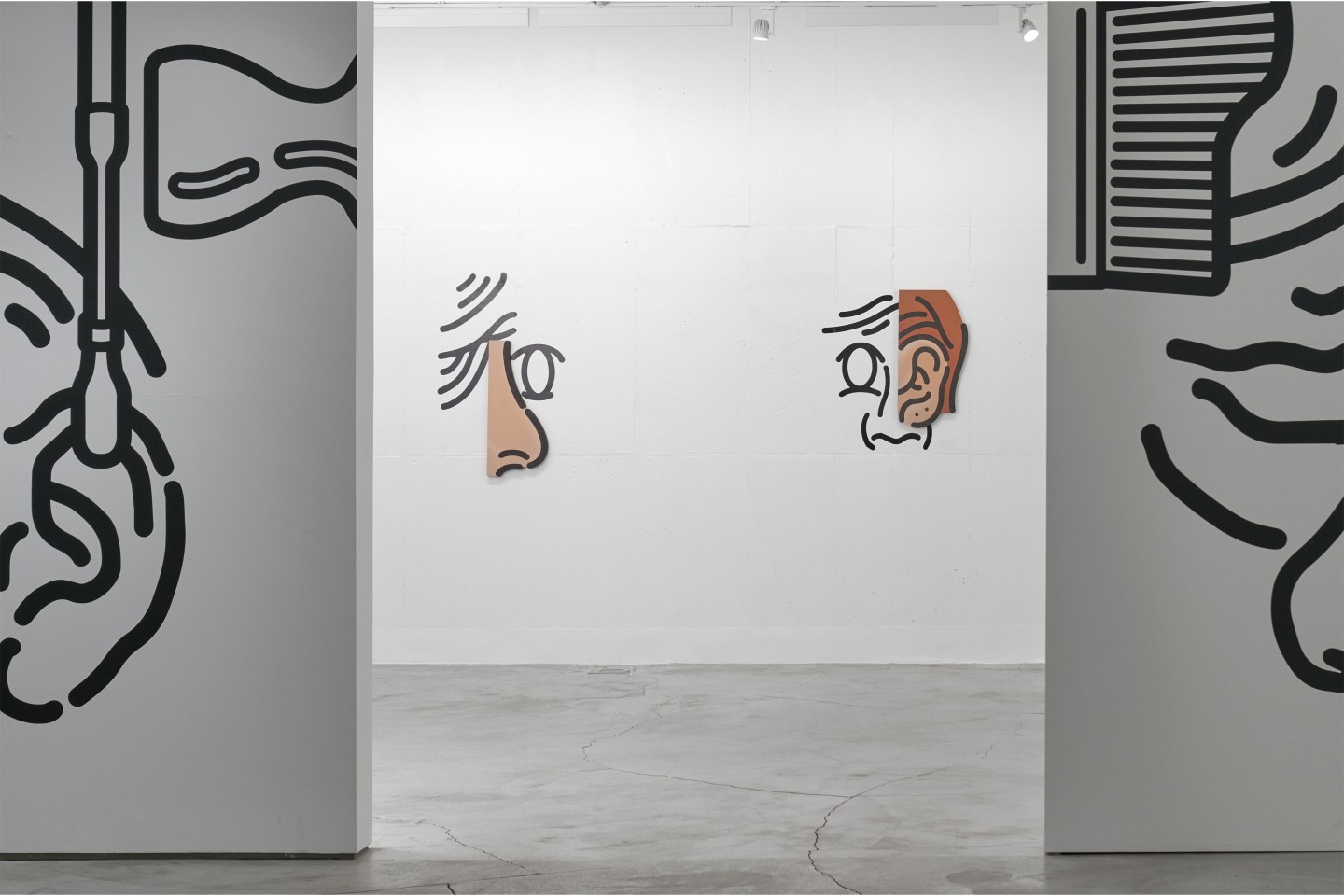
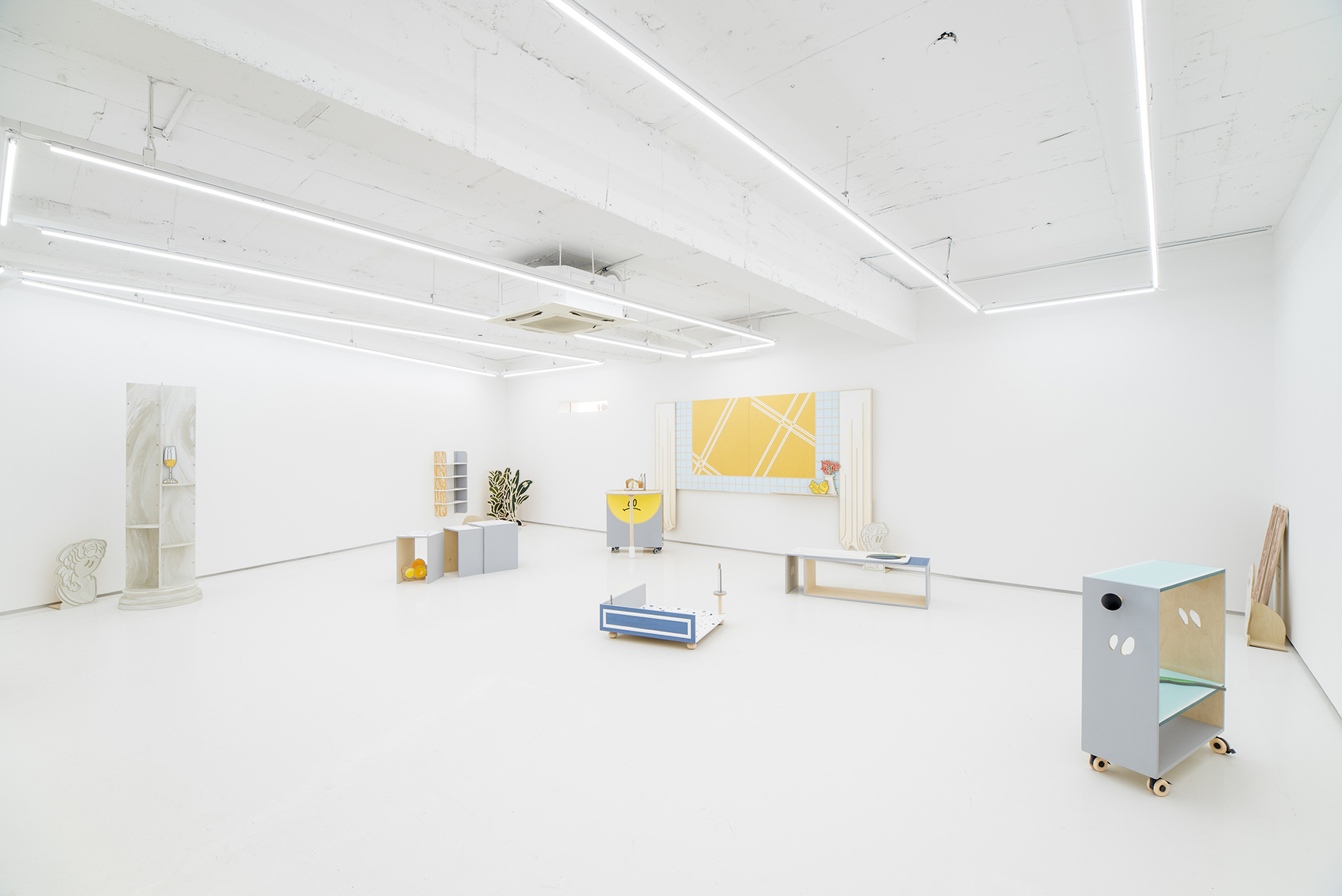
Second, it is necessary to pay attention to the particular images that Lee Mijung often places on her object-shaped works. The artist often adds cartoon-like faces with certain expressions to furniture structures made from plywood. For instance, in Table with a hidden face(2018), she inserts, beneath the top of a wheeled side table, a semicircular face that appears to frown as if uncomfortable from the weight of other objects placed on its head.
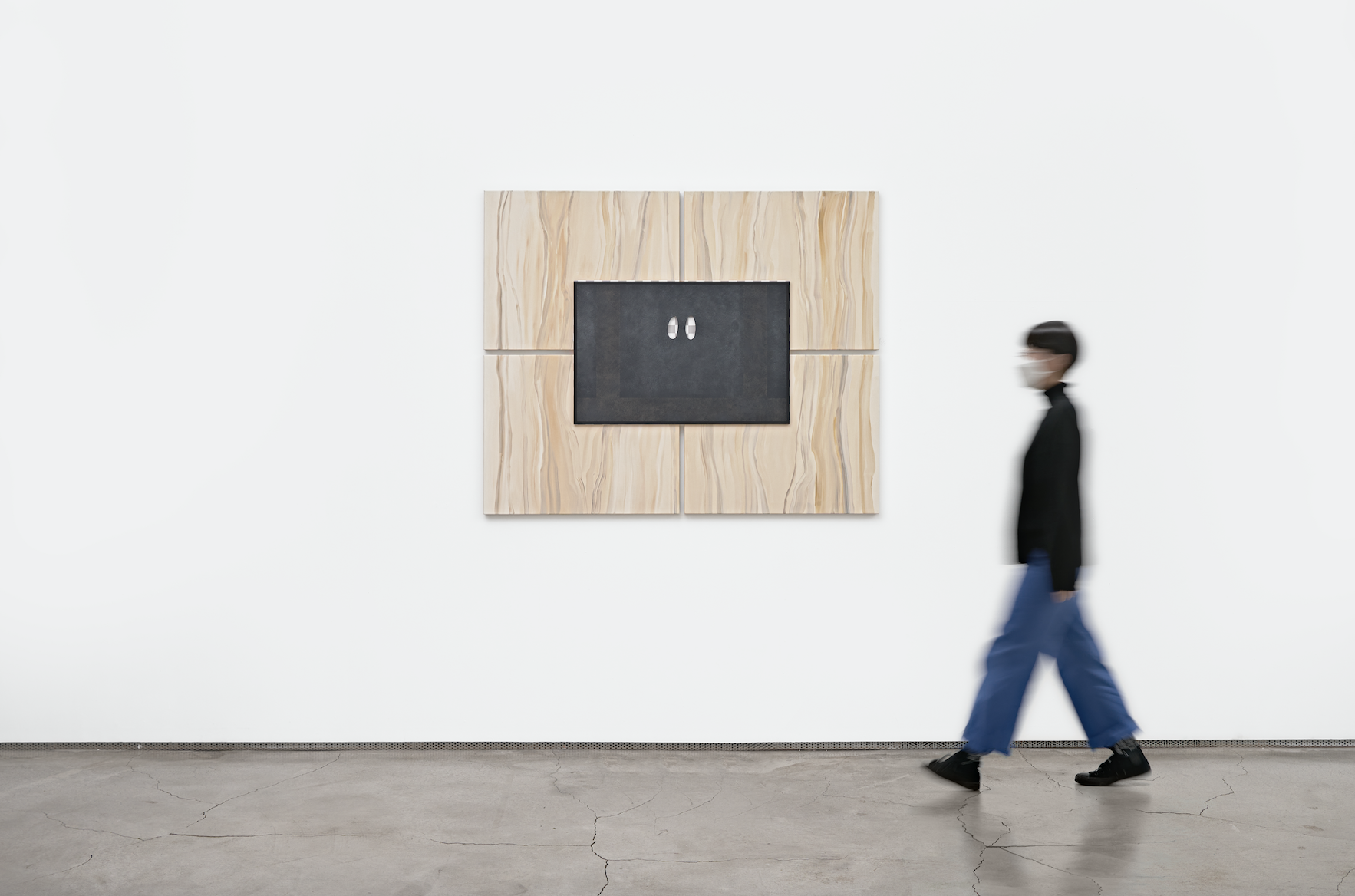
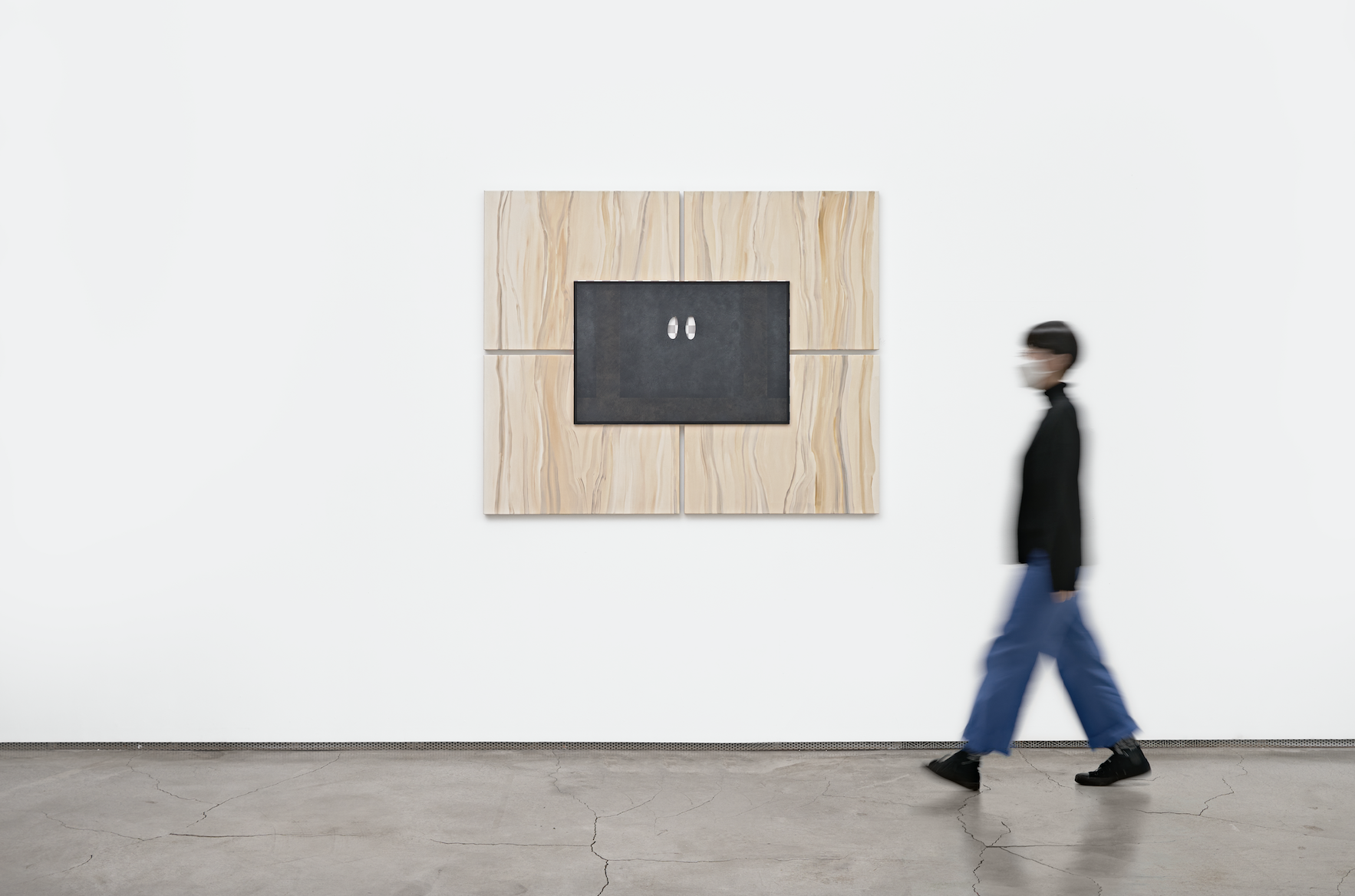
In Super floor(2018), she drills two holes into a floor pattern imitating terrazzo, allowing a unique emotion to enter the expressionless structure of everyday life. This method is also applied in works such as Green plate series(2018), Flat-pack: plaster series(2018), and Breakfast at HOME(2020).
By drawing two ovals onto a flat green plant image of uniform color or onto a pale white plaster cast, she adds new vitality, or transforms the image of a chair covered with white cloth within a decorative frame into an image like a ghost from a cartoon.
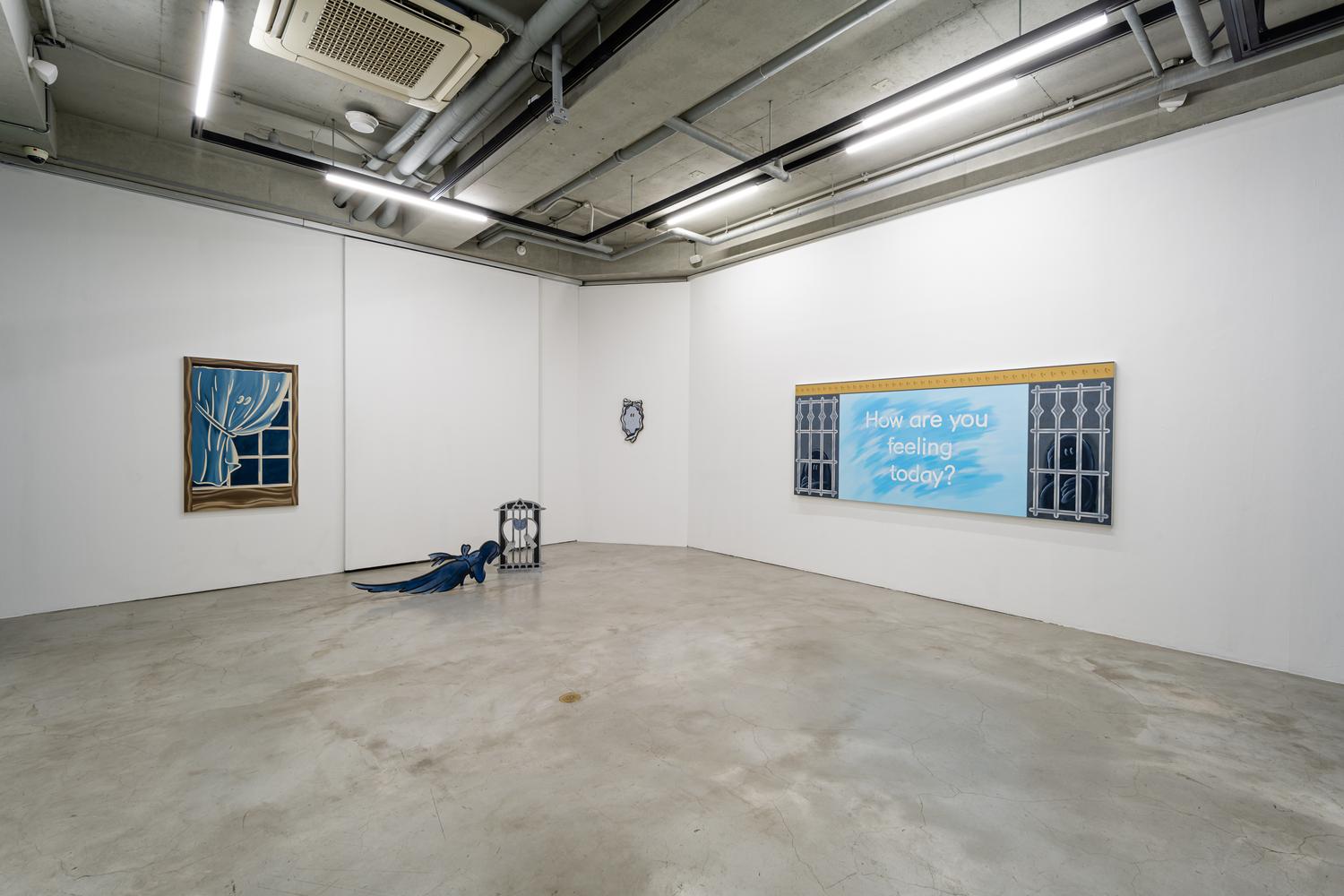
This strategy of anthropomorphizing objects gives a new narrative of vitality to dead object-images, or shifts their position from object to subject, completely separating the objects the artist creates from narratives of tools centered on function and use, allowing them to enter and expand into playful narratives unique to object-images.
Another interesting point in Lee Mijung’s work is the exhibition strategy through which she constructs space. The fact that the external impression of the works inevitably becomes connected to images that stimulate visual sensibility is due, as mentioned earlier, to her borrowing of sensuous images that correspond to certain tastes, but it is also due to the way they are exhibited.
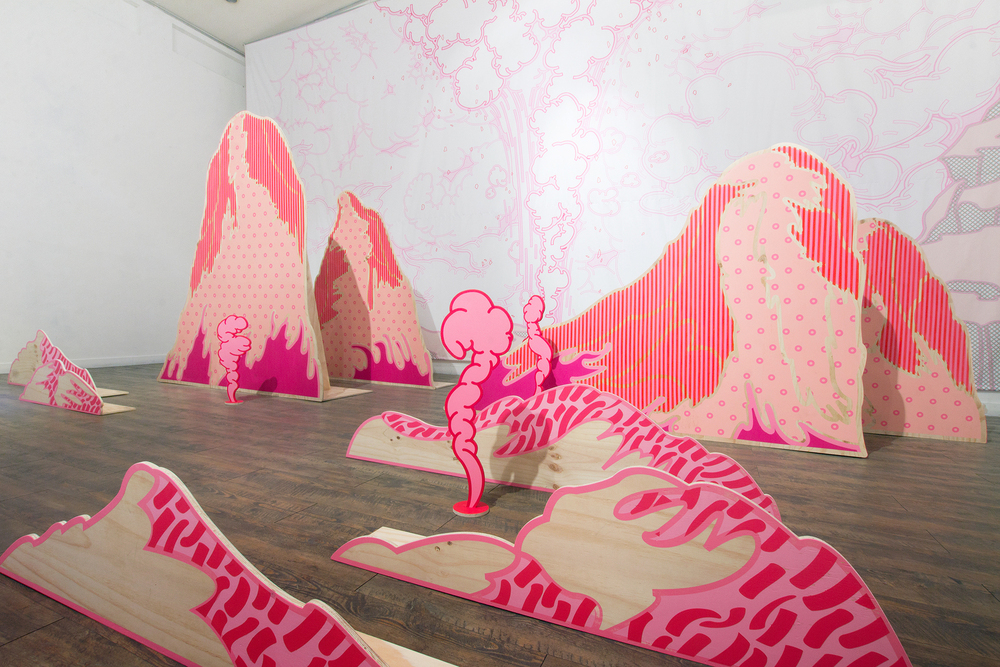
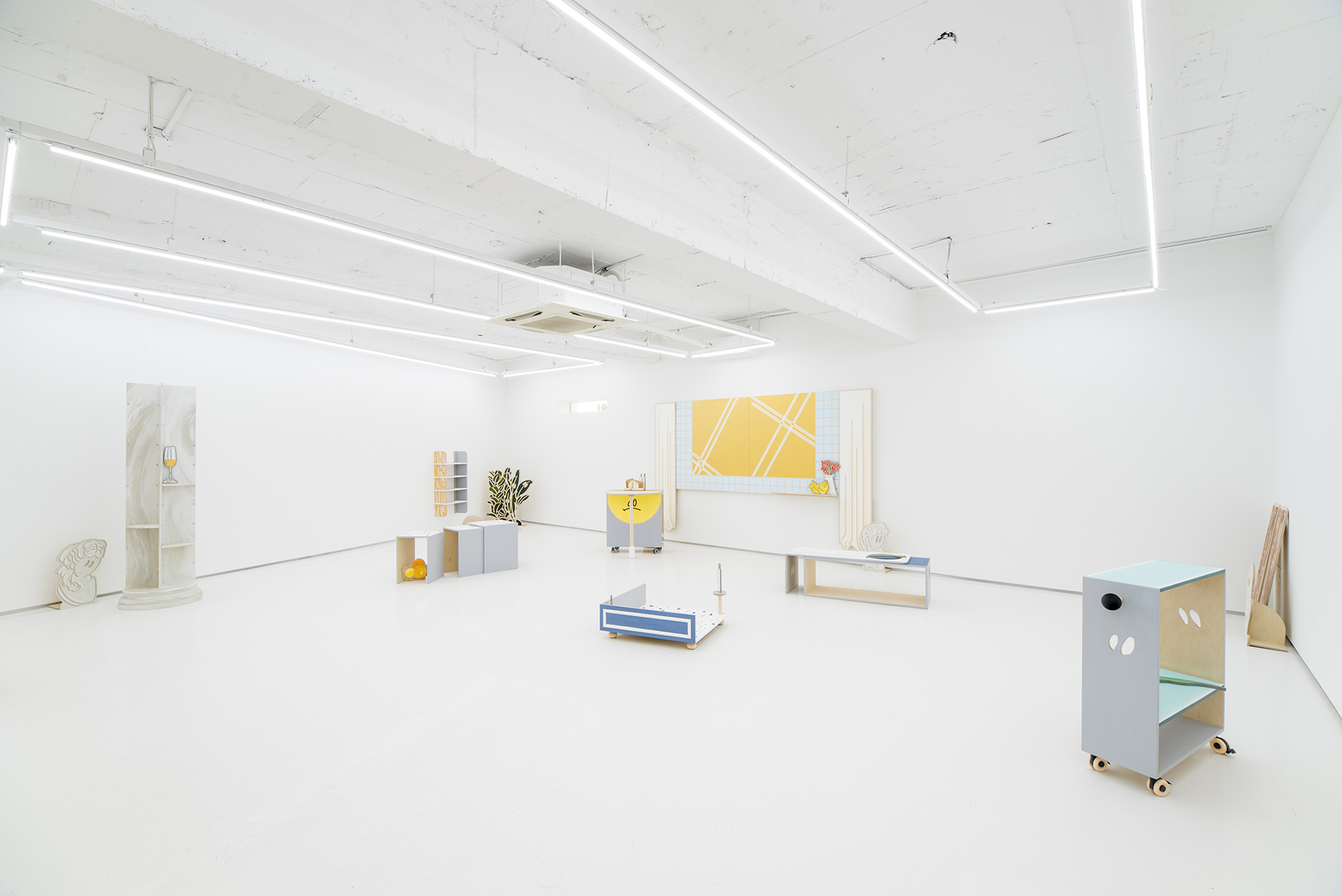
For example, her previous exhibition 《The Gold Terrace》(2018, Art Delight) outwardly resembled the display of a large home-goods store, that is, a showroom. The flat window that contains golden sunlight reproduced in paint, the fake vase placed in front of it, the props of fruit images, the flat plaster casts and plants positioned around them at appropriate distances, and the table topped with a cake—all of these propose and exhibit the scene before our eyes as a plausible, unified image.
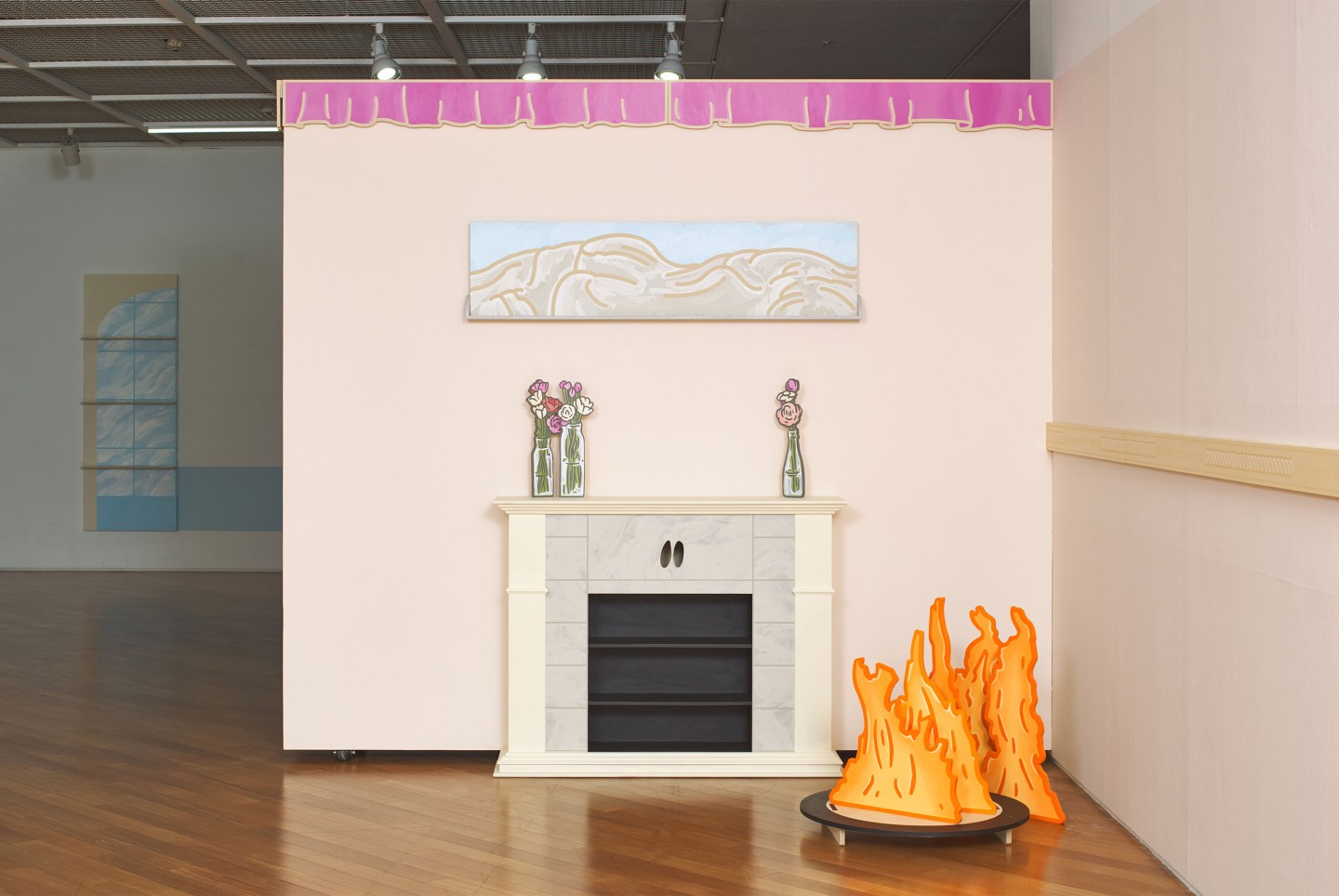
Another solo exhibition, 《SANDWICH TIMES》(2020, SONGEUN ArtCube), also operates its display in a similar context. Wall system for concentration and Decorative line piece : green plate are installed together on one wall as a pleasing pair, while Decorative line piece : Short curtain, Picturesque (Picture) #01, Delivered flowers #01, #02, #03, _place, and Domino fires are arranged together on one side of the exhibition space, staging an atmospheric interior scene that one might see in a magazine.
Roughly speaking, an art exhibition can be described as dealing with the operation of nonlinear narrative. It is like walking among a framework built from segmented images and tying together narratives that are punctured and fragmented through the interaction between viewer and work.
For this reason, it requires active interpretation, relying considerably on the individual’s knowledge and experience, and can be understood as a site premised on an act of intellectual exchange that operates based on the underlying text.
By contrast, a showroom-like format that proposes a fully completed environment based on the consistency of tone and manner is completed by considering the form and color of each object and placing them at appropriate intervals and in suitably expected positions. In particular, it has the purpose of proposal and persuasion, stimulating desire through vision and thereby promoting consumption.
In this way, the showroom and the exhibition share visuality as their primary sense, yet they show clear differences in the mechanisms by which they operate and the goals they seek to achieve.
What is interesting is that Lee Mijung appropriates the exterior form of the showroom in her exhibitions, positioning the viewer at the boundary between these two different characteristics, and doubly unsettling the spatial sense and perspective toward the objects embedded beneath the outwardly expressed space or the individual objects before the eyes.
Rational lifestyles and attitudes that pursue productivity and efficiency, as well as trends, are directly connected to the logic of capital and do not allow time for reflection. They are injected into life in the form of overflowing images and before long come to form a dominant tendency. Pushed along by this, we lose the right to choose as subjects and become passive objects that surrender themselves to the flow.
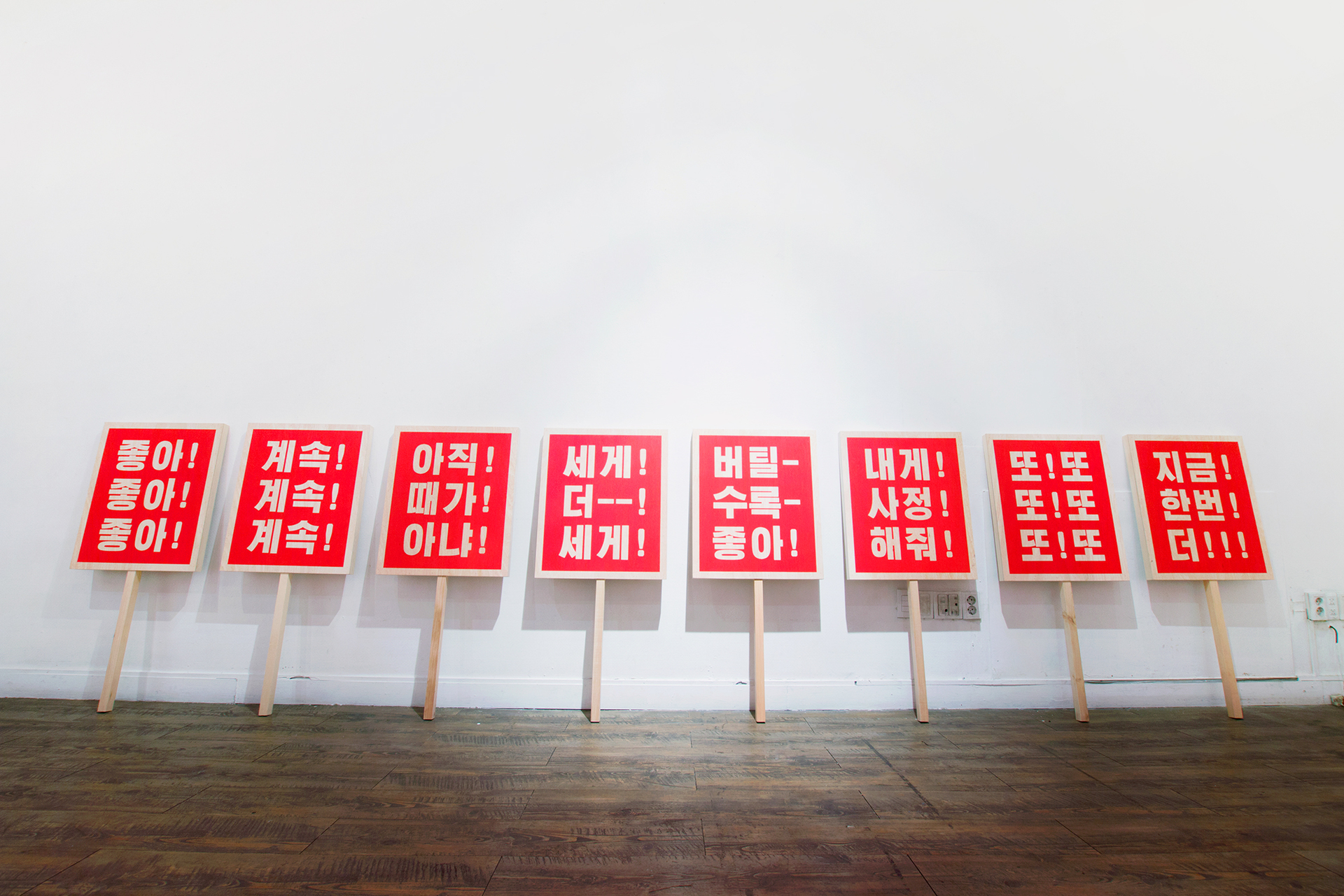
Rather than responding to this contemporary phenomenon in a sharply critical tone, Lee Mijung re-consumes and appropriates, on the practical level of art, today’s modes of life that have converged into surface images.
This can be understood as creating a time and space in which we can question the ways of life that we see, experience, and understand today, in which the present is instantly replaced by the past, by actively introducing into the work the strategies of contemporary image circulation and consumption.
Therefore, to sympathize with the first impression her work throws out like bait, and with the surface order of images surrounding its outer skin, means gradually moving farther away from the exit of the labyrinth and becoming lost within it. Rather, she asks us to doubt the familiar perspectives that would break through the double and triple barriers of images, and asks us to distance ourselves from conventional acceptance.
Now, if we are willing to step onto the stage of intellectual play that Lee Mijung has laid out, the superficial image and the form of imitation will approach us as expressive modes that expose the social class issues implied by cultural codes and the impersonal modes of life.
*
In 『Distinction: A Social Critique of the Judgement of Taste』, Pierre Bourdieu argued that the differentiation of social groups within a society is also revealed through the cultural tastes they enjoy, and emphasized that social subjects reveal their own social position in the process of distinguishing the beautiful from the ugly, and the distinguished from the vulgar.