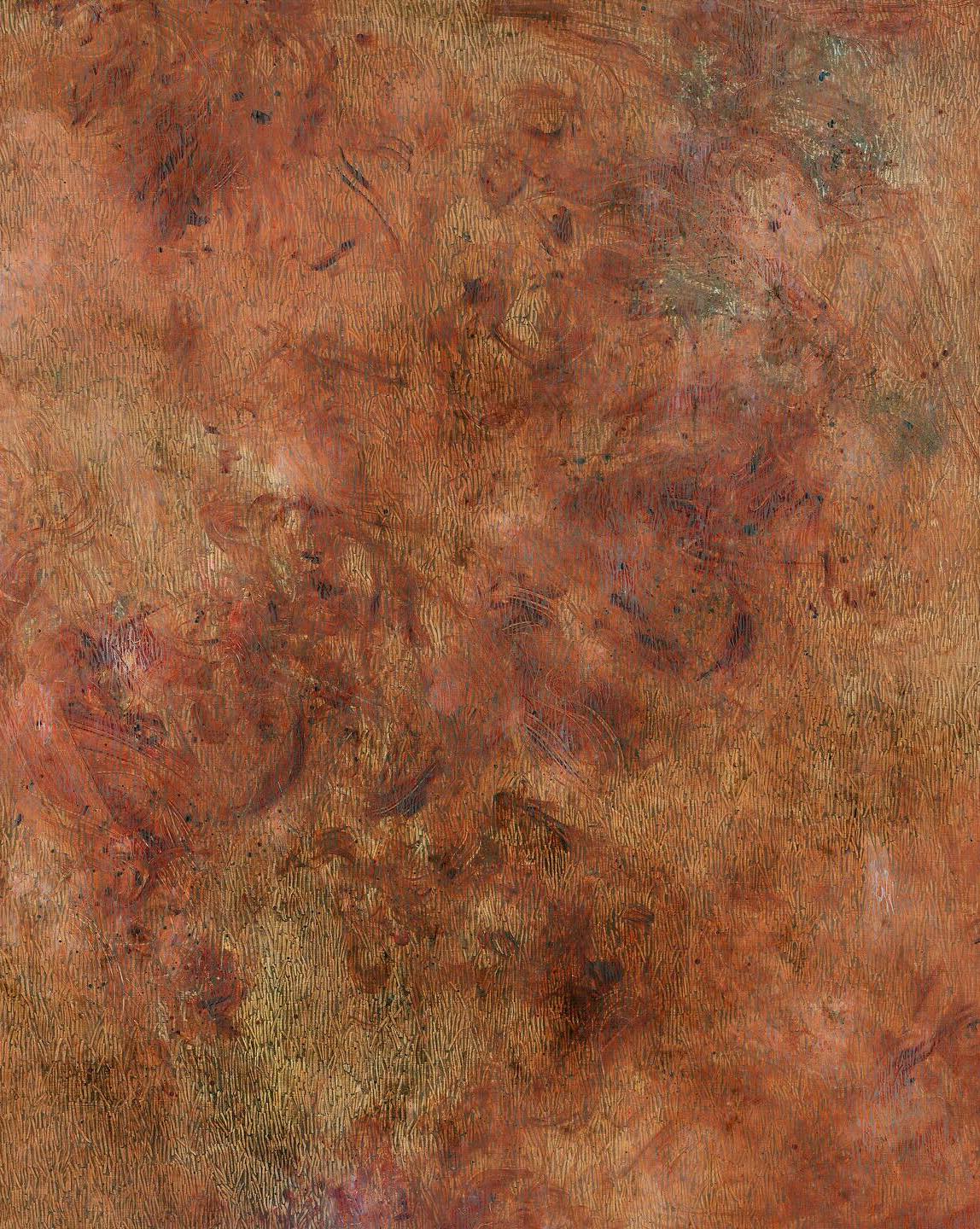
Ko Woori (b. 1989) has explored the unstable flows of emotion that arise within various relationships, translating them into painting and installation works. Through recording the anxiety and tension experienced in human relationships, the artist investigates the performative nature of “painting,” approaching it as an act akin to performance, while experimentally employing the material properties of diverse media.


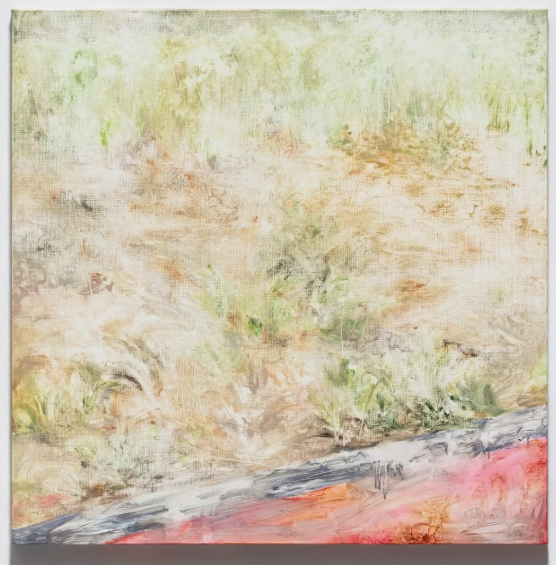
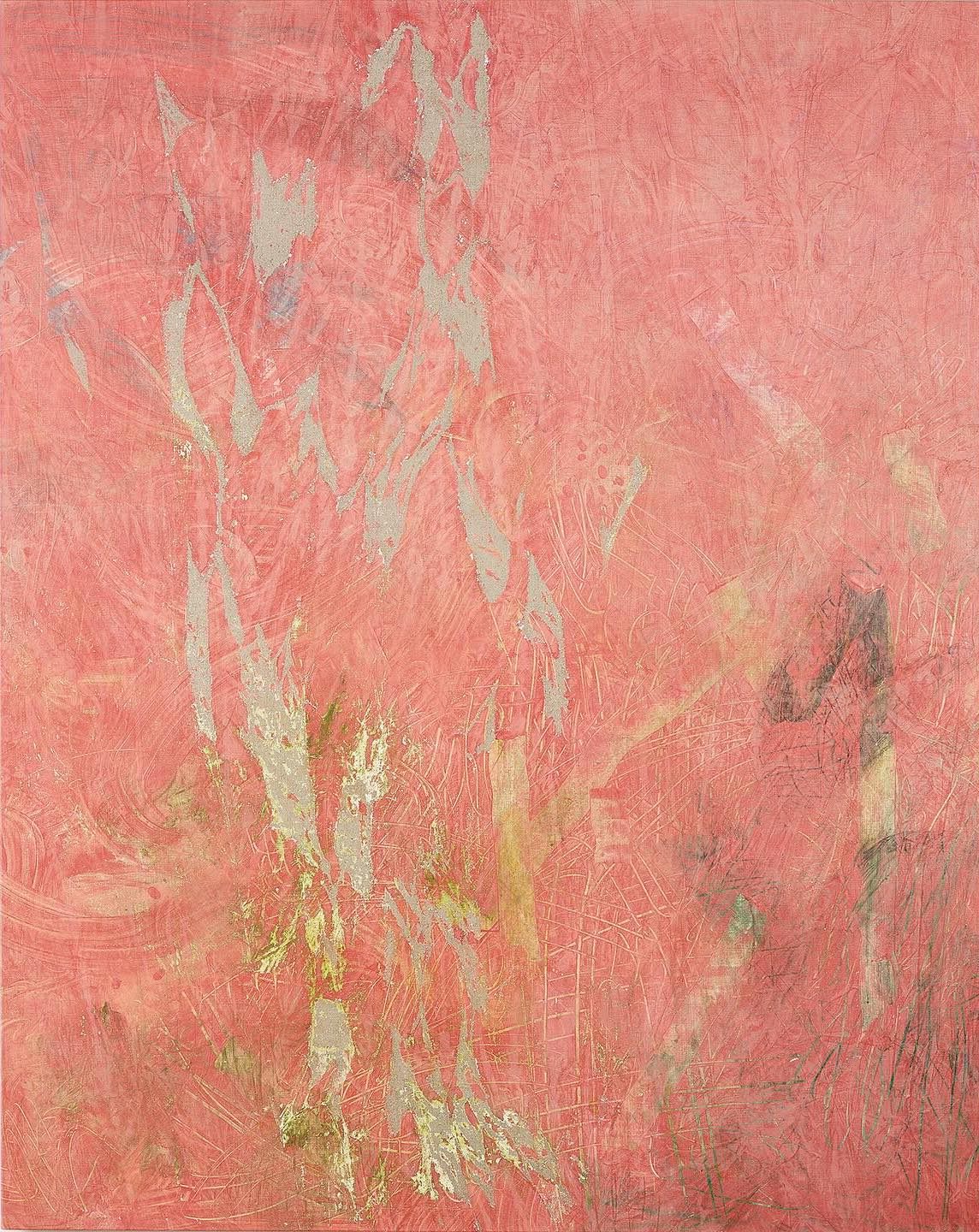
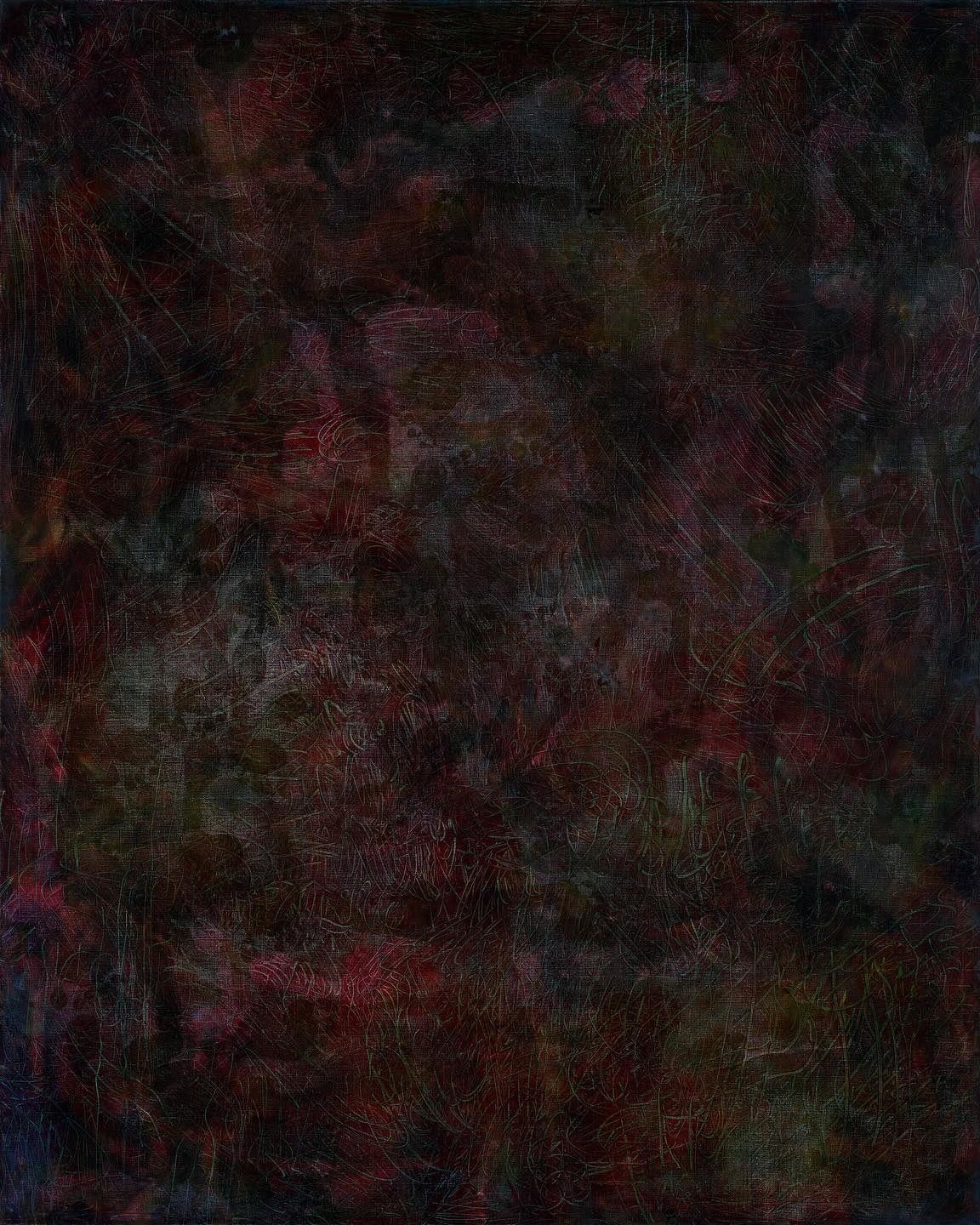
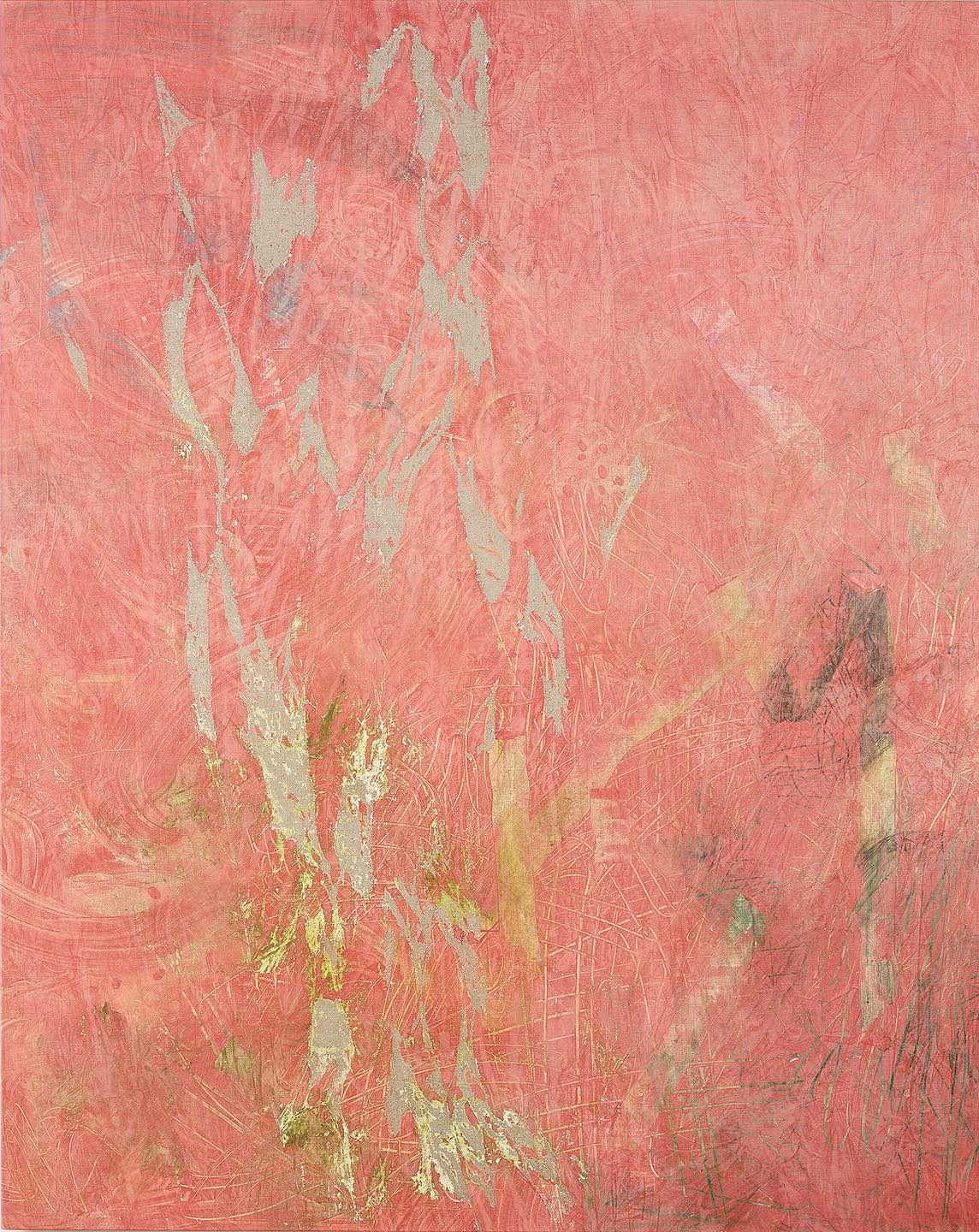
Ko Woori, Flexible Mark (weigh) 02, 2017, Action painting, oil on canvas, 162x130cm © Ko Woori

We inevitably live lives in which we encounter, collide with, and form relationships with different people every day. For Ko Woori, emotional friction with others often arrived as discomfort, and such emotions would in turn extend into physical symptoms, manifesting as anxiety, fear, and stress.
 
These emotions pass without ever being fully resolved, only to reappear again and again. The artist therefore describes her practice as an attempt to search for points of resolution for these feelings.


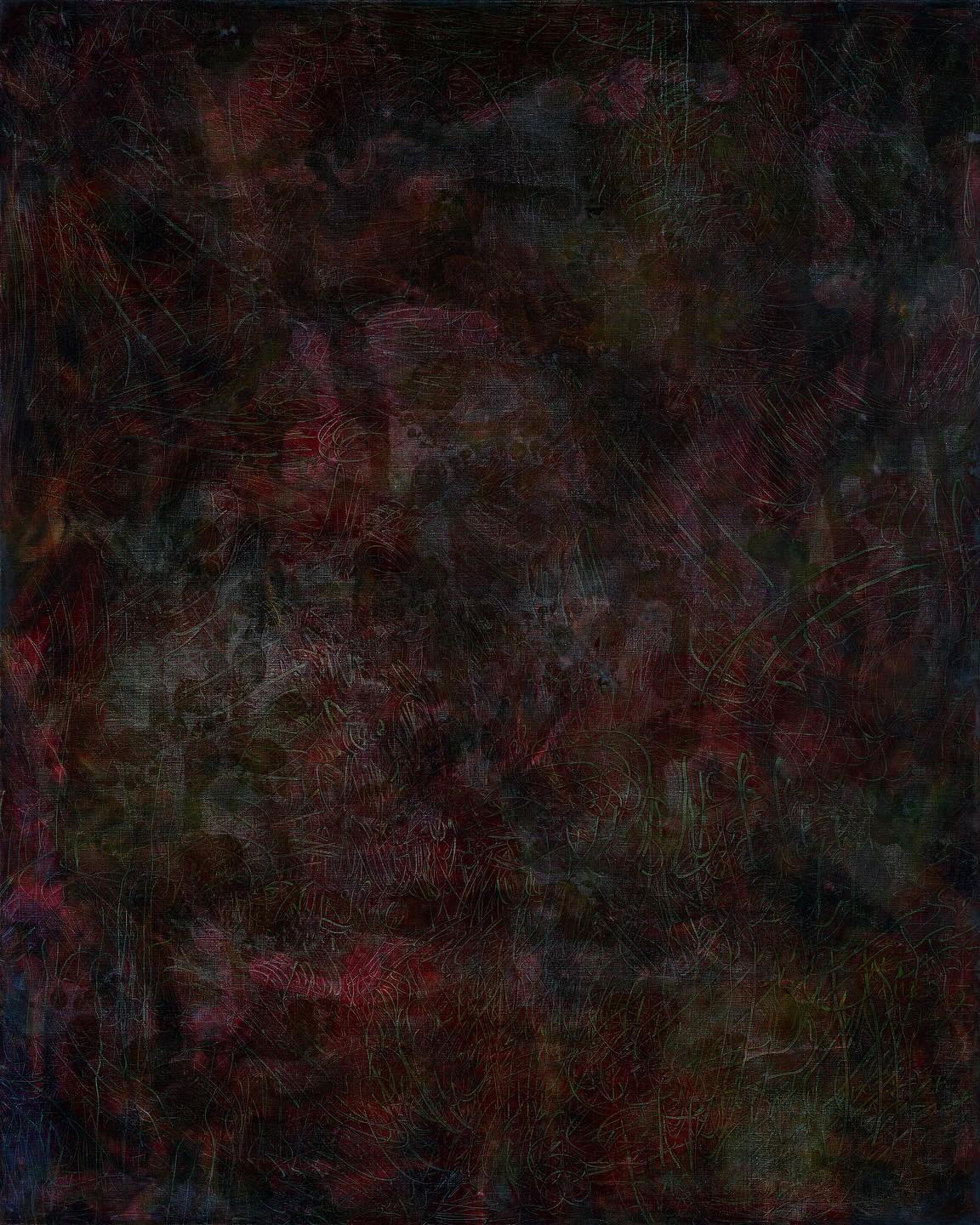
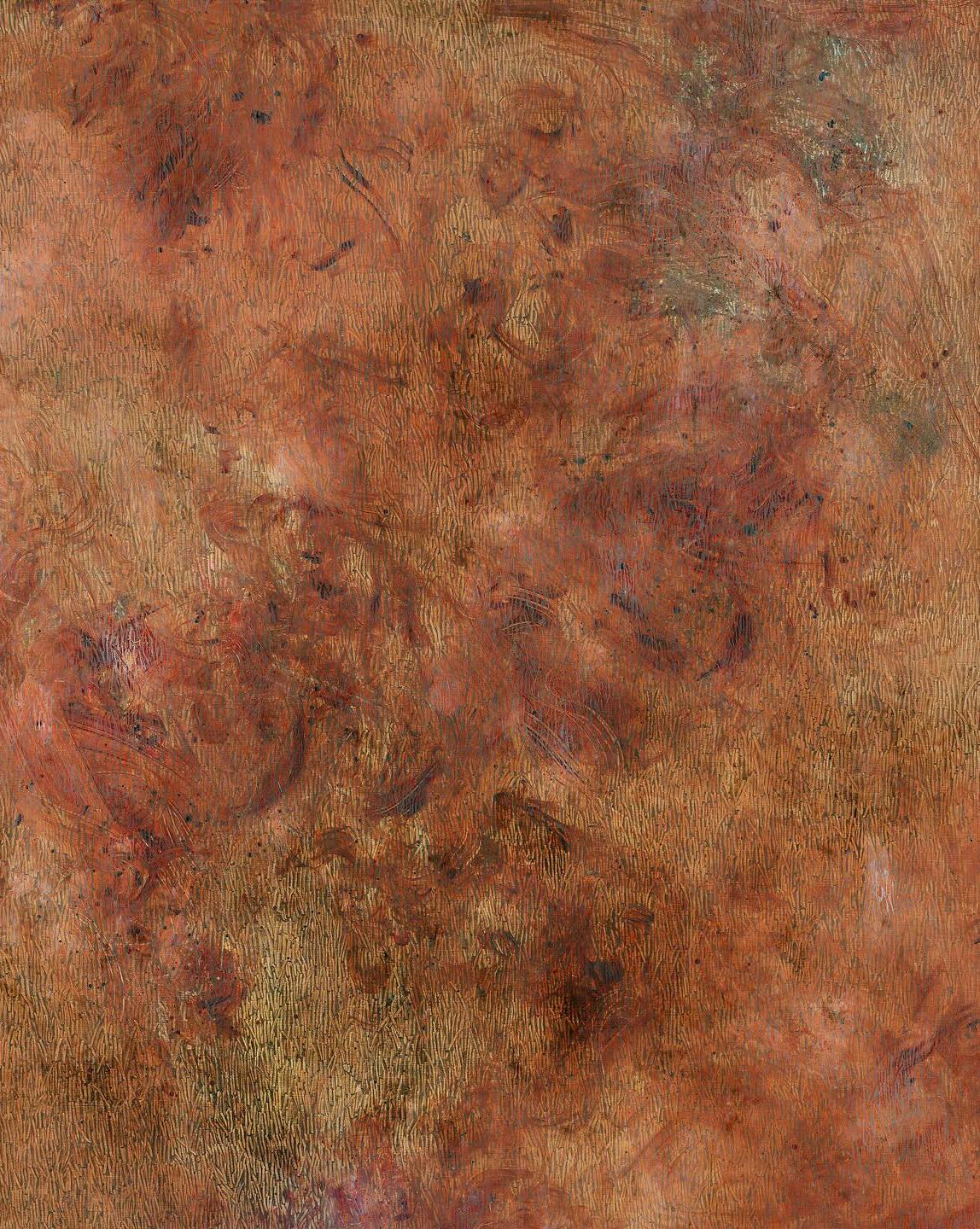
Ko Woori, Flexible Mark (weigh) 03, 2017, Action painting, oil on canvas, 162x130cm © Ko Woori

To do so, Ko Woori actively incorporates bodily intervention into the act of painting. She expresses the emotions that arise when confronting inner chaos by embedding them into the process of action itself, leaving behind traces of gestures shaped by those internal emotions upon the resulting surface.
 
For instance, the artist uses everything from the full surface of her hands to her fingernails on still-wet paint to create sharp linear images resembling rhythms or waves, disrupting forms and externalizing turbulent emotions. At times, she also wipes away layers of paint with the edge of her hand, blurring the boundaries of forms.
 
Through these gestures, the artist obscures the boundary between the presence and absence of paint, generating a sense of confusion surrounding essence itself.


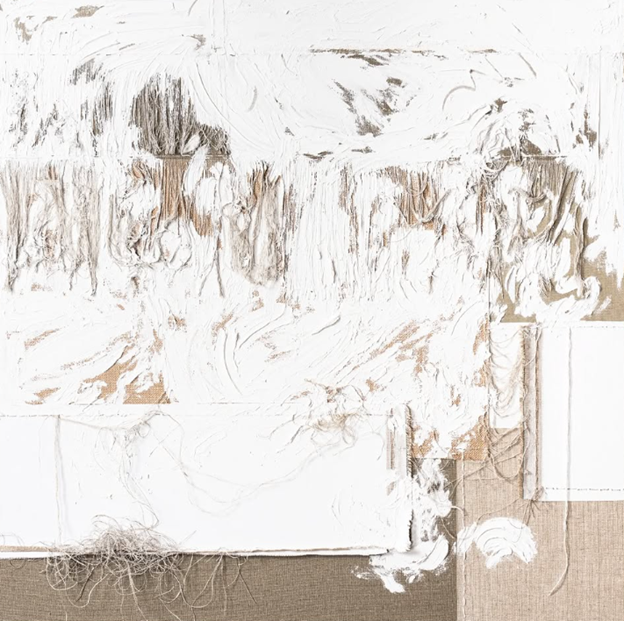
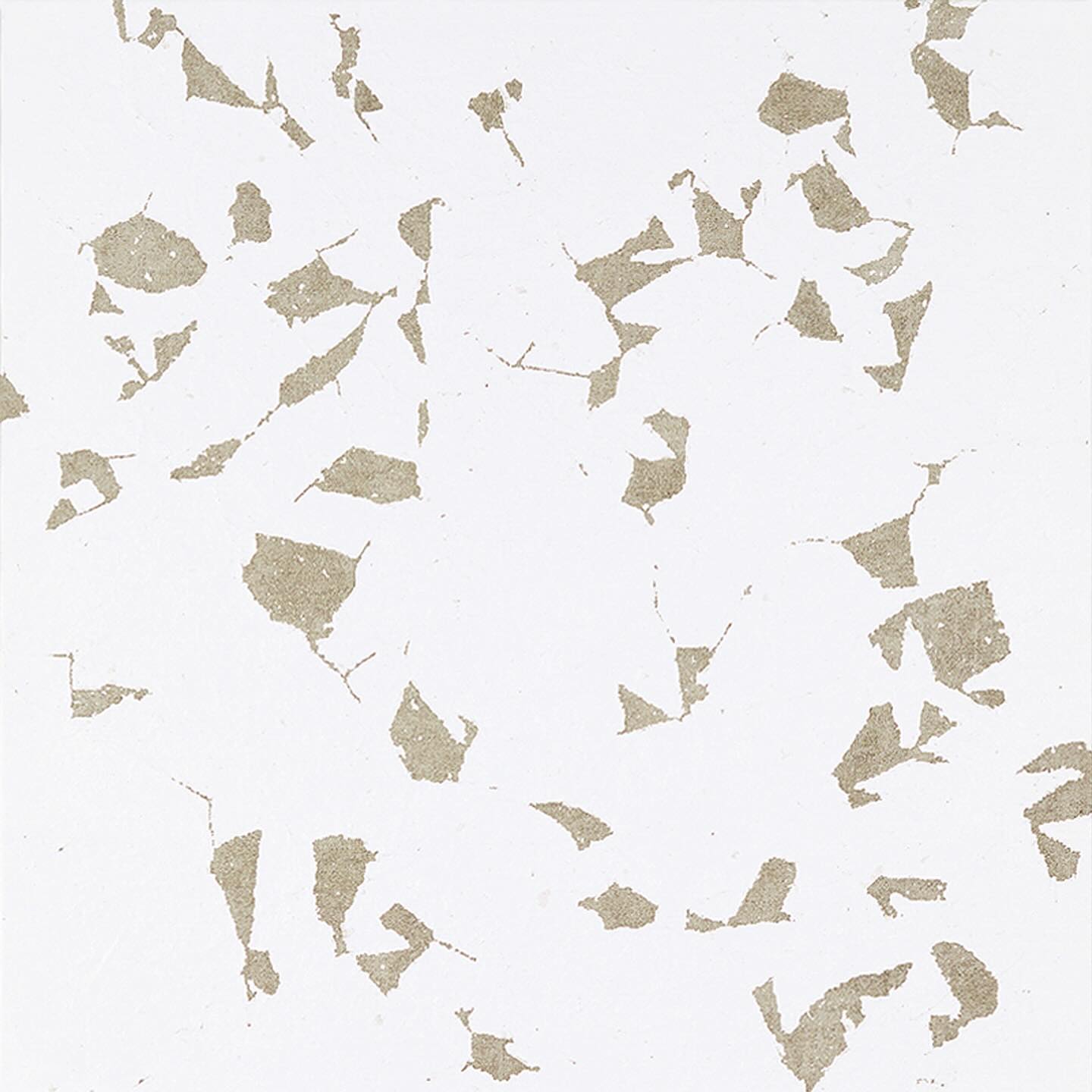
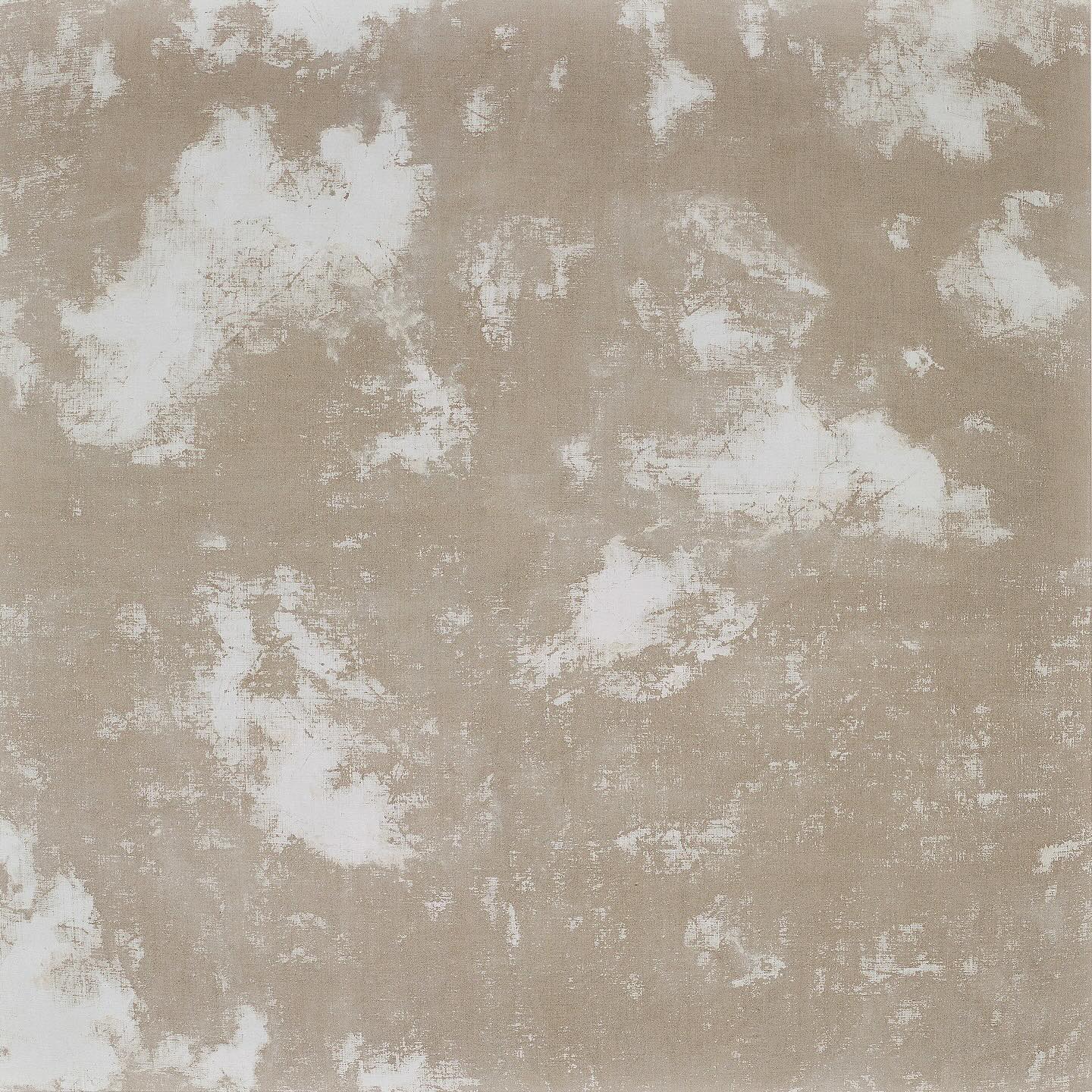
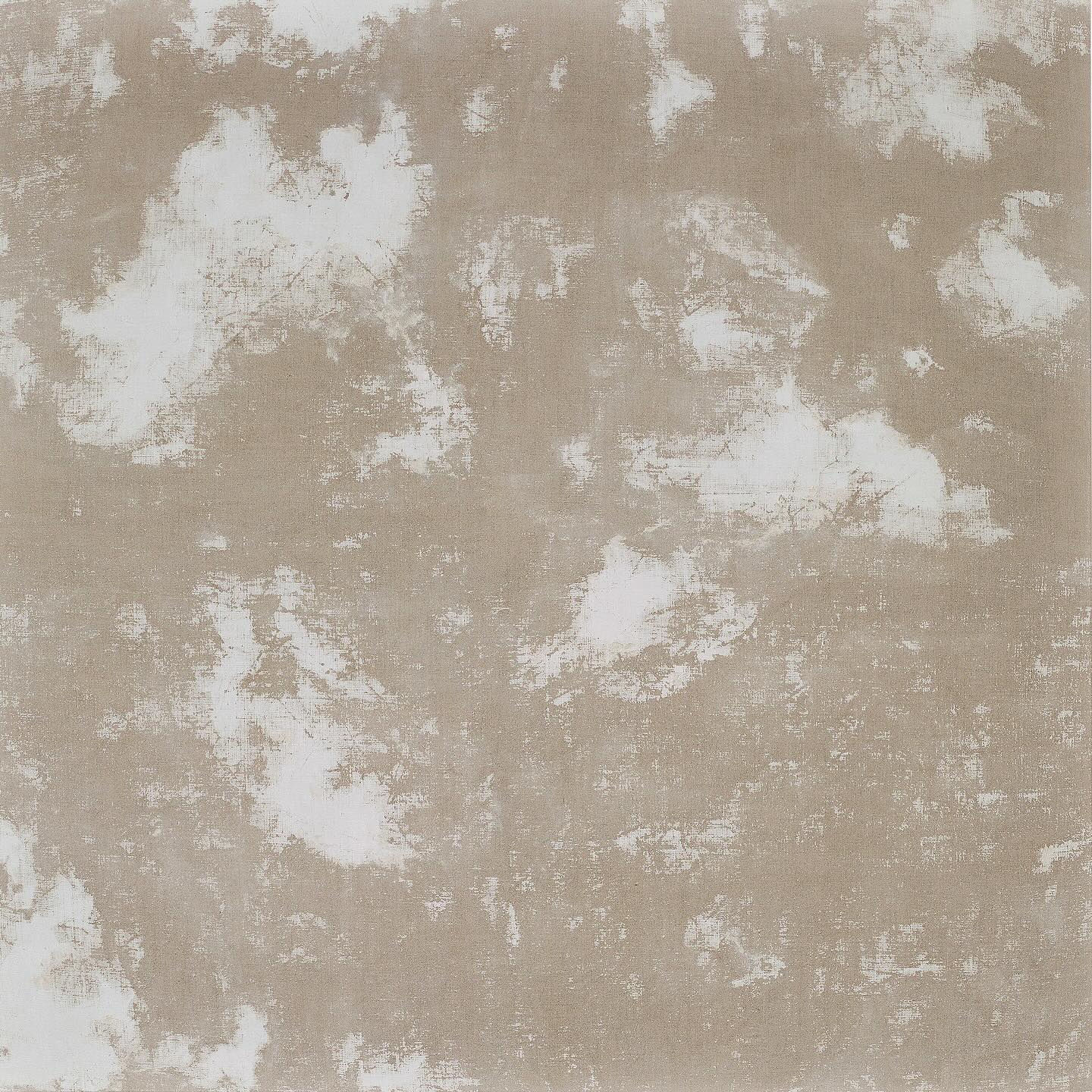
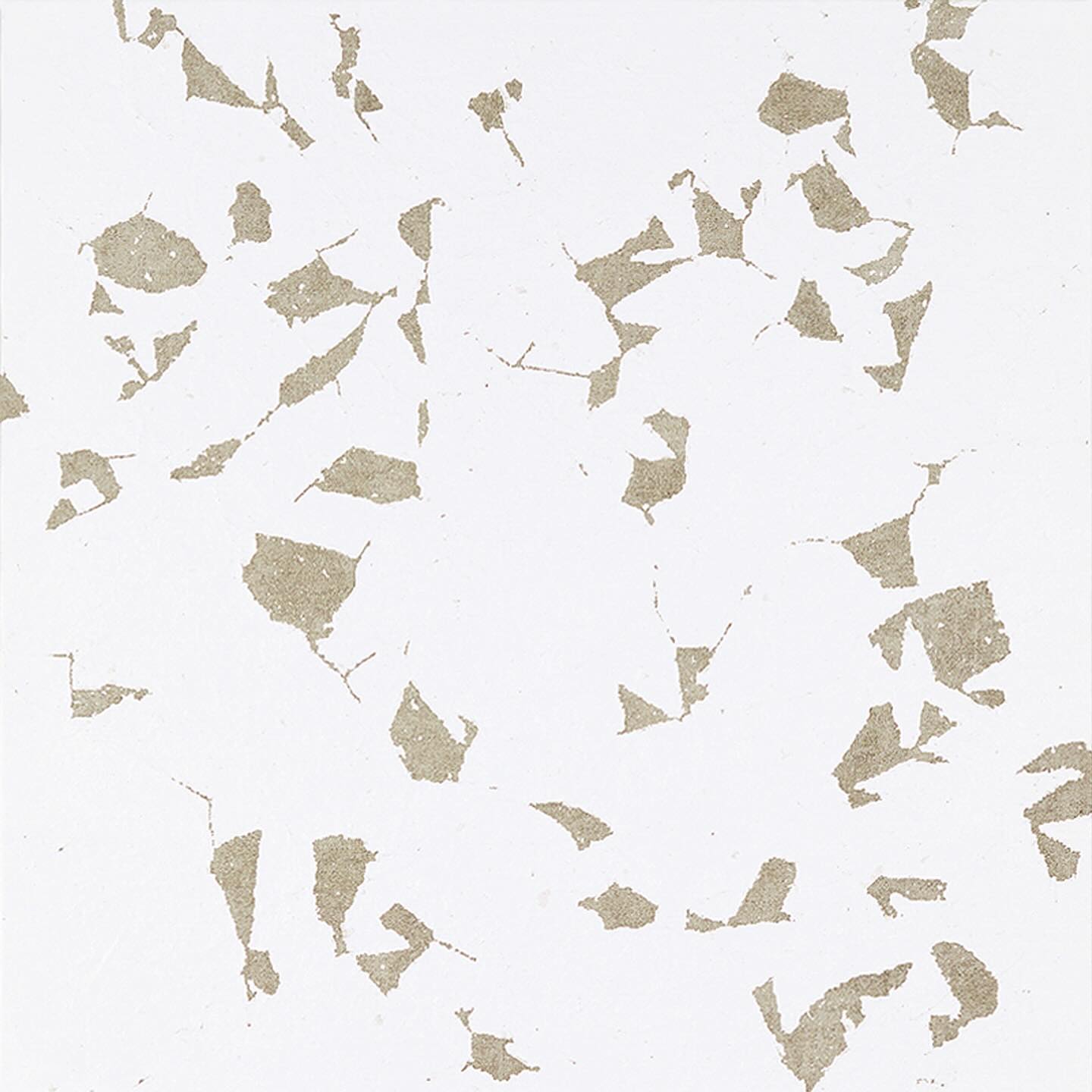
Ko Woori, Exterior2 03, 2017, Scrape canvas, 130x130cm © Ko Woori

Alongside this bodily mode of painting, Ko Woori experiments with the material properties of various media in order to express emotion. The overall process of her work unfolds through repeated cycles of peeling away and filling in, where chance and inevitability continuously intersect.
 
The artist first compresses water-soaked canvas into rounded forms. When friction is applied to the outer surface, the primer (gesso) covering the canvas peels away, revealing the original state of the fabric beneath. She then repeatedly applies and removes paint upon this exposed surface.
 
Through this process, some gaps become filled while others remain partially open, allowing lyrical abstract images shaped by chance to emerge. In doing so, Ko visualizes boundaries and essence, while disturbing layers of perception through the repeated presence and absence of paint, ultimately revealing a process of contemplation itself.


Ko Woori, Flexible Mark (Crack) 02, 2018, Finger-painting, acrylic on scrape canvas, 162x130cm© Ko Woori

In this way, Ko Woori has continued a practice of creating “cracks” within the ambivalent emotions experienced through human relationships, recording bodily performances that search for points of contact between herself and others, while attempting to share emotional experiences with viewers.
 
In 《Unknowing · Border · Moment · Crack · Exterior》, a solo exhibition held at Alternative Space NOON in 2018, the artist sought to revisit the ambiguous and unknowable emotions generated within social relationships and to reveal, through the materiality of the body, a process of contemplation aimed at approaching sincerity and essence.
 
In this exhibition, Ko Woori’s works constructed layered surfaces through acts such as painting, crumpling, and soaking the canvas. These layered traces remain as records of a kind of bodily struggle that emerged in the process of searching for “sincerity” in order to understand others and assimilate into society.


Ko Woori, Exterior2 04, 2018, Scrape canvas, 73x73cm © Ko Woori

First, the artist stepped onto still-wet paint, revisiting unresolved emotions rooted in social relationships, and expressed these feelings through strokes resembling rhythms and waves across the surface. She then crumpled the canvas to create both inner and outer worlds, before applying friction to the exterior surface, causing parts of it to peel away.
 
Through this process, the resulting paintings simultaneously reveal exterior, border, and crack by emphasizing the canvas surface itself, tracing the cycle from emotion and formation to dissolution.


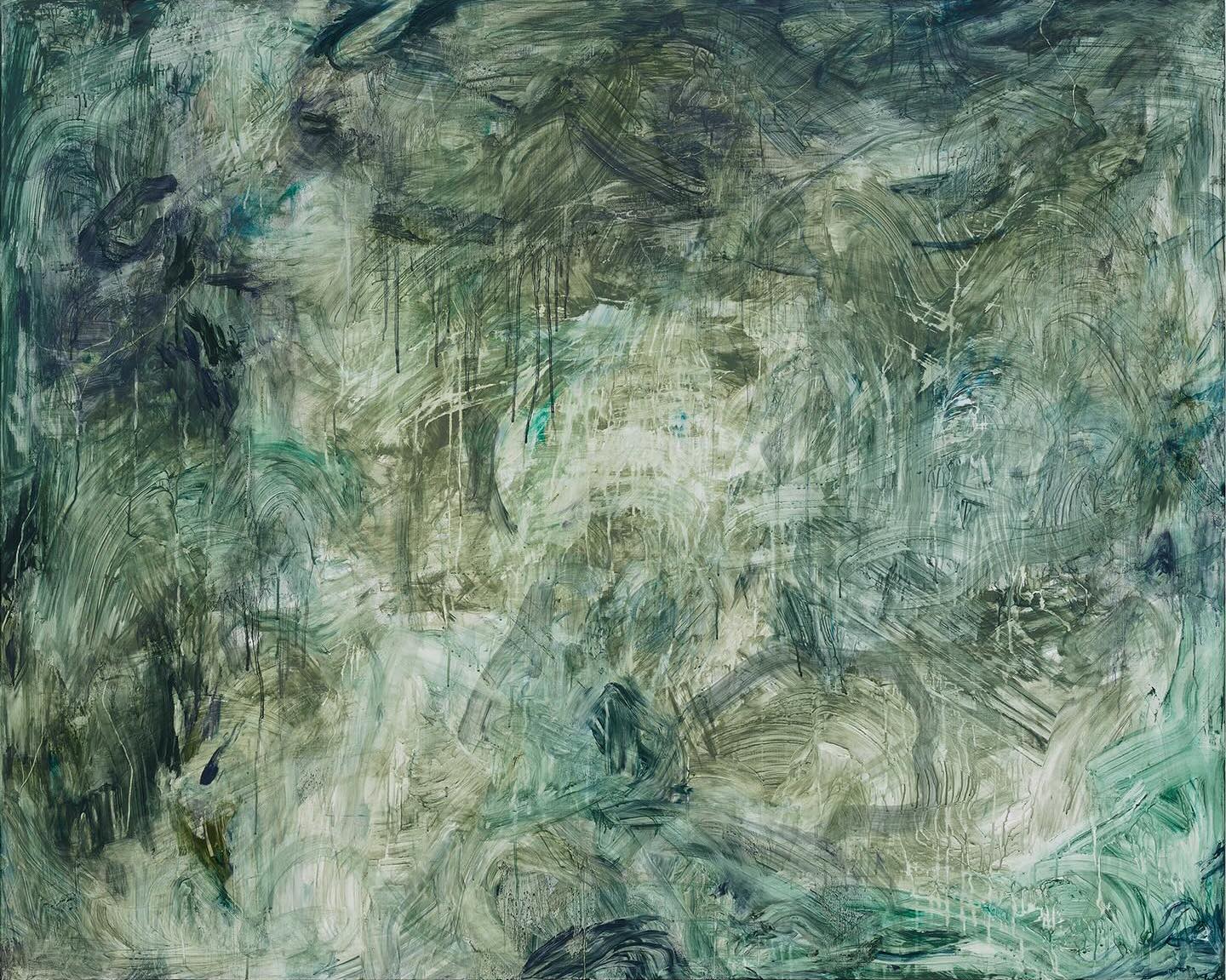
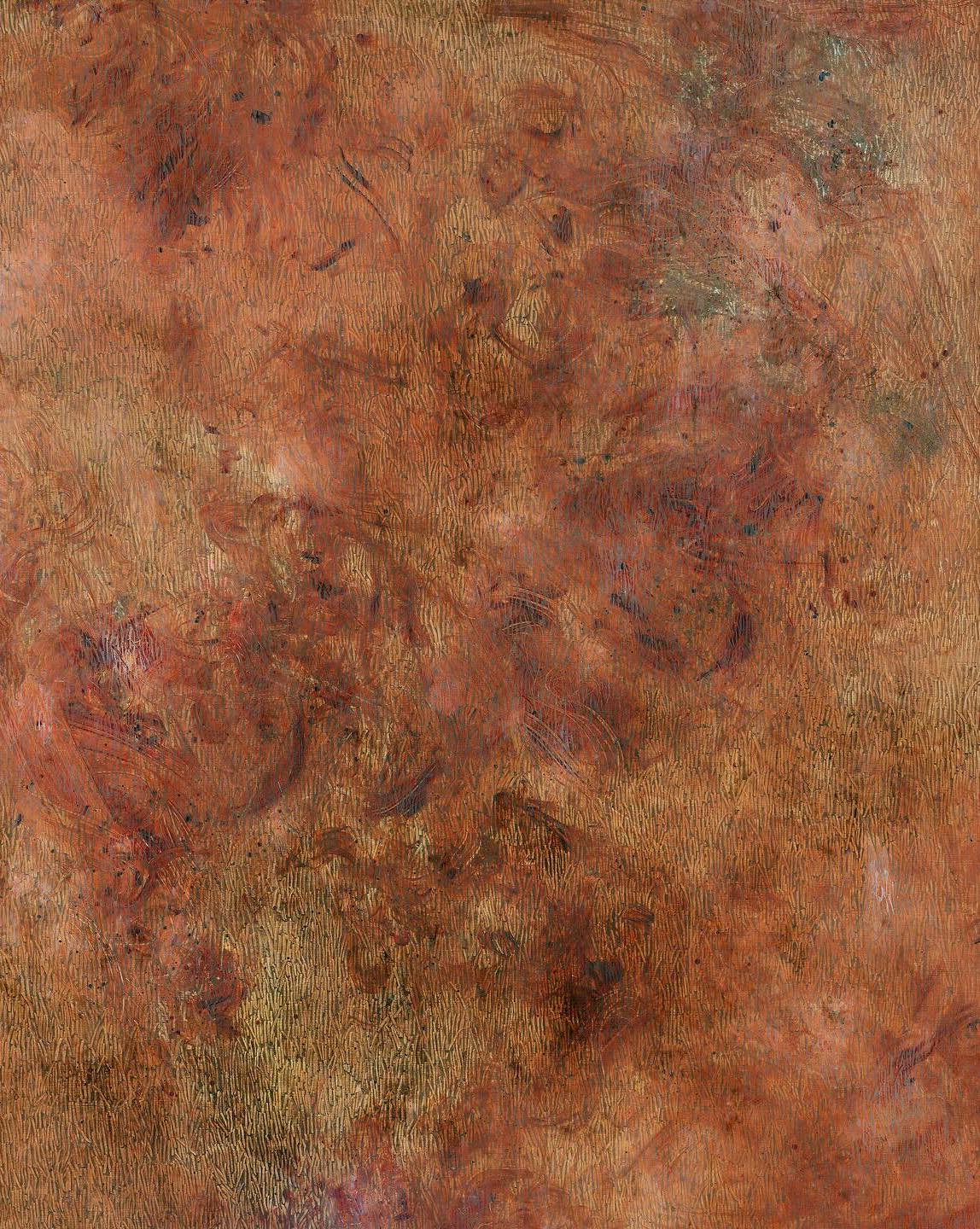
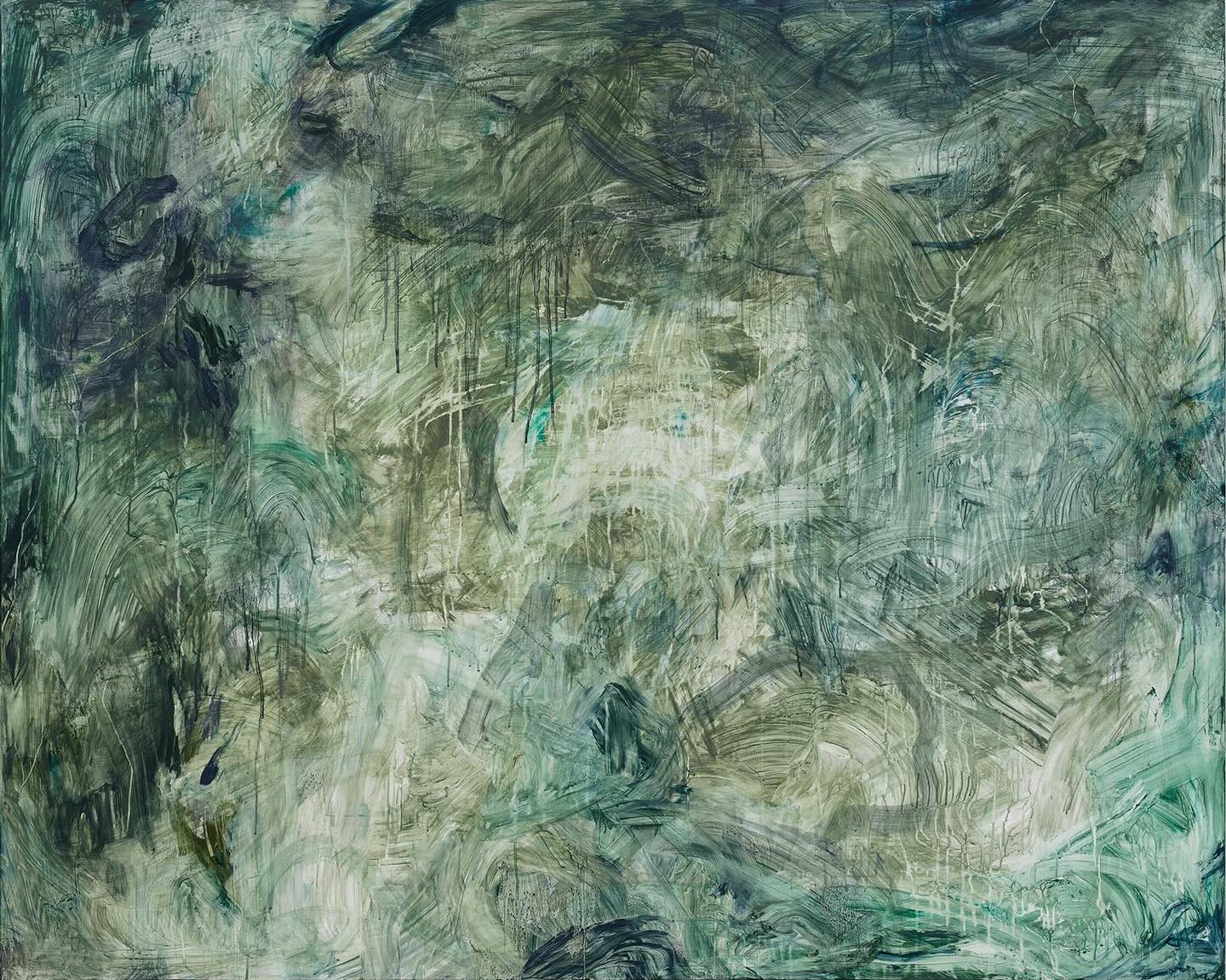
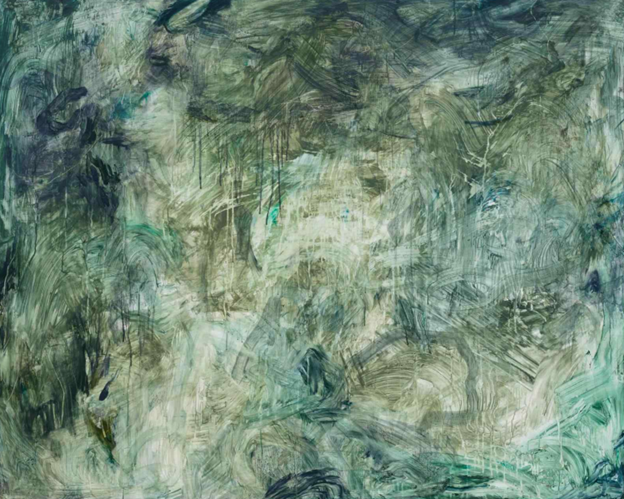
Ko Woori, Uncatchable, Sentimental, Movement 02, 2022, Finger-painting, acrylic and oil on canvas, 130x162.2cm © Ko Woori

Accordingly, Ko Woori’s work projects the inner emotions that individuals themselves may not fully recognize, along with the ambiguities surrounding them, onto abstract images, while revealing a process of contemplation aimed at approaching sincerity and essence.
 
The abstract surfaces produced through this process invite viewers to reflect upon the unknowable emotions that arise within social relationships, ultimately leading them toward considerations of their own individual essence.


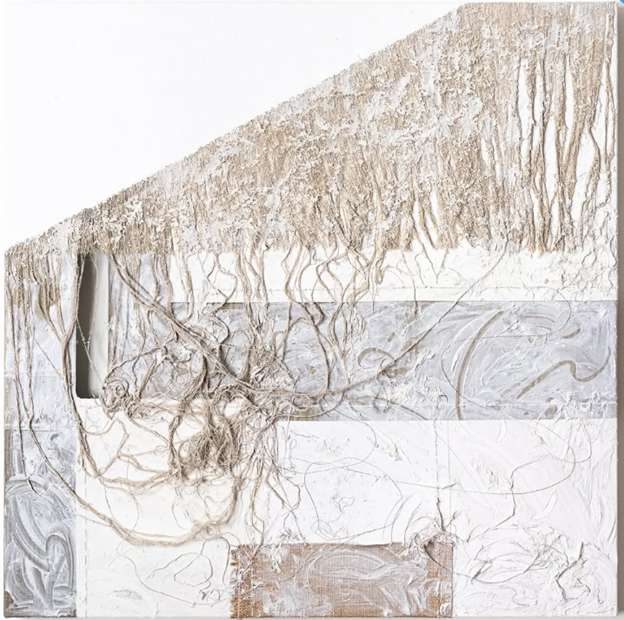
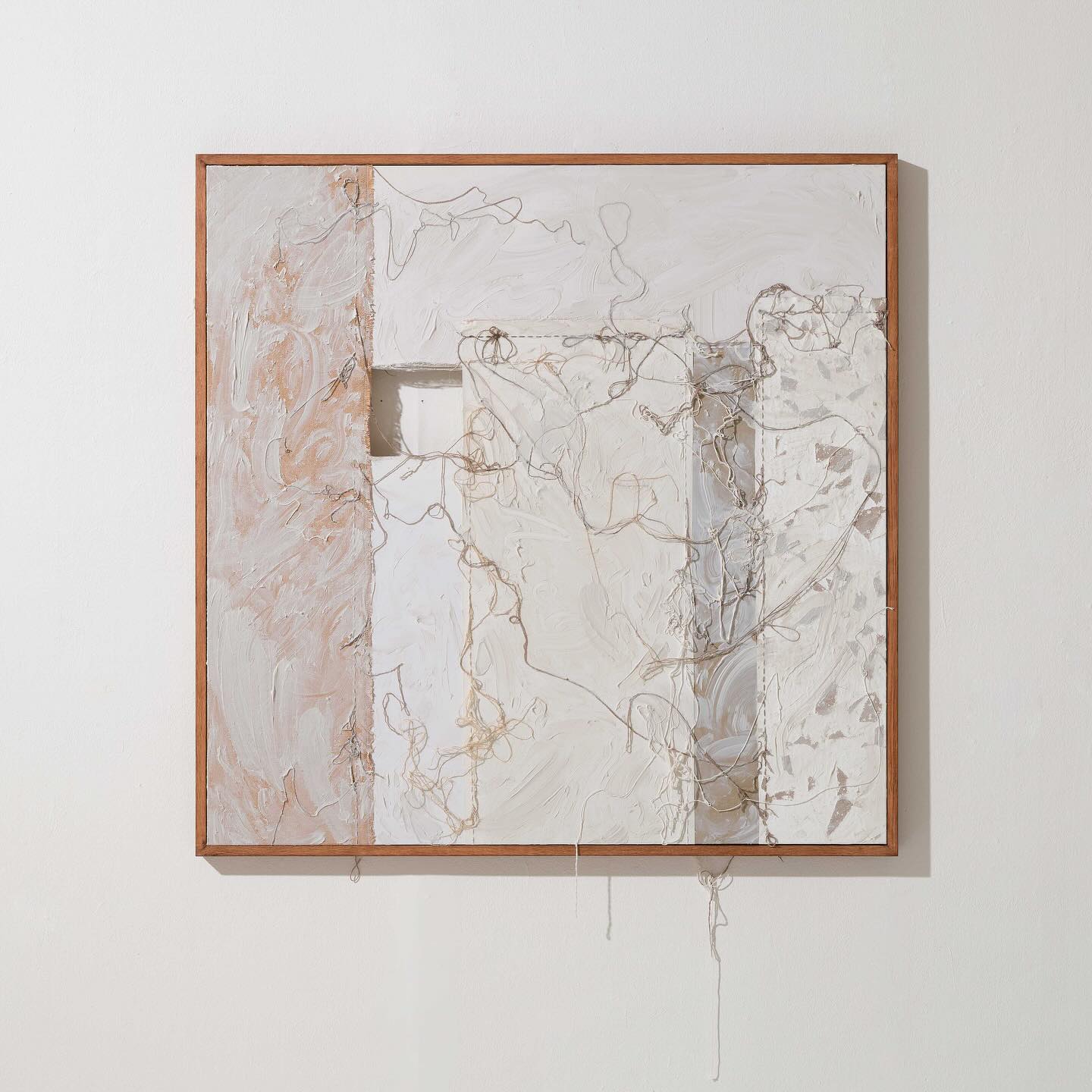
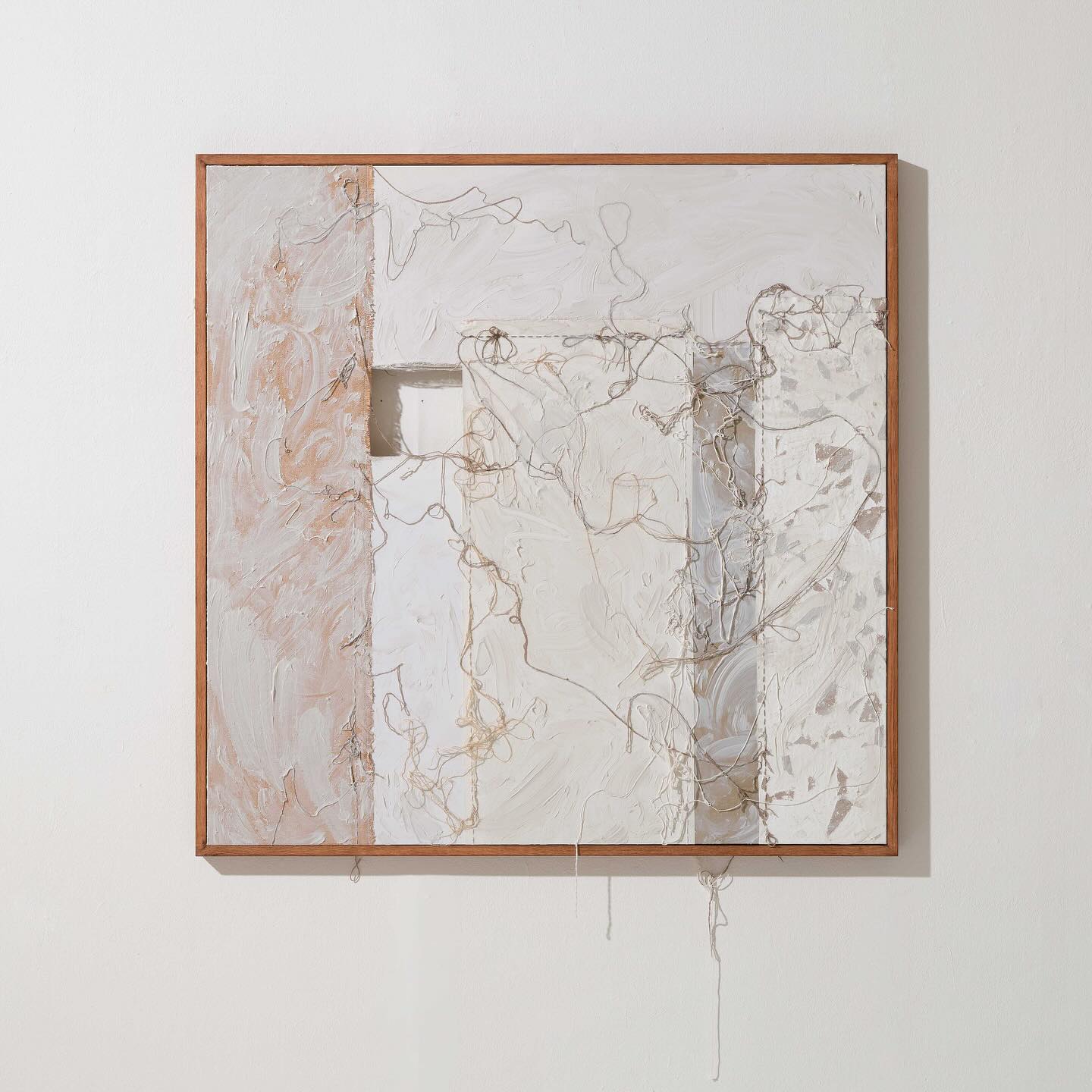
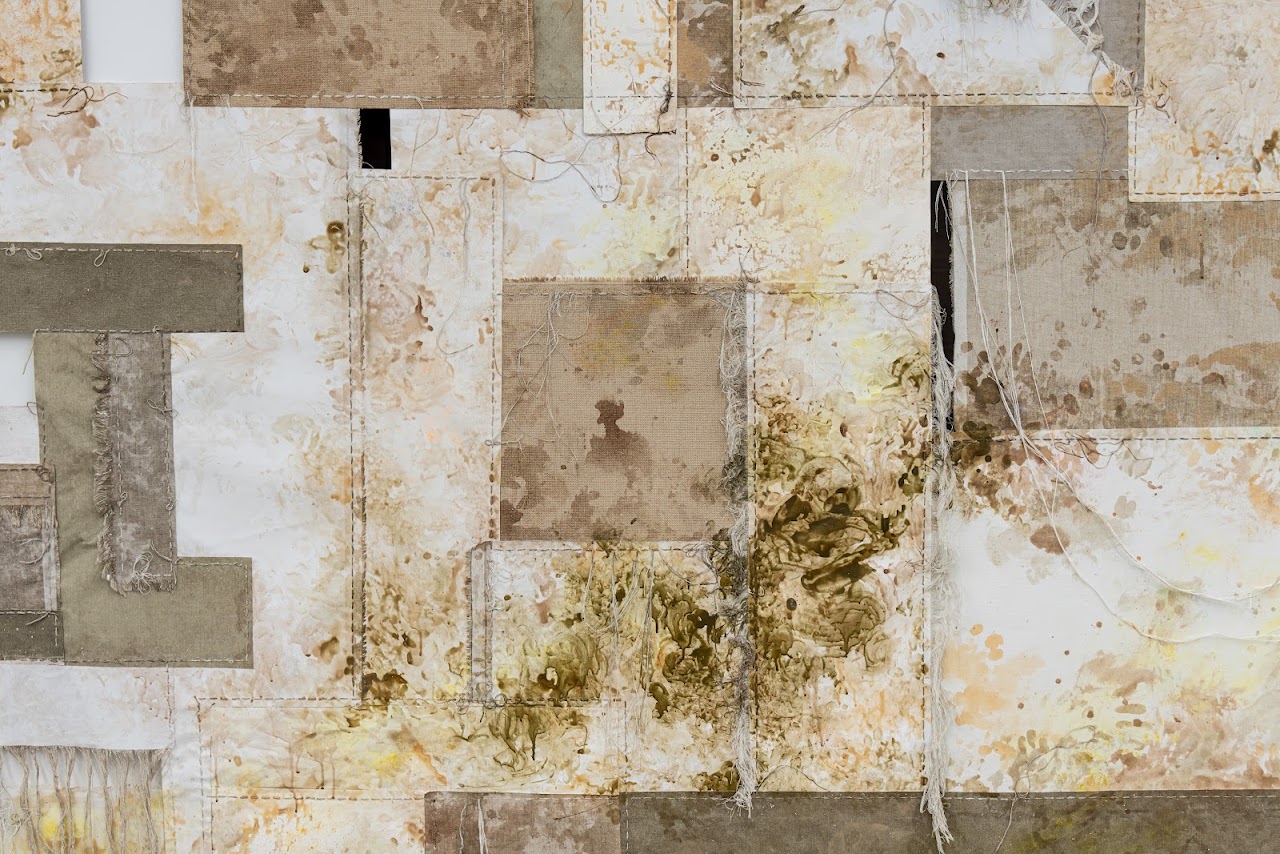
Ko Woori, The trivial and pitiful but beautiful 6, 2023, Finger-painting Molding paste and Yarn on stitched canvas,130x130cm © Ko Woori

Ko Woori also creates installation works that move between three-dimensional forms and flat surfaces through the use of stitching as a means of unraveling emotions born from uncertain and unstable relationships.
 
Human relationships often bring anxiety and wounds, yet despite this, people remain inevitably and organically connected to one another. Through canvas and stitching, the artist confronts and untangles these intertwined and entangled states of relationships.


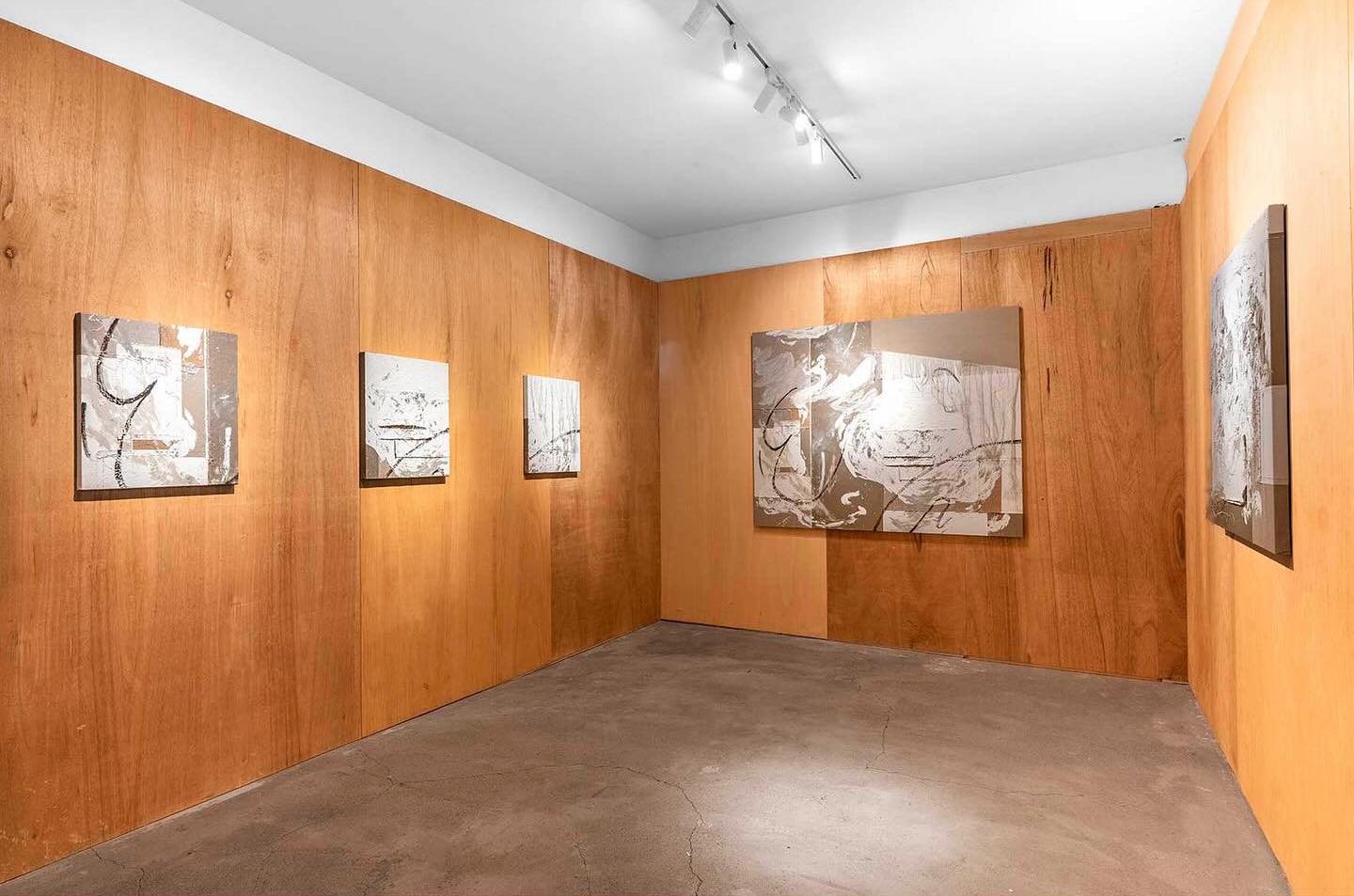
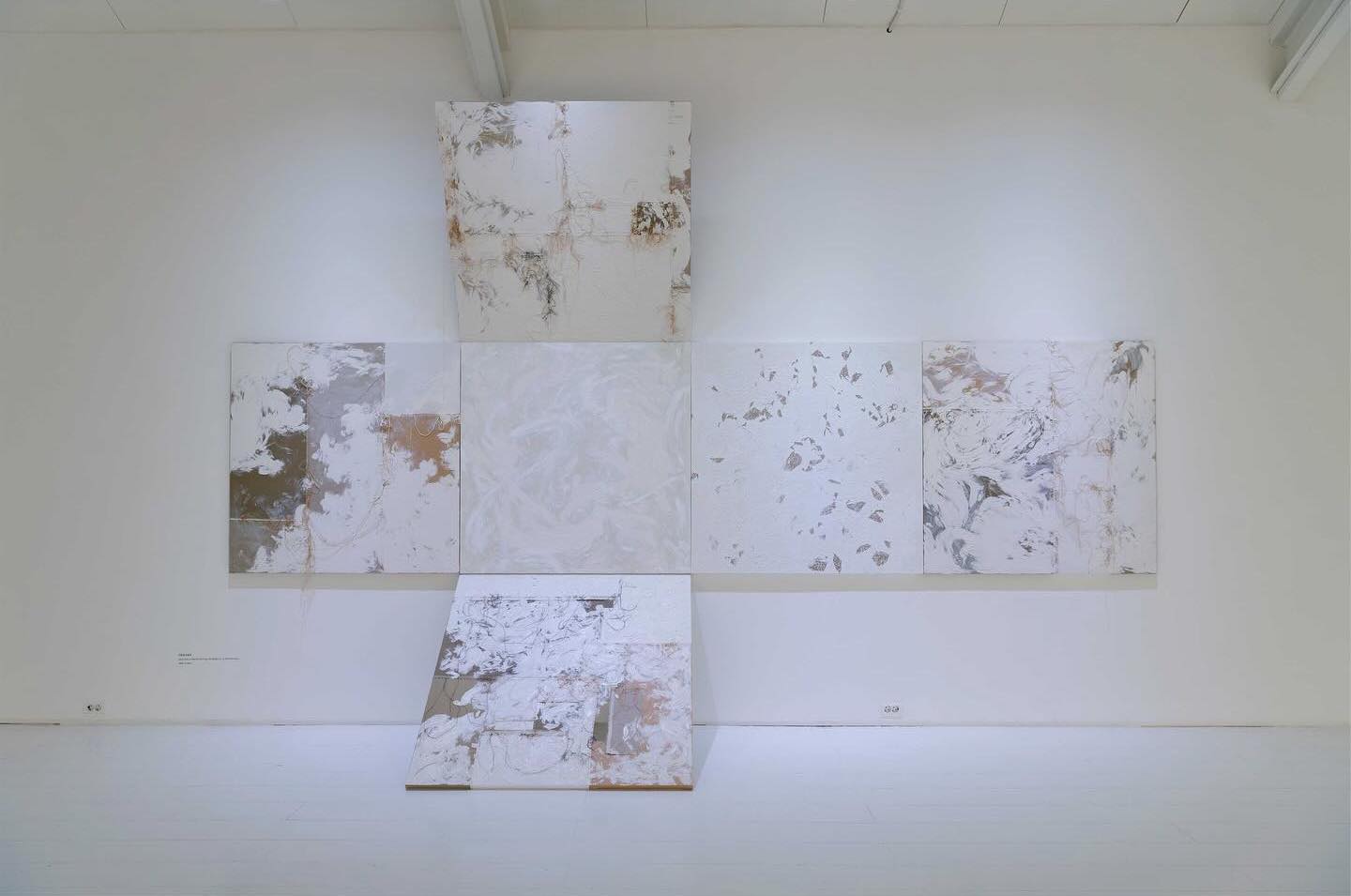
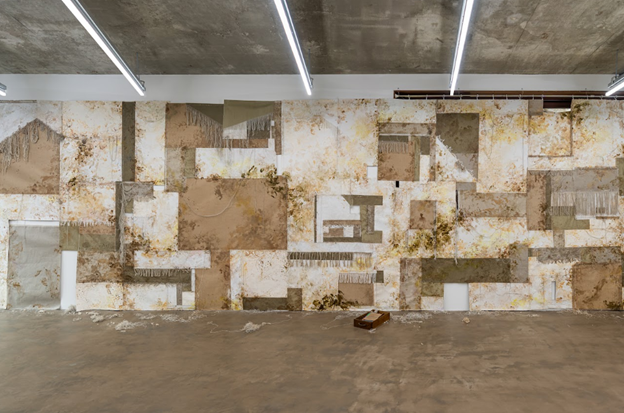
Installation view of 《Whispers upon Stroke of a Blur》 (ONSU-GONGGAN, 2024) © Ko Woori

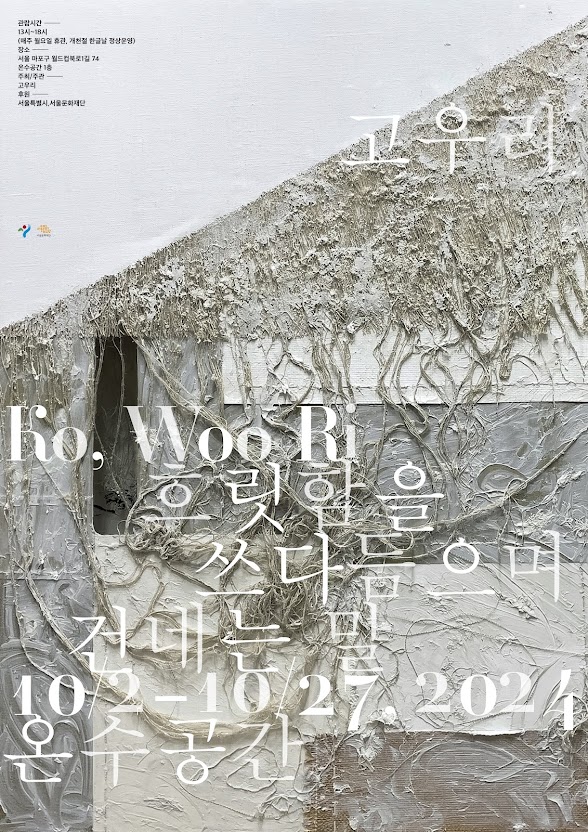
For instance, in 《Whispers upon Stroke of a Blur》, a solo exhibition held at ONSU-GONGGAN in 2024, Ko Woori presented a series of works in which fragmented pieces of canvas were stitched together and covered with nearly colorless monochromatic materials — such as Handycoat and molding paste — spread across the surface by hand as though kneaded and rubbed into place.
 
By dismantling the canvas and constructing the texture of the painted surface through the transparent shimmer of achromatic materials rather than the saturation of paint, the artist establishes an intimate relationship between gesture and tactility.


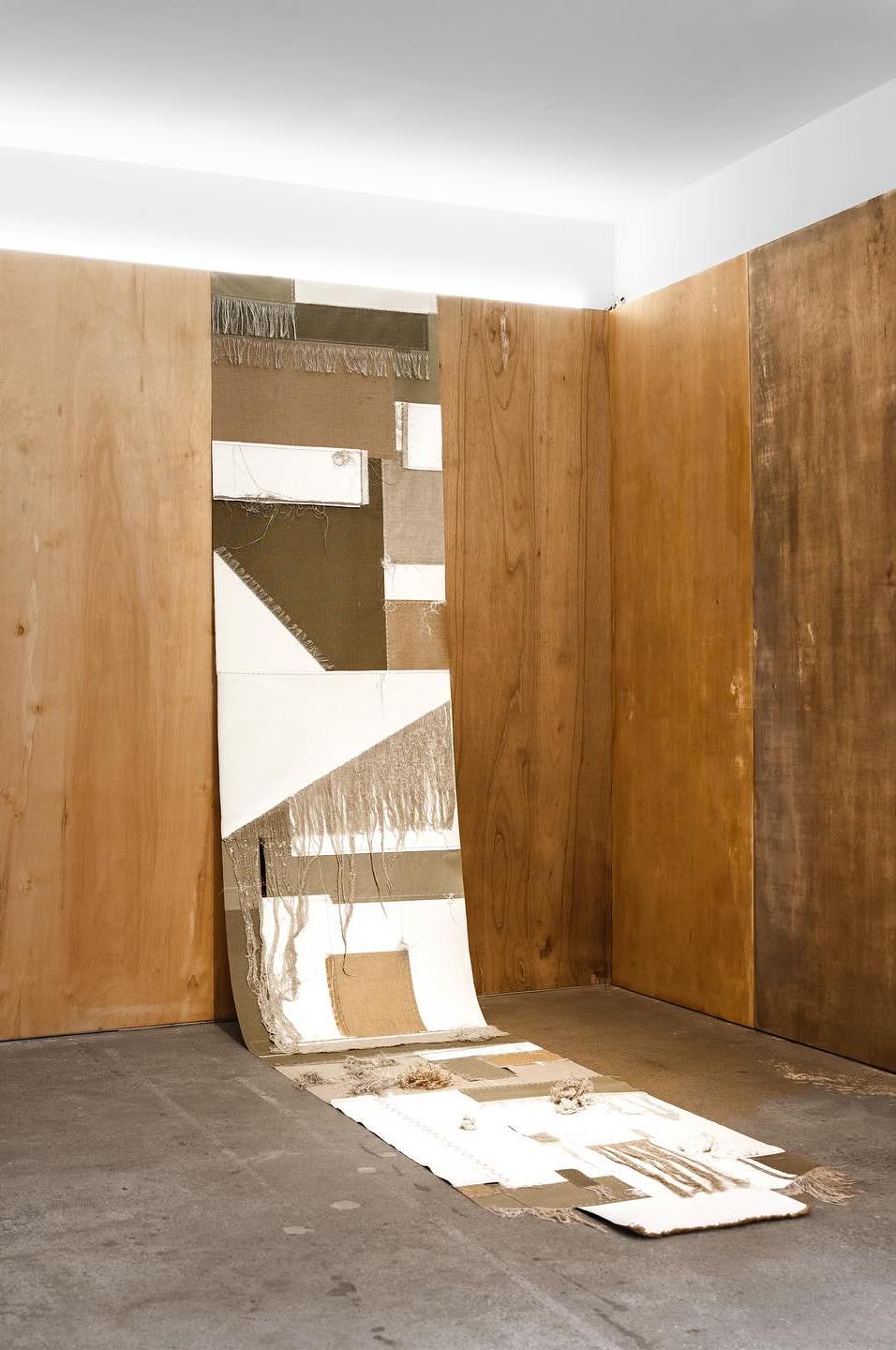
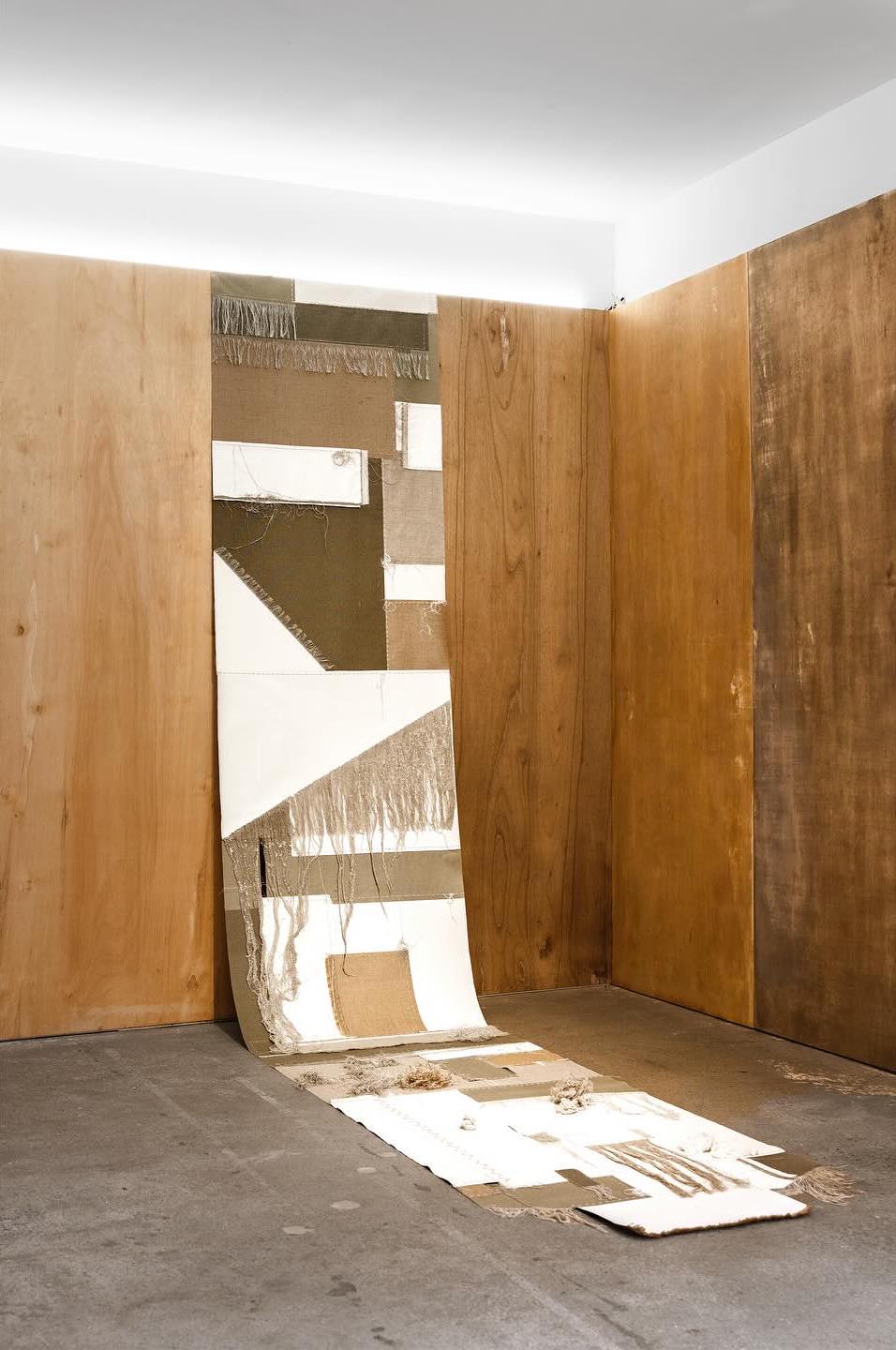
Ko Woori, Untitled-Connected Words, 2024, Canvas disband yarn on stitched canvas, 450x80cm © Ko Woori

In the exhibition text, critic Ahn Soyeon writes, “At this moment, she anthropomorphizes not only her own bodily actions but also the canvas as an incomplete body, confronting herself with it as the subject of action.”
 
Accordingly, Ko Woori’s pictorial surfaces evoke not the conventional frontal plane associated with traditional painting, but rather a tactile “skin” in which one anthropomorphized body encounters another.


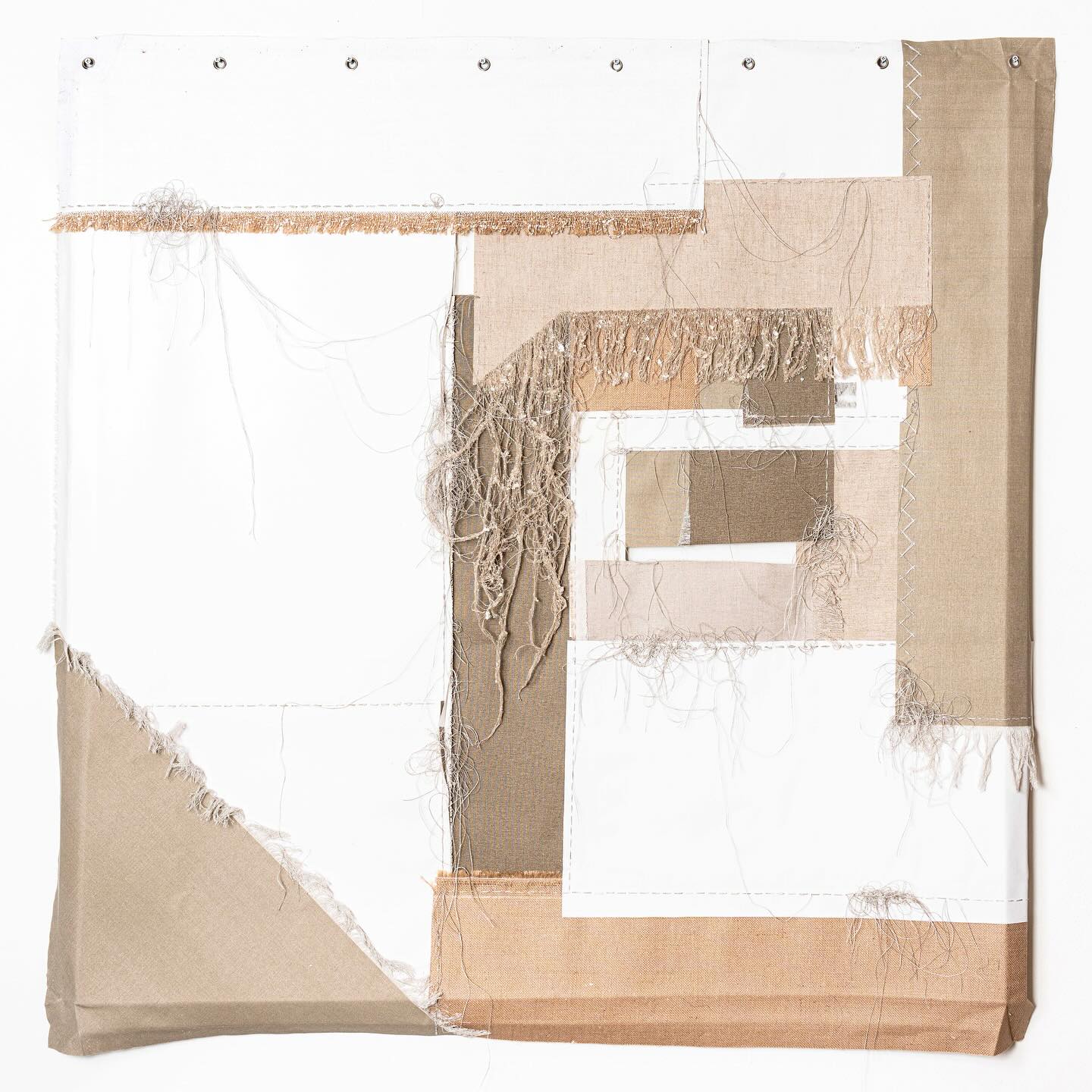
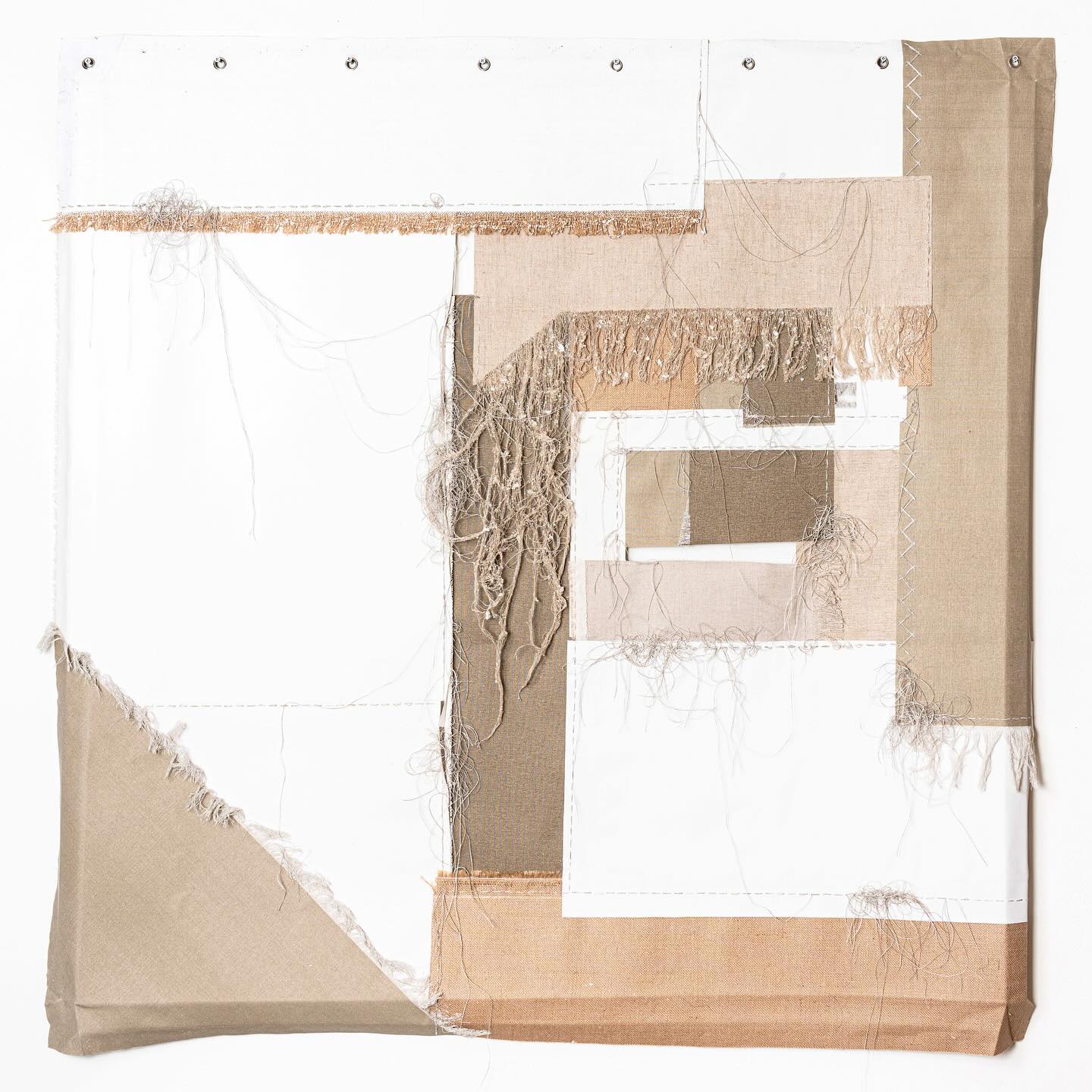
Ko Woori, Blurred Language, Connected Gestures, 2024, Canvas disband yarn on stitched canvas, 143.3x143.3cm © Ko Woori

And in the process of cutting the inner plane of the canvas into multiple fragments, Ko Woori deliberately leaves intact the scratches and wounds formed along the edges of the canvas. Passing across white and flattened surfaces, her bodily gestures overlay tactile sensations onto boundaries where stained and heterogeneous edges become entangled and connected.
 
In this way, the body of the canvas and Ko Woori’s own body become linked through a form of bodily performativity that moves between chance and inevitability. The traces left behind through acts of caressing and suturing the cracks of wounded skin emerge like scars left upon a body.


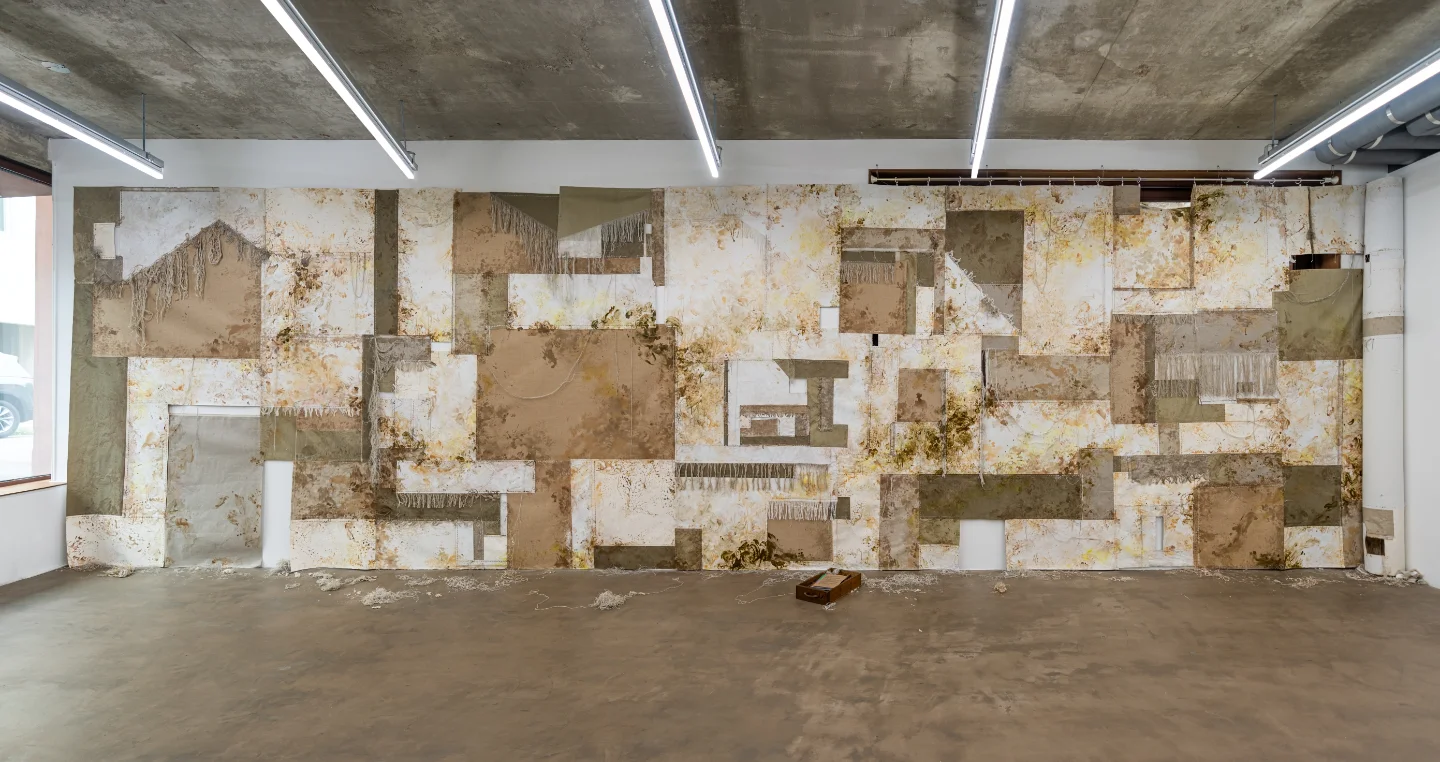
Installation view of 《I Lost Friends Last Summer》 (Sohyunmun, 2025) © Ko Woori

In this way, Ko Woori has moved beyond earlier works centered on the “anxiety of relationships” to focus instead on “relationships that remain connected nonetheless.”
 
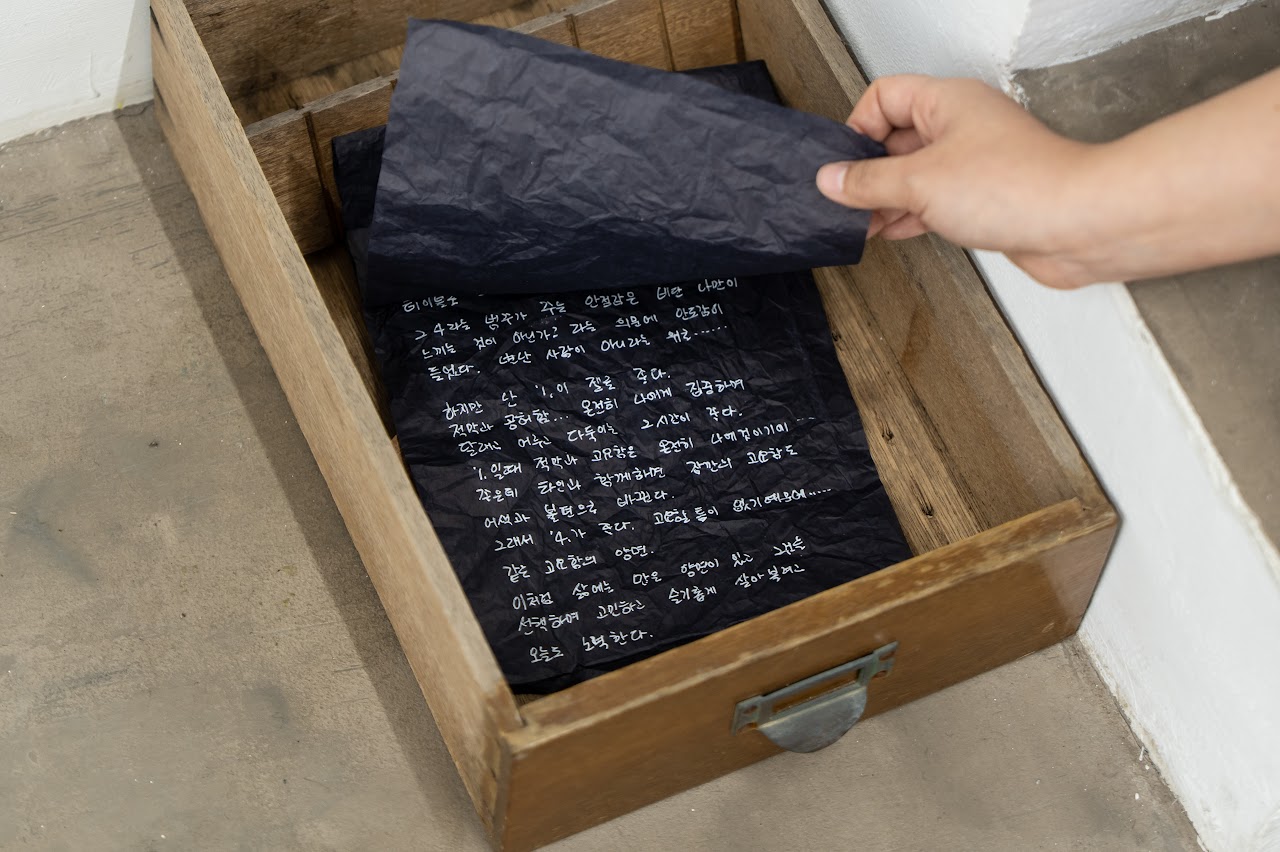
In the 2025 solo exhibition 《I Lost Friends Last Summer》, the artist created environments for exchange with others — including sewing together with women who were either emotionally close to or distant from her — developing works that engage more actively with the contemplation of relationships.


Installation view of 《I Lost Friends Last Summer》 (Sohyunmun, 2025) © Ko Woori

Whereas in earlier works the artist refined forms and prolonged the process until reaching her own standards, in this project Ko Woori instead focused on honestly confronting the incomplete and unstable emotions involved in accepting loose and imperfect relationships with others.
 
Examining the working process, the project organizer (the artist) first invited other women who were directly or indirectly connected to her identity. Participants who visited Ko Woori’s studio over multiple sessions engaged in individual and collaborative textile-based sewing practices using prearranged materials and instructions.
 
After completing these tasks, each participant was invited to translate personal stories into letters. Throughout this series of processes, the invited participants shared a silent sense of solidarity by either repeating elements of Ko Woori’s earlier works or opening up new directions within the practice.


Installation view of 《I Lost Friends Last Summer》 (Sohyunmun, 2025) © Ko Woori

In this way, Ko Woori has continued to develop works that unravel emotions arising from relationships through her own body. In the process, the traces left upon the canvas, along with the duality in which interior and exterior are reversed to reveal both sides simultaneously, tactilely expose the multiple layers of emotion formed through collisions with the external world.


Ko Woori, This Way, That Way, 2023-2024, Putty, yarn on stitched canvas, Variable installation © Ko Woori

What began as an attempt to resolve inner confusion gradually moved beyond outward phenomena, expanding and contracting through the reconstruction of shifting mental images, eventually existing without fixed form and taking on a lyrical and detached quality.
 
The resulting surfaces move beyond the artist’s personal psychological landscape, remaining in the minds of viewers as abstract images that invite contemplation on the structures of human emotion itself.

“We live inevitable lives in which different people meet and form relationships. Yet relationships are uncertain and unstable, often causing wounds and anxiety. Even so, human beings remain organically and inevitably connected to one another. Through canvas and stitching, I created these works in order to confront and work through the anxiety embedded within these entangled relationships.” (Ko Woori, Artist’s Note)


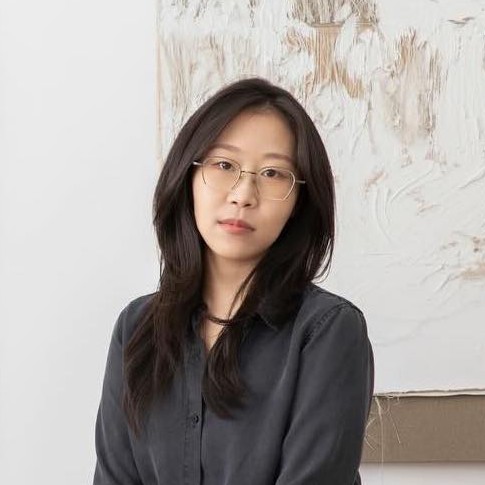
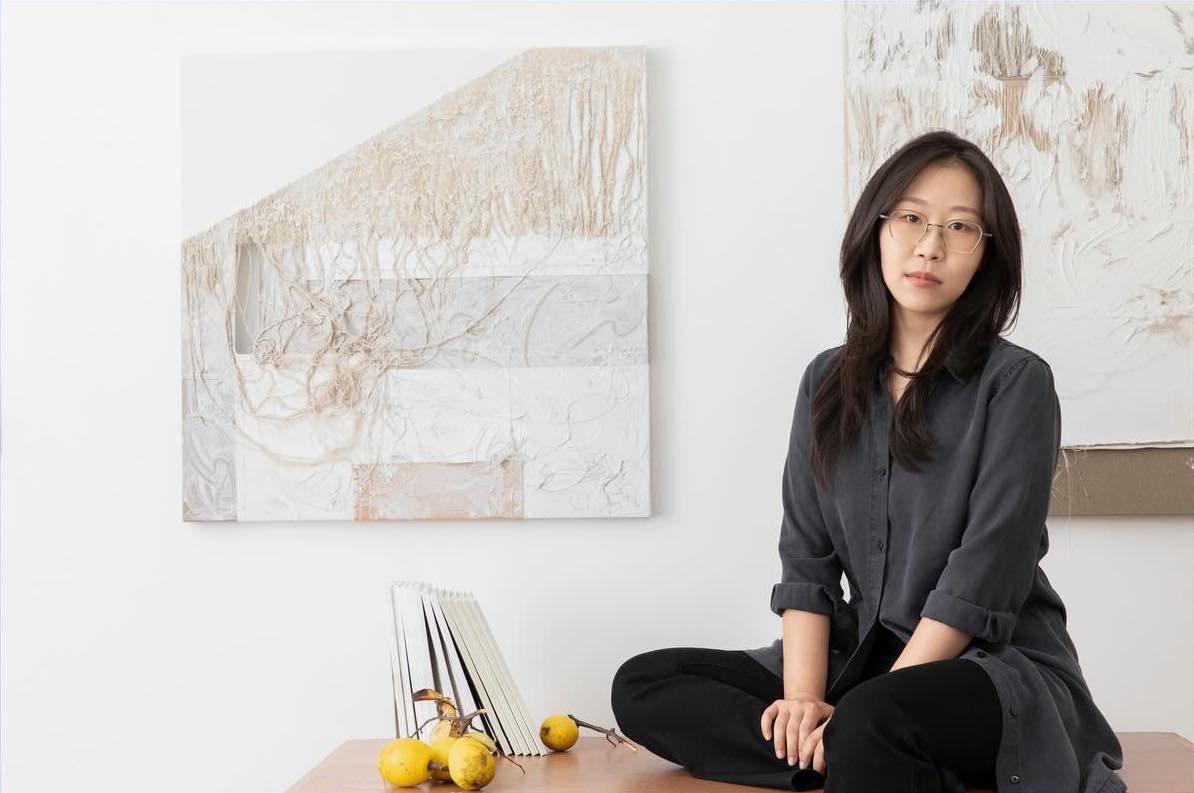
Artist Ko Woori © Art in Culture

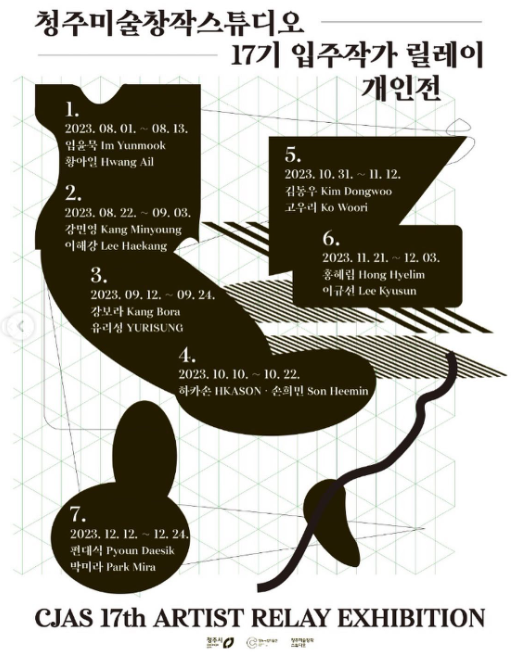
Ko Woori graduated from the Department of Western Painting at Konkuk University and later received an MFA in Painting from Kookmin University. Her solo exhibitions include 《I Lost Friends Last Summer》 (Sohyunmun, Suwon, 2025), 《Whispers upon Stroke of a Blur》 (ONSU-GONGGAN, Seoul, 2024), and 《Toward the trivial and pitiful but beautiful》 (Cheongju Art Studio, Cheongju, 2023).
 
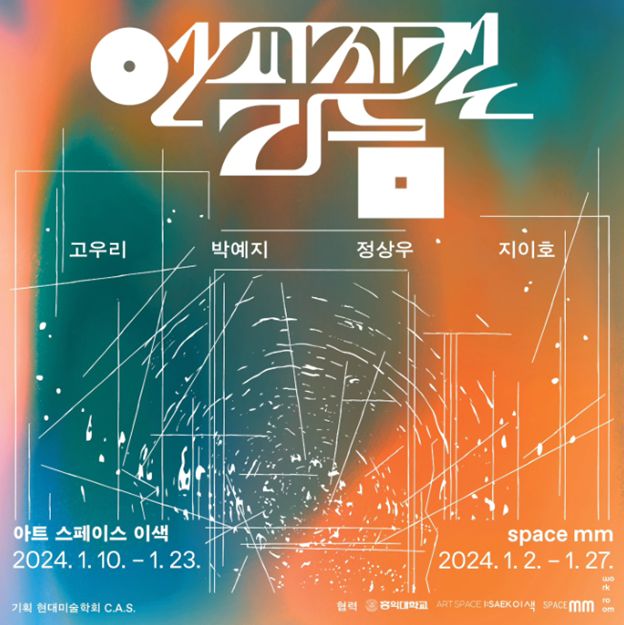
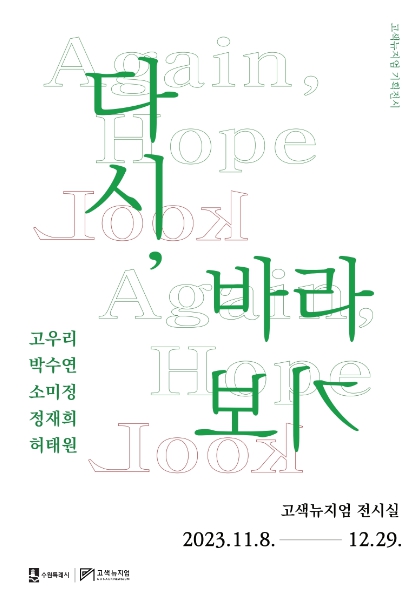
The artist has also participated in numerous group exhibitions, including 《Unphysical Rhythm》 (Artspace Isaek, Space mm, Seoul, 2024), 《New Indépendant: Being–Sense》 (Yangpyeong Art Museum, Yangpyeong, 2024), 《How Do We Come Across》 (Cheongju Art Studio, Cheongju, 2023), 《Again, Hope Look》 (Gosaek Newseum, Suwon, 2023), and 《SIMA FARM》 (Suwon Museum of Art, Suwon, 2019).
 
Ko Woori has also participated as a resident artist in residency programs including Suwon Art Studio PRJD (2025) and the Park Soo Keun Museum Art Studio (2021).

References