#1. In this case: Questions
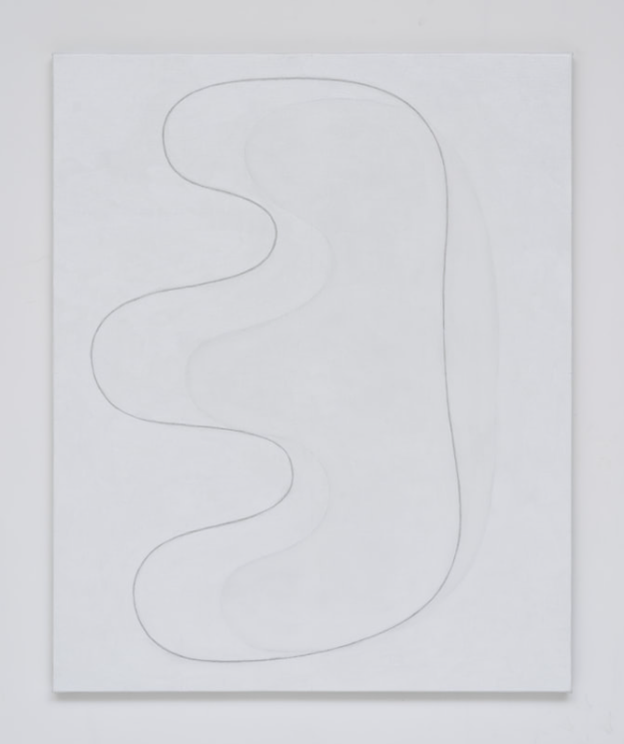
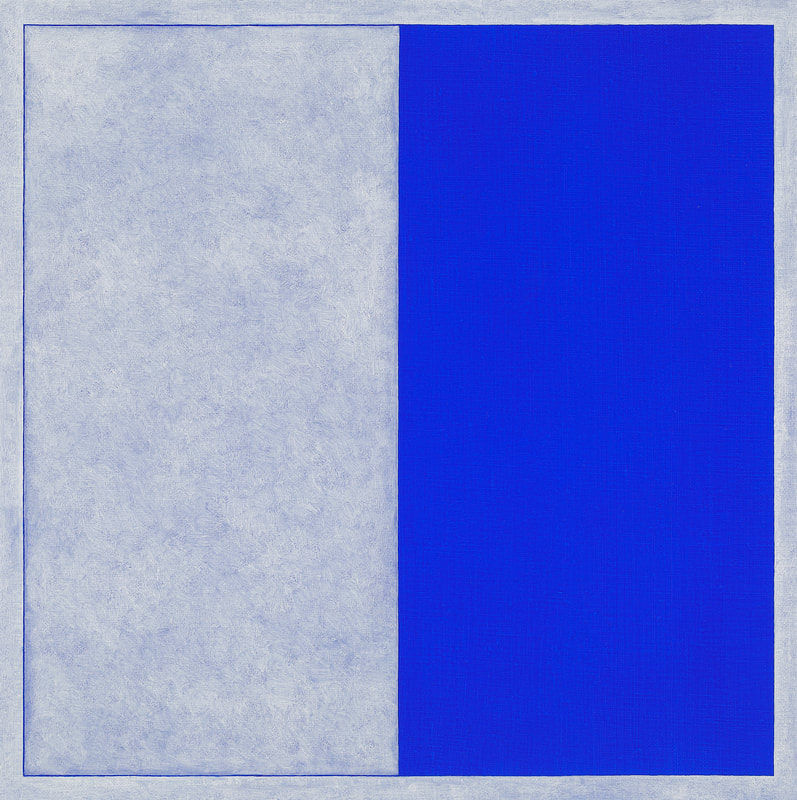
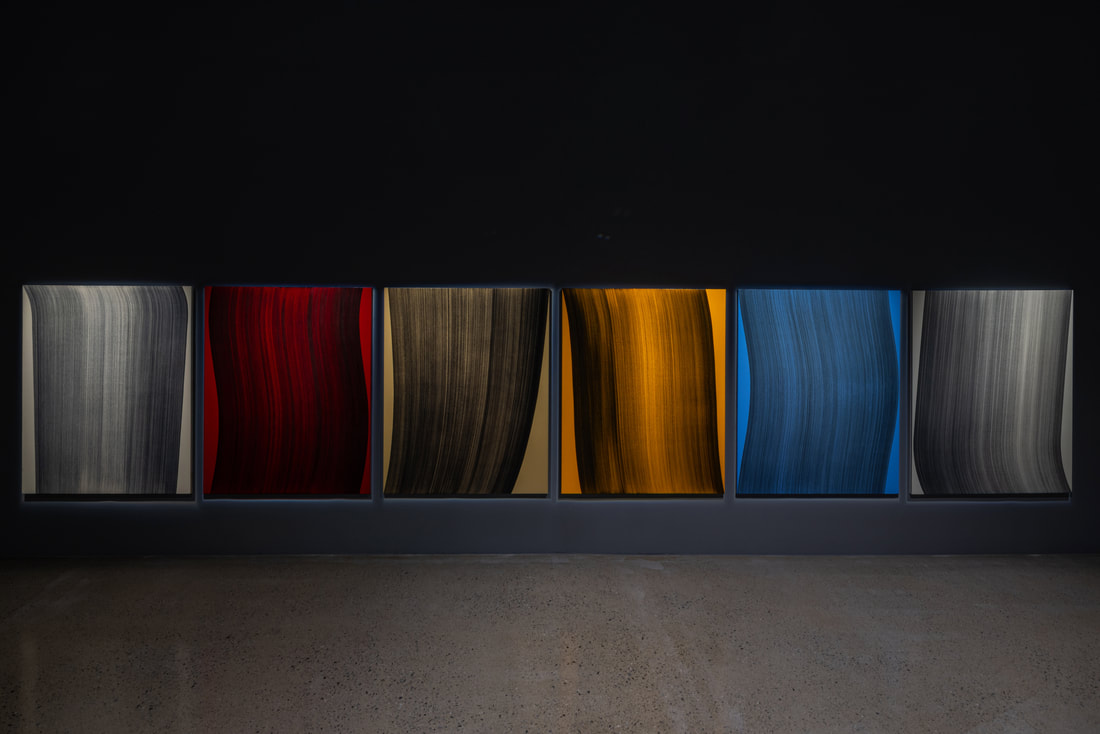
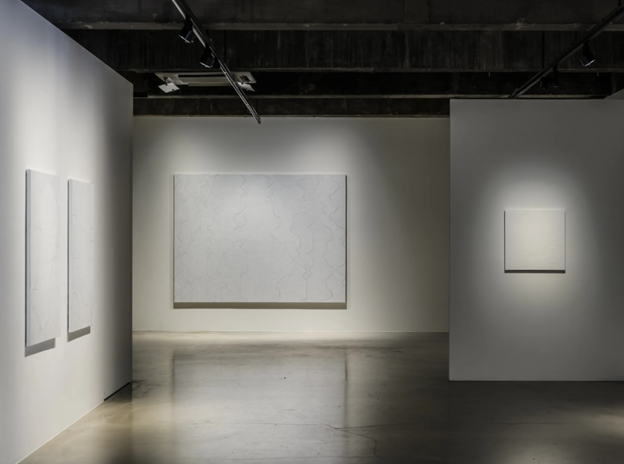
I would like to start this essay with some questions that occurred to me in this situation. Woojung Hoh has been presenting a series of works including Imagination Builds the House, White Shadow, and Layers, where the underlying colors are covered with white in many layers over a long period of time to create background and lines with a paper-like texture, manifesting the balance between inner anxiety and instability.
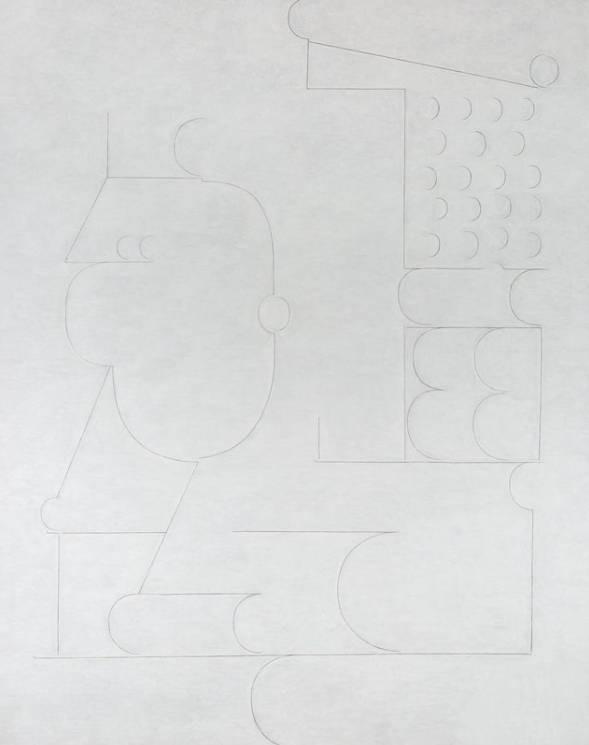
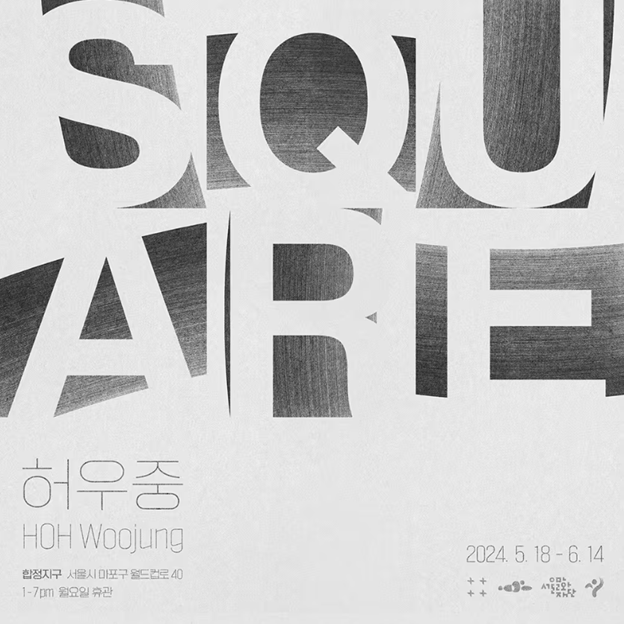
Through these works, he has demonstrated that his forte lies in the production of almost exquisitely controlled canvas and spatial composition. Therefore, after the initial viewing of the exhibition 《SQUARE》, which consists of amateur-like line drawings and a juxtaposition of two seamlessly connected staging methods, the following questions arose: While the artist had been preoccupied with the “weight,” “direction,” and “depth”1 of two-dimensional planes since 2019, why did he choose to work with his acquaintances after about five years to paint a mural where depth is to find?
What prompted Woojung Hoh to plan an exhibition consisting only of paintings made with lines and multi-colored planes as well as a basic leaflet made of a single sheet of paper at the expense of the already recognized White Abstraction that had characterized his work? Compared to what the artist has been doing, 《SQUARE》 is likely appear close to stammering or a frivolous attempt.
This is because he has deliberately withheld his usual practice of exhibiting paintings and drawings built up with canvas as the source of gravity, and instead presented his interpretation of the fictional archetype and a ‘box’ without the benefit of adding any additional comment.
The method of presenting new works, which is close to a bold decision, elicited misaligned responses. For those who entered Hapjungjigu, the venue for the exhibition which is also a situation and box, without knowing the process from the planning to the final presentation, the exhibition might turn out as a bewildering surprise if they had habitually expected polished sophistication in his work.
The artist, too, is presumed to have anticipated this. However, while the elemental ‘drawing’, which is the essence of his new paint and pencil work Rings, received some lukewarm responses by the viewers, I would like to argue that this painting may have been a breath that contained the driving force that constitutes his artistic world.
Of course, it is not my intention to defend the artist or his work from criticism about the quality of the exhibition. However, I’d like to emphasize the value in how the artist’s drawing of lines in ‘this box’ candidly showed that it is the ‘drawn line’ itself, not the graphics demanded by the meditative staging that many art spaces are striving to implement. It is also part of contemporary art that is clearly ambiguous, rather than being an ‘abstract painting’ that must be completed.
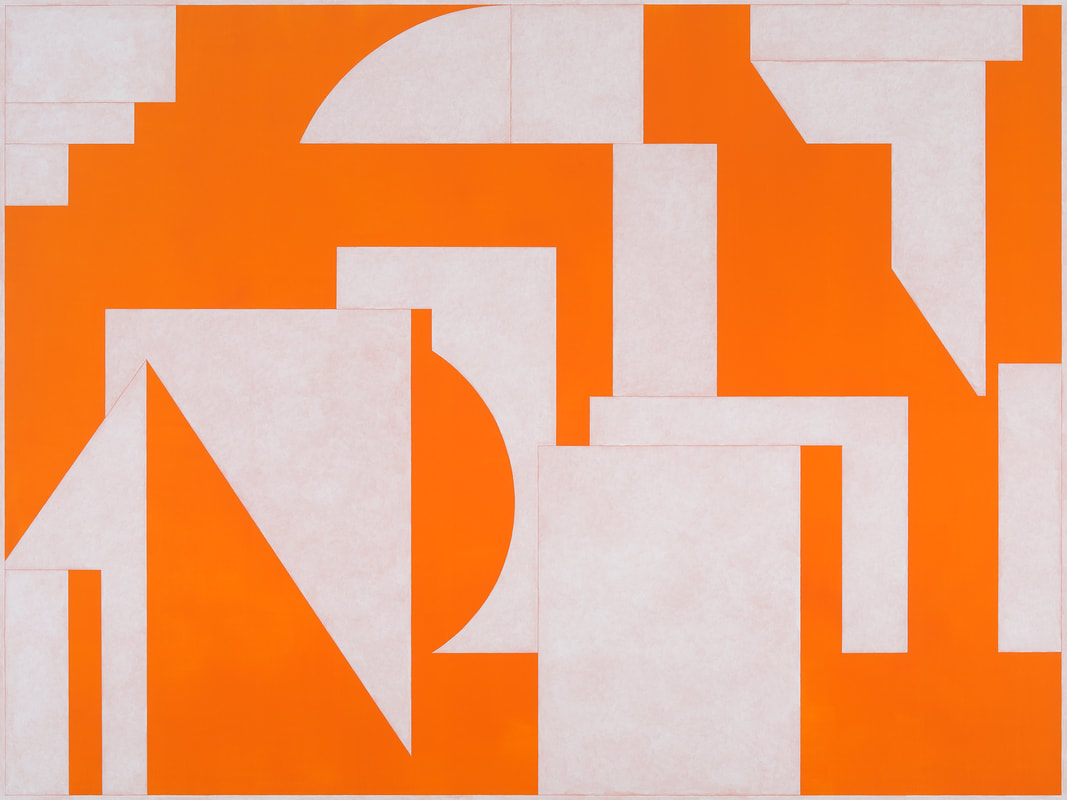
Additionally, I would like to propose that Woojung Hoh’s paintings have been uncritically labeled with modifiers of ‘pure abstraction’ or static monochrome paintings, and that the discourses of the past established in the process of forming the lineage of abstract painting can prematurely stylize a young artist’s ‘painting.’
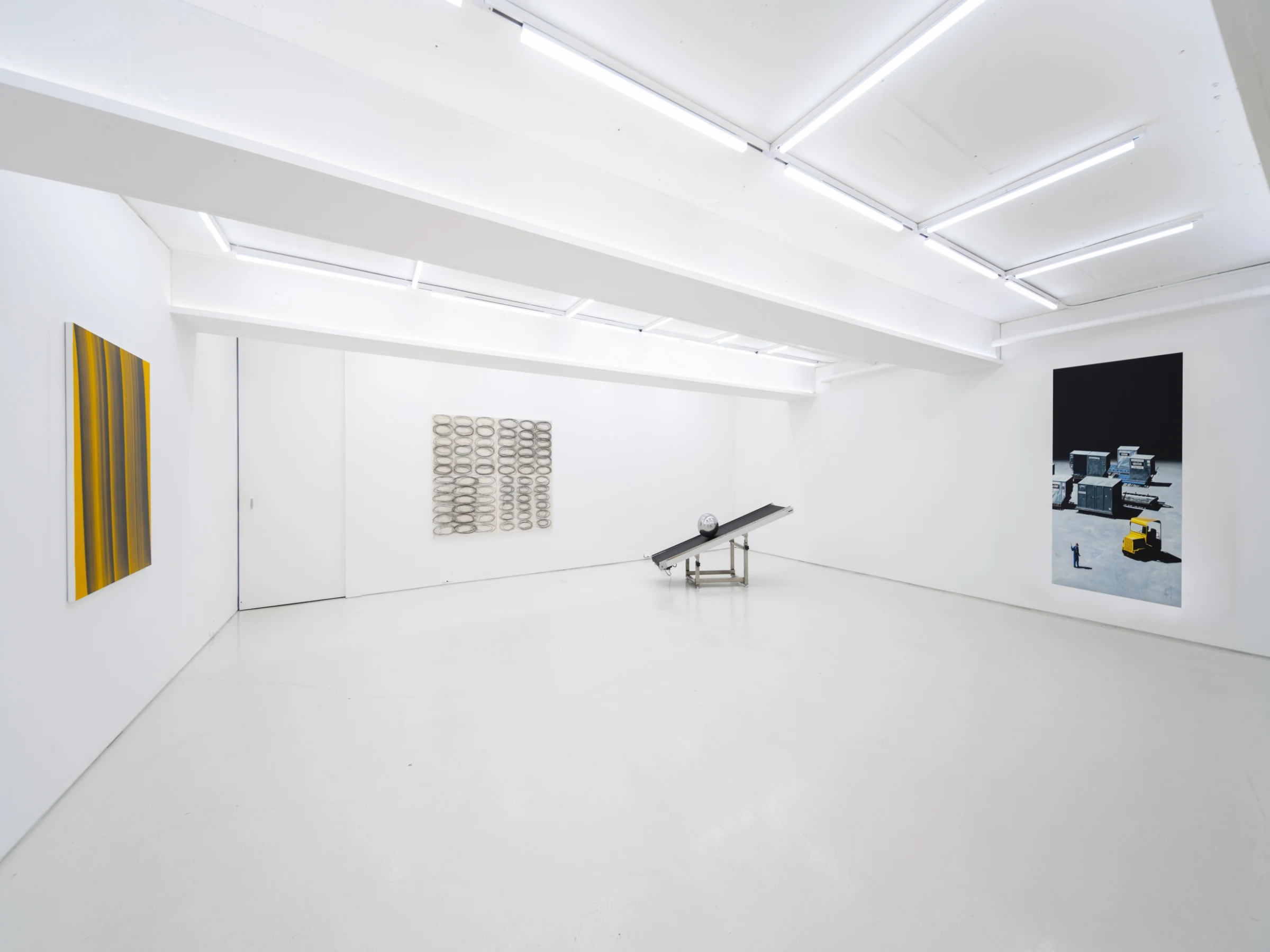
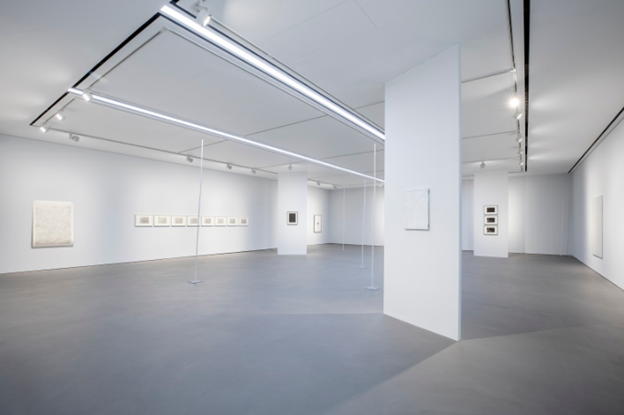
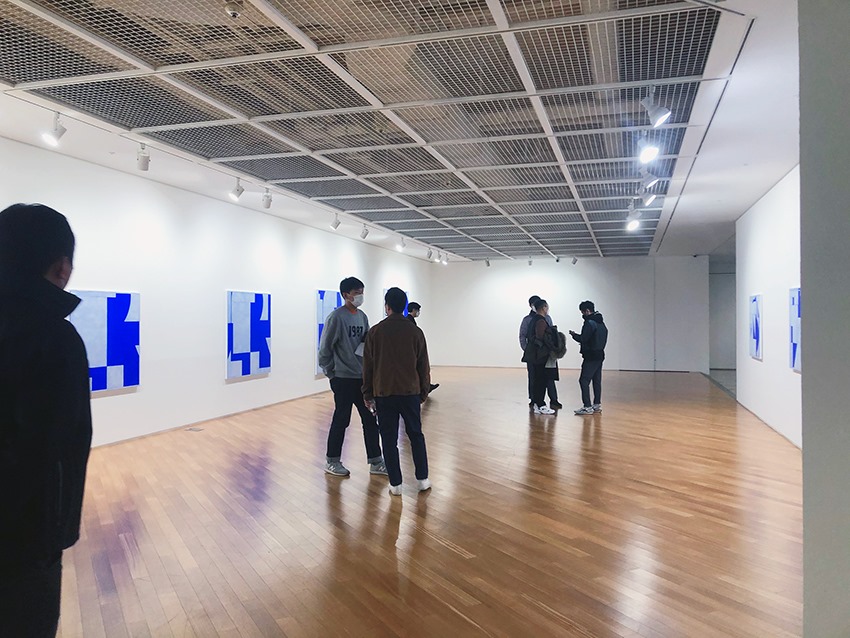
That is why I was concerned about a solo show that was supposed to be a ‘retrospective’ of an artist born in 1987. A recent example could be seen in 《Panorama》, which ran almost concurrently with 《SQUARE》. The exhibition was designed to chronologically examine Woojung Hoh’s past works and ‘evolution’ up to the present, based on the Imagination Builds the House series in the Daejeon Museum of Art’s collection.
The exhibition was informative in that it was organized with a ‘foreground’ of new works at the center of the entrance and older works on the other three sides. However, the exhibition was presented in an overly solemn manner, focusing on the external meanings surrounding the artist’s figurative play, rather than the excitement it generates, or the fact that his works may have grown out of different roots, even though they could be defined as ‘abstract’ art.
In other words, the artist’s works in 《Panorama》 are ‘hung’ on the wall in the manner of the ‘typical abstract art’ created by art institutions, rather than figurative art that can always defy conventional arrangements as a multifarious curve balls. Applying established terminology to the works of our time may contribute to convenient reading and the creation of compelling objects for exhibitions, but it diminishes the fact that artists are also contemporary artists who can disrupt the conventional framework at any time.
While this type of exhibition is a necessary step for all artists to take at some point, it can have the unfortunate side-effect of undermining the creative process that younger artists have been developing by translating current issues into their work, and burdening them with the abstract discourse that has been the task of their predecessors, which has been permanently preserved.
Furthermore, defining new works by the same artist in the same way that his older works have been interpreted is also likely to lead to misreadings. In this year’s ‘situation,’ the painter was faced with the question, “Should I see the parts that belong to the whole or the whole that is made up of the parts?”² even though the method of presentation has changed.
Here, it is important to note the artist’s determination to reveal the inherent futility and unclear destination of artistic endeavors. What I would like to suggest is that even if 《SQUARE》 is subsequently excluded from the artist’s cv on major exhibitions, it should be remembered as a period and situation in which the artist proved that his work can stand on its own as an expanding narrative, or even as a design that does not translate into anything.
#2. In this case: Between two squares
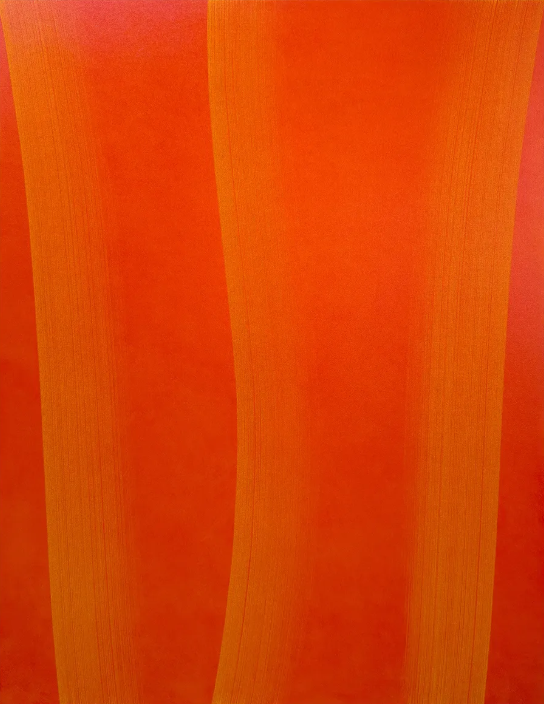
As the exhibition has set the square as its main conceptual term, examining both the interior and exterior of the box that forms Hapjungjigu is an essential act that requires the same observation as viewing an artwork. The mural Rings is a collection of pencil-drawn lines on yellow, orange, red, green, and purple color planes, placed in a transparent glass box on the ground floor.
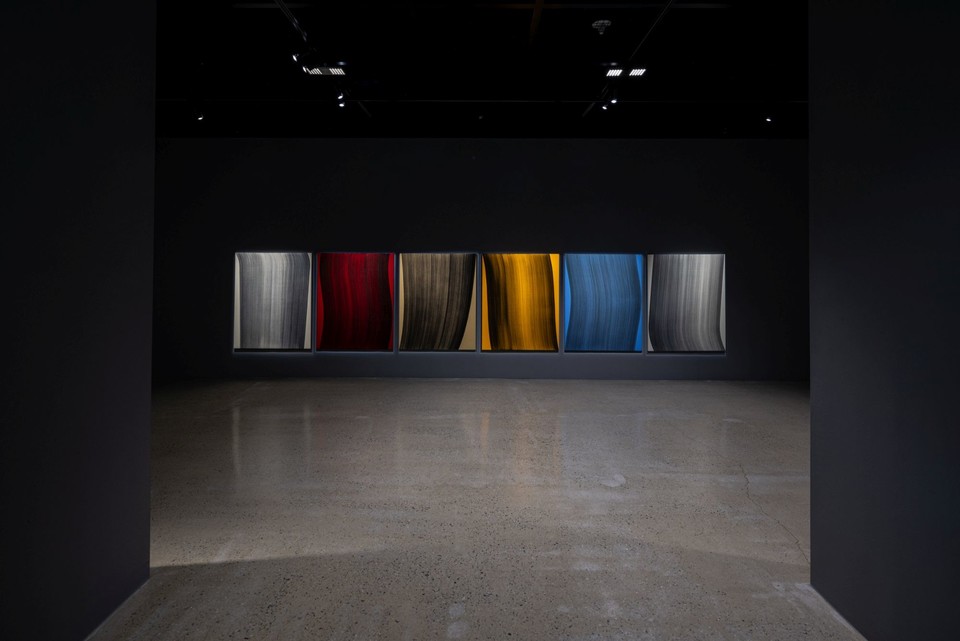
The artist assumes himself as ‘Mr. P’ who uses a plane that doesn’t ‘hang’ on the wall to present his work to a group of anonymous viewers. He proposes that viewers would work together with him to solve the problems that permeate the elements of painting. Meanwhile, the basement of Hapjungjigu is a black box where one canvas is hanging under pin lights.
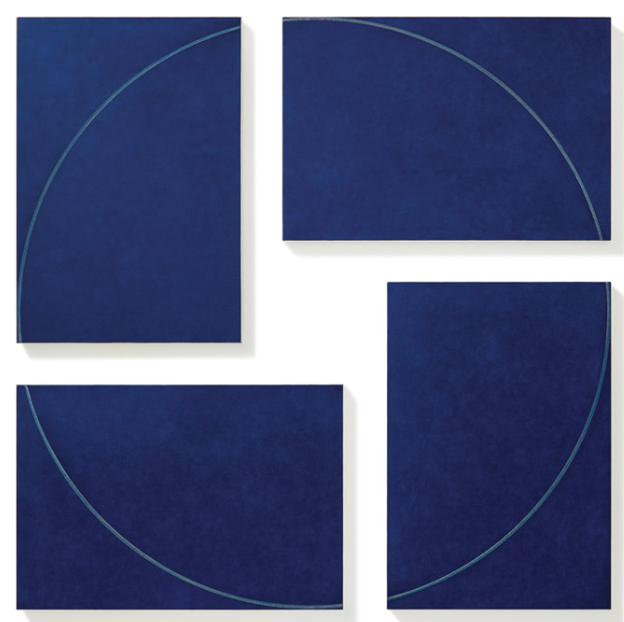
This box reminds us of the typical museum or gallery presentation, displaying Rings 3 under focused lighting in a classical method of oil painting presentation. This shows that the artist is able to reference and navigate through the institutions and characteristics of both exhibition modes: the space of the Hapjungjigu and the space of the Daejeon Museum of Art Open Storage. In the context of 《SQUARE》 the artist suggested that the paintings of the same unit are present together, both as parts and in any combination.
Nevertheless, viewers who would move between the transparent box on the ground floor and the opaque one in the basement might not ultimately encounter an intermediate situation or box that connects the two spaces within the exhibition. It is therefore regrettable that there is no intermediate situation bridging the ground floor, which disperses focus using spatial openness, and the basement, which concentrates focus on a single artwork through enclosure.
The exhibition may have succeeded in its task of conveying a distinct senses using the medium of painting. Aside from the leaflet acting as a guide, however, it failed to provide a device that sufficiently explains the connection between different spaces through an internal narrative.
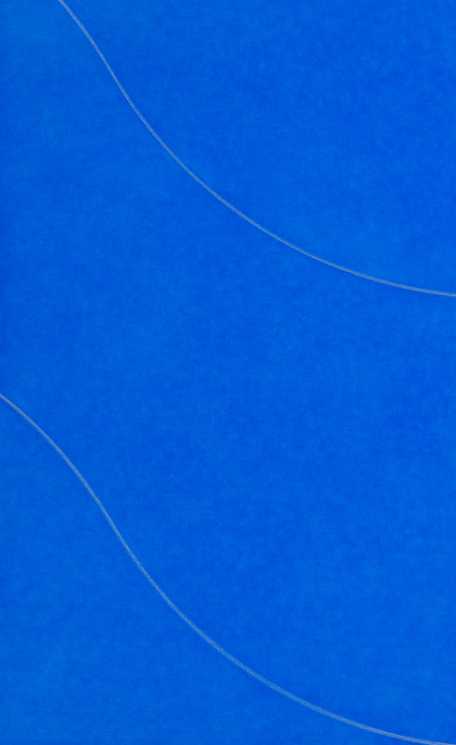
Therefore, I would like to argue that DMA Cube Project: Line, which covers the surface of the Daejeon Museum of Art Open Storage, serves as the first box, which is both a connecting thread between the two boxes at Hapjungjigu and their intermediate form. This ‘box’ was also an outdoor installation where white lines converged into a giant circle.
The cube on the ground, exposed to rain and wind while Lines 1-6 were kept in the underground storage, was a two-dimensional graphic image reminiscent of the surface of the Imagination Builds the House series. At the same time, it was also a temporary three-dimensional space to reveal the artist’s interest in the physical foundation of painting.
This translucent box was an enigmatic work that deconstructed and recombined five circles of different sizes according to the size and number of individual glass panels composing the cube. One could fully understand the original form of the circles within the square, which concealed the starting and ending points of the lines, only by examining its unfolded diagram.
The second connecting thread could be the measure of ‘square’, which was also the unit of production for the exhibition 《SQUARE》. Divided into a constant square scale of 1x1 meters, Rings is a painting made of another set of ‘lines’, which are physically distant from Lines 1-6 and suggest another shape of a giant circle.
While the artist drew the entirety of Rings 3 with its four-sided borders, the mural is the result of a team of two people drawing four patterns in different directions. The presence of squares with entirely different graphite smudges, densities, and pen pressures implies the existence of relationships and emotions between people that are not here but are translucently present.
The way the exhibition is produced, where one person’s work intersects with the collaborative work that fills the boundaries of this limited square, is another thread that connects the two boxes.
#3. In this case: Circulating thoughts, outside this box
It is time to step back and reconsider the exhibition 《SQUARE》 from an external perspective. This essay has thoroughly examined the internal aspects of this solo exhibition, which attempted a form distinct from the artist’s previous shows and installations in geographically diverse spaces. Now, we must broaden our view.
Outside of this box, the conversation we should have with Woojung Hoh as colleagues who share the same visual culture is not only about the exhibition’s successes and failures but also about how his new works can be connected to his previous creations. I would like to conclude this essay by referencing a conversation I had with Lim Seokho, who is another person that helped create this ‘situation.’
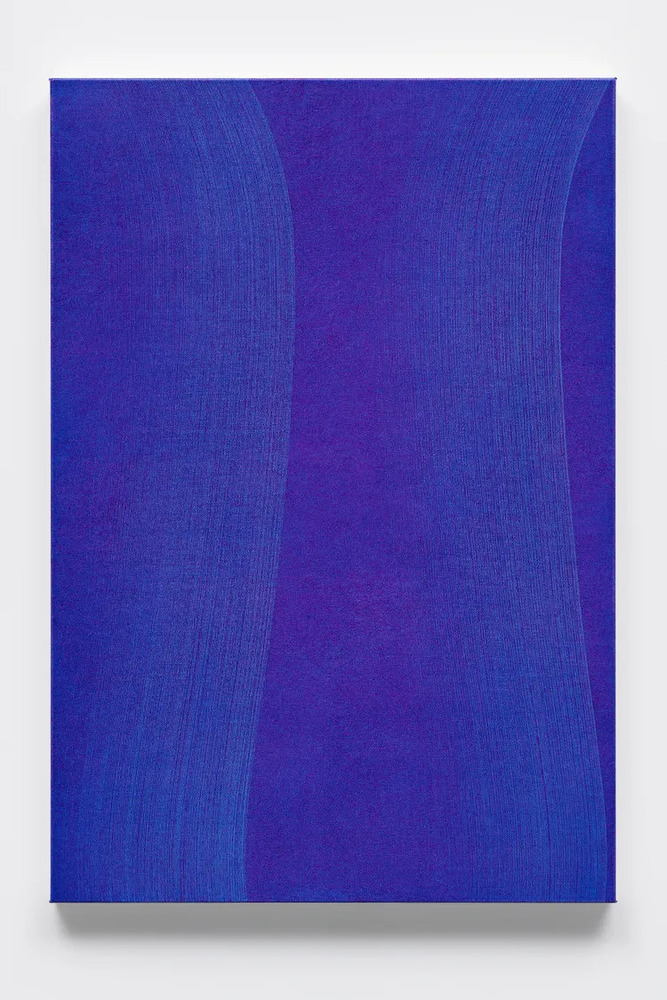
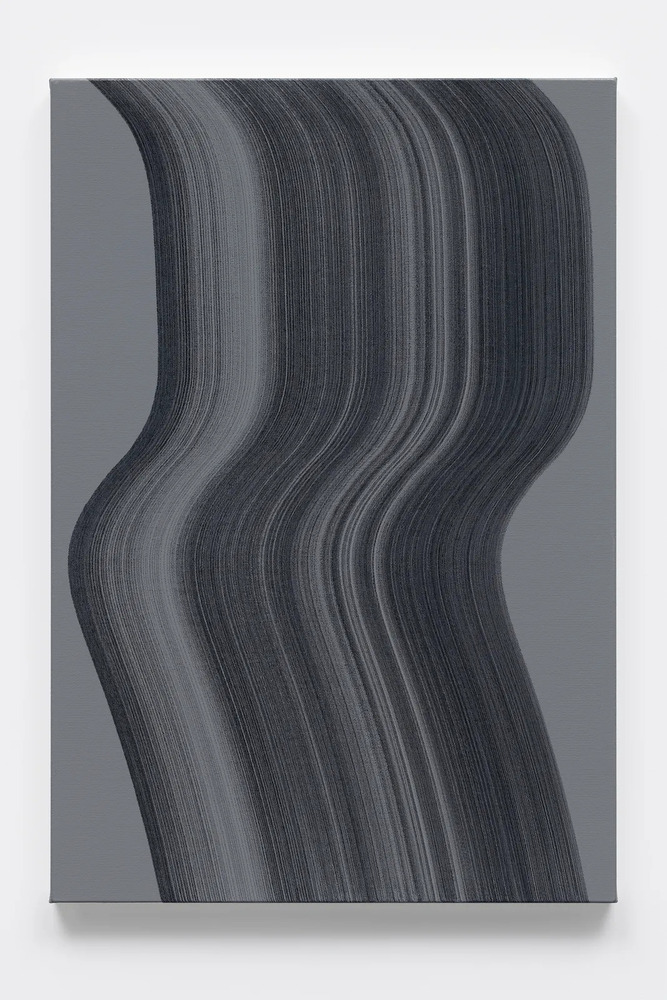
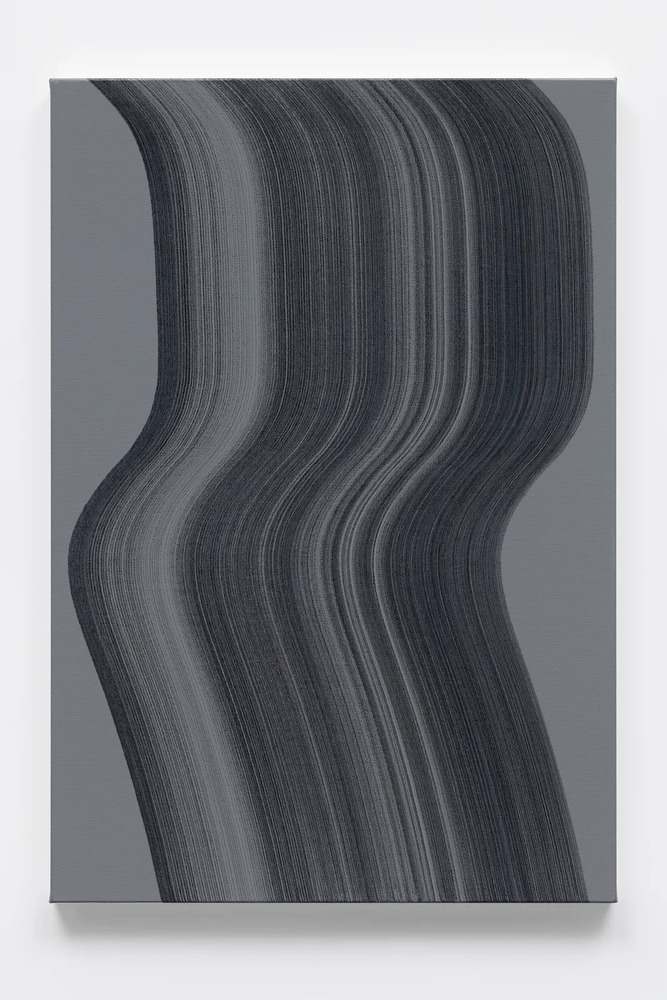
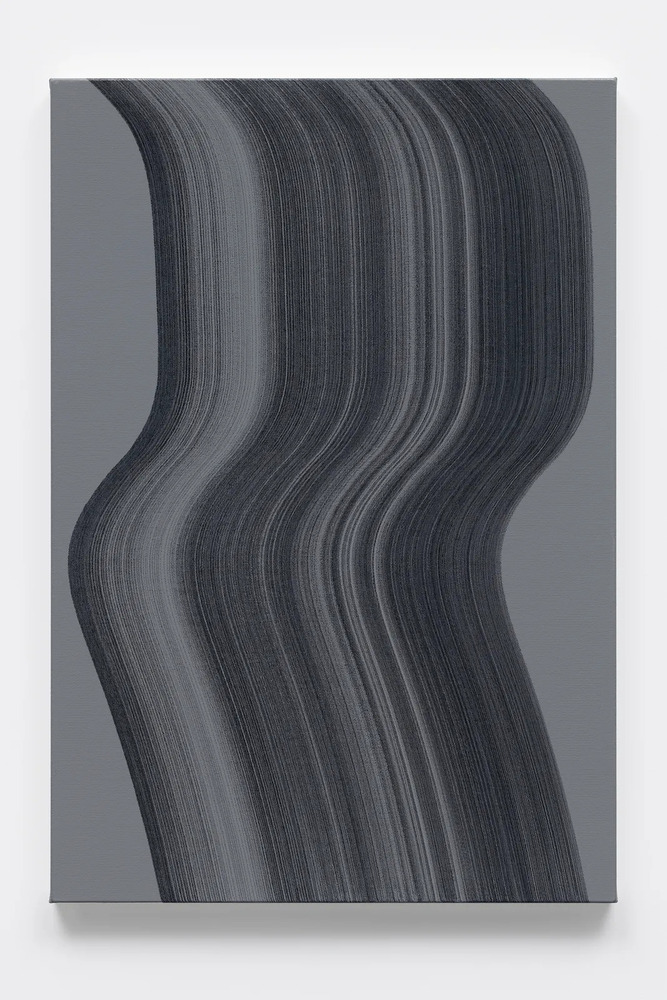
As a way to escape from formalized self-repetition, Woojung Hoh tried stacking straight lines horizontally on the canvas for about a year. However, he eventually admitted that this attempt was a failure and focused on implementing a non-rigid, flexible forms.
The combined result presents a series of Lines that conveys a smooth and uninhibited sensation. While it appears to contrast with his previous works, characterized by erasures and accumulated marks, it equally testifies to the artist’s investment in futility and hesitation.
The twin-like Lines and Rings are both individual units and potentials of units that can be combined in different ways, which take “how things end up interconnected from our constant reflections on space”³as a plan. Within the context of using the word ‘square’ as the title while ultimately aiming to represent an imaginary circle, the artist’s paintings progress as a frame that reconsiders the outline of rectangular thinking, which has persisted from modernist art, as a circle of size that extends well beyond the viewer’s height.
In Rings, the color painted on the side of the narrow wall is the same as the color of the back wall, creating a sense of expansion, as if the lines were joining, even though they existed in a void where the lines did not exist. This has also been understood as a reference to the strategy of Crafted Out of Alpenglow (2020), in which the whole unit was barely traceable on a long vertical screen, or to Circle (2022) and Curve (2022) where the individual canvases occupied designated positions as a pattern and unit, relating space to the frame of the painting.
In particular, the technique of incorporating separate spaces into the artwork is similar to the method used in the series mentioned earlier in this essay. The artist explained that the margins outside the canvas were “not empty spaces” even without any drawn lines.⁴
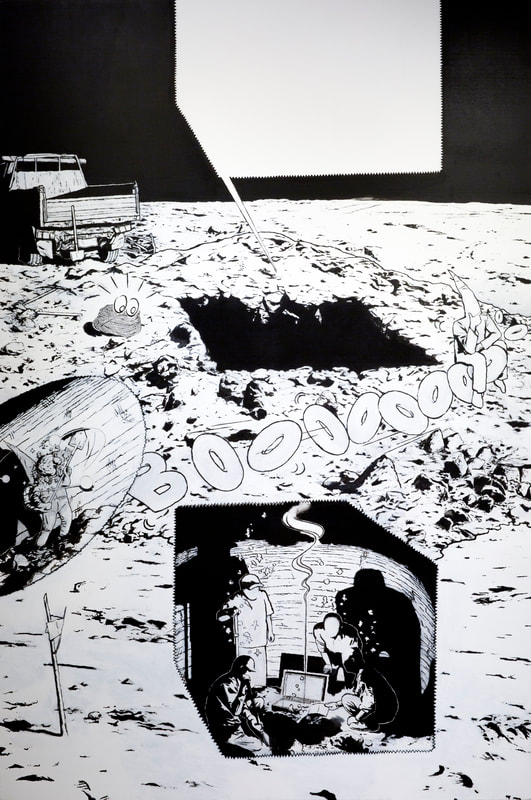
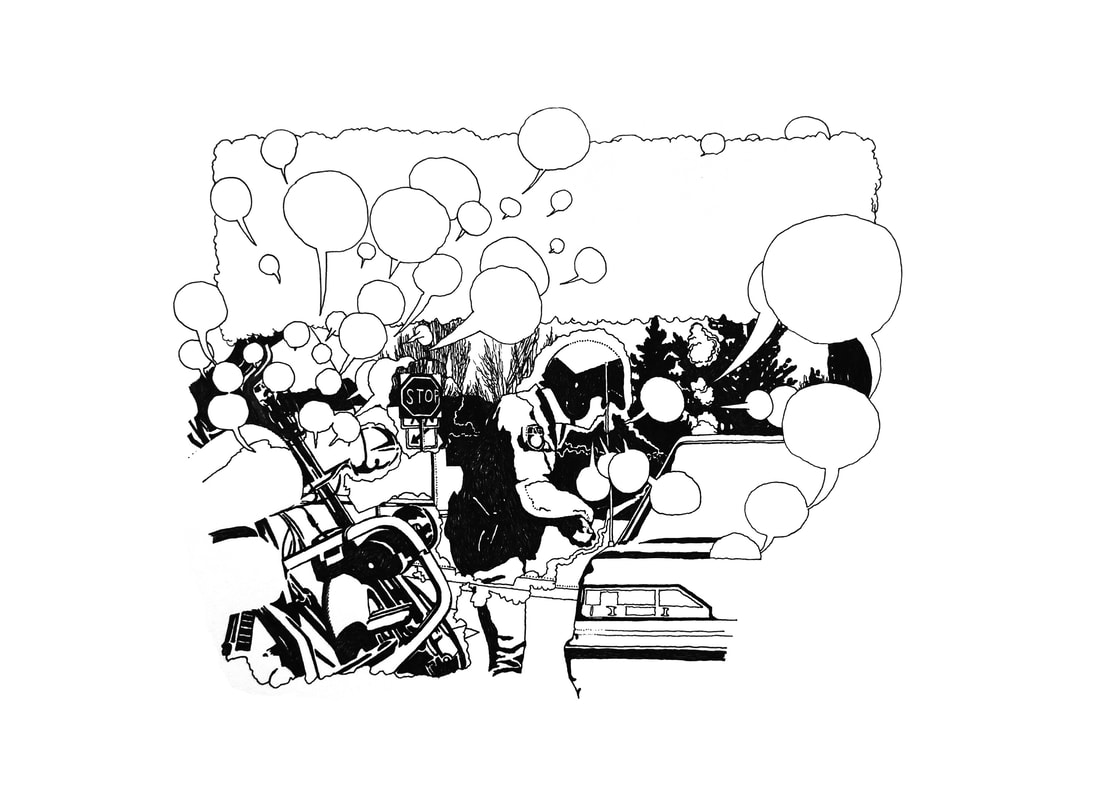
The two new works seem to be more closely related to the works presented at his solo exhibition 《Social Fiction》 (2017, Gyeonggi Museum of Modern Art), which could be compared to images appearing in sci-fi graphic novels. About ten years ago, Woojung Hoh created a resonance by arranging black and white, nearly circular empty speech bubbles like a mosaic, depicting a situation where murmurs accumulate but do not burst into one loud sound.
The series embodied the artist’s inability to fully assimilate into another country’s society and culture as he was living in France, and it also expressed the helplessness of social syntax in a situation where he could only access extreme situations like the Sewol ferry disaster through the Internet. At the same time, the series was also persistent in its unwillingness to let a single ‘viewing’ reveal what was going on inside.
While the new works originate from the same inner motivation that constituted his previous works, they also lead us to question what situations are hidden and revealed in his works as a medium that is embodied by the principle of ‘being able to settle in real physical laws and imaginary space at the same time.’ Thus, 《SQUARE》 constituted the sum of the mediums and works that could have appeared at any time in his work.
In this context, Lim Seokho did not take on the role of a curator. Rather, he acted as a ‘Catcher’ or ‘C’ who “captures the evidence from previous works as clues” from the proposal that the artist had written a year ago as a ‘botched work.’⁵ Instead of acting as a curator who codifies the work in specific terms and puts the artist into a historical narrative, he accompanied the artist as a correspondent, jointly nurturing the formless work through their exchange of written responses.
In and around 《SQUARE》, Lim witnessed the contrast in the way the artist reconstructs the image into individual cells. In this process, he highlighted that the artist approaches painting as a structure that dissolves into the unique shadows created by the characteristics and irregularities of the space. Substituting the exercise of curating with the practice of reinforcing the shared narrative is an unrefined approach. However, it is something to be respected because it fulfills the role of delivering the ‘whole’ that the artist is trying to capture.
Thus, the organization of 《SQUARE》 by C and P entailed a situation where immaterial plans towards an ideal were accompanied by physical works. The exhibition made me imagine the playfulness of the production process, knowing that the ephemeral lines on the wall, which could be dismantled at any moment and returned to the white cube, were only successful in approximating the exact shape.
For this reason, I was pleased to see that the exhibition evoked emotions similar to how we understand the world while connecting the information digested by each of us while we escape ‘from a situation’—which is often misinterpreted as moving out ‘from a box’—from a ‘square’ to a circle. And I was also pleased to know that the artist decided the direction of his work to be guided by his own curiosity without considering any competition or “status” within his oeuvre.⁶ Hence, we need not to worry about it. Woojung Hoh’s lines will continue to move uninterrupted to new boxes.
1) Interview with Woojung Hoh and Lim Seokho, April 13, 2024, Seogyo-dong, Seoul, South Korea.
2) Woojung Hoh, Ibid.
3) Interview with Woojung Hoh, June 8, 2024, Hapjungjigu, Seoul, South Korea.
4) Interview with Woojung Hoh and Lim Seokho, April 13, 2024, Seogyo-dong, Seoul, South Korea.
5) Lim Seokho, Ibid.
6) Woojung Hoh, Ibid.