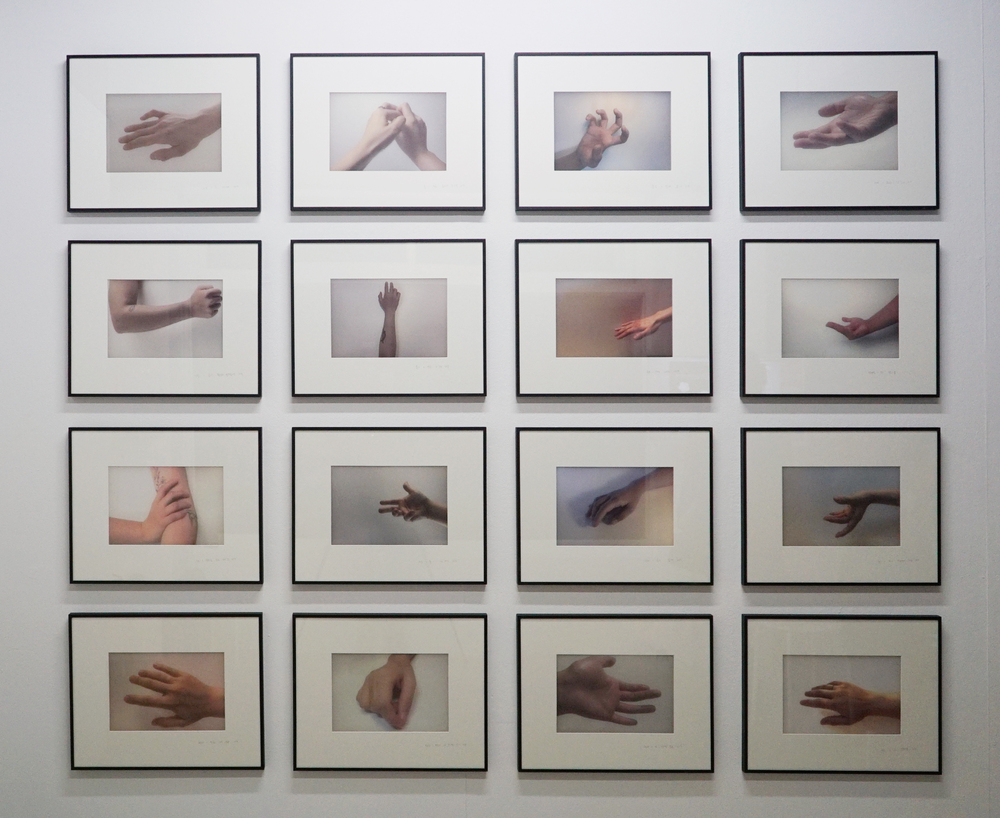
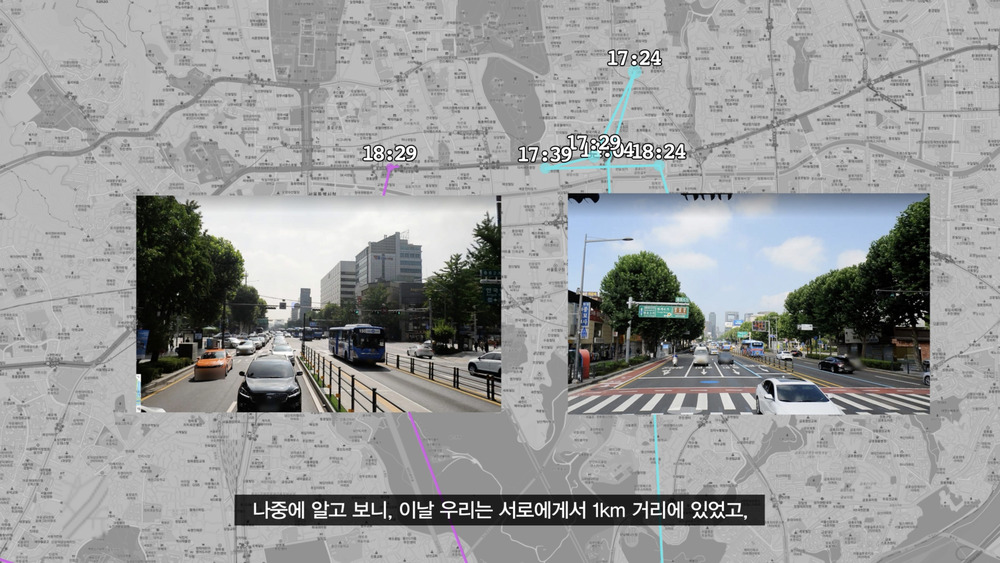
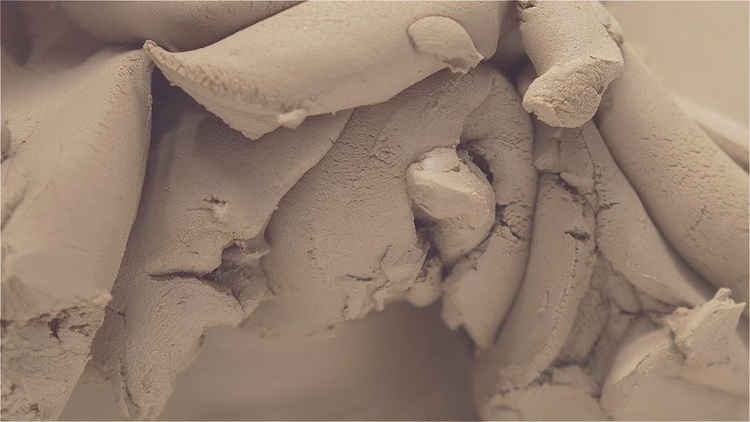
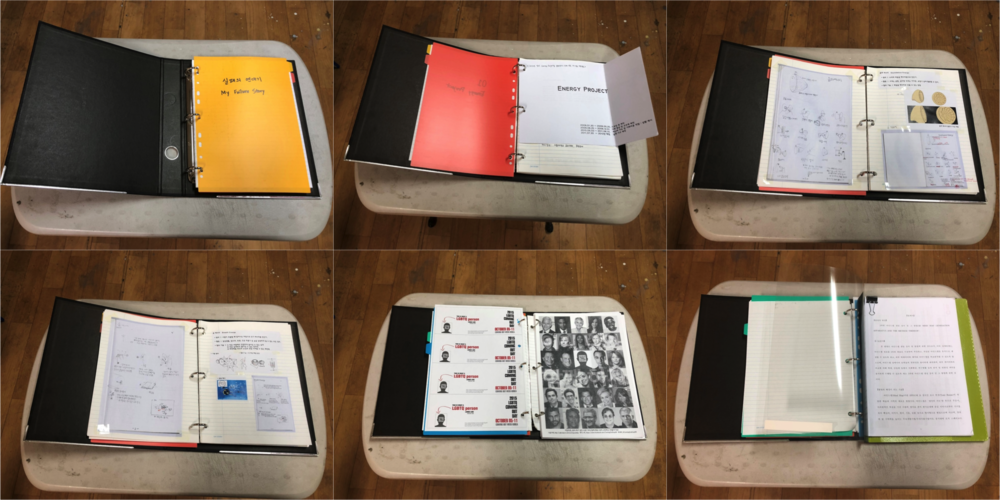
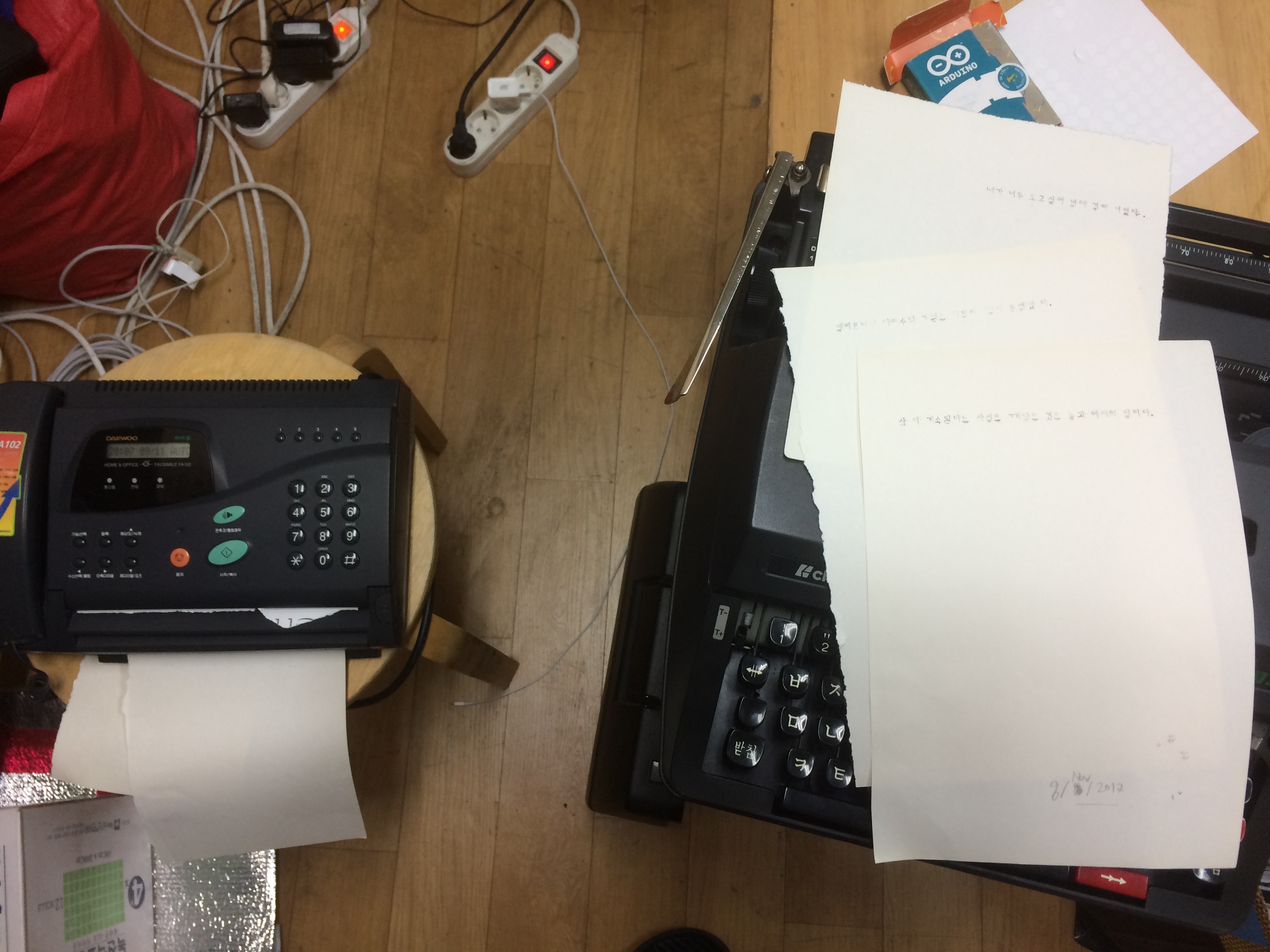
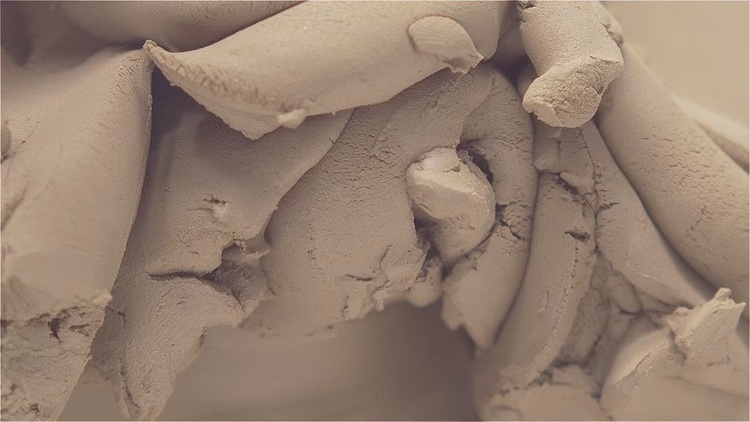
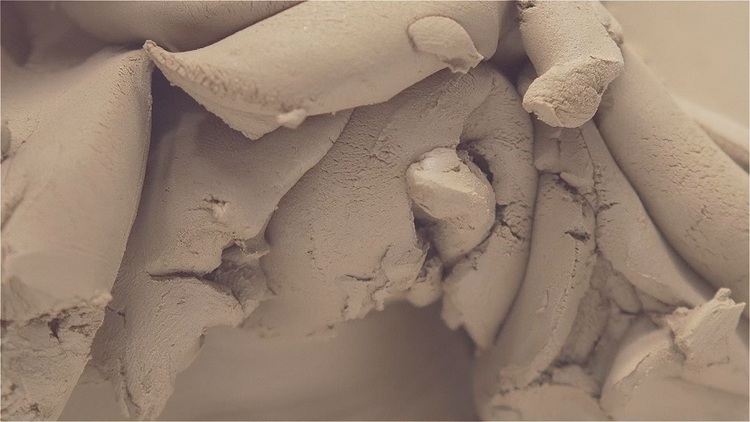
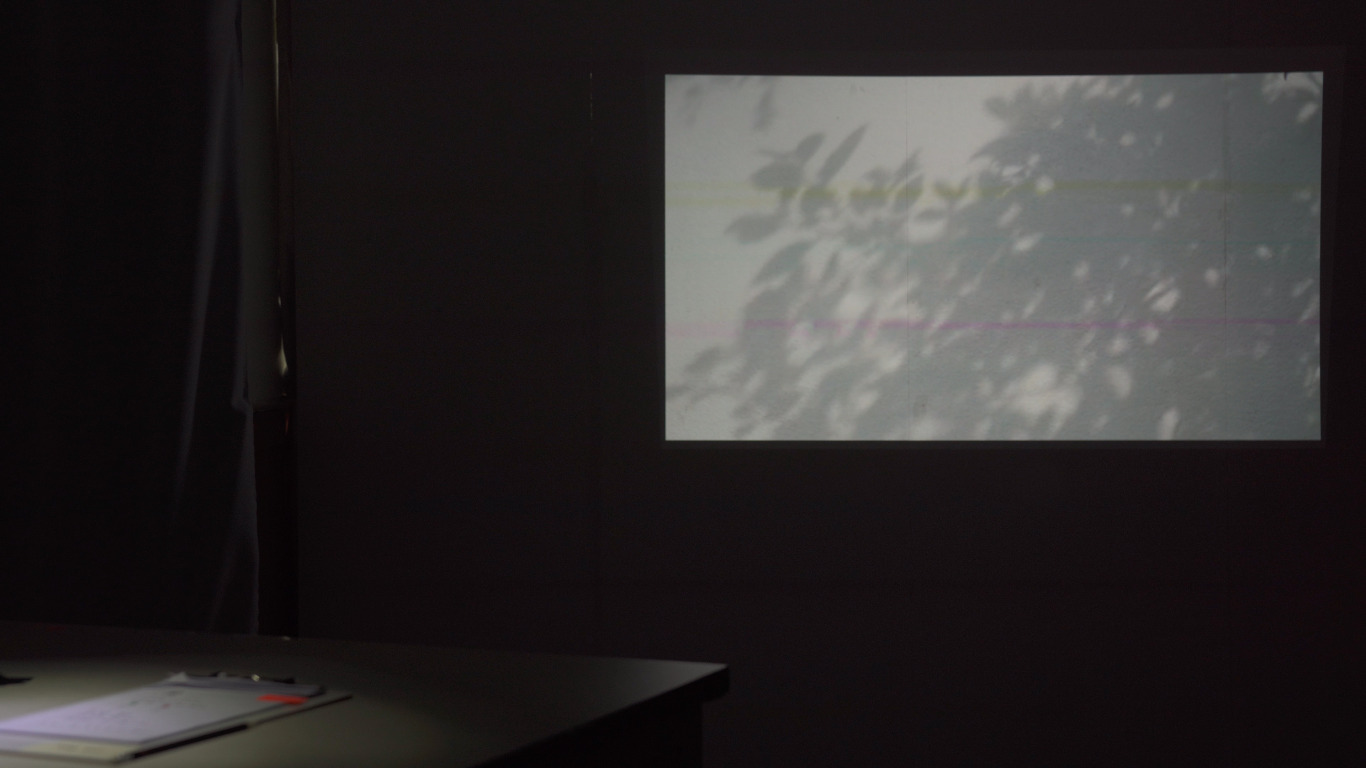
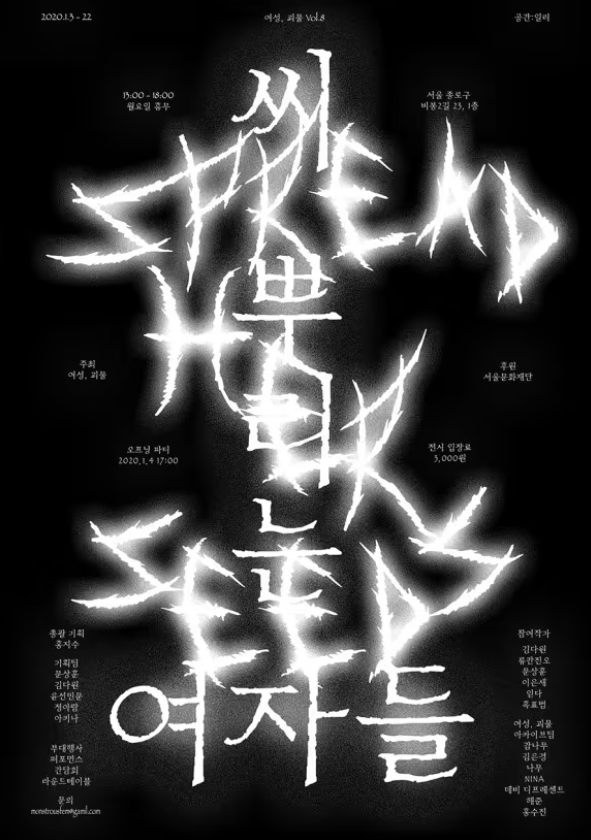
Moon Sanghoon, Sense of Touch, 2019 © Moon Sanghoon

※ In 2020, many young feminists are expressing diverse feminist themes through art, and further raising questions about sexual violence, discrimination, and hierarchy within the culture and arts field, while working to create an equal community.

This new narrative series by feminist artists who communicate with society through creating “separately yet together” is supported by the Korean Women’s Foundation’s Gender Equality Society Creation Project. [Editor’s Note]


To my sister,


Yesterday, there was an exhibition opening. The weather was especially nice that day, and since it was an exhibition in which many seniors, juniors, and classmates participated, quite a lot of people gathered at the after-party. We sat at a long row of tables outside a nogari place in Seochon, emptying one glass of beer after another while catching up with one another.

As always, stories mixed with a bit of self-praise and complaints about life were going around, and then, though I do not remember who brought it up first, we began talking about the friends who had disappeared.

Because the atmosphere at school was such that becoming an artist was the only goal, and because there were more than a few classmates whose news we stopped hearing after graduation, at first I too casually exchanged old stories. Then, suddenly, I heard your name.

Unni, I do not know whether you remember, but I remember the day I first saw you. It was during the end-of-semester exhibition in my third year, and I was exhibiting the drawings I had made throughout the year in a corner of the first-floor hallway, in a place so hidden it was difficult to notice even while passing by. I never imagined that anyone would come and look at them, but someone was there, and that person was you.

You bent your body for quite a long time in order to look at my work installed in that narrow space. I crouched in the hallway and waited for you, and since my legs went numb, it must have been quite a long time.

I do not know whether it was because I have orthostatic hypotension, but when you suddenly came out, I think I saw stars around you. I do not know why I saw stars, but I was certainly happy and encouraged by the fact that someone had looked at my work with such care.

To be honest, before I got to know you, I thought you were a slightly strange person. Someone who never once showed her face at the exhibition openings of famous artists where everyone else busily went, yet was constantly the subject of gossip, and someone who did not compromise with any rumor. So I always found you difficult to understand.

Also, the seniors talked about you behind your back, saying you “had no sense.” Someone “rude” who clearly expressed discomfort at a professor’s remark telling her to “try dating men,” someone who threw cold water on the atmosphere out of nowhere — that was the kind of person you were.

Those who found fault with you excluded people if they did not fit the logic of the “sense” they possessed. And many people had to watch their step so as not to be excluded by them. Thinking about it now, I do not know where that “sense” came from. Perhaps it was a frame created by certain people so that no one could escape the rules they had made.

I think I too had trapped myself inside it and thought you, who stood outside the frame, were a little strange. It was only much later that I realized that those who had created the frame could control various rumors in return for playing “administrator.” You had been fighting not to get caught up in their ways.

You kept a distance so as not to become buried in their logic yourself, and you did not hand over power to them in any form. I did not know it well then, but perhaps that was why you looked so radiant.

Unni, looking back, I think the time we spent together was an age of darkness. During the ten years from when we were in school to when we entered society, Lee Myung-bak and Park Geun-hye were in power, and there was such a thing as the cultural and artistic blacklist. Some things were suppressed, but on the other hand, many things were tolerated in the name of freedom of expression.

Do you remember the day when, during a class where we critiqued one another’s works, a senior brought in photographs taken from a high angle of several women’s thighs? Even though we were sitting there with uncomfortable expressions that day, the instructor and others talked for over an hour about the aesthetic aspects of the work, and in the end, you stormed out alone.

Only after the break did you return, and you showed photographs containing the narrative of a same-sex lover. Then, instead of talking about the work, questions poured out that contained their own opinions about homosexuality and fetishes about lesbians, and you remained silent. In the midst of that, the instructor even suggested that we talk about the work without the erotic gaze.

The erotic element was the most important part of the work, but there was no one there who could properly know and speak about it. Only ignorant remarks went back and forth, and because they did not know, they remained silent, and your presentation time ended in ten minutes.

Things like this actually happened so routinely that they passed without seeming special, but days like that were always difficult to simply let pass. At such times, whether we wanted to recognize it or not, we realized that we were not human beings but women, and we faced moments of inequality that were not recorded but had been passed down. Because we shared each other’s history, I felt sorrow even when I was not the one personally hurt.

So at times, a single class like that, which seemed like nothing special, made me depressed for days. I do not think I can say that it was anyone in particular who pushed you away from your work and made you fall into the helplessness of being unable to do anything. I can only say that the times were simply like that.

The way I remember you, despite all that, is always sitting in the studio, making something. Whenever I saw the work you made, I think I liked your work so much that I wished I would appear in it. I still cannot believe that you stopped working. Artists who were busier cutting down their peers than thinking about their work are now doing well, holding dozens of exhibitions at big galleries.

Why did more exhibition opportunities not come to you? Some artists are holding another exhibition even after their exhibition from a few months ago received harsh criticism.


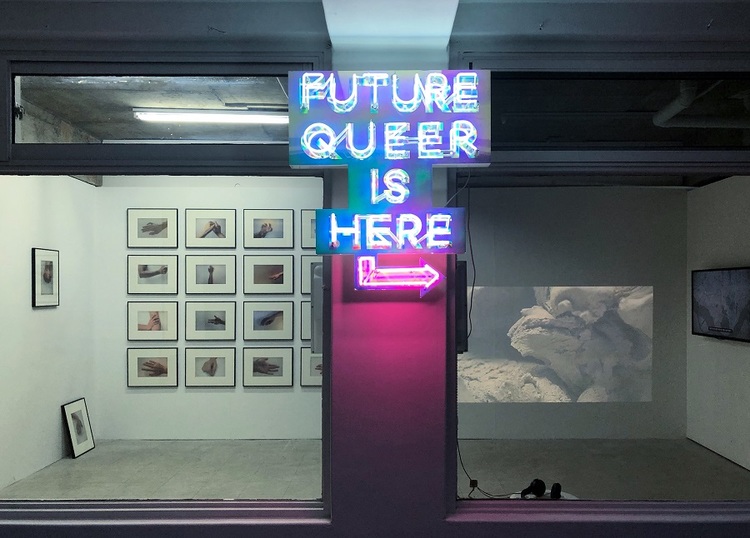
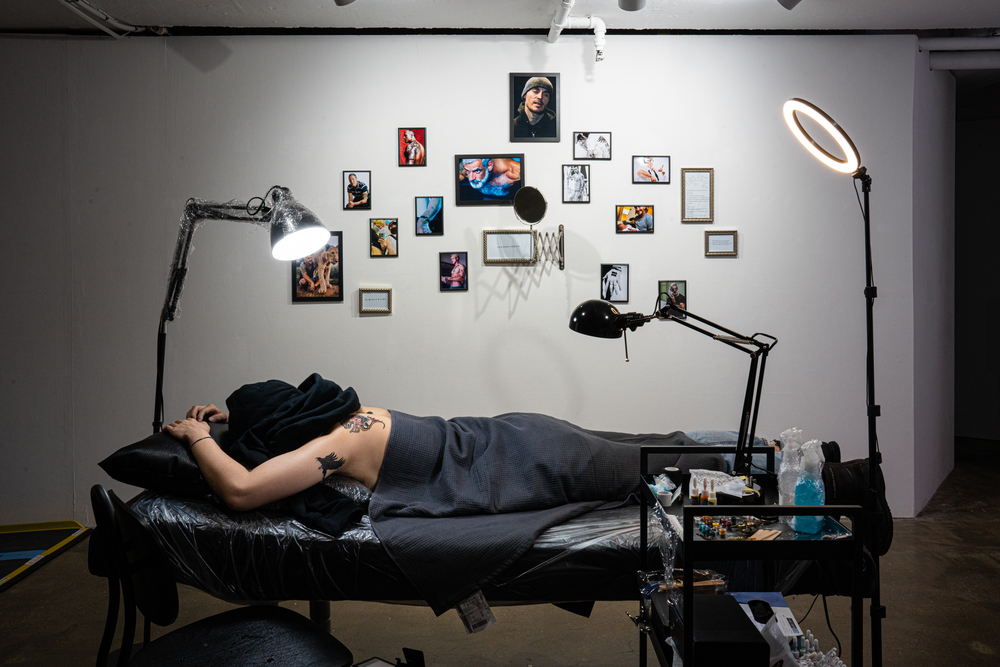
Installation view of 《We will always cross each other》 (Keep in Touch, 2019) © Keep in Touch

Last year, I had my first solo exhibition. It was in the year when I last saw you — that is, only when I reached the age you were then. Of course, I had exhibited and worked before that too, but it was the first time I had an exhibition in a properly equipped gallery.

Looking back now, there were many things I regret about last year’s solo exhibition. But how could anyone do well from the very beginning? I can do better going forward, but I do not know how many of those “going forwards” will come to me.

Only then did I understand the things you had said to me back then. You said that showing works means creating a space and creating a context, and that this did not seem like something one could do well all at once. That is why you always felt regret after exhibitions.

I think you also said that with more experience, one can do better, and that even just paying attention to the exhibition composition is already busy enough, but it is difficult because of all the additional matters that come with an exhibition.

Unni, you remember the day you came back after installing an exhibition at a rather well-known art museum. That day when you bought beer that was ten thousand won for four cans, and we exchanged silly jokes before parting — I think I was a little envious of you that day, and thought that the things you said were just complaints. I should have listened carefully to what you said. I am sorry.

Perhaps after that day, you were slowly giving up the thought of making art. The lingering gesture and gaze of the curator you met that day, who approached you while promising another exhibition. Those were things that should not have been brushed off. To say that there were no hashtags, no Twitter, and no Instagram then would make me too cowardly and narrow-minded. I am sorry I could not fight alongside you.

I often remember how our conversation went astray that day. How long did you have to fight alone? Only now do I think about that, and I want to go back to that time and talk with you again. As you looked at me, who was about to graduate, full of expectation and confidence, thinking everything would work out once I had my graduation exhibition, what words did you swallow?

Was the faint smile you gave me a fatigue toward me, who was spilling over with an excessive ego, or was it consideration for a junior? Or, did you think that my era would be different, and that my future would therefore be different from yours, and so you said nothing?

After that, I graduated and started working at a company. It was because I had to earn money, but in fact, perhaps I was feeling for the first time the reality you had always been facing, and ran away from it. I grabbed every person I met and complained about the unfairness of the art world, yet I could not actually start working again. For quite a long time after that, I remained depressed about the things that had happened to me.

When I thought I could not possibly get out of it alone, a friend I met at a drinking gathering introduced me to a group of feminist friends. Each of them was angry at the world for their own reasons. But unlike me, who had fallen into self-pity, they acted directly and raised their voices. They changed the world little by little, in solidarity rather than alone.

Looking back, so many things happened in the year I met those friends. One day, I received a message from a friend who had endured the dark period with us, asking me to play basketball. Then I ended up joining a basketball team, and through experiencing a ball sport in which we stole the ball, bumped bodies, and played together as a team, I realized that I had been avoiding competition.

Why were ball sports, which teach you that it is right to yield when moments of competition come, but that sometimes you must also compete with all your strength, made into the exclusive domain of male students? Because I did not know this simple thing, I lived through too many moments by stepping back.

On another day, I met friends who do drag and lived for a while as “Drag king John Johnson.” Through drag, I was able to let go of the idolized masculinity within me, and escape the sense of frustration that had pressed down on me as I thought it would not change unless I was born again.

How to control my pace, how not to hate myself, how not to fall into self-pity, how to engage in fair competition, how to take care of myself first — I learned all of these from feminists. Day by day, I am learning many things from my peers. Being with my peers, I feel as though I am slowly escaping from and healing the nightmare of that era.

Thinking about it, I think I had been continuously looking for peers. Those peers may be the people I am with now, but they may also be the anonymous many whom I have never met but with whom I can stand in solidarity at any time. Because they speak from their own positions, I feel strengthened too.

Now there are no longer nightmares like those class hours in which no one understood us. Rather, now if I say I make work with queer-feminist narratives, there are so many eyes that can read them that I have to work with tension. I have to keep studying and check whether anything is lacking.

A few days ago, something like this happened too. While sitting and talking with peers, I was delighted and said that if an egg and an egg were combined to give birth to a child, only “girl children” would be born. Then one of those friends said, “You wouldn’t know until the child identifies themselves,” and I once again discovered my own insufficiency.

In the past, you said that when talking about queer issues, it was hard because you had to start from such a low level that you could not get to the story you really wanted to tell. Now we can have conversations that go further. And there are more audiences who can read them.

We are no longer on a tilted plane so steep that we cannot climb it. Someday, we must compete properly on a plane that will become level. The ones who made that plane level must all be the countless solidarities. Now we can no longer only blame the times.

Unni, one day after a feminist art class, we lamented why there were no openly lesbian artists in Korea. But I think that was because we did not know well. Perhaps we were trapped in the world called the art world, and instead did not know how to look outside.

Lesbian art was being made by numerous activists, as long as the history of queer rights. The reason we did not know that was probably because, inside art school, we only went to exhibitions at famous museums and galleries and read art magazines with power.

Even when we encountered their works occasionally at queer culture festivals, perhaps we unconsciously dismissed them in our minds as amateur works. But among activists, there were many who had majored in art, and there were also artists who used anonymous activist names. And more than anyone else, they voiced the messages they wanted to deliver to the world through progressive works.

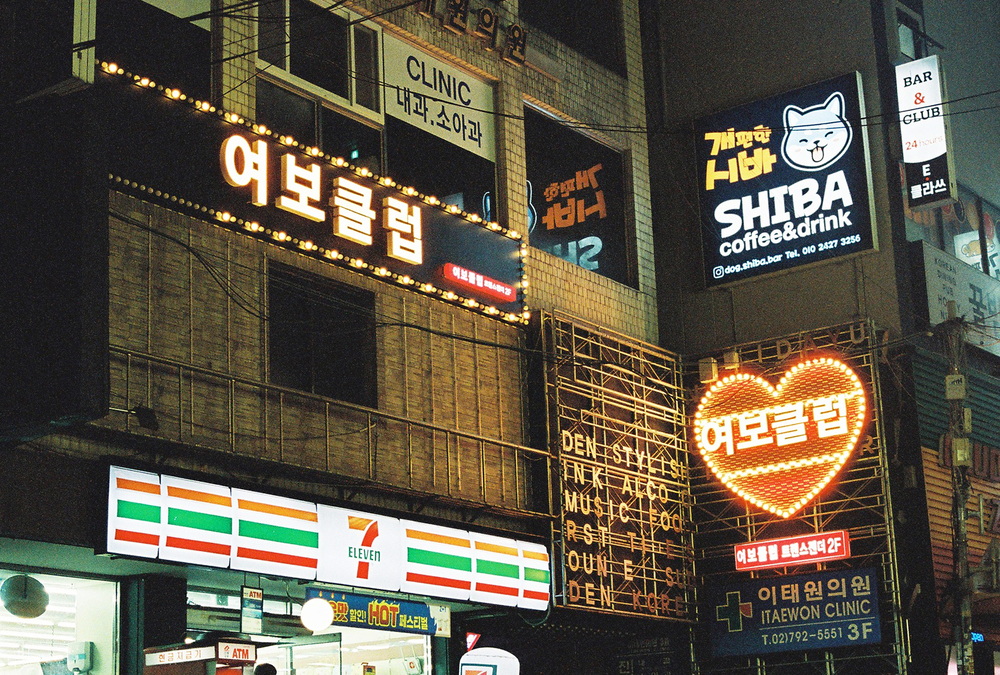
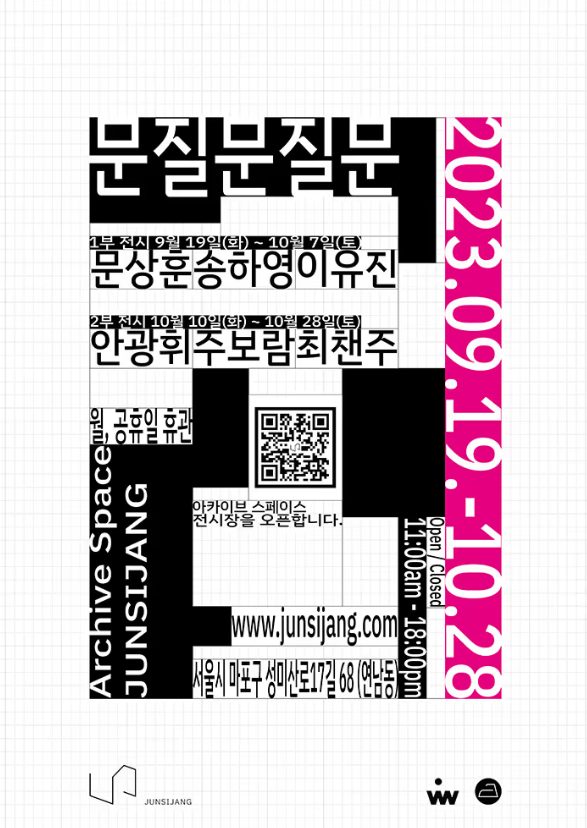
Belatedly, I opened the exhibition 《Lesbian!》 last year in order to show their works. I printed the exhibition preface 100 copies at a time, four times, and so many viewers came during only ten days that all those papers disappeared. Now we must remember their brilliant activities and support the emergence of more works.



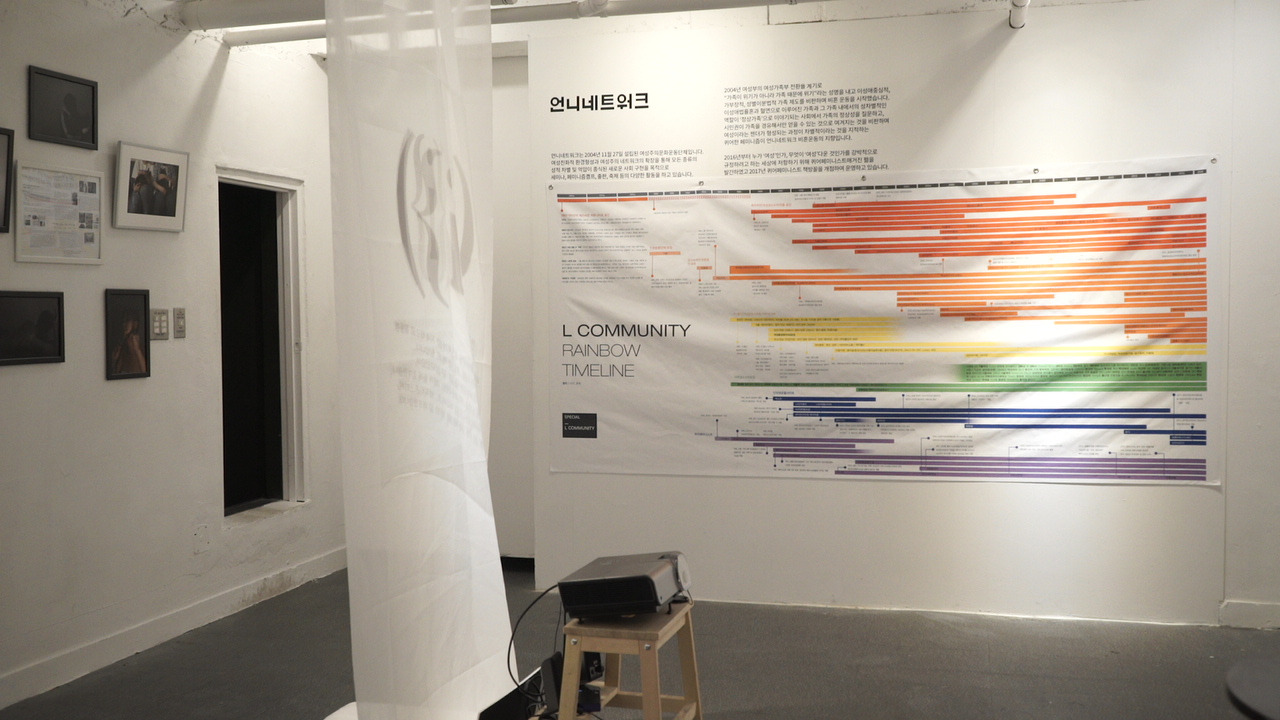
Installation view of 《Lesbian!》 (Outhouse, 2019) © Moon Sanghoon

Looking at things like this, I think things have become a little brighter than the time we spent together. When that teacher who talked about high school girls’ underwear wrote words blaming the victim without understanding the times, there are now many people who can say together, without staying silent, that it was wrong.

Unni, the fact that I could hold an exhibition titled 《Lesbian!》 was all thanks to queer-feminist friends and solidarities, the teacher who supported me, and my peers. And it was thanks to the countless people who created change.

Even now, thanks to the people who raised their voices first, I gain strength to keep working. They changed the art world, and I think because of that change, my project was able to receive funding. Just as I could continue working because you looked closely at my work when no one else would, now there are many people who see and listen to my story.

So now I will no longer blame the times, and I will try to work with strength. Just as you gave me strength back then, I hope that somewhere, you too will gain strength by seeing my story.

Whenever I want to share stories like this, I think of you. Where are you, and what are you doing now? I cannot contact you now, but still, unni, I think that even if it is not art, you must be making something somewhere. Because that is the kind of person you are. The person who shone more brightly than anyone I had ever seen.

If you ever receive this letter, whenever and wherever that may be, I hope you know that now there are many people who support you, and many people who will stand with you. Now stand in solidarity with me and with us again. And I want to see again the things you made so radiantly.


- May 2020, from S.


※ The speaker and the older sister in this letter are not real people. The text has been written in the form of a letter by reconstructing events that the writer saw, heard, and experienced in the art world.

References