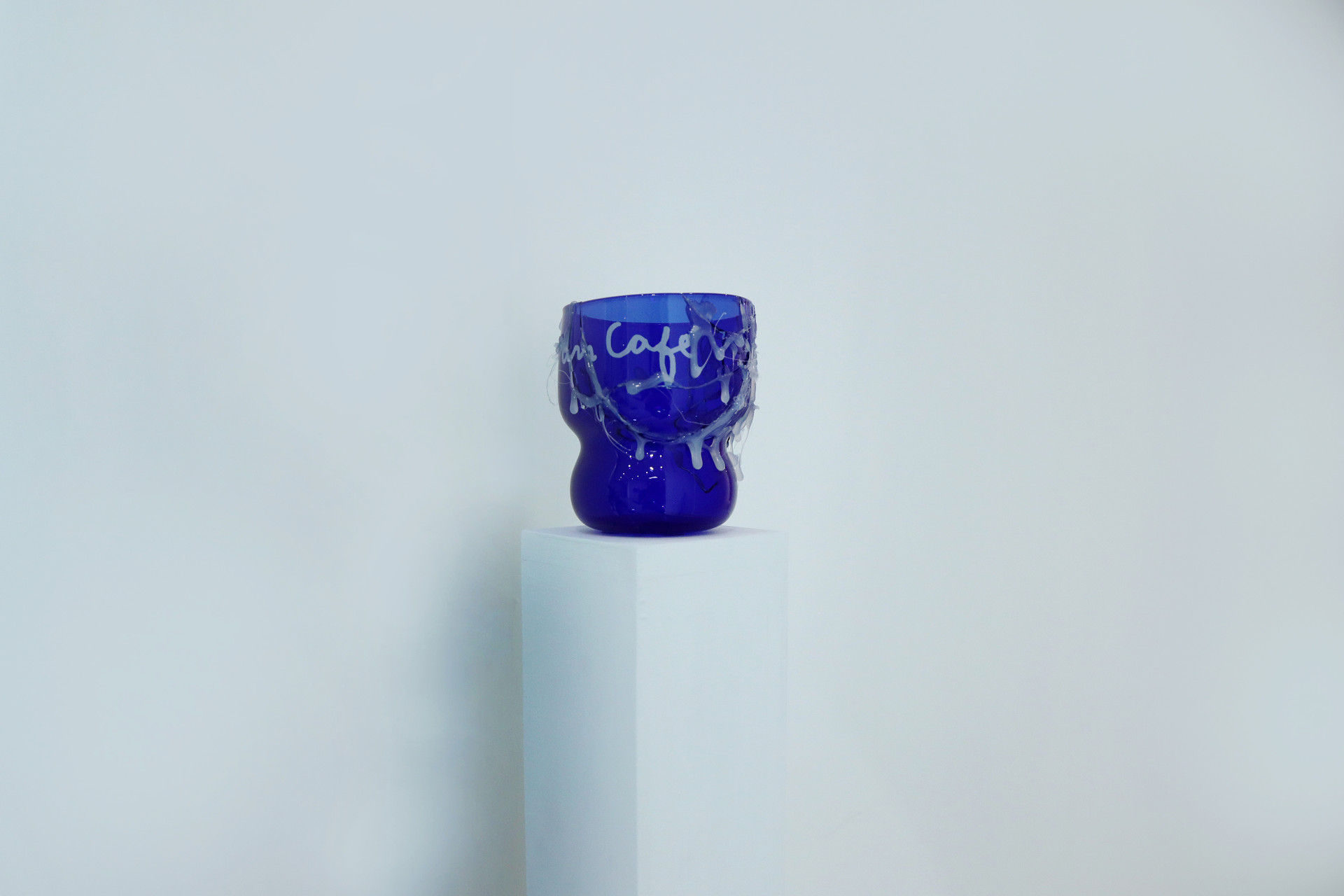
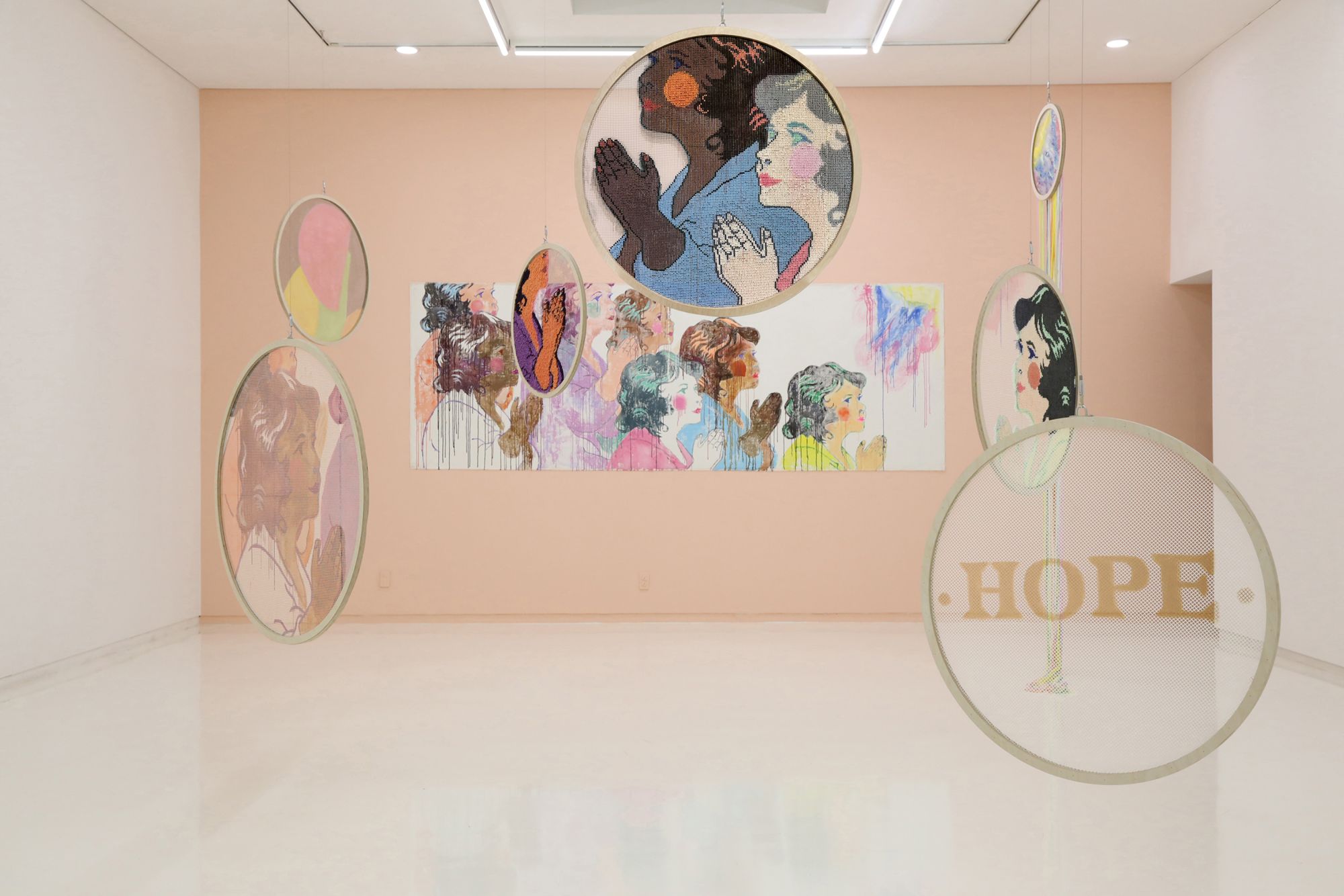
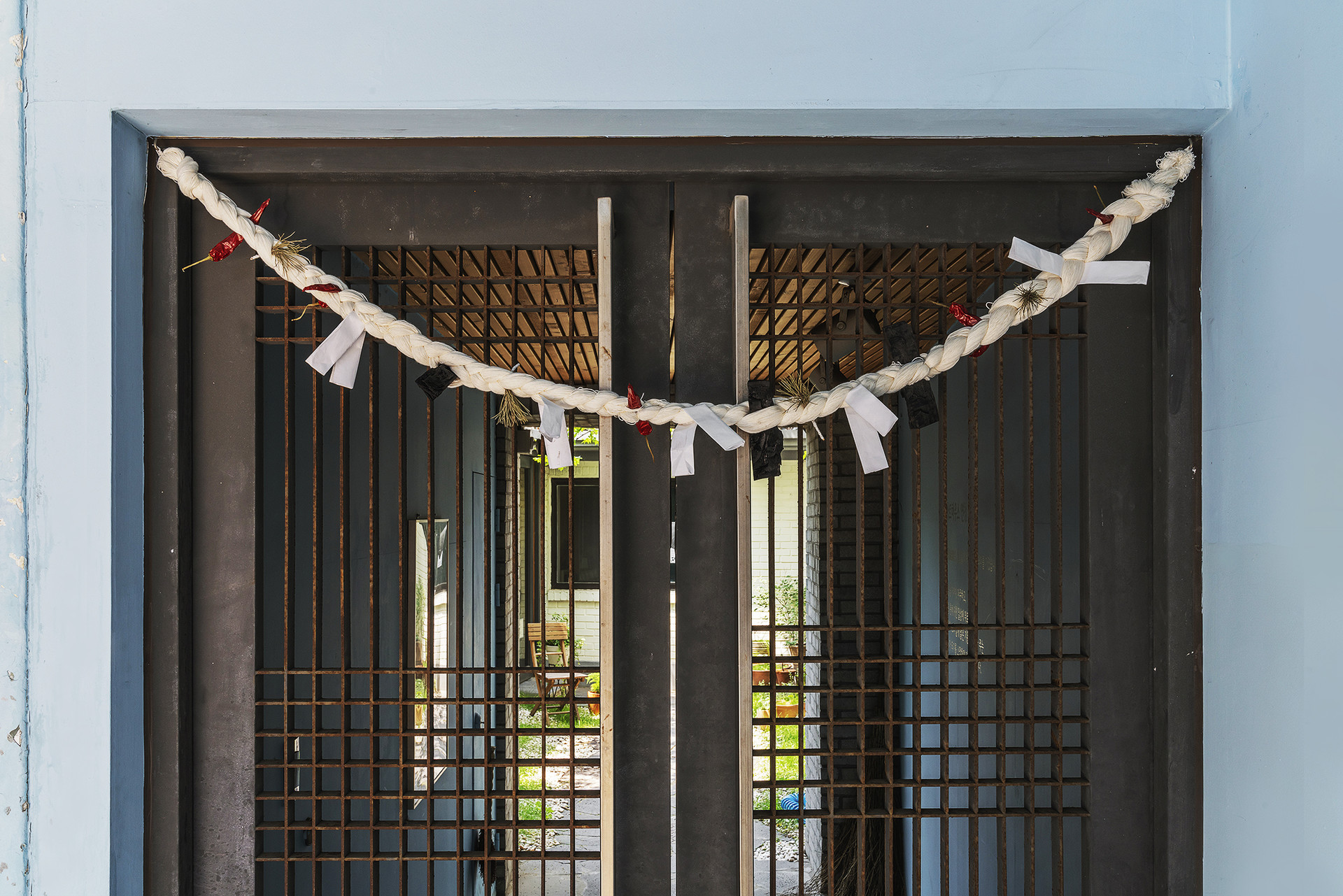
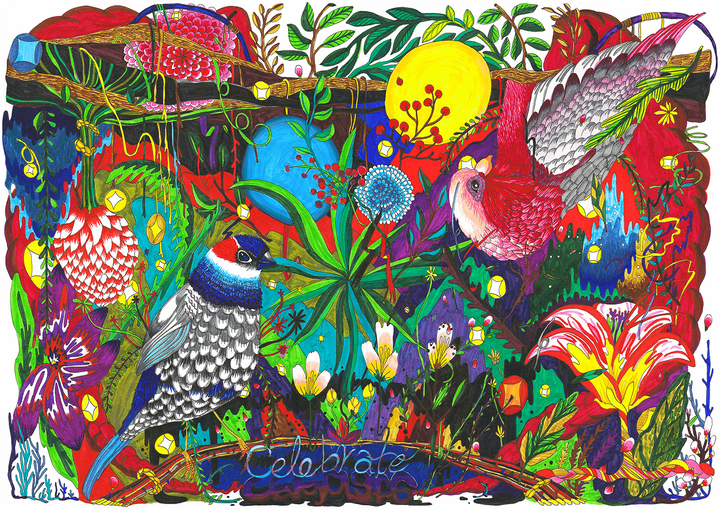
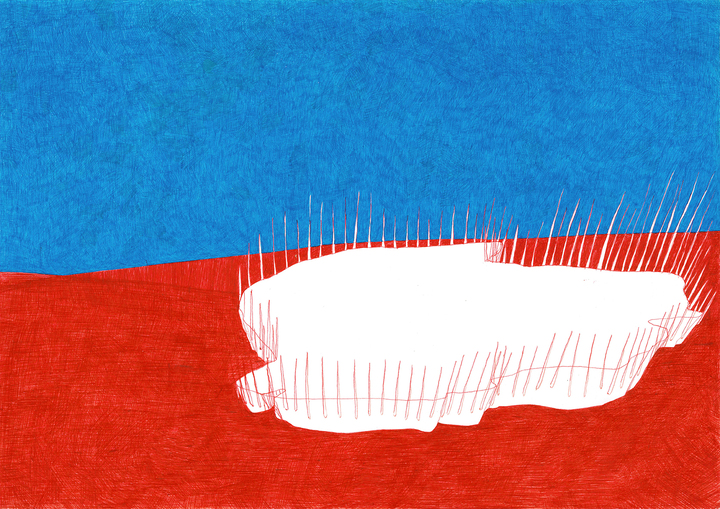
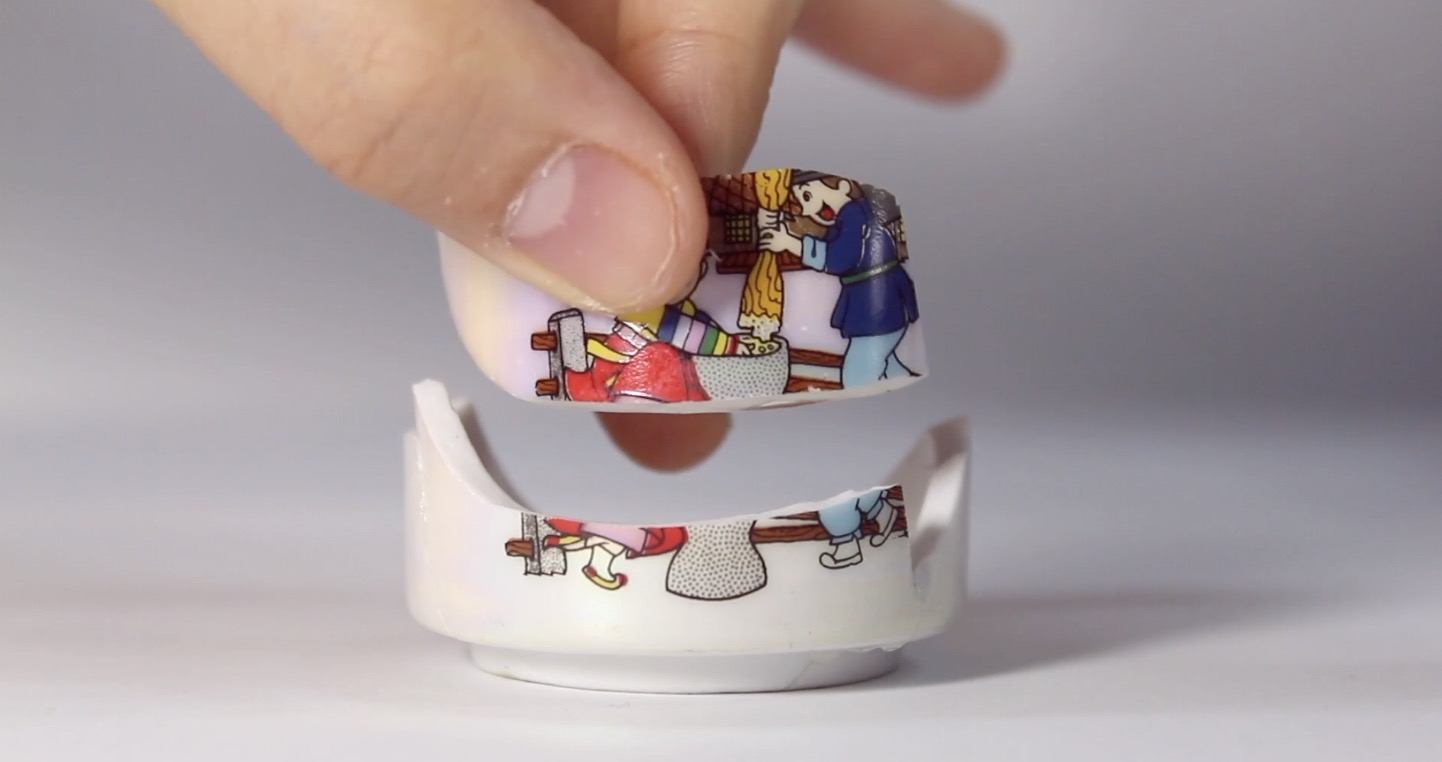
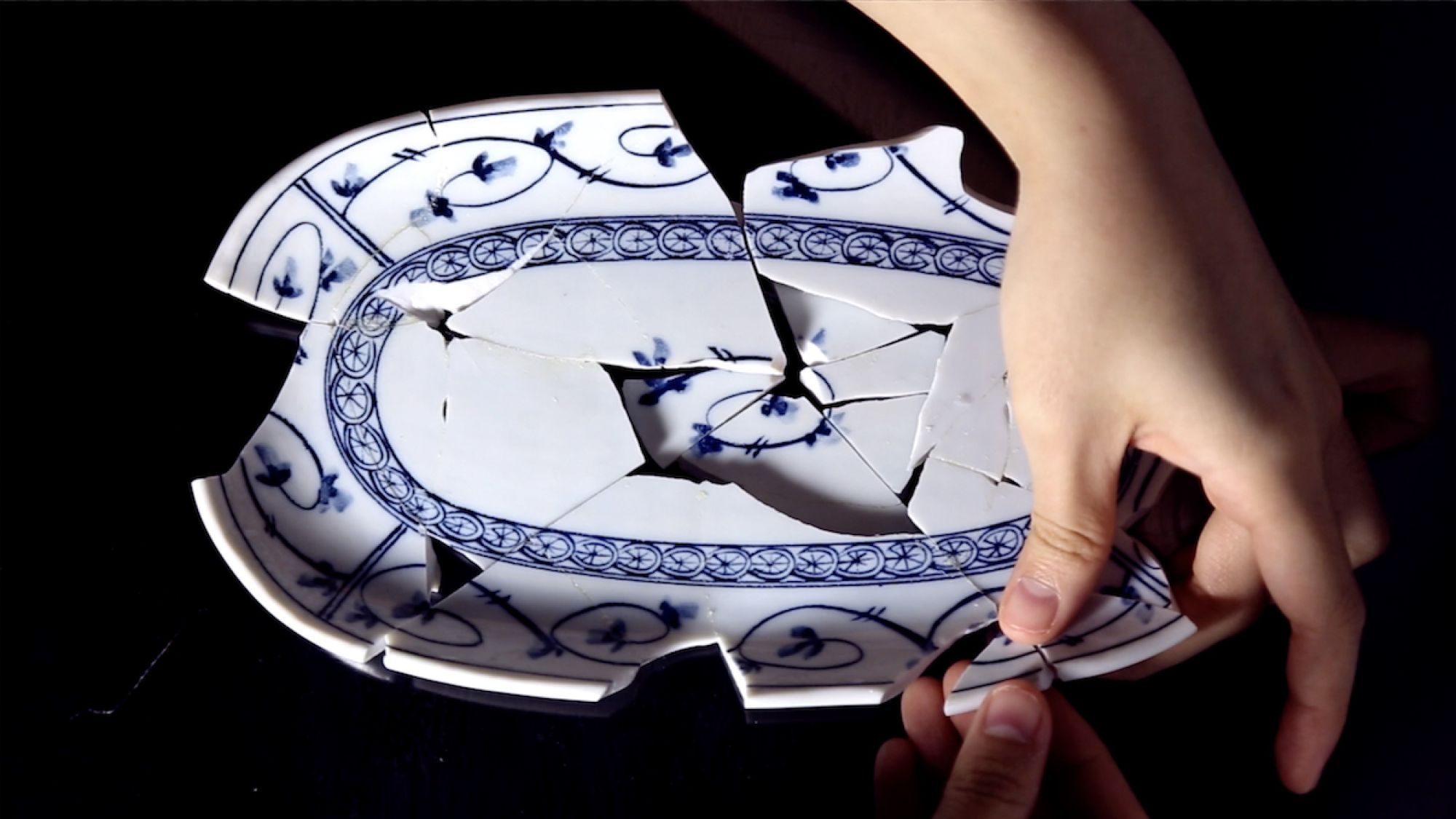
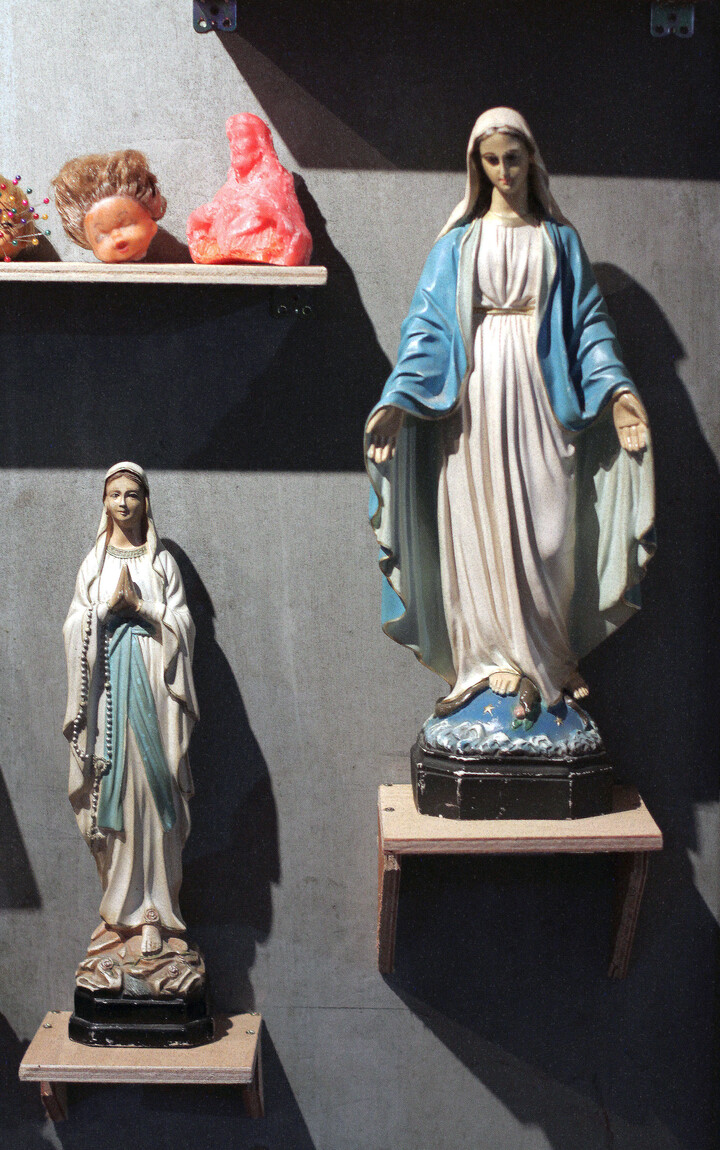
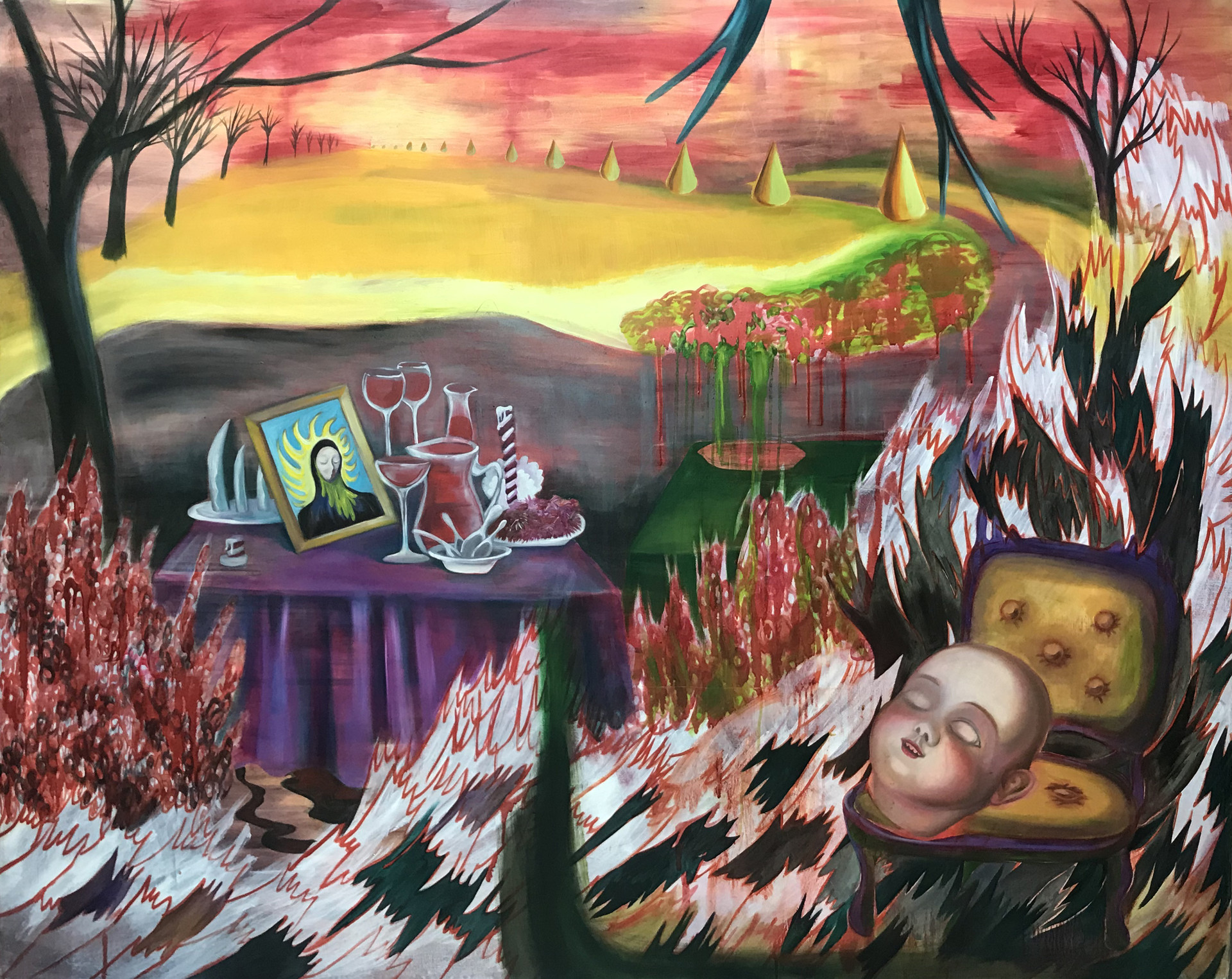
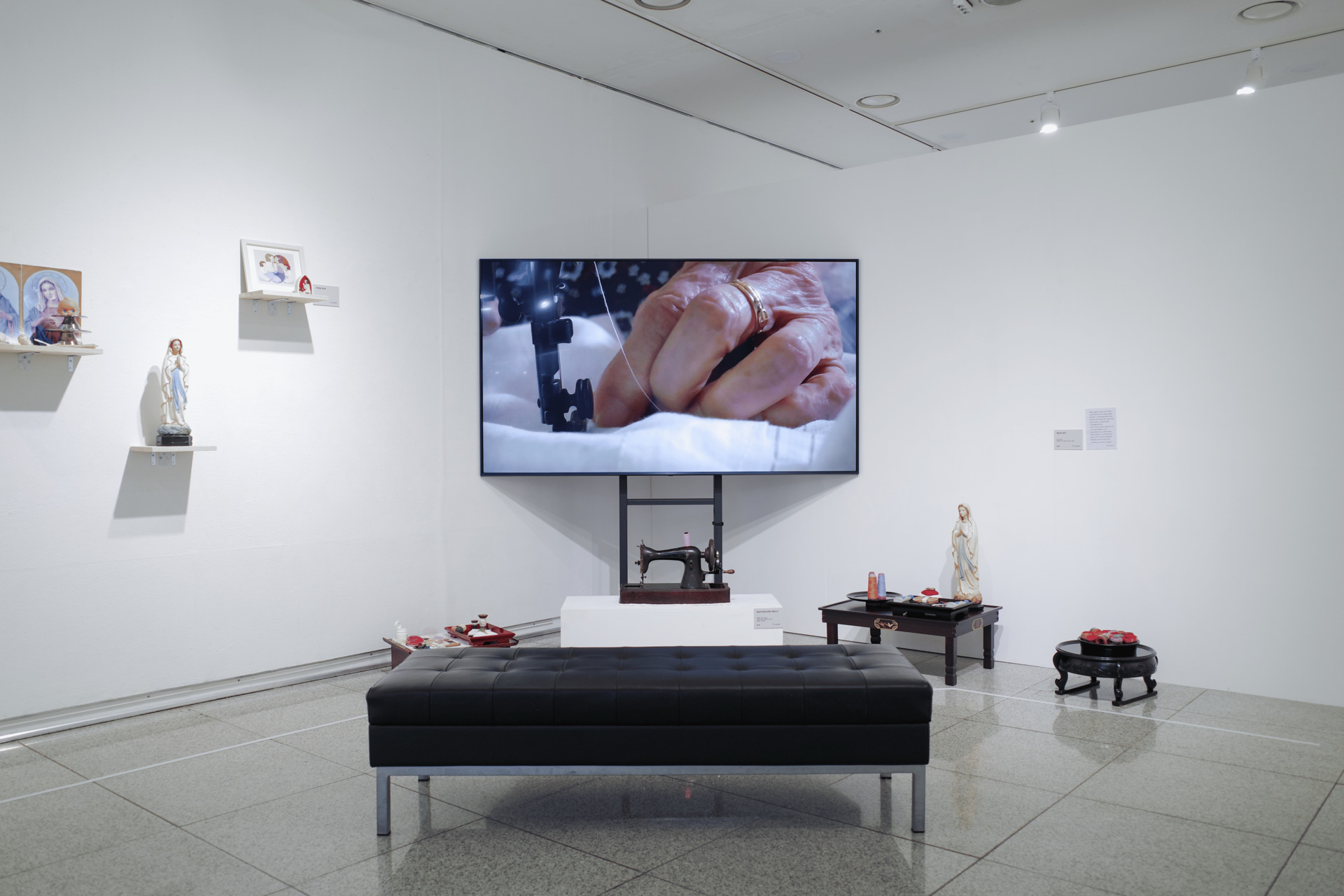
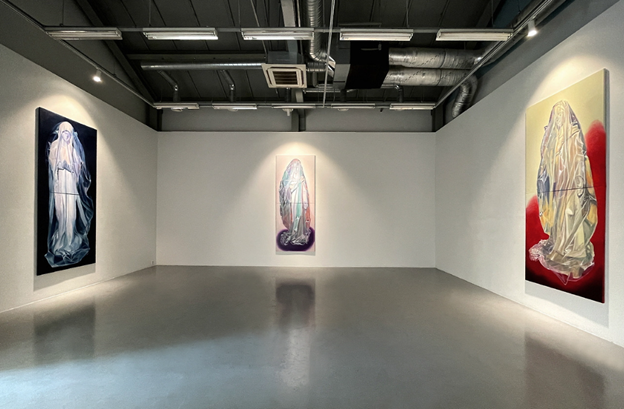
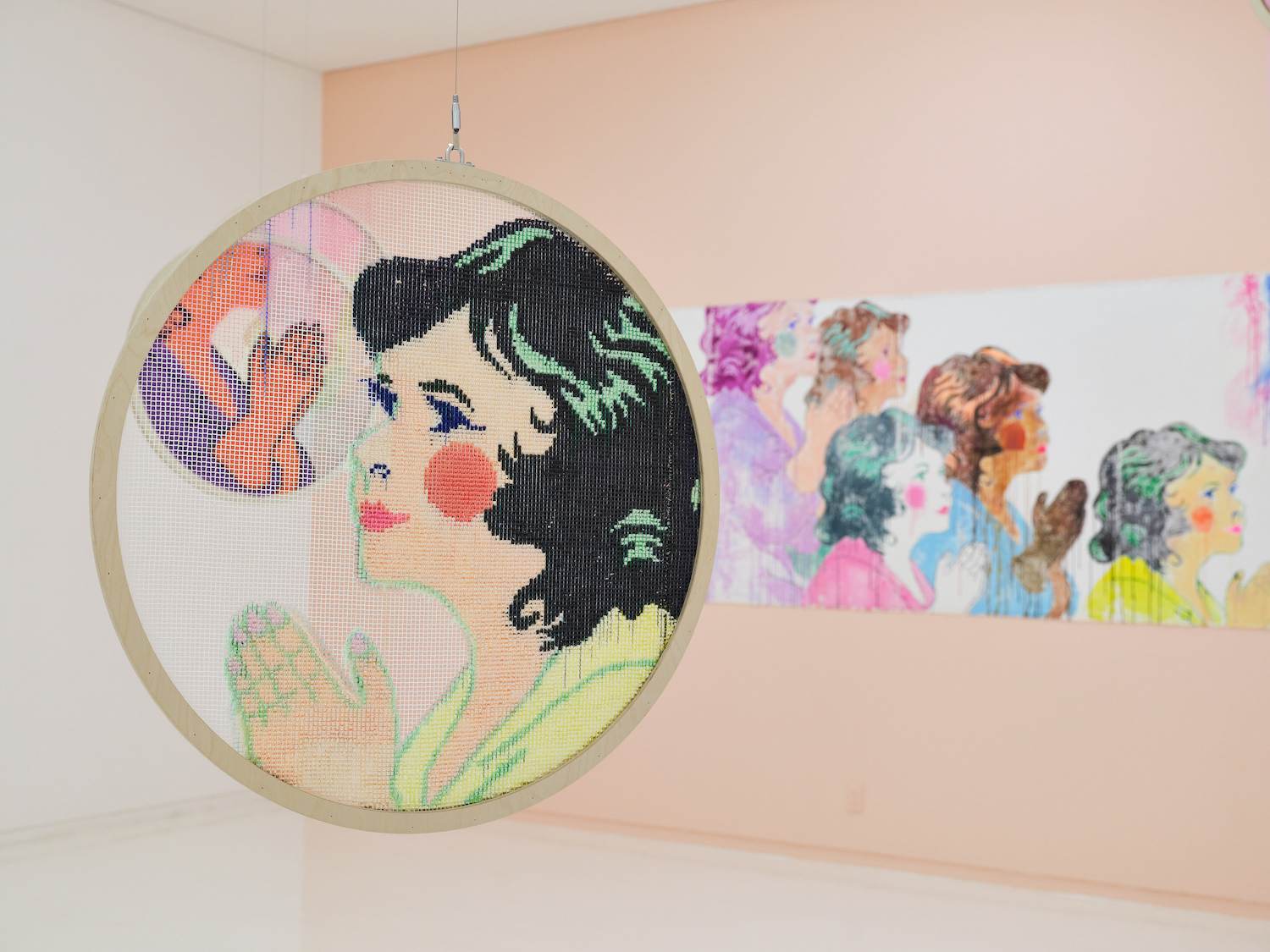
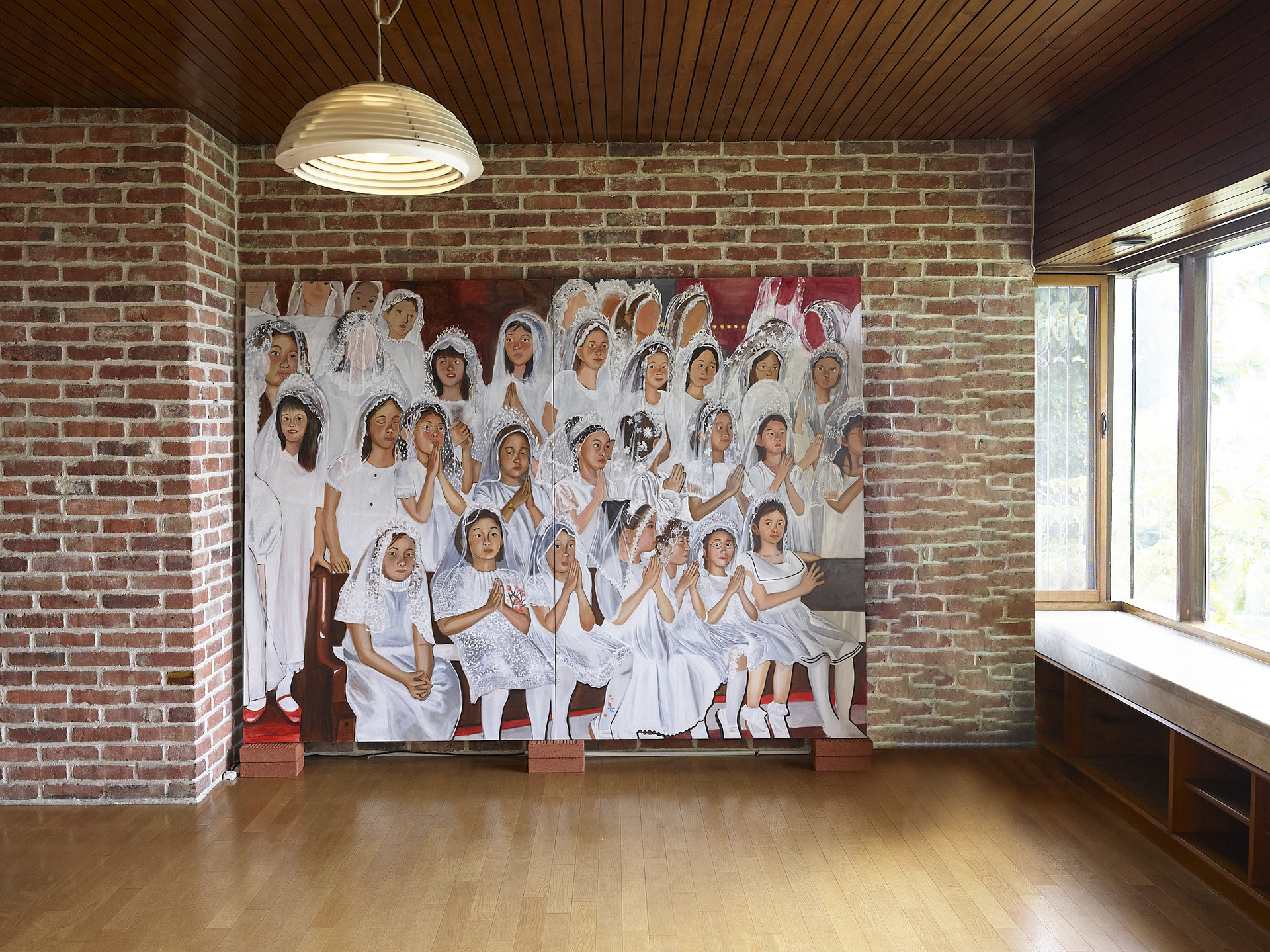
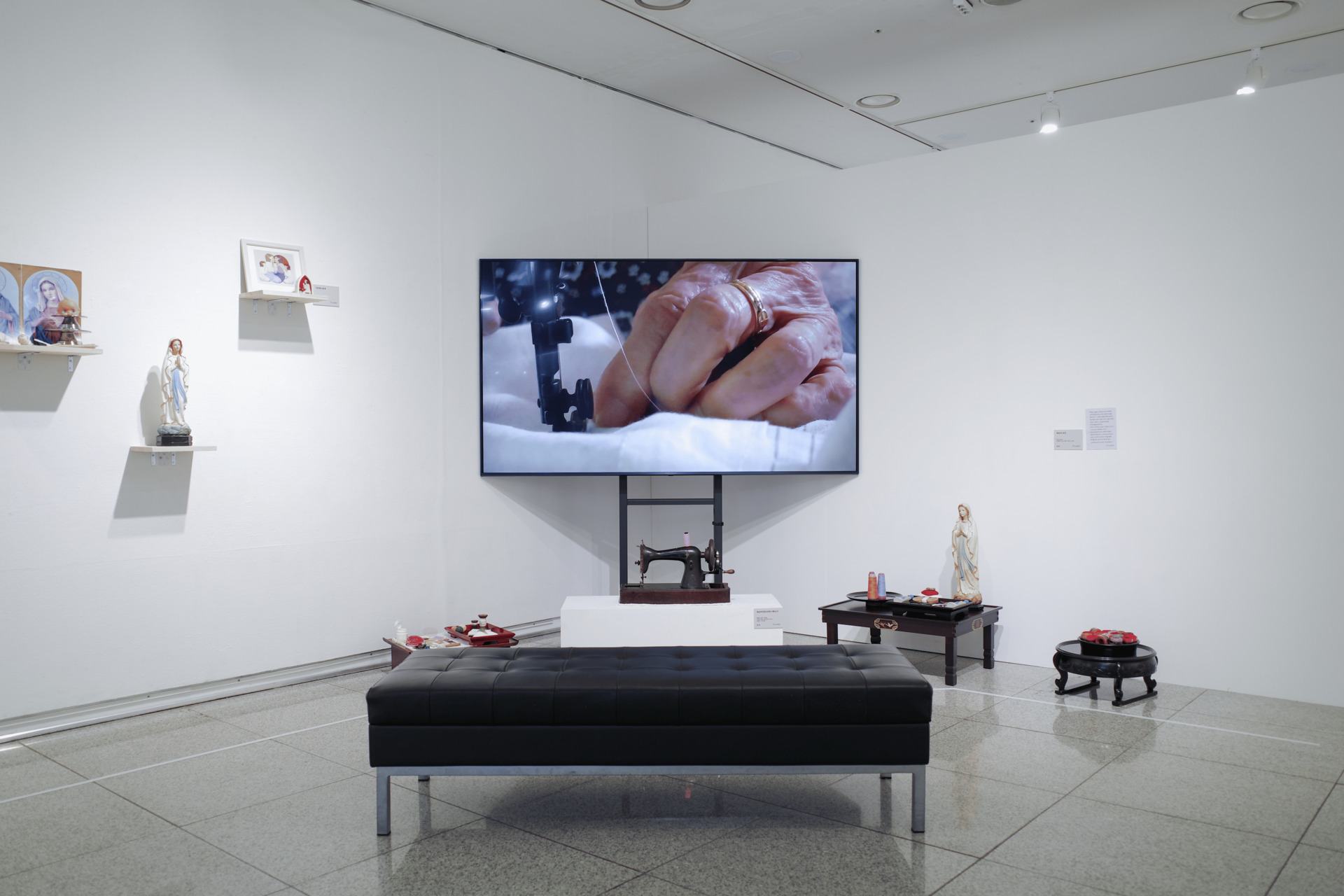
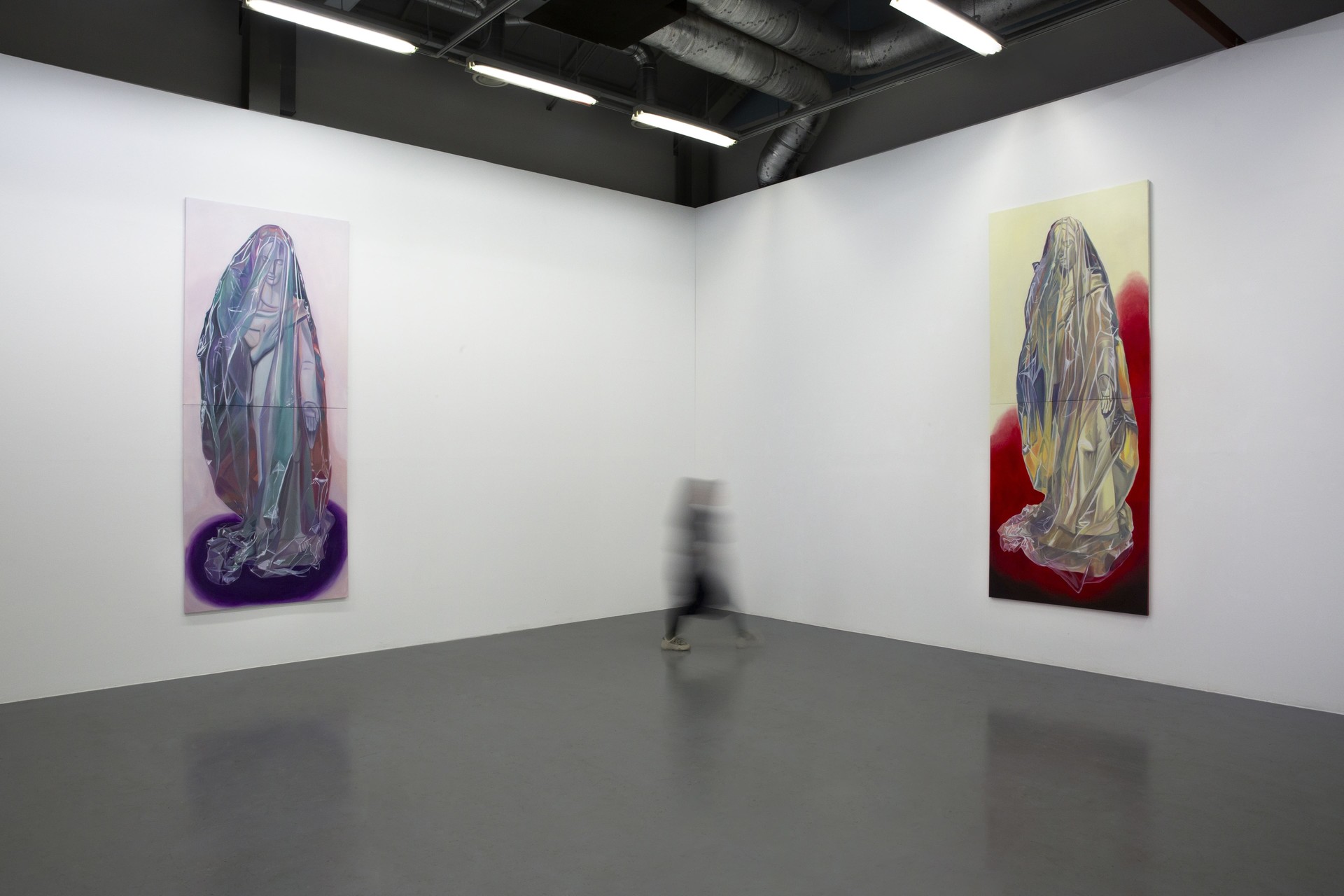
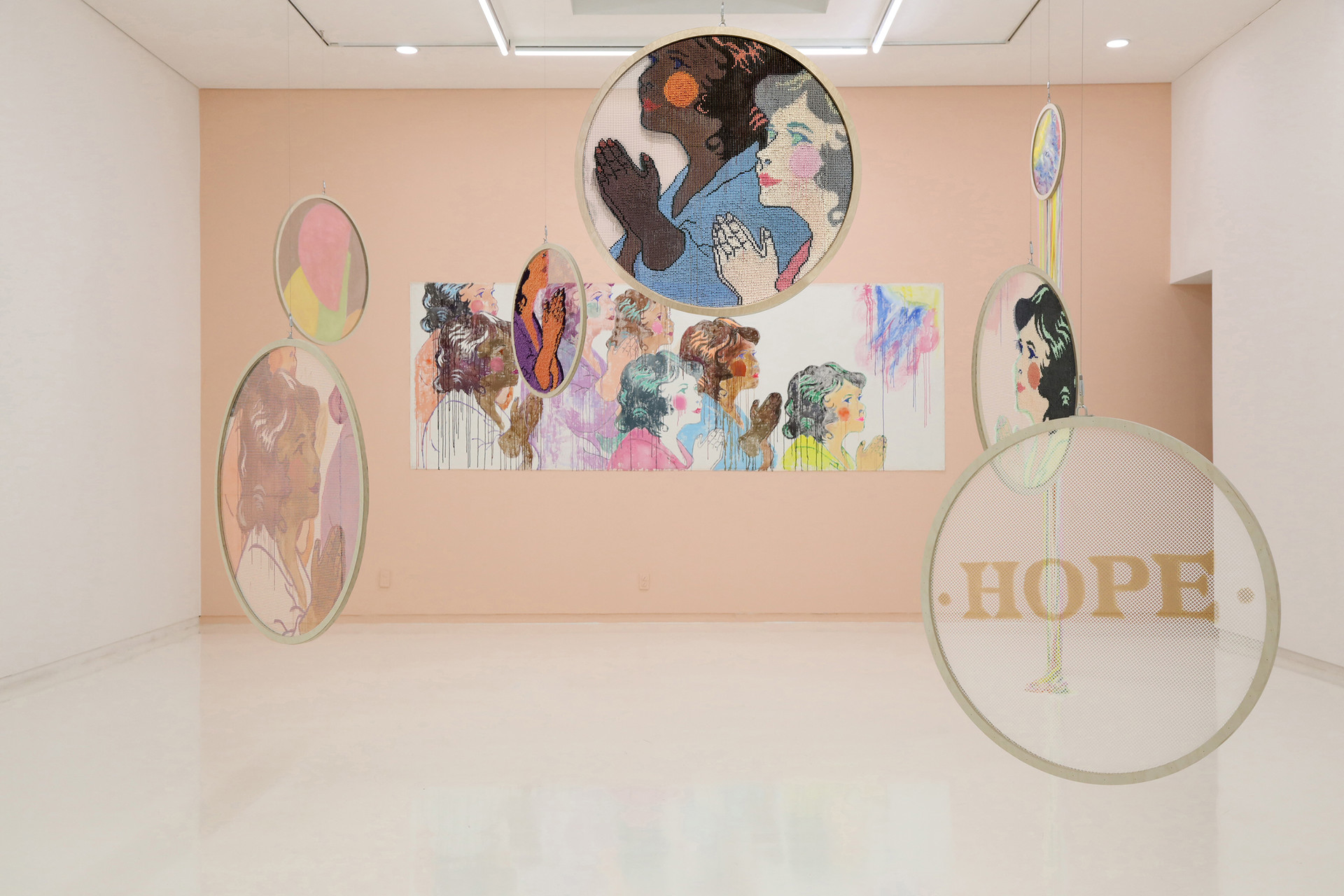
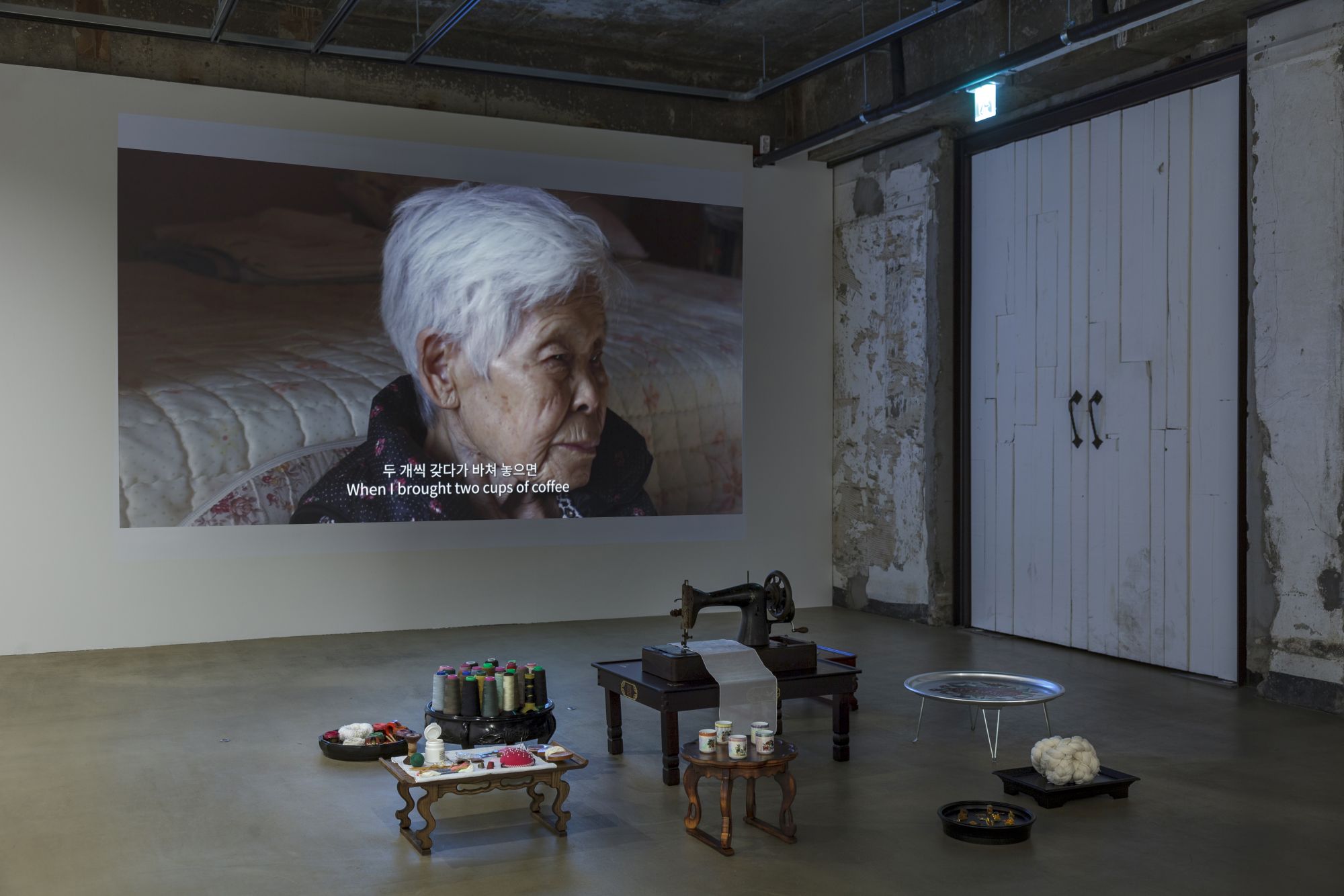
Installation view of 《There is no gold that does not decay》 (Incheon Art Platform, 2025) © Hee Vaak

No Gold Is Incorruptible / There is no gold that does not decay : Between Icons and Idols
Jinsil LEE (Art Critic)

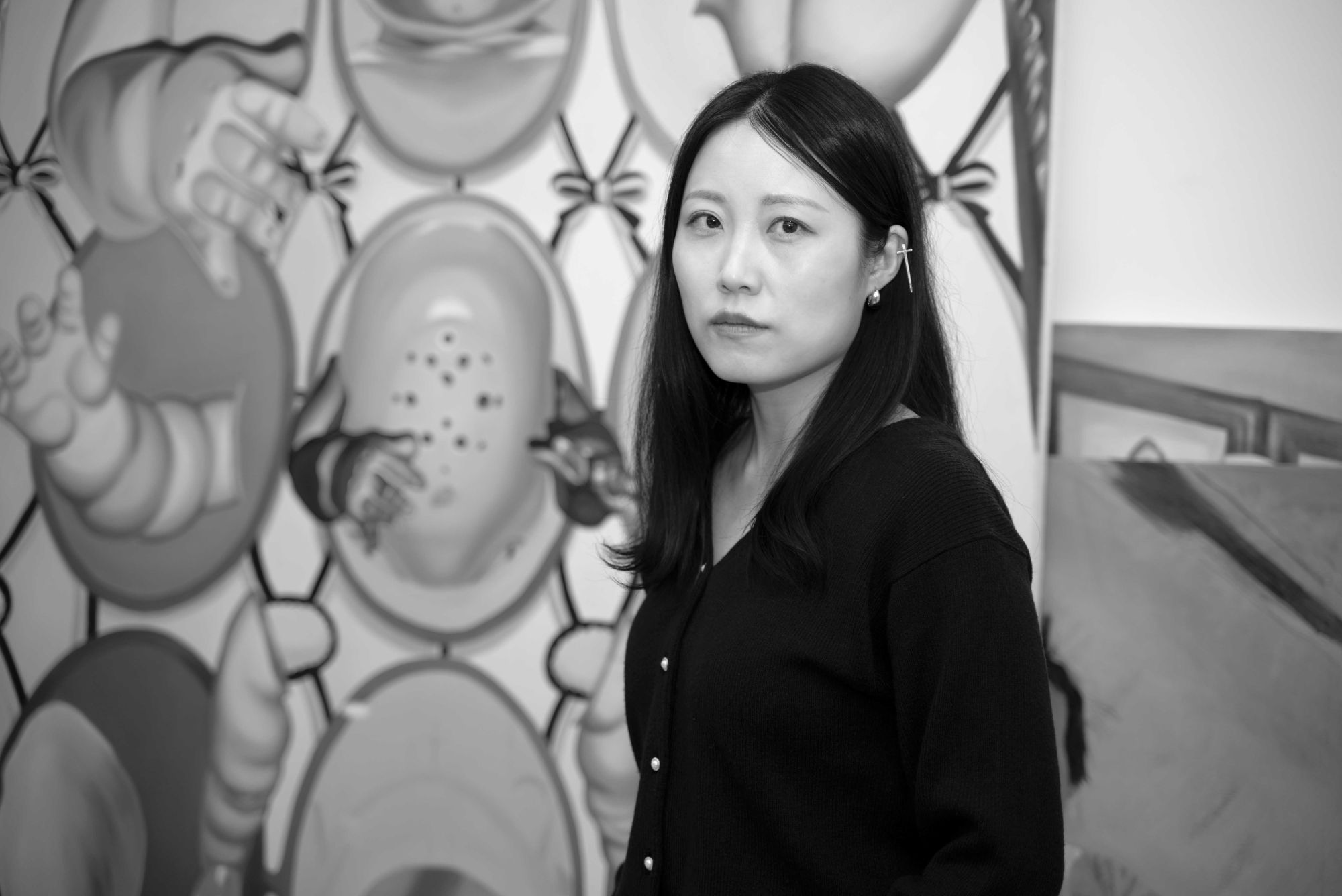
Hee VAAK’s work begins with a personal narrative rooted in family and childhood, exploring Korean religious icons and pantheistic culture with an intimate yet critical perspective. This perspective carries the weight of a matriarchal family's hopes formed in the absence of a father and the sedimented value of religion as a symbolic "Other." As a child, the artist once aspired to become a nun.

However, this desire was less a pure dream of her own and more an internalized "phallus" and "introjection" of her grandmother's wish to raise her grandchildren as clergy. She "diligently tried to become a nun, as her grandmother had wished," and "constantly felt the need to prove herself to meet her family's expectations.¹"

In revisiting her past self, she identifies a sense of aimlessness and habitual obedience. Thus, the religious icons and imagery in VAAK’s work emerge as multi-layered sediments—simultaneously cool and heated, creating a uniquely enigmatic tone.

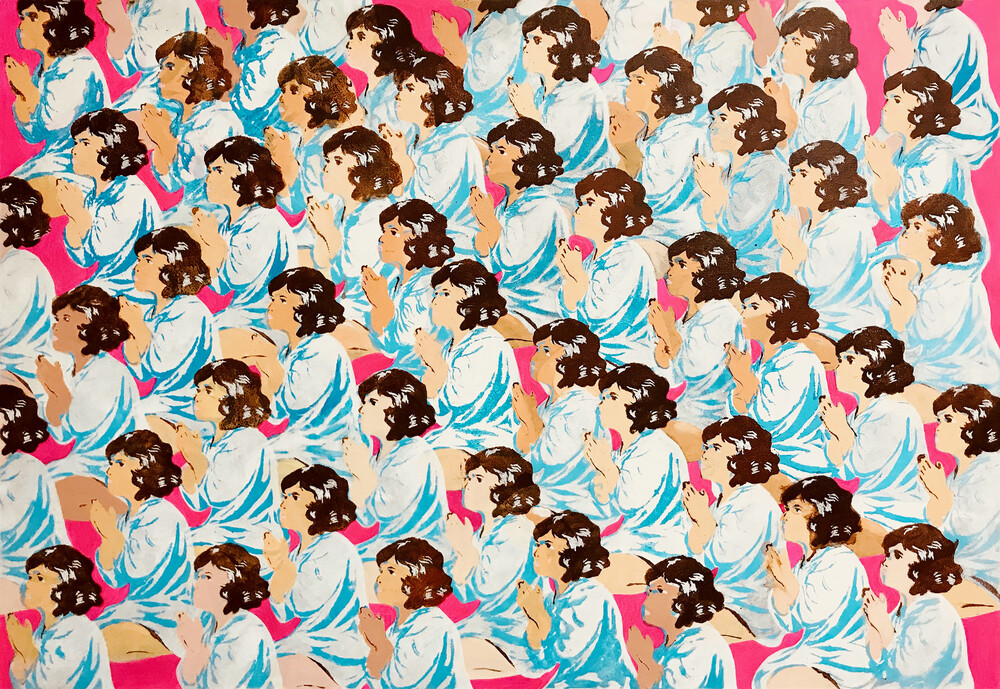
In the series ‘Hoping for a safe day’ (2013–present), The Praying Girl make their appearance. These figures are collages of a “girl statue”—a kitschy Korean reinterpretation of Joshua REYNOLDS’s paintings—set beneath the primary colors of light (The Praying Trinity (2013)).

The imagery multiplies in infinitely repeated patterns, reminiscent of the matrix of reproductions found in Korean Christian households, cars, and taxis since the 1970s (Hoping for a safe day(2019)). The artist's self-portrait from her First Communion was revisited twice under the title 1996 (2009, 2023). This repetition suggests less an evolution of technique or stylistic shift and more a traumatic scene that finds meaning only in its second iteration.

Notably, the prominent, illusory statue of the Virgin Mary behind the girl appears almost three-dimensional in the second painting—yet also somewhat shabby. The Christian iconography in Hee VAAK's work has a notably ambiguous quality. As HUR Hojeong points out, this is “distinct from attempts at iconoclastic desecration” and equally “separate from the pop-art approach of consuming icons as readymades.”
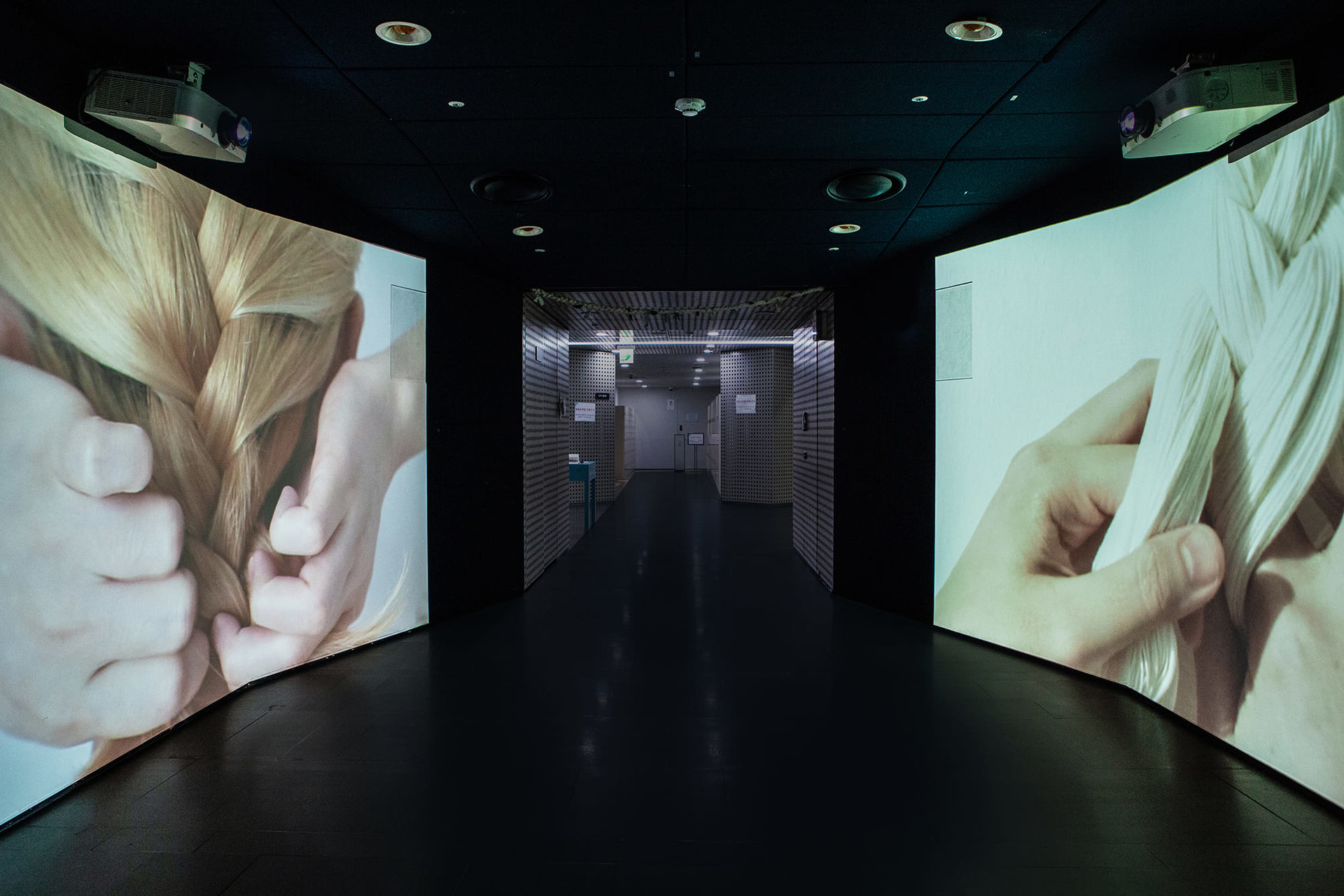
In essence, the religious symbols in Hee VAAK’s work expose kitsch rather than sacredness, revealing compulsive gazes rather than reverent attitudes. These symbols emerge as both cultural markers and psychological symptoms.

But can we truly sum up Hee VAAK's religious iconography so simply? I don't think so. These symbols are drawn from a past mixed with love and resentment, and they seem to arise from a state in which she has neither fully confronted, reconciled with, nor wholly scorned that past.

Moreover, it doesn't appear that she views icons, religious life, or attitudes of hope and supplication as mere phenomena to be analyzed objectively or playfully manipulated.

For her, these icons are less symbols or objects and more like something clinging to her—awkward yet precious, seemingly inseparable. They resemble something that can only be seen in a mirror's reflection, something that requires seeing oneself to barely grasp. In her work, the act of reflecting on this manifests as projections of memory, confessions, or sometimes hasty evasions or yearnings. 

The most striking feature of this solo exhibition, which focuses primarily on painting, is this psychological reflection. The artist's past exploration of family narratives and religious experiences through various media—including two-dimensional works, video, sculpture, and installation—is now reimagined through painting, creating memory images that are less narrative yet more intense.

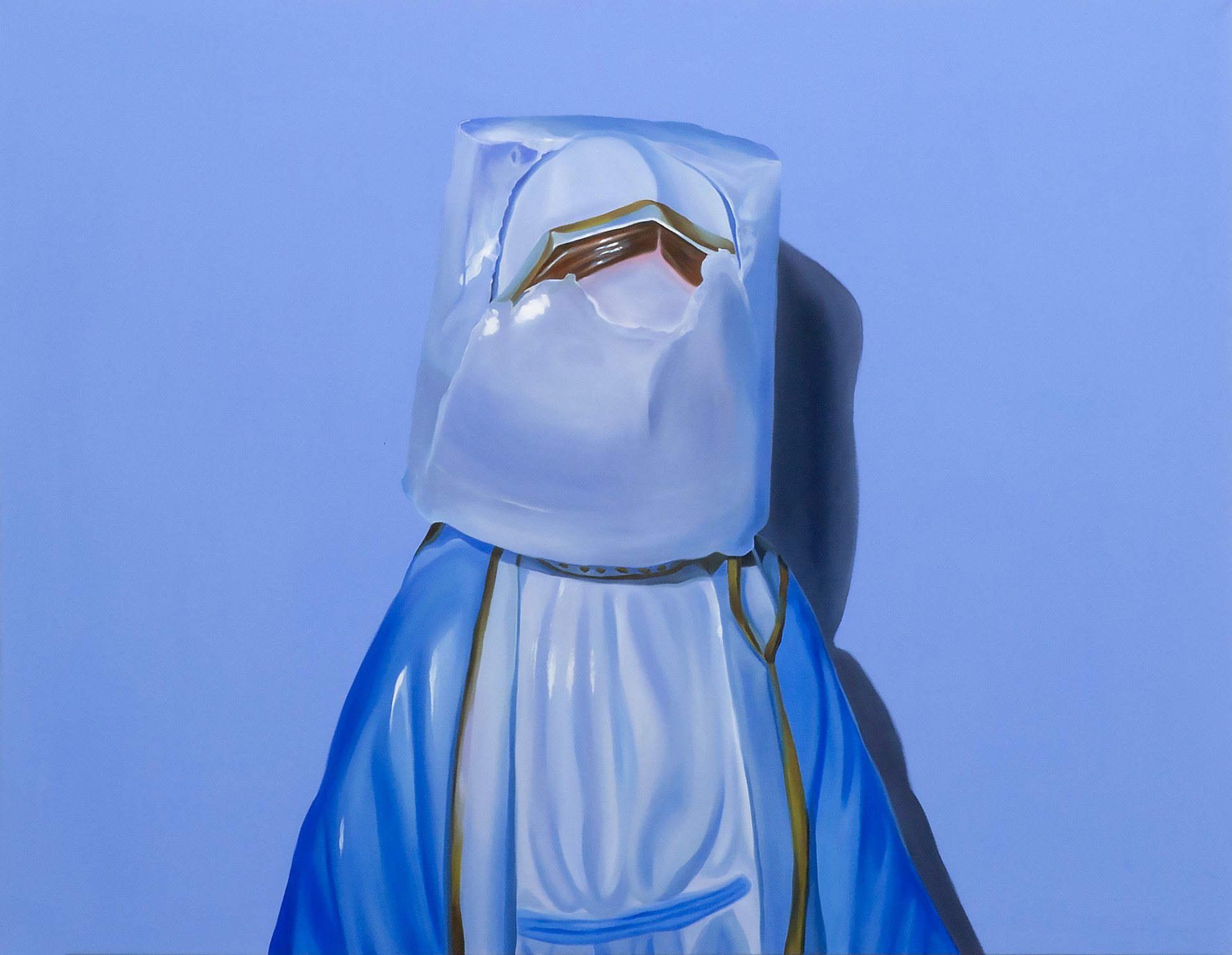
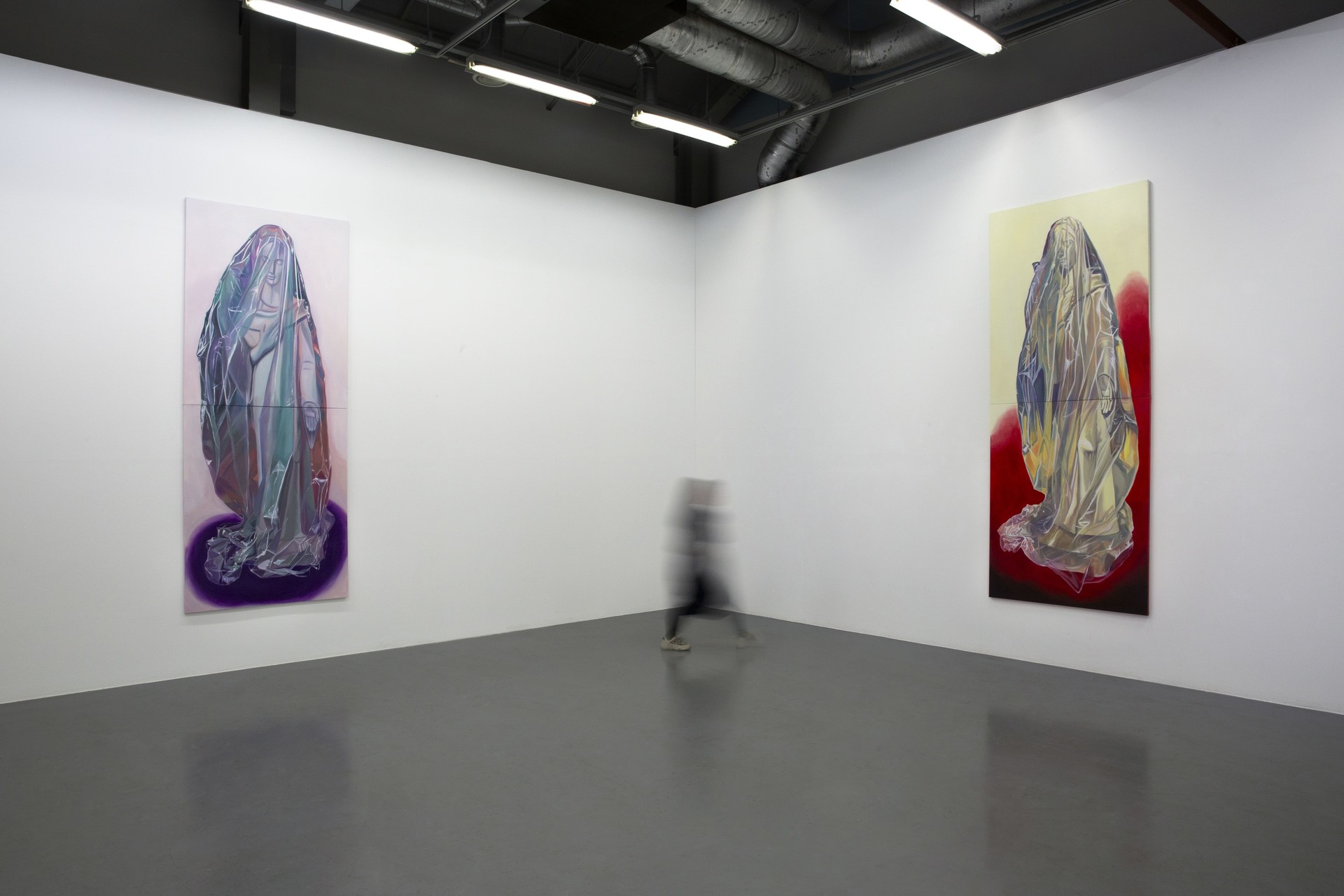
Upon entering the exhibition space, visitors encounter three large paintings of the Virgin Mary, each composed of two vertically connected 100-size canvases.² One day, while passing by a religious goods store, the artist felt an almost hypnotic pull toward a Virgin Mary statue wrapped in plastic, prompting her to take a photo.

The three works—Butter, Prussian, Pink to Purple (2025)—are reconstructions of the Virgin of Banneux encased in plastic from that moment. In these paintings, the Virgin Mary's figure—either bowing her head in prayer or placing one hand on her chest while extending the other—appears blurred by the plastic's folds, rendering her outline opaque.

As one of the most popular Catholic icons, the Virgin of Banneux and the Virgin of Lourdes originate from stories of leading young girls to healing springs. These figures are often found imprinted on holy water bottles, molded into wax candles, or produced as pristine white (or colorfully painted) miniatures meant for household altars. 

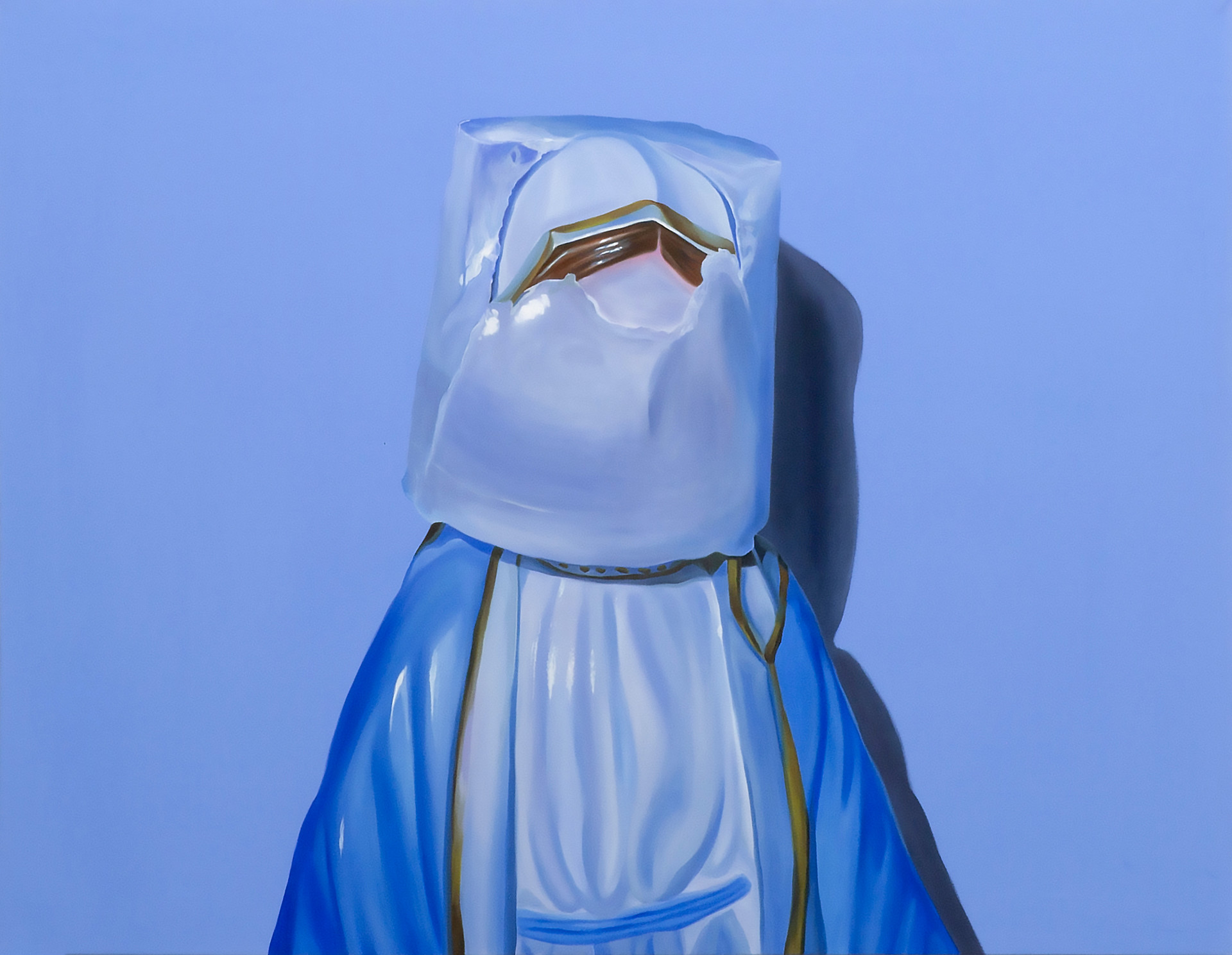
Hee Vaak, Maria, 2025, Oil on canvas, 112.1x145.5cm © Hee Vaak

Additionally, the Virgin Mary statue represents a deep-seated image and a figure of the symbolic "Other" within the artist's personal history, shaped under the influence of a devoutly Catholic, matriarchal lineage. In a childhood dominated by her grandmother's devotion, prayers, and influence—in the absence of patriarchal authority—the Virgin Mary was likely the most radiant yet burdensome symbol for the artist.

Encountering the Virgin statue wrapped in unremarkable plastic, the artist may have seen a pitiable yet absurdly commodified sacredness, destined for sale. Or perhaps she saw the intense, icon-like power that could penetrate the transparent covering and draw in the viewer's gaze. The divided paintings of the Virgin are not transparently rendered under natural light but instead fractured by artificial, segmented hues.

They evoke the impression of shattered glass pieces reassembled or creating an illusion of statues encased in ice. Even more intriguing are the colors spreading and mutating beneath the Virgin's feet. In medieval iconography, the marbled colors beneath the feet of Christ or the Virgin often symbolized incarnation or transfiguration.

Even if the artist was not consciously invoking this iconographic tradition, her depictions carry a simultaneously earnest yet fractured tone—a nuanced ambivalence toward religion. Unlike the cultural reflection and playful representation of kitschy icons seen in Hoping for a safe day, these paintings reflect a more intense, inward projection of her experience and psyche. 

In some ways, the artist’s recent paintings seem like a revisitation of her earliest work, 1996. For instance, 1989 (2025) depicts a photo of the artist’s younger sister as a baby, captured from above with her arms outstretched, forming a clear cross shape.

The older sister wearing a mantilla after receiving her First Communion and the younger sister making a cross with her arms are images that fully embody and preserve their grandmother’s altar and her fervent hopes. It is difficult to fully grasp what it means to paint past images that, after the so-called “time of awakening”—the time of adulthood—can be reinterpreted as forms of repression or absence.

Yet it is evident that this act of repetition is not a simple reproduction of past memories. Rather, it is an attempt to confront those moments anew and reframe their meanings. It is clear that this act of repetition does not merely reproduce past memories as they were, but rather allows one to encounter the moment anew and renew its meaning. 

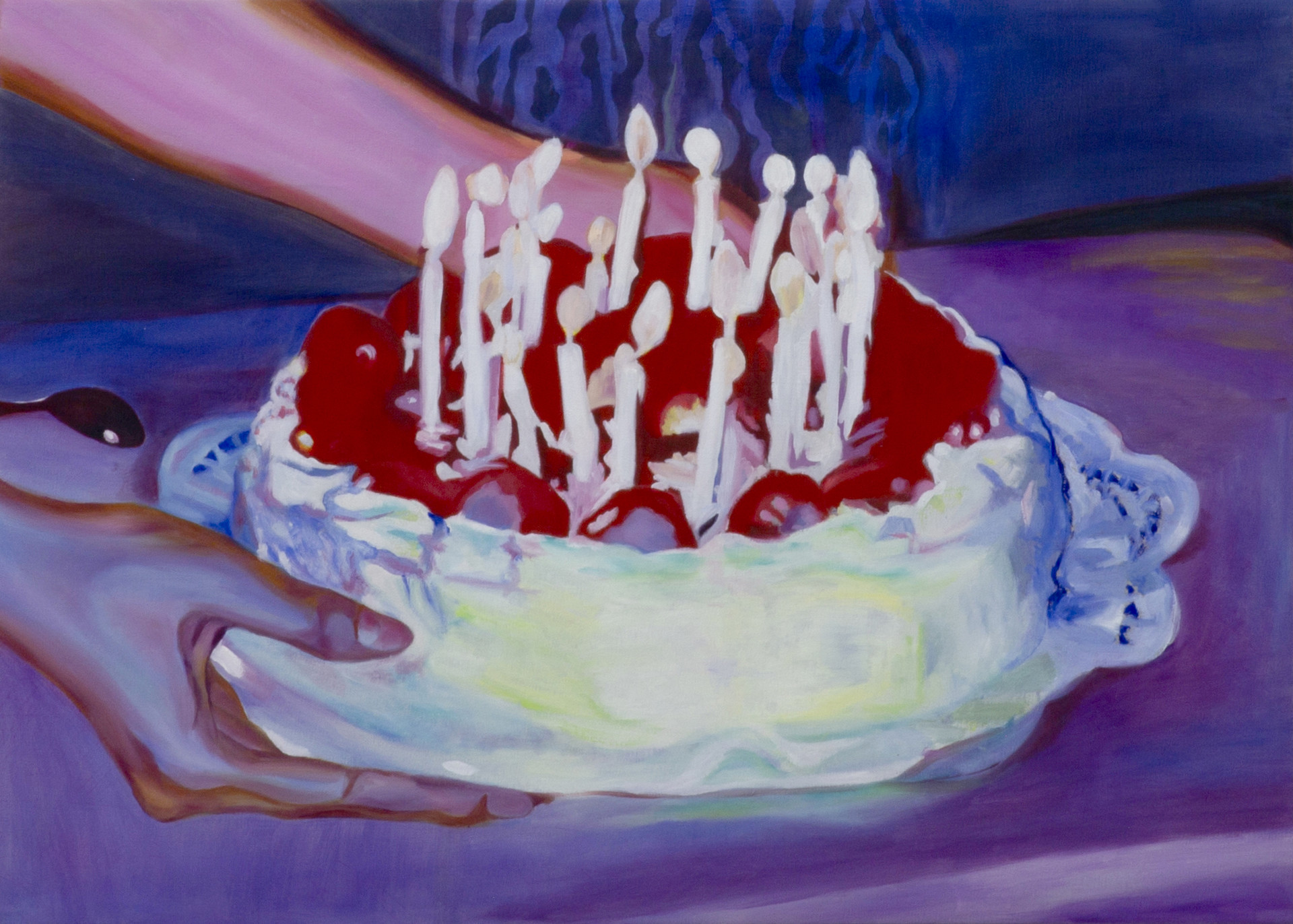
Another recurring motif in the artist's recent paintings is the candle. Works like Celebration Cake (2025) and Fire and Boys (2025) borrow from promotional images of idol groups staging happy, celebratory scenes.

These pieces capture a fragment of light, like a gentle energy filling a void, different in warmth from the bluish hue of the sacred image—a light that seems to gently supplement a sense of absence, as if filling a void with a soft, comforting energy. Yet this warmth might also be nothing more than the fleeting illusion of an “idol.”

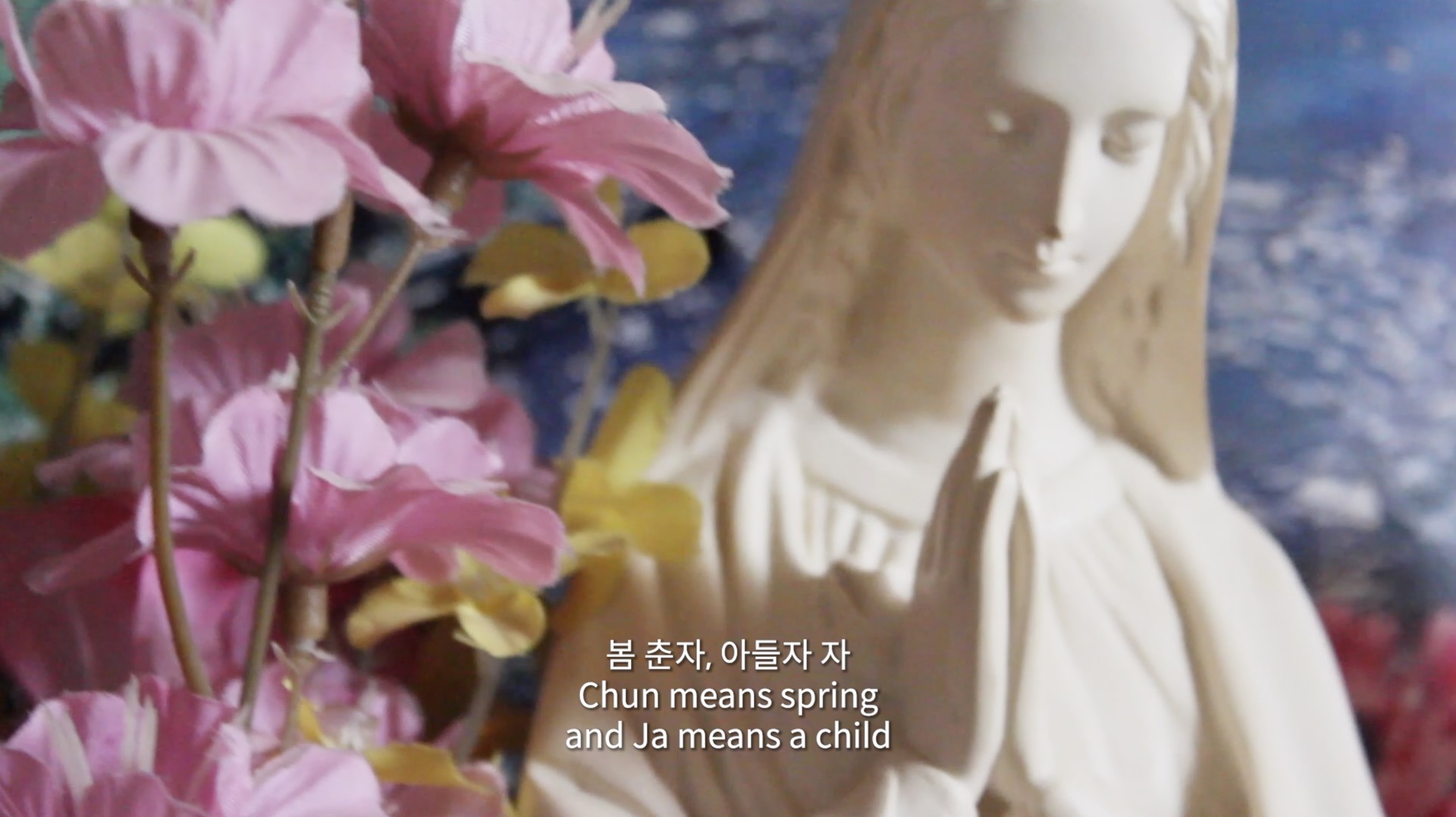
Maria (2025) portrays the residual image left during the process of casting a Virgin Mary statue in wax. After her grandmother’s passing, the artist spent time collecting unused Advent and birthday candles from a church, stacking them into cairn-like piles (Praying Heart, 2024) or melting them down to recast partial figures of sacred icons. Wax, as both a tool for prayer and a material capable of endless transformation and replication, evokes both permanence and impermanence.

The artist has confessed that, over the past few years of working, she feels like she is “barely holding on, striving toward something uncertain.” This sentiment carries a certain sadness, hinting at how deeply uncertainty and a sense of lack operate as constraints in both her life and her work. It also reveals just how fervently she longs for a solid, assured future.

Yet perhaps this very longing is what prevents her from fully relegating sacred images or religious experiences to mere artifacts of the past in her work. After all, it is often in facing our own deprivation and wretchedness that we find ourselves praying most earnestly. Simone WEIL once said, “As we gaze upon our own wretchedness, we gaze upon God.”³

In this sense, the sacred objects in the artist's work may continue to be dismantled and reassembled between forgiveness and revenge, love and resentment, mourning and complaint.


¹Hee VAAK's Artist Note, "Faint Hope, Diluted Faith," 2024.
²Translator’s note: In South Korea, the unit of measurement "호" is mainly used, and it is subdivided into F (portrait/landscape), M (marine), P (panorama), and S (square), among others. Size 100 is approximately 162.2 cm × 130.3 cm.
³Simone WEIL, La Pesanteur et la grâce, YUN Jin(Seoul: Moonji Publishing, 2021), p.164.

References