The Expression of Sound
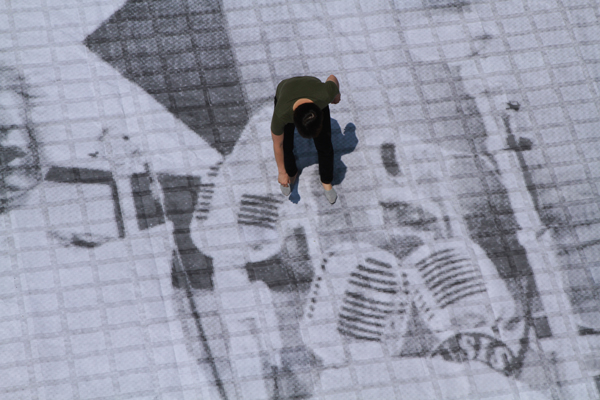
The fact that the spaces from which the artist removes sound are monumental gates in European cities also reflects his interest in social customs and culture. In these places, once sharply divided by historical victory and defeat into objects of admiration or contempt, later generations now appear to carry on their daily lives without major incidents or upheavals.
At the same time, tourists arriving from the opposite side of the globe visit these sites carrying cameras to leave behind proof of their presence, noisily speaking in unfamiliar languages. In this sense, the gate — functioning simultaneously as monument and cultural passageway, where sounds of diverse vocal ranges converge — becomes an ideal space.
This project, in which the artist dismantles a unified mass composed of image and sound and subsequently reconstructs sound upon it, extends from his earlier works.
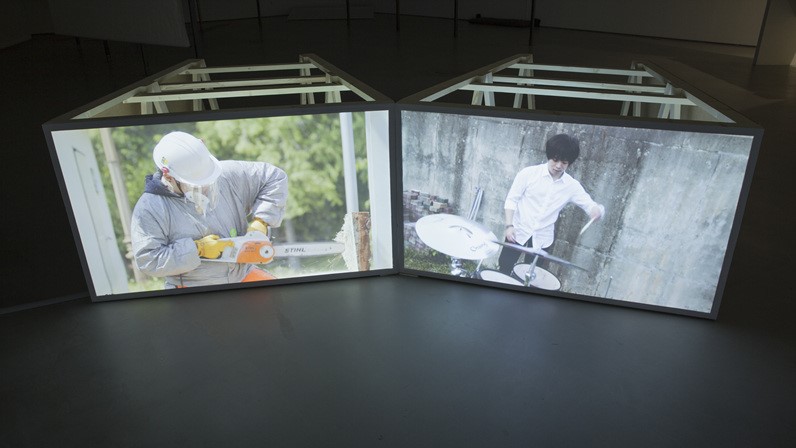
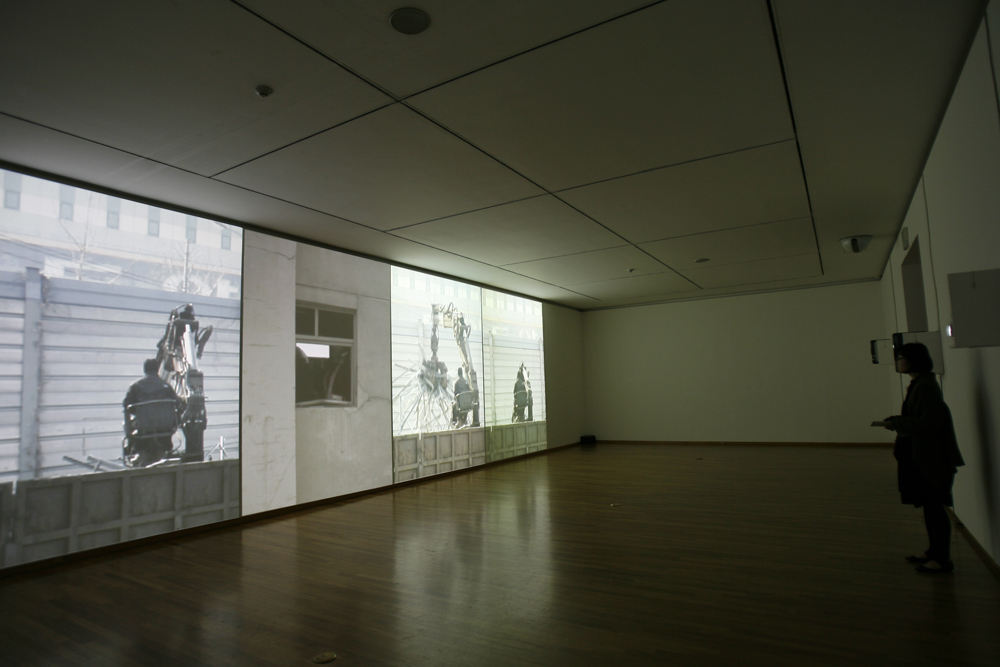
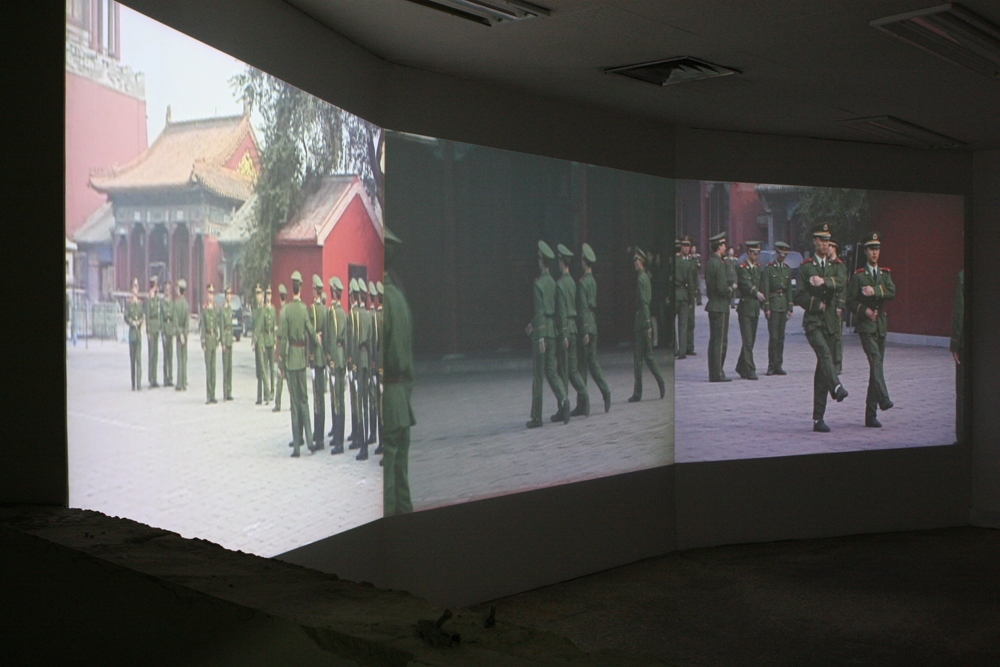
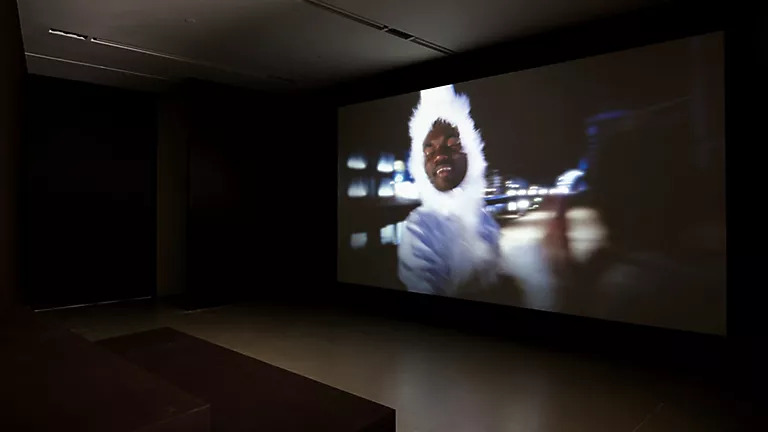
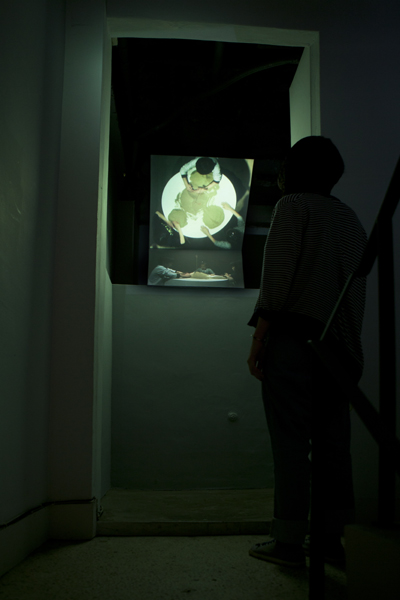
If Drill, documenting the ceremonial training of Chinese police forces, Turn Turn Turn-Breaking to Bits, which collected the explosive noise of demolition sites, and Turn Turn Turn-The Bottles, which edited the intense mechanical sounds of a soju bottle factory into song, all originated from the artist’s observations of the “fragments/units of sound” produced through processes of social production, dismantling, and collective training, then Harmony_Lip-Sync Project II focuses instead on pluralizing the “expressions of sound” possessed by different individuals.
In the 2007 exhibition 《Turn, Turn, Turn》, An Jungju juxtaposed image and sound to suggest that what is noise to one person may function as a command to another, or as a familiar ambient sound to someone else, thereby provoking doubt toward reality’s very criteria.
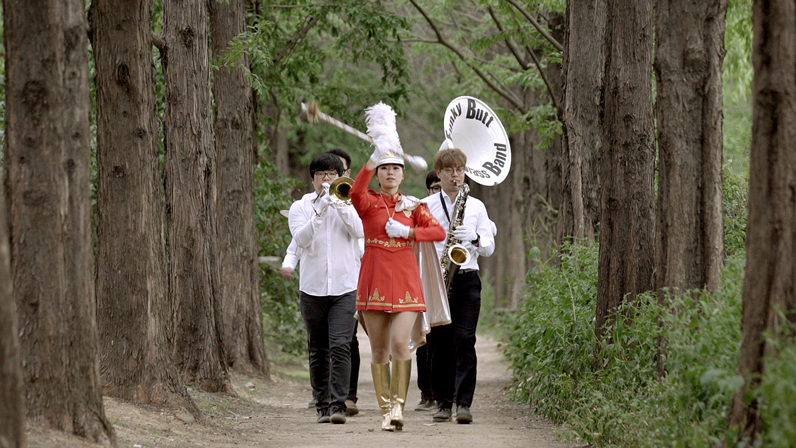
By contrast, Harmony_Lip-Sync Project II resembles a hidden conductor, granting self-vocalizing instruments the opportunity to choose their own vocal ranges through resonance.
Whereas the artist’s earlier works revealed standardized narratives and patterns through processes of manipulation and editing, Harmony_Lip-Sync Project II begins in reverse, standing before the monumental gate as a space that imposes standardized narratives. In this sense, the work opens more fully toward the possibility of “another mode of listening” and relies upon the private sounds of individuals responding to auditory space.
Rather than presenting collective forms of sound shaped by structures of social production, the work reveals cultural differences directly experienced by the artist through subtle distinctions in sound and through vocal ranges that are at once narrow and expansive.
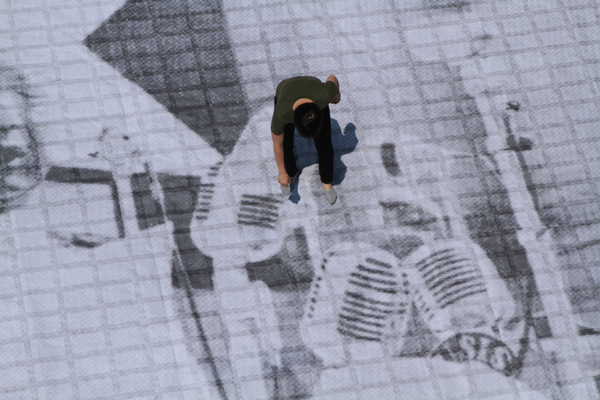
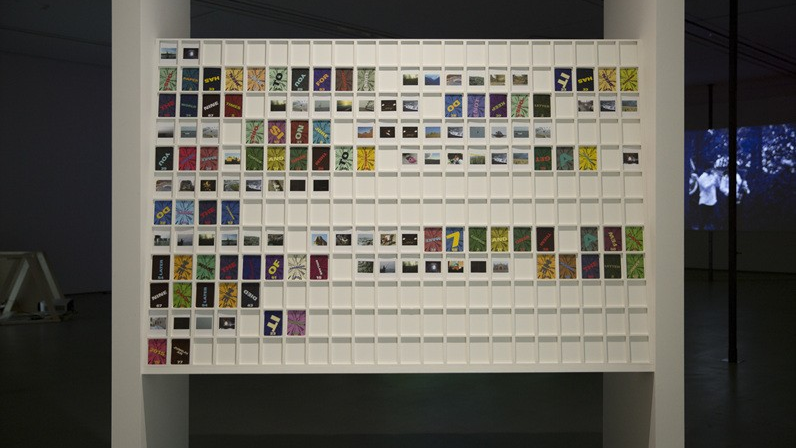
The artist suggests that what overlays real time and space onto historical sites is not the immovable monument itself, but rather the sounds generated through the friction of movement. This becomes vividly apparent once again through the black-and-white photographs installed throughout the exhibition. On the gallery walls hang monochrome photographs of monumental gates from various cities.
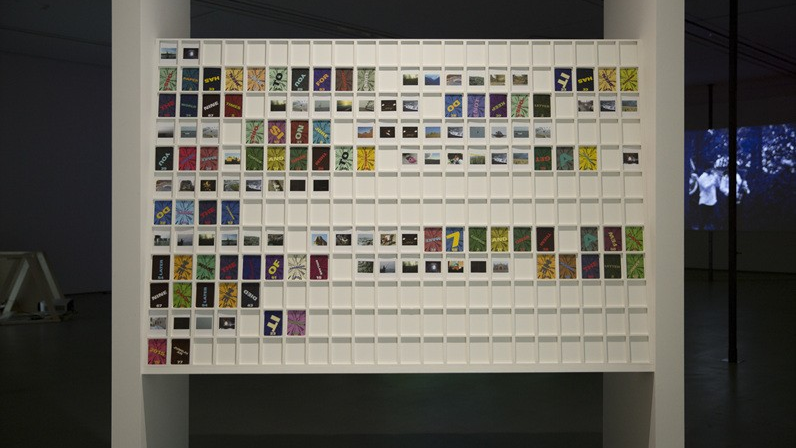
As though a child had completed a hidden-picture puzzle and then cut out the figures with scissors, every image within the photographs that might generate sound has been removed. But this is not the end. The artist takes those cut-out moving figures — walking people who produce sound, leaves, bicycles, and other vehicles of movement — and sparsely attaches them onto sheets of paper, assembling them into a book titled “sound archive book,” casually placed within the exhibition space.
Beside photographs of figures leaping so energetically that their hair appears to stand on end, any visitor to the exhibition may now write down what they imagine to be the corresponding sound. Because all surrounding backgrounds have been removed, the images become entirely dependent upon the contexts imagined by viewers in order to acquire their own “expressions of sound.”
The process through which voice becomes image, and images are then translated back into written vocal language, resembles both a longing for and an experiment in “another mode of communication” — like a child newly awakened to the world beginning to address it one object at a time through many different languages.
Rather than following a unified arrangement or melody, the participants instead observe moving figures and transform the imagination that “this is what such a sound might be like” into action. This becomes meaningful precisely because it confronts not abstract sound, but the manifestation of concrete sound itself.
Collections of multiple sounds become harmonies, and individuals who once existed only as “receivers” of sound come to occupy the position of “experiencers” capable of polyphonic listening and vocalization.
The harmony created by the artist is likewise not linear, but emerges from an “overlapping musical score” composed of the layered notes of diverse cultures symbolized both by the infinite time inscribed upon monuments and by the people arriving from all corners of the world.
Acoustic Documentary
These “expressions of sound,” brought into harmony by the artist, may perhaps be described as delicate “acoustic documentaries.” The act of erasing all ambient sounds — sounds that already exist — and then artificially constructing harmony in their place actively awakens sonic ranges that have either become stereotyped or so taken for granted that they have dissolved unnoticed into everyday life.
Through this project, the artist asks viewers whether sound itself also possesses a beginning and an end. And within the space of black-and-white photographs emptied of sound, he prompts us to question the true identity of those monumental gates that appear aged and powerful. Even after the figures within the moving images disappear before our eyes, the cars leave behind trailing “buuung” sounds.
Looking carefully at An Jungju’s work feels almost like listening to an anthology of a cappella voices just before they become song. These sounds do not desperately strive to become music, yet each narrowly defined sound, together with the “auditory space” that reemerges through their accumulation, becomes a collaborative sound that opens up another possibility for communication between the eye and the ear.
This exhibition by An Jungju, who relocated for a year to the Bethanien Studio Residency in Berlin, Germany, also functions as a report of realities directly experienced by the artist, insofar as it is filled with ensembles of diverse external sounds.
Stereotyped landscapes once encountered through history textbooks and tourist guidebooks, as well as images so rigidly fixed that no deviation seemed possible, are revived within An Jungju’s work through new collisions between image and sound.
The twentieth-century dancer Isadora Duncan once said, “True movement is not something forced into existence, but something discovered — just as harmony in music must not be forced, but discovered.”
An Jungju’s work, which presents the juxtaposition of image and sound, resembles a documentary richly capturing the movements of instruments bending their bodies with greater flexibility. We ourselves, endlessly producing sounds as we live, may in fact be one of those instruments.