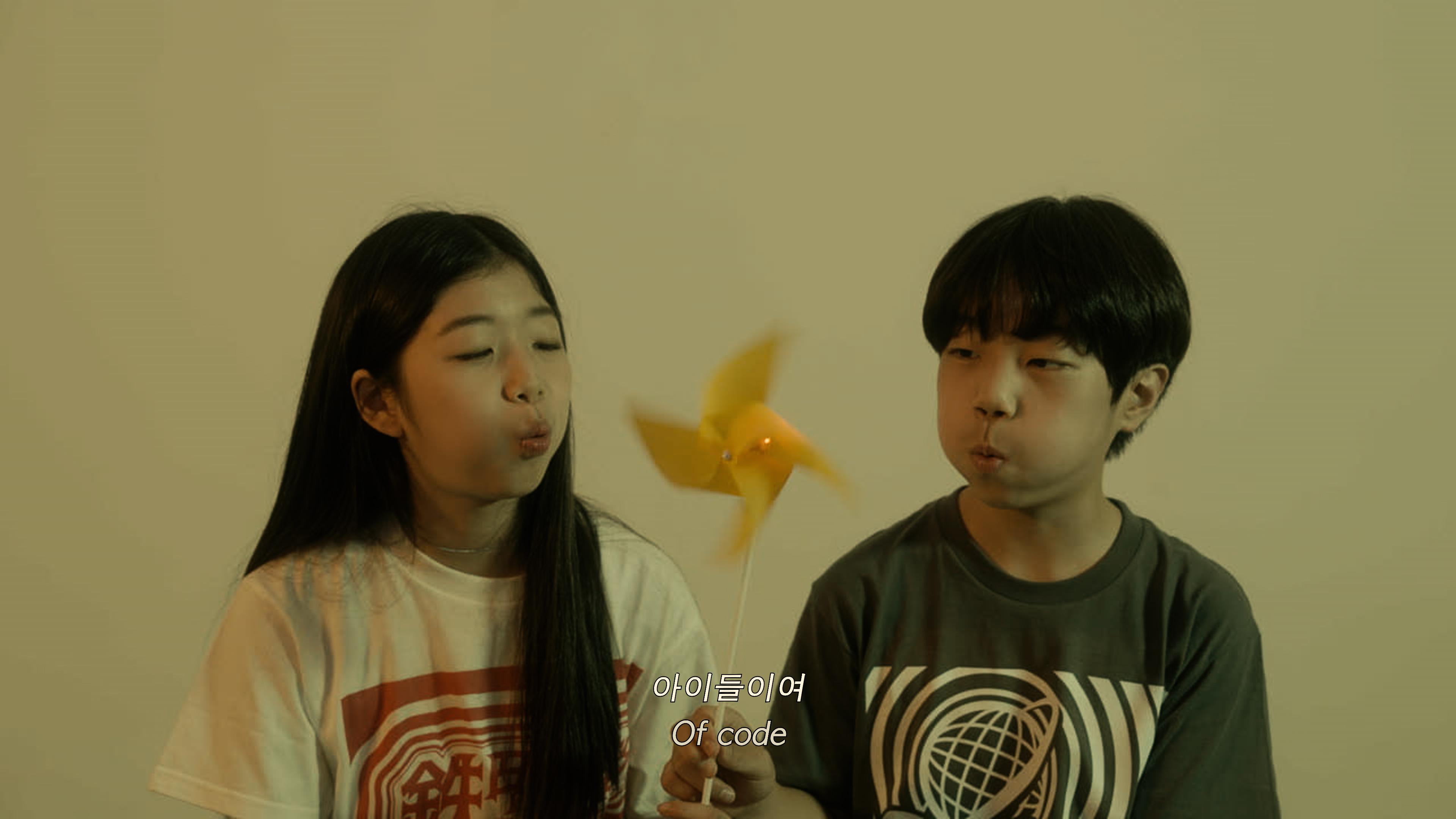
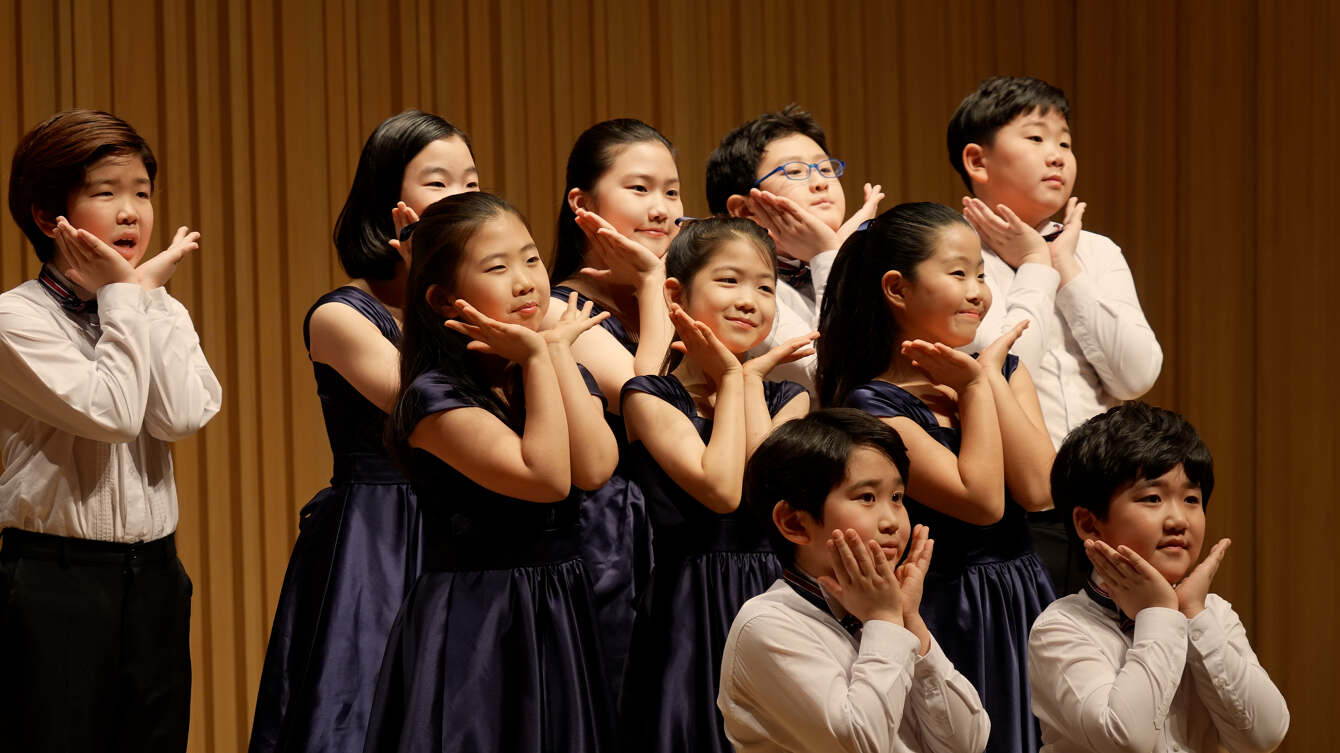
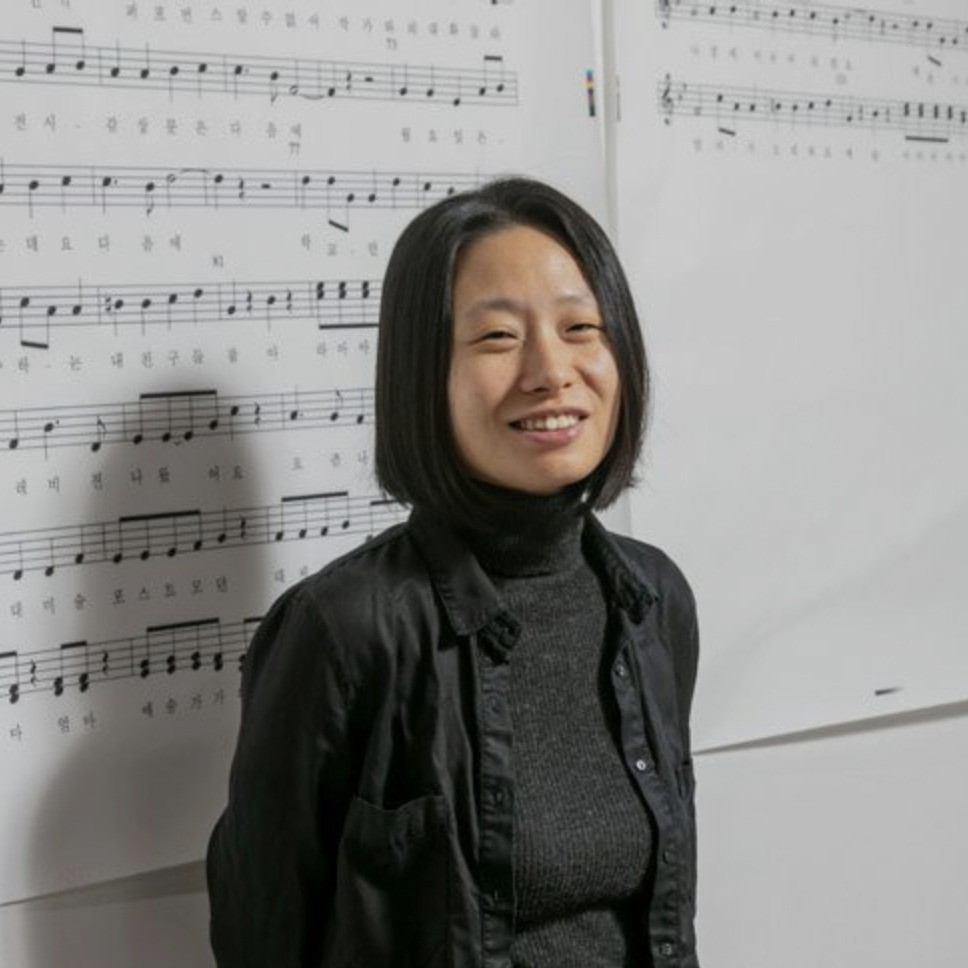
So what kind of artist has Kim become since then? While she is sometimes ambitiously preoccupied by the topic of children, it's her dual strategy of being both an artist and a graphic designer that is most often recognized when referring to her. The foundation for her work is the philosophy and methodology of universal design, or "Design for All," which she acquired while majoring in design engineering.
It's a radical approach to actually designing for the 99% when design is geared toward the 1%. (Of course, it would be uncharacteristic of Kim to stop there. Even this self-thinking is often an object of hatred for her.) She deliberately refuses to set the standard of “normal people" and rather she focuses on others.
Thus, the elderly, the disabled, and especially children are a constant focus. (Writing this, to me her ambition to pre-empt children as a topic seems to be plausible.)
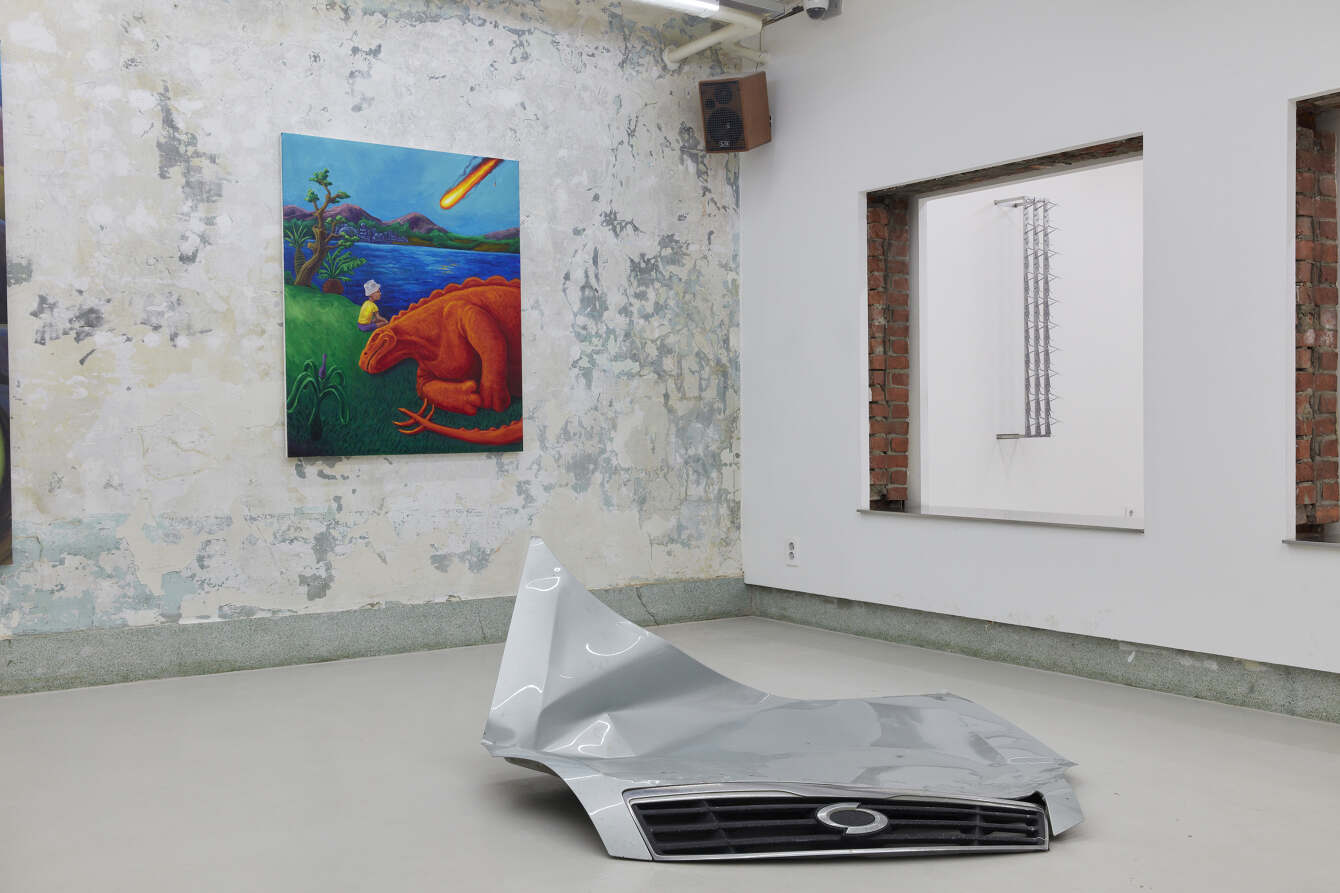
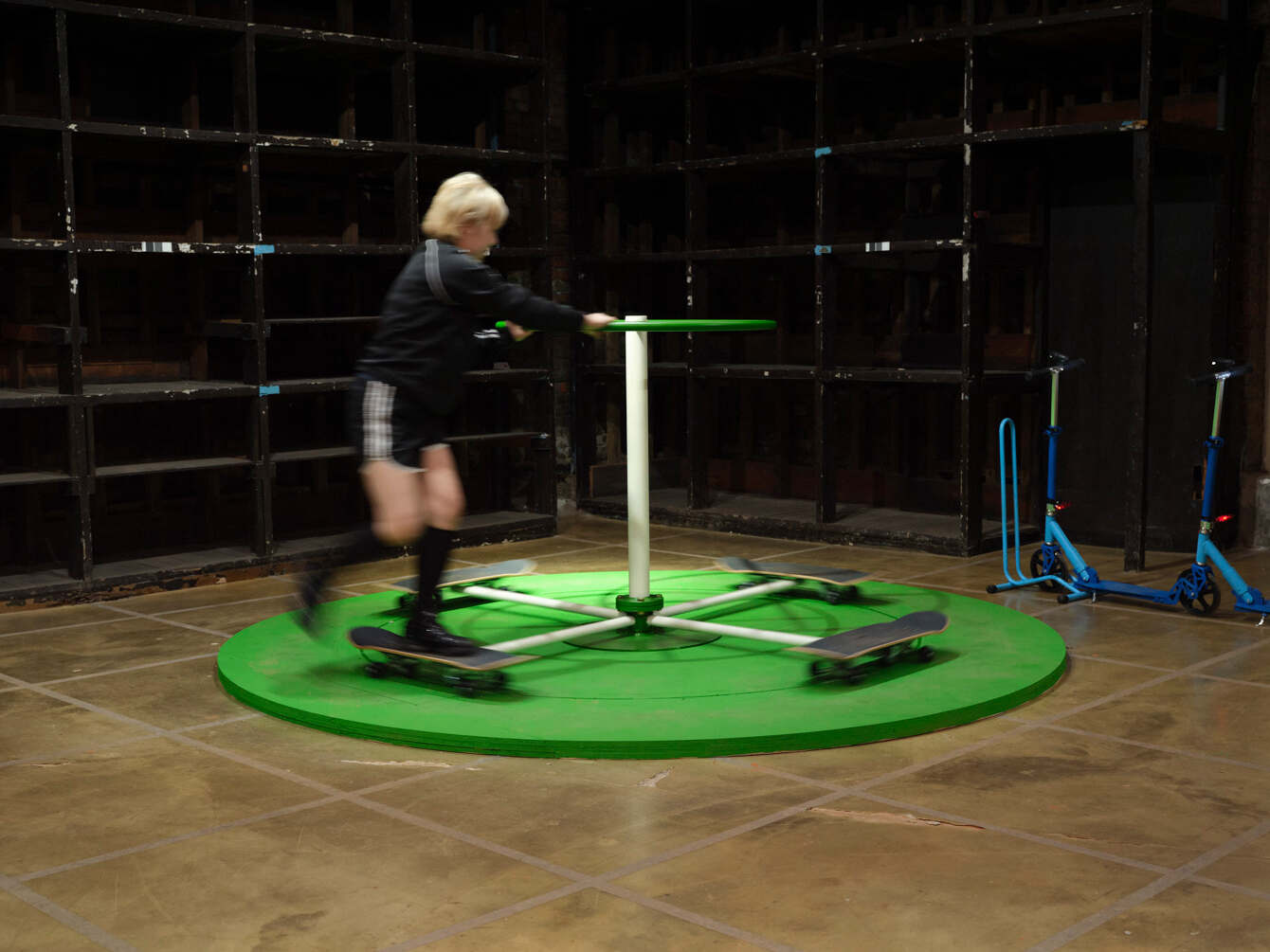
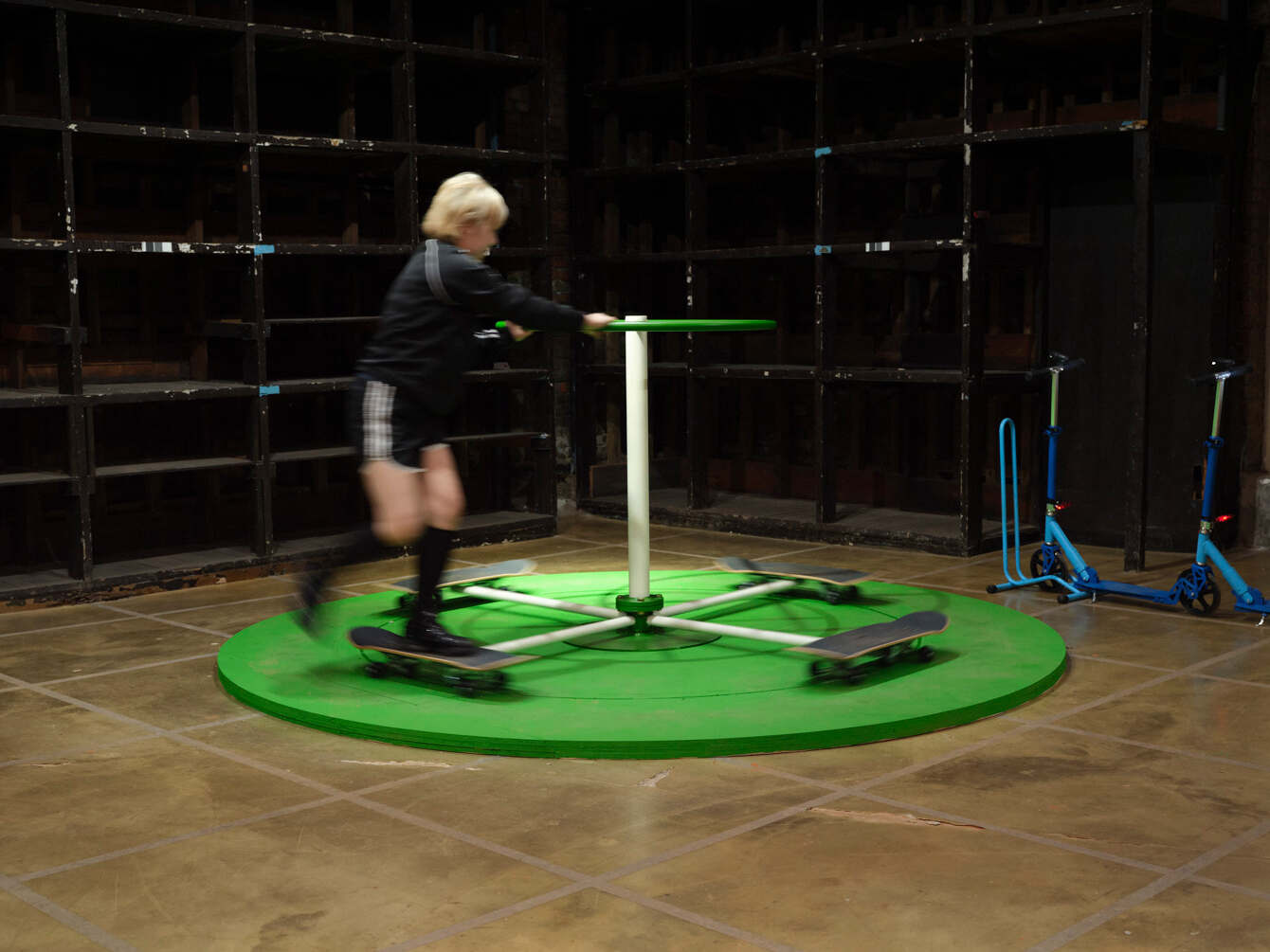
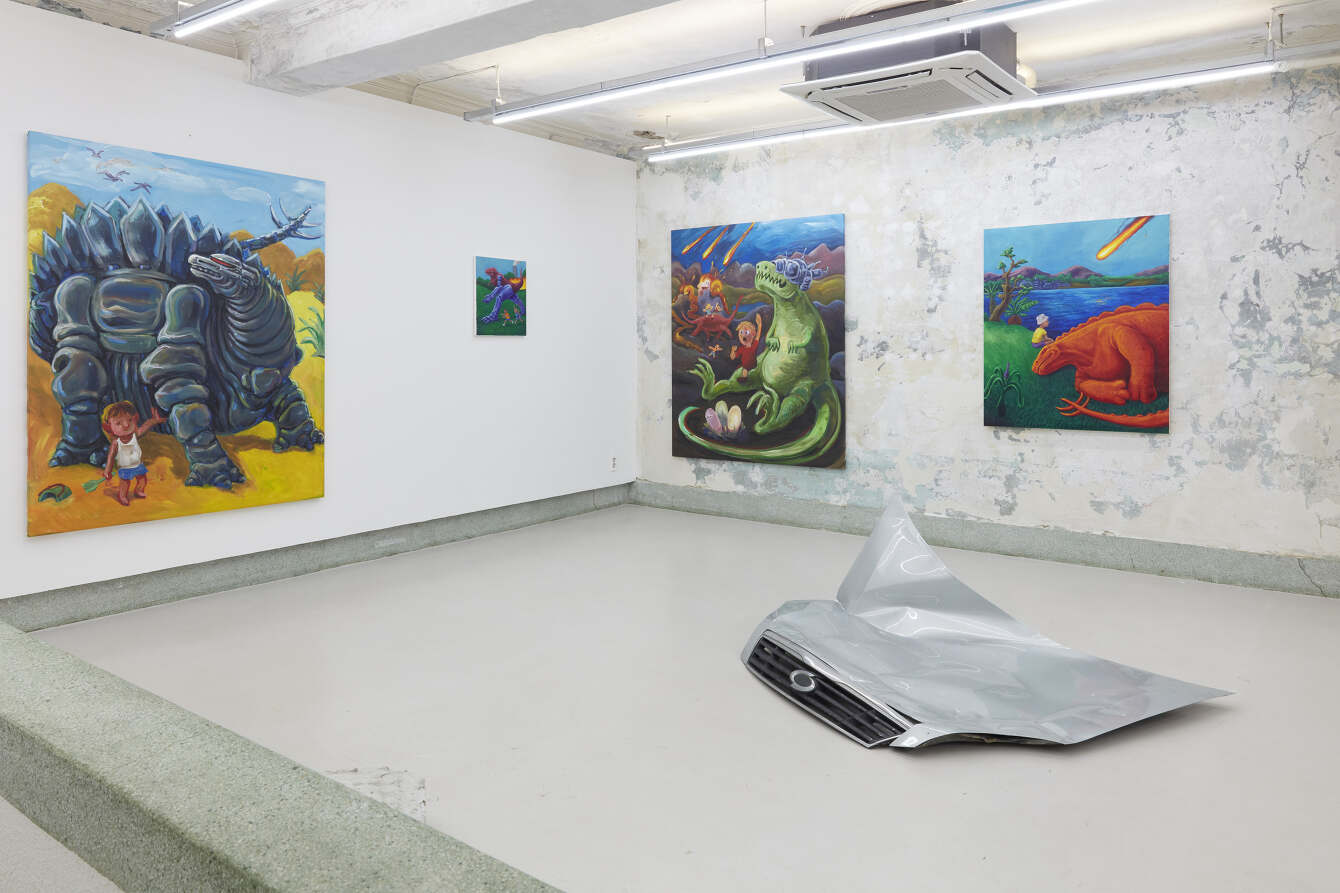
In addition, her fascination with interesting but unrealized sculptural forms, such as the impossible designs of Jacques Carelman, resulted in an oddly-shaped sculptures in the exhibition 《Stocker》 (Seoul Museum of Arts, SeMA Garage, 2023), which combines four skateboards on a circular plate Push off exercise equipment (2023), or combination of three kick scooters Sync kick exercise equipment (2023).
They are related to the designer's perspective of introducing forms that are restricted by space or contraindicated by safety into the exhibition space.
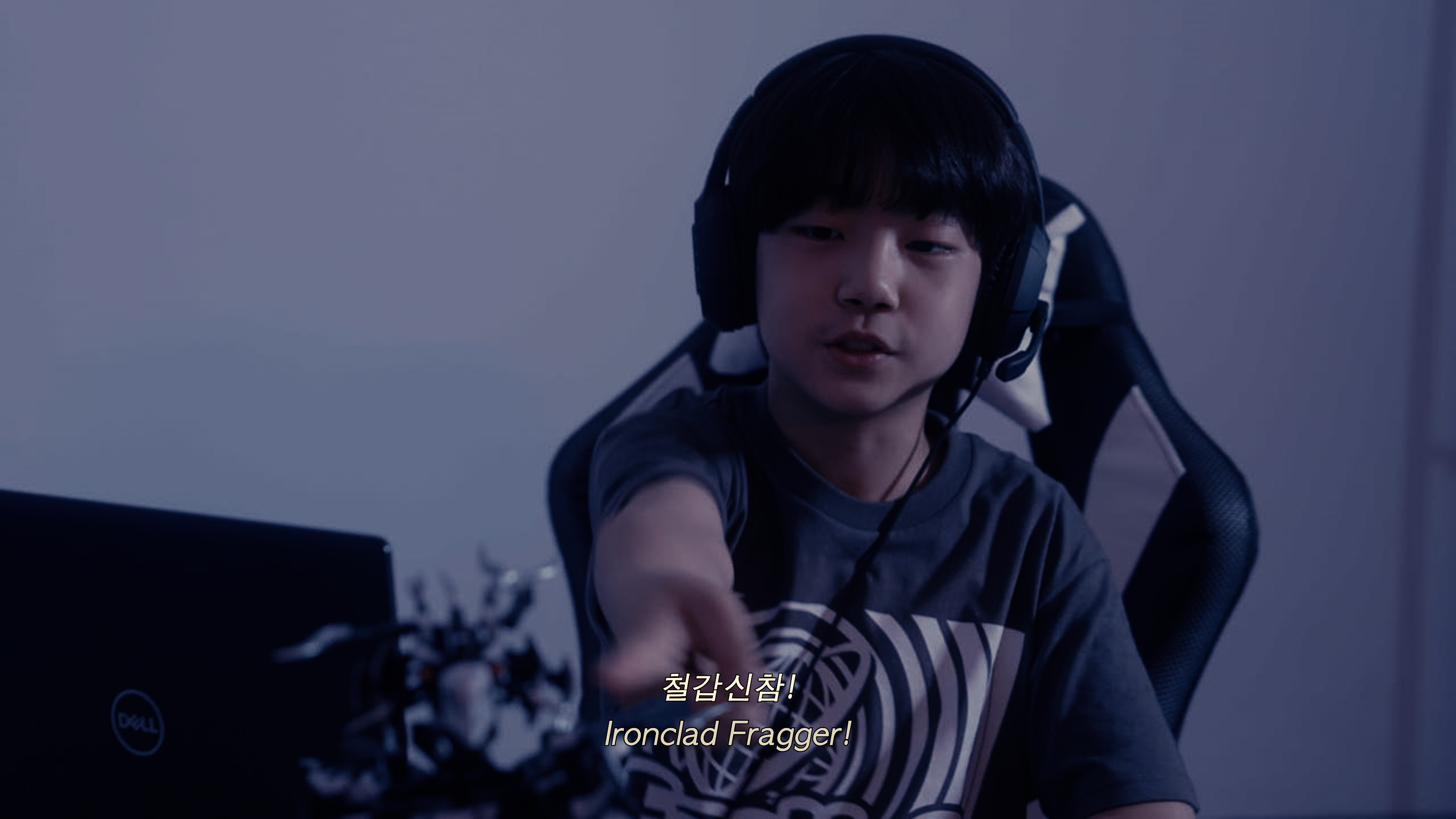
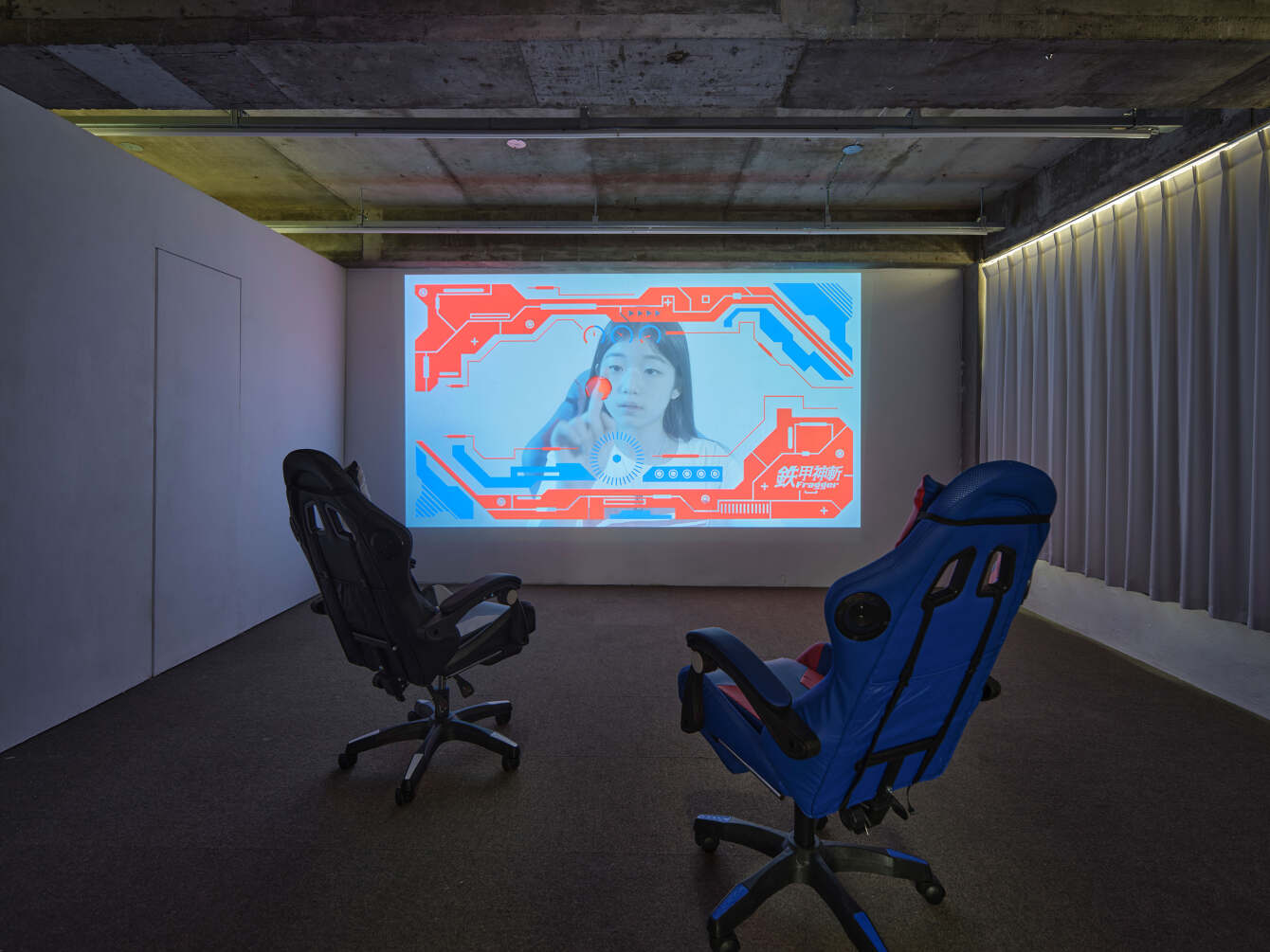
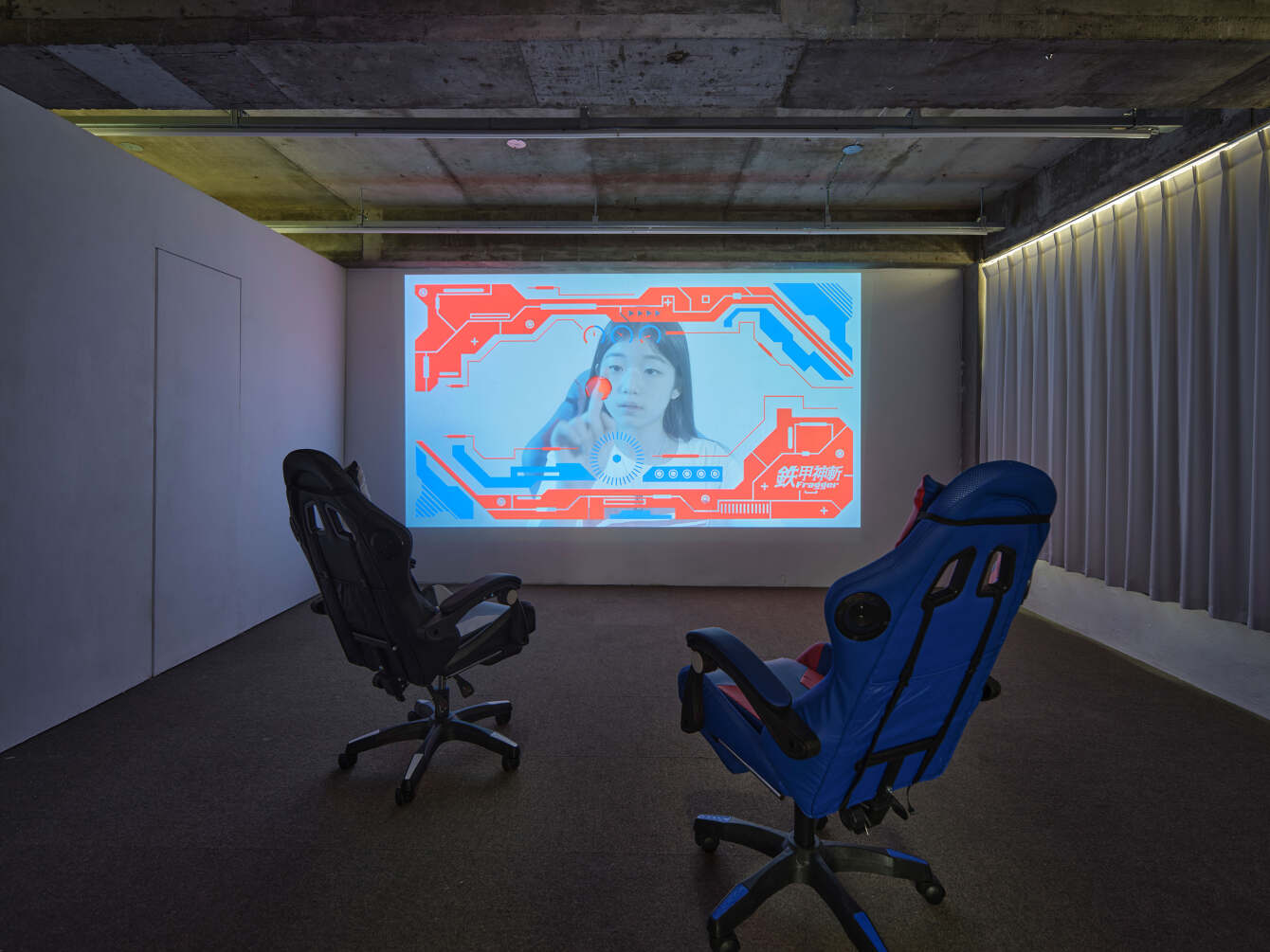
Nowadays, there is class S above class A, but class B sensibility that is neither S nor A is what Kim is slightly aiming for. Even for the actor in 《Ironclad Fragger》, she demands the same level of performance as the actors in Mysterious TV Surprise, a reenactment TV show, and sometimes breaks the clean sutures, and this attempt, like first aid, seems to be a strategy to appropriate the adverb "rather.”
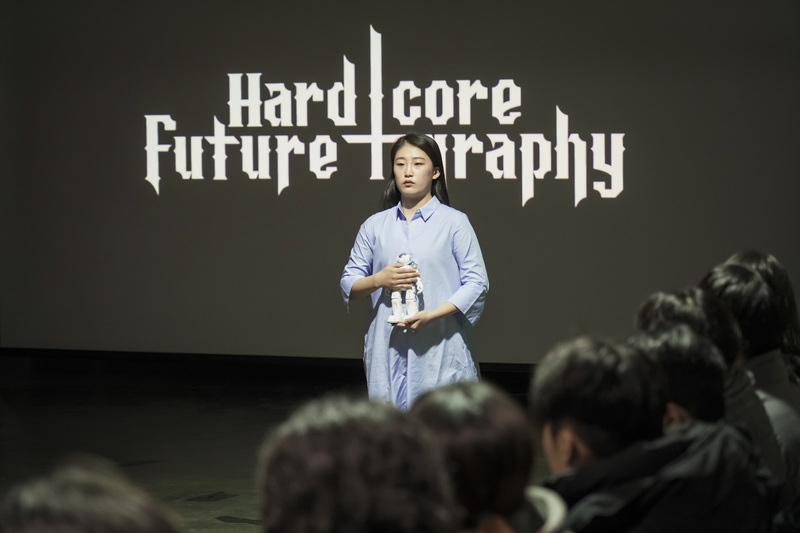
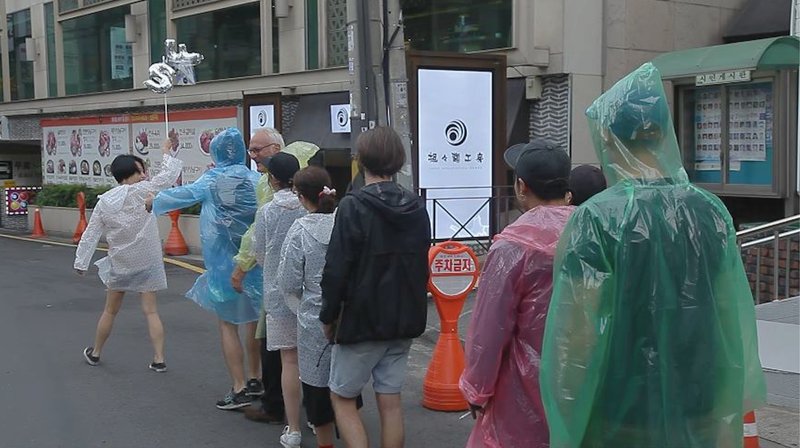
Art class is the work that made Kim distinctive, but as I perused her portfolio, I was pleasantly surprised to see that Tab (2019), which is remembered as the most impressive showing in 《Ironclad Fragger》(2019), a fashion-show-like approach to futuristic sculpture. As the bizarre sculptures were brought to the stage, each arguing to be a collateral family to other sculptures, living bodies carried mats and performed jiu-jitsu for several minutes.
The performance, which was aimed to be seen as a "sculpture," is described as "... something that can fight, something that can hurt, something that can make you cry, something that can soothe you.” Instead of a vague essence of sculpture, she indirectly throws out a position on art that she would rather convey without sculpture.
Kim takes a field soldier's approach to presenting her work by taking advantage of every opportunity she is given, increasing her precision, perfecting her batting average.
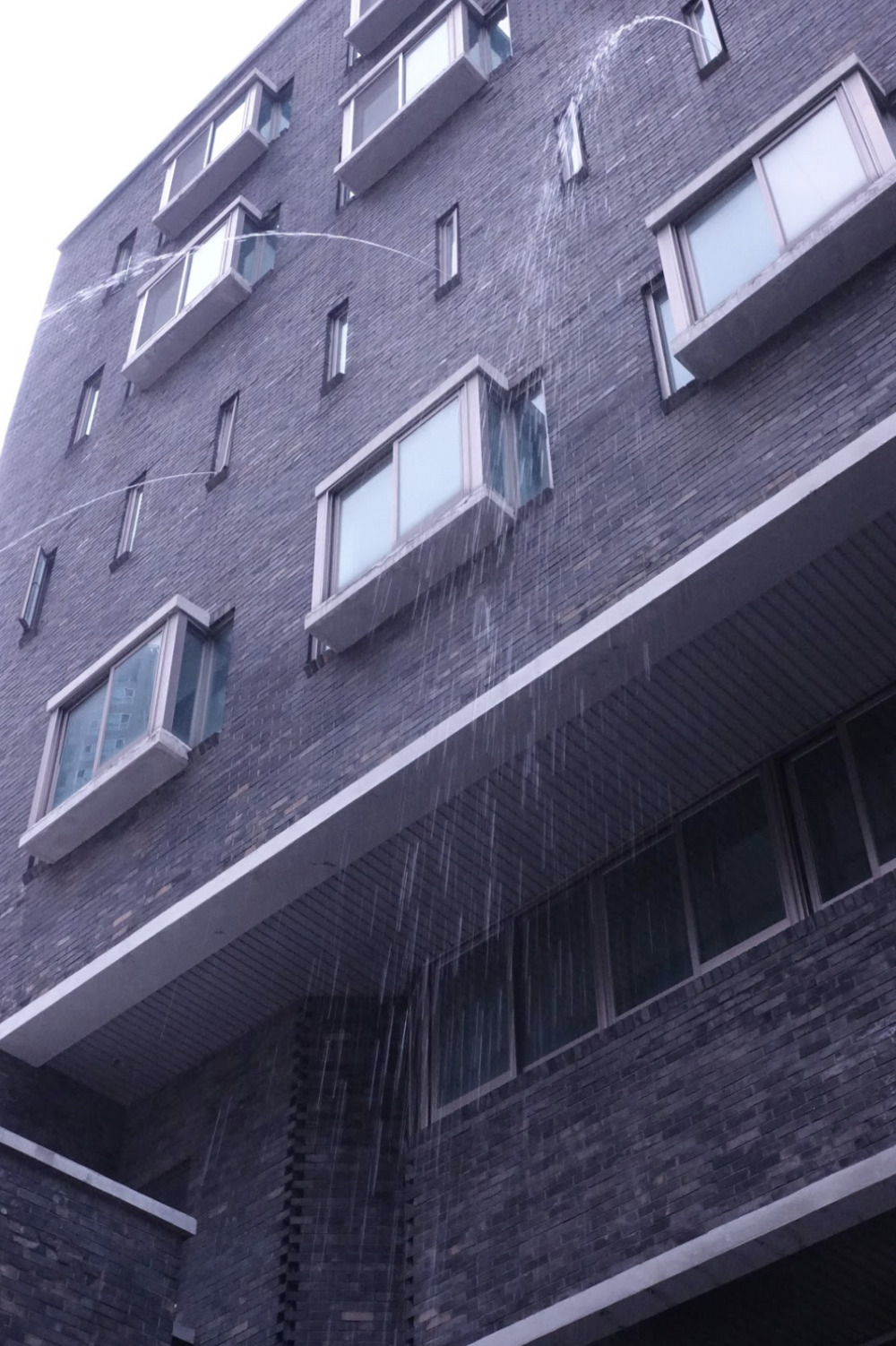
Her research-based approach, which became a habit while studying design engineering, was used without a context for The Chambers (2019), a stream of water falling from the window of the former Anti-communist Office in Namyeong-dong, which served for the dictatorial former government.
When she checked the water bills of the dictatorship period, but no data was available, she checked the water bills of the last 10 to 20 years and found sections where the bills jumped. Although there is no context between the dictatorship period and the water bill data of the last decade, the simple work that immediately confirms the time difference to the viewer enhances the meaning.
In addition, Constellation (2020), which utilizes her experience as a nightclub poster designer for six years, which she calls a bizarre period of her life, was presented in the form of an installation and a flipbook that shows the “non-ideality” working in the “underground economy” and the shooting records and quotations exchanged with companies during that period.
The approach of "reading and exploring social structures and rearranging their order in the work" makes her feel confident that she is on the right track, even as she hears people say "I don't know what kind of work she is doing.”
I want to reveal why the social system I live in has been designed the way it is and its degraded structure by deconstruction and exclusion. I think it brings us closer to reality by showing the failure of structures that aim for certain ideals. Above all, I want to deal with reality by actively revealing design and its political implications.
In the above passage from the artist's note, the structural failure shows the reality, and I see a person who ends up doing her part even though she foresees her own failure that will eventually be enveloped by the external failure. She is also the one who inevitably inherits a legacy and must carry it forward.
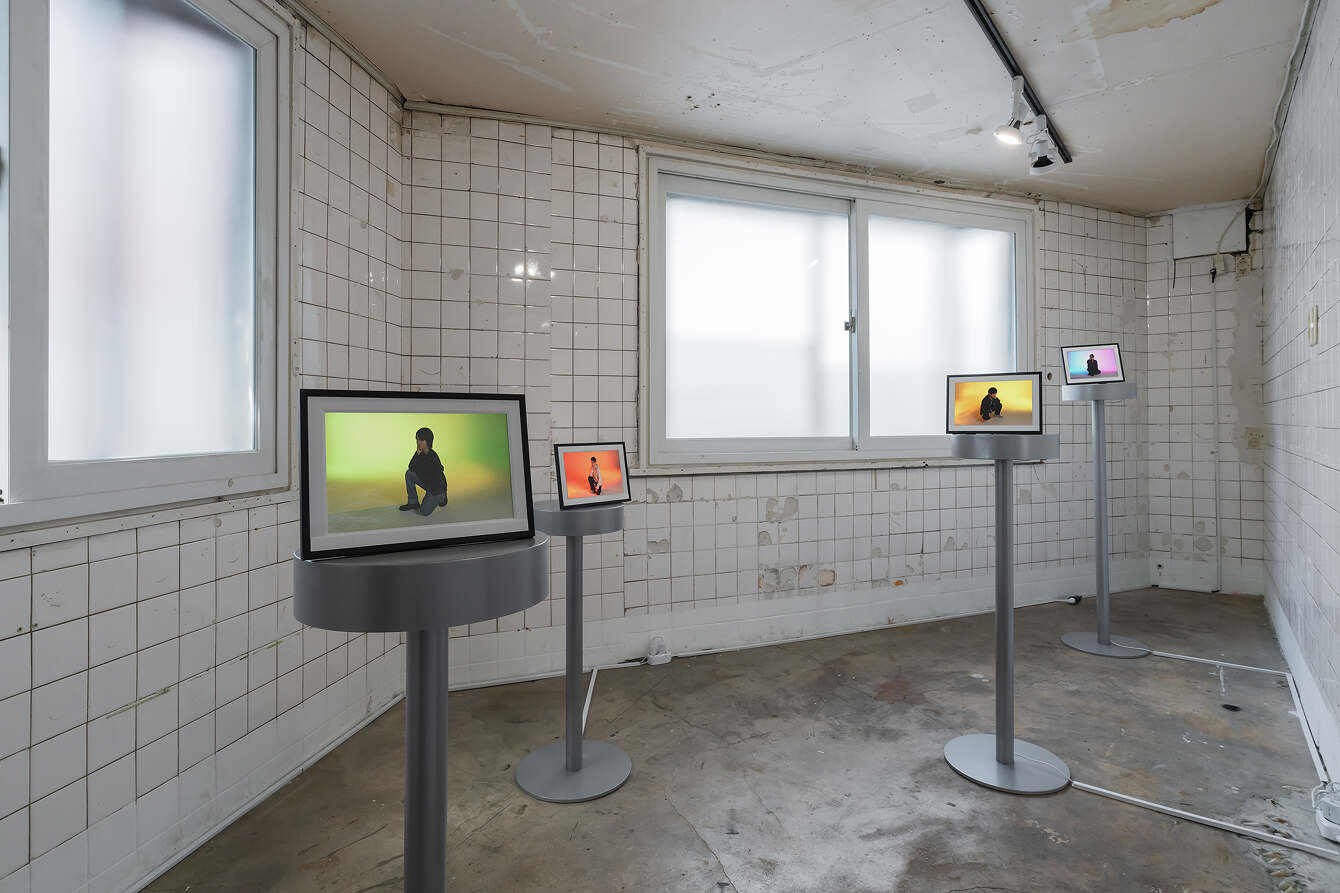
In Summer House (2021) and Urban Utopia (2021), Kim ignites the gap between ideals and reality inherited from Jean Prouve, Philippe Rizzottis, and Patrick Lowry with intentional failure. It's not far from the Sekai Kei narrative, then.
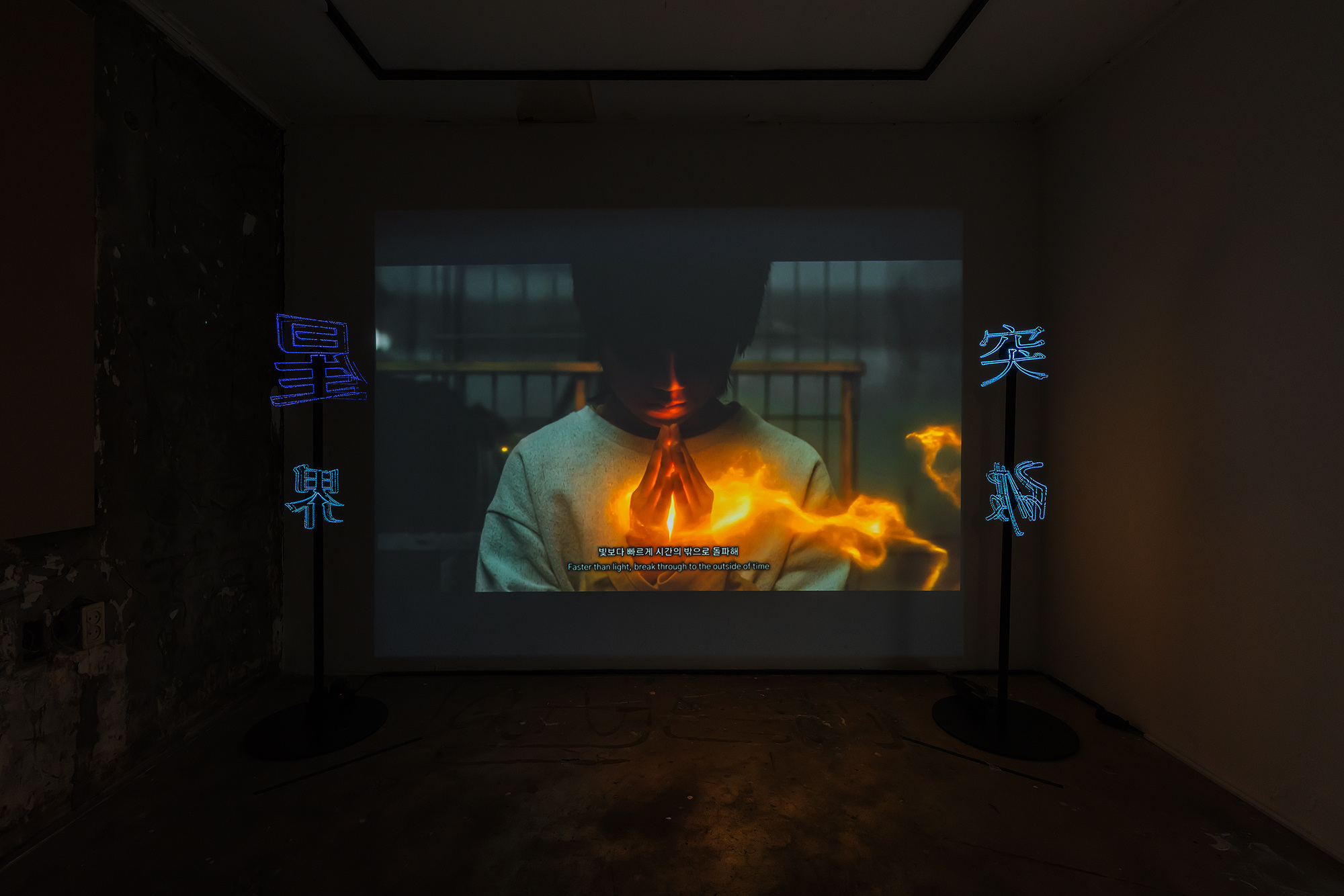
But it's more in tune with the plight of the boy soldier in 《Ironclad Fragger》, rather than the childlike acrobatics of helplessness, delusion, evasion, and excess. In the silhouettes of the field soldier, I see the figure of the boy soldier.
It's a little bumpy, a little stumbly, but well do you expect “cheon-ui-mu-bong (天衣無縫)” (an expression used in Korea to describe a work of art which seems effortlessly outstanding)? I looked up the phrase to see if it was appropriate. Can you guess what I found? The third meaning is “childlike innocence, untainted by earthly affairs". Children, again? It's out of context, but somehow it seems like a fitting way to end the writing about Yesul Kim.
* This critic was written as part of the Critic Workshop of the 17th Nanji residency, Seoul Museum of Art, 2023.