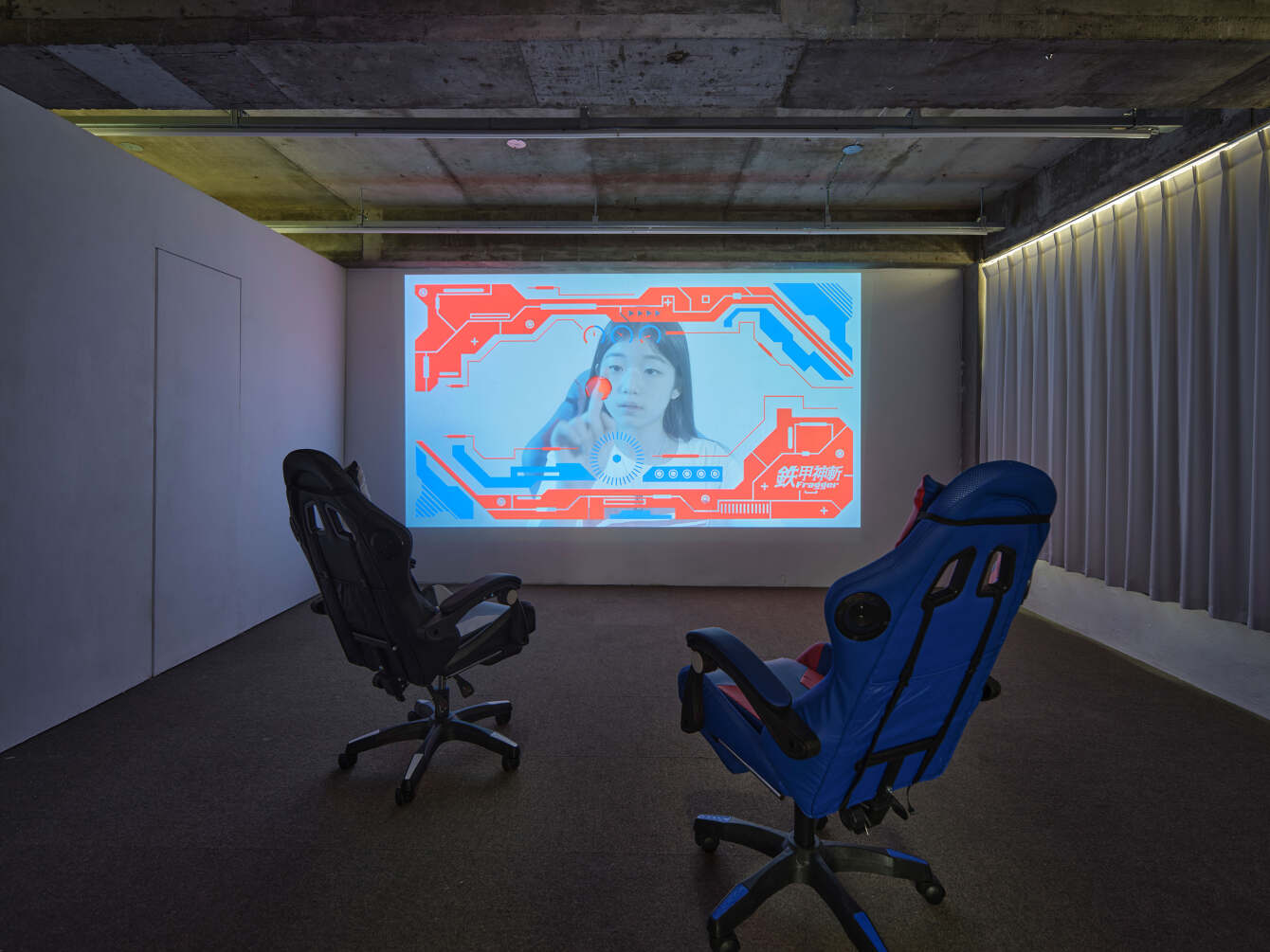
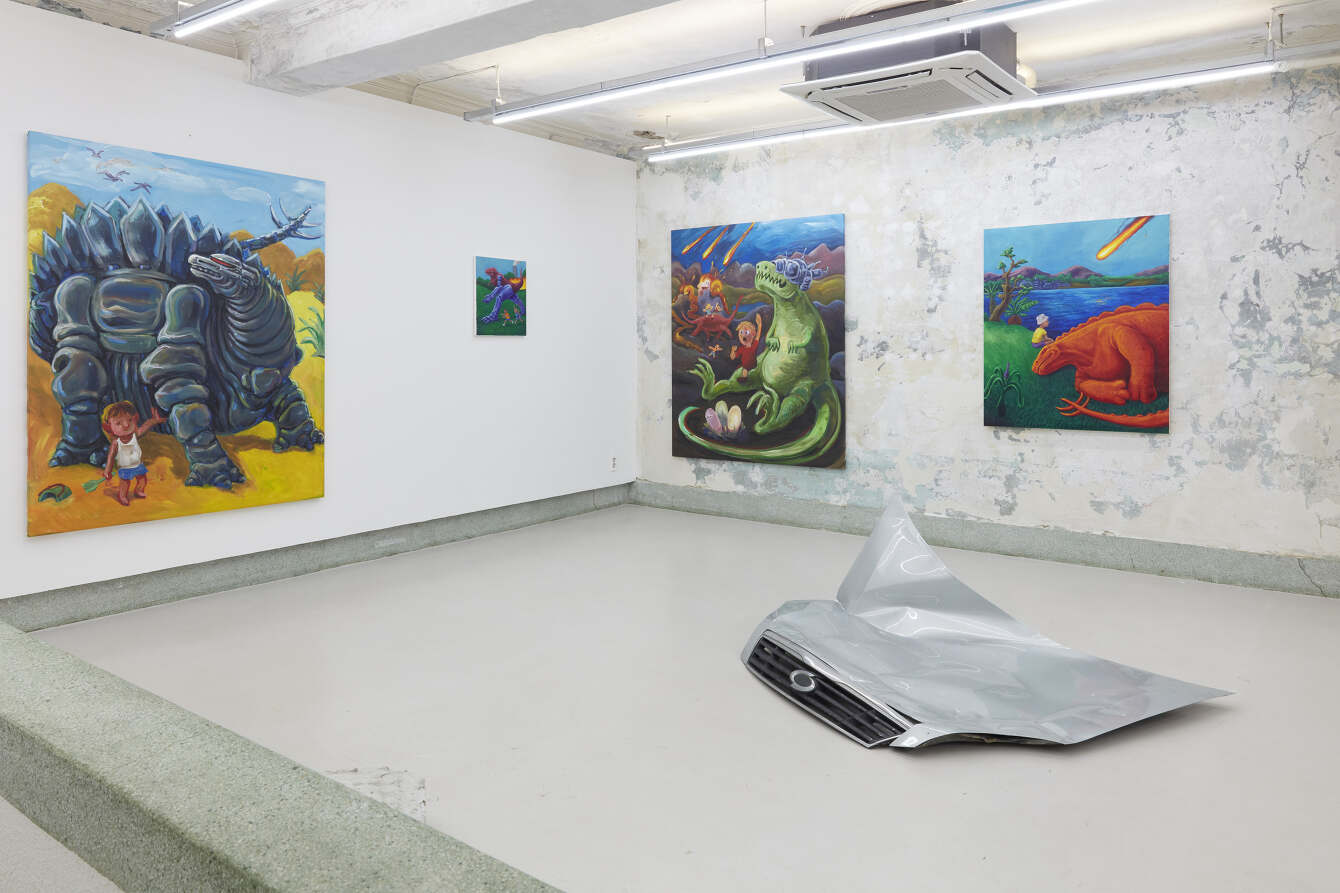
The “MCLC Test” that constitutes Kim Yesul’s Artist Survival—Your Work? contains an indirect yet sharp critique of the current art world system. MCLC consists of the initial letters of four stages that allow those taking the test to think for themselves about their own work, and they are as follows: M: Museum, C: Character, L: Life, C: Career.
In other words, the M stage begins by asking whether one is currently making creative work, and continues with questions such as “Does it show the unique perspective and aesthetic sensibility of a Korean contemporary artist?” or “Does it embody deep contemplation and philosophy about nature?”
C consists of test items concerning the tendency or characteristics of the work, such as “Is it confessional?” or “Does it depict ordinary everyday life?” L asks about one’s life as an artist, such as “Do you have private loan debt?” or “Are you homosexual?” and C consists of questions such as “Are you receiving major attention as a young artist?” or “Have you participated in a biennale?”
This test, which requires all subjects to answer only "yes or no," takes the form of something like a nonsense quiz, but beneath it lies a cold recognition of reality. Even the questions that seem absurd are products of serious reflection on the system called the art world. Let us take an example. Among the questions in the C stage, that is, those asking about career, there are particularly many concerning educational background.
They include questions such as "Did you graduate from the Department of Sculpture at Chung-Ang University and its graduate school?", "Did you receive a master’s degree from the School of Visual Arts?", "Did you graduate from Syracuse University?", and "Did you graduate from the Department of Art Education at Miyagi University?"
As one follows these overly specific and seemingly meaningless questions, one may feel anger, and yet also feel the dizzying sensation of falling into the abyss of an emptiness that arises from some kind of lack. This emotion is probably not merely Kim Yesul’s personal feeling, something she may have felt while lingering around the margins of the art world:
"When I usually work... I am seized by curiosity or uncertainty, so I sometimes go to see exhibitions. As if searching for some kind of answer... I pick up a pamphlet placed at the entrance of the exhibition space and look and read here and there, matching the works with the explanations. What kinds of themes are being used for exhibitions these days, and how are people exposing their work...
Then I come to think about whether I, too, must make such work in order to expose my work and be able to exhibit, whether I must make work that satisfies and fulfills all of these questions, or whether I should become an artist who is satisfied with these current conditions and situations." (Kim Yesul)
Kim Yesul says that she is newly surprised by how many conditions seem to be required to become an artist. Must one graduate from university and graduate school and hold degrees in one’s hands, study abroad, and loiter around New York or London at least once or twice?
Must one’s work necessarily have a very consistent theme, and must the career section, which first of all must guarantee a certain quantity, be filled with awards from various competitions in order to finally act as an artist?
Moreover, now one must speak not only one’s native language but also English, the international language, fluently. Is becoming an artist something that cannot be achieved merely by working hard at drawing and drawing well?
In my view, Kim Yesul has seen the facts correctly. Questions such as "Are you receiving major attention as a young artist?" or "Have you participated in a biennale?" reflect intuitive insight. It is not difficult to read the following meanings behind them: "If you did not receive major attention when young, it is very hopeless," "It will be difficult for tomorrow’s market to open to artists who have not participated in a biennale today."
The questions of the MCLC Test ultimately call attention to one recognition: that art and artists exist within a ruthless system - despite all sorts of widespread romantic hypotheses. And is it only artists? Curators, gallerists, audiences, and even critics also contribute almost slavishly to the smooth operation of the system.
The gap between ordinary viewers and professional theorists is shrinking even more markedly. When they go to see an exhibition, the first thing they check is the artist’s biography or award history.
Kim Yesul’s MCLC Test, a “B-class test,” is a “laugh-cry” report on the reality of artists living inside the system. The conclusions of the test are also ambiguous. Let us take the career section of Type A as an example.
“You think you are receiving no benefit at all from the school where you studied and graduated, but that is not true at all.… Your work is well received by critics and audiences. However, that will soon fade.… When you meet juniors, you want to tell them to quit. When you meet seniors, you will simply want to quit, without spirit.…”
However, it also contains partially instructive content. "Please give up the selfish thought that you will trample everyone around you and rise above them. ... Excessively unreasonable work exhausts all plans. ... Now, please reduce your greed a little and adopt the mindset of doing even one thing well."
As one passes through the truths and falsehoods, excessive specificity and ambiguity, exaggerations and omissions, ridiculousness and anger indicated by the questions of the MCLC Test, it naturally becomes important to rethink the “premise,” that is, what has been injected and persuaded into us as a premise by the system. What art must do is thoroughly question the premise, that is, the current system itself.
Yet in order to question the premise this thoroughly, a second practical premise is required: to arm oneself with awareness not as an insider of the system, but as an outsider. This is not a new conclusion.
The eighteenth-century poet Edward Young’s Conjectures on Original Composition(1759) also calls attention to the same point. According to him, Learning is largely knowledge borrowed from the system of its time. Thus Young says: “Borrowed wealth makes us poor.” And self-evidently, no issue can arise from that poverty.