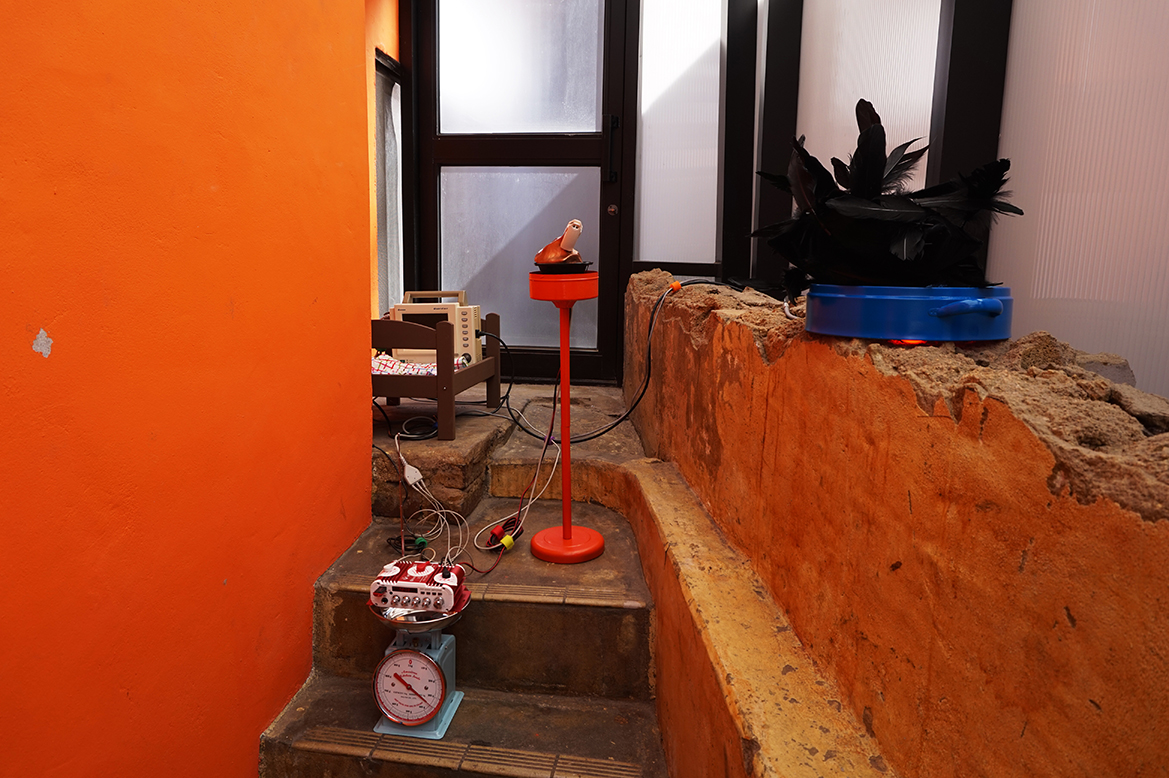
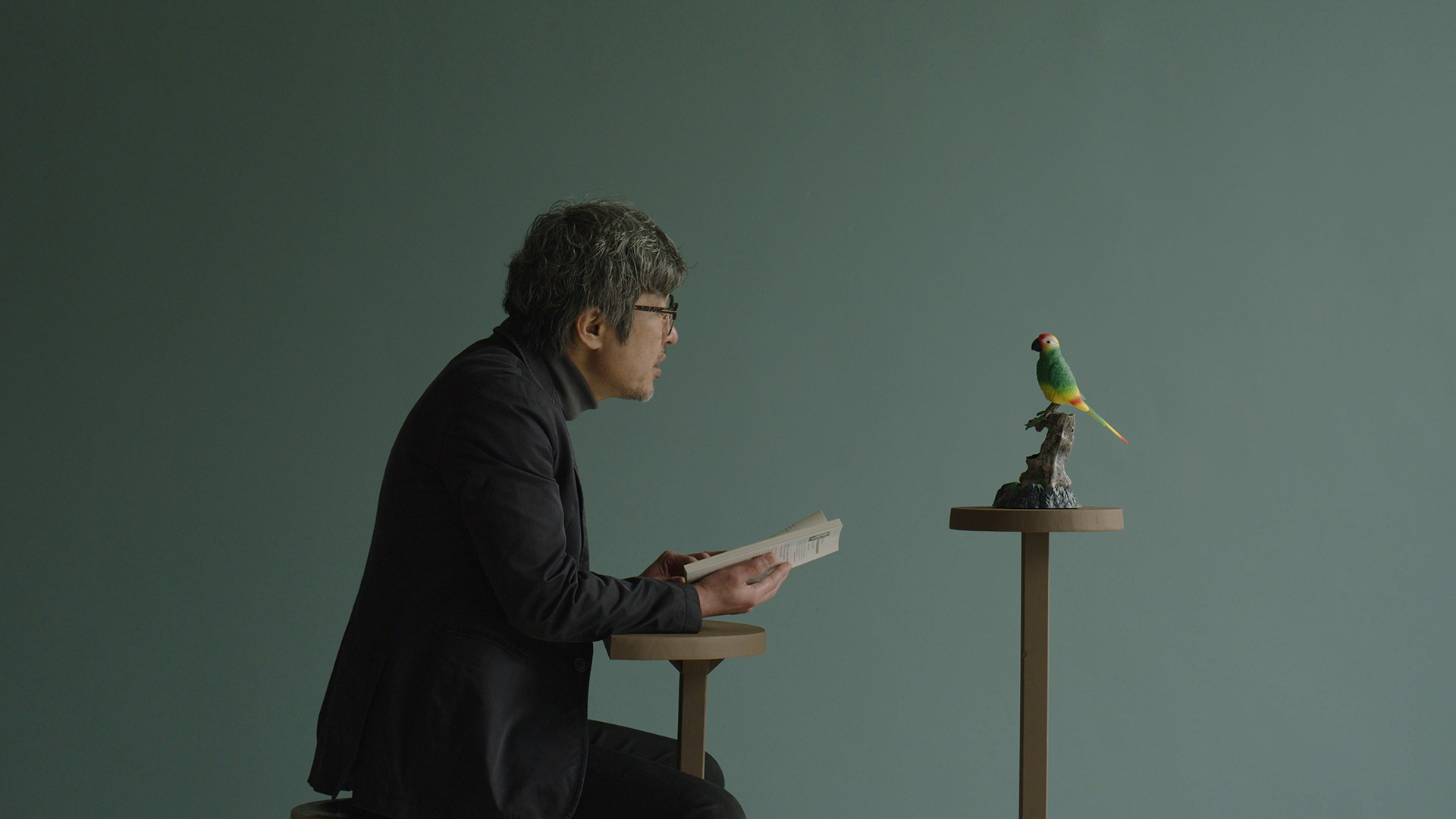
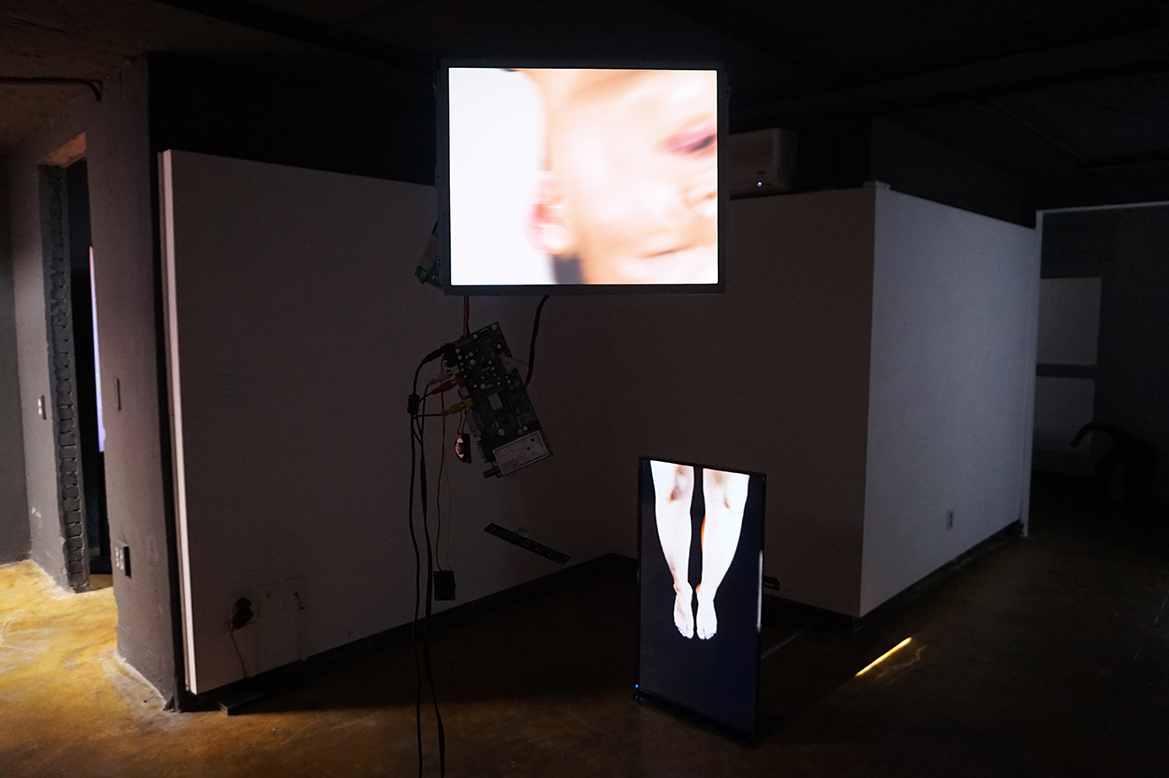
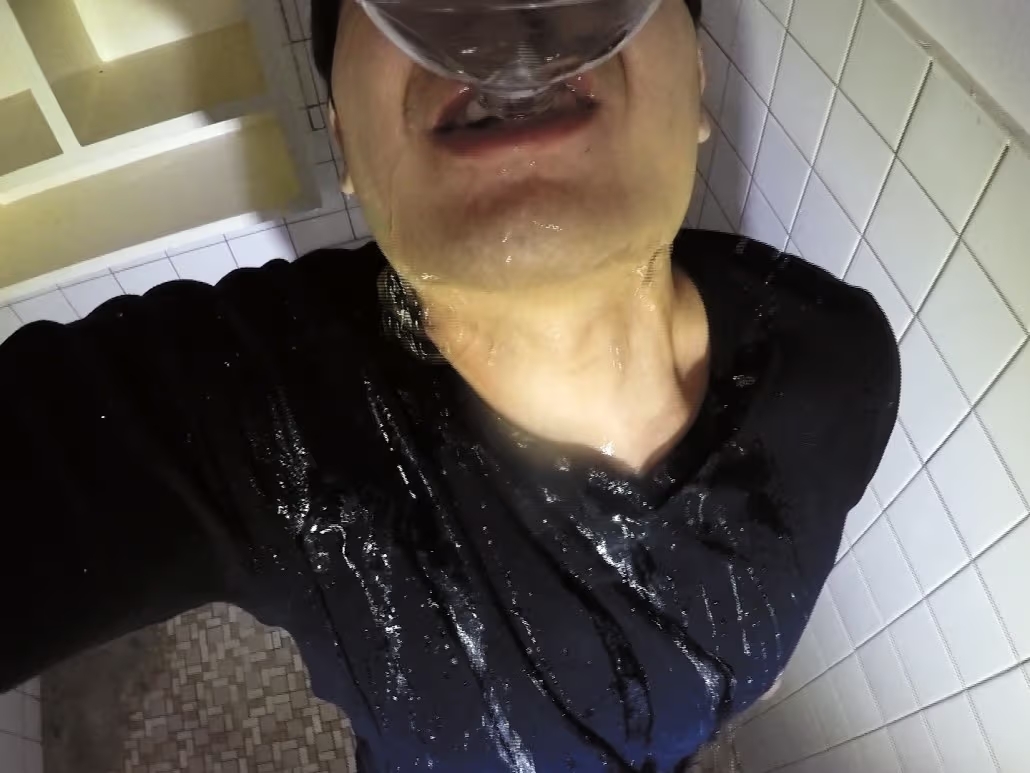
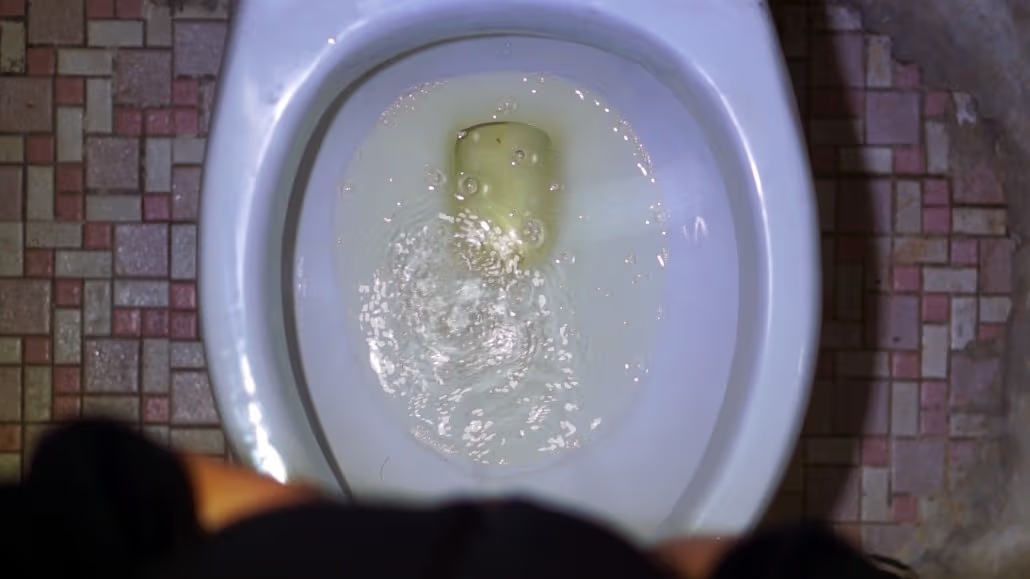
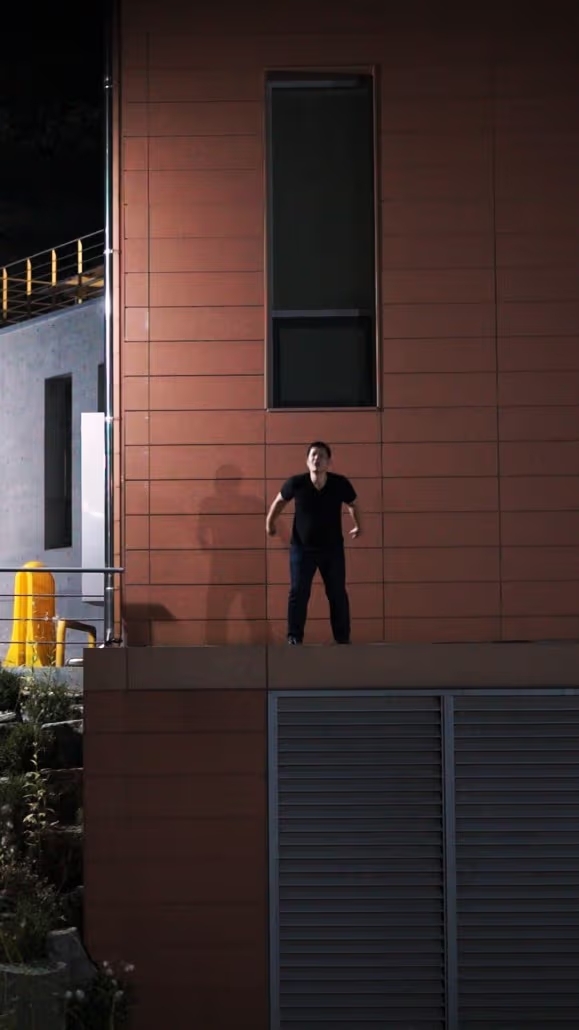
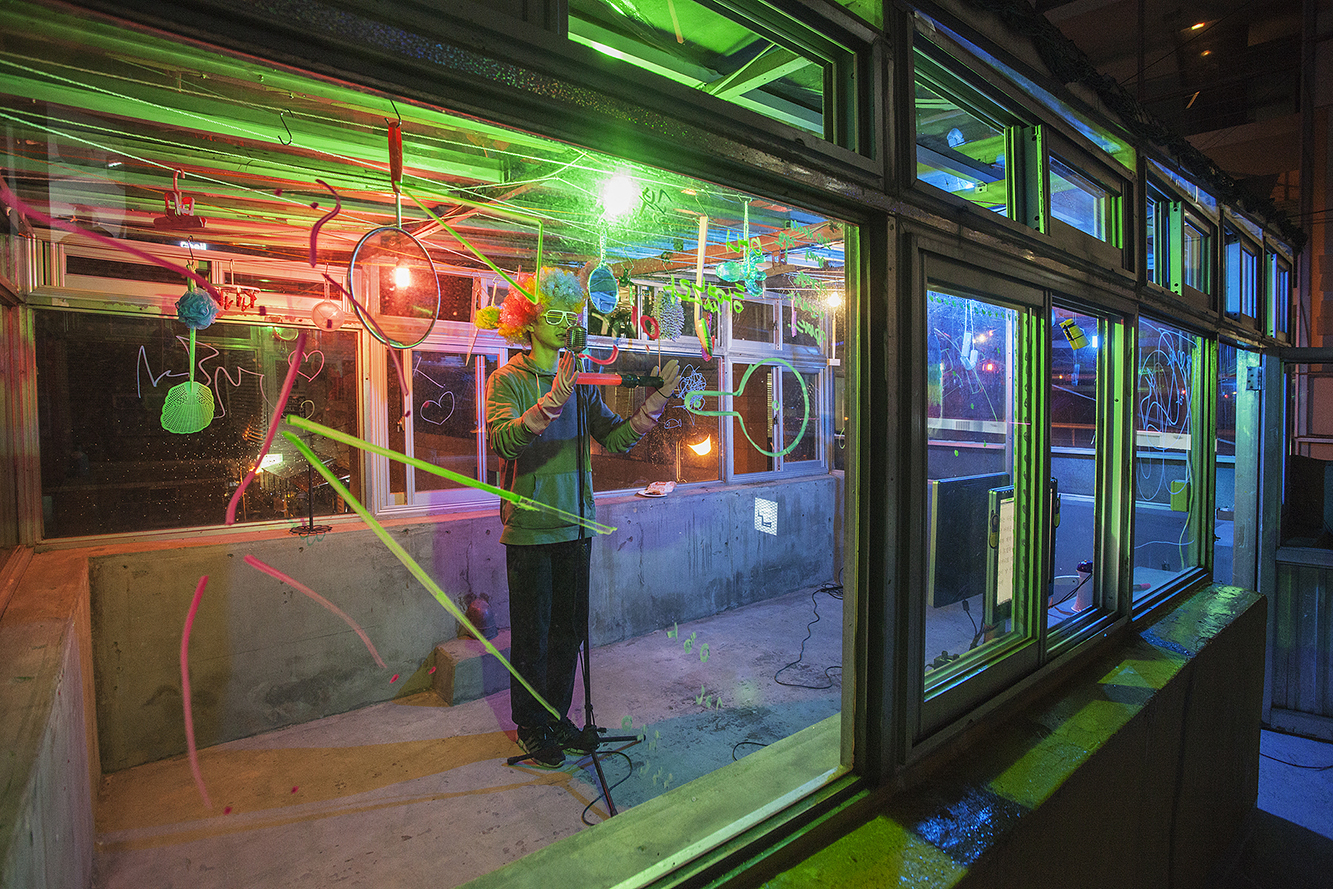
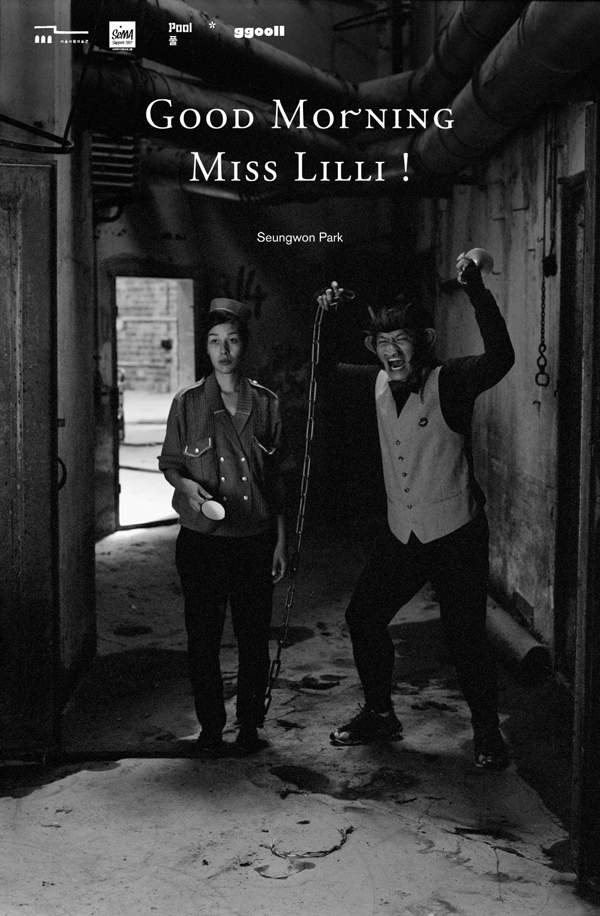
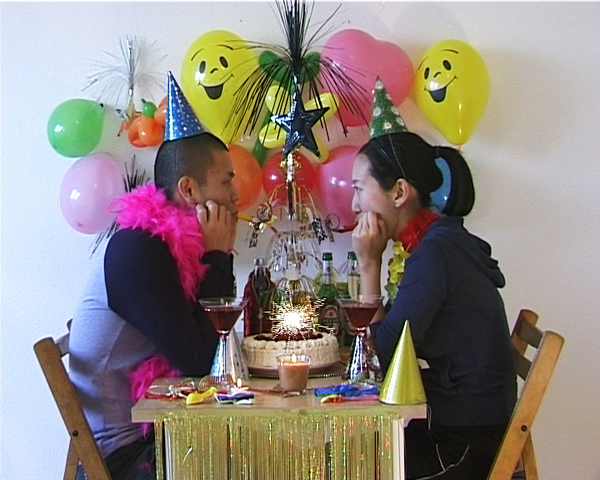
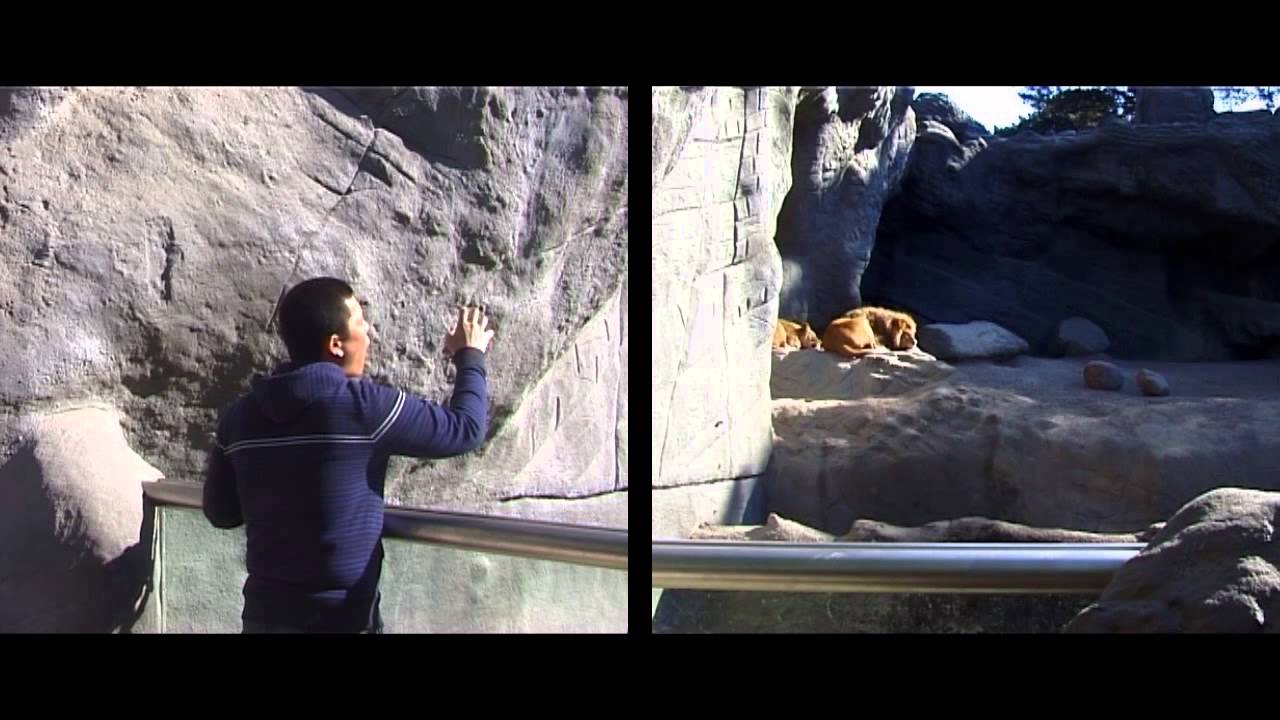
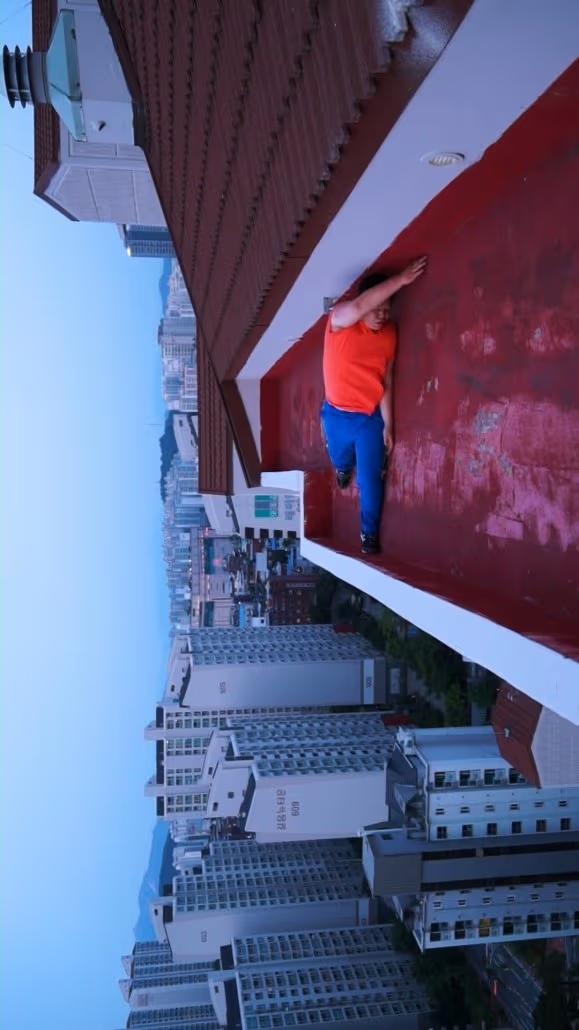
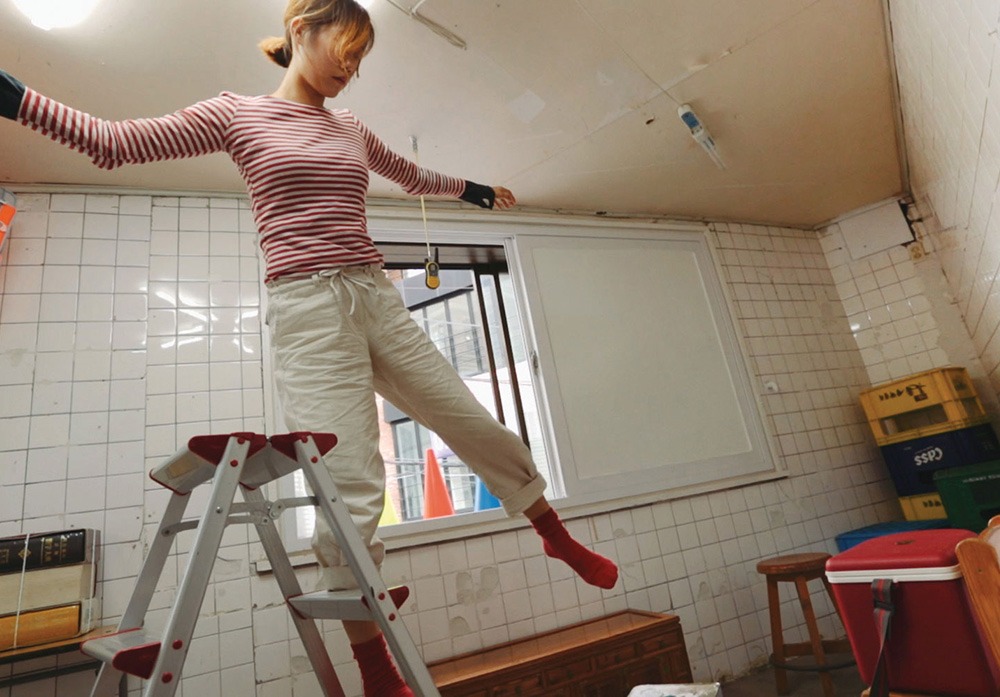
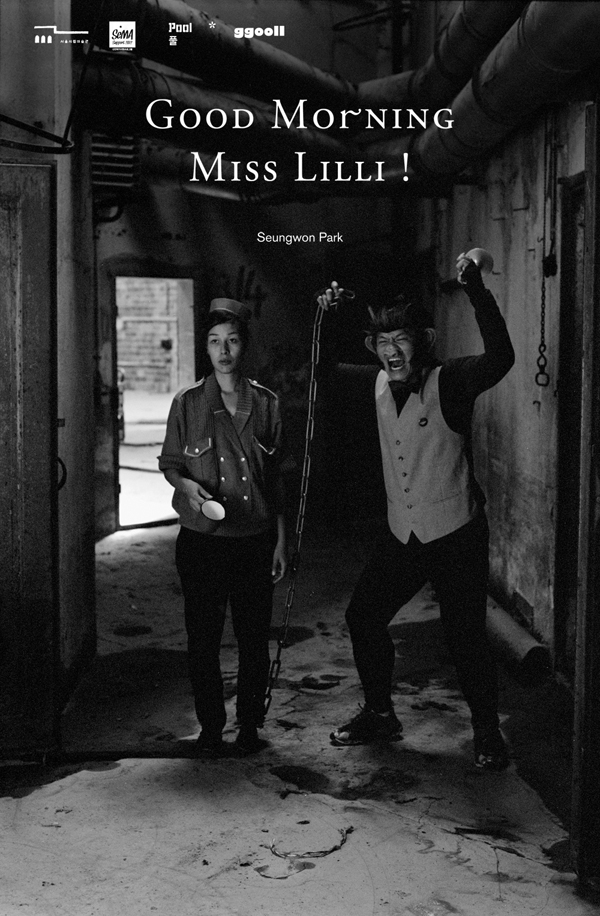
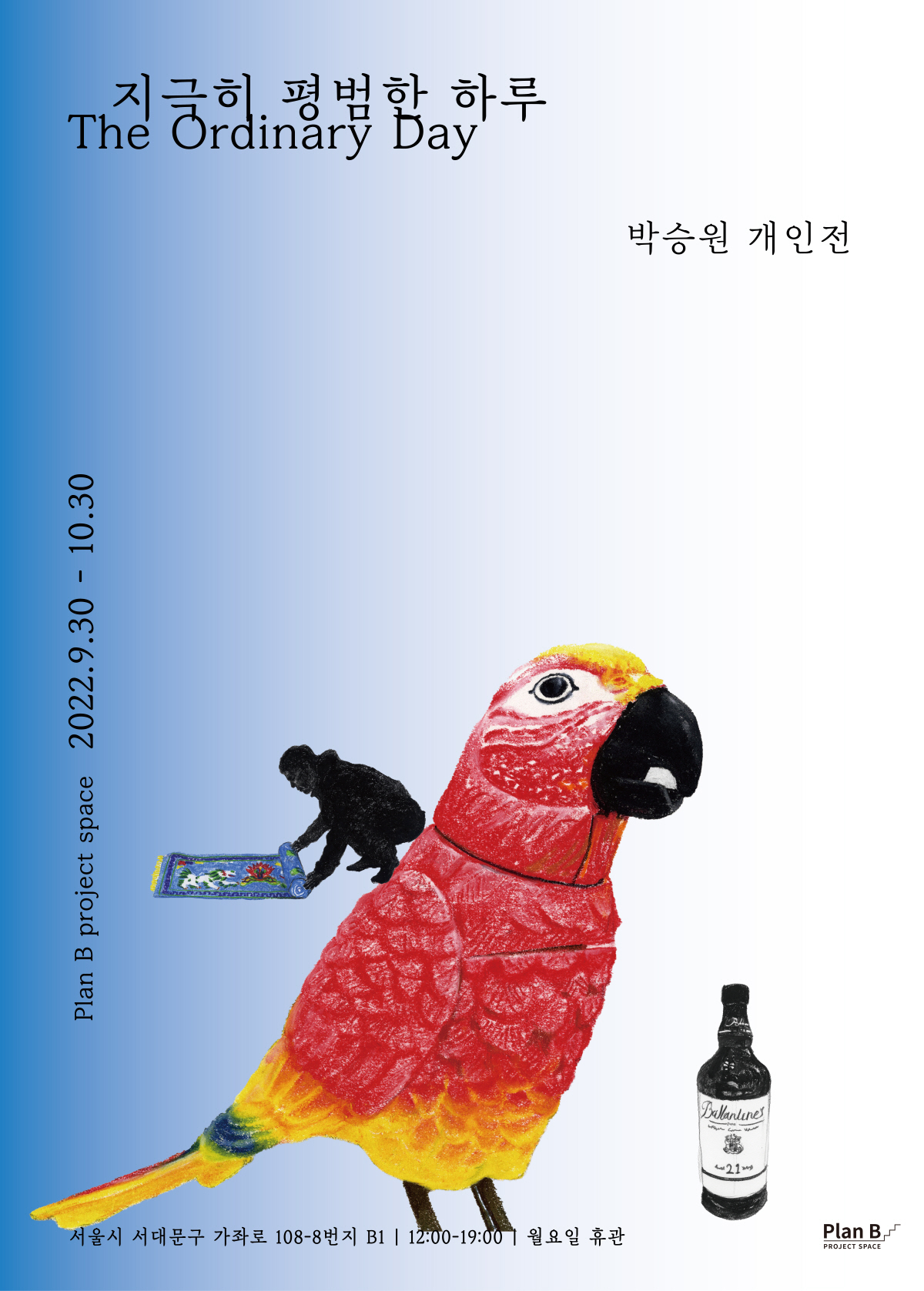
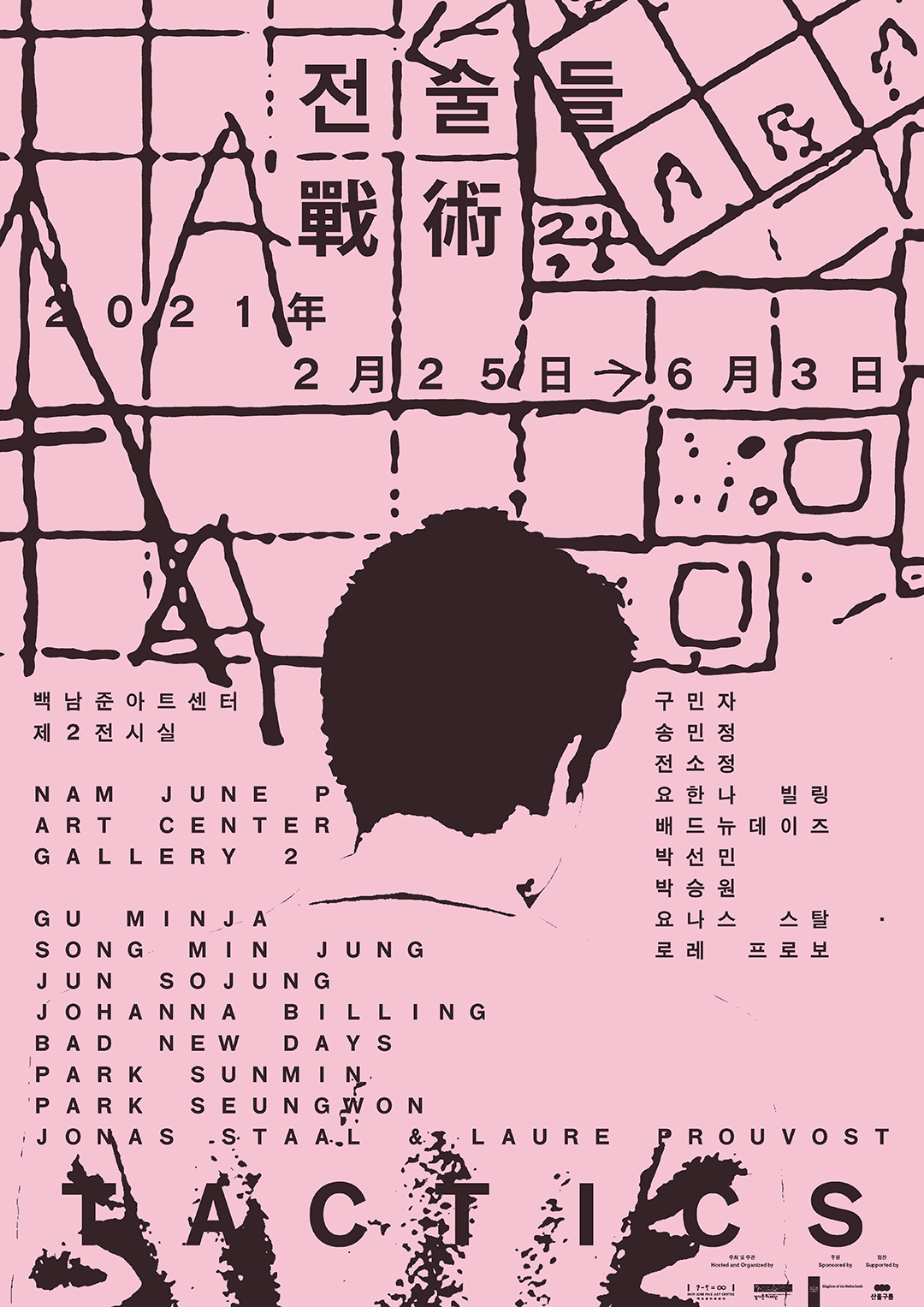
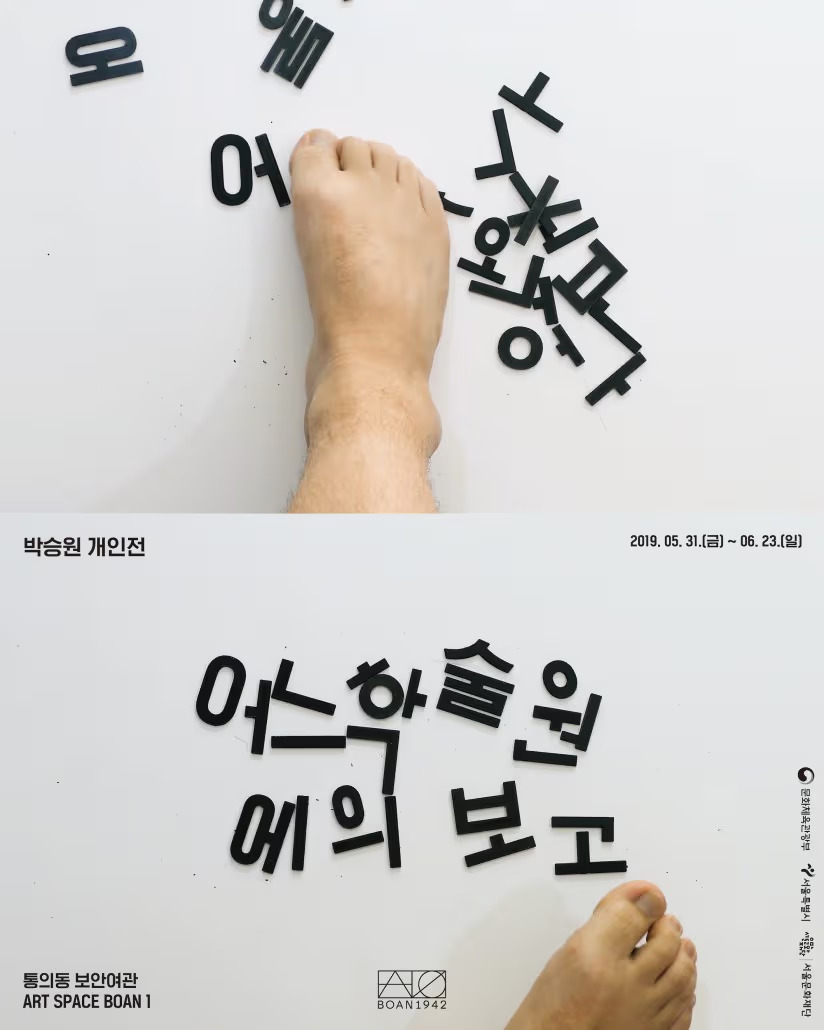
Poster image of 《Good Morning Miss Lilli!》 © Art Space Pool

Positioning Oneself at Zabriskie Point

In an unfamiliar place, one may feel temporarily liberated, or else afflicted by homesickness. Such a place may be one swollen with inhuman landscapes devoid of anything familiar. The ambiguous estrangement found in Kafka’s The Castle, or even the uncanny sensation described by Freud, may resemble such an experience.

Yet when confronted with this condition of placelessness, the artist does not necessarily long only for a return home. The works of Seungwon Park appear to originate precisely from such experiences and sensations. In particular, within the contemporary city, placelessness can instantly become a critical condition.

Between the office and home, the school and home, the studio and home — even while traveling — the condition of “having no place” overtakes us. I would call this a “feeling of non-identity.”

Urban life, in which unfamiliar states become normalized — no longer wanting to return home, no longer wanting to remain in the office or studio, no longer wishing to exhaustingly encounter familiar people — gently renders individuals placeless, unlike older forms of exile, captivity, imprisonment, or forced displacement.

The causes may differ from person to person: a sudden separation, dismissal from work, inexplicable moods, persistent anxieties constricting one’s life. At this point, we may immediately recall the salt desert of Zabriskie Point, both the real location and the film by Michelangelo Antonioni.

Rather than conforming to mechanisms of repression and circulating endlessly through the circuits of everyday life, one traces a trajectory of departure, thereby constructing an intensive space of zero point — this is the artist’s method. Since Dada and Joseph Beuys, art has already become inseparable from ways of living, and Park intuitively grasps this world at once.

Therefore, it is not at all surprising that one does not encounter existential loneliness or melancholy in Park’s works. For the forms of estrangement he experiences — he lived in Germany for seven years — appear to him as a creative space, a desert as point of departure. Though the exact moment cannot be determined, it is possible that, upon encountering the existence of such a desert, he cast aside the paintbrush altogether.

This was also a joyful mode of separation: a movement toward the desert in response to processes of individuation and desertification within life itself. At that moment, the desert becomes dangerous, yet also the terrain of genuine adventure.


Seungwon Park, siaraM-part.1, 2008, Single channel video, 6 min 15 sec © Seungwon Park

Animal-Becoming and the Attempt of Involution

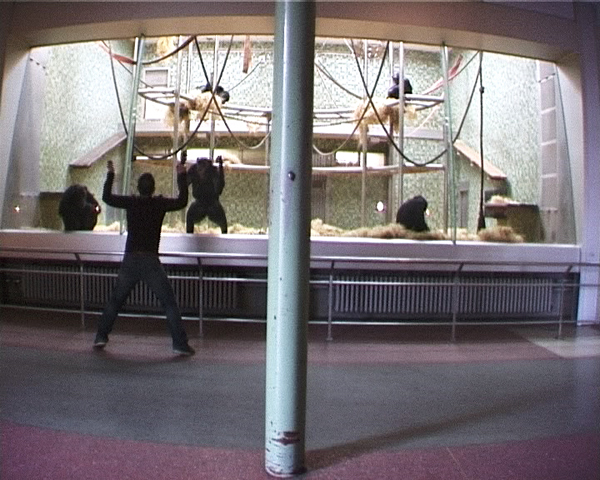
Indeed, the works of Seungwon Park are filled with intense attempts at “animal-becoming.” His experiments with Lily in siaraM contain some of the most striking moments. The work stages a process of communication with a chimpanzee, beginning with the disciplining of his own body.

The movements of a bent and crouched waist, arms hanging downward and swaying from side to side, the pounding of the chest, accompanied simultaneously by the motion of bowed legs — at a certain moment, he truly appears to succeed in becoming-chimpanzee. Moreover, do not the artist and Lily seem to achieve mutual communication through reciprocal imitation?

Yet, as will become apparent, we should not become fixated on mimicry, imitation, or identification in his work. As everyone knows, we can never truly become chimpanzees or any other animal. The apparent success of imitation may itself be nothing more than an episode. What matters is whether genuine animal-becoming is possible. As Gilles Deleuze suggested, animal-becoming belongs to an entirely different dimension.

It is as real as the desert itself can become a real space, except that our concepts have become accustomed to a Parmenidean mode of thought — one that perceives things only as fixed states — or because, when looking at a desert, we tend to see only empty space and thereby miss the real. The dimension of becoming-real belongs to a plane prior to the individuated entities we perceive as fixed. It is a minoritarian mode of thought akin to Heraclitus, or to Daoist philosophy.

Just as the desert, despite appearing devoid of buildings or scenery, is already transforming through endless variations of force, through encounters and mutual activations between wind and wind, sand and sand, animal-becoming constitutes a world of instinctive pack-formations, movements of swarms, and pre-linguistic gestures segmented and coded before language itself. This is the point at which the “feeling of non-identity” becomes activated.

Such becoming is grounded in sympathy, within which burning differences exist, alongside movements of duration in which these differences endlessly interpenetrate one another. There is no place there for a fixed self, nor even for the chimpanzee understood as an individuated and therefore fixed resemblance.

Instead, the scenes of siaraM are composed of attempts at quantum entanglement, recalling the sequences in Zabriskie Point in which naked bodies seek to intertwine within the desert landscape. The reason we may laugh or nod while watching the work is that we already possess the capacity for such entanglement, sympathy, and mutual permeation.

Thus, the apparent success of becoming-chimpanzee through imitation is merely the result or effect of something else, not its true cause.

Rather, the true cause lies, as the artist’s notes reveal, in the longing for communication itself. Reflecting on the possibility of communicating with Lily and with other animals, he writes:

“Could this perhaps stem from a fundamental desire for communication that I — or humanity itself — possesses? A longing for communication through some form of emotional exchange performed prior to language? And could this exchange of emotion be the very primal communication that I believed I experienced with Lily? But can I truly say that Lily felt it in the same way?”

Perhaps his questioning will continue for much longer, and thus the experiment itself may also persist. Yet what we should attend to are the gesture-languages he creates. As noted earlier, these belong to a realm prior to codified linguistic signs while simultaneously expressing certain qualities of bodily flows. Outwardly, they certainly appear to be languages of mimicry.

However, what kinds of expressive possibilities are contained within the silent gestures enacted by the artist alongside Lily — gestures that resemble those of animals?

Here, we may turn to several of Giorgio Agamben’s studies on gestural language.

“This state of muteness within language appears in three dimensions: 1) the enigma — the more one attempts to say, the less comprehensible things become... 2) the secret — that which remains unsaid within the enigma, and which is nothing other than the existence of the human being insofar as it dwells within the truth of language; 3) the mystery — mystery as the enactment of this secret. In the end, the poet appears as the one who remains mute within language, the one who dies for the truth of the sign. It is surely for this reason that gesture is always the gesture of something lost within language.”



Seungwon Park, Gut gebrüllt, Löwe!, 2011, Single channel video, 10 min 39 sec © Seungwon Park

Such an analysis could perhaps be extended to art in general. Yet the condition of muteness always remains as “that which is lost within language,” while simultaneously constituting a dynamic entry into the very ground that sustains language itself — the ground from which linguistic signs emerge and which they subsequently capture within their own order.

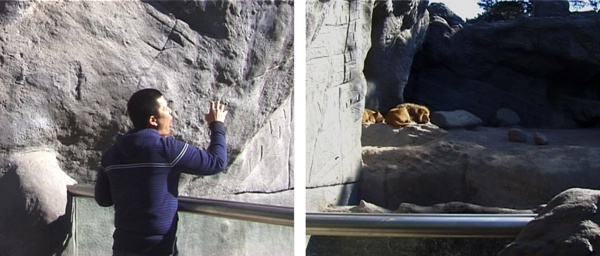
In Gut gebrüllt, Löwe!, the apparent failure of becoming-lion becomes secondary in light of this effort toward dynamic immersion. Certainly, the work is deeply comic. Yet the laughter it provokes — if it is not merely laughter at a futile attempt — emerges from a kind of ticklish sensation produced by this process of becoming-ground through gesture itself.

Accordingly, the success or failure of communication does not depend upon the outward success of imitation, but rather upon the body’s pure capacity for variation and expression. The ability to become another body — this is what Deleuze called involution. Involution is neither regression nor progress, but the becoming of a pre-individual field that involutes or volutes. For some, it is an act that is profoundly dangerous, yet irresistibly seductive and compelling.

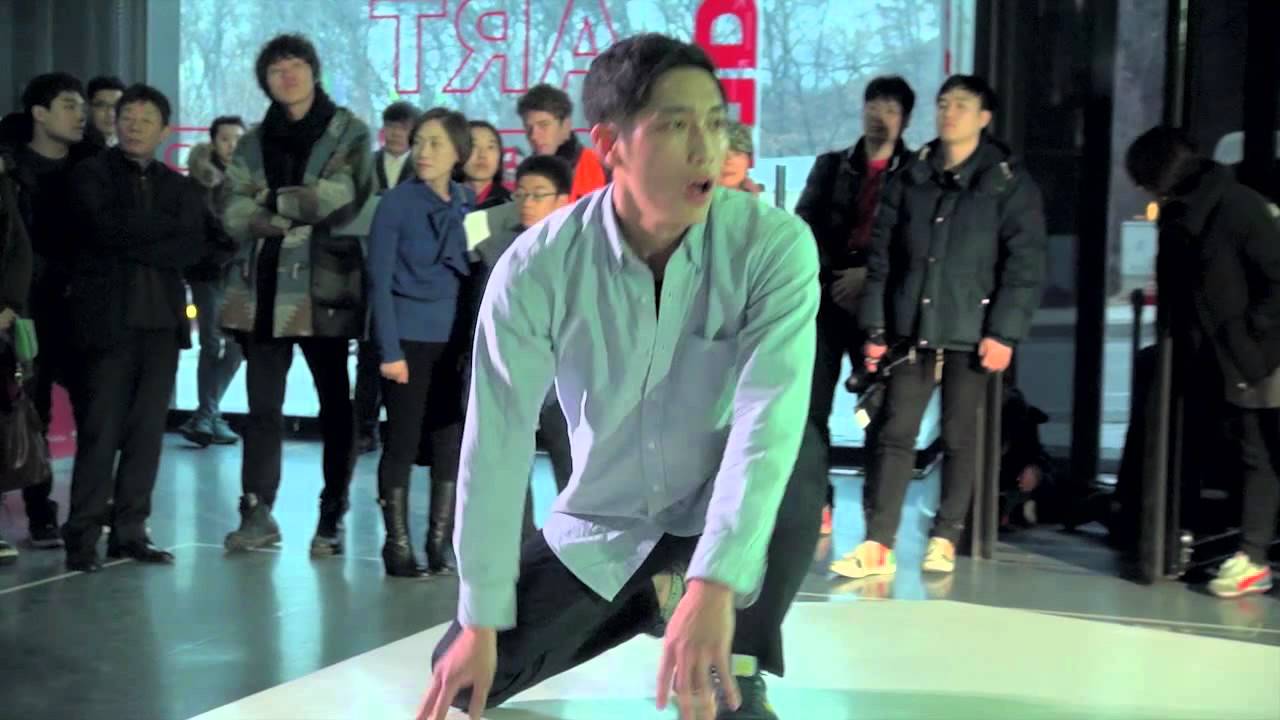
At the same time, animal-becoming always risks collapsing into the level of mere “imitation,” as in the case of siaraM. Because animal-becoming is not about becoming familiar animals, it inevitably produces estrangement; yet viewers may nevertheless attempt to seek only familiarity within it, reducing the work to an amusing spectacle or entertaining event.

Does siaraM, then, become nothing more than an event of familiar monkey mimicry? Such a question raises the issue of how one distinguishes between the space of commercial entertainment and the space of art. Since this distinction remains an open rather than closed question, it ultimately shifts according to the perceptions and reflections of participants — in other words, according to circumstance itself.

Yet because the street is always already coded, acts that alter those codes may become experiments that are at once serious and joyful.


Seungwon Park, Delusion Ⅰ, 2009, Single channel video, 2 min 12 sec © Seungwon Park

Disciplining the Body and the Impossible Community

The disciplining of the body originates as much from nomadic existence as it does from the training of animals. It belongs to the desert, to the magician, to the mad scientist, and therefore to the artist.

As Walter Benjamin observed, the artisan’s “discipline” stands in opposition to the machinist’s functional “training.” Moreover, discipline extends even beyond that of the artisan. It becomes at once the warrior’s discipline of becoming-weapon and the meditative discipline of becoming-flame.
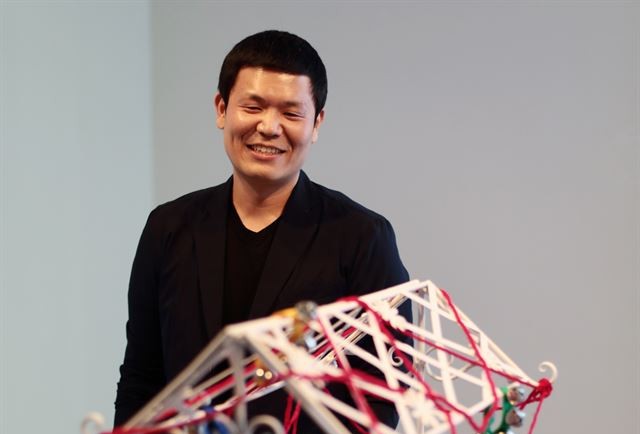
This process of body-making intensely stimulates the materiality of the body and the nervous system shaped by repetitive habit, becoming a process through which a potential body capable of becoming anything may emerge. Thus, might the bodily discipline pursued by Seungwon Park resonate with the chimpanzees and lions with which he seeks to communicate?

If so, the bodies of the chimpanzee and lion that the artist seeks are not merely bodies trapped within cages, dulled and wearied by routine, but rather the latent energies inhabiting them: roaring bodies, leaping bodies, agile bodies capable of clawing — in other words, the energies of the tropical rainforest itself.

Is this not the fascination of animals as modalities of the pack — not the familiar, cute, and already-known gestures of domestic creatures, but the very potentiality emitted by disciplined bodies?

If Joseph Beuys, as a kind of magician, sought to construct an impossible community of bodies and animals, then Park appears instead to capture the dynamism of “gesture” itself. Indeed, all things existing within the universe constitute a single community. Within it, a certain qi, a certain dao, endlessly modulates itself, unfolding and interpenetrating its capacities.
As much as there is a community of light or a community of waves, there is also a community of life in which these flows participate. For this reason, the body is merely a temporarily condensed fold within these flows of light, waves, and life. Yet folds do not appear unless they unfold or enter into movement.

Thus, it is hardly surprising that Park attempts to generate irregular rhythms and sounds through the body. The body, desire as body, spirit as body, energy as body — all insist upon pursuing their trajectories to the furthest possible extent. Accordingly, the scenes of sonification and becoming-sound that extend beyond the visualization of gesture create singular spatiotemporal conditions, akin to an unrepeatable festival.

His artistic language remains rough, and precisely because of this roughness, it is not easy to define. Yet he will continue onward, and insofar as there remain things made visible within the space-time traversed by his bodies, we may call his practice “art in action.” In this sense, it resonates with the essential meaning of “action painting” proposed by Harold Rosenberg.

For the moment artworks renounce becoming fixed, durable, and exchangeable objects, they instead begin to desire becoming a flux in themselves. Perhaps this is one possible mode of creative response available to art within the increasingly immaterialized commodity society of late capitalism.

References