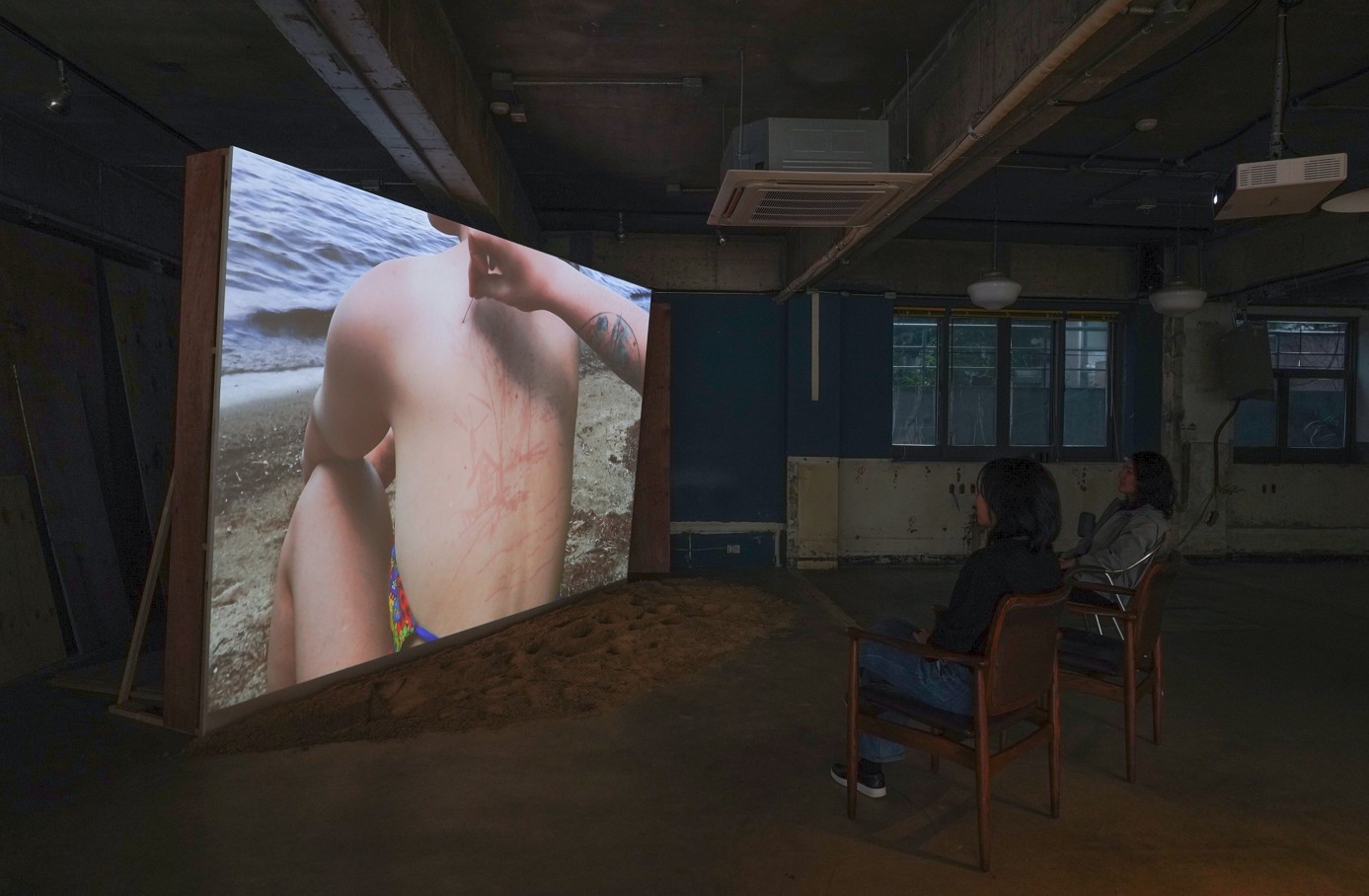
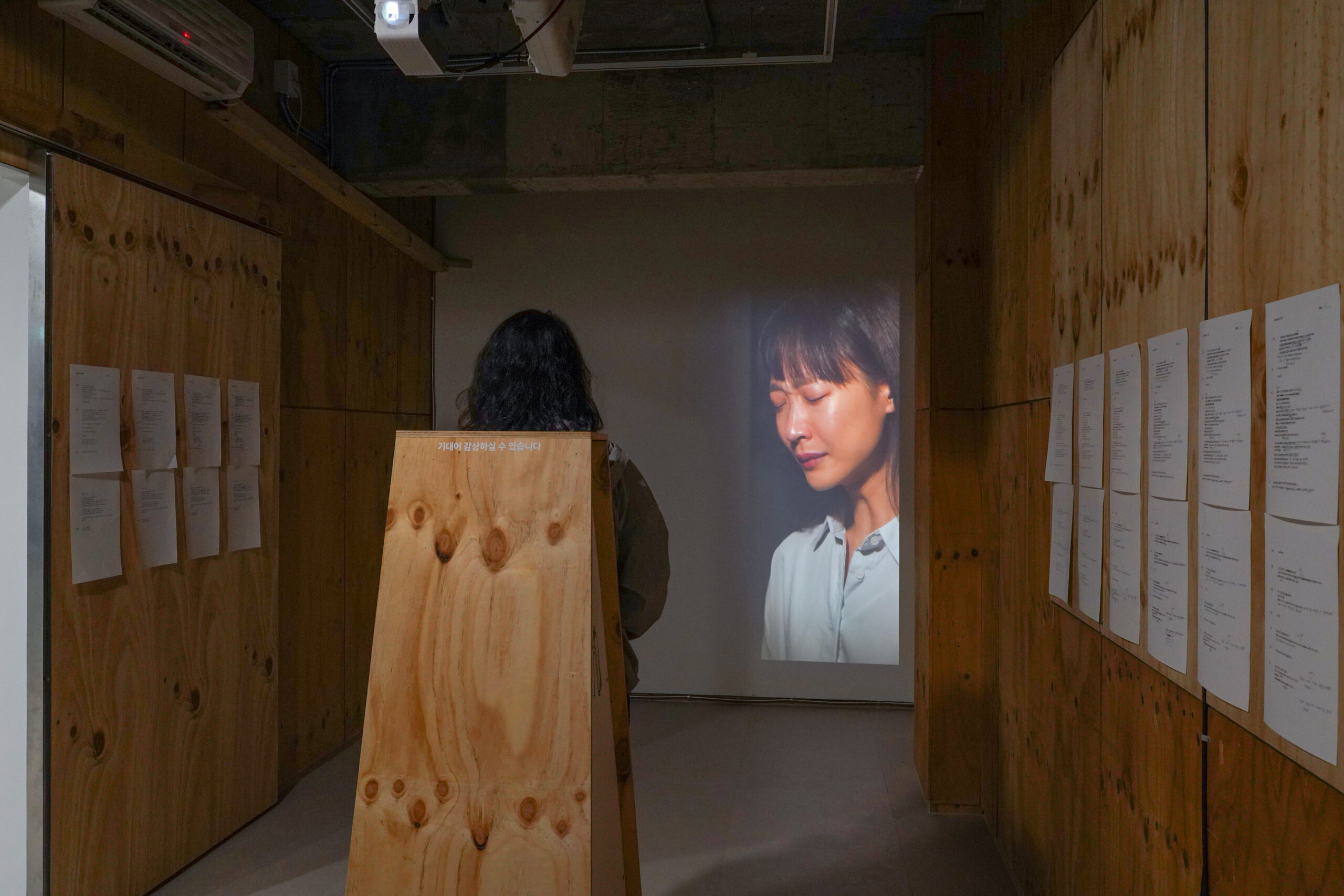
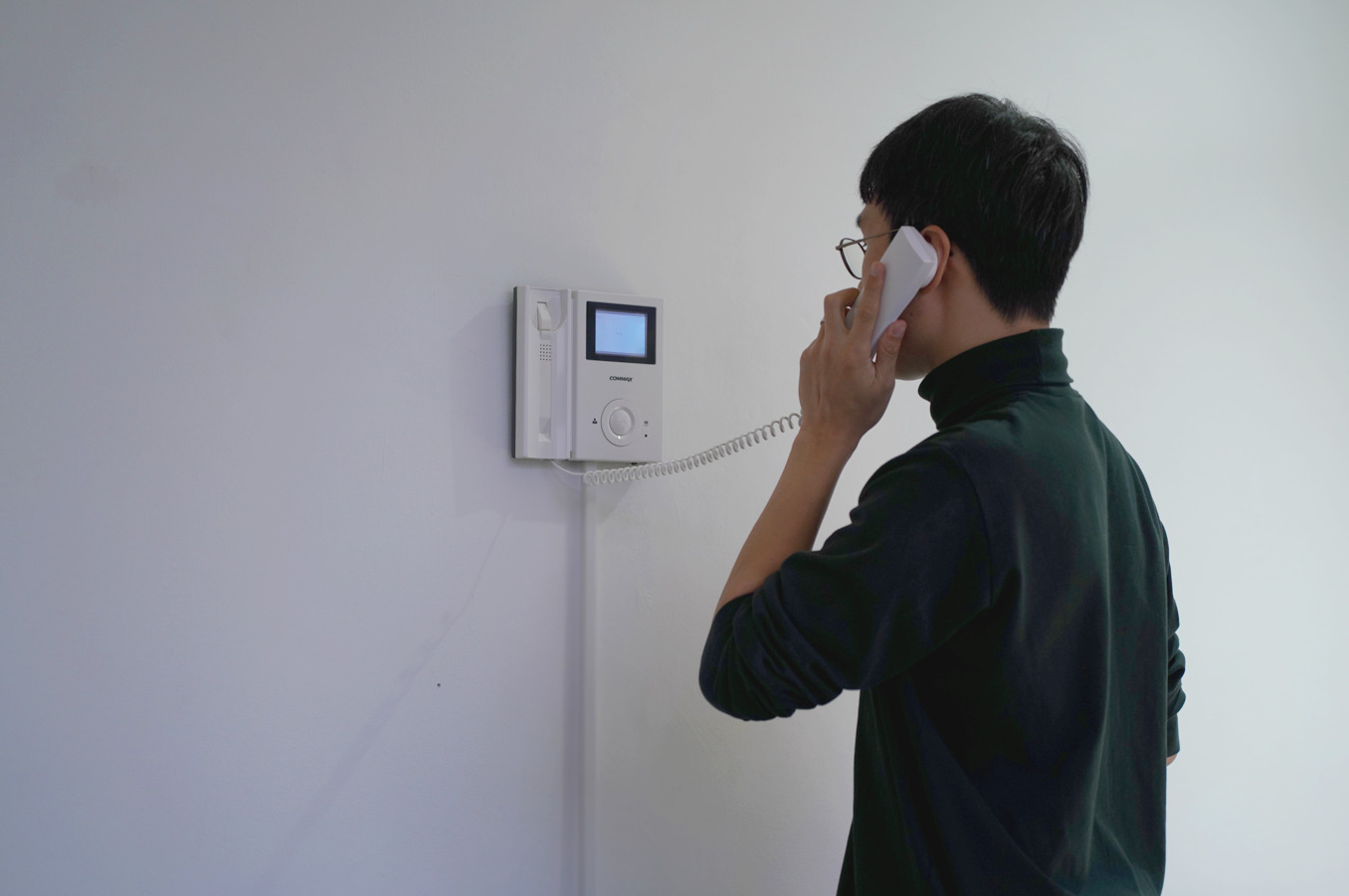
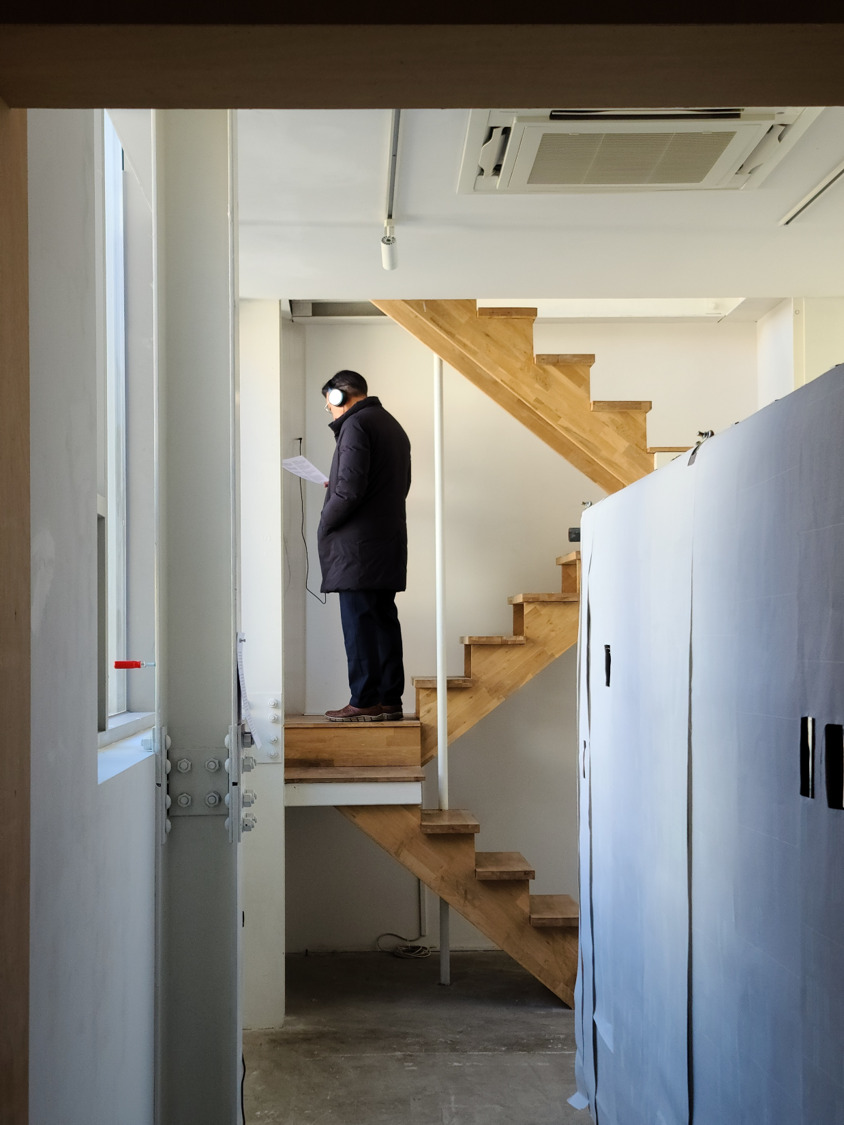
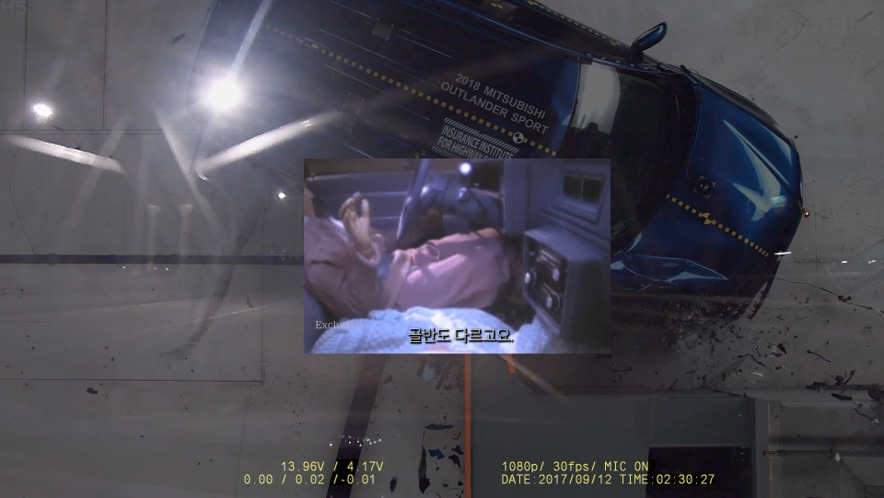
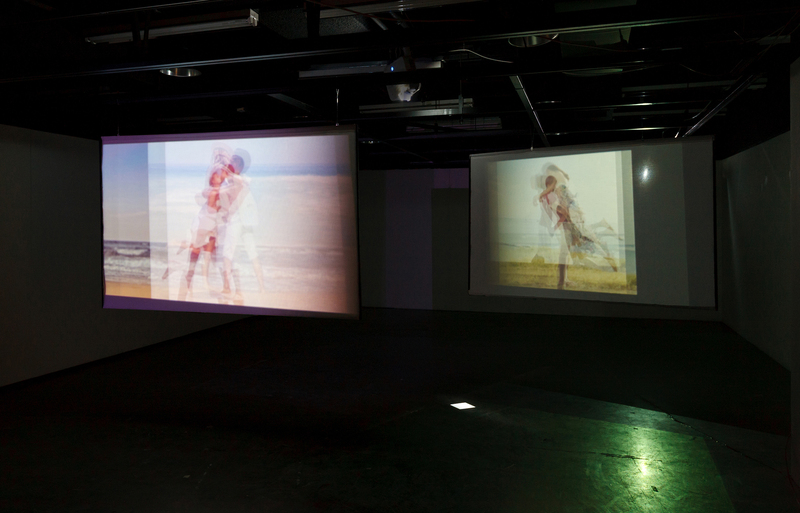
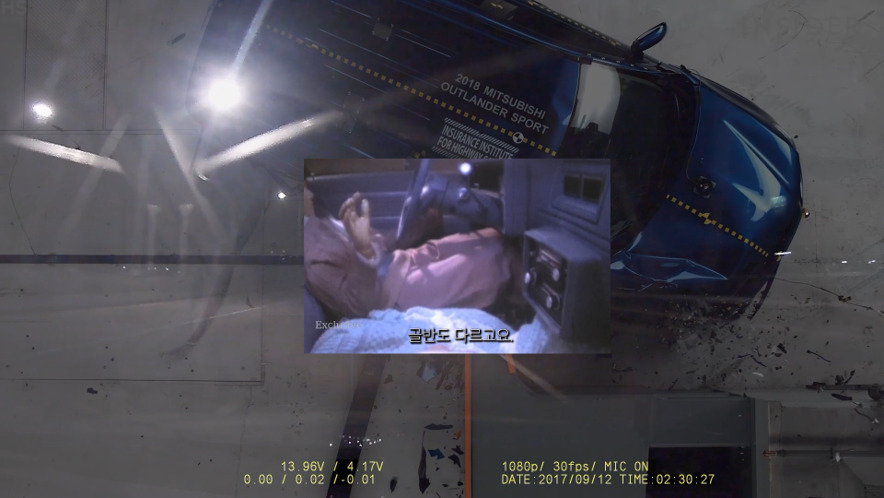
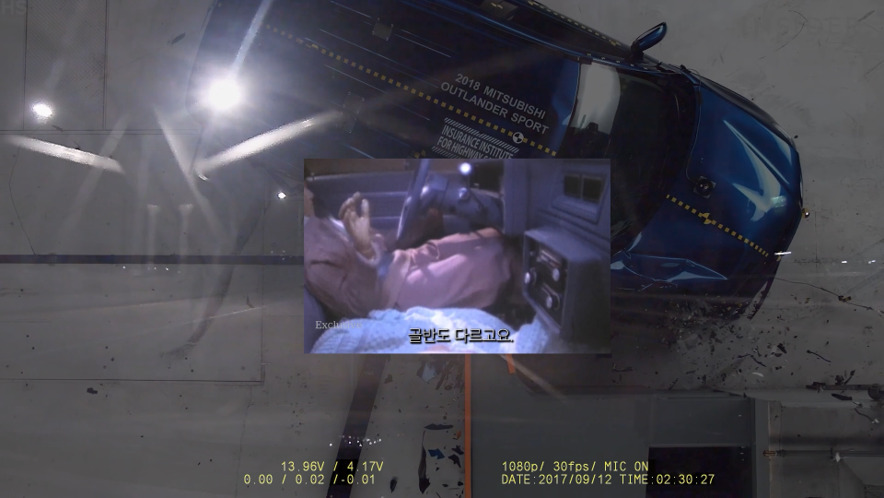
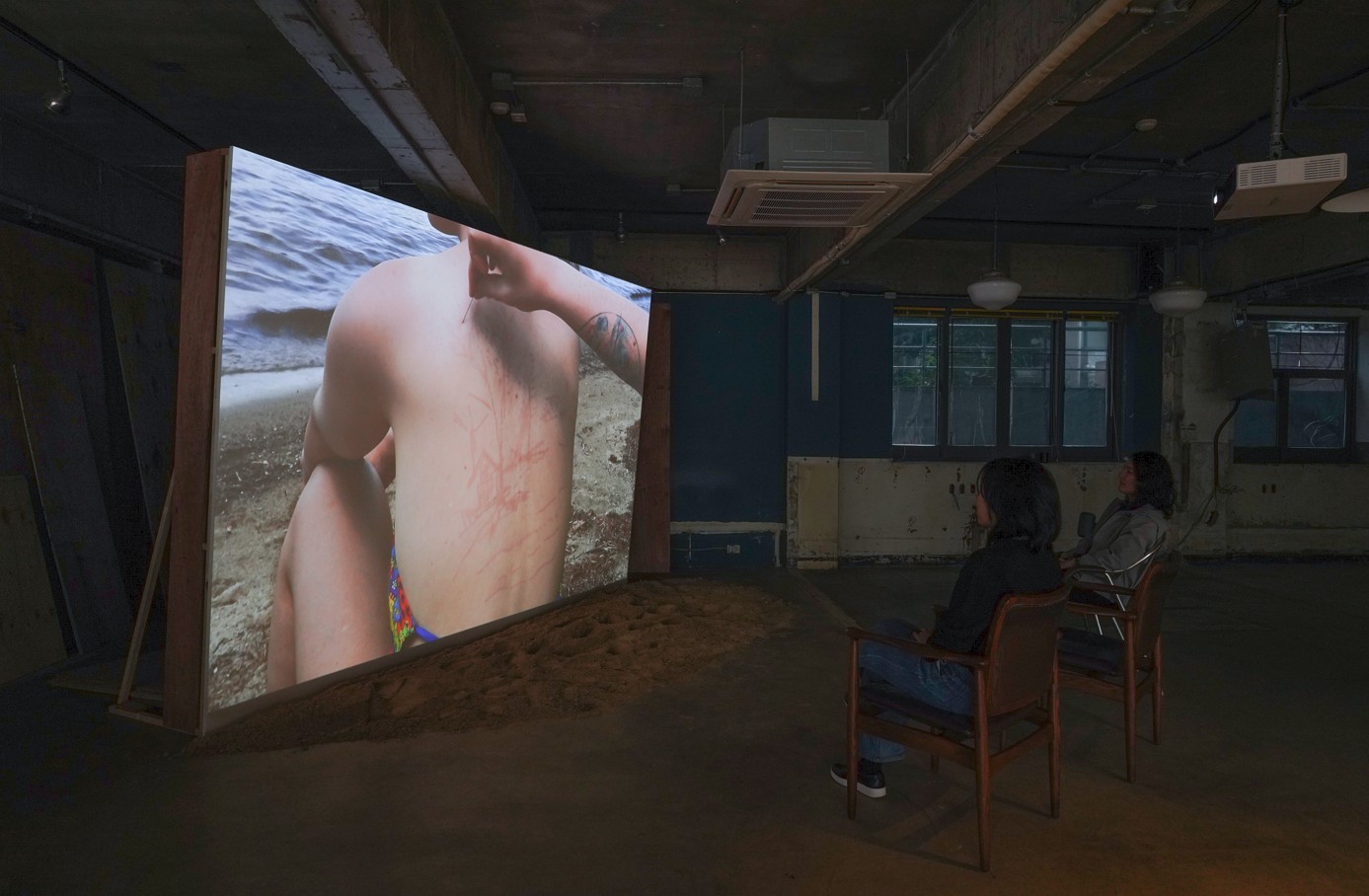
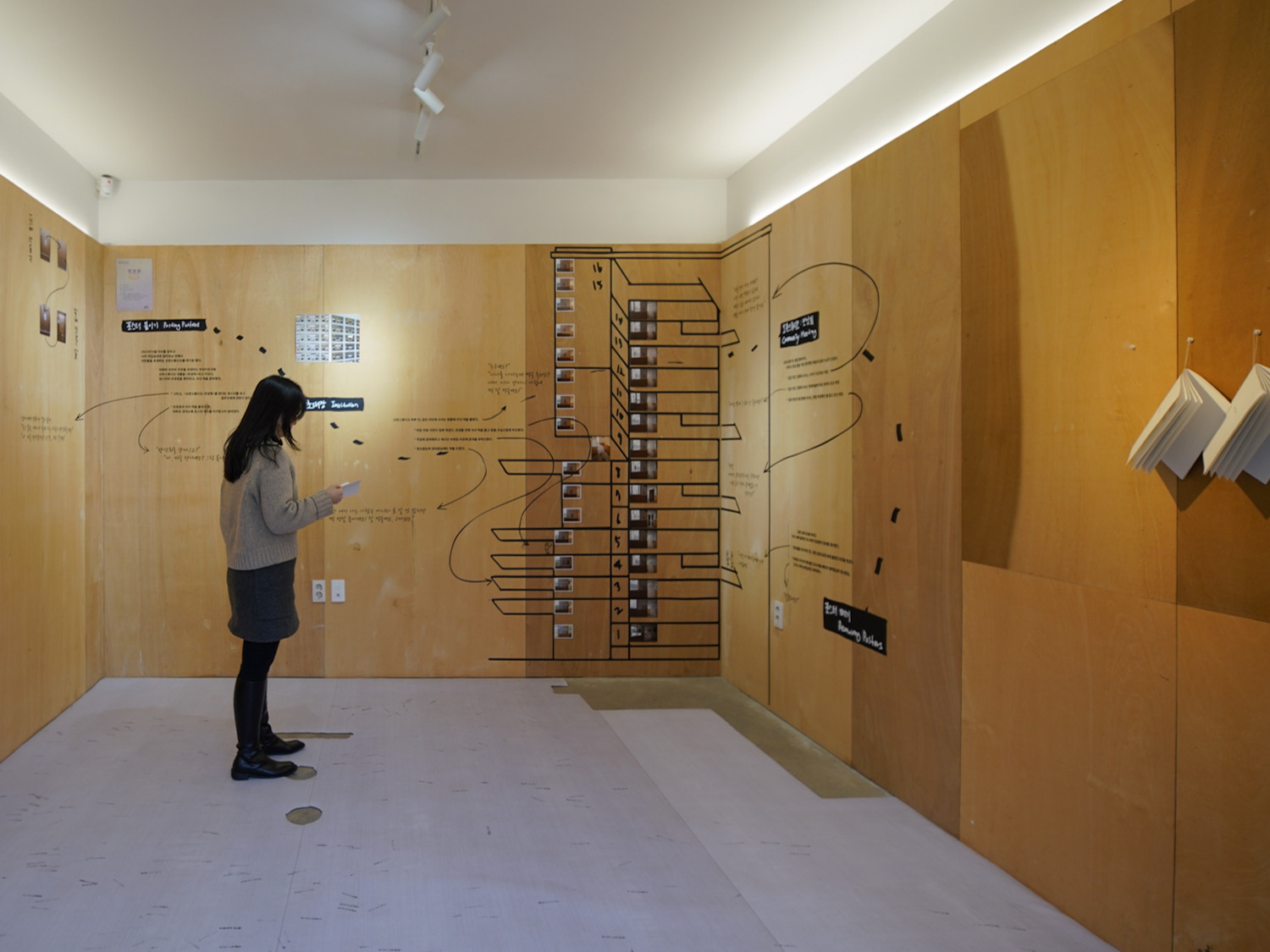
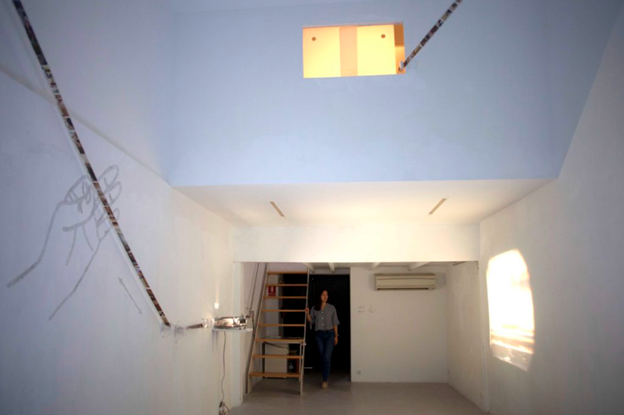
Solin Yoon, Safe Search, 2021, HD, single-channel video, 4min 25sec. © Solin Yoon

《Over You》 deals with the awareness and insights that the artist, who is feminist, earned from repetitive failures in romantic relationships. The theme of romance and breakup may seem cliched, but in the exhibition it was rather fresh because it has been rarely addressed in feminist art and discourse, since the romance of heterosexual woman is usually addressed in relation to the suppression of women by the patriarchy or marriage system. Living as a feminist woman, romance with a man is often considered “consuming” that involves self-abandonment, and a woman’s desire is easily overlooked as unimportant, something to be resolved by herself, thus I was glad that this exhibition addressed this issue.

The black feminist writer bell hooks, who has emphasized a type of feminism that is not gender exclusive in Feminism for Everybody, explained that the situation in which desire for love is looked down in the ground of (power) struggle. As a feminist, she discusses embracing her passion for (heterosexual) romance, a radical meaning of learning and practicing being oneself, freedom, and mutual respect within the relationship, as well as the possibility of social change. 

《Over You》 is on the same page as hooks’s philosophy in the sense that it sheds light on the different layers of a woman’s desire and attempts to “to step further from today”, instead of simplifying the heterosexual romance culture in patriarchal society for sake of criticism.
 
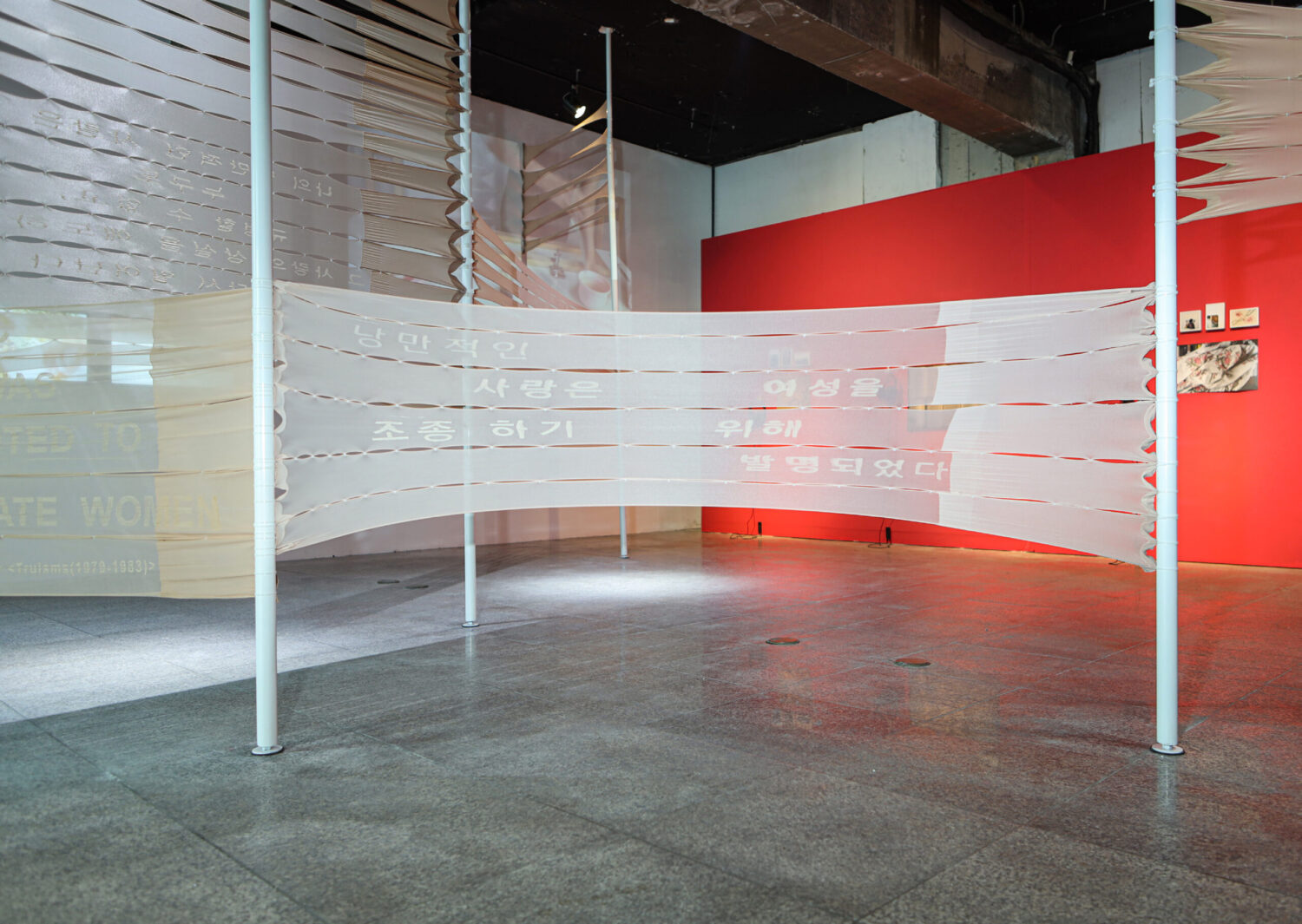
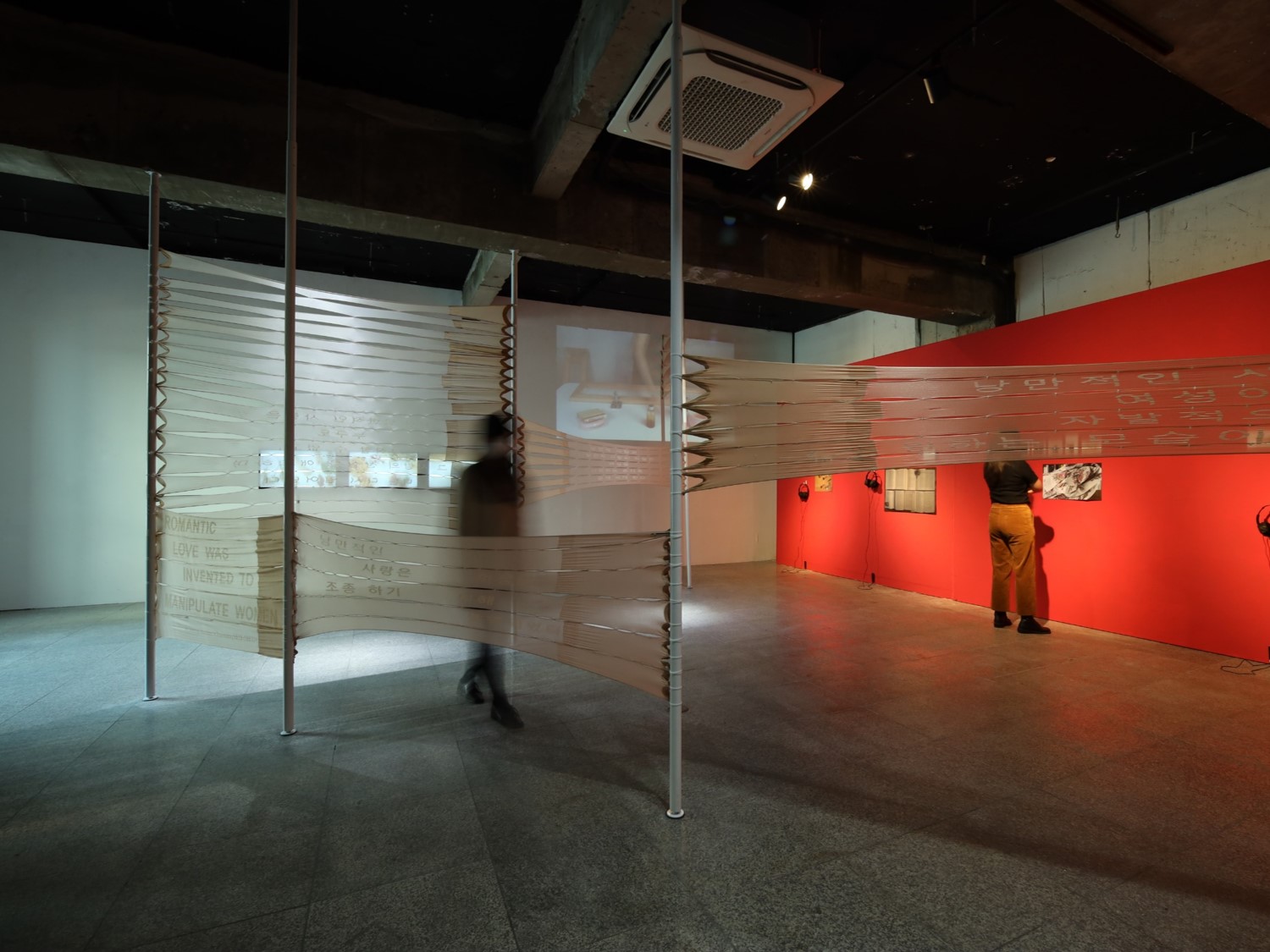
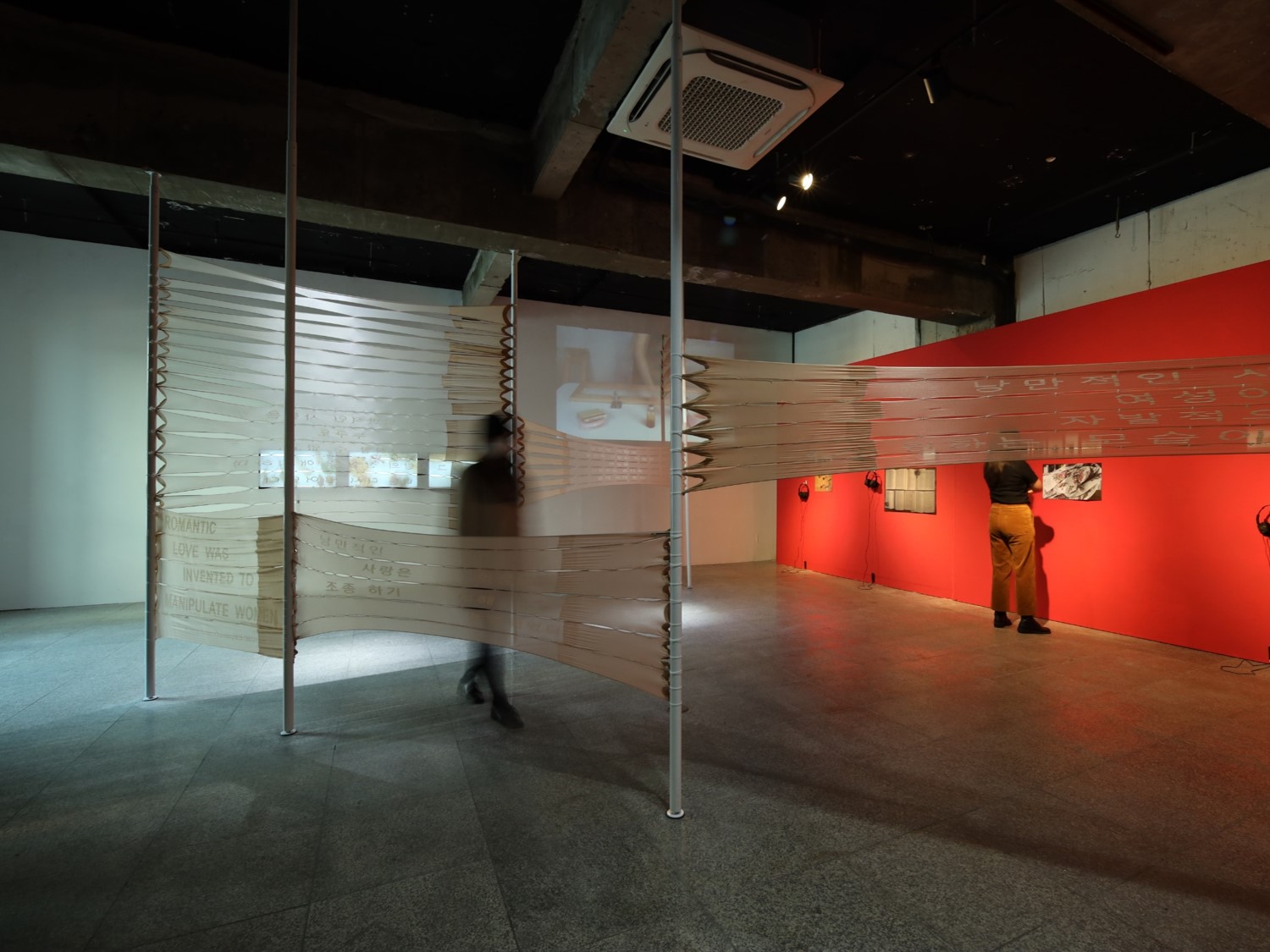
Solin Yoon’s exhibition continues the tradition of feminist art, trying to expand the public sphere for women. The main artwork of the exhibition refers to the epigram “Romantic love was invented to manipulate woman” from the work of American artist Jenny Holzer. It indicates that patriarchal ideology enforces individual women to self-censor themselves through their inner desire which incorporates them into the dominant system, implying that the personal is political.

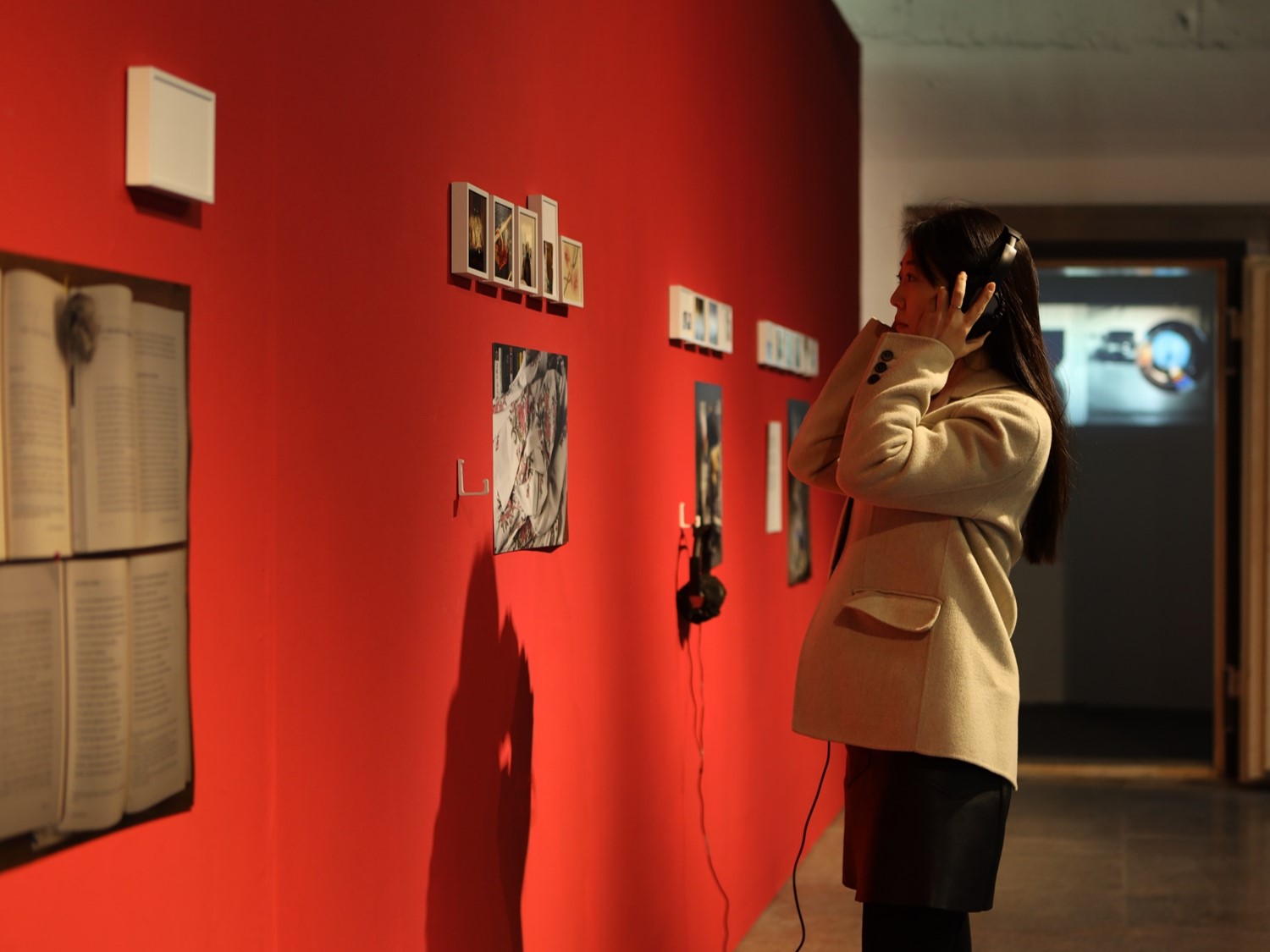
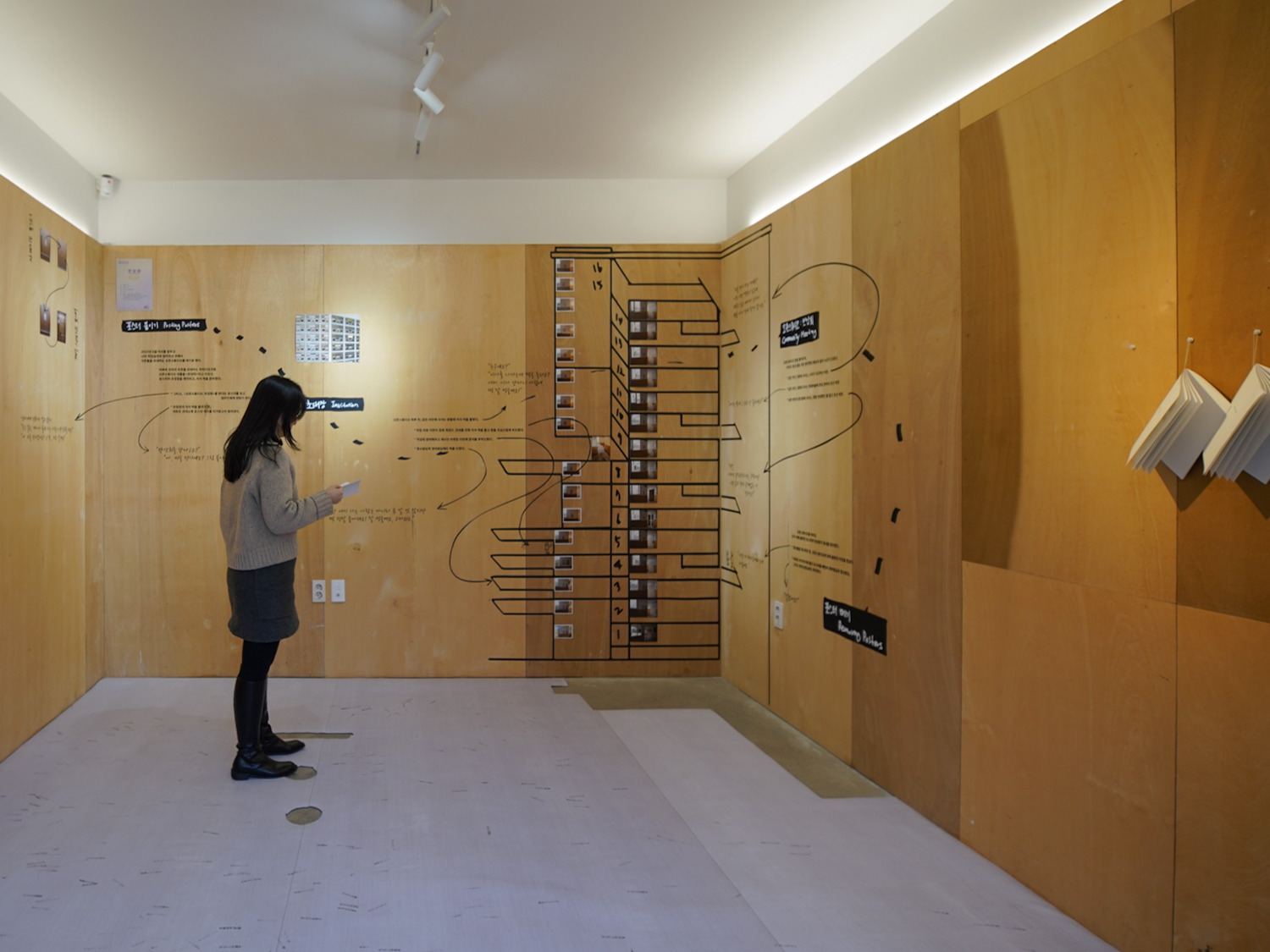
In other words, the ordinary experience of a woman cannot be separated from social structural context posed by the politics of sex, and this “private” sphere is accorded the power and importance to turn a woman’s life around. Including the artist herself, five participants (all heterosexual women) reflect on their experience to rewrite this phrase, and new phrases are printed on “banners” made of stockings and put up in the gallery. On the other hand, each woman’s experience and perspective are narrated in voice or text and juxtaposed with belongings she selected or “photos from a past romantic relationship”.

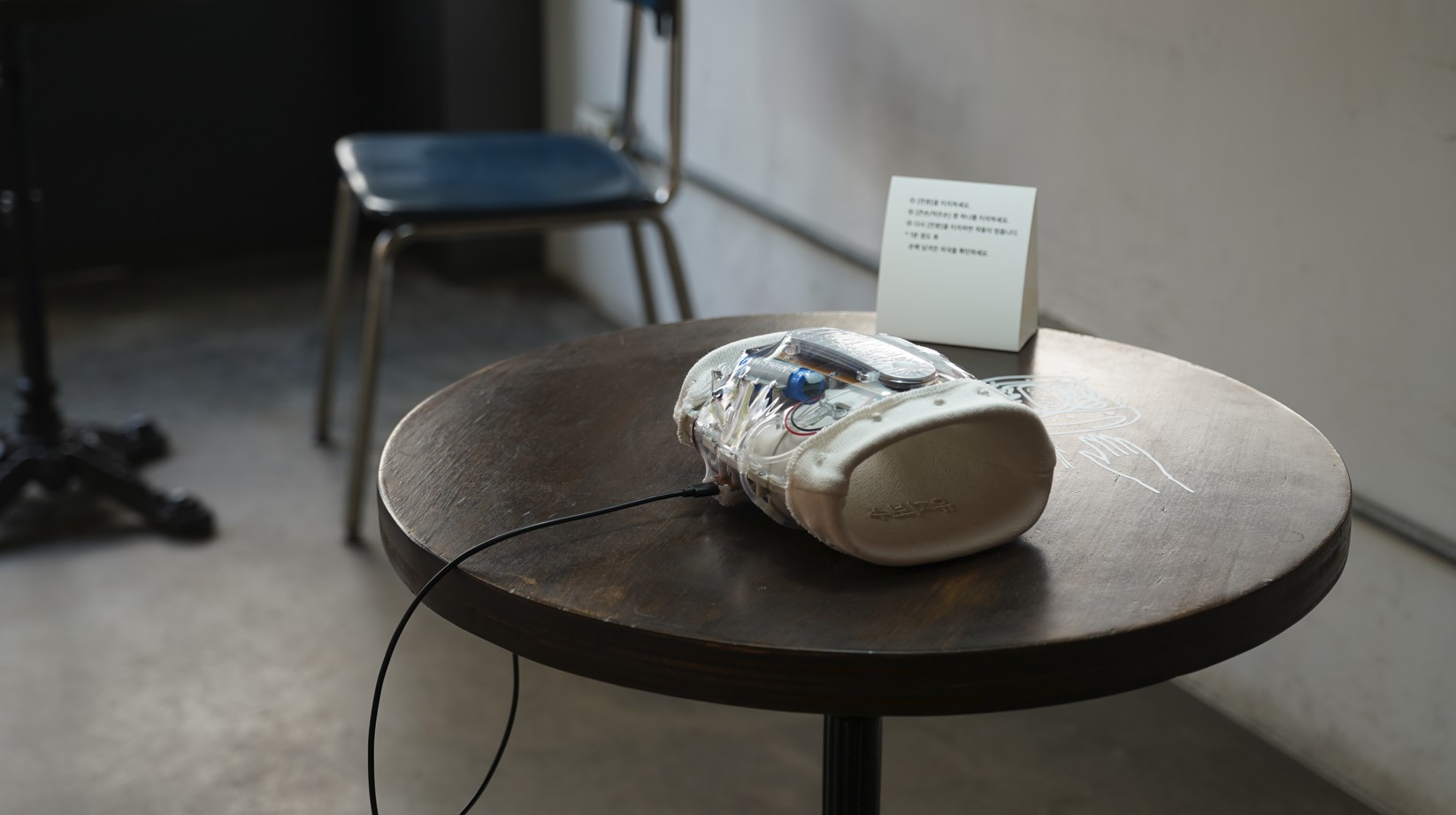
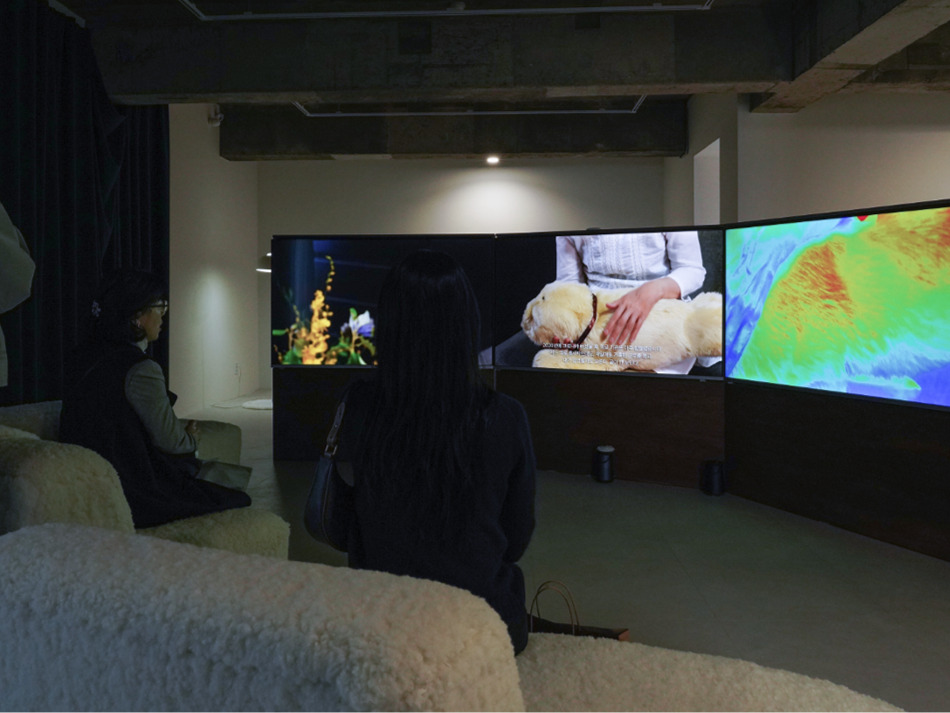
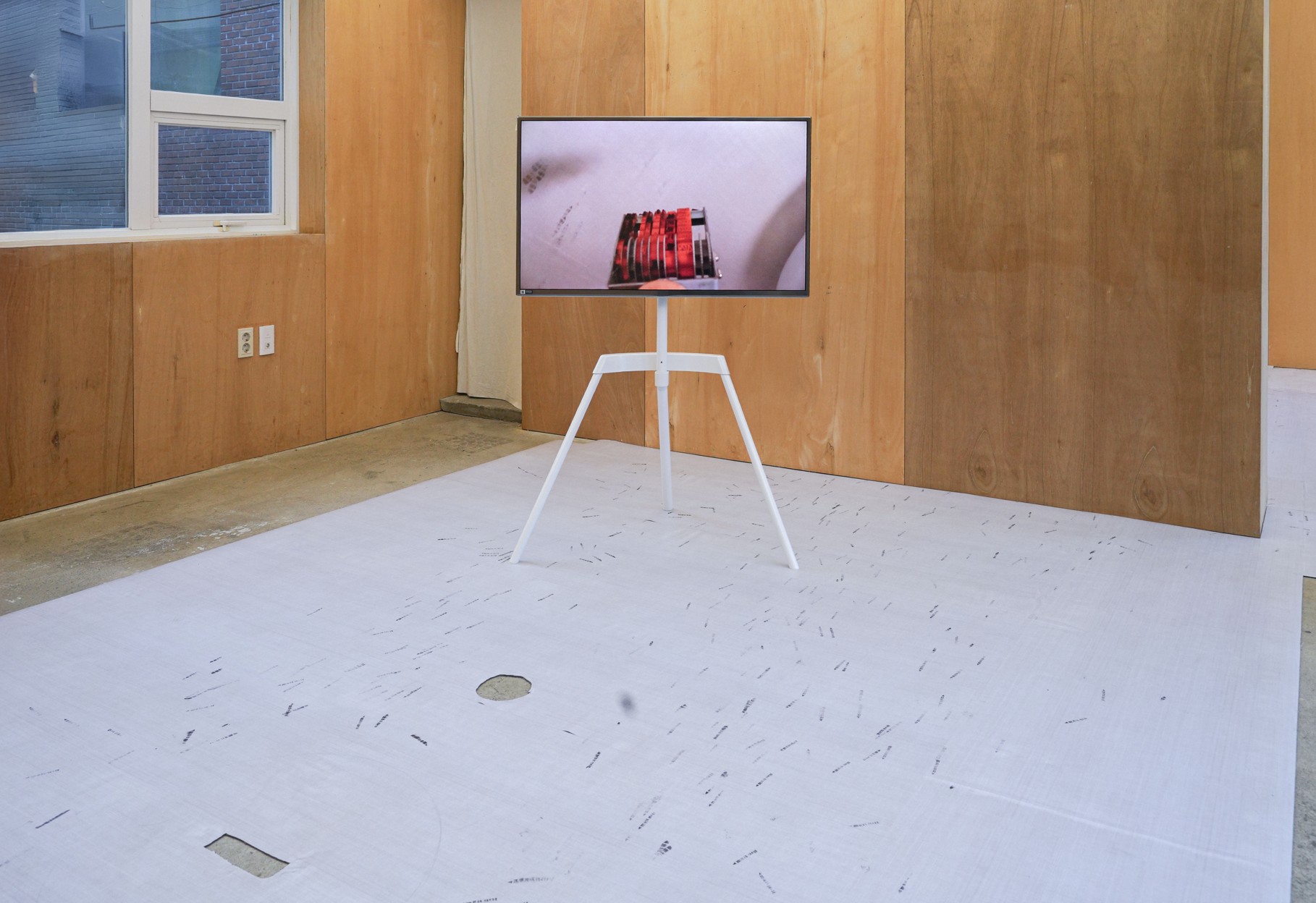
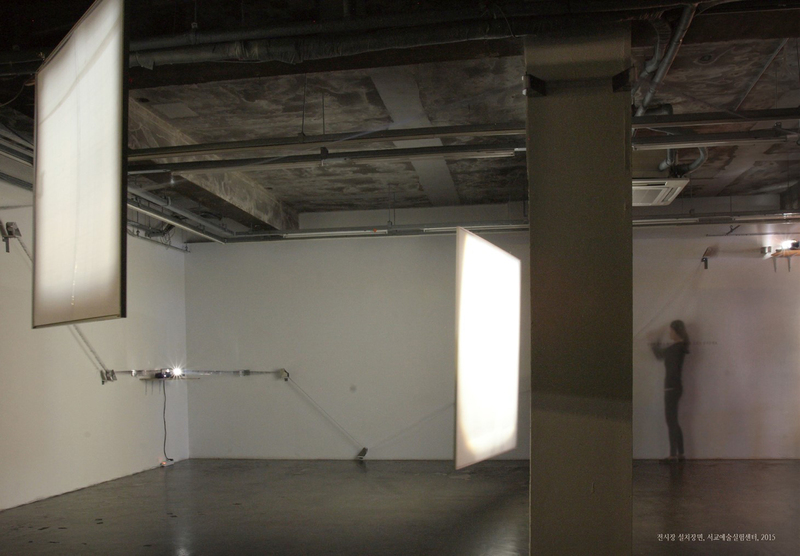
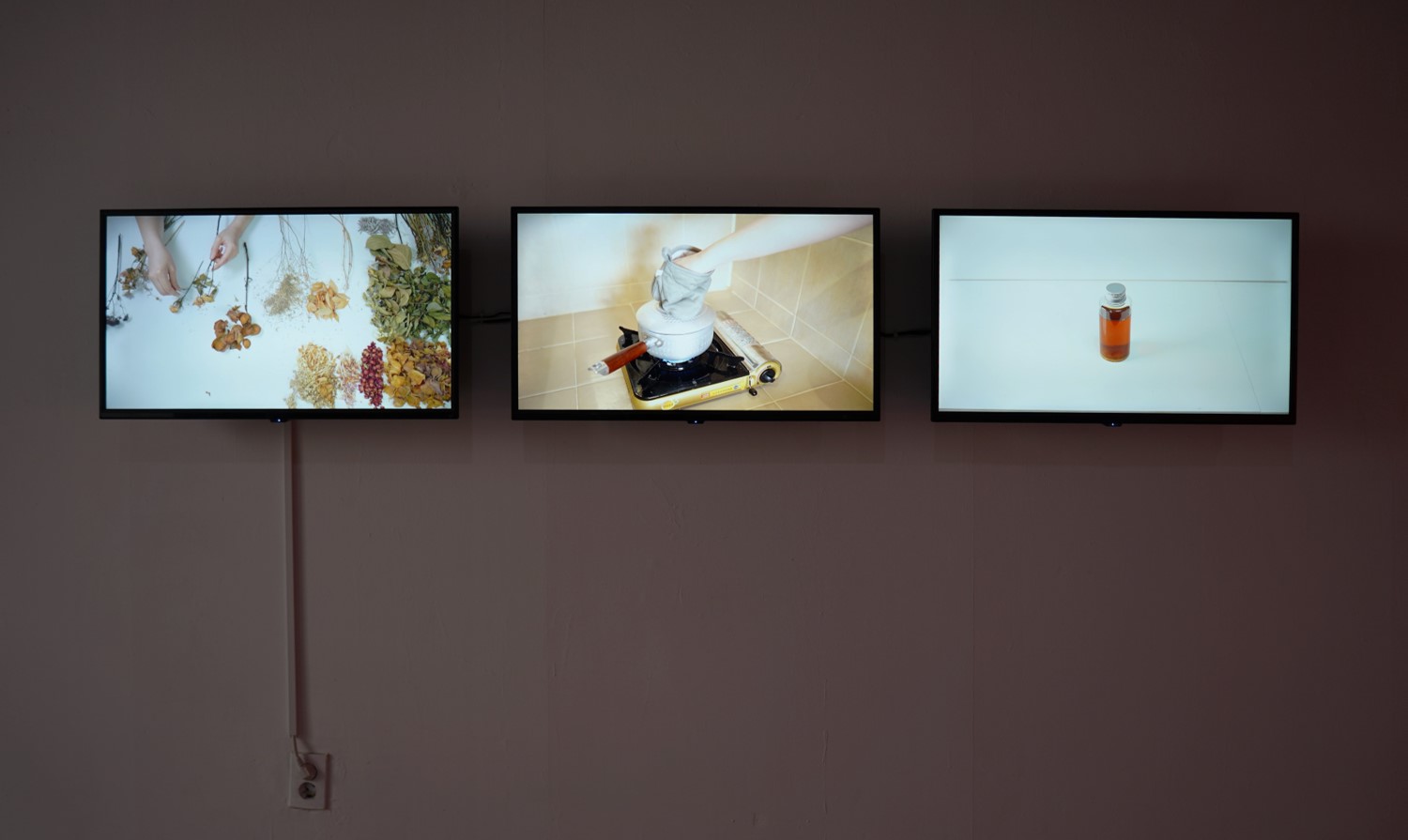
Through private images arranged on a red wall, the stretched skin-tone stocking banners that cross the gallery, and a video that shows the process of making those banners (the artist extracted ink from dried flowers she received from an old lover and silk-screened it on the stockings) the exhibition oscillates between private and public in terms of both content and format. 
 
So what does this exhibition bring to the public sphere? You may infer from the messages on the banners and the stories of the participants. Five selected episodes convey the thoughts and perspectives of living as a person who loves, rather than imagining what is beyond patriarchy, because they are discussing love in the frame of monogamous romantic relationship of heterosexuals, which is almost the only form approved in today’s patriarchal system.

Thus, someone may challenge that the exhibition does not comprehensively feature resistant feminist perspectives. However, it is rather consuming to debate how much this exhibition negates or advocates patriarchy. The artist illuminates the voices of women who live here today (Korea in 2021) with patriarchy, while examining the layers in-between them that cannot be simplified by negation or advocacy. Like other subjects who are objectified under the system, the desire of heterosexual women under patriarchy must be essentially ambivalent. What is important is the criticism raised through the voice of women with desire and whether we are forced to reconsider our perspectives on desire and love in patriarchy.
 
The stories shared by five participants vary from ridiculous romantic episodes to awareness and insights about love. The stories include the realization that true love is not “romance” but can include family, friends, and pets; one person's view on sexist bias based on her experience in Korea and France; an analysis that views romantic love and despair as the process of maturity; questions about relationships and subjectivity from repetitive casual relationships.

The artist, the only one who discloses her face, narrates her love story with the most details, and it involves her inner conflict as she recreated the “desirable image of a female artist” in order to match her boyfriend’s ideal type. The degree of individuality revealed across the selected stories is different, and overall, it seems refined. One episode where a participant questions her ex-boyfriend – “Isn’t true love for men actually directed toward their bros? Go out and shack up with (your best friend), dickhead” – illustrates the individuality of her way of speaking.

Another woman, who only represented herself with the image of a highlighted book, narrates what she witnessed and realized in a literary style, instead of giving clues to her own story. Although it somewhat reveals each individual since their episodes are read in their own voices, the concept or level of individuality the artist could manage to draw from them is still to be questioned. This practice that intercrosses individuality and publicness, and how “the personal” is defined would be something that the artist should keep examining. 
 
What kind of criticism do these women’s voices raise against patriarchy? The participants share the attitude to maintain a free, active sexual identity in a male-dominated society, an ideal image of the romantic love they want regardless of norms, and the progress of maturing through romance. These sorts of stories highlight the voices of independent women as something other than sexual objects, and of course this is significant enough as it is. On the other hand, (as the artist addressed as well) this practice is not complete but is still being explored, which makes me anticipate how it will develop further.

In the Korea of 2022, where feminism became popular and love is not commonly considered as the precondition of sex, how can this practice reserve its own unique meaning? Human desire naturally embodies complicated, transgressive aspects, and it is society that assigns them normality or abnormality. And patriarchy in today’s society postulates that this exclusive one-on-one relationship that mentally and physically shares everything with one lover is the default of not only romantic love but also of desire. What if the selected episodes revealed the gap between what we know and what actually conflicts in life more acutely, thus reconsidering such preconditions?
 
In the preface, the artist said her practice is “the attempt to discover a better romance.” Is there superiority or inferiority in “romance”? Who is the right subject to discern a “better” romance? If one dated an understanding and attractive feminist man, would it naturally resolve the issue of women’s desire and even conclude this practice as well? Perhaps, the “better” romance the artist addresses would be the expression of her will to seek a meaning of love that is more liberal, independent, and extended.

As this practice continues, if it draws more intense, personal stories of women as subjects of desire, causes cracks or questions the normative desire in patriarchy, this exhibition as public sphere would be able to propose the imagination for the “better” romance as she wishes.

References