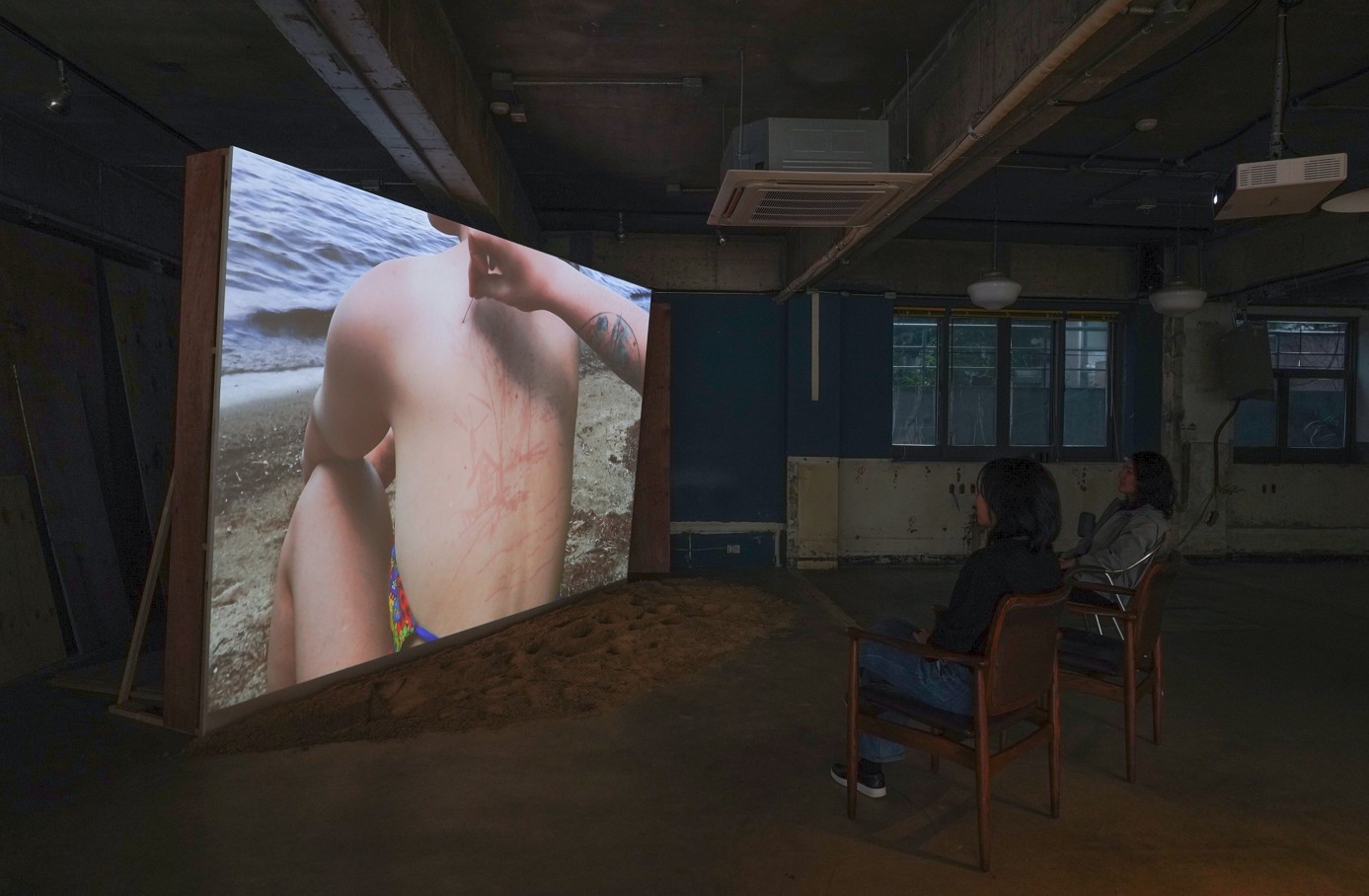
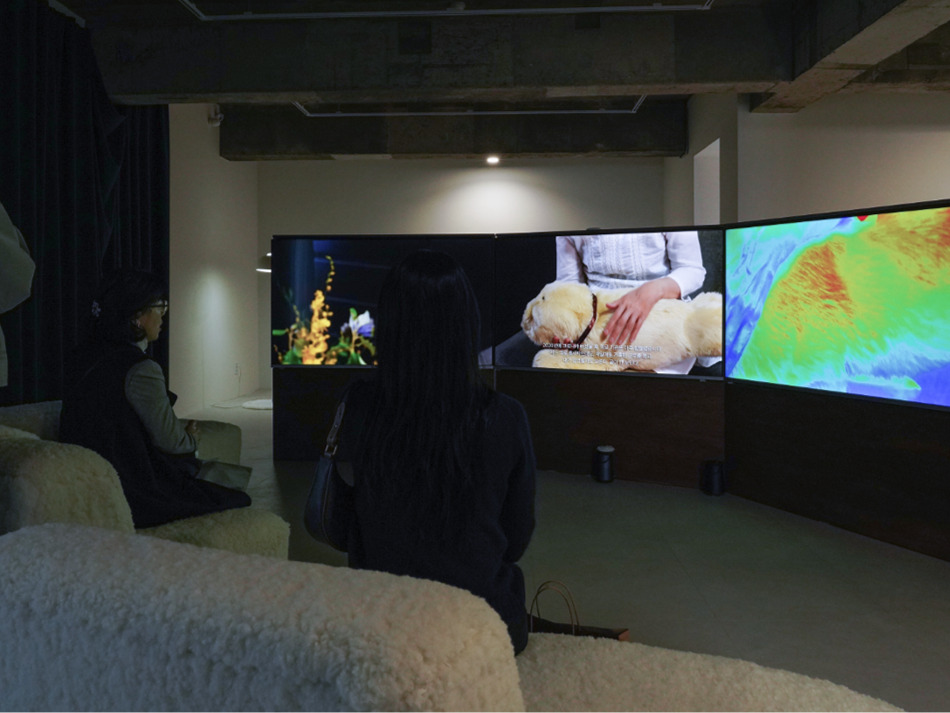
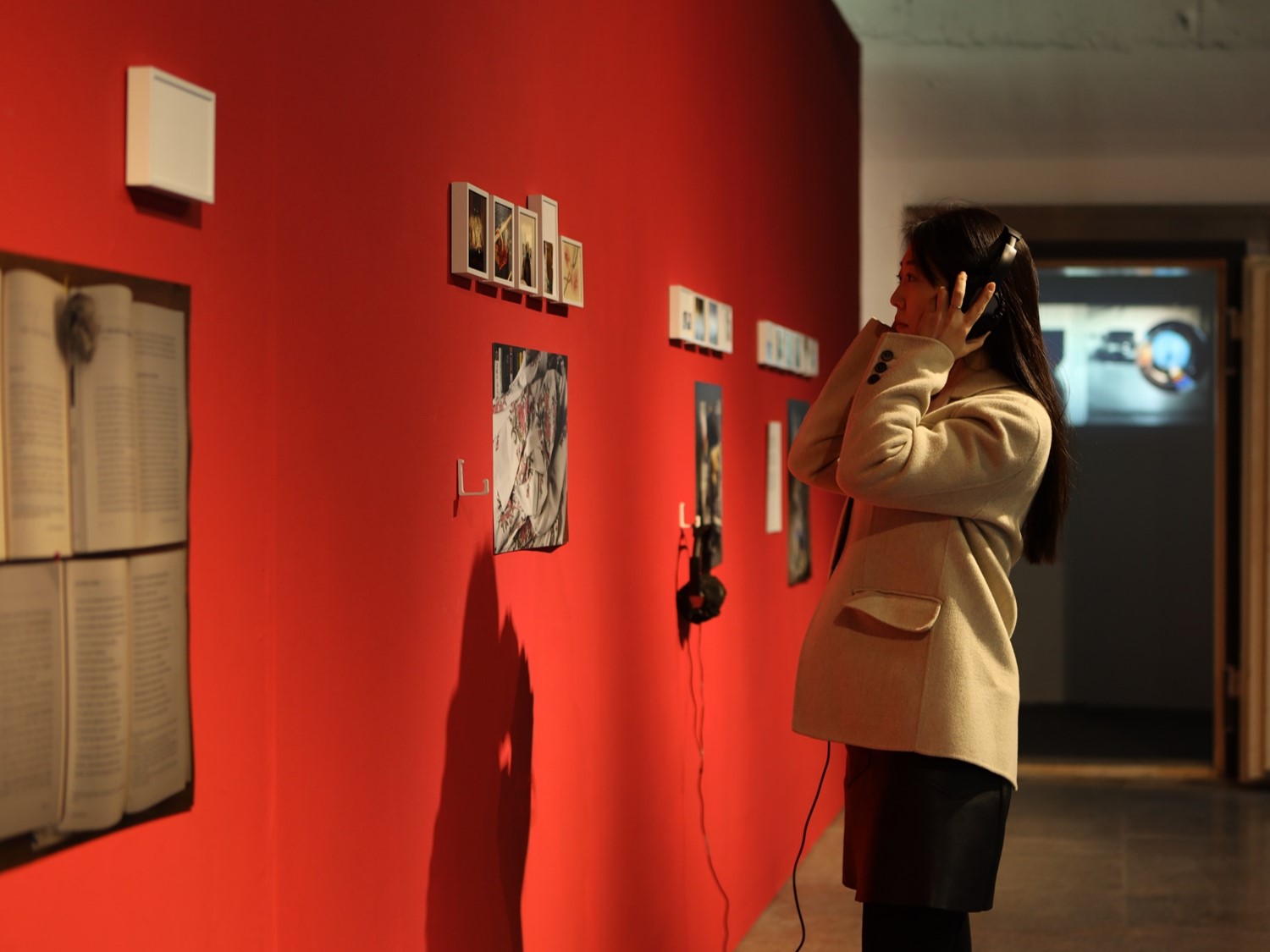
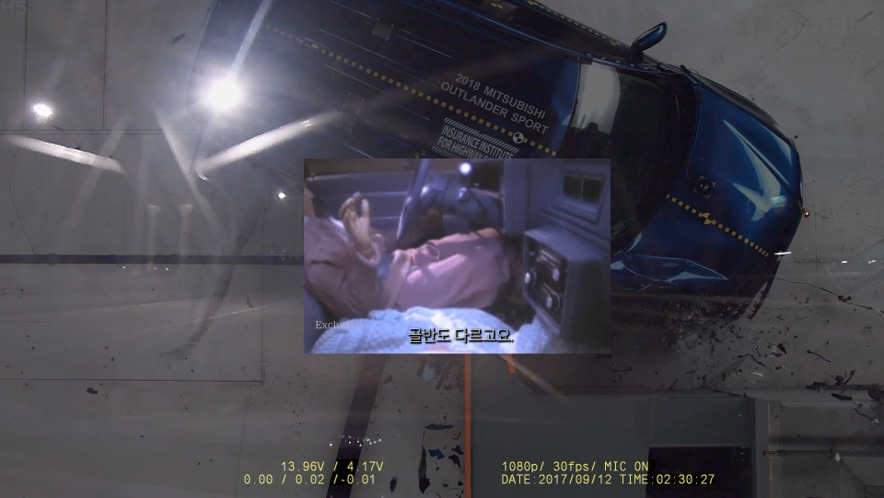
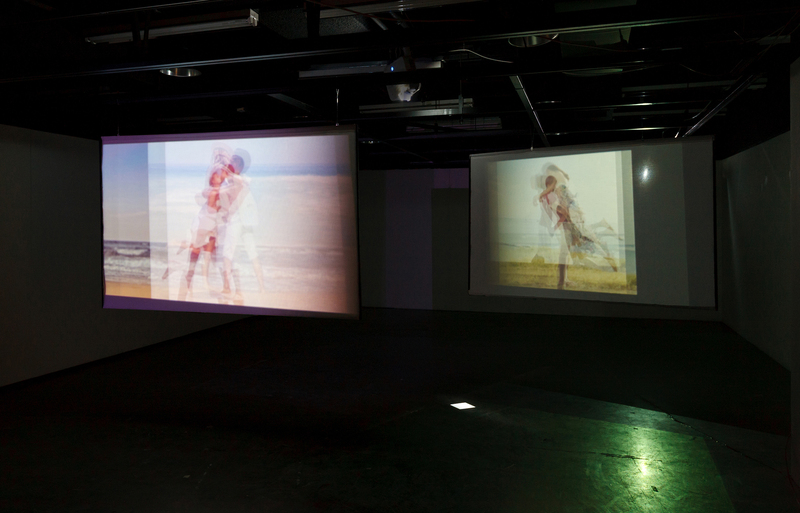
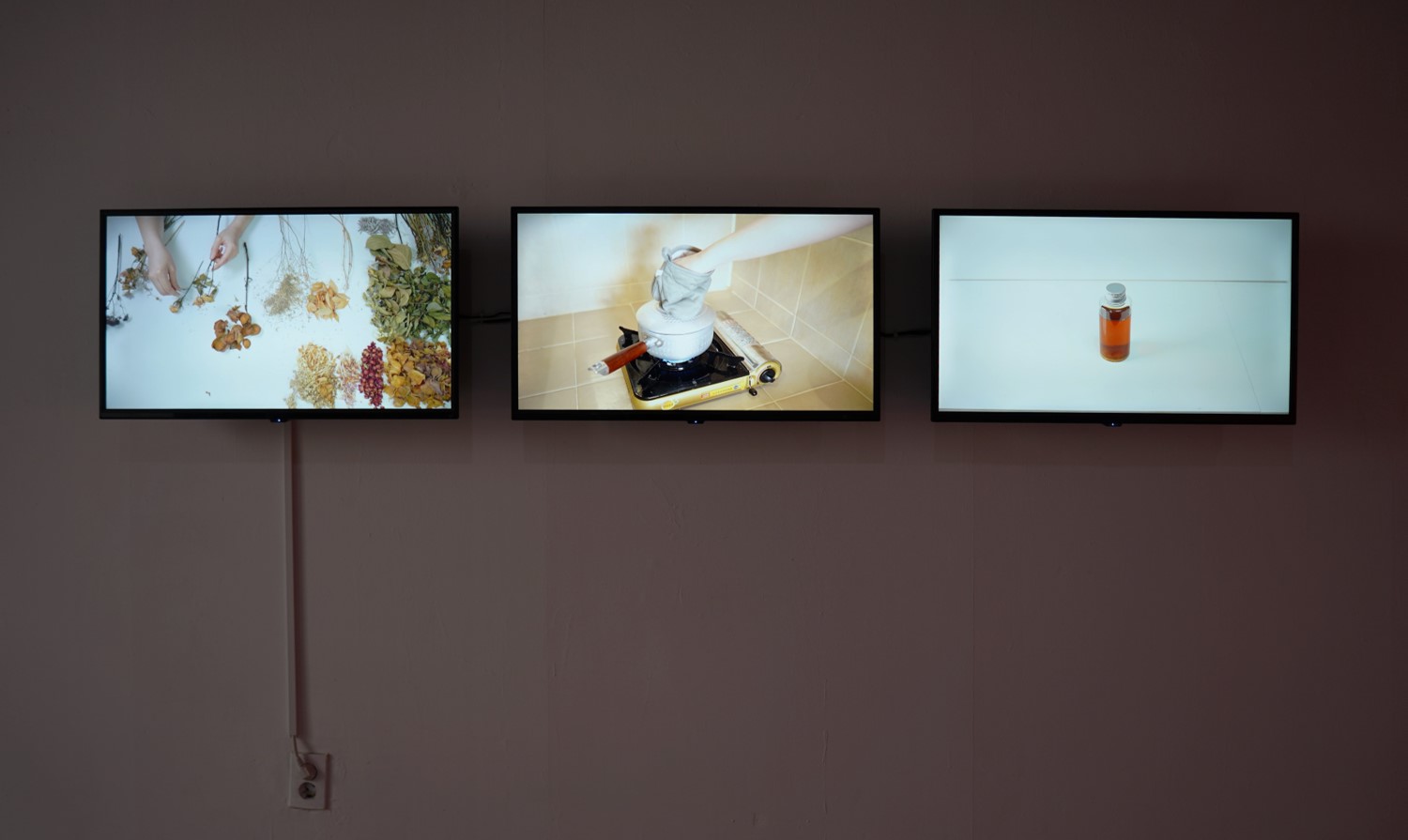
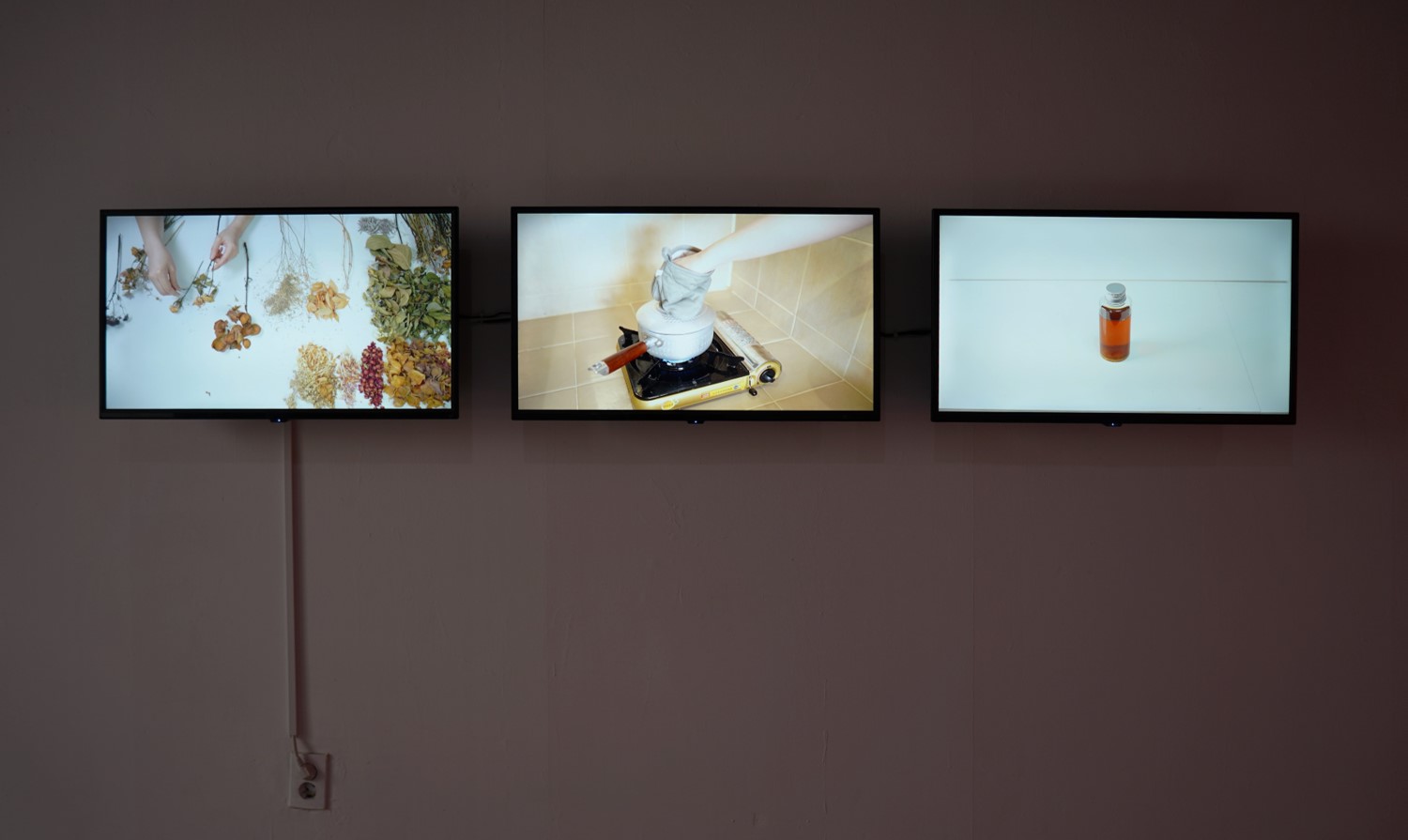
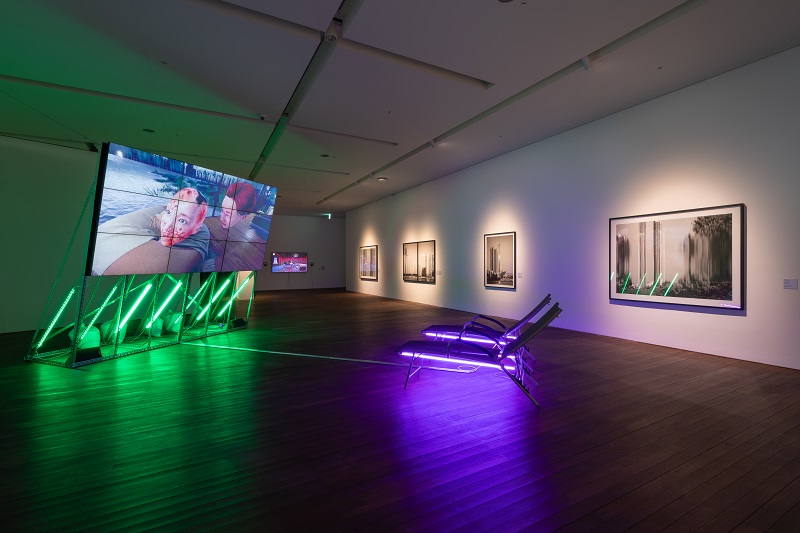
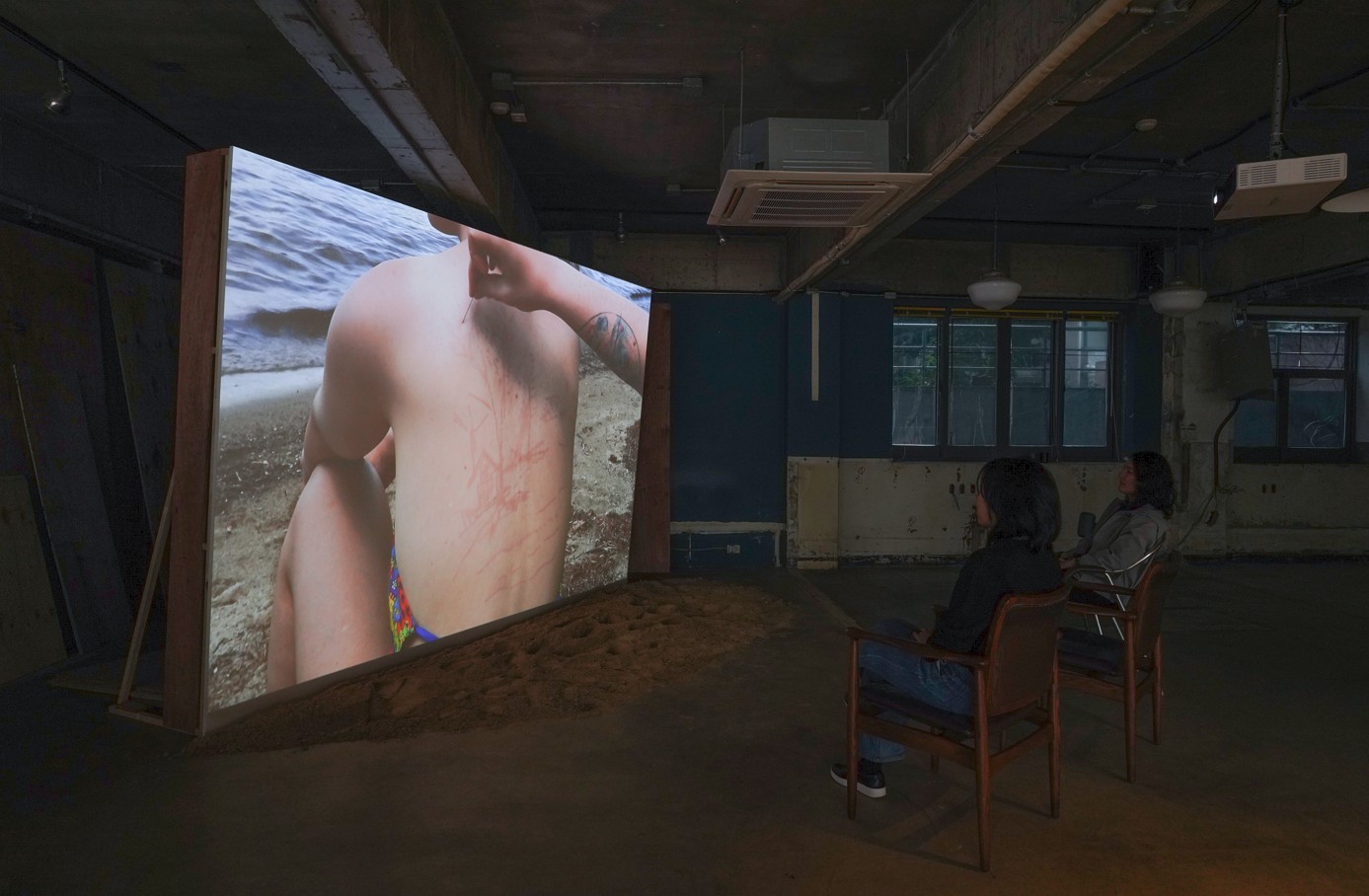
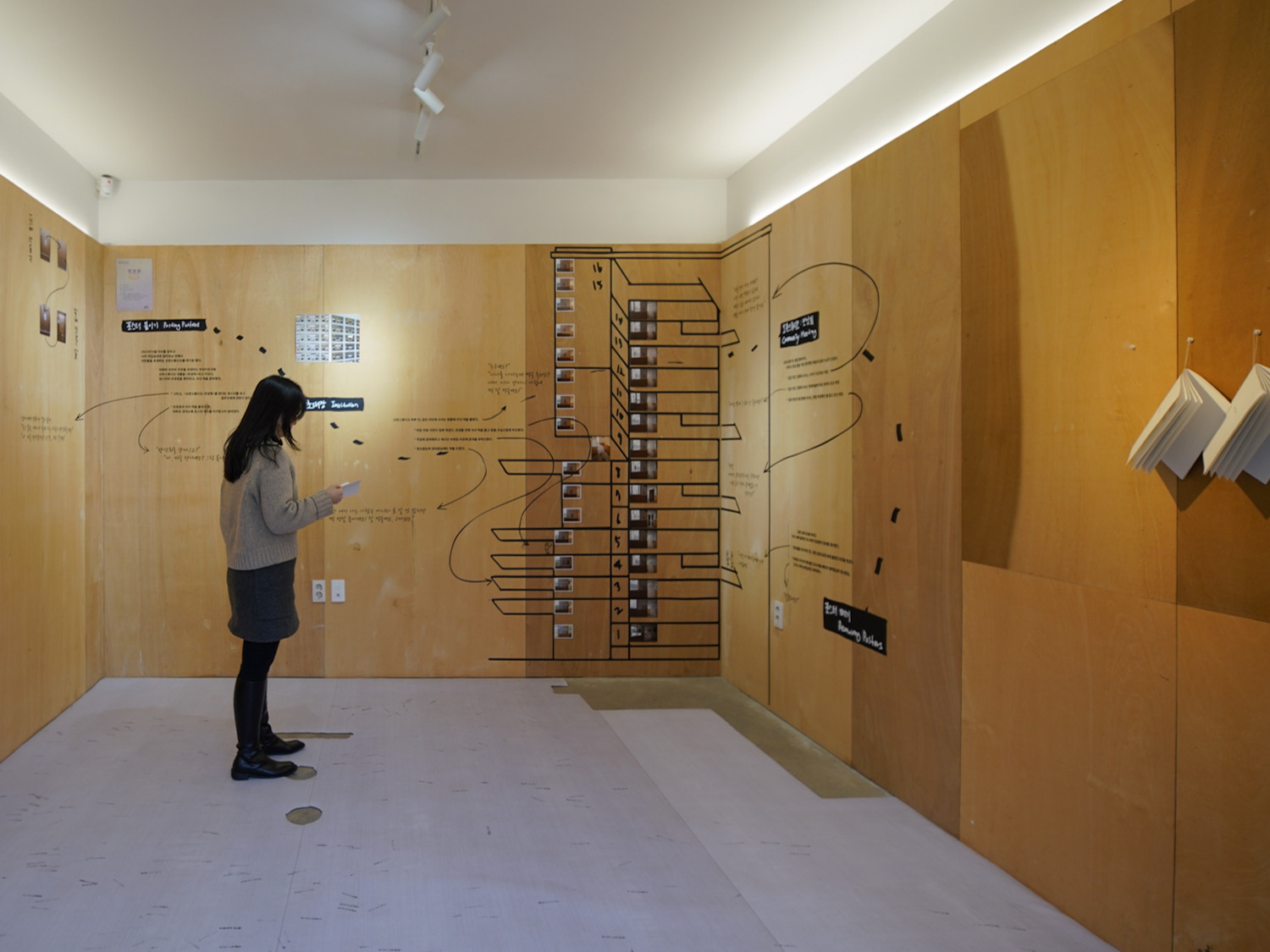
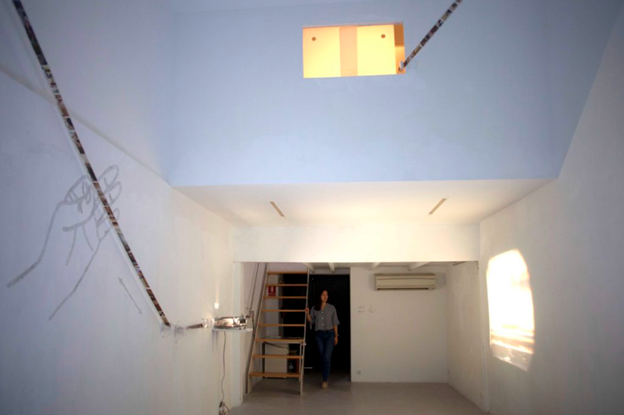
Solin Yoon, A way to deal with the dried flowers, 2021, 4K, 3-channel video, 8min 35sec. / 3min 30sec. / 3min. © Solin Yoon

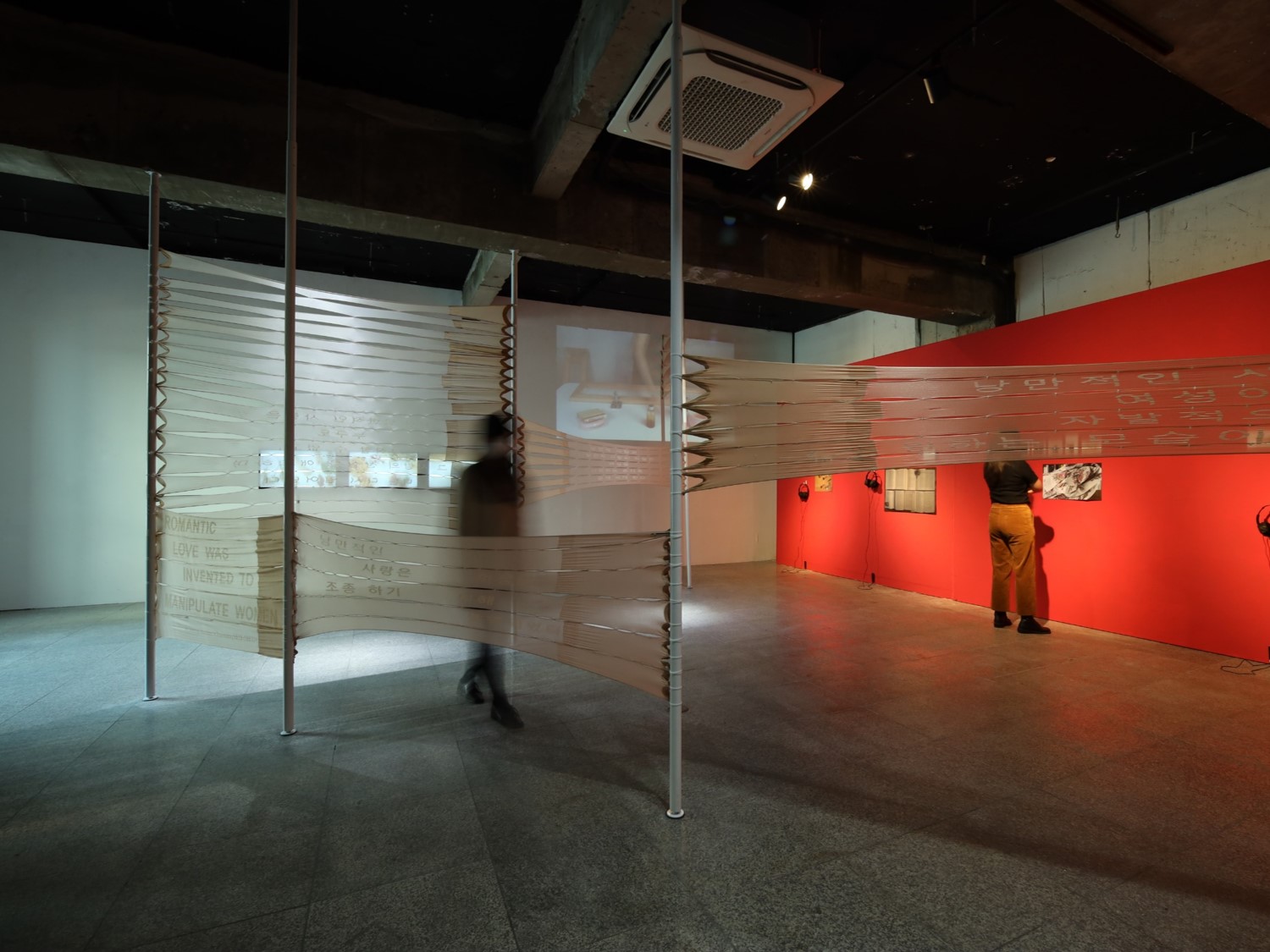
In my early 20s, late 20s, and early 30s, I saw the epigram “Romantic love was invented to manipulate women” at different places. At first, I could hardly understand it but then I began to understand little by little at some moment, and, entering my 30s I was reminded of personal stories from those words, and had ambivalent feelings.

The title of the exhibition 《Over You》 addresses intentional separation from an intimate object, or inevitable loss, but the exhibition ultimately includes “the subject who leaves” in me and superimposes an introspective perspective by calling myself “you.” In the title which inquires about what I have left and how the choices I have made have shaped who I am today, the expression over sounds determined. This is because it hopes those who experience separation and loss can convert the experience into the power to move forward into other places.


The state of possibility 

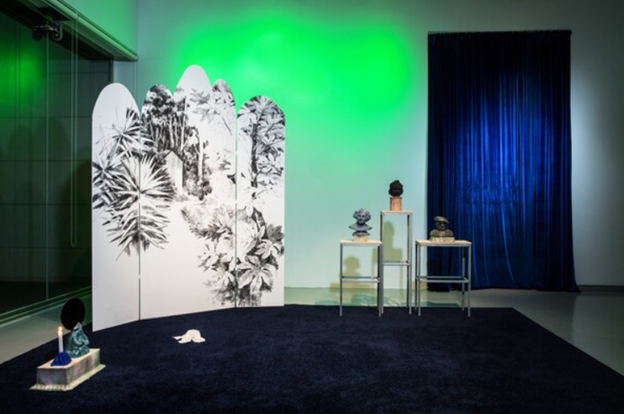
Here, other places are not romantic or transcendental. Rather they are places to critically analyze this place. Imagining such a place, I tend to refer to earlier feminists. In A way to deal with the dried flowers, I had confidence that dried flowers could be a subject of art, from Judith Butler’s lecture that explained queerness by appropriating Freud’s heterosexual ‘melancholy and loss.’ The perspective that reinterprets and revives a place that seems ruined gave me a hint in approaching inexplicable helplessness that I felt from dried flowers. These dried flowers appeared to me meaningfully as an object that reflects the present, when vivid emotions had been fossilized as time passed.
However, knowing I should not cherish them in the same condition anymore, I contemplated a way to discard them without discarding them. And I came up with the idea of ink as a way to revive the ‘done’ object and bring it back into a fresh condition. Reclaiming the object into ink, I spent a lot of time and effort looking and fully taking apart every element. The approach to objectively and crucially perceive a personal and emotional experience is the beginning of the context of ‘ink’ originated from this object.

Emotional but cool-headed, senseless but painful, the state of “melancholy and loss” makes us want to think about contradicting ideas. And I would like to name this mental state ‘the state of possibility’ that enables analysis and insight about the helplessness one feels as a woman.

 
Rewriting 

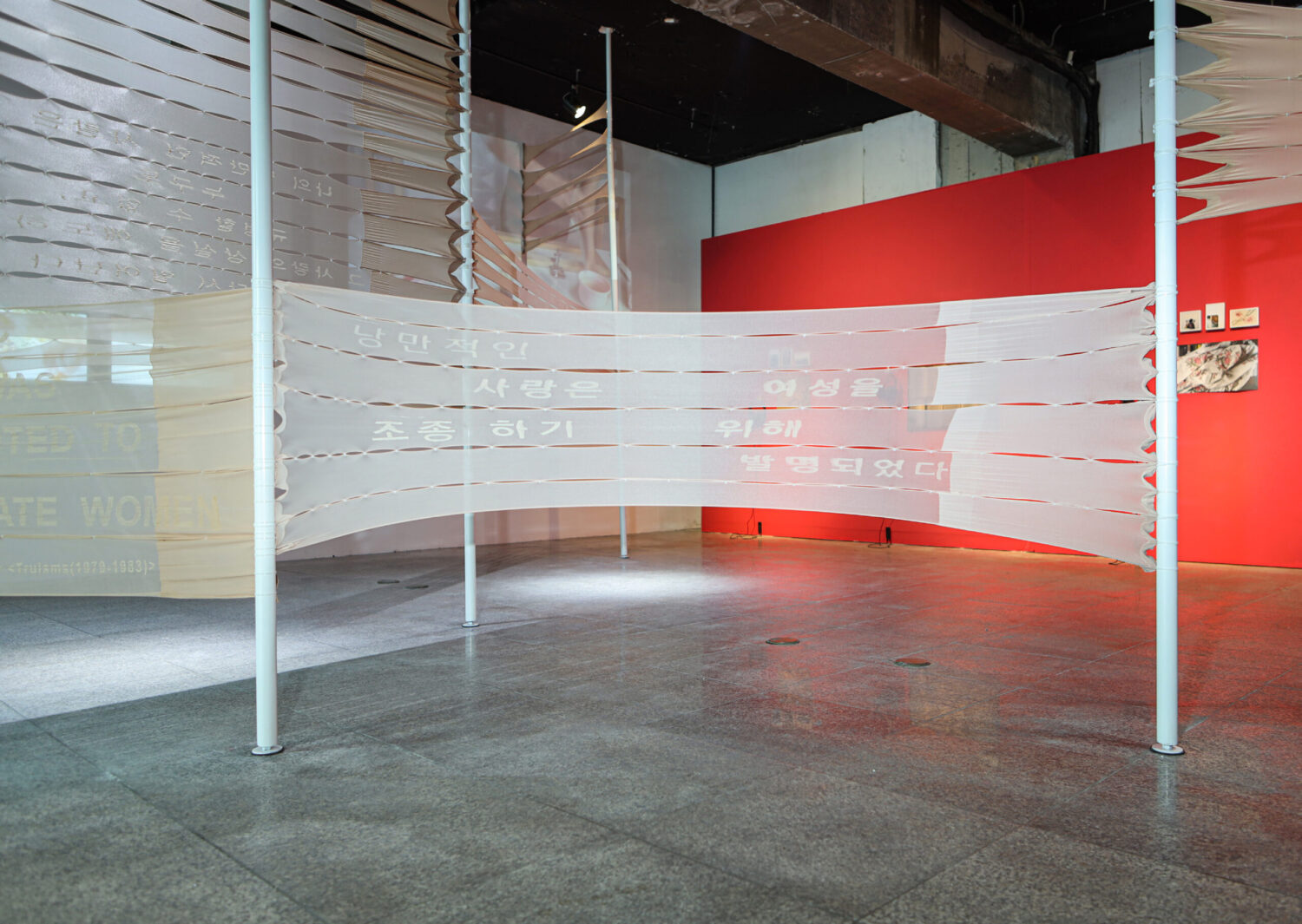
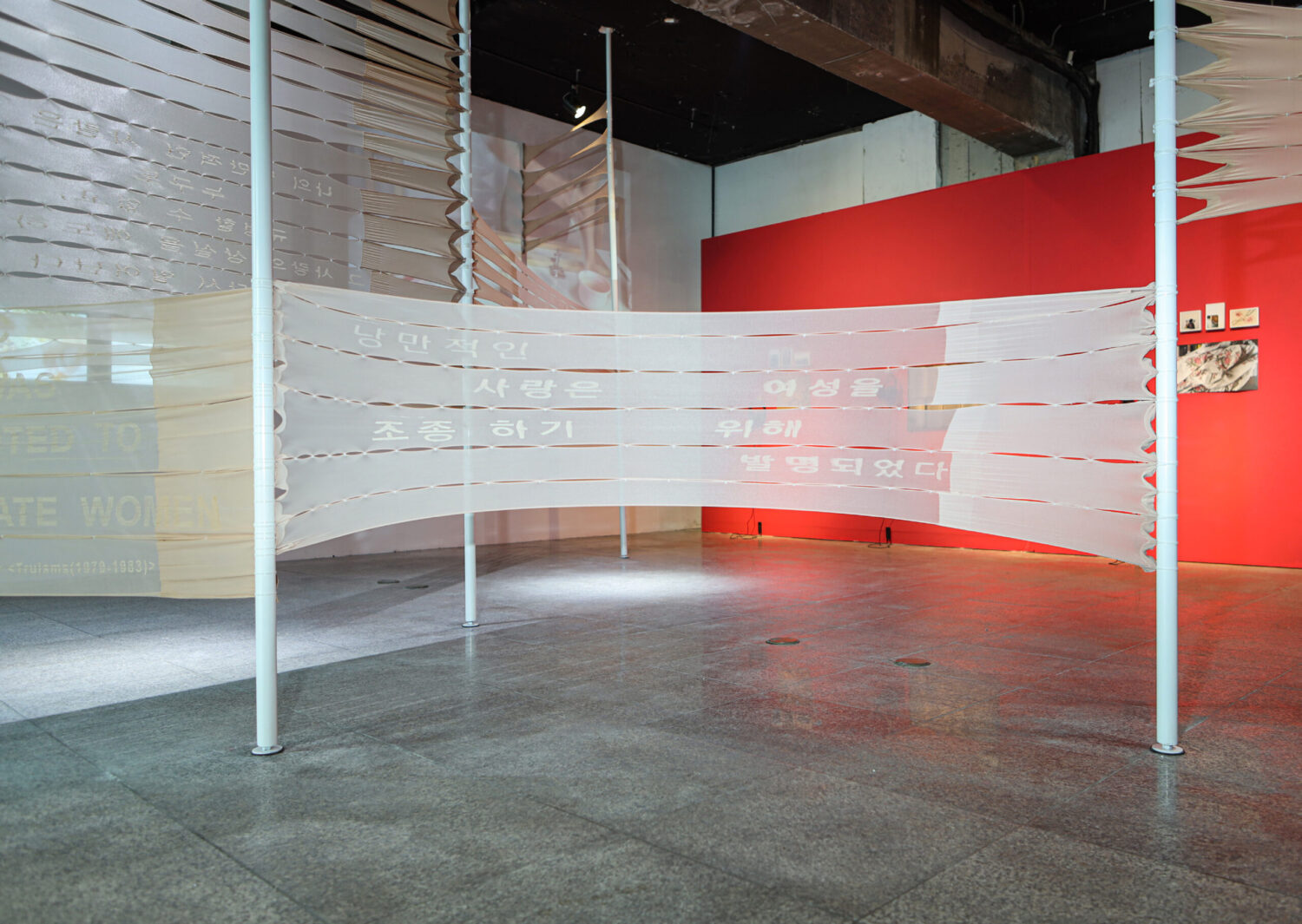
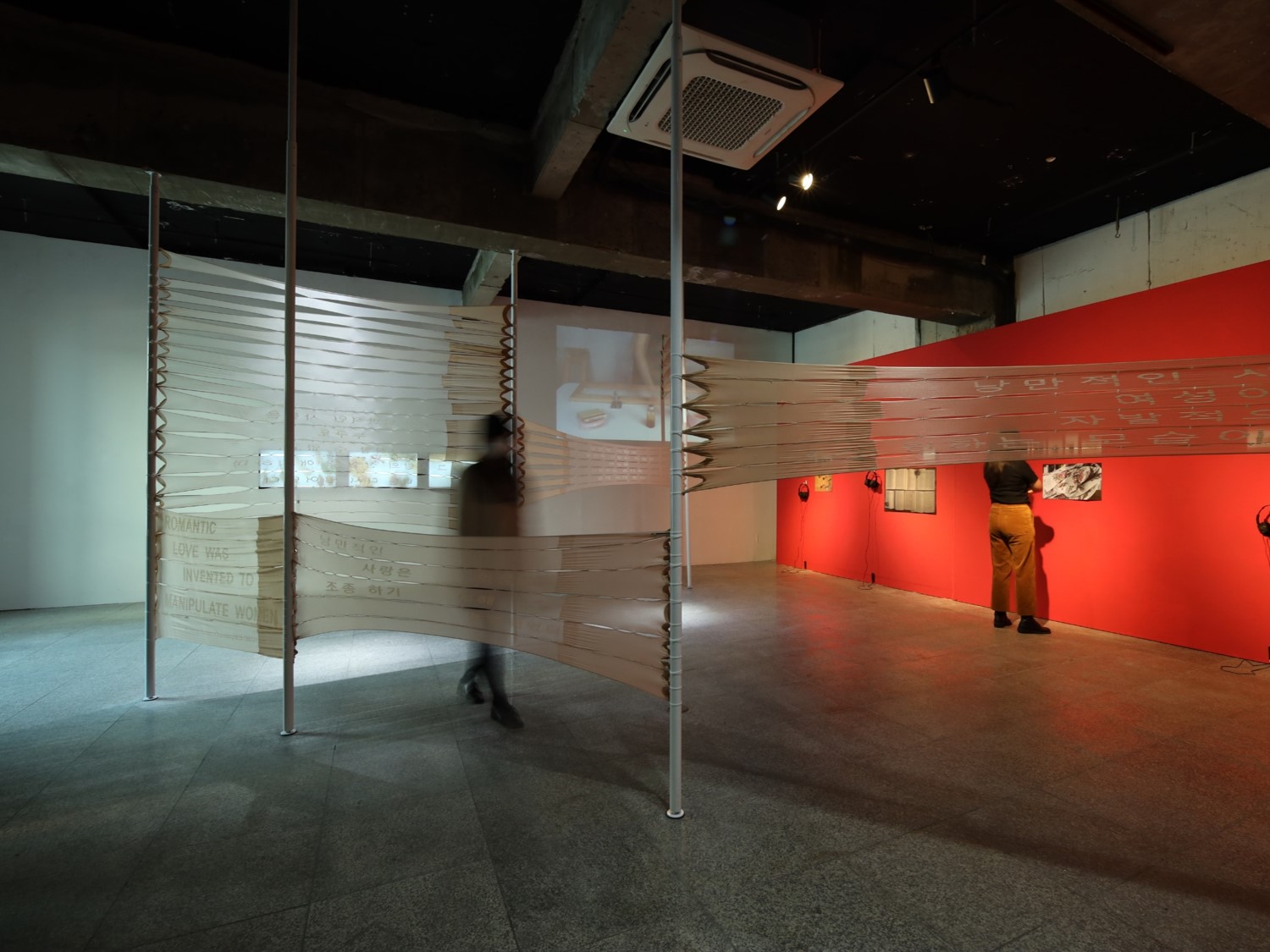
That is how “Romantic love was invented to manipulate women” became the first epigram printed with this ink. This is one of the epigrams in Jenny Holzer’s project ‘Truisms’. Sounding like as if counterposing romance and woman on the surface, this phrase seems to provoke a binary judgment between favor and opposing, but the more I think about the meaning of each word, it leads me to an ambivalent state that cannot be easily defined.

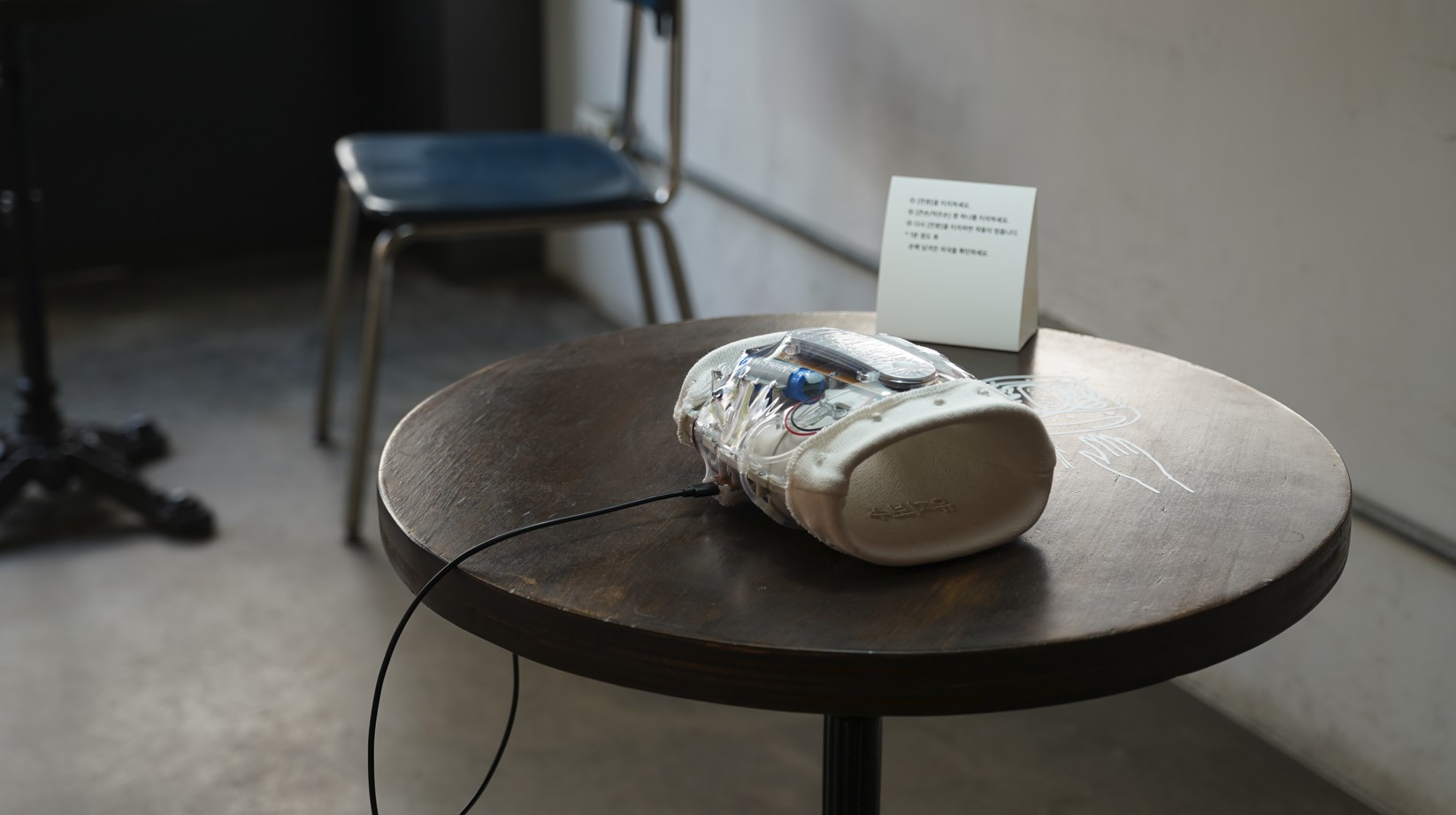
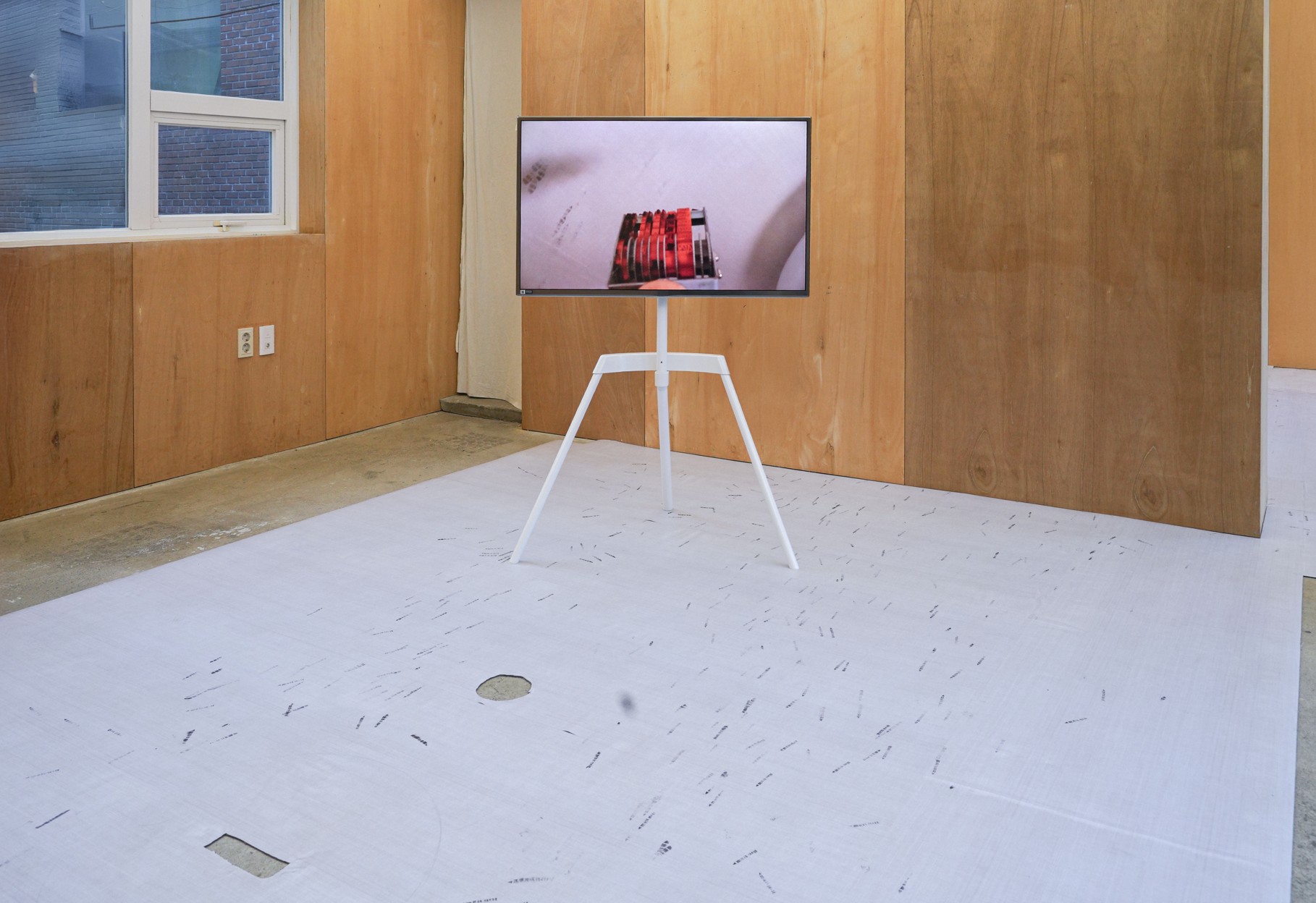
In order to demonstrate a complex psychology implied in this conclusive phrase, I chose silk screen instead of transcribing it, which requires a more complicated process in printing. The body movement that presses ink through delicate holes of the screen surface onto the skin-like object suggests the visualized text that involves understandings gained beyond abstract or transcendental things. 

Redefining is an attempt to collect responses of individuals who live in a real time-space of the transnationally referenced texts. Here, Jenny Holzer’s text is cited to be reconsidered through the eyes of Korean women today, not as the object of homage with power in art history. Referencing and repeatedly citing the early feminist’s work from the western world cannot avoid hard challenges in asking how we should accept conceptual art or feminist art that originates from the West, how general, unique, or sharable “my” situation is compared to the “experience of women” all around the world.

However, studying the cases that rewrite the ideas of early feminists, I decided that “re” writing as artistic practice could be a valid way to shed light upon the issues of Korean women in a concrete context. 

Today, Korean society seems to face never-ending questions and responses about ‘what is a woman?’ And women who consider themselves to be feminists are consistently influenced by intellectual, emotional, objective, or irrational dynamics and explore their stance and directions. It is easy to be angry or sarcastic about what experience women go through in reality. Some are overwhelmed by irresistible feelings and grow more cold-hearted or desperate. Some, as a way of survival, seek a way to be insensitive to reality so they would not sympathize with women’s issues.

Some defame feminism and say that it has colluded with consumerism and resolved into money. I think these responses towards feminism contaminate the term “feminist” in Korean society as the cause of division or promoter of dichotomous judgment. In my response, I tried to approach the term ‘feminist’ through ‘ambivalent psychological states.’ And I noticed heterosexual relationships of feminists as the ground where diverse feelings coexist, and love and hatred cross over.


Solin Yoon, Redefining, 2021, The ink abstracted from the flowers, Stocking, Variable installation © Solin Yoon

Desire for romance fantasy and pressure from psychological conflict

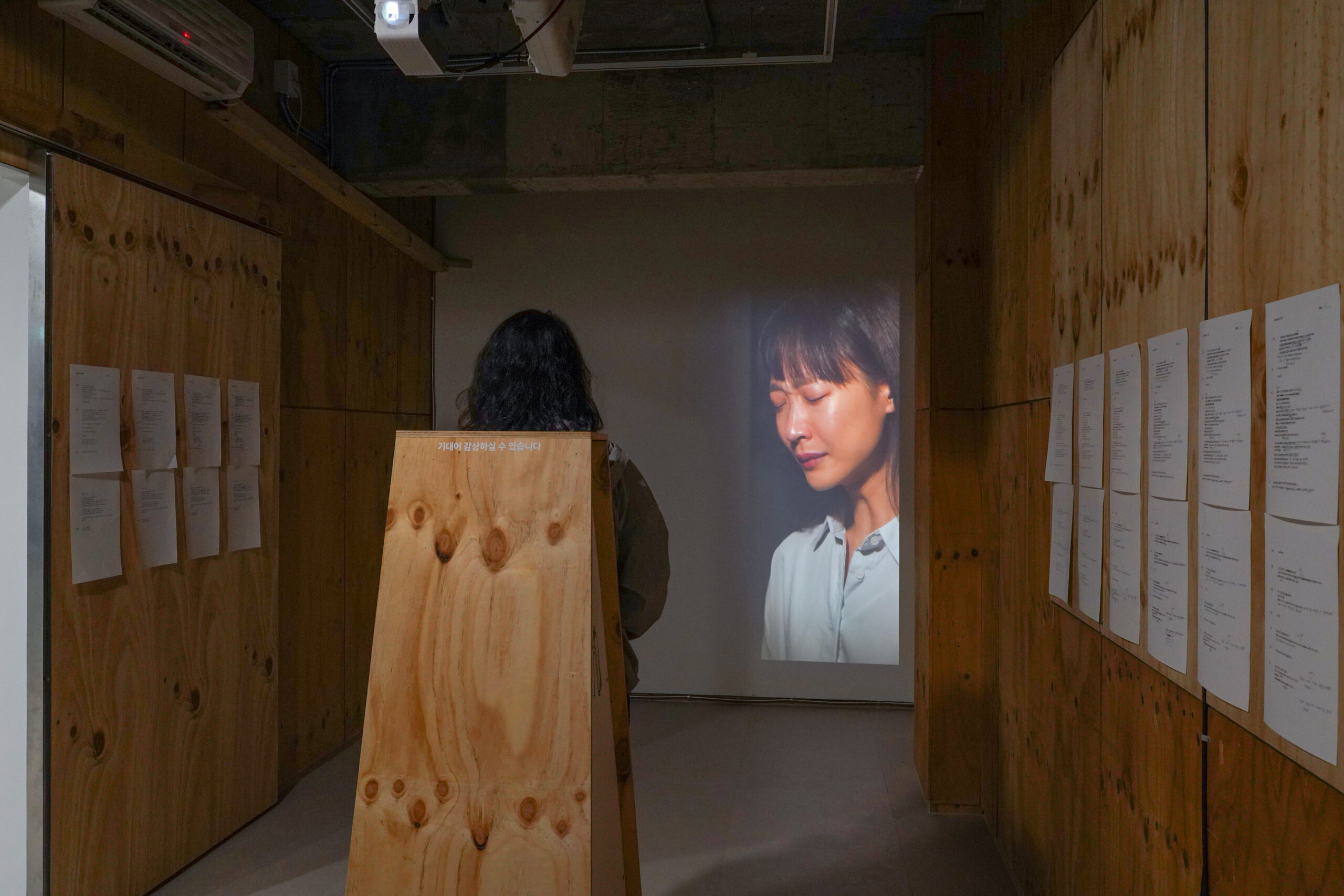
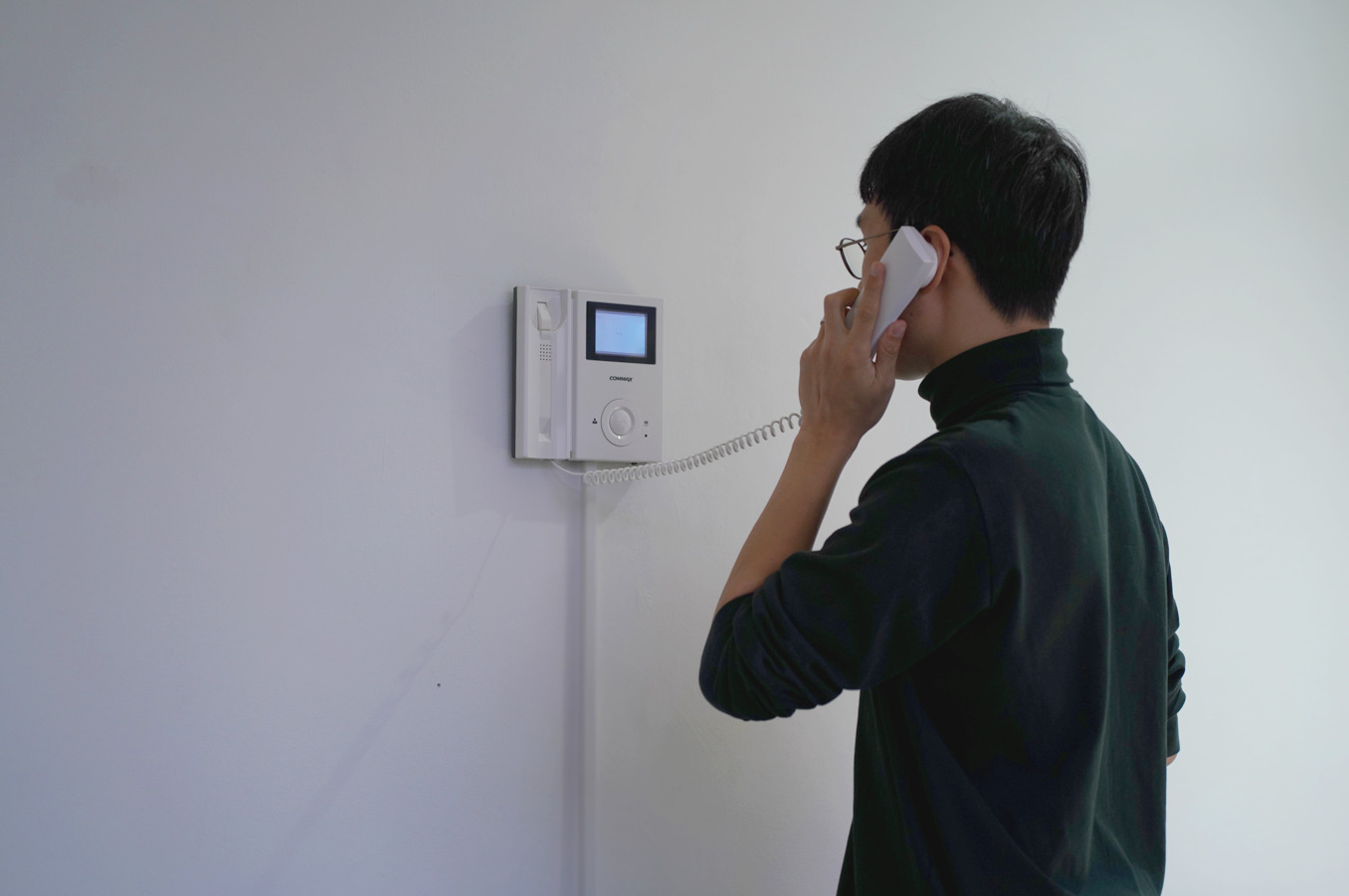
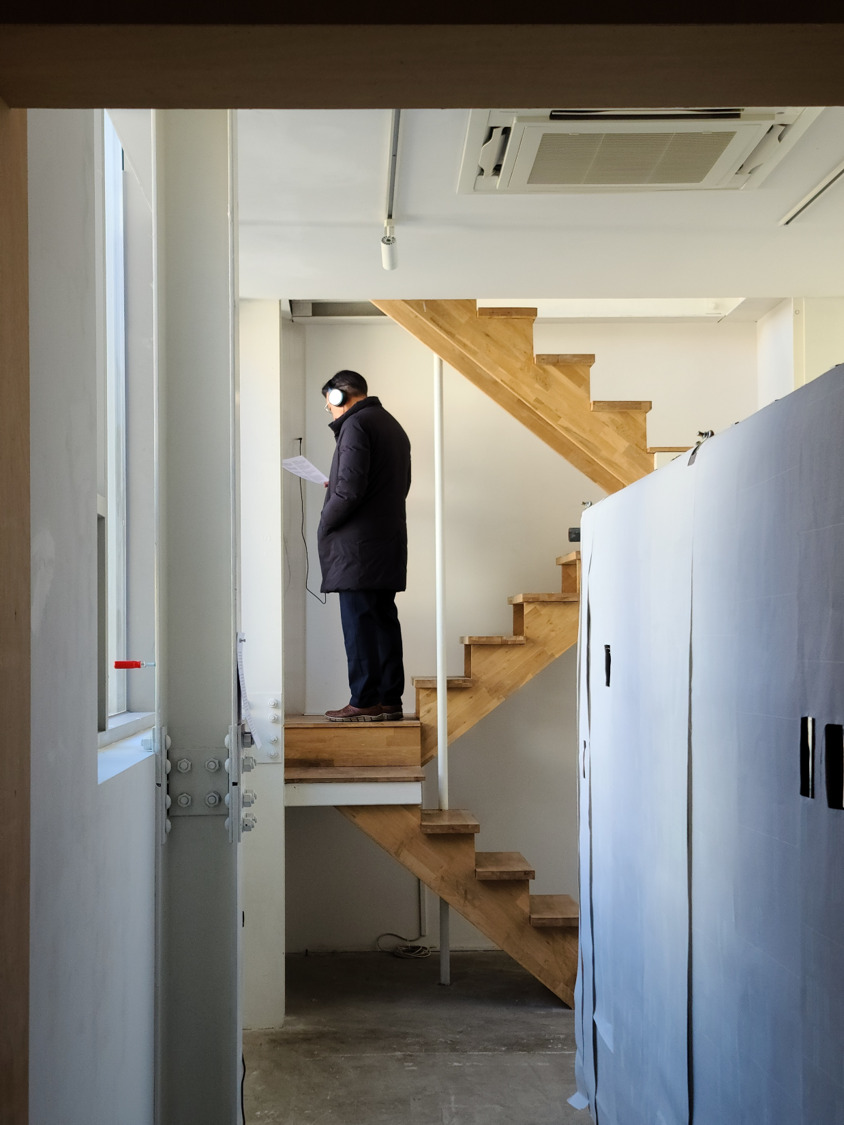
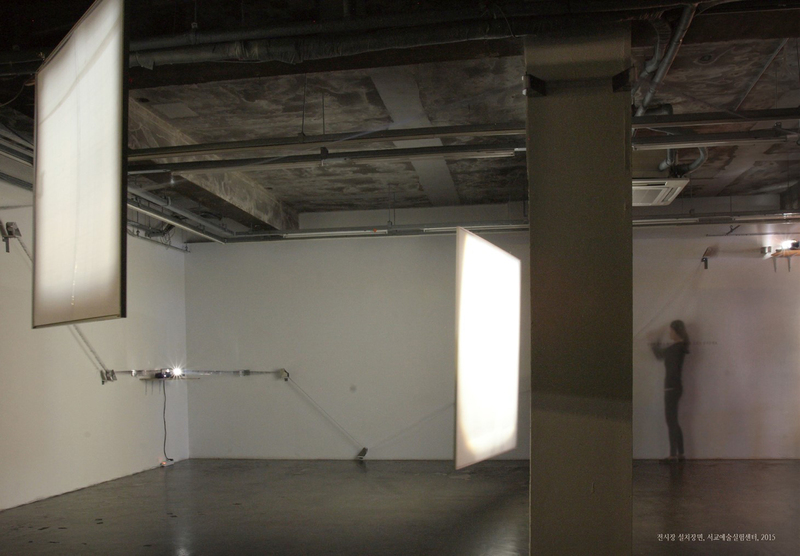
Exposure was designed to listen to personal conflicts of women who advocate feminism. Today’s ‘romance’ is a scene of confusion, facing gender divisions and difficulties of dichotomy. While romantic reality shows are popular in mainstream media, it still does not resolve the debate about dating expenses as a conflict of interests. I felt this phenomenon was a sign of a fantasy about ‘romance’ in changing gender relationships and the resulting inability of romance, which I thought I could finally interpret through the lens of feminist romance. Therefore, I invited heterosexual women who regard themselves to be feminists and tried to sense the subtle dynamics by discussing the inner conflict or insight about loving men.

While the participants shared their stories with voice (or text), I could not overlook the ‘psychological pressure’ as the result of displaying their ‘own’ ‘personal’ ‘experience’ in the gallery, such as bias, misunderstanding, or social stigma. Here the pressure may be the anxiety of exposing their identity and life but also includes psychological conflict that they cannot easily get away from the problems faced by women in Korean society today. Throughout this project, I wanted to continue questioning this pressure for a long time, therefore I tried to include the conditions where psychological pressure kicked in. For this, I juxtaposed the ‘exposed image’ and ‘unexposed image’ and visualized the degree the participants chose to reveal. 

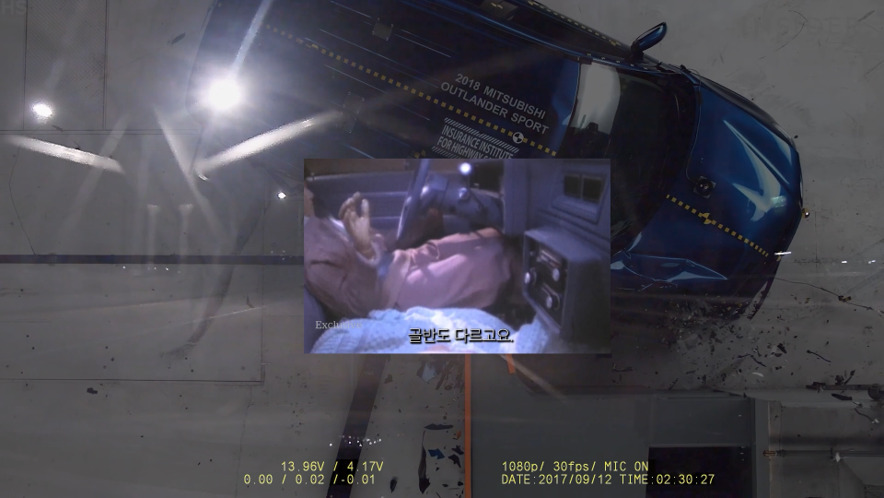
On the other hand, Safe Search and Indistinguishable Performances juxtaposed love and safety or romance and capability to show questions that are structurally inherent in women’s life, from intuitive and psychological response to formation of individual attitude. Safe Search intended to show that a safety for a woman does not only involve the ‘safety from crime’ but is an issue that may frame the attitude towards life. Indistinguishable Performances questions the psychology of envy and disappointment through a woman’s examination on another woman’s excellence, in order to challenge the myth around meritocracy in Korean society and underlying structural sexism that still exists. 


Complex aspects and subjecthood of leaving

This exhibition intended to show the subtle cracks inherent in ordinary and general psychology by highlighting the tension or contradictory ambivalence that support the reality of heterosexual women. I brought the tension of leaving while still being bound to the forefront, because the references of the exhibition compose complex layers when placed in the reality of personal life. This decision was made because I actually experienced that it was impossible to simply and clearly refine such complexity and stances, considering their situations and realistic conditions.

These complex aspects, which are unable to be unitarily integrated, are represented through ‘entangled palpable information’ that exceeds texts through material format of artworks. Likewise, I tried to represent diverse aspects of conflicts visualized by the condition of women through epigram and proclamation, expansion and contraction, and movement of leaving and seeking, in a way to demonstrate these unclear senses through the potential of art.

However, this choice of mine still leaves unresolved questions: what does it take to overcome the ‘archeological vestige’ that is still remaining although covered with cracks and finally picture the ‘silhouette of different phase’? How can we grasp the place of alternative perspective? Finishing the exhibition, now my interest goes to the methodology of practicing leaving.

References