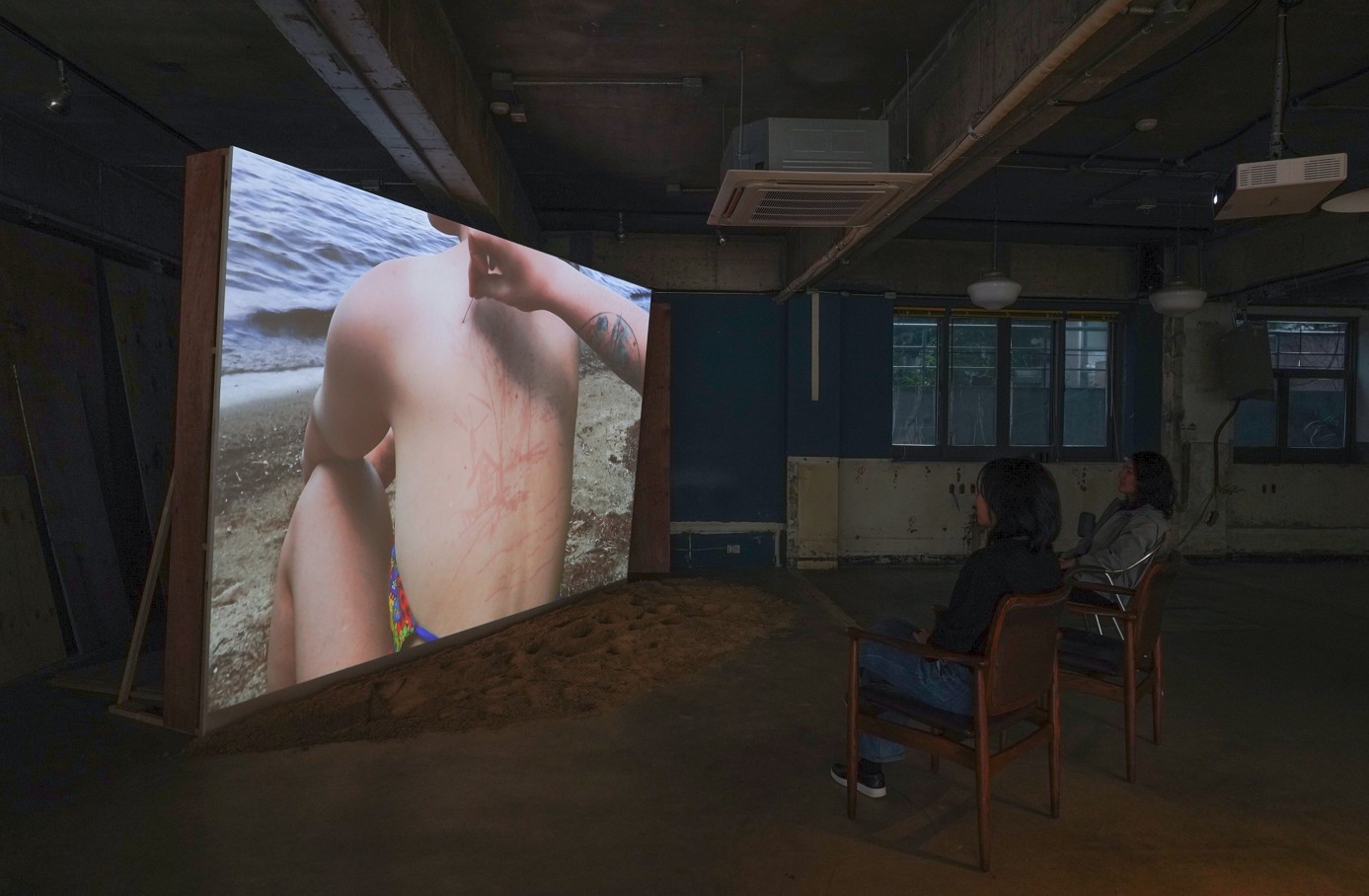
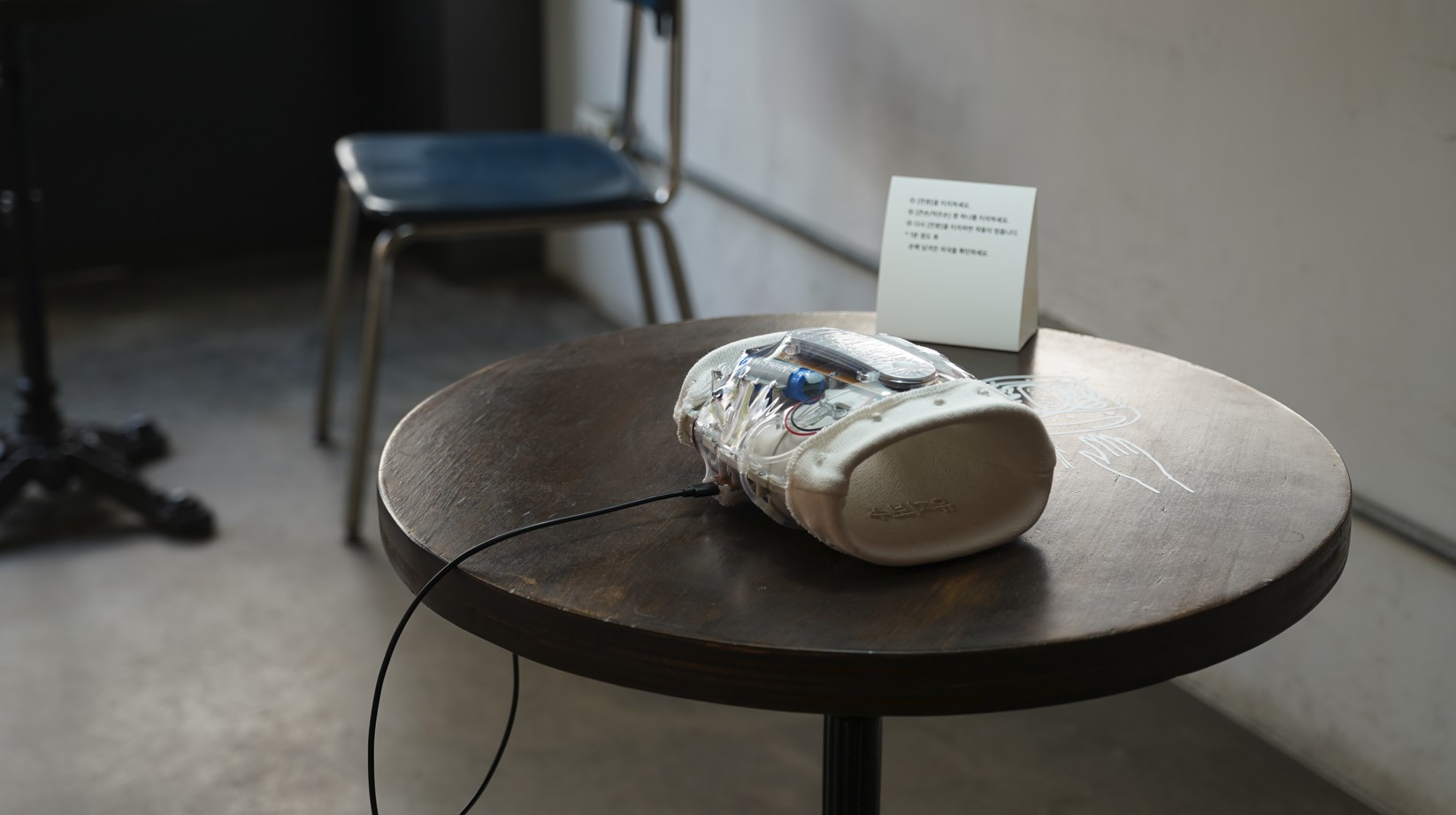
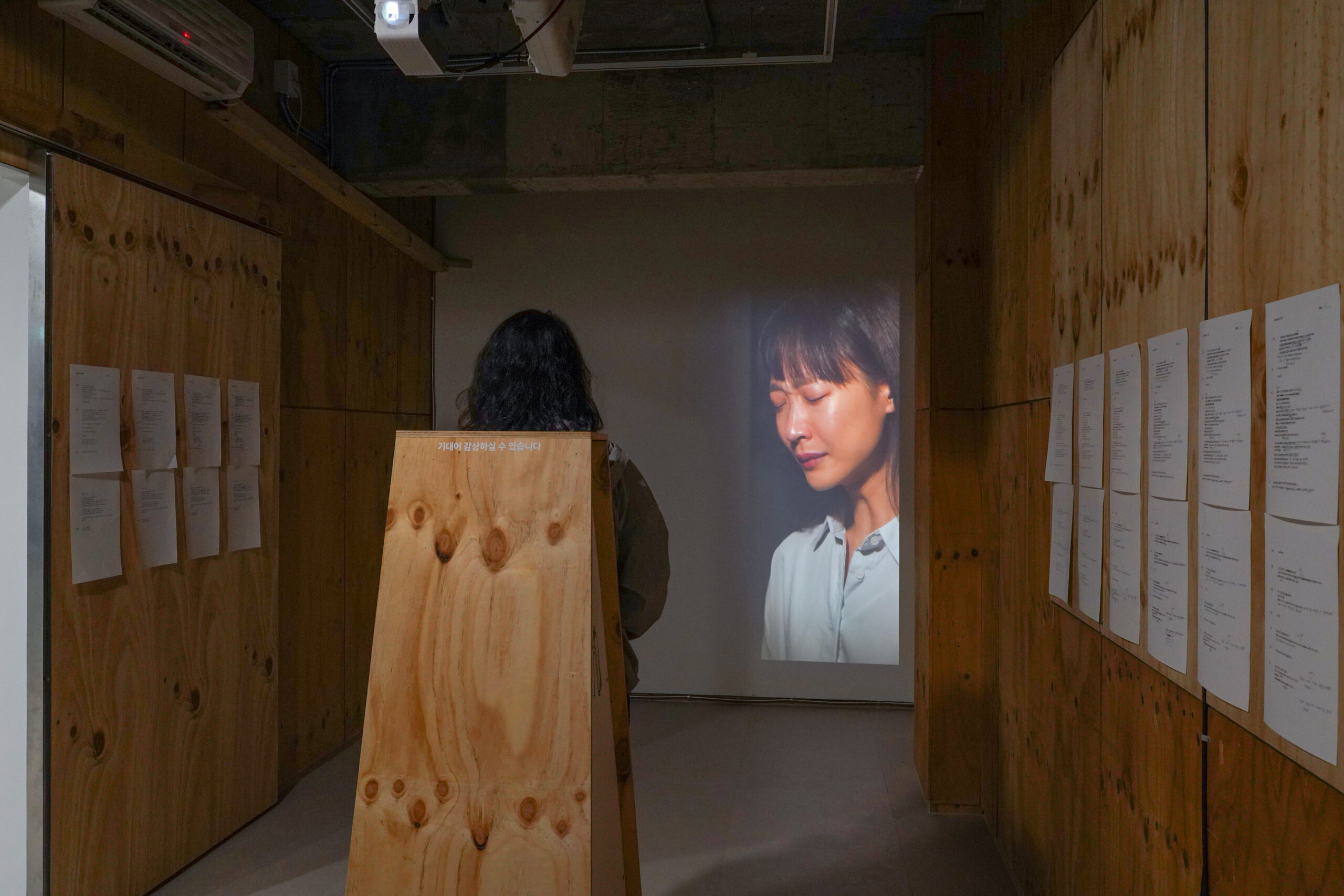
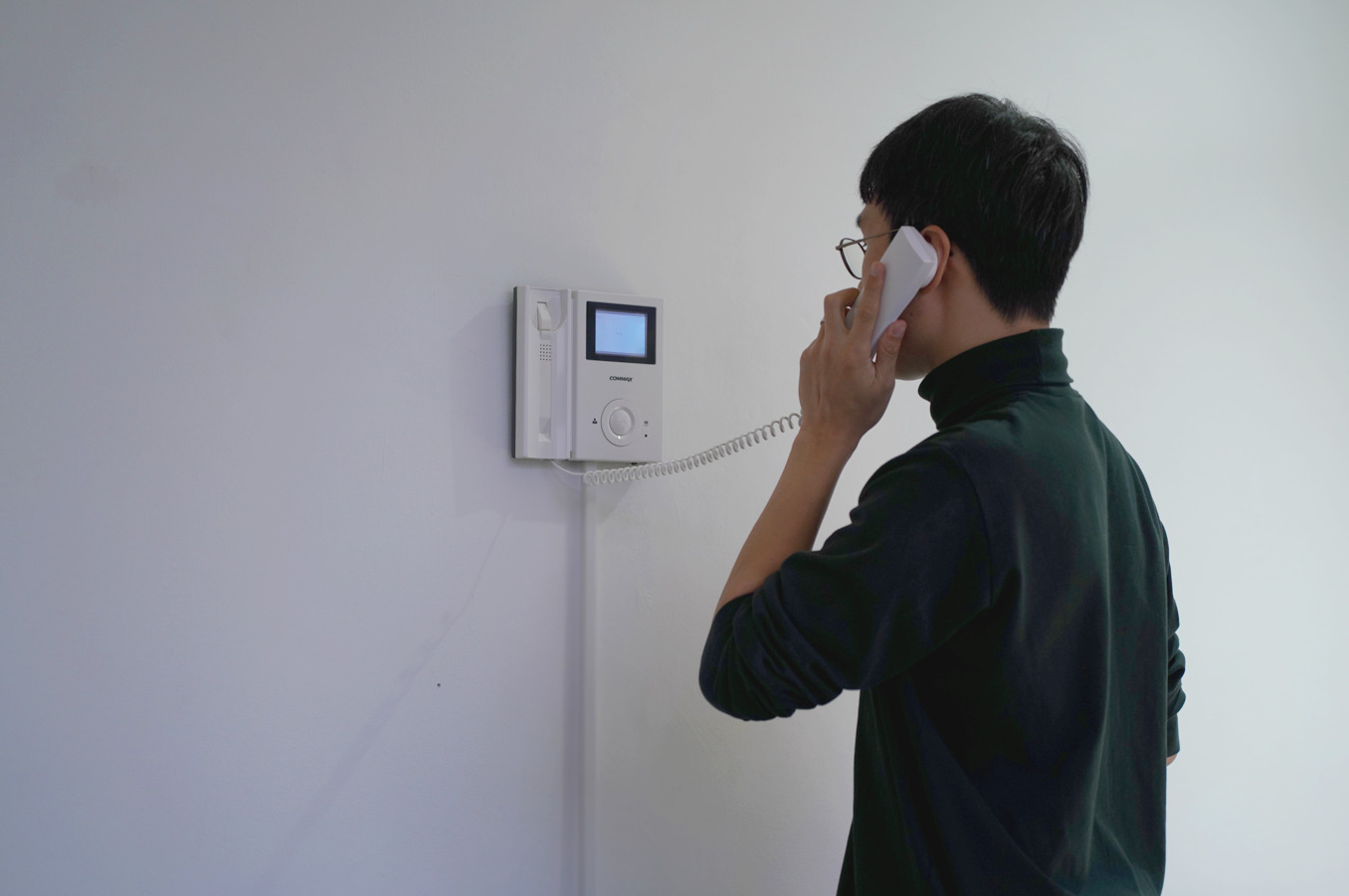
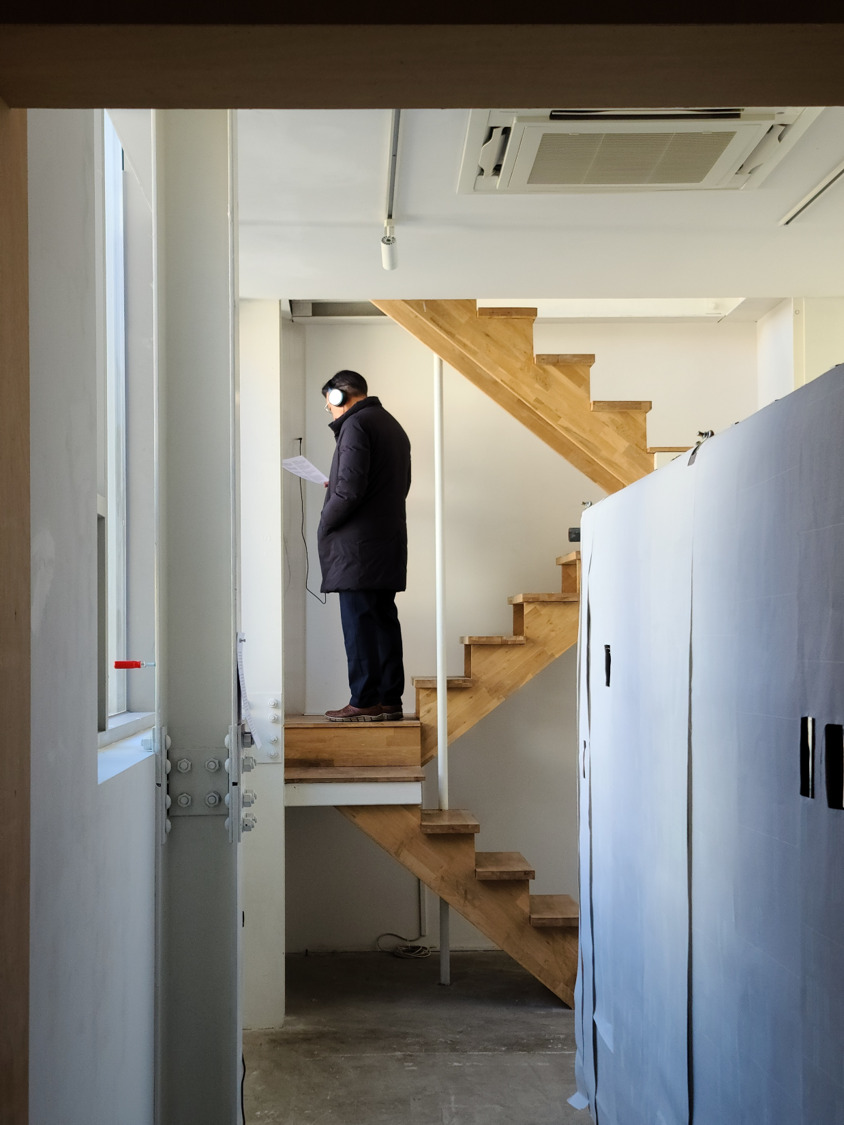
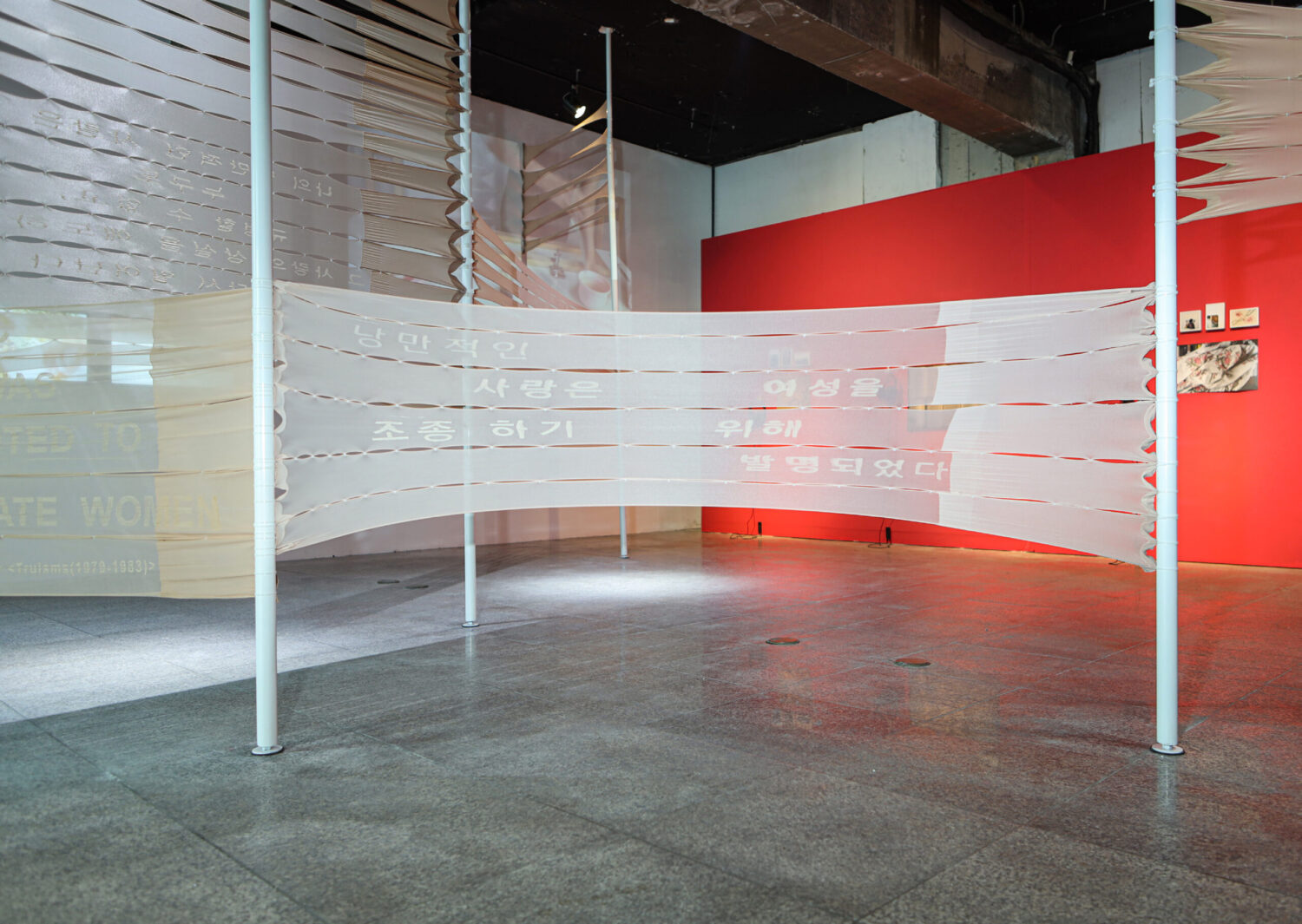
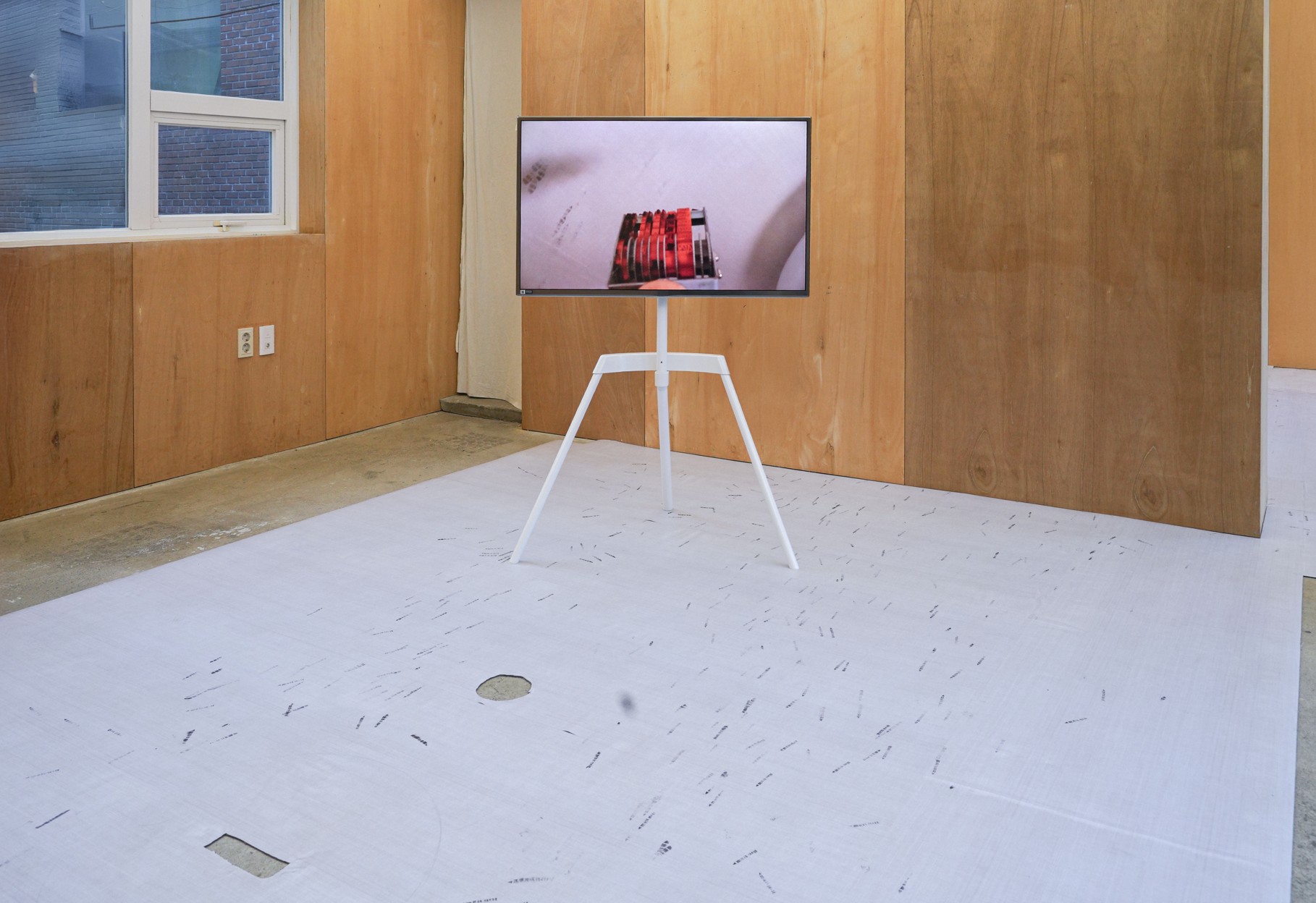
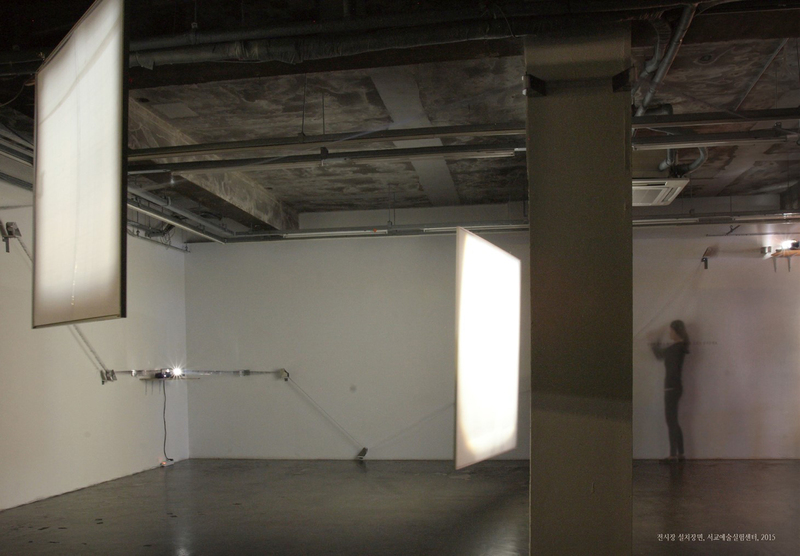
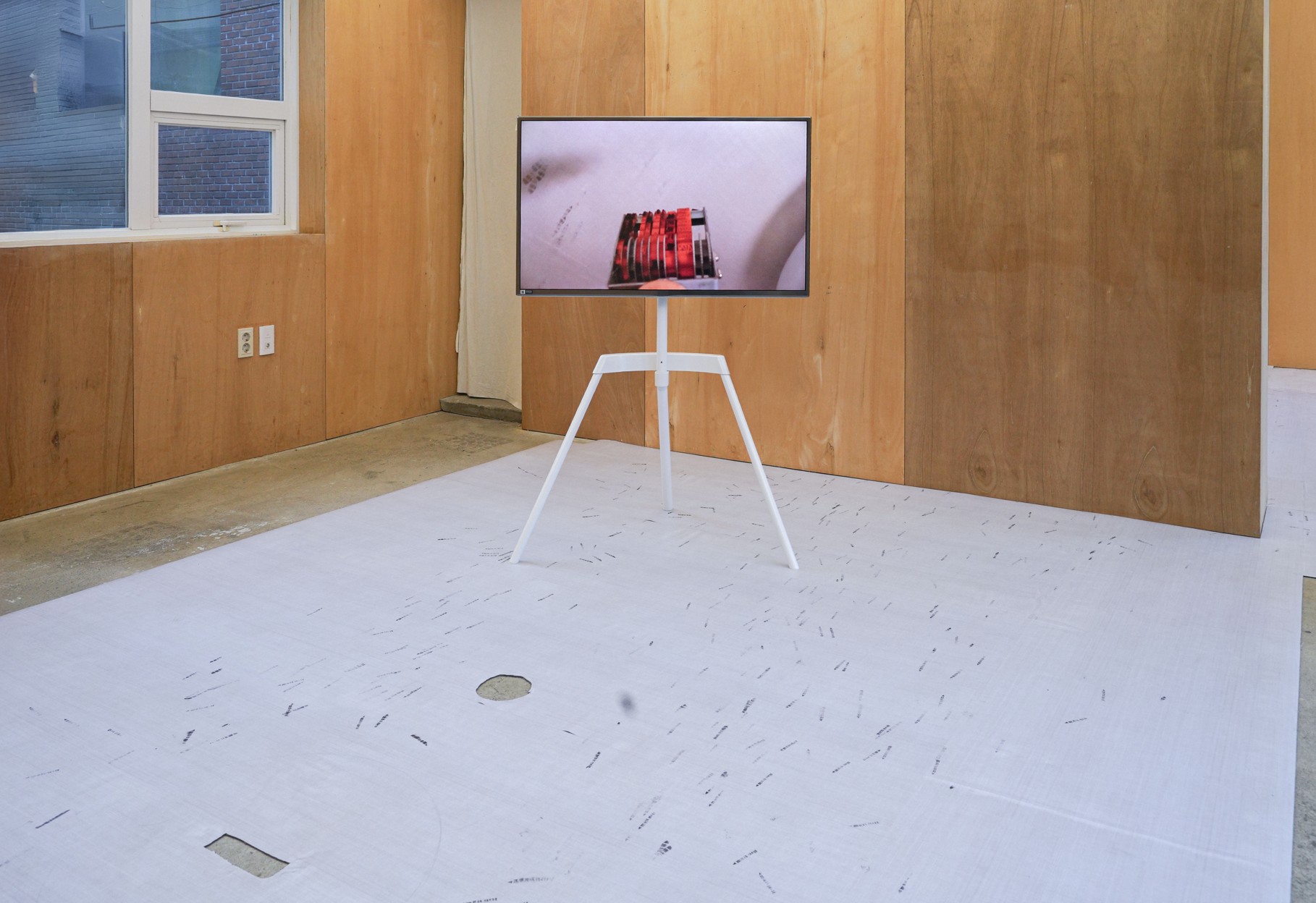
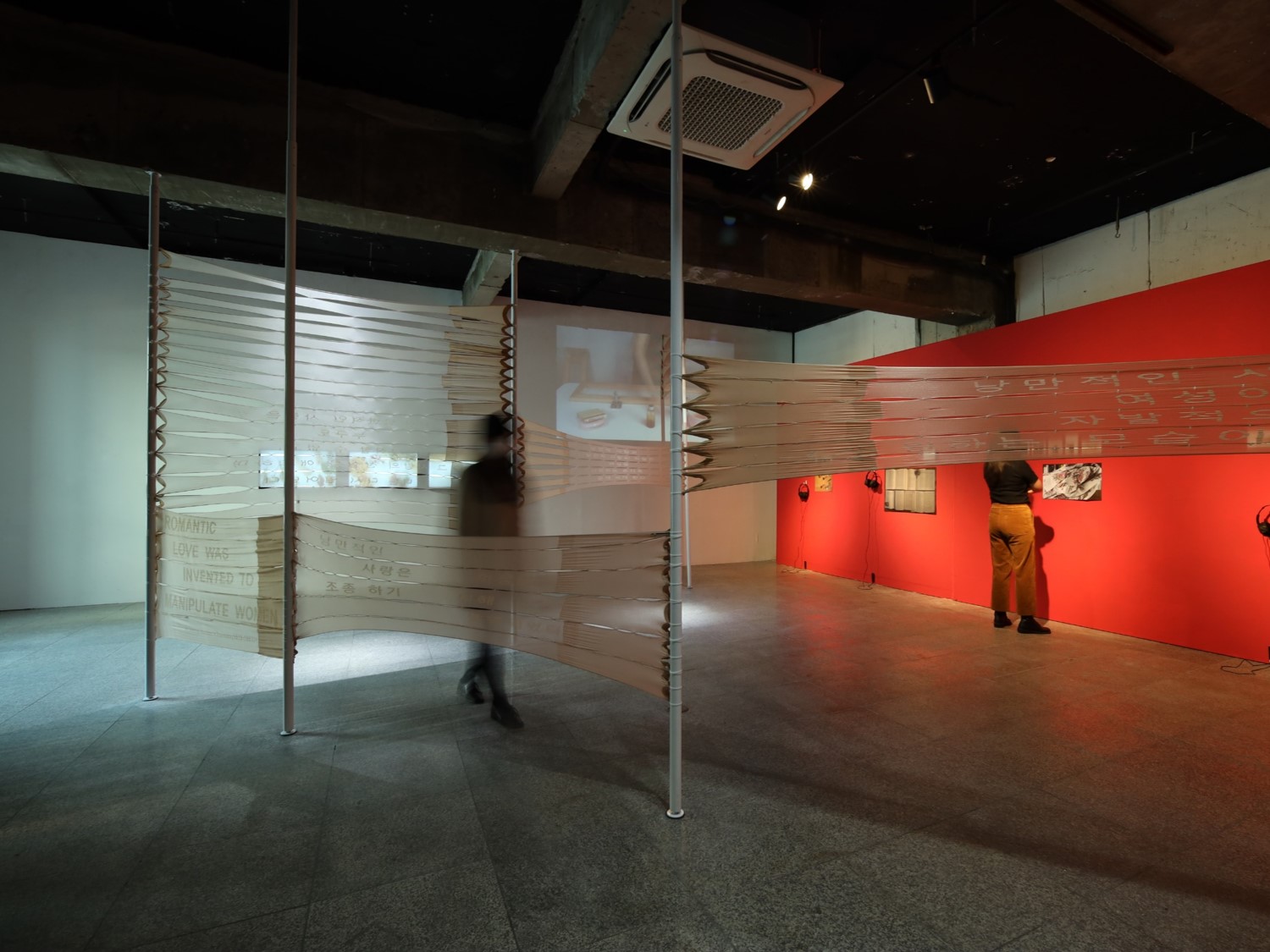
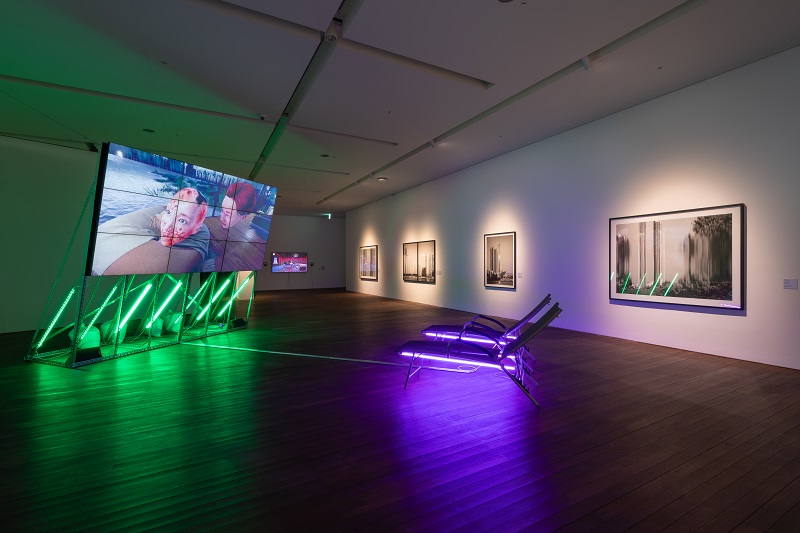
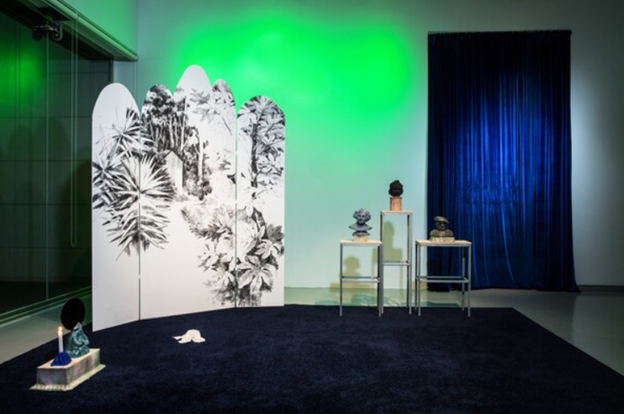
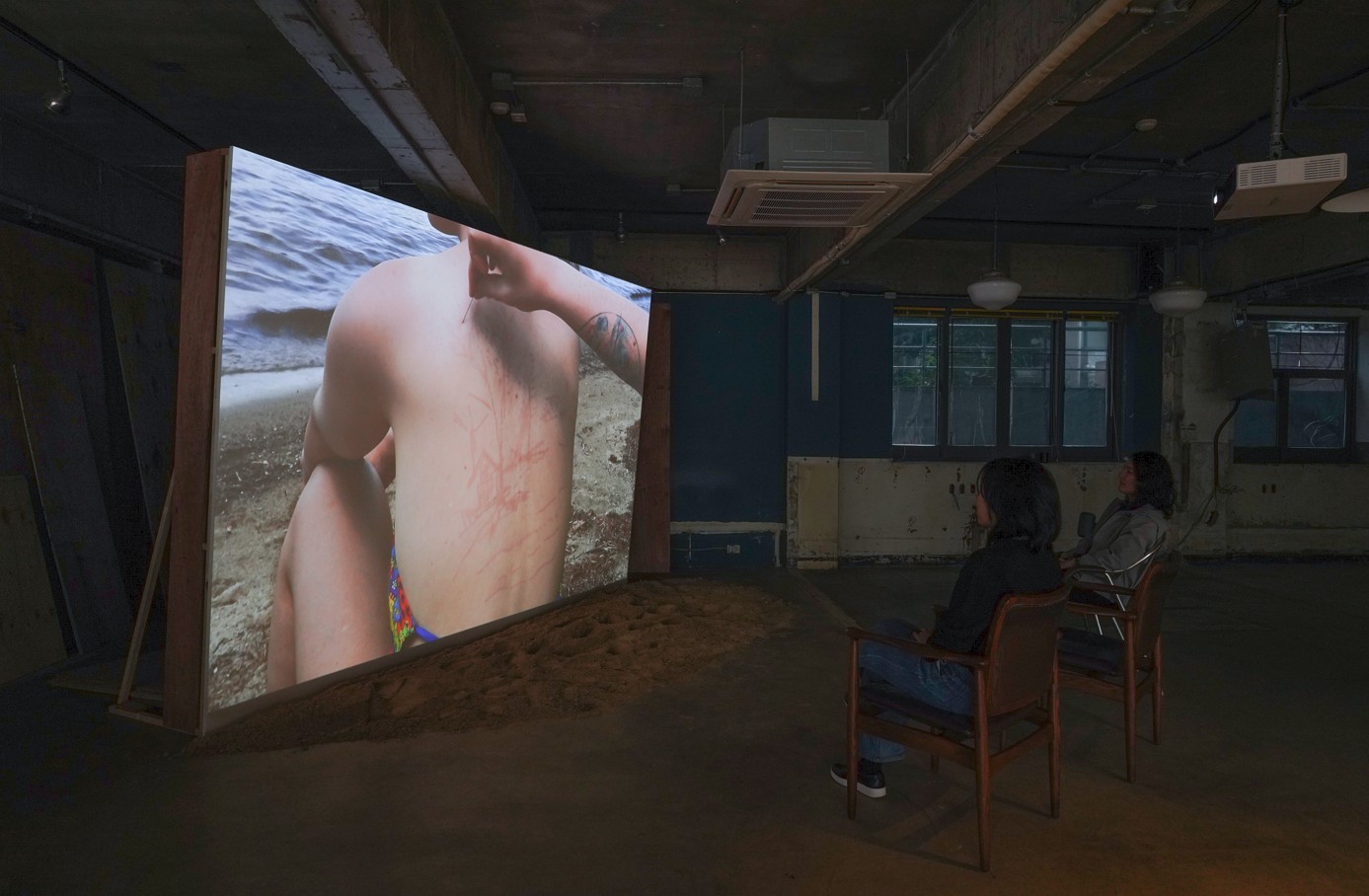
The art installations in this exhibition are not just for viewing; they invite you to step into the artwork. Daily Reaction Stamping, for instance, encourages visitors to step on the date-stamped printout, immersing them in a fictionalized inter-floor noise situation. Inter-phone takes this interaction a step further, inviting a more direct engagement that allows visitors to reflect on neighborly relationships in addition to inter-floor noise. And on the second floor, Flooring (2023) creates a living room-like stage. The floor is made of planks that bend, allowing the viewer to feel the rumbling as they step into the space. The artist once again places the viewer on a stage of inter-floor noise that maximizes the presence of the floor.
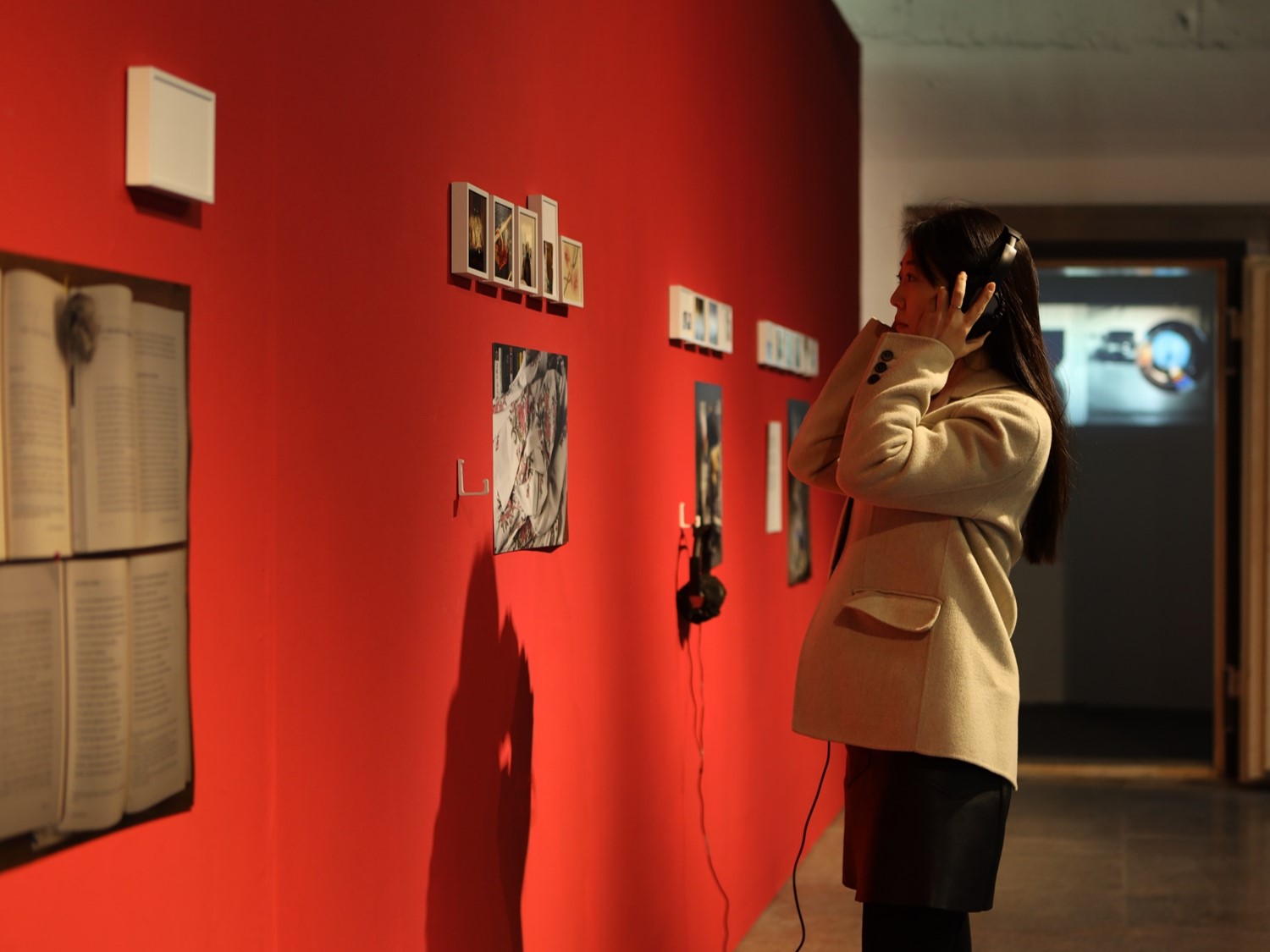
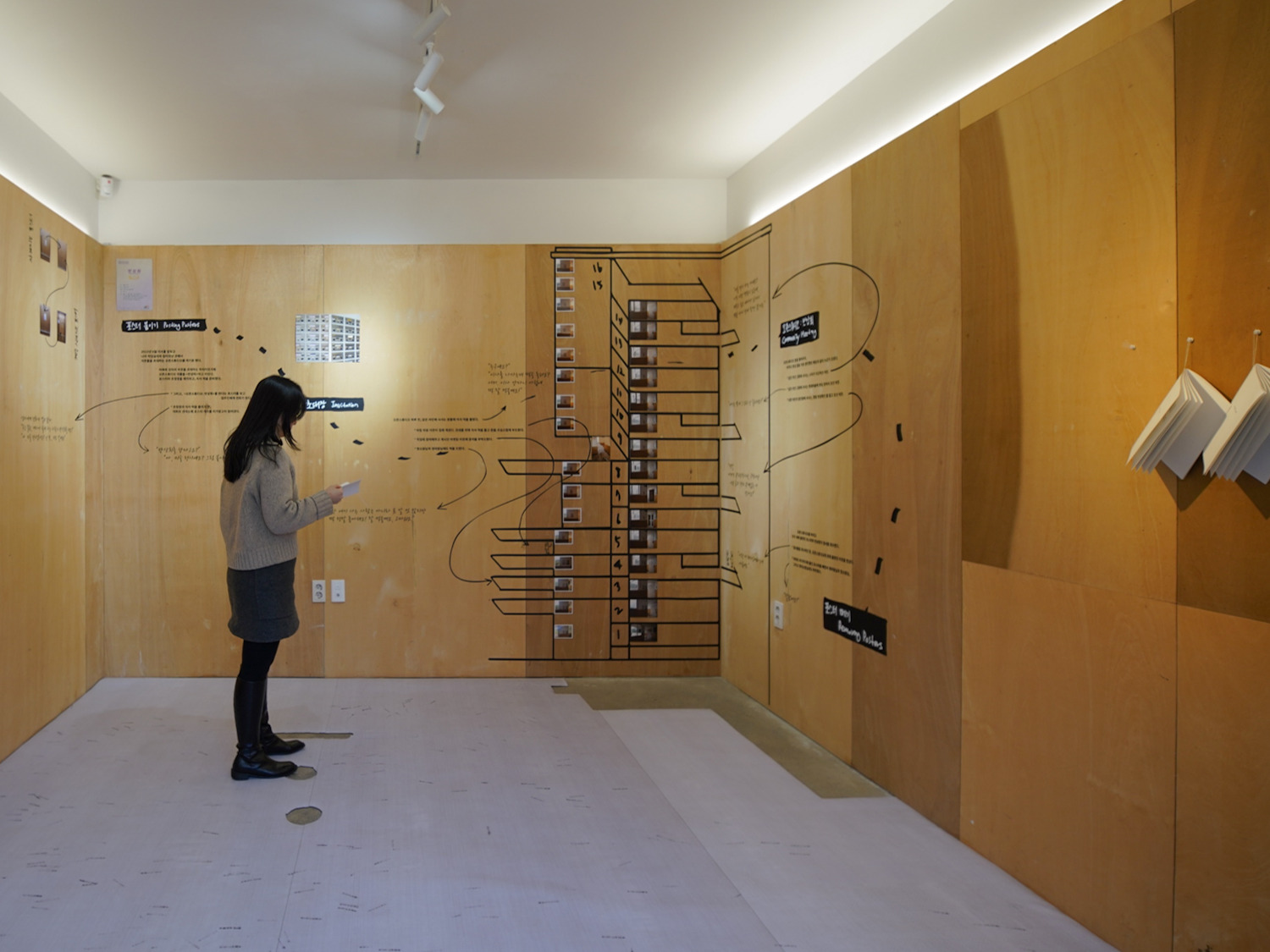
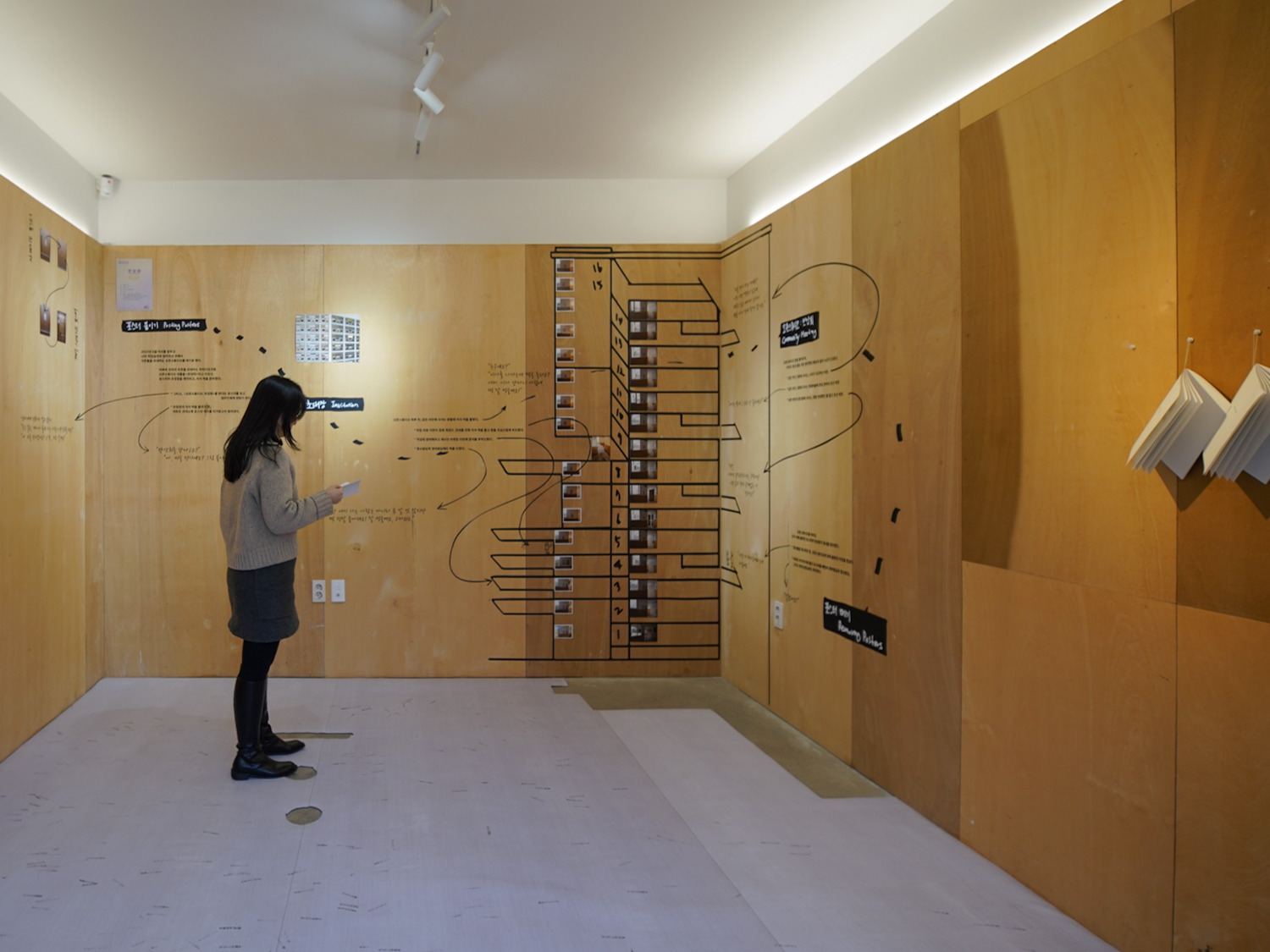
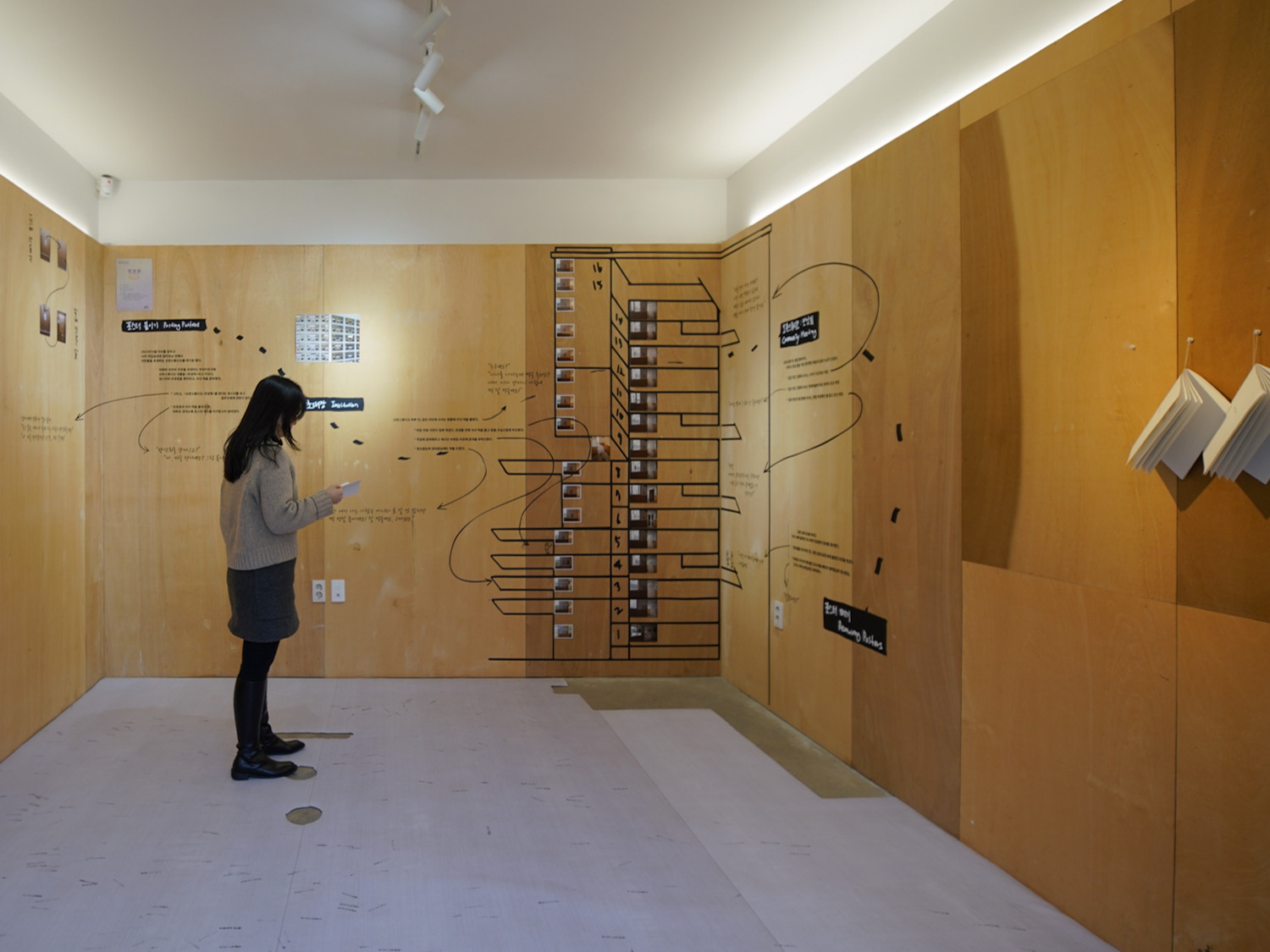
Yoon worked on Open Studio: Community Meeting (2023) to think more actively about the relationship with neighbors and explore the possibility of communication with them. After three years of suffering from inter-floor noise, Yoon invited the residents of the apartment building to her home just before she moved out to introduce her work and to have a heart-to-heart discussion about the subject of her work. The entire process was displayed in the exhibition space with photographic documentation and illustrations, beginning with attaching posters to promote the open studio, distributing invitations, hosting the open studio, and cleaning up afterward.
Also, a booklet was presented with anecdotes from the artist’s encounters with various apartment members, including building managers, residents, security guards, cleaners, and landlords. Various stories are included in the booklet, from how the open studio titled “Community Meeting” aroused confusion among the landlord, the artist (tenant), and residents to how the artist could not meet her upstairs neighbor in person despite her various efforts.
Open Studio: Community Meeting can be regarded as community art, as the artist encouraged her residential group’s participation. Yoon, however, seems to have engaged with them very carefully. As if aware of the risk that community art can instrumentalize people who have nothing to do with art, she did not urge the participation of residents and was careful not to create a hierarchical relationship between herself and the residents in her work.
As the title suggests, Yoon combined an art event called “Open Studio” with a social gathering called “Community Meeting” to create an event that served both purposes and met with residents while accommodating differences in their understanding of art and concerns about noise between floors. Yoon documented incidents throughout the Open Studio event, regardless of whether they were directly related to inter-floor noise. As an artist, Yoon may have been tempted to create a more dramatic and assertive message to fit the direction she had in mind for her work, but instead, she observed the events from a distance and shared them as they were in the exhibition.
This careful engagement with residents expands the exhibition’s theme, which might otherwise be limited to noise between floors, to question whether community building is possible in the modern world. Perhaps that is the beauty of community art, where one cannot predict or guide the behavior or reactions of the participants, but the various things that happen create interesting situations and spark diverse ideas. On the one hand, the tension the artist felt every time she rang her neighbor’s doorbell with the “rice cake (often shared among neighbors when a new tenant moves in)” to invite them to the open studio and the initial wariness of the resident who answered seems to represent the “modern individual” that contrasts the concept of “community.”
On the other hand, the author’s recollections of how the residents opened up more easily thanks to the “rice cake” make us think that coming together and communicating may not be as difficult as it seems. One may also think about the meaning of community meetings in our society, the authority of the resident representative and the community manager, as well as the relationship between community members, such as the invisible hierarchy between cleaners and residents. The level of interest that residents show in the artist’s invitation and the actual participation rate in the open studio also reveals the current state of neighborhood communication and community spirit in our society.
In relation to this, the artist describes a conversation with an elderly neighbor at the Open Studio.
As we talked, I realized she had lived here since the apartments were first built. She seemed to treat the apartment as a community, trying to understand it despite the troubles of inter-floor noise. This gave me a deep impression: a relationship where you cannot move away from no matter what. This made me question whether a sense of community could arise under these conditions and also how fragile it could be. My neighbor said she was worried about the younger generation due to social problems surrounding noise between floors. But he said, “Now that I’m here (at the Open Studio), I feel it will be okay in the future. The more I listen to you, the more I have hope.” “People don’t know that nice people live next door. People don’t even know you having an open studio in this apartment...”[2]
Like the elderly woman who saw hope, Yoon’s Open Studio: Community Meeting invites us to imagine the possibility of “living well together” by approaching a subject in an artistic way, which may otherwise be too serious. The quirk of sending out “rice cakes” when moving out or the wit of holding an art exhibition at home titled “community meeting” are all things that Yoon can do because she is an artist. This approach provides hope in that it will help alleviate some of the tensions between neighbors who live on high alert, including the inter-floor noise that has become a social problem. In this way, art seems to give us the power to be flexible by looking at social issues from a different perspective.
A Record of Invisible Structures
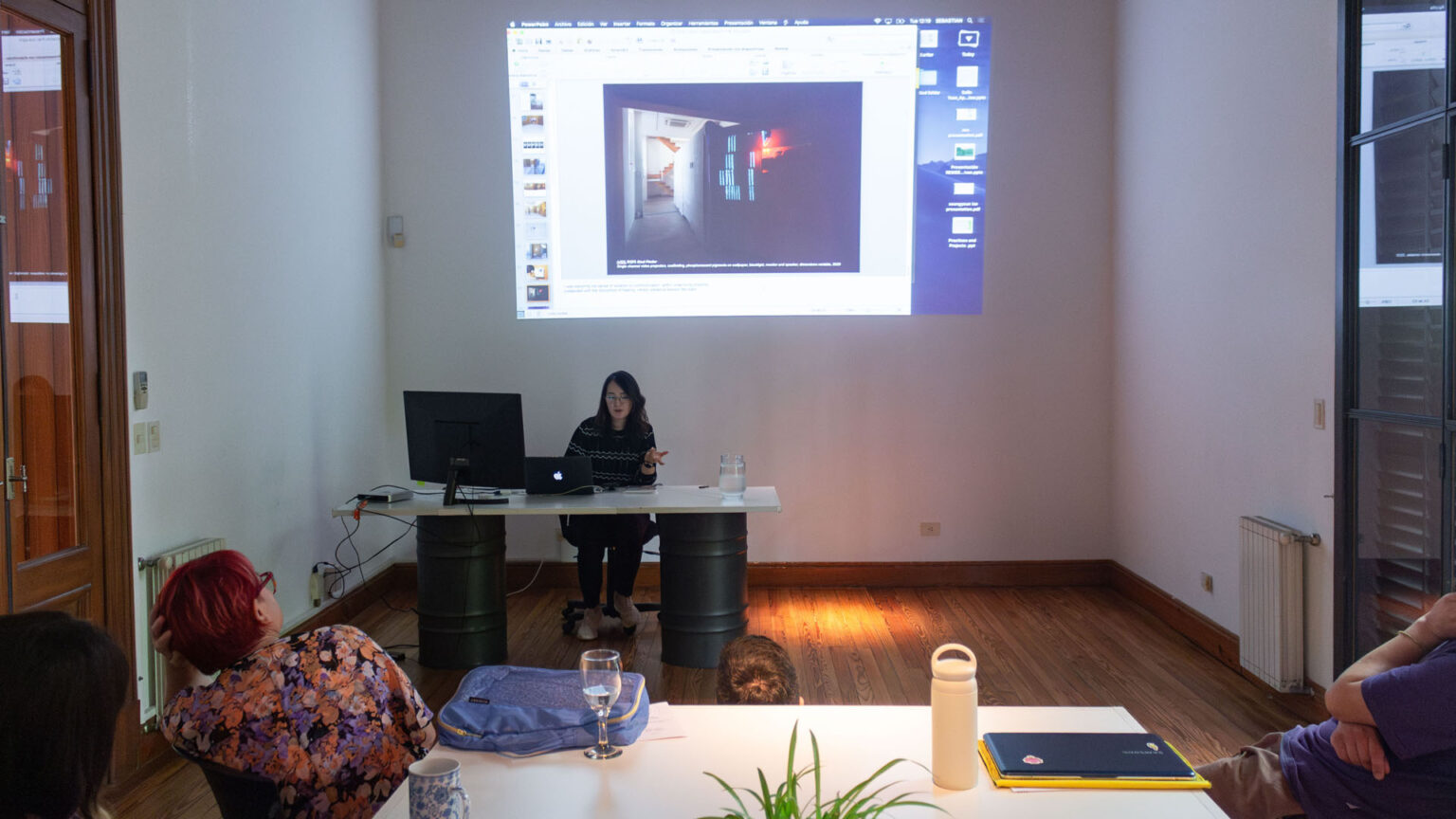
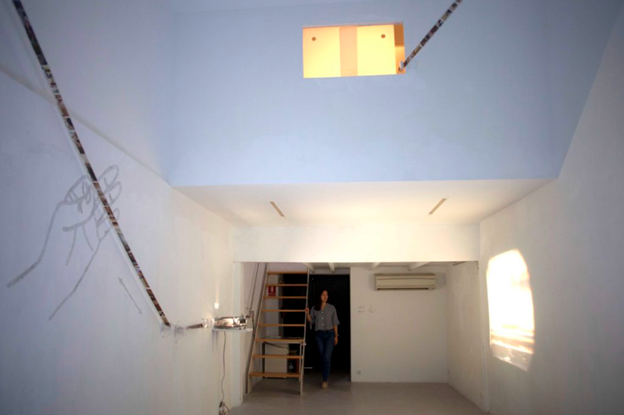
Finally, the artist deals with inter-floor noise by exploring architectural structures. Based on an architect’s explanation that Korean apartments are usually built with walls supporting the ceiling instead of pillars—therefore the sound from upstairs is easily transmitted downstairs through the walls—Yoon decided to detect the insides of the walls. Stud Finder (2023) utilizes a “stud finder,” a device that detects structures in the walls. When the device is placed on a wall, it will light up wherever a structure is detected.
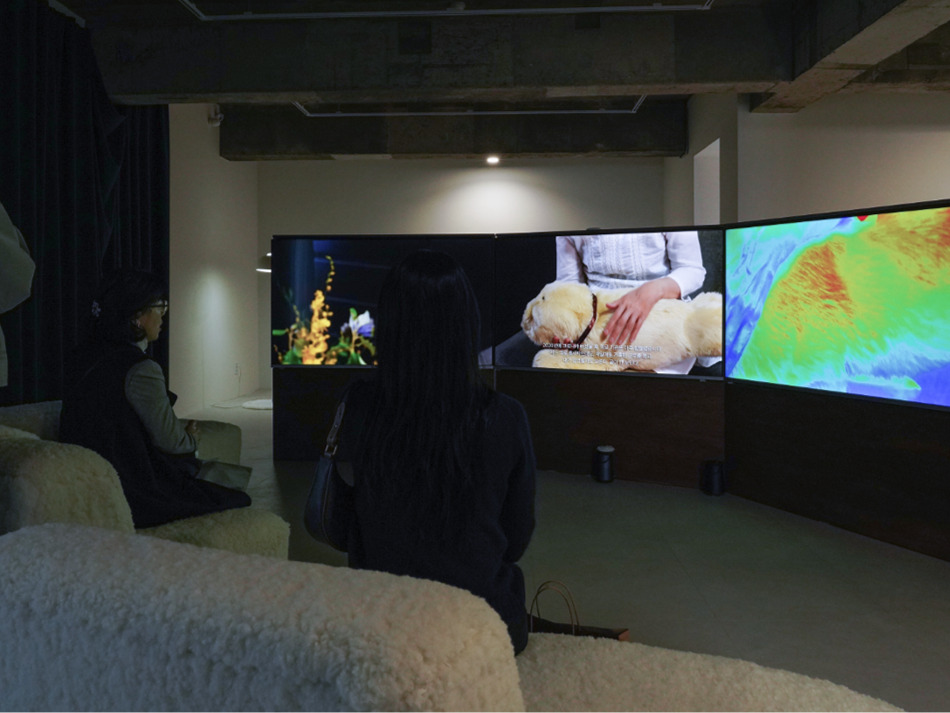
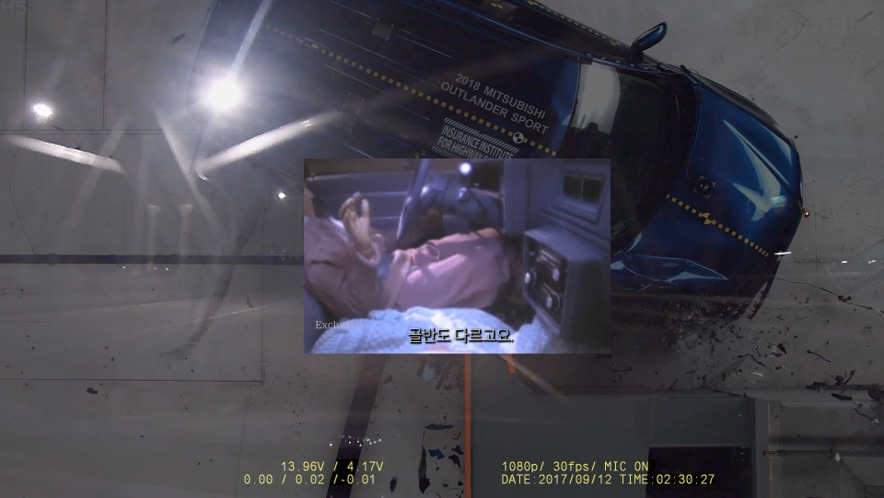
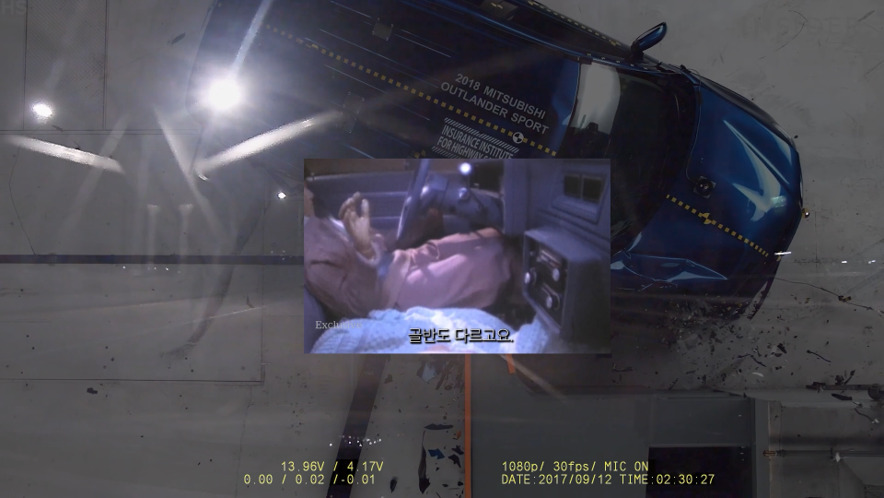
The artist scanned the entire house wall with a stud finder and marked each structure’s location with photoluminescent ink on the wallpaper, like an x-ray of the bones of a house. The wallpaper was hung in the exhibition space alongside a video recording of the process. In addition, the voice and image of an architect discussing the problem of inter-floor noise, exacerbated by the changing history of Korean architecture and the socioeconomic profit structure, were played on directional speakers and monitors, respectively.[3]
Stud Finder is reminiscent of Daily Reaction Stamping displayed at the beginning of the exhibition. The two works resemble each other in artistic methods—they both use the method of stamping—and the artist’s dedication to the work. The ceiling would have been stamped with date stamps over two years, and the walls would have been marked with photoluminescent ink, which would have been used to detect and mark every inch of the space. It is evidence of the artist’s endurance of the temporal and spatial conditions she faced through art and a record of her daily art practice.
The modern world has become an age of scattered individuals, with the nuclear family having dissolved into the “nuclear individual.” The idea of “living together” has also been undermined because few people live in the same house for their entire lives, moving frequently for various reasons. In a modern society that focuses on the individual rather than the collective, it is no surprise that noise conflicts between floors increase as time and generations change. Because we do not know each other, let alone communicate, it is uncomfortable for us when unknown individuals reveal themselves through sound, and therefore it comes to us as noise.
《Living with the Trouble》 looks at the uncomfortable situation of inter-floor noise, which the artist personally experienced, from various angles and gradually expanded into questions about human relationships and community. As such, each work is organically connected within the exhibition, complementing each other and forming a larger whole. However, the artist does not lean toward activism by leading a fight against inter-floor noise but instead considers how to respond to the problem individually and artistically. As the exhibition title suggests, Yoon’s interest is not in solving problems but in living with them, and she uses art to do so.
[1] Solin Yoon, 《Living with the Trouble》 (Seoul: Space_ONSU, 2023), unpaged.; the artist has stated that her attempt was to approach inter-floor noise “without expressing anger or, cynicism, and without waiting for luck.”
[2] Solin Yoon, Open Studio: Community Meeting (Seoul: Space_ONSU, 2023), unpaged
[3] Yoon also presented Sound, noise, or (2023) that was created from Stud Finder, in which the wallpaper marked with photoluminescent ink was used as a graphic score and converted into sound like music.