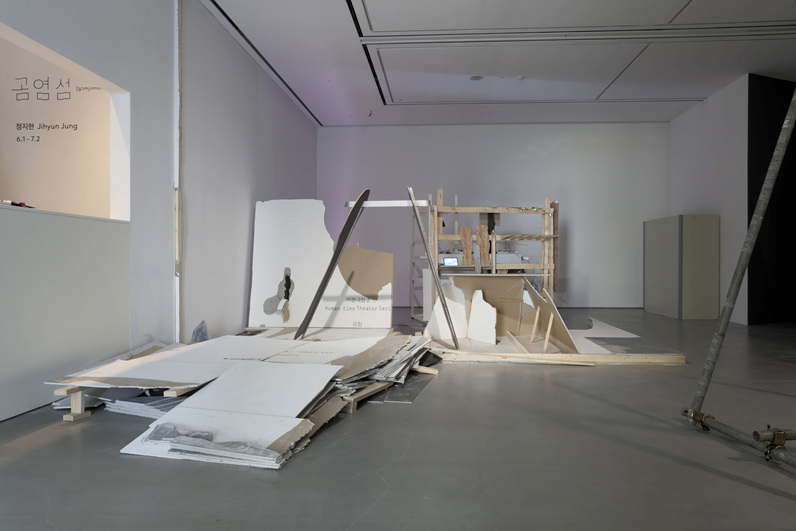
Rather than encouraging slow and sustained
viewing, the works tend to be glanced at and passed over. In response, Jung
shifts away from physically cutting and assembling objects toward deriving
transformation through variations in material, surface treatment, and
fabrication techniques. This trajectory—from landscape to object—is evident in
the exhibition 《ONE-A-DAY》.
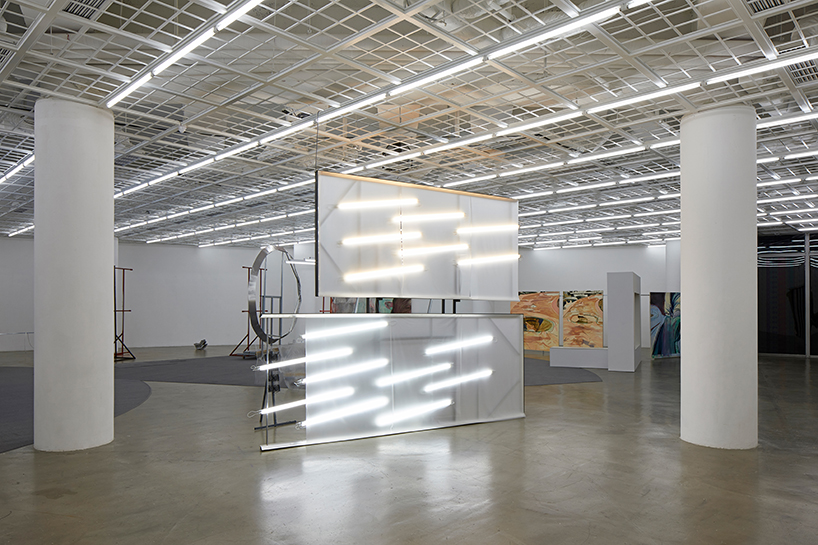
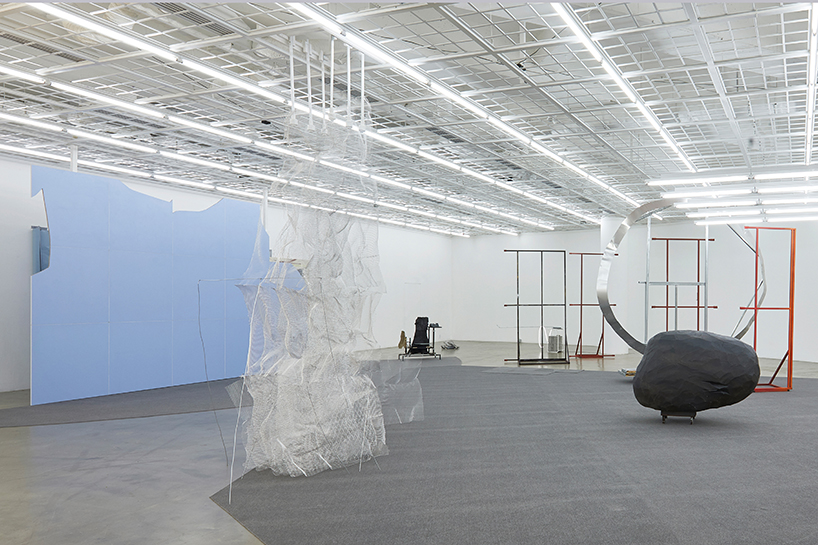
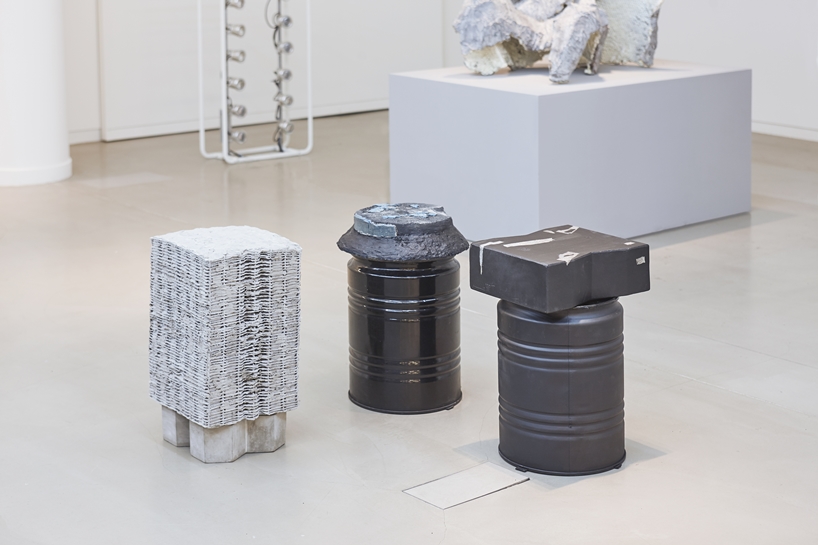
Here, Jung’s objects at times resemble the abstract paintings of
Seeun Kim exhibited alongside them, while at other moments they contain painting
within themselves. Objects function simultaneously as independent sculptures
and as frames through which painting is perceived, or as screens that obscure
painting while becoming color-field compositions in their own right.
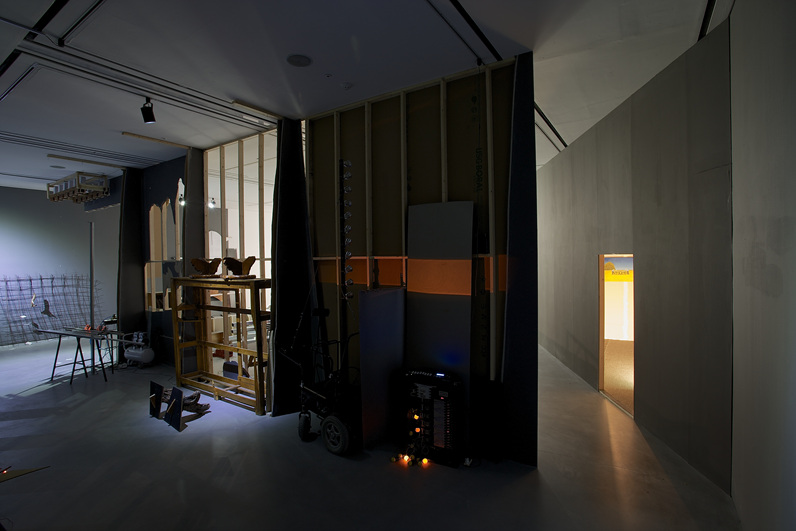
This
method of responding to the environment—forming a landscape together with it
and effectively “drawing” space—is less artificial, yet still constitutes a
form of spatial staging. Unlike his earlier works, which adhered to
predetermined plans, this staging becomes improvisational and provisional, more
akin to sketching.
At the same time, his objects cease to function as stage
props and instead exist autonomously alongside painting as independent
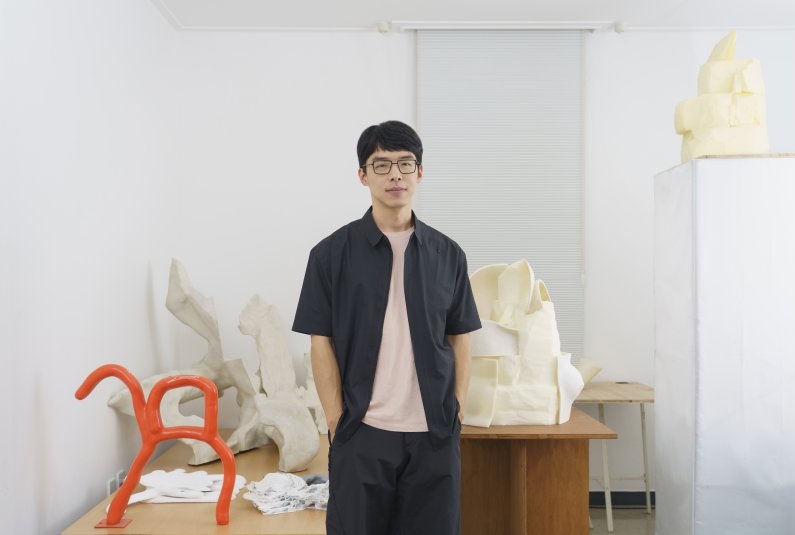
sculptures. With their emphasis on volume, mass, and scale, these objects begin
to pose questions to themselves as fully realized sculptural entities.
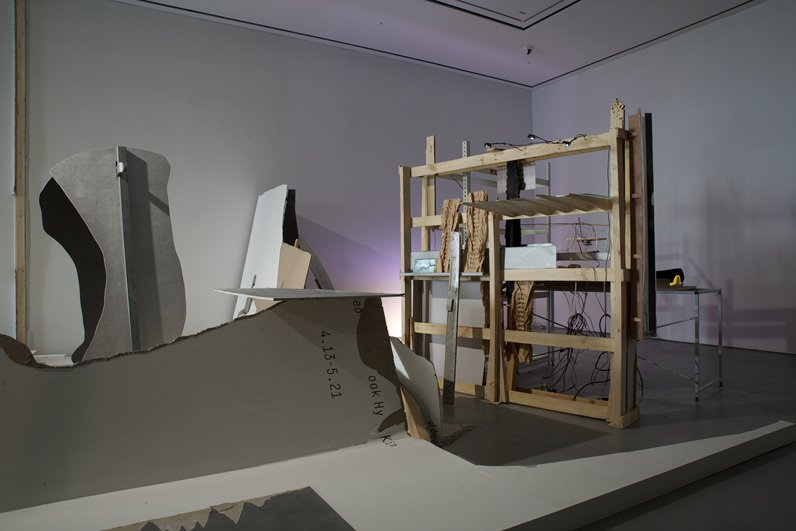
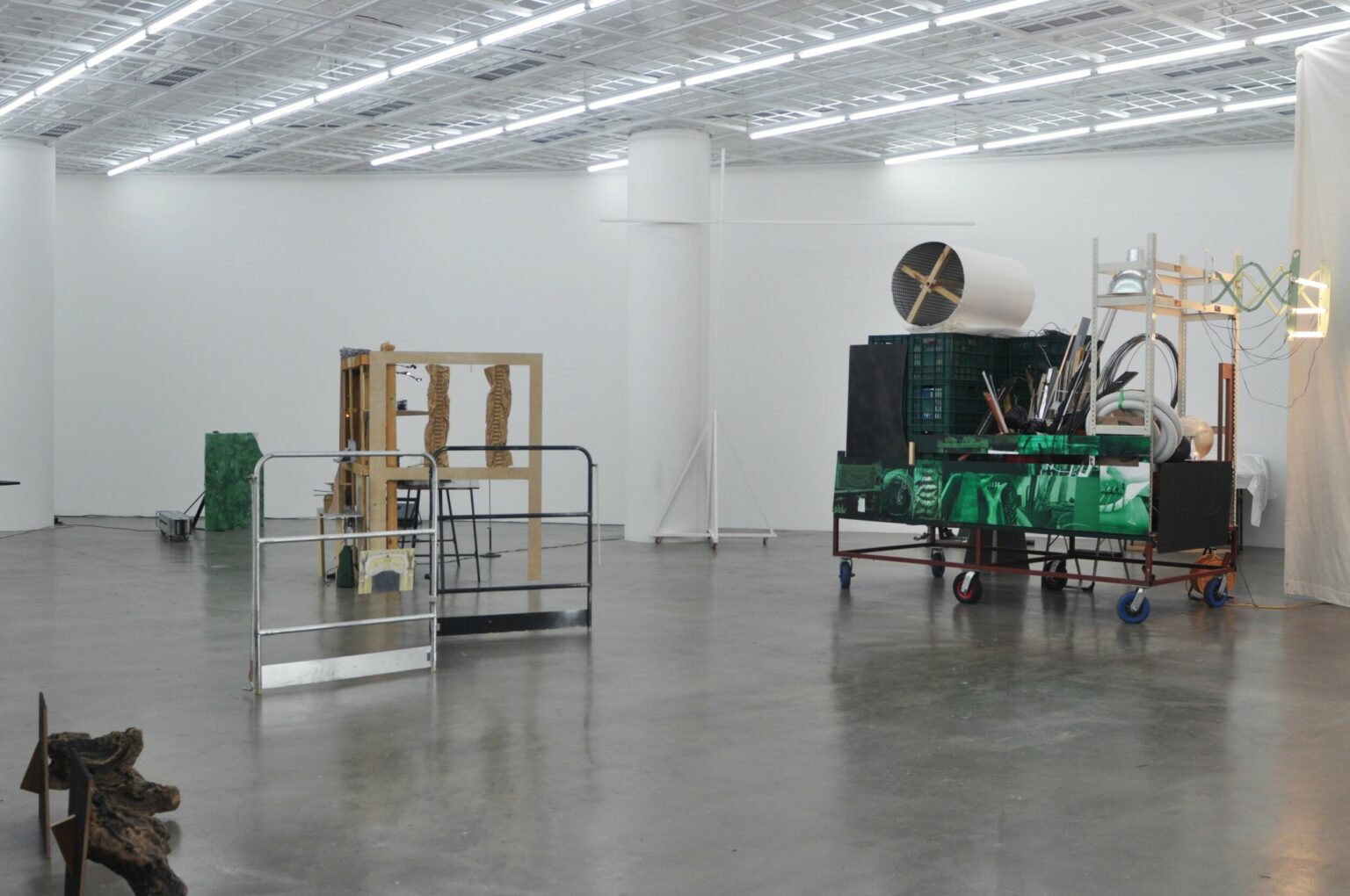
The exhibition that formally marked this
shift is 《Multipurpose Henry》
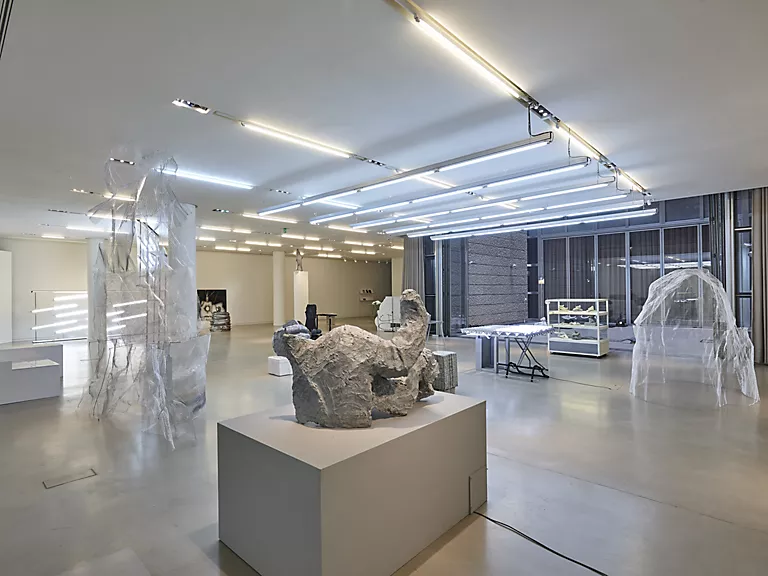
(Atelier Hermès, 2019). Together with 《Gouge》 (Incheon Art Platform, 2022), it serves as a key point encompassing
Jung’s later practice, announcing a transition from the construction of
meticulously staged environments to experiments within the sculptural medium
itself.
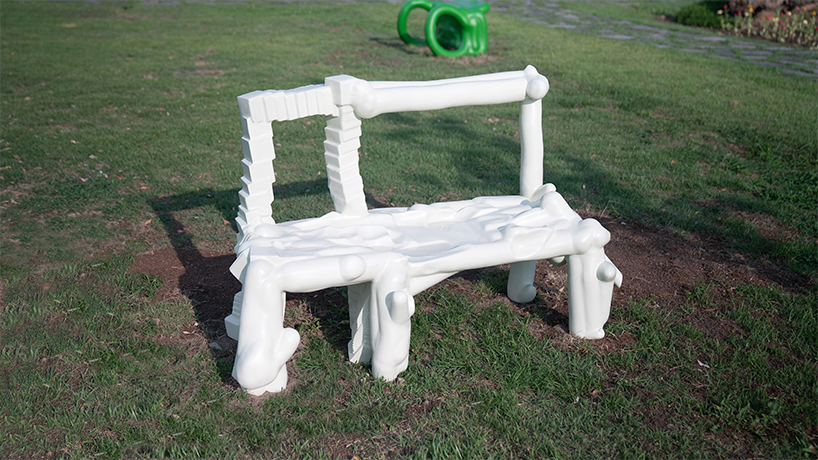
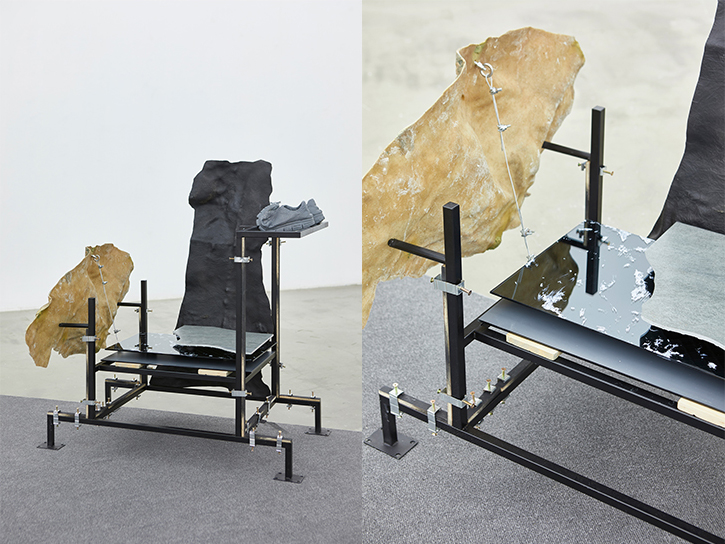
The majority of the works take the form of mass-bearing volumes, the
use of discarded materials is significantly reduced, and minimal intervention
is employed to alter the properties of objects. This shift is particularly
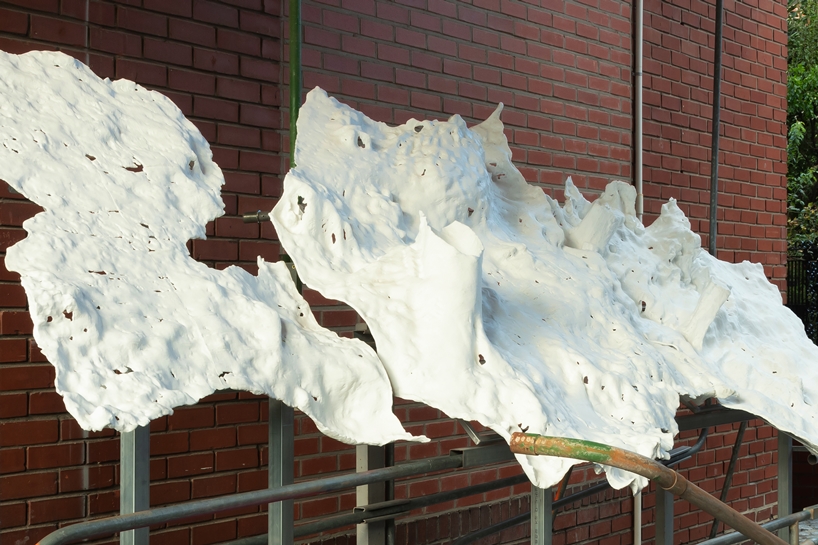
evident in 《Gouge》, where automated
technologies such as 3D scanning and 3D printing are integrated into sculpture,
reinterpreting traditional sculptural practices.
Processes such as sanding,
dividing, shifting viewpoints, stacking, casting surfaces, altering materials,
and outputting forms—interventions that strike lightly and withdraw, like
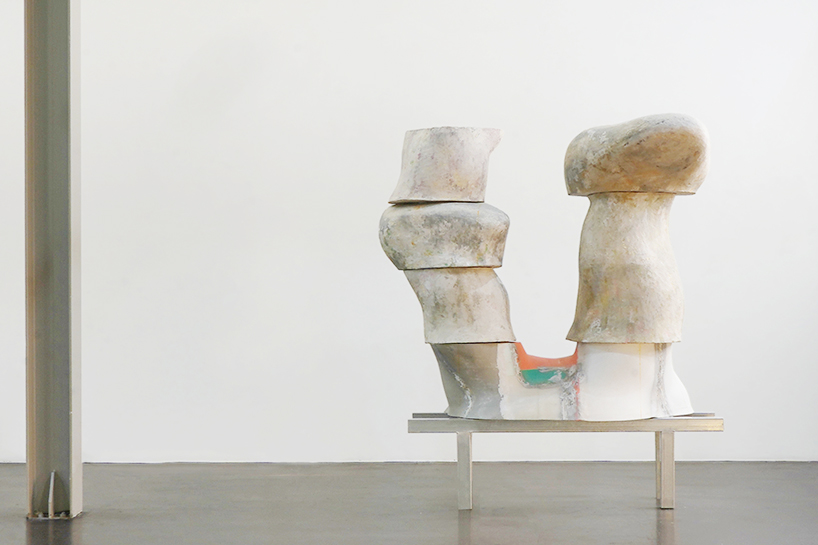
jabs—are playful yet incisive. For instance, Boots, which
presents the inverted leg of a mascot figure, employs both sanding and
division. Properties typically concealed in conventional sculptural practice
are here exposed.
The multicolored surface of Boots,
reminiscent of layered painterly surfaces, results from sanding down the FRP
coating and putty applied to conceal the raw color of the 3D-printed object.
The inverted leg is constructed from stacked segments slightly misaligned, and
although such elements are usually disguised in finished sculpture, here the
seams are inadvertently revealed through the gaps created by this rough
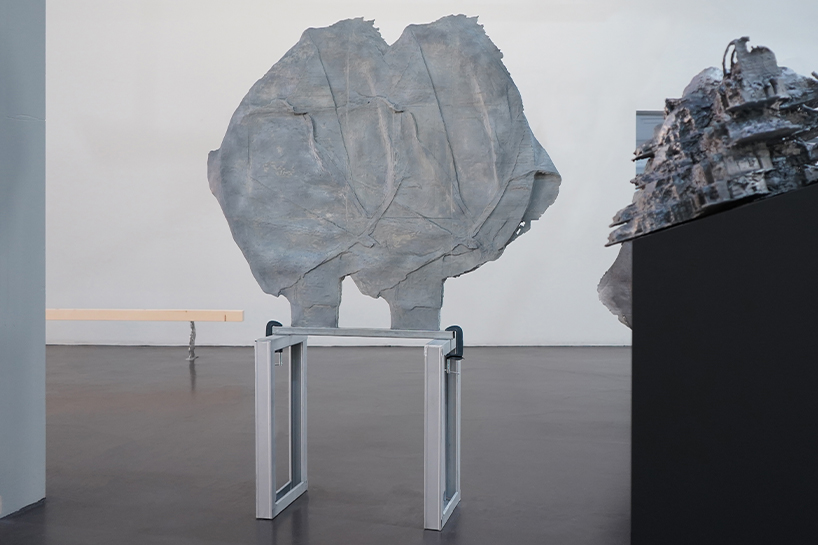
stacking. Swept (2022), which appears broad from the front
yet flat from the side, points to the impossibility of fully apprehending a
sculpture from a single viewpoint.
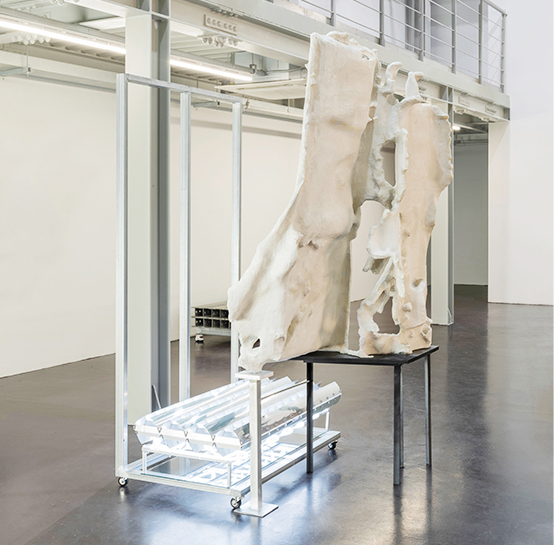
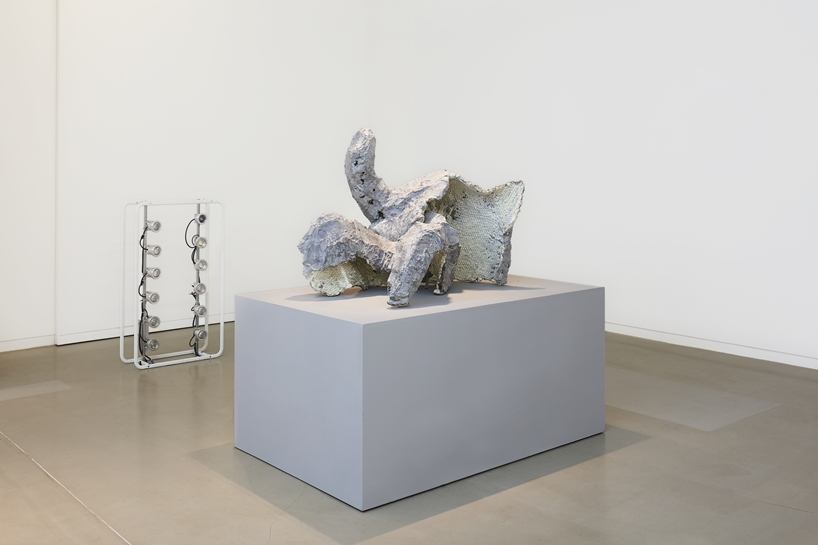
Meanwhile, Torso from Afar
(2022), produced by segmenting and printing scan data from Aristide Maillol’s
La Rivière (1943), addresses the disjunction between surface
and interior. Each of these works gently “pokes at the flank” of sculpture from
different angles. The resistance is not overt, but it is sharp enough to leave
a sting.
Recent tendencies in Jung’s
practice—approaching the question of what sculpture is in a relatively direct
manner—suggest a movement back from installation toward sculpture. Despite
these shifts, his distinctive sensibility remains pronounced. Myall
River (2019), a urethane foam cast of the artist’s body dressed in
work clothes, appears as a degraded version of the modern sculptural
masterpiece La Rivière.
The sudden burst of laughter that
arises upon seeing light flash and smoke billow behind this crude figure with
awkwardly raised arms is difficult to suppress. This unmistakable “B-grade”
sensibility is not unlike the earlier works in which rusted cans produced
artificial wave sounds.
Works such as the flimsy Styrofoam boat in
Nobody Knows Where (2012), the motorized object
Night Walker, which appears intact from the front but
reveals a melodramatic phrase on its reverse (“the tears I have shed for you”),
and Filing Public Hands (2018), in which stolen hands from
public statues are piled like fish in a concrete mass, all share a subtle yet
consistent mode of quiet subversion. At the same time, repetition—though less
conspicuous—persists.
As emphasis shifts from action to form, repetition
becomes less explicit, yet the differences generated through sustained
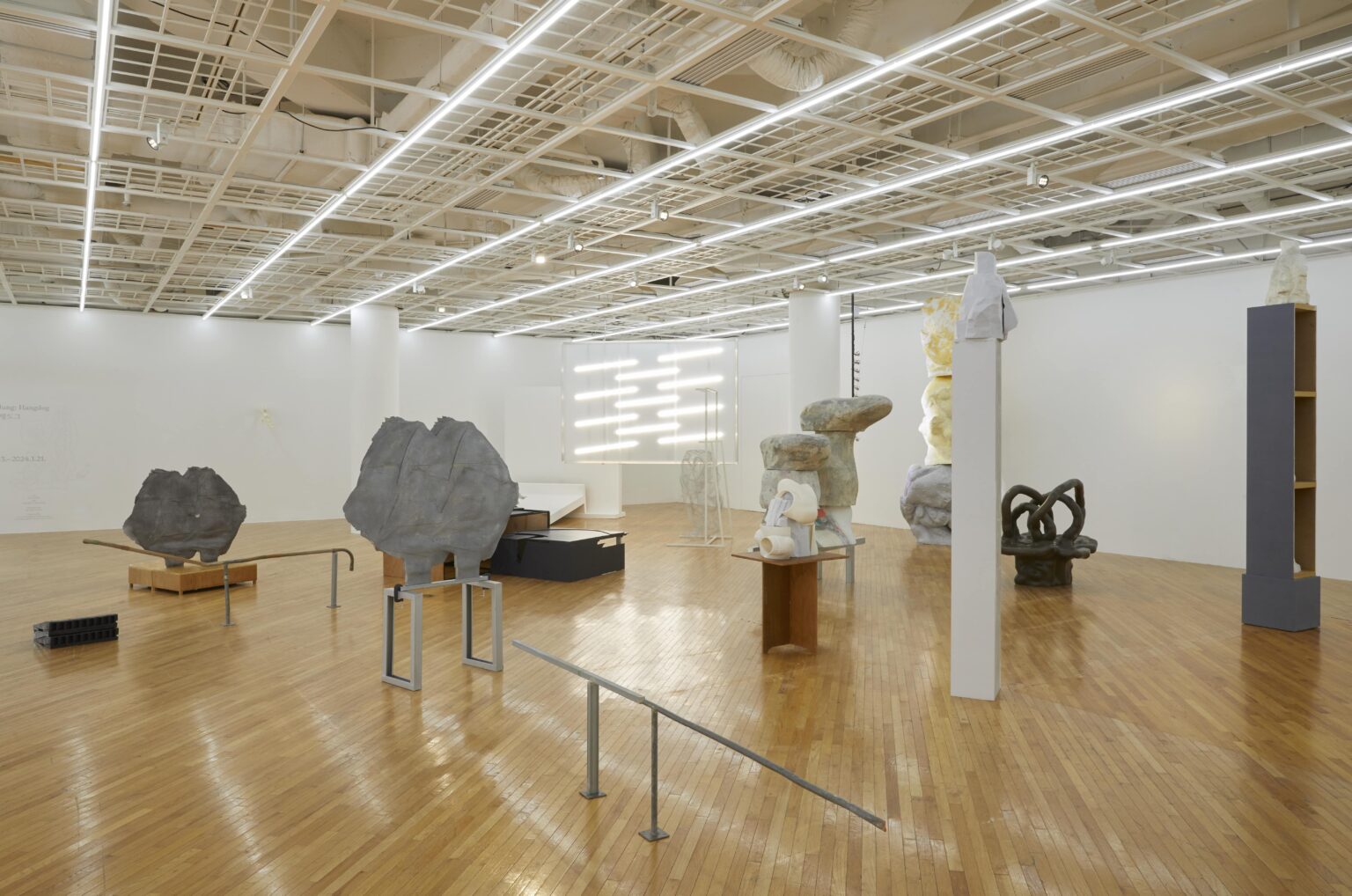
iteration remain central. The variations produced in 《Haengdog》 (2023), itself a reiteration of 《Gauji》, are particularly compelling.
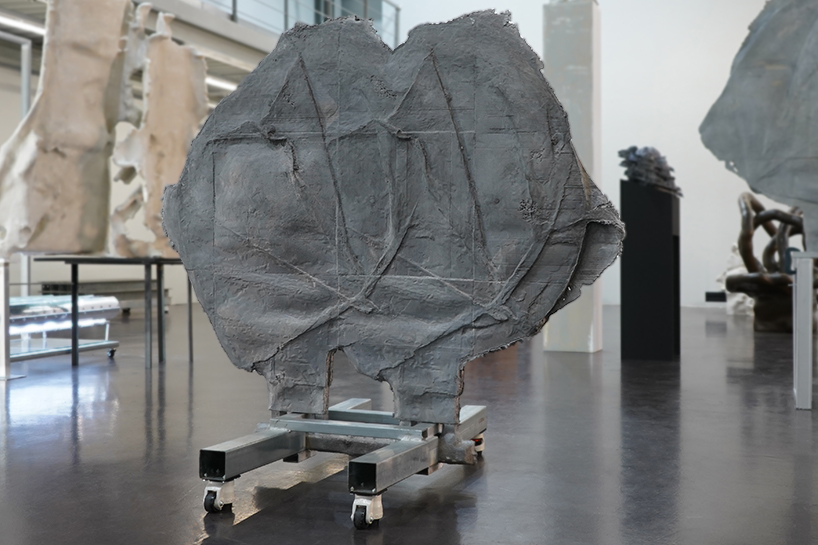
Torso from Afar, originally shown in 《Gauji》, is repeated three times in 《Haengdog》—first as it is, then as a fragment, and finally through a change in
color. It becomes From Afar (2023), and then
Far (2022).
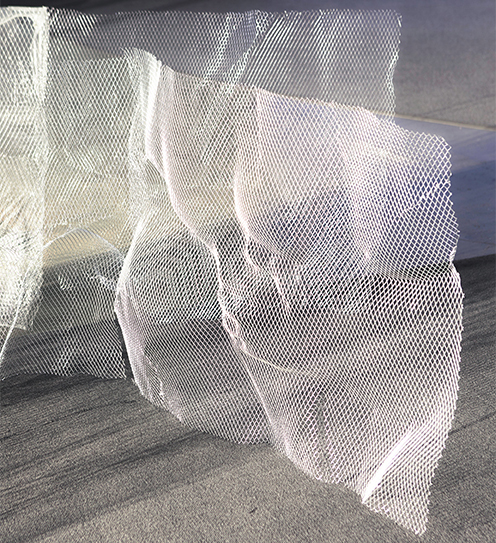
The outer shell, which coexisted with its
support, disappears in the second iteration, while the exposed inner sponge
undergoes yellowing in the third. As replication is repeated, differences
expand, and as the form distances itself from the original, the title also
progressively departs from its source. This increasingly crude and distant landscape
of “farther and farther away” resonates with Jung’s practice, which continually
questions itself while boldly challenging tradition and the world.
It is striking to observe how Jung’s
repetition—originating from the simple intuition that “it seems better to do
something than to do nothing”—generates difference rather than sameness.
Repetition occurs relentlessly within individual works, between works, and
across exhibitions. The differences that emerge through this process invert
function, meaning, and material properties.
Judith Butler’s insight—that
performative acts constitute the subject—seems particularly apt in Jung’s case.
All of the objects he produces are the result of persistent making, regardless
of outcome, and his identity as a maker—along with his sense of pride and
affection—emerges from this quiet and sustained practice.