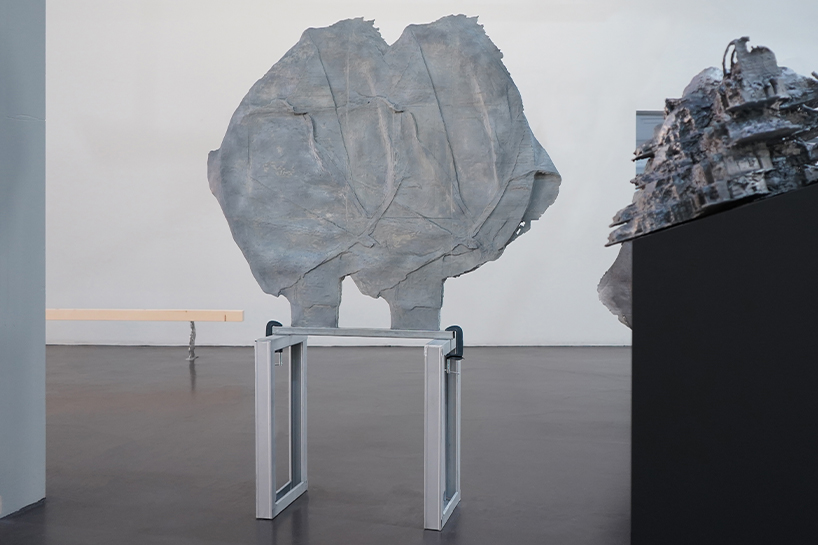
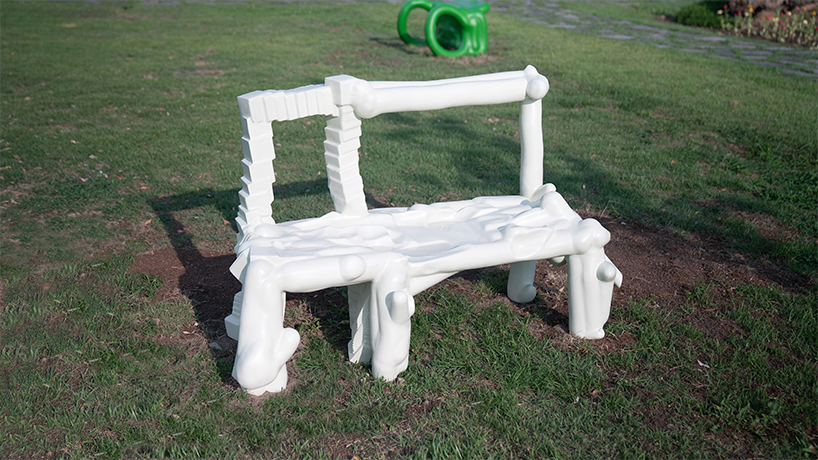
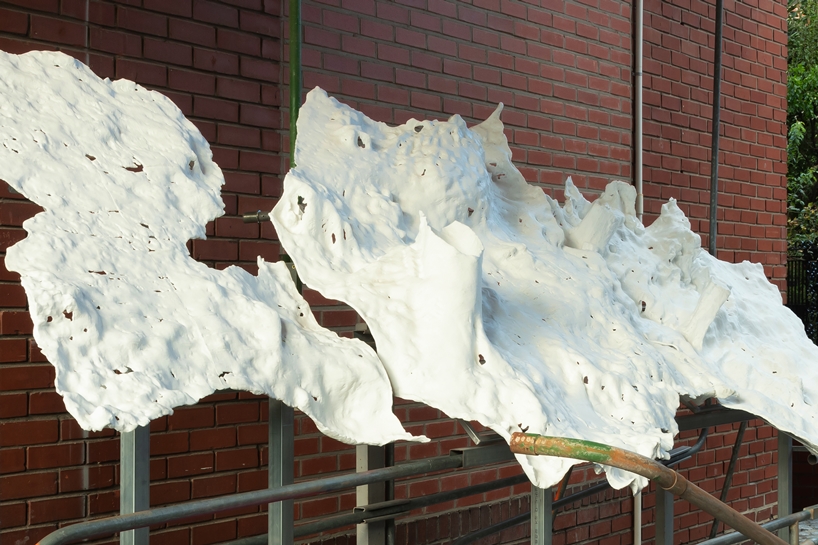
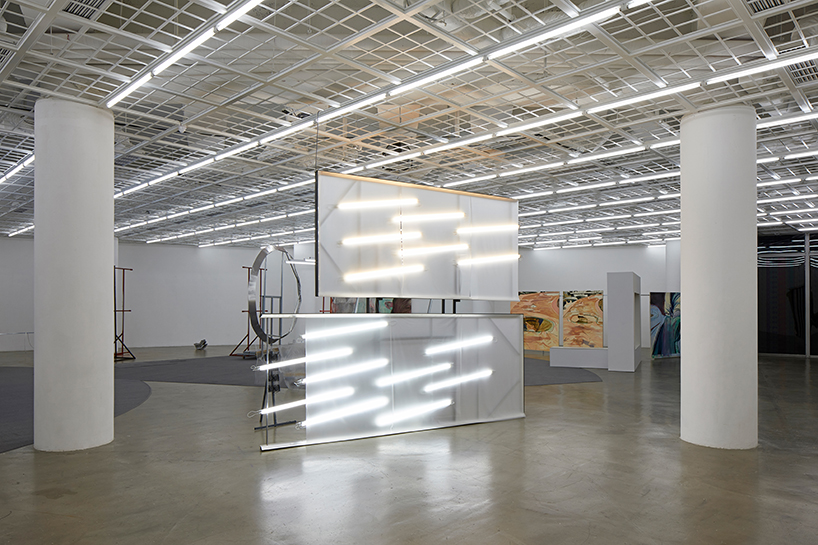
The works in the exhibition evoke the
urban landscape in a fragmentary manner. Materials such as statues and their
partial forms, signboards, and egg stacks, as well as titles like
Double Decker (2018), A Statue (2016),
and Display Cabinet (2019), all recall elements of the city.
While these works visualize the city both directly and indirectly, what is
particularly notable in this exhibition is the emergence of “bundling,” or
patchwork.
As multiple functions and decorative elements are imposed upon a
single form, the urban condition appears as an assemblage produced through
addition. Jung’s approach to transforming existing objects appears less as an
act of creation and more as a mechanical pattern of recombination.
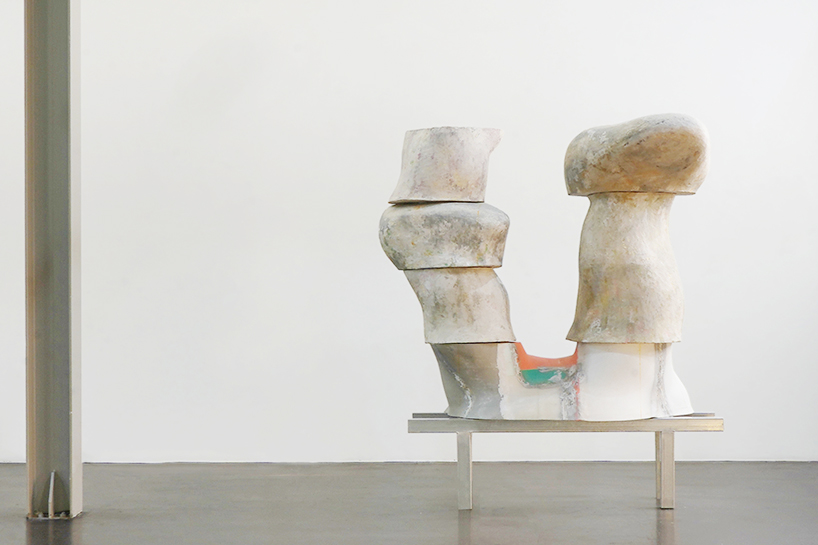
For
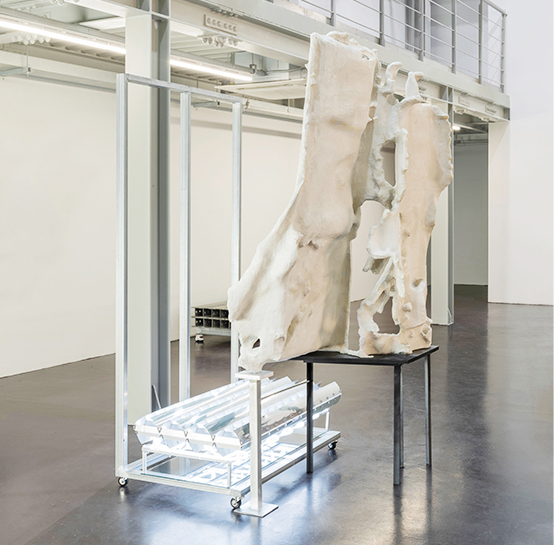
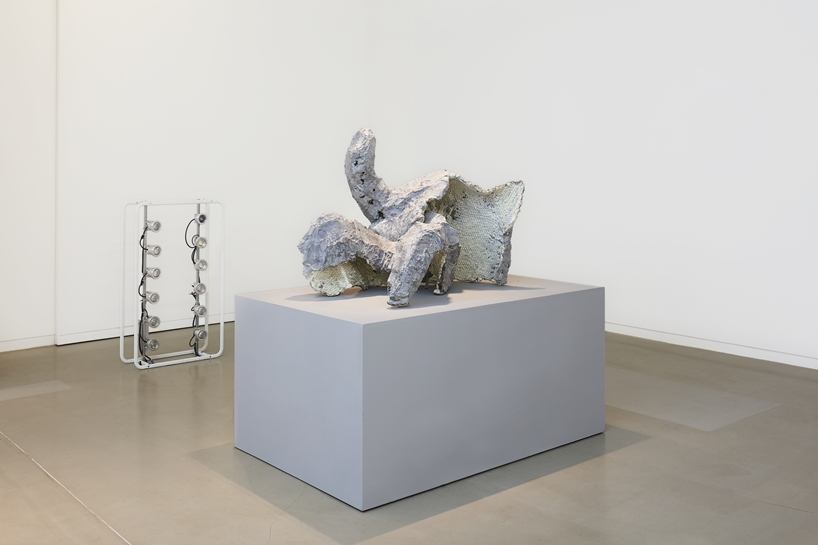
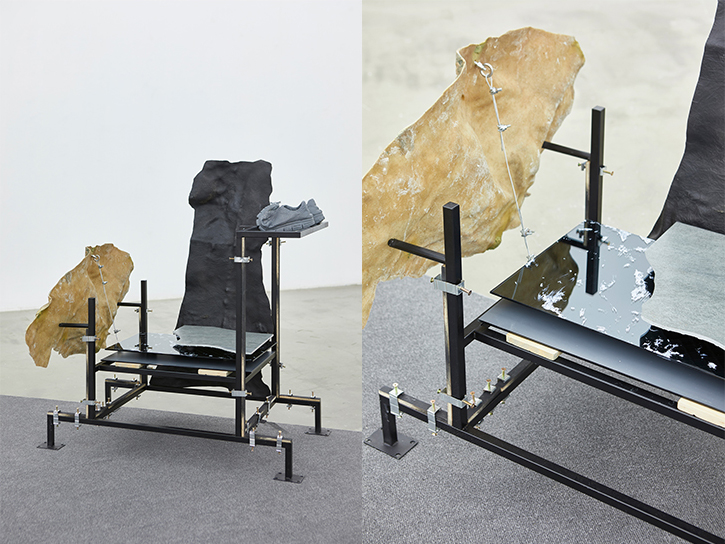
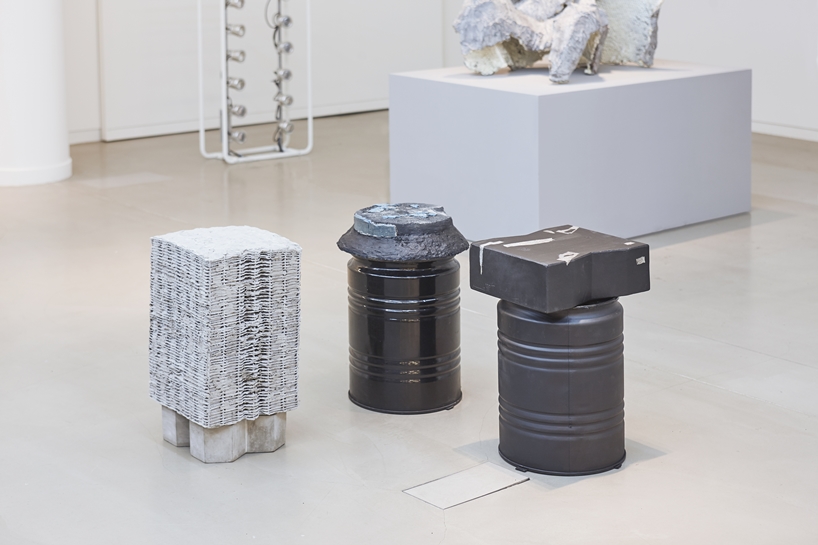
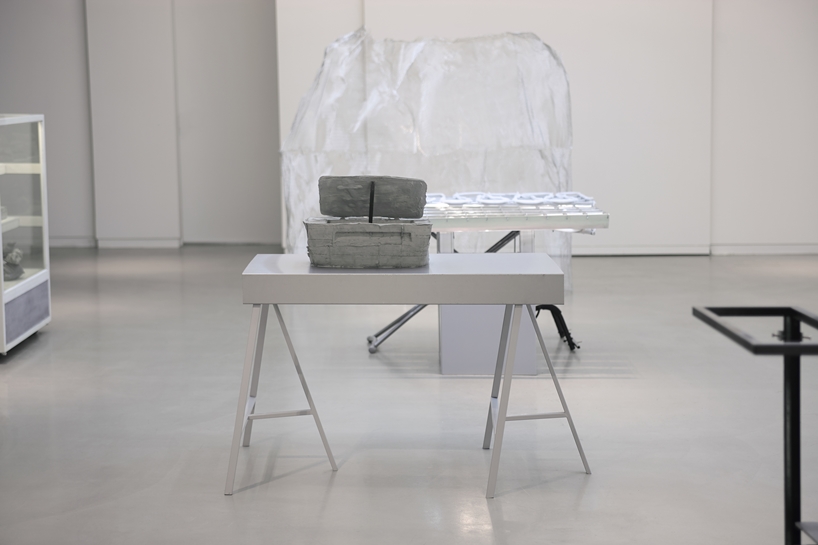
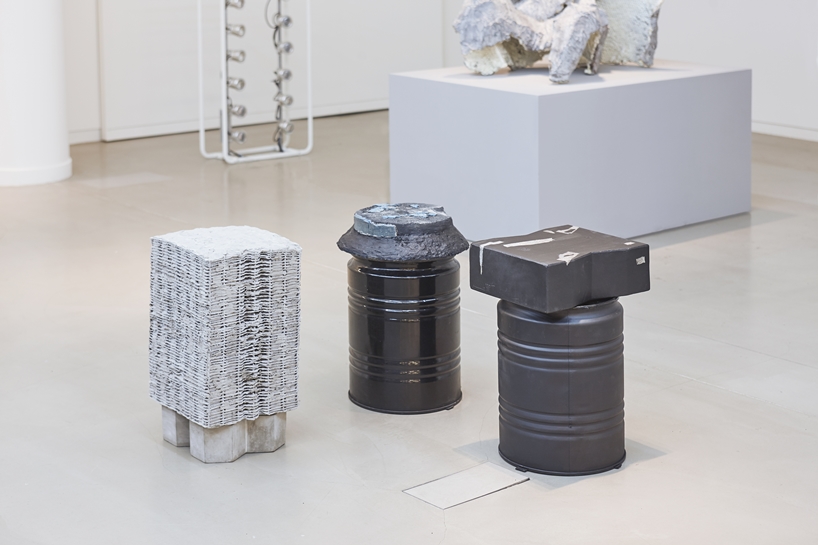
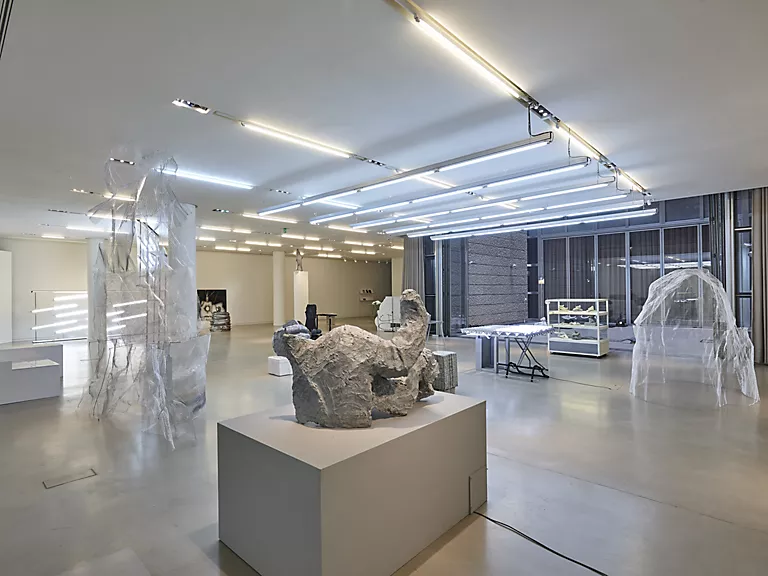
instance, Egg stack, Terrazzo, Heavy Stone (2019) consists
of three sculptural elements, each with distinct referents, bound together not
only through technique but also through their juxtaposition. While Jung
operates as a creator, the traces of authorship emerge precisely through the
de-functionalized nature of the objects.
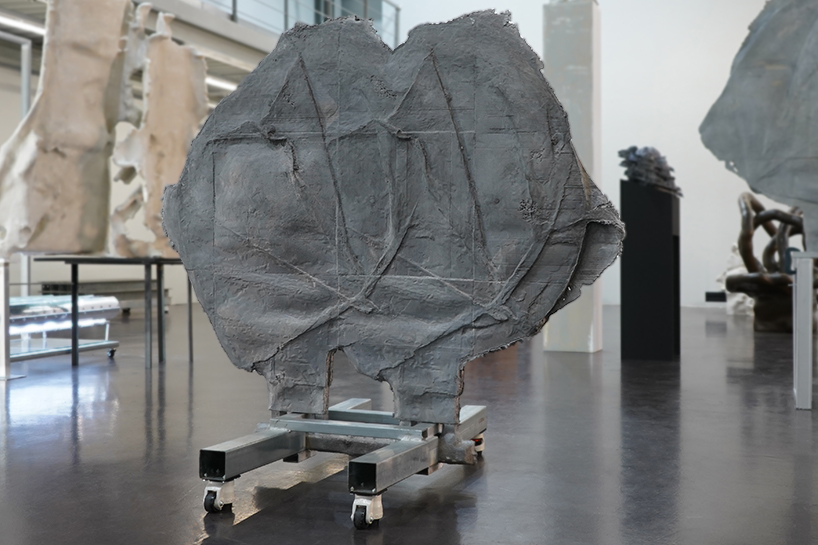
The video documenting the casting process
of Filing Public Hands and the work
Scanner (2019), in which a scanner is rendered in concrete,
point not merely to replication, but to the characteristic of Junkspace wherein
replicated objects encounter different contexts and assume new functions. Just
as a conventional scanner reproduces images into various formats, the scanned
scanner is stored as a concrete form. Similarly, the motif of the hand—derived
from public sculpture—is reproduced and redistributed, diverging into multiple
functions as it returns to the public.
In this exhibition, the removal of
function further emphasizes form-making. Acts of replication, casting, and
bundling correspond to Koolhaas’s processes of restore, rearrange, reassemble,
revamp, renovate, revise, recover, redesign, and return—not only as methods of
production but as principles in themselves.
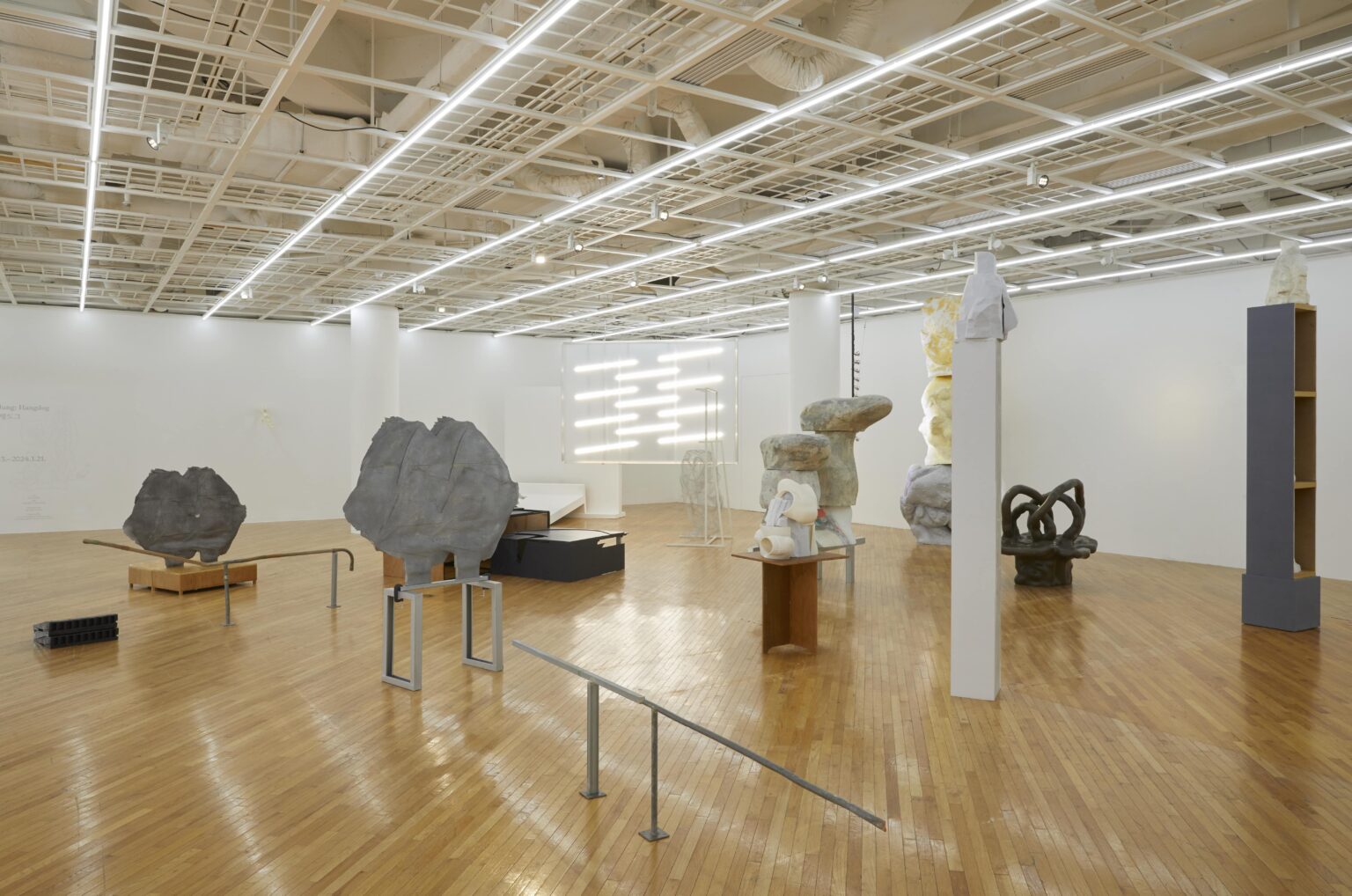
Objects within the exhibition
alternately function as pedestals or as combined structures, blurring the
distinction between object and ground (support). In Egg Stack,
Terrazzo, Heavy Stone, the work itself operates as a patchwork,
enacting processes of integration, separation, and the differentiation of
function.
Extending beyond the widespread replication of works such as Rodin’s
The Thinker, this exhibition captures an urban condition in
which functionality and utility are produced through replication and
separation—through the separation of function, and the separation of object
from ground.
In this sense, the “multipurpose” implied in the title 《Multipurpose Henry》 does not simply refer to the
presence of multiple functions. Rather, it emphasizes that objects and supports
are treated functionally “for any purpose.” As the statement goes, “What we
value and believe in is not creation but manipulation,” the status of objects
is redistributed through replication and reproduction into various
functions—whether as pedestals or as objects for contemplation.
Furthermore, through Koolhaas’s framework,
the exhibition can be extended into a reflection on authorship. Through its
title and works, it reveals—on a meta-level—the urban condition as one of
anonymous proliferation and the absence of creation. Thus, the title
“Multipurpose Henry” can be interpreted as follows: rather than referring to
Henry Moore himself, it points to “Henry Moore–like” sculptures that appear
ubiquitously, produced without attribution or through imitation.
What is at
stake is not merely the presence of such anonymous sculptures, but the way in
which Moore’s work is continuously remixed and varied, reducing the author
himself into anonymity. Like statues, signboards, or display methods that feel
vaguely familiar, the sense of “having seen this somewhere before” reflects not
only a shared formal language but also the anonymity of authorship within
contemporary urban space.
By capturing anonymity within the additive
and proliferative production of urban landscapes, and by removing
functionality, Jung reveals traces of authorship within technique. The
melancholic quality of his work does not stem from the depiction of uninhabited
urban space, but rather from the fact that the objects themselves already
contain an absence of humanity—namely, the anonymity of the creator.
The method
of accumulation—of addition upon addition—is transformed into an autonomous
form through the subtraction of function. If, as Koolhaas suggests, in
Junkspace “form does not follow function but searches for it,” Jung removes the
functions assigned within urban space and instead emphasizes form-making.
Through processes of addition, replication, and reproduction—of adding, adding,
and subtracting—he reinterprets urban space within the exhibition, transforming
the method itself into the work.