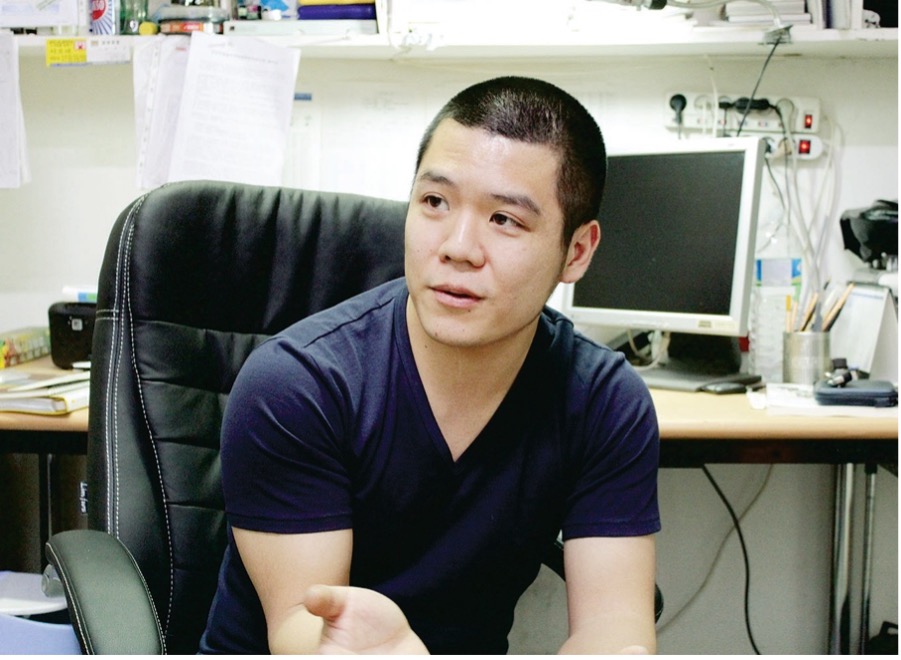
Filled with various fascinating
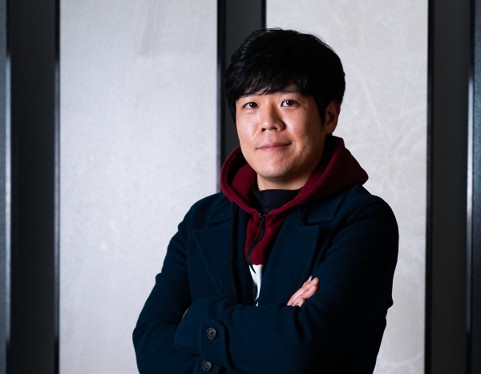
technologies and mechanical devices, Jungki Beak’s studio reminds one more of
an experiment lab rather than a studio. Upon closer inspection on the meaning
of the devices however, it’s evident that these mechanisms do not have much to
do with the so called conventional science, because although something is at
work, the operation of the devices not only contribute very little to the
discovery of (scientific) truth, it also does not rely solely on scientific
precision and validity. Merely applying such scientific experimentation and
processes into his oeuvre, Beak’s works are actually more like a type of
Para-technology which instigates new meanings never before unearthed by
existing scientific rationality. It’s a technology which, while parasitizing
existing conventional science, brings into question the (rationality of) system
of science through its altered signification and thus mutation. In the core of
all this seems to lie criticism on the Western rationality or science centrism,
and realization of their shortcomings, such as dichotomous division and
classification of body and mind, and human and nature. Beak questions such
binary oppositions and directs at their original integrated form before the
division. Beak’s work is based on his engagement with Eastern philosophical
world, in which all things in universe exchange and integrates with each other,
endlessly affecting each other in cycle of infinity. It also seems to follow
Buddhist teachings of the Principle of Causality in which all things in the
world function as a premise for something else, connected somehow and affecting
each other in complex and subtle ways. Paradoxically, however, the artist
applies the very western scientific methodology and technology in order to
demonstrate such Eastern philosophy. Beak’s work is more like a type of
pseudo-science, or spell or alchemy, in the sense that it appropriates
scientific methodology in order to criticize western scientific thought and its
limits. In addition, his work is ultimately an artistic experimentation or
performance in the sense that it focuses more on the connection or revelation
of a certain meaning rather than the strict operation of scientific principle.
This is why Beak’s work touches the human soul, which is an element that is
impossible to find in Western technological science, and thus Beak’s work is a
‘machine to touch the heart’. Like Foucault or Agamben’s argument, these
mechanisms fuel a sort of subjectivation, or function as a (an aesthetic)
technology which affects the microscopic emotional realm of life, or
internalized actions and thoughts of an individual.
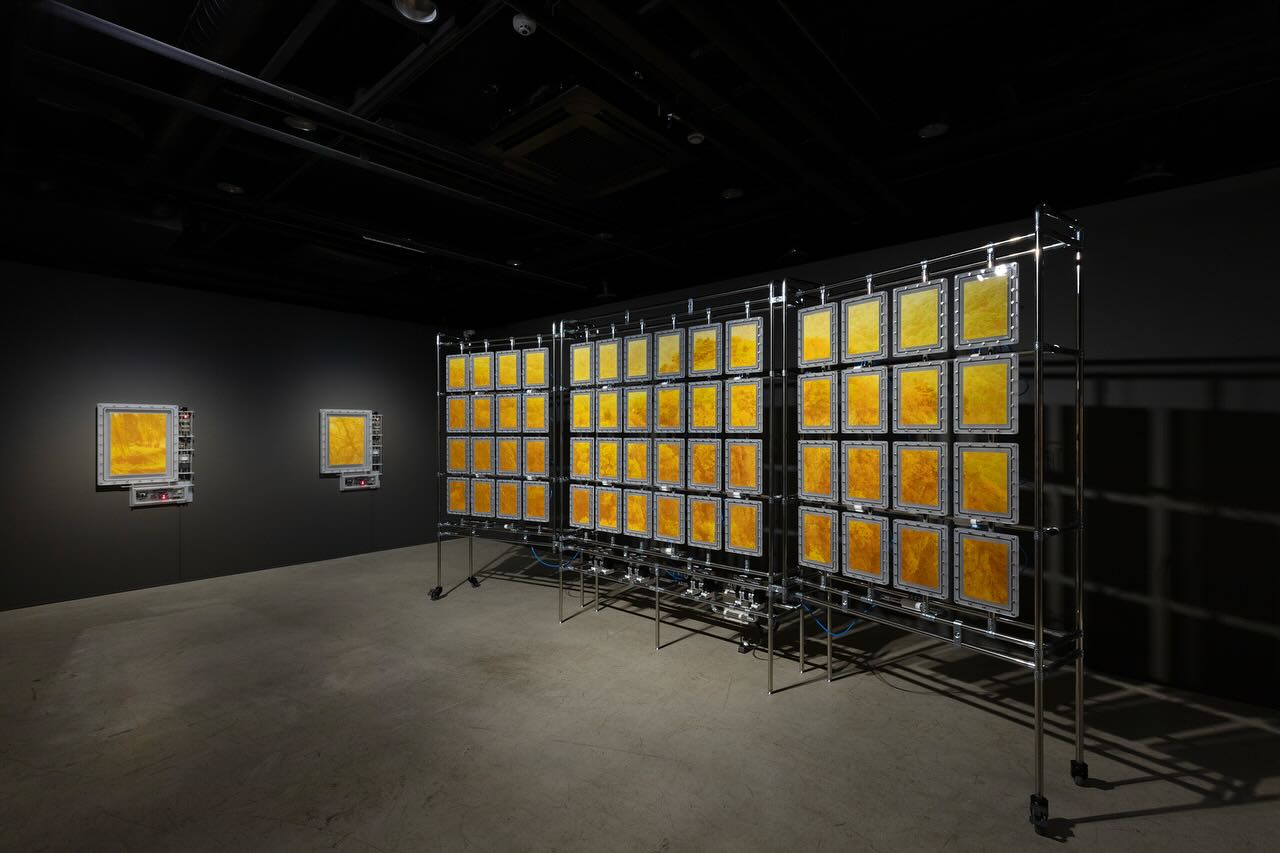
These aspects are best portrayed
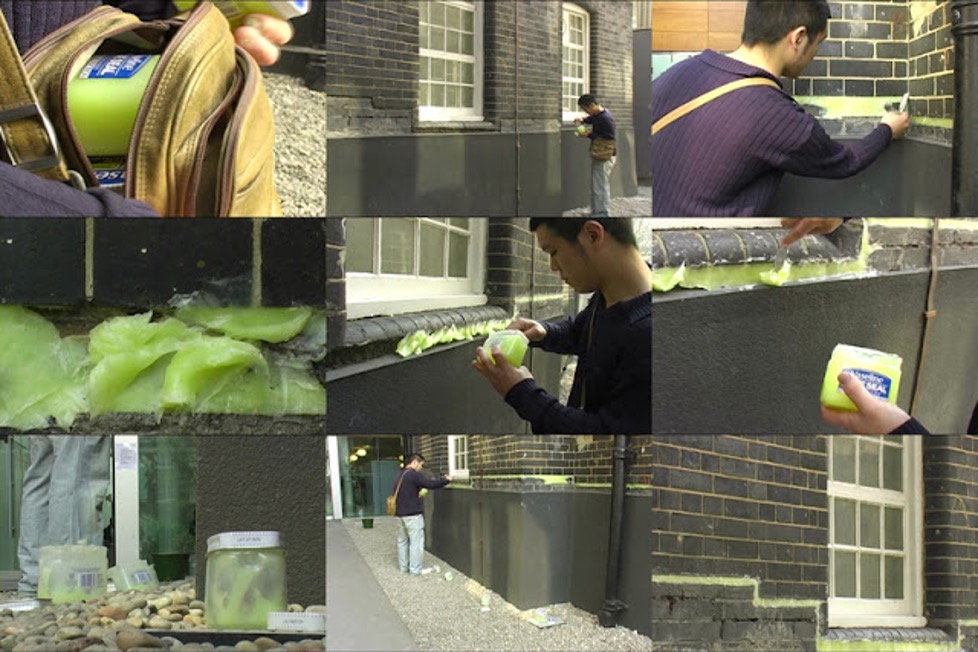
in Beak’s work Pray for Rain, shown in his solo exhibition at DOOSAN Gallery.
In the work, the entire wall of the gallery is covered in clay and Vaseline
which is applied to the cracks and fissures that appear due to the evaporation
of moisture in the clay. Praying for rain is merely a gesture of wishing for
the rain, and is a type of black magic which practices the (incorrect) belief
that the human gestures and matters have supernatural power. While it’s nothing
more than a non/anti-scientific gesture, the symbolic aspirations and hopes for
the cracks of the earth to be filled up again signifies the desperation to heal
great nature. Human, even if he’s just a boundlessly powerless being when
facing nature, is filled with the desperation to at least pray for the rain
regardless of its non scientific effects when faced with a serious famine (he
needs to believe in something, even if it’s something groundless). And only
when such aspirations and desperations are accumulated can any changes take
place in this world. On top of these significations, Beak also wishes to fill
up the cracks in his (artistic) subject which implicatively suggests his
artistic practice. While these cracks signify actual physical ruptures in his
work, they also portray ruptures in earth and nature, as well as the
dichotomous rupture between body and mind, and human and nature. Allowing the
principles of great nature to circulate and permeate by connecting and sealing
together elements that are divided and classified, the fundamental gesture to
fill in the cracks and gaps is analogous to the function of water in nature.
This is evident in the fact that there are many works by Beak which focus on
the subject of water, including Pray for Rain: Mhamid (2008) in which Beak
himself becomes a shaman carrying out a performance of Korean traditional
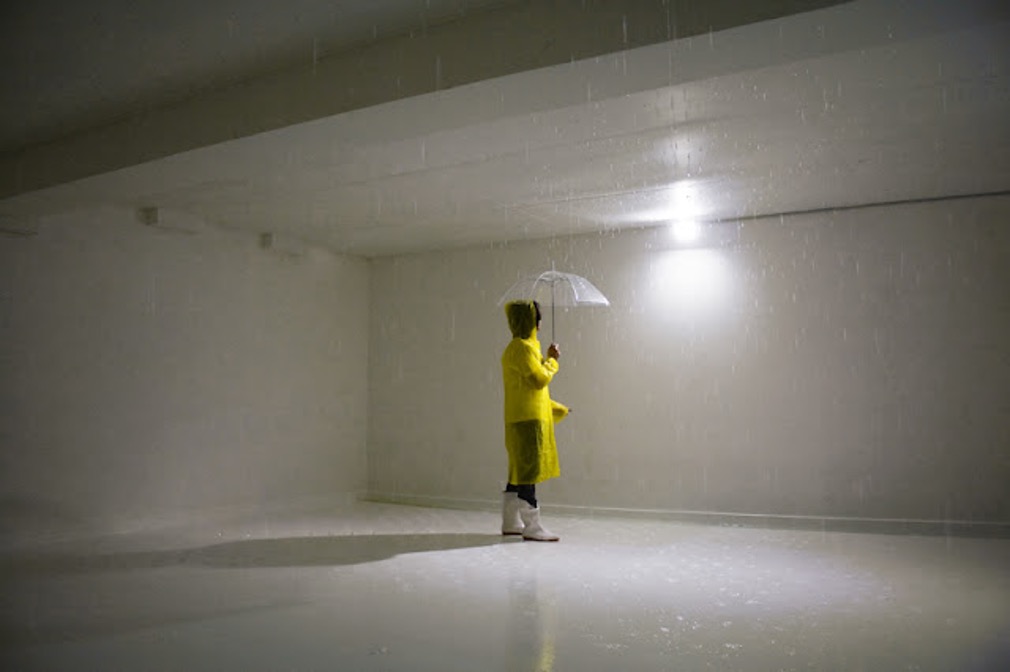
prayer for rain, as well as the audience-participatory work Sweet Rain (2010)
in which Beak used saccharine to make sweet ‘rain’ fall in the exhibition
space. These works focus more on manifesting the particular meaning of water,
as a symbolic medium which allows circulation of matters on earth, rather than
the physical phenomenon of actual ‘rain’. Thus the artist places more
importance not on the physical operation itself of a certain phenomenon, but
more on the production and construction of meaning produced through its
physical operation. He ‘uses’ and ‘redirects’ technology as a mechanism to
generate meaning. Beak’s works not only generate meaning, but also question existing
meanings. In Blue Pond (2009), he alluded to the existing notion that ‘clean
pond is blue’, and produced an artificial pond using blue pigment, amplifying
the sense of distance between conventional perception and actuality. While such
experimentations on the activation and derivation of meaning expand and connect
to even more meanings, it seems that his works attempt to demonstrate the logic
of all things in the whole world through the interweaving of meanings.
While the use of Vaseline in this
exhibition can be in part explained by the linguistic meaning of Vaseline
—which fuses two disparate elements of water (wassor) and oil (oleon) — it also
relates to the artist’s personal experience of treating his burn and going
through physical suffering. It adds the meaning of healing to other meanings
mentioned above. The Vaseline, which the artist started using since his
Vaseline Armor series in 2007, demonstrates such meanings of healing. In the
series, Vaseline is shaped into gloves and armors to protect the individual,
and also becomes a healing element which fills up the cracks on buildings,
expanding the concept of healing from the level of an individual to that of the
society. In fact, the application of Vaseline, which is nothing more than skin
moisturizer, as a cure-all medication to heal all wounds, is probably driven by
a certain (non)scientific yet convincing belief, like ‘placebo effect’, or a
enchantment. Beak does not face away from such shamanistic aspects in his work,
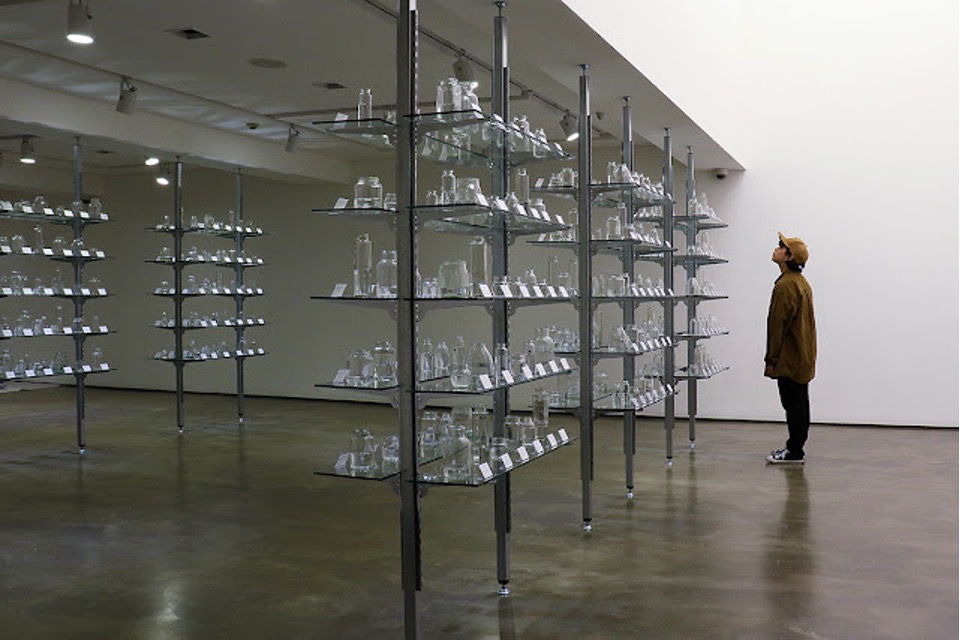
as evidenced by the fact that the term ‘contagious magic’ is found in the
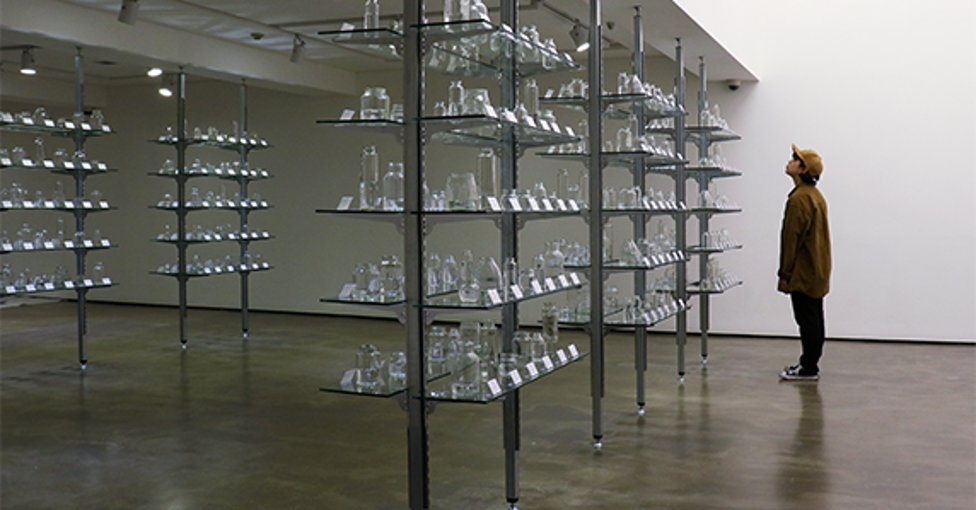
titles of the series Contagious Magic: Sprout, Forsythia, Azalea, Satuki and
Contagious Magic: 16 Reservoirs in this exhibition. They imply that because
everything in the world is connected and amalgamated, they still continue to
affect and connect to each other even after they’re separated due to certain
energy. These unique works –– in which the very material for the work itself is
extracted from the conceptual subject of the work –– are charged with
existential cause-and effect relationship in the sense that they capture the
(traces of) physical presence of the subject. It’s no wonder that such energy
is actually felt in the work, as they actually hold the subject’s presence (or
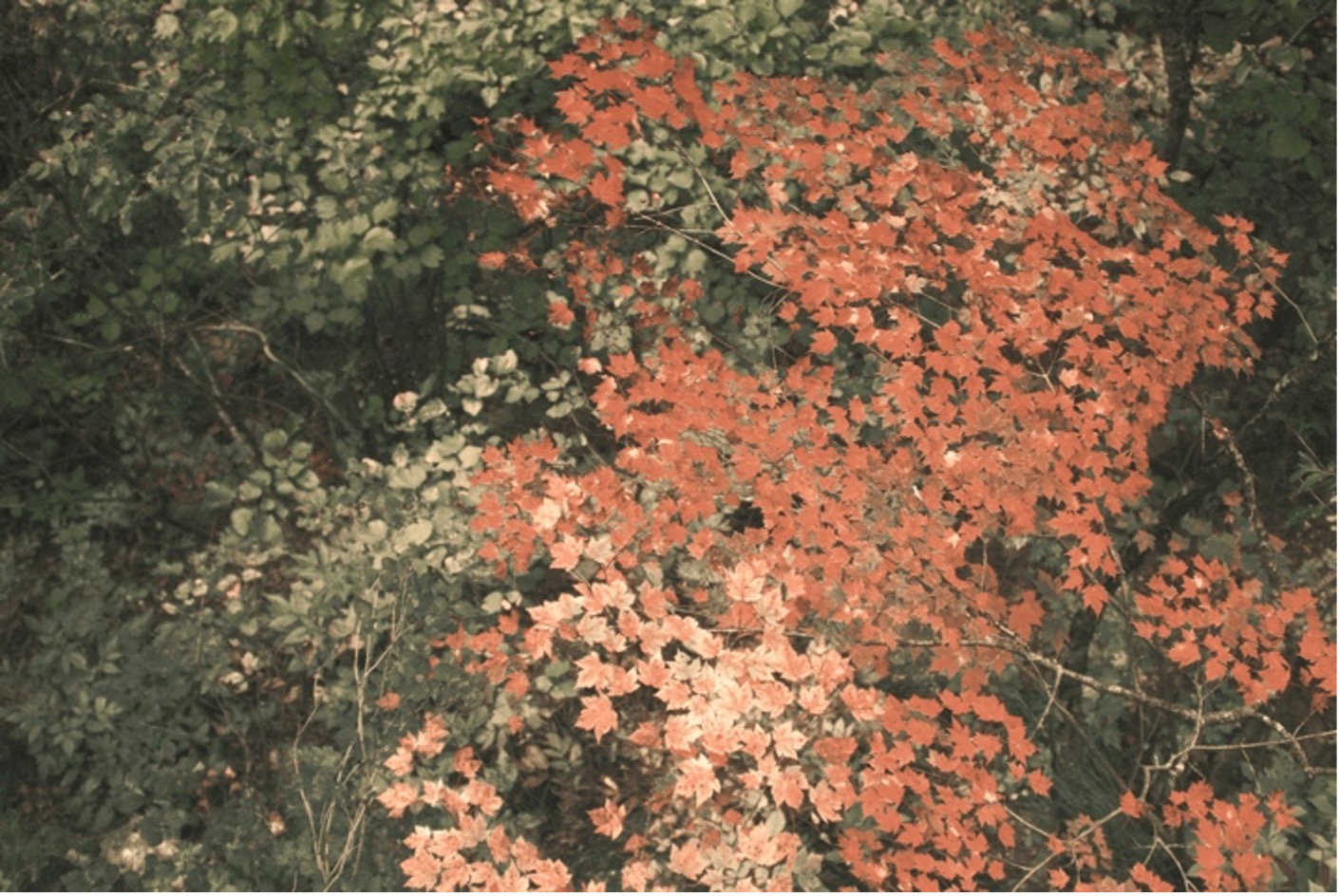
part of it). In Homeopathic Image: Japanese Apricot Flower, a new work
collaborated with Beak’s father, the flower (symbolizing fidelity and integrity
from a long time ago) drawn with electricity- conductive ink functions as an
antenna which transmits radio frequency and sends mysterious energy of the
flower everywhere. What’s important is not whether or not such energy and aura
is received, but the dimension of empathy, or the hope or conviction to spread
it to others. Homeopathic magic, which believes that similar things inspire
similar things, is partly a superstition and in itself has no scientific
validity and effectiveness. However, what’s more important is the sense of
desperation or the will to put it to good use, as can be seen in Pray for Rain.
What is meaningful is the aspiration, or the attempt itself to signify the
desperation for rain or water through the use of Vaseline, or to spread the
positive energy of flower through the antenna like flower painting. The same
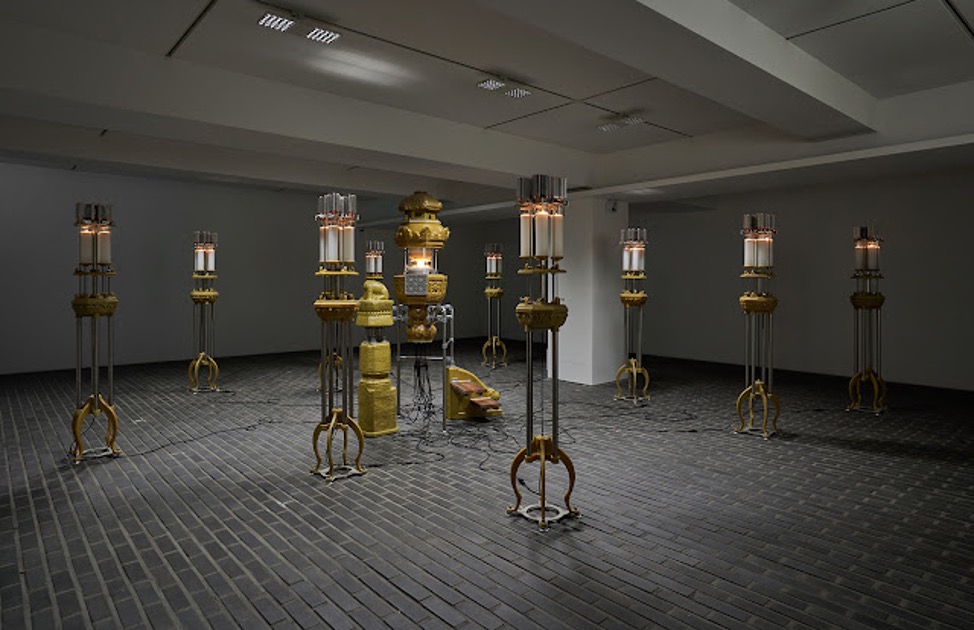
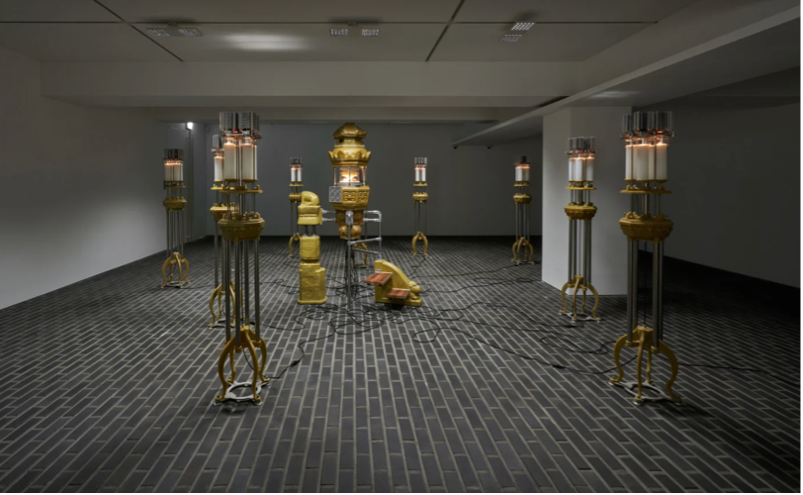
desperation is also evident in the work Untitled: Egg Incubator and Candle
shown in this exhibition. Using the visible operation of mechanical device
which converts the heat of candlelight to electrical energy to hatch chicks out
of eggs, it captures the (bizarre) attempt to use the candlelight, which
symbolizes desperate aspiration, to give birth to chickens which drive away the
gloomy energy of the night and proclaim the arrival of morning. The science and
technology which the artist uses is just a de vice which touches the heart,
gives it form, and invites empathy from the viewers; and thus the significance
of his work rests in that it functions as a machine to touch the human heart.
Through such awkward but meaningful experiments and experiences which connect,
exchange and fuse the cracks and ruptures of conflicting worlds, the artist
practices his own intentional art of empathy that’s like science, shamanism and
spell, but is ultimately not any one of them.