“The medical image is factual even if no
one understands it; therefore, its objectivity is never questioned. However,
not everyone has the power to interpret these images, and my data cannot be
read by myself.”
The myth of machine
objectivity—unsurprisingly—remains dominant, if not growing in power, among the
craze around algorithms and AI. Due to its convenience and accuracy,
state-of-the-art information technologies are enhancing their status as
essential elements indispensable for applications spanning from military
operations and insurance to public education, content creation, and everyday
play; while convenience and accuracy do not necessarily guarantee objectivity,
they are greatly effective at, as supplements, adding to and reinforcing its
myth.
If you have any familiarity with recent
media research, you probably know about the dangers of this mythical aspect.
The perception that technology, far from being disinterested or neutral,
instead works within a cooperative relationship with power, is becoming
prevalent (while not dominant) in the public mind.
Optical technologies
criminalize black people, or even fail to recognize them as human; advances in
computer graphics are tied to military technology; and global big tech giants
such as Microsoft and Google monopolize
information. Furthermore, what about the fact that the contemporary universal
AI technology is not yet perfected, and requires human hands to produce
something concrete?
Before any misunderstandings, I hasten to
add that I do not intend to repeat the old ‘machines cannot think’ argument. If
modern AI is a “registry of power” as Kate Crawford puts it in Atlas
of AI, it is because (regardless of Crawford’s intentions) technology
not only is the result of all kinds of social discourse, but also actively
produces that discourse.2 The posthumanist idea that technology, like nature,
is an object with its own capabilities, becomes increasingly convincing in the
old future of AutoGPT—an AI model that improves itself without human
intervention.3
Therefore, the question “Can machines
think?” is bound to be a trap. By breaking down and redefining the conventions
of the establishment of expression, technology is following a completely
different path from humans while referencing and interacting with what is
human. On the contrary, should we not elaborately reconsider the concept of
thinking itself, with advanced information technologies actively deconstructing
what is human? This is where Jeamin Cha’s work draws our attention.
While Cha speaks about power in the
previously quoted interview, she does not consider it as some hierarchy to be
subverted. The power to interpret is inevitable, as is attested by the
existence of art criticism (at least until now). Likewise, if power continues
to discriminate and oppress something, it must be because of connections
between some qualities within us and power. Cha’s video works are active
attempts to develop a thinking of said connections; but I am getting ahead of
myself.
Awkwardness
I remember the first time I saw
Chroma-key and Labyrinth (2013). At the time of its release,
this work was widely accepted as a social attempt to preserve through video the
invisible, marginalized physical labor (represented by manual labor), but what
touched me was the subtle awkwardness that pervaded the entire work.
However,
what was awkward about the fluid camera movement (obviously using a steadicam)
that relentlessly follows the cable worker’s process, was not that it was
unnatural, but that it was too natural. The out-of-focus background often
resembles the wallpaper of an online game, and the manual labor of the cable
worker, endlessly unwinding the cable in the second half of the video, feels
partly like the worker is playing and partly like a scene from an online game
because of its wild gestures.
The chroma key scene, which appears
somewhat out of the blue in the middle of the piece, amplifies this feeling;
the cable worker’s gesture against the exposed chroma key reinforces the
abstraction and virtuality of the entire piece, making it ever more dubious.
Perhaps this is also a CGI scene?
Even though one knows that the scene was
actually filmed, the awkwardness that occurs at the level of feeling is not
easily dismissed. Here, Cha stages two problematic orders together. The
duplication of skilled physical labor, and the duplication of filming
technology that documents the process of such labor. Can our subjectivity
separate these problematic orders and make clear judgments?
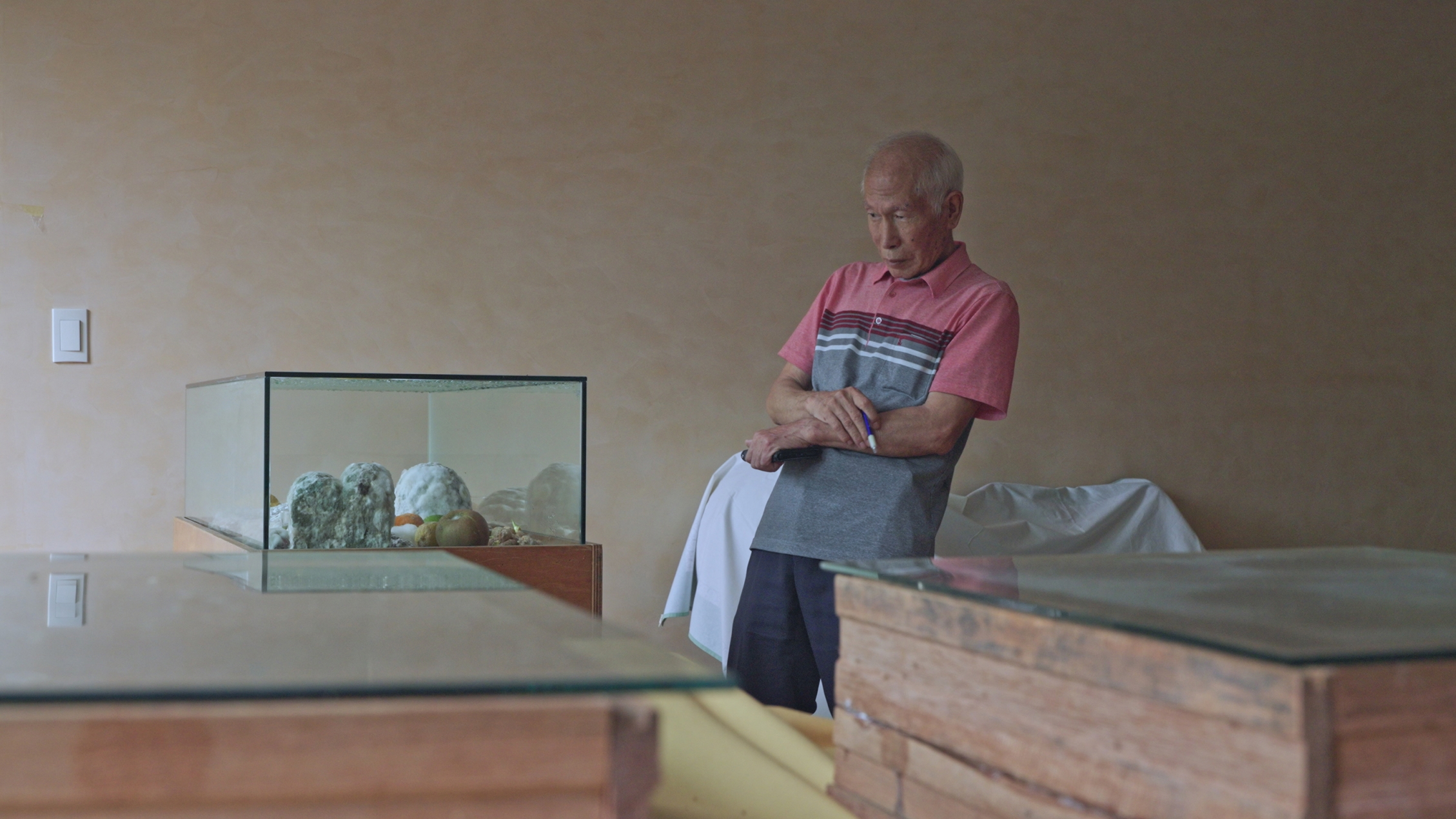
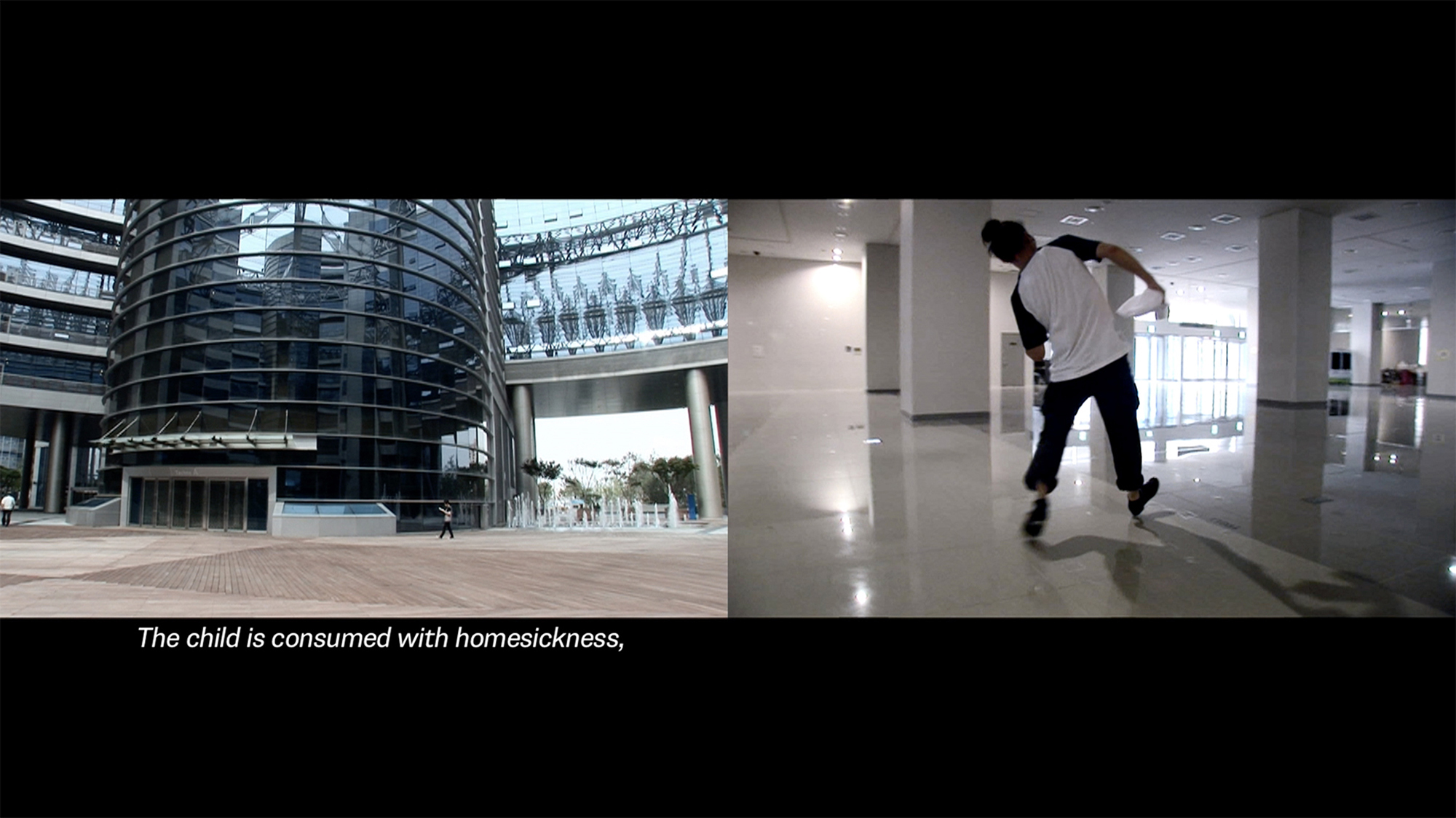
Another kind of awkwardness lies in
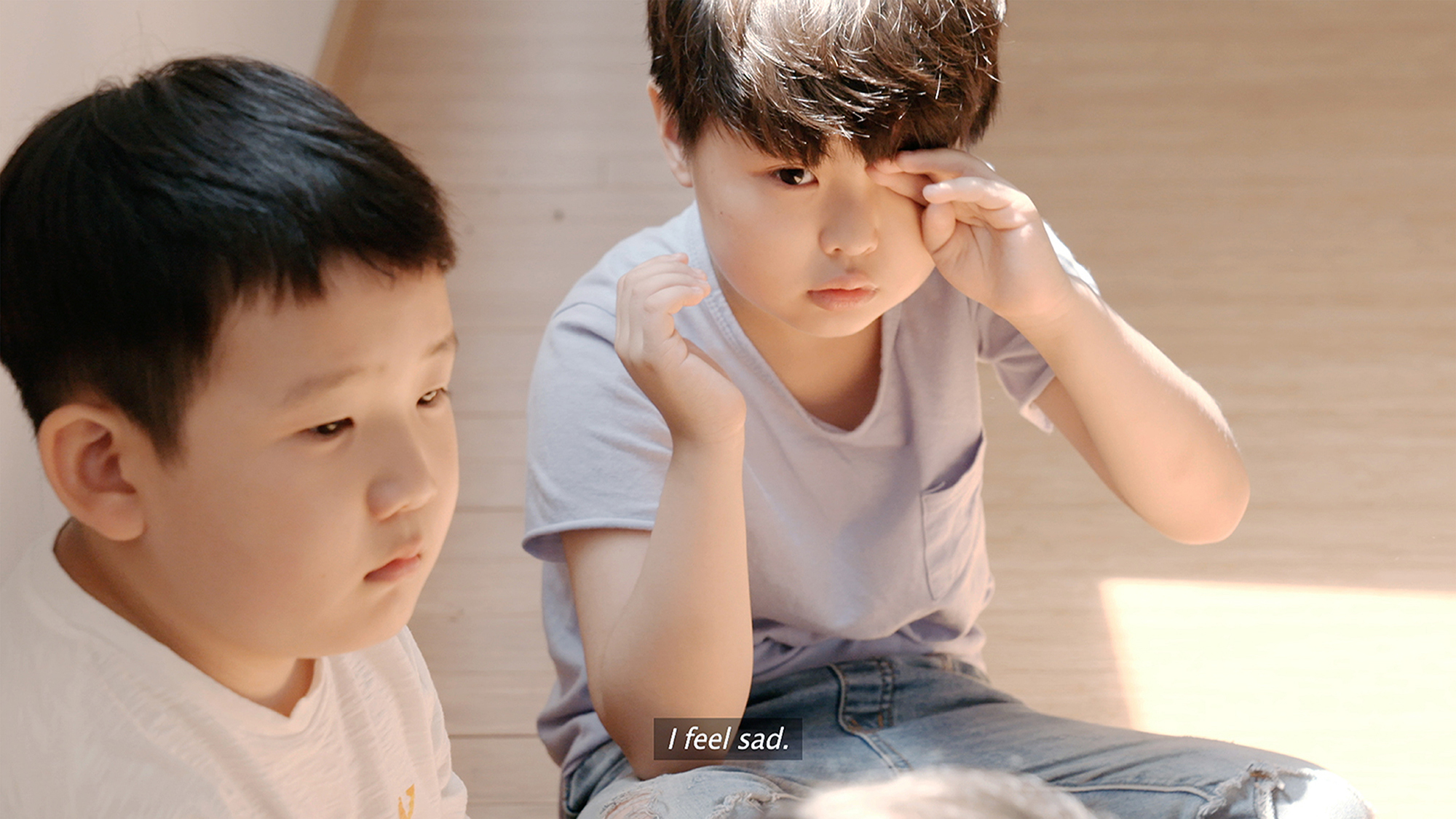
Almost One (2018). We follow a group of children as they
take acting classes to become child actors, and unsurprisingly, they have a lot
of difficulties adjusting. The teacher’s repeated question, “What is sad
acting?”; children who have yet to acquire even a simple prompt (“Let’s close
our eyes”). Through “mimicry”, as the narration puts it, the children are
learning from scratch not only the skill of expression but also the state of
expression. In other words, the awkwardness here is the feeling experienced
when those who do not yet have a language are learning a new language, and it
is also what we feel as the adults watching the process.
Perhaps, this is why so much time is
devoted to Jun-beom among all the children in the class. In Almost
One, Jun-beom noticeably experiences awkwardness with regards to the
class and the camera that is recording it. When the teacher asks him when he
gets teary-eyed, telling him “When your heart is sad, your face makes a sad
expression” and asking him to repeat, “I am sad,” and when Jun-beom finally
opens up, saying “I am sad,” the class literally functions as a sentimental
education.
He is learning what is called sadness in this world, and at the same
time, he is experiencing what sadness is. By the same token, learning a
language is about finding the right words to capture a state, but also about
creating a certain state.
In short, Almost One is
a performative attempt to prove that emotions, as well as specific emotional
expressions, are not given to us from the beginning, but are things that can be
obtained through learning. However, if the work stops at what has been
described so far, wouldn’t it be no different from a research video for
developmental psychology?
Of course it will. As a quite astute artist, Cha sets
up a simple but effective device that goes far beyond that trap. What device?
Think of the camera monitor screen exposed throughout the camera test in the
second half. As the bustling gestures of children learning sadness unfold on a
monitor screen filled with symbols of all sorts, another context overlaps with
Almost One.
Just as perceptions or experiences are not
transparently given as-is to the children, the events we see in this work are
not simply given to us. Filming, editing, color correction, and screening
procedures; a lot of mediated processes are involved. (In this respect, Cha’s
video work takes on the nature of a document which investigates the means of
technical reproduction to record or produce something audiovisually.)
Jeamin Cha’s confrontation with
contemporary technology begins by making us doubt the visual images in front of
us. Yes, not distrust, but doubt. This is because we are not completely
distracted from the content by the internal logic of the work while we are
watching Cha’s video works. Just as awkwardness is not easily dismissed in
Chroma-key and Labyrinth, we remain in a state of
suspension, neither fully accepting nor fully rejecting.
Cha clearly knows that
any expression obtained through the subjective human manipulation of machines
also has its own ontological objectivity—in that it is presented as a strict
entity and that it relates to us. The real problem for her, then, is that the
expressions produced and presented through contemporary technology are often
accepted as natural and self-evident by us. Why is this a problem? To explain
this, I should first discuss her work which takes a different approach than
making visual images doubtful; technology today does not solely express through
visual images.
The gap between senses
If you have followed Jeamin Cha’s work
carefully, the first scene of Nameless Syndrome (2022) might
have made you smile. An actor preparing to record a narration is shown; one can
hear an actor’s narration, but it is distinct from what is shown. In other
words, there is a delay between what is seen and what is heard.
Cha does not
relate these two things as one another’s explanation, metaphor, or comparison;
there is a delay, and it is all there is to it. A series of her works from It
Is Not About a Question but a Balloon (2010) to Nameless
Syndrome share this narrative strategy which employs a subtle gap
between the visual image and voice-overs. Cha has explored this strategy long
enough for it to be considered an axis of her trajectory.
For example, let us reflect on the
precarious knots between Sound Garden (2019) and
Walking on the Chairs (2020). The supple voice-overs of
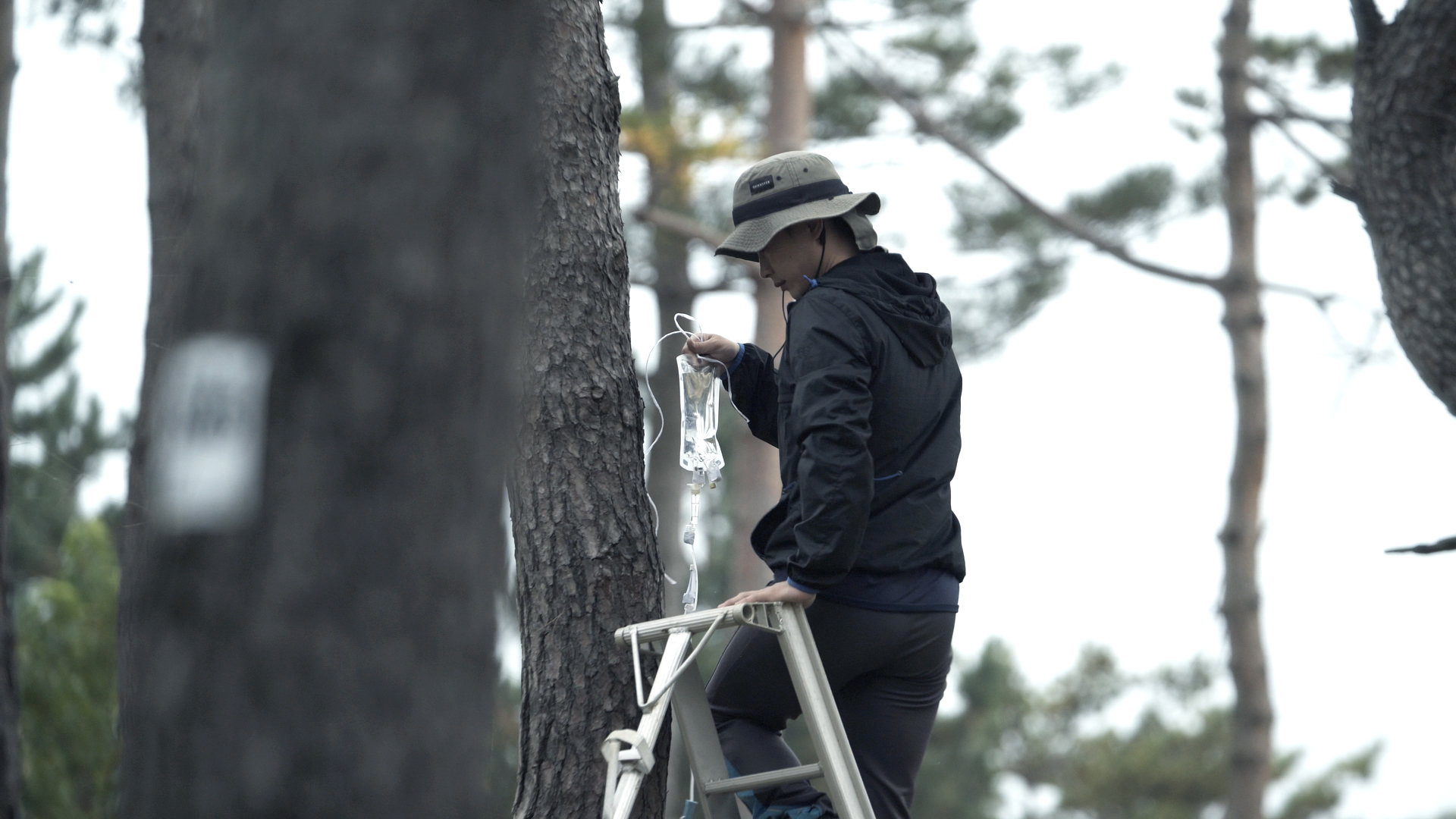
female mental health counselors that flow sparsely in Sound Garden
are not helpful for a detailed understanding of the process of growing and
transporting the cultivated trees; the short-breathed voice-overs that recite
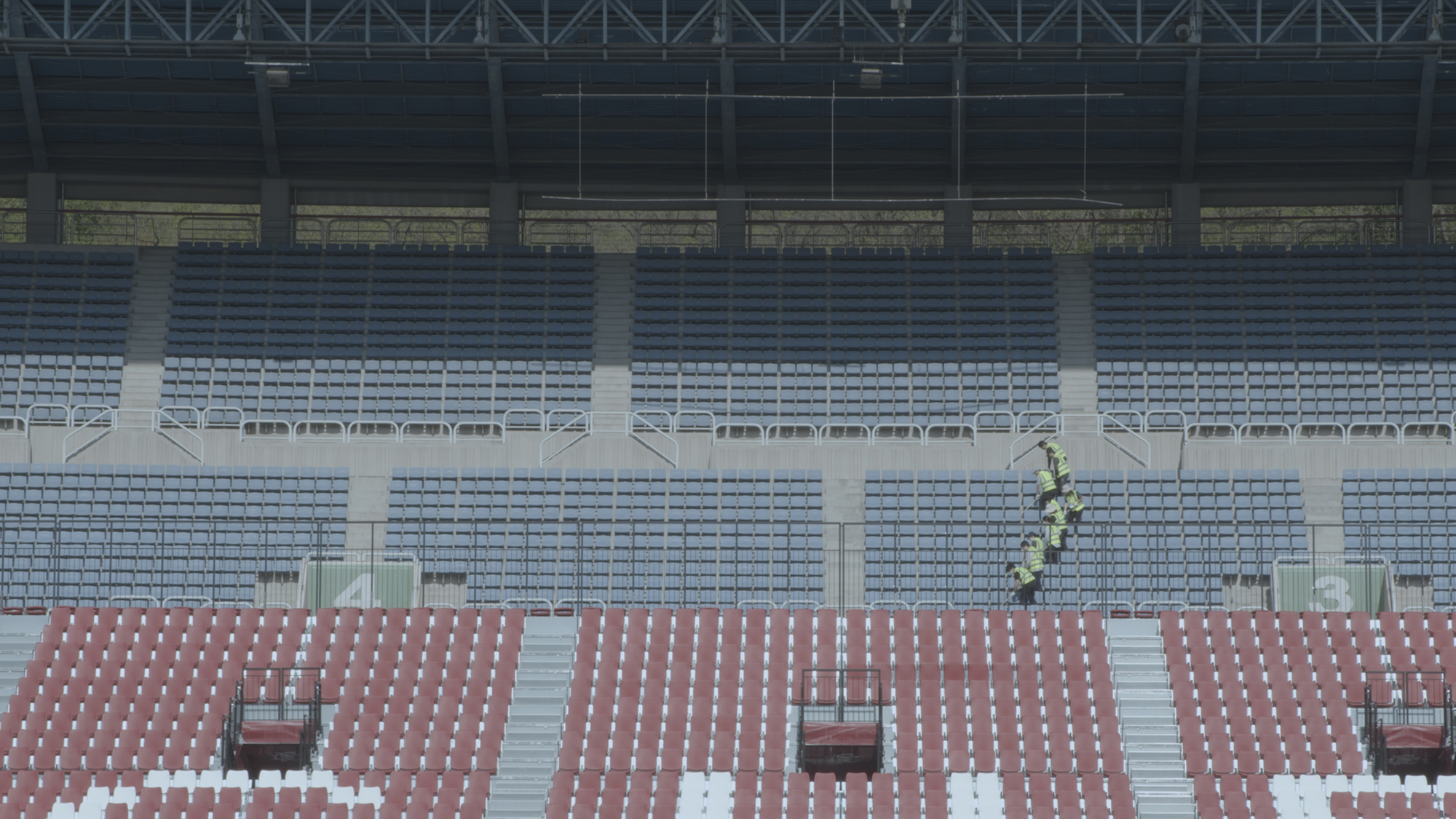
cleaning tips in Walking on the Chairs are subtly askew, not
quite matching the actual cleaning workers (shot from a distance) cleaning the
stadium.
Here, what is seen and what is heard do not guarantee one another.
However, this does not mean that these two things are completely separate from
each other; in the case of Walking on the Chairs, the viewer
listening to the tips naturally looks for an example of the tips in question
from the gestures of the cleaning workers. In other words, we remain in a state
of suspension, neither fully accepting nor fully rejecting.
Let us go back a bit to the past to
understand Cha’s intentions. In retrospect, Autodidact
(2014) employs this strategy in an exceptional form; here, the gap lies between
voice-overs. There is nothing special in itself in the narration by self-taught
forensic scientist Hur Youngchun who explains how he came to devote himself to
studying forensic medicine, or to the accompanying video that presents parts of
his research notes.
But when the work starts again right after a first play-through,
and the narrating voice changes from that of Hur to that of a young man,
Autodidact becomes a work that questions the relationship
between expression and experience in a simple yet poignant way. In order to be
in solidarity with Hur, who states that he wanted himself to dig into his son’s
suspicious death, shouldn’t we identify ourselves with his position as much as
possible? The young man’s recitation is probably an afterthought in response to
this question. Repetition, so to speak, as a means of understanding experience;
Cha employs repetition in a performative way (as expected).
Of course, this repetition is bound to
fail. Even though the two voices are reciting the exact same text against the
same video as background, aren’t what we experience prominently in this work,
the differences between them? Hur’s crude and awkward reading against a young
man’s youthful and soft reading. Here is reaffirmed the fact that the same
expression does not necessarily indicate the same perception or experience.
However, Cha will very much welcome this failure, because solidarity is
possible only when one acknowledges differences in experience. The quest for
identification is often apt to lead to exclusive, conceited conclusions.
Solidarity, on the other hand, is the attempt to refer to those who have
different perceptions and experiences as ‘we.’ In that sense,
Autodidact is about listening to the moment of failure, from
which the possibility of solidarity emerges.
Then you must have guessed what Cha is
aiming for. She asks the audience to appreciate not information itself, but the
gap between pieces of information, or the sensory content; namely, what is seen
and what is heard. For what? To compete with contemporary technology. More
precisely, to reconsider our capacity as (audio-)visual subjects who possess
visual experiences “outsourced to machines and other objects.” To avoid any
misunderstanding, I should add that Cha does not despise technology.
She does
not think that expression as a result of technological representation is a mere
illusion or just violent. But, as I wrote before, while expressions are all
distinct entities, they are not always natural or self-evident. Aren’t we
closely feeling this fact, at a time when alternative facts such as deepfake
technology and fake news become more real or are increasingly accepted as
factual day by day? Both the expression and the way it is employed are very
stubbornly selective. Here, Cha’s work operates as a kind of experiment.
A metaphysical
experiment
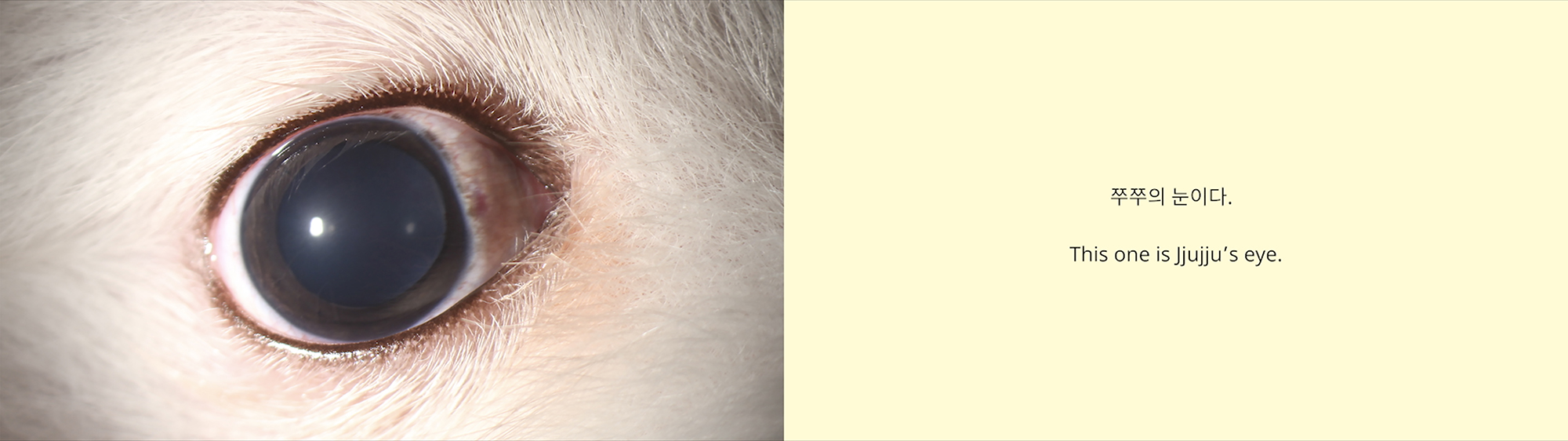
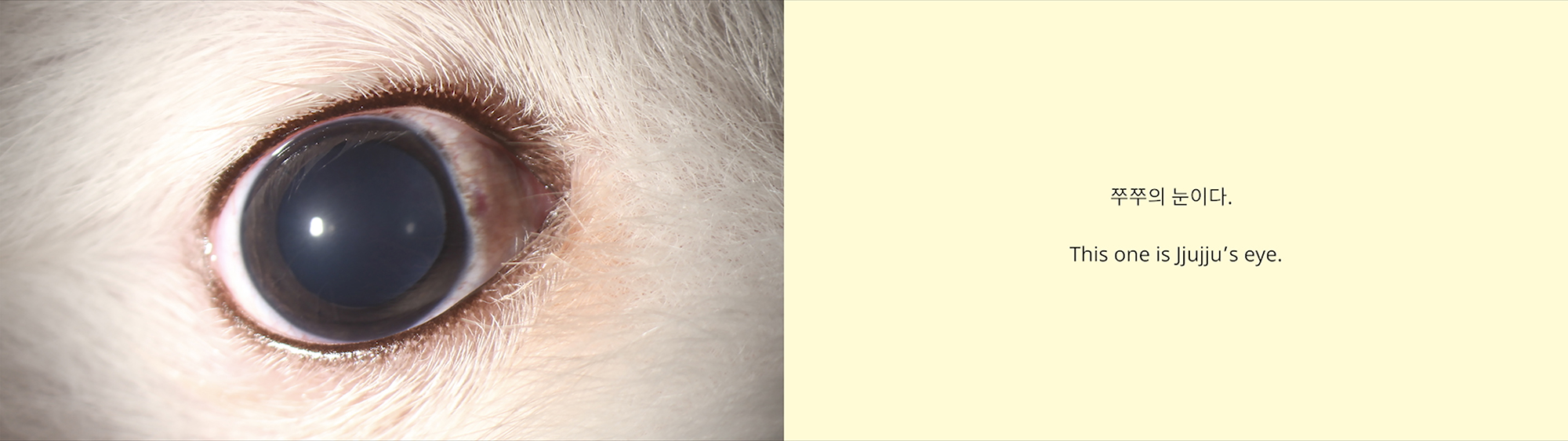
Wait, an experiment? Let’s take chapter 5
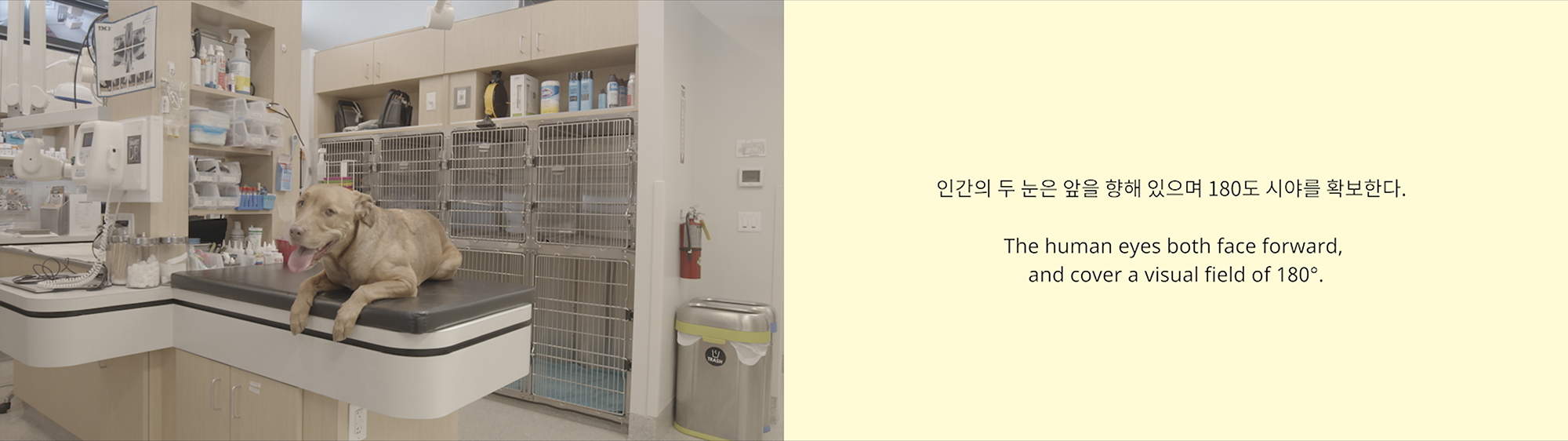
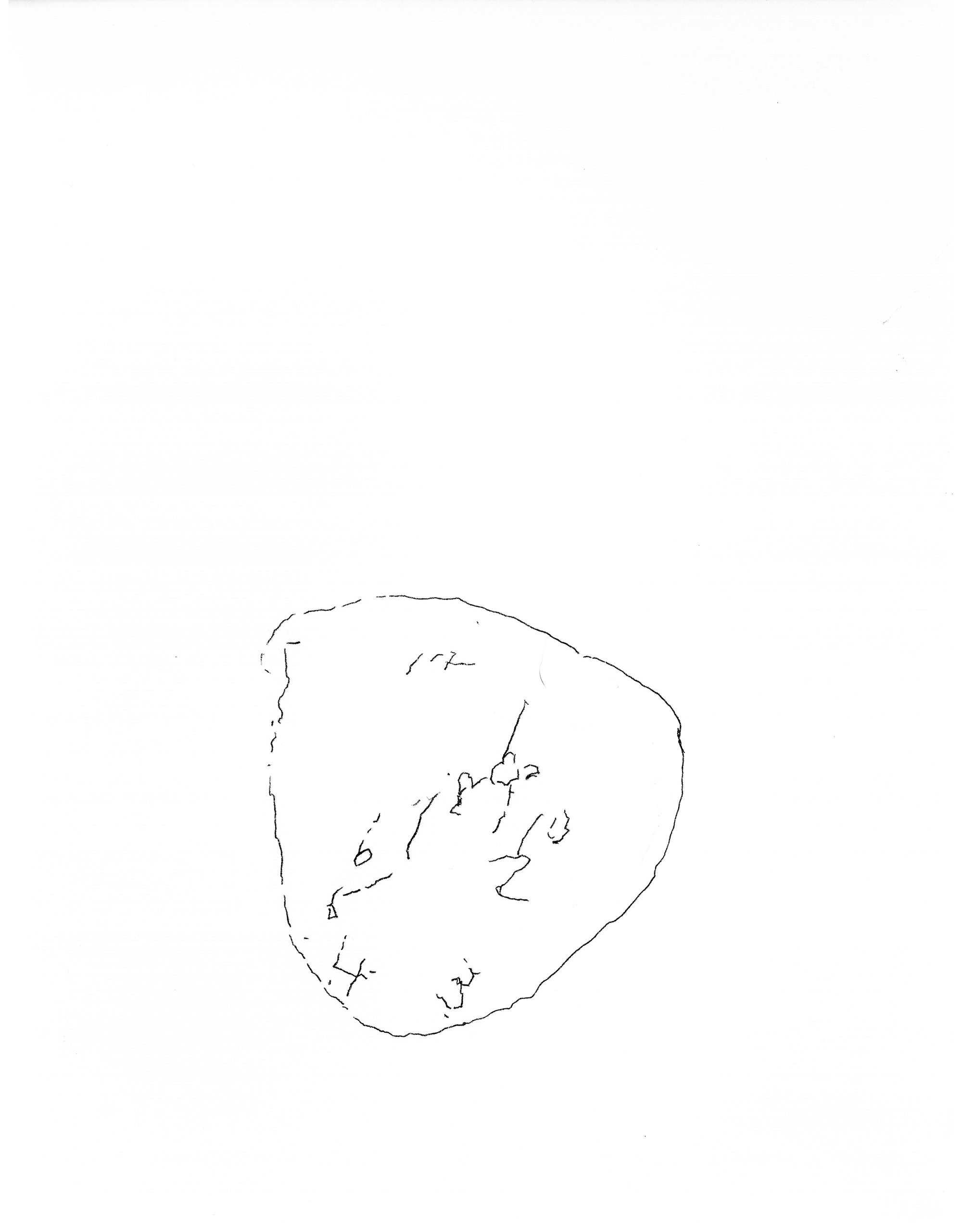
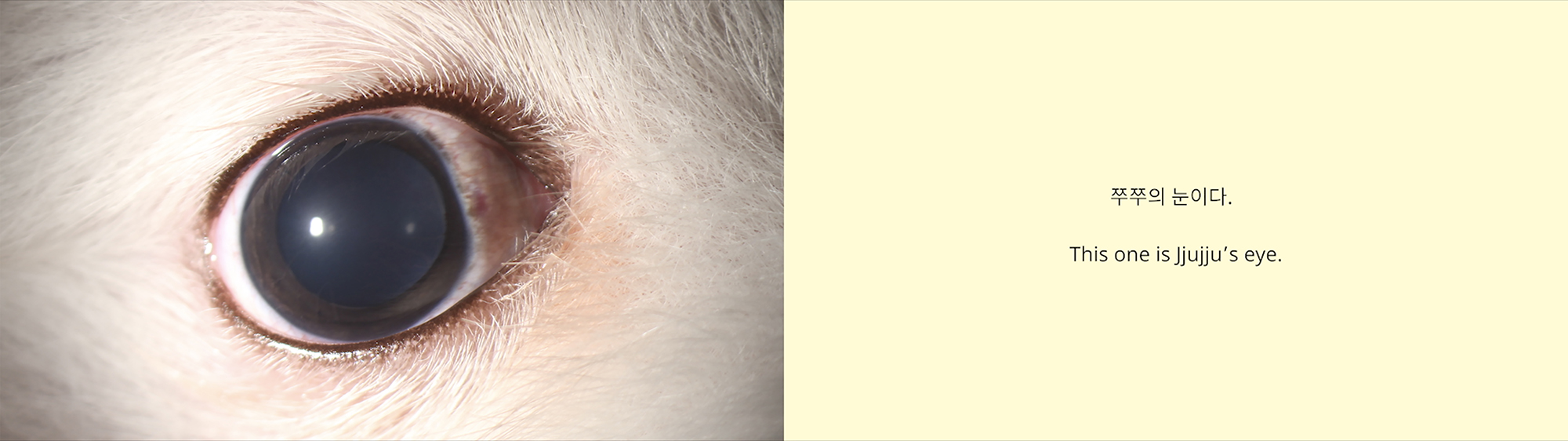
of Ellie’s Eyes (2020) as an example, in which eye-like
shapes appear and disappear repeatedly for a while against a suddenly blackened
screen without any subtitles. At this time, the audience (who has previously
seen the dogs’ eyes presented in various forms) tries to figure out to whom
each eyeball belongs, without the help of subtitles.
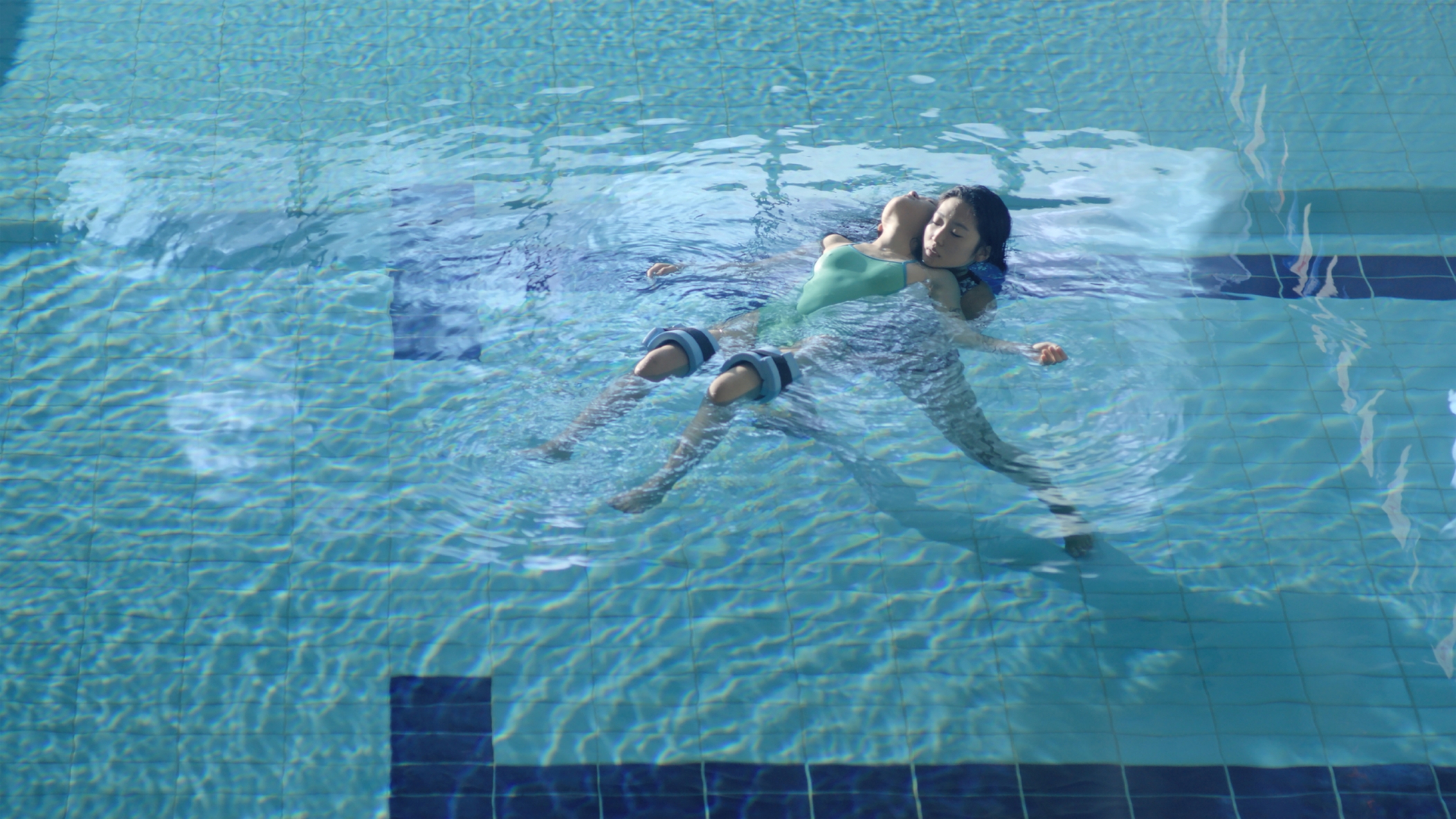
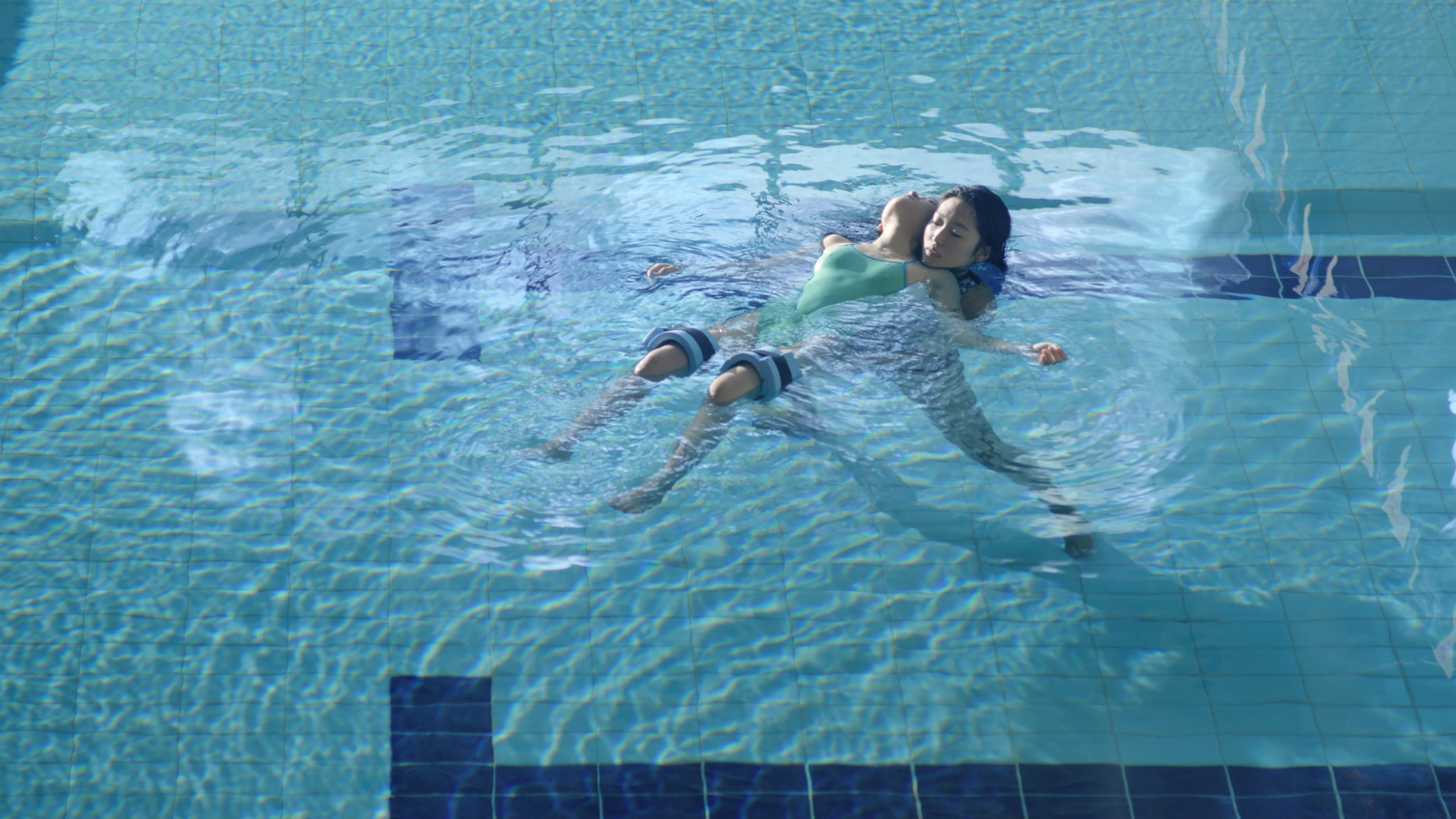
Similarly, in
Nameless Syndrome, through the separation of words and body,
through the seemingly indifferent body, through mediators like glass windows
and swimming pools that distort words and the body, in other words, through
moments in which the activity of the cinematic device is uncomfortably exposed
as a gap, the audience summarily experiences the limits of their seeing ability
with regards to a “mysterious discomfort.” Cha is experimenting whether the
audience’s perception can judge the state of an object based on the given image
itself.
Of course, this experiment fails every
time, just as in Ellie’s Eyes, where one is unable to
identify who the eyeballs belong to, and Nameless Syndrome,
where the “mysterious discomfort” (such as the expert or machine described in
the narration) remains unseen. Perhaps we could refer to all of these tasks as
impossible deep learning in that they involve conditions in which sensory
judgments are bound to fail every time?
However, as in the case of
Autodidact, Cha would welcome all these failures without the
slightest sadness, because it is the vision that fails, and not the thinking
and judging self. Her experiments always result in the impossibility of our
being as contemporary (audio-)visual subjects, but in the process, one finds a
self-referential urge and pursuit towards a (power of) judgment to carefully
handle and traverse given information.
What comes before (power of) judgment is,
above all, doubt. Take what we see now: how is it given to us? Does what one
sees now have the correct relationship to what one hears now? Does one sense
must necessarily lead to one experience? Cha doubts, tenaciously and
persistently, and designs meticulous experiments which can transmit the doubt
to the audience.
However, let’s not forget that the doubt at this time is a
kind of suspension; an attitude that does not dismiss but persistently hold on
to, confront, and urge expressions and sensations. As Marcus Gabriel puts it,
“We must never confront thinking, or having thoughts, against senses in their
ordinary meaning…Rather, our sense modalities are themselves so many different
ways of grasping thoughts.” Cha’s trajectory as an artist has been a process
in which this doubt became concretized and elaborated as an aesthetic
methodology.
To consider the genealogy of Cha’s
methodology of doubt, one could point to the aesthetic practice of cybernetics,
the cinematic self-consciousness of montage, and documentarism as
anthropological observation (rather than cinema verite). But the knot that
connects these genealogies under the name Jeamin Cha would be, more than
anything, metaphysical thinking.
Metaphysics as a companion to aesthetics,
ranging from Descartes (who redefined the senses as the material of cognition
for truth) to Kant (who reoriented the limits of the senses as a condition for
the possibility of cognition). In that sense, the following words might just as
well accompany Cha’s work: “We can generalise that in modern art, we observe a
phenomenon. That is to say, art resists against its medium and the limit
imposed on the medium. In this process, art augments our senses so that a new
reality can be revealed to us.”
Many people easily say that the number of
artists and other content creators will decrease exponentially in the age of
AI. And companies that easily believe this are trying to accelerate the trend,
laying off illustrators or designers. However, as AI-produced content instantly
fills up the internet and AI starts to reference AI, isn’t the status of the
recipient, such as reader and audience, also threatened? This is, of course,
“[b]ecause we trained the machines. All of us. But we never gave our consent.”
For Cha, this would be something to be truly concerned about. Which is why she
always wants her experiments to fail; to experience failure, to admit that the
experience was a failure, and to find the courage to seek a new solidarity and
judgment beyond failure. Few things would be more terrifying than people who
think their experiment has succeeded. This is exactly why Cha’s work is needed
today.