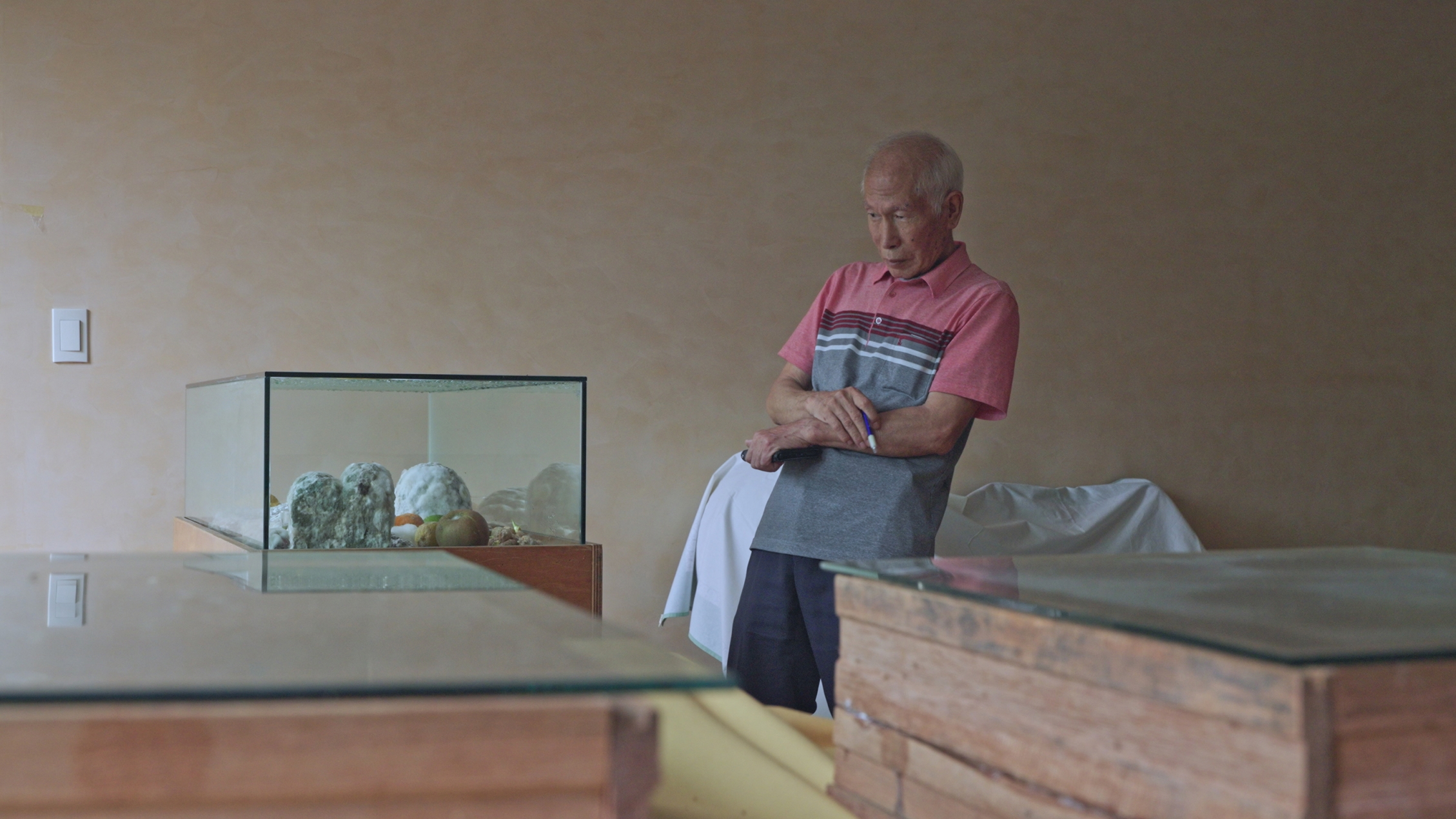
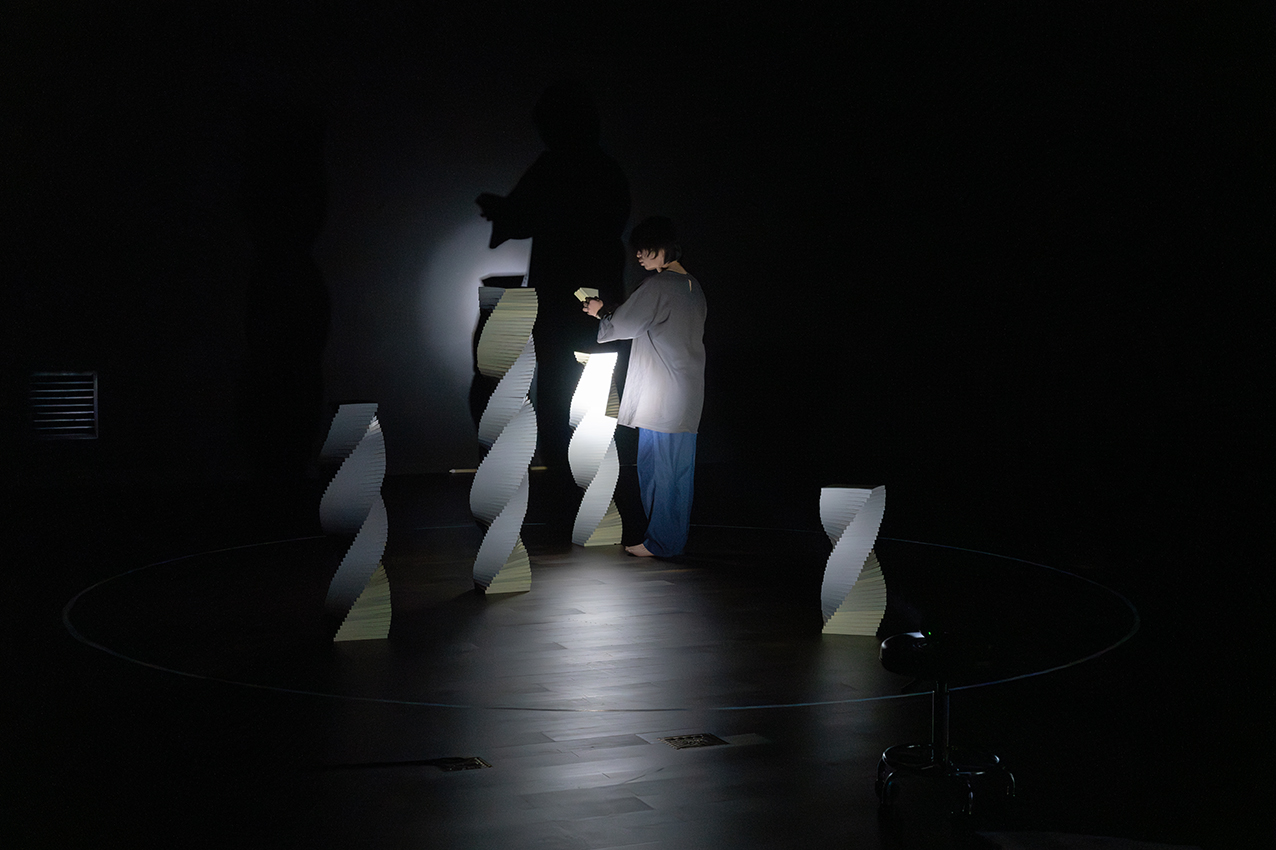
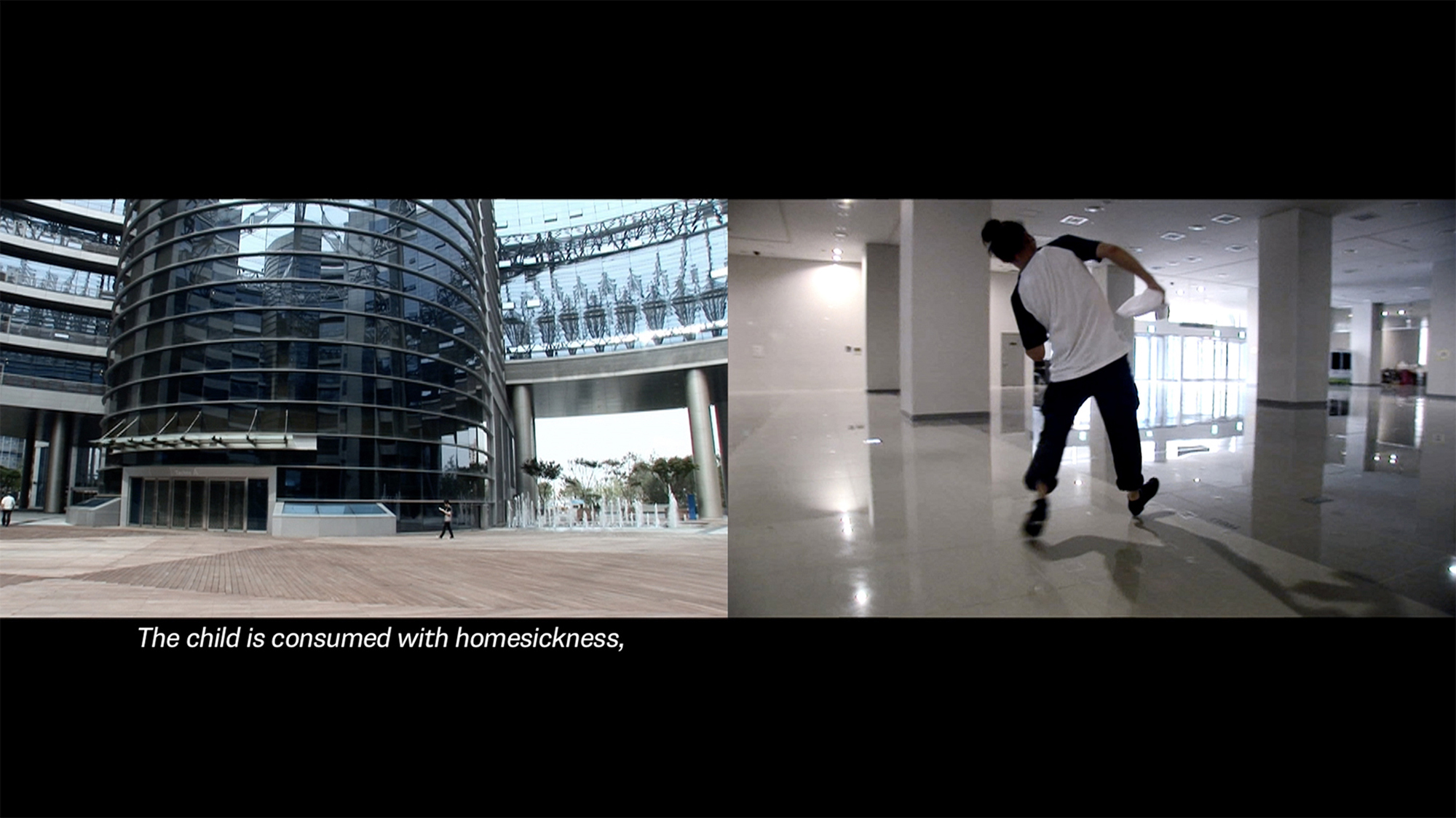
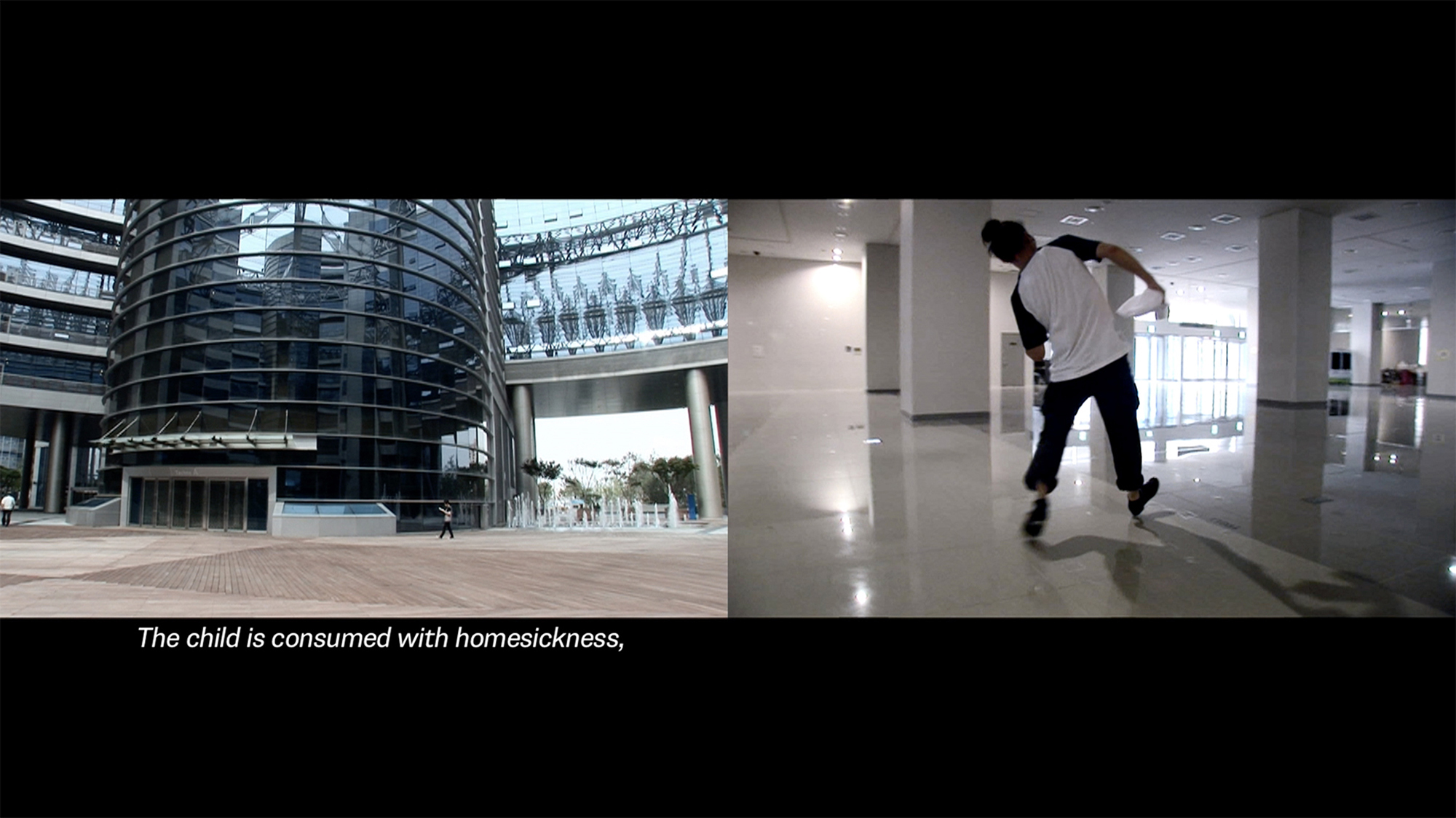
The history of Jeamin Cha’s art, at least for now, commences with Sleep Walker (2009). As a beginning, it is a humble, if not a slightly blunt, work—a juxtaposition between three passersby reciting lines from a children’s book Heidi by Johanna Spyri in one channel and a young man tap dancing through a glitzy, newly-built shopping complex in Seoul in another, the video draws a rather direct correlation between the sleepwalking protagonist of the novel and the merchants who were displaced as the mall was constructed.

The protagonist, Heidi, is a young girl who had to move to Frankfurt with her aunt and remains nostalgic for her hometown in the Swiss Alps. But in the excerpts of the story that are recited, she is constantly belittled as a “ghost” from somewhere “dull,” who would have to “begin with the A, B, C” and needs “the most rudimentary instruction as regards everything to do with daily life.” The unworldliness associated with the country girl is not quite different in tone from the pejorative look bestowed upon the merchants who were running businesses on the land where the complex was going to be built.

As the shopping center was a part of the Seoul metropolitan government’s effort to restore the Cheonggyecheon area that was neglected for decades, those that had already set up lives there were given priority in buying off units from the newly built complex. In an all too familiar story of urban re-development, nevertheless, the cost of buyout was unaffordable to most tenants, and the merchants who were forcefully displaced from their homes had to “dream” of living where they used to live.

What manifests as the somewhat poignant tap dance of the choreographer, irrespective of the vigor and exuberance innate to the genre, would be their longing for a supposedly better life as landowners of Seoul—one that resonates with Heidi’s desires to return to the countryside when faced with the heartless realities of urban life that do not cease to demean and overwhelm her.

However, although such a comparison is a generative one rife with poetic potentiality, the manner in which Cha draws a parallel between the two narratives can appear somewhat flat and transparent at times, and the work does not seem to move much beyond the physical context of Seoul as well as the spheres of artists who critiqued its transformation into an urban metropolis through the logic of the so-called “Miracle of the Han River.”

The artist’s genuine, heartfelt impetus to intervene into the monstrosity of Seoul through the vulnerable tools of image and text also feels rather naïve, as it registers as a gesture that is blithely unaware of the inescapable forces of capitalist infrastructures that inevitably sustain the production of art in the present moment.


Jeamin Cha, Sleep Walker, 2009, Single channel video, 5 min © Jeamin Cha

Despite its guileless simplicity, which features in many early works by artists, Sleep Walker is nevertheless an essential point of reference to understand the arc of Cha’s practice. From Sleep Walker, which explored the intimate, personal after-effects of urban development schemes through observations into her immediate surroundings, the artist’s oeuvre has expanded into the various facets of capitalist infrastructures that infiltrate the embodied experience of everyday life in physical, psychological, and emotional terms.

The progression seems natural, all the more because the economic forces that prompted her project more than a decade ago have shown little sign of waning but have only accelerated: although the logic of deregulation that defined neoliberalism was momentarily overshadowed following the Subprime Mortgage Crisis and the COVID-19 pandemic as governments around the world infused capital to rescue crashing markets, the extreme, uneven distribution of wealth brought forth by decades of such policies only exacerbated, as prices of real estate and basic household items soared in many countries.

In light of such developments, Sleep Walker does not appear as unfledged as it feels prescient—the work is an early articulation of an artistic position that Cha would continue to refine throughout her videos, drawings, and installations for years to come, based on her observations of the socioeconomic infrastructures that shape her daily life. But if Sleep Walker explored the workings of a capitalist society through a spatiotemporally specific event that is the construction of a shopping complex as an endeavor to renew the Cheonggyecheon area, the works that followed have coalesced around certain conceptual associations that stem from the lived realities of inhabiting a late capitalist society.

What I aim to do in this essay is to untangle these threads that have emerged in Cha’s practice thus far to understand how her works have sought to engage with the capitalist infrastructures at play in the everyday reality of contemporary South Korea. I argue that these thematic foci serve as conceptual apparatuses through which Cha weaves her own diagnosis of neoliberal societies, effectively rendering her works relevant beyond the specific context of Seoul out of which they were born.

Indeed, as Cha’s is a practice that is still in the works, these nodes should not serve as the definitive, exhaustive list of ideas through which her projects should be understood. But as key thematic concerns that helped lay the groundwork for her artistic position shaped in the past dozen or so years, these ideas elucidate the ways in which Cha carved out her own artistic language from the genealogy of predecessors whose practices have also evolved from a certain critique of late capitalism.
 

Diseases, With or Without Names
 
In the wake of the COVID-19 pandemic, the fraught relationship between disease and late capitalism does not seem so far-fetched as it once might have appeared. Although its exact origins are still to be determined, the fundamental biological trigger behind the COVID-19 pandemic—the transmutation of a type of coronavirus endemic to bats into a variant that is infectious to humans—is theorized as the result of deforestation undertaken by multinational conglomerates as well as illegal, unsustainable wildlife trade still prevalent in China, both of which are fueled by the logic of deregulated, globalized market economy.

Once the pandemic unfurled, the already stark distinction between the haves and the have-nots became even more evident, as the rich and the powerful flocked to sparsely populated mansions to avoid human contact while the impoverished were forced to continue working in dangerous conditions that left them vulnerable to contracting the disease. The most effective vaccines, meanwhile, were developed none other than by leading American enterprises that quickly patented the products and used them as a means to assert the nation’s hegemony across the globe by controlling its distribution.

That said, even though such striking revelations are fresh in the collective consciousness due to the recent global pandemic, the layers of relations between disease and late capitalism are not in the least unprecedented. The American response to the HIV/AIDS epidemic in the 1980s presaged much of what happened during the more recent pandemic. The privatized nature of the nation’s healthcare system meant that little could be accomplished through state measures upon the neglect from the Reagan administration, and the antiretroviral drugs later developed by pharmaceutical companies were prohibitively expensive for many.

As a disease that primarily plagued the so-called “outliers” of mainstream America—LGBT community, drug users, and Latinx and Black communities—the epidemic was also, at least theoretically, less of a concern for most bodies that were in the capitalist workforce. Such fraught structural relations between disease and late capitalism recalls a different, but related formulation by Byung-chul Han in The Burnout Society that such psychological symptoms as burnout, attention deficit hyperactivity disorder (ADHD), and borderline personality disorder originate from the logic built into the economic superstructure that we inhabit now.

As Han writes, the diseases, which mark “the landscape of pathology at the beginning of the twenty-first century,” are not “infections” but “infarctions” that “do not follow from the negativity of what is immunologically foreign, but an excess of positivity.” From the compulsive need to stay productive at all times, Han claims, stems the mantra of positivity that is so characteristic of the present moment as it pushes individuals to remind themselves that “nothing is impossible”: as a psychological state, however, the violence of positivity does neither “deprive” nor “exclude,” but only “saturates” and “exhausts.” 
 
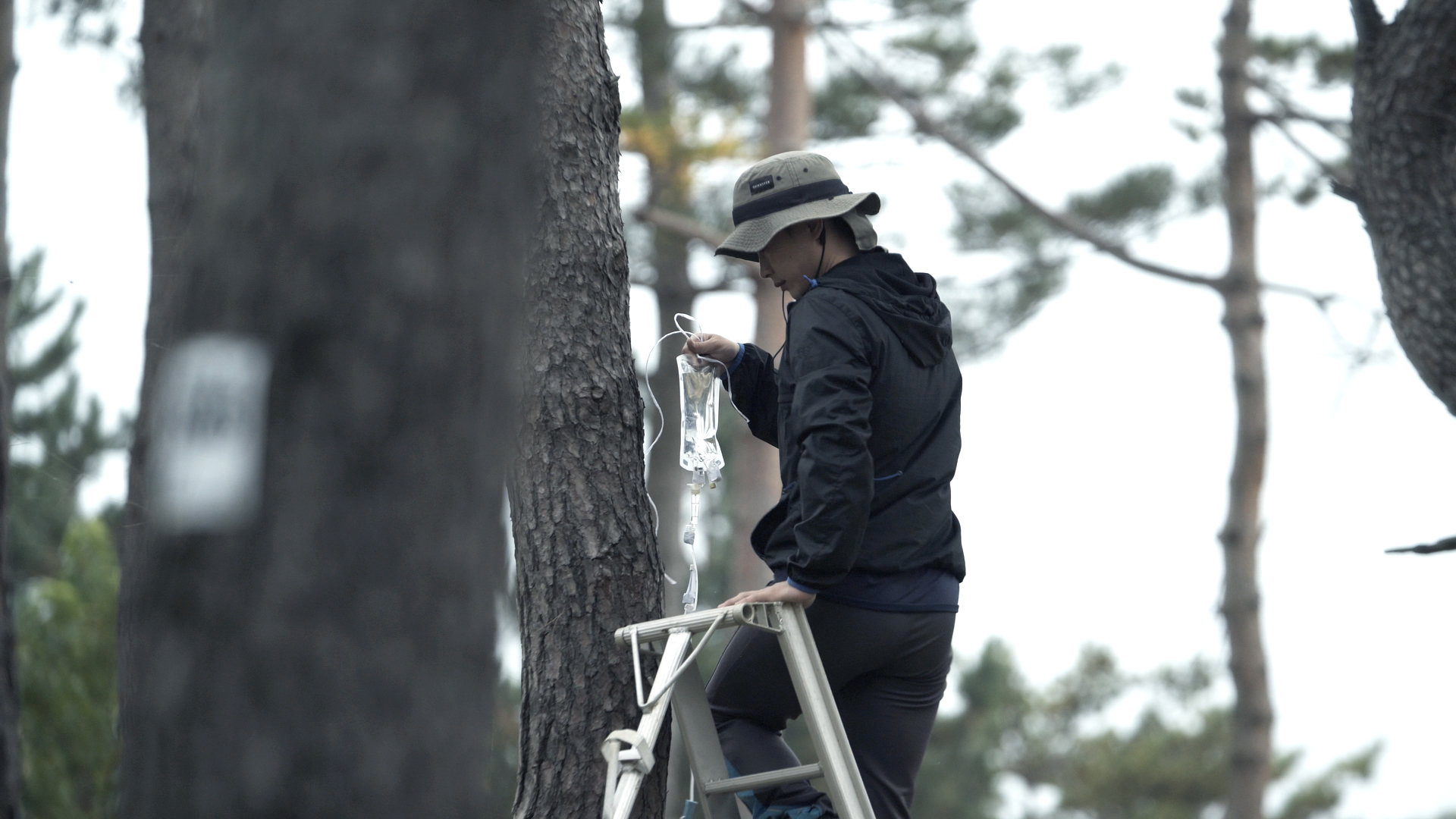
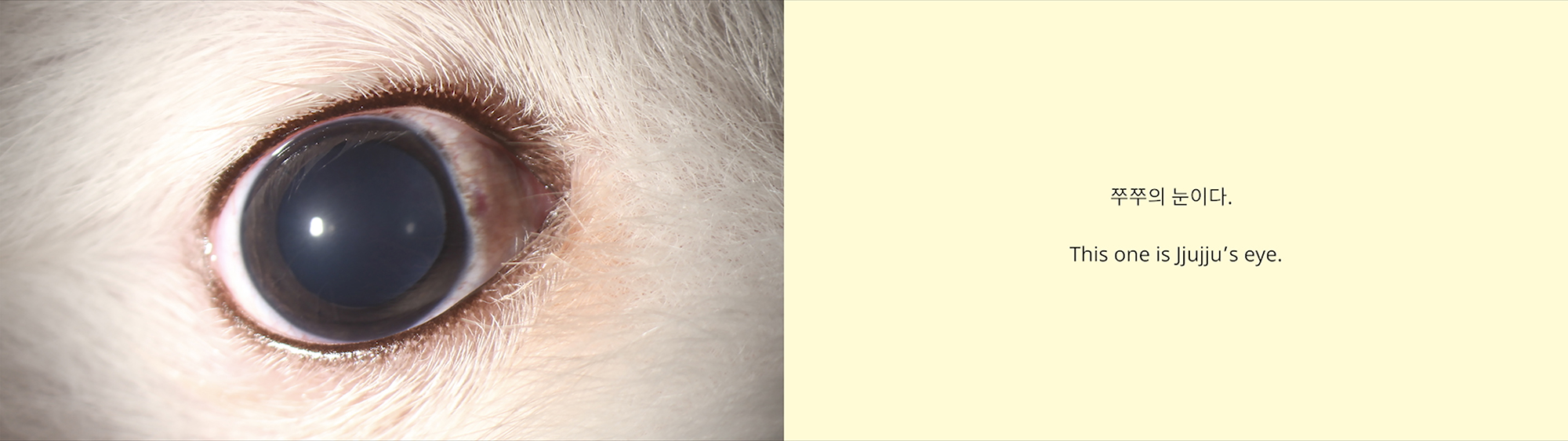
In this light, Cha’s Nameless Syndrome (2022) does not read so much as a take on a mysterious pathological phenomenon that started infiltrating her immediate circles as an implicit critique of the society that produced it. The single-channel video, as the title suggests, concentrates on women who are experiencing medically inexplicable symptoms. Such thematic focus is succinctly announced from the very beginning of the video by a female narrator, albeit with a sense of hesitation and melancholy produced from the elongation of her syllables and slow, sustained tone: “O’s symptoms were difficult to be diagnosed, a very rare disease.”

Following from the opening statement is an associatively rich prose that weaves together such varying sources as the narrator’s personal experiences with O and her doctor; the tripartite relationship between Giovanni Morelli, Sigmund Freud, and Cornan Doyle via Carlo Ginzburg; the intentional elimination of the “self” in discourses on illnesses as discussed by Susan Sontag; the pathology of fibromyalgia; and the colonial appropriation of Bengalese knowledge as revealed through the notion of the fingerprint.

Paired with the narratives are footage of female patients in different circumstances, as one’s naked body becomes the subject of digital imaging and another limp figure undergoes physical treatment in the arms of a therapist, suspended in a shallow pool. What the juxtaposition of Cha’s texts and images reveals, then, is the sense of dissociation produced by the foreign disease, as the listless expressions emanating from the patients’ bodies are associated with the incomprehensible symptoms that defamiliarize their own somatic experiences.

As a formal motif, such a disconnect from their own bodies is materialized through the various technological apparatuses that flatten the physical complexities of the patients into such depersonalized artifacts as an ultrasound image of a breast and a plastic cast of an ear canal. But the layers of association that Cha builds through the concept of corporeal dissociation assume broader significance against the backdrop of social critique that the artist builds within her practice.

Construed in relation to the inextricable relationship between disease and late capitalism as formulated above, the patients’ dissociation with their own bodies in Nameless Syndrome recalls Karl Marx’s theory of alienation: the worker is alienated from the product and activity of one’s own labor in the incessant assembly line of capitalism, effectively objectified into a value-producing entity that is detached from oneself and others.

And if alienation necessarily dictates the experience of the subject within a capitalist society in varying disguises as such, Nameless Syndrome implies that the unnamable plague that assumed control over the bodies of patients may be just one of many instantiations of the phenomenon. The video thus brings into relief many potential forms of alienation to which the capitalist subject is vulnerable in the everyday: the nameless syndromes in other shapes borne out of late capitalism that afflict our minds and bodies, with or without our knowledge and awareness.
 
Such an interpretation of Nameless Syndrome holds traction since it merges the artist’s recurring attention to the manifold layers of alienation as well as her broader set of interests surrounding the infrastructures of late capitalism. In particular, the reading offers a convincing segue into Cha’s practice when considering other works by her that similarly engage with the notion of alienation, such as Crushed or Unfolded (2020–2022).

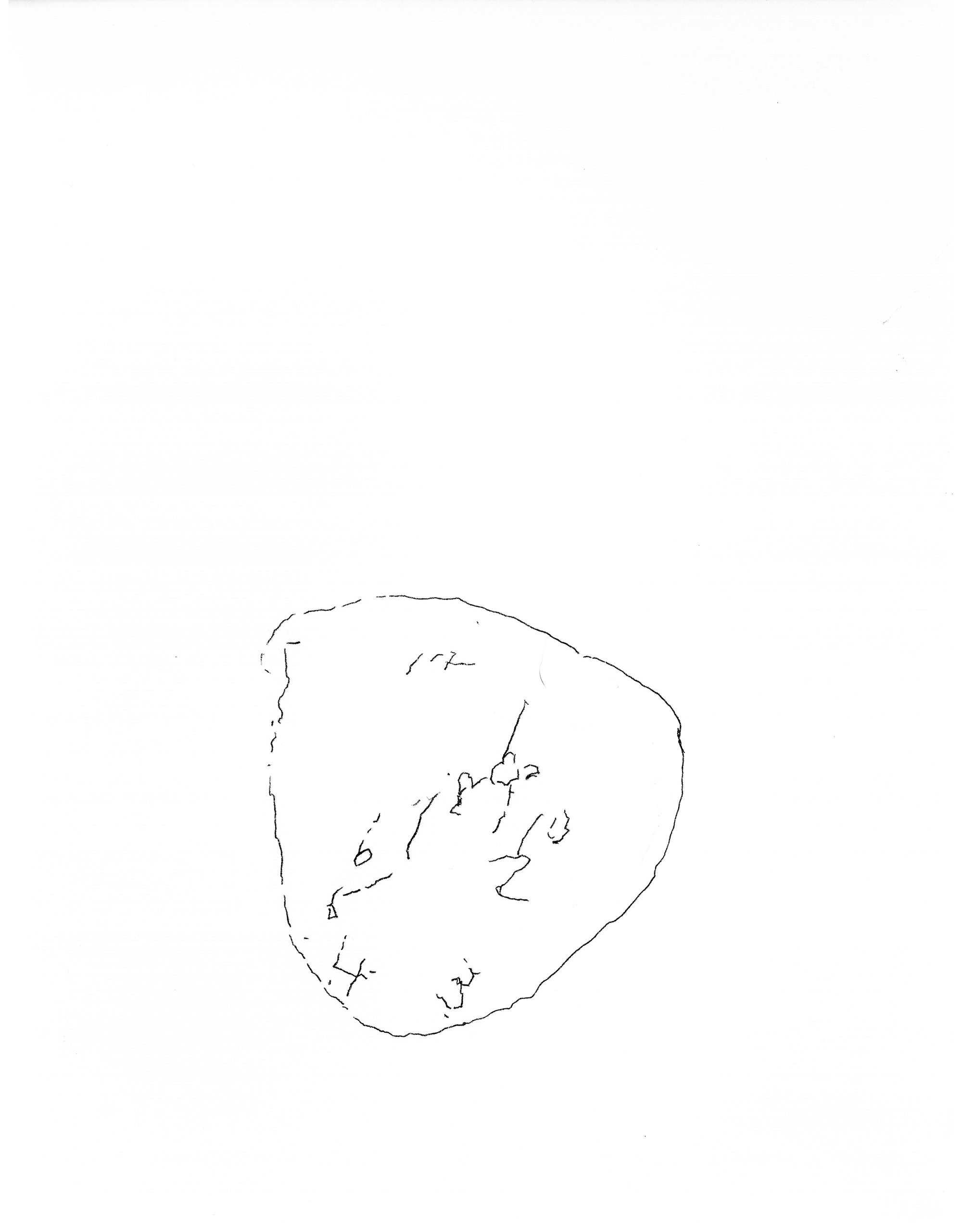
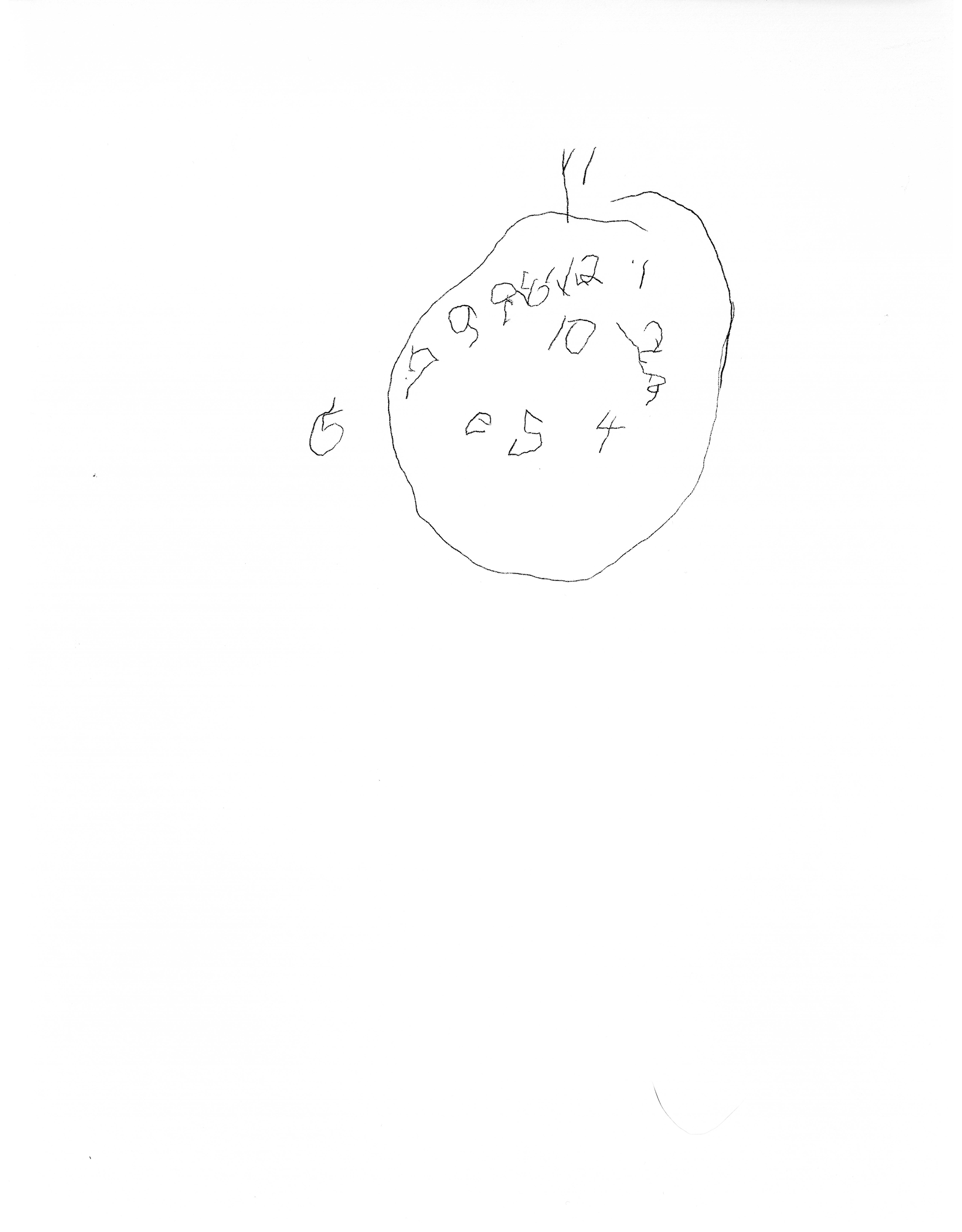
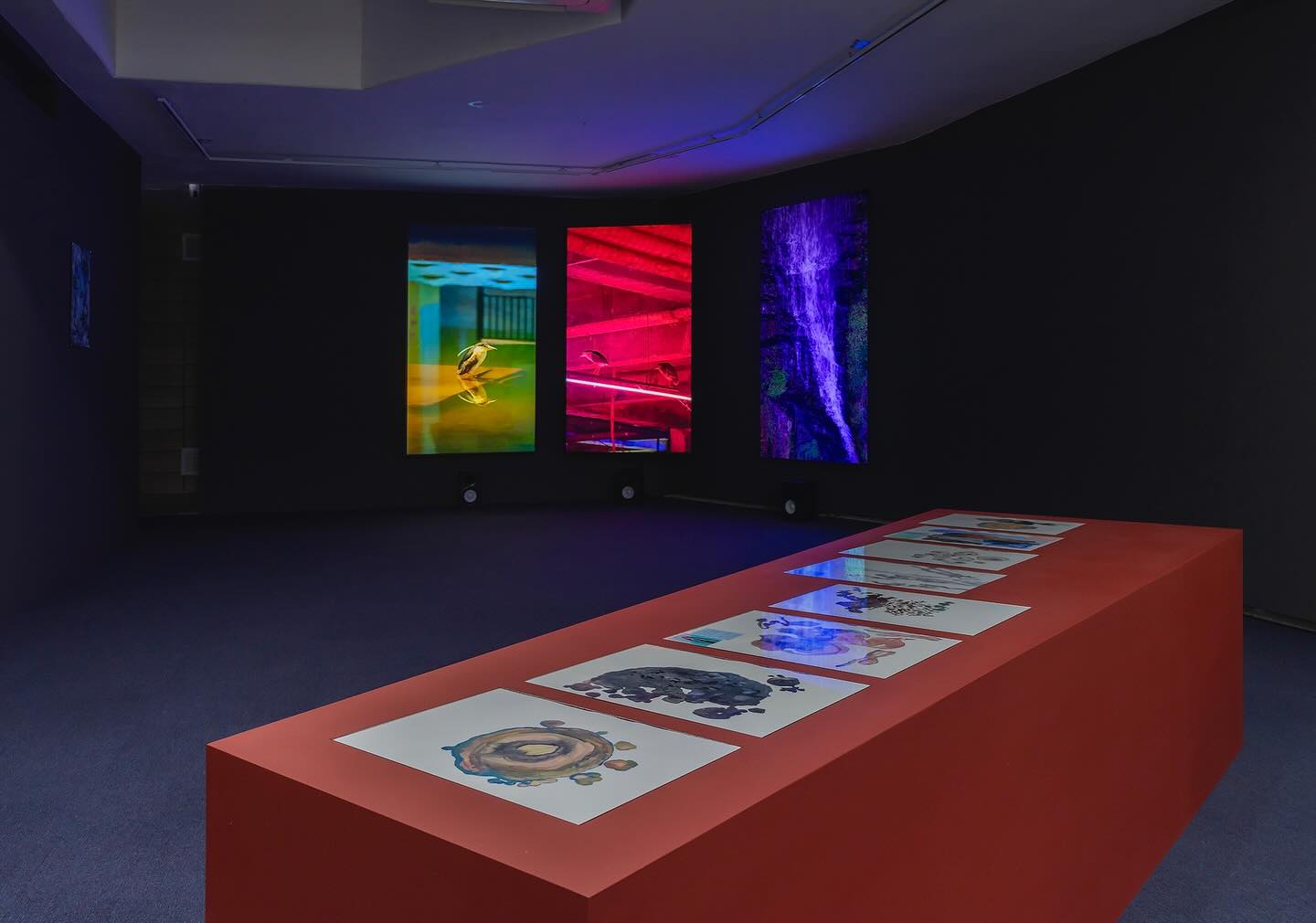
The series, which exist both as wall drawings and works on paper, consists of manual reproductions of the results of the “Clock Drawing Test” unofficially used to detect cognitive impairments and dementia. As patients who are developing such conditions are believed to have difficulty drawing a perfect, circular clock, the results that comprise Cha’s series hardly resemble the object attempted to be depicted. Consisting almost entirely of crooked, warped marks that betray hesitation, the drawings offer little clues about the signified object to the viewer save for struggling endeavors at a clockwise arrangement of numbers.

One iteration shows that even such a simple task of positioning numbers in order seems difficult, as the patient’s attempt to write number 5 turns into an incomprehensible scribble after the first four successes. The drawings, then, are a visual demonstration of varying states of the human mind in which its most fundamental faculties such as rationality, memory, and volition are on the verge of dysfunction, which effectively question the patients’ claim to subjecthood.

And though the cognitive states that produce such distorted drawings may not directly align with the phenomenon of alienation as Marx advanced it, they could be construed as fundamentally synonymous as conditions that strip humans of their most essential qualities. That the drawings depict clocks, an apparatus to measure and visualize time, also adds logical weight to the reading of Crushed or Unfolded as an investigation into the various forms of alienation produced by late capitalism. After all, the emergence of capitalism enabled a certain compartmentalization of time, as the opening hours of factories for mass production were determined by such calculations as profit, efficiency, and operational costs.

As failed attempts to render functional clocks, the drawings seem to hint at the idea that such profit-maximizing division of time may not be applicable to patients with cognitive losses—for some, just like their drawings, the patients are failures of capitalist subjects as they cannot generate profit. Such an interpretation is one that eerily resonates with one of the many poignant utterances made by the narrator of Nameless Syndrome: “My illness brings about slowdown and strike, and even causes unemployment and poverty.”


Jeamin Cha, Crushed or Unfolded, 2020, Carbon drawings on white paper, 22.8 x 30.5 cm © Jeamin Cha

Invisible Labor
 
That Cha’s investigations on the pathology of capitalism converges around temporality is worth noting, for it is a demonstration of the ways in which multiple interrelated thematic threads are woven throughout the artist’s projects: emerging from the patients’ attempts at drawing a circular clock is the concept of time and its re-organization via the logic of productivity, which in turn brings into focus a different conceptual locus, that is, the notion of labor.

At stake for the artist in particular seems to be the transformation of labor within post-Fordist, late-capitalist societies that is characterized by the dissolution of work and leisure, the perpetuation of gig economy, and the precarious conditions of living. Indeed, as a global phenomenon that has unfolded precipitously throughout the 21st Century, the expansion of such models of economy is not unprecedented as a subject of artistic or philosophical inquiry.

Jonathan Beller’s book, The Cinematic Mode of Production: Attention Economy and the Society of Spectacle, uncannily predicted the development of value-producing mechanisms that capitalize on human perception in 2006, long before the invention of the smartphone and tablet computers. In the same year, Harun Farocki presented Workers Leaving the Factory in Eleven Decades (2006), a 12-monitor video installation that compiles footage of workers leaving factories culled from various sources throughout film history, which simultaneously revisited the constitutive relationship between labor and cinema as established by the Lumière brothers in one of their first films and shed light on a disappearing model of labor that strictly distinguishes work from leisure.

For Cha, the works of these predecessors provide a conceptual framework to think through the Korean society that she inhabits in the present moment, in which such phenomena of late capitalism manifest in locally specific terms. The artist is a part of the notorious “880,000 Won Generation,” a group of South Korean youth that was born in the late 1980s and came into adulthood in the mid- to late-2000s when the nation’s economic growth slowed down, dubbed as such because they live by from mere income from one contract job to another that amounts to approximately 880,000 Korean Won per month based on minimum wage at the time when the term emerged in 2007.

Importantly, the generation witnessed firsthand the growing precarity of the Korean workforce: their early teenage years were earmarked by the IMF crisis in 1997 that led to mass layoffs and nationwide austerity measures, and only a decade after, the Korean economy again suffered a massive blow from the Subprime Mortgage Crisis of 2008. For Cha and her contemporaries, therefore, the fundamental uncertainties around capitalist infrastructures, let alone the labor that sustains them at the cost of physical and mental sacrifices, must have been a lived reality that is not restricted to the realm of post-Marxist theory.

The series of works in which the artist engages with the varying connotations of labor in South Korea could then be interpreted as an attempt to grapple with the intricacies of neoliberal status quo that can be traced in quotidian surroundings.
 
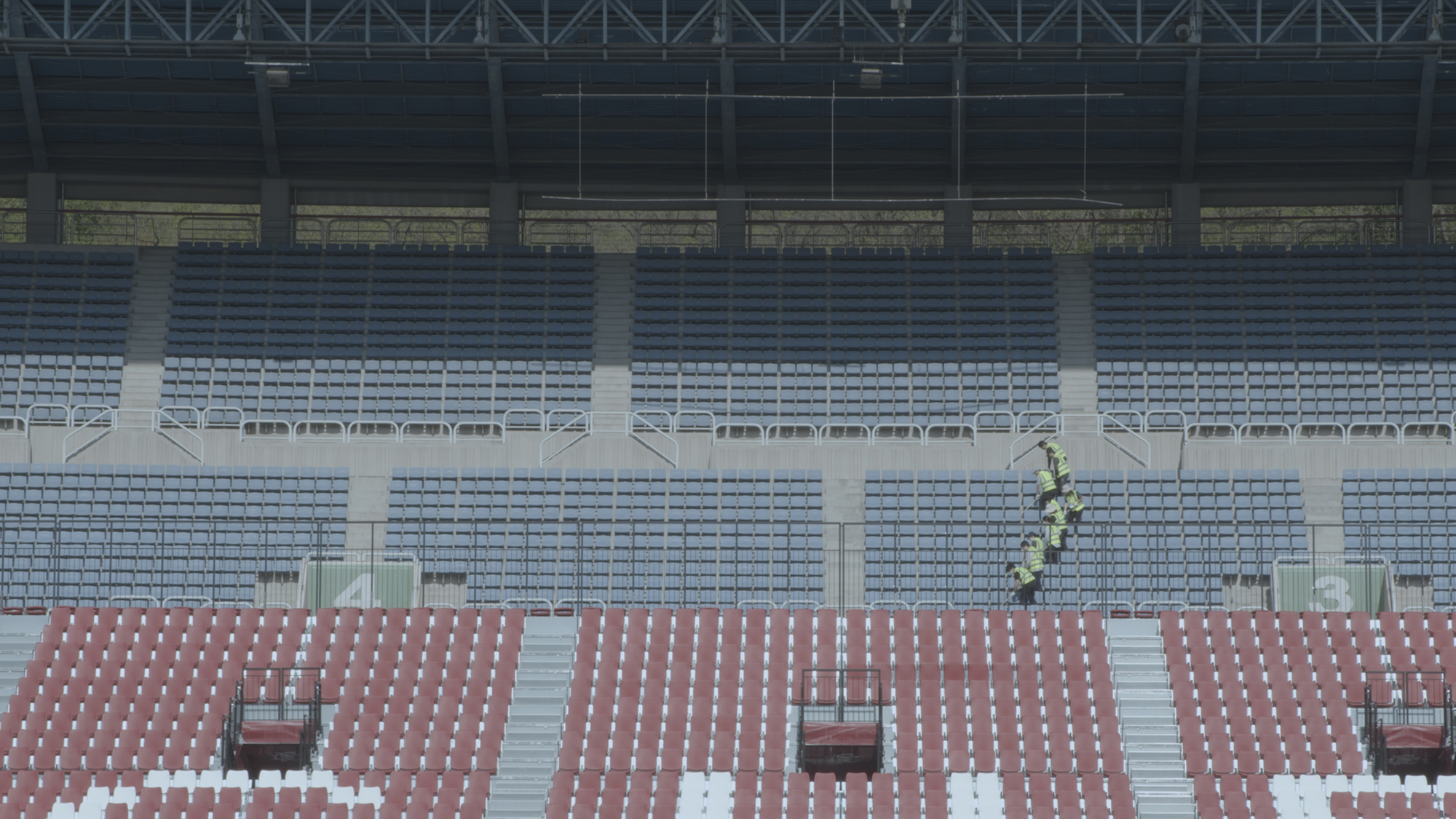
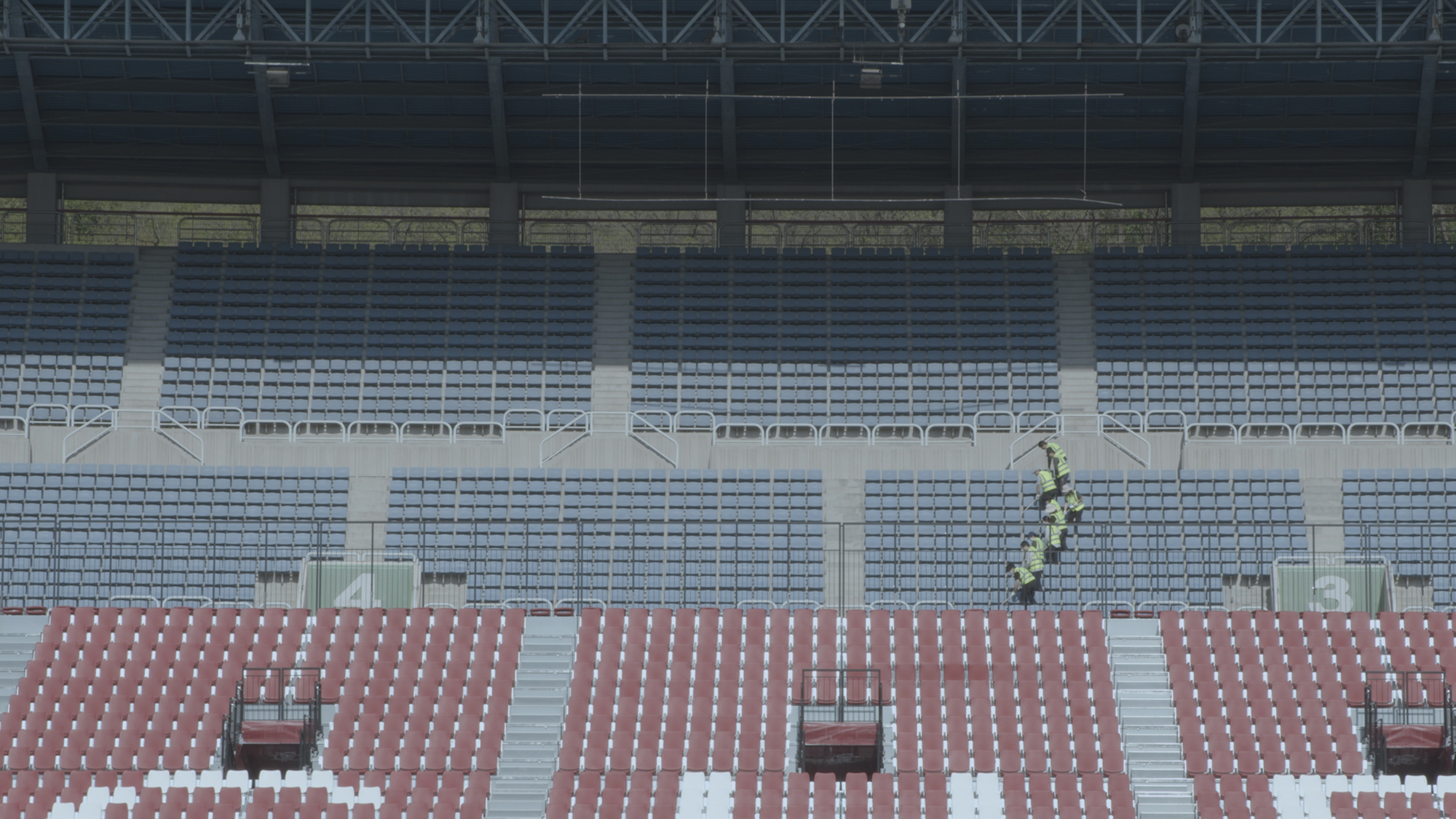
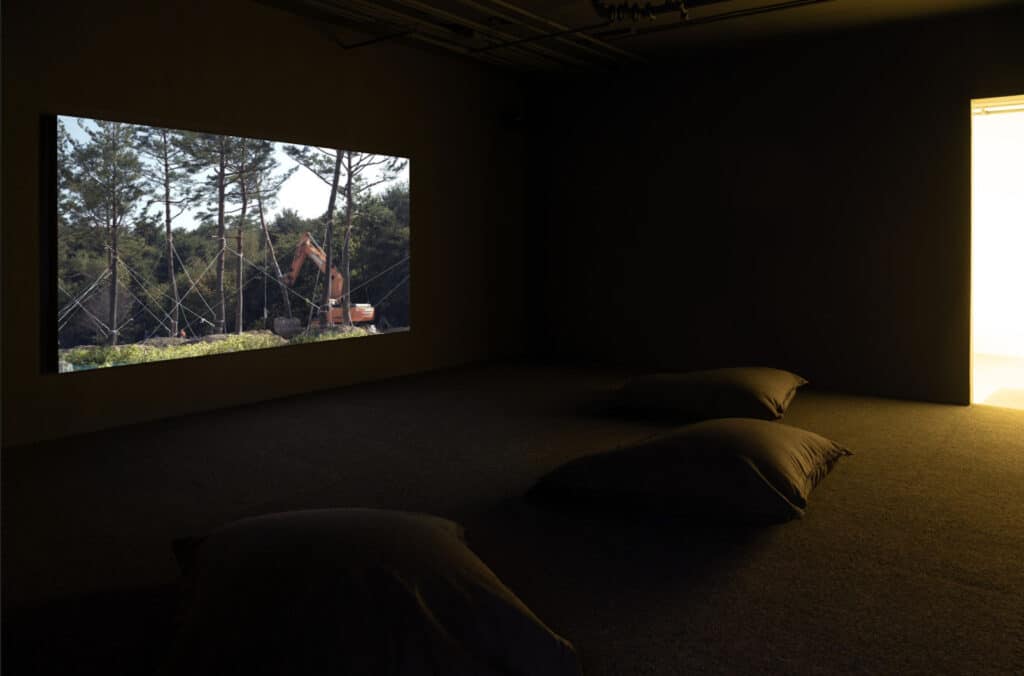
One such work is Walking on the Chairs (2020), a single-channel video in which sanitation workers are inspecting a colossal, empty stadium row by row, likely in the aftermath of a large-scale event that left a lot of debris behind. Against the plastic seats and metal scaffolding that comprise the stadium that could easily seat thousands of people, the workers wearing fluorescent jackets appear decidedly miniscule, as if reflecting the forced invisibility that they are asked to impose on themselves as day laborers.

The narration that soon begins after the image reinforces the idea that the laborers are demanded to occupy a liminal zone that is different from the reality that is inhabited by the people for whom they work: “Blocked in front of the elevator or subway entrance. No entry is allowed.” As an opening statement, it is a surprising one—it is not immediately clear as to who is being blocked, and the narrator speaks in Chinese, unlike in all of Cha’s other projects in which she reads Korean.

As the video enters the second minute, it becomes clear that the narration is a set of directives targeted at the sanitation workers who are picking up garbage, most likely announced in Chinese as many of them are Chinese people of Korean descent who have settled in South Korea, as is the case with many day laborers: “Negative towards Japan and China. I recommend not mentioning those countries”, “Work ends late on a busy day. Do not expect overtime pay. They think it’s your duty.”
But what appears at first as directives that fortify solidarity among laborers soon soften into tips on how to perform well the duties as a sanitation worker (“Start cleaning busy areas first; where people come early in the morning.”), survive in South Korea as a foreigner (“No one expects you to know anything about Korea.”), and care for oneself mentally and physically against potentially abusive environments (“Don’t work too hard. You don’t have to be stressed out.

Work only as much as you get paid for.”). Disconcertingly, though, interspersed with these tips by fellow workers that help establish a sense of solidarity and camaraderie are also the language that takes on the tone of self-help books that ingrain in the minds of the readers the attitude of optimism that serves as a prerequisite for survival in the neoliberal regime (“6 Things Poor People Choose that Rich People Never Do,” or “The point is to do it steadily every day.”).

Recalling Han’s diagnosis that the “excess of positivity” characterizes the neoliberal consciousness, these statements serve as a reminder that even those laborers who occupy the fringes of capitalism need to cope with the financial realities of the status quo rather than imagine an alternative model of co-existence. Caring for oneself in the establishment that is late capitalism, Cha suggests, cannot be only accomplished through rejecting its pressures, by not being “too harsh” on oneself. It is an inevitable, inescapable reality where “splitting [your] bank accounts” and “book-keeping” one’s expenses helps, however much one is paid at the end of the month, if not the end of the day.
 
What contributes to the creation of the inexorable world of late capitalism to which Cha brings attention in Walking on the Chairs would be its overwhelmingly complex infrastructures that reduce the individual as agents of production. After all, a fundamental facet of late capitalism is that capital could be accrued even from the most basic banal forms of human perception. Such diagnosis, which can be traced back to autonomist Marxist thought as developed by such philosophers as Paolo Virno, is succinctly articulated via Maurizio Lazzarato’s notion of “immaterial labor.”
In his 1996 essay, Lazzarato defines the concept as “the labor that produces informational and cultural content of the commodity,” locating the possibility of such work both in the soft skills and knowledge “involving cybernetics and computer control” as well as “series of activities that are not normally recognized as ‘work’” such as “defining and fixing cultural and artistic standards, tastes, consumer norms.” Within the task of interpreting Cha’s practice, in particular, immaterial labor that takes place in “affective” terms is of particular significance.

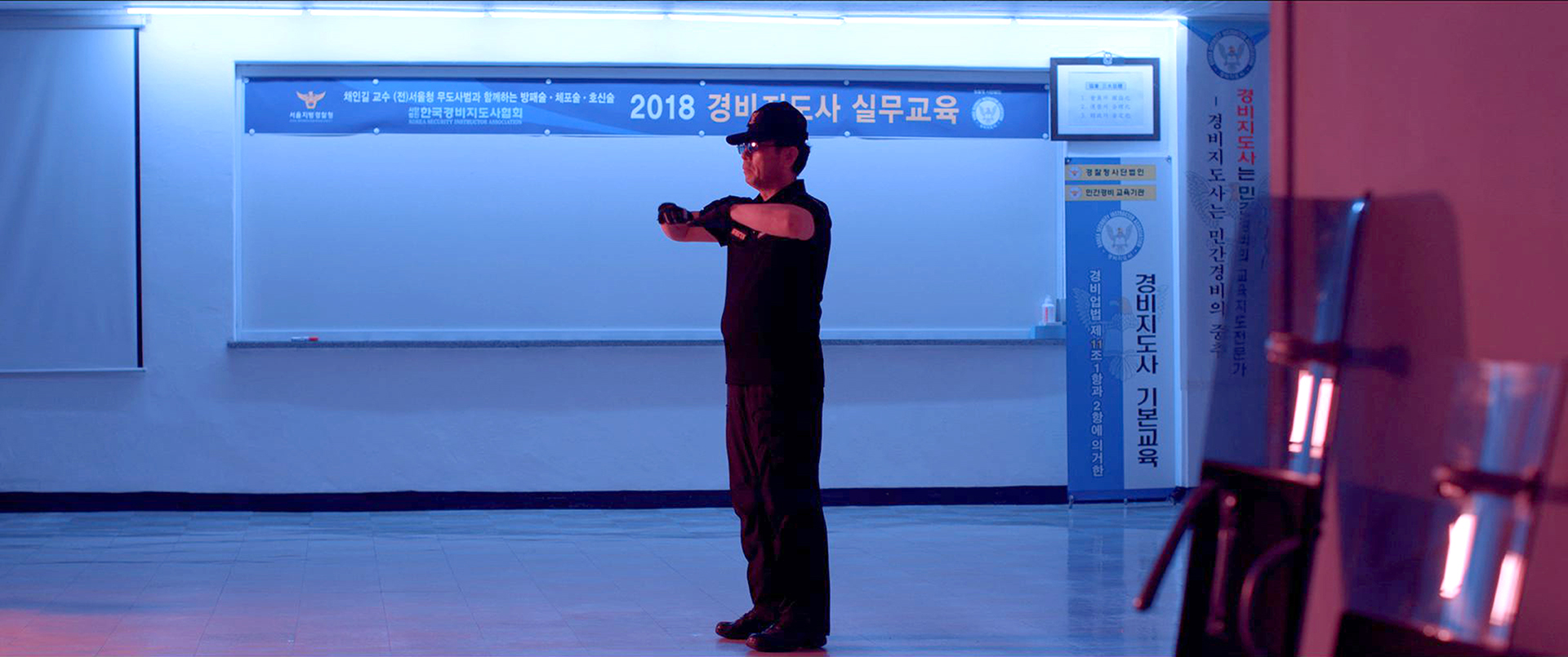
Theorized by Michael Hardt to describe labor that produces “social networks, forms of community, and biopower,” affective labor provides an expanded framework to consider all forms of work that produce or modify emotional experiences in others, in addition to such examples as kin work and caring labor that were previously considered as such by the feminist movement. In Cha’s oeuvre, the concept is most directly evoked in On Guard (2018), which juxtaposes two contrasting forms of labor that are predicated on the production of “care”: a young man, who works as a security guard at night, is also tasked with providing care for a bedridden female patient, most likely his ailing mother.

The camera follows the protagonist’s daily activities, as he receives training on self-defense mechanisms and patrols an empty building at night, oftentimes speaking to the caretaker on the phone. Interestingly, his conversations reveal that the supposedly affective act of caring for the ill is nevertheless rendered into a series of administrative decisions in the everyday, ranging from determining the appropriate shifts to making decisions on her exercise routine.

And the same could be said about his own act of care: he is seen dozing off in the control room in front of countless monitors showing surveillance footage of the various corners of the building, and the way he guards the building is at best robotic and systematic, strangely echoing the lecturer’s statement in the beginning of the video that automated security will be much more economically sound and efficient in the long run. Along with the footage of various unexpected happenings around the building that indicate a certain loss of control—such as a sudden snap of electric wires and a loud collapse of stacked chairs—the video suggests that acts of care, when transformed into administrative labor as such, comes with certain pitfalls as the purview of the worker is inevitably limited.

It is an insinuation that leaves the viewer wondering about the state of the protagonist’s own mother, who is also under the care of a laborer who is approaching her work from a certain remove that transforms it into a task to be completed. But to what extent the elimination of human affect in the labor of care is in any way favorable remains unanswered by the end of the video: the involvement of genuine feelings would bring psychological distress to the care worker who needs to witness the degrading conditions of her patient every day, and the alienation of emotional reactions would leave the patient vulnerable. Perhaps justifiably so, as it is a conundrum that eventually concerns every form of affective labor.


Jeamin Cha, Walking on the Chairs, 2020, Single channel video, 10 min © Jeamin Cha

Performing Resistance
 
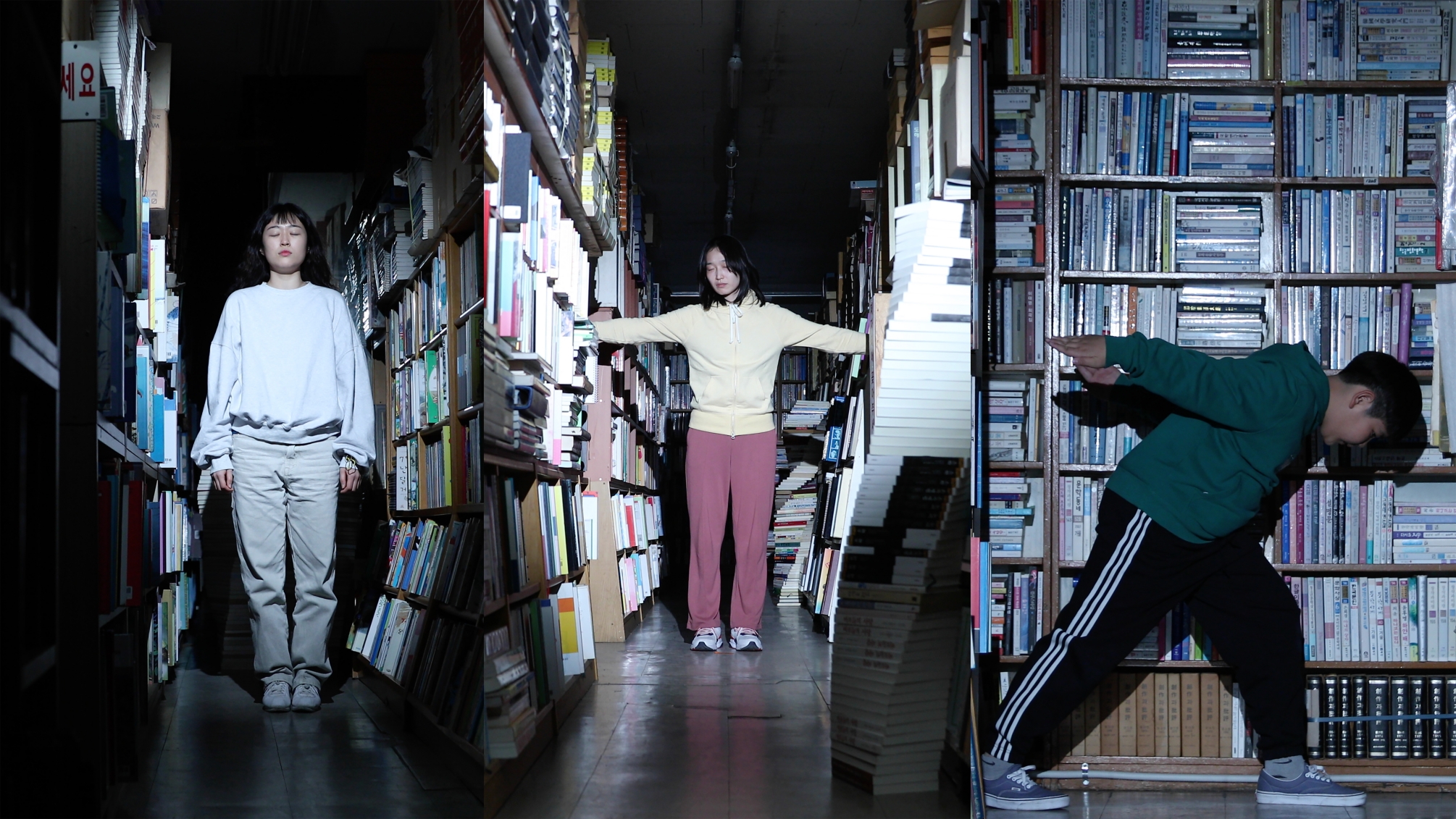
Such observations into the operations of late capitalism in the everyday that constitute the crux of Cha’s practice pose a hermeneutic hurdle to interpret works such as Maneuver in Place (2023), as it appears at first as an anomaly of a project that is devoid of explicit socioeconomic commentary. The single channel video documents a series of activities that take place within a dimly-lit used bookstore. Divided into three channels, the video commences with a young boy walking around the nooks and corridors of the empty shop, engaged in a seemingly aimless task of stacking books.

In the following sequence, which unfolds as each channel successively transitions into different viewpoints of the same setting, the boy is sitting in front of a microphone and mimicking the sound of a siren and an airplane. But as the coherence of the combination of menacing tones breaks down with the protagonist making sounds of irregular intervals, such as a two-tone hum or a shriek followed by a clap, the video lays the groundwork for an array of disorienting, almost anarchic performances shown on the camera.

A female protagonist, who is first seen standing still in the middle of the bookstore’s corridor with her eyes closed, hurriedly runs around its narrow passageways pushing down a metal cart that is loaded with books and hysterically recites the contents of the book with a microphone in indecipherable murmurs. Shown on the other channel is another female protagonist performing the same set of activities, the overlapping sounds of which add to the feeling of disorder that arises from the frenetic acts that break the silence of the vacant bookshop.

Such sensations are then intensified as the images of the identical protagonist spill into other channels, and the static gestures of the characters transition into sudden, explosive movements without a clear narrative logic. But as bewildering and unsettling as they might be, the performances of the protagonists have a strangely cathartic dimension, as their once controlled bodily movements pick up speed and become more agile, with the sounds of their frantic motion replaced by a slow, harmonious electric tune.

By the end of the video, the protagonists seem to have adopted a different mode of existence by breaking the orderly silence of the bookstore, conveying a sense of anticipation, imagination, and even freedom. Within the socioeconomic contexts that have informed Cha’s work, the protagonists thus appear to serve as metaphors of subjects who, albeit momentarily, are attempting to break free from the order of the world that confine them. One could even say that they have loosely come together as a form of multitude by producing strange, unexpected cracks in the status quo.
 
Considering the relationship between the individual and the surroundings as a metaphor for the subject’s position to late capitalist society therefore provides a cogent framework to interpret works like Maneuver in Place, which lack references to specific socioeconomic phenomena on which Cha’s other works are based. An analogous perspective could be applied to read Almost One, a single-channel video that follows a series of events that unfold in a workshop for child actors.

The video does not explicitly broach the topic of acting in the beginning, as it starts with the camera focused on a young boy who is walking around an empty studio covered in mirrors. In what follows, nevertheless, it becomes clear that the act of walking around in the studio is one of the preparatory gestures to loosen up one’s body before playing someone else’s character, along with shouting out an array of expressions letter by letter as loudly as possible.

With a brief group discussion about what constitutes acting in between, the video transitions into a series of screen tests of each individual child, in which the instructor tries to elicit certain emotions based on the scripts that they are acting out. While at first it seems that the teacher is simply priming the actors so that they can arrive at the right tone to deliver the script, the emotional reactions that she is producing from the actors seem to verge on the border of manipulation.

When one of the protagonists, Jun-beom, recalls that he was “a little bit sad” when he was scolded by his mother, for instance, the teacher excitedly affirms that those were the sentiments that she was looking for (“There you go.”). She then tries to replicate the emotions in him and suggests that he reiterates to himself that he “feels sad” and “feels bad in my heart,” as his body would express his inner states most immediately (“When you’re sad in your heart, your face would look sad, too.”). Some strange words of encouragement follow (“Try saying it. You can do it.”), and in perhaps the most powerful moment of the video, Jun-beom remains silent and sullen when the teacher asks how he is feeling, as if the teacher’s directives took instantaneous effect.

At this point, the video indicates that an aspect of human life so intimate and private, such as one’s emotional state, could be manipulated through certain modes of education, bringing into mind all the other modes of control that produce the capitalist subject—an idea that resonates with the thinking of Louis Althusser, who identified these subjectivizing mechanisms in educational institutions, religious organizations, and the family under the term of “ideological state apparatus.”

Cha’s video, nevertheless, recalls that expressions so banal and simple like “stay strong” have the capacity to shape the emotional and affective dimensions of one’s life, prompting its viewers to question what, in effect, does not fall under the spheres of control that are shaped by such infrastructures. Even though the children are seen running around the studio with balls in their hands at the end of the video, the aftertaste of Almost One is thus somewhat bittersweet, as if the moment of pure joy and candor is a transient release from the inescapable apparatuses of late capitalism.
 
Ultimately, the aesthetics and politics embedded within Cha’s practice raise questions on the role of art within the conditions of late capitalism. In an age where the strategies of institutional critique that once aimed to position artistic production outside of, or at least in opposition to, the workings of late capitalism seem to have been thoroughly exhausted, the artist’s practice prompts an inquiry into what, if at all, images can do—a problem that she grappled with from the very beginnings of her practice, as seen in the example of Sleep Walker.

Cha’s answer to the question seems to be grounded in the power of images to portray and diagnose the phenomena that are symptomatic of the socioeconomic conditions that she seeks to problematize—a position that aligns her with artists such as Allan Sekula, whose photographs, films, and writings that documented such wide array of subjects as maritime labor and factory work were similarly invested in such a potential. An interrelated counterpart could be found within the history of experimental cinema, particularly by the likes of certain leftist filmmakers like Chris Marker, for whom the breakdown of the traditional film form was a means to depart from the ways in which images are co-opted into the perpetuation of the capitalist system.

Unlike her predecessors, though, Cha’s practice is not framed by a zeitgeist of resistance that characterized the social milieu of midcentury Europe and the United States: hers is a solitary endeavor in South Korea, where the logic of acceleration spurred unprecedented economic growth, as well as intolerable labor conditions, disdain for humanistic discourse, and suicide. It is also an artistic practice that was formed through her picking up the language of art in the wake of authoritarian regimes that featured in much of modern history of the nation, in the context of which she needed to constantly cast doubt on her own surroundings to resist the ideological undertones that infiltrated her everyday.

But it is the rare sensibility of idealism, not escapism or defeatism, that separates Cha’s work from her contemporaries, as well as continues the important work of historically contingent critique. If, to borrow the words of Georges Didi-Huberman, one has to “choose whether, or how, to make it participate in our knowledge and action…in the face of every image,” the significance of Cha’s work would be grounded in its ability to conjure up that precise choice.

References