Articles
[Critique] Thoughts Created by Technology: The Dynamics of Technological Updates and Cognitive
2020
Kim Myungjin | Curator, Perigee Gallery

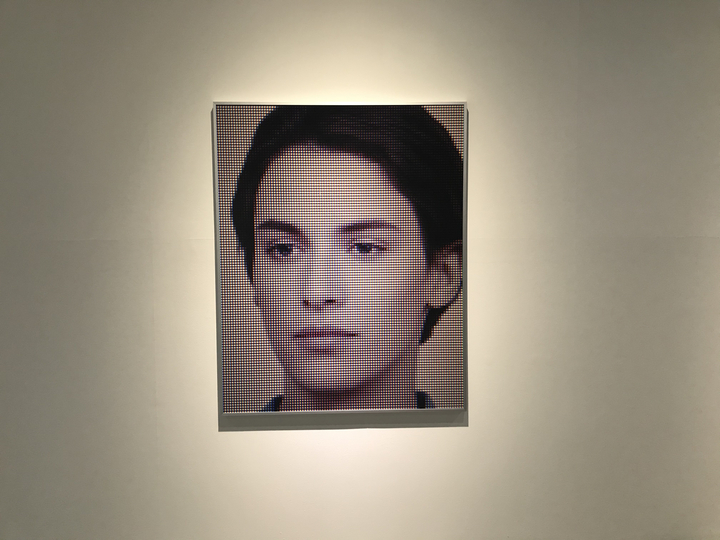
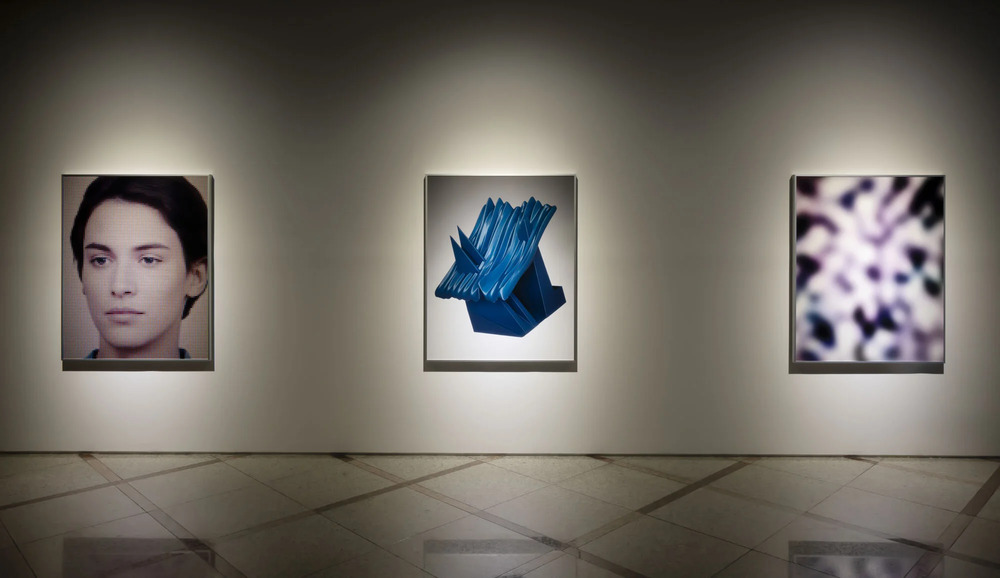
Jeong Young Ho, Gender Conflict, 2022, Archival pigment print, 162 x 108 cm © Jeong Young Ho
Thoughts Created by Technology: The Dynamics of Technological Updates and Cognitive Updates
In contemporary society, the powerful infrastructure that determines the superstructure is technology rather than the economy. Technology, which fundamentally proves accumulated achievements, increases its influence exponentially along the axis of time. The updating of the technological infrastructure aligned with time drives the updating of the superstructure. Cultural norms and ideas within the superstructure call for a break from past paradigms. Past thoughts quickly return to the past, present thoughts are absorbed into the past, and future thoughts persuade the present.
Media technology dramatically shapes the environment of communication. Today, the public sphere no longer exists offline and has been completely incorporated into online space. Online communities, influencers, Twitter, Facebook, and YouTube channels circulate ideas and opinions through digital platforms. The digital public sphere exists as the hottest arena of competition for ideas. Public opinion in the virtual world dominates that of the real world. Opinions that do not exist on digital platforms are treated as voices that do not exist in reality.
A user-based communication environment that transcends space gathers even small belief groups that had been locally fragmented into virtual space. As the new media environment prevents the dissipation of minority opinions, the public sphere is reconfigured. The efficiency and expansion of communication enhance the aggregation and competition of ideas. Software architecture becomes the message.
Unphotographable Cases: Photographing Thoughts and Events in Virtual Space
As the public sphere has shifted from offline to online, everyday conflicts and upheavals have also migrated into online space. As online and offline divide their roles, the location of truth has paradoxically reversed into a physical-virtual space where search frequency is manipulated into unreadable forms and formal plausibility is lost. Ironically, intense discomfort settles in online spaces made possible by anonymity. Anonymous digital platforms form an unprecedented public sphere of eyes and ears, where space is structured as software architecture.
New software architectures determine the processes of selecting and distributing the pathways through which public opinion and information flow, but they are not always successful. The boundary between minority opinions and fake news becomes blurred, demanding more refined distinctions between information and manipulation. Alongside efforts to improve software architecture, there are also forces that seek to exploit algorithms.
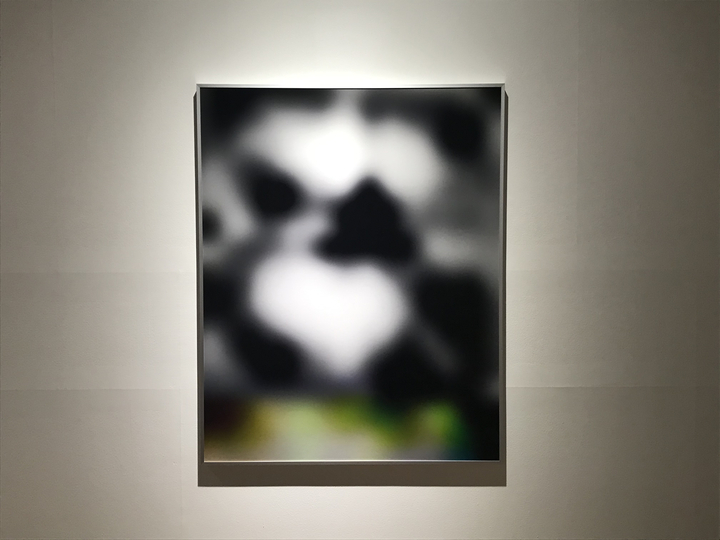
The ‘Unphotographable Cases’ series is an attempt to physically photograph the signal activities of online spaces where thoughts circulate. Intangible data of public opinion and information that exist only as signals are processed, 3D printed, and reduced into forms that can be photographed. The level of interest in specific keywords and evidentiary traces become tangible objects. These touchable pieces of evidence again pursue the appearance of graphic images within screens. What can be said is the trace of truth that has retired from the surface of everyday life and the impossibility of photography placed before software-architectural communication.