Exhibitions
《Whispering Nosie》, 2024.03.09 – 2024.04.07, N/A
March 09, 2024
N/A
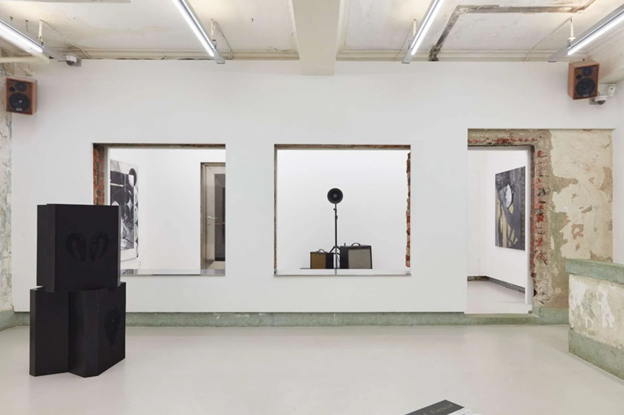
Installation view of 《Whispering Nosie》 © N/A
C: Oh, I'm sorry if you didn't want that out. But...what is Black-noise?
B: Black-noise?
C: Yeah.
B: Black-noise is something that Burroughs got very interested in. It's a...one facet of Black-noise is that...um...everything, like a glass if an opera singer hits a particular note, the vibrations of that hit the metabolism of the glass and cracks it, yeah? So a Black-noise is the register within which you can crack a city or people or...it's a new control bomb. It's a noise — bomb in fact, which can destroy...why do you ask that?
C: I mean is it a real thing? Is it something...
B: ...Oh yeah it is. It was invented in France.
C: Could a tiro use this to...
B: ...well, up until last year you could buy the patent for it in the French patent-office for about equivalent to 3-4 dollars.
C: And it would wipe out a...
B: ...It depends how much money you put into it. I mean a small one could probably kill about half the people here. But a big one could ...destroy a city. Or even more...I mean...
C: It's a weird idea, isn't it?
B: Well, it's not my idea...(laughs)...so...
Vladimir Gavreau was a scientist who experimented with the physiological effects of infrasound, a sound that falls below twenty hertz, which is outside the range of human hearing.
Gavreau researched and developed infrasound as a military weapon, which could disable or even kill enemy combatants in invisible places. Gavreau explained the experience of infrasound as “You can feel all the organs in your body rubbing together.” Infrasound is now known as ‘black noise’ because it can seem to come from unheard sources and be difficult to detect or locate.
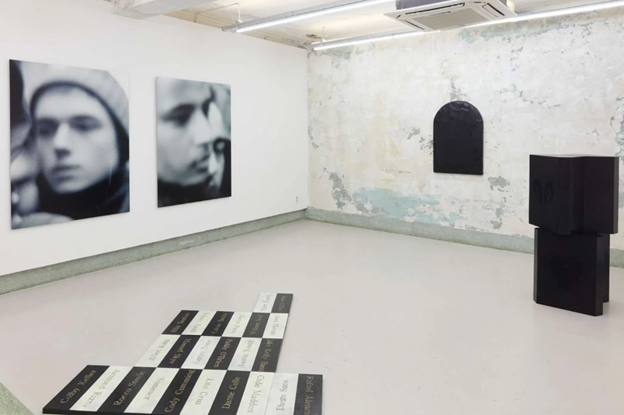
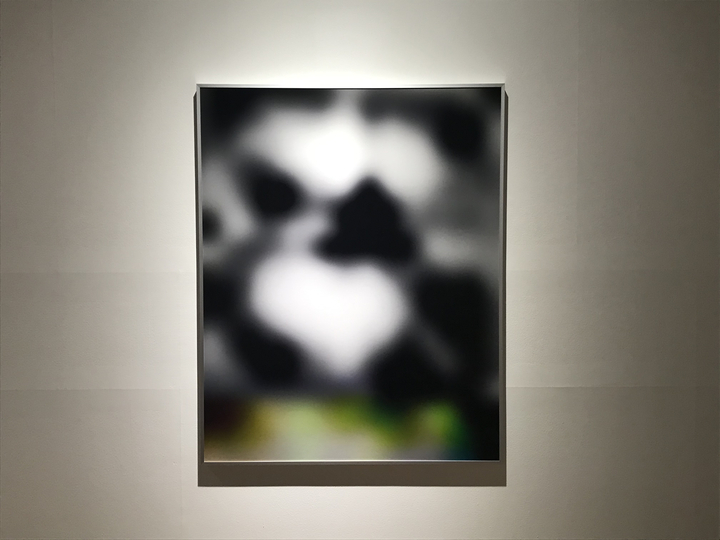
Installation view of 《Whispering Nosie》 © N/A
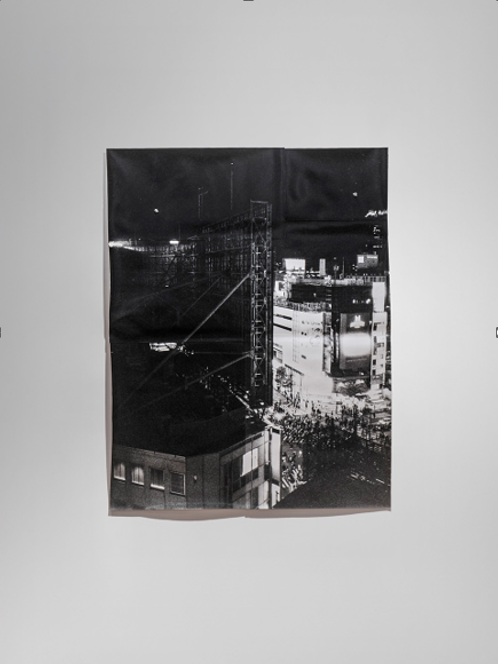
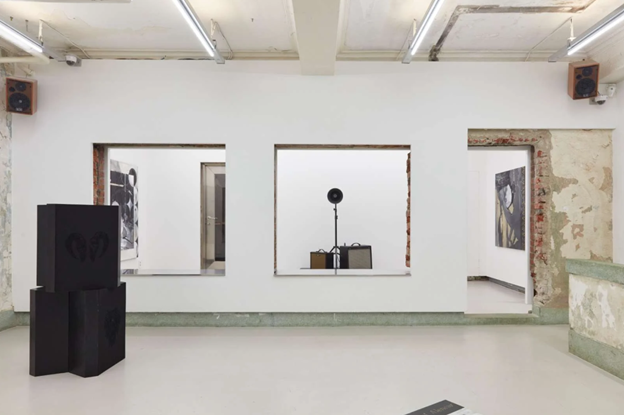
INTRO+VERTIGE, at the 3-minute and 50-second mark, plays every 30 minutes, blasting out the full sound with a crowd cheering outside the gallery door. The stage with a horn speaker, bass amp, and guitar amp introduces a fictional band along with heavy infrasonic electric guitar and bass playing. ‘VERTIGE’ starts based on the main riff of Ligeti’s piano étude ‘Vertige’, which continuously descends in a semitone and manipulates the artificial sense of space felt in the performance venue.
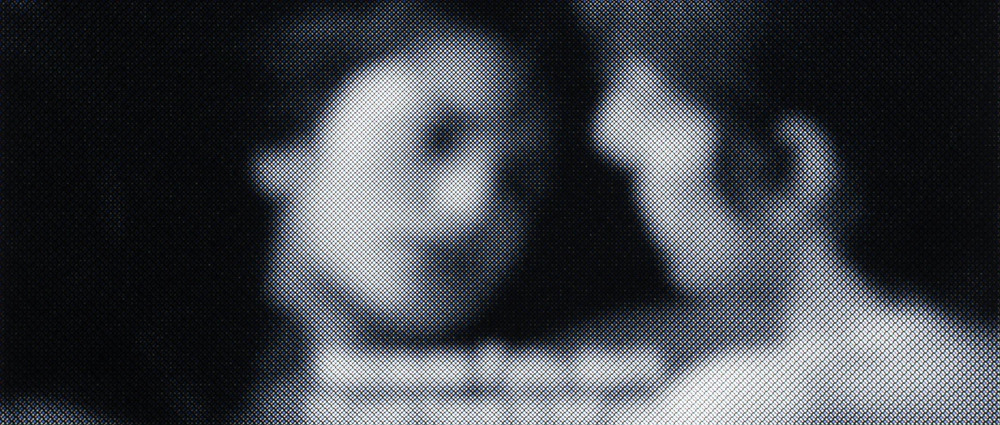
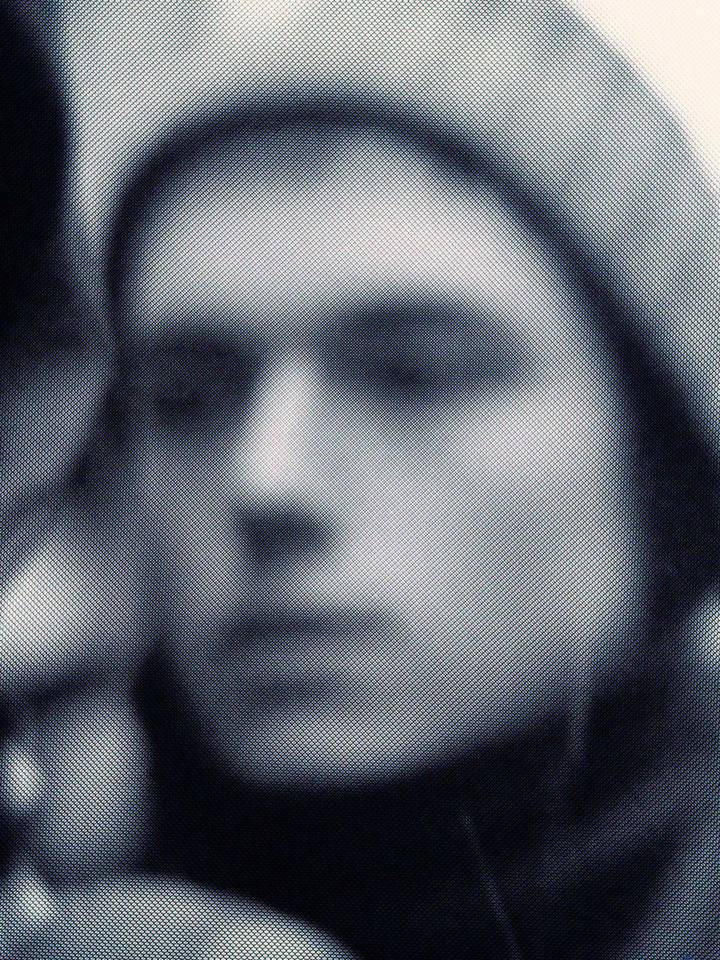
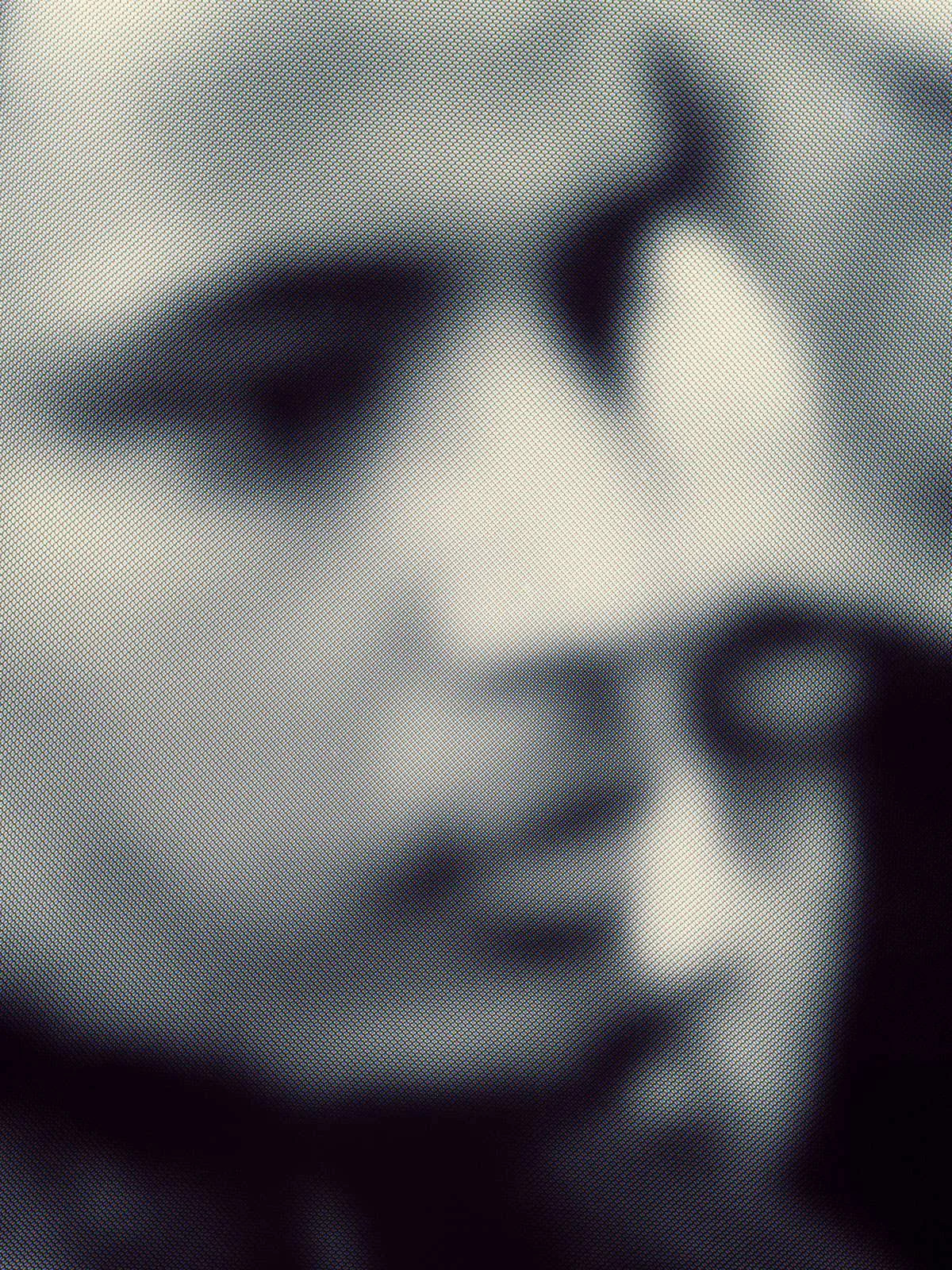
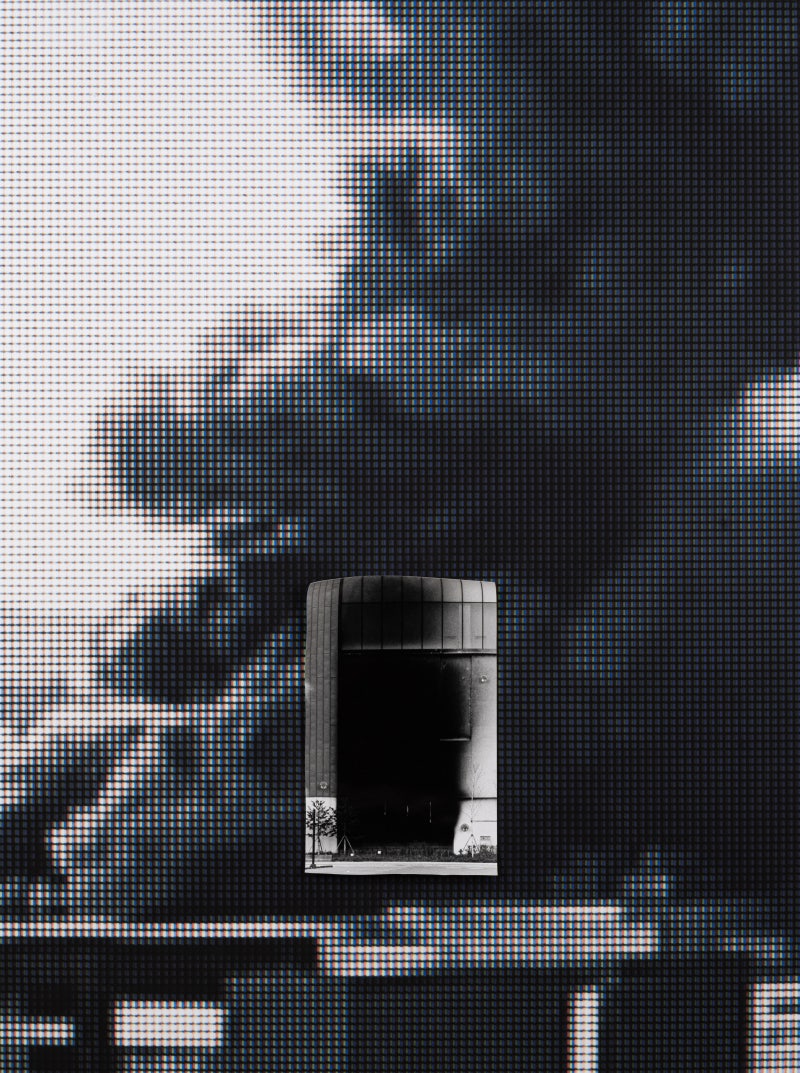
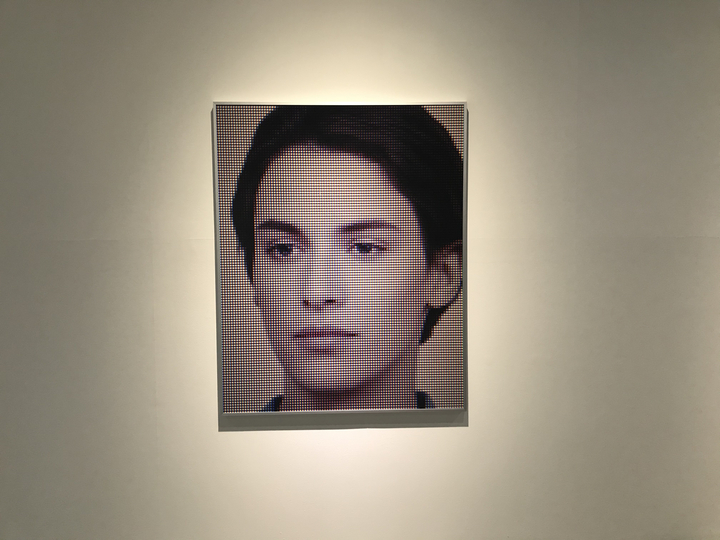
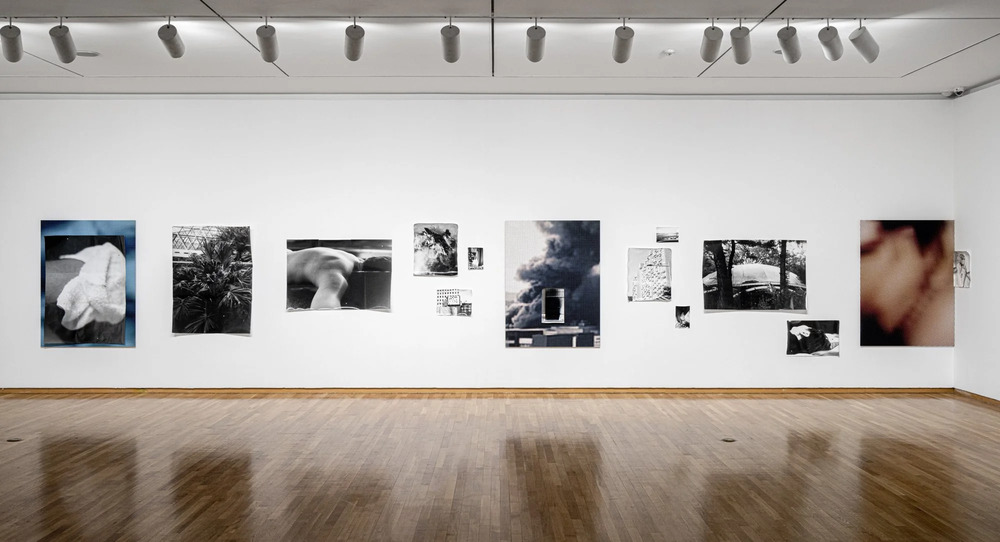
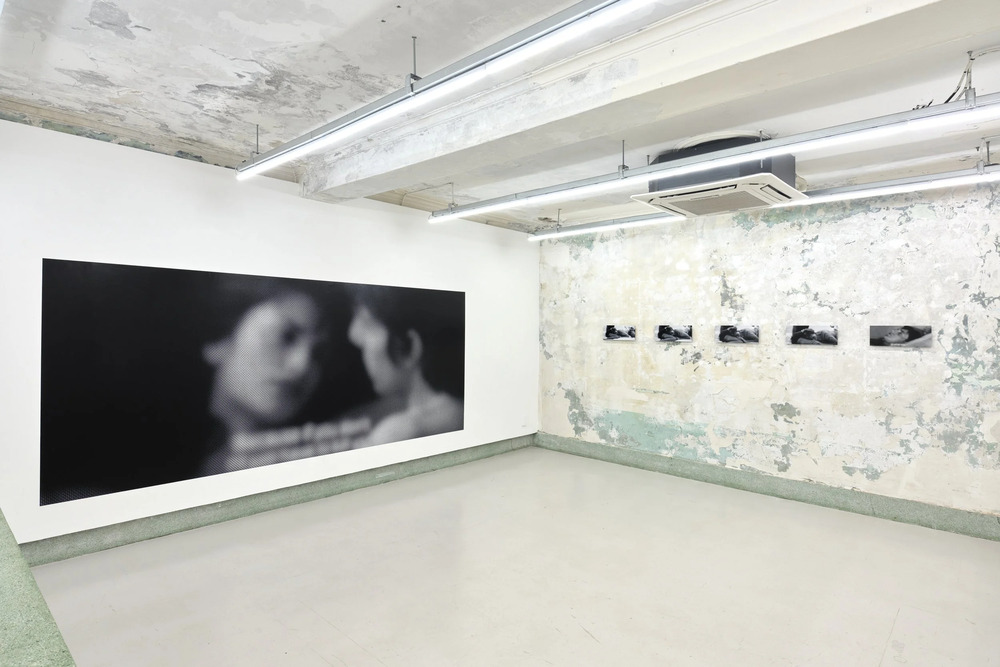
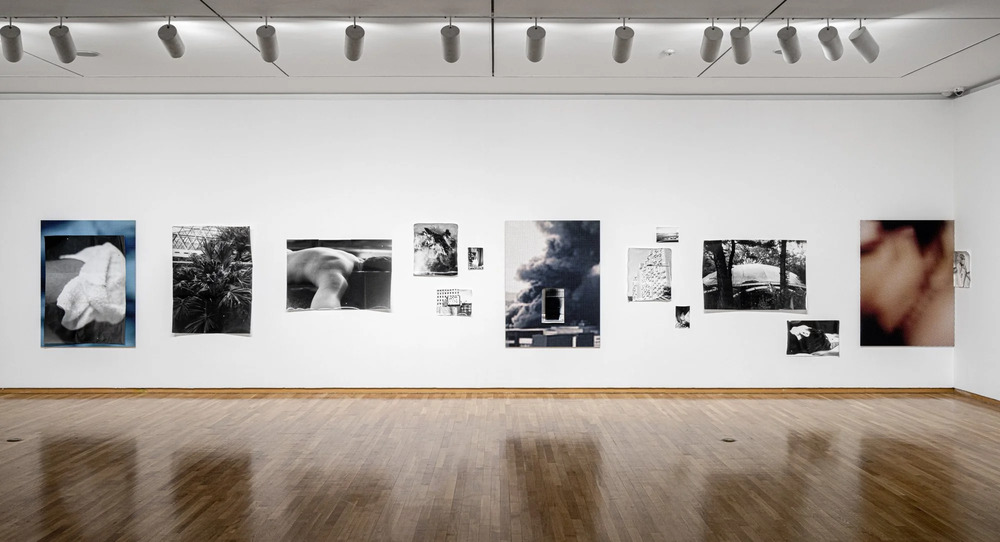
The horn speaker is directed towards the photographs of two portraits facing in different directions, The Unknown No.9, No.10, which are part and extension of a ‘Double Retina’ series. This series aligns with both real images from real-world media or news photographs and images generated by AI, which are displayed on screens or monitors in black-and-white and then re-photographed. The works vary depending on the viewing experience; when viewed from a distance, they may appear as black-and-white images, but when viewed closely, they transform into visual hallucinations and a multitude of RGB values representing the sum of pixels.
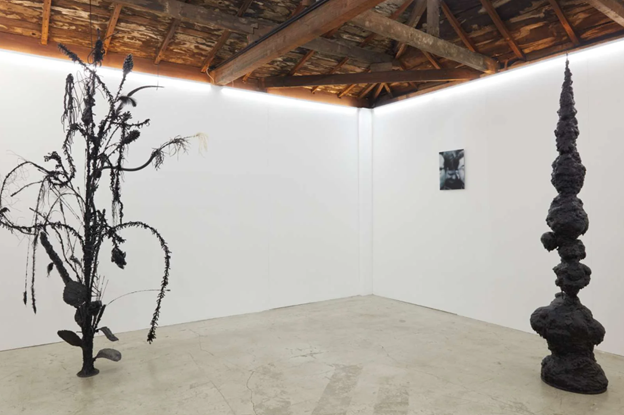
Installation view of 《Whispering Nosie》 © N/A
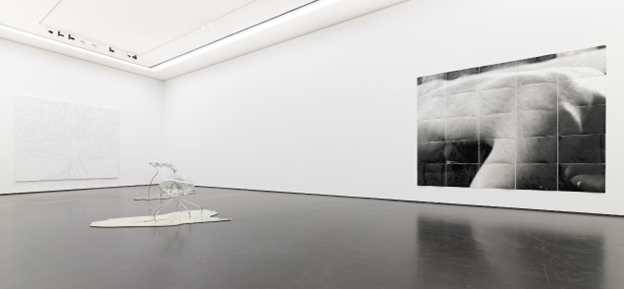
Next to The Unknown No.10, a deep black resin-coated sculpture in the shape of a window frame, Black mirror, is placed. It interacts with viewers to reflect the dark screen of powered-off electronic devices, where information is erased and evaporated, but within it holds the potential for new information to be absorbed. The artist’s use of window and mirror is to represent confinement and liberation, which translates as anxiety and imperfection, while also embodying exploration and liberation. As if all colors were simultaneously beyond the spectrum, or like the sound of silence.