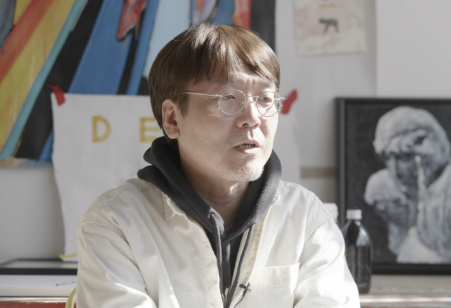
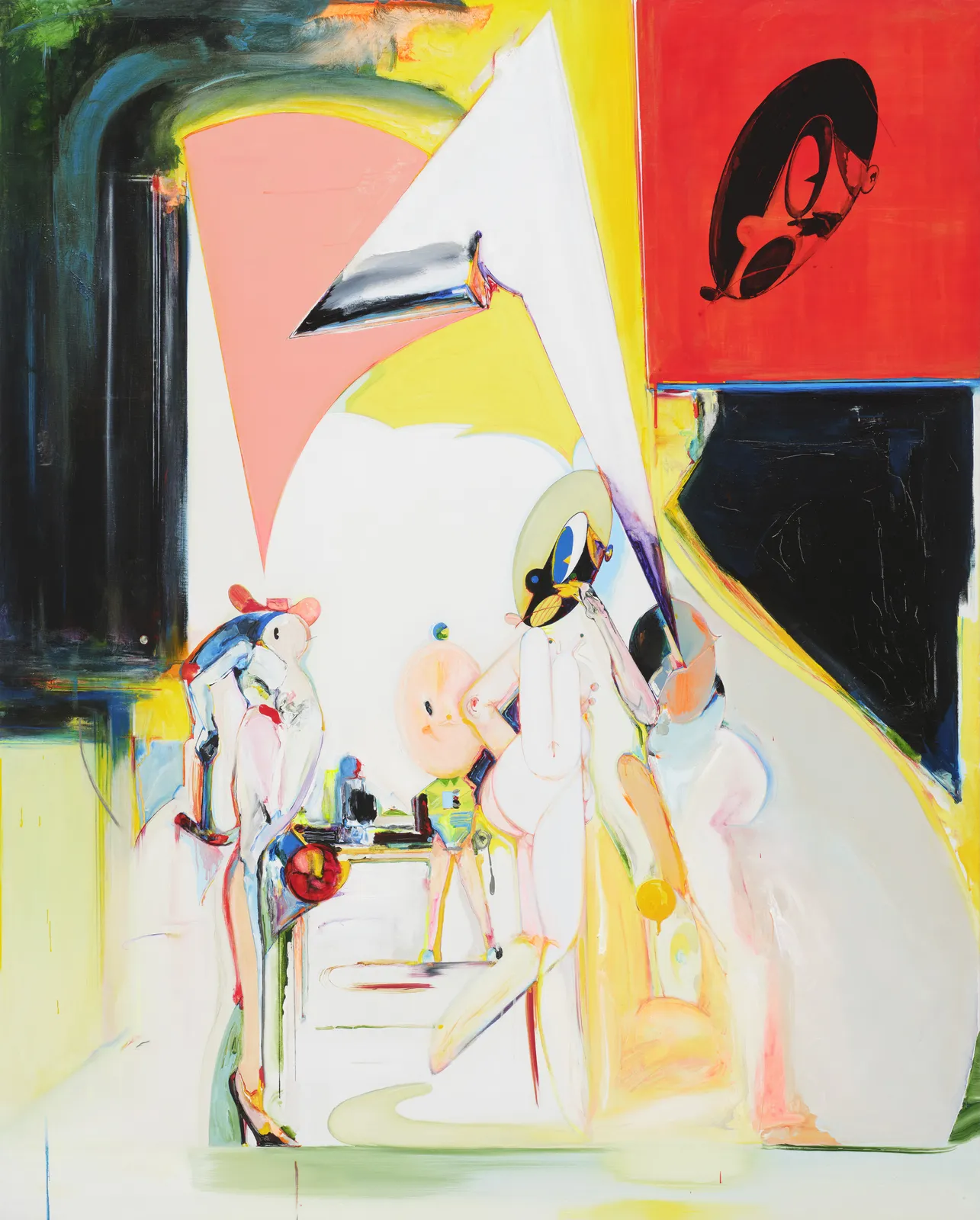
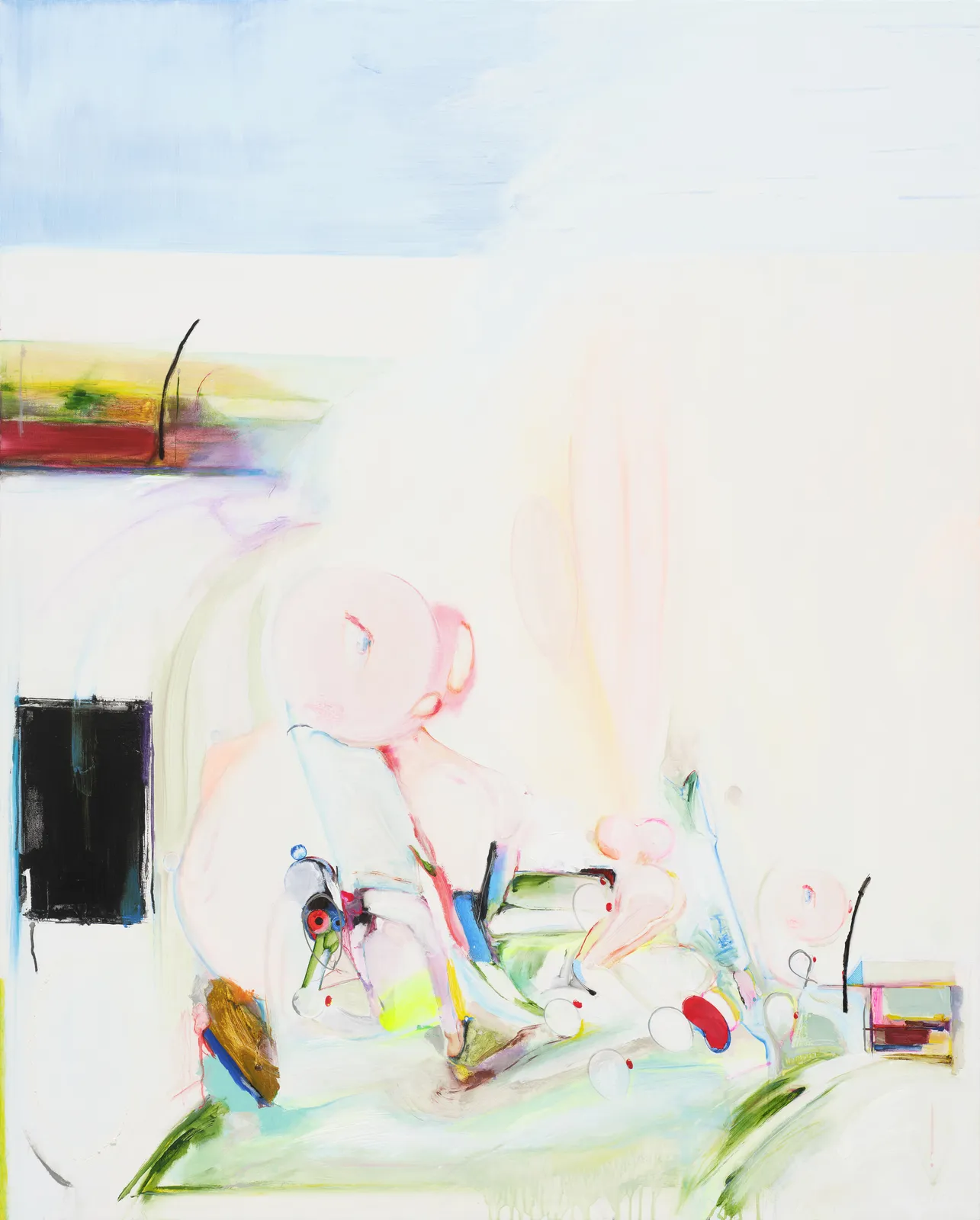
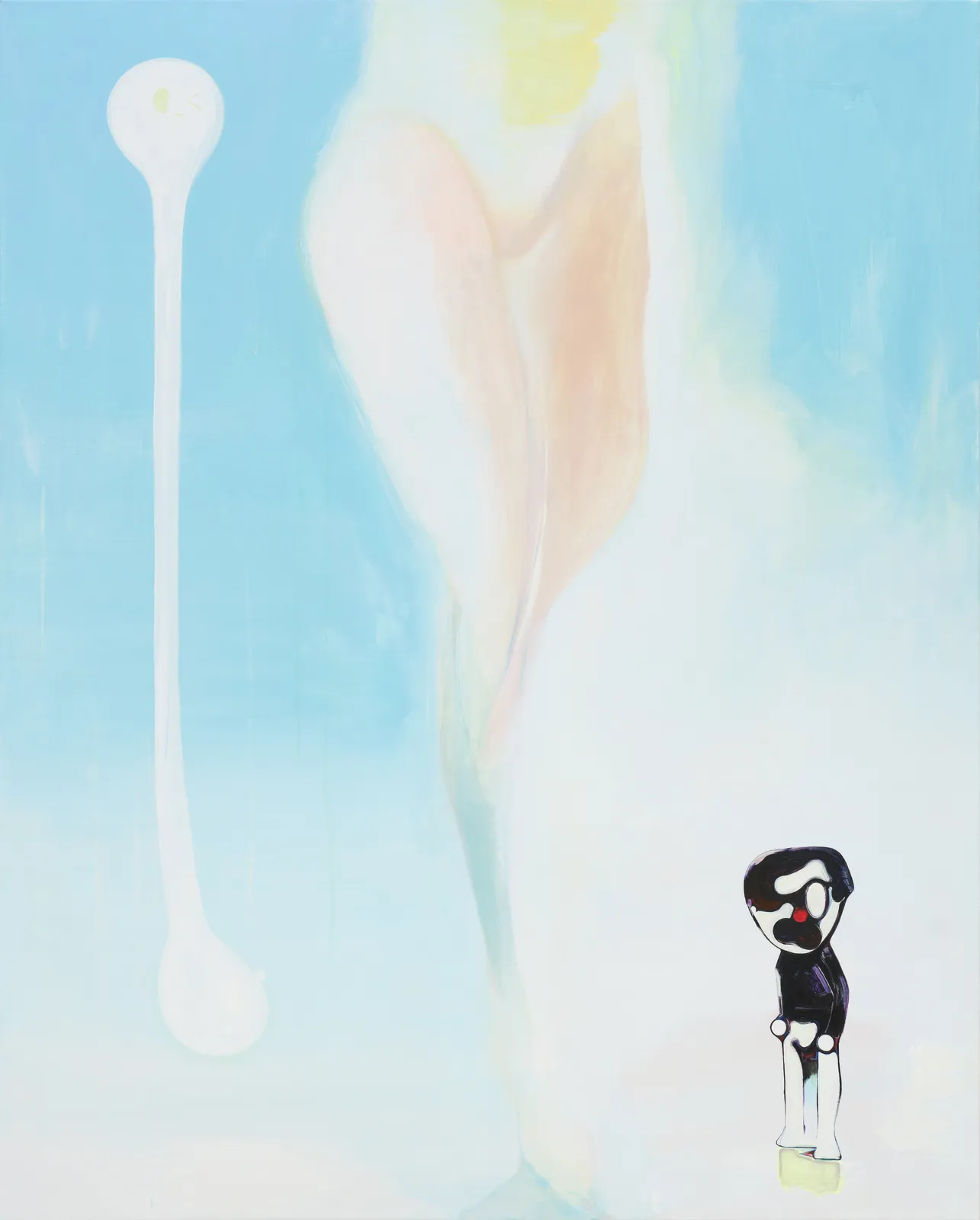
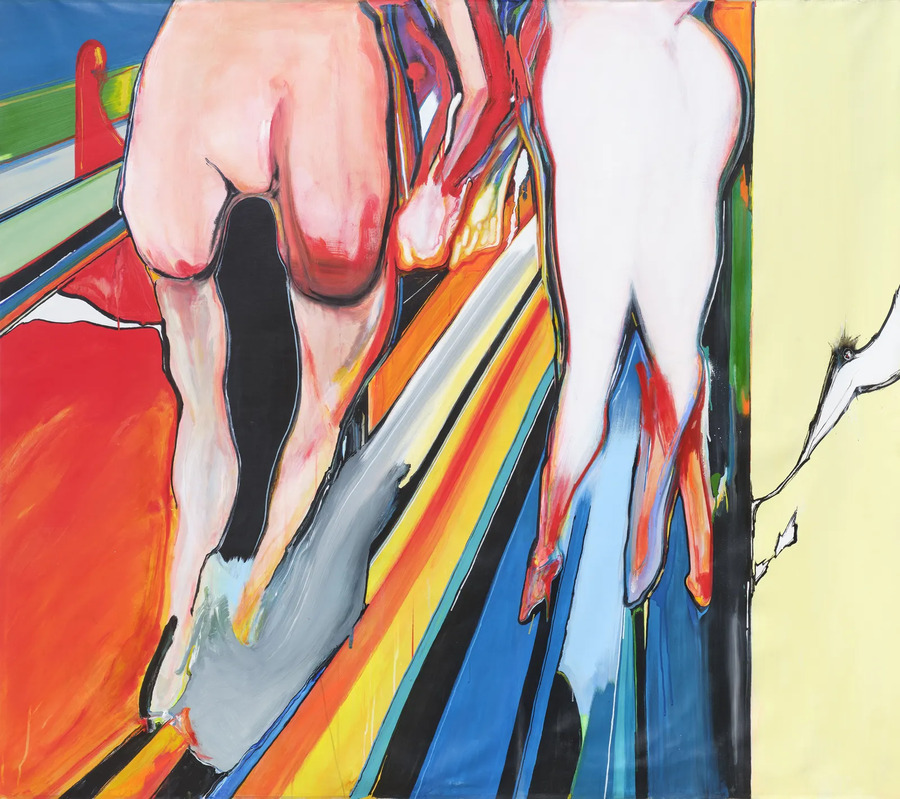
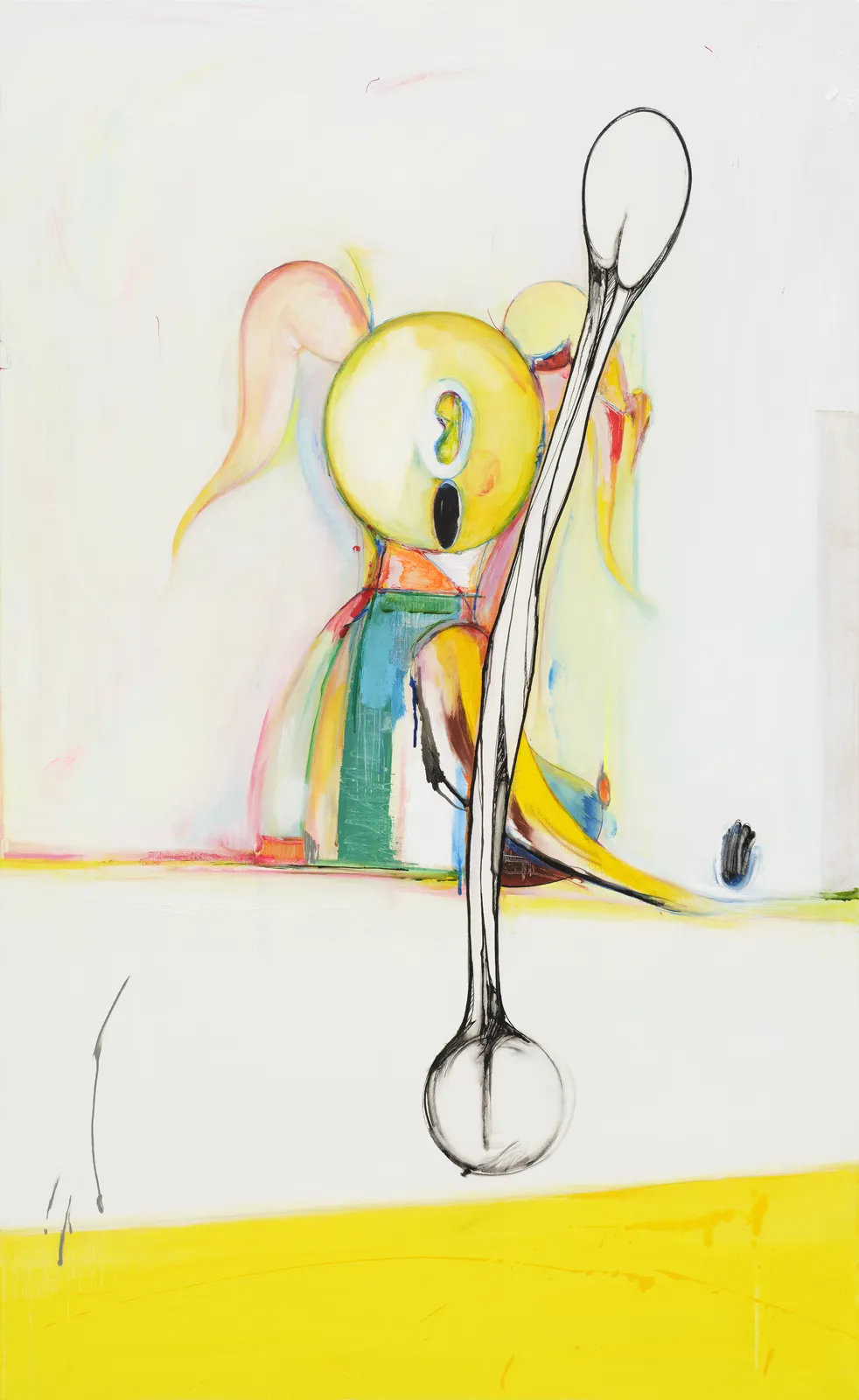
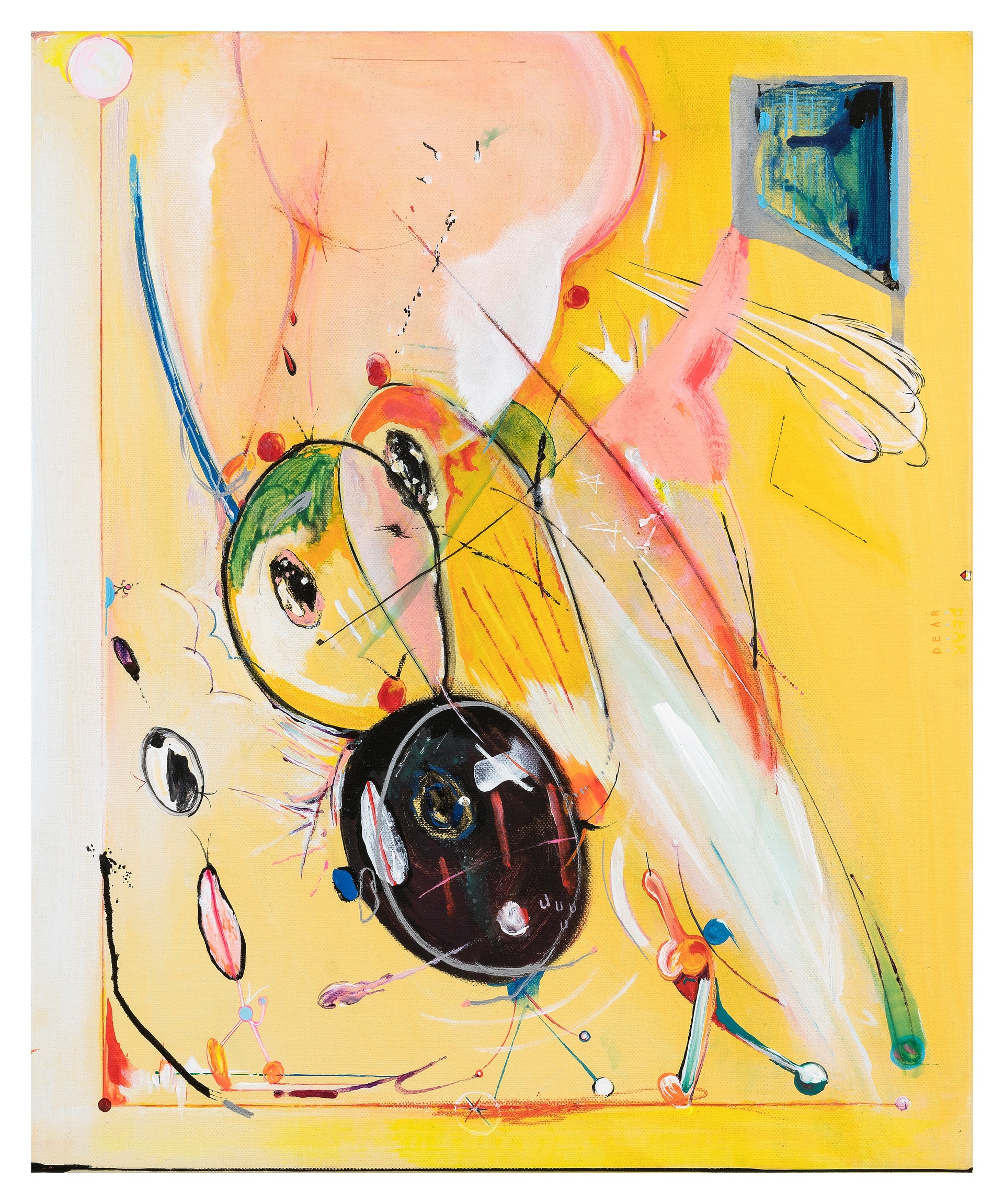
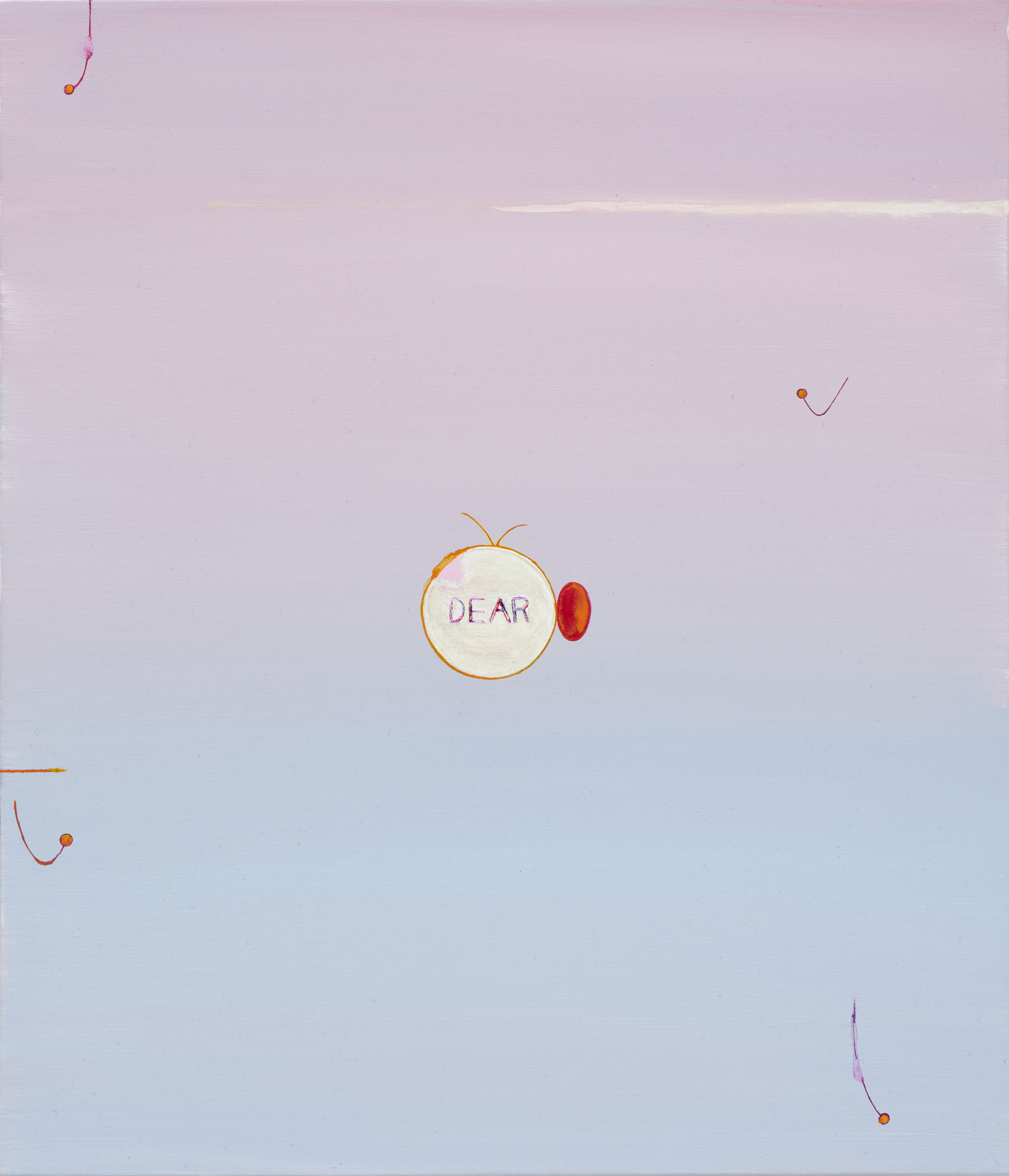
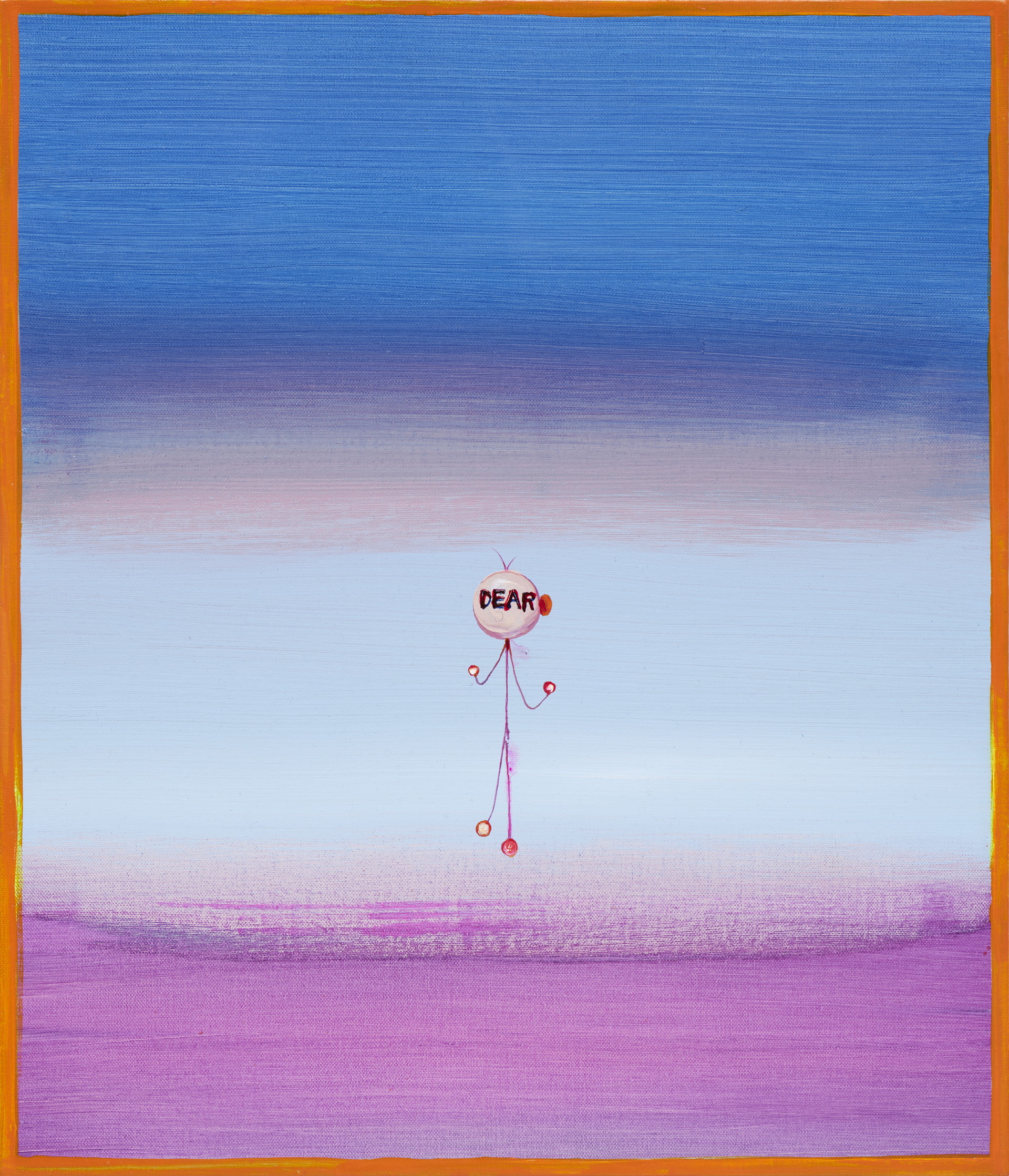
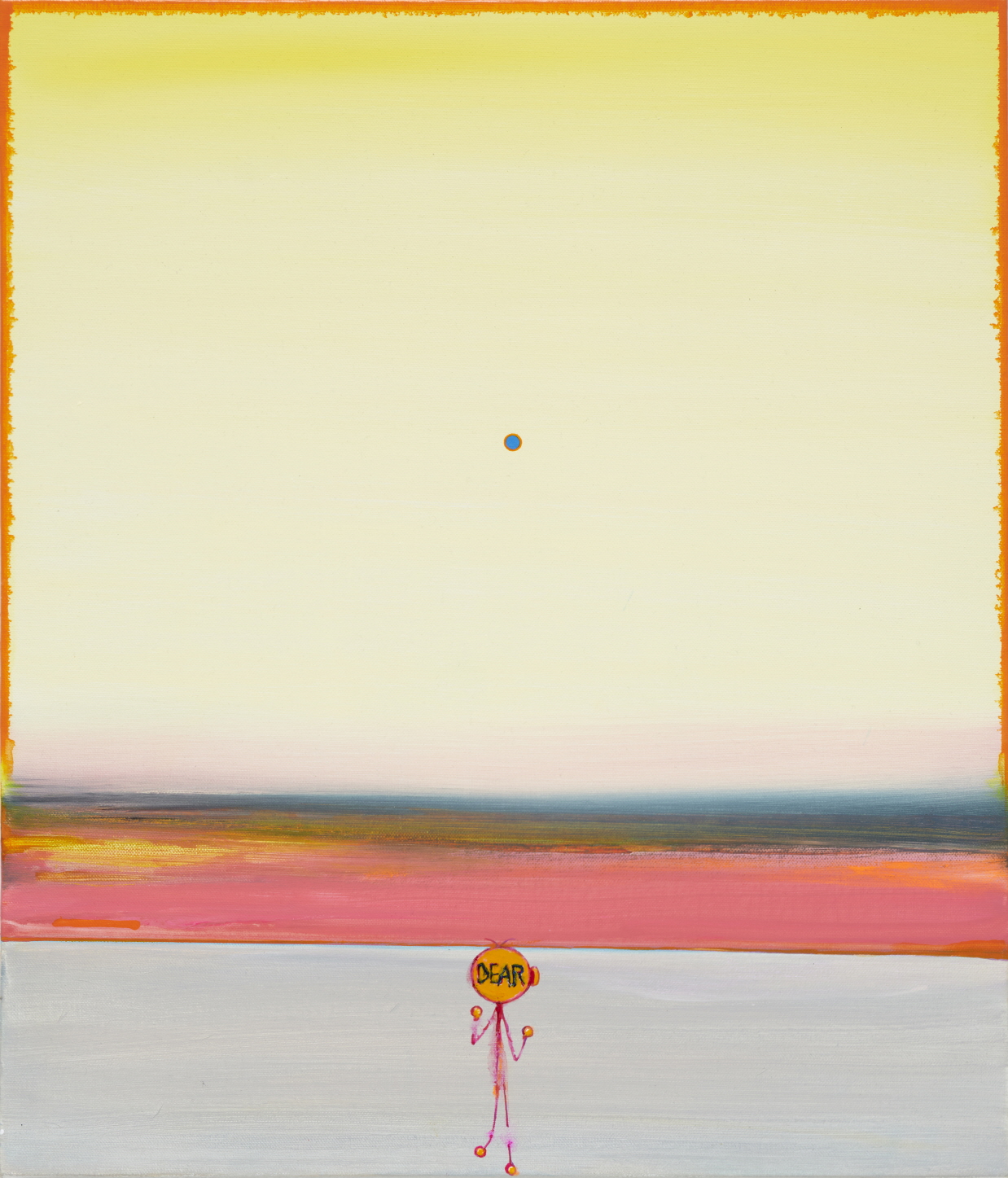
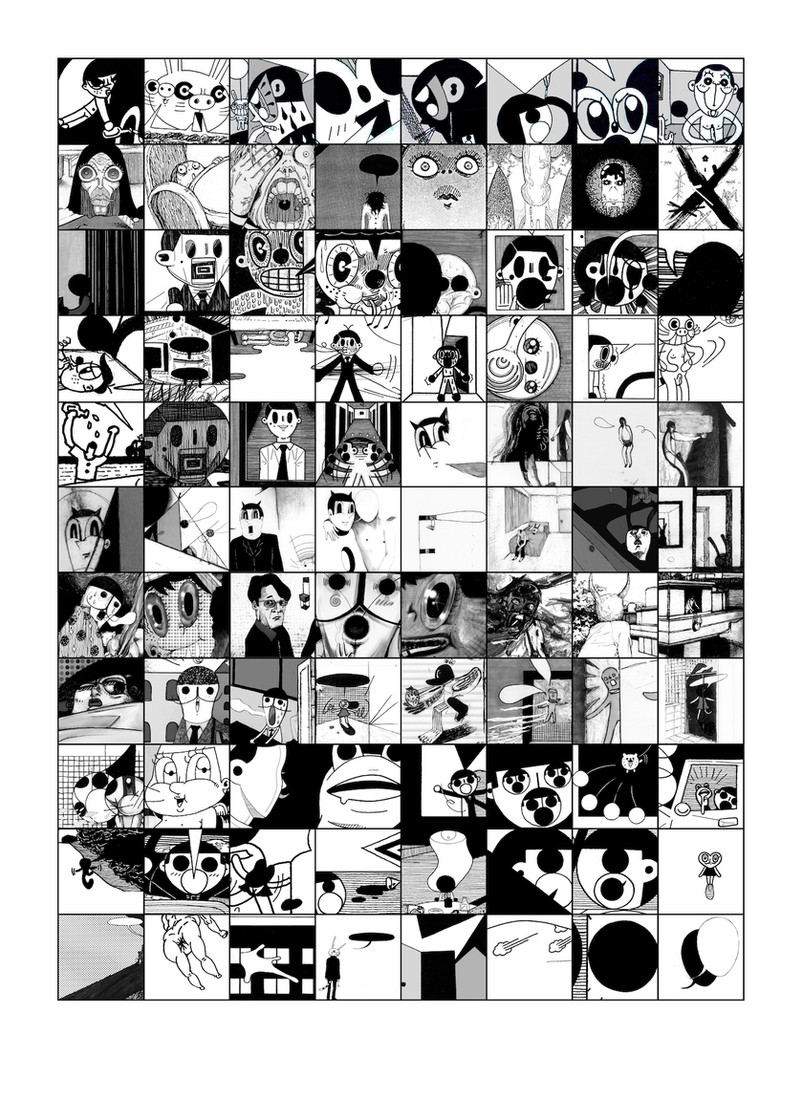
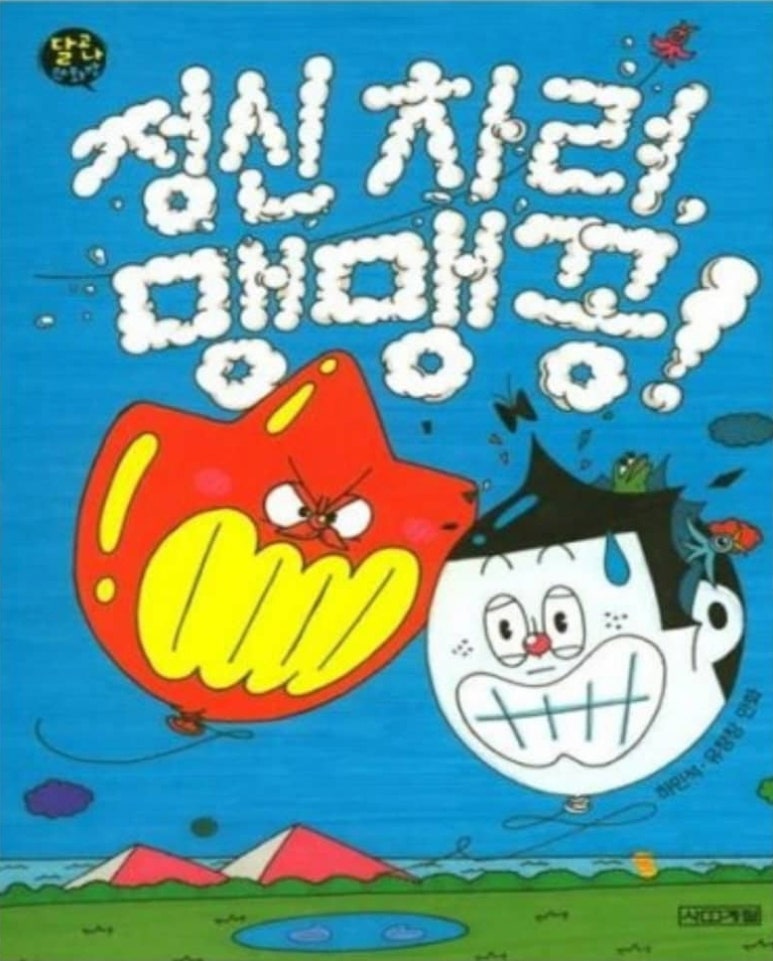
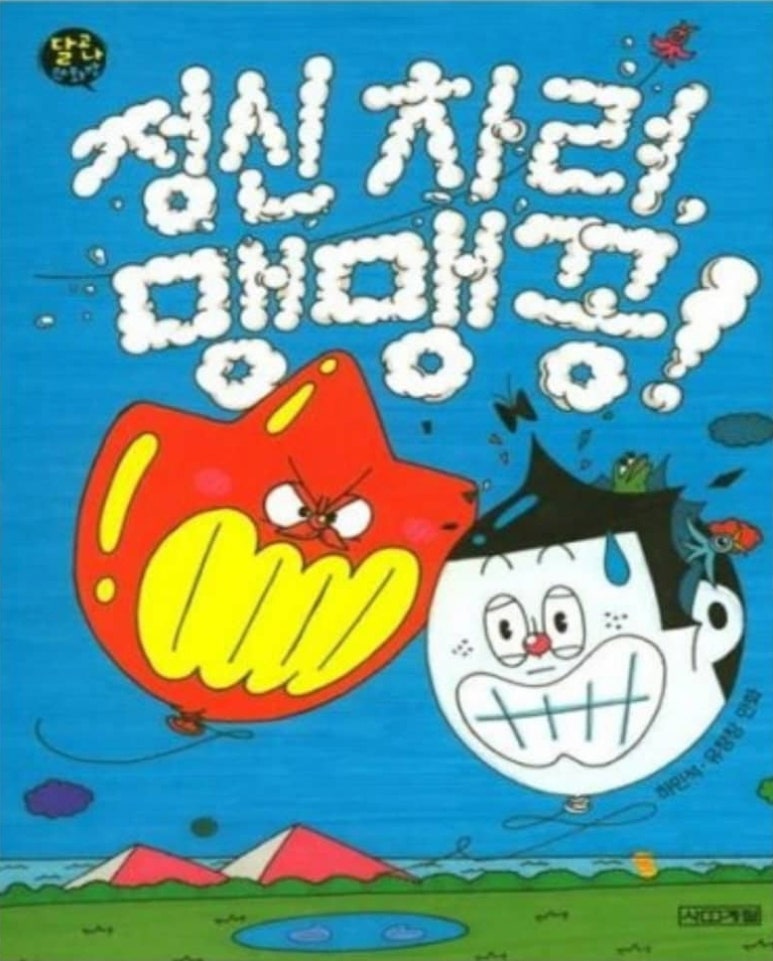
Cover image of Wake Up, Maengmaengkkong! © Sakyejul Publishing

There are probably not many readers familiar with the name Changchang Yoo. Thanks, at least, to Wake Up, Maengmaengkkong!, published by Sagyejul Publishing in 2017, it became somewhat easier to encounter his work. However, even this piece—illustrated by Yoo based on a text by Minseok Ha—was planned as a comic book for children, and thus feels rather distant from his usual style of work. More precisely, it is perhaps the only work among all of his works that is easy to understand.

While it demonstrates colors and forms that are exceptionally effective at expanding visual experience, making it truly recommendable for children, it is also true that it lacks the density needed to grasp the essence of Yoo’s practice. Or rather, to be frank, one wonders whether it is even possible to fully read the true nature of his work.

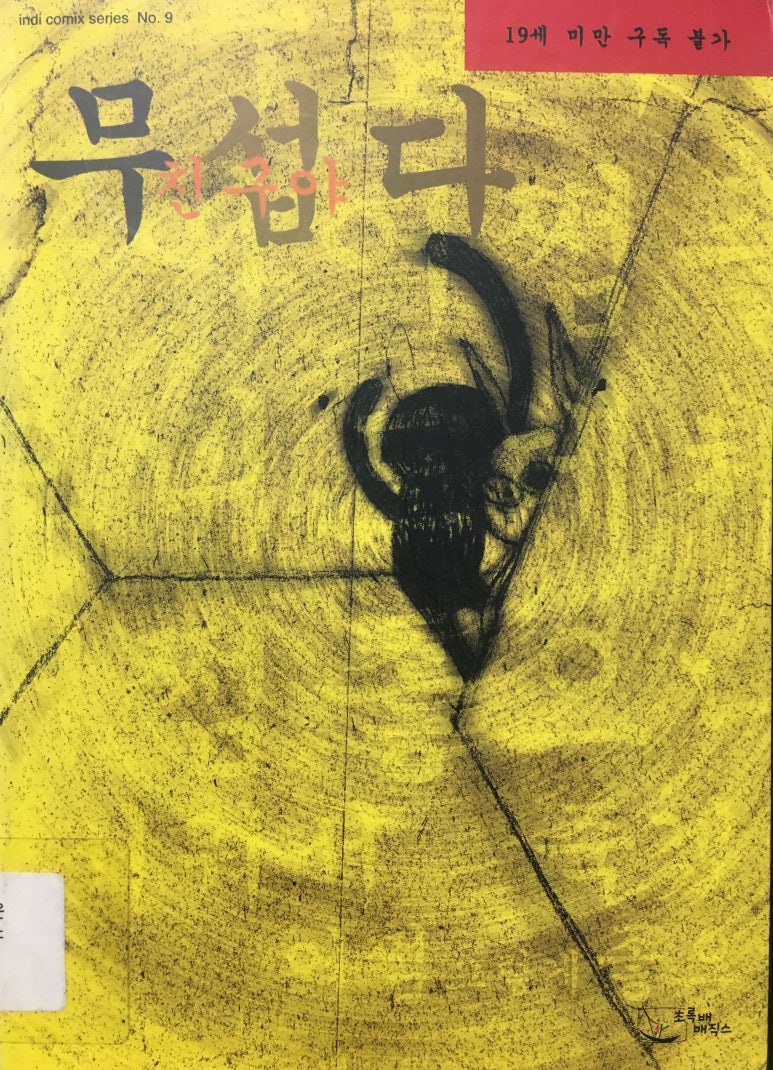
If one searches for the name Changchang Yoo, traces only begin to appear around 2007. Considering that he was born in 1974, one might mistakenly assume that he began making work rather late. To trace his earlier activities, one must instead search under the name “Yoo Changwoon.” His debut dates back to 1997, when he presented short works such as Let’s Ride Tofu on a Motorcycle in Hysterie, a bimonthly independent comics magazine. Afterwards, his name became associated with various magazines and webzines such as Banana, Ddakji, Canned Food, OZ, and Cartoon P. In 2001, Chologbae Magics published Tofu, a collection of short works produced between 1997 and 1999.


Cover image of Tofu © Greenboat Magics

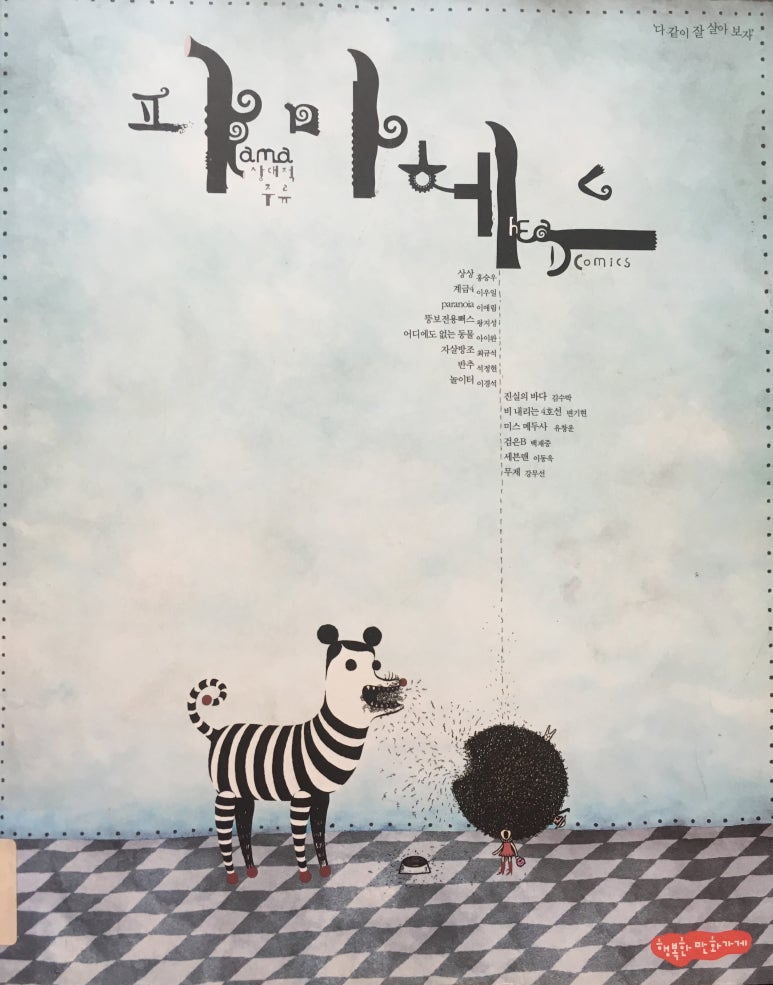
In a sense, this volume remains Changchang Yoo’s only independent collection of works. After contributing short comics to the “Indie Zone” section of Young Jump until 2006, he also presented short pieces in single-volume comics anthologies such as My Life My Well-Being (Hwangmae), A Better Direction (Saemanhwachaek), Perm Head (Happy Cartoon Shop), and Summer Hunt (The Hankyoreh Publishing).


Cover image of Perm Head © Happy Cartoon Shop

From 2007, when he began using the name Changchang Yoo, through 2014, there were virtually no other comics works apart from the short pieces he published in issues 2 through 7 of the comics anthology magazine Salbook. Although it would be difficult to say that he had been especially prolific even before that period, six short works over the course of eight years is strikingly sparse. It amounts to less than half of what he produced during the previous ten years, from 1997 to 2006. The reason for this can be found in Yoo’s other activities, particularly his painting practice. The group exhibitions he participated in during 1998 and 2004—《Underground Comics Festival》 (1998, Kumho Museum of Art) and 《Perm Head – Jaknan Exhibition》 (2004, Seoul Animation Center)—were, after all, comics exhibitions.

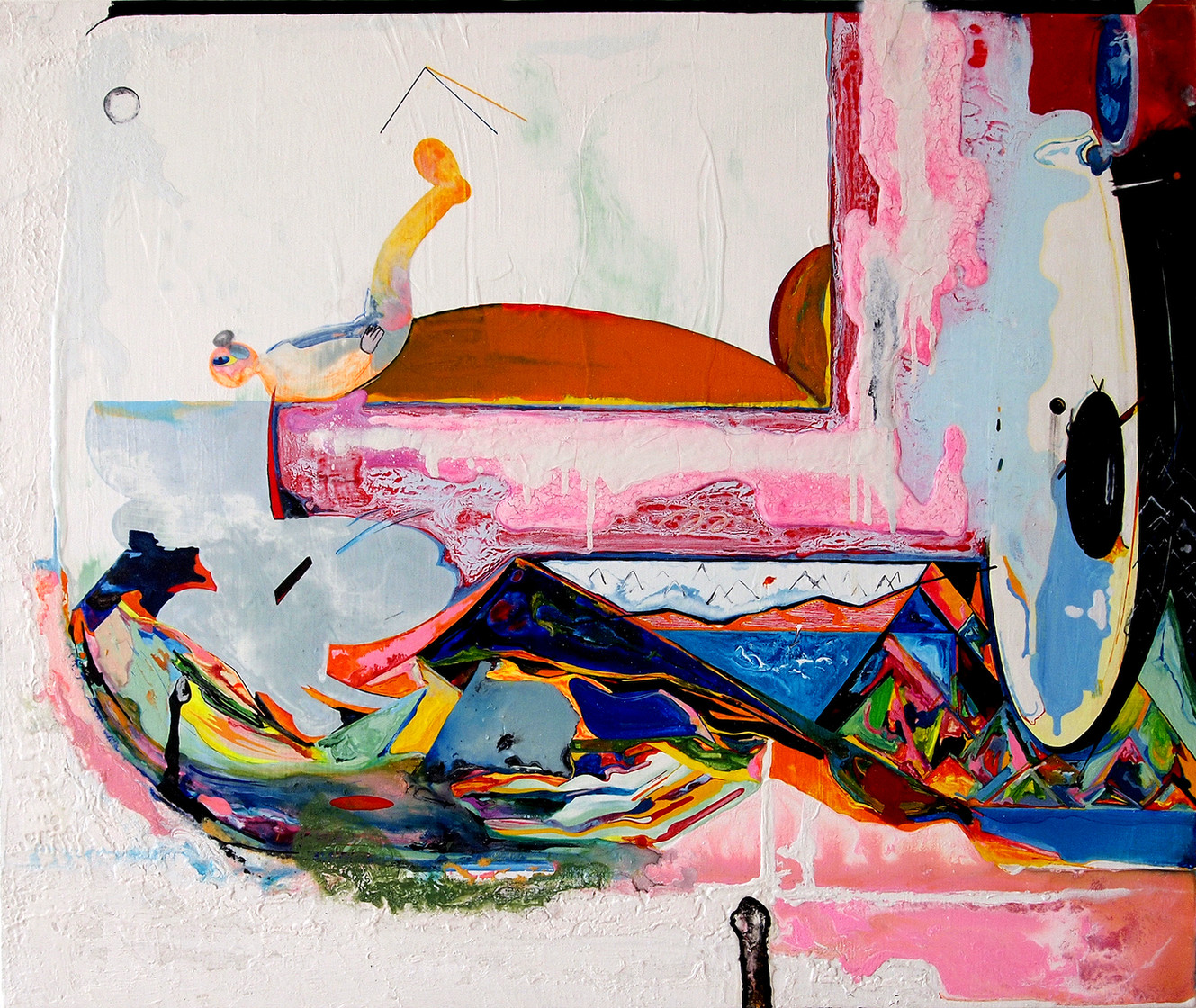
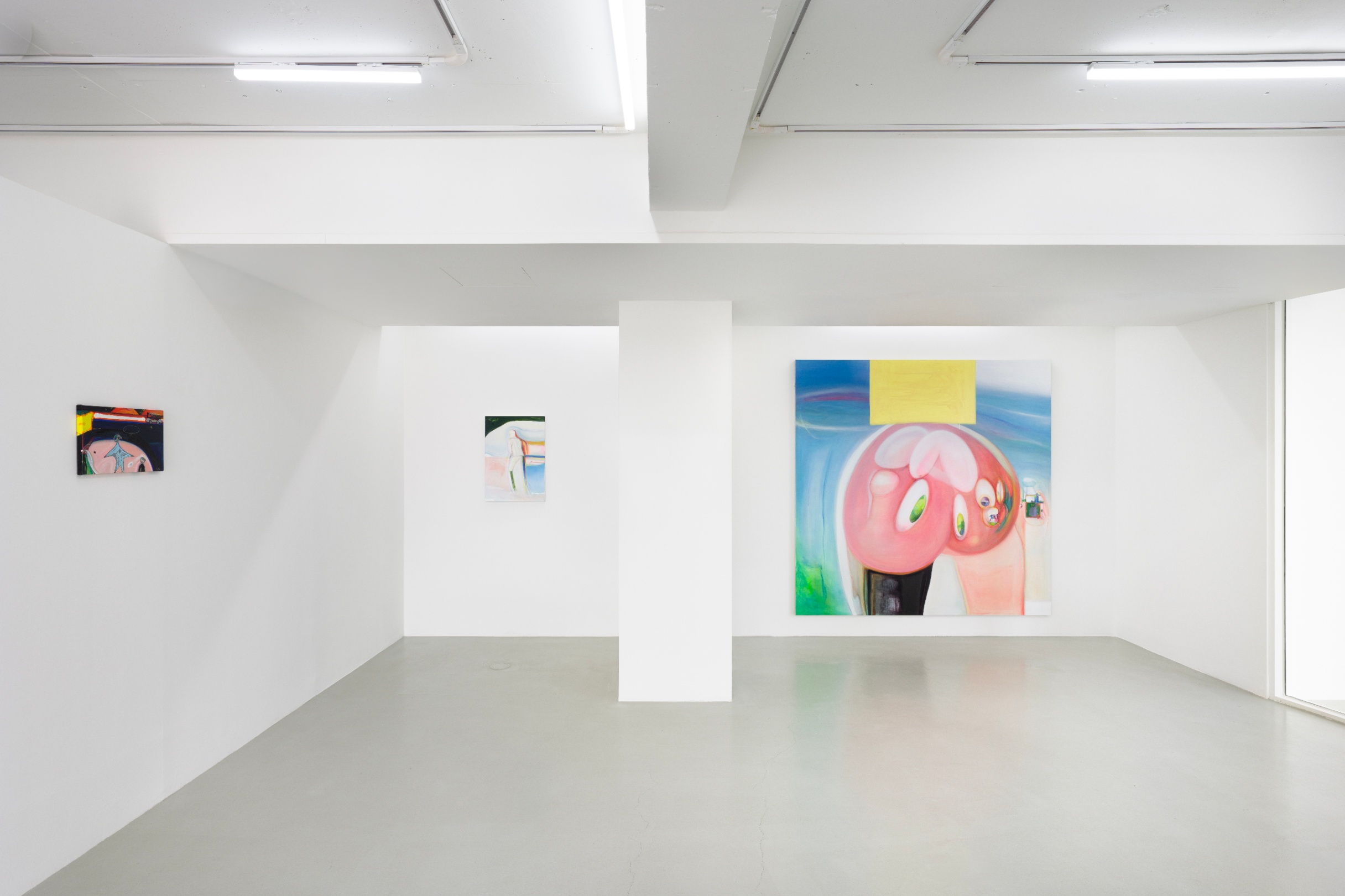
However, beginning in 2007, group exhibitions in the field of fine art, including art fairs, appear to have become his primary activity. The considerable number of group exhibitions he has participated in, along with the fact that he has consistently held solo exhibitions roughly every two years since 2010 (2010, 2012, 2015), testifies to the sincerity and steadiness of his artistic practice. His most recent exhibition was 《CHUCK》 (Plate 4), held in 2017 at Art Space Hue in Paju. In the same year, he was also honored as a selected artist for ‘Chongkundang Yesuljisang 2017,’ presented by Chongkundang.


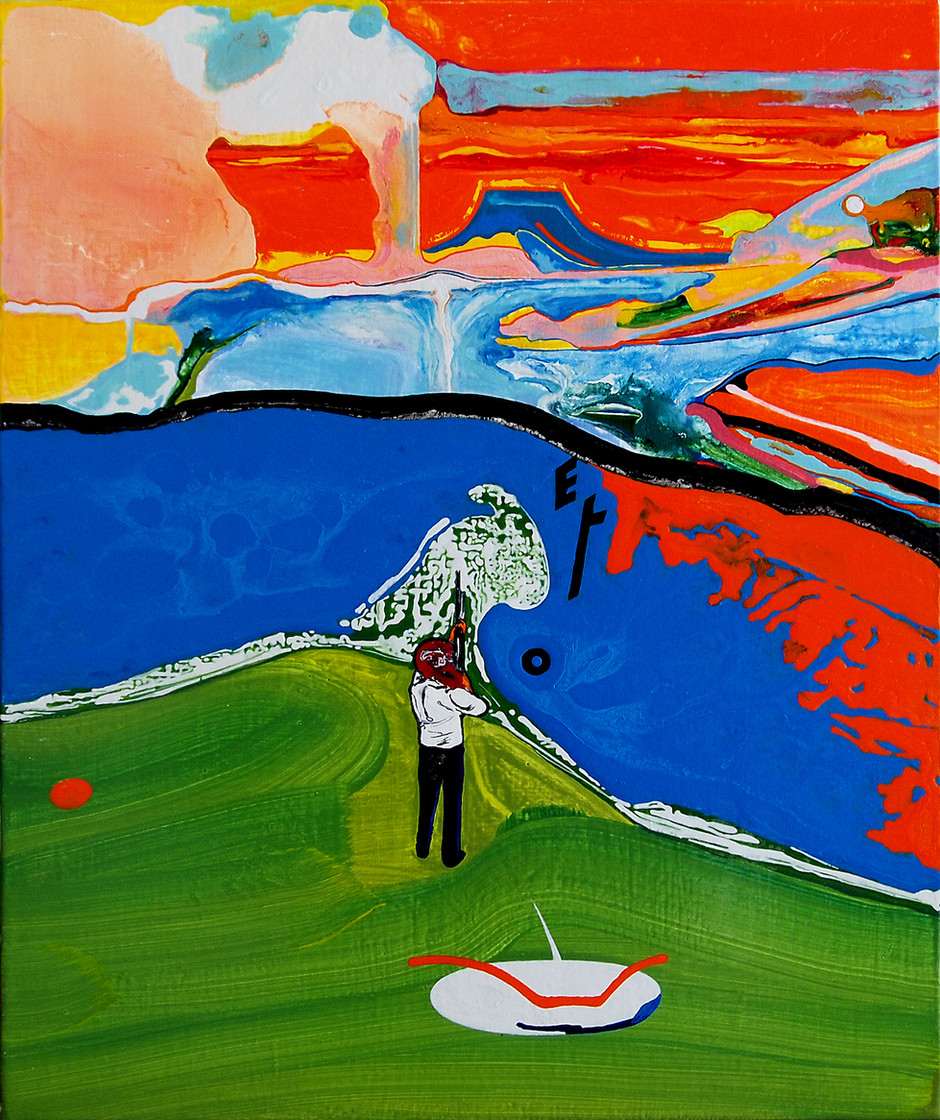
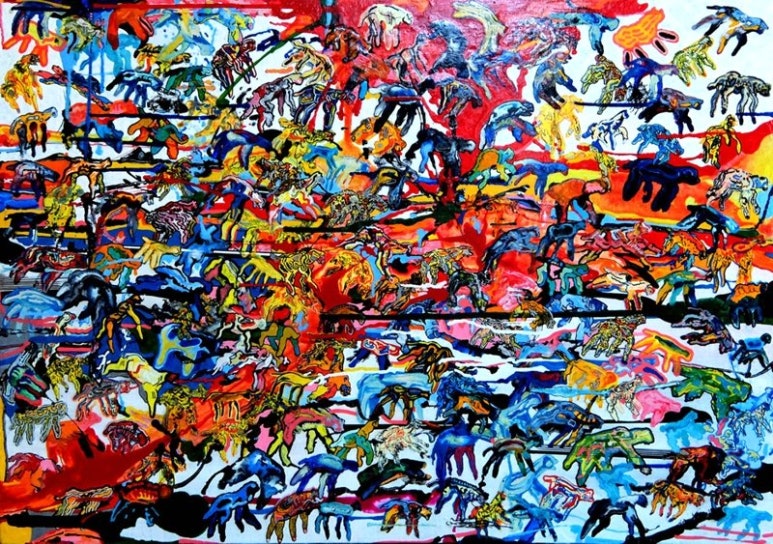
Changchang Yoo, Animals(Sunset), 2014, Mixed media on canvas, 65 x 90.7 cm © Changchang Yoo

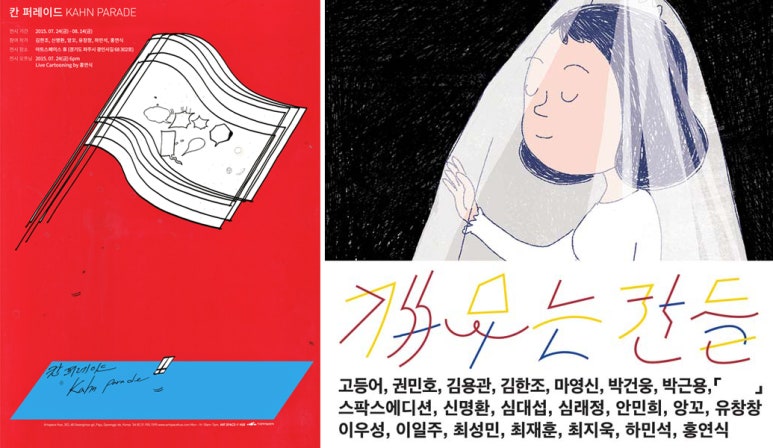
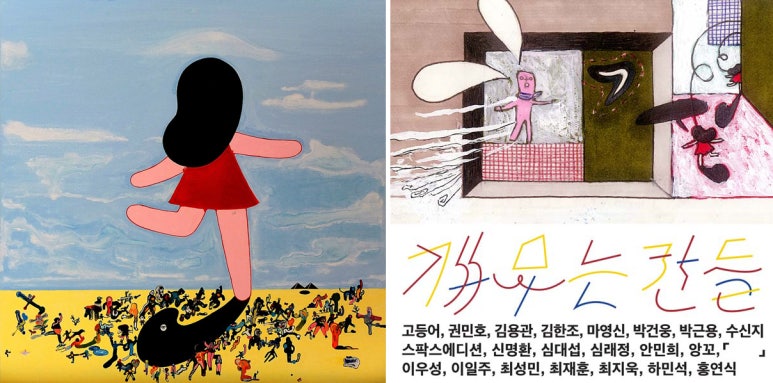
Since 2015, he has co-organized an exhibition titled 《Can Parade》 with artist Myunghwan Shin, presenting it in rented spaces across Paju and Seoul. The exhibition offers opportunities to encounter various works often referred to as alternative comics, many of which stand apart from story-driven narratives. For this reason, rather than calling Changchang Yoo simply a cartoonist, it would be more accurate to refer to him more broadly as an “artist,” encompassing painting, illustration, and exhibition-making alike.


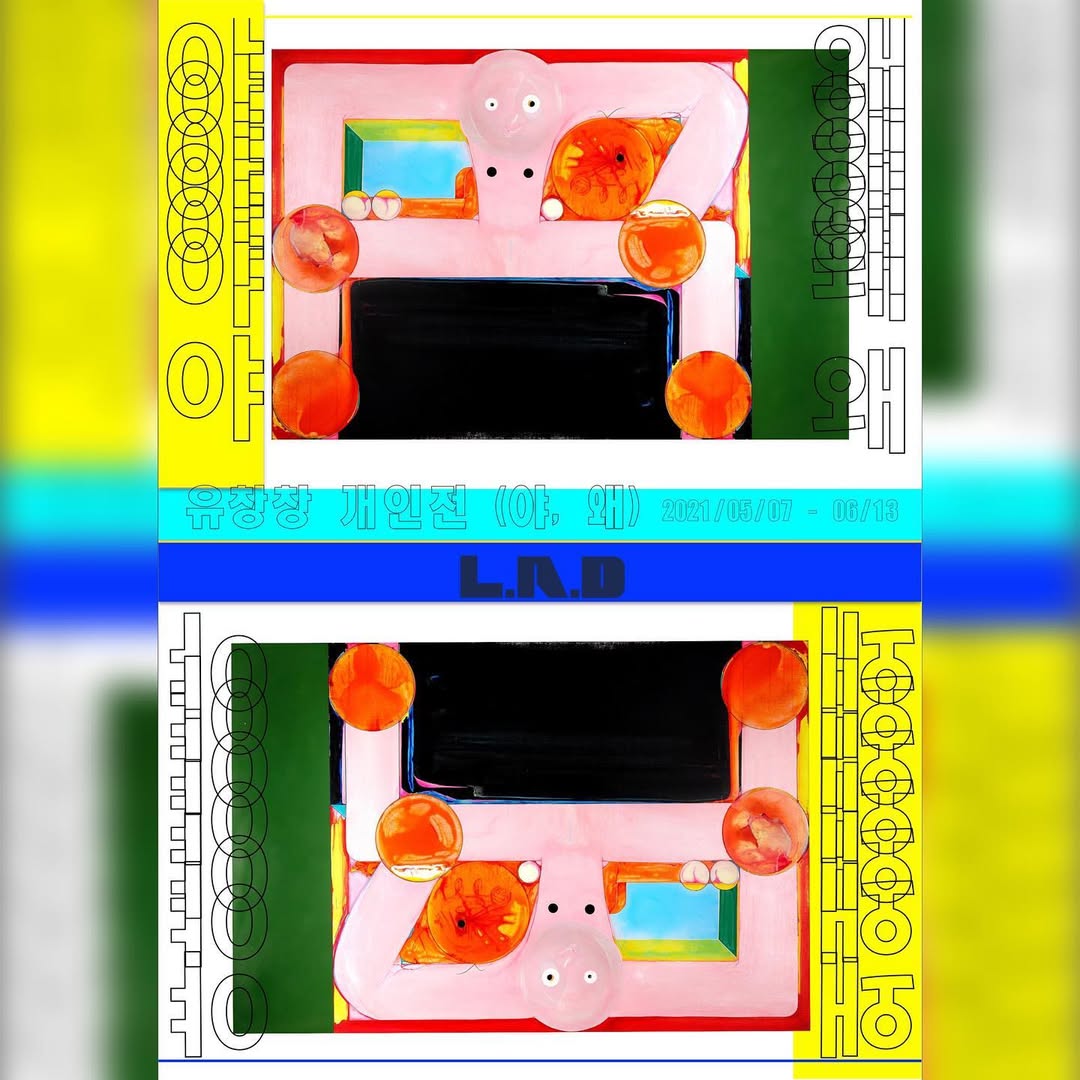
Poster image of 《Can Parade》 © KOMACON

The Futility of Logic and the Primacy of the Visual

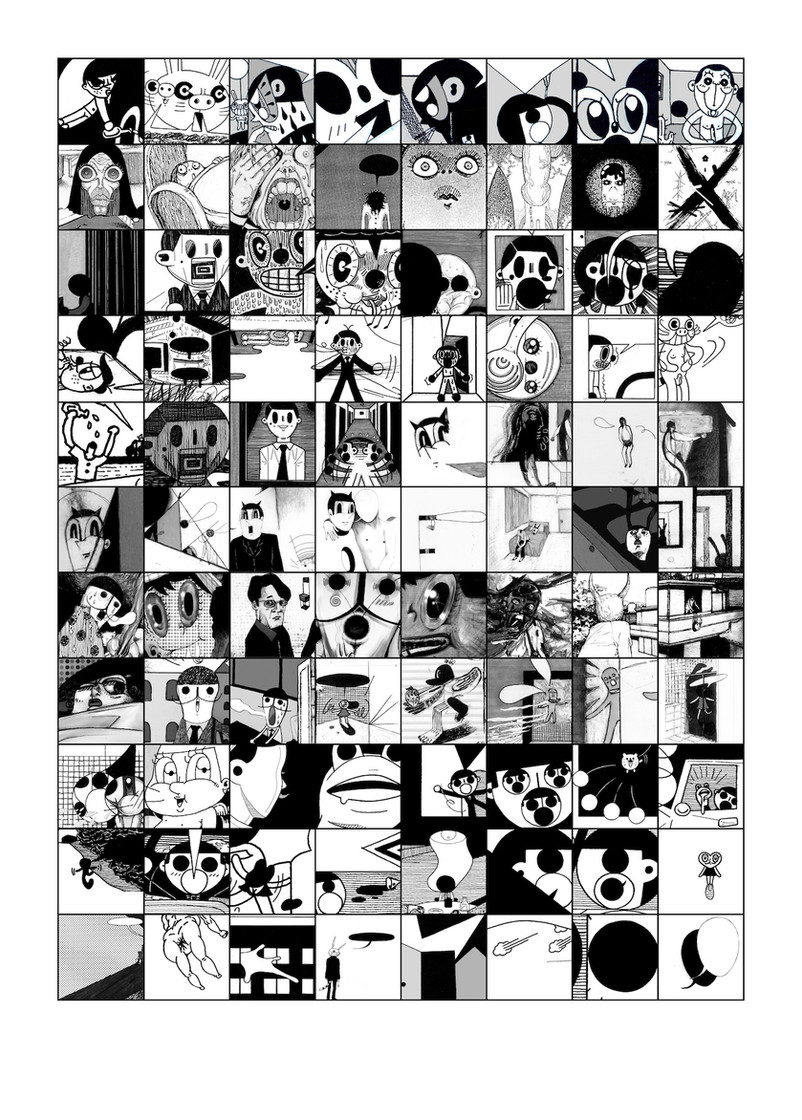
In Yoo’s works, it is difficult to find stories in which beginning, middle, and end are logically connected. Even in works where there seems to be room to read a narrative, there always exists something unrealistic and illogical, something that cannot be clearly defined. One can clearly grasp these characteristics in If You Had Been There…, included in Tofu. Among the short works collected in Tofu, it is the only one in which a storyline can somewhat be discerned.

The work features a protagonist drinking alone at a club he used to visit with his former lover. This figure, with a pig’s nose and rabbit ears, is referred to in other short works mainly as “Mr. Misang.” A breaking news report announces that the Crown Cat has escaped from Incheon Central Park. This cat devours the hearts of those grieving from heartbreak.

The television broadcast urges viewers to protect their hearts carefully, yet those who have broken up with their lovers are unable to fend off the cat’s sudden attacks, dying with holes torn through their chests. The protagonist spots the Crown Cat on television, its mouth stained with blood, and then notices what appears to be the back of his lover. He approaches her, but when she turns around, her face is revealed to be that of the Crown Cat. In a frenzy, he shoots at the television, rushes outside, kills the Crown Cat, and runs desperately toward his lover’s home, praying that she might still be alive.
When he arrives, only a pool of blood remains, with something glimmering within it. As he picks up a ring, he sees reflected inside the bloodstained ring the back of his lover standing there, bleeding, with a gaping hole through her chest. In the end, the protagonist throws the ring away, and his despair is expressed entirely through a black wall.


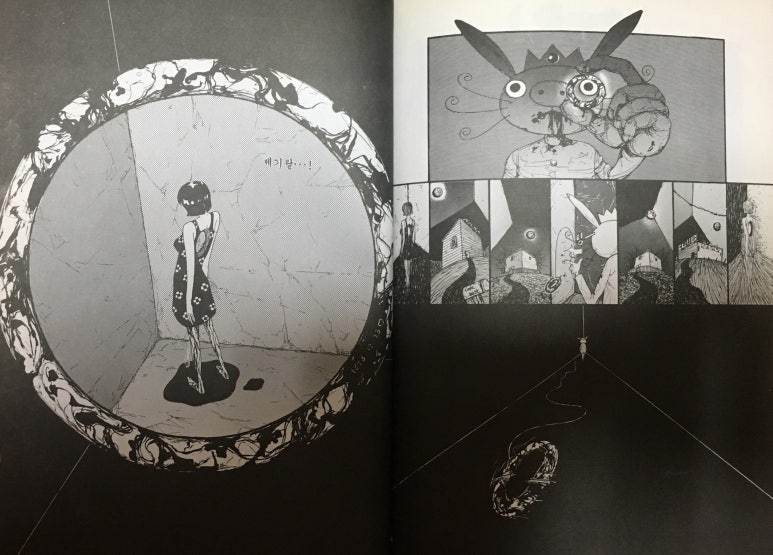
Changchang Yoo, If You Had Been There…, Tofu, pp. 25-26 © Changchang Yoo

Although I have somewhat forced a short narrative out of it, what should truly be read in this work is not the story itself. Let us look at the left page of the image. On the previous page, the ring had been lying in a pool of blood on the floor. All the other victims became corpses with holes through their chests, but only she remained absent, leaving behind nothing but blood. Therefore, this page cannot belong to reality or the present moment. Though it is the same space, the colors inside and outside the ring differ. Does this ring show the past? Or perhaps the memory of the room from moments ago? Or the protagonist’s imagination? No matter how one chooses to interpret it, little changes. In any case, she too has died from the attack of the Crown Cat.

More importantly, let us turn to the second row on the right page. Here one can observe both visual unity and variation. In all seven panels, a circle appears once in a different style: the hole in the chest (1), the moon (2), a fusion of moon and ring (3), the ring (4), another fusion of moon and ring (5), the moon (6), and the hole (7). The fused forms of moon and ring are neither exactly moons nor exactly rings. In addition, every panel contains three-dimensional edges—whether corners of a room or some undefined celestial space. Naturally, each appears in a different style.

There is also an order to the arrangement of the panels. All of the panels are equal in width. The center panel (the fourth) contains the protagonist; the panels immediately beside it (the third and fifth) depict the protagonist’s home; the next pair outward (the second and sixth) show the lover’s house on one side and the club on the other; and the outermost panels (the first and seventh) present the lover herself.

The ring thrown by the protagonist in the center panel becomes enlarged into the foreground of the final panel. Within the entirely black space, the ring and the protagonist remain connected. The concrete story each reader constructs may differ—and in another sense, the story itself is not particularly important—but the visual pleasure is something readers must fully experience.

The other short works likewise do not contain stories that can be easily read as coherent narratives. Fragmentary logic exists, yet it is impossible to fully understand or explain who Mr. Misang and the other characters are, or what kind of world they inhabit. Perhaps precisely because it cannot be understood, attention is drawn more strongly toward the mode of visual presentation.

By the 2000s, the visual dimension becomes even more emphasized: floors and doors take on the appearance of human faces, and increasingly unrealistic images emerge. Miss Medusa, a short work included in Perm Head from 2004, layers visual information within a single panel in ways that are simultaneously surrealistic and cubistic, making it difficult to properly read. One can only remain satisfied with partial interpretations—just as we are unable to fully comprehend the world in its entirety.


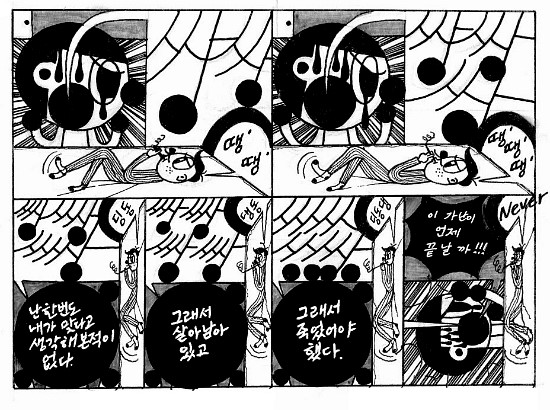
Changchang Yoo, The Burning Death and Absent-Minded Reconciliation of George and King George, Salbook Vol. 6, 2013 © Changchang Yoo

Beginning around Salbook in 2007, the panel lines in Yoo’s work become noticeably more orderly than before. Let us look at the image above. The repeatedly appearing word “ssang” fills the panels like a regular musical note or a graphic design element. The figure in the background and the figure in the foreground do not realistically occupy the same space, yet they seem to carry on a conversation of their own. Within these panels, it is difficult to determine what meaning they hold as parts of a story, but if one simply attempts to understand the panels as they are in the present moment, it is not impossible.

Even then, however, each interpretation will likely differ slightly. What Changchang Yoo intends is for readers to “feel visually” before they understand. When reading comics, he asks readers not merely to follow the chain of panels in pursuit of narrative—not to become slaves to a powerful convention, not to walk obediently along the path laid out by the artist. Rather than advancing forward, he urges readers to linger longer, to feel and think. In fact, this runs counter to the rules of story-driven comics that have made the comic form so widely beloved. To achieve this, the cohesion between panels must be loosened while the density of each individual panel is heightened.

Changchang Yoo overlays meanings within panels much as one overlays images upon a tableau. He is applying methods similar to those in his painting practice to his comics as well. In other words, when viewed from the perspective of how the comics form can be utilized, he occupies a distant and extreme edge rarely encountered in conventional comics practice.


Always Fighting On

Among the images that repeatedly appear throughout his works, there is one that particularly provokes curiosity: the “woman seen from behind.” She appears in Plate 7 discussed earlier, and in many short works she is represented only from the back, never revealing her face. To conceal the face is to conceal identity. Why? There may be many possible explanations—that she represents not an individual but a collective figure, that revealing her identity is unnecessary, or that it is something meant to remain hidden. At least during this period, however, Yoo’s representations of women, or of femininity itself, do not yet seem especially mature in their approach.


Left: The album art for the June 2013 issue of 《Monthly Project Yoon Jong Shin》 Repair, ‘Coming to Me’ © Changchang Yoo / Right: Poster image of 《Can Parade》 © KOMACON

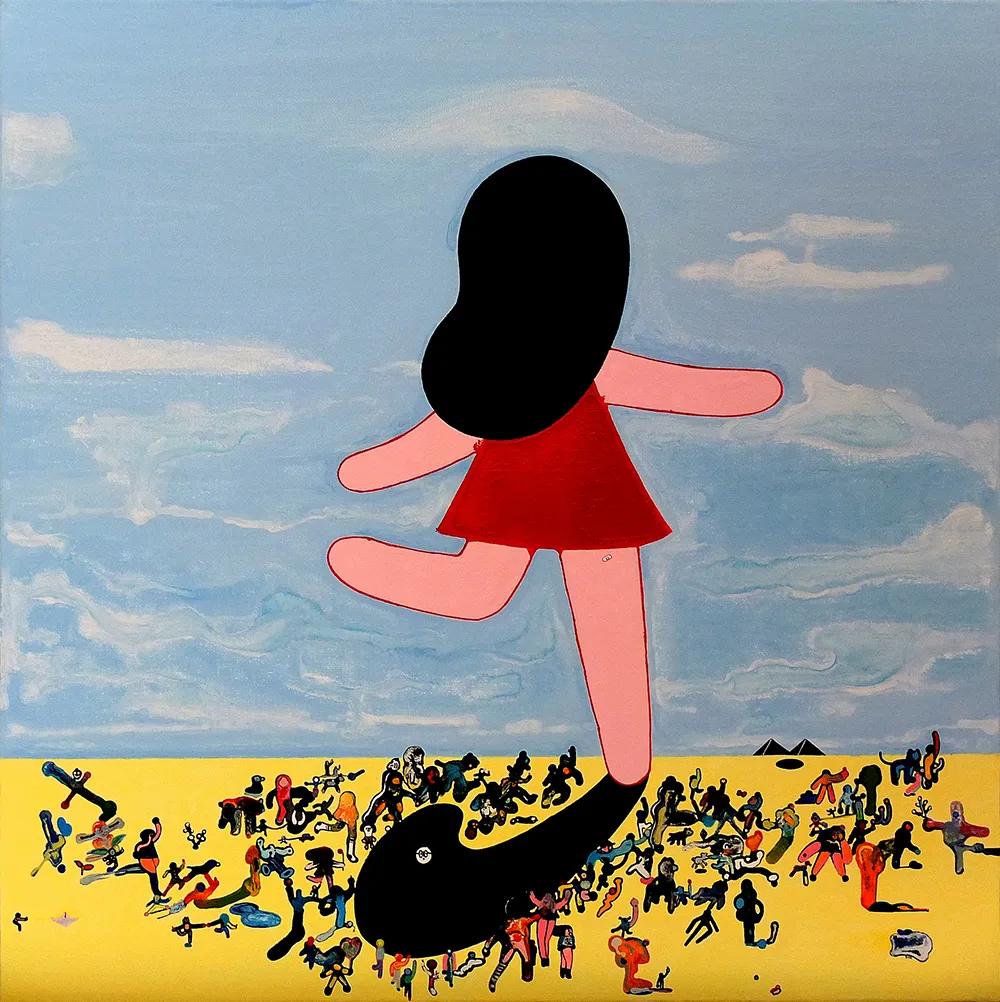
The woman seen from behind eventually transformed into a figure named “Runa-Way.” She frequently appears in Changchang Yoo’s exhibitions and illustrations, and the artist describes her as “a girl who is always running away.” The girl, with black hair and a red dress, is invariably accompanied by a black shadow resembling a comma. The women who appeared in his earlier works were not figures in flight, but Runa-Way is always escaping. Yet even in her act of running away, there is nothing truly desperate about her. She almost seems to be enjoying a kind of leisure.

If Yoo primarily depicts “things he wishes to avoid, things he does not wish to confront,” then perhaps this girl is the very existence he himself wishes to evade. Perhaps she is an image of his own desire not to keep running away. Or perhaps not… Could it really be that an artist who steadily constructs his own world, unmoved by anything and guided by his convictions, projects himself onto the image of a fleeing girl? If so, then just how far, and for how long, does this artist intend to keep fighting? In a vulgar neoliberal world where everything is converted into monetary value, he persists in one of the least profitable forms of activity imaginable. Watching him endure in this way, how could one not wonder where exactly he is looking toward—and how could one not support him?

If the name Changchang Yoo has not yet become familiar, it is worth remembering. One should regard it as a joy, a pleasure, a happiness, and even a point of pride that comics are included among his many fields of activity. And so, I end this essay with immense anticipation for what kind of density and expression his next short work will take, two years after the children’s comic Wake Up, Maengmaengkkong!.

References